Submission to Australian Human Rights Commission’s Inquiry into Self-Harm and Suicidal Behaviour in Children

The National Children’s Commissioner at the Australian Human Rights Commission has initiated an inquiry into intentional self-harm and suicidal behaviour in children and young people.

Submissions are due on Monday 2 June: you can find more details here: <https://www.humanrights.gov.au/intentional-self-harm-and-suicidal-behaviour-children and send your submissions to nccsubmissions@humanrights.gov.au

As you would expect, my submission has focused on the particular issue of youth suicide amongst young lesbian, gay, bisexual, transgender and intersex people. As with other submissions, I would be interested in feedback about what I have written.

Thanks, Alastair

Ms Megan Mitchell

National Children’s Commissioner

Australian Human Rights Commission

Email: nccsubmissions@humanrights.gov.au

Sunday 1 June 2014

Dear Commissioner

SUBMISSION TO INQUIRY INTO INTENTIONAL SELF-HARM AND SUICIDAL BEHAVIOUR IN CHILDREN

Thank you for the opportunity to provide a submission to your inquiry into intentional self-harm and suicidal behaviour in children.

This is an incredibly important topic, and I congratulate you, as National Children’s Commissioner, for utilising your position to shine a spotlight on this national tragedy.

I write this submission as an individual, and not on behalf of any organisation. I also write this as a gay man, and someone who, as a teenager, experienced significant mental health issues, including depression and suicide ideation, because of the severe homophobia that I experienced, particularly in high school.

Given this perspective, in this submission I will focus on the over-representation of young lesbian, gay, bisexual, transgender and intersex (LGBTI) people in intentional self-harm and suicide.

I will also make five recommendations for how to help reduce this over-representation, although obviously this is not an exhaustive list of all the possible ways in which LGBTI youth suicide may be tackled.

Please find my submission attached. I am of course willing to be contacted to discuss anything contained in this submission, at the details below.

Sincerely

Alastair Lawrie

SUBMISSION TO INQUIRY INTO INTENTIONAL SELF-HARM AND SUICIDAL BEHAVIOUR IN CHILDREN

I welcome the acknowledgement, in the Call for Submissions released on 22 April, that self-harm and suicide is a particular issue for LGBTI children and young people.

In particular, the Call for Submissions cites the 2013 Growing Up Queer report, by the Young and Well Co-operative Research Centre, in finding that, of 1,032 children and young people aged 16 to 23, 41% of participants had thought about self-harm and/or suicide, 33% had harmed themselves and 16% had attempted suicide.

These are truly shocking figures – especially that 1 in 6 young lesbian, gay, bisexual, transgender and intersex Australians had attempted suicide. However, despite being shocking, they are not particularly surprising, especially as they replicate similar findings in a range of studies over the past 15-20 years.

The over-representation of self-harm and suicidal thoughts amongst same-sex attracted and gender diverse/questioning young people has been confirmed in all three Writing Themselves In reports, produced by the Australian Research Centre in Sex, Health & Society at La Trobe University in 1998, 2004 and 2010, respectively.

The over-representation of mental health issues within the broader LGBTI community, including among its young people, has also been confirmed by both the original Private Lives: A report on the health and wellbeing of GLBTI Australians study in 2005, and Private Lives 2, released in 2012 (also produced by the Australian Research Centre in Sex, Health & Society).

As well as knowing that intentional self-harm and suicidal behaviour disproportionately affects LGBTI children and young people, we also know the cause – the pervasive homophobia, biphobia, transphobia and anti-intersex prejudice which LGBTI youth experience, within their families, amongst their peers, in the media/culture, and especially in their schools.

As reported in Growing Up Queer, “[f]or many, rejection, alienation, bullying, and harassment often led to depression, suicidal ideation, and attempted suicide. Some participants spoke openly about multiple suicide attempts as a result of negotiating their sexual/gender orientation at school, at home, and in their broader communities” (page ix).

The Writing Themselves In 3 study also found a direct link between verbal abuse and physical abuse with thoughts of self-harm. As noted on page 51: “ [a]lmost double the number of young people who had been verbally abused (40%), in comparison to those who had experienced no abuse, had thought of self-harm (22%). Three times those who had been physically abused (62%), in comparison to those who reported no abuse, had thought of self-harm.”

Writing Themselves In 3 also confirmed that “[t]he most common place of abuse remained school with 80% of those who were abused naming school. This continues the trend of increased levels of reported homophobic violence in schools (69% in 1998; 74% in 2004)” (pix, emphasis added).

By knowing the problem – the over-representation of LGBTI children and young people in intentional self-harm and suicidal behaviour – and the cause – the pervasive homophobia, biphobia, transphobia and anti-intersex prejudice which confronts young people, including (but not limited to) at school – we must start to consider the solution.

What are the best ways to protect LGBTI children and young people from discrimination, bullying and abuse on the basis of their sexual orientation, gender identity or intersex status? And what are the best ways to actively promote positive views of, and self-esteem and mental health within, LGBTI children and young people (noting that these are not necessarily the same question)?

The following are five reforms which I believe, if adopted, would help to reduce the continued over-representation of lesbian, gay, bisexual, transgender and intersex young people in self-harm and suicide:

Recommendation 1: Remove anti-discrimination exemptions/exceptions which allow religious schools to discriminate against LGBT students

As indicated above, one of the key areas where LGBTI children and young people are discriminated against is in their schools. Unfortunately, in most states and territories in Australia, religious schools enjoy legal protections which allow them to actively discriminate against LGBT students (and, it should be remembered, to discriminate against LGBT teachers and even parents too).

NB I have excluded intersex students for the remainder of this particular discussion given I understand the two jurisdictions which have explicit intersex anti-discrimination protections – Tasmania and the Commonwealth – do not allow religious exceptions to these protections.

These exemptions allow religious schools to expel LGBT students, to tell same-sex attracted and gender-diverse/questioning students that they are somehow ‘wrong’, ‘unnatural’ or even ‘sinful’, to prohibit certain behaviours or actions on the basis of sexual orientation or gender identity, and to ignore the educational and emotional needs to young LGBT people in general.

An example of this discrimination was found in the ‘Statement of Faith’ by the Penrith Christian School, which stated that: “[w]e believe that homosexuality and specific acts of homosexuality are an abomination unto God, a perversion of the natural order and not to be entered into by His people” and “[w]e believe the practice of attempting to or changing ones gender through surgical and/or hormonal or artificial means is contrary to the natural order ordained by God.”

These statements came to light, and attracted significant public scrutiny, only after the then Opposition Leader, the Hon Tony Abbott MP, launched the Coalition’s education policy there during last year’s election campaign. But, it must be pointed out that there is absolutely nothing unlawful for this school, or others like it, to adopt these principles, or to enforce policies based upon them to the detriment of the LGBT students in its classrooms.

This is because in NSW, section 56(d) the Anti-Discrimination Act 1977 states that anti-discrimination coverage for lesbian, gay and trans* people does not protect them against “any… act or practice of a body established to propagate religion that conforms to the doctrines of that religion or is necessary to avoid injury to the religious susceptibilities of the adherents of that religion.”

In an absolutely extraordinary extension of these exceptions, the NSW Act also explicitly excludes all “private educational authorities” (including non-religious bodies) from having to comply with any obligation not to discriminate on the basis of homosexuality (section 49ZO(3)) and transgender status (section 39K(3)).

Sadly, despite only being introduced last year, Commonwealth anti-discrimination protections on the basis of sexual orientation and gender identity are also fundamentally undermined by the granting of wide-ranging exemptions to religious organisations.

As well as an equivalent clause to NSW’s section 56(d) – section 38(1)(d) of the Sex Discrimination Act 1984 exempts “any… act or practice of a body established for religious purposes, being an act or practice that conforms to the doctrines, tenets or beliefs of that religion or is necessary to avoid injury to the religious susceptibilities of adherents of that religion” (although not in relation to aged care) – the Commonwealth Act also includes the following in section 38(3):

“Nothing… renders it unlawful for a person to discriminate against another person on the ground of the other person’s sexual orientation, gender identity, marital or relationship status or pregnancy in connection with the provision of education or training by an educational institution that is conducted in accordance with the doctrines, tenets, beliefs or teachings of a particular religion or creed, if the first-mentioned person so discriminates in good faith in order to avoid injury to the religious susceptibilities of adherents of that religion or creed.”

In practice, both Commonwealth and NSW law gives effective carte blanche to religious schools to discriminate against, and ignore the genuine needs of, LGBT children and young people. If we are genuinely interested in the mental health and welfare of young lesbian, gay, bisexual and transgender Australians, then these exceptions must be removed.

Those who would argue against such a proposition cite ‘freedom of religion’ as somehow trumping the right of LGBT people to live their lives free from discrimination. Indeed, the then shadow, and now Commonwealth, Attorney-General, Senator the Hon George Brandis, made exactly that argument on the ABC’s QandA program in June 2013.

As I have written on numerous occasions, I strongly disagree with that argument – I do not believe that religious exemptions should extend beyond the appointment of religious office-holders or the conduct of religious ceremonies. I certainly do not believe there should exist a broad right for religious organisations to discriminate against LGBT people in public life.

However, even if some form of religious exemption or exception were to continue in the public sphere, it is incredibly difficult for anyone to make the case that the ‘freedom’ of a religious school to discriminate should override the ability of a young lesbian, gay, bisexual or transgender student to receive their education free from such discrimination – something which is and should be recognised as a fundamental right.

These are vulnerable young people, who, in the vast majority of cases, are in the process of discovering or accepting their sexual orientation and/or gender identity. In nearly all cases, they do not decide which school they attend, including whether it is religious or not (a decision which is normally made for them by their parents, often without specific knowledge of their child’s sexual orientation or gender identity). In many cases, they are also not open about their sexual orientation or gender identity at school, meaning that they are not even in a position to advocate on their own behalf when they encounter such prejudice.

In short, I think it is simply untenable to argue that the freedom of a religious school to discriminate trumps the right of LGBT students not to be discriminated against, especially when the consequence of this discrimination includes an increased risk of mental health issues, including depression, self-harm and most tragically suicide. This not a contest of equal rights, no balancing act is required – the rights of the students should always win.

In the past week, there has been discussion in the United States about trying to ‘balance’ two other supposedly competing rights – the Second Amendment ‘right to bear arms’, with the right to personal safety of others. As part of that discussion, Samuel Wurzelbacher (aka Joe the Plumber) wrote to the parent of one of the young people murdered in the Santa Barbara mass shooting and said:

“I am sorry you lost your child. I myself have a son and daughter and the one thing I never want to go through, is what you are going through now. But: As harsh as this sounds – your dead kids don’t trump my Constitutional rights.”


Mr Wurzelbacher’s comments have, quite understandably, attracted heavy criticism in the US, as well as around the world. From an Australian perspective, where more restrictive gun control laws have existed since the Port Arthur massacre in 1996, it is tempting to adopt a certain smugness, and look down upon the level of public debate in the US that such a comment is even possible.

But, in some respects at least, we are prepared to strike a similar bargain here when it comes to the deaths of LGBTI children and young people. We know that they are significantly over-represented in suicide numbers, and we know that the discrimination that LGBTI students experience in school is a major contributing factor to these suicides.

Yet, as a society, we are willing to turn a blind eye to this, and say that religious freedom, and specifically the ‘freedom’ of religious schools to discriminate on the basis of sexual orientation and gender identity, is more important than the lost lives of these young people. In effect, our current anti-discrimination law says that ‘dead LGBT kids don’t trump the rights of religious schools.’

It is time we recognised, and remedied, this situation. It is time we removed anti-discrimination exemptions and exceptions which allow religious schools to discriminate against LGBT people.

Recommendation 2: Amend the National Health & Physical Education Curriculum to be genuinely LGBTI-inclusive

One of the key issues to emerge from both the Growing Up Queer, and Writing Themselves In 3 reports, is the absence, or comparative lack of, a genuinely LGBTI inclusive curriculum, especially with respect to Health & Physical Education.

For example, Growing Up Queer reported that “[p]articipants indicated that sex education at school was heteronormative and focused on reproductive sex only. It was perceived as irrelevant to their needs.” Further, “[p]articipants noted that whilst they received no education about queer sexualities their identities were often ‘sexualised’, with teachers and peers making assumptions about their sexuality and treating them differently on the basis of these assumptions” (pix).

Writing Themselves In 3 confirms this comparative lack of attention: “[s]exuality education was not provided at all to 10% of participants, and when it was, only 15% found it useful. It was clear that quite conservative messages emphasizing heterosexual sex and danger are the norm in most Australian schools with a far smaller number providing messages inclusive of SSAGQ youth” (pxi).

Of course, LGBTI people and content should be visible across multiple parts of the school curriculum (including, for example, history and politics), rather than arbitrarily confined to Health & Physical Education (HPE). Nevertheless, if LGBTI students and issues are excluded from, and made invisible in, the HPE curriculum, it is difficult to imagine them being included elsewhere.

I also agree with the statement in Growing Up Queer that “[y]oung people’s access to comprehensive sexuality education in primary and secondary schooling is a right, and is central to sexual citizenship and the fostering of health and wellbeing in all young people” (pix).

Over the past two years, a new National HPE curriculum has been developed by the Australian Curriculum, Assessment & Reporting Authority (ACARA). Unfortunately, all three versions of the HPE curriculum – the original consultation draft released in December 2012, the revised consultation draft in mid-2013, and the version that was noted but not yet endorsed by COAG Ministers in December 2013 – have comprehensively failed to deliver a genuinely LGBTI-inclusive document.

For example, in none of the three versions of the HPE curriculum have the words lesbian, gay or bisexual even appeared (although, on a slightly more positive note, the most recent version of the HPE curriculum does at least include the words transgender and intersex, and, unlike an earlier version, actually distinguishes between the two).

Despite lesbian, gay and bisexual being the most common forms of identification for people whose sexual orientation is ‘not heterosexual’, these terms have never appeared in any version of this document. This is an appalling exclusion, making young people with diverse sexual orientations even more invisible in the school environment than they already are.

The aspirational ‘student diversity’ statement at the beginning of the document, which attempts to highlight the needs of ‘same-sex attracted, gender diverse or intersex’ students, is also undermined by the inclusion of a sentence noting that it “is designed to allow schools flexibility to meet the learning needs of all young people, particularly in the health focus area of relationships and sexuality” (emphasis added) and another that “[a]ll schools communities have a responsibility when implementing the HPE curriculum to ensure that teaching is inclusive and relevant to the lived experiences of all students” (emphasis added).

Both of these statements appear to leave the decision whether, and in what way, schools will include LGBTI students and content up to the schools themselves. In the first instance, whether LGBTI students and content are included at all is too important to be left to the ‘flexibility’ of the school itself.

Second, and far more importantly, the reference to ‘lived experiences’ could be argued to leave a loophole for schools to assert that, unless students first identify themselves or disclose their status as LGBTI, they do not exist in the eyes of the school and therefore the school does not have a responsibility to include them or content relevant to their needs.

This approach – apparently leaving it up to students to ‘come out’ before they are entitled to receive vital health information, despite the fact that doing so can, in many Australian jurisdictions, lead to the potential expulsion of that student, let alone other personal consequences for the student with their family or friends – fundamentally undermines the concept of health, and health education, as a universal human right.

There are multiple other problems in the draft National Health Physical Education Curriculum – including a lack of comprehensive sexual health education, and the complete absence of any references to Sexually Transmissible Infections (STIs) and Blood Borne Viruses (BBVs) such as HIV or viral hepatitis.

For more detail on the problems of the national HPE curriculum, and its exclusion of LGBTI students and relevant content, please see my submission to the ‘Students First’ review of the National Curriculum, provided at Attachment A (link here: <https://alastairlawrie.net/2014/03/13/submission-to-national-curriculum-review-re-national-health-physical-education-curriculum/ ).

This review, initiated at the request of the Commonwealth Education Minister, the Hon Christopher Pyne MP, is not due to report to him until 31 July, 2013. It will then be considered by Commonwealth and State and Territory Education Ministers at their next COAG meeting, scheduled for 12 December 2014.

That means there is still time to argue for a genuinely LGBTI-inclusive Health & Physical Education curriculum. There remains an opportunity for individuals and organisations, including the Australian Human Rights Commission, to call for a document that does not simply entrench the existing exclusion and invisibility of LGBTI students in classrooms around the country, but actively tries to provide for the needs of all students, including those with diverse sexual orientations, gender identities and those who are intersex.

I urge you, as National Children’s Commissioner, to intervene in this process, and call on the people undertaking the Students First Review, as well as Commonwealth, State and Territory Education Ministers, to amend the national Health & Physical Education curriculum to serve the needs of all students.

Such amendments are vital to help include lesbian, gay, bisexual, transgender and intersex students, and content relevant to their needs. Doing this would help reduce the isolation experienced by LGBTI children and young people, and therefore contribute to lower mental health issues overall, including reduced intentional self-harm and suicidal behaviour.

Recommendation 3: Ensure all schools & school systems adopt pro-active programs against homophobia, biphobia, transphobia and anti-intersex prejudice

Combatting the homophobia, biphobia, transphobia and anti-intersex prejudice which LGBTI children and young people experience in schools, and which causes mental health issues such as self-harm and suicide, is not just about anti-discrimination laws (which in some cases can be reactive, rather than pro-active), or implementing an inclusive curriculum, but it also includes ensuring the entire school environment is ‘safe’ for these students, because often what happens outside the classroom is more important than what happens inside.

This can be achieved through the implementation of comprehensive programs tackling homophobia, biphobia, transphobia and anti-intersex prejudice in as many schools as possible, in as many states and territories as possible, and in as many different types of schools (government, private and religious) as possible.

An example of such a program is the Safe Schools Coalition of Victoria, an initiative that has already achieved 131 member schools, trained 4,555 staff, and reached 20,557 students (data from www.safeschoolscoalitionvictoria.org.au)

From the Safe Schools Coalition Victoria (SSCV) website:

“Safe Schools Coalition Victoria (SSCV) is a coalition of schools and individuals dedicated to creating safer educational environments where every family can belong, every teacher can teach, and every student can learn.


“Working in partnership with the Victorian Department of Education and the Department of Health, Safe Schools Coalition Victoria (SSCV), is a ground breaking program that aims to make all schools safe and supportive places for same sex attracted, intersex and gender diverse (SSAIGD) students, teachers and families.


“The first initiative of its kind in Australia, SSCV was founded as part of Gay and Lesbian Health Victoria within the Australian Research Centre in Sex, Health & Society at La Trobe University in 2010. We work together with an active network of member schools across all age groups in the government, independent and faith-based sectors.


“This coalition model allows us to reach thousands of teachers and school staff to raise awareness and build the skills and confidence needed to actively support gender and sexual diversity in the classrooms, corridors and schoolyards of Victoria…”


The SSCV model supports member schools in a variety of ways including staff and student audits, professional learning, resources and consultations.

Unfortunately, a small-scale pilot project, targeting homophobia in NSW government schools from 2011 to 2013 – called ‘Proud Schools’ – was abandoned, seemingly without explanation, at the beginning of 2014 by the State Education Minister, the Hon Adrian Piccoli MP. At this stage, I am not aware of any specific initiative which has replaced it, leaving a significant gap this year where an anti-homophobia program should be.

However, I am aware that the Foundation for Young Australians will be launching a national version of the Victorian model – the Safe Schools Coalition Australia – at a national symposium in Melbourne on Friday 13 June 2014 (details here: https://www.etouches.com/ehome/87262).

It is unclear which State and Territory Governments are supportive of this new national initiative, which is being funded by the Commonwealth Department of Education (announced by the previous Government ahead of last year’s election). It is my sincere hope that all State and Territory Governments support the rollout of the Safe Schools Coalition Australia, and that as many schools as possible join.

This includes government, private and religious schools, as well as geographically diverse (metro, regional and rural/remote) schools, because it should not matter what school an LGBTI child or young person attends, or where they live, they have a fundamental right to an inclusive and supportive education.

I would also expect the Australian Human Rights Commission, and you as National Children’s Commissioner, to be supportive of different schools and school systems adopting pro-active programs against homophobia, biphobia, transphobia and anti-intersex prejudice, as another way to improve the mental health of young LGBTI people around Australia, and thereby help to reduce the over-representation of LGBTI youth in self-harm and suicide statistics.

Recommendation 4: Ban ex-gay or reparative therapy

The practice of ‘ex-gay’ or ‘reparative’ therapy involves organisations, usually religious, offering so-called ‘counselling’ to help transform people who are lesbian, gay or bisexual into being heterosexual, and in some cases to attempt to transform people who are trans* into being cisgender. NB I am unaware of the use of reparative therapy with respect to intersex people, and so have omitted intersex from this discussion.

Ex-gay or reparative therapy attempts to change a person’s sexual orientation or gender identity because of the belief that being lesbian, gay, bisexual or trans* is somehow ‘wrong’, ‘unnatural’ or ‘sinful’. There are three main problems with ex-gay or reparative therapy.

First, there is absolutely nothing wrong, unnatural or sinful with being lesbian, gay, bisexual or trans*. Differences in sexual orientations and gender identities are entirely natural, and this diversity should be accepted and celebrated. Any attempts to prevent people from being LGBT simply demonstrate the homophobia, biphobia and transphobia of the people running ex-gay organisations.

Second, there is absolutely no scientific evidence to support these practices. Sexual orientation and gender identity cannot be ‘changed’ through these interventions. Indeed, the Australian Psychological Society, Royal Australian and New Zealand College of Psychiatrists and Pan American Health Organisation all note that reparative therapy does not work, and recommend against its practice.

Third, and most importantly, not only is ex-gay therapy based on homophobia, biphobia and transphobia, as well as discredited ‘pseudo-science’, but it is also fundamentally dangerous. Reparative therapy takes people who are already vulnerable, tells them that they are inherently wrong, and asks them to change something about themselves that cannot be changed. Inevitably, it leads to significant mental health problems, including self-hatred, depression and tragically, in some cases, suicide.

The people that run ex-gay organisations are guilty of inflicting psychological and sometimes physical damage on others. When it involves children and young people, it is nothing short of child abuse.

Fortunately, the practice of ex-gay or reparative therapy is far less common in Australia than it is in the United States. In recent years, the number of organisations which provide this ‘counselling’ here has also declined. Nevertheless, ex-gay or reparative therapy still exists in Australia, it still damages and breaks people, and it still requires an appropriate policy response.

Given the level of harm that is perpetrated by these people, I believe Australian jurisdictions should introduce legislative bans on ex-gay or reparative therapy. This should include the creation of a criminal offence for running ex-gay therapy, with an aggravated offence for running ex-gay therapy for people under the age of 18. This is necessary to send a signal that these homophobic, biphobic and transphobic practices are no longer tolerated in contemporary society, and especially in the case of minors.

Finally, while at this stage I am not aware of evidence linking registered medical practitioners with these discredited practices, there is evidence overseas that some counsellors, psychologists, psychiatrists or other registered medical practitioners either practice ex-gay therapy themselves, or will refer patients to ex-gay organisations. Any medical practitioners found to be engaging in these practices in Australia should also receive additional sanctions, including potential deregistration and civil penalties.


Recommendation 5: Fund a national media and social media campaign against homophobia, biphobia, transphobia and anti-intersex prejudice


The first three of the recommendations above specifically target schools, not only because research has shown that schools are a major source of the discrimination and prejudice which LGBTI children and young people experience, but also because schools provide an opportunity to exert significant influence in terms of improving social attitudes and directly reducing homophobia, biphobia, transphobia and anti-intersex prejudice.

However, it should be remembered that a) not all discrimination and prejudice originates in schools and b) it is also unfair to expect that schools themselves, acting alone and somehow magically separated from the rest of society, can overcome these serious ills on their own.

It is also important to note that, while 80% of young people in Writing Themselves In 3 identified school as a site for physical or verbal abuse, significant numbers of young LGBTI people also nominated other places in their lives where they are subjected to discrimination and prejudice.

For example, more than 40% cited a social occasion as a place of abuse in 2010 (and like schools, this was an increase from the 1998 and 2004 surveys), and almost 40% indicated they had been abused on the street (although this was down on previous surveys). Meanwhile, approximately a quarter indicated they had been verbally or physically abused at home on the basis of their sexual orientation or gender identity.

It is also not hard to find numerous examples, in the media and culture more generally, of the everyday homophobia, biphobia, transphobia and anti-intersex prejudice, which all LGBTI people are subjected to, but which have a particular impact on LGBTI children and young people.

For example, just in the last month, we have witnessed an NRL player describe another player as a “f—ing gay c—t”, which was subsequently defended by a prominent national columnist, in an article titled “NRL bosses are totally gay”, as somehow not being homophobic. We have had a TV host rant about NFL footballer Michael Sam simply kissing his male partner live on air (describing it as “annoyingly gratuitous”), a Senator-elect tweet that being gay as a ‘lifestyle’ and link it with promiscuity, as well as a State MP indicate his belief that same-sex parenting would hurt that couple’s children.

That is just a small sample of the ‘slings and arrows’ of homophobia, biphobia, transphobia and anti-intersex prejudice which LGBTI Australians are exposed to all too frequently. For many of us, while such comments are offensive, and sometimes hurt, they do not necessarily lead us to self-harm, or cause significant emotional and mental anguish.

Nevertheless, for those who are already vulnerable, including some adults, but especially for young people who may still be coming to terms with being LGBTI, hearing such messages can directly cause harm, and contribute to or worsen existing mental health concerns. This harm is exacerbated if these negative statements are all that the young person hears with respect to being lesbian, gay, bisexual, transgender or intersex, and are not balanced or countered with equivalent positive messages.

Which is why I believe there would be utility in the Commonwealth Government directly funding a large national media, including social media, campaign against homophobia, biphobia, transphobia and anti-intersex prejudice. But rather than simply tackling the ‘negative’, I think such a campaign should also express a positive message about diversity of sexual orientations, gender identities and intersex status – sending the message that being LGBTI is natural, and that heterosexual, cisgender and LGBTI young people all deserve equality, and equal dignity in all aspects of life.

While there have been some great initiatives at state government level in this regard, as well as some excellent work by relevant not-for-profits/NGOs and even individuals (with campaigns like Victoria’s No to Homophobia, and the Beyond ‘That’s So Gay’ work of Daniel Witthaus), the involvement of the Commonwealth could bring benefit, both in terms of scale of resources, and by reaching LGBTI children and young people across Australia.

Of course, any such campaign would need to be co-ordinated with LGBTI organisations, as well as organisations that work in the mental health sector. But most important would be the involvement of young LGBTI people themselves.

The media and social media campaign would need to be designed so as to be relevant to young people, not just those that are LGBTI, but also to their non-LGBTI peers, in order to increase their own understanding and lessen any bullying or harassment of their friends and classmates. Young LGBTI people (and certainly people much younger than myself) would be best placed to advise on how to make such a campaign work.

I would also point out that I have made this particular recommendation in response to term of reference number eight in the Call for Submissions (namely “[t]he feasibility and effectiveness of conducting public education campaigns aimed at reducing the number of children who engage in intentional self-harm and suicidal behaviour”).

I acknowledge there are particular sensitivities in designing campaigns which specifically target those already at risk of self-harm and suicide, with the possibility that the campaign itself triggers particular negative responses. I am not an expert in this area and so am not in position to suggest whether, and if so how, an appropriate campaign could be designed that focused directly on LGBTI children and young people and that explicitly discussed self-harm or suicide – I am sure other individuals and organisations who are experts in this area will be doing so much more effectively in their own submissions.

But I do believe that an overarching campaign, which addresses the root cause of much of those problems – the homophobia, biphobia, transphobia and anti-intersex prejudice which young LGBTI people experience everyday – would provide its own additional benefits in terms of long-term mental health improvement.

Those are the five key recommendations that I would like the Australian Human Rights Commission, and you as the National Children’s Commissioner, to focus on in terms of examining how to reduce the disproportionate effects of self-harm and suicide on LGBTI children and young people.

Obviously, that is not an exhaustive list. There are other areas which are worthy of examination, including considering whether LGBTI people should be protected against vilification in the same way that Commonwealth law currently protects against racial vilification (through section 18C of the Racial Discrimination Act 1975).

I believe there would also be benefit in considering how best to fund, on a secure and ongoing basis, LGBTI community organisations to deliver services to young LGBTI people at risk, as well as how to ensure that mainstream mental health and general health services are inclusive of, and respond to the needs of, LGBTI children and young people. But once again, I would expect that other individuals and organisations will be much better placed to make submissions with respect to those topics.

In conclusion, I would like to express my thanks to the Australian Human Rights Commission, and to you as National Children’s Commissioner, for choosing to initiate an inquiry into intentional self-harm and suicidal behaviour in children and young people.

The rate of youth self-harm and suicide amongst all of Australia’s youth, including but not limited to young lesbian, gay, bisexual, transgender and intersex youth, is truly a national tragedy.

I appreciate the opportunity to make a submission to this inquiry, and look forward to seeing the Final Report in the Commissioner’s 2014 Statutory Report to Commonwealth Parliament.

Alastair Lawrie

Sunday 1 June 2014

NB Given the issues raised in this submission, I include below the same contact details for help included on the Commission’s call for submissions:

National Help and Counselling Services
Lifeline – 24 hour crisis support and suicide prevention

Kids Helpline – counselling service for children and young people aged 5 to 25 years

Headspace – counselling and referral service for young people aged 12 to 25 years

ReachOut.com – online youth mental health service

Letter to Prime Minister Abbott re Intercountry Adoption by Same-Sex Couples Part 2

In early March I wrote to Prime Minister Abbott about the review, then being undertaken by his department, of Australia’s inter-country adoption arrangements. Specifically, I asked that same-sex couples be included in any potential reforms to be considered at the Council of Australian Governments (COAG) meeting scheduled for Friday 2 May (see original letter here: <https://alastairlawrie.net/2014/03/08/letter-to-prime-minister-abbott-re-inter-country-adoption-by-same-sex-couples/ )

I did not receive a response to my letter until after the COAG meeting (on Monday 5 May), although it was dated 1 May. The reply stated:


Dear Mr Lawrie


Thank you for your letter of 8 March 2014 to the Prime Minister regarding overseas adoption. I have been asked to reply on the Prime Minister’s behalf. I apologise for the delay in replying.


This is an issue that could benefit from attention at the highest levels of government. That’s what it will be getting between now and the next meeting of the Council of Australian Governments.


As you note, at present there is no consistency across Australia on whether same-sex couples can adopt a child. The requirements of foreign countries are also relevant, with most of Australia’s current partner countries not allowing adoption by same-sex couples.


The Commonwealth Government is committed to working with our state and territory colleagues and stakeholders in this area, including the non-government sector, to deliver reform.


Thank you for letting the Government know your views on this issue.


Yours sincerely


Name Withheld

Assistant Secretary

Which, it has said to be said, was a pretty underwhelming response, especially given the paucity of firm details or commitments. I also cracked a wry smile at the statement that the issue would be getting attention between now (ie the time of writing) and the next COAG meeting – which was held the following day.

In any event, the issue of inter-country adoption was discussed at COAG on Friday 2 May. The Prime Minister, and State Premiers and Territory Chief Ministers, agreed to the following in the official Communique:

Intercountry adoption of children


Adopting a child from overseas is an emotional and complex undertaking. Different requirements across Australia can create even more difficulty for families wanting to adopt a child from overseas.


COAG supports adoption conducted in the best interests of the child and consistent with the safeguards of the Hague Conventions.


COAG agreed in principle to the Commonwealth’s proposal to provide a new national intercountry adoption service for all Australians wanting to adopt a child from overseas.


Under the new service, the Commonwealth will fund either a new accredited non-government organisation or organisations, or a Commonwealth agency, to provide services for intercountry adoption by early 2015.


The Commonwealth and the States and Territories will work closely together to make sure there is a smooth transition to the new system.

So, some more detail (albeit only a little bit), but also some unanswered questions (including whether same-sex couples are to be included), as well as some new questions (if a non-government organisation contracted to provide inter-country adoption services was religious, could they refuse to provide those services to same-sex couples – but more on that particular issue later).

On the following Monday, 5 May, Prime Minister Abbott issued a Media Release, which revealed a little bit more:

REFORM AND ACTION ON INTERCOUNTRY ADOPTION


The Commonwealth Government is committed to adoption reform to enable more people to find families.


A new report has identified significant barriers facing Australian families wanting to adopt from overseas.  Inconsistent rules, costs and the lengthy wait to adopt currently deter many people from even starting the adoption process.


Last Friday, COAG agreed to a national system for intercountry adoption. The Commonwealth will work vigorously with the States and Territories to have a new system operating by early 2015.


The report into intercountry adoption also recommended establishing new country programmes to help more Australian families to adopt.  A new intercountry adoption programme between Australia and South Africa is now in place.


South Africa has a strong commitment to finding families within its borders to care for children in need. Where, for whatever reason, a South African family cannot be found, Australian families will be able to help provide permanent loving homes to South African children.  Many of these children will have health needs, and would benefit from the caring environment that Australian families can provide.


The Government will introduce amendments to the Australian Citizenship Act so that obtaining Australian citizenship can happen in a child’s country of origin. As well, we will fix the problems associated with the visa system. It is too complicated at the moment and processing times are too long.


For too long children who legitimately need a safe and loving home and Australians who dream of providing this home have been hindered by red tape and confusion. The Government is pleased to be able to undertake real action to bring families together.

The accompanying Report of the Interdepartmental Committee on Intercountry Adoption provided some additional information (see link to report here: <http://www.dpmc.gov.au/publications/docs/idc_report_intercountry_adoption.pdf ), although undoubtedly would have provided more had pages 41 onwards, which contained Options for Reform and Recommendations to Government, not been deliberately withheld from the public.

The table on page 30 of the section of the Report that was released at least acknowledged that in four Australian jurisdictions – NSW, Western Australia, Tasmania and the ACT – adoption by same-sex couples is already legal.

On page 32, Table 11: Country of Origin Requirements then spelled out all the different countries where agreements exist, but which deem same-sex couples to be ineligible. Sadly, none of the countries listed currently permit inter-country adoption that does not discriminate on the basis of sexual orientation.

The discussion on page 31 helpfully (or should I say rather unhelpfully), noted that “[r]estrictions on same-sex couples adopting was raised by several submissions as a problem… [But] It seems that changes to these criteria would probably have limited impact on intercountry adoption given the country of origins’ criteria.”

Which is absolutely correct. But still does not answer the question of what would happen if Australia were to sign an inter-country agreement which did allow same-sex adoption (or even, as I suggested in my original letter, if Australia were to actively seek to include non-discrimination as a key clause in all of our inter-country agreements)?

And the media release, and accompanying IDC report, didn’t even address the most obvious question of all – given South Africa already allows same-sex couple adoption, and Prime Minister Abbott announced a new inter-country adoption program with South Africa, would Australian same-sex couples be able to adopt under that program?

The mainstream media didn’t appear to follow up on this question – although fortunately, Benjamin Riley of the Star Observer newspaper stepped into the breach to report the following:

SAME-SEX COUPLES INCLUDED IN OVERSEAS ADOPTION AGREEMENT FOR THE FIRST TIME


BEJAMIN RILEY – May 5, 2014


SAME-sex couples are included in Australia’s new agreement with South Africa on overseas adoption announced today by Prime Minister Tony Abbott, after being excluded from every previous intercountry adoption agreement between Australia and another country.

A spokesperson for the Department of Prime Minister and Cabinet told the Star Observer the agreement with South Africa is the first such arrangement with a country that allows same-sex couples to adopt children.


Although there is currently inconsistency across Australian states and territories around same-sex adoption, same-sex couples can legally adopt in NSW, ACT, Tasmania and Western Australia. However, until now this has been irrelevant due to the explicit exclusion of same-sex couples from Australia’s intercountry adoption agreements.


The Prime Minister announced the agreement with South Africa today along with a range of reforms to streamline the overseas adoption process, allowing children to obtain Australian citizenship in their country of origin, and simplify visa processes. These reforms have come out of a new report by the Interdepartmental Committee on Intercountry Adoption.


The Prime Minister’s office confirmed the eligibility of same-sex couples to adopt under the new agreement with South Africa, and told the Star Observer these reforms will consider inconsistencies between the states and territories on same-sex couples adopting.


“Current eligibility requirements vary across Australia via states and territory requirements. We will most be certainly considering this issue — together with other eligibility criteria — as we finalise the new national approach to intercountry adoption,” press secretary Sally Branson said.


“This just isn’t an issue for the home country of the adoptive parents — the requirements of overseas countries are also relevant. The South Africa agreement will allow for same sex couples to adopt.”


A Council of Australian Governments (COAG) meeting on Friday also flagged the development of a new national service for intercountry adoption by early-2105. The service would be either a funded non-government organisation or a Commonwealth agency.


The announcement prompted calls by the NSW Gay and Lesbian Rights lobby to ensure a new national framework would operate with equality for LGBTI people looking to adopt, and said the same should be true for any organisations assisting in the adoption process.


The Prime Minister’s office told the Star Observer there is no detail yet around how the national service would operate, but said the Federal Government would “ensure non-discriminatory service is provided to all stakeholders, and work with all stakeholders in a the same manner”.


Rodney Chiang-Cruise from Gay Dads Australia said the streamlined citizenship and visa processes wouldn’t change a great deal for Australian same-sex couples looking to adopt from overseas, but was glad the issue was being discussed.


“The Federal Government has not done anything on overseas adoption for decades… It sounds like a positive move, and hopefully it’s an indication of further moves in regards to what is a complex and difficult area,” Chiang-Cruise told the Star Observer [emphasis added, abridged]. Link to original article here: <http://www.starobserver.com.au/news/local-news/same-sex-couples-included-in-overseas-adoption-agreement-for-the-first-time/122370

As the article reports, this is a potentially significant breakthrough in terms of LGBTI equality – provided this agreement is implemented in line with state and territory requirements, for the first time ever, same-sex couples in NSW, WA, Tasmania and ACT will be treated equally in terms of overseas adoption.

However, the notes of caution expressed by Mr Chiang-Cruise also seem to be appropriate. After all, that still leaves LGBTI-inclusive couples in four Australian jurisdictions (Victoria, Queensland, South Australia and the Northern Territory) out in the cold.

And, as described earlier, there is genuine concern that, should a religious organisation be awarded the contract to deliver inter-country adoption services, they might discriminate against same-sex couples and then use the (incredibly broad) religious exemptions offered under the Sex Discrimination Act 1984 to essentially ‘get away with’ such discrimination.

Which means, while some questions have been resolved – and the South African agreement is indeed a big step forward for same-sex couple adoption in Australia – there are still plenty of issues to be worked through in coming months. It also means there was certainly plenty of material to write a follow-up letter to Prime Minister Abbott on this subject. As always, I will post any reply that I receive.

The Hon Tony Abbott MP

Prime Minister

PO Box 6022

House of Representatives

Parliament House

CANBERRA ACT 2600

Thursday 29 May 2014

Dear Prime Minister

INTER-COUNTRY ADOPTION BY SAME-SEX COUPLES

Thank you for the reply, from your Department, to my letter of 8 March, concerning the issue of inter-country adoption by same-sex couples.

Unfortunately, some of the issues raised in my letter were not answered. Additional issues have also arisen from the Communique of the COAG meeting on Friday 2 May, and from your media release on Monday 5 May, which was accompanied by the release of some sections of the Report of the Interdepartmental Committee on Intercountry Adoption.

First of all, however, I wish to congratulate you on your commitment, as expressed by your office to the Star Observer newspaper on Monday 5 May, that same-sex couples will be eligible to adopt under the newly-finalised agreement with South Africa. This is a major step forward for the equal treatment of lesbian, gay, bisexual, transgender and intersex-inclusive families.

Nevertheless, as highlighted in my original letter, and confirmed in the Report of the Interdepartmental Committee, it is highly unlikely that, due to differing legislation, same-sex couples in Victoria, Queensland, South Australia and the Northern Territory will be able to take advantage of this new agreement.

This is obviously an unsatisfactory outcome – that arrangements entered into by the Commonwealth will only provide benefit to couples in Sydney, not Melbourne, Perth not Brisbane, and Hobart but not Adelaide.

I therefore reiterate my call that you should use the process of establishing new inter-country arrangements over the coming year to urge those states and territories that have not yet made adoption non-discriminatory on the basis of sexual orientation, gender identity or intersex status to finally do so.

Second, I wish to ask you about the proposal being considered that a non-government organisation may be funded to provide inter-country adoption services on behalf of the Commonwealth and states and territories. Specifically, if this organisation is itself, or is run by, a religious body, will you guarantee that they will not be able to deny these services to same-sex couples?

Again, it would be a deeply unsatisfactory outcome if, despite the successful inclusion of same-sex couples in formal arrangements between Australia and South Africa, these were undermined in practice because of the exemptions offered to religious organisations under the Sex Discrimination Act 1984.

Please ensure that whichever non-government organisation is funded to provide inter-country adoptions services on behalf of the Australian Government, and therefore the Australian people, they are legally bound not to discriminate on the basis of sexual orientation, gender identity or intersex status.

Third, and finally, I return to a point made in my initial correspondence and that is that I believe the Australian Government should be actively seeking to include non-discrimination clauses in all future inter-country adoption agreements. This stance should apply irrespective of whether the country is like South Africa, and itself already recognises same-sex adoption, or another country that does not.

I acknowledge that it may not be possible to secure the inclusion of such a clause in every single signed agreement – because it is dependent on the response of the other country – but I can see no reason why Australia should not be directly and firmly putting forward the principle that all couples are able to be loving and nurturing parents, irrespective of their sexual orientation, gender identity or intersex status.

Congratulations again on the inclusion of same-sex couples in the inter-country adoption agreement with South Africa.

I look forward to your response to the other matters raised in this correspondence.

Sincerely

Alastair Lawrie

Letter to NSW Premier Mike Baird re LGBTI Equality and Conscience Votes

In Question Time on Wednesday 7 May 2014, the Independent Member for Sydney, Alex Greenwich MP, asked the new Liberal-National Premier, the Hon Mike Baird MP, about his, and his Government’s, support for the lesbian, gay, bisexual, transgender and intersex (LGBTI) community of NSW.

I have reproduced the text of both the question and answer below, along with highlighting a couple of points of particular interest:

LESBIAN, GAY, BISEXUAL, TRANSGENDER AND INTERSEX COMMUNITY SUPPORT

Mr ALEX GREENWICH: My question is addressed to the Premier. Will he build on the support of previous Premiers for the lesbian, gay, bisexual, transgender and intersex communities, including supporting ACON, the Sydney Gay and Lesbian Mardi Gras, Twenty10 and the Gender Centre, and allowing at least a free vote on lesbian, gay, bisexual, transgender and intersex-related legislation?

Mr MIKE BAIRD: I thank the member for his sensible question and for the work he does in his community. One of the hallmarks of my Government will be respect for all people and all communities. My Government will not judge people on the basis of race, religion or sexuality. My Government will judge each individual by how he or she behaves and what he or she contributes to the community and those around them. Discrimination against any individual or group on the basis of race, religion or sexuality has no place in New South Wales. Members of the lesbian, gay, bisexual, transgender and intersex community can continue to have the Government as a great supporter. I give the same personal commitment as Premier. One of the biggestevents staged in Sydney every year is the Gay and Lesbian Mardi Gras parade, which enjoys strong bipartisan support. It has enjoyed funding since 2009, which continues under a Liberal-Nationals Government, and some 20,000 overseas and interstate visitors generate approximately $30 million for the visitor economy.

This financial year the Government has provided more than $300,000 in funding for ACON to deliver a range of HIV prevention, care and support programs for people with HIV, sex workers, outreach projects, and needle and syringe programs. Earlier this year the Government and ACON jointly funded the Ending HIV campaign. In 2013-14 the Government has provided more than $600,000 to the Gender Centre and Twenty10, which is a non-profit welfare organisation located in Chippendale that has been operating for more than 30 years. Government support is provided through the Sydney West Local Health District Youth Service and the Department of Family and Community Services. I thank and admire the hardworking staff at these organisations for the work they do in the community.

In August this year the Gay Rugby World Cup, known as the Bingham Cup, is coming to Sydney. The Government will provide financial and in-kind support for up to 40 teams from 15 countries. Some 1,500 players and 10,000 spectators will flock to the event. I refer to conscience votes and pay tribute to the former Premier. His leadership on matters of conscience was exemplary and showed this Parliament how members should respond on matters of conscience. I say to the member for Sydney that my position will be exactly the same as the position of the former Premier, who showed great leadership on matters of conscience; so too will the Government I lead. I look forward to working together on these issues.

The two issues highlighted – the unequivocal commitment to equality based on sexuality, and the question of when a conscience vote should be granted – have prompted me to write the following letter to Mr Baird.

The Hon Mike Baird MP

Premier of NSW

GPO Box 5341

Sydney NSW 2001

Sunday 25 May 2014

Dear Premier Baird

SUPPORT FOR THE LGBTI COMMUNITY OF NSW

I am writing regarding the answer which you gave in the Legislative Assembly on Wednesday 7 May 2014 to a question from the Member for Sydney about your, and your Government’s, support for the lesbian, gay, bisexual, transgender and intersex (LGBTI) community of NSW.

In particular, I would like to ask you questions about two of the comments which you gave. First, I note that in your answer you said the following:

“Discrimination against any individual or group on the basis of race, religion or sexuality has no place in New South Wales. Members of the lesbian, gay, bisexual, transgender and intersex community can continue to have the Government as a great supporter. I give the same personal commitment as Premier.”

I am interested to know how far your personal commitment to and support for the LGBTI community extends. Specifically, in this quote you state that “[d]iscrimination against any individual or group on the basis of… sexuality has no place in New South Wales” and yet you have previously voted against equal adoption rights for same-sex couples.

Does this statement, which contains no equivocation, mean that you now concede your previous position on same-sex adoption was wrong? Will you give an explicit commitment to support equal adoption and other parenting rights for LGBTI couples and families in the future?

Given the absence of any qualifications on your support for non-discrimination on the basis of sexuality, I am also interested to know your position on the exceptions which are offered to religious organisations under the Anti-Discrimination Act 1977. These exceptions significantly and substantively undermine the anti-discrimination protections which currently exist for lesbian, gay and trans* people in NSW.

Do you support the removal of religious exceptions, such as section 56(d), from the NSW Anti-Discrimination Act 1977 in order to better protect LGBTI people from discrimination? Or do you wish to amend the answer that you gave in Question Time to instead read: “[d[iscrimination against any individual or group on the basis of… sexuality has no place in New South Wales unless it is performed by a religious organisation, in which case such actions will be protected by law”?

Secondly, I would like to find out more details about your position on conscience votes regarding LGBTI rights. In your answer in Parliament, you made the following comment:

“I say to the member for Sydney that my position will be exactly the same as the position of the former Premier, who showed great leadership on matters of conscience; so too will the Government I lead.”

It is unclear from this answer exactly where you would draw the line on conscience votes. It is assumed that this means you would allow a conscience vote on same-sex marriage were it to return to the NSW Parliament for a fresh vote (although, given the High Court’s decision last December, that would appear to be both unlikely and unproductive).

Alternatively, does this mean that you would allow conscience votes for Liberal and National Party members if Bills were introduced seeking to wind back rights which are already enjoyed by LGBTI people in NSW? For example, would you support a conscience vote on a Bill which sought to remove the equal rights of same-sex couples to adopt? It would be disappointing if your Government did anything other than vote against such a Bill en bloc.

It is also expected that legislation will be introduced in the next few months which seeks to allow gay and bisexual men who were convicted because of the illegality of homosexuality before 1984, and because of the unequal age of consent between 1984 and 2003, to have their convictions expunged. This Bill will go some way to redressing the very real injustices, and long-term consequences, caused by the homophobic criminalization of homosexuality, and the equally homophobic unequal age of consent.

Again, it would be incredibly disappointing if members of the Government were free to vote against such a Bill, especially because the only way that this Bill would be a ‘matter of conscience’ for an MP is if they still believed that sexual intercourse between men was morally wrong.

For these reasons, I would greatly appreciate it if you could clarify your position on conscience votes, in particular whether they would extend beyond state-based same-sex marriage, and whether you would allow Liberal-National Government MPs to vote to repeal same-sex adoption rights, or to vote against the expungement of historical convictions.

Thank you in advance for considering the issues and questions raised in this correspondence.

Sincerely,

Alastair Lawrie

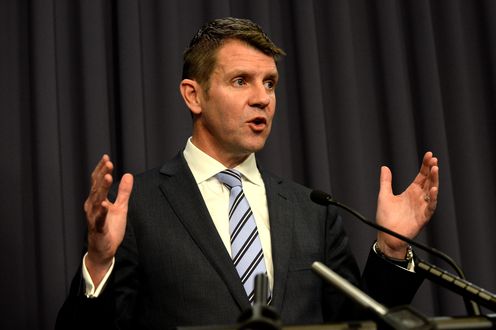
How far does Premier Baird's support for the LGBTI community extend? (image source: The Conversation).

How far does Premier Baird’s support for the LGBTI community really extend? (image source: The Conversation).

Thoughts – and Actions – on IDAHOBIT

Updated May 2017:

On 17 May 1990, the World Health Organisation agreed to declassify homosexuality as a mental health disorder. Long overdue, this move helped give weight to campaigns around the world to decriminalise homosexuality, and calls for equal rights irrespective of sexual orientation.

In 2005, the first ever International Day Against Homophobia was held on May 17, to mark the significance of the WHO’s decision, as well as bring together groups from all over the globe to campaign for equality.

In the 12 years since, IDAHO has expanded, both in the size of the event, and in its inclusiveness, with many countries now referring to it as the International Day Against Homophobia and Transphobia (IDAHOT). Globally, the ‘tag-line’ for the event has also expanded to become the ‘Global Day to Celebrate Sexual and Gender Diversities’.

I absolutely support moves for this day to be as inclusive as possible – which is why I personally prefer to refer to it as IDAHOBIT: the International Day Against Homophobia, Biphobia, Intersexphobia and Transphobia. In this way all parts of the lesbian, gay, bisexual, transgender and intersex (LGBTI) communities are acknowledged.

But enough of nomenclature. What does this day mean to me?

Well, given I spend most of my time as an LGBTI activist on issues within Australia, today I choose to reflect on the wider struggle for LGBTI equality all over the globe.

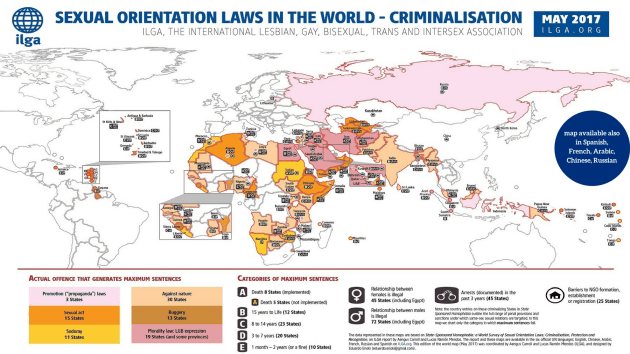
In terms of homosexuality and bisexuality, that means remembering that engaging in same-sex intercourse remains a criminal offence in at least 72 different countries. In at least four countries, being convicted for being gay or bisexual can result in the death penalty (Iran, Saudi Arabia, Yemen and Sudan), as well as in parts of Nigeria, Somalia, Iraq and Syria.

It must be pointed out that this is more than three-and-a-half times the number of countries where there is full marriage equality (20 countries in total, with parts of the UK and Mexico also recognising same-sex marriage).

So, no matter how far we think we’ve come in the 16 years since the first same-sex marriage in the Netherlands (and the rate of change has indeed been astonishing) there are many, many more countries where the battle is a much more fundamental one, where it is a fight for the right to even exist.

From an Australian perspective, we should remember that of the 53 members of the ‘Commonwealth of Nations’ (aka our colleagues among the former British Empire), approximately 40 still criminalise homosexuality and bisexuality. In other words, more than half of the countries in the world where being gay or bisexual is a crime are found within a group that accounts for just over a quarter over the total number of countries.

It is fair to say that homophobia and biphobia is one of the most awful, and enduring, legacies of the British Empire (and especially of Victorian-era Britain). It is equally fair to suggest that it is the responsibility of the United Kingdom, and other countries within the Commonwealth where LGBTI rights have progressed, such as Australia, to assist moves towards decriminalisation in these countries.

But Australia also has special responsibilities with respect of at least one country in our own neighbourhood, which still criminalises homosexuality and bisexuality, and which Australia exerted some form of control over for extended periods of the 20th century: Papua New Guinea.

It just so happens that Australia continues to use PNG for the indefinite detention of (or, what the Government calls, ‘offshore processing and resettlement’ of) refugees, including LGBTI refugees. Even if what our Government is doing on our behalf is immoral, we as Australian citizens have a moral responsibility to support, as best we can, movements within PNG to decriminalise same-sex activity (which can attract punishments of up to 14 years imprisonment).

Of course, as the name suggests, IDAHOBIT is a day to reflect on more than just lesbian, gay and bisexual rights – we must also consider the lack of recognition of and support for transgender people right around the globe.

Trans people are all too frequently denied the right to be who they are, with some countries criminalising simply being trans, while many more deny individuals the medical support that they determine is necessary for themselves, and above all the identity documentation and legal status they deserve.

But, even where being trans is recognised by law, there remains a disturbing and enduring global epidemic of transphobic violence and hate crimes. We must continue to fight to ensure that no person is physically unsafe simply because of their gender identity.

The battle for intersex rights is, to some extent, an even more fundamental one – and that is the fight to be recognised in the first place. Ignored for many years, even it must be said by other parts of the LGBTI community, intersex advocates have done amazing work in recent decades in increasing their visibility and, in turn, visibility of the discrimination which affects them.

Part of these efforts has been shining a spotlight on the absolutely horrific things which are done (and continue to be done) to intersex infants, including sterilisation and other unnecessary and harmful medical interventions. The 2013 Senate Report on Involuntary or Coerced Sterilisation of Intersex People in Australia is a good place to start to read up about these injustices.

Intersex people are also affected by some similar issues to trans people in terms of ensuring that diversity, in gender identity and sex/intersex status, is able to be recognised where it is necessary (and, where it is not relevant to be known or collected, that sex/intersex status is able to be ignored).

So, now that we’ve used IDAHOBIT to think about some of the issues affecting LGBTI people around the world, that’s our job done, isn’t it? After all, these global days of acknowledgement or recognition are usually opportunities for sombre reflection about injustices perpetrated against different individuals or groups, before we move on to the next ‘day of remembrance’ in a week or a month’s time.

Well, no. Because much more important than our thoughts about the human rights violations suffered by LGBTI people elsewhere, are the actions that we take to remedy them. It is not good enough to simply get outraged about the latest anti-LGBTI developments in Chechnya without actually doing something about it.

Of course, speaking as someone from a privileged background in a ‘Western’ country where many (but not all, especially re trans and intersex) of these rights have already been won, deciding exactly what that ‘something’ is can be difficult. It is also complicated by the worse than chequered history of ‘Western’ interventions in the affairs of other countries – including the historical legacy of anti-LGBTI laws and attitudes of European imperialism, and the modern crusades of christian evangelism.

Above all, it is our job to support the role of groups and movements within other countries who are seeking change, working with them (and certainly not dictating to them).

Which leaves what, exactly? For me, this means that on days like IDAHOBIT I consider how I can support those groups in Australia and internationally who either represent the global LGBTI cause, or who have demonstrated the ability to work effectively with LGBTI groups in other countries to achieve progress. This list includes (but is definitely not limited to):

Today, as we celebrate the International Day Against Homophobia, Biphobia, Intersexphobia and Transphobia, please consider supporting one or more of these groups so that together we can improve the lives of lesbian, gay, bisexual, transgender and intersex people everywhere.

ILGA 2017

The ILGA May 2017 map showing the criminalisation of same-sex activity.

Submission on Review of NSW Surrogacy Act 2010

The NSW Attorney-General’s Department is currently reviewing the Surrogacy Act 2010, legislation which allowed equal access to altruistic surrogacy within NSW, but made a criminal offence, with a penalty of to 2 years’ imprisonment, of entering into commercial surrogacy arrangements both within NSW and overseas.

Submissions are due by 30 April (next Wednesday), and full details about the review can be found here: <http://www.lpclrd.lawlink.nsw.gov.au/lpclrd/lpclrd_consultation/lpclrd_stat_reviews.html?s=1810621881

As with the NHMRC review of the Ethical Guidelines re Assisted Reproductive Technology, this subject matter is complicated, and I am sure that some people reading this blog will disagree with some of my conclusions (particularly re commercial surrogacy). if that’s the case, then I encourage you to leave a comment below and/or write your own submission.

The Director,

Justice Policy

Department of Attorney General and Justice

GPO Box 6

SYDNEY NSW 2001

justice.policy@agd.nsw.gov.au

Wednesday 23 April

Dear Director,

SUBMISSION RE REVIEW OF SURROGACY ACT 2010

Thank you for the opportunity to provide my personal submission in response to the review of the NSW Surrogacy Act 2010.

As suggested by the terms of reference, this submission is separated into two parts: the first examines whether the policy objectives of the Act remain valid, while the second considers whether the terms of the Act remain appropriate for securing those objectives.

Part A: Do the policy objectives of the Surrogacy Act 2010 remain valid?

The review outlines that the policy objectives of the Surrogacy Act 2010 are to:

  • Protect the interests of children born as a result of surrogacy arrangements;
  • Provide legal certainty for parties to surrogacy arrangements, and
  • Prevent the commercialisation of human reproduction.

Overall, I believe that the first two of these policy objectives remain valid, while the third should be replaced with the policy objective “To prevent the exploitation of people for the purposes of human reproduction”. I also believe that an additional policy objective should be added: “To recognise and support diversity in family structures and relationships.”

Protect the interests of children born as a result of surrogacy arrangements

As with likely all other people making submissions to this review, I strongly support the retention of this policy objective. I also agree with the inclusion of this objective as the primary Guiding Principle in section 3 of the Act: “[t]his Act is to be administered by reference to the principle that, in relation to any surrogacy arrangement, the best interests of the child of the surrogacy arrangement are paramount.”

I note that the best interests of children born through surrogacy are protected and supported by the equal treatment of all people, irrespective of sexual orientation, gender identity and intersex status, because, as all reputable research has shown, none of these characteristics are relevant in determining whether an individual or couple will be a good, caring and loving parent(s).

The Surrogacy Act 2010 should be commended for not drawing any distinctions on the basis of these attributes, and the non-discriminatory nature of its operative provisions should be retained.

However, the role of the Act in affirming the diversity of family structures and relationships that already exist in NSW could be strengthened by the elevation of a principle reflecting this reality in a new stand-alone policy objective.

Such a possibility was considered during the second reading speech debate in 2010[1], as well as in the Standing Committee on Law and Justice’s 2009 Report entitled ‘Legislation in Altruistic Surrogacy’, which helped to inform development of the Act.

I believe that a new policy objective – namely, “To recognise and support diversity in family structures and relationships” – should be added to the Act to highlight the non-discriminatory approach of the legislation and the fact that all people can be good parents, irrespective of sexual orientation, gender identity or intersex status.

Recommendation 1: A new policy objective should be added to the Surrogacy Act 2010– “To recognise and support diversity in family structures and relationships.”

Provide legal certainty for parties to surrogacy arrangements

Not only do I believe that this policy objective remains valid, but I also believe that the Act, and its framework for transfer of parentage of children born through surrogacy arrangements, is largely successful in achieving this outcome. Therefore, this policy objective should be retained.

Prevent the commercialisation of human reproduction

I do not support this policy objective, and believe it should be replaced with a new policy objective: “To prevent the exploitation of people for the purposes of human reproduction.”

By way of explanation, I believe the inclusion of the current policy objective is, to some degree, an attempt to address the issue of potential reproductive exploitation (especially of women), but that it confuses the means (a ban on commercial reproduction, including surrogacy) with the ends (preventing reproductive exploitation). It is the ends that should be reflected in the policy objectives rather than the means.

Further, I believe that the question whether commercial surrogacy is and always will be wrong, in every possible circumstance, is complex, and one about which different people, well-motivated and passionate about human rights and welfare, can and do reach different conclusions. However, one conclusion about which I hope all people would agree is that people, and especially women, should not be exploited for their reproductive capabilities.

Personally, I do not feel confident in saying that every possible arrangement, between a birth mother and the intended parent(s) of the child, is inherently wrong – and wrong to the point where it should be criminalised – simply because of the exchange of money in addition to those which cover the birth mother’s costs.

Nor do I necessarily believe that the nature of a surrogacy arrangement automatically and fundamentally changes, from one which is recognised and supported in legislation (altruistic surrogacy), to one which is not only prohibited but attracts a maximum penalty of two years’ imprisonment (commercial surrogacy), because of the exchange of that money.

Of course, I am cognisant of the fact that the introduction of financial ‘rewards’ to the already ethically-complex area of surrogacy arrangements carries with it significant risks. Chief among those are the risk that people, and especially the women acting as surrogate mothers, will be exploited for their reproductive capabilities.

However, I also believe there are other ways in which people can be exploited for their reproductive capabilities (such as through emotional and/or familial pressure). Indeed, the Surrogacy Act 2010 already contains a range of safeguards that have nothing to do with commercialisation, but are directed at preventing exploitation (for example, the requirement for an independent counsellor’s report to verify that the birth mother has an “understanding of the social and psychological implications of the making of a parentage order” and “whether any consent given by the birth parent or parents to the parentage order is informed consent, freely and voluntarily given” – subsections 17(3)(a) and (f)).

In my view, it is the prevention of exploitation that should be the policy objective in this area, rather than commercialisation per se. This new objective should then be used to guide whether and, if so, how commercial surrogacy arrangements should be allowed (see discussion in part B).

Recommendation 2: The policy objective “To prevent the commercialisation of human reproduction” should be replaced with a new policy objective “To prevent the exploitation of people for the purposes of human reproduction.”

Part B: Do the terms of the Surrogacy Act 2010 remain appropriate to secure those objectives?

For the most part, the provisions of the Surrogacy Act 2010 work well in protecting the interests of children born as a result of surrogacy arrangements and in providing legal certainty for parties to surrogacy arrangements. As indicated in Part A, I also believe that the non-discriminatory way in which the legislation has been drafted could be enhanced further by the addition of a new policy objective (“To recognise and support diversity in family structures and relationships”).

However, I believe that there is a clear divergence in determining whether the provisions of the Act remain appropriate depending on which of the two alternative policy objectives discussed in Part A (‘prevent commercialisation’ or ‘prevent exploitation’) is adopted.

For example, if the over-arching goal of the legislation remains to prevent commercialisation in any form, then the ban on commercial surrogacy in section 8 (which includes a maximum penalty of 1000 penalty units or 2 years’ imprisonment, or both, for those people who are in contravention) would clearly still be appropriate.

The prohibition on commercial surrogacy arrangements entered into overseas by people ordinarily resident or domicile in NSW, as outlined in the ‘geographical nexus for offences’ provision in section 11, would also remain a valid attempt to secure the objective of preventing commercialisation.

However, if the policy objective of preventing commercialisation is actually seen as a means to the end of preventing exploitation (which I believe it is), or indeed, if it were to be replaced with the explicit policy objective of preventing exploitation of people and especially women for their reproductive capabilities, then we are forced to consider how these provisions are currently operating, and their impact on people both in NSW and overseas.

I suspect that, even before the Surrogacy Act 2010 was introduced, there were few, if any, commercial surrogacy arrangements entered into within NSW, and that this situation would remain the case today.

I also believe that there is evidence that the number of overseas commercial surrogacy arrangements was growing at the time of the legislation’s passage, and that, since its introduction, the number of these arrangements entered into by people resident or domiciled in NSW has likely decreased. This could be seen as evidence that the ban has reduced exploitation.

However, I also believe that there is sufficient anecdotal and other evidence that some overseas commercial surrogacy arrangements entered into by people living in NSW continue. The overwhelming desire for some individuals or couples to become parents, together with the low numbers of ‘stranger’-child adoptions, both within Australia and internationally, means that this option continues to be at or near the top of the list of possible routes to parenthood. The criminal penalty attached to section 8 is unlikely to deter such people.

The result of this is that, while some individuals or couples may choose (or have the money to choose) commercial surrogacy arrangements in countries with strong regulation and low economic disadvantage, which at least reduces the possibility of exploitation, others opt for (or are financially restricted to choosing) countries with little or no regulation, as well as higher economic inequality or disadvantage than Australia, thereby significantly increasing the risks of exploitation of the women acting as surrogate mothers.

Thus, while the ban on commercial surrogacy may be effective in preventing the exploitation of women within Australia, I believe it has to be acknowledged that it is not entirely successful in preventing the potential for exploitation of women in other countries.

In this context, we are forced to consider whether there are alternative approaches to the question of commercial surrogacy that could lower the overall level of exploitation of all women.

At least one option, which should at least be considered, would be legalising commercial surrogacy arrangements within NSW, and placing them within a tightly regulated system with the ability to be overseen by appropriate domestic agencies, while at the same time continuing the prohibition on commercial surrogacy arrangements entered into overseas.

This framework – domestic legalisation and overseas ban – arguably may have the best potential to reduce the overall level of reproductive exploitation of women.

However, it is difficult to consider the respective advantages or disadvantages of such a framework in the absence of a proposal outlining exactly how a domestic commercial surrogacy scheme could operate. I believe it is nearly impossible to compare the known harms of surrogate exploitation in (some) overseas countries, with the hypothetical risks of exploitation under an unknown domestic commercial surrogacy scheme.

For this reason, I believe that the NSW Law Reform Commission or similar body should be given the responsibility to consider this issue, but, rather than recommend whether commercial surrogacy should be legalised or not, they should instead design what a ‘model’ domestic commercial surrogacy scheme would look like, with the guiding principle of minimising the risks of exploitation.

This model could then be used as the basis for a genuine and sustained debate, in the community, the media and amongst politicians, about whether the current system (a blanket ban), or a system which allows for tightly-regulated domestic commercial surrogacy, is the best way to reduce the risk of exploitation of all women, and not just those living in NSW.

Of course, it may be that it is impossible to design a domestic commercial surrogacy scheme that sufficiently reduces the risks of exploitation of people (and especially women) for their reproductive capabilities.

It may also be that, after this process, the majority of people still believe that the ‘commercialisation’ of human reproduction is always wrong, and that commercial surrogacy should always be illegal.

However, given we are aware that at least some overseas commercial surrogacy arrangements continue to occur, and appear likely to continue well into the future, I believe it is incumbent upon us to consider whether there are any alternatives to the current regulatory approach and, after considering those alternatives, decide what is the most appropriate way “To prevent the exploitation of people for the purpose of human reproduction.”

Recommendation 3: The NSW Law Reform Commission, or similar body, should be asked to design a ‘model’ framework for domestic commercial surrogacy arrangements, with a guiding principle to minimise the risks of the exploitation of people for the purpose of human reproduction.

Should you require additional information, or to clarify any of the recommendations included in this submission, I can be contacted at the details below.

Sincerely,

Alastair Lawrie

[1]http://www.parliament.nsw.gov.au/prod/parlment/NSWBills.nsf/0/71c024816771a264ca2577c100195683/$FILE/LC%2010210.pdf

Submission on NHMRC Review of Ethical Guidelines for Assisted Reproductive Technology

The Australian National Health and Medical Research Council is currently reviewing Part B of the Ethical Guidelines for the Use of Assisted Reproductive Technology in Clinical Practice and Research, 2007.

These Guidelines provide advice on a wide range of matters, including whether and if so in what circumstances someone can refuse to provide an ART procedure, and whether someone can direct that their gametes or embryos may only be used (or not used) by particular ethnic or social groups. They also currently include a prohibition on commercial surrogacy.

I have made a submission to the inquiry – which I reproduce below – which, as you can tell, largely argues for LGBTI equality, but also adopts a position on commercial surrogacy which I know some might find controversial (and if people do disagree with me I encourage you to leave a comment below).

I believe as many people as possible should make a submission to the review, because it should be informed by voices from across the community, including the LGBTI community (and that includes people who disagree with me on commercial surrogacy too). The details for the review, and how to make a submission, can be found at the following link: <http://consultations.nhmrc.gov.au/public_consultations/assisted_reproductive The closing date is Wednesday 30 April (ie ten days away), so time to get cracking.

Thanks for reading, and as always, let me know what you think.

Project Officer – Assisted Reproductive Technology

Health & Research Ethics Section

National Health and Medical Research Council

GPO Box 1421

CANBERRA ACT 2601

ethics@nhmrc.gov.au

Dear Project Officer, 

Review of Part B of the Ethical Guidelines for the Use of Assisted Reproductive Technology in Clinical Practice and Research, 2007

Thank you for the opportunity to make a submission on the review of Part B of the Ethical Guidelines for the Use of Assisted Reproductive Technology in Clinical Practice and Research, 2007.

I do so as an ordinary member of the public, without any special qualification or expertise in assisted reproductive technology (ART), but with a strong interest and passionate commitment to the legal and substantive equality of lesbian, gay, bisexual, transgender and intersex (LGBTI) Australians.

I do not propose to answer all 60 of the questions contained in the public consultation document on the NHMRC website, but will instead focus my comments on those issues which are most relevant to LGBTI equality, as well as to the issue of commercial surrogacy.

In particular, I would like to make comments about the following five areas:

  1. Conscientious Objections
  2. Transmissible Infections
  3. Unknown but Directed Donations
  4. Selection for Particular Characteristics
  5. Commercial Surrogacy
  1. Conscientious Objections

My first concern is about the breadth of the description of conscientious objections in paragraph 5.9 (page 12 of the consultation document). Specifically, this paragraph provides that “[i]f any member of staff or student expresses a conscientious objection to the treatment of any individual patient or to any ART procedures conducted by the clinic, the clinic must allow him or her to withdraw from involvement in the procedure or program to which he or she objects.”

While I note that the provision of ART services may, for some staff members of students, raise ethical concerns, I believe that the drafting of this provision is far too broad, and allows for conscientious objections even when such objections are themselves unethical.

For example, the provision as drafted would allow an individual member of staff to refuse to provide ART services to a person on the basis of that person’s sexual orientation, gender identity or intersex status (if that person believed that ART services should not be provided to such persons) or on the basis of relationship status (if the person believed that only ‘opposite-sex’ married persons should have access to ART).

With the increasing acceptance of LGBTI Australians (as evidenced by the long-overdue introduction of federal anti-discrimination protections in 2013) and of different relationship statuses (including the 2008 reforms to federal de facto relationship recognition), none of these objections – while potentially genuinely held by the individual – should be allowed as the basis for refusing to provide ART services. Nor should conscientious objections on the basis of any of sexual orientation, gender identity, intersex status or relationship status be recognized as acceptable or ‘ethical’ in the context of these Guidelines.

If paragraph 5.9 is to be retained in the Ethical Guidelines, I recommend that it be amended to specifically note that conscientious objections do not apply, and are not accepted, with respect to the sexual orientation, gender identity, intersex status or relationship status of the intended recipient of the ART procedure or service.

  1. Transmissible Infections

My second concern also relates to the breadth of provisions contained in the Guidelines, in this case paragraph 6.4 (titled Minimise risk of infection, on page 19 of the consultation document). Specifically, sub-paragraph of this section provides that “[c]linics should not accept donations from people at an increased risk of transmissible infections”.

While I acknowledge the importance of reducing the risk of transmission of communicable diseases, I believe that the wording of this sub-paragraph allows for potential misinterpretation or misapplication to prohibit donations from all people from a particular demographic group who may be over-represented in notifications for a transmissible infection (for example, men who have sex with men, who are currently disproportionately represented in HIV notifications in Australia).

This level of prohibition – at demographic group level – would ignore the particular behaviours or characteristics of the individual, which in practice make that individual more or less susceptible to transmission.

My concern is this area is founded on the ongoing exclusion of all men who engage in same-sex sexual intercourse from donating blood, irrespective of their particular behaviours or characteristics and therefore actual risk.

It is my view that any risk assessment, if deemed necessary at all, should be performed at individual level, rather than demographic group, and that the Guidelines should make this differentiation explicit in this section.

I would also note that the requirement contained in sub-paragraph 6.4.2 (that “[a]ll donors of gametes should undergo appropriate infection control surveillance”) is possibly all that is necessary to be included in this section in any event. If the individual concerned is being tested for relevant infections, and appropriate monitoring is being undertaken, then sub-paragraph 6.4.1 may in fact already be redundant.

  1. Unknown but directed donations

This concern relates to the paragraphs addressing ‘unknown but directed donation’ of both gametes (paragraph 6.9, at page 20 of the consultation document) and embryos (paragraph 7.6, at page 29).

I am strongly opposed to the recognition, even under Ethical Guidelines, of any ability of donors to restrict the use of their gametes or embryos to “certain individuals, such as those from a particular ethnic or social group.”

This creates the possibility of donors restricting the use of their gametes or embryos to people of a particular sexual orientation or gender identity (for example, to cisgender heterosexual people), and therefore to excluding other people on the basis of their sexual orientation, gender identity or intersex status. It also appears that this would allow for similar distinctions to be made on the basis of relationship status.

I note that paragraph 6.9 highlights that “[t]his type of directed donation is illegal in some jurisdictions.” I believe that it should be made illegal in all jurisdictions. The principle of non-discrimination, including non-discrimination against LGBTI people, should trump any ability of potential donors to discriminate against people on the basis of sexual orientation, gender identity, intersex status of relationship status.

Even where ‘unknown but directed donations’ are not made illegal under law, the placing of such restrictions on the donation of gametes or embryos should not be respected through these Guidelines (as they currently are in both paragraphs 6.9 and 7.6, which conclude by saying “[i]n the remaining states and territories, clinics must not use the gametes/embryos in a way that is contrary to the wishes of the donor.”)

At this point I note that there are two options to implement such a recommendation – and that is to either override any expressed discriminatory preference of the donor and provide the gametes/embryos to others irrespective of whatever qualification was sought, or to reject all such donations and ensure that their gametes/embryos are not used. I am comfortable with either outcome, as they both satisfy the principles of equality/non-discrimination, although I highlight the fact that the former would allow more gametes/embryos to be used by individuals or couples who may require them.

  1. Selection for Particular Characteristics

Paragraph 11.1 of the Ethical Guidelines (headed Do not select sex for non-medical purposes, on page 48 of the consultation document) states that “sex selection (by whatever means) must not be undertaken except to reduce the risk of transmission of a serious genetic condition”. I support the inclusion of this principle in the Guidelines.

However, I note that, in future, there exists the potential that research may create the possibility of determining the likely (or at least increased predisposition towards a specific) sexual orientation or gender identity of a child born as a result of assisted reproductive technology. I also note that, for certain groups within the umbrella term intersex (such as congenital adrenal hyperplasia, and androgen insensitivity syndrome) these diagnostic tests are already a possibility, while additional groups within intersex may be able to be determined in the future.

Given that the incredible diversity of sexual orientation (including heterosexuality, homosexuality and bisexuality), gender identity (recognizing those who are cisgender and those who are transgender) and sex (including intersex status) of human life is natural, and that all people, including LGBTI people, are equal, and should be treated as such, I believe the Guidelines should also include a prohibition on the selection of reproductive material on the basis of (likely or prospective) sexual orientation, gender identity or intersex status.

While for sexual orientation and gender identity, this scenario – the screening of embryos for such characteristics – may ultimately prove to be some years or even decades into the future, I believe that it is vital to lay down this signpost, that such discrimination will not be tolerated, now, thereby setting a precedent for if and when it is ever required. In the case of intersex status, such guidelines are necessary now, to support and recognize sex diversity.

  1. Commercial Surrogacy

Finally, I note that paragraph 13.1 of the Ethical Guidelines (on page 52 of the consultation document) states that “[i]t is ethically unacceptable to undertake or facilitate surrogate pregnancy for commercial purposes.”

While I agree that commercial surrogacy raises a variety of complex ethical issues, I do not necessarily agree with such a broad-sweeping and all-encompassing statement against commercial surrogacy. I do not believe there is sufficient evidence to assert that in every single situation commercial surrogacy is ‘unethical’ or ‘wrong’.

Of course, I am, like most people, sensitive to the very real potential for commercial surrogacy to result in the exploitation of women for their reproductive capabilities. This has to be a major, if not the major, consideration in determining whether to allow commercial surrogacy and if so what form of regulation might be appropriate.

However, I am also aware that the current legal situation – where commercial surrogacy in Australia is banned, and as a direct result of these laws an increasing number of Australian individuals and couples are engaging in commercial surrogacy arrangements overseas – may in fact cause a far greater degree of exploitation of women, especially in developing countries and/or countries which do not closely regulate surrogacy arrangements.

It may be that a domestic ban on commercial surrogacy has, contrary to the intended outcome of those who introduced it, in fact resulted in greater exploitation of women when considered as a whole. It may also be that, creating a domestic commercial surrogacy scheme, which would allow for direct oversight by Commonwealth (or State and Territory) authorities, could lead to a significant reduction in the potential for such exploitation.

I do not expect the review process considering these Guidelines to come to a conclusion about these difficult matters. Nor am I willing, or in a position, to even attempt to suggest what a domestic commercial surrogacy scheme would look like.

However, I do believe that this is an issue that requires further investigation, and could be the subject of a comprehensive review by the Australian Law Reform Commission, or their State and Territory equivalents.

The ALRC could be asked not to review whether such a scheme should be adopted but to determine, if commercial surrogacy was to be allowed in Australia, what the best possible scheme (with the least potential for the exploitation of women) would look like. The Parliament, and the wider community, could then discuss and debate the option that was put forward and make an informed choice about whether such a model was preferable to the ongoing domestic ban on commercial surrogacy (and the corresponding trend to overseas surrogacy arrangements).

I believe that such a debate, informed not just by a practical proposal but also by the real-world consequences of the current ban, is vital before we can truly come to grips with and possibly resolve whether a permanent ban on commercial surrogacy is ethical or otherwise.

Thank you for taking my submission into consideration.

Sincerely,

Alastair Lawrie

20 April 2014

Submission to National Curriculum Review re Health & Physical Education Curriculum

The following is my submission to the review of the national curriculum, initiated by the Commonwealth Minister for Education, the Hon Christopher Pyne MP at the end of 2013. Given the appointment of Mr Kevin Donnelly to co-chair this review, I am not confident that all, or indeed, any of the concerns below will be listened to. But the inclusion of LGBTI students and content in our schools system is so important that I believe it is still worth a shot.

National Curriculum Review Submission

Thursday 13 March 2014

Thank you for the opportunity to make a submission on the development of the national school curriculum.

In this submission I will limit my comments to the development of the national Health & Physical Education (HPE) curriculum. In particular, I will be commenting on whether the HPE curriculum as drafted addresses the needs of, and genuinely includes, lesbian, gay, bisexual, transgender and intersex (LGBTI) students.

I have previously made submissions on the initial public consultation draft of the HPE curriculum, released in December 2012 (a copy of my submission is provided at <https://alastairlawrie.net/2013/04/11/submission-on-national-health-physical-education-curriculum/ ), and on the revised draft released for limited public consultation in June and July 2013 (see <https://alastairlawrie.net/2013/07/30/submission-on-redrafted-national-health-physical-education-curriculum/ ).

In both of those submissions I was strongly critical of the fact that the draft HPE curriculums did not genuinely attempt to include LGBTI students (including omission of the words lesbian, gay or bisexual), did not provide adequate sexual health education, and did not provide adequate information regarding HIV and other Blood Borne Viruses (BBVs), including viral hepatitis.

A second revised draft of the curriculum was prepared by the Australian Curriculum, Assessment and Reporting Authority (ACARA) ahead of the meeting of Commonwealth, State and Territory Education Ministers in November 2013. It has been reported that Education Ministers did not agree to the second revised draft, but instead simply noted its development in anticipation of this review.

Nevertheless, the second revised draft HPE curriculum was published in February 2014 on the Australian Curriculum website (www.australiancurriculum.edu.au).

I have analysed the second revised draft, and sincerely hope that my comments below convey the seriousness of my concerns about the ongoing exclusion of LGBTI students and content, and the potential negative health impacts that this exclusion will have over the short, medium and long-term.

The current version of the national Health & Physical Education curriculum does nothing to put all ‘Students First’, which I understand to be the guiding principle of this review. In fact, by continuing to exclude some students, and marginalising content which is relevant to their needs, the draft HPE curriculum places lesbian, gay, bisexual, transgender and intersex students last.

If the HPE curriculum were to be implemented as it currently stands, it would actively contribute to, and reinforce, the disproportionate rates of mental health problems, depression and, most tragically, suicide, which continue to affect young LGBTI people.

By failing to include detailed BBV and sexual health education, the HPE curriculum would also leave young people, and gay and bisexual men and trans* people specifically, exposed to unnecessary risk of transmission of HIV and other infections.

And by not ensuring that all students are provided with information that is relevant to their own needs and personal circumstances, the HPE curriculum will undermine the fundamental human right to health of the next generation of young LGBTI people. This right must be respected, and not denied to people merely on the basis of other peoples’ attitudes towards their sexual orientation, gender identity or intersex status.

This review is an(other) opportunity to address some of the serious shortcomings of the draft HPE curriculum. Please seize this opportunity and recommend that the curriculum be amended to ensure LGBTI students are included, with content that is relevant and targeted to meet their needs, including around sexual health and BBV education.

The remainder of this submission will look at five key areas of the draft HPE curriculum. They are:

  • Terminology
  • Student Diversity
  • Bullying & Discrimination
  • Sexual Health, and
  • HIV and other BBVs.

Terminology

One significant problem that has consistently appeared through the initial draft, revised draft and now second revised draft of the Health & Physical Education curriculum is that of terminology. Specifically, the HPE curriculum has either completely excluded terms that are essential for young people to learn, or included terms or definitions that are not appropriate in the circumstances.

The biggest problem in terminology, featured in all three drafts, has been the failure to even include the words lesbian, gay or bisexual. Despite these being the most common forms of identification for people whose sexual orientation is ‘not heterosexual’, these terms have never appeared in any version of this document.

In fact, the ongoing refusal to name lesbians, gay men and bisexuals – despite the fact that students will have heard these terms regularly amongst their families and friends, in culture and in broader society, and that an increasing number of young people, including students, will be using these terms to describe themselves – is almost bizarre in its stubbornness to deny reality.

Even if there may be a reason for sometimes using the umbrella term same-sex attracted, to ensure that people who may be sexually attracted to people of their own sex but who do not use the terms lesbian, gay or bisexual to identify themselves are included, there is absolutely no justification for not naming lesbian, gay and bisexual identities within the HPE curriculum (for example, by using the description “same-sex attracted, including lesbian, gay and bisexual people”). The failure to do so contributes to the marginalisation of lesbian, gay and bisexual young people.

On a related issue, the HPE curriculum as drafted appears to use the incredibly broad, and arguably poorly-defined, term ‘sexuality’ at multiple points in the document when ‘sexual orientation’ would be more appropriate.

For example, the Glossary defines ‘sexuality’ as “[a] central aspect of being human throughout life. Sexuality encompasses sex, gender identities and roles, sexual orientation, pleasure, intimacy and reproduction and is influenced by the interaction of biological, psychological, social, economic, political, cultural, ethical, legal, historical, religious and spiritual factors”. The breadth of this definition makes some of the references to sexuality in the curriculum either too vague to be practicable, or even unintelligible.

The more widely-accepted term ‘sexual orientation’, which the curriculum does not define, and only appears to use once (in the definition of ‘sexuality’, reproduced above), would be more constructive, especially when references are made to differences or diversity in ‘sexuality’. Using the term sexual orientation would also more clearly include different orientations (including lesbian, gay and bisexual) than using the term sexuality alone.

On a positive note, there have been some improvements in references to, and definitions for, diversity in gender identity, including transgender people (which at least is included as part of the Glossary definition of ‘gender diverse’).

There have also been improvements in terms of the recognition of intersex people, who are now at least referenced in the statement on student diversity, and provided with a separate definition in the Glossary (where previously it had been erroneously included within the definition of gender diverse).

Nevertheless, defining a term in the Glossary and then using it once in the main text of the curriculum itself (and even then only as part of an ‘aspirational statement’ at the beginning of the document) is not sufficient to guarantee that the needs of transgender and intersex students are met.

In summary, the HPE curriculum needs to be significantly amended, such that it actually includes the terms lesbian, gay and bisexual, and that it adequately includes information about these sexual orientations, as well as transgender and intersex people, throughout the document.

Student Diversity

As discussed above, the HPE curriculum includes a statement on ‘Student Diversity’ at the beginning of the document, and this includes two paragraphs on ‘Same-sex attracted and gender-diverse students’.

I welcome some of the changes that have been made to this section between the revised draft and the second revised draft. In particular, these paragraphs now make a variety of positive statements (including that “it is crucial to acknowledge and affirm diversity in relation to sexuality and gender’” – noting my view, expressed earlier, that the use of ‘sexual orientation’ would be preferable here – while talking about “inclusive… programs” and the needs of “all students”).

Indeed, the last sentence of the section is particularly encouraging where it notes that being inclusive and relevant is “particularly important when teaching about reproduction and sexual health, to ensure that the needs of all students are met, including students who may be same-sex attracted, gender diverse or intersex”.

However, these positive developments continue to be undermined by the preceding statements that the HPE curriculum “is designed to allow schools flexibility to meet the learning needs of all young people, particularly in the health focus area of relationships and sexuality” (emphasis added) and that “[a]ll schools communities have a responsibility when implementing the HPE curriculum to ensure that teaching is inclusive and relevant to the lived experiences of all students” (emphasis added).

Both of these statements appear to leave the decision whether, and in what way, schools will include LGBTI students and content up to the schools themselves. In the first instance, whether LGBTI students and content are included at all is too important to be left to the ‘flexibility’ of the school itself.

Second, and far more importantly, the reference to ‘lived experiences’ could be argued to leave a loophole for schools to assert that, unless students first identify themselves or disclose their status as LGBTI, they do not exist in the eyes of the school and therefore the school does not have a responsibility to include them or content relevant to their needs.

This approach – apparently leaving it up to students to ‘come out’ before they are entitled to receive vital health information, despite the fact that doing so can, in many Australian jurisdictions, lead to the potential expulsion of that student, let alone other personal consequences for the student with their family or friends – fundamentally undermines the concept of health, and health education, as a universal human right.

And, while this appears to be a somewhat negative and narrow interpretation of these paragraphs, it is a realistic one given that a statement which appeared in the initial consultation draft, which stated that “same-sex attracted and gender diverse students exist in all Australian schools” was abandoned in the revised draft, and, despite arguments put forward for its re-inclusion was not included in the second revised draft.

In my view, whether to include LGBTI students and content should not be an issue of ‘flexibility’ between different schools. Instead, there should be a minimum level of LGBTI education provided to every student in every school – and, after all, isn’t a national minimum standard what the curriculum should be aiming to achieve?

This would be further supported by the re-inclusion of a statement which notes that “lesbian, gay, bisexual, transgender and intersex students exists across all Australian schools, and all schools must provide LGBTI-specific content to each and every student”.

Bullying & Discrimination

One area where there has been significant improvement from the initial draft and revised draft to the second revised draft has been an increase in content that attempts to redress anti-LGBTI bullying and discrimination.

In particular, I welcome the commitment in the Glossary definition of ‘discrimination’ that “[t]he types of discrimination that students must learn about include racial, sex and gender discrimination, homophobia and transphobia” (emphasis added).

I also welcome the increased content in year band descriptions that explicitly includes learning about homophobia, in years 7/8 and 9/10.

However, there are still a range of improvements that could be made to ensure that the curriculum adequately informs students about the need to stamp out discrimination and bullying of LGBTI students.

First, it is important to note that ‘homophobia’ does not necessarily include all forms of discrimination or prejudice against LGBTI people. The inclusion of transphobia in the Glossary is valuable, however, it should also be included in the year band descriptions to ensure that it is not overlooked. Both the Glossary and year band descriptions should also include biphobia and anti-intersex discrimination, which should not automatically be subsumed within a catch-all category of ‘homophobia’.

Second, discussion of homophobia, biphobia, transphobia and anti-intersex discrimination should not be left until years 7/8 to be introduced into the HPE curriculum, but should be commenced in years 5/6 alongside education about racism.

This is vital not only because anti-LGBTI bullying and discrimination can occur from a young age (including all-too-common insults like “that’s so gay”), but also because some young lesbian, gay and bisexual students are coming out earlier and earlier (and deserve to be protected), while some trans* and intersex youth may have disclosed their status earlier still.

Third, in the year band description for years 9/10, heading “[c]ritique behaviours and contextual factors that influence health and wellbeing of their communities” instead of using the term “such as… homophobia” (emphasis added) the curriculum should say “including homophobia, biphobia, transphobia and anti-intersex prejudice” to ensure that schools cannot opt out of providing this content.

Fourth, I would highlight the inconsistency in providing information about homophobia and transphobia to students, which as I have indicated above is a positive development, with the ongoing exclusion of the words lesbian, gay and bisexual from the document in its entirety, and the exclusion of the words transgender and intersex from the year band descriptions (which provide the main content of the curriculum).

It would seem nigh on impossible to appropriately teach students about the negatives of homophobia and transphobia (together with biphobia and anti-intersex discrimination, which should be added) at the same time that lesbian, gay, bisexual, transgender and intersex students are either not explicitly mentioned in the year band descriptions, or not even mentioned at all in the entire curriculum.

Sexual health

One of the key aspects of any Health & Physical Education curriculum must be the provision of comprehensive, inclusive and up-to-date education around sexual health.

Unfortunately, none of the three drafts of the HPE curriculum released to date have provided even a bare minimum of information about the best practices to support sexual health, not just for LGBTI people, but also for cisgender heterosexual students.

While the Glossary does at least provide a definition of ‘sexual health’ (“[a] state of physical, mental and social wellbeing in relation to sexuality. It requires a positive and respectful approach to sexuality and sexual relationships, as well as the possibility of having pleasurable and safe sexual experiences, free of coercion, discrimination and violence”), there is either limited or no support to implement this in practice in the year band descriptions.

In the year bands 5/6 and 7/8, which represent key ages for sexual health education, there is some discussion of physical changes surrounding puberty, and even changing feelings and attractions, but there does not appear to be any unit or module where students are taught the ‘nitty-gritty’ of sexual health, including discussion of different sexual practices, sexually transmitted infections (STIs) and the best ways to reduce the risks of STI transmission (including but not limited to condom usage).

I continue to find it extraordinary that the national minimum standard for Health & Physical Education to students does not even refer to STIs or condoms.

One of the arguments that has been mounted in defence of this omission is that this level of detail is not necessary in the curriculum, and that it will be covered as different jurisdictions and school systems implement their own syllabus.

I completely disagree. Given how fundamental sexual health is to the health and wellbeing of young people, surely the national HPE curriculum is the perfect place to guarantee that all students, rights across the country and irrespective of whether they attend government or non-government schools, receive the best possible information.

In addition, the reticence to provide any real detail around sexual health in the curriculum, on the basis that ‘specifics’ are not required, looks more like evasion when compared with some of the other sections of the curriculum which are, in fact, quite detailed (for example, in the year 5/6 band description it suggests “experimenting with different music genres such as Indian Bhangra music when performing creative dances”).

If something as specific as Indian Bhangra music can be named in the HPE document, then there must also be space for detailed discussion of the importance of sexual health, different sexual practices, STIs and condoms.

HIV and other BBVs

My fifth and final concern is related to the fourth, and that is the complete exclusion of HIV, and other BBVs like viral hepatitis, from the curriculum.

As I have written previously, I simply cannot understand that a national Health & Physical Education curriculum, developed and written in the years 2012 and 2013, does not even refer to HIV, hepatitis B and hepatitis C, which together directly affect almost half a million Australians.

It is vital that students learn about these BBVs, and most importantly how to reduce the risks of their transmission (for example, condom usage, hepatitis B vaccination, not sharing injecting equipment and safe tattooing and body art practices). If we do not provide this information, at the age that young people need it most, then we are failing in our duty of care towards the next generation.

The ongoing exclusion of HIV in particular looks odd (or, to be less charitable, short-sighted and ill-conceived). More than 30 years into the HIV epidemic in Australia, and with Melbourne hosting the 20th International AIDS Conference in July 2014, the proposed national minimum standard for Health & Physical Education curriculum does not even bother to mention it.

This is far from the ‘best practice’ approach that Australia adopted to the HIV epidemic in the 1980s. A best practice approach to the HPE curriculum now would, as a minimum, ensure that all students learn about HIV, hepatitis B and hepatitis C, and the best ways to reduce the risks of transmission.


Conclusion


As I have outlined above, I have serious concerns about the second revised draft Health & Physical Education curriculum, including its continued exclusion of LGBTI students and content relevant to their needs, as well as minimal or non-existent education regarding sexual health and HIV and other BBVs.

As reviewers of the national curriculum, I believe it is your responsibility to remedy these significant shortcomings, and ensure that the final HPE curriculum adopted is one that provides for the best possible health education and outcomes for all students, including lesbian, gay, bisexual, transgender and intersex students.

That is my definition of Students First.

Sincerely,

Alastair Lawrie

Letter to Prime Minister Abbott re Intercountry Adoption by Same-Sex Couples

The Hon Tony Abbott MP

Prime Minister

PO Box 6022

House of Representatives

Parliament House

CANBERRA ACT 2600

Cc Dr Ian Watt

Secretary

Department of Prime Minister & Cabinet

PO Box 6500

CANBERRA ACT 2600

Saturday March 8 2014

Dear Prime Minister

INTER-COUNTRY ADOPTIONS BY SAME-SEX COUPLES

I am writing regarding the issue of inter-country adoptions. Specifically, I call on you to ensure that the processes governing inter-country adoptions treat all couples equally, regardless of sexual orientation, gender identity or intersex status.

I note that you announced in December 2013 that the Department of Premier and Cabinet would be investigating the issue of inter-country adoptions, reporting to you on ways the processes governing inter-country adoptions can be streamlined ahead of the Council of Australian Governments (COAG) meeting, now scheduled for Friday 2 May in Canberra.

I also note recent reports about the potential for new arrangements for recognising adoptions by Australians with respect to children from Taiwan and South Korea.

However, I am unaware of any reports about work underway to ensure that all bilateral and, where relevant, multilateral, agreements concerning adoption entered into by Australia recognise the equal rights of all couples, including same-sex couples, to adopt.

There is no legitimate reason to prevent couples that may include lesbian, gay, bisexual, transgender or intersex (LGBTI) individuals from adopting.

In fact, the most recent report on the issue of same-sex parenting, commissioned by the Australian Institute of Family Studies, reaffirmed independent research over the past decade in finding that “there is now strong evidence that same-sex parented families constitute supportive environments in which to raise children.”

The report – Same-Sex Parented Families in Australia by Dr Deborah Dempsey (December 2013) – further confirmed that “children in such families do as well emotionally, socially and educationally as their peers from heterosexual couple families.”

Speaking about the report to the Sydney Morning Herald in February 2014, author Dr Dempsey said “[i]t’s not the family structure that matters so much as the kind of care; that children are loved, and are taken care of.” In practice, same-sex couples are just as capable of providing for the best interests of the child as opposite-sex couples.

Given these and other research results, I seek your commitment to ensure there is no discrimination against same-sex couples contained in any inter-country adoption agreement which Australia signs.

On a related issue, one of the administrative barriers to efficient inter-country adoption processes must be the variety of different, often conflicting, adoption criteria that operate in Australian states and territories.

For example, while my fiancé Steven and I would likely be eligible to adopt in Sydney, we would not be eligible to adopt were we to relocate to Melbourne. I doubt that our suitability as parents would differ simply because we moved 1000km to the South.

As before, there is no legitimate reason to prevent couples that include LGBTI individuals from adopting, and that must include within and between Australian jurisdictions.

The report which you have commissioned and will be presenting to the COAG meeting in May is an ideal opportunity for you to call on the states and territories to adopt uniform adoption laws, in particular to ensure that all Australian states and territories allow all couples to adopt, irrespective of sexual orientation, gender identity or intersex status.

This would be a benefit not just to the administrative efficiency of Australia’s inter-country adoption processes, but also to the equal rights and status of lesbian, gay, bisexual, transgender and intersex Australians.

Finally, I note during the week reports of disagreement within the Coalition partyroom on the subject of single and same-sex couple parenting. Specifically, it was reported that Senator Cory Bernardi expressed his support for Minister Kevin Andrews’ defence of so-called ‘traditional families’.

In response, Liberal MP for Herbert, Ewen Jones, defended families headed by single people, and same-sex couples, saying that what was more important was that children were loved, not what gender their parents were. Mr Jones later told Fairfax Radio “I think it’s the quality of the role model, male or female, not the sexuality of the parents that maters” – a sentiment similar to that expressed by Dr Dempsey, above.

It was also reported that you responded to the debate by saying “[w]e need to be as supportive of people as possible, regardless of their circumstances.”

Taking you at your word, I sincerely hope that you will be supportive of all Australian couples, including same-sex or otherwise LGBTI-inclusive couples, having the same rights to adopt children from other countries.

You have the chance to demonstrate this support through the review of inter-country adoption which you have commissioned, and through your advocacy at the upcoming COAG meeting which will discuss this issue. I and other same-sex couples around the country will be watching which approach you take.

Thank you in for your consideration of this correspondence.

Sincerely,

Alastair Lawrie

Is there a moral obligation on athletes to come out?

Following my post in January (“In search of the elusive gay or bisexual male tennis player”) I was asked by the Star Observer to write about lesbian, gay and bisexual sportspeople and whether they should be out or not. I took that to mean whether there is a moral obligation on LGB athletes to come out – and my piece discussing that topic can be found at the following link: <http://www.starobserver.com.au/opinion/soapbox-opinion/to-be-out-or-not-out-in-sport/118055

Coincidentally, it was written on the weekend before Mike Sam came out, making the topic of lesbian, gay and bisexual involvement in sport quite topical.

Of course, I really wish I could have written that yes, they do have a moral obligation, in particular to other members of the LGB community – but that would ignore both the individual behind the ‘athlete’, including their personal story (and struggles that we may not be aware of), and the many reasons why they may choose not to be out in their chosen sport, including homophobia and biphobia. In any event, I hope that I have done the topic justice, and would love to know your thoughts about what I wrote.

Two final notes: firstly, I deliberately chose not to cover the issues of trans* and intersex involvement in sports, because I didn’t feel that I had the necessary expertise to write about those subjects. Besides, I am confident there are many people better placed to write about trans* and sport, and intersex and sport, respectively.

Second, I was a little surprised that my references to ‘outing’, specifically that I believe there might be some circumstances in which outing a virulently or malevolently homophobic politician might be acceptable, didn’t attract any critical responses. Perhaps that position is a little less controversial than I thought? In any event, I might write more on the topic of outing at a later date.

Letter to Scott Morrison about Treatment of LGBTI Asylum Seekers and Refugees Sent to Manus Island, PNG

UPDATE: Sunday 20 July 2014

On Friday 18 July, I received the following response from the Department of Immigration and Border Protection, to my correspondence about the treatment of LGBTI asylum seekers and refugees:

Dear Mr Lawrie

Treatment of homosexual, bisexual, transgender and intersex asylum seekers

Thank you for your letter of 2 February 2014 to the Hon Scott Morrison MP, Minister for Immigration and Border Protection, concerning the treatment of homosexual, bisexual, transgender and intersex asylum seekers. The Minister appreciates the time you have taken to bring these matters to his attention and has asked that I reply on his behalf. I regret the delay in responding.

As a party to the 1951 Convention Relating to the Status of Refugees and its 1967 Protocol (the Refugees Convention), Australia takes its international obligations seriously. Australia is committed to treating asylum seekers fairly and humanely, and providing protection to refugees consistent with the obligations set out in the Refugees Convention, and other relevant international treaties to which Australia is a party.

The Australian Government has taken a number of measures to deter people smuggling and to ensure that people do not take the dangerous journey to Australia in boats organised by people smugglers. Under Australian domestic law, all illegal maritime arrivals (IMAs) entering Australia by sea without a visa will be liable for transfer to Nauru and Papua New Guinea (PNG) where any asylum claims they may have will be assessed, and if found to be a refugee, they will be resettled in Nauru and PNG or in another country.

Any claims made against Nauru and PNG by an IMA, including claims concerning the treatment of homosexuals, bisexual, transgender and intersex asylum seekers in either country, are considered prior to transfer. Where an IMA makes such a claim, consideration is given to whether the IMA can be transferred to the proposed country, or an alternative country, or whether the IMA’s case should be referred to the Minister for consideration or exemption from transfer.

Nauru and PNG are also both parties to the Refugee Convention. The Memoranda of Understanding (MOU) they have signed with Australia on the offshore processing arrangements reaffirm their commitment to the Refugees Convention and to treating people transferred with dignity and respect in accordance with human rights standards.

The enforcement of PNG domestic law is a matter for the Government of PNG. The government is aware of laws relating to homosexual activity in PNG and understands that there have been no recent reports of prosecution under those laws.

If homosexual activity should occur in the OPC, there is no mandatory obligation under PNG domestic law for Australian officers or contracted services providers to report such activity to the PNG Government or police.

The department notes the release of the reports by both the United Nations High Commissioner for Refugees (UNHCR) and Amnesty International on the Manus OPC. Any reports received by the department will be reviewed, and observations or comments verified. Where reports make practical observations that can be implemented and would improve the operations of the centres, the government will address these in partnership with Nauru and PNG to address any deficiencies in good faith.

Any claims of mistreatment at the Manus OPC would be primarily a matter for the Administrator of the OPC. The Manus OPC is administered by PNG under PNG law, with support from Australia. The PNG Minister for Foreign Affairs and Immigration appoints the Administrator of the Centre (a PNG national) under section 15D of the Papua New Guinea Migration Act 1978 (the Act). The Administrator, who, under the Act has control and management of the Centre (currently the Chief Migration Officer, Head of the PNG Immigration and Citizenship Service Authority) has an Operations Manager at the OPC reporting to him, who has oversight of the day-to-day operations of the OPC.

To assist PNG in the implementation of the MOU, the government has contracted appropriately trained and experienced service providers to ensure that transferees’ needs are adequately met, including through the provision of health and welfare services. Transferees can report any concerns to OPC staff.

Regarding the distribution of condoms, I can assure you that condoms are available at the Manus OPC, and the department’s contracted health service provider, International Health and Medical Service, conduct regular health information sessions on safe sex practices.

Thank you for bringing your concerns to the Minister’s attention.

Yours sincerely

[Name withheld]

Acting Assistant Secretary

Community Programmes Services Branch

9 / 7 / 2014

Some quick thoughts on the above:

  • Even though we are more than a decade into our post-Tampa nightmare of refugee policy in Australia, it is still shocking to see people simply seeking asylum in Australia described, by government officials, as Illegal Maritime Arrivals (IMAs). And it is probably almost as shocking realising that the same government official doesn’t even need to spell out what an OPC is anymore, instead it is taken as a given.
  • While the letter acknowledges there is no mandatory reporting of homosexual activity under PNG law, it explicitly does not state that there is no reporting of homosexual activity to PNG Police, or refute the claim that asylum seekers have been told they will be reported if found to engage in such activity.
  • It is difficult to accept the statement that “[t]o assist PNG in the implementation of the MOU, the government has contracted appropriately trained and experienced service providers to ensure that transferees’ needs are adequately met” from the same Government that is responsible for the death, in custody, of Reza Berati just over two weeks after I wrote my initial letter.
  • It is obviously welcome that, at least on paper, the Government claims it makes condoms available to asylum seekers on Manus Island – although whether they are made available in reality would be difficult to verify (given the shroud of secrecy surrounding, and lack of journalist access to, the detention facilities in PNG and Nauru).
  • The main problem remains however, and that is there is no firm commitment not to send LGBTI asylum seekers for ‘processing’ to countries which criminalise homosexuality, and no commitment that LGBTI refugees will not be permanently resettled in countries where they are liable to punishment merely for sexual intercourse.
  • The process outlined in the letter – that an asylum seeker must make a claim against the laws of PNG or Nauru prior to their transfer, is farcical given what we know about the current way asylum seekers are being assessed: while they are detained on navy or customs vessels, on the open sea, through a short interview (with as few as four questions by some reports) via teleconference to officials in mainland Australia. It is outrageous to suggest that the only way a gay asylum seeker can avoid being sent to another country which criminalises their sexual orientation is to declare their sexual orientation at short notice, whilst intimidated by naval or customs personnel (and potentially while intimidated by other asylum seekers, including possible family members), and to specifically claim protection against countries which they may not even be aware they are being taken to, and may not know criminalise homosexuality.

While I certainly wasn’t expecting to take much comfort from this response from the Department of Immigration and Border Protection, it is still depressing to realise that, yet again, so little solace is to be found.

ORIGINAL LETTER

The Hon Scott Morrison MP

Minister for Immigration and Border Protection

PO Box 6022

House of Representatives

Parliament House

CANBERRA ACT 2600

Sunday 2 February 2014

Dear Minister

TREATMENT OF LGBTI ASYLUM SEEKERS AND REFUGEES SENT TO MANUS ISLAND, PAPUA NEW GUINEA

I am writing regarding the treatment of lesbian, gay, bisexual, transgender and intersex (LGBTI) asylum seekers and refugees sent to Manus Island, Papua New Guinea, both for offshore processing and permanent resettlement.

In particular, I am writing about concerning allegations raised in the Amnesty International Report This is Breaking People: Human rights violations at Australia’s asylum seeker processing centre on Manus Island, Papua New Guinea, which was released on 11 December 2013.

Chapter 8 of that report, titled ‘Asylum claims on the basis of sexual orientation’ (pages 73-75), details a range of serious allegations about the mistreatment of LGBTI asylum seekers sent to Manus Island for processing.

Specifically, Amnesty International found that:

  • Section 210 of the PNG Penal Code, which makes male-male penetrative sexual intercourse a criminal offence punishable by up to 14 years’ imprisonment, applies to asylum seekers detained on Manus Island
  • Section 212 of the PNG Penal Code, which makes other sexual activity between men, termed ‘gross indecency’, a criminal offence carrying a maximum penalty of 3 years’ imprisonment, also applies to asylum seekers detained there
  • Asylum seekers held on Manus Island have been informed that if they are found to have engaged in male-male sexual intercourse, they will be reported to PNG Police (despite no requirement for mandatory reporting)
  • Gay asylum seekers have reported being subject to bullying and harassment from other detainees and staff, including physical and verbal abuse and attempted molestation, but are not reporting this abuse because of fear of prosecution for their homosexuality
  • Interviewees have indicated that some gay asylum seekers have changed or are considering changing their asylum claim, from persecution on the basis of sexual orientation to persecution on another ground, in order to avoid prosecution (thereby jeopardising the chances of their claim ultimately being accepted)
  • Interviewees have indicated that some gay asylum seekers have chosen to return home, despite the risks involved to the personal safety/liberty, rather than be subjected to ongoing mistreatment because of their sexual orientation on Manus Island and
  • Condom distribution has been banned within the Manus Island detention facility, despite the risk of HIV transmission.

In these circumstances, it is perhaps unsurprising that Ms Renate Croker, the senior official from the Department of Immigration & Border Protection located at the Manus Island detention facility, told Amnesty International that “she was unaware of any asylum claims being made on the basis of LGBTI identity.”

Not only is this contradicted by the Amnesty Report – which interviewed a man who reported that his claim was based on persecution due to his sexual orientation, and who expressed concern about being transferred to Manus Island for this reason – it also ignores the fact that some gay asylum seekers may have changed their claims to other grounds (for the reasons outlined above), or that some asylum seekers may happen to be LGBTI but their claim is in fact based on persecution on other grounds (for example, race or religion).

Irrespective of how their claim is being dealt with, the Australian Government has a responsibility to protect the human rights of any and all LGBTI asylum seekers who have sought protection in Australia. This includes the right to freedom from prosecution on the basis of sexual orientation, gender identity or intersex status, the right to claim asylum and the right to health.

From the information contained in the This is Breaking People report, it seems the Australian Government is falling well short of its obligations in this area.

I should note at this point that I am strongly opposed to the offshore processing and permanent resettlement of any asylum seekers by the Australian Government. This policy does not constitute a humane response, nor does it live up to our international humanitarian and legal responsibilities.

However, the mistreatment of LGBTI asylum seekers and refugees raises particular problems, problems that do not appear to be recognized by the Australian Government. Nor does there appear to be any evidence the Government is taking action to remedy them.

Even if the offshore processing and permanent resettlement of refugees continues, this must not include the processing and resettlement of LGBTI asylum seekers and refugees in countries which criminalise homosexuality (which both PNG and Nauru currently do).

If you, as Minister for Immigration and Border Protection and therefore Minister responsible for the welfare of asylum seekers and refugees, cannot guarantee that sections 210 and 212 of the PNG Penal Code do not apply to detainees on Manus Island, then you cannot send LGBTI people there in good conscience.

If you, as Minister for Immigration and Border Protection, cannot guarantee that LGBTI asylum seekers and refugees will not be subject to homophobic bullying and harassment, and will be free to lodge claims for protection on the basis of persecution due to their sexual orientation, gender identity or intersex status, then you must not detain them in such facilities.

If you, as Minister for Immigration and Border Protection, cannot guarantee that all asylum seekers and refugees, including but not limited to LGBTI people, have access to condoms, then you are potentially endangering their lives and you should be held accountable for any health problems which occur as a result (noting that HIV continues to be life-threatening in the absence of treatment).

It has been clear since the reintroduction of offshore processing of asylum seekers in Nauru and Papua New Guinea, passed by the previous Labor Government and supported by the Liberal-National Opposition in mid-2012, that the criminalisation of homosexuality in these countries constituted a significant threat to the human rights of LGBTI asylum seekers sent there.

Indeed, I wrote to you as Shadow Minister for Immigration expressing my concerns about this exact issue in September 2012. I did not receive a response addressing the subject of LGBTI asylum seekers prior to your assumption of the role of Minister for Immigration and Border Protection in September 2013.

I sincerely hope, now that you are the person directly responsible for the health and wellbeing of asylum seekers and refugees, and especially after the Amnesty International Report This is Breaking People has confirmed that these human rights abuses are real, that you take this issue, and your responsibilities, seriously.

I look forward to your response on this important issue.

Yours sincerely,

Alastair Lawrie

A copy of the Amnesty International Report This is Breaking People, can be found here: <http://www.amnesty.org.au/images/uploads/about/Amnesty_International_Manus_Island_report.pdf