Lyle Shelton’s ‘Respectful’ Debate


Two months after the federal election, and one week after the first sittings of the new parliament, we are still no clearer on whether there will be a plebiscite on marriage equality this term – the Turnbull Government is committed to pursuing it, the Greens (albeit possibly sans Senator Hanson-Young), Nick Xenophon Team and even Derryn Hinch are committed to blocking it, while Labor is yet to officially declare a position, although appears to be leaning towards opposing.


Perhaps the only thing that is clear is that the majority of lesbian, gay, bisexual, transgender and intersex (LGBTI) Australians are firmly opposed to a plebiscite, and want to see it blocked, even if that may lead to marriage equality being delayed by three years (see Plebiscite Survey Results: Part 1).


This position, and the strength with which it is being advocated, seems to have caught many by surprise, especially mainstream media commentators. A large number – not just at News Corp, but at more reputable newspapers too – have expressed confidence that, not only will marriage equality be successful at any plebiscite (which I probably agree with), but also that the debate beforehand will be respectful (which I highly doubt).


They seem perplexed that LGBTI Australians could be fearful that an extended national conversation, notionally about whether our relationships should be treated equally under the law, but in reality about whether LGBTI Australians and our families are worthy of dignity and respect or not, will inexorably lead to homophobia, biphobia, transphobia and intersexphobia.


There are many ways in which we could explain why we hold this genuine fear. People who responded to my survey have already done so very eloquently (I encourage you to read their answers: see Plebiscite Survey Results: Part 2, In Your Own Words). Buzzfeed[i] has also taken a look back at the issue of the decriminalisation of male homosexuality in Tasmania in the 1990s as an example of how disrespectful the plebiscite debate may ultimately become.


Another way we can explain these concerns is simply to highlight what those who are opposed to marriage equality are already saying – and then spell out that a plebiscite will ensure their comments will be more frequent, broadcast more widely, and, as the vote approaches, likely become even more extreme.


The most obvious ‘spokesperson’ to consider is Lyle Shelton, Managing Director of the Australian Christian Lobby (ACL) – which is ostensibly a lobby group to represent issues affecting Christians, but in reality is obsessed with denying LGBTI equality[ii] (despite the fact the majority of Christians favour marriage equality). Which means that, for the remainder of this post, I will focus on quotes which Mr Shelton has already made, and explain how they are deeply offensive to many people, and not just to those who are LGBTI.


But first, a compliment – probably the only one I will make in this article – which is to acknowledge that Lyle Shelton is far more disciplined and deliberate in what he says than his predecessor, Jim Wallace. He seems to speak far less ‘off-the-cuff’ than Mr Wallace did, which means he has avoided some of the more stupid mistakes he made – like this infamous 2011 ANZAC Day tweet:


“Just hope that as we remember Servicemen and women today we remember the Australia they fought for – wasn’t gay marriage and Islamic!” @JimWallaceACL


Or this 2012 comment:


“I think we’re going to owe smokers a big apology when the homosexual community’s own statistics for its health – which it presents when it wants more money for health – [included] higher rates of drug-taking, of suicide… it has the life of a male reduced by up to 20 years… The life of smokers is reduced by something like seven to 10 years and yet we tell all our kids at school they shouldn’t smoke.”[iii]


However, just because Mr Shelton is less impulsive than Mr Wallace was, doesn’t mean that what he says is any less offensive. Indeed, given he appears to carefully construct his public statements, you could argue that he is even more accountable for what he puts into the public domain.


The most obvious example of this – and, in my opinion, the most offensive thing said by anybody in the history of Australia’s marriage equality debate – is Shelton’s continual comparison between same-sex parenting and the Stolen Generations.


This includes a media release issued by the ACL in May 2013, criticising then backbench MP Kevin Rudd for expressing his support for marriage equality. The release, which was even called ‘Rudd’s change on marriage sets up a new stolen generation’, featured this statement “Australian Christian Lobby Managing Director Lyle Shelton said Kevin Rudd’s overnight change of mind on redefining marriage ignored the consequence of robbing children of their biological identity through same-sex surrogacy and other assisted reproductive technologies”, as well as the following quote from Mr Shelton:


“The prime minister who rightly gave an apology to the stolen generation has sadly not thought through the fact that his new position on redefining marriage will create another.”[iv]


More than two years later, which is plenty of time to reconsider his views, he did not back down from this outrageous analogy. In an extended interview with Buzzfeed[v] in April 2015, Shelton said:


“I think the effect on children is the same, yes. You’re removing a child from its parents. The context of that comment was [former prime minister] Kevin Rudd’s backflip [to supporting same-sex marriage]. This was the man who quite rightly apologised to the Stolen Generation. But how can you say on the one hand that it’s wrong to remove children, then create public policy which does the same thing? Those are the dots I was trying to connect… I’m sure it’s very difficult [for same-sex parents to hear this]. I don’t doubt their love for their children at all. I do not bring that into question. But the fact is, every child in a same-sex family structure has been taken from its biological mother or father. Now we have to ask as a society, is that right to do that?”


Most (in)famously, Mr Shelton reiterated his Stolen Generations comparison in February of this year when he appeared on ABC’s QandA[vi]:


Tony Jones: So you can deny it if you like: “The fact is every child in a same sex family structure has been taken from its biological mother or father.” Is that correct? Is that what you said?

Lyle Shelton: Yeah, it is actually, Tony”


And later on the same program:


Tony Jones: … Are you talking about a kind of stolen generation.

Lyle Shelton: Well, we did take Indigenous children and babies from their mothers and give them to loving families but the error that we apologised for was taking them from their biological mother and father. Now, through assisted reproductive technology, we are taking the child from their biological father or their mother and giving them to someone else.”


160906 Lyle Shelton qanda (source new matilda)

Lyle Shelton on QandA, repeating his offensive comparison between LGBTI parenting and the Stolen Generations (source: New Matilda).


Mr Shelton has made the same offensive comparison on (at least) three separate occasions, over the span of three years, and in three different forms (media release, interview and TV appearance). It is clear that, when he says same-sex parenting is like the Stolen Generations, he means it. But what does he mean?


Essentially, he is comparing the mere existence of rainbow families, many of whom thoughtfully and deliberately cause children to be brought into the world to be part of a loving home, while others foster or adopt children who do not have a home of any kind, with a policy that instead saw children stolen from their own loving families, many literally taken direct from their mothers’ arms.


In short, Mr Shelton is saying that allowing LGBTI people to have children is the contemporary equivalent of the worst Australian Government policy of the 20th century[vii], one that was aimed at the genocide of a people. Making such a horrific claim, repeatedly, is the antithesis of ‘respectful’ debate.


Lyle Shelton is deliberately taking aim at rainbow families, and, despite his protestations, I do not believe he cares who is hurt in the process, whether that be the parents or, especially, the children (imagine being told that your parents, who have done nothing but love and care for you, have instead ‘stolen’ you).


But it is not just LGBTI Australians who are offended by this wanton disregard both for historical accuracy and for the welfare of others – Aboriginal and Torres Strait Islander people have also called out Mr Shelton for inappropriately co-opting the history of the Stolen Generations for his own base purposes.


In response to his first statement, in May 2013, the CEO of Kinchela Boys Home Aboriginal Corporation (a Stolen Generations service for Indigenous men and their families), Pastor Ray Minniecon made the following comments[viii]:


“As a representative organisation for the Stolen Generations, we are deeply concerned by the comments made by Lyle Shelton on behalf of the Australian Christian Lobby comparing former Prime Minister Rudd’s support for marriage equality with creating another Stolen Generation… The assimilation policy of forced removal of children from their homes and the subsequent abuse of those children is no way comparable to the desire of a loving couple to have a child and have the relationship recognised.


“It is disrespectful to the current Stolen Generations, their history and their families… It is also dehumanising and demonising of gay couples and their desire for marriage and family. We call on Lyle Shelton to apologise to the Stolen Generations and to the gay community for this comparison.”


It is a very poor reflection on Mr Shelton that, far from apologising to Mr Minniecon, people affected by the Stolen Generations and the LGBTI community (as requested), he has instead chosen to repeat the same comparison on multiple occasions. It is worrisome to consider, if he is so willing to disrespect Aboriginal people in this way, the extent to which he is prepared to disrespect LGBTI people and their families should a plebiscite proceed.


**********


Of course, his Stolen Generations comments are not the only examples of Lyle Shelton demonstrating he does not consider himself bound by the ordinary limits of ‘respectful’ debate. We have seen similarly extreme comments made during discussion of the Safe Schools program, which has dominated much of 2016 (and indeed has been going much longer, albeit attracting less publicity).


In fact, Mr Shelton and his colleagues at the Australian Christian Lobby[ix] have made so many offensive comments about Safe Schools it is difficult to select just a few – but I will try nonetheless. For example, in 2015 he described what is an effective anti-bullying program thus:


“Dressed up as an anti-bullying program, it encourages children to cross-dress at school and demands the school accept this. Children are presented with information that downplays the danger of sexually transmitted diseases and introduced to concepts every thinking parent hopes they won’t Google.”[x]


More recently, he has written[xi] of his concerns about ‘an avalanche of homosexual and transgender material’ flooding schools as a result of marriage equality and Safe Schools:


“But one of the big consequences of any possible change in the definition of marriage – homosexual sex education in schools – is already proving a major distraction from the government’s election agenda. Hardly a week goes by without revelations of a new program designed to teach children that their gender is fluid or that they might be same-sex attracted.


“It seems that children are never too young to be inducted into the bright new world of rainbow sexual concepts. An avalanche of homosexual and transgender material is flooding into the curriculum from high school to pre-school – all without parent’s knowledge.”


The logical conclusion one can draw from these statements, and especially the reference to ‘homosexual sex education’, is that Mr Shelton would prefer school children – of any age – not learn anything about sexual and gender diversity.


This is despite the fact that decades of research (and the life experience of far too many LGBTI Australians, myself included) shows that imposing a ‘silence’ about sexual orientation, gender identity and intersex status harms LGBTI young people, adversely affecting their mental health, and leaving them ill-equipped to take control of their sexual and physical health.


Presumably, Shelton would like to see non-cisgender, non-heterosexual youth go back to being ‘invisible’, like the good old days, before we started making such a nuisance of ourselves, demanding things like the right to appropriate, inclusive and comprehensive health education.


But what could be motivating this ill-informed and, frankly, dangerous, opinion? It is only when you consider Mr Shelton’s broader views on sexuality, and gender identity, that a clearer picture emerges. From the April 2015 Buzzfeed interview referred to previously:


“I’m not saying that gay feelings are not very, very powerful. They obviously are. But I don’t believe they’re innate. And the fact many people have periods of their life where they feel attracted one way sexually and then another way. And the fact that you have “LGBT…I…” the whole range [of letters in LGBTIQ], the whole gamut. I don’t think that it’s something that you could say is innate. And certainly there’s been no scientific evidence to that effect.


“We all have strong and powerful desires. All of us. I think if you accept that argument, [that sexuality is innate] then yes, the debate would essentially be over. But I don’t think that’s right at all. And the fact that it is so fluid for so many people, then that isn’t the basis on which to make public policy which affects children.”


Based on this view – that sexual orientation and gender identity is not innate – it seems Lyle Shelton would prefer that children and young people be ‘protected’ from receiving any information about diverse sexualities and genders, for fear that more of them might come to the (perfectly reasonable) conclusion that being lesbian, gay, bisexual or transgender is entirely natural.


It appears that, in Shelton’s warped worldview, if we don’t expose children to this type of information, maybe some of them can avoid becoming one of them[xii]. Which, to put it lightly, is complete and utter bollocks – all it achieves is to increase the isolation already felt by many young LGBTI people, leading to greater risks of depression, self-harm and tragically suicide, the exact things that the Safe Schools program is designed to address.


**********


An emerging target in Lyle Shelton’s sights, both in the context of Safe Schools and more generally, has been transgender people (like any bully, it seems he will try to intimidate what might be considered a politically weaker and therefore more vulnerable section of the LGBTI community, rather than take on the more established, and comparatively powerful, gay or lesbian communities).


As with the comments above, this includes a February 2016 opinion piece suggesting that trans and gender diverse children should be ‘protected’ from accessing information and services to support their gender identity:


“…[T]here is no scientific evidence that anyone is “born gay” or that little boys and girls have been born in the wrong body and that surgery, hormones, tucking or binding are the solution. Yet Safe Schools teaches gender theory as fact – even to primary school children.


“What Safe Schools doesn’t say is that most gender dysphoria subsides before puberty. It is likely the program could be doing more harm than good, particularly if kids later regret their sex change, as many transgender people do.”[xiii]


Again, it seems Mr Shelton would prefer that children and young people not receive appropriate, inclusive and comprehensive health education in the hope that some might be ‘spared’ from becoming trans (which, at least from his perspective, appears to be an outcome best avoided).


Added to this policy of ‘invisibilisation’, the head of the Australian Christian Lobby has also imported the tactics of his North American extreme-right/religious fundamentalist counterparts, deliberately and repeatedly misgendering trans people, as well as raising the spectre of ‘bathroom panic’. From the same opinion piece:


“Women and girls should feel safe in their toilets and change rooms from male-to-female transgender people who have not undergone a sex change…”


And in a longer, more recent article:


These resources tell schools to allow boys identifying as girls to use the girls’ toilets and provide schools with step by step guides on “Supporting a Student to Affirm or Transition Gender Identity at School”. Imagine an 18-year-old man identifying as a girl using the same toilets, showers and change rooms as your 13-year-old daughter. This scenario is now envisaged via a Turnbull Government-funded website. Special facilities for transgender students are okay, the Safe Schools hub says, but they should never stop a student from using the toilet facility of their ”gender identity” as this would be demeaning”.[xiv]


Both of Shelton’s assertions here – first, that trans people are not trans unless they have ‘undergone a sex change’ (here’s a simple rule Lyle: if someone identifies and lives as a woman, or a man, or neither, then it is not up to you, or me for that matter, to decide that they are not), and second, that male-to-female transgender people are potential predators from whom cisgender women need to be protected – are disrespectful and, particularly in relation to the latter, downright disgusting.


But, instead of shying away from making this type of outrageous statement, Mr Shelton has decided to double down. In a media release just last week, responding to the Victorian Government’s long overdue moves to reform access to birth certificates, the ACL said the following “Australian Christian Lobby Managing Director Lyle Shelton said radical changes that would allow men identifying as women to enter women’s private spaces such as toilets and change rooms needed wider public discussion”.


It went on to note “Mr Shelton said Mr Andrews [sic] new laws would make many private spaces unsafe for women” and then included the following quote:


“Why should a man identifying as a woman be allowed into a woman’s gym or a domestic violence shelter?


“Why should biological males identifying as women be allowed into women’s public toilets and shower facilities?”


The obvious answer is that, if they are a trans woman then they are not a man – and Shelton’s refusal to acknowledge this, and deliberate choice to continually misgender them, is the opposite of ‘respectful’ debate. And his repeated inference that trans women are a threat to cisgender women is nothing less than the worst kind of scare-mongering.


There is another type of mis-representation that Mr Shelton has engaged in with respect to trans people, and that is potentially implying (or, at the very least, encouraging people to draw the conclusion that) gender affirmation procedures lead to an increase in suicides.


He has referred to this issue on multiple occasions – including on the ABC’s QandA program earlier this year:


“Studies that have been done of transgendered people who have had sex reassignment surgery, people who have been followed for 20 or so years have found that after 10 years from the surgery, that their suicide mortality rate was actually 20 times higher than the non-transgendered population. So I’m very concerned that here we are encouraging young people to do things to their bodies… like chest binding for young girls… [and] penis tucking… Now this is taking kids on a trajectory that may well cause them to want to take radical action, such as gender reassignment surgery.”[xv]


He also repeated it in May:


“Never mind that 10 years after a sex change operation, a person is 20 times more likely to commit suicide than the non-transgendered population.”[xvi]


Fortunately, The Conversation’s Fact Check examined these claims after Mr Shelton’s appearance on QandA. They found that, rather than multiple studies, he was referring to a single study, from Sweden. Further, while


“Shelton was correct to say that research shows that transgendered people who have had sex reassignment surgery had a suicide mortality rate later in life that was roughly 20 times higher than the non-transgendered population… it is also possible some viewers may have been left with the impression that the study showed sex reassignment surgery causes a higher risk of suicide later in life. That is not what the Swedish study showed. In fact, the researchers wrote that things might have been even worse without sex reassignment.”[xvii] [emphasis added]


One of the authors of the study, Mikael Landen, went further in refuting Shelton’s use of the study:


As Mr Shelton phrases it, it may sound as if sex reassignment increased suicide risk 20 times. That is not the case. The risk of suicide was increased 19 times compared to the general population, but that is because gender dysphoria is a distressing condition in itself. Our study does not inform us whether sex reassignment decreases (which is likely) or increases (which is unlikely) that risk… [emphasis added]


“We have known for a long time that [gender dysphoria] is associated with other psychiatric disorders (such as depression) and increased rate of suicide attempts. Sex reassignment is the preferred treatment and outcome studies suggest that gender dysphoria (the main symptom) decreases.”


All of which is to suggest that Lyle Shelton has publicly mis-used the outcomes of a study of trans people to suit his own intolerant agenda – implying (or allowing people to infer) that gender affirmation procedures increase the risk of suicide among trans people, when it is likely they instead decrease it. And, despite being publicly corrected by one of the authors of the study in early March, he made the same discredited inference again in May as part of an argument to ensure trans and gender diverse children are denied access to an inclusive and supportive school environment.


That’s not just disrespectful, it’s totally disingenuous too.


**********


At the start of this post, we saw that Lyle Shelton was unafraid to employ, time and time again, completely inappropriate comparisons with the worst domestic policy of the 20th Century (the Stolen Generations) as a rhetorical weapon against rainbow families, marriage equality and LGBTI rights in general.


Given this, it is perhaps unsurprising to observe he has also felt no shame in linking marriage equality, and the Safe Schools program, with some of (if not) the worst international atrocities of the 20th Century, by comparing the increasing recognition of fundamental LGBTI equality with the rise of Nazism:


“That Labor leader Bill Shorten can promise during an election to fund the so-called ‘Safe Schools’ program which teaches children as young as four that ‘only you can know if you are a boy or a girl – no one can tell you’ and there be so little push back is a failure of those of us who know better.


“Changing the definition of marriage to entrench motherless and fatherlessness in public policy and teaching our kids their gender is fluid should be opposed. The cowardice and weakness of Australia’s ‘gatekeepers’ is causing unthinkable things to happen, just as unthinkable things happened in Germany in the 1930s.[xviii] [emphasis added]


Yes, he actually went there, he ‘Godwinned’. In Shelton’s view marriage equality and Safe Schools are ‘unthinkable things’, in the same way that ‘unthinkable things’ were done by the Nazis.


This is obviously completely disrespectful, and offensive, to lesbian, gay, bisexual, transgender and intersex Australians. And, just as his Stolen Generations claims were offensive to Aboriginal and Torres Strait Islander people, his Nazi analogy is also hurtful to the people affected by the Holocaust, and their relatives and descendants, including (but not limited to) Jewish people, Polish people, Romani people and disabled people.


Oh, and in case Lyle Shelton genuinely has no understanding of what happened in Germany during the 1930s and first half of the 1940s (and, based on the above comments, that seems a distinct possibility), that included thousands of homosexual men and women who were prosecuted, persecuted and executed in the Holocaust.


Anyone who is able to, without shame, draw comparisons with laws and policies designed to increase LGBTI equality and acceptance today, with a regime that murdered thousands of LGBTI people 70 years ago, is, in my view, unable to participate in ‘respectful’ debate about these issues[xix].


**********


I mentioned earlier that, for the most part, Lyle Shelton has been careful in his public statements, largely avoiding ‘off-the-cuff’ mistakes (which were far more common under his predecessor Jim Wallace). There is, however, one instance I can think of where the current Managing Director of the ACL let his guard down and revealed exactly what he thinks about marriage equality (and, in doing so, about LGBTI people more generally).


That occasion was his Sky News appearance debating Jason Tuazon McCheyne of the Australian Equality Party earlier this year. When challenged by Tuazon McCheyne to explain how recognition of his relationship could possibly affect that of Mr Shelton, Shelton responded with this:


“Well if the definition of marriage is changed it’s not assumed that millions of people like myself who are married, it’s assumed that I’m married to a woman. That affects me straight away, if people no longer assume that I’m married to a woman then I’ll have to explain myself.”


When “[h]ost Patricia Karvelas asked Mr Shelton if he was worried that people might think he was gay, Mr Shelton said they may or may not, but the terms of his marriage would have changed, alongside those of every other married Australian.”[xx]


More than six months later, and this remains an extraordinary, and extraordinarily stupid, answer. His only response about how marriage equality would affect his own marriage is that he might have to declare that his spouse is a woman? That he could be forced to say ‘she’ or ‘her’ at some point during a conversation in order to differentiate his marriage from marriages between two people of the same-sex? That’s it?


How utterly, utterly petty (some might say pathetic). To argue for the denial of equal rights under secular law because he can’t be bothered to use a pronoun. In doing so, he severely undermined any argument he might make against marriage equality in the future.


Of course, the real question here is why it should even matter – unless there is something wrong with a partner being of the same-sex, there is no inherent requirement for him to clarify gender-neutral comments someone might make about his spouse [as an aside, if Shelton had empathy this would have been an opportunity to understand that the mis-gendering of partners is something many LGBTI people already experience, frequently – with people making heteronormative assumptions about our relationships – but clearly it doesn’t appear to have occurred to him].


The implication we are therefore left with is that he would be forced to declare his spouse was a woman primarily to differentiate himself from us, as if being LGBT or I, or simply being perceived as LGBTI, were something to be avoided.


All-in-all, to use this as an argument – “if people no longer assume that I’m married to a woman then I’ll have to explain myself” – to reject our claims for equal treatment under the law is at best, dismissive, and yes, I would argue, disrespectful.


**********


From everything we have seen, it is apparent Mr Shelton shows no hesitation in making remarks that are disrespectful to Australia’s lesbian, gay, bisexual, transgender and intersex community, especially in the context of marriage equality and Safe Schools.


At the same time, exceedingly hypocritically, he has repeatedly called for the debate around these issues to be ‘respectful’. Sometimes this call for respect is made in the very next breath after making an offensive comment about us or our rights. Take the ACL media release, already mentioned above, responding to Victoria’s proposed new birth certificate laws, which said:


“Mr Shelton said Mr Andrews [sic] new laws would make many private spaces unsafe for women.


“Why should a man identifying as a woman be allowed into a woman’s gym or a domestic violence shelter?


“Why should biological males identifying as women be allowed into women’s public toilets and shower facilities?


“It is time to re-think the rainbow political agenda and the marriage plebiscite is the ideal time to have a respectful debate about the consequences of redefining marriage.”


That is exactly how the release was written, word-for-word. In the first three sentences, Shelton deliberately misgenders transgender people, suggests trans women are a threat to cisgender women, and imports the abhorrent fear-mongering ‘bathroom panic’ campaign from his North American extremist counterparts. And then, seemingly without any self-awareness whatsoever, he calls for ‘respectful’ debate in the fourth sentence.


Well, I call bullshit.


It is not ‘respectful’ debate to compare the mere existence of rainbow families with the attempted genocide of Aboriginal and Torres Strait Islander people.


It is not ‘respectful’ debate to continue to use this offensive analogy even after being called upon to cease and desist, and apologise (to Aboriginal people, and to the gay community), by a Stolen Generations service for Indigenous men and their families.


It is not ‘respectful’ debate to try to ‘invisibilise’ LGBTI children and young people, by denying them their right to appropriate, inclusive and comprehensive health education.


It is not ‘respectful’ debate to deliberately misgender trans people, to imply that trans women are a threat to cisgender women, to incite ‘bathroom panic’ and to misuse a study to imply gender affirmation procedures increase the risk of suicide when it showed no such thing (and to continue to do so even after being directly contradicted by the author of the study).


And it is not ‘respectful’ debate to argue for LGBTI people to be denied equal treatment under secular law because he might have to say ‘she’ or ‘her’ when referring to his spouse.


Of course, given all of this it is highly unlikely Mr Shelton is ever going to ‘change his ways’, and stop denigrating LGBTI people and our families. And this post is not aimed at achieving the impossible.


But it is designed to show to those media commentators who are seemingly unaware why so many LGBTI Australians are sincerely and genuinely concerned about the prospects of a plebiscite on marriage equality.


Because, if a plebiscite goes ahead, Shelton (and Francis, and van Gend, and the Marriage Alliance, and countless other homophobes and transphobes) will be given a megaphone to make similar outrageous, offensive and disrespectful comments, every day, for three-to-six months, with the media feeling compelled to report on each and every one, and with these comments likely becoming more and more extreme as the vote approaches.


Lyle Shelton et al have already shown, quite comprehensively, that a ‘respectful’ debate is beyond them. In that context, maybe those commentators will finally understand exactly why the majority of LGBTI Australians have thought long and hard about a plebiscite on marriage equality and come to the conclusion ‘thanks, but no thanks Malcolm’.


**********


Footnotes

[i] Buzzfeed Australia, This is What a Non-Respectful LGBT Rights Debate Looks Like, 1 September 2016.  https://www.buzzfeed.com/lanesainty/heres-what-happened-in-australias-ugliest-lgbt-debate?utm_term=.cp0oo5z8KQ#.uhV33QojNg

[ii] Brisbane Times, Christian Lobby analysis reveals strong gay focus, 9 June 2012. http://www.brisbanetimes.com.au/queensland/christian-lobby-analysis-reveals-strong-gay-focus-20120608-2017g.html

[iii] Huffington Post, Jim Wallace, Australian Christian Lobby Head, Claims Smoking is Healthier than Gay Marriage, 5 September 2012. http://www.huffingtonpost.com/2012/09/05/jim-wallace-australian-christian-lobby-smoking-gay-marriage_n_1858227.html

[iv] Sydney Morning Herald, Senator Wong condemns Christian Lobby’s stolen generations comment, 21 May 2013. http://www.smh.com.au/federal-politics/political-news/senator-wong-condemns-christian-lobbys-stolen-generations-comment-20130521-2jyn3.html

[v] Buzzfeed Australia, Meet the man determined to prevent marriage equality in Australia, 24 April 2015. https://www.buzzfeed.com/robstott/meet-australias-biggest-marriage-equality-roadblock?utm_term=.qba11XBknA#.nfmpp9yNYO

[vi] ABC QandA, Transcript, 29 February 2016. http://www.abc.net.au/tv/qanda/txt/s4402548.htm

[vii] The 21st century equivalent would likely be the indefinite imprisonment of people seeking asylum on Nauru and Manus Island, by successive Governments.

[viii] Gay News Network, ‘Dehumanising’: Christian Lobby must apologise for Stolen Generation comments, 21 May 2013. http://gaynewsnetwork.com.au/news/dehumanising-christian-lobby-must-apologise-for-stolen-generation-comments-11050.html

[ix] To some extent, Shelton could even be considered the ‘moderate’ ACL voice with respect to the Safe Schools program, while Wendy Francis has taken more of the ‘attack dog’ approach.

For example, more than 12 months ago, Ms Francis was quoted on news.com.au saying the following:

“Our society is already over-sexualised without extreme sexual material and gender theory being promoted in schools… Children have the right to their innocence. The political ideology carried by this program denies children this right… Girls’ toilets should always be a safe place for them and should be off limits to a boy who might be transitioning into a girl. No-one should be bullied at school, including children grappling with same-sex attraction or gender confusion. But promoting radical sexual and gender theories to children without parental consent is not the role of the federal or state governments.” News.com.au, Christian Lobby groups claim radical sexual experimentation is being promoted in schools, 25 July 2015. http://www.news.com.au/lifestyle/parenting/school-life/christian-lobby-groups-claim-radical-sexual-experimentation-is-being-promoted-in-schools/news-story/39c64a960b2d112875848c4f337de433

And early in 2016, The Australian reported on the issue in this way:

“Australian Christian Lobby spokeswoman Wendy Francis said the Safe Schools material pressured kids into accepting LGBTI concepts and ‘confuses them about their own identity.’

“She said forcing students to imagine themselves in a same-sex relationship was a ‘form of cultural bullying’. [emphasis added]

“Ms Francis said the material was not age-appropriate, as 11-year-old children were too young to be taught about sexual orientation and transgender issues. ‘A lot of children are still pretty innocent about this stuff – these are adult concepts’.

The Australian, Activists push taxpayer-funded gay manual in schools, 10 February 2016. http://www.theaustralian.com.au/national-affairs/education/activists-push-taxpayerfunded-gay-manual-in-schools/news-story/4de614a88e38ab7b16601f07417c6219

All of the usual ACL tropes are present and accounted for, including that trans women and girls are a threat to cisgender women, and that children and young people are ‘innocent’ and need to be protected from radical concepts like that being LGBT or I is perfectly normal.

Probably the only unique argument Francis presents is that an LGBTI anti-bullying program that encourages all students to imagine themselves in a same-sex relationship is a ‘form of cultural bullying’ – perhaps not realising that she is making an excellent argument for Safe Schools (to overcome the heteronormative pressure that young same-sex attracted people feel from literally everywhere – families, friends, schools, pop culture, the media – to imagine what it is like to be in a mixed-sex relationship).

[x] Mamamia, Teaching tolerance in schools is deeply dangerous, apparently, 5 November 2015. http://www.mamamia.com.au/safe-schools-program/

[xi] Online Opinion, Children are never too young to learn about rainbow sex, 9 May 2016 http://www.onlineopinion.com.au/view.asp?article=18217

[xii] Shelton is not alone in making this type of argument. Mr David van Gend, from the Australian Marriage Forum, recently provided a submission to the Queensland Parliamentary Committee inquiry into the Health and Other Legislation Amendment Bill 2016, legislation that will, if passed, finally equalize the age of consent for anal intercourse in that state. He was the only person to argue against equalization, claiming that:

“Schoolboys are vulnerable and often sexually confused. Multiple lines of research confirm that around two thirds of schoolboys aged 16 who identify as homosexual will no longer identify as homosexual within a few years. Their sexual identity is immature; the situation is fluid.

“Permitting older, established homosexual men access to schoolboys who are in a stage of uncertainty and sexual fluidity is likely to have the effect of establishing those schoolboys in a homosexual identity and subculture which they might otherwise have avoided.” Submission 10: https://www.parliament.qld.gov.au/documents/committees/LACSC/2016/21-HealthOLAB16/submissions/010.pdf

Of course, Mr van Gend here is going one step further, by invoking the completely unfounded ‘male homosexual as paedophile’ stereotype, but it still fits within the overall philosophy, which I believe is shared by Lyle Shelton, that young same-sex attracted and gender diverse people must be shielded from information that tells them they are okay, presumably in the hope that they might ultimately ‘grow out of it’.

[xiii] Herald Sun, Safe Schools transgender awareness program could do more harm than good, 8 February 2016. http://www.heraldsun.com.au/news/opinion/safe-schools-transgender-awareness-program-could-do-more-harm-to-kids-than-good/news-story/93f16a43ddb61881fd613c47fbf542db

[xiv] Online Opinion, Children are never too young to learn about rainbow sex, 9 May 2016 http://www.onlineopinion.com.au/view.asp?article=18217

[xv] ABC QandA, Transcript, 29 February 2016. http://www.abc.net.au/tv/qanda/txt/s4402548.htm

[xvi] Online Opinion, Children are never too young to learn about rainbow sex, 9 May 2016 http://www.onlineopinion.com.au/view.asp?article=18217

[xvii] The Conversation, FactCheck Q&A: Was Lyle Shelton right about transgender people and a higher suicide risk after surgery?, 4 March 2016. https://theconversation.com/factcheck-qanda-was-lyle-shelton-right-about-transgender-people-and-a-higher-suicide-risk-after-surgery-55573

[xviii] Pedestrian TV, Australian Christian Lobby compares Safe Schools to rise of Nazi Germany, 31 May 2016. https://www.pedestrian.tv/news/arts-and-culture/australian-christian-lobby-compares-safe-schools-t/2114fa3a-c2e8-4f04-be10-582088364131.htm

[xix] In Lyle’s ‘defence’, he is not the only anti-marriage equality campaigner to draw an analogy between LGBTI people campaigning for equal treatment under secular law and totalitarian regimes – as this infamous tweet by the Marriage Alliance makes clear (which also overlooks the fact it is young LGBTI people who are disproportionately affected by mental health issues, but that is an argument for another day):

160906 Marriage Alliance Noose Image

[xx] OutinPerth, Lyle Shelton admits he’s worried people will think he’s gay, 15 February 2016. http://www.outinperth.com/acls-lyle-shelton-admits-hes-worried-people-will-think-hes-gay/
To Plebiscite or not to Plebiscite?

To plebiscite or not to plebiscite? That is the question confronting us right now.


Malcolm Turnbull and his Liberal-National Government won re-election on Saturday July 2, albeit by the narrowest of margins in the House of Representatives. According to their election policy, they will introduce legislation in the second half of 2016 to hold a plebiscite on marriage equality, either in November this year or (more likely in my opinion) in March 2017.


Nevertheless, the picture in the Senate remains less clear, where, with counting continuing, there is a possibility the ALP, Greens and Nick Xenophon Team will collectively hold 38 Senators. All three parties formally support marriage equality and, based on those numbers, would be in a position to block the legislation required to hold the plebiscite.


The question is whether we – the lesbian, gay, bisexual, transgender, intersex and queer (LGBTIQ) community – want them to block the plebiscite or not.


For regular readers of this blog, that question might seem somewhat unexpected. Since it was first announced by then-Prime Minister Tony Abbott in August 2015, I have consistently, and often vociferously, opposed the plebiscite on marriage equality, including by:


As someone who has been engaged for more than six years, but who doesn’t want Steve and my right to marry to come at the expense of potential harm to young and vulnerable LGBTIQ people, my personal view would be that we should continue to oppose the plebiscite.


But this issue, whether to block the plebiscite or not, is much bigger than any one individual, or couple – it will affect nearly all members of the LGBTIQ community in some way.


From older couples for whom time may be running out, to younger people who have grown sick and tired of waiting for our politicians to catch up to public opinion, there may be valid arguments to ‘accept’ the plebiscite – if that is indeed the only option now on the table.


On the other hand, many rainbow families legitimately fear the damage that the anticipated homophobic and transphobic campaign by opponents of marriage equality may cause to them and their families. Meanwhile, other members of the LGBTIQ community for whom marriage equality is not a high priority may experience the harms of a plebiscite without enjoying any of the benefits.


For all of these reasons and more, I have decided to conduct a survey of the LGBTIQ community’s opinions about the plebiscite, and what we, as a community, should do next. It will be open from today (Sunday 17 July) for two weeks, closing on Sunday 31 July, and I would really appreciate it if you could take five minutes of your time to express your view:


This survey is now closed. 


As you will see in the survey, as well as asking for some optional demographic information (which will help to identify whether there are different opinions within the community on the basis of whether people are LGBTI and/or Q, their relationship status, age and whether or not they have children), the primary question (indeed the only mandatory question) asks participants to choose between the following three options:


  1. To block the plebiscite, if possible


The ‘if possible’ is added here because the Senate numbers might change in late counting, meaning the plebiscite may proceed regardless of the community’s views. However, assuming Labor, the Greens and Xenophon together reach 38 seats, this option would involve asking these parties to demonstrate their stated support for marriage equality by blocking the plebiscite and instead continuing to push for a parliamentary vote as quickly as possible.


The obvious benefit of this option is it would avoid holding a public vote costing at least $160 million, and almost inevitably preceded by a bitter and nasty campaign against LGBTIQ Australians by the Australian Christian Lobby, Australian Marriage Forum, Marriage Alliance and others.


Nevertheless, there is also a real chance that, once the plebiscite is blocked, Turnbull and his Coalition colleagues refuse to hold any parliamentary vote, meaning the equal recognition of our relationships is delayed until at least 2019 (or beyond). Blocking the plebiscite would also be open to mischaracterisation by our opponents (who could claim we are ‘afraid of democracy’ rather than being genuinely concerned about their hate-mongering).


  1. To accept the plebiscite, and fight to win


This option doesn’t necessarily mean agreeing that a plebiscite on this issue is desirable. Nevertheless, it would involve pragmatically acknowledging that, following the re-election of the Liberal-National Government, a plebiscite might be the best chance of achieving marriage equality during this term of Parliament.


As discussed earlier, there are risks in this approach. I’m not sure anybody believes Malcolm Turnbull’s naïve statements that the plebiscite debate will be ‘respectful’. As a result, it is highly likely young and vulnerable LGBTIQ people will experience real harm. And, even if we ‘win’ the plebiscite, there is still no guarantee Coalition MPs will actually pass marriage equality (or do so promptly, noting it took seven years for the national anthem plebiscite to be implemented).


But, we also need to consider the fact that there are many couples for whom waiting until 2019 (or beyond) is simply not feasible – a plebiscite might be their only option to legally wed in their own country before one or both passes away. It is, undeniably, a ‘big call’ to block what could be the only way that people who grew up in a different time, and a much less accepting country, might finally be allowed to marry.


  1. To wait to see the details of the plebiscite


Despite being announced as Liberal-National Party policy more than 11 months ago – and forming part of Turnbull’s re-election platform – there is still a lack of clarity around several key aspects of the proposed marriage equality plebiscite.


151222 Turnbull

Prime Minister Malcolm Turnbull has promised to hold a plebiscite on marriage equality, but – even after July 2 – still can’t tell us key details.


For example, it is uncertain what the exact question will be, and it may be more, or less, acceptable depending on the language used (such as whether it refers to same-sex marriage, or marriage between any two adults, or whether it even includes a reference to ‘traditional marriage’?).


The recent election campaign also revealed that there remains internal Coalition disagreement on the measure of ‘success’ – whether a simple majority will be sufficient, or whether it will also be required to be passed by a majority of voters in a majority of electorates (which will obviously be more difficult to achieve).


Finally, Prime Minister Malcolm Turnbull and Attorney-General Senator George Brandis have both so far refused to answer questions about the breadth of religious exceptions that may be included in any subsequent Bill to amend the Marriage Act – whether they will only apply to ministers of religion, whether they will also allow civil celebrants to discriminate against LGBTIQ couples, or whether they will attempt to include new ‘special rights’ to discriminate for wedding-related small businesses (eg florists, bakers and photographers etc).


For these reasons, some people might be willing to accept some plebiscites (asking a straightforward question, only requiring a simple majority, and not expanding religious exceptions) but not others, and these people may wish to see the details of any plebiscite before deciding whether it should be blocked or not.


**********


To choose your preferred option, out of the three presented above, please complete the survey here before Sunday 31 July:


This survey is now closed.


I will publish the results of the survey on Sunday 7 August (prior to the return of Commonwealth Parliament). They will inform the advocacy that I undertake on this issue from that point forward. If a clear majority of respondents favour blocking the plebiscite then I will continue to strongly campaign against it.


On the other hand, and despite any personal misgivings, if the majority of the LGBTIQ community believes this is something that, while not desirable, is ‘the pragmatic choice’, then I will turn my energies and efforts toward helping the ‘Yes’ case to succeed. [Of course, if the community is almost evenly divided on this question, then that decision becomes much more complicated].


Finally, I expect some opponents of marriage equality may query whether, by conducting my own survey of LGBTIQ community opinion about this topic, I am in effect endorsing the Turnbull Government’s proposal to hold its own national opinion poll. Pre-empting this criticism, I would note the following:


  • This survey will not cost more than $160 million to hold (or the equivalent of charging every Australian voter $10 to take part)


  • There is no easily-identifiable alternative to conducting this survey (unlike the plebiscite, which could be avoided by Parliament simply doing its job and voting on – and hopefully passing – legislation, potentially within a matter of weeks)


  • Conducting this survey will not lead to community division, and will not cause substantial harm to young and vulnerable LGBTIQ people, and


  • This survey poses a question of process – asking LGBTIQ people, who are the group with the most to win (marriage equality) and lose (through the expected homophobic and transphobic campaign by our opponents) from a plebiscite, for their preferred way to achieve equal relationship recognition. It is not asking all Australians – many of whom will not be significantly affected by marriage equality either way, and none of whom will experience any adverse impacts due to its passage – whether the relationships of LGBTIQ people are valid or otherwise.


This survey is now closed.


You’re wrong Malcolm Turnbull, homophobia is legally acceptable in Australia

It is now one week since the tragic events in Orlando, where 49 people were murdered in a gay nightclub, simply because they were lesbian, gay, bisexual or transgender (or were there as their family or friends).


I haven’t written specifically about those events for a few reasons. First, because I guess I’m still somewhat in shock about it and, like others, it will take some time to process the sheer scale of horrific, homophobic violence involved.


Second, because I haven’t wanted to talk about Orlando in the context of other public debates and risk them being unduly conflated (although, for the record, I do think it is a warning, albeit an extreme one, of the risks of a plebiscite generating hatred and vitriol towards Australia’s LGBTI community).


Third, and perhaps most importantly, I haven’t written anything because what has been written, and said, by others has been so eloquent, and so passionate, that I haven’t really felt the need to add anything. In fact, the outpouring of words and actions (including the vigils for Orlando held in many parts of the world, including here in Sydney) by LGBTI people and our allies over the past seven days has been a beautiful, and in many ways reassuring, thing to behold.


Countless others have already said the things that needed to be said, far better than I could ever say them:


Focusing on the names of the people killed, rather than that of the killer (such as CNN reporter Anderson Cooper’s touching report about the victims).


Challenging any erasure of the fact this was explicitly a homophobic and transphobic hate-crime, including:


Reminding us that this was an attack on a minority within a minority – Latinx members of the LGBT community.


Rejecting any moves to respond to homophobia with Islamophobia, as well as respecting and actively being inclusive of another minority within a minority – LGBTI Muslims.


Last, but certainly not least, seeing the individual act of homophobic and transphobic violence in the broader frame of homophobia and transphobia across the United States – and sadly, Australia – which is perhaps summed up best by this widely-shared social media image:


You werent the gunman


*********


In this context, as someone who primarily writes about LGBTI law and public policy, I didn’t have much further to offer – that is, until Australia’s right-wing media, and Prime Minister Malcolm Turnbull, made it a policy, and political, issue.


During the week, The Australian newspaper decided to turn their focus on hate-speech by some Islamic preachers. Specifically, they campaigned for the visa of Farrokh Sekaleshfar to be revoked on the basis of a speech in 2013 where he supported the imposition of the death penalty for homosexuality in some circumstances:


“Death is the sentence. There’s nothing to be embarrassed about this. Death is the sentence. We have to have that compassion for people. With homosexuals, it’s the same. Out of compassion, let’s get rid of them now.” [Mr Sekaleshfar ultimately chose to leave the country before he was forced out].


They then swung their attention towards the guests hosted by Turnbull at an Iftar dinner in Sydney, including the President of the Australian National Imams Council, Mr Shady Alsuleiman, again bringing up comments from 2013 where he reportedly said the following:


“What’s the most common disease these days? HIV, AIDS, that’s so common and there’s no cure to it. And when did it exist? Just decades ago, and more diseases are coming… [It’s] homosexuality that’s spreading all these diseases.”


Leaving aside the clear anti-Muslim bias of this newspaper – given it champions the voices of Christian advocates who condemn homosexuality rather than attacking them (hypocrisy that is perfectly skewered by the First Dog on the Moon in this cartoon, and especially the line “Christian homophobes against Islamic homophobia”) – there is a legitimate question about where the limits of ‘acceptable’ speech should be drawn, irrespective of the religion of the person saying them (Muslim, Christian, other or none).


The fact Mr Alsuleiman was a ‘dinner guest’ of the Prime Minister means it is entirely justifiable that he was asked for his view on those comments, and this was Mr Turnbull’s response:


“Homophobia is to be condemned everywhere, number one. We are a broad, diverse country and we must respect the right of gay Australians, we respect the right of the LGBTI community and the right for them to lead their lives and gather in peace and harmony. The massacre in Orlando, that shocking assault on the people in the gay nightclub is a shocking reminder, frankly, of how much hate and intolerance there is in the world, and how important it is for us to stand up for mutual respect that I spoke about earlier. That is the very foundation of our society. So I condemn, I deplore homophobia wherever it is to be found. It is not acceptable from a legal point of view in Australia, as you know, and I just – I’m sure that – well I know that [Mr Alsuleiman] has been encouraged to reflect very deeply on his remarks which were of some years ago, and it’s up to him how he restates or reconsiders his position.”


There are, of course, some fine sentiments expressed here, as well as some less-than-stellar interventions (as a public scolding, being “encouraged to reflect deeply on his remarks” is akin to Paul Keating’s description of John Hewson: “it was like being flogged with warm lettuce”).


But the thing that has stuck with me and, to be completely honest, has thoroughly pissed me off, is that the Prime Minister is fundamentally wrong. Specifically, his comment that “I deplore homophobia wherever it is to be found. It is not acceptable from a legal point of view in Australia, as you know…” IS. SIMPLY. NOT. TRUE.


Sorry, Malcolm, but you are very, very wrong: homophobia is indeed acceptable under Australian law, and in some places it is actively encouraged.


Here, I want to discuss briefly two such examples (although I’m sure readers of this blog could come up with several others):


First, as I have written previously[i], while the Racial Discrimination Act 1975 prohibits vilification on the basis of race, there are currently no prohibitions against the vilification of lesbian, gay, bisexual, transgender and intersex people under Commonwealth law. None. Zip. Zilch. Zero. Nada.


Which means that, while the Government could take action against Mr Sekaleshfar on the basis of his visa, they legally could not do anything against Mr Alsuleiman – because he would not have breached any Commonwealth laws.


Even at state and territory level, only four jurisdictions have legislated against LGBTI vilification (NSW, Queensland, Tasmania and the ACT), and in many cases those laws are incomplete or out of date too (for example, only offering protection to some members of the LGBTI community and not others[ii]).


So, while Mr Turnbull might like to say that homophobia “is not acceptable from a legal point of view in Australia, as you know”, that’s definitely not true – especially under Commonwealth law. And, based on the past term of the Abbott-Turnbull Coalition Government, with its initial attempt to wind back racial vilification, it’s a situation doesn’t look like changing any time soon either.


Second, while the historic Sex Discrimination Amendment (Sexual Orientation, Gender Identity and Intersex Status) Act 2013 introduced LGBTI anti-discrimination protections in Commonwealth law for the first time, it also contained provisions that, at the same time, severely curtailed those protections[iii].


For example, the general religious exceptions under section 37, and the specific exceptions provided to religious schools under section 38, mean there is no obligation on religious bodies to treat LGBT people fairly, or with even a minimum of respect. Indeed, religious schools are free to fire, and refuse to hire, LGBT teachers, as well as expel or refuse to enrol LGBT students.


The vast majority of state and territory anti-discrimination schemes[iv] include similar exceptions, with NSW’s Anti-Discrimination Act 1977 featuring the broadest (a school doesn’t even need to be religious, just ‘private’, in NSW to enjoy the privilege to discriminate against LGBT teachers and students).


All of which means that, were Mr Alsuleiman, or even Mr Sekaleshfar, to make similar comments, not on YouTube but instead in the classrooms or mosques (or churches) of a religious school, I cannot see the Commonwealth Government being able to do anything much about it under the law as it stands.


One aspect of this situation that sticks in the craw of many people is that all taxpayers, including LGBTI taxpayers, are effectively paying for this discrimination against LGBTI young people – because those same schools, which do not have to abide by the community standards against homophobia and transphobia that Mr Turnbull tried to articulate on Friday, still put their hands out for Commonwealth (and state and territory) funding.


But we should never forget that it is the LGBTI young people themselves, stuck in schools their parents have chosen, and potentially exposed to homophobia, biphobia, transphobia and intersexphobia from their principals and teachers, effectively condoned by governments of all levels, are the ones who ‘pay’ the highest price.


There are, of course, other aspects of Malcolm Turnbull’s comments that are offensive, not the least of which is the fact he chose to speak out against the homophobia of an Islamic preacher, because he invited him to dinner, but has so far steadfastly refused to condemn the homophobia from MPs and Senators who form part of his Government, even, for example, when they compare a program against the bullying of LGBTI young people to ‘sexual grooming’.


Here too though, rather than trying to explain this double-standard, I will quote another person who neatly summed up the glaring disparity via twitter:


Lane Sainty (@lanesainty 17 June 2016):


“I have So Many Complicated Thoughts about the two Islamic leaders criticised in the Australian press for their anti-gay comments.


I’ve seen people slamming comparisons Australian Christians – saying it’s not the same to oppose Safe Schools and to want gay people to die.


Given the suicide rates of trans kids, there’s actually an argument to be made there. But even if you accept the distinction, it’s still…


…not being an apologist for Muslim anti-LGBTI views to point out the hypocrisy of how we address queerphobia depending on religion.


Turnbull’s failure to condemn comments linking paedophilia and Safe Schools was deeply hurtful to LGBTI people. I cannot overstate this.


Yet look at his speed to denounce the sheik. Why condemn someone he shared a meal with, but not the anti-LGBTI folk on his own backbench?


Here’s the political message this sends: Islamic queerphobia = unacceptable, but Christian queerphobia = acceptable.


Actually, none of is acceptable. As long as you’re not actively calling for gays to die, you’re fine? No. That’s not how it works.


Anyway, many Muslims have written about combating homophobia within their community since Orlando. Read their words.


Just don’t forget that queerphobia doesn’t start with calling for actual violence against LGBTI people. It finishes there, if anything.”


Lane then followed that with an excellent article on Buzzfeed, with the rather self-explanatory title “7 Other Times People were Homophobic and the PM didn’t Condemn it”.


So, if Prime Minister Malcolm Turnbull genuinely “deplore[s] homophobia wherever it is to be found”, then there are some serious examples of it very close to his political home – will George Christensen, Cory Bernardi and others be similarly told to ‘reconsider their positions’?


And, if he wants to make sure homophobia “is not acceptable from a legal point of view in Australia”, then I know two places where he can start: introducing LGBTI anti-vilification protections in Commonwealth law, and removing religious exceptions from the Sex Discrimination Act 1984. If he doesn’t, then all his ‘condemnations’ of homophobia will start to sound a little hollow to me.


Footnotes:

[i] Don’t limit racial vilification protections, introduce vilification protections for LGBTI Australians instead.

[ii] In NSW, while homosexual and transgender vilification is outlawed, bisexual and intersex vilification is lawful: see What’s wrong with the NSW Anti-Discrimination Act 1977?

[iii] See What’s wrong with the Commonwealth Sex Discrimination Act 1984?

[iv] With the exception of Tasmania and, to a lesser extent, Queensland.

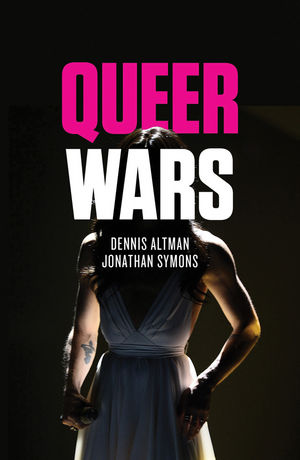
“Queer Wars” by Dennis Altman and Jonathan Symons

Today, May 17, is IDAHOBIT (the International Day Against Homophobia, Transphobia and Biphobia[i] – previously known as IDAHO, and IDAHOT). Described as a “worldwide celebration of sexual and gender diversities”, it was started in 2004, with the date chosen to commemorate the World Health Organisation’s 1990 decision to declassify homosexuality as a mental disorder.


To mark this occasion I thought it would be useful to focus on the issue of LGBTI rights around the globe. In my view, given the relatively advanced state of LGB rights in places like Australia[ii], it is time we devoted more attention to considering how we can effectively contribute to the international struggle for LGBTI rights.


Fortunately, a recent book, Queer Wars, written by Dennis Altman and Jonathan Symons, concentrates on exactly this issue, so I will use this post to look at the many interesting ideas and debates that they have raised.


Specifically, Queer Wars sets out to answer two questions:

  • “[F]irst, why, as homosexuality has become more visible globally, have reactions to sexual and gender diversity become so polarised?”[iii] and
  • Second, “what is to be done? As writers who believe passionately in the right of people to choose how they love and how they present themselves, we are equally concerned to think through how we can best achieve these rights globally.”


In answering the first question, the book takes a fascinating look at how, and how far, LGBTI rights have progressed in six extremely varied countries: Australia, Spain, Cuba, India, South Africa and South Korea[iv], including the factors that have aided, or hindered, change in these places respectively (the need to address HIV, and prevent its spread among men who have sex with men, being a frequent, although not universal, motivator for reform among this group).


It then spends some time considering the specific factors that may have held back change, especially in other parts of Africa and in much of the Middle East, as well as possible explanations for recent attacks on LGBTI rights from Russia to Uganda and elsewhere.


Without wishing to over-simplify what is a complex discussion of often inter-related influences, these include:


  • An almost inevitable reactionary backlash to the progress that has been made. This can be triggered when the rights of LGBTI people are recognised more quickly than their acceptance by the community. But it also derives from the well-resourced and highly organised efforts, of people like Scott Lively and groups like the World Congress of Families, to oppose LGBTI rights across the world. As noted on page 105:


“International organising to oppose gay rights – and, more broadly, anything that suggests the blurring of gender lines or acceptance of gender diversity – has paralleled the growth of international gay organising. American-based organisations defending ‘family values’ have been particularly active in promoting an anti-homosexual line both in international fora and within a number of overseas countries.”


  • The scapegoating of LGBTI communities by authoritarian regimes when they need a distraction from other problems, a tactic perfected by Zimbabwe President Robert Mugabe[v], and later emulated, to some extent, by Russian Leader Vladimir Putin.


  • The role of organised religion – including the Catholic Church, the virulently-homophobic Anglican Church in parts of Africa, as well as fundamentalist Islam and Hinduism – also cannot be ignored in this context. As Altman and Symons note on page 24:


“One of the few issues on which religious fundamentalists of all faiths can agree is opposition to homosexuality, and much contemporary anti-homosexual rhetoric is justified through particular interpretations of religious texts, even where it is driven by other factors.”


  • Finally, one of the more interesting recurring topics of Queer Wars is the role of ‘masculinity’, or at least particular conceptions of it, in contributing to attacks on LGBTI rights. From pages 108-109:


“RW Connell’s concept of ‘hegemonic masculinity’, aimed at preserving the dominance of men over women, is important; as Connell writes: ‘the contempt for homosexuality and homosexual men… is part of the ideological package of hegemonic masculinity’. Opposition to sexual diversity combines both consciously political and unconscious fears and desires, which makes countering it particularly difficult.”


The relative local strength of these four factors goes a long way to explaining why, “[d]epending on where in the world one stands there is huge progress towards greater acceptance, or increased intolerance.”[vi]


The more pertinent, and challenging, question is what to do about it, and in this respect Queer Wars presents a thoughtful analysis of the opportunities, and pitfalls, of ‘global gay activism’.


Starting first with the limits of what those in the developed or ‘Western’ world can do to assist their global queer comrades, Altman and Symons present a stark warning of the risks of campaigns for LGBTI rights being externally imposed on countries (rather than developed in partnership with or, ideally led by local groups, with support where necessary – and only where invited – from outside organisations). As noted on page 34:


“Is speaking out strongly for gay rights, as is now the practice of the US and other governments, helpful – or does it, in practice, help fuel, even create, more political homophobia? What to western eyes might seem a basic assertion of human rights can easily be portrayed in much of the world as echoing a colonial language of a paternalistic civilising mission.”


Even more damning is the description on page 144, which is perhaps one of the strongest passages in the entire book:


“Rahul Rao describes the plight of third world queers, trapped between homophobic nationalist governments and the frequently misguided interventions of the ‘gay international’, with a phrase that he borrows from Hannah Arendt’s account of Jews in World War II choosing between ‘malevolent enemies and condescending friends’. Since the relationship between western and third world activists will often be one of inequality, it is easy for activists to participate accidentally in a ‘discursive colonisation’, which presumes that western concerns will be universal and so ignores the wishes of intended allies.”


Given this, what then can ‘we’ effectively contribute? On this, Queer Wars seems to make two main arguments:


  • First, that – as frustrating, slow-moving (some might say glacial) and occasionally opaque as its processes are – we should primarily concentrate on using international and regional human rights[vii] instruments, bodies and, where they exist, courts, to push the LGBTI agenda. This includes:


“The ‘Universal Periodic Review’ of each [UN] state’s human rights records, conducted every four years by the United Nations Human Rights Council, [which] creates an opportunity for other governments and civil society actors (both domestic and international) to discuss issues of concern, [and] which frequently include sexuality.”[viii]


  • Second, that this agenda should be relatively narrowly conceived, focusing on the right to be free from criminalisation, and the right to be free from violence. This argument is best encapsulated on page 135:


“If the international system were able to protect people from violence and persecution, this would create space for local activists to push for a deeper acceptance of diverse sexualities, kinships and families. The forms of liberation they pursue may be unfamiliar to us; indeed, some western activists may regard them as ‘liberation-lite’. Since international campaigners are likely to misunderstand the kinds of changes that will gain local acceptance, the international effort should focus on universal protection against criminalisation and violations of personal safety. If international consensus can be built around these minimal protections, this will support more transformative local changes without dictating them.”


This is not to completely rule out other types of activity. At multiple points, the book describes the inter-connectedness between this decriminalisation agenda and global efforts to combat the HIV epidemic (with men who have sex with men recognised as a priority population by most international organisations)[ix].


After a long discussion of ‘aid conditionality’[x], and the major risks involved in this approach, the authors also do not exclude the possibility of ‘Western’ Governments providing specific aid “to expand support for local community-based and –led LGBTI programmes”[xi], although even here care must be taken to avoid perceptions of the external imposition of a pro-LGBTI agenda.


And, of particular relevance for a country like Australia, which detains LGBTI people seeking asylum in countries where they are at risk of criminal prosecution, Queer Wars highlights the importance of the acceptance of refugees fleeing persecution on the basis of their sexual orientation, gender identity or intersex status[xii].


Nevertheless, Altman and Symons’ main focus remains on working towards an international consensus in favour of decriminalisation, and personal safety, thereby helping to allow the conditions for local activists to push the issues, and agenda, that are most relevant to them. In this way, we, as privileged activists in ‘Western’ countries can best avoid what they describe, perhaps accurately, as the “traps of well-meaning egoism”[xiii].


**********


Outside of these two main arguments, Queer Wars touches on a range of other pertinent topics concerning international LGBTI issues across its 158 pages, including:


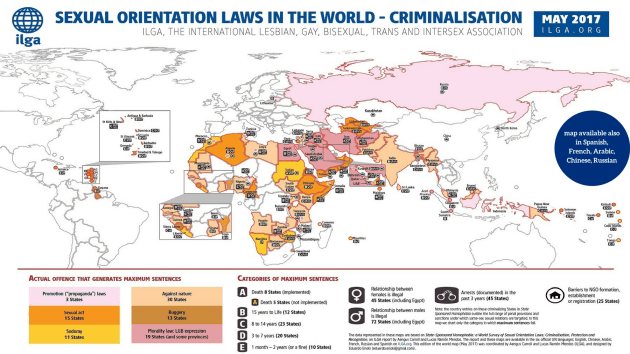
  • A necessary reminder that one of the key historical forces that has contributed to the fact that, in 2016, 77[xiv] countries continue to have criminal laws against homosexuality, was the British Empire (later known as the Commonwealth of Nations, or just ‘the Commonwealth’). As noted on page 113 “[t]he majority of countries that retain criminal sanctions against homosexual behaviour are members of either the Commonwealth or the Organisation of Islamic Cooperation (OIC), or both”.


Altman and Symons also note that “Margaret Thatcher’s ‘Section 28’ laws in the UK in 1988, which was aimed at preventing ‘the promotion of homosexuality’, were in some ways forerunners of what is now occurring globally”[xv], including recent laws against ‘gay propaganda’ passed by Russia.


  • We should also remember that, just because LGBTI rights might be reflected in a country’s laws, does not automatically mean the ‘real-life’ situation for LGBTI people in that country is especially ‘rosy’. Examples of this include the contrast between Singapore, where homosexuality remains illegal, and Russia, where sexual acts are lawful[xvi], as well as variations within South Africa, with it Constitutional protections around sexual orientation – and recognition of marriage equality – but which also gave the world the term ‘corrective rape’[xvii] for the sexual assault of women perceived as lesbian.


  • Highlighting that the rate of ‘advancement’ on LGBTI issues can vary within countries between sexual orientation and gender identity. Some places are more likely to recognise diversity in gender identity – such as India, through the hijra identity[xviii], and fa’fanine in some Polynesian cultures[xix] – while in others transgender rights lag far behind those of lesbian, gay and bisexual people (with few countries explicitly acknowledging, and therefore protecting, intersex status).


  • Above all, that even the use of ‘Western’ terms like LGBTI can be problematic, because it assumes that all countries, and all cultures, will adopt the same approach to, and definitions of, differences in sexual orientations (or even that a person’s sexual practice should form the basis of an ‘identity’ in the first place), gender identities and intersex characteristics.


Overall, then, Queer Wars was a pretty appropriate book to read in the lead-up to, and then explore via this post on, IDAHOBIT. In my view, it asks the right questions that ‘we’, as LGBTI activists in the ‘Western’ world should be considering about the contemporary global situation, and how we can best assist our ‘queer comrades’ in other countries.


Better still, it provides thoughtful answers, even if Altman and Symons’ conclusions can be somewhat frustrating because of their limited scope (although the reasons for that narrow focus are well-argued). And it wraps it all together in an accessible and engaging package.


Finally, if I did have one criticism, it would be that the book doesn’t answer some of the more detailed or specific questions that I have, as an Australian cis gay man, about how I can contribute to campaigns for the recognition of LGBTI rights of people in the countries in our region, and especially Papua New Guinea and South Pacific nations.


However, given Queer Wars is explicitly global in focus, that’s an entirely unfair criticism to make – instead, it’s a conversation that I’ll need to have elsewhere, albeit one that will be better-informed for having read Altman and Symons’ book.


Queer Wars


Footnotes

[i] Taken from the official website: http://dayagainsthomophobia.org Personally, I prefer to describe it as the International Day Against Homophobia, Biphobia, Intersexphobia and Transphobia, although that terminology is not yet in widespread use.

[ii] Noting that some discrimination against lesbian, gay and bisexual Australians remains, not just marriage equality but also barriers to inclusive education and limits on anti-discrimination protections, and of course acknowledging that the rights of transgender and intersex Australians remain poorly protected in many more areas.

[iii] Page 3.

[iv] Pages 47-70.

[v] From pages 28-29: “As president Mugabe tightened his hold over Zimbabwe he scapegoated the small homosexual organisations as un-African and responsible for many of the economic troubles of the country, paving the way for increasing homophobic rhetoric from a number of African leaders.”

[vi] Page 32.

[vii] Altman and Symons take a nuanced view of ‘human rights’, including defining it by how they fit within the political systems within which they are recognized – from page 141: “The ‘political conception’ of human rights offers a persuasive explanation of how human rights are formulated in the international system, but it is also inherently conservative: a claim will only become a human right when a preponderance of international opinion (as expressed by states) accepts it” (emphasis in original). As they readily acknowledge, this conception “makes more modest claims for human rights” (p140), which may help to explain their focus on campaigns against criminalization, and for personal safety, to the exclusion of other issues.

[viii] Page 154.

[ix] “The Global Fund to Fight AIDS, Tuberculosis and Malaria was founded in 2002 as a partnership between governments, civil society, the private sector and people affected by the diseases, and has sought to link funding to governments’ demonstrating that they are willing to work effectively with marginalized populations most vulnerable to HIV, usually identified as MSM [men who have sex with men]” pages 127-128.

[x] Defined on page 124 as “[c]onditionality refers to linking conditions to the provision of benefits such as loans or aid.” This is a practice that has been emerging in recent years as the Governments of the US and UK have sought to require greater acceptance of different sexual orientations as a pre-cursor to receiving, or continuing to receive, aid.

[xi] Page 130.

[xii] Discussion on pages 88-89.

[xiii] Page 144.

[xiv] The exact number is different according to different sources – this is based on the website of Australian Professor Paula Gerber: https://antigaylaws.org

[xv] Page 98.

[xvi] Page 112.

[xvii] Discussion of South Africa from page 62 onwards.

[xviii] Page 59.

[xix] Page 16.

The GLORIAs 2016 – ‘Winners’

The annual GLORIA awards – for the worst homophobic, biphobic, transphobic and intersexphobic comments of the past year – were held last night at NSW Parliament House.

Organised by NSW Labor MLC Penny Sharpe, they are an opportunity to reflect on all the stupid things that are said about us as a community – and making fun of the stupid people who say them.

So, here they are, the nominees, and winners, of the GLORIA awards 2016, including the winner of the 2016 Golden GLORIA (taking the mantle from last year’s worthy title-holder Germaine Greer):


  1. International


  • The Indonesian Government who told WHATSAPP to remove gay emojis.


  • Uzbekistani President, Islam Karimov who said: “When men live with men and women live with women, I think there must be something wrong up here [points at head]. Something is broken here. There is a saying: When God wants to reveal someone’s vulgarity, he first takes his reason away.” (Pink News, 9 February 2016)


  • ISIS for their continued persecution of gay men (see for example Pink News 18 January 2016)


  • Qatar for banning film screenings of The Danish Girl on the grounds of moral depravity (Pink News, 13/01/2016)


  • Irish Councillor Paddy Kilduff who said at a council meeting: “Personally I won’t be voting for it and the reason I am not voting for it – no problem with gays and lesbians – but the problem I have is with the children… when you have two women having babies and artificially inseminated… It’s gross, it’s gross. So I won’t be supporting it anyway, so you can take that back to Dublin.”


  • Prime minister of Fiji Frank Bainimarama who slammed same-sex marriage as “rubbish” and advised same-sex couples to move to Iceland and stay there if they want marriage equality. (SBS Online, 7 January 2016)


  • Marco Rubio who says that gay adoption is a “social experiment,” and children better off orphaned. (SLATE, 16 December 2015)


Who I wanted to win: It’s hard to go past ISIS

Who actually won: Marco Rubio


  1. Media


  • Miranda Devine for her column “Same sex marriage: Totalitarian tolerance”.


  • Angela Shanahan writing in the Australian, 27 February 2016: “Both sides of this argument are shying away from the truth. Bullying is not the issue here. It is the LGBTI education agenda that seeks to normalise behaviour that most parents do not consider normal.”


  • 2CH’s evening host Kel Richards who said on radio: “You really are doing something really dangerous and really terrible to those children.” According to him, the Safe Schools program is “an attempt to sexualise and recruit children for the gay and lesbian movement.” He sums it up as “disgusting gay and lesbian propaganda.” (Same Same).


  • Piers Ackerman for this column in the Daily Tele: “McGregor may identify as a woman and may even, with the blessing of the politically correct military establishment, use women’s lavatories, but until the chromosomes undergo some miraculous alchemic transformation, McGregor ¬remains by all biological and scientific rules, a bloke…”


  • Rowan Dean, for his column in the Courier Mail “Bullying in the name of dogma”


Who I wanted to win: Angela Shanahan (for implying that any child who is not cisgender and heterosexual is not normal)

Who actually won: Kel Richards


  1. Politics


  • George Christensen, who told Parliament on 25 February 2016: “If someone proposed exposing a child to this material, the parents would probably call the police, because it would sound a lot like grooming work a sexual predator might undertake.”


  • NATIONALS MP Andrew Broad, who represents the Victorian electorate of Mallee, who said to regional newspaper Sunraysia Daily: “Do I support calling a relationship between a man and a man, and a woman and a woman marriage? … I can put the rams in the paddock and they might mount one another but no lambs will come out.”


  • Former Australian Prime Minister Tony Abbott who addressed anti-gay lobby group Alliance Defending Freedom in New York saying that same-sex marriage is still “a huge ask” that would see “the erosion of family”. (Attitude, 29 January 2016)


  • Cory Bernardi who emailed a constituent to say: “You clearly haven’t got any idea what is in the program. If you did then you would be worried about your children being exposed to unhealthy ideas from such an early age.” The email then went on to say Safe Schools links to websites about “bondage clubs and adult sex toys”.


  • Former ALP Minister, Gary Johns, writing in Australian: “Private homosexual acts are not an offence by law in any state jurisdiction. Rest assured, there is no discrimination in law against gay people. Gay people are free to pursue their lives, especially happiness with a life partner.” (22 March 2016)


  • Reclaim Australia protesters who confronted Perth’s Save Safe Schools insisting they weren’t anti-gay, but needed to protect children from Safe Schools’ “Marxist ideology.” They later shouted “paedo scum, off our streets!” (Same Same)


  • Former ALP Senator Joe Bullock who quit the Senate stating: “How can I in good conscience recommend to the people that they vote for a party which is determined to deny its parliamentarians a conscience vote on the homosexual marriage question?”


  • Malcolm Turnbull for effectively saying nothing to help defend the LGBTI community from attacks on Safe Schools, and for refusing to overturn the unnecessary, inappropriate, wasteful & divisive plebiscite on marriage equality.


Who I wanted to win: Either George Christensen for comparing Safe Schools to grooming by paedophiles, or Malcolm Turnbull for failing to condemn the attacks on Safe Schools by Christensen, Cory Bernardi and others

Who actually won: Malcolm Turnbull


  1. Religion


  • Lyle Shelton, managing director of the Australian Christian Lobby, speaking on Q&A on February 29, 2016. “Studies that have been done of transgendered people who have had sex reassignment surgery, people who have been followed for 20 or so years have found that after 10 years from the surgery, that their suicide mortality rate was actually 20 times higher than the non-transgendered population. So I’m very concerned that here we are encouraging young people to do things to their bodies … like chest binding for young girls … [and] penis tucking”


  • Lyle Shelton (again) who was asked on Sky News how allowing same-sex marriage would affect his own marriage. His answer: “If the definition of marriage is changed, it’s no longer assumed … that I’m married to a woman. So that affects me straight away.”


  • Christian Activist Theodore Shoebat who claimed that the “SWAT team or the National Guard” should be used to take away children raised by “dykes and faggots” because they’re “in danger of being raped”. He continued: “Dykes are criminals! Two dykes that are supposedly married, that’s not marriage, that’s a criminal partnership. That’s an agreement between two criminals.” (Pink News, 16 January 2016)


  • The Marriage Alliance for the infamous rainbow noose image tweet


  • Colorado evangelical pastor turned random headline generator Kevin Swanson who wants girl scouts put to death for being too pro LGTB (Pink News, 14 March 2016)


  • Lyle Shelton managing director of the Australian Christian Lobby, for a third time, for his claims same-sex marriage would lead to a new “stolen generation”. (The Guardian, 1 March 2016).


  • Greek Orthodox Bishop Amvrosios of Kalavryta who said of gay couples: “Spit on them! Deprecate them! Vote against them!” (Pink News, 14 December 2015)


  • The Australian Christian Lobby for wanting the “two dads” episode of Play School cancelled.


Who I wanted to win: While it is clear Lyle Shelton desperately wants the title of Australia’s biggest homophobe, it has to be the Marriage Alliance for suggesting legalising marriage equality will lead to people killing themselves as a result of ‘PC bullying’. Seriously, how unhinged can you get?

Who actually won: Lyle Shelton – for his comment that if marriage equality was introduced, people might no longer assume he’s married to a woman.


  1. Sport


  • Jeremy Clarkson who attacked the trans community in his column for The Sunday Times – claiming the issues facing transgender people have been over exaggerated. “They were called lady boys, and in my mind they were nothing more than the punchline in a stag night anecdote.”(Pink News, 24 January 2016).


  • Footballer Serge Aurier who was been suspended for making alleged homophobic comments during a Periscope broadcast to fans. In the live video chat, Aurier claimed that coach Laurent Blanc and teammate Zlatan Ibrahimovic had engaged in oral sex – referring to Blanc as “une fiotte” (faggot). (PINK NEWS, 15/02/2016)


  • World boxing champion Manny Pacquiao has sparked criticism in the Philippines after describing gay couples as “worse than animals”. “It’s common sense. Do you see animals mating with the same sex?” Pacquiao told local broadcaster TV5.


Who I wanted to win: Manny Pacquiao (at least in part because this week he has been elected to the Philippines Parliament)

Who actually won: Manny Pacquiao


And the overall award, voted on by crowd participation (aka who got the loudest boos in the room on the night), the winner of the 2016 Golden GLORIA was:


Prime Minister Malcolm Turnbull (emerging victorious after a three-way boo-off against Marco Rubio and Lyle Shelton).


151222 Turnbull

Winner of the 2016 Golden Gloria – Prime Minister the Hon Malcolm Turnbull MP.


One final note on the winner: Some people might think it unfair that he won the politics category, let alone the Golden Gloria, especially because he didn’t actually say anything. But then that is kind of the point – when the right-wing campaign against Safe Schools was in full swing, and people like George Christensen and Cory Bernardi were intent on making Australia a less safe space for young LGBTI people, he said nothing, therefore encouraging their attacks to continue.


And, even though he knows that the plebiscite is unnecessary, inappropriate, wasteful and divisive, and as Prime Minister he should be able to do something about it, he is still pursuing Tony Abbott’s public vote as his own policy – not because it is the right thing for the country, but because it appears to be the right thing for his career. Both things make him a worthy, albeit somewhat controversial, ‘winner’.


See you all next year when, if we do have a marriage equality plebiscite, there will be absolutely no shortage of nominations (and where Lyle Shelton might finally get to take home the coveted crown).

The GLORIAs 2015

The GLORIAs – the Gay or Lesbian Outrageous, Ridiculous or Ignorant (Comment) Awards – were held again at NSW Parliament House on Tuesday 10 November 2015.

Organised by Penny Sharpe MLC, hosted by David Marr, and with entertainment provided by Barbra Blacksheep, the event is an annual opportunity to highlight the ongoing serious issue of homophobia, biphobia, transphobia and intersexphobia by making fun of what are, frankly, some of the most stupid and downright offensive things said in public life over the past year or so.

There are five main categories, with the overall ‘winner’ of the Golden GLORIA decided by a ‘boo-off’. Here are the nominees and winners of this year awards:

The most OUTRAGEOUS, RIDICULOUS or IGNORANT comment from the INTERNATIONAL category:

  • Kentucky county court clerk Kim Davis, who has refused to issue marriage licences to same-sex couples
  • Anti-gay radio host Bryan Fisher who compared a clerk who refuses to issue marriage licences to same-sex couples to a ‘clerk at Auschwitz’ who refused to murder Jews
  • Ghanaian presidential hopeful George Boateng, who declared: “There is too much indiscipline in Ghana, under my presidency when a corrupt person, gay or lesbian are arrested the law will make it possible for the courts to sentence the offender to death by firing squad”
  • Ed Straker, senior writer of com, the conservative news site, writing about the ‘Rainbow Doritos’: “Doritos are a product marketed to children, so they make the perfect gateway snack to introduce children to the joys of homosexuality”
  • Texas Governor Rick Perry: “I may have the genetic coding that I’m inclined to be an alcoholic, but I have the desire not to do that – and I look at the homosexual issue the same way”
  • Former French President Nicolas Sarkozy criticised his country’s same-sex marriage law saying he “detested” the way he feels his successor, Francois Hollande, and his Socialist government “forced” the same-sex marriage bill into law in 2013. The thrice-married Sarkozy said he feels the statute is “humiliating families and humiliating people who love the family”
  • Islamic State militants have reportedly murdered two more men for the ‘crime’ of being gay in an unnamed town in Iraq’s Nineveh province
  • Rapper Azealia Banks tweeted that the “LGBT community (GGGG) are like the gay white KKK’s. Get them some pink hoods and unicorns and let them rally down rodeo drive”
  • Kazakh Party Leader Bolashak: “I think it is very easy to identify a gay person by his or her DNA. A blood test can show the presence of degeneratism in a person”

And the winner was: Kim Davis. A well-deserved honour for someone who misguidedly thinks she is a martyr simply for refusing to do the straight-forward job of treating people equally.

MEDIA

  • The Daily Telegraph for the front page “Gay Class Uproar – Parents outraged as Sydney school swaps lessons for PC movie session”
  • Germaine Greer for her views on trans* women: “I didn’t know there was such a thing [as transphobia]. Arachnophobia yes. Transphobia, no.” “It seems to me that what was going on there was that [Caitlyn Jenner] he/she wanted the limelight that the other, female, members of the family were enjoying and has conquered it, just like that” … “Just because you lop off your dick and then wear a dress doesn’t make you a fucking woman. I’ve asked my doctor to give me long ears and liver spots and I’m going to wear a brown coat but that doesn’t turn me into a fucking cocker spaniel… A man who gets his dick cut chopped off is actually inflicting an extraordinary act of violence on himself.”
  • Piers Akerman for telling a kid with two mums she is not normal: “Statistically, you are not in a ‘normal’ family, no matter how many LGBTIQ-friendly docos you may be forced to watch by politically-driven school principals”
  • Andrew Bolt: “Truth is that marriage – the institution, tradition and ceremony – are indeed all public matters. Marriage is a social, not private, construct to bind men to women for the sake of their children, so that the next generations are properly socialised to the benefit of all”
  • Keith Wheeler, writing in the Wagga Daily Advertiser: [the ‘No’ campaign in a marriage equality plebiscite should] “remind Australians that gay marriage would be encouraging homosexuality… AIDS and HIV are at a 20 year high. Perhaps the ‘grim reaper’ advertisements need revival as a reminder of the consequences of homosexual sex. … Australians should consider the plight of adopted children and those needing foster care, being sent to a homosexual home. Changes to marriage laws will change Australian society forever.”
  • Melbourne GP, Dr Jereth Kok who wrote in a piece titled “A medical perspective on transgender”, that Christians should have empathy for these “broken people” but must understand that sex reassignment therapy is a “sophisticated and cruel myth”
  • Miranda Devine for her blog that only just missed out on the nominations for last year’s GLORIAs ‘But woe betide the player who “offends the gods of homosexuality… Let’s get one thing straight. ‘Gay’ no longer just means ‘homosexual’. The word has changed meaning over the last decade. Young people use ‘gay’ to mean lame, or dumb or stupid, as in: “That’s so gay…” So why is anyone pretending that what Mitchell said had anything to do with homosexuality? It didn’t”
  • Des Houghton writing in the Courier Mail: “Even people who like me who don’t go to church should be appalled that the gay lobby seeks to trample on their rights and customs in the name of equality. The media luvvies see gay marriage is another trendy fad like chai latte with yak milk and Lycra bike shorts. I’m tired of being lectured by people like Penny Wong who insist we must all roll over and toe the gay line in the name of equality. She and her followers demand we must agree that homosexuality is a good thing, and that it would be a good thing for homosexual couples to raise other people’s children. Enough already”
  • Piers Akerman (again): “I for one, am heartily sick of the constant pro-gay marriage propaganda from the homosexual lobby and its media mouthpieces at the ABC and Fairfax. They have gone a long way toward destroying the natural family relationship of a husband and wife and a child or children… It is plain wrong to make the claim that redefining marriage to include consenting partners of the same sex is a mere bagatelle. It is not. It is a gravity-defying act”

Amid such fierce competition, the winner was perhaps always going to be Germaine Greer.

POLITICS/LAW

  • Senator Eric Abetz for allegedly telling the Liberal Party room: “Lots of homosexuals don’t want to get married, Dolce & Gabbana never got married.”
  • NSW Premier Mike Baird for saying he did not believe the film [Gayby Baby] belonged in the classroom: “I think tolerance is a good thing. But I think there should be some parameters around it.”
  • A tweet by North Queensland federal MP George Christensen that linked US gun laws to the legislation of same-sex marriage: “I’m wondering how many people who look to USA and say we should follow them on “gay marriage” because they’re America the Great would want us to follow their lead on the right to bear arms?”
  • Fred Nile: “The homosexual movement is aggressively aiming to normalise their agenda, lifestyle and ideologies into our society. I urge the Government to do the right thing by the majority of parents who do not want their children exposed [to] the queer and homosexual ideologies. This issue has inevitable detriments and consequences.”
  • Fred Nile (again) for a speech in the NSW Parliament about the Safe Schools Coalition: “The material encourages a mindset of sexual exploration as if the very process of exploration were without risk, and is unashamedly driven by an agenda to promote homosexuality amongst children… So many Australians are disgusted at the sickening agenda behind the Safe Schools program. The program is absolutely abhorrent and disgusting in that it would normalise anal sex, oral sex, chest binding and homosexual sex.”
  • Agriculture Minister Barnaby Joyce for warning us that Asia could see Australia as “decadent” if same-sex marriage is legalised, potentially damaging negotiations and out trading relationship in the region.”
  • NSW Education Minister, Adrian Piccoli for issuing a ministerial memorandum to the State’s Principals ordering that: “Gayby Baby must not be shown in school time so that it does not impact on the delivery of the planned lessons.”

A surprising result in this category, with NSW Premier Mike Baird winning (personally, I thought the second of Fred Nile’s quotes, attacking the Safe Schools Coalition, was far more offensive).

RELIGION

  • Nick Jensen and Sarah Jensen for preparing to divorce in protest against any change to the law to accommodate same-sex marriage: “My wife and I, as a matter of conscience, refuse to recognise the government regulation of marriage if its definition includes the solemnisation of same-ex couples.”
  • Rev Mark Powell, writing in Fred Nile’s newsletter: “What we are seeing is nothing less than the attempted ‘institutional grooming’ of an entire generation of young Australians. Right under our noses boys and girls are being sexualised as part of their State-funded education.”
  • Rev Robby Galatay, a conservative Tennessee pastor who implied that lesbian, gay, bisexual and transgender (LGBT) people must remain celibate or should be put to death: “God said that the sins of the people had infected the very land in which they live. So what happens to people who engage in this activity, this sexual immoral activity? Go to Leviticus 20, God gives us the punishment for engaging in these sins… They must be put to death. And their blood is on their own hands.”
  • Russian Orthodox Priest Alexander Shumsky who claimed that football players are promoting a “gay rainbow” by wearing green, pink, yellow and blue shoes. He said: “Wearing pink or blue shoes, [the players] might as well women’s panties or a bra. The liberal ideology of globalism clearly wants to oppose Christianity with football. I’m sure of it. Therefore I am glad that the Russian players have failed and, by the grace of God, no longer participate in this homosexual abomination.”
  • Foundation Christian College Principal Andrew Newhouse for telling the father of a seven-year-old girl she would not have been welcome had it known her parents were gay: “The board also has a strong view that families with same-sex parents do not support a Christian world view… I mentioned to the parent that if his daughter was to continue this topic of discussion with his peers, then it would be in both his and his daughter’s interests to move to a school that would support his world view.”
  • Lyle Shelton and the Australian Christian Lobby for its campaign against the Safe Schools Coalition. “Dressed up as an anti-bullying program, it encourages children to cross-dress at school and demands the school accept this. Children are presented with information that downplays the danger of sexually transmitted diseases and introduced to concepts every thinking parent hopes they won’t Google us. Its ‘seven-ways-to-bind your chest’ advice to girls is one of the most shocking things I’ve ever seen done in the name of a government program.”
  • Australian Marriage Forum’s David van Gend for comparing marriage equality to slavery: “The Supreme Court’s slavery decision was eventually repented of and reversed, just as the homosexual ‘marriage’ decision will have to be repented of and reversed – but after how much social damage is done?”

Another surprising winner in this category, with Sarah and Nick Jensen taking out the honours. And, while their commitment to divorce should other people enjoy the same rights as them is no doubt stupid, I would have much preferred either Lyle Shelton of the Australian Christian Lobby, or Foundation Christian College Principal Andrew Newhouse, to collect the gong.

SPORT

  • Jacques Potgeiter for using the word ‘faggot’ multiple times during the Super Rugby Clash against the Brumbies.
  • AFL commentator Brian Taylor who said of Geelong player Harry Taylor “I don’t know whether you guys down there can hear me or not. I am up here getting ready for the game and I’ve just seen that crap from Harry – he’s a big poofter, I mean give them this one Harry” during a pre-game broadcast of Channel 7’s Saturday Night Footy show.
  • Sam Newman for saying that Michael Sam’s draft kiss was an “annoyingly gratuitous act”, and that “no heterosexuals do that when they are drafted.”

A clear winner in this category: Sam Newman – who can surely now tick off homophobia as part of the lifelong game of ‘bigot bingo’ he appears to be playing.

GOLDEN GLORIA

The ‘boo-off’, from the above five winners, came down to two clear crowd favourites. And, despite the vocal jeers from people in the room who wanted to see Mr Baird win (possibly from the same people who wanted to see him lose at the State election last March), the winner, with an exceptionally loud, and sustained, boo, was Germaine ‘Gloria’ Greer.

It must be said that no-one in the history of the GLORIAs has ever campaigned so long and so hard to win the top honour, with Ms Greer making repeated, unjustified and downright malicious attacks on the trans community throughout the eligibility period of 2014 and 2015.

Now it is on to 2016 and, while we are always hopefuly there will be fewer homophobic, biphobic, transphobic and intersexphobic comments across society, sadly the fact that there is likely to be a marriage equality plebiscite sometime in the next two years guarantees there will be no shortage of outrageous, ridiculous and ignorant commentary in the months ahead.

Germaine 'Gloria' Greer

Germaine ‘Gloria’ Greer

Submission to South Australian Law Reform Institute Consultation on Removing LGBTIQ Discrimination

South Australian Law Reform Institute

c/- salri@adelaide.edu.au

Monday 6 July 2015


To whom it may concern,

Submission to South Australian Law Reform Institute Consultation on Removing LGBTIQ Discrimination from South Australian Laws

Thank you for the opportunity to provide this submission to the South Australian Law Reform Institute (SALRI) public consultation on removing discrimination against lesbian, gay, bisexual, transgender, intersex and queer people from South Australian laws.

While I am not a resident of South Australia, I am a passionate advocate for LGBTI rights, and I provide the following comments on possible ways to improve the legal situation of LGBTI people in South Australia, especially in terms of their protections under anti-discrimination law.

Specifically, I would like to suggest three major reforms to the South Australian Equal Opportunity Act 1984 (the ‘Act’), namely:

  1. Amend protected attributes to:
    1. Modernise wording around gender identity, and
    2. Genuinely include intersex status.

The Equal Opportunity Act 1984 currently provides protection to lesbian, gay and bisexual people through section 29 (and subsequent provisions of the Act), because of the definition of ‘sexuality’ in section 5: “sexuality means heterosexuality, homosexuality and bisexuality.”

While the SALRI may wish to consider whether to recommend amendments to the wording of these attributes (potentially to ‘sexual orientation’, to ensure consistency with the provisions of the Commonwealth Sex Discrimination Amendment (Sexual Orientation, Gender Identity and Intersex Status) Act 2013), the primary concerns around protected attributes, and how they are drafted, are in respect of transgender and intersex individuals.

For example, protections for transgender people are based on the term ‘chosen gender’, which is defined under sub-section 5(5) of the Act as: “a person is a person of a chosen gender if –

  • the person identifies on a genuine basis as a member of the opposite sex by assuming characteristics of the opposite sex (whether by means of medical intervention, style of dressing or otherwise) or by living, or seeking to live, as a member of the opposite sex…”

Based on my understanding of transgender activism, and through recent developments of anti-discrimination law within Australia, it is highly likely that using the term ‘chosen gender’, and then defining it in this way, is not best practice.

For example, the Commonwealth Sex Discrimination Act 1984 protections are instead based on ‘gender identity’, which is defined in section 4 of that Act as: “gender identity means the gender-related identity, appearance or mannerisms or other gender-related characteristics of a person (whether by way of medical intervention or not), with or without regard to the person’s designated sex at birth.”

The Commonwealth definition appears to be significantly more inclusive, especially because it does not use descriptors such as ‘opposite sex’ and therefore avoids strict gender binaries, allowing people who do not identify as either male or female to also be protected.

I suggest the SALRI consider recommending the South Australian Equal Opportunity Act 1984 be amended to incorporate the term, and definition of, ‘gender identity’ from the Commonwealth Sex Discrimination Act 1984.

In a similar way, it is possible that the drafters of subsection 5(5) of the South Australian Equal Opportunity Act 1984 believed that they were including people with intersex variations, when they wrote: “a person is a person of a chosen gender if – …

  • the person, being of indeterminate sex, identifies on a genuine basis as a member of a particular sex by assuming characteristics of the particular sex (whether by means of medical intervention, style of dressing or otherwise) or by living, or seeking to live, as a member of the particular sex.”

However, once again based on my understanding of intersex activism, and on recent developments in anti-discrimination law (particularly at the Commonwealth level, and more recently in Tasmania), it is clear that this definition is not best practice – and is, in fact, inadequate to ensure protection for people on the basis of intersex status.

For this reason, the SALRI should consider recommending that South Australia adopt the provisions of the Sex Discrimination Amendment (Sexual Orientation, Gender Identity and Intersex Status) Act 2013, which was the first anti-discrimination legislation in the world to include ‘intersex status’ as a stand-alone protected attribute.

As a result of those reforms, ‘intersex status’ is now defined in section 4 of the Commonwealth Sex Discrimination Act 1984 as: “intersex status means the status of having physical, hormonal or genetic features that are:

  • neither wholly female nor wholly male; or
  • a combination of female and male; or
  • neither female nor male.”

Adopting this definition would ensure a far larger proportion of people with intersex variations would have protection under South Australia’s anti-discrimination laws.

Obviously, as a cisgender gay man, I am not an expert on either of the grounds of gender identity or intersex status. That is why these issues have been framed as suggestions – and if this is something that the SALRI wishes to take up in more detail, it should do so in close collaboration with South Australian and/or national transgender and intersex advocacy organisations to ensure that whatever language is ultimately adopted is the best, and most inclusive, possible.

  1. Remove broad exceptions granted to religious organisations

The current exceptions which are offered to religious organisations in the Equal Opportunity Act 1984 are overly generous, and their scope should be significantly narrowed.

Section 50 of the Act provides:

Religious bodies

1. This Part does not render unlawful discrimination in relation to –

a. the ordination or appointment of priests, ministers of religion or members of a religious order; or

b. the training or education of persons seeking ordination or appointment as priests, ministers of religion or members of a religious order; or

ba. the administration of a body established for religious purposes in accordance with the precepts of that religion; or

c. any other practice of a body established for religious purposes that conforms with the precepts of that religion or is necessary to avoid injury to the religious susceptibilities of the adherents of that religion.”

While both subsections 50(1)(a) and (b) appear to be necessary to protect the genuine exercise of freedom of religion, subsection 50(1)(ba) would only be justified on this basis if it was limited to the operation of explicitly or overtly religious bodies (like churches) and should not apply to other institutions which may be operated by religions but which have a different primary purpose (for example, schools, hospitals, aged care services or other community services).

Subsection 50(1)(c) is also completely unjustifiable given it provides what amounts to essentially a ‘blank cheque’ to organisations that are operated by religious groups to discriminate against lesbian, gay, bisexual or transgender (LGBT) South Australians, both in employment and in service delivery.

There should not be a general right to discriminate against LGBT people, across multiple areas of public life like education, health, aged care or community services, simply because of the religious beliefs of certain individuals or organisations. LGBT South Australians deserve the right to access services, and to apply for or undertake employment, in the public sphere without the threat of being discriminated against solely on the basis of who they are.

The Commonwealth Sex Discrimination Amendment (Sexual Orientation, Gender Identity and Intersex Status) Act 2013, which specifically excluded religious exceptions from applying to LGBT people accessing aged care services operated by religious organisations, has successfully demonstrated that:

  1. It is possible to restrict these religious exceptions in law, and
  2. After two years of operation, there have been no practical problems in the application of such provisions.

Even more relevantly, the Tasmanian Anti-Discrimination Act 1998 has not granted explicit exceptions to protections on sexual orientation, gender identity or intersex status to religious organisations – and this approach has also worked well over the past decade.

For example, under the Tasmanian legislation, religious organisations have traditionally only been allowed to discriminate in terms of:

  1. Employment based on religion (section 51)[1] or
  2. Participation in religious observance (section 52)[2].

I suggest that the SALRI consider the long-standing Tasmanian exceptions, which do not allow for general discrimination against LGBTI people on the basis of their sexual orientation, gender identity or intersex status, but only on the grounds of religious belief or activity, as a ‘best practice’ guide to help reform the South Australian Equal Opportunity Act 1984 and therefore improve the anti-discrimination protections which are offered to LGBTI South Australians.[3]

  1. Introduce anti-vilification protections for LGBTI South Australians

The final suggestion relates to the issue of anti-lesbian, gay, bisexual, transgender and intersex vilification.

Specifically, it is to recommend the creation of anti-vilification laws, on the basis of sexual orientation, gender identity and intersex status, which are equivalent to the race-based anti-vilification provisions of the South Australian Racial Vilification Act 1996[4].

To put it bluntly, there is no justification whatsoever to have anti-vilification laws which protect people from racist vilification, but to simultaneously not have anti-vilification laws which apply to homophobia, biphobia, transphobia and intersexphobia.

Homophobia, biphobia, transphobia and intersexphobia are just as unacceptable, and, most importantly, just as harmful, as racism – with significant impacts on the mental health of young LGBTI people in particular. If, as a community, we have (or in this case, South Australia, has) resolved to outlaw racist vilification, then similar laws should also be used to outlaw homophobic, biphobic, transphobic and intersexphobic vilification.

Currently, four Australian jurisdictions (NSW, Queensland, the ACT and Tasmania) have anti-vilification laws which cover (at least some of) the lesbian, gay, bisexual, transgender and intersex communities.

However, given neither the Commonwealth Sex Discrimination Act 1984, nor South Australian law, have any vilification protections on these grounds, none of the LGBTI communities in South Australia have any legal protection from similar conduct.

This situation should change – and I suggest the SALRI recommend the creation of new anti-vilification laws which prohibit vilification on the basis of sexual orientation, gender identity and intersex status.

The past 18 months have seen an extensive community conversation about race-based vilification laws at the Commonwealth level, and specifically whether section 18C of the Racial Discrimination Act 1975 should be repealed, amended or retained.

The outcome of this debate appears to be relatively strong community support for the retention of section 18C. As such, I believe the SALRI should take advantage of this moment to recommend that another marginalised group within Australian society should be offered the same shield against conduct which is similarly destructive.

Thank you again for the opportunity to make a submission to the South Australian Law Reform Institute (SALRI) public consultation on removing discrimination against lesbian, gay, bisexual, transgender, intersex and queer people from South Australian laws.

I look forward to the outcome of this consultation, and to the consequent improvements to South Australia’s laws – hopefully including the reforms to the Equal Opportunity Act 1984 recommended in this submission.

Sincerely,

Alastair Lawrie

[1] “Section 51: Employment based on religion.

(1) A person may discriminate against another person on the ground of religious belief or affiliation or religious activity in relation to employment if the participation of the person in the observance or practice of a particular religion is a genuine occupational qualification or requirement in relation to the employment.

(2) A person may discriminate against another person on the ground of religious belief or affiliation or religious activity in relation to employment in an educational institution that is or is to be conducted in accordance with the tenets, beliefs, teachings, principles or practices or a particular religion if the discrimination is in order to enable, or better enable, the educational institution to be conducted in accordance with those tenets, beliefs, teachings, principles or practices.”

[2] “Section 52: Participation in religious observance.

A person may discriminate against another person on the ground of religious belief or affiliation or religious activity in relation to –

  • the ordination or appointment of a priest; or
  • the training and education of any person seeking ordination or appointment as a priest; or
  • the selection or appointment of a person to participate in any religious observance or practice; or
  • any other act that –
    • is carried out in accordance with the doctrine of a particular religion; and
    • is necessary to avoid offending the religious sensitivities of any person of that religion.”

[3] However, I do not believe there is any reason to include the recently added, unnecessary – and unnecessarily discriminatory – provisions included in section 51A of the Tasmanian Act which state: “Section 51A. Admission of person as student based on religion.

(1) A person may discriminate against another person on the ground of religious belief or affiliation or religious activity in relation to admission of that other person as a student to an educational institution that is or is to be conducted in accordance with the tenets, beliefs, teachings, principles or practices of a particular religion.

(2) Subsection (1) does not apply to a person who is enrolled as a student at the educational institution referred to in that subsection.

(3) Subsection (1) does not permit discrimination on any grounds referred to in section 16 other than those specified in that subsection.

(4) A person may, on a ground specified in subsection (1), discriminate against another person in relation to the admission of the other person as a student to an educational institution, if the educational institution’s policy for the admission of students demonstrates that the criteria for admission relates to the religious belief or affiliation, or religious activity, of the other person, the other person’s parents or the other person’s grandparents.”

[4] Section 4 of the SA Racial Vilification Act provides: “Racial vilification. A person must not, by a public act, incite hatred towards, serious contempt for, or severe ridicule of, a person or group of persons on the ground of their race by –

  • threatening physical harm to the person, or members of the group, or to property of the person or members of the group; or
  • inciting others to threaten physical harm to the person, or members of the group, or to property of the person or members of the group.

Maximum penalty:

If the offender is a body corporate – $25 000.

If the offender is a natural person – $5 000, or imprisonment for 3 years, or both.”

Germaine Greer, ABC’s #QandA & Transphobia

Updated 22 April 2017:

ABC’s #QandA producers have done it again, inviting notorious transphobe Germaine Greer to appear – yet again – on next Monday night’s episode.

In fact, Ms Greer’s appearance will be, at least, the third since the below post was written about the International Women’s Day episode in March 2015 (with other appearances in April 2016 and September 2016).

The frequent promotion by our national broadcaster of someone whose repugnant views about transgender people should be ignored rather than indulged is galling.

Importantly, Greer has already been given – and used – the opportunity of appearing on #QandA to ‘clarify’ her views on gender identity, but chose instead to continue her attacks on transgender people.

On the 11 April 2016 episode, Ms Greer deliberately mis-gendered Caitlyn Jenner, commenting that:

“I don’t believe that a man who has lived for 40 years as a man and had children with a woman and enjoyed the services, the unpaid services of a wife, which most women will never know, that he then decides that the whole time he’s been a woman, and at that point I’d like to say, “Hang on a minute, “you believed you were a woman, but you married another woman. “That wasn’t fair, was it?””

Here’s a hint Germaine – because you seem to be a bit slow on the uptake – Caitlyn Jenner is a woman, whether you like it or not (and it certainly appears to be the latter).

She even returned to the subject, later in the conversation, to take on a hypothetical middle-aged trans person, saying:

“If you’re a 50-year-old- truck driver who’s had four children with a wife and you decide that the whole time you’ve been a woman, I think you’re probably wrong.”

Imagine, for a second, that statement being made about another social group, say Aboriginal and Torres Strait Islander people, or Jewish people, or Muslim people – that, despite what you say you are, despite your fundamental identity, I will assert that your identity is incorrect. In effect, I will tell you that the person you say you are doesn’t exist.

This erasure wouldn’t be accepted – and it shouldn’t be accepted in relation to transgender and non-binary gender diverse people, either.

It’s time for Ms Greer to be taken off the speed dial list for ABC’s #QandA producers, and for her to be replaced by a feminist who is capable of accepting life in the 21st century. There is absolutely no shortage from which to choose.

**********

Original Post 8 March 2015 (previous title: My Question to Tony Jones, Annabelle Crabb, #QandA Producers, Mark Scott & The ABC):

On Monday March 9th 2015, the ABC’s Q&A program will hold its first ever all-female show, to align with International Women’s Day (which is today, Sunday March 8).

There have actually been Q&A’s with all-female guests before – although they still featured Tony Jones as host, whereas tomorrow night Annabel Crabb will be moderating the conversation.

This is of course a welcome development, especially given the ongoing under-representation of women in political life in Australia, nowhere more than around the federal Cabinet table (with one of the two women currently in Cabinet, the Hon Julie Bishop MP, also a guest tomorrow night).

It’s just such a shame that it is undermined by the inclusion of Germaine Greer as a panellist.

Don’t get me wrong, Ms Greer was one of the most influential Australians of the 20th century, and her academic and public work on feminism, and improving the situation of women around the world, should be, indeed must be, respected.

Unfortunately, her views on gender identity, and in particular surrounding issues of transgender identity, have steadfastly refused to enter the 21st century. She has been, and remains, a vocal and unapologetic transphobe.

And it is this transphobia which, I believe, makes her an unsuitable guest for Q&A. It is my firm view that the ABC more generally, and Q&A specifically, should not be giving a platform to someone whose opinions are so abhorrent.

Now, that might seem like an extreme statement. Until you recognise that her comments about transgender people, and trans-women in particular, are far more extreme.

For example, in her 1999 book, The Whole Woman, Ms Greer wrote:

“Governments that consist of very few women have hurried to recognise as women men who believe that they are women and have had themselves castrated to prove it, because they see women not as another sex but as a non-sex.”

“No so-called sex-change has ever begged for a uterus-and-ovaries transplant; if uterus-and-ovaries transplants were made mandatory for wannabe women they would disappear overnight. The insistence that man-made women be accepted as women is the institutional expression of the mistaken conviction that women are defective males.”

Proving that it is possible to learn nothing about a subject in 10 years, Ms Greer wrote the following for The Guardian in 2009:

“Nowadays we are all likely to meet people who think they are women, have women’s names, and feminine clothes and lots of eyeshadow, who seem to us to be some kind of ghastly parody, though it isn’t polite to say so. We pretend that all the people passing for female really are. Other delusions may be challenged, but not a man’s delusion that he is female.”

In 2015, another six years having passed, and yet Ms Greer still doesn’t seem to be any the wiser about transgender issues. Delivering a public lecture at Cambridge University in January, she returned to her discriminatory ways.

According to the Huffington Post, transphobia itself became a target of her speech:

“Women are 51% of the world’s population and [I’ve been told] I’ve got to worry about transphobia… I didn’t know there was such a thing [as transphobia]. Arachnophobia, yes. Transphobia, no.”

Perhaps in an effort to single-handedly demonstrate that transphobia does exist, Ms Greer also repeated her 2009 view that it was a ‘delusion’ to describe the wish of ‘men to become women’, and “suggested that trans women do not know what it is to “have a big, hairy, smelly vagina.””.

And “[s]he further argued that the surgical procedures and medical treatments associated with transitioning are “unethical” because they “remove healthy tissue and create lifelong dependence on medicine.””.

So there we have (at least) three examples, spread across 16 years, of someone who actively belittles and demeans one group within the community simply because of who they are.

Imagine for a second that she (or indeed any potential Q&A guest) made similar comments about Aboriginal and Torres Strait Islander people, or Jewish people. That they questioned these groups’ ‘authenticity’, called them ‘delusional’ or ‘ghastly parodies’, at the same time as suggesting that racism, or anti-Semitism, were not in fact all-too-real phenomena.

Would the ABC nevertheless go ahead and book them for this program, effectively providing them with a platform for their bigoted views? I expect (and sincerely hope) that they would not.

Which indicates, or at least strongly implies, that the ABC does not consider transphobia to be as serious an issue as racism, or anti-Semitism, or other forms of discrimination.

What makes the decision to invite Germaine Greer onto the program even worse is that she has already appeared, on multiple occasions (and on one of her previous appearances hardly covered herself in glory, in March 2012 disrespecting then Prime Minister, the Hon Julia Gillard MP, by telling her “Face it Julia, you have a fat arse…”)

Are the producers seriously suggesting that a panel of five guests (plus host Annabel Crabb) could not be filled with intelligent and talented women without having to invite a notorious transphobe back for a repeat performance?

The fact that they have done so is, I believe, a serious failure of judgment.

Of course, writing this as a cisgender gay man I am exposing myself to potential criticism, that somehow I am being anti-feminist (for daring to criticise the ‘right’ of someone like Ms Greer to appear).

But I am comfortable enough to know that a) that’s not true and b) that it is more important to stand up for the rights of all of the members of the lesbian, gay, bisexual, transgender and intersex (LGBTI) community.

And it is not as if I am alone in making such criticisms. Author Roxane Gay, who is herself appearing on Monday night’s Q&A, had the following to say in an interview with the Sydney Morning Herald:

“I think she’s [Germaine Greer’s] bigoted and full of hate. She doesn’t acknowledge transgender women as women. That’s not acceptable. I honestly don’t know why she’s being included. I think it’s going to be uncomfortable.”

I too don’t know why Germaine Greer is being included on tomorrow night’s show. So, in the long tradition of Q&A, I would like to submit the following question:

My question is to Tony Jones, Annabel Crabb, #QandA Producers, Mark Scott and the ABC: Why do you consider it acceptable to provide a public platform for a transphobe like Germaine Greer? Or, in other words, why do you believe transphobia is less offensive than racism or anti-Semitism?

I would love for them (rather than the other guests) to provide a response to this, although I have to say I am not holding my breath.

Transphobe Germaine Greer

Transphobe Germaine Greer

One final thing. As I noted at the beginning, while this is the first all-female show, it is not the first all-female panel. And there have been other panels looking at Aboriginal and Torres Strait Islander issues, and one program looking specifically at HIV (held during AIDS2014 in Melbourne).

Perhaps a future Q&A could be devoted to LGBTI issues. With five guests, that means there could be at least one lesbian, gay, bisexual, transgender and intersex person each appearing (noting of course individuals can be more than one of these).

Such a show would go some way towards demonstrating that the LGBTI community is about more than just marriage equality, and that there is also an incredible amount of diversity, both in experience and opinions, within our ranks.

There are a large number of opportunities for such a panel during the year, not only during the (just completed) Sydney Gay & Lesbian Mardi Gras, but possibly even later in 2015 to celebrate 40 years of the decriminalisation of homosexuality in South Australia (the first Australian state to do so). So, Q&A, how about it?

Update 22 April 2017: Later in 2015, #QandA producers actually did stage a program focusing on LGBTI issues. Hosted by gay comedian Tom Ballard, it followed a screening of the documentary Between a Frock and a Hard Place, looking back at the success of The Adventures of Priscilla, Queen of the Desert.

The panel for the ‘#QandGay’ included:

Gay rights activist and author Dennis Altman

Entertainer Paul Capsis

Broadcaster and journalist Julie McCrossin

Christian Democratic Party MP Fred Nile

Transgender woman Julia Doulman and

Student and queer activist Katherine Hudson.

That’s right, not content on including notorious transphobe Germaine Greer on the International Women’s Day episode, #QandA producers apparently believed that a discussion about the progress of LGBTI rights in Australia required the input of notorious homophobe Fred Nile. I guess, based on that logic, the next panel to focus on issues about race will include a neo-Nazi. You know, for balance…

Submission to Australian Human Rights Commission’s Inquiry into Self-Harm and Suicidal Behaviour in Children

The National Children’s Commissioner at the Australian Human Rights Commission has initiated an inquiry into intentional self-harm and suicidal behaviour in children and young people.

Submissions are due on Monday 2 June: you can find more details here: <https://www.humanrights.gov.au/intentional-self-harm-and-suicidal-behaviour-children and send your submissions to nccsubmissions@humanrights.gov.au

As you would expect, my submission has focused on the particular issue of youth suicide amongst young lesbian, gay, bisexual, transgender and intersex people. As with other submissions, I would be interested in feedback about what I have written.

Thanks, Alastair

Ms Megan Mitchell

National Children’s Commissioner

Australian Human Rights Commission

Email: nccsubmissions@humanrights.gov.au

Sunday 1 June 2014

Dear Commissioner

SUBMISSION TO INQUIRY INTO INTENTIONAL SELF-HARM AND SUICIDAL BEHAVIOUR IN CHILDREN

Thank you for the opportunity to provide a submission to your inquiry into intentional self-harm and suicidal behaviour in children.

This is an incredibly important topic, and I congratulate you, as National Children’s Commissioner, for utilising your position to shine a spotlight on this national tragedy.

I write this submission as an individual, and not on behalf of any organisation. I also write this as a gay man, and someone who, as a teenager, experienced significant mental health issues, including depression and suicide ideation, because of the severe homophobia that I experienced, particularly in high school.

Given this perspective, in this submission I will focus on the over-representation of young lesbian, gay, bisexual, transgender and intersex (LGBTI) people in intentional self-harm and suicide.

I will also make five recommendations for how to help reduce this over-representation, although obviously this is not an exhaustive list of all the possible ways in which LGBTI youth suicide may be tackled.

Please find my submission attached. I am of course willing to be contacted to discuss anything contained in this submission, at the details below.

Sincerely

Alastair Lawrie

SUBMISSION TO INQUIRY INTO INTENTIONAL SELF-HARM AND SUICIDAL BEHAVIOUR IN CHILDREN

I welcome the acknowledgement, in the Call for Submissions released on 22 April, that self-harm and suicide is a particular issue for LGBTI children and young people.

In particular, the Call for Submissions cites the 2013 Growing Up Queer report, by the Young and Well Co-operative Research Centre, in finding that, of 1,032 children and young people aged 16 to 23, 41% of participants had thought about self-harm and/or suicide, 33% had harmed themselves and 16% had attempted suicide.

These are truly shocking figures – especially that 1 in 6 young lesbian, gay, bisexual, transgender and intersex Australians had attempted suicide. However, despite being shocking, they are not particularly surprising, especially as they replicate similar findings in a range of studies over the past 15-20 years.

The over-representation of self-harm and suicidal thoughts amongst same-sex attracted and gender diverse/questioning young people has been confirmed in all three Writing Themselves In reports, produced by the Australian Research Centre in Sex, Health & Society at La Trobe University in 1998, 2004 and 2010, respectively.

The over-representation of mental health issues within the broader LGBTI community, including among its young people, has also been confirmed by both the original Private Lives: A report on the health and wellbeing of GLBTI Australians study in 2005, and Private Lives 2, released in 2012 (also produced by the Australian Research Centre in Sex, Health & Society).

As well as knowing that intentional self-harm and suicidal behaviour disproportionately affects LGBTI children and young people, we also know the cause – the pervasive homophobia, biphobia, transphobia and anti-intersex prejudice which LGBTI youth experience, within their families, amongst their peers, in the media/culture, and especially in their schools.

As reported in Growing Up Queer, “[f]or many, rejection, alienation, bullying, and harassment often led to depression, suicidal ideation, and attempted suicide. Some participants spoke openly about multiple suicide attempts as a result of negotiating their sexual/gender orientation at school, at home, and in their broader communities” (page ix).

The Writing Themselves In 3 study also found a direct link between verbal abuse and physical abuse with thoughts of self-harm. As noted on page 51: “ [a]lmost double the number of young people who had been verbally abused (40%), in comparison to those who had experienced no abuse, had thought of self-harm (22%). Three times those who had been physically abused (62%), in comparison to those who reported no abuse, had thought of self-harm.”

Writing Themselves In 3 also confirmed that “[t]he most common place of abuse remained school with 80% of those who were abused naming school. This continues the trend of increased levels of reported homophobic violence in schools (69% in 1998; 74% in 2004)” (pix, emphasis added).

By knowing the problem – the over-representation of LGBTI children and young people in intentional self-harm and suicidal behaviour – and the cause – the pervasive homophobia, biphobia, transphobia and anti-intersex prejudice which confronts young people, including (but not limited to) at school – we must start to consider the solution.

What are the best ways to protect LGBTI children and young people from discrimination, bullying and abuse on the basis of their sexual orientation, gender identity or intersex status? And what are the best ways to actively promote positive views of, and self-esteem and mental health within, LGBTI children and young people (noting that these are not necessarily the same question)?

The following are five reforms which I believe, if adopted, would help to reduce the continued over-representation of lesbian, gay, bisexual, transgender and intersex young people in self-harm and suicide:

Recommendation 1: Remove anti-discrimination exemptions/exceptions which allow religious schools to discriminate against LGBT students

As indicated above, one of the key areas where LGBTI children and young people are discriminated against is in their schools. Unfortunately, in most states and territories in Australia, religious schools enjoy legal protections which allow them to actively discriminate against LGBT students (and, it should be remembered, to discriminate against LGBT teachers and even parents too).

NB I have excluded intersex students for the remainder of this particular discussion given I understand the two jurisdictions which have explicit intersex anti-discrimination protections – Tasmania and the Commonwealth – do not allow religious exceptions to these protections.

These exemptions allow religious schools to expel LGBT students, to tell same-sex attracted and gender-diverse/questioning students that they are somehow ‘wrong’, ‘unnatural’ or even ‘sinful’, to prohibit certain behaviours or actions on the basis of sexual orientation or gender identity, and to ignore the educational and emotional needs to young LGBT people in general.

An example of this discrimination was found in the ‘Statement of Faith’ by the Penrith Christian School, which stated that: “[w]e believe that homosexuality and specific acts of homosexuality are an abomination unto God, a perversion of the natural order and not to be entered into by His people” and “[w]e believe the practice of attempting to or changing ones gender through surgical and/or hormonal or artificial means is contrary to the natural order ordained by God.”

These statements came to light, and attracted significant public scrutiny, only after the then Opposition Leader, the Hon Tony Abbott MP, launched the Coalition’s education policy there during last year’s election campaign. But, it must be pointed out that there is absolutely nothing unlawful for this school, or others like it, to adopt these principles, or to enforce policies based upon them to the detriment of the LGBT students in its classrooms.

This is because in NSW, section 56(d) the Anti-Discrimination Act 1977 states that anti-discrimination coverage for lesbian, gay and trans* people does not protect them against “any… act or practice of a body established to propagate religion that conforms to the doctrines of that religion or is necessary to avoid injury to the religious susceptibilities of the adherents of that religion.”

In an absolutely extraordinary extension of these exceptions, the NSW Act also explicitly excludes all “private educational authorities” (including non-religious bodies) from having to comply with any obligation not to discriminate on the basis of homosexuality (section 49ZO(3)) and transgender status (section 39K(3)).

Sadly, despite only being introduced last year, Commonwealth anti-discrimination protections on the basis of sexual orientation and gender identity are also fundamentally undermined by the granting of wide-ranging exemptions to religious organisations.

As well as an equivalent clause to NSW’s section 56(d) – section 38(1)(d) of the Sex Discrimination Act 1984 exempts “any… act or practice of a body established for religious purposes, being an act or practice that conforms to the doctrines, tenets or beliefs of that religion or is necessary to avoid injury to the religious susceptibilities of adherents of that religion” (although not in relation to aged care) – the Commonwealth Act also includes the following in section 38(3):

“Nothing… renders it unlawful for a person to discriminate against another person on the ground of the other person’s sexual orientation, gender identity, marital or relationship status or pregnancy in connection with the provision of education or training by an educational institution that is conducted in accordance with the doctrines, tenets, beliefs or teachings of a particular religion or creed, if the first-mentioned person so discriminates in good faith in order to avoid injury to the religious susceptibilities of adherents of that religion or creed.”

In practice, both Commonwealth and NSW law gives effective carte blanche to religious schools to discriminate against, and ignore the genuine needs of, LGBT children and young people. If we are genuinely interested in the mental health and welfare of young lesbian, gay, bisexual and transgender Australians, then these exceptions must be removed.

Those who would argue against such a proposition cite ‘freedom of religion’ as somehow trumping the right of LGBT people to live their lives free from discrimination. Indeed, the then shadow, and now Commonwealth, Attorney-General, Senator the Hon George Brandis, made exactly that argument on the ABC’s QandA program in June 2013.

As I have written on numerous occasions, I strongly disagree with that argument – I do not believe that religious exemptions should extend beyond the appointment of religious office-holders or the conduct of religious ceremonies. I certainly do not believe there should exist a broad right for religious organisations to discriminate against LGBT people in public life.

However, even if some form of religious exemption or exception were to continue in the public sphere, it is incredibly difficult for anyone to make the case that the ‘freedom’ of a religious school to discriminate should override the ability of a young lesbian, gay, bisexual or transgender student to receive their education free from such discrimination – something which is and should be recognised as a fundamental right.

These are vulnerable young people, who, in the vast majority of cases, are in the process of discovering or accepting their sexual orientation and/or gender identity. In nearly all cases, they do not decide which school they attend, including whether it is religious or not (a decision which is normally made for them by their parents, often without specific knowledge of their child’s sexual orientation or gender identity). In many cases, they are also not open about their sexual orientation or gender identity at school, meaning that they are not even in a position to advocate on their own behalf when they encounter such prejudice.

In short, I think it is simply untenable to argue that the freedom of a religious school to discriminate trumps the right of LGBT students not to be discriminated against, especially when the consequence of this discrimination includes an increased risk of mental health issues, including depression, self-harm and most tragically suicide. This not a contest of equal rights, no balancing act is required – the rights of the students should always win.

In the past week, there has been discussion in the United States about trying to ‘balance’ two other supposedly competing rights – the Second Amendment ‘right to bear arms’, with the right to personal safety of others. As part of that discussion, Samuel Wurzelbacher (aka Joe the Plumber) wrote to the parent of one of the young people murdered in the Santa Barbara mass shooting and said:

“I am sorry you lost your child. I myself have a son and daughter and the one thing I never want to go through, is what you are going through now. But: As harsh as this sounds – your dead kids don’t trump my Constitutional rights.”


Mr Wurzelbacher’s comments have, quite understandably, attracted heavy criticism in the US, as well as around the world. From an Australian perspective, where more restrictive gun control laws have existed since the Port Arthur massacre in 1996, it is tempting to adopt a certain smugness, and look down upon the level of public debate in the US that such a comment is even possible.

But, in some respects at least, we are prepared to strike a similar bargain here when it comes to the deaths of LGBTI children and young people. We know that they are significantly over-represented in suicide numbers, and we know that the discrimination that LGBTI students experience in school is a major contributing factor to these suicides.

Yet, as a society, we are willing to turn a blind eye to this, and say that religious freedom, and specifically the ‘freedom’ of religious schools to discriminate on the basis of sexual orientation and gender identity, is more important than the lost lives of these young people. In effect, our current anti-discrimination law says that ‘dead LGBT kids don’t trump the rights of religious schools.’

It is time we recognised, and remedied, this situation. It is time we removed anti-discrimination exemptions and exceptions which allow religious schools to discriminate against LGBT people.

Recommendation 2: Amend the National Health & Physical Education Curriculum to be genuinely LGBTI-inclusive

One of the key issues to emerge from both the Growing Up Queer, and Writing Themselves In 3 reports, is the absence, or comparative lack of, a genuinely LGBTI inclusive curriculum, especially with respect to Health & Physical Education.

For example, Growing Up Queer reported that “[p]articipants indicated that sex education at school was heteronormative and focused on reproductive sex only. It was perceived as irrelevant to their needs.” Further, “[p]articipants noted that whilst they received no education about queer sexualities their identities were often ‘sexualised’, with teachers and peers making assumptions about their sexuality and treating them differently on the basis of these assumptions” (pix).

Writing Themselves In 3 confirms this comparative lack of attention: “[s]exuality education was not provided at all to 10% of participants, and when it was, only 15% found it useful. It was clear that quite conservative messages emphasizing heterosexual sex and danger are the norm in most Australian schools with a far smaller number providing messages inclusive of SSAGQ youth” (pxi).

Of course, LGBTI people and content should be visible across multiple parts of the school curriculum (including, for example, history and politics), rather than arbitrarily confined to Health & Physical Education (HPE). Nevertheless, if LGBTI students and issues are excluded from, and made invisible in, the HPE curriculum, it is difficult to imagine them being included elsewhere.

I also agree with the statement in Growing Up Queer that “[y]oung people’s access to comprehensive sexuality education in primary and secondary schooling is a right, and is central to sexual citizenship and the fostering of health and wellbeing in all young people” (pix).

Over the past two years, a new National HPE curriculum has been developed by the Australian Curriculum, Assessment & Reporting Authority (ACARA). Unfortunately, all three versions of the HPE curriculum – the original consultation draft released in December 2012, the revised consultation draft in mid-2013, and the version that was noted but not yet endorsed by COAG Ministers in December 2013 – have comprehensively failed to deliver a genuinely LGBTI-inclusive document.

For example, in none of the three versions of the HPE curriculum have the words lesbian, gay or bisexual even appeared (although, on a slightly more positive note, the most recent version of the HPE curriculum does at least include the words transgender and intersex, and, unlike an earlier version, actually distinguishes between the two).

Despite lesbian, gay and bisexual being the most common forms of identification for people whose sexual orientation is ‘not heterosexual’, these terms have never appeared in any version of this document. This is an appalling exclusion, making young people with diverse sexual orientations even more invisible in the school environment than they already are.

The aspirational ‘student diversity’ statement at the beginning of the document, which attempts to highlight the needs of ‘same-sex attracted, gender diverse or intersex’ students, is also undermined by the inclusion of a sentence noting that it “is designed to allow schools flexibility to meet the learning needs of all young people, particularly in the health focus area of relationships and sexuality” (emphasis added) and another that “[a]ll schools communities have a responsibility when implementing the HPE curriculum to ensure that teaching is inclusive and relevant to the lived experiences of all students” (emphasis added).

Both of these statements appear to leave the decision whether, and in what way, schools will include LGBTI students and content up to the schools themselves. In the first instance, whether LGBTI students and content are included at all is too important to be left to the ‘flexibility’ of the school itself.

Second, and far more importantly, the reference to ‘lived experiences’ could be argued to leave a loophole for schools to assert that, unless students first identify themselves or disclose their status as LGBTI, they do not exist in the eyes of the school and therefore the school does not have a responsibility to include them or content relevant to their needs.

This approach – apparently leaving it up to students to ‘come out’ before they are entitled to receive vital health information, despite the fact that doing so can, in many Australian jurisdictions, lead to the potential expulsion of that student, let alone other personal consequences for the student with their family or friends – fundamentally undermines the concept of health, and health education, as a universal human right.

There are multiple other problems in the draft National Health Physical Education Curriculum – including a lack of comprehensive sexual health education, and the complete absence of any references to Sexually Transmissible Infections (STIs) and Blood Borne Viruses (BBVs) such as HIV or viral hepatitis.

For more detail on the problems of the national HPE curriculum, and its exclusion of LGBTI students and relevant content, please see my submission to the ‘Students First’ review of the National Curriculum, provided at Attachment A (link here: <https://alastairlawrie.net/2014/03/13/submission-to-national-curriculum-review-re-national-health-physical-education-curriculum/ ).

This review, initiated at the request of the Commonwealth Education Minister, the Hon Christopher Pyne MP, is not due to report to him until 31 July, 2013. It will then be considered by Commonwealth and State and Territory Education Ministers at their next COAG meeting, scheduled for 12 December 2014.

That means there is still time to argue for a genuinely LGBTI-inclusive Health & Physical Education curriculum. There remains an opportunity for individuals and organisations, including the Australian Human Rights Commission, to call for a document that does not simply entrench the existing exclusion and invisibility of LGBTI students in classrooms around the country, but actively tries to provide for the needs of all students, including those with diverse sexual orientations, gender identities and those who are intersex.

I urge you, as National Children’s Commissioner, to intervene in this process, and call on the people undertaking the Students First Review, as well as Commonwealth, State and Territory Education Ministers, to amend the national Health & Physical Education curriculum to serve the needs of all students.

Such amendments are vital to help include lesbian, gay, bisexual, transgender and intersex students, and content relevant to their needs. Doing this would help reduce the isolation experienced by LGBTI children and young people, and therefore contribute to lower mental health issues overall, including reduced intentional self-harm and suicidal behaviour.

Recommendation 3: Ensure all schools & school systems adopt pro-active programs against homophobia, biphobia, transphobia and anti-intersex prejudice

Combatting the homophobia, biphobia, transphobia and anti-intersex prejudice which LGBTI children and young people experience in schools, and which causes mental health issues such as self-harm and suicide, is not just about anti-discrimination laws (which in some cases can be reactive, rather than pro-active), or implementing an inclusive curriculum, but it also includes ensuring the entire school environment is ‘safe’ for these students, because often what happens outside the classroom is more important than what happens inside.

This can be achieved through the implementation of comprehensive programs tackling homophobia, biphobia, transphobia and anti-intersex prejudice in as many schools as possible, in as many states and territories as possible, and in as many different types of schools (government, private and religious) as possible.

An example of such a program is the Safe Schools Coalition of Victoria, an initiative that has already achieved 131 member schools, trained 4,555 staff, and reached 20,557 students (data from www.safeschoolscoalitionvictoria.org.au)

From the Safe Schools Coalition Victoria (SSCV) website:

“Safe Schools Coalition Victoria (SSCV) is a coalition of schools and individuals dedicated to creating safer educational environments where every family can belong, every teacher can teach, and every student can learn.


“Working in partnership with the Victorian Department of Education and the Department of Health, Safe Schools Coalition Victoria (SSCV), is a ground breaking program that aims to make all schools safe and supportive places for same sex attracted, intersex and gender diverse (SSAIGD) students, teachers and families.


“The first initiative of its kind in Australia, SSCV was founded as part of Gay and Lesbian Health Victoria within the Australian Research Centre in Sex, Health & Society at La Trobe University in 2010. We work together with an active network of member schools across all age groups in the government, independent and faith-based sectors.


“This coalition model allows us to reach thousands of teachers and school staff to raise awareness and build the skills and confidence needed to actively support gender and sexual diversity in the classrooms, corridors and schoolyards of Victoria…”


The SSCV model supports member schools in a variety of ways including staff and student audits, professional learning, resources and consultations.

Unfortunately, a small-scale pilot project, targeting homophobia in NSW government schools from 2011 to 2013 – called ‘Proud Schools’ – was abandoned, seemingly without explanation, at the beginning of 2014 by the State Education Minister, the Hon Adrian Piccoli MP. At this stage, I am not aware of any specific initiative which has replaced it, leaving a significant gap this year where an anti-homophobia program should be.

However, I am aware that the Foundation for Young Australians will be launching a national version of the Victorian model – the Safe Schools Coalition Australia – at a national symposium in Melbourne on Friday 13 June 2014 (details here: https://www.etouches.com/ehome/87262).

It is unclear which State and Territory Governments are supportive of this new national initiative, which is being funded by the Commonwealth Department of Education (announced by the previous Government ahead of last year’s election). It is my sincere hope that all State and Territory Governments support the rollout of the Safe Schools Coalition Australia, and that as many schools as possible join.

This includes government, private and religious schools, as well as geographically diverse (metro, regional and rural/remote) schools, because it should not matter what school an LGBTI child or young person attends, or where they live, they have a fundamental right to an inclusive and supportive education.

I would also expect the Australian Human Rights Commission, and you as National Children’s Commissioner, to be supportive of different schools and school systems adopting pro-active programs against homophobia, biphobia, transphobia and anti-intersex prejudice, as another way to improve the mental health of young LGBTI people around Australia, and thereby help to reduce the over-representation of LGBTI youth in self-harm and suicide statistics.

Recommendation 4: Ban ex-gay or reparative therapy

The practice of ‘ex-gay’ or ‘reparative’ therapy involves organisations, usually religious, offering so-called ‘counselling’ to help transform people who are lesbian, gay or bisexual into being heterosexual, and in some cases to attempt to transform people who are trans* into being cisgender. NB I am unaware of the use of reparative therapy with respect to intersex people, and so have omitted intersex from this discussion.

Ex-gay or reparative therapy attempts to change a person’s sexual orientation or gender identity because of the belief that being lesbian, gay, bisexual or trans* is somehow ‘wrong’, ‘unnatural’ or ‘sinful’. There are three main problems with ex-gay or reparative therapy.

First, there is absolutely nothing wrong, unnatural or sinful with being lesbian, gay, bisexual or trans*. Differences in sexual orientations and gender identities are entirely natural, and this diversity should be accepted and celebrated. Any attempts to prevent people from being LGBT simply demonstrate the homophobia, biphobia and transphobia of the people running ex-gay organisations.

Second, there is absolutely no scientific evidence to support these practices. Sexual orientation and gender identity cannot be ‘changed’ through these interventions. Indeed, the Australian Psychological Society, Royal Australian and New Zealand College of Psychiatrists and Pan American Health Organisation all note that reparative therapy does not work, and recommend against its practice.

Third, and most importantly, not only is ex-gay therapy based on homophobia, biphobia and transphobia, as well as discredited ‘pseudo-science’, but it is also fundamentally dangerous. Reparative therapy takes people who are already vulnerable, tells them that they are inherently wrong, and asks them to change something about themselves that cannot be changed. Inevitably, it leads to significant mental health problems, including self-hatred, depression and tragically, in some cases, suicide.

The people that run ex-gay organisations are guilty of inflicting psychological and sometimes physical damage on others. When it involves children and young people, it is nothing short of child abuse.

Fortunately, the practice of ex-gay or reparative therapy is far less common in Australia than it is in the United States. In recent years, the number of organisations which provide this ‘counselling’ here has also declined. Nevertheless, ex-gay or reparative therapy still exists in Australia, it still damages and breaks people, and it still requires an appropriate policy response.

Given the level of harm that is perpetrated by these people, I believe Australian jurisdictions should introduce legislative bans on ex-gay or reparative therapy. This should include the creation of a criminal offence for running ex-gay therapy, with an aggravated offence for running ex-gay therapy for people under the age of 18. This is necessary to send a signal that these homophobic, biphobic and transphobic practices are no longer tolerated in contemporary society, and especially in the case of minors.

Finally, while at this stage I am not aware of evidence linking registered medical practitioners with these discredited practices, there is evidence overseas that some counsellors, psychologists, psychiatrists or other registered medical practitioners either practice ex-gay therapy themselves, or will refer patients to ex-gay organisations. Any medical practitioners found to be engaging in these practices in Australia should also receive additional sanctions, including potential deregistration and civil penalties.


Recommendation 5: Fund a national media and social media campaign against homophobia, biphobia, transphobia and anti-intersex prejudice


The first three of the recommendations above specifically target schools, not only because research has shown that schools are a major source of the discrimination and prejudice which LGBTI children and young people experience, but also because schools provide an opportunity to exert significant influence in terms of improving social attitudes and directly reducing homophobia, biphobia, transphobia and anti-intersex prejudice.

However, it should be remembered that a) not all discrimination and prejudice originates in schools and b) it is also unfair to expect that schools themselves, acting alone and somehow magically separated from the rest of society, can overcome these serious ills on their own.

It is also important to note that, while 80% of young people in Writing Themselves In 3 identified school as a site for physical or verbal abuse, significant numbers of young LGBTI people also nominated other places in their lives where they are subjected to discrimination and prejudice.

For example, more than 40% cited a social occasion as a place of abuse in 2010 (and like schools, this was an increase from the 1998 and 2004 surveys), and almost 40% indicated they had been abused on the street (although this was down on previous surveys). Meanwhile, approximately a quarter indicated they had been verbally or physically abused at home on the basis of their sexual orientation or gender identity.

It is also not hard to find numerous examples, in the media and culture more generally, of the everyday homophobia, biphobia, transphobia and anti-intersex prejudice, which all LGBTI people are subjected to, but which have a particular impact on LGBTI children and young people.

For example, just in the last month, we have witnessed an NRL player describe another player as a “f—ing gay c—t”, which was subsequently defended by a prominent national columnist, in an article titled “NRL bosses are totally gay”, as somehow not being homophobic. We have had a TV host rant about NFL footballer Michael Sam simply kissing his male partner live on air (describing it as “annoyingly gratuitous”), a Senator-elect tweet that being gay as a ‘lifestyle’ and link it with promiscuity, as well as a State MP indicate his belief that same-sex parenting would hurt that couple’s children.

That is just a small sample of the ‘slings and arrows’ of homophobia, biphobia, transphobia and anti-intersex prejudice which LGBTI Australians are exposed to all too frequently. For many of us, while such comments are offensive, and sometimes hurt, they do not necessarily lead us to self-harm, or cause significant emotional and mental anguish.

Nevertheless, for those who are already vulnerable, including some adults, but especially for young people who may still be coming to terms with being LGBTI, hearing such messages can directly cause harm, and contribute to or worsen existing mental health concerns. This harm is exacerbated if these negative statements are all that the young person hears with respect to being lesbian, gay, bisexual, transgender or intersex, and are not balanced or countered with equivalent positive messages.

Which is why I believe there would be utility in the Commonwealth Government directly funding a large national media, including social media, campaign against homophobia, biphobia, transphobia and anti-intersex prejudice. But rather than simply tackling the ‘negative’, I think such a campaign should also express a positive message about diversity of sexual orientations, gender identities and intersex status – sending the message that being LGBTI is natural, and that heterosexual, cisgender and LGBTI young people all deserve equality, and equal dignity in all aspects of life.

While there have been some great initiatives at state government level in this regard, as well as some excellent work by relevant not-for-profits/NGOs and even individuals (with campaigns like Victoria’s No to Homophobia, and the Beyond ‘That’s So Gay’ work of Daniel Witthaus), the involvement of the Commonwealth could bring benefit, both in terms of scale of resources, and by reaching LGBTI children and young people across Australia.

Of course, any such campaign would need to be co-ordinated with LGBTI organisations, as well as organisations that work in the mental health sector. But most important would be the involvement of young LGBTI people themselves.

The media and social media campaign would need to be designed so as to be relevant to young people, not just those that are LGBTI, but also to their non-LGBTI peers, in order to increase their own understanding and lessen any bullying or harassment of their friends and classmates. Young LGBTI people (and certainly people much younger than myself) would be best placed to advise on how to make such a campaign work.

I would also point out that I have made this particular recommendation in response to term of reference number eight in the Call for Submissions (namely “[t]he feasibility and effectiveness of conducting public education campaigns aimed at reducing the number of children who engage in intentional self-harm and suicidal behaviour”).

I acknowledge there are particular sensitivities in designing campaigns which specifically target those already at risk of self-harm and suicide, with the possibility that the campaign itself triggers particular negative responses. I am not an expert in this area and so am not in position to suggest whether, and if so how, an appropriate campaign could be designed that focused directly on LGBTI children and young people and that explicitly discussed self-harm or suicide – I am sure other individuals and organisations who are experts in this area will be doing so much more effectively in their own submissions.

But I do believe that an overarching campaign, which addresses the root cause of much of those problems – the homophobia, biphobia, transphobia and anti-intersex prejudice which young LGBTI people experience everyday – would provide its own additional benefits in terms of long-term mental health improvement.

Those are the five key recommendations that I would like the Australian Human Rights Commission, and you as the National Children’s Commissioner, to focus on in terms of examining how to reduce the disproportionate effects of self-harm and suicide on LGBTI children and young people.

Obviously, that is not an exhaustive list. There are other areas which are worthy of examination, including considering whether LGBTI people should be protected against vilification in the same way that Commonwealth law currently protects against racial vilification (through section 18C of the Racial Discrimination Act 1975).

I believe there would also be benefit in considering how best to fund, on a secure and ongoing basis, LGBTI community organisations to deliver services to young LGBTI people at risk, as well as how to ensure that mainstream mental health and general health services are inclusive of, and respond to the needs of, LGBTI children and young people. But once again, I would expect that other individuals and organisations will be much better placed to make submissions with respect to those topics.

In conclusion, I would like to express my thanks to the Australian Human Rights Commission, and to you as National Children’s Commissioner, for choosing to initiate an inquiry into intentional self-harm and suicidal behaviour in children and young people.

The rate of youth self-harm and suicide amongst all of Australia’s youth, including but not limited to young lesbian, gay, bisexual, transgender and intersex youth, is truly a national tragedy.

I appreciate the opportunity to make a submission to this inquiry, and look forward to seeing the Final Report in the Commissioner’s 2014 Statutory Report to Commonwealth Parliament.

Alastair Lawrie

Sunday 1 June 2014

NB Given the issues raised in this submission, I include below the same contact details for help included on the Commission’s call for submissions:

National Help and Counselling Services
Lifeline – 24 hour crisis support and suicide prevention

Kids Helpline – counselling service for children and young people aged 5 to 25 years

Headspace – counselling and referral service for young people aged 12 to 25 years

ReachOut.com – online youth mental health service

Thoughts – and Actions – on IDAHOBIT

Updated May 2017:

On 17 May 1990, the World Health Organisation agreed to declassify homosexuality as a mental health disorder. Long overdue, this move helped give weight to campaigns around the world to decriminalise homosexuality, and calls for equal rights irrespective of sexual orientation.

In 2005, the first ever International Day Against Homophobia was held on May 17, to mark the significance of the WHO’s decision, as well as bring together groups from all over the globe to campaign for equality.

In the 12 years since, IDAHO has expanded, both in the size of the event, and in its inclusiveness, with many countries now referring to it as the International Day Against Homophobia and Transphobia (IDAHOT). Globally, the ‘tag-line’ for the event has also expanded to become the ‘Global Day to Celebrate Sexual and Gender Diversities’.

I absolutely support moves for this day to be as inclusive as possible – which is why I personally prefer to refer to it as IDAHOBIT: the International Day Against Homophobia, Biphobia, Intersexphobia and Transphobia. In this way all parts of the lesbian, gay, bisexual, transgender and intersex (LGBTI) communities are acknowledged.

But enough of nomenclature. What does this day mean to me?

Well, given I spend most of my time as an LGBTI activist on issues within Australia, today I choose to reflect on the wider struggle for LGBTI equality all over the globe.

In terms of homosexuality and bisexuality, that means remembering that engaging in same-sex intercourse remains a criminal offence in at least 72 different countries. In at least four countries, being convicted for being gay or bisexual can result in the death penalty (Iran, Saudi Arabia, Yemen and Sudan), as well as in parts of Nigeria, Somalia, Iraq and Syria.

It must be pointed out that this is more than three-and-a-half times the number of countries where there is full marriage equality (20 countries in total, with parts of the UK and Mexico also recognising same-sex marriage).

So, no matter how far we think we’ve come in the 16 years since the first same-sex marriage in the Netherlands (and the rate of change has indeed been astonishing) there are many, many more countries where the battle is a much more fundamental one, where it is a fight for the right to even exist.

From an Australian perspective, we should remember that of the 53 members of the ‘Commonwealth of Nations’ (aka our colleagues among the former British Empire), approximately 40 still criminalise homosexuality and bisexuality. In other words, more than half of the countries in the world where being gay or bisexual is a crime are found within a group that accounts for just over a quarter over the total number of countries.

It is fair to say that homophobia and biphobia is one of the most awful, and enduring, legacies of the British Empire (and especially of Victorian-era Britain). It is equally fair to suggest that it is the responsibility of the United Kingdom, and other countries within the Commonwealth where LGBTI rights have progressed, such as Australia, to assist moves towards decriminalisation in these countries.

But Australia also has special responsibilities with respect of at least one country in our own neighbourhood, which still criminalises homosexuality and bisexuality, and which Australia exerted some form of control over for extended periods of the 20th century: Papua New Guinea.

It just so happens that Australia continues to use PNG for the indefinite detention of (or, what the Government calls, ‘offshore processing and resettlement’ of) refugees, including LGBTI refugees. Even if what our Government is doing on our behalf is immoral, we as Australian citizens have a moral responsibility to support, as best we can, movements within PNG to decriminalise same-sex activity (which can attract punishments of up to 14 years imprisonment).

Of course, as the name suggests, IDAHOBIT is a day to reflect on more than just lesbian, gay and bisexual rights – we must also consider the lack of recognition of and support for transgender people right around the globe.

Trans people are all too frequently denied the right to be who they are, with some countries criminalising simply being trans, while many more deny individuals the medical support that they determine is necessary for themselves, and above all the identity documentation and legal status they deserve.

But, even where being trans is recognised by law, there remains a disturbing and enduring global epidemic of transphobic violence and hate crimes. We must continue to fight to ensure that no person is physically unsafe simply because of their gender identity.

The battle for intersex rights is, to some extent, an even more fundamental one – and that is the fight to be recognised in the first place. Ignored for many years, even it must be said by other parts of the LGBTI community, intersex advocates have done amazing work in recent decades in increasing their visibility and, in turn, visibility of the discrimination which affects them.

Part of these efforts has been shining a spotlight on the absolutely horrific things which are done (and continue to be done) to intersex infants, including sterilisation and other unnecessary and harmful medical interventions. The 2013 Senate Report on Involuntary or Coerced Sterilisation of Intersex People in Australia is a good place to start to read up about these injustices.

Intersex people are also affected by some similar issues to trans people in terms of ensuring that diversity, in gender identity and sex/intersex status, is able to be recognised where it is necessary (and, where it is not relevant to be known or collected, that sex/intersex status is able to be ignored).

So, now that we’ve used IDAHOBIT to think about some of the issues affecting LGBTI people around the world, that’s our job done, isn’t it? After all, these global days of acknowledgement or recognition are usually opportunities for sombre reflection about injustices perpetrated against different individuals or groups, before we move on to the next ‘day of remembrance’ in a week or a month’s time.

Well, no. Because much more important than our thoughts about the human rights violations suffered by LGBTI people elsewhere, are the actions that we take to remedy them. It is not good enough to simply get outraged about the latest anti-LGBTI developments in Chechnya without actually doing something about it.

Of course, speaking as someone from a privileged background in a ‘Western’ country where many (but not all, especially re trans and intersex) of these rights have already been won, deciding exactly what that ‘something’ is can be difficult. It is also complicated by the worse than chequered history of ‘Western’ interventions in the affairs of other countries – including the historical legacy of anti-LGBTI laws and attitudes of European imperialism, and the modern crusades of christian evangelism.

Above all, it is our job to support the role of groups and movements within other countries who are seeking change, working with them (and certainly not dictating to them).

Which leaves what, exactly? For me, this means that on days like IDAHOBIT I consider how I can support those groups in Australia and internationally who either represent the global LGBTI cause, or who have demonstrated the ability to work effectively with LGBTI groups in other countries to achieve progress. This list includes (but is definitely not limited to):

Today, as we celebrate the International Day Against Homophobia, Biphobia, Intersexphobia and Transphobia, please consider supporting one or more of these groups so that together we can improve the lives of lesbian, gay, bisexual, transgender and intersex people everywhere.

ILGA 2017

The ILGA May 2017 map showing the criminalisation of same-sex activity.