Dear Malcolm Turnbull. Pass. Marriage. Equality. Now.

The Hon Malcolm Turnbull MP

Prime Minister of Australia

PO Box 6022

House of Representatives

Parliament House

Canberra ACT 2600

Saturday 27 May 2017


Dear Prime Minister

Pass. Marriage. Equality. Now.

I am writing to you again about a subject that may be just another political problem for you to deal with, but for me is something very close to my heart.

And that is to ask you, and the Government you lead, to allow a parliamentary vote on marriage equality so that tens of thousands of couples around Australia can finally get married.

Couples like my fiancé Steven and me.

We’ve been together for almost nine years. We’ve been engaged for more than seven. And yet it is now looking increasingly unlikely Steven and I will be able to wed before our 10th relationship anniversary in August 2018.

The way things are going, we may not even be able to get married by our 10th ‘engagement-versary’ in January 2020.

All because we are two men, in love, but whose Parliament continues to refuse to treat that love equally to that between a man and a woman.

It’s not right. We know it. As opinion poll after opinion poll demonstrates, the vast majority of the Australian community know it. Deep down, you know it too.

You must know that all Australians deserve the same right to marry their partner that you enjoyed with your wife Lucy more than 37 years ago – and that right must not be denied simply because of the sexual orientation, gender identity or intersex status of the people involved.

It’s time for you to act on that knowledge. It’s time for you to summon the courage to stand up to the homophobes who believe that the Marriage Act should define some couples as being more worthy of legal recognition, and acceptance, than others.

It’s time for you to bring on a free vote inside the Parliament to resolve this issue once and for all.

Steven and me – and literally tens of thousands of couples just like us – have waited long enough for the right to say ‘I do’. All it takes to fix this horrible, and frustrating, situation is for you to finally show some leadership.

In doing so, however, you must also ensure that any amendments that are passed do not simply replace one form of discrimination with another.

I make that request because the draft legislation released by your Attorney-General, Senator George Brandis, in October of last year, would have done exactly that.

The Exposure Draft Marriage Amendment (Same-Sex Marriage) Bill would have allowed same-sex couples to legally marry, but it would also have allowed civil celebrants, religious-operated ‘for profit’ businesses and even military chaplains to discriminate against lesbian, gay, bisexual, transgender and intersex (LGBTI) people who simply wanted the right to wed.

Even worse, it singled out LGBTI couples, and LGBTI couples only, for this adverse treatment. Such homophobia, biphobia, transphobia and intersexphobia is unacceptable.

Changes to the Marriage Act 1961 should be aimed at removing these prejudices from Commonwealth law, not inserting them into new areas.

Given my serious concerns about the possibility of new ‘special rights to discriminate’ being introduced as part of any reforms, I started a petition on Change.org demanding that ‘Equal love should not be treated unequally’.

With little promotion, almost 800 people have signed this petition to you, endorsing the message that:

“Marriage equality should be exactly that: equality. It should not be undermined with provisions that treat the marriages of lesbian, gay, bisexual, transgender and intersex Australians differently from anyone else.

“Unfortunately, your proposed Marriage Amendment (Same-Sex Marriage) Bill would create new special rights to discriminate against any couple that is not ‘a man and a woman’.

“Please replace this legislation with a Bill that achieves genuine marriage equality, and most importantly one that would not see LGBTI couples treated worse than their non-LGBTI counterparts.”

I attach a copy of this petition with this letter. I encourage you to read the many passionate comments shared by its signatories, including:

“Equality cannot be conditional: that means we must have the same laws and the same language for everyone.”

“I want my gay daughter to be exactly equal under the law, not almost equal!”

“Marriage equality must be equal, without any added clause that would allow discrimination.”

“There should not be any people more equal than others. And there should definitely not be anyone allowed to discriminate against LGBTI couples. Equal means equal. Full stop.”

“Equality should be equal, simple as that. The Bill should make all couples equal, not with some being more equal than others.”

“Equality has no exemption clauses.”

“To allow this bill to pass in its current form is to give approval to more homophobia. The current religious exemptions are enough – there is NO NEED to allow celebrants, or any business, to discriminate against LGBTI people and in fact to do so is just plain wrong. Change it now.”

“Everyone should have the right to marry if they wish. Allowing individuals such as celebrants and organisations that provide goods and services to discriminate is not acceptable. Equality is the aim and should be able to be achieved quite simply and easily.”

The full list of comments is available here: Equal Love should not be Treated Unequally Petition – Comments

These are people expressing not only their desire for marriage, but just as importantly the need for genuine marriage equality – with a Marriage Act that treats all couples exactly the same. Nothing more. Nothing less. And, really, that’s not much to ask for.

Finally, I am sure that you are already aware of the recent death of long-time LGBTI rights campaigner Peter ‘Bon’ Bonsall-Boone.

Earlier this year, in a much-shared video he and his partner of more than 50 years, Peter de Waal, personally urged you to pass marriage equality. Knowing that he was terminally ill, Bon said that:

“Marriage for Peter and me would be a great fulfilment of many years of association and love, and then I will know that we are officially a part of each other. Which we have been of course, for 50 years, but that’s unofficially part of each other. To make it official would be just great.”

Unfortunately, Peter and Bon never got their wish. Not because it couldn’t have been passed in time – it could have. Simply because our country’s politicians lacked the will to do so.

Obviously, that includes you too. As Prime Minister, you bear more responsibility than any other person in Australia for the failure of marriage equality to be passed this year. And last year. Indeed, you shoulder a significant share of the blame for the twenty months since you assumed ‘the top job’ in September 2015.

Peter and Bon are not the first couple in that period where one (or both) has passed away, denied forever their chance to be treated equally under the law. They are simply the most high profile.

Nor will they be the last to suffer that fate.

But the question of how many more LGBTI couples are permanently denied the right to legal equality is something you have control over.

You cannot undo the past, but, if you choose to act now, you can prevent other couples from experiencing the same heart-breaking outcome as Peter and Bon, and countless other couples before them.

The disappointing thing is, I don’t actually believe you entered politics with the desire to be the Prime Minister that unnecessarily extended the mistreatment of lesbian, gay, bisexual, transgender and intersex Australians, and our relationships.

But that is the role that you are currently playing, and will continue to play, until you allow a parliamentary vote and ensure marriage equality is finally passed.

In the meantime, Steven and I, our family members and friends, and tens of thousands of other LGBTI couples and their families and friends – indeed all Australians who support the equal treatment of equal love – are left waiting, in a state of fading hope and growing desperation.

Please, Prime Minister, allow a free vote and Pass. Marriage. Equality. Now.

Sincerely,

Alastair Lawrie

Malcolm Turnbull Hands

How many more people die without enjoying equality is in your hands, Prime Minister Turnbull.

The State of Homophobia, Biphobia & Transphobia Survey Results, Part 4: Discrimination in Education

This post is the fourth in a series of six, reporting the results of The State of Homophobia, Biphobia & Transphobia survey I conducted at the start of 2017[i].


In all, 1,672 lesbian, gay, bisexual, transgender, intersex and queer (LGBTIQ) Australians provided valid responses to that survey.


In this article, I will be focusing on their answers to four questions, asking whether they have experienced discrimination in education, whether this discrimination occurred in the past 12 months, whether this discrimination related to religious schools or colleges and to provide an example of the discrimination that they experienced.


The responses to these questions confirm that discrimination in education remains far-too-common for far-too-many LGBTIQ Australians – instead of learning about maths and science and English, and above all about the world around them, young LGBTIQ people are learning what it feels like to encounter discrimination on the basis of their sexual orientation, gender identity and intersex status.


The question about whether any of this discrimination occurred in relation to a religious school or college is important because, as we have seen previously[ii], exceptions to anti-discrimination laws mean these bodies can lawfully discriminate against LGBTIQ students and teachers in the vast majority of states and territories[iii].


I also encourage you to read the full range of examples provided in response to question four, which demonstrate just how widespread anti-LGBTIQ discrimination in education is, and just how much work is needed to make sure places of learning are not places of prejudice.


The State of Homophobia, Biphobia & Transphobia-11


Question 1: Have you ever experienced discrimination because of your sexual orientation, gender identity or intersex status in relation to education (including as a student, teacher or parent)?


Question 2: Has one of more instances of education-related discrimination occurred in the past 12 months?


&


Question 3: Did any of this education-related discrimination occur at a religious school or college?


The overall results to these three questions make for sobering reading.


Of the 1,636 people who answered the first question, 663 – or 41% – said they had experienced education-related discrimination at some point in their lives.


Disturbingly, 236 survey respondents[iv] reported experiencing anti-LGBTIQ discrimination in education in the past 12 months alone. That is 14.4% of the total, or 1 in every 7 people who completed the survey.


Perhaps most concerning of all, 242 lesbian, gay, bisexual, transgender, intersex and queer people, or 14.8% of the entire survey cohort, reported being discriminated against at a religious school or college[v] – for most of these people, that discrimination would have been permissible under Australian law.


It is clear that, in 2017, there is still too much anti-LGBTIQ prejudice in Australian educational institutions. As we shall see below, this discrimination also affects some demographic groups within the LGBTIQ community more than others.


LGBTIQ Status


There were some significant differences in reported education-related discrimination between lesbian, gay, bisexual, transgender, intersex and queer survey respondents:


Lesbian


  • 41.9%[vi] reported education-related discrimination at some point
  • 14.9%[vii] experienced at least one instance in the last 12 months
  • 10.9%[viii] experienced discrimination at a religious school or college


Gay


  • 37.6%[ix] reported education-related discrimination at some point
  • 9.4%[x] experienced at least one instance in the last 12 months
  • 13.8%[xi] experienced discrimination at a religious school or college


Bisexual


  • 39.8%[xii] reported education-related discrimination at some point
  • 16.6%[xiii] experienced at least one instance in the last 12 months
  • 16.6% experienced discrimination at a religious school or college


Transgender


  • 52%[xiv] reported education-related discrimination at some point
  • 25.2%[xv] experienced at least one instance in the last 12 months
  • 16.8%[xvi] experienced discrimination at a religious school or college


Intersex


  • 73.3%[xvii] reported education-relation discrimination at some point
  • 33.3%[xviii] experienced at least one instance in the last 12 months
  • 26.7%[xix] experienced discrimination at a religious school or college


Queer


  • 46.6%[xx] reported education-related discrimination at some point
  • 22.2%[xxi] experienced at least one instance in the last 12 months
  • 17%[xxii] experienced discrimination at a religious school or college


In terms of sexual orientation, the results were fairly similar – approximately 2 in every 5 lesbian, gay and bisexual respondents reported discrimination in education at some point in their lives.


Gay people were the least likely – out of all groups – to report education-related discrimination in the past year (less than 1 in 10), with lesbians reporting rates about the overall average (14.9%) and bisexuals slightly higher again. In contrast, gay people were more likely than lesbians to report discrimination at religious schools or colleges (although once again, both were lower than bisexuals at 16.6%).


As with previous survey results, however, the biggest consequences of education-related discrimination were felt by trans, intersex and queer survey respondents. The intersex responses are particularly high, with almost three-quarters experiencing education-related discrimination at some point in their lives (while noting the small sample size, n=15).


Queer respondents were also more likely than average to report education-related discrimination at some point in their lives, and also during the past 12 months (in respect to the latter, more than 50% more likely than non-queer respondents), although their reported rates of discrimination at religious schools was only slightly above average.


The trans responses warrant particular attention, especially given the large sample size (n=369) featured in this study. More than half had experienced education-related discrimination at some point in their lives, while more than a quarter had experienced such discrimination in the past 12 months alone – these rates are simply extraordinary (and, of course, appalling)[xxiii].


There was also some divergence within the trans community, depending on whether the respondent was also lesbian, gay, bisexual or queer:


Trans and lesbian: 41.9% reporting discrimination ever, 16.3% in the last year[xxiv]


Trans and gay: 59.6% reporting discrimination ever, 24.6% in the last year[xxv]


Trans and bisexual: 53.7% reporting discrimination ever, 28.5% in the last year[xxvi]


Trans and queer: 52.7% reporting discrimination ever, 27.4% in the last year[xxvii].


Survey respondents who were both trans and gay therefore reported much higher rates of discrimination during their lives, although trans and bisexual and trans and queer respondents were more likely to have been discriminated against in the last 12 months. Interestingly, trans and lesbian respondents reported lower rates for both answers.


Aboriginal and Torres Strait Islander People


Depressingly, the rates of discrimination for Aboriginal and/or Torres Strait Islander LGBTIQ people were higher for all three questions than for their non-Indigenous counterparts:


  • 50%[xxviii] experienced education-related discrimination at some point (compared to 40.2% of non-Indigenous people)
  • 19%[xxix] experienced at least one instance in the past 12 months (compared to 14.3% of non-Indigenous people) and
  • 22.4%[xxx] experienced discrimination at a religious school or college (compared to 14.5% of non-Indigenous people).


The high rates of Aboriginal and/or Torres Strait Islander people reporting discrimination in 2016, and also at religious institutions (which, for the most part, are free to discriminate against them), are particularly worrying.


Age


Given younger people are more likely to have been engaged in education in the past 12 months, and therefore more likely to have experienced recent education-related discrimination, this analysis will exclude answers to the second question.


What is most noticeable about the answers to questions 1 and 3 is that discrimination in this context appears to be getting worse for younger LGBTIQ people, rather than getting better:


Aged 24 and under


  • 43.3%[xxxi] experienced education-related discrimination at some point
  • 17.4%[xxxii] reported discrimination at a religious school or college


25 to 44


  • 39.4%[xxxiii] experienced education-related discrimination at some point
  • 14.2%[xxxiv] reported discrimination at a religious school or college


45 to 64


  • 37.1%[xxxv] experienced education-related discrimination at some point
  • 9.1%[xxxvi] reported discrimination at a religious school or college


65 and over


  • 17.1%[xxxvii] experienced education-related discrimination at some point
  • 5.7%[xxxviii] reported discrimination at a religious school or college


In short, people aged 24 and under are more likely to have already experienced discrimination in relation to education than their older LGBTIQ counterparts[xxxix] – even including many who are currently engaged in school, university or TAFE and may still confront homophobia, biphobia, transphobia or intersexphobia prior to completing their studies.


This statistic is frankly unacceptable (and alone demonstrates the need for nation-wide anti-bullying programs like Safe Schools).


Young people were also far more likely to report anti-LGBTIQ discrimination in religious schools or colleges than LGBTIQ people aged 25 to 44, or 45 to 64. There are a few possible explanations for this, including the growing trend towards parent(s) sending their children to private (and predominantly religious) schools.


Irrespective of the causes, however, we must not forget that for many of these students they are left without any recourse to legal protections, because the Commonwealth Sex Discrimination Act 1984, as well as the anti-discrimination laws in most states and territories, explicitly allows religious schools to actively mistreat LGBTIQ students. Such legislation is also unacceptable.


State or Territory of Residence


The final demographic category according to which I have analysed the survey results is the state or territory of residence:


New South Wales


  • 37.4%[xl] reported education-related discrimination at some point
  • 12.8%[xli] experienced at least one instance in the last 12 months
  • 13.4%[xlii] experienced discrimination at a religious school or college


Victoria


  • 42.2%[xliii] reported education-related discrimination at some point
  • 12.5%[xliv] experienced at least one instance in the last 12 months
  • 14.3%[xlv] experienced discrimination at a religious school or college


Queensland


  • 43.1%[xlvi] reported education-related discrimination at some point
  • 13.7%[xlvii] experienced at least one instance in the last 12 months
  • 16.9%[xlviii] experienced discrimination at a religious school or college


Western Australia


  • 41.7%[xlix] reported education-related discrimination at some point
  • 16.6%[l] experienced at least one instance in the last 12 months
  • 11.3%[li] experienced discrimination at a religious school or college


South Australia


  • 35.8%[lii] reported education-related discrimination at some point
  • 16.4%[liii] experienced at least one instance in the last 12 months
  • 14.9%[liv] experienced discrimination at a religious school or college


Tasmania


  • 47.2%[lv] reported education-related discrimination at some point
  • 24.1%[lvi] experienced at least one instance in the last 12 months
  • 18.5%[lvii] experienced discrimination at a religious school or college


Australian Capital Territory


  • 35.7%[lviii] reported education-related discrimination at some point
  • 14.3%[lix] experienced at least one instance in the last 12 months
  • 21.4%[lx] experienced discrimination at a religious school or college


Northern Territory


  • 38.1%[lxi] reported education-related discrimination at some point
  • 14.3%[lxii] experienced at least one instance in the last 12 months
  • 14.3% experienced discrimination at a religious school or college


These results were largely consistent across state and territory boundaries (thus lending weight to the overall figures, discussed earlier).


Interestingly, Tasmania reported the highest rates for both lifetime education-related discrimination, and discrimination in education in the last 12 months (the latter figure by a considerable margin). Despite the great strides made by the Apple Isle in the past 20 years, further progress is still needed.


On the other hand, and despite recording the lowest rate of life-time education-related discrimination (slightly less than South Australia), ACT respondents reported the highest rate of discrimination at a religious school or college. This is likely due to high rates of religious school enrolments in the ACT (noting that these schools are legally ‘entitled’ to discriminate against LGBTI students).


**********


Question 4: If you feel comfortable, please provide an example of the discrimination you experienced in relation to education [Optional]:


This question allowed respondents to provide examples of the anti-LGBTIQ discrimination they had experienced and, once again, these comments are often confronting to read.


They are also depressing, considering the influential role that education plays in everyone’s lives – for far-too-many LGBTIQ people, that impact has been overwhelmingly negative rather than positive.


A lightly-edited[lxiii] version of the answers to this question – providing examples of homophobic, biphobic, transphobic and intersexphobic discrimination in relation to education, including school, TAFE and university – can be found at the following link:


question 4 examples of anti-LGBTIQ discrimination in education


From my perspective, a number of key themes emerge in these examples. One of the most common stories described a lack of relevant sexual health education, including:


“I asked my sexual education teacher in year 9 or 10 (can’t remember which), if we were going to be covering more than just heterosexual sex and relationships. And her response was something along the lines of “Well I don’t think those people deserve to exist.”


“Not being provided with education on same-sex safety in PDHPE, even upon request. And being told to just ‘not try it’ because there’s no ‘safe way’ to have sex with a person of the same gender.”


“improper sex education (teaching as if there is only hetero-intercourse) being told intercourse must have ‘penetration’ to be counted.”


“My high school HPE teacher was teaching sex education and wouldn’t answer any of my questions about lesbian sex and told me things like to stop being rude and threatening to send me to the deputy principal’s office.”


“I was pretty closet[ed] at school, but I frequently got in trouble in sex ed for challenging hetero and cis normative assumptions being made by the teacher. That included being yelled at, sent out of class and threatened with physical violence. They didn’t want it talked about that’s for sure.”

The absence of information left some to rely on (potentially unreliable) sources, like the internet:


“The sex-ed at high school was minimal. But for anyone who was not straight or cis-gendered, myself included, it didn’t exist. The internet became my best (but not always reliable) friend.”


“Another thing though, I noticed as a young bisexual, I never learnt in health class how to have safe sex with people my gender. I had to google it.”


Several respondents also described differential treatment of same-sex relationships at school:


“I go to a Catholic school and the teachers were happy with relationship between straight people, but my ex girlfriend and I were not allowed to even hug.”


“being reported to teachers for holding hands with my partner, being called into the student support teacher’s office and having her tell me that I would be happier in life if I was ‘having sex with a man’ instead of my girlfriend.”


“I wasn’t allowed to see my friends or girlfriend at recess of lunch. The school also rang my mum and my ex’s dad up and told them they were getting complaints about us hugging in the park. They told us we weren’t allowed to see each other at school. They made my ex go to the school psychologist because of it.”


This heartbreaking example shows just how poorly some same-sex relationships were treated:


“I went to [redacted] Anglican School, someone found out about my girlfriend who was at another Anglican school, rumours were spread and eventually the PE Teacher asked me to start changing in the disabled bathroom instead of the girls change room because it made the other girls uncomfortable and they didn’t want to have an incident. So I just kept forgetting to bring my PE gear and sat out most of the lessons getting misbehaviour notes and Friday detentions for not having my PE gear rather than have people talk about why I couldn’t use the girls’ change room.”


A number of people complained that they were unable to take their partners to their school formals:


“Had the option of 2 months of detention for skipping my formal because my partner was same sex or conform and take an opposite sex partner (my friends out of protest all skipped which I was so happy for).”


“Was forced into taking a female partner to the school end of year celebration, where people took their relationship partners, me and my boyfriend were made to take other female partners because it was ‘against the school policy and religion.”


For trans and non-binary students, the enforcement of binary school uniforms presented particular problems:


“Teachers forcing binary clothing options (girls only allowed to wear skirts, not slacks, and boys opposite), once again, detention for months until they realised I wasn’t going to budge on the subject.”


“Had to push hard to be allowed to wear my chosen uniform despite unisex uniform policies being DET required in NSW.”


“I wasn’t allowed to go to the bathroom in which I identified as. And… I was told to not come into school wearing the clothes I would like to present in and was demoted in my school musical because ‘I did not dance and sound like the gender I identify as.”


The ‘policing’ of bathrooms affected students and teachers alike:


“I was banned from using either bathrooms at school because I was transgender. Whenever I needed to go to the bathroom, I’d have to go ask for a key for the staff toilets at the office.”


“No gender-neutral toilets and general lack of supporting facilities. Teachers felt as though it was appropriate to send an email to the whole staff about my gender identity (and got it wrong), and then all of them felt as though they could openly discuss my gender with me, which honestly made me feel incredibly uncomfortable and my privacy invaded…”


“While being interviewed for a school, I was told that for my ‘safety and comfort, as well as the other students and staff’, I should use the single-stall disabled toilet, rather than the male (my chosen gender) toilets.”


The discrimination experienced by trans students and staff extended well beyond uniforms and bathrooms, including misgendering:


“I had a teacher constantly misgender me and feminise my name, then when I complained about it, she refused to teach me…”


“It was prior to coming out as transgender but I was referred to as a ‘stain on society’ and that queers like me deserve to ‘burn in hell.’”


“Bullying, misgendering and being told I would have to go in the girls group for a gender split day at school.”


“A few boys were making fun of my gender in maths class and the teacher did nothing about it, also in PE they say you have to go to one side if you’re a female and the other if you’re a male, being transgender I sat out until everyone started yelling at me.”


“Forming assessment in a gender-split way which forces me (non-binary person) to participate as part of the gender group assigned to me at birth. My data being void in statistics class because I answered ‘other’ on the preliminary gender question. Transphobic comments in lectures.”


“Filling out forms and listing my preferred name, including being outed on my first day by the wrong name being called.”


Bisexual students also faced ostracism:


“As a student, religious high school, sex ed. The topic of my sexuality (known at that time, and not much cared about by the student body beyond ‘hey, that exists’) was brought up by another student in relation to something. The teacher expressed that bisexuality is not real. On homework, tests, assignments, class discussion etc from that point on he would reaffirm this belief anytime he thought someone was acknowledging bisexuality, and would take marks off if he suspected someone thought it was real.”


Some parents shared stories of discrimination they, or their children, experienced because of their sexual orientation:


“As a young mum, I and my kids suffered other parents’ homophobia, eye balls rolling and turned backs. My kids had parents keep friends away from them, for parties, sleep overs etc. My name was mud.”


“Actually happened from being a lesbian mother. My daughter has two mothers and we are excluded from all the other parental social gatherings and most people move away from us when picking my daughter from school.”


“My son was bullied in year 7 when it got around that I’m gay. I complained to the school but no visible action was taken. We ended up changing schools. Both schools are Qld public schools.”


“Was not recognised as my son’s parent at public school in 2009.”


Homophobia, biphobia, transphobia and intersexphobia in schools can affect teachers, too:


“I was asked to leave the school because they discovered I was gay and were uncomfortable with me being around children.”


“As a teacher I was transferred by my employer from a small mining town as a solution to ongoing harassment for being gay.”


“I was asked to keep my status as a lesbian secret because the parents at the school may become abusive towards not only myself and my family, but the school community as a whole.”


“I’m working through applications to teach and update my gender and names through the DET portals, it’s impossible to do without calling the department and requesting personally, which they were still unable to do until is was escalated over the course of several months so that I could even BEGIN my application…”


“When I was teaching, at my last school, I was constantly bullied and harassed for being an openly gay teacher. The abuse got so bad that I had a mental breakdown and had to resign from teaching. It has taken years of therapy, that is still ongoing, to begin to recover from it.”


Some teachers specifically cited discrimination from religious schools:


“I had a long phone conversation with a music teacher at a Christian college all about offering me a job teaching singing there (one-to-one). The teacher was very enthusiastic and said it would simply need to approval of the school principal (I was very well qualified and very experienced). However, his reply came back that they would definitely not employ a transgender person.”


“As a gay man who teaches in a Catholic school I have to be very discreet about my true self. I am out to my friends but have to be careful with parents and the students. It breaks my heart each and every time I have to be vague about my partner of 8 years.”


“I was bullied in a job I held in a christian organisation. I wasn’t protected under the anti discrimination law because my lifestyle didn’t fit in with their christian values. I took the bullying and harassment to as far as I could. I ended up leaving the job because I couldn’t win.”


The most common type of story shared by survey respondents overall was discrimination against LGBTIQ students at religious schools:


“Catholic school in the 90s. Told teachers and headmasters about homophobia me and my friend received. We were told to act less girly (by the female deputy headmaster) so we’d fit in better. My friend was so horrified, he quit school that day, never to complete his education. I pressed on to finish year 12, but without my only friend.”


“I was given detention and threatened with suspension for revealing I was attracted to girls at a Christian high school. I was forced to endure hands-on prayer to try to rid me of the homosexual demons.”


“I was at a Christian private school in north Sydney, we had lessons in religion that focused on why being gay is wrong and how you can change.”


“The religious boarding school that I attended had explicit rules against homosexual students, which carried the threat of expulsion (a sanction that was imposed on a fellow student).”


“I attended a religious high school (2003-2007). Discrimination was daily, from schoolchildren and staff, and ranged from forcing me to pretend that I was a girl, to physical abuse, threats of rape & murder, theft, exclusion & a lot of reinforcement that I wasn’t normal. I got a boyfriend and pretended that I was a cis-gendered female to make it stop. I also self-harmed hundreds of times and tried to kill myself twice.”


“My friend goes to a Catholic school and is bisexual. Her music teacher gives her shit about being bisexual and says that she is sinning and she will be going to hell.”


“I’m a trans boy who use[d] to go to an all girls catholic high school. I was told not to come out by the school counsellor and that there was nothing to be done that could help me. I wasn’t aloud [sic] to wear the sports uniform which was shorts and was forced to wear the dress. I had many teachers comment on my short hair in a negative way.”


“Christian [redacted] Brisbane, as it was known as at the time of my attendance, is a homophobia ridden school. If you were believed to be gay you had no chance of a good education. Students were allowed to bully you because you could not go to the teachers as the school had a tradition of informing parents and outing unprepared kids. Even when you had the support of good teachers, which was rare in that place, they could do only so much because they could only protect you so far. I was lucky where a few good teachers convinced me to leave and demand a change of schools. They are the ones who helped save my life. I would not have survived another two years in the homophobic discriminatory hell hole and my parents would not have been able to handle the school outing their daughter (even years later coming out to them had a major impact).”


“Took part in a public speaking competition, wrote a speech on equal rights for LGBTQIA individuals. Was told “that isn’t a very [school name] topic”. (The school was an Anglican school in Sydney’s eastern suburbs). When I came out at school, not only students but also some teachers made very inappropriate comments to me. One staff member interrogated me about what kinds of sexual feelings I was having; I was 13 and felt very pressured and uncomfortable, I started crying. The staff member didn’t seem to see anything wrong with the questions they were asking.”


“My 11yr old niece had a mufty day at her catholic school. I painted a pair of white shoes in rainbow pride colours. With PRIDE in black marker on them. She loved them, showed them off to her teachers who told her they were not appropriate school wear. And from more comments from her adult teachers she was so upset she had taken them off some time during the day and kept them off until we left the school. She told me her teachers would look angry at her and when I came to collect her I was told to pick her up from outside school grounds from now on (all other parents picked their children up from outside the classroom doors).”


Anti-LGBTIQ prejudice was reported via religious instruction:


“I was kicked out of a compulsory scripture class because a “friend” told the teacher I was gay.”


“Kicked out of religion class for being transgender.”


“My religious education teacher stopped speaking to me directly and began speaking to me via the person next to me when I came out as gay in year 10.”


“Comments made during the Christian Perspectives program at my school; that gays are the product of a dysfunctional family, that when the Lord comes all of the sinners and the gays will be swallowed into a black hole.”


“[redacted] High School was not exactly a safe space for an open homosexual-male student. Student culture was very homophobic. There were no educational support programs for LGBTIQ students at the School. Many teachers were homophobic, especially the scripture teachers from Hillsong…”


School chaplains were also a source of homophobia, biphobia, transphobia and intersexphobia:


“I went to a public school and the school chaplain, who was obviously religious, was friendly towards me until she learned I was bisexual and pagan, then she avoided me and told people I was going around trying to “convert” people.”


“This is complicated because I was not out in high school, but I found addressing gender issues in counselling with a chaplain at a non-religious college to be soul-crushing and the chaplain was dismissive and ignorant.”


“At school we were taught that LGBT+ folk were diseased by our school chaplain. It was very isolating.”


Anti-LGBTIQ prejudice didn’t stop at school, with many respondents citing discrimination at university. This particularly affected trans people:


“I work as a lecturer/tutor, was asked not to reveal trans status to students for fear of a social media storm.”


“One of my university lecturers misgendered me in an assessment and accidentally outed me as trans to my supervisor. When I pulled her up on it she brushed it off as though it was nothing.”


“Uni won’t use my preferred name which I changed legally but since my deadname is still my legal first name they ignored my requests.”


“my more recent discrimination is not direct discrimination, it’s related to my uni using my legal name instead of my real name, and the thought of either getting called by my deadname or coming out freshly to every new person I met caused me tonnes of stress and meant I never went to an entire subjects tutorial sessions, and I failed that subject, probably as a result of that.”


“Asked my supervising tutor for a reference for an LGBT scholarship. She refused because she didn’t think it was appropriate.”


“At a more immediate, interpersonal level, discrimination against LGBTIQ students at [redacted] can be still more overt. In one instance, I and some friends were gathered in a common courtyard of the university celebrating ‘Wear It Purple’ day. A member of non-academic staff approached us and challenged our right to be there without University approval. For context, this was a large area in which some fifty students were gathered in small groups having lunch. When we refused to move on, the staff member sought out a priest on campus, who harangued us about the fact that the University is built on church land and we cannot be there. This instance is not uncommon to the University – at times, LGBTIQ students are at risk of being confronted and publicly policed for the slightest representation of their LGBTIQ identity in a common space.”


The following examples of homophobia, biphobia, transphobia and intersexphobia seemed to sum up the experience of many:


when i was in grade 7 my teacher would tell the class about how he thought that gays were perverted and wrong. He did this on multiple occasions during lessons, including a time when he told us all that he wrote countless letters to the government to discourage them from legalising same-sex marriage. At the time I identified as a lesbian and he was one of the main reasons I developed a strong fear of being outed.”


“Rather than in-your-face discrimination, it is continually giving you messages that gay = bad or sinner. Plus all other people are included in daily conversation/engagement, but the queers are made invisible as though we do not even exist – e.g. no mention is made that we even exist, nor of our loving relationships, which are made out to not even exist. Promotion of invisibility and non-representation effectively invalidates and demoralises us. To be respected fully, you must be acknowledged as first existing, and secondly, to be of equal worth and standing to everyone else – this cannot happen if you are made to feel invisible.”


“…Not being allowed to mention sexuality or gender other than straight in assemblies or other mass school events. Sex education only catering for straight people. The assumption that everyone in the school is straight. Lack of support for queer people and the feeling that queer people should stay quiet about who they are and not mention love, whereas straight people are able to mention their love life and talk about it openly.”


And finally:


“There was an incident that occurred and my best friend at the time told my deputy principal that I was gay, so when I came in to be asked about what happened he asked if I was gay, I said yes and he replied with we can send you to the councillor [sic] to get that fixed.”


What really needs to be fixed is an education system that seems to foster anti-LGBTIQ discrimination rather than inclusion, and a love of learning – for everyone.


**********


Conclusion


The results of these four questions have confirmed that homophobic, biphobic, transphobic and intersexphobic discrimination in education is widespread, and has a significant impact on lesbian, gay, bisexual, transgender, intersex and queer Australians.


This includes 2 in every 5 LGBTIQ people reporting lifetime experience of such discrimination, with a shocking 1 in 7 reporting at least one instance in the last 12 months.


It also includes almost 15% of respondents experiencing adverse treatment at a religious school or college, which is particularly concerning given most states and territories permit these institutions to discriminate on the basis of sexual orientation and gender identity, leaving LGBTIQ students and staff without any legal protections.


As with previous results, this survey has also found that the impact of education-related discrimination is particularly felt by trans, intersex and queer people, younger people, and Aboriginal and Torres Strait Islander people. Programs that are implemented to address anti-LGBTIQ discrimination in education should pay particular attention to the needs of these groups.


As noted at the beginning of this post, this has been the fourth in my series of six articles reporting the results of my The State of Homophobia, Biphobia and Transphobia survey.


The remaining two articles, which will focus on discrimination in employment, and health and other areas, will be published later this month.


If you would like to receive updates of these results, please sign up to this blog: on mobile, at the bottom of this page, or on desktop at the top right-hand corner of the screen.


**********


If this post has raised any issues for you, you can contact:

  • QLife, Australia’s national telephone and web counselling and referral service for LGBTI people. Freecall: 1800 184 527, Webchat: qlife.org.au (3pm to midnight every day)


Footnotes:

[i] The previous posts can be found here:

Part 1: Verbal Harassment and Abuse

Part 2: Physical Abuse or Violence

Part 3: Where Discriminatory Comments Occur and Their Impact 

[ii] See: Back to School. Back to Discrimination for LGBT Students and Teachers

[iii] Students cannot be discriminated against in Tasmania or Queensland. Teachers cannot be discriminated against in Tasmania, and operate under a ‘don’t ask’ don’t tell’ scheme in Queensland.

[iv] 655 people responded to question 2: 236 yes/419 no.

[v] 661 people responded to question 3: 242 yes/419 no.

[vi] 322 people responded to question 1: 135 yes/187 no.

[vii] 48 respondents.

[viii] 35 respondents.

[ix] 636 people responded to question 1: 239 yes/397 no.

[x] 60 respondents.

[xi] 88 respondents.

[xii] 517 people responded to question 1: 206 yes/311 no.

[xiii] 86 respondents (for both questions 2 and 3).

[xiv] 369 people responded to question 1: 192 yes/177 no.

[xv] 93 respondents.

[xvi] 62 respondents.

[xvii] 12 people responded to question 1: 11 yes/4 no. Note that, given the small sample size, these percentages should be treated with some caution.

[xviii] 5 respondents.

[xix] 4 respondents.

[xx] 487 people responded to question 1: 227 yes/260 no.

[xxi] 108 respondents.

[xxii] 83 respondents.

[xxiii] The rates of trans people experiencing discrimination at religious schools or colleges was actually comparable to the overall cohort (16.8% versus 14.8%).

[xxiv] 43 respondents total, with 18 yes to question 1 and 7 yes to question 2.

[xxv] 57 respondents total, with 34 yes to question 1 and 14 yes to question 2.

[xxvi] 123 respondents total, with 66 yes to question 1 and 35 yes to question 2.

[xxvii] 186 respondents total, with 98 yes to question 1 and 51 yes to question 2.

[xxviii] 58 people responded to question 1: 29 yes/29 no.

[xxix] 11 respondents.

[xxx] 13 respondents.

[xxxi] 879 people responded to question 1: 381 yes/498 no.

[xxxii] 153 respondents.

[xxxiii] 431 people responded to question 1: 170 yes/261 no.

[xxxiv] 61 respondents.

[xxxv] 275 people responded to question 1: 102 yes/173 no.

[xxxvi] 25 respondents.

[xxxvii] 35 people responded to question 1: 6 yes/29 no. Note that, given the small sample size, these percentages should be treated with some caution.

[xxxviii] 2 respondents.

[xxxix] There may be a ‘recency effect’ in some of these answers, with people who left school decades previously potentially forgetting or downplaying anti-LGBTIQ they may have experienced. It is also possible that the increased openness of LGBTIQ in the school environment – which is obviously a positive overall – is also being met by an increased ‘backlash’ from people with homophobic, biphobic, transphobic and intersexphobic views.

[xl] 537 people responded to question 1: 201 yes/336 no.

[xli] 69 respondents.

[xlii] 72 respondents.

[xliii] 391 people responded to question 1: 165 yes/226 no.

[xliv] 49 respondents.

[xlv] 56 respondents.

[xlvi] 248 people responded to question 1: 107 yes/141 no.

[xlvii] 34 respondents.

[xlviii] 42 respondents.

[xlix] 151 people responded to question 1: 63 yes/88 no.

[l] 25 respondents.

[li] 17 respondents.

[lii] 134 people responded to question 1: 48 yes/86 no.

[liii] 22 respondents.

[liv] 20 respondents.

[lv] 108 people responded to question 1: 51 yes/57 no.

[lvi] 26 respondents.

[lvii] 20 respondents.

[lviii] 56 people responded to question 1: 20 yes/36 no.

[lix] 8 respondents.

[lx] 12 respondents.

[lxi] 21 people responded to question 1: 8 yes/13 no. Note that, given the small sample size, these percentages should be treated with some caution.

[lxii] 3 respondents for both question 2 and question 3.

[lxiii] In this context, lightly-edited includes:

-Removing identifying information

-Removing potentially defamatory comments and

-Removing offensive (for example, racist and even transphobic) remarks.

I have also corrected some spelling/grammatical mistakes for ease of reading.

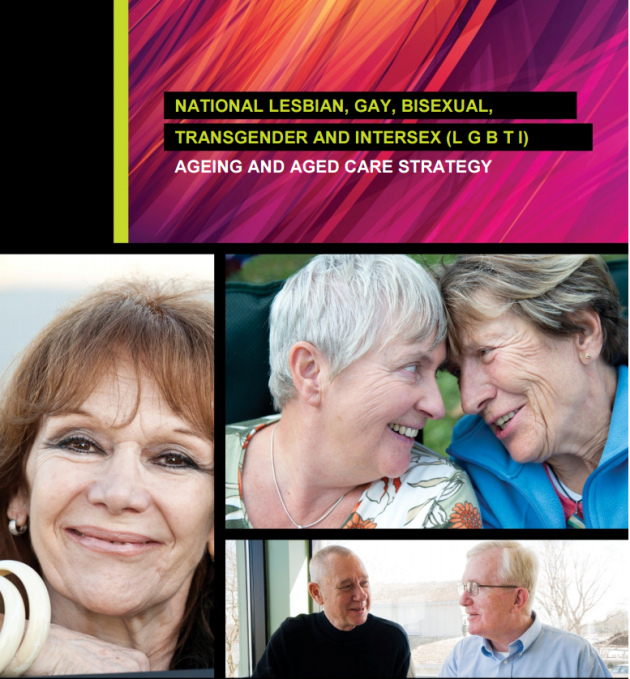
Submission to National LGBTI Ageing and Aged Care Strategy Review

The Commonwealth Department of Health is currently undertaking a review of the National LGBTI Ageing and Aged Care Strategy, with detailed public submissions due by Friday 12 May 2017. Full details here.


My submission focuses on the issue of LGBTI anti-discrimination protections, and answers two of the main questions in the submission template:


5.3 In terms of the LGBTI Strategy, where do you think the government and aged care sector need to improve?


In this submission, I would like to raise one specific area where, despite some progress having been made, there remains a significant, and urgent, need for further action – and that is the anti-discrimination protections that are provided under the Commonwealth Sex Discrimination Act 1984.


One of the (many) positive features of the historic Sex Discrimination Amendment (Sexual Orientation, Gender Identity and Intersex Status) Act 2013 was the ‘carve-out’ to ensure that Commonwealth-funded aged care services operated by religious organisations could not discriminate against lesbian, gay, bisexual, transgender and intersex (LGBTI) people accessing those services.


As noted in section 37:

Religious bodies

(1) Nothing in Division 1 or 2 affects…

(d) any other act or practice of a body established for religious purposes, being an act or practice that conforms to the doctrines, tenets or beliefs of that religion or is necessary to avoid injury to the religious susceptibilities of adherents of that religion.

(2) Paragraph (1)(d) does not apply to an act or practice of a body established for religious purposes if:

(a) the act or practice is connected with the provision, by the body, of Commonwealth-funded aged care; and

(b) the act or practice is not connected with the employment of persons to provide that aged care.”


This exception from the over-arching ‘religious exceptions’ provided under the Act was a major achievement in and of itself, removing discrimination from a vulnerable group within a vulnerable group (older LGBTI people within the overall LGBTI community).


More importantly, the aged care carve-out in the Commonwealth Sex Discrimination Act 1984 underpins many other achievements of the National LGBTI Ageing and Aged Care Strategy in improving the circumstances of older LGBTI people who live in facilities operated by religious organisations.


However, from my perspective, this important reform remains incomplete – because, while it is essential that all Commonwealth-funded aged care services are not permitted to discriminate against LGBTI people accessing their services, I do not believe such services will ever be completely inclusive while they retain the ‘right’ to discriminate against LGBTI people who are employed there.


This can be illustrated by considering this issue – the ongoing ability of Commonwealth-funded aged care services operated by religious organisations to fire, or refuse to hire, LGBTI employees – in the context of two of the Principles, and associated Goals, of the existing Strategy.


  1. Access and Equity


The 3rd Principle contained in the National LGBTI Ageing and Aged Care Strategy is “Access and Equity – All areas of aged care understand the importance of, and deliver, LGBTI-inclusive services”. This is reflected in the 3rd Goal: “Ageing and aged care services will be supported to deliver LGBTI-inclusive services.”


Of course, significant work can be, and in many cases has been, done to ensure that the services provided directly to LGBTI older people are as inclusive as possible. But, my fundamental question is: how genuinely inclusive can a service be, taken as a whole, where a member of staff can still be disciplined, or even terminated, for merely disclosing their sexual orientation or gender identity?


Is it ‘inclusive’ when a member of staff can be punished for engaging with a LGBTI service user by expressing empathy with them, exchanging personal stories about their respective same-sex partners in the ordinary course of conversation?


Is it ‘inclusive’ when an employee can be fired for simply talking with an older LGBTI resident, asking questions about that person’s background and in the process disclosing their own trans gender identity?


The answer must be an unequivocal no. The threat of discrimination against LGBTI employees in Commonwealth-funded aged care services operated by religious organisations casts a long shadow over the ability for any such facility to be genuinely inclusive.


The only way a fully inclusive aged care service can be provided is by ensuring all LGBTI employees are able to be themselves, and express themselves, in their workplace, without the risk of punishment for who they are or who they love.


  1. Quality


The 4th Principle featured in the National LGBTI Ageing and Aged Care Strategy is “Quality – Care and support services provide quality services that meet the needs of older LGBTI people, their families and carers and are assessed accordingly”.


This principle is then reflected in the 4th Goal: “LGBTI-inclusive ageing and aged care services will be delivered by a skilled and competent paid and volunteer workforce.”


There is, however, an inherent contradiction in setting quality as a principle and goal while at the same time legally allowing some Commonwealth-funded aged care facilities to fire, or refuse to hire, staff simply because of their sexual orientation or gender identity.


Such an exception means there will inevitably be some situations where the best person for a particular position is not employed due to factors that have absolutely nothing whatsoever to do with their ability. This substantively undermines the ‘quality’ that such a service provides to its residents (both LGBTI and non-LGBTI alike).


In short, aged care services should be delivered by the most ‘skilled and competent paid and volunteer workforce’, not the most ‘skilled and competent cisgender heterosexual paid and volunteer workforce.’


The inconsistency that lies at the heart of the Strategy is further revealed by considering one of the dot points under the Principle of ‘Quality’ on page 11 of the existing National LGBTI Ageing and Aged Care Strategy:


“All aged care staff, from administration to management, understand the life experiences and needs of LGBTI people and are equipped with the necessary tools to provide LGBTI-inclusive practice.”


Prima facie, this statement is commendable – that all people providing aged care services ‘understand the life experiences and needs of LGBTI people’.


But, looked at in another way, it is absurd to declare all staff should ‘understand the life experiences and needs of LGBTI people’ when we continue to permit some Commonwealth-funded aged care services to discriminate against staff who themselves have life experience as a member of the LGBTI community (and who would therefore already have many of ‘the necessary tools to provide LGBTI-inclusive practice’).


Overall, then, I believe that ‘quality’ is a worthy goal to aspire to, and, just as importantly, that it should be delivered by the best workforce possible, irrespective of their sexual orientation or gender identity. This means removing the ‘right’ of some Commonwealth-funded aged care services to discriminate against employees on the basis of fundamentally irrelevant factors.


6.2 What issues or specific actions do you believe should be included in the LGBTI Aged Care Action Plan that will be developed under the Diversity Framework?


As noted in my earlier answer to question 5.3, I believe that a key problem that must be addressed is the ongoing ability of some Commonwealth-funded aged care services to discriminate against LGBTI employees. This undermines the ability of these organisations to provide a service that is fully inclusive of LGBTI people, as well as limiting the quality of their workforce.


This problem should be addressed by the Commonwealth Government, by amending section 37 of the Sex Discrimination Act 1984 to ensure that Commonwealth-funded aged care services cannot discriminate against LGBTI employees (and contract workers), in addition to the existing protections for LGBTI people accessing those services.


Such an amendment should be welcomed by organisations across the aged care sector, including those run by religious organisations, because it would help ensure these services are provided by the best possible workforce, and not the best possible cisgender heterosexual workforce.


170508 Aged Care Image

The National LGBTI Ageing and Aged Care Strategy is currently under review.

Every Student. Every School. Submission on Draft NSW Personal Development, Health and Physical Education (PDHPE) K-10 Syllabus

There's no place for discrimination in the classroom-6

The NSW Education Standards Authority is currently undertaking public consultations about its draft Personal Development, Health and Physical Education (PDHPE) K-10 Syllabus.

Unfortunately, as you will see below in my submission, the Syllabus as drafted does not include LGBTI students, or content that is relevant to their needs.

Written submissions are due by Friday 5 May 2017. To find out more about the consultation process, and how you can write your own submission to support an inclusive PDHPE Syllabus, go here.

**********

Dominique Sidaros

Senior Curriculum Officer, PDHPE

NSW Education Standards Authority

GPO Box 5300

Sydney NSW 2001

dominique.sidaros@nesa.nsw.edu.au


Wednesday 3 May 2017


Dear Ms Sidaros


Submission on Draft NSW PDHPE K-10 Syllabus


Thank you for the opportunity to provide a submission about the draft NSW Personal Development, Health and Physical Education (PDHPE) K-10 Syllabus.


This is a personal submission, reflecting my interest in this issue as an advocate for the lesbian, gay, bisexual, transgender and intersex (LGBTI) community, and builds on my previous submissions to the Australian Curriculum, Assessment and Reporting Authority (ACARA) regarding its development of the national Health & Physical Education (HPE) curriculum.


This submission is guided by one principle above all else:


Any student, in any school, could be lesbian, gay, bisexual, transgender or intersex (LGBTI). Therefore, the Government has a responsibility to ensure that every student, in every school, is taught a Personal Development, Health and Physical Education (PDHPE) Syllabus that is inclusive of LGBTI students, and features content that is relevant to their needs.


This principle applies irrespective of the type of school involved, whether that is government, religious or otherwise independent. Importantly, the best interests of these LGBTI young people also take precedence over the views of other groups, including parents, parliamentarians, religious groups or the media.


Unfortunately, the NSW PDHPE K-10 Syllabus as drafted manifestly does not meet the needs of LGBTI students. It is not inclusive of students of diverse sexual orientations and/or gender identities, does not promote the acceptance of all students no matter who they are, and fails to provide adequate sexual health education for students who are not cisgender and/or heterosexual.


Disappointingly, some of the few occasions where the draft PDHPE Syllabus does attempt to include relevant content have been made optional (because it follows the words ‘for example’ or ‘eg’), with individual schools and teachers free to teach, or not teach, this content, depending on their own view and not the best interests of the students.


In this submission I will make a number of recommendations to improve the PDHPE K-10 Syllabus by making it explicitly inclusive of LGBTI students, and ensuring that they receive information that is relevant to their needs. These recommendations will be organised around the following five main areas:


  • Terminology
  • Inclusive Information
  • Acceptance & Anti-Bullying
  • Sexual Health Education
  • Life Skills


**********


Terminology


The problems with the draft PDHPE K-10 begin with the terminology that is used, and not used, throughout the document, and particularly in the Glossary on pages 132 to 139.


For example, the document includes the words lesbian, gay, bisexual, transgender, intersex and queer exactly once each – all in the same dot point on page 97, in Stage 5:


“analyse how societal norms, stereotypes and expectations influence the way young people think, behave and act in relation to their own and others’ health, safety and wellbeing eg Lesbian, Gay, Bisexual, Transgender, Intersex and Queer (LGBTIQ) health, people from culturally and linguistically diverse (CALD) backgrounds.”


That’s it. These terms are not used at any other point in the Syllabus, nor are they defined in the Glossary. Worse, because the words above immediately follow the use of ‘eg’, whether LGBTIQ health is mentioned in even this cursory way is entirely dependent on the views of the teacher and/or school involved.


As a result, the PDHPE Syllabus as drafted could mean many, if not the majority of, NSW students complete Year 10 having never heard the words lesbian, gay, bisexual, transgender or intersex used in this Syllabus, let alone having them appropriately explained. This omission is negligent, and will be detrimental to the health of future generations of young people.


Recommendation 1: The Glossary must include definitions of lesbian, gay, bisexual, transgender and intersex.


The almost complete absence of the words lesbian, gay, bisexual, transgender and intersex from the Syllabus is compounded by the, in most cases, exclusionary definitions provided for the terms that are included in the Glossary.


This includes the definition of ‘sexuality’ on page 138:


“A central aspect of being human throughout life. It is influenced by an interaction of biological, psychological, social, economic, political, cultural, ethical, legal, historical, religious and spiritual factors. It is experienced and expressed in thoughts, feelings, desires, beliefs, attitudes, values, behaviours, practices, roles and relationships.”


In some respects, this is an incredibly ‘inclusive’ definition, acknowledging the wide range of factors that can contribute to an individual’s ‘sexuality’. On the other hand, it is so vague that it doesn’t actually include differences in sexual orientation, from heterosexual (which is not included in the Syllabus either) to bisexual and homosexual or same-sex attracted.


To remedy this, an additional definition should be added for ‘sexual orientation’, one that explicitly includes the words heterosexual, lesbian, gay and bisexual (and, for the latter three, is linked to the newly-added definitions of these terms).


Recommendation 2: The Glossary should include a definition of ‘sexual orientation’, with links to the terms lesbian, gay and bisexual.


In contrast to the omission of sexual orientation, the Glossary does actually include a definition for the term ‘gender identity’ on page 135:


“Refers to a person’s sense of being masculine or feminine, both or neither, and how they identify. Gender identity does not necessarily relate to the sex assigned at birth.”


There are some positive elements of this definition, including recognition that gender identity can differ from the sex assigned at birth. However, it could also benefit from including additional detail, such as making explicit reference to ‘non-binary’ gender identities (beyond the acknowledgement of “both or neither” in the current definition) although this should be done in close consultation with trans groups.


Recommendation 3: The Glossary definition of ‘gender identity’ should be expanded, including use of the term ‘non-binary’ and linking to the term transgender. These changes should be made in consultation with trans groups.


The final term in the Glossary that requires updating is ‘diversity’ on page 133:


“Differences that exist within a group including age, sex, gender, gender expression, sexuality, ethnicity, ability, body shape and composition, culture, religion, learning styles, socioeconomic background, values and experience. Appreciating, understanding and respecting diversity impacts on an individual’s sense of self and their relations to others. Diversity can be acknowledged through shared activities that may involve building knowledge and awareness.”


It should be noted that this is the only time in the entire document that the phrase ‘gender expression’ is used – and it is not defined, meaning it does not automatically include transgender students. Similarly, the use of the word ‘sexuality’ here is based on the existing definition that, as we have seen above, does not actually include lesbian, gay or bisexual students. Finally, the exclusion of the word intersex – and the failure to define ‘sex’, here or elsewhere – means students with intersex variations are not necessarily included either.


In short, the current definition of ‘diversity’ in the Glossary appears to be ironic, given it does not include students who are lesbian, gay, bisexual, transgender or intersex.


Recommendation 4: The Glossary definition of diversity should be amended to include references to differences in sexual orientation, gender identity and intersex variations.


**********


Inclusive Information


The adoption of the above recommendations would be an important first step towards an inclusive PDHPE K-10 Syllabus. However, they will not have a significant impact unless the content of the Syllabus itself, and specifically the material that must be taught in its respective Stages, is also updated.


This means ensuring that the following concepts are introduced, and explained, at appropriate points in the Syllabus:


  1. Sexual orientation


The concept of sexual orientation, including differences in sexual orientation and the existence of lesbian, gay and bisexual people, should be introduced by stage 3 of the Syllabus (at the latest). Equally importantly, it must not be ‘optional’ to teach the fact that people can be any of heterosexual, lesbian, gay or bisexual, and that each sexual orientation should be accepted.


On a practical level, there are several places in the draft Syllabus where this could be achieved, including:


  • In Stage 3, on page 66, where it says “examine how identities and behaviours are influenced by people, places and the media, for example: – distinguish different types of relationships and their diversity”, the ‘for example’ should be removed. The words ‘including relationships between people of different sexes, and of the same sex’ should be added after ‘their diversity’.
  • In Stage 3, also on page 66, where it says “investigate resources and strategies to manage change and transition, for example: – understand that individuals experience change associated with puberty at different times, intensity and with different responses eg menstruation, body change emotional change, sexuality”, both the ‘for example’ and ‘eg’ should be removed. The term ‘sexual orientation’ should also be added after sexuality (acknowledging the different between these two concepts, as described above).
  • In Stage 4, on page 78, after it says “investigate the impact of transition and change on identities: – examine the impact of physical, social and emotional change during adolescence on gender, cultural and sexual identity” add a new point ‘- examine and discuss different sexual orientations, including heterosexual, lesbian, gay and bisexual’.
  • In Stage 4, also on page 78, the point “describe how rights and responsibilities contribute to respectful relationships: – recognise types and variety of relationships” should be amended along similar lines to the first dot point above in relation to Stage 3, page 66.
  • In Stage 4, on page 85, where it says “plan and use health practices, behaviours and resources to enhance the health, safety, wellbeing and physical activity participation of their communities: – design and implement health promotion activities targeting preventive health practices relevant to young people and those with diverse backgrounds or circumstances eg diversity of culture, gender or sexuality”, the word ‘eg’ should be removed, and the term ‘sexual orientation’ should replace ‘sexuality’.
  • In Stage 5, on page 92, where it says “evaluate factors that impact on the identities of individuals and groups including Aboriginal and Torres Strait Islander Peoples: – examine how diversity and gender are represented in the media and communities, and investigate the influence these representations have on identities” the term ‘sexual orientation’ should be added after gender (to read ‘diversity, gender and sexual orientation’).


  1. Gender identity


The concept of gender identity should be introduced earlier than sexual orientation, especially given the recent (welcome) increase in children expressing their own gender identities, rather than identities that are expected of, or even imposed on, them. Ideally, this information would be featured from Stage 1 onwards, and acknowledge the diversity of gender identities that exist.


The concept of gender identity could also be added, or expanded upon, at several other points in the Syllabus, including:


  • In Stage 2, on page 55, where it says “explore strategies to manage physical, social and emotional change, for example: – discuss physical, social and emotional changes that happen as people get older and how this can impact on how they think and feel about themselves and different situations eg friendships, gender identity, appearance, interests” both ‘for example’ and ‘eg’ should be deleted, so that it is mandatory for all students to learn about gender identity at this point.
  • In Stage 4, on page 85 where it says “plan and use health practices, behaviours and resources to enhance the health, safety, wellbeing and physical activity participation of their communities: – design and implement health promotion activities targeting preventive health practices relevant to young people and those with diverse backgrounds or circumstances eg diversity of culture, gender or sexuality”, in addition to the changes proposed earlier re sexual orientation, the term ‘gender identity’ should be added after ‘gender’.
  • In Stage 5, on page 92, where it says “evaluate factors that impact on the identities of individuals and groups including Aboriginal and Torres Strait Islander Peoples: – examine how diversity and gender are represented in the media and communities, and investigate the influence these representations have on identities”, the term ‘gender identity’ should also be added (so that it reads ‘diversity, gender, gender identity and sexual orientation’).


  1. Intersex


As with gender identity, the concept of intersex – and the existence of people with intersex variations – should be introduced earlier than sexual orientation. Again, this should ideally be introduced in Stage 1, to allow students to grow up knowing that there aren’t just exclusively ‘male’ and ‘female’ bodies.


This recognition of bodily diversity should also be incorporated into the Syllabus in Early Stage 1 on page 35, and Stage 1 on page 45, where it includes references to learning about ‘male and female anatomy’. The discussion of intersex should then be incorporated at similar points to sexual orientation and gender identity throughout the remaining stages of the Syllabus.


Doing so would also help to meet one of the goals of the recent Darlington Statement of intersex organisations:


“54. We call for the inclusion of accurate and affirmative material on bodily diversity, including intersex variations, in school curricula, including in health and sex education.”[i]


  1. Rainbow families


The existence of a diversity of families, including children who grow up with same-sex parents, should also be included in the Syllabus. There are already multiple points in the Syllabus where this could be easily added, such as:


  • In Stage 1, on page 45, after “describe ways to develop respectful relationships and include others to make them feel they belong, for example: – explore kinship as an important part of Aboriginal and Torres Strait Islander cultures”, the ‘for example’ should be removed and a new point added “- explore the diversity of family types, including families with mixed-sex parents and families with same-sex parents.”
  • In Stage 2, on pages 54-55, where it says “explore how success, challenge and overcoming adversity strengthens identity, for example: – explore contextual factors that influence the development of personal identity eg family, parents/carers…” both the ‘for example’ and ‘eg’ should be removed, and the term ‘rainbow families’ should be added (so that it reads ‘family including rainbow families[ii]’).
  • In Stage 3, on page 66, where it says “examine how identities and behaviours are influenced by people, places and the media, for example: – distinguish different types of relationships and their diversity” this could also include a reference to diversity in family relationships, including mixed-sex and same-sex parents.


Finally, as noted earlier there is already one place where the words lesbian, gay, bisexual, transgender and intersex already appear in the curriculum – in Stage 5, on page 97. This point should also be made mandatory rather than optional, by removing the ‘eg’ (so that it reads “analyse how societal norms, stereotypes and expectations influence the way young people think, behave and act in relation to their own and others’ health, safety and wellbeing, including lesbian, gay, bisexual, transgender, intersex and queer (LGBTIQ) health, people from culturally and linguistically diverse backgrounds (CALD)”.


Recommendation 5: The content for the Stages of the Syllabus should be amended to ensure all students learn about sexual orientation, gender identity, intersex and rainbow families.


**********


Acceptance & Anti-Bullying


One of the welcome features of the draft PDHPE K-10 Syllabus is the significant focus on combating bullying, and on promoting what is described as ‘upstander behaviour’.


This includes introducing content around confronting discrimination from Stage 2 onwards – see page 55 (“predict and reflect on how other students might feel in a range of challenging situations and discuss what they can do to support them eg confronting discrimination) and twice on page 57 (“recognise types of abuse and bullying behaviours and identify safe and supportive upstander behaviour” and “share ideas, feelings and opinions about the influence of peers and significant others in relation to bullying, discrimination, eating habits and nutrition, drug use, online safety and physical activity levels”).


However, I believe there is a need to ensure this anti-bullying content explicitly addresses anti-LGBTI bullying, given both its widespread prevalence and devastating impact on thousands of LGBTI young people. There are multiple opportunities to make these changes:


  • In Stage 3, on pages 69-70, where it says “plan and practise assertive responses, behaviours and actions that protect and promote health, safety and wellbeing, for example: – practise safe and supportive upstander behaviour and discuss how they can prevent and/or stop bullying and other forms of discrimination and harassment” the ‘for example’ should be removed, and the words ‘including racism, sexism, homophobia, biphobia, transphobia and intersexphobia’ should be added after ‘harassment’.
  • Also in Stage 3, on page 70, where it says “recommend appropriate alternatives and take action to improve health, safety, wellbeing or physical activity issues within the school or wider community, for example: – explore initiatives that challenge stereotypes to support the diversity of individuals and communities eg racism, gender stereotypes, discrimination [and] – model behaviour that reflects sensitivity to the needs, rights and feelings of others and explore ways to create safe and inclusive schools for minority groups eg challenge discrimination, peer support” the ‘for example’ and two instances of ‘eg’ should be removed to ensure this content is mandatory. Further, either ‘anti-LGBTI prejudice’ or ‘homophobia, biphobia, transphobia and intersexphobia’ should be added to ‘racism, gender stereotypes, discrimination’.
  • In Stage 4, on pages 79-80, where it says “discuss the impact of power in relationships and identify and develop skills to challenge the abuse of power: – discuss the influence of family, media and peer attitudes to power and explore how these may lead to an abuse of power in relationships eg bullying, homophobia, intolerance, family and domestic violence [and] – recognise forms of bullying, harassment, abuse, discrimination and violence and how they impact health and wellbeing”. It should be noted that this is the only time ‘homophobia’ is mentioned in the entire document and, unfortunately, it is after an ‘eg’, meaning it is entirely optional for teachers and schools to teach. The ‘eg’ should be deleted, and either ‘homophobia, biphobia, transphobia and intersexphobia’ or ‘anti-LGBTI prejudice’ should be added.
  • In Stage 4, on page 83, where it says “investigate the benefits to individuals and communities of valuing diversity and promoting inclusivity: – explore their own and others’ values and beliefs towards issues of racism, discrimination, sexuality and investigate the impact of contextual factors on young people, particularly those from diverse backgrounds, including Aboriginal and/or Torres Strait Islander Peoples [and] – describe how pro-social behaviour, respecting diversity, challenging racism and discrimination are inclusive ways of supporting and enhancing individual; and community health and wellbeing”. Based on the existing definitions of ‘sexuality’ and ‘diversity’ in the Glossary, these points currently do not include promoting LGBTI inclusivity. Even if those definitions are updated in line with the above recommendations, these points should still be made more explicit, with the first amended to read ‘racism, sexism, anti-LGBTI discrimination’ and the second to read ‘challenging racism, sexism, anti-LGBTI prejudice and discrimination’.
  • In Stage 4, also on page 83, where it says “plan and implement inclusive strategies to promote health and wellbeing and to connect with their communities: – describe the skills, strengths and strategies required to contribute to inclusive communities and implement strategies to challenge racist and prejudicial views of diversity within the community”, it should be amended to read ‘challenge, racist, sexist, anti-LGBTI and prejudicial views’.
  • In Stage 5, on page 93, where it says “investigate how the balance of power influences the nature of relationships and propose actions to build and maintain relationships that are respectful: – discuss discrimination as an abuse of power and evaluate legislation, policies and practices that address discrimination eg past policies affecting Aboriginal Peoples such as segregation and Aboriginal Self Determination” the words ‘, or the Sex Discrimination Act’ could be added.


Recommendation 6: The content for the Stages of the Syllabus should explicitly include discussion of anti-LGBTI bullying and discrimination and how to address it, beyond the single – optional – reference to homophobia that currently exists.


**********


Sexual Health Education


Another positive feature of the draft PDHPE K-10 Syllabus is the inclusive definition of ‘sexual health’ in the Glossary:


“A state of physical, mental and social wellbeing in relation to sexuality. It requires a positive and respectful approach to sexuality and sexual relationships, as well as a possibility of having pleasurable and safe sexual experiences, free of coercion, discrimination and violence.”


The explicit acknowledgement of ‘pleasurable and safe sexual experiences’, and the need for sexual experiences to be ‘free of coercion’, is particularly welcome.


However, adopting an inclusive definition doesn’t mean much when the only time the phrase sexual health actually appears in the Syllabus prior to Stage 5 (which would generally be students in Years 9 and 10), is one brief reference in Stage 4 (covering students in Years 7 and 8), on page 84:


“explore the relationship between various health, safety and physical activity issues affecting young people and assess the impact it has on the health, safety and wellbeing of the community:

  • examine the impact that body image and personal identity have on young people’s mental health, drug use, sexual health and participation in physical activity.”


This isn’t explicitly about teaching the fundamentals of sexual health, merely its connection to, and interrelationship with, ‘body image and personal identity’ (which, while important, is not sufficient in and of itself).


Similarly, there is only one reference in the general curriculum to ‘sexually transmissible infections’, also in Stage 4, on page 85:


“plan and use health practices, behaviours and resources to enhance the health, safety, wellbeing and physical activity participation of their communities:

  • identify and apply preventive health practices and behaviours that assist in protection against disease eg blood borne viruses, sexually transmissible infections”.


Note that the reference to BBVs and STIs here also follows an ‘eg’, meaning that the decision whether to teach students about STIs (such as HIV) is discretionary. That is simply not good enough in 2017 – all students should receive information about STIs to empower them to control their own health.


Recommendation 7: Stage 4 of the Syllabus should include comprehensive education about sexual health, including mandatory information about sexually transmissible infections.


There is more information around sexual health in Stage 5 of the draft Syllabus, although even it is problematic. On page 95, it states:


“evaluate strategies and actions that aim to enhance health, safety, wellbeing and physical activity levels and plan to promote these in the school and community:

  • explore methods of contraception and evaluate the extent to which safe sexual health practices allow them to take responsibility for managing their own sexual health”


Given ‘contraception’ is generally understood to mean prevention of pregnancy, this content is therefore skewed towards vagina-penis sexual intercourse. To address the fact there are a range of other sexual practices (not just for LGBTI students, but also for cisgender heterosexual students too), this point should be amended to explicitly discuss sexual health and STI-prevention with respect to a range of practices. To not do so means denying the stated aim for all students “to take responsibility for managing their own sexual health.”


Recommendation 8: The Syllabus should move beyond discussion of ‘methods of contraception’ to discuss sexual health education around a range of different practices so that all students can ‘take responsibility for managing their own sexual health’.


**********


Life Skills


The students who are enrolled in the Years 7-10 Life Skills version of the PDHPE Syllabus can (obviously) also be lesbian, gay, bisexual, transgender or intersex, and therefore also have the right for LGBTI content to be included throughout.


There are a variety of points at which the draft Life Skills content should be amended to achieve this important goal, including:


  • On page 113, where it says “What personal characteristics make us unique? Students recognise personal characteristics that are the same and/or different as others, for example: – gender [and] – diversity” the terms ‘gender identity’, ‘intersex’ and ‘sexual orientation’ should also be added.
  • Also on page 113, where it says “What changes do adolescents go through? Recognise visible features that undergo change during adolescence, for example: – female and male body changes” it should acknowledge the existence of intersex bodies.
  • On page 114, where it says “recognise changes in relationships that occur in adolescence, for example: – social and emotional relationships with other genders” it should be reworded to say “social and emotional relationships with people of the same or different genders”.
  • Also on page 114, where it says “understand that physical changes are a normal part of adolescence, for example: – identify the stages of the reproductive process, eg menstrual cycle, sperm production, conception, pregnancy, childbirth” it should also include discussion of sexual health, and sexual practices, that are not ‘reproductive’ in nature.
  • On page 115, where it says “recognise factors that impact negatively on relationships, for example: – bullying, coercion, harassment, violence, threats, bribes [and] –sexism [and] –racism” it should also include either ‘anti-LGBTI prejudice’ or ‘homophobia, biphobia, transphobia and intersexphobia’.
  • Finally, on page 122, where it says “identify matters associated with sexuality, for example: privacy and ethical behaviour – responsibilities associated with sexual activity for themselves and others – safe sex – contraception – fertility and pregnancy – sexually transmitted infections – sexual behaviours and expectations – appropriate sources for advice on and assistance – potential outcomes of sexual activity” once again it should explicitly include discussion of sexual health, and sexual practices, that are not ‘reproductive’ in nature.


Recommendation 9: The Years 7-10 Life Skills Syllabus should be amended to explicitly include LGBTI students and content that is relevant to their needs.


**********


Thank you for taking this submission into consideration as the NSW Education Standards Authority finalises the PDHPE K-10 Syllabus. Please do not hesitate to contact me at the details below should you wish to clarify any of the information provided, or to seek additional information.


Sincerely

Alastair Lawrie


**********


Update 25 January 2019:

The final NSW PDHPE K-10 Syllabus was released in April 2018, and is being progressively rolled out from the start of the 2019 school year. Unfortunately, as this post – Invisibility in the Curriculum – makes clear, despite some minor improvements, the syllabus continues to ignore LGBTI students and content that is relevant to their needs, including sexual health education. This situation is a scandal, but one that seems to be largely ignored.


Footnotes:

[i] For more on the Darlington Statement, see the OII Australia website: https://oii.org.au/darlington-statement/

[ii] If the term ‘rainbow families’ is used at this point, it should also be defined in the Glossary.

The State of Homophobia, Biphobia & Transphobia Survey Results, Part 3: Where Discriminatory Comments Occur & Their Impact

This post is the third in a series of six, reporting the results of The State of Homophobia, Biphobia & Transphobia survey I conducted at the start of 2017[i].

In all, 1,672 lesbian, gay, bisexual, transgender, intersex and queer (LGBTIQ) Australians provided valid responses to that survey.

In this article, I will be focusing on their answers to two questions, which asked about the ‘location’ where they witnessed anti-LGBTIQ comments in 2016, and the impact that these comments had on them.

The results of the first may or may not be surprising (depending on whether you use social media or not), while the responses to the second are, as expected, often heartbreaking to read.

The State of Homophobia, Biphobia & Transphobia-11

Question 1: Over the past 12 months, have you witnessed homophobic, biphobic, transphobic or intersexphobic comments in any of the following (select as many as appropriate):

Media

Social Media

Politics

Religion

Public Space

None of the Above

1,645 people answered this question, and this was the overall response (ranked from highest to lowest):

  • Social Media 92% (1,506 responses)
  • Politics 83% (1,367)
  • Religion 81% (1,330)
  • Media 80% (1,308)
  • Public Space 67% (1,109)
  • None of the Above 3% (50).

It is clear that, in 2016, more LGBTIQ Australians witnessed homophobic, biphobic, transphobic or intersexphobic comments on social media than in any other category – and by a considerable margin.

There is an important caveat to this finding, because a significant proportion of these anti-LGBTIQ comments may in fact be posts incorporating homophobia, biphobia, transphobia and intersexphobia from politics, religion or the media (for example, sharing media stories about the joint Liberal-National Government/fundamentalist christian campaign against Safe Schools).

Even if we accept that, it is nevertheless apparent that the primary medium through which we receive anti-LGBTIQ comments, of any kind, is via platforms such as Facebook, Twitter, YouTube and Instagram (or, for people younger than me, Snapchat and other apps I probably haven’t even heard of).

The next three highest-ranked answers – politics, religion and the media – were all very close together.

But, it should also be noted that a higher proportion of LGBTIQ people reported witnessing religious homophobia, biphobia, transphobia or intersexphobia than the proportion of Australians who identify as religious[ii]. That is a pretty impressive effort by the Australian Christian Lobby, Catholic Church and others.

Thankfully, the proportion of respondents who indicated they witnessed anti-LGBTIQ comments in a public space was lower than for other categories – although, at two-thirds of all respondents, it is still depressingly high.

However, the most depressing statistic of all is that just 3% of LGBTIQ people who answered this question – or 50 people in total – reported that they had not witnessed homophobia, biphobia, transphobia or intersexphobia via social media, politics, religion, media or in a public space during the past 12 months.

The next time a conservative politician – or NewsCorp columnist or Christian Lobby spokesperson for that matter – tries to claim that anti-LGBTIQ prejudice no longer exists, or isn’t a problem in contemporary Australia, simply show them these findings.

LGBTIQ Status

There was remarkable consistency across the lesbian, gay, bisexual, transgender, intersex and queer communities in their respective answers to this question[iii]:

  • Lesbian: Social media 91.4%; Politics 82.4%; Media 78.6%; Religion 77.7%; Public space 69.3% and None of the above 1.8%
  • Gay: Social media 85%; Religion 78.6%; Politics 78.2%; Media 72.8%; Public space 58.8% and None of the above 3.6%
  • Bisexual: Social media 89%; Politics 80.6%; Media 79.9%; Religion 76.6%; Public space 70% and None of the above 3.3%
  • Transgender: Social media 92.7%; Media 87%; Politics 85.4%; Religion 81.8%; Public space 75.5% and None of the above 1%
  • Intersex[iv]: Social media 75%; Religion 70%; Media & Public space both 65%; Politics 60% and None of the above 0%
  • Queer: Social media 90.4%; Politics 84.7%; Media 83.4%; Religion 79%; Public space 76.7% and None of the above 1.1%.

As can be seen, the highest-ranked response – for each category – was Social media, with percentages ranging from 75% to 92.7%, confirming the role of Facebook and other platforms as conduits for anti-LGBTIQ comments.

As with verbal harassment and abuse, analysed in Part 1, the figures reported by bisexual, and especially gay, respondents were significantly lower than for LTI or Q people.

This is particularly apparent in terms of the answer for ‘None of the Above’: 3.6% of gay people, and 3.3% of bisexuals, checked this answer, whereas the next highest rate for any group was lesbians at around half that (1.8%).

On the other hand, and again consistent with earlier figures for verbal harassment and abuse, transgender and to a slightly lesser extent queer respondents were most likely to witness homophobic, biphobic, transphobic and intersexphobic comments.

In fact, trans people reported the highest rates of anti-LGBTIQ comments in all of social media, politics, religion and media (which is perhaps not that surprising after 12 months of sustained attacks on safe schools and ‘gender fluidity’), while the highest rates for anti-LGBTIQ comments in public spaces were reported by queer people.

Meanwhile, only 1% of trans, and 1.1% of queer, respondents answered none of the above – just one-third of the rates for gay and bisexual people.

The answers to this question once again confirm two things:

  1. Rates of homophobia, biphobia, transphobia and intersexphobia are unacceptably high in Australia, and
  2. Anti-LGBTIQ prejudice disproportionately impacts trans, intersex and queer people.

Aboriginal and Torres Strait Islander People

In contrast to Parts 1 and 2 of the survey results, the figures for Aboriginal and/or Torres Strait Islander LGBTIQ people were not significantly higher than for their non-Indigenous counterparts – although nor were they significantly lower (except for perhaps in relation to politics):

  • Social Media 90.3%
  • Religion 79%
  • Media 75.8%
  • Politics 72.6%
  • Public Space 67.7%
  • None of the Above 1.6% (or just 1 out of 62 respondents).

Age

The responses in terms of different age groups threw up a couple of surprises:

  • Aged 24 and under: Social media 91.5%; Politics 81.2%; Media 78.8%; Religion 78.1%; Public space 70.8% and None of the above 2.5%
  • 25 to 44: Social media 89%; Politics 85.7%; Religion 81.7%; Media 80.5%; Public space 67.3% and None of the above 2.5%
  • 45 to 64: Social media 85.8%; Religion 77.6%; Politics 75.8%; Media 71.9%; Public space 52% and None of the above 3.9%
  • Aged 65 and over[v]: Social media and Religion both 67.6%; Politics 59.4%; Media 54%; Public space 24.3% and None of the above 10.8%.

As expected, people aged 24 and under were more likely to report witnessing anti-LGBTIQ comments in social media than any other cohort – although it was only slightly higher than for people aged 25-44, and social media remained the highest-ranked answer (either stand-alone, or equal) for all age groups.

Young people were also more likely to witness homophobic, biphobic, transphobic and intersexphobic comments in public spaces.

However, perhaps more surprisingly, it was their counterparts aged 25 to 44 who were actually most likely to witness anti-LGBTIQ comments in the contexts of politics, religion and the media.

Both groups also reported similar rates for ‘none of the above’: 2.5% or around 1 in every 40 people said they did not witness anti-LGBTIQ comments in these contexts in the last 12 months.

In short, people aged between 25 and 44 appear just as likely to have witnessed homophobic, biphobic, transphobic and intersexphobic comments in 2016 as their younger LGBTIQ equivalents (although people aged under 25 may nevertheless feel the impact more, particularly if they are yet to develop coping mechanisms to deal with encountering such prejudice).

Less surprisingly, the answers for the two older age cohorts show reduced exposure to anti-LGBTIQ comments, especially in public spaces (just 52% for people aged 45 to 64 and 24.3% for those aged 65 and over). The rates for none of the above also increased significantly for both groups.

[NB Unlike previous – and planned – posts, this article will not examine the different responses for each Australian state and territory because the results are not considered relevant.]

**********

Question 2: If you feel comfortable, please indicate the impact that these homophobic, biphobic, transphobic or intersexphobic comments had on you [Optional]

This question allowed respondents to describe, in their own words, the impact that witnessing anti-LGBTIQ comments during 2016 had on them – and the answers provided are, to put it frankly, depressing.

As with Part 2 of the survey results, at this point I would recommend that you only read further if you are emotionally prepared to do so.

To help you decide whether to continue, please be aware that comments include descriptions of mental health issues, depression and suicide (including suicide ideation). Relevant help numbers are provided at the end of the article.

A lightly-edited[vi] version of the answers to this question – outlining the personal impact of homophobic, biphobic, transphobic and intersexphobic comments – can be found at the following link:

question-2-the-impact-of-discriminatory-comments

From my perspective, a number of key themes emerge in these comments:

While a small number of respondents indicated that witnessing such comments had little or even no impact on them, the majority indicated that anti-LGBTIQ comments had caused major impacts, contributing to mental health issues, depression and even suicide ideation.

“Every day I consider suicide. My life looks normal on the surface, but why should I bother living when the majority hates me? I’m not wanted and seen as a freak. I just want to feel normal and safe, but straights will never allow that in my country (Australia). Homophobia makes me wish I was dead.”

“I feel like it raises the suicide rates and makes us feel less than human as [it] makes people feel homophobia is ok because we don’t have equality. In the last year I’ve had 4 friends commit suicide due to homophobia.”

“They make me feel worthless, like a freak, like I don’t deserve to live, like I don’t deserve anything, like I’ll be alone forever, like no one will love me, like I should just kill myself because it would be easier.”

The feeling of being ‘lesser’ than others was also common:

“It makes you feel separate. More like an oddity than a person. Like you’re… less”

“It just makes me feel like shit to be frank. Like I’m not a worthwhile human being. Like I’m a joke and not a living, breathing person with thoughts and feelings.”

“It hurts my self worth, makes me feel as though my identity is something negative and is something that I should be ashamed of.”

A sense of ‘hopelessness’ was also pervasive:

“It makes you feel that the world will never change & there is no place for you in it.”

“It is depressing to realise that, despite the progress that has been made on many fronts, just how widespread anti-LGBTI prejudice really is, including from our so-called political leaders.”

“Homophobia in media and everyday life is a constant reminder to the lgbtq community that they are and probably always will be seen as less than others.”

“It made me feel helpless, like nothing was ever going to change no matter how hard people work at being accepting.”

A number of commenters expressed despair at the level of anti-LGBTIQ prejudice in Australia, and associated alienation from their country:

“They made me feel as if my own country didn’t want me and that I wasn’t really a person.”

“I question whether Australian society is as accepting as I thought it was.”

“Disgust and shame at both myself and Australia. I feel marginalised, oppressed, fearful, frustrated and in some cases terrified of the country I live in.”

“If anything, these comments have disturbed me, and made me feel quite frightened for mine, my partner’s and Australia’s future moving forward…”

“These actions and comments make me feel like Australia is still leaving [sic] in the 1900s and I love my country and people, but sad that there a [sic] still so many closed minded people in this country.”

Or simply “Used to it. This is Australia after all.”

Another strong theme was modifying behaviour to avoid being subject to homophobia, biphobia, transphobia and intersexphobia:

“Witnessing or hearing discriminatory acts/language makes me feel unsafe. It makes me modify my behaviour in certain situations to avoid potential violence.”

“They make me feel like I have to adjust my behaviour to make straight people feel comfortable. My partner of 5 years and I don’t hold hands or kiss in public because of this. I hate being a different person in public from the one I am at home. On our train line, it would simply not be safe to hold hands or kiss.”

“It makes me feel unsafe to walk down the street ever since embracing my sexuality. I would certainly not feel comfortable walking down the street hand in hand with my partner and I am careful not to make too much eye contact if I’m wearing something that might indicate my sexuality.”

For some, this even extended to an increased fear of disclosure/’coming out’:

“Increased anxiety about people finding out I’m gay. Less likely to come out.”

“It’s made me scared to come out to some people including my mother.”

“Scares me into not coming out to the people closest to me and makes me feel ashamed for being myself.”

“I feel sad and I actively hide my sexuality.”

“They made me ashamed and want to hide myself further in the closet.”

Some indicated anti-LGBTIQ comments had little impact – but only because they were ‘used to it’, ‘numb to it’, or had developed ‘thick skins’:

“I’m fine, I’m all grown up and used to it now. But if we can stop it happening to others in the future, that should be our primary focus.”

“I’m a lot more thick-skinned now but it really affected me as a kid and teenager growing up and I spent a lot of puberty feeling very suicidal. These days it mostly just makes me angry.”

“I have quite a thick skin and don’t care what other people say, however I am disappointed that more of society have not moved on.”

Or, even more pithily:

  • “I’m used to it, kind of just get number over the years.”
  • “Very little, I have a thick skin.”
  • “I am very used to hearing phobic comments.”
  • “I’m so used to it I just switch off.”

However, even for those who claimed to have learnt to ‘live with it’, there was still significant concern about its impact, on themselves and others:

“I usually end up numbing myself to the full effect of these comments because to truly engage with my feelings about it would mean constant pain, anger and disillusionment in humanity and I wouldn’t get through the day. But when it takes over, it’s a horrible experience.”

“It bothers me, but I learn to live with it. If someone is rude to me or if I find something rude, I can’t waste my emotional energy getting caught up in it anymore. But it is a problem, because I know these statements have a much stronger impact on others who are lgbt, who have suffered a lot more because of their sexual orientation or gender identity.”

Some respondents ‘turned lemons into lemonade’, and used homophobic, biphobic, transphobic and intersexphobic comments as motivation:

“They make me annoyed or angry. They make me more determined to help pro-lgbt causes or keep active.”

“In general, abuse makes me feel both unwanted and even more determined to promote equality so that future generations of LGBTQI people do not have to endure the abuse and discrimination that some people have received.”

“The current attitude towards the LGBTIQ community makes me angry and ever more passionate to step up and attempt to make a change.”

“It gets me fired up! I can’t help it – I have to respond. I’ve been fighting this fight for over twenty years, so I can’t let it go unchecked… I stick it to them.”

“Makes me more determined to work against the hate.”

“Makes me stronger in my resolve to educate people about LGBTIQ issues – eg being gay is not a choice, it is not a disease that other people can catch from me, I am not sick, disordered or mentally unbalanced; I don’t need to be cured or changed, I am not any more a ‘sinner’ than any other human being etc. I am perfectly happy and content.”

One of the most common type of comment was an expression of care, and concern, for younger and/or more vulnerable members of the LGBTIQ community:

“I’m fairly resilient, so these things tend not to affect me. However, they do cause me great concern for those who may not be resilient, or the young in our community.”

“They don’t worry me now because I am fully accepting of myself but I hate to think of the effect they would have on younger people.”

“I feel angry about the impact it would have on younger people (I’m older now and I’m more concerned about protecting the younger ones).”

“Mostly it’s really deflating and makes me concerned for younger lgbtiq+ people who don’t have support networks.”

“Made me feel sad for the younger ones, still coming to terms with who they are, fighting depression.”

“It’s hurtful and worrying. I’m old enough now to not let it bother me but it concerns me to think about how this affects teenagers coming to terms with their sexuality. Hatred in the public sphere is only continuing this.”

“While I’m at a point in my life where I realise that the people who publicly express these negative points of view often in a negative way are ignorant and their negativity is their problem, not mine, I feel sad and angry thinking that less secure, particularly younger LGBTIQ+ individuals, may be impacted extremely detrimentally by these comments.”

“I fear for young LGBTQ people who don’t have the support or self awareness to know that there is nothing wrong with them and that they will find their place one day, if not today.”

“Made me feel unsafe and also made me feel sad for all the young kids who’s health would be more majorly impacted by this, almost every LGBT+ person I know has attempted suicide or suffered from trauma as a response to abuse and I feel this.”

“I have witnessed friends being vilified and the victims of homophobic rants. The psychological toll as a result of the constant barrage from all forms of media, politics, religion & the public confirms the reasoning behind the high mortality rate for young LGBTI members of our community.”

These two comments probably best sum up this view:

“It really distresses me that people still act this way. I worry for the younger youth who this could have a greater impact on. Whoever says homophobia doesn’t exist in today’s society is very wrong.”

“It upsets me that young LGBTIQ children are being constantly reminded that they are not treated the same as others in this society when they watch out-of-touch, backward-thinking politicians who do not see how hurtful their words against same-sex marriage and the safe schools program are. It is so upsetting that they cannot see the damage they are doing.”

The parents in rainbow families also expressed concern for the potential harm anti-LGBTIQ comments cause to their children:

“I don’t feel homophobia has an impact on me but I often wonder if it’s upsetting to my son. He tells me it bother him sometimes.”

“I feel confident in my personal relationship however when in public spaces with my children I worry about negative reactions to my lesbian relationship if I show any form of public affection towards my partner. It is better sometimes to ‘pass’ as a parent rather than show we are a family, purely because I do not want my children to observe homophobic reactions or hear homophobic comments about their parents or family.”

The care shown by LGBTIQ people for their children, and for younger members of the community, stands in marked contrast to the ‘christian’ values too-often on display by religious fundamentalists, with some respondents nominating religious intolerance as the source of homophobia, biphobia, transphobia and intersexphobia:

“Especially the comments from people representing my religion are really painful and I find myself often thinking if I can even be part of such a community that should be about mercy and love and is often just full of hate.”

“The Tasmanian Archbishop’s attempts to change the anti-discrimination act have resulted in me moving school despite having a supportive school I think it is no longer appropriate for me to attend a school that is overseen by someone who has openly proclaimed his dislike of homosexuals, and is attempting to change laws to discriminate against them.”

“I went to catholic school and the church felt it right to give a pamphlet to each child outlining what a marriage is and making sure to discourage anyone who was in the LGBTQI community.”

“It’s everywhere. Every time someone mentions gay marriage or trans health there is always a rebuttal speaker from some religious group.”

“all these churchie people… they preach and say we are sinning… Yet they are being the judgmental ones. I don’t know any LGBTIQ people that go around with fliers etc saying join our church etc. So why do they try [to] pressure us to change who we are?”

“Christian people on Facebook posting anti-gay marriage and safe schools program under the guise of love the sinner not the sin…”

That last comment was typical of many that raised homophobic, biphobic, transphobic and intersexphobic comments in the context of last year’s dual anti-LGBTIQ campaigns – against Safe Schools and for a plebiscite:

“well I hear all the hate-filled rhetoric from the religious alt right that sadly have too much of a voice in gov from groups like the christian lobby and other politicians. the whole gay marriage plebiscite seemed to give every anti-gay hate group a paid advertisement on social media…”

“Made me feel unsafe being out in my work space ie political discussions about safe schools and queer people corrupting children made me feel I might lose my job at a school.”

“The same sex marriage debate and the vilification of the safe schools program has allowed homophobia to run rife in politics and in the media leading to public aping of homophobic beliefs.”

“Particularly the discussion in the media regarding the plebiscite had a huge effect on my emotional well being. I found myself harbouring a lot of stress, feeling less safe, and often feeling emotional and being brought to tears.”

“plebiscite! The very idea that our government (the same one that is apparently working for the Australian people) can legislate hate speech (or an entire campaign) against a minority under the guise of politics disgusts me and makes me ashamed to call myself Australian.”

“A feeling of being lesser than anyone else. Worry for young people, especially when the plebiscite about equal marriage was being threatened. This also gave other homophobes permission to be expressive about their hatred.”

“The constant negativity and blatant homophobia present in the political and mainstream media spheres, especially over Safe Schools and on marriage equality, has left me emotionally wrung out and uneasy, including making me less likely to decide to announce, share or defend my position on these issues in places I feel comfortable in, including my workplace in a secondary school.”

A number of commenters also highlighted the Trump factor, and the fear of Australia importing US-style anti-trans bathroom laws:

“Trump supporters have also gotten on the anti-LGBTQ movement and all over social media if you tag anything with one of those, you are instantly trolled. Trump hired people to set up fake accounts and constantly go out and attack our community so a by-product of the US election was the LGBTQ community all around the world was attacked and criminalised and marginalised.”

“While I’m not trans, I have friends who are, and even in a relatively tolerant country like Australia they still encounter discrimination every day. We hear about the horrendous bathroom law debates raging in the US and think, there’s one more place we aren’t safe. The same intolerance exists in Australia; it’s just quieter.”

In fact, the existing high-levels of transphobic comments generally was raised by several respondents:

“I only recently began to take steps to transition socially, and it feels like every other day there’s a new reminder of how much hate and harassment still exist. The thought of coming out and having to face this regularly terrifies me.”

“I see constant transphobia in people’s reactions towards trans/non binary/queer people.”

“A trans* friend of mine died and majority of the comments were transphobic of nature and it hurt me to witness how my peers felt about individuals being transgender.”

“Lyle Shelton has made incredibly transphobic remarks that have had me on the verge of tears.”

(At least) 2 people highlighted the failure of Victorian birth certificate reform late last year as a particular source of transphobic comments:

“Shocking. I am significantly affected by the ongoing ceaseless abuse we experience at the hands of media and parliament. The recent comments in the Victorian parliament voiced by the opposition were appalling. The constant transphobia lends itself to a constant low level of depression only countered by actual interaction with mainstream people who seem to be much more accepting…”

“It’s a kick in the guts every time I see the media misrepresent trans people. In politics it’s worse though – that they didn’t change the law about birth certificates last year has made my life harder at a practical level.”

Perhaps unsurprisingly, given both its popularity and the high share of respondents indicating social media as a source of anti-LGBTIQ comments, at least a dozen respondents specifically cited prejudice on Facebook:

“Facebook is covered with homophobic comments and pictures that don’t get removed.”

“Homophobic/transphobic comments from people on posts on Facebook…”

“I follow a large amount of people on social media where I almost daily see harassment to multitudes of people in the queer community.”

“Found them rather disturbing particularly on Facebook where posters ‘go for it’ with their opinions from the safety of a keyboard. I found it scary and rather confronting the amount of homophobia in the community in Australia, and doubly scary in other parts of the world. I think if a person is secure in their sexuality then they don’t feel the need to hate whereas (in my experience) if a person has issues, either consciously or unconsciously then they ‘project’ this through homophobia onto GLBT people.”

This commenter raised particularly concerning issues with Facebook:

“I don’t feel mentally capable of reading comments on social media posts about LGBTQI issues for fear of harassment and homophobic/transphobic comments. I don’t comment at all because I’m harassed. Someone reported my name on Facebook and I was forced to provide legal identification and change my account to my birth name or my account would be shut down. I now cannot change my name on Facebook until I legally pay (220$) to have my name changed. Seeing my birthname daily causes me huge amounts of distress and dysphoria.”

Given the prevalence of anti-LGBTIQ comments on social media, it is unsurprising some survey respondents are resorting to ‘switching off’:

“Frankly, makes me not want to live, but I don’t tell anyone that because I think that’s what these people actually want. They want me to hate myself and take care of ‘the issue’ (ie me) for them. So I’ve unplugged from it for the most part and focus on loving myself.”

“Lesbians have copped it a bit this year and it’s made me more stressed than usual. Thinking of cutting myself off from media outlets.”

“I had to block people on social media. I choose what I read in the media and its source.”

“I considered seeking counselling to deal with my mental health regarding [anti-LGBTIQ comments] specifically, as well as removing myself from social media and avoiding news articles.”

“I found them disturbing, misleading & hurtful. I was closely following the plebiscite debate and also had clients at my work being affected by the comments in the media. After a while of hearing the same negativity about LGBTIQ people it starts to get to me. I have to take a break from reading things because they are saying ignorant and nasty things about me and my family. I have found it quite stressful and depressing.”

“I am lucky enough to be in a position where I can use my experiences to hopefully discourage this kind of behaviour. It still makes me livid to hear or read LGBTI-phobic comments because they touch on the very essence of who I am and the people I love. I have also noticed that particularly political LGBTI-phobia has a real impact on my mental health. In the interest of my own sanity I often choose to disengage, which then subsequently makes me feel guilty because surely someone has to speak up to change people’s minds.”

Overall, these responses highlight the profound impact that homophobic, biphobic, transphobic and intersexphobic comments – in social media, politics, religion, media and public spaces – had on LGBTIQ Australians over the past 12 months.

The following two quotes, for me, summarise just how important it is to push back against this rising, and hurtful, wave of prejudice:

“This behaviour creates a cage for all members of the LGBTAQI+ community. Any negative act towards someone from this community pushes us back into the cage of fear we’re all trying so hard to destroy.”

“I feel like there is a war on gender and sexuality and everywhere is a battleground of some sort and I’m a civilian trying to just live and explore myself but it’s not ‘safe’. Having friends who are accepting and part of the community helps but it still feels like a war…”

**********

Conclusion

The results of these two questions have confirmed not only that homophobic, biphobic, transphobic and intersexphobic comments are rife in Australia, but also that they are having a terrible impact on many – too many – lesbian, gay, bisexual, transgender, intersex and queer people.

These comments are being observed in a wide range of areas, including politics, religion and the media – but are especially prevalent on social media, with 92% of respondents witnessing anti-LGBTIQ comments in this medium in 2016.

In fact, social media was the highest-ranked (or equal highest), for all categories of LGBTI and Q, for Aboriginal and Torres Strait Islander LGBTIQ respondents and irrespective of age cohort.

On the other hand, just 3% of survey respondents – or about 1 in every 33 people – had not witnessed homophobia, biphobia, transphobia or intersexphobia on media, social media, politics, religion or public space in the past 12 months.

This is nothing less than shocking, as were the quotes highlighted above (and in the linked document) where people explained in their own words the impact that witnessing anti-LGBTIQ comments has had on their lives. If you are mentally prepared, I encourage you to read them at length.

As noted at the beginning of this post, this has been the third in my series of six articles reporting the results of my ‘The State of Homophobia, Biphobia and Transphobia’ survey.

The remaining three articles, which will focus on discrimination in education, employment and health and other areas, will be published during May[vii].

If you would like to receive updates of these results, please sign up to this blog: on mobile, at the bottom of this page, or on desktop at the top right-hand corner of the screen.

**********

If this post has raised any issues for you, you can contact:

  • QLife, Australia’s national telephone and web counselling and referral service for LGBTI people. Freecall: 1800 184 527, Webchat: qlife.org.au (3pm to midnight every day)

Footnotes:

[i] The previous posts can be found here:

Part 1: Verbal Harassment and Abuse

Part 2: Physical Abuse or Violence

[ii] According to the ABS, 22% of respondents to the 2011 census indicated they had ‘no religion’, although this figure is expected to rise dramatically in the 2016 census following a change in how this question was asked.

[iii] Note that the percentages for each of these groups will be reduced compared to the overall rates described above, because they are calculated based on the total number of people from that group completing the survey rather than the (lesser) number of people from that group who answered this question.

[iv] Noting that there was a small sample size for intersex respondents (n=20) meaning these percentages should be treated with some caution.

[v] Noting that there was a small sample size for respondents aged 65 and over (n=37) meaning these percentages should be treated with some caution.

[vi] In this context, lightly-edited includes:

-Removing identifying information

-Removing potentially defamatory comments and

-Removing offensive (for example, transphobic) remarks.

I have also corrected some spelling/grammatical mistakes for ease of reading.

[vii] These posts were originally scheduled for April, but have been delayed due to unforeseen circumstances.

The State of Homophobia, Biphobia & Transphobia Survey Results, Part 2: Physical Abuse or Violence

This post is the second in a series of six, reporting the results of The State of Homophobia, Biphobia & Transphobia survey I conducted at the start of 2017[i].

In all, 1,672 lesbian, gay, bisexual, transgender, intersex and queer (LGBTIQ) Australians provided valid responses to that survey.

In this article, I will be focusing on their answers to three questions about experiences of anti-LGBTIQ physical abuse or violence, including publishing their personal stories of homophobic, biphobic, transphobic and intersexphobic violence.

It makes for particularly tough reading – not only are the reported rates of physical abuse, both over their lifetimes and specifically during the last 12 months, far too high, many of the examples of violence that were provided are, frankly, brutal reminders of the unacceptable state of homophobia, biphobia and transphobia in Australia today.

If the topics covered in this post raise any issues for you, contact details of relevant support services are provided at the end of the article.

the-state-of-homophobia-biphobia-transphobia-6

Question 1: Have you ever experienced physical abuse or violence because of your sexual orientation, gender identity or intersex status?

&

Question 2: Has one or more instances of this physical abuse or violence occurred in the past 12 months?

Overall, 26% of survey respondents – 431 people out of the 1,647 who answered question 1 – indicated they had experienced physical abuse or violence because of their LGBTIQ status at some point in their life.

128 people – or 30% of respondents who answered yes to question 1[ii] – then answered question 2 by stating that at least one instance of this anti-LGBTIQ physical abuse or violence had occurred during the last 12 months.

Including those who answered no to question 1, that means approximately 7.8% of all respondents reported experiencing physical abuse or violence in the past year alone.

It should be noted that these rates are significantly lower than the numbers who had previously reported receiving anti-LGBTIQ verbal harassment or abuse. Nevertheless, these findings confirm that homophobic, biphobic, transphobic and intersexphobic physical abuse or violence in Australia is unacceptably high:

  • 1 in 4 LGBTIQ people have been physically assaulted simply because of who they are, and
  • 1 in every 13 LGBTIQ respondents has experienced such abuse or violence in the last 12 months alone.

The following sections show the results to these two questions according to different demographic groupings, including LGBTIQ status, Aboriginal and Torres Strait Islander people, age, and residence by state and territory.

LGBTIQ Status

There were some potentially surprising results in reported rates of lifetime anti-LGBTIQ physical abuse or violence. However, the respective answers of different groups to question 2 were more predictable – and more depressing for that reason. The results for both questions were as follows:

Lesbian: 24.1% of respondents have ever experienced anti-LGBTIQ physical abuse, and of those 27.3% indicated at least one instance during the past 12 months[iii]

Gay: 34.4% ever, and of those 23.6% during the past 12 months[iv]

Bisexual: 14.6% ever, of those 44.2% in last 12 months[v]

Transgender: 33.6% ever, of those 47.2% in last 12 months[vi]

Intersex: 46.7% ever, of those 71.4% in last 12 months[vii], and

Queer: 27.1% ever, of those 44% in last 12 months[viii].

The rates for intersex respondents were clearly the highest – on both measures – although the small sample size (n=15) should be remembered at this point. Of the remaining LGBTQ groups, the category reporting the highest lifetime rates of physical abuse or violence were people identifying as gay, followed closely by transgender people.

There are a range of possible explanations for this, including physical bullying of gay students during school, and ‘historical’ incidents of anti-gay violence that may have happened many years ago (and there is some evidence for both factors in the personal stories of violence detailed below)

Sadly, the relatively high rates reported by transgender respondents were largely predictable. Disturbingly, they were higher again where a person indicated they were both transgender and gay – with 45.6% reporting lifetime physical abuse or violence. These numbers are obviously horrific [ix].

It is equally worrying to look at the proportion of each group overall who reported an instance of anti-LGBTIQ physical abuse or violence in the past 12 months:

  • Lesbian: 6.5%
  • Gay: 8.1%
  • Bisexual: 6.5%
  • Transgender: 15.6%
  • Intersex: 33.3%
  • Queer: 12%

On this measure, the proportion of gay respondents reporting physical abuse or violence is much lower, and is in fact similar to both lesbian and bisexual survey respondents.

However, this finding demonstrates the disproportionate impact of recent anti-LGBTIQ physical abuse and violence on transgender (including people who identified as both transgender and gay, where the figure was 24.6%, on 1 in 4 people reporting abuse in the last year alone), intersex and queer members of the community.

Therefore, while there have historically been high rates of homophobic (and specifically anti-gay), transphobic and intersexphobic violence in Australia, there appears to be comparatively far higher rates of transphobic, intersexphobic and anti-queer physical abuse during the last 12 months.

Aboriginal and Torres Strait Islander people

As with verbal harassment and abuse, Aboriginal and/or Torres Strait Islander LGBTIQ people reported higher rates of physical abuse or violence than their non-Indigenous LGBTIQ counterparts.

36.7% of Aboriginal and Torres Strait Islander respondents reported anti-LGBTIQ physical abuse at some point during their lifetime[x], which is higher than both gay and transgender people, discussed above. Of those, 40.9% indicated at least one instance of such violence had occurred in the past 12 months[xi].

Taken together, this means that 15% of Aboriginal and Torres Strait Islander LGBTIQ people reported homophobic, biphobic or transphobic physical abuse or violence during the past year – double the rate of non-Indigenous LGBTIQ Australians (7.5%).

Age

There were some significant differences in terms of experiences of homophobic, biphobic, transphobic or intersexphobic physical abuse or violence depending on the age cohort of the respondent:

24 and under: 18.7% of respondents have ever experienced anti-LGBTIQ physical abuse, and of those 47.6% indicated at least one instance during the past 12 months[xii]

25 to 44: 33.1% ever, and of those 27.2% in the last 12 months[xiii]

45 to 64: 39.9% ever, and of those 16.4% in the last 12 months[xiv], and

65 and over: 30.1% ever, and of those 9.1% in the last 12 months[xv].

Thankfully, the proportion of LGBTIQ people aged 24 or under reporting lifetime physical abuse or violence was lower than their counterparts in other age cohorts. Of course, this result should be expected given their lesser ‘life experience’ (ie fewer years in which abuse may have occurred), but that was not the case for verbal harassment or abuse which was reported at similar rates to older groups.

Rates of lifetime homophobic, biphobic and transphobic physical abuse or violence then increased for people aged 25 to 44, and again for people aged 45 to 64, before declining for people aged 65 and over.

One possible explanation for this is the age at which these groups ‘came of age’: people aged 65+ turned 18 before 1970, and lower visibility of LGBTIQ people (and especially some communities within this umbrella term) may have lessened their experiences of direct physical violence (while exacerbating other problems, including social exclusion and mental health issues).

On the other hand, people aged 45 to 64 generally turned 18 in the 1970s and 1980s, and likely bore the brunt of societal backlash to increased visibility of non-cisgender and/or non-heterosexual Australians, including via physical assaults.

It is however worrying that for those people who turned 18 in the supposedly more accepting 1990s and 2000s (who are now aged 25 to 44), the rates of physical abuse or violence remained relatively high – with 1 in 3 survey respondents in this demographic affected.

Turning to anti-LGBTIQ physical abuse in the past 12 months, the results were very different:

  • 8.8% of all respondents aged 24 or under reported abuse in the last year, compared to
  • 7.1% of people aged 25 to 44
  • 6.5% of people aged 45 to 64, and
  • 2.8% of people aged 65 and over.

Once again, we see that current homophobic, biphobic and transphobic physical abuse and violence is disproportionately affecting younger LGBTIQ Australians – who are 35.4% more likely to report such abuse than people aged 45 to 64.

Despite all of the progress that we have made, on so many fronts, the fact that 1 in 12 LGBTIQ people aged under 25 reported physical abuse or violence in the last year alone is a confronting, and in many ways, devastating, statistic.

State or Territory of Residence

The rates of homophobic, biphobic, transphobic or intersexphobic violence did not differ greatly between most states and territories:

NSW: 26% of respondents have ever experienced anti-LGBTIQ physical abuse, and of those 27.3% indicated at least one instance during the past 12 months[xvi]

Victoria: 29.5% ever, and of those 29% in the last 12 months[xvii]

Queensland: 26.4% ever, and of those 21.2% in the last 12 months[xviii]

Western Australia: 28.1% ever, and 45.2% in the last 12 months[xix]

South Australia: 25.2% ever, and of those 29.4% in the last 12 months[xx]

Tasmania: 19.8% ever, and of those 45.4% in the last 12 months[xxi]

ACT: 14.3% ever, and of those 37.5% in the last 12 months[xxii], and

Northern Territory: 23.8% ever, and of those 20% in the last 12 months[xxiii].

Despite the similarity between jurisdictions, there are three things here worth noting:

  • Western Australia had by far the highest overall proportion of LGBTIQ people reporting physical abuse or violence in the last year, at 12.4%[xxiv]
  • The ACT has reported significantly lower levels of physical abuse than the national average (5.4% in the past 12 months), and was also significantly lower in terms of verbal harassment or abuse, and
  • Despite having the second lowest lifetime rates of anti-LGBTIQ physical abuse, Tasmania actually reported the second highest rates in the past 12 months (9%), repeating a similar pattern for verbal abuse.

**********

Question 3: If you feel comfortable, please provide an example of this homophobic, biphobic, transphobic or intersexphobic physical abuse or violence [Optional]:

This question allowed respondents to provide an example of the physical abuse or violence they had experienced, irrespective of when it had occurred.

As anticipated, many of the stories that have been shared are both incredibly powerful, and profoundly upsetting.

At this point, I would recommend that you only read further if you are emotionally and mentally prepared to do so. To help you decide whether to continue, please be aware that some stories involve details of physical violence and injury, as well as sexual and child sexual assault.

A lightly-edited[xxv] version of the stories of homophobic, biphobic, transphobic and intersexphobic physical abuse or violence that were shared can be found at the following link:

question 3 physical abuse or violence comments

From my perspective, several consistent themes emerge from these stories, including:

The most common type of story shared involved anti-LGBTIQ abuse in the school environment (at least 38 respondents mentioned school). For example:

“Other kids would throw food at me at school and threaten to kill me. One time a group of bigger boys held me down and drew penises on my face at school. Teachers did nothing. People just laughed. I wanted to die.”

“During the HSC, the day of my last exam. A group of guys waited for me around the corner of the hall. They grabbed me by the neck and dragged me around the corner whilst beating me.”

“I was violently assaulted during high school. A boy at my school also stalked me and threatened to rape me to ‘make me straight.’”

A number of respondents explicitly indicated that the homophobic, biphobic or transphobic abuse occurred some time ago:

“Many years ago at high school. Managed to steer clear of physically violent homophobic behaviour since then.”[xxvi]

“I was bullied relentlessly when I was at school. It was a long time ago (in the 70s) and it included physical abuse. I’m one of the lucky ones, I survived. Many other young LGBTI Australian youth didn’t… and this is still continuing today, validated by politicians and religious ‘leaders’ who have no concern about the harm they are doing by imposing their hetero-normative agendas.”

“I have been punched in the street a few times in the 1990s and once had a bottle broken over my head and was stabbed in the face with the broken bottle (year 2000).”

Several stories involved anti-lesbian violence, including attempts of ‘corrective rape’ and sexual assault:

“I have been bashed in the street for holding my partner’s hand, I have been threatened with rape for dancing with another woman, I have had the police stand in my lounge room making threatening gestures when my partner and I reported a crime, refusing to do anything because ‘some people just don’t like dykes’ and we’d ‘just have to get used to that.’”

“Men grope me, stick their hands down my pants in public places and try to force me to kiss them. When I say I’m a lesbian it’s always either ‘that’s okay I don’t mind’, ‘I can change that’, ‘you’ve just never had a good fuck’.”

“When I lived in Queensland (not where I currently reside) I had strangers at parties come up to my girlfriend and I and forcibly try to dance with us and grope us and insist that we should have sex with them/have a threesome because we need ‘some real fucking’.”

Another common theme was anti-trans violence, such as the ‘policing’ of gender appearance or behaviour, and again including sexual assault:

“Was physically abused by a middle-aged woman who was confused by my gender presentation and took it upon herself to check + feel my chest for the presence of breast tissue (which was underneath my binder).”

“I’ve been sexually assaulted by partners because of my gender non-conforming behaviour, to try and ‘correct’ me into being femme.”

“When I wasn’t out about being a trans man, this bi girl that also knew I was bi thought it was ok and appropriate to sexually assault me and grab my vagina.”

“I was sexually assaulted when a group of young men found out I was transgender.”

A disturbing proportion of stories involved physical abuse and violence from parents, family members and partners in intimate relationships:

“My dad tried to beat the gay out of me a lot growing up.”

“As a child I was beaten at different times by both parents, one publicly, and being told to man up.”

“My mum hit/tried to strangle me when I came out to her as trans.”

“A boyfriend at the time – I told him I’m queer (pan, if you like) and he started grabbing me without my consent sexually in public.”

At least a dozen stories referred to homophobic, biphobic and transphobic violence in spaces and places that the LGBTIQ community call ‘home’:

“I got king-hit/coward-punched whilst walking down Oxford Street in Sydney during Mardi Gras.”

“I have been poofter bashed – just off Oxford St – and was once assaulted by police officers (which I took action about).”

“When I lived in Sydney in the mid-1990s I was bashed by a group of ‘skin-heads’ on Darlinghurst Rd as I walked home after work.”

“Physically assaulted and knocked unconscious by men loitering at a McDonalds on a popular gay night strip in Melbourne.”

“Several years ago I was assaulted in Malvern Rd Prahran by 5 guys yelling death to fags – luckily for me as the group kicked me as I lay helpless a driver stopped and they got scared off.”

And then there were some stories that defied easy ‘categorisation’, but which were so powerful that I felt compelled to reproduce here:

“I’ve been verbally abused, threatened by men, chased by youths with knives and survived an attempted rape and murder by a straight man who saw me come out of a gay pub.”

“Attacked during lgbt rally, egged until I got welts, physically attacked, had people bang on the windows of my room + house and yell they’d kill me etc.”

“Glass bottles thrown at my head and at my lesbian friends because we needed to “get back to the Valley with the freaks” and “needed them to show us dick” so we would stop being into women; guy holding up my girlfriend by her throat because we kissed in a pub; sexual assaults to me (several) partly because they knew I was bisexual so I was “automatically up for sex”. I wasn’t. There was no consent. I even said no and they said I was lying because I am bi.”

“I, my partner and her elderly father were all bashed by a bunch of teenage boys who chased us from the train station to our home kicking us, hitting us, spitting at us, throwing things at us and verbally abusing us. They then attacked my father-in-law when he attempted to come to our aid. He was in his mid-60s at the time of the attack.”

Some shorter comments were nevertheless shocking:

“Being beaten by 3 older men who had followed me home after I left my boyfriend on public transport. I was 16.”

“My partner and I were assaulted whilst kissing to say good bye.”

“My partner and I had glass beer bottles thrown at us walking down the street while holding hands.”

“I was last assaulted for my sexuality in early 2013, and dozens of times before that.”

Finally, and disturbingly, there were at least three stories in which the person who experienced anti-LGBTIQ physical abuse tried to downplay the extent of the violence:

“Bashed (not badly) numerous times by strangers, usually with onlookers. Extreme harassment and threats from police on several occasions.”

“Mild beatings by groups of boys in late high school.”

“Just being punched in the face.”

Describing homophobic, biphobic and transphobic violence in this way is likely part of a psychological coping strategy for these respondents – but, from this author’s perspective, there is no circumstance in which the word ‘just’ ought to appear in front of the phrase being punched in the face.

**********

Conclusion

The results of this survey suggest that 1 out of every 4 LGBTIQ Australians have experienced homophobic, biphobic, transphobic or intersexphobic physical abuse or violence at some point in their lives.

30% of that group – or 1 in 13 out of all survey respondents – reported anti-LGBTIQ physical violence in the past 12 months alone, confirming once again that 2016 was an awful year for lesbian, gay, bisexual, transgender, intersex and queer Australians.

These proportions were even higher for some sections within the community. While the overall rate was 7.8% reporting abuse in the last year, the equivalent figure was:

  • 15.6% of transgender people
  • 33% of intersex people
  • 12% of queer people
  • 15% of Aboriginal and/or Torres Strait Islander LGBTIQ people.

LGBTIQ respondents age 24 and under were also 35.4% more likely to report recent homophobic, biphobic, transphobic or intersexphobic physical abuse than people aged 45 to 64.

Some of our political leaders like to espouse the idea that Australia is an inclusive and tolerant country, welcoming of differences in sexual orientation, gender identity and intersex status. That may be the case for some people – but these figures reveal a different, harsher, reality for many LGBTIQ Australians.

And, if anyone doubts the impact of homophobic, biphobic, transphobic and intersexphobic physical abuse and violence in this nation, I encourage them to read the personal stories from survey respondents, detailed above. If they do, they will come away with a better understanding of what life is like for far too many people.

As noted at the beginning of this post, this has been the second in a series of six articles reporting the results of my ‘The State of Homophobia, Biphobia & Transphobia’ Survey.

The next four will be published over the remainder of March and April, with part 3 – which focuses on the places where prejudice occurs – to be published in a couple of weeks.

If you would like to receive updates of these results, please sign up to this blog: on mobile, at the bottom of this page, or on desktop at the top right-hand corner of the screen.

**********

If this post has raised any issues for you, you can contact:

  • QLife, Australia’s national telephone and web counselling and referral service for LGBTI people. Freecall: 1800 184 527, Webchat: qlife.org.au (3pm to midnight every day)
  • Lifeline: 13 11 14, lifeline.org.au

Footnotes:

[i] The first was published two weeks ago: The State of Homophobia, Biphobia & Transphobia Survey Results, Part 1: Verbal Harassment and Abuse

[ii] Only people who answered yes to question 1 were provided with an opportunity to answer question 2, with 430 people completing the second question and 302 (70%) indicating they had not experienced physical abuse or violence because of their sexual orientation, gender identity or intersex status in the past 12 months.

[iii] Question 1: 78 yes/246 no. Question 2: 21 yes/56 no.

[iv] Question 1: 220 yes/419 no. Question 2: 52 yes/168 no.

[v] Question 1: 76 yes/445 no. Question 2: 34 yes/43 no.

[vi] Question 1: 125 yes/247 no. Question 2: 58 yes/65 no.

[vii] Question 1: 7 yes/8 no. Question 2: 5 yes/2 no. Note that, given the low number of respondents, the proportions re intersex status must be treated with caution. For this reason, intersex status is also omitted from some of the discussion/analysis throughout the article.

[viii] Question 1: 133 yes/358 no. Question 2: 59 yes/75 no.

[ix] Other figures for people who identified as both transgender and another category:

-Transgender and lesbian: 30.2% lifetime abuse, including 14% of all trans and lesbian respondents experiencing such abuse in the last 12 months alone

-Transgender and bisexual: 26.6% lifetime abuse, 15.3% in the last 12 months, and

-Transgender and queer: 33.5% lifetime abuse, 18.1% in the last 12 months.

[x] Question 1: 22 yes/38 no.

[xi] Question 2: 9 yes/13 no.

[xii] Question 1: 165 yes/719 no. Question 2: 78 yes/86 no.

[xiii] Question 1: 144 yes/291 no. Question 2: 31 yes/114 no.

[xiv] Question 1: 110 yes/166 no. Question 2: 18 yes/91 no.

[xv] Question 1: 11 yes/25 no. Question 2: 1 yes/10 no. Note that, given the low number of respondents, the proportions re people aged 65 and over must be treated with caution. For this reason, this group is also omitted from some of the discussion/analysis throughout the article.

[xvi] Question 1: 140 yes/399 no. Question 2: 38 yes/101 no.

[xvii] Question 1: 113 yes/270 no. Question 2: 33 yes/81 no.

[xviii] Question 1: 66 yes/184 no. Question 2: 14 yes/52 no.

[xix] Question 1: 43 yes/90 no. Question 2: 19 yes/23 no.

[xx] Question 1: 34 yes/101 no. Question 2: 10 yes/24 no.

[xxi] Question 1: 22 yes/89 no. Question 2: 10 yes/12 no.

[xxii] Question 1: 8 yes/48 no. Question 2: 3 yes/5 no.

[xxiii] Question 1: 5 yes/16 no. Question 2: 1 yes/4 no. Note that, given the low number of respondents, the proportions re the Northern Territory must be treated with caution. For this reason, the NT is also omitted from some of the discussion/analysis throughout the article.

[xxiv] Full results: NSW 7.1%, Victoria 8.6%, Queensland 5.6%, WA 12.4%, SA 7.4%, Tasmania 9%, ACT 5.4%, NT 4.8%.

[xxv] In this context, lightly-edited includes:

-Removing identifying information, and

-Removing offensive (for example, racist) remarks.

I have also chosen to exclude a couple of stories where the connection between the physical abuse or violence experienced and anti-LGBTIQ motivation was not clear, and one longer story which could not be edited to retain key points without also potentially disclosing the identity of the person concerned.

[xxvi] It seems one of the lessons many learned at school was to hide or minimise visible displays of same-sex behaviour, to avoid future abuse or violence.

The State of Homophobia, Biphobia & Transphobia Survey Results, Part 1: Verbal Harassment and Abuse

With unrelenting attacks on the safe schools program, divisive debate about the proposed marriage equality plebiscite, the horrific mass murder at Pulse nightclub in Orlando and the tragic suicide of Indigenous gay youth Tyrone Unsworth, the past 12 months have undeniably been tough on members of Australia’s lesbian, gay, bisexual, transgender, intersex and queer (LGBTIQ) communities.

Now we have empirical evidence to prove that last year was indeed an annus homophobicus.[i]

At the start of this year I conducted a survey of LGBTIQ Australians asking about their experiences of homophobia, biphobia, transphobia and intersexphobia in 2016, covering a range of topics including verbal harassment, physical violence, the places where prejudice occurs, and discrimination in education, employment and other areas.

Excluding responses from non-LGBTIQ people, and from LGBTIQ people outside Australia, a total of 1,672 people completed the survey in the four weeks between 26 December 2016 and 21 January 2017.

This post is the first in a series of six reporting the results of this survey, with a particular focus on three questions about the verbal harassment and abuse experienced by LGBTIQ Australians.

For many people, a number of the results will be unsurprising and yet still shocking – although, even for hardened campaigners such as myself, there are a few findings that are both depressing and disturbing, especially the varying impact of verbal harassment on different sections of the LGBTIQ community.

The State of Homophobia, Biphobia & Transphobia (4)

Question 1: Have you ever experienced verbal harassment or abuse because of your sexual orientation, gender identity or intersex status?

&

Question 2: Has one or more instances of this verbal harassment or abuse occurred in the past 12 months?

Overall, 74% of survey respondents – 1,226 people out of the 1,655 people who answered question 1 – indicated they had experienced verbal harassment or abuse because of their LGBTIQ status at some point in their life.

799 people – or 65% of respondents who answered yes to question 1[ii] – then answered question 2 by stating that at least one instance of this anti-LGBTIQ verbal harassment or abuse had occurred during the last 12 months.

Even including those who answered no to question 1, that still means 48% of all respondents reported experiencing verbal harassment or abuse in the past year alone.

These numbers might not be surprising to members of our community, but it is nevertheless shocking to confirm that 3 out of every 4 LGBTIQ Australians have been verbally harassed because of who they are, with almost half of all respondents reporting homophobic, biphobic, transphobic or intersexphobic verbal abuse in the last 12 months.

The following sections show the results to these two questions according to different demographic groupings, including LGBTIQ status, Aboriginal and Torres Strait Islander people, age, and residence by state and territory.

LGBTIQ Status

There were similarities, as well as some stark differences, in how lesbian, gay, bisexual, transgender, intersex and queer people experienced verbal harassment and abuse. Their respective answers to questions 1 and 2 are as follows:

Lesbian: 77.6% have ever experienced anti-LGBTIQ verbal harassment, and of those 68.7% indicated at least one instance during the past 12 months[iii]

Gay: 78% ever, and of those 56.5% during the past 12 months[iv]

Bisexual: 63.9% ever, of those 68.8% in last 12 months[v]

Transgender: 81% ever, of those 84.4% in last 12 months[vi]

Intersex: 88.2% ever, of those 93.3% in last 12 months[vii], and

Queer: 79.8% ever, of those 79.9% in last 12 months[viii].

Among lesbian, gay, transgender and queer respondents, the proportion that had experienced verbal harassment or abuse at some point in their lives was remarkably consistent – all falling somewhere between 77.6% and 81%. The proportion of bisexual people reporting lifetime abuse was somewhat lower, at 63.9%[ix].

However, there were much larger differences between groups in terms of experiences of anti-LGBTIQ verbal harassment and abuse over the past year.

While 43.4% of all gay respondents, and 44% of all bisexual respondents, reported verbal harassment or abuse during the last 12 months[x], this figure rose to 53.1% of all lesbian respondents (slightly above the overall average).

In terms of queer respondents the figure was higher still, at 63.9%, while for transgender people it rose again to 68.2%.

Think about that for a second: more than two-thirds of transgender people reported being verbally harassed or abused simply because of who they are in the past 12 months alone.

Further, while there is little difference between gay and transgender people in reporting lifetime verbal harassment (78% and 81% respectively), transgender people were 57% more likely to report verbal abuse over the past year.

Of course, all of these figures are far too high; no level of homophobia, biphobia or transphobia is acceptable. Nevertheless, we must not ignore the fact that, when it comes to verbal harassment and abuse over the last year, the burden has fallen much more heavily on transgender and queer Australians.

Aboriginal and Torres Strait Islander people

A total of 62 survey respondents indicated that they were Aboriginal and/or Torres Strait Islander (or 3.7% of the sample).

83.3% reported that they had ever reported verbal harassment or abuse because of their sexual orientation, gender identity or intersex status[xi]. Of those, 78% reported verbal harassment or abuse during the past 12 months[xii].

That means 65% of all Aboriginal and Torres Strait Islander LGBTIQ respondents reported homophobic, biphobic, transphobic or intersexphobic abuse during the last 12 months, significantly above the national average and placing them at similar risk to transgender and queer Australians.

Age

The survey asked respondents to nominate their respective cohort: 24 and under; 25 to 44; 45 to 64; or 65 and over. The answers provided by these different groups were relatively similar for question 1, although varied greatly for question 2.

Have you ever experienced verbal harassment or abuse because of your sexual orientation, gender identity or intersex status?

  • 24 and under: 70.6% yes[xiii]
  • 25 to 44: 78.2% yes[xiv]
  • 45 to 64: 79.5% yes[xv], and
  • 65 and over: 69.4% yes.[xvi]

Prima facie, the fact the figures for people aged under 25 are slightly lower than the two generations that preceded them might seem encouraging.

However, looked at in a different way, they are a cause for serious alarm: in 2017, a young LGBTIQ person is almost as likely to have experienced homophobic, biphobic, transphobic or intersexphobic verbal abuse at some point in their comparatively shorter life as someone with 20 or even 40 more years life experience.

This concern is borne out by the answers to the second question:

Has one of more instances of this verbal harassment or abuse occurred in the past 12 months?

  • 24 and under: 74.5% yes[xvii]
  • 25 to 44: 58.9% yes[xviii]
  • 45 to 64: 46.1% yes[xix], and
  • 65 and over: 33.3% yes[xx].

The net effect of these two questions reveals that 54.6% of all respondents aged 24 or under have been verbally harassed or abused because of who they are in the last year, compared to 46.1% of respondents aged 25 to 44 and 36.3% of respondents aged 45 to 64.

To put it another way: young LGBTIQ Australians were 50% more likely to be subject to homophobic, biphobic, transphobic or intersexphobic verbal harassment and abuse in 2016 than LGBTIQ people aged 45 to 64.

This result simultaneously proves and undermines the ‘It Gets Better’ message – yes, it gets better for individuals as they grow older, but, on the basis of these findings, it does not seem it has gotten significantly better for young LGBTIQ people today.

Personally, I believe this result at least partially reflects the fallout of attacks on the safe schools program by religious fundamentalists and right-wing extremists, with a potentially devastating impact on young LGBTIQ people, many of whom are only beginning their journey toward self-understanding and self-acceptance, and consequently may be lacking the same resilience as their older counterparts.

State or Territory of Residence

In contrast to the significant differences in results based on age, the levels of anti-LGBTIQ verbal harassment and abuse reported in different jurisdictions around Australia were remarkably consistent. The respective answers to question 1 and 2 are as follows:

New South Wales: 74% have ever experienced anti-LGBTIQ verbal harassment, and of those 64.8% indicated at least one instance during the past 12 months[xxi]

Victoria: 74.1% ever, and of those 67.3% during the past 12 months[xxii]

Queensland: 76.2% ever, of those 63% in last 12 months[xxiii]

Western Australia: 76.3% ever, of those 65.5% in last 12 months[xxiv]

South Australia: 71.1% ever, of those 66% in last 12 months[xxv]

Tasmania: 70.3% ever, of those 77.9% in last 12 months[xxvi]

Australian Capital Territory: 73.2% ever, of those 51.2% in last 12 months[xxvii], and

Northern Territory: 76.2% ever, of those 56.3% in last 12 months[xxviii].

Including those who answered no to question 1, this means for most states and territories the proportion of LGBTIQ people reporting verbal harassment or abuse in the last 12 months was between 42.9% (NT) and 50% (WA)[xxix].

The jurisdiction with the lowest incidence of homophobic, biphobic, transphobic or intersexphobic verbal abuse in the last year was the ACT at 37.5%; the highest was Tasmania at 54.1% of all respondents.

Of course, while the rates of anti-LGBTIQ verbal harassment may be similar across Australia, the options available to victims of such abuse vary considerably.

Only four jurisdictions offer any legal protections against vilification to the LGBTI community (NSW, Queensland, Tasmania and the ACT[xxx]). With no equivalent to section 18C of the Racial Discrimination Act 1975 contained in the Sex Discrimination Act 1984, LGBTI people in Victoria, Western Australia, South Australia and the Northern Territory are not protected against vilification at any level[xxxi].

**********

Question 3: If you feel comfortable, please provide an example of this homophobic, biphobic, transphobic or intersexphobic verbal harassment or abuse [Optional]

This question allowed respondents to provide an example of the verbal harassment or abuse they had received, irrespective of when it had occurred.

A large number of LGBTIQ respondents took up this opportunity, and the results are sobering, and frequently heart-breaking, to read. A lightly-edited[xxxii] version of these comments can be found at the following link:

question-3-verbal-harassment-and-abuse-comments [PDF]

I encourage you to take the time to read the survey respondent’s very personal stories of homophobic, biphobic, transphobic and intersexphobic abuse, of them experiencing verbal harassment simply because of who they are.

Ideally, conservative and/or right-wing politicians, many of whom claim that anti-LGBTIQ prejudice either doesn’t exist, or is no longer a serious problem, would read them too. If they did, they would have their ‘relaxed and comfortable’ ideas shattered by the irrefutable evidence provided via these real-life stories.

From my perspective, some of the derogatory comments related to sexual orientation that stood out include:

“I was just coming out of a convenience store and walked past this man who was staring at me. Then suddenly he started screaming “Faggot, faggot!!” at me. No one around me said or did anything. I just tried to not react and get away as soon as I could.”

“I normally get something once a year. Walking down the street in Brisbane, my (now) husband and I were shouted at by a couple of blokes who started by saying: ‘you have got to be fucking kidding’ in reference to the fact we were holding hands.”

“I recently saw two young gay men, a couple, who were walking up Chapel Street holding hands. A group of 3 older men were harassing them, following them. I joined the 2 gay men and told them to cross the road and ignore the others. I was then also subjected to the same vitriol with comments such as ‘there’s another one’ and ‘look at the 3 poofters’. We walked into a crowded shop and they didn’t follow us. I was extremely upset by this as were the 2 other younger fellows.”

“I was in my Drs surgery last year & I was abused, & my children were abused, by another patient. My Dr had to drag him away. Some of the names I was called were pervert, deviant, faggot. My kids were called queer, sexually perverted and confused.”

“A co-worker was informed that I identify as bisexual. She berated me openly, saying that I was merely attention seeking and that my children would be very confused adults with such poor guidance in life. She then contacted my husband through social media and told him to take my children and leave because raising them with a mentally ill person was dangerous.”

Transphobic harassment, and verbal abuse on the basis of gender identity, was also disturbingly widespread:

“Public name calling outside a local pub, shouting to others that I don’t have a penis… Being deadnamed in public despite being asked not to, in dismissal of transition or gender status… All in the last 3 months.”

“I was harassed outside a disabled toilet, which I went to because I was uncomfortable in gendered toilets. I overheard someone talking about a ‘faggot’ and learned they were talking about me. I was called transsexual repeatedly against my will by someone. Constant misgendering, deadnaming and disrespect on a daily basis just for being me…”

“Without going into detail, I have been referred to as a tranny, and had both my sexuality and gender identity mocked and invalidated repeatedly. I have been told to kill myself an innumerable amount of times, including being told to ‘get my teeth and gender straight or kill myself’, and that my gender is ‘cancer’. This is just a short list of the abuse I’ve suffered.”

“Demeaning laughter. Hostile stares. Derogatory language (eg ‘faggot’, ‘it’), usually just spoken audibly to others in front of me occasionally yelled from cars. Deliberate misgendering. I’ve noticed increased hostility from authority figures (eg ticket inspectors) in response to me looking more identifiably trans also. When I was closeted, I used to find people making transphobic jokes in front of me a common and painful experience.”

“Because of my choice of clothing/hairstyle I get called shemale. Heshe. Thing. It. Freak. Pervert. Dyke. Faggot. And that’s just the shortlist, and the most common insults I deal with, especially when I go clothes shopping or use a public restroom.”

This story was worrying, both because of the source of the discriminatory comments, but also because of the lack of action by authorities:

“I’m a pre-service teacher (still in university completing a bachelor). While on one of my teaching placements I received verbal harassment intermittently from the year 6 classes. When I reported this I was underwhelmed by the response from the faculty, both at my teaching school and the university faculty. The underlying cause of transphobic slurs directed towards me was undermined by only addressing ‘disrespect’ and they refused to address anything extending from that. When I expressed my concern in not addressing homophobia and transphobia directly I was met with hostility from the faculty, which made my teaching the remaining 3 weeks very uncomfortable.”

The most common story shared in response to this question concerned homophobic, biphobic or transphobic abuse from people in passing cars: at least 78 different comments cited this type of harassment.

This is both an extraordinary total, and an extraordinary indictment of the kind of person who would engage in the behaviour of shouting anti-LGBTIQ abuse at strangers from the safety, comfort and anonymity of their vehicles.

A typical story related to this type of harassment: “Minding my own business at a train station waiting to be picked up and a car full of guys and girls were yelling out ‘faggot’ to me just because they didn’t like the look of me.”

Although perhaps my favourite comment (for reasons that will soon become obvious) was this: “I was on a date walking with the guy and a guy started yelling at us from his car while he was driving, he lost control of the car and crashed into a sign.” #karma

Another common story was homophobic, biphobic or transphobic harassment on public transport, including trains, buses, trams and even taxis: at least 34 comments reported this kind of abuse. This included:

“Frequent dirty looks in public. Once on a bus (my partner and I were holding hands and talking) a woman stood up from her seat [and] said loudly that ‘we didn’t need to rub our sexuality in everyone’s face’ and moved to a seat further away from us.”

“On a packed train going home and one man took offense to another man’s skin was touching him (we were crammed in together… everyone was touching everyone). He started screaming about how the next person doing ‘any more gay shit’ to him was going to cop it. And screamed at the poor man who tried to defend himself. Anyone who tried to get him to calm down was met with homophobic language and threats. It was very scary.”

“(I’m a trans man, my husband is a cis man – we married and had a daughter before I transitioned). Just last week my husband and I were boarding a bus to the local shopping centre with our 4 year old daughter in tow. The myki machine was taking a bit of time to read each card. A man behind us shouted ‘move it, faggots!’ at us several times. Our daughter became visibly upset. No one stepped in to help or say anything. The man spent the entire bus ride glaring at us and making snide comments to the person in front of him.”

Perhaps most disappointing about the comments in response to question 3 was the fact approximately 20 people described homophobia, biphobia or transphobia from other members of the LGBTIQ community. This was particularly aimed at bisexual people, and to a slightly lesser degree transgender people[xxxiii]. For example:

“Told I’m greedy for being bi, that bisexuality is an excuse to hide that I’m ‘actually gay’, told that I’m a disgrace to the LGBT+ community for ‘not being able to decide’/’pick a side’…”

“Mostly it’s been lesbians telling me that bisexuals are just straight people trying to be trendy and undermining my identity…”

“There have been quite a few instances over the years where people have learned my sexuality and gone on a rant on how disgusting it is, and in some instances behaved threateningly while doing so. This comes from both non-LGBT+ and LGBT+ people.”

“Spat on in a gay bar for being transgender. Called a freak and told to kill myself. Been told I’m not a real man.”

If we are going to campaign for the elimination of homophobia, biphobia, transphobia and intersexphobia from society, then it is incumbent upon us to do better on these issues within our own communities, too.

One small positive from the responses to question 3: the old stereotype of gay man (or trans person) as ‘paedophile’ appears to be fading away, with only eight comments including this description as an element of the verbal harassment or abuse received. That particular form of abuse cannot die soon enough.

**********

Conclusion

The results of this survey suggest that 3 out of every 4 LGBTIQ Australians have experienced homophobic, biphobic, transphobic or intersexphobic verbal harassment or abuse at some point in their lives.

The survey also confirms that 2016 was a bad year for the LGBTIQ community, with 48% of people reporting that at least one instance of this anti-LGBTIQ verbal abuse occurred in the past 12 months.

These figures are unacceptably high to begin with, but we must also not overlook the fact these proportions are higher still for several groups within the LGBTIQ community who are particularly vulnerable:

  • Transgender individuals were 57% more likely to report verbal harassment and abuse in the past 12 months than gay people
  • Queer individuals were 47% more likely than gay people to experience recent verbal abuse
  • Almost two-thirds of Aboriginal and Torres Strait Islander respondents were subject to homophobic, biphobic or transphobic verbal harassment throughout the course of the past year, and
  • LGBTIQ people aged 24 or under were 50% more likely to have experienced recent verbal abuse than their counterparts aged 45 to 64.

These statistics show that the state of homophobia, biphobia and transphobia in Australia, in 2017, features far more anti-LGBTIQ verbal harassment than any of us would like. The stories shared in response to question 3, detailing personal accounts of this abuse, powerfully reinforces this fact.

As noted at the beginning of this post, this has been the first in a series of six articles reporting the results of my ‘The State of Homophobia, Biphobia and Transphobia’ survey.

The next five, which focus on physical abuse or violence, the places where prejudice occurs, and discrimination in education, employment and other areas, will be published during March and April.

If you would like to receive updates of these results, please sign up to this blog: on mobile, at the bottom of this page, or on desktop at the top right-hand corner of the screen.

**********

If this post has raised any issues for you, you can contact:

  • QLife, Australia’s national telephone and web counselling and referral service for LGBTI people. Freecall: 1800 184 527, Webchat: qlife.org.au (3pm to midnight every day)

Footnotes:

[i] See 2016: Annus Homophobicus.

[ii] Only people who answered yes to question 1 were provided with the opportunity to answer question 2, with 1,220 people completing the second question and 421 people (or 35%) indicting they had not experienced verbal harassment or abuse because of their sexual orientation, gender identity or intersex status in the past 12 months.

[iii] Question 1: 253 yes/73 no. Question 2: 173 yes/79 no.

[iv] Question 1: 501 yes/141 no. Question 2: 280 yes/216 no.

[v] Question 1: 333 yes/188 no. Question 2: 229 yes/104 no.

[vi] Question 1: 303 yes/71 no. Question 2: 255 yes/47 no. For those respondents who identified as both trans and bisexual, this figure was even higher – 86.3% reporting lifetime abuse. Queer trans respondents also reported higher rates (86.2% lifetime abuse).

[vii] Question 1: 15 yes/2 no. Question 2: 14 yes/1 no. Note that, given the low number of respondents, the proportions re intersex status must be treated with caution. For this reason, intersex status is also omitted from some of the discussion/analysis throughout the article.

[viii] Question 1: 394 yes/100 no. Question 2: 314 yes/79 no.

[ix] Without additional information, it is difficult to reach any firm conclusions about why this is the case, although one factor may be historically lesser visibility of bisexuality (which may reduce verbal harassment and abuse, but also exacerbates exclusion and isolation).

[x] Noting that this calculation includes the numbers of respondents who answered no to question 1.

[xi] Question 1: 50 yes/10 no.

[xii] Question 2: 39 yes/11 no.

[xiii] 627 yes/261 no.

[xiv] 341 yes/95 no.

[xv] 221 yes/57 no.

[xvi] 25 yes/11 no. Note that, given the low number of respondents, the proportions re people aged 65 and over must be treated with caution. For this reason, this group is also omitted from some of the discussion/analysis throughout the article.

[xvii] 485 yes/141 no.

[xviii] 201 yes/140 no.

[xix] 101 yes/118 no.

[xx] 8 yes/16 no.

[xxi] Question 1: 401 yes/141 no. Question 2: 259 yes/141 no.

[xxii] Question 1: 286 yes/100 no. Question 2: 191 yes/93 no.

[xxiii] Question 1: 192 yes/60 no. Question 2: 121 yes/71 no.

[xxiv] Question 1: 116 yes/36 no. Question 2: 76 yes/40 no.

[xxv] Question 1: 96 yes/39 no. Question 2: 62 yes/32 no.

[xxvi] Question 1: 78 yes, 33 no. Question 2: 60 yes/17 no.

[xxvii] Question 1: 41 yes/15 no. Question 2: 21 yes/20 no.

[xxviii] Question 1: 16 yes/5 no. Question 2: 9 yes/7 no. Note that, given the low number of respondents, the proportions re people in the Northern Territory must be treated with caution.

[xxix] Full results (reporting verbal harassment of abuse in the past 12 months, all respondents):

  • NSW 47.8%
  • Victoria 49.5%
  • Queensland 48%
  • WA 50%
  • SA 45.9%
  • Tasmania 54.1%
  • ACT 37.5%
  • NT 42.9%

[xxx] Although NSW does not include vilification protections for bisexual or intersex people, and Queensland does not protect intersex people.

[xxxi] Obviously, depending on the circumstances of the verbal harassment or abuse, only some of the responses given to the survey would fit the legal definition of vilification, irrespective of the ground on which it was based.

[xxxii] Comments were edited to, amongst other things:

-Remove identifying information

-Remove defamatory comments, and

-Remove offensive remarks (for example, deleting explicitly racist comments and/or unnecessary descriptions of a person’s race).

[xxxiii] Although I was particularly disturbed by a small number of respondents who included transphobic comments in their answers to question 3 itself, which were subsequently edited to remove the most offensive elements.

Submission re Foreign Policy White Paper

Update:


The Foreign Policy White Paper was released in November 2017 (under then Foreign Minister Julie Bishop, and then Prime Minister Malcolm Turnbull).


While in all four areas raised in my submission there were improvements from the call for submissions, in each the final outcome remains unsatisfactory.


First, after having not even mentioned climate change in the original call for submissions, the White Paper at least discusses climate change and some of the implications it raises for Australia, both here and internationally. This includes from page 33 and again from page 84.


However, there is little indication that climate change will be THE international policy challenge facing Australia in the 21st century, and very little discussion about what we will do to avoid it (although perhaps that has more do to with the complete lack of domestic commitment to combatting climate change).


Second, and again after not mentioning refugees, people seeking asylum and displaced persons as an issue in the call for submissions, the White Paper does at least discuss the challenge posed by more than 60 million displaced people around the world – albeit in a somewhat cursory fashion on pages 92 and 93 (and with little indication how we will play our role in helping to stop that number from growing even further).


Third, there is now some discussion of Australian aid, and the role that it can (and should) play, particularly in the Asia-Pacific region (including a commitment on page 97 that: “Australia will continue to work with international institutions such as the World Health Organization to help prevent, detect and respond to health emergencies and to combat antimicrobial resistance. Australia will invest a further $220 million in the Global Fund to Fight AIDS, Tuberculosis and Malaria, which as saved more than 20 million lives since 2002.”)


Although, perhaps unsurprisingly, there is no discussion of how Australia intends to restore our foreign aid budget to at least the 0.50% of GDP target which used to have bi-partisan support, let alone reach the 0.70% United Nations target.


Fourth, and finally, the term human rights also makes a belated and welcome appearance in the Foreign Policy White Paper. In particular, there is a pleasing focus on gender equality, and improving the situation for women and girls, both in our region and around the world.


However, despite the fact that up to 72 countries continue to criminalise homosexuality (source: ILGA 2017 State-Sponsored Homophobia Report), including our nearest neighbour Papua New Guinea, there is exactly zero reference to support for LGBTI rights around the world.


In contrast, there are multiple references of support for freedom of religion (reflecting the same disproportionate attention given to that right, over and above the rights of LGBTI people, that has dominated the Liberal-National Government during the Abbott, Turnbull and now Morrison leaderships).


Original Post:


Below is my personal submission regarding the development of the Australian Government’s Foreign Policy White Paper. Submissions close Tuesday 28 February 2017. For more details, please see the Department of Foreign Affairs & Trade’s website.

**********

Foreign Policy White Paper Submission

c/- whitepaper@dfat.gov.au


To whom it may concern,


Submission re Foreign Policy White Paper


Thank you for the opportunity to provide a submission to inform the Australian Government’s development of its Foreign Policy White Paper.


This is a personal submission, prompted by the four-page Call for Submissions, published on the Department of Foreign Affairs and Trade website.


In this submission, I will address four main issues that I believe must be addressed in any responsible Foreign Policy White Paper: climate change; refugees; foreign aid; and human rights.


Which is why it was so disappointing to note that three of these four issues were not mentioned, at all, in that four-page document.


There was not even a single mention of the threat posed by global warming, the humanitarian challenge of the growth in displaced persons and people seeking asylum, or the need to promote the human rights of all people, including lesbian, gay, bisexual, transgender and intersex (LGBTI) people, around the world.


Admittedly, there was at least one cursory reference to “our overseas development assistance program”, although, as we shall see below, even that was inadequate.


In any event, please see below my explanation of why each of these four policy areas must form a central part of the Foreign Policy White Paper that is expected to be released in late 2017.


  1. Climate Change & Global Warming


I find it extraordinary that the White Paper call for submissions completely failed to mention[i] what must be the most important challenge facing the world in the 21st century: climate change, and specifically accelerating global warming.


In 2017, there is no doubt that the actions of humans have contributed to a rapidly warming planet. Indeed, the Government’s own Bureau of Meteorology confirmed, in its most recent Annual Climate Statement[ii], that:


  • 2016 was Australia’s fourth warmest year on record, 0.87 degrees above the long-term average
  • It was also the warmest year on record for ocean temperatures in the Australian region, with an annual mean sea surface temperature 0.73 degrees above average, and
  • Our three most populous states, NSW, Victoria and Queensland, also had the highest average minimum temperatures on record during the past 12 months.


Globally, the news is even more confronting. The same report confirmed that:


  • 2016 was the warmest year on record around the world, 0.83 degrees above the long-term average
  • “This surpasses the previous record set in 2015, and is the third year running that the new record has been set” [emphasis added]
  • January, February, March, April, July, August and December 2016 were all the warmest respective months on record, and
  • “The global ocean surface temperature for the calendar year was also the warmest on record in 2016, surpassing the record set in 2015.”


This is nothing short of a climate emergency. And it is a situation that will directly affect Australia, and its people, just as it affects every other country and people in the world (after all, if the planet cooks, we will all cook with it).


The threat of climate change is an international problem – consequently, the response to it must be international in nature too. That includes a response from Australia, both through domestic policy (with the introduction of an effective price on carbon), but also in its foreign policy settings.


Climate change generally, and global warming specifically, may well be the most significant challenge we, as a species, have ever faced. I believe responding to this threat must be the number one priority of any new Foreign Policy White Paper that the Australian Government produces.


170227-climate-change-final

Climate change is real, and it cannot be ignored (source: Bureau of Meteorology).


  1. Refugees and People Seeking Asylum


A second issue that, almost as bizarrely, is not even mentioned in the Foreign Policy White Paper call for submissions is the growing number of displaced people around the world, including refugees and people seeking asylum.


This is despite the fact that the most recent Global Trends: Forced Displacement report by the United Nations High Commissioner for Refugees (UNHCR)[iii] noted that “[g]lobal forced displacement has increased in 2015, with record-high numbers.”


Indeed, that same report revealed there were:


  • 65.3 million forcibly displaced persons worldwide, including
    • 21.3 million refugees
    • 40.8 million internally displaced persons, and
    • 3.2 million asylum seekers
  • 12.4 million people newly displaced due to conflict or persecution in 2015 alone, and
  • 2.0 million asylum applications submitted (a new record-high) with 441,900 asylum claims just in Germany as a result of the war in Syria.


It should not have taken widely-shared, tragic photographs of Alan Kurdi in September 2015 to make us realise this is truly a global humanitarian crisis.


The numbers alone confirm that this is an international issue of the highest order, and addressing its causes, while responding to the consequences, must be a foreign policy priority for all countries, including Australia.


One of the many depressing statistics found in the UNHRC’s report confirms that it currently is not: “[d]uring 2015, the total number of refugees admitted for resettlement stood at 107,100”[iv]. That’s 107,100 out of a total of 21.3 million.


Of course, the Australian Government may claim that, given 9,400 of those refugees were resettled here (the third-highest of any country), we do not need to do more.


But that ignores the fact we benefit from our location, and isolation, and therefore do not have the same number of in-country applications for asylum as other places. And it also overlooks the wealth and privilege we currently enjoy.


As a country we can, and must, do more in response to the growing number of displaced persons around the world, and that should be reflected in our new Foreign Policy White Paper.


170227-unhcr-forced-displacement-2015-final

Source: UNHCR


  1. Foreign Aid


The one issue, out of the four priority areas highlighted above, that is at least touched on in the call for submissions is foreign aid. Topic 5: Australia confronts a range of strategic, security and transnational challenges on page 3 includes the following question:


“How can our foreign policy, including our overseas development assistance program, support a more prosperous, peaceful and stable region?”


However, while this question at least acknowledges the importance of foreign aid (or in this case ‘overseas development assistance’), it does so largely within the framework of Australia’s national interest, rather than in the context of our common humanity.


Irrespective of this broader ‘framing’, one of the main answers to this question is actually to increase our foreign aid spending.


Drastic budget cuts to Australia’s foreign aid budget in recent years – with $1 billion, or 20%, cut in 2015-16, and a further $224 million reduction in 2016-17 – have seen foreign aid as a share of Gross Domestic Product (GDP) fall to an estimated 0.23%[v].


Indeed, “[b]etween 2012 and 2016, Australia’s foreign aid as a share of national income has fallen steeply from 0.36% to 0.23%.”[vi]


This leaves our foreign aid allocation at less than half the previous bipartisan goal of reaching 0.5% of GDP by 2015.


And, significantly, it is less than one third of the United Nations target that countries provide at least 0.7% of their national income as foreign aid.


The cuts to foreign aid have the potential to cause real and lasting damage across our region, and around the world, to countries and people that can least afford it.


As a result, I believe that the Foreign Policy White Paper should feature both a recommitment to the United Nations target, as well as a de-coupling of our foreign aid budget from an almost-exclusive focus on Australia’s national interest.


If we fail to do either, then we are at grave risk of changing from the land of ‘the fair go’ to the country of ‘what’s in it for us?’


170227-foreign-aid-gdp

Foreign aid as a share of GDP is plummeting, according to the Government’s own figures (source: The Conversation).


  1. Human rights, including LGBTI rights


There is one final issue that is completely omitted from the four-page Call for Submissions regarding the Foreign Policy White Paper: international human rights.


As a long-term LGBTI advocate and activist, I would like to focus on one specific sub-set of international human rights – the rights of lesbian, gay, bisexual, transgender and intersex people around the world.


In June 2016, the International Lesbian, Gay, Bisexual, Trans and Intersex Association (ILGA) estimated that same-sex sexual acts were illegal in 72 states, or a full 37% of United Nations members[vii]. This includes 13 States (or part thereof) where same-sex sexual acts attract the death penalty.


The criminalisation of homosexuality is also a particular problem in our own region of Oceania, with prohibitions in our nearest neighbour Papua New Guinea, as well as Kiribati, Samoa, Solomon Islands, Tonga and Tuvalu (plus Cook Islands who are associates to New Zealand).


There are an additional four countries in South-East Asia where same-sex acts remain illegal (Brunei Darussalam, parts of Indonesia, Malaysia and Singapore).


Long-standing LGBTI advocate Peter Tatchell last week actually stated that “[t]here remain 75 countries and dependent territories that still criminalise same-sex relations – with nearly half of these jurisdictions outlawing both male and female homosexuality”.[viii]


And, in a specific challenge to countries like the United Kingdom and Australia, he observed that “[h]omosexuality remains criminalised in 36 out of the 52 Commonwealth member states” where “[m]ost of these anti-gay laws were imposed by Britain during the colonial era.”[ix]


The ongoing criminalisation of people on the basis of their sexual orientation, as well as other anti-LGBTI human rights abuses such as the involuntary sterilisation of intersex infants and the failure to recognise and accept trans and gender diverse people, is a major problem in the early 21st century.


I believe Australia should adopt a pro-active role in supporting groups that are working to address these human rights violations, both in our region (where, as we have seen above, there is plenty of work still to do) and around the world.


We should also seek, wherever possible, to progress the positive recognition and acceptance of LGBTI human rights in international forums, including the United Nations as well as other groups such as the Commonwealth Heads of Government Meeting (CHOGM).


Finally, both of these activities – support for the work of LGBTI rights organisations in our region and globally, as well as the pursuit of LGBTI human rights internationally – should be reflected in the Foreign Policy White Paper.


170227-ilga-sexual-orientation-criminalisation-map

Same-sex sexual activity remains criminalised in far too many countries around the world (source: ILGA).


**********


Obviously, in each of the four issues outlined in this submission – climate change, refugees, foreign aid and LGBTI rights – the Australian Government can be legitimately criticised for not doing enough to achieve progress domestically.


We can and must do better in terms of reducing our own carbon emissions, of adopting a more humane approach to refugees and people seeking asylum, of increasing our foreign aid budget and of respecting the rights of lesbian, gay, bisexual, transgender and intersex Australians.


But, at the same time as addressing these ourselves, I believe we can – and above all must – help to achieve progress on these issues globally, because the rise of global warming, the growth in the number of displace persons, the unmet need for foreign aid, and discrimination against LGBTI people, are problems that transcend state borders.


Which means the solutions cross state borders too – and that therefore Australia has a role to play in fixing them.


Thank you in advance for taking this submission into account as the Australian Government develops its Foreign Policy White Paper.


Please do not hesitate to contact me, at the details provided, should you require additional information.


Sincerely,

Alastair Lawrie


Footnotes:

[i] Question 2, on page 3 of the call for submissions, refers to ‘environmental degradation’, a phrase that is so vague it can be interpreted in multiple ways, and does not begin to capture the urgency of the climate emergency we currently face.

[ii] Bureau of Meteorology Annual Climate Statement 2016.

[iii] UNHRC, Global Trends: Forced Displacement in 2015.

[iv] Ibid, page 26.

[v] The Conversation, Savage budget cuts pull Australia down in foreign aid rankings, May 4, 2016.

[vi] Ibid.

[vii] See ILGA, State-Sponsored Homophobia 2016 report here.

[viii] Guardian, There are reasons to be cheerful… LGBTI rights gains in unlikely countries, February 20, 2017.

[ix] Ibid.

Equal Means Equal – Submission to Inquiry into Marriage Amendment (Same-Sex Marriage) Bill

Update 15 February 2017:

The Senate Committee Inquiry into the Exposure Draft Marriage Amendment (Same-Sex Marriage) Bill has been completed, with its report tabled in Parliament this afternoon (Wednesday 15 February 2017). A copy of the Report can be found here.


The Report itself includes some positives, and some areas of possible concern.


On the positive side, the Committee has acknowledged that adding a stand-alone right for ministers of religion to discriminate against same-sex couples is both unnecessary, and explicitly discriminatory (page 15).


The Committee also did not support the introduction of broad new rights for civil celebrants to discriminate against LGBTI couples, noting that they “are authorised to perform a function on behalf of the state and should be required to uphold Commonwealth law” (page 24).


On the other hand, the Committee has attempted to define a new category of ‘religious marriage celebrants’ – who are not ministers of religion but conduct marriages for faith communities – and then providing them with similar rights to discriminate as ministers of religion (page 23).


While that compromise may seem reasonable, some of these same celebrants also officiate at secular ceremonies, and under no circumstances should they be allowed to discriminate when they are effectively operating as a civil celebrant.


In the same way, the proposal that existing civil celebrants should be allowed to register as ‘religious marriage celebrants’, and therefore benefit from the same right to discriminate (page 24), must not apply to any situation in which they continue to oversee civil ceremonies.


The Committee also questioned the need for new special rights for religious bodies and organisations to discriminate against same-sex couples – although that is because it believes they may already be allowed to do so because of the overly-generous religious exceptions provided under the Sex Discrimination Act 1984 (page 31).


It also discusses, although doesn’t explicitly support, clarifying their ‘right’ to refuse to provide facilities, goods and services in situations that are “intrinsic to, directly associated with and intimately involved in a wedding ceremony” (page 32). Once again, this would unacceptably undermine a reform that is, at its heart, supposed to be about the equal recognition of equal love.


Finally, the Committee observed that “[i]n relation to military chaplains, the committee notes that the proposed amendment would not change the current law”, and then suggests the reintroduction of ‘marriage officers’ to provide an alternative method for LGBTI military couples to marry (page 24).


While it may not change existing law, a) there must not be a new stand-alone note to section 81 that singles out same-sex couples for adverse treatment and b) as public servants, paid for with our taxes, and with an obligation to serve all personnel equally, the right of military chaplains to discriminate in this way should be abolished.


With the Report finalised, pressure now returns to our 150 House of Representatives MPs, and 74 Senators (with two current vacancies), to find a way forward on marriage equality, and ensure it is passed as quickly as possible.


But it must also be done as fairly as possible. I would argue there is absolutely nothing in the Committee Report that would justify the inclusion of new special rights to discriminate against LGBTI couples in any marriage equality bill.


In which case, in the coming weeks and months it will be up to us to continue to remind Prime Minister Malcolm Turnbull – and Opposition Leader Bill Shorten, as well as the Greens and crossbench MPs and Senators, in fact anyone who will listen to us – that equal means equal, and that means passing marriage equality without new religious exceptions.


Original Post:

The Senate is currently conducting an inquiry into the Exposure Draft Marriage Amendment (Same-Sex Marriage) Bill. This is the legislation that the Government would have introduced had the marriage equality plebiscite been held, and had that vote been successful.

Full details of the inquiry can be found here. It is due to report on Monday 13 February 2017, although what happens afterwards remains unclear.

My submission to the inquiry, which focuses on the provisions of the Bill that seek to treat LGBTI couples differently to, and worse than, other couples, has now been published, and is reproduced below:


Committee Secretary

Select Committee on the Exposure Draft of the Marriage Amendment (Same-Sex Marriage) Bill

Department of the Senate

PO Box 6100

Canberra ACT 2600

samesex.marriage.sen@aph.gov.au


Friday 13 January 2017


Dear Committee Secretary


Submission on the Exposure Draft of the Marriage Amendment (Same-Sex Marriage) Bill


Thank you for the opportunity to provide a submission in relation to this inquiry, which is examining the Government’s Exposure Draft Marriage Amendment (Same-Sex Marriage) Bill (‘the Bill’).


In this submission, I will explain my personal reasons for opposing several provisions contained within the Bill, before addressing terms of reference a), b) and c) in detail. This will include my main recommendations for amendment to, and improvement of, the proposed legislation, before concluding with a short summary of this submission and its recommendations.


**********


Introduction: Equal Means Equal


I met my fiancé Steven in August 2008, two weeks after my 30th birthday and just one week after the wedding of my brother to his wife.


It was clear from the very beginning that this relationship was different from any that had come before. And I know that applies for both of us.


Within 12 months we began planning the rest of our lives together. Steven and I have lived together from January 2010 onwards, and now own a home together.


More importantly, we have been engaged to be married since 23 January of that same year.


That means, in exactly ten days’ time, we will have been waiting for the legal right to get married for a full seven years. Our engagement has already lasted longer than the marriages, from beginning to end, of many Australian couples.


All we want is exactly the same right to wed, and to have that wedding recognised under secular law, as my brother when he married his wife, and as my sister when she married her husband in 2006.


Significantly, the Bill that is being considered as part of this inquiry would allow Steven and I to finally ‘tie the knot’. That aspect of the Bill, contained in clause 1 (amending subsection 5(1) (definition of marriage) to “omit “a man and a woman”, substitute “2 people””), is obviously welcome.


However, if passed as drafted, a number of other provisions in the Bill would ensure that, rather than being treated the same as my brother and his wife, or my sister and her husband, this legislation would ensure Steven and I were subject to adverse, and discriminatory, treatment simply because of who we are.


The civil celebrant who officiated at the ceremony between my sister and her husband would have the ‘right’ to reject us because we are not “a man and a woman”.


Any ‘religious organisation or body’, broadly defined, that provided wedding-related facilities, goods and services would be able to turn us away because of our sexual orientation. And that ‘right’ would apply even where they operated for profit, and even though the same groups could not discriminate against my siblings.


In short, the Bill would establish two different classes of couples – ‘man and woman’ couples, versus everyone else – with the latter category, including Steven and me, enjoying lesser rights than the former.


While this legislation will deliver marriage, it will not deliver marriage equality. That outcome is unacceptable both to me, and to my fiancé Steven.


There is no legitimate reason why we should be treated worse than my brother and my sister were when they decided to marry their respective partners. Because we are not ‘worse than’ anyone, them included.


Equal means equal. Or at least it should – and I sincerely believe that principle must be reflected in the Marriage Act.


**********


Term of reference a) the nature and effect of proposed exemptions for ministers of religion, marriage celebrants and religious bodies and organisations, the extent to which those exemptions prevent encroachment upon religious freedoms, and the Commonwealth Government’s justification for the proposed exemptions.


The Bill proposes four new and/or expanded special rights to discriminate against couples that include lesbian, gay, bisexual, transgender and intersex (LGBTI) Australians. All four are unnecessary and unjustified. All four should be removed from the legislation to help achieve genuine marriage equality.


  1. A specific right for ministers of religion to discriminate against couples that are not “a man and a woman”


I should begin by noting that I agree with the ability of authorised celebrants who are ministers of religion to refuse to perform any religious ceremonies, including weddings, that do not fit within the beliefs of their religion. That obviously includes the right to refuse to marry LGBTI couples, even if I personally believe that such discrimination is abhorrent.


However, it is important to remember that ministers of religion already have the right to refuse to perform any ceremony under existing section 47 of the Marriage Act 1961:


Ministers of religion not bound to solemnise marriage etc.

Nothing in this Part: (a) imposes an obligation on an authorised celebrant, being a minister of religion, to solemnise any marriage…”


If the right for LGBTI couples to marry was finally recognised under Commonwealth law, that section would plainly allow ministers of religion to deny them service. Therefore, no new amendments are required to the Act to allow ministers of religion to refuse to officiate LGBTI weddings.


In which case, the proposed repeal of section 47, and replacement with a more detailed right to discriminate, is entirely unnecessary. In particular, proposed new sub-section 47(3) states:


Refusing to solemnise a marriage that is not the union of a man and woman

(3) A minister of religion may refuse to solemnise a marriage despite any law (including this Part) if:

(a) the refusal is because the marriage is not the union of a man and a woman; and

(b) any of the following applies:

(i) the refusal conforms to the doctrines, tenets or beliefs of the religion of the minister’s religious body or religious organisation;

(ii) the refusal is necessary to avoid injury to the religious susceptibilities of adherents of that religion;

(iii) the minister’s conscientious or religious beliefs do not allow the minister to solemnise the marriage.”


The inclusion of this unnecessary new sub-section, which highlights the ability of ministers of religion to discriminate against one class of couple (LGBTI people) and one class of couple only, is discriminatory and should be rejected.


Recommendation 1: Proposed new section 47, and especially sub-section 47(3), is both unnecessary and discriminatory and should be removed from the Bill. Existing section 47 of the Marriage Act would continue to allow ministers of religion to refuse to perform any marriage ceremony.


**********


  1. A new special right for civil celebrants to discriminate against couples that are not “a man and a woman”


Currently, only ministers of religion have an explicit ‘opt-out’ clause under the Marriage Act 1961, allowing them to decline to perform any marriages with which they disagree.


No equivalent provision or power exists for civil celebrants – which is entirely reasonable, given they are essentially ‘small businesses’, providing a service that the government has authorised them to, and explicitly not acting on behalf of any religion or religious organisation.


However, the Bill proposes an entirely new special right for ‘secular’ civil celebrants to reject LGBTI couples just because of who they are. Proposed new section 47A reads:


Marriage celebrants may refuse to solemnise marriages

(1) A marriage celebrant (not being a minister of religion) may refuse to solemnise a marriage despite any law (including this Part) if:

(a) the refusal is because the marriage is not the union of a man and a woman; and

(b) the marriage celebrant’s conscientious or religious beliefs do not allow the marriage celebrant to solemnise the marriage.”


This is, to put it simply, outrageous.


There is absolutely no reason why someone who is engaged in small business should be able to discriminate in such a way, against people who are LGBTI, solely because of their personal beliefs. It is the equivalent of encouraging celebrants to put up a sign saying ‘no gays (or lesbians, or bisexuals, or trans people, or intersex people) allowed’.


The fact that, unlike ministers of religion who are able to discriminate against any couples, civil celebrants will only be allowed to discriminate against LGBTI couples, merely highlights the homophobia, biphobia, transphobia and intersexphobia that lies at the heart of this proposed new section.


And, with civil ceremonies now accounting for three-in-four of all mixed-sex weddings[i], and likely forming an even higher proportion of LGBTI weddings (at least in part because some religions will continue to turn couples away that are not “a man and a woman”), this prejudiced provision will impact on a large number of LGBTI couples. For all of these reasons, it should be rejected.


Recommendation 2: Proposed new section 47A, which establishes an entirely new special right for civil celebrants to discriminate against LGBTI couples, and LGBTI couples only, is discriminatory and should be removed from the Bill.


**********


  1. A new special right for religious bodies and organisations to discriminate against couples that are not “a man and a woman”


Unfortunately, under the Bill it is not just civil celebrants who will be allowed to put up unwelcome (on multiple levels) signs saying ‘no gays, or lesbians, or bisexuals, or trans people, or intersex people, allowed.’


Religious bodies or organisations will also be able to do so under proposed new section 47B, which reads:


Religious bodies and organisations may refuse to make facilities available or provide goods or services

(1) A religious body or a religious organisation may, despite any law (including this Part), refuse to make a facility available, or to provide goods or services, for the purposes of the solemnisation of a marriage, or for purposes reasonably incidental to the solemnisation of a marriage, if:

(a) the refusal is because the marriage is not the union of a man and a woman; and

(b) the refusal:

(i) conforms to the doctrines, tenets or beliefs of the religion of the religious body or religious organisation; or

(ii) is necessary to avoid injury to the religious susceptibilities of adherents of that religion.”


There are a number of significant problems with this provision.


First and foremost, by not defining what a ‘religious body’ or ‘religious organisation’ is, it is difficult to know exactly who will be able to exercise this new specific right to discriminate (with the possibility that the number of groups permitted to turn away LGBTI couples will be quite high).


Secondly, by not defining the phrases ‘for the purposes of the solemnisation of a marriage, or for purposes reasonably incidental to the solemnisation of a marriage’, (and especially the term ‘reasonably incidental’) it is also difficult to know the scope of this new special right to discriminate.


However, even if both the number of groups allowed to discriminate, and the exact circumstances in which they were allowed to do so, were known, this proposed new section would still be fundamentally flawed.


That is because it authorises discrimination against LGBTI couples far beyond any right to refuse to conduct weddings in places of worship, like churches, which would likely be justified on the basis of religious freedom.


Instead, it permits adverse treatment of couples who are not “a man and a woman” in a wide range of circumstances, including in hiring venues where it is not a place of worship, and in the provision of goods and services even where this is engaged in on a commercial basis, for profit.


One consequence of this is that it would establish a negative precedent for the future expansion of this right to discriminate to other individuals and businesses, such as florists, bakers, photographers or wedding reception venues, who are not religious bodies or organisations, to refuse service to LGBTI couples.


If other commercial enterprises are allowed to do so (because they are run by religious groups), and even civil celebrants are permitted to discriminate on the basis of their personal beliefs, it is entirely predictable that additional groups will demand their own ability to reject couples who are not “a man and a woman.”


Despite all of the above faults, however, the major flaw with the provision is that it is a direct attack on LGBTI couples and LGBTI couples only. It singles out any relationship that doesn’t fit within the definition of “a man and a woman” for special, and detrimental treatment – and literally nobody else.


That makes this proposed provision homophobic, biphobic, transphobic and intersexphobic, and it too should be rejected.


Recommendation 3: Proposed new section 47B, which establishes an entirely new right for religious bodies or organisations to discriminate in the provision of wedding-related facilities, goods and services against LGBTI couples, and LGBTI couples only, is discriminatory and should be removed from the Bill.


**********


  1. A specific right for Defence Force chaplains to discriminate against couples that are not “a man and a woman”


The Bill’s fourth and final new and/or expanded special right to discriminate against LGBTI couples is provided to Defence Force chaplains.


This is established through the addition of a note to existing section 81 of the Marriage Act 1961, which deals with the rights of Defence Force chaplains to refuse to solemnise weddings. That note would read:


“Example: a chaplain may refuse to solemnise a marriage that is not the union of a man and a woman where the refusal conforms to the doctrines, tenets or beliefs of the chaplain’s church or faith group.”


While these chaplains are ministers of religion, and therefore would potentially have the ability to discriminate against any couple, they are also a special class of celebrant, because:


  • They are public servants, paid for out of everyone’s taxes – LGBTI and non-LGBTI, and religious and non-religious, alike[ii], and
  • In their duties, Defence Force chaplains are expected to “administer spiritual support to all members, regardless of their religion”[iii] (emphasis added).


Therefore, permitting discrimination by Defence Force chaplains fails in principle on two counts:


  • As public servants, they should not be able to discriminate against members of the public simply because of their personal beliefs – otherwise we are allowing the Australian equivalent of Kim Davis, and
  • In providing spiritual support for Defence Force personal, they are expected to do so for all people, not just those who are cisgender and heterosexual.


Which means that, if Defence Force chaplains are to continue to be authorised to officiate any weddings, it must include the weddings of LGBTI people. To do otherwise is, once again, homophobic, biphobic, transphobic and intersexphobic, and it should be rejected.


Recommendation 4: The proposed new note to section 81, which establishes a specific right for Defence Force chaplains to discriminate against LGBTI couples, and LGBTI couples only, is discriminatory and should be removed from the Bill. As public servants who are obligated to support all Defence Force personnel, these chaplains should be required to marry all couples, regardless of sexual orientation, gender identity or intersex status, otherwise their ability to officiate wedding ceremonies should be removed.


**********


As suggested by term of reference a), the above four new and/or expanded special rights to discriminate against LGBTI couples have ostensibly been included in the Bill by the Government on the basis of the need to protect ‘religious freedom’.


However, I would argue that, upon closer inspection, they do no such thing. Rather than protecting religious freedom, these provisions instead protect homophobia, biphobia, transphobia and intersexphobia and merely use religion as an excuse.


This can be seen when one remembers that there are a wide variety of different religious beliefs about marriage.


Some people believe only cisgender heterosexual couples should be able to marry.


Others do not believe in divorce, and therefore oppose the right of people to participate in second, or subsequent, weddings.


Some even continue to hold the (once widespread) belief that people of different faiths should not marry – and, in extreme cases, that people of different types of christianity should not marry.


I should note that I do not share any of the above beliefs. But others do, and I have no doubt that their views are sincerely held.


Given this, there is no possible justification for the Marriage Amendment (Same-Sex Marriage) Bill to allow civil celebrants, religious bodies and organisations and Defence Force chaplains to discriminate against LGBTI couples but not discriminate against divorced people, or against interfaith couples (or on the basis of other religious beliefs about marriage).


The fact that it does so, establishing new special rights to discriminate against LGBTI couples, and only LGBTI couples, reveals the fundamental truth of this Bill: it has very little to do with protecting religious freedom, and is more concerned with ensuring people who hold anti-LGBTI views are free to discriminate against couples who are not “a man and a woman” in a wide variety of circumstances.


In effect, the Bill privileges homophobic, biphobic, transphobic and intersexphobic beliefs, rather than protecting religious beliefs.


That is unacceptable, and merely confirms the earlier recommendations in this submission that these new and/or expanded special rights to discriminate are discriminatory and should be removed from the Bill.


I should note here that the Government, having revealed its discriminatory intentions, cannot now turn around and extend these new special rights to discriminate to cover divorced people and interfaith couples because they will only be doing so to cover up the anti-LGBTI nature of its original legislation.


Instead, the Government, and Parliament, should focus on amending the Bill to ensure that all couples are (finally) treated in exactly the same way – that equal means equal.


**********


Term of reference b) the nature and effect of the proposed amendment to the Sex Discrimination Act 1984 and the Commonwealth Government’s justification for it.


Currently, sub-section 40(2A) of the Sex Discrimination Act 1984, the legislation that establishes Commonwealth anti-discrimination protections on the basis of sexual orientation, gender identity and intersex status, ensures that “anything done by a person in direct compliance with the Marriage Act 1961” cannot be the subject of an anti-discrimination claim under that legislation.


This is justified because it would be entirely unreasonable to hold civil celebrants and others accountable for discriminating against LGBTI couples (because they legally cannot marry them) that has been made compulsory since the Howard Government prohibited marriage equality in August 2004.


The amendment of the Marriage Act, to permit all couples to marry irrespective of sexual orientation, gender identity or intersex status, and the removal of this requirement, should therefore be an opportunity to remove or at least significantly curtail this exception to the protections contained in the Sex Discrimination Act.


Indeed, the only provision of the Marriage Act that should require an exception would be the ongoing ability of ministers of religion to discriminate against any couples, as established by existing section 47.


Consequently, sub-section 40(2A) of the Sex Discrimination Act could, and I would argue should, be restricted to the following:


“Nothing in Division 1 or 2, as applying by reference to section 5A, 5B, 5C or 6, affects anything done by a person as authorised by section 47 of the Marriage Act 1961” (emphasis added).


Instead, the Bill as drafted actually proposes to expand the exception to the Sex Discrimination Act, because it would permit any discrimination that is ‘as authorised by’ the entirety of the Marriage Act, as redrafted.


This is obviously intended to capture all four of the new and/or expanded special rights to discriminate against LGBTI couples outlined earlier. Given the inclusive way this amendment is framed, it may even permit additional forms of anti-LGBTI discrimination.


In my view, this is a perverse outcome. Legislation that is intended to remove a long-standing inequality, and injustice, affecting lesbian, gay, bisexual, transgender and intersex Australians, by finally allowing them to marry, actually expands relevant exceptions to the Sex Discrimination Act, thereby increasing the circumstances in which they can lawfully be discriminated against.


Once again, this confirms the inappropriateness of the four new and/or expanded special rights to discriminate against LGBTI couples. The proposed amendment to section 40(2A) of the Sex Discrimination Act is also inappropriate, and should be replaced with a narrower exception to that legislation.


Recommendation 5: The proposed expansion to the exception contained in sub-section 40(2A) of the Sex Discrimination 1984, allowing discrimination ‘as authorised by’ the Marriage Act 1961, expands the circumstances in which LGBTI people can be discriminated against. This is inappropriate, and this provision should be removed from the Bill. It should be replaced by an amendment that limits this exception to discrimination that is authorised by existing section 47 of the Marriage Act, which allows ministers of religion (and only ministers of religion) to discriminate.


**********


Term of reference c) potential amendments to improve the effect of the bill and the likelihood of achieving the support of the Senate.


In terms of amendments to improve the effect of the Bill, I have already made five recommendations to significantly improve its impact on the recognition of the human rights of LGBTI Australians. In this section, I will nominate two further areas of necessary reform.


  1. The Bill should refer to marriage equality rather than same-sex marriage


The Bill, as drafted, would allow all couples, including those that involve lesbian, gay, bisexual, transgender and intersex individuals, to marry under the law. This is an important reform, and it will substantively improve the lives of many LGBTI Australians.


However, the title of the Bill – the Marriage Amendment (Same-Sex Marriage) Bill – only refers to ‘same-sex marriage’, rather than marriage equality.


This is problematic because the term same-sex marriage does not include all LGBTI couples. It specifically excludes some transgender people (especially those who identify as non-binary or gender-fluid) and some intersex people.


The term same-sex marriage should be replaced with marriage equality in the title of the Bill, to ensure that, alongside recognising the substantive human rights of LGBTI Australians, it symbolically recognises the diversity of these communities.


Of all major contemporary public policy issues, marriage is a subject in which both the substantive, and the symbolic, are equally important.


Recommendation 6: The Bill should be retitled the Marriage Amendment (Marriage Equality) Bill.


**********


  1. The Bill should allow couples to apply to have specified pre-existing unions recognised as marriages


The wait for marriage equality to be recognised under Australian law has been long, often painfully so.


It is entirely understandable that, in the interim, many LGBTI couples have chosen alternative ways to have their relationships recognised. This includes many who have travelled overseas (or to consulates within Australia), where marriage equality is lawful, to wed.


It also includes couples who have decided to have their relationships recognised under state and territory relationship recognition schemes, including civil partnerships and registered relationships, with or without an associated formally-recognised ceremony.


While the Bill will, thankfully, recognise the former (overseas marriages) as marriages, it will not provide any avenue for the latter (civil partnerships or registered relationships) to be recognised in a similar manner.


Allowing couples in this situation to apply to have their existing relationship recognised as married would be an acknowledgement of the fact that their mutual commitment to a shared life, and wish to be married, has existed since the date of their commitment being made.


It would also acknowledge the discrimination that these couples have endured as a result of the exclusionary nature of the Commonwealth Marriage Act 1961.


Recommendation 7: The Bill should allow couples to apply to have specified pre-existing unions, including civil partnerships and registered relationships under state and territory law, to be recognised as marriages where they so desire.


**********


  1. Marriage equality should be passed as a matter of priority


Term of reference c) asks for ‘potential amendments to improve the… likelihood of achieving the support of the Senate.’ With all due respect, I believe that to be an inappropriate request.


The real question is why the Senate – and the House of Representatives – have not yet passed legislation to recognise the equality of our relationships, irrespective of sexual orientation, gender identity or intersex status.


It has been more than a dozen years since the Howard Government’s homophobic ban on marriage equality was first passed by the Commonwealth Parliament.


That means LGBTI couples have now experienced more than a dozen years of discrimination, treated as distinctly ‘2nd class’ in comparison to the relationships of cisgender heterosexual Australians.


Tragically, in those dozen years, there have also been countless LGBTI relationships where one or both members have passed away without being able to have their relationship recognised under Commonwealth law. The longer the ban continues, the more relationships will be denied justice.


That same dozen years has witnessed much ‘sound and fury’ within the Commonwealth Parliament on this issue, including countless inquiries in the House of Representatives and the Senate (with this one now added to the list), ultimately achieving nothing – because we still cannot marry.


So, rather than asking how the Bill can be amended to improve the chances of Senators voting for it, as if just one more ‘compromise’ will be enough to secure sufficient support to get it over the line, we should be asking why won’t Senators, and their colleagues in the lower house, do their jobs and pass marriage equality as a matter of priority.


Recommendation 8: The Australian Parliament should pass marriage equality as a matter of priority, because LGBTI Australians have waited long enough – too long, in fact – to have their relationships recognised as equal under secular law.


**********


Conclusion


In this submission, I hope I have successfully conveyed my passion, not just for the subject of marriage equality generally, but also about the issue of marriage equality and religious exceptions specifically – and why any amendments to the Marriage Act should ensure that all couples are treated exactly the same.


I am glad that these issues are being examined by the Senate, through this inquiry, and I look forward to the Committee making recommendations to improve both the substance, and the symbolism, of the Marriage Amendment (Same-Sex Marriage) Bill.


Thank you for your consideration of this submission. I would welcome the opportunity to speak to the matters raised above at a Committee hearing, should one (or more) be held.


I have also included a Summary of this submission on the following two pages.


Please do not hesitate to contact me, at the contact details provided with this submission, should you require clarification, or further information.


Sincerely

Alastair Lawrie


**********


Summary


Marriage equality is an important issue that affects tens of thousands, hundreds of thousands, Australians, including couples like my fiancé Steven and me.


We have been together for more than eight and a half years, and engaged for almost seven years. All we want is the right to be married under secular law, in exactly the same way that my brother married his wife, and my sister married her husband.


Unfortunately, while the Marriage Amendment (Same-Sex Marriage) Bill would allow us to marry, it would not do so equally, because it would expose us to potential discrimination that my siblings did not experience.


It is marriage, but not marriage equality. And that is not good enough, because equal means equal – and that principle should be reflected in the Marriage Act.


I make seven recommendations to improve the Marriage Amendment (Same-Sex Marriage) Bill, as well as an eighth, that marriage equality should be passed as a matter of priority.


Recommendation 1: Proposed new section 47, and especially sub-section 47(3), is both unnecessary and discriminatory and should be removed from the Bill. Existing section 47 of the Marriage Act would continue to allow ministers of religion to refuse to perform any marriage ceremony.


Recommendation 2: Proposed new section 47A, which establishes an entirely new special right for civil celebrants to discriminate against LGBTI couples, and LGBTI couples only, is discriminatory and should be removed from the Bill.


Recommendation 3: Proposed new section 47B, which establishes an entirely new right for religious bodies or organisations to discriminate in the provision of wedding-related facilities, goods and services against LGBTI couples, and LGBTI couples only, is discriminatory and should be removed from the Bill.


Recommendation 4: The proposed new note to section 81, which establishes a specific right for Defence Force chaplains to discriminate against LGBTI couples, and LGBTI couples only, is discriminatory and should be removed from the Bill. As public servants who are supposed to support all Defence Force personnel, these chaplains should be required to marry all couples, regardless of sexual orientation, gender identity or intersex status, otherwise their ability to officiate wedding ceremonies should be removed.


Recommendation 5: The proposed expansion to the exception contained in sub-section 40(2A) of the Sex Discrimination 1984, allowing discrimination ‘as authorised by’ the Marriage Act 1961, expands the circumstances in which LGBTI people can be discriminated against. This is inappropriate, and this provision should be removed from the Bill. It should be replaced by an amendment that limits this exception to discrimination that is authorised by existing section 47 of the Marriage Act, which allows ministers of religion (and only ministers of religion) to discriminate.


Recommendation 6: The Bill should be retitled the Marriage Amendment (Marriage Equality) Bill.


Recommendation 7: The Bill should allow couples to apply to have specified pre-existing unions, including civil partnerships and registered relationships under state and territory law, to be recognised as marriages where they so desire.


Recommendation 8: The Australian Parliament should pass marriage equality as a matter of priority, because LGBTI Australians have waited long enough – too long, in fact – to have their relationships recognised as equal under secular law.


Whenever marriage equality is finally passed by the Commonwealth Parliament, and I genuinely hope it does so soon, it must ensure that all couples are treated equally, because we cannot end up with a situation where ‘some couples are more equal than others’.


equalmeansequal-4


Footnotes:


[i] “[T]he proportion of marriage ceremonies overseen by a civil celebrant increased again to 74.9 per cent of all marriages in 2015”: Marriage and Divorces, Australia, 2015, Australian Bureau of Statistics, November 2016.

[ii] The Defence Jobs Australia website indicates that chaplains are paid over $94,200 following completion of basic training.

[iii] Also from the Defence Jobs Australia website.

Submission to Inquiry into Freedom of Speech in Australia

Update 1 March 2017:

The Joint Committee on Human Rights handed down its report on Freedom of Speech in Australia yesterday (Tuesday 28 February). A full copy of the report can be found here.

On the positive side, the Committee did not make formal recommendations to wind back, or even repeal, section 18C of the Racial Discrimination Act 1975, although it did include a number of options that, if implemented, would effectively undermine racial vilification protections in this country.

On the negative side, and despite accepting and publishing my submission (see below), the Committee apparently failed to consider the issue of whether anti-vilification laws should be expanded to cover other groups who are currently not protected in Commonwealth law, including lesbian, gay, bisexual, transgender and intersex (LGBTI) Australians.

Disappointingly, Labor members did not refer to this issue in their additional comments, nor did the Australian Greens as part of their dissenting report. All of which means that the campaign to secure Commonwealth LGBTI anti-vilification laws that are equivalent to section 18C must continue.


Original post:

As many of you would be aware, Commonwealth Parliament is currently conducting an inquiry into ‘freedom of speech in Australia’ – specifically whether the racial vilification protections offered by section 18C in the Racial Discrimination Act 1975 should be restricted.

The following is my submission to this inquiry, arguing that not only is there insufficient justification to amend (or even repeal) 18C, but that Parliament should instead be considering how to better protect lesbian, gay, bisexual, transgender and intersex Australians against vilification.

Full details of the Inquiry, including the 374 submissions (and counting) that have been published, can be found here.


**********


Parliamentary Joint Committee on Human Rights

18Cinquiry@aph.gov.au


Dear Committee Members

Submission to Inquiry into Freedom of Speech in Australia

Thank you for the opportunity to provide a submission to this inquiry into what is an important issue.


In this submission I will primarily focus on terms of reference 1 (concerning sections 18C and 18D of the Racial Discrimination Act 1975) and 4 (how the Australian Human Rights Commission can better protect freedom of speech), rather than terms of reference 2 (regarding the processes that apply to complaint handling) or 3 (‘soliciting complaints’).


I am writing this submission from the perspective of an Australian with Anglo-Celtic heritage, and therefore someone who is unlikely to be subject to racial vilification in this country.


However, I also write as an out gay man, who has witnessed, and experienced, vilification on the basis of sexual orientation. Those experiences particularly inform the latter part of this submission.


**********


Term of Reference 1: Whether the operation of Part IIA of the Racial Discrimination Act 1975 (Cth) imposes unreasonable restrictions upon freedom of speech, and in particular whether, and if so how, ss 18C and 18D should be reformed.


No law is ever perfect. Each piece of legislation that exists today could probably be better drafted in some way (or indeed many ways).


That statement applies to the Racial Discrimination Act 1975, in the same manner as any other law, including its provisions that make racial vilification unlawful.


As the Committee would be aware, section 18C stipulates that:


“(1) It is unlawful for a person to do an act, otherwise than in private, if:

  • the act is reasonably likely, in all the circumstances, to offend, insult, humiliate or intimidate another person or a group of people; and
  • the act is done because of the race, colour or national or ethnic origin of the other person or of some or all of the people in the group.”


As I wrote in my submission to the Government’s Exposure Draft Freedom of Speech (Repeal of s.18C) Bill 2014, “I do not believe that, were provisions regarding racial vilification to be drafted today, they would include the terms ‘offend’ or ‘insult’ (or at least not without aggravating factors or considerations).”


It is at least possible to argue that the type of conduct that is, prima facie, captured by these terms – insult and offend – is too broad.


But, as I then went on to observe in that same submission, “it is one thing to suggest that the drafting of a provision is something less than ‘ideal’ – it is another to suggest that poor drafting has directly caused problems that mean it must be amended.”


And it is on that second point that I believe the case to amend or even repeal section 18C falls down. Because I am yet to be convinced that the drafting of 18C itself has caused serious problems in the operation of Australia’s racial vilification framework.[i]


There are three main arguments that support this conclusion.


First, racial vilification generally, and section 18C specifically, has been subject to considerable public debate since the election of the then-Abbott Liberal-National Government in September 2013.


Many critics have argued, at times vociferously, that the section as drafted is an unacceptable infringement upon the right to free speech. If such a claim were true, then these same critics should be able to provide examples of speech that are unlawful currently, that would be lawful if this section was reformed, and which are clearly in the public interest to be heard.


I am unaware of anyone who has, over those past three years, been able to provide a compelling example. That failure seriously undermines the case for change.


Second, I believe it is equally difficult to find an example of section 18C being applied incorrectly in case law, such that speech that should have been lawful was, ultimately, found to be unlawful by the courts.


The most famous (or infamous) case that is often cited is Eaton v Bolt [2011] FCA 1103. However, as I observed in my submission to the Government’s Freedom of Speech (Repeal of s.18C) Bill 2014, “it is not clear that the outcome of the “Bolt case” makes any persuasive case for change.”


I went on to write:


“In the summary of that decision, Justice Mordecai Bromberg explained that “I am satisfied that fair-skinned Aboriginal people (or some of them) were reasonably likely, in all the circumstances, to have been offended, insulted, humiliated or intimidated by the imputations conveyed by the newspaper articles” of Mr Bolt (para 17).


“Justice Bromberg also explained that Mr Bolt’s conduct could not fit within what are, to be frank, extremely generous exemptions in section 18D, writing that “I have not been satisfied that the offensive conduct that I have found occurred, is exempted from unlawfulness by section 18D. The reasons for that conclusion have to do with the manner in which the articles were written, including that they contained errors of fact, distortions of the truth and inflammatory and provocative language” (para 23, emphasis added).


“In his summary, Justice Bromberg also articulates at least one of the reasons why laws should exist to prohibit writings such as those of Mr Bolt: “People should be free to fully identify with their race without fear of public disdain or loss of esteem for so identifying. Disparagement directed at the legitimacy of the racial identification of a group of people is likely to be destructive of racial tolerance, just as disparagement directed at the real or imagined practices or traits of those people is also destructive of racial tolerance” (para 22).

“In short, there appears to at least be an arguable case that not only was the “Bolt case” decided correctly on the existing law, but also that the current provisions are operating as intended to limit the negative effects of racial intolerance. Conversely, I believe it is difficult to argue, solely on the basis of Eatock v Bolt, that section 18C is so deficient that it should be amended, and amended as a matter of high priority.”

That remains my opinion today.


Third, it is impossible to argue for amendment to, or repeal of, section 18C in isolation, and without considering the generous exemptions provided by section 18D:


“Section 18C does not render unlawful anything said or done reasonably and in good faith:

  • in the performance, exhibition or distribution of an artistic work; or
  • in the course of any statement, publication, discussion or debate made or held for any genuine academic, artistic or scientific purpose or any other genuine purpose in the public interest; or
  • in making or publishing:
    1. a fair and accurate report of any event or matter of public interest; or
    2. a fair comment on any event or matter of public interest if the comment is an expression of a genuine belief held by the person making the comment.”


These provisions, and especially the protections for ‘fair comment’ on a ‘matter of public interest’ if it is ‘an expression of a genuine belief’, cover an extremely wide range of potential statements where they otherwise offend, insult, humiliate or intimidate other persons or groups on the basis of their race, colour or national or ethnic origin.


Once again, it is up to advocates for change to the existing law to provide examples of speech that remains unlawful, despite section 18D, and that it is clearly in the public interest to hear. As with section 18C discussed above, I am not aware of any such example.


Recommendation 1: Sections 18C and 18D of the Racial Discrimination Act 1975 should remain as currently drafted.


In the absence of a compelling case to amend or repeal sections 18C and 18D of the Racial Discrimination Act 1975, I would like to suggest an alternative area of anti-vilification law reform for which there is, from my perspective, a clear and urgent need for reform: the introduction of vilification protections for lesbian, gay, bisexual, transgender and intersex (LGBTI) Australians.


Despite the almost relentless criticism of racial vilification laws over the past three years, and especially in certain mainstream media publications in 2016, there has been comparative silence, or near silence, about the fact there are currently no Commonwealth protections against vilification on the basis of sexual orientation, gender identity or intersex status.


The Commonwealth is not alone in failing to offer these protections: only NSW, Queensland, Tasmania and the ACT have laws that expressly prohibit anti-LGBTI vilification[ii].


This is an issue that I have repeatedly attempted to draw attention to, via multiple policy submissions (including the already-mentioned submission on the Government’s Exposure Draft Freedom of Speech (Repeal of s.18C) Bill 2014, a submission to the Australian Law Reform Commission’s Inquiry into Traditional Rights and Freedoms, and a submission in response to their Interim Report, as well as a submission to the Australian Human Rights Commission’s consultation on Rights & Responsibilities, led by the now-Member for Goldstein, Tim Wilson).


In each process I have made the case that, if race-based vilification is considered legally unacceptable, then so too should be homophobic, biphobic, transphobic and intersexphobic vilification.


As I wrote in the Star Observer newspaper in May 2014[iii]:


“[T]here is no conceptual or philosophical reason why racial vilification should be deemed to be so serious a problem as to require a legal complaints and resolution scheme, but vilification based on homophobia, transphobia, biphobia and anti-intersex prejudice should not.


“After all, both groups – Australians of diverse racial backgrounds and LGBTI people – are regularly subject to vilification in public contexts, whether that be in political or media debates, or in harassment and abuse in public spaces.


“For LGBTI people, this includes comments made in Federal Parliament itself. Over the past [15] years, we have had three… senators rhetorically link marriage equality with bestiality, repeat claims that allowing two men or women to wed will create another stolen generation, and smear an openly-gay High Court Justice with allegations of paedophilia (apparently solely on the basis of the judge’s homosexuality).


“Vilification based on sexual orientation, gender identity or intersex status occurs all-too-frequently at the everyday ‘street level’, too. Anyone who is visibly identifiable as LGBTI, including non-LGBTI people who are perceived as being LGBTI by others, or indeed anyone who simply wants to engage in the tender act of holding one’s same-sex partner’s hand, knows the risks that expressing who you are in public can bring, from being yelled at from passing cars, to the very real threat of much worse.


“Such fears are grounded in hard statistics. A 2003 NSW Attorney-General’s Report found that in the previous 12 months, 56 per cent of gay men and lesbians had been subject to one of more forms of homophobic abuse, harassment or violence. And that’s before we take into account the disturbingly high number of gay and bisexual men violently murdered in Sydney during the 1980s and 1990s, but whose deaths are only now being properly investigated.


“The consequences of anti-LGBTI vilification are also reflected in figures that show that LGBTI Australians continue to experience disproportionately high rates of mental health issues, including depression, self-harm and, most tragically, suicide. It is not hard to draw a link between public denigration and contempt for a person’s identity or status, and poorer personal mental health.


“So, if Australians of diverse racial backgrounds and LGBTI people are both subject to vilification, and both experience negative outcomes as a result, why shouldn’t both vulnerable groups have the same level of legal protection?”


That question remains relevant to this Committee today, and especially to this particular Inquiry.


I would argue that, given the harms of homophobic, biphobic, transphobic and intersexphobic vilification outlined above, rather than recommending amendment to or repeal of sections 18C and 18D of the Racial Vilification Act 1975, the Committee should instead support the introduction of equivalent provisions in the Sex Discrimination Act 1984 to prohibit vilification against LGBTI Australians.


Recommendation 2: The Sex Discrimination Act 1984 should be amended to make vilification on the basis of sexual orientation, gender identity or intersex status unlawful. These provisions should be drafted on the same basis as existing prohibitions against racial vilification in the Racial Discrimination Act 1975.


**********


Term of Reference 4: Whether the operation of the [Australian Human Rights] Commission should be otherwise reformed in order better to protect freedom of speech and, if so, what those reforms should be.


I would like to make one final point, related to the previous discussion, about the terms of reference to this inquiry, and the overall direction of anti-vilification reform in Australia.


Namely, there continues to be disproportionate focus on freedom of speech, with little attention paid to the potential harmful outcomes from unfettered or completely unregulated speech.


This ideological bent is already apparent in the term of reference highlighted above (focused on free speech and not its effects), but is revealed even more clearly by examining the paragraph in the Terms of Reference that follows:


“The Committee is asked, in particular, to consider the recommendations of the Australian Law Reform Commission in its Final Report on Traditional Rights and Freedoms – Encroachments by Commonwealth Laws [ALRC Report 129 – December 2015], in particular Chapter 4 – “Freedom of Speech”.


Turning to that Report, the relevant recommendation is found at 4.251 on page 126:


“The ALRC concludes that the following Commonwealth laws should be further reviewed to determine whether they unjustifiably limit freedom of speech:

  • Pt IIA of the RDA, in conjunction with consideration of anti-vilification laws more generally.”


That last phrase – “in conjunction with consideration of anti-vilification laws more generally” – only fully makes sense when considered in the context of the preceding discussion in paragraphs 4.207 to 4.209 on page 119 of the Report:


“The ALRC has not established whether s 18C of the RDA has, in practice, caused unjustifiable interferences with freedom of speech. However, it appears that pt IIA of the RDA, of which s 18C forms a part, would benefit from more thorough review in relation to freedom of speech.


“In particular, there are arguments that s 18C lacks sufficient precision and clarity, and unjustifiably interferes with freedom of speech by extending to speech that is reasonably likely to ‘offend’. The provision appears broader than is required under international law to prohibit the advocacy of racial hatred and broader than similar laws in other jurisdictions, and may be susceptible to constitutional challenge.


“However, any such review should not take place in isolation. Stakeholders put forward arguments that people should also be protected from vilification on other grounds, including sex, sexual orientation and gender identity” (emphasis added).


In short, the Government asked the Australian Law Reform Commission to examine traditional rights and freedoms, including freedom of speech. The ALRC then considered sections 18C and 18D in detail, but was not in a position to determine whether or not these sections unjustifiably interfered with freedom of speech.


Instead, the ALRC recommended that this part of the Racial Discrimination Act 1975 be reviewed further – as part of a broader review of anti-vilification laws, including whether these protections should be extended to others grounds, such as sexual orientation and gender identity.


However, in establishing this Inquiry, the Government appears to have done the exact opposite: it has focused solely on the protection of freedom of speech, and not at all on the consequences of unfettered free speech, ignoring any possible need to introduce additional protected attributes in Commonwealth anti-vilification law.


Once again, I would urge the Committee – and through you, the Parliament – to consider the issue of whether LGBTI anti-vilification protections should be established in Commonwealth legislation, and in this way to give full effect to the recommendation of the ALRC.


**********


Thank you again for the opportunity to provide this submission, and for taking it into account as part of the Committee’s deliberations.


Should you have any questions, or to request additional information, please do not hesitate to contact me at the contact details provided with this submission.


Sincerely,

Alastair Lawrie

Friday 9 December 2016


Footnotes:

[i] Please note here that, as stated in the introduction, I am not commenting on the processes that apply to complaint handling, which includes complaints with little or no substance, as well as the timelines involved in resolving complaints. Other individuals and/or organisations are better placed to make recommendations on those particular matters (although I suspect it may involve a combination of procedural changes, and increased funding for the Commission and Courts to enable the existing caseload to be dealt with in a more timely manner).

[ii] Victoria, Western Australia and South Australia have racial vilification laws but no LGBTI equivalent, while the Northern Territory has neither.

[iii] Star Observer, “Where’s the LGBTI Equivalent of Section 18C?” 19 May 2014.