No, We Don’t Have Marriage Equality Yet

This post is part of a series looking at the unfinished business of LGBTI equality in Australia. You can see the rest of the posts here.


12 months ago today, the House of Representatives passed Liberal Senator Dean Smith’s Marriage Amendment (Definition and Religious Freedoms) Act 2017.


It was the culmination of more than 13 years of campaigning by Australia’s lesbian, gay, bisexual, transgender and intersex (LGBTI) communities.


When that law took effect, two days later, Australia finally permitted same-sex couples to wed and recognised the marriages of most[i] LGBTI couples.


But we did not achieve genuine marriage equality – nor do we enjoy it exactly one year later.


This is because the terms and conditions which apply to the marriages of LGBTI couples after 9 December 2017 are different to those which applied to cisgender heterosexual couples before that date.


First, and most importantly, at the time of writing, forced trans divorce – where a transgender person who is already married cannot gain access to accurate identity documentation unless they first divorce their partner – still exists in Western Australia and Tasmania[ii] (while legislation to abolish forced trans divorce has only passed in the Northern Territory in the past fortnight).


One of the positive aspects of last year’s marriage Bill is that it included a 12-month phase out of exceptions to the Commonwealth Sex Discrimination Act 1984 which allowed states and territories to enforce these discriminatory laws.


Which means that, from this Sunday, trans people who are already married in WA and Tasmania will be able to lodge a complaint with the Australian Human Rights Commission (AHRC) about their mistreatment under the Gender Reassignment Act 2000 (WA) and the Births, Deaths and Marriages Registration Act 1999 (Tas).


Presumably, they will also be able to seek a new birth certificate through this process (although whether the respective state Governments provide one remains to be seen).


Nevertheless, for as long as forced trans divorce sits on the statute books in any Australian jurisdiction, and we compel some trans people who are already married to take action with the AHRC – or even have to go to Federal Court – just to gain access to accurate identity documentation, it is inaccurate to say we have genuine marriage equality in Australia.


[Update May 2019: Western Australia abolished its forced trans divorce laws in February 2019, while Tasmania removed its own forced trans divorce provisions in April 2019, taking effect earlier this month. This means that – finally – forced trans divorce is history.]


Second, the Marriage Amendment (Definition and Religious Freedoms) Act 2017 didn’t just allow LGBTI couples to wed – it also inserted new ‘religious exceptions’ into the Marriage Act 1961 itself. For example, it gave existing civil celebrants the ability to nominate themselves as ‘religious marriage celebrants’ and thereby refuse to perform the ceremonies of same-sex couples.


Importantly, this didn’t just apply to civil celebrants who were ‘ministers of religion’ of unrecognised religions (sub-section 39DD(1), which is at least arguably consistent with freedom of religion).


It also allowed existing civil celebrants to gain access to these special privileges based on nothing more than their personal beliefs. As is now set out in sub-section 39DD(2) of the Marriage Act 1961:


Marriage celebrants who wish to be religious marriage celebrants on the basis of their religious beliefs

(2) The Registrar of Marriage Celebrants must identify a person as a religious marriage celebrant on the register of marriage celebrants if:

(a) the person was registered as a marriage celebrant under Subdivision C of this Division immediately before Part 1 of Schedule 1 to the Marriage Amendment (Definition and Religious Freedoms) Act 2017 commenced; and

(b) the person gives the Registrar notice that the person wishes to be identified as a religious marriage celebrant on the register:

(i) in writing; and

(ii) in a form approved by the Registrar; and

(iii) within 90 days after Part 1 of Schedule 1 of the Marriage Amendment (Definition and Religious Freedoms) Act 2017 commences; and

(c) the choice is based on the person’s religious beliefs [emphasis added].


In effect, a civil celebrant who was registered before 9 December 2017 could simply sign-up to be able to say ‘no gays allowed’ (or no lesbians, bisexuals or transgender people allowed either).[iii]


[Update 13 December 2018: In fact, as revealed by the Ruddock Religious Freedom Review Report, 406 existing civil celebrants registered to take advantage of these new special privileges to discriminate against LGBTI couples. Which, to be honest, is even more people choosing prejudice over equal love than I had anticipated.]


Remember that these celebrants are not ministers of religion, and the ceremonies they officiate need not be religious. There is also no test of their beliefs – it is based solely on self-declaration.


In practice, this provision has very little to do with actual religious freedom, but instead provides new legal protections to homophobia, biphobia and transphobia as long as it is dressed up as ‘religious’.


That much is made abundantly clear by the fact similar provisions had never been introduced to ‘protect’ civil celebrants who wanted to refuse to (re-)marry people who had previously been divorced, or to reject ceremonies for couples of different faiths – both of which arouse strong religious beliefs for many people.


These provisions were introduced only when LGBTI couples were finally allowed to marry, demonstrating that they are not aimed at protecting genuine religious freedom at all – their real target is undermining LGBTI equality.


This is obviously a terrible provision in and of itself. It also sets a negative precedent for other laws.


After all, if civil celebrants – who are in reality a small business, offering commercial services to the public at large – are allowed to discriminate against their customers on the basis of the customer’s sexual orientation or gender identity, then why shouldn’t other businesses be allowed to do the same (a point that religious fundamentalists made frequently during the Ruddock Religious Freedom Review).


Indeed, that brings me to the third reason why we still don’t have genuine marriage equality in Australia.


Amidst all of the celebrations of the passage of same-sex marriage (and yes, as someone engaged to be married, I still think some celebration was justified), I wonder how many people understand that the following is now written into the Marriage Act:


47B Bodies established for religious purposes may refuse to make facilities available or provide goods or services

(1) A body established for religious purposes may refuse to make a facility available, or to provide goods or services, for the purposes of the solemnisation of a marriage, or for purposes reasonably incidental to the solemnisation of a marriage, if the refusal:

(a) conforms to the doctrines, tenets or beliefs of the religion of the body; or

(b) is necessary to avoid injury to the religious susceptibilities of adherents of that religion.

(2) Subsection (1) applies to facilities made available, and goods or services provided, whether for payment or not.

(3) This section does not limit the grounds on which a body established for religious purposes may refuse to make a facility available, or to provide goods or services, for the purposes of the solemnisation of a marriage, or for purposes reasonably incidental to the solemnisation of a marriage.

(4) To avoid doubt, a reference to a body established for religious purposes has the same meaning in this section as it has in section 37 of the Sex Discrimination Act 1984.

(5) For the purposes of subsection (1), a purpose is reasonably incidental to the solemnisation of marriage if it is intrinsic to, or directly associated with, the solemnisation of the marriage [emphasis in original].


This is an incredibly broad exception, applying to anything provided by a religious organisation that has anything to do with a LGBTI wedding – even where it is provided by a service that advertises to the public at large and is run for profit.


The most generous interpretation of the inclusion of this amendment is that it merely replicates, and reinforces, the existing religious exceptions found in section 37(1)(d) of the Sex Discrimination Act 1984 (provisions which have come under scrutiny this week because they also allow discrimination by religious schools against LGBT students and teachers).


But, if that is the case, their inclusion in the Marriage Act is entirely unnecessary. And for a reform that has powerful symbolic value, what does it say about the passage of same-sex marriage that it was accompanied by these equally symbolic, but discriminatory, amendments.


On the other hand, it is arguable that the addition of section 47B has actually increased the range of circumstances in which religious organisations can discriminate against people on the basis of their sexual orientation or gender identity.


This is particularly the case in relation to Tasmania, where the Anti-Discrimination Act 1998 remains the best practice LGBTI discrimination law in Australia.


This is because the religious exceptions in section 47B of the Marriage Act 1961 are framed in a positive way (‘a body established for religious purposes may refuse…’), whereas the existing Sex Discrimination Act 1984 exceptions are phrased in a negative way (‘Nothing in Division 1 or 2 affects…’).


This is an important distinction because it is more likely that a positively-framed religious exception will override the anti-discrimination laws of jurisdictions which are inconsistent. In practice, the Marriage Amendment (Definition and Religious Freedoms) Act 2017 has likely allowed new forms of discrimination in our most Southern state.


Even if that interpretation is incorrect, it should again be highlighted that this type of exclusionary provision was never needed to allow religious organisations to refuse to serve couples where one or both had previously been divorced, or where the couple had different religious backgrounds.


Section 47B was only introduced when LGBTI couples were allowed to walk down the aisle. It’s true purpose is to allow religious bodies – even where they are advertise to the public at large and are run for a profit – to tell same-sex couples to go somewhere else.[iv]


Perhaps the most disappointing part about the Marriage Amendment (Definition and Religious Freedoms) Act 2017 is that, despite being one of the worst marriage amendment Bills ever introduced into Commonwealth Parliament,[v] it was signed-off on by Australian Marriage Equality (AME), and the Equality Campaign, supposedly on behalf of the LGBTI community.


In the days after the announcement of the postal survey results, they presented Senator Dean Smith’s Bill as a fait accompli, arguing for its passage without calling for the removal of its unnecessary provisions regarding existing civil celebrants or wedding-related services, effectively making them accomplices to this new discrimination.


In my opinion, AME/The Equality Campaign were wrong to do so.


They were wrong on principle. As an organisation purporting to advocate for marriage equality, they should have been calling for genuine equality, not defending the inclusion of provisions that were never needed for anyone else, but were only introduced to target LGBTI Australians. Their acquiescence makes it harder to push for the removal of these provisions in the future.


They were wrong on strategy. The religious fundamentalists inside the Coalition Government were the ones who had pushed for the unnecessary, wasteful, harmful and divisive postal survey – and they lost, with the majority of Australians showing they supported the equal treatment of all couples, irrespective of sexual orientation, gender identity or sex characteristics.


That is what the LGBTI community should have been demanding: full equality and nothing less. If the Coalition Government refused to pass it because it did not include new rights to discriminate against LGBTI couples, even after imposing an unprecedented $80.5 million three-month national opinion poll, then they would have experienced the biggest of backlashes. It was not up to the LGBTI community to save the Government from itself.


And they were wrong on process, because they never secured the informed consent of the LGBTI community to these changes. They never explained, in detail, what had been given up and why, and they never asked lesbian, gay, bisexual, transgender and intersex (LGBTI) people whether it was a price they were prepared to pay.


Indeed, when other organisations like just.equal and PFLAG Australia did ask the community what they thought, the response was generally unequivocal – there must be no new discrimination.[vi] In the absence of other evidence, that is the position I think AME/The Equality Campaign should have adopted.[vii]


It is likely I will be criticised, possibly quite strongly, for writing this (and especially those last few paras). Many will argue that what’s done is done, and should therefore be left alone.


Maybe.


Except I would argue that what was done last year – the inclusion of new discriminatory provisions in the Marriage Act itself – needs to be undone.


In order to do so, we need to know what exactly is in the Act, and how and why it was included. And then we need to work out a strategy for ensuring sections 39DD(2) and 47B are removed from the statute books so that the stain of discrimination is washed clean, permanently.


Because for as long as any LGBTI couple is turned away by a homophobic or transphobic civil celebrant (calling themselves a ‘religious marriage celebrant’), and for as long as religious organisations enjoy special privileges to discriminate in the provision of wedding-related goods, services or facilities, then we don’t enjoy genuine marriage equality in Australia.
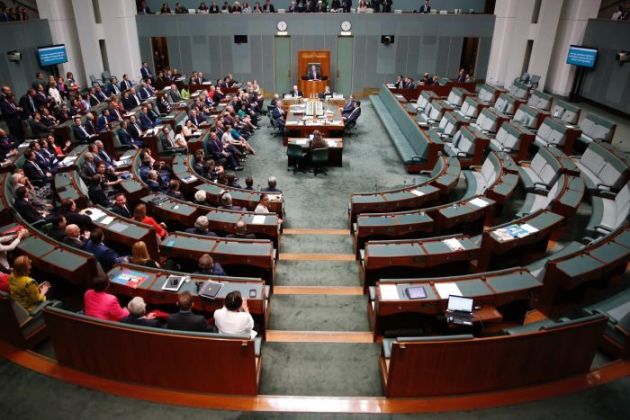
 

House of Reps Vote

The moment Commonwealth Parliament passed the Marriage Amendment (Definition and Religious Freedoms) Act 2017. It introduced same-sex marriage. But it isn’t marriage equality.


If you have enjoyed reading this article, please consider subscribing to receive future posts, via the right-hand scroll bar on the desktop version of this blog or near the bottom of the page on mobile. You can also follow me on twitter @alawriedejesus


Footnotes:

[i] See the discussion of forced trans divorce below.

[ii] Legislation to abolish forced trans divorce – as well as making the inclusion of gender on birth certificates optional – has passed Tasmania’s Legislative Assembly, but it is unclear if or when it will pass the Legislative Council.

Legislation to abolish forced trans divorce passed Western Australia’s lower house in late 2018. It was finally passed by the Legislative Council on 12 February 2019, leaving Tasmania as the last state yet to abolish Forced Trans Divorce.

[iii] Authorised under section 47A:

Religious marriage celebrants may refuse to solemnise marriages

(1) A religious marriage celebrant may refuse to solemnise a marriage despite anything in this Part, if the celebrant’s religious beliefs do not allow the celebrant to solemnise the marriage

Grounds for refusal not limited by this section

(2) This section does not limit the grounds on which a religious marriage celebrant may refuse to solemnise a marriage.

[iv] There is a fourth problem with the Marriage Amendment (Definition and Religious Freedoms) Act 2017 and that is it reinforces the ability of defence force chaplains to discriminate in terms of which marriage ceremonies they will officiate. As outlined in section 81 of the Marriage Act 1961:

(2) A chaplain may refuse to solemnise a marriage despite anything in this Part, if any of the following applies:

(a) the refusal conforms to the doctrines, tenets or beliefs of the religion of the chaplain’s religious body of religious organisation;

(b) the refusal is necessary to avoid injury to the religious susceptibilities of adherents of that religion;

(c) the chaplain’s religious beliefs do not allow the chaplain to solemnise the marriage.

Grounds for refusal not limited by this section

(3) This section does not limit the grounds on which an authorised celebrant (including a chaplain) may refuse to solemnise a marriage.

This provision is offensive because military chaplains are public servants, paid for by the taxpayer (including of course LGBTI taxpayers), and obligated to serve all of the people supposedly under their pastoral care. They should be required to provide these services to all ADF personnel, irrespective of their sexual orientation or gender identity – and if they cannot, they should find another job.

On the other hand, it should be acknowledged that defence force chaplains already had the ability to determine who they performed marriages for (although the revised section 81 made this power even clearer) meaning it is somewhat distinct from the existing civil celebrant, and wedding-related services, religious exceptions, both of which are genuinely new ‘rights’ to discriminate.

[v] Perhaps equal worst with Liberal Democrat Senator David Leyonhjelm’s Freedom to Marry Bill 2014, which allowed all civil celebrants to turn away LGBTI couples, but which did not insert new general religious exceptions in the Marriage Act itself.

Liberal Senator James Paterson’s Marriage Amendment (Definition and Protection of Freedoms) Bill 2017 – written in conjunction with the Australian Christian Lobby – was obviously far worse than both, but it was never formally introduced.

[vi] See the results of their November 2017 community survey here.

In particular:

  • 63.1% of respondents opposed the Smith Bill’s civil celebrant provisions
  • 86.9% opposed the wedding-related services exceptions, and
  • 77.4% opposed provisions allowing military chaplains to refuse to officiate the ceremonies of LGBTI ADF personnel.

Importantly, 53.7% of respondents indicated they were willing to wait until marriage equality could be achieved without such provisions (while only 27.9% were not willing to wait and 18.4% were neutral on this issue).

[vii] For more on these issues, see Rodney Croome’s excellent recent article in New Matilda, ‘Yes Yes No: Why the History of Marriage Equality Must be Told Accurately’.


Submission to NSW Parliamentary Inquiry into Gay and Trans Hate Crimes

Update 31 August 2019:


In what was a big news week re LGBTI rights in Australia (see also the release of the Government’s draft Religious Discrimination Bill), the NSW Parliament also tabled the Berejiklian Government’s short response to the Parliamentary Inquiry into Gay and Trans Hate Crimes.


Well, a partial response anyway, with NSW Police responding to recommendation 3 only, with a one-page letter including this statement:

“While the Inquiry identified historically negative attitudes from Officers towards members of the LGBTIQ community, I am confident the views and attitudes of the NSW Police Force today towards this community are positive, respectful and professional.”


At this stage, the new Parliament (elected on 23 March 2019) hasn’t re-established the inquiry, which was the primary recommendation of the original inquiry (see below).


Update 4 March 2019:


The Committee handed down an interim report on Tuesday 26 February (just before the issuing of the writs for the 2019 State election). That report can be found here.


The primary recommendation (Recommendation 1) is:


That the NSW Legislative Council re-establish the inquiry into Gay and Transgender hate crimes between 1970 and 2010 in the 57th Parliament and the terms of reference for further inquiry and report be subject to a decision of the House.


This is important, both because the work of the inquiry could not possibly have been completed in the short time available, and also to ensure that evidence of anti-LGBT hate crimes from regional, rural and remote NSW is gathered.


The other encouraging recommendation (Recommendation 4) is:


That, should the inquiry be re-established consistent with Recommendation 1, the committee invite witnesses to address the issue of the appropriate mechanism for independent review of past gay and transgender hate crimes.


Therefore, while the Committee has not agreed to support a Royal Commission at this stage (which was the main recommendation in my personal submission, published below), it has left the door open to recommending a Royal Commission or some other form of independent judicial inquiry in the future.


Perhaps just as interesting are the recommendations that had been featured in the draft report, but were removed at the behest of Committee members (as detailed in the minutes of the Committee published in an appendix).


Thus (Christian fundamentalist) Labor MLC, Greg Donnelly, moved that the following recommendations be axed:


That the NSW Police Force, in meeting Recommendation 3, increase the time currently allocated to the training of new policy recruits in modules relating to lesbian, gay, bisexual, transgender, intersex and queer (LGBTIQ) people.


That the NSW Police Force implement a program of ongoing education modules relating to lesbian, gay, bisexual, transgender, intersex and queer (LGBTIQ) people for all officers and other employees.


That the NSW Police Force increase the number of specialist Lesbian, Gay, Bisexual, Transgender, Intersex and Queer (LGBTIQ) Liaison Officers, particularly in rural, regional and others areas that do not currently have access to such officers.


That the NSW Police Force implement a new service to enable lesbian, gay, bisexual, transgender, intersex and queer (LGBTIQ) people to more readily access the services and support of a specialist officer to make it easier to report crimes or seek the assistance of police.


Christian Democrat MLC, Fred Nile, also caused the following recommendation to be removed:


That the NSW Police Force change the name of the Gay and Lesbian Liaison Officer program to the Lesbian, Gay, Bisexual, Transgender, Intersex and Queer (LGBTIQ) Liaison Officer Program.


Meanwhile, National MLC Trevor Khan (who is usually an ally for the LGBTI community) moved that the following recommendations be axed:


That the NSW Attorney General issue a reference to the NSW Law Reform Commission to require that it undertake a comprehensive review of the law of homicide and homicide defences in New South Wales to ensure that recent legal reforms have effectively removed any potential for injustice to occur.


That the Judicial Commission of New South Wales review the content of jury directions to ensure that they adequately ensure the fair and equal treatment of lesbian, gay, bisexual, transgender, intersex and queer (LGBTIQ) people and acknowledge the historical legacy of the ‘gay panic defence’.


Thus, while the interim report itself is not bad – recommending further investigation by the next Parliament, and leaving the door open to a Royal Commission or other independent judicial inquiry – it could, and indeed should, have been a whole lot better.


Original submission:


NSW Legislative Council Standing Committee on Social Issues


Wednesday 7 November 2018


To whom it may concern


Submission re Inquiry into gay and transgender hate crimes between 1970 and 2010


Thank you for the opportunity to provide a submission to this important inquiry.


I do so as a long-term advocate for the rights of the lesbian, gay, bisexual, transgender and intersex (LGBTI) community, including for the past six years in New South Wales.


However, this timeframe means I did not live in NSW during the period 1970 to 2010. I consequently do not have a personal experience of anti-LGBTI hate crimes in this jurisdiction during that period.


Nevertheless, I acknowledge and endorse the work of others, both individuals and organisations, who have documented the appallingly high number of gay and trans hate crimes which occurred here over the course of the past four or five decades.


This obviously includes the work of ACON, whose excellent ‘In pursuit of truth and justice’ report is cited in the terms of reference to this inquiry, as well as that of journalist Rick Feneley, whose stories over recent years have finally started to give these crimes the attention, and scrutiny, they deserve.


And it includes the work of three former NSW Police employees or consultants – Steve Page, Sue Thompson and Duncan McNab – whose work has confirmed the failure by NSW Police to adequately investigate many of these same crimes.


This failure can be seen as one reason, perhaps even the primary reason, why, of the 88 homicide cases identified in In pursuit of truth and justice, approximately 30 remain unsolved today.


I therefore welcome the initiative of the Legislative Council in establishing this inquiry, to hear from people who have been affected by these hate crimes, either directly or who have valuable information about crimes committed against others.


Indeed, this fits with ACON’s recommendation 1.2:


ACON recommends the NSW Government, in partnership with community, undertake a process to comprehensively explore, understand and document the extent of historical violence experienced by the LGBTI community.


And also with recommendation 4.1:


ACON recommends an independent investigation into the actions of the various arms of the criminal justice system to fully understand the impediments to justice during this period in history, their relevance to current practices, and to identify opportunities to finalise unsolved cases.


However, I would argue that, while a positive start, a short parliamentary inquiry is unlikely to be sufficient in and of itself to comprehensively address these issues. I form this view on the basis of the following factors:


  • The sheer scale, and seriousness, of the subject matter involved, noting that we are discussing at least 88 homicides, with more that may yet be identified through this process,
  • Remembering that figure does not include the hundreds, perhaps thousands, of additional homophobic and transphobic hate crimes that occurred during this period, including serious and violent assaults, many of which have never been properly documented,
  • The role of NSW Police in failing to adequately investigate many of these crimes (both homicides and assaults), and
  • The allegations of complicity and/or even direct participation by NSW Police members in some of these horrific crimes.


Given all of the above, I believe that this subject matter should be investigated through a Royal Commission, which would have the appropriate powers, resources and timeframes to fully explore the gay and trans hate crimes which occurred in NSW over the past half-century.


Recommendation 1: That the Committee call on the NSW Government to establish a Royal Commission into the issue of gay and trans hate crimes in NSW since 1970.


In terms of the ‘gay panic’ or ‘homosexual advance defence’ and the role it ‘played in the culture of LGBTIQ hate crimes between 1970 and 2010’ and how it ‘impacted the delivery of justice and the treatment of gay men during LGBTIQ hate crime investigations and court proceedings’, I believe it did contribute both to helping to incite these crimes, and in undermining their proper investigation.


As I wrote to the Legislative Council Provocation Committee in 2012, calling for the abolition of the gay panic defence:


In my opinion, there is nothing so different, so special or so extraordinary, in the situation where the non-violent sexual advance is made by a man to another man, as to justify offering the offender in such cases any extra legal protection. In contemporary Australia, a man who receives an unwanted sexual advance should exercise the same level of self-control as we expect of any other person.


To have a separate legal standard apply to these cases is homophobic because it implies there is something so abhorrent about a non-violent sexual advance by a man to another man that a violent reaction is almost to be expected, and at least somewhat excused. This does not reflect the reality of contemporary Australia, where, with the exception of marriage, gay men enjoy the same rights as other men, and are accepted as equals by the majority of society.


Even if a small minority of people remain firmly intolerant of homosexuality, that does not mean there should be a ‘special’ law to reduce the culpability of such a person where they are confronted by an unwanted homosexual sexual advance. To retain such a provision is unjust and discriminatory, and is a mark against any legal system which aspires to fairness.


The above discussion outlines why the homosexual advance defence is wrong in principle. What should not be forgotten is that the homosexual advance defence is also wrong in practice, or in the outcomes which it generates. After all, the defence does not simply exist in the statute books, ignored and unused. Instead, it has been argued in a number of different criminal cases, sometimes successfully.


This means there are real offenders who are in prison (or who have already been released), who have had their conviction reduced from murder to manslaughter, and most likely their sentence reduced along with it, simply because they killed in response to a non-violent homosexual advance. The legal system has operated to reduce the liability of these offenders even when broader society does not accept that such a reduction is justified. As a result, these offenders have not been adequately punished, meaning that above all these victims have not received justice.


Similarly, the family members and friends of the victims killed in such circumstances have witnessed the trials of these offenders, expecting justice to be served, only to find that the killer is not considered a murderer under the law. Instead, these family members and friends find some level of blame is placed on the actions of the victim, that somehow by engaging in a non-violent sexual advance they have helped to cause and even partly deserved their own death.


The painful ‘lessons’ of the gay panic defence, which were learnt over many decades by the LGBTI community, included the following:


  • That the life of a gay man was valued at less than that of other victims,
  • That a non-violent sexual advance by a gay man to another man was abhorrent, and that a violent response to such an advance was at least partially justified, and
  • That the law enforcement and justice systems of NSW were not on our side.


These same lessons were learnt by the perpetrators of anti-gay and anti-trans hate crimes. They worked out that LGBTI people made for easy targets, both because we were unlikely to report crimes and, even if we did, that NSW Police were unlikely to do anything about it.


Based on the behaviour of some NSW Police officers, including reportedly in the 1989 assault of Alan Rosendale, as witnessed by Paul Simes (see Rick Feneley, ‘Erased from the records; Investigation into bashing of gay man by police in Surry Hills in 1989’, Sydney Morning Herald, 19 January 2015), it seems that they too believed the lives of gay men mattered less than others.


It is perhaps unsurprising that, when the law – via the homosexual advance defence – said gay men’s lives were less valuable than those of heterosexual people, some members of the law enforcement arm of government acted in the same way.


So, while the abolition of the gay panic defence by NSW Parliament in May 2014 was a major step forward for LGBTI rights in this state, we should not underestimate the damage it caused during its (too-many) years of operation.


Thank you in advance for taking this submission into consideration as part of this inquiry. If you would like to clarify any of the above, or for additional information, please do not hesitate to contact me at the details provided.


Sincerely

Alastair Lawrie


w1-truthandjustice

ACON’s excellent ‘In pursuit of Truth and Justice’ Report is available here.

Submission to the Australian Law Reform Commission Review of the Family Law System

Australian Law Reform Commission

via familylaw@alrc.gov.au


Tuesday 13 November 2018


To whom it may concern


Submission in response to the Review of the Family Law System Discussion Paper


Thank you for the opportunity to provide a submission to this review.


While there are a number of important issues raised in the Discussion Paper, I will restrict my comments to one issue in particular: the welfare jurisdiction, and specifically its impact on people born with variations in sex characteristics.


This issue is discussed in Chapter 9 of the Discussion Paper, and specifically addressed in Question 9-1:


In relation to the welfare jurisdiction:

  • Should authorisation by a court, tribunal, or other regulatory body be required for procedures such as sterilisation of children with disability or intersex medical procedures? What body would be most appropriate to undertake this function?
  • In what circumstances should it be possible for this body to authorise sterilisation procedures or intersex medical procedures before a child is legally able to personally make these decisions?
  • What additional legislative, procedural or other safeguards, if any, should be put in place to ensure that the human rights of children are protected in these cases?


I will seek to answer these question as both an advocate for the overall lesbian, gay, bisexual, transgender and intersex (LGBTI) community, and specifically as an ally for intersex people, including as a supporter of Intersex Human Rights Australia (IHRA).


In this capacity – as an intersex ally – I have affirmed the March 2017 Darlington Statement of intersex advocates and organisations from Australia and Aotearoa/New Zealand.


That Statement provides a clear set of principles which guide the response to the current Discussion Paper. This includes:


Article 5: Our rights to bodily integrity, physical autonomy and self determination.


Article 7: We call for the immediate prohibition as a criminal act of deferrable medical interventions, including surgical and hormonal interventions, that alter the sex characteristics of infants and children without personal consent. We call for freely-given and fully informed consent by individuals, with individuals and families having mandatory independent access to funded counselling and peer support.


Article 16: Current forms of oversight of medical interventions affecting people born with variations of sex characteristics have proven to be inadequate.

a. We note a lack of transparency about diverse standards of care and practices across Australia and New Zealand for all age groups.

b. We note that the Family Court system in Australia has failed to adequately consider the human rights and autonomy of children born with variations of sex characteristics, and the repercussions of medical interventions on individuals and their families. The role of the Family Court is itself unclear. Distinctions between ‘therapeutic’ and ‘non-therapeutic’ interventions have failed our population.


Article 22: We call for the provision of alternative, independent, effective human rights-based oversight mechanism(s) to determine individual cases involving persons born with intersex variations who are unable to consent to treatment, bringing together human rights experts, clinicians and intersex-led community organisations. The pros and cons for and against medical treatment must be properly ventilated and considered, including the lifetime health, legal, ethical, sexual and human rights implications.


Article 23: Multi-disciplinary teams must operate in line with transparent, human rights-based standards of care for the treatment of intersex people and bodies. Multi-disciplinary teams in hospitals must include human rights specialists, child advocates, and independent intersex community representatives [emphasis in original].


I also endorse the 7 May 2018 submission by Intersex Human Rights Australia to the Review of the Family Law System – Issues Paper.


This includes supporting their analysis of the serious problems caused by the jurisprudence of the Family Court to date in this area (on pages 33 to 42), specifically:


  • Welfare of a Child A (1993)
  • Re: Carla (Medical procedure) (2016)
  • Re: Lesley (Special Medical Procedure) (2008), and
  • Re: Kaitlin (2017).


The horrific circumstances of the Re: Carla case in particular demonstrate the acute failure of the Family Court to adequately protect the human rights of children born with intersex variations. Instead, the Family Court appears more likely to be complicit in, and sign off on, these same human rights violations.


It is hard not to agree with IHRA’s conclusion that: ‘this 2016 Family Court of Australia case is deeply disturbing, exemplifying the way that the human rights of intersex children are violated with inadequate evidence for social and cosmetic purposes’ (page 39).


I further endorse the summary findings of the IHRA submission (on page 42) including that:


  • The Family Court system has not understood the intersex population, nor the nature of procedures in cases that it has been asked to adjudicate. Most cases are not subject to even this limited form of oversight.
  • The Family Court has failed to properly utilise its procedures in order to ensure that the best interests of intersex children have been thoroughly investigated and understood within the medical context, and within the human rights context, and
  • The ‘best interests of the child’ has been interpreted through a narrow lens, manipulated to facilitate experimental treatments that, contrary to Article 3 of the Convention on the Rights of the Child, conflict with the child’s human dignity and right to physical integrity. This has been facilitated through appeals to gender stereotypes and social norms with insufficient attention to the long-term health and well-being interests of the child.


And I support the recommendations made by IHRA on pages 43 and 44, including that:


Recommendation 4. Any non-deferrable interventions which alter the sex characteristics of infants and children proposed to be performed before a child is able to consent on their own behalf should be identified as medical treatment outside the scope of parental consent and requiring authorisation of an independent body (hereafter referred to as the ‘decision-making forum’). A decision-making forum must bring together human rights experts, clinicians, and intersex-led community organisations.


Recommendation 5. Whether consent is provided by the intersex minor or a decision-making forum, the pros and cons of medical treatment must be properly ventilated and considered, including the lifelong health, legal, ethical, sexual and human rights implications. Consent or authorisation for treatment must be premised on provision of all the available medical evidence on necessity, timing, and evaluation of outcome of medical interventions. Where this is no clinical consensus, this must be disclosed.


Recommendation 10. The current threshold criteria to determine whether or not a procedure is within the scope of parental authority is whether it is therapeutic or non-therapeutic. This criterion has failed to distinguish between interventions that are strictly clinically necessary and those that are not; between interventions based on culturally-specific social norms and gender stereotypes and those that are not. This criterion should be abandoned as a threshold test of whether a medical procedure requires oversight or authorisation from a decision-making forum, and


Recommendation 11. Children born with variations of sex characteristics must be treated by multi-disciplinary teams. Multi-disciplinary teams must operate in line with transparent, human rights-based standards of care for the treatment of intersex people and bodies. Multi-disciplinary teams in hospitals must include human rights specialists, child advocates, and independent intersex community representatives.


Based on all of the above factors, and returning to Question 9-1 in the Discussion Paper, my approach to these issues is therefore:


  • All deferrable medical interventions, including surgical and hormonal interventions, that alter the sex characteristics of infants and children with variations in sex characteristics without personal consent should be prohibited as criminal acts.
  • Where medical interventions on infants and children with variations in sex characteristics are considered non-deferrable, this must be subject to genuine independent oversight.
  • Based on the advice of Intersex Human Rights Australia, the experiences of far too many people born with intersex variations, and the jurisprudence cited earlier, adequate oversight is not being provided currently. The Family Court has failed, in its welfare jurisdiction, to protect the welfare of intersex infants and children.
  • Given this, the Family Court should no longer perform this function. Instead, a new independent authority should be created to oversee issues related to non-deferrable medical interventions on infants and children with variations in sex characteristics.
  • This new independent authority should primarily be guided by human rights considerations, including the human rights of the child concerned – rather than the current approach which both prioritises and privileges a medicalised approach to these questions.
  • Consequently, this new independent authority should receive evidence and information from human rights and children’s rights experts, from intersex-led community organisations and peers, alongside clinical and psychosocial experts. Only by hearing from all of these sources can the issues be properly ventilated.
  • This new independent authority should be national, both so that it can help ensure greater consistency, but also to assist with the transparency of and accountability for its decision-making.


Thank you for the opportunity to provide this submission to this important inquiry. Please do not hesitate to contact me, at the details provided, should you require additional information.


Sincerely,

Alastair Lawrie

1200px-Intersex_flag.svg

Liberals Claiming Credit for Marriage Equality Can Get in the Bin

Next Thursday, 15 November, is the one-year anniversary of the announcement of the results of the same-sex marriage postal survey, in which 61.6% of Australians said yes to equality.

And December 7 will mark 12 months since the passage of the Marriage Amendment (Definition and Religious Freedoms) Act 2017, which finally legalised same-sex marriage in this country.

With both milestones rapidly approaching, it is likely we will witness a large number of Liberal Party MPs and Senators try to claim credit for achieving marriage equality.

Indeed, now-former Prime Minister Malcolm Turnbull kicked off this predictable right-wing festival of self-congratulation on Thursday night’s QandA,[i] commenting that:

“You know, think of the big social reforms, legalising same-sex marriage. I mean, what a gigantic reform that was, I was able to do that … I legislated it, right? So I delivered it.”

This statement is about as far removed from the truth as the nonsense that emanates daily from Donald Trump’s twitter account.

Rather than ‘delivering’ this important reform, the Liberal Party was in fact the greatest obstacle standing between LGBTI Australians and the right to marry.

In case you disagree – or have forgotten the destructive role played by the Liberals on this issue over many years – here’s a reminder of what they actually did:

  1. The Liberal Party banned marriage equality in the first place

It was John Howard’s Liberal-National Government that prohibited same-sex marriage in August 2004.[ii] While this was prompted by couples who had wed overseas seeking recognition of their marriages under Australian law, it was primarily motivated by the desire to wedge the Labor Party on this issue ahead of the federal election later that year. Sadly it would not be the last time the Liberal Party played with the lives of LGBTI people for base political reasons.

  1. The Liberal Party refused to allow Australians to marry overseas

The Howard Liberal-National Government actually went further than merely refusing to recognise the marriages of couples who had wed overseas. They then refused to issue Certificates of No Impediment to Australians who wanted to get married in countries where it was legal, even where one member of the couple was from the other, more-progressive country. This was an incredibly petty and mean-spirited move.

Fun Fact: The Attorney-General who implemented this pathetic policy was the same person who led the recent Religious Freedom Review which recommended that religious schools continue to be allowed to discriminate against LGBT students and staff, one Philip Ruddock.

  1. The Liberal Party voted against marriage equality in September 2012

It took eight years before there was a genuine opportunity to repeal the Howard Liberal-National Government’s ban on same-sex marriage. In late 2012, Parliament voted on ALP MP Stephen Jones’ private members’ bill.

In line with the hard-fought, and hard-won, decision at its December 2011 National Conference, the Gillard Labor Government gave its members a conscience vote. The majority of ALP MPs and Senators voted in favour of marriage equality.[iii]

On the other hand, every single Liberal Party MP and Senator, bar one, voted against same-sex marriage. That includes then-Opposition Leader Tony Abbott, Malcolm Turnbull, Scott Morrison, George Brandis and Dean Smith. The only notable, and noble, exception was Queensland Senator Sue Boyce.

The Liberal Party cannot expect to be rewarded for the fact that same-sex marriage was legalised on December 2017 when they were the ones who stopped it from being passed more than five years earlier.

  1. The Liberal Party refused to hold a parliamentary vote on marriage equality

Following its election in September 2013, Tony Abbott’s Liberal-National Government simply refused to hold another ordinary parliamentary vote on same-sex marriage. This recalcitrant approach continued even after it became apparent the majority of MPs and Senators now supported marriage equality.

  1. The Liberal Party challenged the ACT’s same-sex marriage laws

While the Abbott Liberal-National Government did absolutely nothing to achieve marriage equality in Commonwealth Parliament, they did take action in at least one area: they challenged the validity of the recently-passed ACT Government’s same-sex marriage laws in the High Court.

In fact, this was one of the first things the newly-elected government did on any issue, full stop, revealing its fundamental priority was to stop marriage equality in any way possible.

This challenge was ultimately successful, meaning that the marriages of 31 couples were effectively annulled.

Fun Fact: The Attorney-General who instigated this High Court challenge, that overturned the marriages of 62 people who his own Government would not allow to marry because of their sexual orientation and/or gender identity, would later claim that marriage equality was one of his, and his Government’s, greatest achievements, one George Brandis.

  1. The Liberal Party proposed an unnecessary, wasteful, harmful and divisive plebiscite

In August 2015, with public support for marriage equality continuing to build, and the Abbott Liberal-National Government under mounting pressure to finally do something on this topic, they chose not to do the one thing that would actually resolve it (hold a parliamentary vote).

Instead, after a six-hour joint party-room meeting, they proposed a same-sex marriage plebiscite. Despite changing leaders the following month, new-Prime Minister Malcolm Turnbull continued to support this policy, including in the lead-up to the 2016 Federal election and beyond.

A plebiscite like this was essentially unprecedented – there had been only one plebiscite in the previous 98 years, and that was on the national anthem. It was unnecessary, and – at an estimated cost of $158.4 million – it was fundamentally wasteful too. LGBTI Australians also justifiably feared that, subjecting our relationships and rights to months of public debate would be incredibly divisive, and cause significant harm to the most vulnerable members of our community.

It should be remembered that the idea for a plebiscite was only being pushed by those who opposed marriage equality, including Abbott himself, the Australian Christian Lobby and other religious extremists. It was never designed with the best interests of the LGBTI community in mind.

  1. The Liberal Party held an unnecessary, wasteful, harmful and divisive postal survey

After months of intense lobbying by LGBTI community advocates and organisations, the ALP, Greens and members of the cross-bench rejected the Turnbull Liberal-National Government’s plebiscite in the Senate in October 2016.

Despite this, Prime Minister Turnbull and the Coalition still refused to hold a straight-forward parliamentary vote. Instead, in August 2017 they proposed a same-sex marriage ‘postal survey’.

This was even more unprecedented, and was an abuse of the power of the Australian Bureau of Statistics’ power to collect, well, statistics. Despite the fact the High Court found it was technically lawful, it could at best be described as ethically dodgy, and at worst a perversion of Australian democracy.

Like the plebiscite, the postal survey was entirely unnecessary, and completely wasteful, ultimately costing taxpayers $80.5 million. And for LGBTI Australians and rainbow families its impact was exactly as bad as anticipated, unleashing a torrent of homophobia and transphobia, with the worst attacks of the bigoted No campaign reserved for trans and gender diverse young people.

Of course, the architects of the postal survey didn’t care about this negative outcome. Because the postal survey was never about us. It was put forward as a quick political fix for the Liberal Party, who knew they couldn’t continue to oppose marriage equality in the lead-up to the 2019 Federal election, but whose homophobic party-room members refused to hold a parliamentary vote without conducting a costly (in multiple senses of the word) public debate beforehand.

And if you disagree with this analysis, perhaps you’ve forgotten whose idea the postal survey was, one Peter Dutton.

  1. The Liberal Party didn’t actually pass marriage equality

This point might sound strange (especially to new readers of this blog), but it is an important one to make. Because while Liberal Senator Dean Smith’s Marriage Amendment (Definition and Religious Freedoms) Act 2017 finally granted same-sex and gender diverse[iv] couples the right to marry, it did not deliver true equality.

A hint lies in the title. This legislation did not just amend the Marriage Act 1961 to ensure marriage was available to all couples, it also added new rights for individuals and organisations to discriminate against LGBTI couples on the basis of religious prejudice.

This included permitting existing civil celebrants to register as ‘religious marriage celebrants’ and consequently putting up signs saying ‘no gays allowed’. These are not ministers of religion, and the ceremonies they conduct are not religious. But the law, as passed, allows these individuals to discriminate on the basis of their homophobia and transphobia.

Smith’s Marriage Amendment (Definition and Religious Freedoms) Act also introduced offensive provisions allowing discrimination by religious organisations in the Marriage Act itself. This includes section 47B:

A body established for religious purposes may refuse to make a facility available, or to provide goods or services, for the purposes of the solemnisation of a marriage, or for purposes reasonably incidental to the solemnisation of a marriage, if the refusal:

(a) conforms to the doctrines, tenets or beliefs of the religion of the body; or

(b) is necessary to avoid injury to the religious susceptibilities of adherents of that religion.

Similar provisions allowing discrimination by religious organisations already existed in the Commonwealth Sex Discrimination Act 1984, so at best they were unnecessary here. At worst, because this amendment was phrased as a ‘positive right’, this allows new discrimination, in particular because it is more likely to overrule the better anti-discrimination laws of some states and territories (especially Tasmania’s Anti-Discrimination Act 1998).

It should be noted that these discriminatory provisions were not previously required with respect to divorced people remarrying – another issue on which there are strong religious beliefs. The fact they were introduced last year reveals they were motivated not by so-called ‘religious freedom’, but by homophobia and transphobia masked in that language.

By introducing new forms of discrimination, Dean Smith’s Marriage Amendment (Definition and Religious Freedoms) Act 2017 delivered same-sex marriage, but it most definitely did not achieve marriage equality.[v]

  1. The majority of Liberal Party MPs and Senators voted for even more discrimination

Despite the fact the Smith Bill did not deliver equality to begin with, the majority of Liberal Party MPs and Senators voted in favour of at least some (and in some cases all) of the amendments that would have allowed even more discrimination against LGBTI couples.[vi] The only reason these were defeated was because all ALP and Greens MPs and Senators opposed them, alongside a small minority of Coalition parliamentarians.

These (thankfully rejected) amendments included granting individuals the right to discriminate in the provision of goods and services on the basis of their ‘religious marriage beliefs’, as well as personal views that same-sex relationships are wrong, or that trans people don’t exist.

The then-Attorney-General, George Brandis, even tried to incorporate Article 18 of the International Covenant of Civil and Political Rights into the Marriage Act 1961 (through an amendment that ‘Nothing in this Act limits or derogates from the right of any person, in a lawful manner, to manifest his or her religion or belief in worship, observance, practice and teaching’) while conveniently ignoring the limitation in Article 18(3): that religious freedom can be limited to protect the fundamental rights and freedoms of others (including the right to non-discrimination). Oh, and he moved an amendment that all civil celebrants should be able to discriminate against LGBTI couples because of their personal religious or conscientious beliefs.

It is offensive for Liberals to now claim credit for delivering marriage equality when the majority of them voted for it not to be equal.

Fun Fact: Our new Prime Minister, Scott Morrison, voted for every amendment in the House of Representatives that sought to increase discrimination against LGBTI couples. This included supporting having two different definitions of marriage (one for ‘traditional marriage’ – the union of a man and a woman to the exclusion of all others, voluntarily entered into for life – and one for everybody else – the union of 2 people to the exclusion of all others, voluntarily entered into for life). He also introduced his own amendments to the Bill, which included protecting individuals who discriminate against others because of transphobic beliefs that ‘the normative state of gender is binary and can, in the overwhelming majority of cases, be identified at birth’. He might now be Leader of the country, but with views like that he’ll never be a true leader.

  1. Even after the postal survey, a significant minority of Liberal Party MPs and Senators voted against same-sex marriage

The Liberal Party banned marriage equality in 2004. They voted against it in September 2012. They refused to hold a simple parliamentary vote following their election in 2013. They tried and failed to hold a plebiscite in 2016. They ‘succeeded’ in holding a postal survey in 2017, in which more than three-in-five Australians said yes to equality.

After forcing us wait for 13 years, and making us jump through hoops that no other group in Australia has ever had to before (and hopefully none will have to again), a significant minority of Liberal MPs and Senators still couldn’t bring themselves to vote for the ability of all couples to marry, irrespective of sexual orientation or gender identity.

In the Senate, Liberals Concetta Fierravanti-Wells, Eric Abetz and Slade Brockman, and Nationals John Williams, Matt Canavan and Barry O’Sullivan, voted no. While Liberal Senators Michaelia Cash, David Fawcett, James McGrath and Zed Seselja, and National Bridget McKenzie, all abstained.

In the House of Representatives, Liberal Russell Broadbent, and Nationals Keith Pitt and David Littleproud, voted no. Whereas Liberals (ex-PM) Tony Abbott, Andrew Hastie, Michael Sukkar, Kevin Andrews, (now-PM) Scott Morrison, Rick Wilson, Stuart Robert and Bert van Manen, and Nationals Barnaby Joyce and George Christensen, all abstained.

After subjecting LGBTI Australians to an unnecessary, wasteful, divisive and harmful postal survey because of their own internal political divisions, the fact that these 24 Liberal and National MPs could not even respect its outcome by voting yes in parliament shows the absolute contempt that they hold for us and our relationships. Their disgusting behaviour should not be forgiven nor forgotten.

**********

These ten points unequivocally demonstrate that same-sex marriage was achieved in Australia in spite of the Liberal Party, not because of them.

So, in the coming weeks, if any Liberal MP or Senator tries to claim credit for achieving marriage equality, tell them to get in the bin.

Because that is where such garbage claims belong.

Turnbull-on-QA

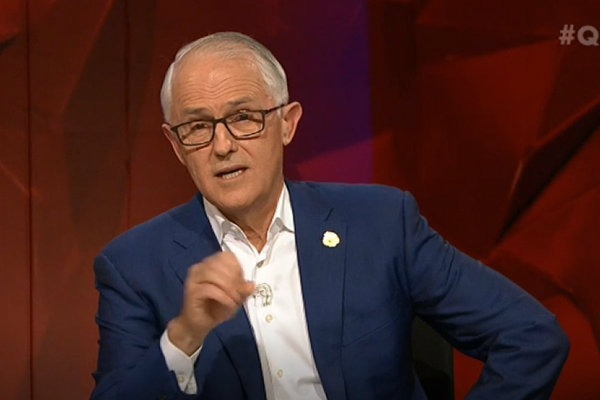
Former Prime Minister Turnbull on QandA, where he tried to claim credit for marriage equality. Hey Malcolm, Get in the Bin.

If you have enjoyed reading this article, please consider subscribing to receive future posts, via the right-hand scroll bar on the desktop version of this blog or near the bottom of the page on mobile. You can also follow me on twitter @alawriedejesus

Footnotes:

[i] Not that I was watching: I was not interested in hearing from the fakest of fake (self-declared) friends of the LGBTI community. This quote is from a transcript in CrikeyWorm.

[ii] Yes, this was done with the support of the then-Latham (!) Opposition, a move that also warrants criticism – but Labor will not be the ones falsely claiming credit for marriage equality in the coming weeks.

[iii] Of course, then-Prime Minister Julia Gillard voted against equality, something for which she should be forever condemned.

[iv] Although trans and gender diverse people are still waiting for forced trans divorce laws to be repealed in some jurisdictions (noting that if they are not repealed by 9 December 2018 the Commonwealth Sex Discrimination Act 1984 will overrule them).

[v] There is a second, more technical, argument why the Liberal Party didn’t actually pass marriage equality. That is because the Marriage Amendment (Definition and Religious Freedoms) Act 2017 was a private members’ bill. It was not Government legislation, so its passage cannot be claimed as an achievement of the Liberal-National Government. Indeed, as a private members’ bill, more ALP MPs and Senators voted for it than Liberal and National ones.

[vi] This includes then-Prime Minister Malcolm Turnbull, who voted for three different sets of amendments increasing discrimination against LGBTI couples, while abstaining on the others.

Submission re Mandatory BBV Testing Options Paper

The NSW Department of Justice has released an Options Paper considering whether to impose ‘mandatory disease testing’ for people whose bodily fluids come into contact with emergency services personnel. You can find more details of that consultation here.

This is my personal submission: 


via mdtsubmissions@justice.nsw.gov.au


Wednesday 31 October 2018


To whom it may concern,


Thank you for the opportunity to provide a submission to this public consultation process.


I write this submission as a former employee in the blood borne virus (BBV)/health sector, and as someone who supports the rights of people living with HIV, hepatitis C and hepatitis B.


I wish to express my serious concerns with any proposal for the mandatory testing of people whose bodily fluids come into contact with emergency services workers, including police.


These concerns are based on a number of factors, including:


The Options Paper places undue emphasis on the number of incidents of exposure to bodily fluids, not the number of transmissions


The table on page 8 outlines the total number of incidents of exposure to bodily fluids per year, including for NSW Police, Corrective Services and Health. These numbers are obviously quite high – especially in relation to NSW Health – however, they are not further categorised by the number of incidents in which the risk of BBV transmission is high, and therefore is inflated by a large proportion of incidents in which the risk of transmission is low or negligible.


Perhaps more importantly, while the paper includes the number of incidents of exposure to bodily fluids, it does not include any information on the number of actual transmissions of HIV, hepatitis C or hepatitis B in these contexts, presumably because these figures are also low or negligible.


For example, I understand that despite the high number of exposures within NSW Health, there have been no confirmed cases of HIV transmission for a health care worker following occupational exposure in NSW since 1994, and nationally since 2002.


I do not wish to underestimate the anxiety that may be experienced by an emergency services worker following an incident of exposure to bodily fluids. However, a focus on the number of incidents of exposure to bodily fluids, while ignoring the very low number of transmissions of BBVs, is likely to exacerbate rather than alleviate such anxiety.


The ‘window period’ means that mandatory testing for BBVs cannot offer the level of comfort that its advocates claim


The push for new laws in this area, introducing mandatory testing for BBVs, by organisations including the Police Association, appears to be motivated by a desire to provide comfort to emergency services personnel who are exposed to bodily fluids in the course of their work.


However, the respective window periods for detection of HIV, hepatitis C and hepatitis B mean that mandatory testing of the ‘source’ person of these fluids cannot offer genuine comfort for these employees. This fact is conceded in the Options Paper itself, on page 13: ‘Because of the window period, it can never be known for certain at the time of testing whether the source person is infectious.’


It is possible to imagine that the results of mandatory testing in these circumstances will instead lead to negative outcomes for the emergency services personnel themselves.


For example, an employee may feel relieved by a negative test of the ‘source’ person, and then, perhaps not fully understanding window periods or simply acting on ‘false confidence’, fail to take appropriate precautions to prevent onwards transmission to their partner, family or others.


On the other hand, a positive test of the ‘source’ person, for one or more BBVs, may lead to heightened anxiety for the emergency services employee, for several months, despite the fact the overall risk of transmission from the particular incident remains low.


Again, this scenario is contemplated in the Options Paper itself, on page 35: ‘even where the source person tests positive, there are varying degrees of risk that the disease will transmit to the emergency services worker. A further consideration is that a positive test result from a source person could have the opposite effect than intended by adding to a worker’s stress, rather than ameliorating it.’


In short, mandatory BBV testing cannot provide what its advocates want. Thus, option 2 – which calls for ‘changes to agency policy to allow the source person to be assessed, counselled and asked to consent to a sample being taken for testing by a health care professional’ – should not be supported.


A better approach would be to focus on providing appropriate health services to emergency services workers


In my view, it would be more effective to ensure that the health services offered to these employees are best practice.


This is contemplated in option 1: ‘improvements to agency policy and practice to ensure emergency services personnel are promptly assessed, counselled and managed by a health care professional with access to specialist advice immediately following an exposure to potentially infectious body fluids.’


This should be supplemented by increased education of emergency services personnel on the routes of BBV transmission, including how to minimise risks of work-related transmission and how to respond to exposure to bodily fluids.


There should also be ongoing programs to ensure all emergency services employees are vaccinated for hepatitis B, that where relevant they have prompt access to Post-Exposure Prophylaxis (PEP) for HIV and immunoglobulin for hepatitis B, and that highly-effective hepatitis C treatments remain available for all Australians who require it.


Mandatory testing undermines Australia’s successful BBV response which is based on consent


Australia has embraced a world-leading response to multiple blood borne viruses, including HIV and more recently hepatitis C.


In both cases, it is based on principles of informed consent and voluntary testing, engagement with affected communities, provision of harm reduction initiatives and the roll-out of treatment across the community.


The introduction of mandatory testing undermines this approach. Indeed, international bodies such as UNAIDS and the World Health Organisation (WHO) oppose mandatory testing because it compromises public health initiatives and efforts to reduce HIV and other BBV transmission.


For these reasons I am strongly opposed to option 3, which is described as ‘a consent-based scheme, with an option for a court ordered mandatory disease testing’.


On page 20, the Options Paper even claims that ‘The advantages of the consent process still apply, and informed consent is the basis for seeking testing. It is anticipated that a sample would be obtained in most cases, as most people would agree to be tested’.


In my opinion, it is highly misleading to state that such a scheme has anything to do with consent. It would more accurately be described as a duress-based scheme, especially because, as outlined on page 19, if the person does not provide ‘consent’ the emergency services agency may then apply to a court for a mandatory disease testing order and:


‘Where the source person does not complywith the court order, the relevant agency may apply to the court for a custody order with warrant. Police may apprehend and detain the source person for the purpose of taking the sample’ (emphasis in original).


This threat negates any consent that may be provided by anyone under this model.


The involvement of police in health-related risk assessments cannot be supported


Option 4 – which is described as ‘a scheme that would apply where an offence has been committed, with mandatory disease testing ordered by a senior police officer’ – has all of the disadvantages of option 3 (above), as well as raising other serious concerns.


The first and most obvious is that police officers are not appropriately qualified to undertake health-related risk assessments. This is again conceded on page 26, which notes: ‘A risk assessment conducted by a senior police officer (or senior correctional officer) offers practical advantages. However, they do not possess the medical expertise offered by health care professionals.’


However, perhaps an even larger problem is created by the criteria that would allow officers to order a test, including the following factor (on page 23):


‘The incident involves a suspected offence or has occurred during the lawful apprehension and detention of a person. For example, the exposure may occur during an assault on the emergency services worker, or while a police officer is arresting a person.’


It should be remembered that a significant proportion of suspected offences are never proven, and that charges in relation to the incident may ultimately be dropped (often several months afterwards). There are also occasions when the lawfulness of the individual’s apprehension and detention are contested, again usually some time later.


However, even if charges are dropped and/or the detention is subsequently found to be unlawful, in the meantime the individual would have already been subjected to an invasive and involuntary medical procedure (or indeed been charged again for failing to provide a sample).


It is even possible to see how, in an incident involving exposure to bodily fluids, such a scheme could operate as an incentive for police to allege an offence has occurred in order to obtain a BBV test from the source person.


This option is therefore not just poor from a health but also a legal perspective.


Mandatory BBV testing creates significant privacy concerns


All of options 2, 3 and 4 generate significant concerns for the privacy of people who undergo BBV testing. This is because the test results are automatically disclosed to the affected emergency services worker.


While it is proposed that safeguards be introduced to ensure the test results are not further disclosed, it is easy to foresee circumstances in which positive results will be disclosed either inadvertently or deliberately during this process.


This is obviously of significant concern for people living HIV, hepatitis C or hepatitis B, who have a right to control their health information, including choosing when, and to whom, they disclose their status.


These concerns are especially acute for people who may be diagnosed as a result of a mandatory BBV test in these circumstances. They will immediately and involuntarily have their status disclosed outside the health context to an emergency services or law enforcement employee, who is most likely a stranger to them and in whom they cannot necessarily place trust not to disclose to others.


This could be an incredibly disempowering experience for the individual concerned and, if health workers are involved in this process (for example, performing the test), could alienate them from the very services they should be accessing for support and (if they so choose) treatment.


It is revealing that the Options Paper discusses, at-length, multiple options in an effort to alleviate the concerns of emergency services workers who are exposed to bodily fluids, despite the fact it is highly unlikely they will ultimately contract a BBV, but spends little to no time discussing the consequences of a positive test result for the ‘source’ person, which is actually the more likely scenario.


This further illustrates that the proposals for mandatory BBV testing are not health- or evidence-based.


Conclusion


As outlined above, I have serious concerns about the proposals outlined in the Options Paper, and especially options 2, 3 and 4.


The ‘window periods’ for HIV, hepatitis C and hepatitis B mean there is limited public health benefit from introducing mandatory BBV testing. On the other hand, there are significant risks, including:


  • Undermining principles of informed consent (and therefore compromising Australia’s world-leading BBV responses)
  • Inappropriately involving police in health-related risk assessments and medical procedures, and
  • Creating serious privacy concerns, especially for people diagnosed as a result of mandatory testing.


The preferred approach would be to ensure that emergency services personnel have access to appropriate information and health services, as outlined in option 1 (‘improvements to agency policy and practice to ensure emergency services personnel are promptly assessed, counselled and managed by a health care professional with access to specialist advice immediately following an exposure to potentially infectious body fluids’).


Therefore, while option 1 can be supported, options 2, 3 and 4 should all be rejected.


Please do not hesitate to contact me, at the details provided, should you require further information.


Sincerely,

Alastair Lawrie


Genderless (Notices of Intended) Marriage

The Commonwealth Attorney-General’s Department is currently consulting about the Notice of Intended Marriage form. Submissions close today, 28 October 2018 (for more information, click here). Here’s mine:

**********

Commonwealth Attorney-General’s Department

via marriagecelebrantssection@ag.gov.au


Sunday 28 October 2018


To whom it may concern


Notice of Intended Marriage Consultation


Thank you for the opportunity to provide a submission to this consultation.


My comments relate to only one section of the revised Notice of Intended Marriage form, and that is:


  1. Gender (optional) Male, Female or Non-Binary.


This is required to be completed for both parties to an intended marriage.


The inclusion of this question is entirely unnecessary and it should be removed.


It is unnecessary because, following the Marriage Amendment (Definition and Religious Freedoms) Act 2017, there is generally no gender (or sex) based restriction on whether couples are able to lawfully marry.


This status will be reinforced on December 9 this year when, for those states and territories that have yet to abolish forced trans divorce, the exception provided by the Commonwealth Sex Discrimination Act 1984 to permit this unjustifiable discrimination will expire.


This question is also unnecessary to establish identity, which is proved by name, date and place of birth and the requirement to supply identity documentation on the subsequent page of the form. Logically, it is clearly unnecessary to prove identity it if answering is optional.


It should be removed because of the growing recognition of, and respect for, the full diversity of the Australian community, particularly in terms of sex, sex characteristics and gender identity.


As a cisgender gay man and LGBTI advocate I acknowledge the advice of trans, gender diverse and intersex individuals and organisations that, in order to be fully inclusive of their diversity, requests for information about sex and/or gender should only be included if they can be shown to serve a valid purpose.[i]


I can see no such purpose in this instance.


Recommendation 1: Question 3 of the Notice of Intended Marriage form should be removed.


If the above recommendation is not agreed, then it is my strong view this question should remain optional.


Further, given the question serves no valid purpose (in terms of determining whether a person is eligible to marry, or in verifying their legal identity) I suggest that the current three options of Male, Female and Non-Binary be removed. Instead it should simply state:


Gender (optional), please specify


This should be a write-in box, and have no other prompts for information. Amending the question in this way would allow people to enter their own gender identity, including those who may not identify with any of Male, Female, or Non-Binary.


Recommendation 2: If question 3 is retained, it must continue to be optional, and should ask for Gender, please specify, followed by a write-in box.


With the passage of last year’s amendments to the Marriage Act 1961, and the imminent abolition of forced trans divorce, marriage in Australia will shortly be available to all couples, irrespective of sex, sex characteristics, sexual orientation and gender identity.


That is what 61.6% of Australians said yes to (in the Liberal-National Government’s unnecessary, wasteful, divisive and harmful postal survey).


This equality-of-access should be reflected in the Notice of Intended Marriage form, by removing the optional question that asks for the gender of the participants, because it is no longer relevant in 2018.


Please do not hesitate to contact me at the details provided should you require additional information.


Sincerely

Alastair Lawrie


images-1


Footnotes:

[i] See for example article 8 of the 2017 Darlington Statement of intersex advocates from Australia and Aoteoroa/New Zealand, which includes:

“Undue emphasis on how to classify intersex people rather than how we are treated is also a form of structural violence. The larger goal is not to seek new classifications, but to end legal classification systems and the hierarchies that lie behind them. Therefore:

  1. a) As with race or religion, sex/gender should not be a legal category on birth certificates or identification documents for anybody” (emphasis in original).

Submission to WA Law Reform Commission Inquiry into Recognition of a Person’s Sex, Change of Sex or Intersex Status

Update 5 March 2019:


The Law Reform Commission of Western Australia has handed down its final report of its Review of Western Australian legislation in relation to the registration or change of a person’s sex and/or gender and status relating to sex characteristics (a copy of the report is available here).


It is generally well-considered, and largely positive for the trans, gender diverse and (in parts at least) intersex communities.


This includes Recommendation 1 that “The Equal Opportunity Act 1984 (WA) be amended to include protections against discrimination based on gender identity and intersex status” (although the latter protected attribute should instead be ‘sex characteristics’ in line with the Yogyakarta Principles plus 10).


There are also a range of recommendations that clarify the difference between sex and gender (and which one should be recorded in different contexts).


The most controversial recommendations (albeit ones I support) are:


Recommendation 5

Sex classification be removed from birth certificates


Recommendation 6

The Births, Deaths and Marriages Registration Act 1998 (WA) and the Births, Deaths and Marriages Registration Regulations 1999 (WA) be amended to expressly prohibit the recording of sex or gender on birth certificates.


This would then be replaced by an opt-in system of ‘Gender Identity Certificates’ for situations where gender may be relevant:


Recommendation 7

The Births, Deaths and Marriages Registration Act 1998 (WA) be amended to provide an application process for a person born in Western Australia to apply for a Gender Identity Certificate (with Recommendation 8 covering people born outside WA).


Importantly, under Recommendation 9, the gender markers included in these certificates would be expanded to include male, female and non-binary (although it does not include an ‘other’ category, as suggested in my submission to the Review, published below).


The WALRC further recommends that there no longer be any surgical or medical barriers for people to update their Gender Identity Certificate, instead proposing a simple administrative process, which, if introduced, would be best practice in Australia (for a comparison with existing laws around Australia, see Identity, not Surgery).


That phrase – if introduced – is key. Unfortunately, I understand that the WA Government has already shied away from the removal of sex and/or gender from birth certificates which, if true, would obviously be incredibly disappointing.


Trans, gender diverse and intersex people deserve better than to have a progressive Law Reform Commission of Western Australia report languish, unimplemented, on the shelves. Let’s hope the WA Government remembers why it commissioned this review in the first place.


Original submission:

Law Reform Commission of Western Australia

Level 23, David Malcolm Justice Centre

28 Barrack St

Perth WA 6000

lrcwa@justice.wa.gov.au


Friday 19 October 2018


To whom it may concern


Submission in relation to recognition of a person’s sex, change of sex or intersex status


Thank you for the opportunity to provide a submission to this important inquiry.


As noted in the Discussion Paper, Western Australia’s current legislation in relation to recognition of a person’s sex, change of sex (or gender) or intersex status is inadequate and out-dated, with negative consequences for trans, gender diverse and intersex individuals.


The model for reform proposed by the Commission would address a number of these short-comings, although I believe there could be further improvements as discussed below.


I write this submission as a cisgender gay member of the LGBTI community, and as an ally of the intersex, trans and gender diverse communities. Where there may be inconsistencies between this submission and the positions supported by those communities, I defer to their views.


Question 1. Will the Commission’s proposed model cause any difficulties if implemented?


I believe the Commission’s proposed model will remove some of the regulatory barriers currently experienced by trans and gender diverse people in having their gender identities recognised in Western Australia.


The removal of sex from birth certificates will also have particular benefits for people born with variations in sex characteristics, reducing pressure for involuntary and unnecessary medical treatments and/or surgeries to be performed.


However, as indicated above, I believe there could nevertheless be some improvements made to the model to ensure it better addresses the needs of these diverse communities.


Question 2. Is the ‘indeterminate’ category sufficient or should additional categories be added to the forms that are used for the First Report and the Second Report, which will then be used to record the sex of the child?


In principle, I do not object to the recording of ‘indeterminate’ sex in the First or Second Reports, provided other aspects of the model – and especially the removal of sex from birth certificates – are also implemented. This appears to ensure statistical data is collected while also reducing the stigmatisation of children born with intersex variations.


However, if the collection of ‘indeterminate’ sex is to continue through this process, it would be useful for the WA Government to indicate the numbers of births that have been recorded using this category – and also to actively monitor the number of children with intersex variations who undergo medical interventions to modify their sex characteristics each year (in an effort to reduce and ultimately eliminate human rights abuses in this area).


Question 3. Should sex classification be mandatory on birth certificates?


No.


I can see no proper purpose for recording sex classification in this way. In contrast, there are multiple benefits to be gained by removing this category from this form.


For trans and gender diverse people, and especially trans and gender diverse young people, it means they will be able to determine their own gender identity (which is much more relevant) when they are ready – and have that identity reflected in official documentation more easily (under other parts of the model),


For people born with variations of sex characteristics, it will help to reduce pressures for involuntary and unnecessary treatments and/or surgeries to alter their sex characteristics to conform to medical, parental and/or societal expectations.


The removal of sex and gender from birth certificates has also been called for in the March 2017 Darlington Statement of Australian and New Zealand intersex advocates and as part of the Yogyakarta Principles plus 10.


Question 4. Should alternative markers be available, such as ‘other/indeterminate’ or ‘not specified’, if sex classification is required on birth certificates?


I would defer to the views of intersex, trans and gender diverse organisations on this issue.


However, for the reasons outlined above, I would strongly urge the Commission – and the Western Australian Parliament – to ensure that sex classification be removed, avoiding the potential for adverse consequences in this area.


Question 5. Are there circumstances in which it will be necessary or desirable to prove sex through a birth certificate, where proof of gender by a Gender Identity Certificate or proof of sex by medical documentation is not appropriate or sufficient?


No. I can think of no circumstances in which proof of sex through birth certificate would be necessary, or preferable instead of proof of gender by Gender Identity Certificate.


Question 6. If yes for the above, would certification by the Registrar alleviate this issue?


Not applicable.


Other comments on the proposed model


There are other aspects of the Commission’s proposed model that are welcome, including the recommended abolition of the Gender Reassignment Board (with the simplified functions under the model performed by the Registrar instead).


I also welcome the proposed ability of minors to apply for a Gender Identity Certificate from the age of 12, with parental consent.


However, I question the age at which parental consent should no longer be required. Rather than the age of 18, which appears to be the position of the Discussion Paper, I believe consideration should be given to adopting an age of 16, as recommended by the February 2016 options paper from the Tasmanian Anti-Discrimination Commissioner.


In terms of which categories should be available on Gender Identity Certificates, I suggest that all of Male, Female, Non-Binary and Other (Please Specify) should be options, to recognise the complexity of gender identity, and that simply adding ‘non-binary’ may not accurately capture all of the possible identities of trans and gender diverse people.


However, as expressed earlier in the submission, if the consensus view of trans organisations and individuals is that Male, Female and Non-Binary are sufficient, I defer to those views.


On the issue of time limits, I do not agree with the proposal to make any change of gender identity beyond the third occasion subject to approval by an appropriate court or tribunal. I can see no reason why, if change of name is allowed annually, that application for change of gender identity should not also be allowed every 12 months (while noting that it is highly unlikely people will actually apply more than two or three times).


I also believe there may be some circumstances in which, even within a particular 12 month timeframe, there may be reasons to allow a person to apply to an appropriate court or tribunal for a change of gender identity to be revised (where, for example, a person is distressed following the issuing of a new gender identity certificate and making them wait to amend it has the potential to cause additional psychological distress).


An additional concern I have about the model is the comment on page 70 that “The Registrar may also request further evidence if required to prove the application [for a Gender Identity Certificate] is not sought for an improper or fraudulent purpose.”


This power seems to undermine the overall intention for the model to reflect self-identification as far as possible. There is also already a penalty for providing a false statutory declaration, making the necessity of such a power debatable.


In this situation, I suggest consideration of either removing this power entirely, or for ensuring additional safeguards on its exercise, to ensure it is only used sparingly, and in exceptional circumstances (rather than reintroducing onerous requirements for individuals to supply medical and other evidence through these administrative arrangements).


In addition, any decision by a Registrar to reject an application for a new Gender Identity Certificate (that is different to a previous certificate) on these grounds must be easily appealable, at low or no cost to the individual.


Finally, in relation to determining the appropriate place to hear appeals (both in relation to this issue, and also on other questions, such as applications for Gender Identity Certificates for minors where parents disagree, or where a person seeks a change in certificate prior to the expiry of any relevant time limits), I express reservations about the suggestion on page 75 that:


“The Commission considers the Family Court to be an appropriate decision-maker where the application is contested by one or more parent(s)/guardian(s), given the Family Court’s jurisdiction for approving medical procedures for intersex and trans and gender diverse minors in circumstances where a child is unable to give informed consent or where there is a disagreement between the parents or guardians about the medical procedure.”


Based on some harmful decisions in relation to intersex minors and involuntary medical treatments and/or surgeries by the Family Court of Australia, the Western Australian Family Court may not be seen as being best-placed to adopt the role of decision-maker under the Commission’s proposed model. I therefore suggest consideration be given to adopting a different decision-maker, including the possibility of a specialist tribunal within Western Australia.


Other issues


I welcome the comments by the Commission, on page 77, that:


“The [Equal Opportunity Act 1984] does not provide protections for intersex people, on the basis of their sex characteristics or intersex status, nor does it provide protections for people on the basis of their gender identity. The Commission considers a detailed review of the EO Act would be beneficial.”


However, while I support the view that this inadequate and out-dated legislation should be reviewed, I do not believe this should delay amendments to the protected attributes covered under the Act to ensure all members of the LGBTI community in Western Australia are protected against discrimination, as quickly as possible.


This could be achieved by adding the protected attribute of ‘gender identity’, potentially based on the definition used in the CommonwealthSex Discrimination Act 1984(with final wording agreed following consultation with the WA trans and gender diverse community).


However, I disagree with the Commission that consideration should be given to introducing a protected attribute of ‘intersex status’, again potentially based on the Sex Discrimination Actdefinition.


While that approach would ensure greater consistency between WA and Commonwealth law, it is not best practice. Instead, I support the introduction of a protected attribute of ‘sex characteristics’, as called for by Intersex Human Rights Australia, and in the Darlington Statement, potentially using the definition included in the Yogyakarta Principles plus 10:


‘each person’s physical features relating to sex, including genitalia and other sexual and reproductive anatomy, chromosomes, hormones, and secondary physical features emerging from puberty.’


Finally, I note that any consultation that addresses the issue of legal recognition of people with intersex variations will inevitably raise the issue of harmful, involuntary and unnecessary medical surgeries and/or treatments of children born with variations in sex characteristics.


The Discussion Paper indeed touches on this issue, including noting on page 28 that “The Commission understands that the current medical preference is to monitor, rather than intervene, for as long as is medically viable.”


My own understanding, based on views expressed by intersex organisations, is that this position may not be entirely accurate. I therefore call on the Commission to further investigate this issue, in consultation with intersex organisations.


Ultimately, I would like to see Principle 32 of the Yogyakarta Principles plus 10 reflected in the lived experience of all intersex people in Australia:


‘Everyone has the right to bodily integrity, autonomy and self-determination irrespective of sexual orientation, gender identity, gender expression or sex characteristics. Everyone has the right to be free from torture and cruel, inhuman and degrading treatment or punishment on the basis of sexual orientation, gender identity, gender expression and sex characteristics. No one shall be subjected to invasive or irreversible medical procedures that modify sex characteristics without their free, prior and informed consent, unless medically necessary to avoid serious, urgent and irreparable harm to the concerned person’ (emphasis added).


Please do not hesitate to contact me at the details provided below should you wish to clarify any of the above, or for further information.


Sincerely

Alastair Lawrie


Who pays for homophobia, biphobia and transphobia?

Prejudice against the lesbian, gay, bisexual and transgender (LGBT) community comes with a hefty price tag.


It is paid for by the individuals who are subject to direct and indirect acts of discrimination, being denied employment, or services, because of who they are, who they love or how they identify.


And by others, who self-censor, missing out on opportunities and on full participation in society, because of the legitimate fear of such discrimination.


It is paid for in the adverse mental health impacts experienced by the LGBT community, with depression, anxiety and other mental illness caused by homophobia, biphobia and transphobia.


And most tragically by those who end their lives as a consequence.


It has even been estimated that homophobia costs the global economy at least $119.1 billion in lost GDP every single year (and presumably more if the effects of biphobia and transphobia are included).


But, in this post, I want to take this question – who pays for homophobia, biphobia and transphobia – more literally.


In essence, who provides the money that funds anti-LGBT prejudice? Who allows it to occur in the first place?


The answer (or at least one of the answers), sadly, is all of us. Let me explain.


You are probably aware that most religious schools in Australia currently enjoy special privileges that permit them to discriminate against LGBT students, teachers and other staff.


This includes religious exceptions such as section 38 of the Commonwealth Sex Discrimination Act 1984, as well as equivalent anti-discrimination laws in New South Wales and Victoria.


In fact, Tasmania and now the ACT are the only Australian jurisdictions that do not allow religious schools to discriminate against teachers and students on the basis of sexual orientation, gender identity or relationship status.


All of the other states and territories allow at least some discrimination against LGBT students, or teachers, or in many cases both (Queensland actually comes closest to matching Tasmania and the ACT’s ‘best practice’ approach: it does not permit discrimination against LGBT students, while LGBT teachers are subject to a ‘don’t ask, don’t tell’ regime – although that still means they can be fired if they even mention having a same-sex partner in the workplace).[i]


And you likely also know that in Australia, religious schools receive significant government funding.


But you are probably not aware just how much public money – taxpayers’ money, your money – is given to these institutions.


According to the 2018 Budget, the Commonwealth Government will provide:


  • $11.829 billion to non-government schools in 2018-19
  • $12.452 billion in 2019-20
  • $13.145 billion in 2020-21, and
  • $13.821 billion in 2021-22.


That’s a total of $51.247 billion in taxpayers’ money going to non-government schools in just four years.


In fact, it’s even worse than that. In September, the Morrison Liberal-National Government announced an extra $1.1 billion for non-government schools over the next four years (and $4.5 billion over the next decade).


And these numbers don’t include the funding provided by state and territory governments.


Based on averages published by the Australian Curriculum, Assessment and Reporting Authority (ACARA), state and territory governments provide approximately one-third of the amount funded by the Commonwealth.


That means an extra $17.43 billion of public funding over the next four years alone, bringing the overall total to $69.78 billion.


Now, a couple of important caveats. Given religious schools in Tasmania are not permitted to discriminate against either LGBT students or teachers, let’s subtract $1.438 billion from this figure (the $1.079 billion allocated to Tasmanian non-government schools in the Commonwealth Budget, plus an extra third for additional state government funding) as well as $1.083 billion for the ACT (the $811.7 million allocated by the Commonwealth, plus an extra third from the Territory government).


And, with a small proportion of non-government schools being non-religious in nature and therefore generally not allowed to discriminate (except in NSW, where the Anti-Discrimination Act 1977 permits all private schools, religious or otherwise, to discriminate against homosexual and transgender students and teachers), let’s be generous and subtract another 5%.


That still leaves $63.83 billion in Commonwealth, state and territory government funding allocated to religious schools over the next four years even though they are allowed to discriminate against LGBT teachers, students or both.[ii]


And who picks up the tab for this Government-sponsored homophobia, biphobia and transphobia? You do of course.


According to the Australian Bureau of Statistics, in June 2017 there were 19.963 million Australians aged 15 and over (and therefore potentially of taxpaying age).


This means that for every Australian individual taxpayer Commonwealth, state and territory governments will collectively give $3,198 over the next four years to religious schools that have the legal right to discriminate against LGBT students and/or teachers. Roughly $800 every year, per person, spent subsidising anti-LGBT prejudice.[iii]


What makes these figures truly offensive, obscene even, is remembering that this money is coming from LGBT teachers, who are paying for religious schools to have the ability to deny them employment in up to 40% of the jobs for which they are qualified.


From the parents of LGBT children, who are paying for the special privileges of these institutions to reject their child’s enrolment simply because of their sexual orientation or gender identity.


And from same-sex couples in rainbow families, who are paying for religious schools to deny their children admission on the basis of their parents’ relationship.


Indeed, the homophobia, biphobia and transphobia of religious schools is being paid for by the taxes of all LGBT Australians, our families, friends and allies.


And by the 61.6% of voters who just last year said that we are, or should be, equal irrespective of our sexual orientation or gender identity.


Despite that result (or perhaps even because of it) the Liberal-National Government seems intent on making what is a horrible situation worse.


Former Prime Minister Malcolm Turnbull commissioned the Ruddock Review of Religious Freedom during last year’s same-sex marriage parliamentary debate.


The contents of that review’s final report, delivered to the government in May but not yet released to the public, were leaked yesterday to Fairfax newspapers, and appear to support the further entrenchment, and possible expansion, of the ‘right’ of religious schools to discriminate against LGBT students and teachers.


This could potentially include the Commonwealth Government using the Sex Discrimination Act 1984 to override the anti-discrimination laws of states and territories like Tasmania and the ACT (and to a lesser extent Queensland) that have moved to limit these special privileges.


New Prime Minister Scott Morrison does not seem opposed to such a development, saying that the right to discriminate against gay students ‘already exists’ (ignoring the fact it has been curtailed in some jurisdictions).


Three weeks’ ago he also told Sky’s Paul Murray that:


Let me give you this example. I send my kids to a Christian school, I think that Christian school should be able to ensure they can provide education consistent with the Christian faith and teaching that I believe as a parent. That’s why I’m sending them there. I don’t think that school should be told who they can and can’t employ, or have restrictions on them in ensuring that they’re delivering to me – the parent, their client, their customer – what I’ve invested in for my children’s education.


What he fails to mention is that, by virtue of public funding for religious schools, we are all ‘investing’ in his children’s education.


And what the Ruddock Review, Prime Minister Morrison and some members of his Government seem to want is for all of us to pay even more to allow more religious schools to discriminate against more LGBT students and teachers.


Well, fuck that. Enough is enough.


It’s time we stopped handing over money so that religious schools can fuck over LGBT students.


And it’s time we stopped coughing up cash so that these institutions can tell LGBT teachers and other staff to fuck off.


These human rights violations have gone on long enough.


To borrow a phrase from the American Revolution, there should be no taxation without anti-discrimination protection. Or even more simply:


No Taxation For Discrimination.


Instead of being an excuse for expanding religious exceptions in relation to religious schools, the Religious Freedom Review should be the catalyst for these special privileges to finally be subjected to proper scrutiny.


If the Morrison Government introduces amendments to entrench and expand the exceptions in section 38 of the Sex Discrimination Act, and potentially to override the best practice approaches of the Tasmanian Anti-Discrimination Act and ACT Anti-Discrimination Act, it will be up to Labor, the Greens and the cross-bench to block it (for his part, Opposition Leader Bill Shorten is making the right noises, saying “The fact is every child is entitled to human dignity. We shouldn’t even be having this debate”).


The pressure will also be on Liberal moderates, who like to claim credit for delivering marriage equality (they didn’t, but that’s a post for another day), to stand up and help defeat proposals that will increase discrimination against that same community.


But stopping things from getting worse would hardly be a heroic achievement. The religious exceptions of the Sex Discrimination Act, and the equivalent laws in most states and territories that promote anti-LGBT prejudice, must be repealed.


Because LGBT teachers should be employed on the basis of their abilities, not their orientations or identities.


And LGBT students should not be refused enrolment, expelled, or discriminated against in any way, shape or form, just because of who they are. Not one student. Not ever.


While the rest of us shouldn’t be forced to pay for it, literally funding the homophobia, biphobia and transphobia of religious schools.


Bottom line: if religious schools want one cent from us, they must be decent to us, and that means ending their special privileges to discriminate against LGBT students, teachers and other staff once and for all.


To take action, please sign and share this petition from just.equal: www.equal.org.au/protectourkidsandteachers


aud100front

Your hard-earned dollars are funding anti-LGBT prejudice.


If you have enjoyed reading this article, please consider subscribing to receive future posts, via the right-hand scroll bar on the desktop version of this blog or near the bottom of the page on mobile. You can also follow me on twitter @alawriedejesus


Footnotes:

[i] For more information about these laws, see: A Quick Guide to Australian LGBTI Anti-Discrimination Laws.

[ii] I am not suggesting that all of these schools would discriminate against LGBT students and/or teachers. In practice, a number provide welcoming environments irrespective of sexual orientation and gender identity. However, these schools retain the legal right to discriminate on these grounds.

[iii] By way of comparison, the Commonwealth Government will provide $245.6 million over the next four years to another inappropriate and unjustified school funding initiative (the National School Chaplaincy Program), or the equivalent of $12.30 for every Australian aged 15 and over. On the other hand, the Turnbull Government, of which Scott Morrison was Treasurer, axed the $8 million Safe Schools program in 2016 – in effect, they could not even be bothered spending 40c per taxpayer, spread over four years (so just 10c per taxpayer per year), to help address homophobia, biphobia and transphobia in schools.

Submission to AHRC Consultation re Medical Interventions on People Born with Variations of Sex Characteristics

This is my personal submission in response to the Australian Human Rights Commission’s July 2018 Consultation Paper ‘Protecting the Human Rights of People Born with Variations in Sex Characteristics in the context of Medical Interventions’.

This issue – involuntary medical interventions, including surgical and hormonal interventions, that alter the sex characteristics of intersex infants and children – is also the sixth post in a series looking at the unfinished business of LGBTI equality in Australia.

**********

Australian Human Rights Commission

c/- sogii@humanrights.gov.au

Sunday 30 September 2018


Submission in response to the Protecting the Human Rights of People Born with Variations in Sex Characteristics in the context of Medical Interventions Consultation Paper


Thank you for the opportunity to provide a submission as part of this important consultation process.


I do so not as a person with variations in sex characteristics, but as a member of the broader LGBTI community and as an ally of the intersex community.


This includes explicitly supporting the goals of intersex people as expressed in the Darlington Statement: Joint consensus statement from the intersex community retreat in Darlington, March 2017.[i]


This submission is informed by that document, as well as The Yogyakarta Principles plus 10: Additional principles and state obligations on the application of international human rights law in relation to sexual orientation, gender identity, gender expression and sex characteristics to complement the Yogyakarta Principles.[ii]


As someone who is not an intersex person, I do not propose to answer the specific questions set out in the consultation paper. On these, I defer to the lived experience of people with variations in sex characteristics, as well as the expertise of organisations like Intersex Human Rights Australia and AIS Support Group Australia.


Instead, I will comment on the overall human rights challenges faced by the intersex community, and the main actions required to address these issues.


The biggest challenge is the ongoing practice of deferrable medical interventions, including surgical and hormonal interventions, that alter the sex characteristics of infants and children without personal consent.


Indeed, I would classify these acts as one of the two worst human rights abuses currently affecting the Australian LGBTI community (the other being the continuing mistreatment of LGBTI refugees, including their indefinite detention and proposed resettlement in countries that criminalise homosexuality).


Consequently, it is very welcome that the Australian Human Rights Commission is providing renewed attention to these human rights abuses through this consultation process.


However, this is only necessary because of the five years of inaction, by Commonwealth, state and territory governments, following the release of the seminal October 2013 Report of the Senate Standing Committee on Community Affairs: Involuntary or Coerced Sterilisation of Intersex People in Australia.[iii]


Among other recommendations, that Committee recommended that:


‘all medical treatment of intersex people take place under guidelines that ensure treatment is managed by multidisciplinary teams within a human rights framework. The guidelines should favour deferral of normalising treatment until the person can give fully informed consent, and seek to minimise surgical intervention on infants undertaken for primarily psychosocial reasons’ (Recommendation 3).


It is shameful that even this modest recommendation has not been implemented by Australian governments. In the absence of such intervention, the human rights violations of intersex infants have continued unabated. By some estimates, hundreds of these surgeries occur each year.[iv]


The time for a primarily guidelines-based approach is now over. What is needed is an explicit legislative prohibition on the performance of unnecessary and involuntary medical interventions (including both surgical and hormonal interventions).


This has been recommended by the UN Committee on the Elimination of all forms of Discrimination Against Women, which has stated that Australia should:


‘Adopt clear legislative provisions explicitly prohibiting the performance of unnecessary surgical or other medical treatment on intersex children before they reach the legal age of consent’.[v]


A similar call features in the Darlington Statement:


‘7. We call for the immediate prohibition as a criminal act of deferrable medical interventions, including surgical and hormonal interventions, that alter the sex characteristics of infants and children without personal consent. We call for freely-given and fully informed consent by individuals…’ (emphasis in original).


Importantly, these prohibitions must include sanctions for people who are found to breach these laws, including medical professionals.


Recommendation 1. Australian governments must introduce legislation to prohibit deferrable medical interventions, including surgical and hormonal interventions, that alter the sex characteristics of infants and children without personal consent, including penalties for breaching such laws.


It is important to recognise that this prohibition will not end all medical interventions on intersex children, including those that are considered both necessary and not deferrable. However, determining what falls within this definition is likely to be highly contested.


In order to ensure children who have the capacity to provide consent are appropriately informed and therefore in the best position to make such decisions, they must have access not just to medical opinions (which have traditionally favoured interventions) but also to independent counselling and support.


This was recommended by the UN Committee on the Elimination of all forms of Discrimination Against Women (that Australia should ‘provide families with intersex children with adequate counselling and support’), as well as in the Darlington Statement (that ‘individuals and families hav[e] mandatory independent access to funded counselling and peer support’).


Those last two words – ‘peer support’ – are perhaps the most important. Individuals, and especially intersex children who have the capacity to provide consent, should have access to the advice, information and support of intersex people and intersex-led community organisations.


Recommendation 2. Individuals who are asked to provide consent to necessary, non-deferrable medical interventions must have access to counselling and peer support, including from intersex people and intersex-led community organisations.


The advice, information and support of intersex people and organisations is also vital to assist parents and guardians who are asked to provide consent for necessary and non-deferrable medical interventions on behalf of children who are not in a position to provide their own consent.


In particular, this advice is essential to help prevent them from providing consent on the basis of social or cultural reasons. These rationales can involve a number of elements, including gender stereotypes and social norms.


On this point, it should be acknowledged that parents and guardians of intersex infants are likely to be subject to significant pressure from others that their children to conform to societal expectations (that they, and their bodies, are easily classifiable by others as either male or female).


This pressure can be, and has been, exploited by clinicians offering medical ‘solutions’ to what is not actually a problem in the first place, but rather simply the natural diversity of sex characteristics.


There is no valid social or cultural reason to modify the sex characteristics of children born with these variations, and certainly no social or cultural justification to override those children’s rights to bodily autonomy and physical integrity.


As part of their overall prohibition on modifications to the sex characteristics of minors in 2015, Malta explicitly prohibited such modifications due to social and cultural rationales. Given ongoing social and cultural pressures on the parents and guardians of intersex children here, Australian governments should introduce a similar prohibition.


Recommendation 3. Australian governments must explicitly prohibit the ability of parents and guardians to provide consent to modifications to the sex characteristics of children born with variations of sex characteristics on the basis of social or cultural rationales.


Even with the overall prohibition on deferrable medical interventions, the specific prohibition on parental consent based on social or cultural rationales, and the provision of peer support from intersex people and organisations, there will likely continue to be some medically necessary, non-deferrable, ‘therapeutic’ procedures performed on intersex infants and children into the future.


As I am not an expert in this area, I am not in a position to offer an opinion of what might constitute definitions of medical necessity or therapeutic (and alternatively, non-therapeutic) treatments. As a result, I defer to the expertise of organisations like Intersex Human Rights Australia and AIS Support Group Australia on these issues.


However, I do wish to make a comment on the process that should be adopted to ensure these procedures are indeed necessary, non-deferrable and therapeutic. I strongly support the creation of a new independent oversight body to review these decisions.


This body should not, indeed must not, be comprised solely of clinicians – particularly because it is clinicians who have been, and continue to be, the perpetrators of human rights violations on intersex infants and children. Instead, the body should include human rights experts, child advocates, and intersex-led community organisations as well as clinicians.


The role of the independent body would be to ventilate and consider the pros and cons of proposed medical interventions. This must include consideration of the lifelong health, legal, ethical, sexual and human rights implications of such procedures.


Consent or authorisation for treatment must be premised on provision of all available medical evidence on necessity, timing and evaluation of outcomes of medical interventions, including noting where there is either no evidence, or no clinical consensus, on outcomes.


Recommendation 4. That a new independent oversight body be created to review necessary, non-deferrable, therapeutic medical interventions on children born with variations of sex characteristics, comprising clinicians, human rights experts, child advocates and intersex-led community organisations.


The recommendations in this submission envisage a significant increase in the functions and responsibilities of intersex-led community organisations.


This includes being able to provide advice, information and support to intersex children, and their families, to inform their decision-making about medical interventions, as well as contributing to the new independent oversight body reviewing the pros and cons of medical interventions (alongside other groups).


It should be noted however that intersex-led community organisations, including Intersex Human Rights Australia and AIS Support Group Australia, are primarily run on a volunteer basis, with limited resources, financial or otherwise.


Therefore, in order to support them to perform these expanded roles efficiently and effectively, governments at both Commonwealth and state and territory level should provide ongoing funding to intersex community groups.


Personally, I believe this funding should go beyond the functions nominated in this submission, to incorporate broader peer support to all intersex people, including older intersex people adversely affected by human rights violations earlier in life.


Given the significant human rights challenges still faced by members of the intersex community, this funding should also support systemic policy advocacy by intersex-led community organisations (instead of funding to umbrella LGBTI organisations that may not have the same level of expertise or give the same level of priority to these issues).


Recommendation 5. That Commonwealth, state and territory governments provide ongoing funding to intersex-led community organisations, for the purposes of:

  • Peer support of individuals and families to inform decision-making about medical interventions
  • Serving on the new independent oversight body that reviews medical interventions
  • Broader peer support for all members of the intersex community, and
  • Systemic advocacy for all people with variations of sex characteristics.


Please do not hesitate to contact me, at the details provided, should you wish to clarify any of the above, or for additional information.

Sincerely,

Alastair Lawrie


**********


Footnotes:

[i] From the Intersex Human Rights Australia website: https://ihra.org.au/darlington-statement/

[ii] As adopted on 10 November 2017, via: https://yogyakartaprinciples.org/principles-en/yp10/

[iii] Available here: https://www.aph.gov.au/Parliamentary_Business/Committees/Senate/Community_Affairs/Involuntary_Sterilisation/Sec_Report/index

[iv] Intersex Human Rights Australia, ‘Submission to the Australian Law Reform Commission on the Review of the Family Law System – Issues Paper’, 7 May 2018.

[v] Committee on the Elimination of all forms of Discrimination against Women, ‘Concluding Observations on the Eighth Periodic Report of Australia’, 20 July 2018.


1200px-Intersex_flag.svg

Criminalising Ex-Gay Therapy

This post is part of a series looking at the unfinished business of LGBTI equality in Australia. You can see the rest of the posts here


One of the many positive outcomes of the passage of same-sex marriage legislation late last year is that it has – finally – given greater space for the discussion of other important (in many cases, more important) issues affecting the LGBTI community.


One that is attracting particular attention right now is so-called ‘ex-gay therapy’, or gay conversion therapy (and the related ex-trans or trans conversion therapy).


Indeed, a recently released survey of 2,662 LGBTIQ people, undertaken by just.equal and PFLAG, found that ending the practice of ex-gay therapy was the top priority for reform. As reported by the Guardian, “[s]ome 93% of LGBTIQ respondents rated a national ban on ‘conversion’ or ‘reparative’ therapies as of high or very high importance.”


This prominence can be attributed to a range of factors including recent coverage by journalists like Farrah Tomazin, and because of campaigning from ex-gay therapy survivor Chris Csabs (I encourage you to sign his Change.org petition, here.)


The subject was also the centre of controversy at this year’s Victorian Liberal Party state conference, where religious extremists within the organisation sought to pass a motion in defence of this dangerous and abhorrent practice (disappointingly, Commonwealth Health Minister Greg Hunt not only failed to condemn ex-gay therapy, but when asked instead argued for the right to ‘free speech’ for those who support it).


The abuse of lesbian, gay, bisexual, and transgender teenagers through ex-gay and ex-trans therapy is even the subject of two upcoming films, The Miseducation of Cameron Post and Boy Erased.


Of course, the attention this important issue is currently receiving is also a result of previous exposes from journalists such as Jill Stark, and the substantial work of ex-gay therapy survivor, and long-term campaigner, Anthony Venn-Brown of Ambassadors and Bridge Builders International (ABBI).


Thanks to all of these factors, it seems the time is ripe for long-overdue action to be taken to help end the practice of ex-gay and ex-trans therapy in Australia.


On a policy basis, there are two clear options for reform. The first lies in the existing regulation of health practitioners. This could include providing that offering or undertaking ex-gay or ex-trans ‘treatment’ is to be considered serious malpractice, because it is unsupported by any clinical evidence for its effectiveness (with plenty of evidence that it does not and never has worked, and that it nearly always causes severe psychological harm, including contributing to numerous suicides).


Any doctor, psychiatrist, psychologist, counsellor or other health care professional subsequently found to engage in these practices would consequently have their registration terminated and be banned from offering any health care services to the community in the future.


The second option is for wider legal reform, through the criminalisation of ex-gay and ex-trans therapy. This could cover any activity advertising, offering or undertaking by any individual or organisation seeking to change a person’s sexual orientation from same-sex attracted to heterosexual, or to alter gender identity to a person being cisgender.


Given the significant harms caused by this practice this would then be enforced through a possible term of imprisonment. Where any victims (or potential victims) of the ex-gay or ex-trans therapy are minors – who are therefore particularly vulnerable to such abuse – this fact could be treated as an aggravating factor, leading to increased penalties.


At this stage, only one Australian jurisdiction has taken concrete actions to prohibit ex-gay and ex-trans therapy, and that is Victoria, which has in fact adopted a ‘hybrid’ approach.


In 2017, the Andrews Labor Government created the Health Complaints Commissioner, which can investigate complaints against (some) registered and all ‘unregistered’ health practitioners, with the first appointee confirming that this would include pseudo-counselling services providing ex-gay and ex-trans therapy.


Where the Commissioner finds that a service is harmful, they can order the practitioner or organisation to cease providing it – and if they fail to do so, they can then be prosecuted, and potentially imprisoned (section 98 of the Health Complaints Act 2016 (Vic) provides that ‘a general health service provider who has been served with a prohibition order must comply with the order’, with a maximum penalty for a natural person for breaching this order of 240 penalty units or 2 years imprisonment, and for a body corporate of 1200 penalty units).


While these provisions are obviously a welcome step forward, it should be noted that there were no formal complaints in the first 12 months of the Commissioner’s operation (something that will hopefully be addressed by the current investigation into ex-gay therapy by the Commissioner).


Perhaps the bigger problem (or at least my problem with the Victorian approach) is that the act of providing ex-gay or ex-trans therapy itself is not criminalised. Even in the absence of a prohibition order by the Commissioner, this practice is so dangerous, and so harmful, that I believe it should attract criminal sanction in and of itself.


So-called ‘conversion therapy’ is, after all, nothing less than targeted psychological abuse, leading to severe actual or potential harm.


As this issue is hopefully addressed by other states and territories in coming months (with commitments already in place from some jurisdictions, such as the Australian Capital Territory) I think they should adopt both approaches:


  • The regulation of health practitioners, both registered and unregistered, who offer or undertake ex-gay or ex-trans therapy, and
  • The criminalisation of advertising, offering or undertaking ex-gay or ex-trans therapy by any individual or organisation, subject to potential imprisonment and including higher penalties where the victim (or potential victim) is a minor.


By implementing both, hopefully this abhorrent practice will finally be a thing of the past.


15545830873miseducatstill

Ex-gay therapy is having a cultural ‘moment’, with films like The Miseducation of Cameron Post (which is great, by the way). The question is whether Australian states and territories will seize the momentum that currently exists and ban this abhorrent practice once and for all.


If you have enjoyed reading this article, please consider subscribing to receive future posts, via the right-hand scroll bar on the desktop version of this blog or near the bottom of the page on mobile. You can also follow me on twitter @alawriedejesus