Bill Shorten, It’s time to honour your commitment on marriage equality

The following is my open letter to Opposition Leader Bill Shorten, ahead of the announcement of the postal survey result this Wednesday (15 November) and likely subsequent parliamentary consideration of marriage equality legislation:


**********


On 31 March 2016, you attended a panel event called ‘Why Knot?’ in Redfern, co-hosted by the Guardian Australia and Australian Marriage Equality.


At the end of that forum, during the Q&A session, I asked you the following question:


“There is a real risk that, when Malcolm Turnbull finally gets around to drafting it, his Marriage Amendment Bill will seek to include new special rights for civil celebrants and other wedding business-providers to discriminate against LGBTI couples. Just to get it on the record: Mr Shorten, will you commit the Labor Party to voting against any attempts to expand religious exceptions beyond existing provisions and, if they do somehow end up being passed and polluting the Marriage Act, will you seek to repeal them at the earliest available opportunity?”[i]


Your answer: “Yes, and yes.”


As reported by the Guardian, you went on to state: “It’s not allowed under the current law – why would we water down existing laws? We don’t need to water down anti-discrimination law to keep some people [who oppose same-sex marriage] happy.”


You were right then.


You were right because this reform, marriage equality, is about removing discrimination against people on the basis of their sexual orientation, gender identity or sex characteristics. One form of discrimination should not simply be replaced by another.


You were right because protections for ‘religious freedom’ that are only introduced when LGBTI couples might finally have the opportunity to wed should be seen for what they are: attempts to legitimise homophobia, biphobia and transphobia.


You were right because the vast majority of LGBTIQ Australians do not want our long desired, long fought for and long overdue equal right to marry undermined by new special privileges to discriminate against us – with research at the start of 2017 confirming that:


“81% of the 6,352 LGBTIQ adult Australians taking part in this survey were strongly opposed to potential new laws making it legal for individuals and organisations to refuse their services to same-sex couples, based on personal conscience or religious belief.”


And you were right because four-in-five Australians agree, with a poll earlier this month reporting that:


“In response to the question, ‘If the majority vote ‘yes’ in the postal survey, should same-sex couples be treated the same under the law compared with other couples?’, 78% of respondents said yes. This figure consisted of 98% of respondents who said they had voted ‘yes’, and also 43% of those who said they had voted ‘no’.”


You were right then. Are you still right now? Specifically, will you, and the Labor Party, do the right thing when marriage equality legislation is likely considered by Commonwealth Parliament in the coming weeks and months?


I ask this question because I am extremely disappointed by reports that the Labor Caucus has already decided to support Liberal Senator Dean Smith’s Marriage Amendment (Definition and Religious Freedoms) Bill 2017, describing it as an ‘acceptable compromise’.


This is despite the fact his draft legislation:


  • Permits existing civil celebrants to discriminate against LGBTI couples by nominating to become ‘religious marriage celebrants’ based on nothing more than their personal beliefs [section 39DD(2)], and
  • Unnecessarily duplicates exceptions from the Sex Discrimination Act within the Marriage Act itself, allowing religious bodies that offer wedding-related facilities, goods and services to the public to turn away LGBTI couples [section 47B].


Both of these provisions appear to be matters you either explicitly or implicitly rejected in your answer at that forum in Redfern just over 19 months ago.


I urge you to reconsider your, and your Party’s, position on the Smith Bill, not just because of your previous commitment to me and to that audience, but also because of the principle that marriage equality should be exactly that: equal. The weddings of LGBTI Australians, when they are finally made legal, must not be subject to any extra terms and conditions than those that already exist.


At the very least, I believe you should develop amendments to remove both of the above provisions from the Smith Bill prior to its potential passage.


I am sure you are also aware of reports that conservatives within the Liberal and National Parties are busy preparing their own amendments to the Smith Bill that would extend discrimination against lesbian, gay, bisexual, transgender and intersex people across a wide range of areas of public life.


It is incumbent upon you, and every member of the parliamentary Labor Party, to vote against every amendment that seeks to perpetuate the second-class treatment of LGBTI Australians, our relationships and our families.


In this context, the debate around marriage equality legislation will be an opportunity for you to show, once again, the leadership on this issue that Prime Minister Malcolm Turnbull will not.


You stood with the LGBTI community against the unnecessary, wasteful and divisive plebiscite in October 2016.


You stood with the LGBTI community again, earlier this year, against the equally unnecessary, wasteful and divisive (and arguably illegitimate) postal survey.


When the survey went ahead, you stood with the LGBTI community a third time by campaigning to help win the public vote.


Please stand with us now by voting to ensure any Bill that is passed represents genuine marriage equality, not just same-sex marriage subject to additional discrimination.


It’s time to honour your commitment, to me, to LGBTI Australians, and to every person who has voted Yes to the equal treatment of equal love.


Sincerely,

Alastair Lawrie


Bill Shorten Commitment

Will Opposition Leader Bill Shorten support genuine marriage equality?

Footnotes:

[i] I recorded the question shortly thereafter – and published it in April 2016 in the following article: In the battle for marriage equality, we must not forget to fight against religious exceptions.

The push for new exceptions in the Marriage Act is homophobic. Here’s why.

Voting in the same-sex marriage postal survey has now closed. Based on the widely-held assumption that the majority of Australians have voted Yes, discussion has now turned to what amendments will be made to the Marriage Act to implement this outcome.


Conservatives who have opposed marriage equality throughout this process, including the Australian Christian Lobby and many Liberal and National Party MPs and Senators, are now arguing that any change to the law must include new exceptions providing a broad range of special privileges to discriminate against LGBTI couples.


As WA Liberal MP Ian Goodenough has publicly acknowledged: “[t]he focus will be in the area of preserving parental rights, freedom of speech, and institutional considerations such as curriculum in schools, access to reproductive technology, correctional facilities, etc…”


This is on top of those new exceptions already included in Liberal Senator Dean Smith’s Marriage Amendment (Definition and Religious Freedom) Bill 2017, which, as I have written elsewhere, would:


  • Permit existing civil celebrants to nominate to become ‘religious marriage celebrants’ so they can avoid marrying LGBTI couples,
  • Duplicate exceptions from the Sex Discrimination Act within the Marriage Act itself, allowing religious bodies that offer wedding-related facilities, goods and services to the public to turn away LGBTI couples, and
  • Reinforce the ability of military chaplains, who are public servants, paid for with taxpayers’ money, to refuse to perform the marriage ceremonies of LGBTI personnel serving within the ADF.[i]


The supposed justification for these new exceptions? That they are essential to protect the ‘religious freedom’ of people who object to marriage equality on the basis of their personal faith.


Which is, to put it bluntly, bollocks.


The coordinated campaign for new exceptions in the Marriage Act has very little to do with ‘religious freedom’. This push is primarily, almost exclusively, about legitimising homophobia, biphobia and transphobia.


This motivation can be seen through one simple comparison – how the Marriage Act has treated divorced couples remarrying over the past four decades versus how conservatives are proposing LGBTI couples should be treated now.


After all, there are a variety of religious beliefs about divorce and remarriage, just as there is a range of religious perspectives about marriage equality. The single largest religious organisation in Australia – the Catholic Church – remains staunchly opposed to both. Other faith groups support both.


So, if there are individuals and groups with strong views about, specifically against, divorce and remarriage, surely the Marriage Act will already contain special privileges allowing discrimination against people having second, or subsequent, weddings?


Well, no actually.


Even following the introduction of ‘no fault’ divorce as part of the Family Law Act reforms in 1975, the Marriage Act was not amended to provide civil celebrants with the ability to discriminate against people remarrying. Nor were military chaplains given ‘strengthened’ powers to refuse to perform the marriage ceremonies of ADF personnel tying the knot for the second time.


The inconsistent treatment of divorced people remarrying and LGBTI couples is demonstrated even more powerfully by considering the introduction of the Sex Discrimination Act 1984.


As well as prohibiting discrimination on the basis of sex, from its very beginning this legislation has protected people against discrimination on the basis of their ‘marital status’, an attribute that was originally defined as:


“the status or condition of being-

(a) single;

(b) married;

(c) married but living separately and apart from one’s spouse;

(d) divorced;

(e) widowed; or

(f) the de facto spouse of another person…” [emphasis added].


Discrimination on the basis of ‘marital or relationship status’ remains prohibited under the Sex Discrimination Act today.


Which means that, for 33 years, the Marriage Act has happily coexisted with legislation that prohibits discrimination against divorced people remarrying – including discrimination by civil celebrants.


For 33 years, there has apparently not been a need to duplicate exceptions from the Sex Discrimination Act within the Marriage Act allowing religious bodies that offer wedding-related facilities, goods and services to the public to turn away couples wishing to remarry.


For 33 years, there has been no massive campaign to ‘preserve parental rights, freedom of speech, and institutional considerations such as curriculum in schools’ about divorce and remarriage.


At no point during this time, not when marriage equality was originally banned by the Howard Government in August 2004, or even when the same Government had a majority in both houses of parliament between 2005 and 2007, has there been a concerted push to amend the Marriage Act to protect the ‘religious freedom’ of people who object to divorce and remarriage on the basis of their personal faith.


So, why now? If it was not necessary to protect ‘religious freedom’ following the introduction of no fault divorce more than four decades ago, nor at any point since the prohibition of discrimination on the basis of marital status more than three decades ago, why is it suddenly necessary to defend ‘religious freedom’ today?


The logical conclusion – in my view, the only possible conclusion – is that the changes being put forward, in Dean Smith’s Marriage Amendment (Definition and Religious Freedoms) Bill, and by others like his Coalition colleague Ian Goodenough, are not actually about religious freedom at all.


If these amendments are only being put forward now that lesbian, gay, bisexual, transgender and intersex Australians might finally have the opportunity to legally marry, then their intended purpose appears to be: to legitimise discrimination against LGBTI couples.


These provisions are inherently homophobic. And biphobic. And transphobic, too.


People arguing for ever-widening exceptions in the Marriage Act can dress their proposals up in all the fine language they want. But they cannot hide the naked truth: such amendments are just homophobia in a fancy frock.


It is simply not good enough for the long desired, long fought for, and long overdue introduction of marriage equality to be undermined by the inclusion of religious exceptions that will, in practice, perpetuate discrimination against LGBTI couples.


Equal should mean equal – and that means LGBTI couples marrying in the future should be treated exactly the same as divorced people remarrying are now.


Goodenough

Liberal MP Ian Goodenough, whose proposed amendments to the Marriage Act are definitely not good enough for LGBTI Australians.


Footnotes:

[i] It should be noted that Smith’s Bill also permits increased, or strengthened, discrimination against other groups, including divorced people remarrying. This is to avoid criticisms of Senator Brandis’ 2016 Exposure Draft Marriage Amendment (Same-Sex Marriage) Bill, which explicitly discriminated against same-sex couples. It is unlikely that many divorced Australians understand they could theoretically be discriminated against as a result of the Smith Bill. Then again, they probably shouldn’t worry too much – the timing of the introduction of these amendments, and the public debate surrounding them, confirm that LGBTI Australians are the real target.

A Quick Guide to Australian LGBTI Anti-Discrimination Laws

Quick Guide Final

I’ve written a lot about Australian LGBTI anti-discrimination and anti-vilification issues over the years, including specific articles on each relevant Commonwealth, State and Territory law (those posts can be found here).

This article seeks to take a broader approach, comparing who these laws cover, what religious exceptions they contain, and whether they provide protection against vilification, among other key questions. [Up to date at 21 February 2024]

  1. What is the relevant law?

Jurisdiction

Legislation

Commonwealth

Sex Discrimination Act 1984

New South Wales

Anti-Discrimination Act 1977
Victoria

Equal Opportunity Act 2010

Queensland

Anti-Discrimination Act 1991

Western Australia

Equal Opportunity Act 1984
South Australia

Equal Opportunity Act 1984

Tasmania

Anti-Discrimination Act 1998

Australian Capital Territory

Discrimination Act 1991

Northern Territory

Anti-Discrimination Act

  1. Are lesbians, gay men and bisexuals protected against discrimination?
                                 

Lesbians and gay men

Bisexuals

Commonwealth

New South Wales

Victoria

Queensland

Western Australia

South Australia

Tasmania

Australian Capital Territory

Northern Territory

As you can see, the NSW Anti-Discrimination Act 1977 is the only anti-discrimination law in Australia that does not cover bisexual people[i] (relatedly, it is also the only jurisdiction where heterosexuals have no protection under anti-discrimination law).

  1. Are transgender people protected against discrimination?

Different jurisdictions have adopted different approaches to transgender anti-discrimination protection, in large part due to when their respective laws were introduced. This means that while some cover gender identity broadly,[ii] others have traditionally only protected trans people with binary gender identities (where a person identifies with the ‘opposite’ gender to that which they were assigned at birth – eg MTF and FTM trans people) and exclude people with non-binary or other gender diverse identities.[iii]Thankfully, most jurisdictions have moved from the latter, to the more-inclusive former, category in the past few years.


Trans people with binary gender identities

People with non-binary gender identities

Commonwealth

New South Wales

Victoria

Queensland

Western Australia

Some*
South Australia

Tasmania

Australian Capital Territory

Northern Territory

At this stage, seven jurisdictions cover people with both binary and non-binary gender identities (with the most recent jurisdiction to adopt a more inclusive definition of gender identity being Queensland, with legislation passed in mid-2023, commencing in April 2024).

Of the other two:

  • The Western Australian Equal Opportunity Act 1984 only covers people who have been issued with a recognition certificate under the Gender Reassignment Act 2000 (meaning those people who have transitioned and where that transition has been recognised by the Government).[iv] Thankfully, the Western Australian Law Reform Commission review of the WA Equal Opportunity Act recommended changes to ensure all trans, non-binary and gender diverse people are covered. The WA Government accepted this recommendation, and had committed to introduce legislation to give it effect by the end of 2023, but there are growing fears they will not act before the next state election in early 2025; and
  • The NSW Anti-Discrimination Act 1977 also currently only covers transgender people with binary gender identities. Unfortunately, and unlike WA, the NSW Government have not yet promised to amend this protected attribute. However, they have referred the entire Act to the NSW Law Reform Commission for review. Independent Member for Sydney Alex Greenwich has also introduced his Equality Legislation which would ensure non-binary people are finally covered, although it is unclear whether these amendments will be successful.
  1. Are intersex people protected against discrimination?
 

Intersex

Commonwealth

New South Wales

Victoria

Queensland

Western Australia

South Australia

Tasmania

Australian Capital Territory

Northern Territory

When the Commonwealth Government passed the Sex Discrimination Amendment (Sexual Orientation, Gender Identity and Intersex Status) Act 2013, it became the first national parliament in the world to include ‘intersex status’ as a protected attribute.[v] Since then, Tasmania, the ACT, South Australia, Victoria, the Northern Territory and most recently Queensland, have all introduced amendments to protect intersex people against discrimination.

It should be noted however that intersex advocates have called for this terminology to be updated, with ‘intersex status’ replaced with the protected attribute of ‘sex characteristics’ (as part of the historic March 2017 Darlington Statement).

To date, the Tasmanian Parliament has amended its Anti-Discrimination Act 1998 to cover ‘intersex variations of sex characteristics’, while in August 2020 the ACT Legislative Assembly replaced intersex status with ‘sex characteristics’, with a definition supported by intersex organisations. In February 2021, the Victorian Parliament added ‘sex characteristics’ to the Equal Opportunity Act 2010. The Northern Territory Parliament added ‘sex characteristics’ to their Anti-Discrimination Act 1992 in late 2022, while Queensland’s 2023 amendments also employ the terminology of sex characteristics.

Similar to non-binary protections (or lack of protections) outlined above, the two jurisdictions which do not protect intersex people at all are WA and NSW. And, just like non-binary, there is a WA Law Reform Commission recommendation and Government commitment to introduce these reforms – but time is running out, and a current NSW Law Reform Commission inquiry, and the Greenwich Equality Bill – but no NSW Government commitment.

Finally, it should be noted that, as part of debate surrounding its amendments to the Fair Work Act (see point 11, below) in late 2022, the Commonwealth Government has promised to update the terminology of ‘intersex status’ to ‘sex characteristics’ in both the Sex Discrimination Act and Fair Work Act, although the timing of these amendments remain unclear.

  1. Are LGBT people protected against discrimination by religious organisations (general)?

As I have written extensively elsewhere, one of the key weaknesses of many LGBTI anti-discrimination laws in Australia is that they provide special rights for religious organisations to discriminate against lesbian, gay, bisexual and transgender people.[vi] We will first examine how these religious exceptions operate generally, before looking specifically at the issues of students in religious schools (question 6) and teachers and other staff in religious schools (question 7).


Do LGBT people have any protections against discrimination by religious organisations?

LGBT people have limited protections against religious discrimination

LGBT people have general protections against religious discrimination

Commonwealth

Aged care*
New South Wales

Victoria

Queensland

Western Australia

South Australia Teachers*

Tasmania

Australian Capital Territory

Northern Territory

Mostly*

There is only one LGBTI anti-discrimination law in Australia that offer full legal protection against discrimination by religious organisations, in all circumstances: Tasmania’s Anti-Discrimination Act 1998. That is because the religious exceptions contained in that legislation only allow religious organisations to discriminate on the basis of people’s religious beliefs, and not on the basis of sexual orientation, gender identity or intersex variations of sex characteristics (or relationship status).

The amendments passed in Victoria (via the Equal Opportunity (Religious Exceptions) Amendment Act 2021) come close, only allowing discrimination on the basis of religious belief in religious schools (in relation to both students and teachers), in employment and in service provision by religious organisations that is Government funded. However, it continues to allow discrimination on the basis of sexual orientation and gender identity in service provision by religious organisations where it is not Government funded.

The ACT Discrimination Act 1991 has provided protections in relation to religious schools since 2019 (covered in more detail in the following questions) and, thankfully, amendments passed in late March 2023 have extended protections in both the delivery of goods and services, and employment, in relation to religious organisations which operate in other sectors.

On the other hand, the religious exceptions contained in the anti-discrimination laws of New South Wales and Western Australia provide religious organisations with carte blanche to discriminate against LGBT people. Section 56 of the NSW Anti-Discrimination Act 1977 is a typical example of the special rights given to these bodies:

“Nothing in this Act affects:

(a) the ordination or appointment of priests, ministers of religious or members of any religious order,

(b) the training or education of persons seeking ordination or appointment as priests, ministers of religious or members of a religious order,

(c) the appointment of any other person in any capacity by a body established to propagate religion, or

(d) any other act or practice of a body established to propagate religion that conforms to the doctrines of that religion or is necessary to avid injury to the religious susceptibilities of the adherents of that religion.”

Fortunately, the Western Australian Law Reform Commission has recommended that their religious exceptions be narrowed, in line with the Victorian approach, although as explained in relation to earlier questions, it is no unclear whether legislation will be passed before the 2025 State election.

The other jurisdictions offer only limited protections against religious-based discrimination against LGBT people. Under the Commonwealth Sex Discrimination Act 1984, religious organisations can discriminate against LGBT people in all circumstances other than with respect to LGBT people accessing Commonwealth-funded aged care services[vii] (although they can still discriminate against LGBT employees in these facilities, using public monies).

The Queensland Anti-Discrimination Act 1991 actually contains the fifth-best protections for LGBT people against discrimination by religious organisations. It does not allow discrimination against LGBT students in religious schools, and has limited protections for teachers, too (see questions 6 and 7 respectively). More broadly, it does not provide a general right for religious organisations to discriminate against LGBT employees, but instead limits this right to employees where acting, or not acting, in a particular way breaches the ‘genuine occupational requirements’ of that position.[viii]  The 2022 Queensland Human Rights Commission review of the Anti-Discrimination Act 1991 has also recommended a similar approach to Victoria – but once again, despite Government commitments to introduce a new Act before the end of 2023, there is now no guarantee they will act prior to the October 2024 State election.

The South Australian Equal Opportunity Act 1984 provides broad religious exceptions outside religious schools, where they are (probably, although not conclusively) able to discriminate against LGBT students, and have to satisfy procedural obligations in order to discriminate against LGBT teachers (see questions 6 and 7, below).

Finally, the religious exceptions contained in the Northern Territory Anti-Discrimination Act are narrower than in other jurisdictions because of the specific wording that is used:

“Section 51 This Act does not apply to or in relation to: …

(d) an act by a body established for religious purposes if the act is done as part of any religious observance or practice.”

Although it does still apply across all attributes, including sexual orientation, gender identity and sex characteristics, this wording at least restricts the discrimination that is permissible to acts in relation to ‘religious observance or practice’ only (and recent changes have seen LGBT teachers finally protected against discrimination there too).

  1. Are LGBT students protected against discrimination by religious schools?
 

LGBT students at religious schools

Commonwealth

New South Wales

Victoria

Queensland

Western Australia

South Australia

Probably not*
Tasmania

Australian Capital Territory

Northern Territory

There are five jurisdictions in which LGBT students are clearly protected against discrimination by religious schools: Tasmania, Queensland, the Australian Capital Territory, the Northern Territory and, most recently, Victoria.

In another jurisdiction, the level of protection is debatable. In South Australia section 37 of the Equal Opportunity Act 1984 provides quite broad protections against discrimination by educational authorities against students on the basis of sexual orientation or gender identity.[ix] However, it is likely these protections are still overridden by the broad religious exceptions contained in sub-section 50(1)(c).[x]

In the other jurisdictions, namely the Commonwealth, NSW, and Western Australia, LGBT students do not have protection against discrimination by religious schools. Indeed, the exceptions contained in the NSW Anti-Discrimination Act 1977 go even further, allowing discrimination against lesbian, gay and transgender students by all private schools and colleges, even where those institutions are not religious.[xi]

Thankfully, the WA Law Reform Commission has recommended, and the WA Government has agreed, to protect LGBT students in religious schools against discrimination (but – and admittedly this is getting repetitive – it is unclear when this will be introduced). The Commonwealth Government has also referred the issue of religious exceptions and religious schools to the Australian Law Reform Commission for inquiry. It was initially scheduled to report in April 2023, before being extended to 31 December 2023. It has not been handed to Attorney-General Mark Dreyfus, but he is yet to table the document.

It is hoped that LGBT students might be protected as a result of the current NSW Law Reform Commission inquiry into the Anti-Discrimination Act – although the Government has made no clear commitments to do so.

For more on this subject, see Back to School, Back to Discrimination for LGBT Students and Teachers.

7. Are LGBT teachers protected against discrimination by religious schools?


LGBT teachers at religious schools

Commonwealth

New South Wales

Victoria

Queensland

Don’t Ask, Don’t Tell*
Western Australia

South Australia

Procedural requirements*
Tasmania

Australian Capital Territory

Northern Territory

Four Australian LGBTI anti-discrimination laws fully protects lesbian, gay, bisexual and transgender teachers and other staff at religious schools against discrimination: Tasmania’s Anti-Discrimination Act 1998, the ACT Discrimination Act 1991, the Victorian Equal Opportunity Act 2010 and, following recent amendments, the NT Anti-Discrimination Act 1992.

In Queensland, religious schools are allowed to discriminate against people who work for religious schools where “the person openly acts in a way that the person knows or ought reasonably to know is contrary to the employer’s religious beliefs, during a selection process; or in the course of the person’s work; or in doing something connected with the person’s work; and it is a genuine occupational requirement of the employer that the person… act in a way consistent with the employer’s religious beliefs.”[xii]

However, religious schools are not allowed to ‘seek information’ in relation to an employee’s sexual orientation or gender identity. In effect, LGBT teachers and other staff at religious schools in Queensland are subject to a ‘Don’t Ask’ Don’t Tell’ policy (which, as was seen in relation to the United States military, is nevertheless an unjust and unjustifiable imposition on a minority group). Fortunately, the Queensland Human Rights Commission review of the Anti-Discrimination Act has recommended that Don’t Ask, Don’t Tell be repealed, and replaced with genuine protections for LGBT teachers.

In South Australia, religious schools are allowed to discriminate against LGBT teachers and other staff, however this ‘right’ is subject to procedural requirements, including that the school must have a written policy outlining its discriminatory policy which is provided to people interviewed for or offered employment. The policy must also be provided on request, free of charge, to employees, students and parents (and prospective employees, students and parents) as well as to general members of the public.[xiii]

In the other three Australian jurisdictions (the Commonwealth, NSW and Western Australia[xiv]), religious schools are free to discriminate against LGBT teachers. Once again, in NSW this extends to all private schools and colleges, even where they are not religious.[xv] And, once again, the WA Government has agreed to implement Law Reform Commission recommendations to protect LGBT teachers (but date uncertain), while the Australian Law Reform Commission is also looking at this issue federally. As with students, the main hope for teachers in NSW is with the current NSW Law Reform Commission process.

For more on this subject, see Back to School, Back to Discrimination for LGBT Students and Teachers.

8. Are lesbians, gay men and bisexuals protected against vilification?


Lesbians and gay men

Bisexuals
Commonwealth

New South Wales

Partial
Victoria

Queensland

Western Australia

South Australia

Tasmania

Australian Capital Territory

Northern Territory

Only five Australian jurisdictions offer any anti-vilification protections for the LGBTI community: NSW, Queensland, Tasmania, the ACT and, most recently, the NT (which added s 20A – prohibiting conduct that ‘offends, insults, humiliates or intimidates’ people, including on the basis of sexual orientation, gender identity and sex characteristics, in late 2022).

In NSW, the situation has been complicated by 2018 amendments to both the Anti-Discrimination Act and the Crimes Act. In short, while lesbians, gay men and bisexuals are all covered by the new ‘inciting violence provisions’ in the Crimes Act, only lesbians and gay men can make civil vilification complaints to Anti-Discrimination NSW.

In contrast, the Commonwealth, Victoria, Western Australia and South Australia all have protections against racial vilification, but fail to offer equivalent protections against anti-LGBTI vilification. Although it should be noted that the Victorian Parliament previously investigated this issue, and the State Government there has long-promised (and long-failed) to introduce these reforms, while the WA Law Reform Commission has recommended LGBTI vilification provisions be introduced.

For more on this subject, see Did You Know? Most Australian Jurisdictions Don’t Prohibit Anti-LGBTI Vilification.

9. Are trans and intersex people protected against vilification?


Trans people with binary gender identities

People with non-binary gender identities

Intersex

Commonwealth

New South Wales Partial

Partial

Victoria

Queensland

Western Australia

South Australia

Tasmania

Australian Capital Territory

Northern Territory

Five jurisdictions protect transgender people with binary gender identities against vilification (NSW, Queensland, Tasmania, the ACT and NT). Following mid-2023 amendments in Queensland, four (them alongside Tasmania, the ACT and NT) also fully protect people with non-binary identities.

The situation in NSW is more complicated, and similar to that described earlier: trans, non-binary and intersex people are included in the Crimes Act incitement to violence provisions, but only trans people with binary identities can make civil vilification complaints under the Anti-Discrimination Act.

Both the WA and Victorian Governments have promised but so far failed to introduce their own reforms. Only the Commonwealth and South Australia have failed to take any steps to prohibit anti-LGBTI vilification.

For more on this subject, see Did You Know? Most Australian Jurisdictions Don’t Prohibit Anti-LGBTI Vilification.

10. What other issues exist with Australian LGBTI anti-discrimination laws?

The above questions have examined three main areas of the LGBTI anti-discrimination laws across the Commonwealth, and the States and Territories:

  • Protected Attributes
  • Religious Exceptions, and
  • Anti-Vilification Coverage.

However, these are not the only areas where there are significant problems with the anti-discrimination laws that apply to lesbian, gay, bisexual, transgender and bisexual people in Australia. The following is a non-exhaustive list of some of the other issues I have come across:

Commonwealth: The Sex Discrimination Act 1984 does not establish a position of LGBTI Discrimination Commissioner (despite providing for a Sex Discrimination Commissioner). This leaves Australia’s LGBTI community at a significant disadvantage compared to other vulnerable groups, and should be rectified (for more on this issue, see: Why we need a full-time LGBTI Commissioner at the Australian Human Rights Commission).

NSW: The Anti-Discrimination Act 1977 allows employers with five employees or less to discriminate against LGBT employees[xxi]. There are no such provisions allowing employers to discriminate on the basis of race.

Queensland: The Anti-Discrimination Act 1991 includes a particularly abhorrent section which allows discrimination against transgender people in relation to employment that involves children. Section 28 states:

“Work with children

(1) It is not unlawful to discriminate on the basis of lawful sexual activity or gender identity against a person with respect to a matter that is otherwise prohibited under subdivision 1 if-

(a) the work involves the care or instruction of minors; and

(b) the discrimination is reasonably necessary to protect the physical, psychological or emotional wellbeing of minors having regard to all the relevant circumstances of the case, including the person’s actions.”

Thankfully, the Births, Deaths and Marriages Registration Bill 2022, currently before Queensland Parliament, would repeal this provision. [The Queensland Bill has now passed, and this provision will be history come April 2024 – but I am choosing to leave it here as a reminder of how awful the anti-discrimination laws of Australia have been – laws designed to outlaw discrimination have often instead entrenched it].

Western Australia: While the Equal Opportunity Act 1984 allows for positive discrimination “to ensure that persons of a particular sexual orientation have equal opportunities with other persons”[xxiii] there are no equivalent provisions allowing for positive discrimination for transgender people.

South Australia: Disappointingly, the Equal Opportunity Act 1984 makes it lawful to discriminate “on the ground of gender identity in relation to employment or engagement if the discrimination is for the purposes of enforcing standards of appearance and dress reasonably required for the employment or engagement.”[xxiv]

11. Are LGBTI people protected against discrimination under the Commonwealth Fair Work Act 2009?

While most anti-discrimination protections are included in the nine Commonwealth, state and territory laws discussed above, there is also a key protection against discrimination located in the Fair Work Act 2009.


Are lesbians, gay men and bisexuals protected under the Fair Work Act?

Are transgender people protected? Are intersex people protected?
Commonwealth

Between the passage of the Sex Discrimination Act (Sexual Orientation, Gender Identity and Intersex Status) Act 2013, and updates to the Fair Work Act 2009 passed late last year, it was unclear whether trans, gender diverse and intersex workers were covered under the latter – because it included sexual orientation but not gender identity or intersex status/sex characteristics as protected attributes for the purposes of adverse action (section 351) and unlawful termination (section 772) protections.

Thankfully, the Albanese Government has amended the Fair Work Act to explicitly include gender identity and intersex status as protected attributes. Even better, in doing so they publicly committed to updating both the Fair Work Act, and Sex Discrimination Act, to cover sex characteristics (which is the best practice terminology supported by Intersex Human Rights Australia) rather than intersex status in the future.

[As someone who was involved in campaigning for these changes to the Fair Work Act since at least mid-2018, this has been a very satisfying update to write.]

Of course, the extensive religious exceptions which appear in the Fair Work Act 2009, allowing religious organisations to discriminate against LGBTQ employees, should also be repealed.

**********

For more detailed analysis of the LGBTI anti-discrimination laws that operate in the Commonwealth, and each State and Territory, see:

**********

If you have enjoyed reading this article, please consider subscribing to receive future posts, via the right-hand scroll bar on the desktop version of this blog or near the bottom of the page on mobile. You can also follow me on twitter @alawriedejesus

Footnotes:

[i] NSW protects only ‘homosexuality’, with the definition in section 4 of the Anti-Discrimination Act 1977 stating that ‘homosexual means male or female homosexual’. In contrast, other jurisdictions either include a protected attribute of ‘sexual orientation’, or specifically include both homosexuality and bisexuality.

[ii] For example, section 4 of the Commonwealth Sex Discrimination Act 1984 defines gender identity as ‘the gender-related identity, appearance or mannerisms or other gender-related characteristics of a person (whether by way of medical intervention or not), with or without regard to the person’s designated sex at birth.’

[iii] For example, section 38A of the NSW Anti-Discrimination Act 1977 states that ‘[a] reference in the Part to a person being transgender or a transgender person is a reference to a person… (i) who identifies as a member of the opposite sex by living, or seeking to live, as a member of the opposite sex, or (ii) who has identified as a member of the opposite sex by living as a member of the opposite sex…’

[iv] The Western Australian Equal Opportunity Act 1984 prohibits discrimination ‘against a gender reassigned person on gender history grounds’ (section 35AB), where section 4 defines a gender reassigned person as ‘a person who has been issued with a recognition certificate under the Gender Reassignment Act 2000’ while section 35AA states that ‘a person has a gender history if the person identifies as a member of the opposite sex by living, or seeking to live, as a member of the opposite sex.’

[v] With ‘intersex status’ defined in section 4 of the Commonwealth Sex Discrimination Act 1984 as ‘the status of having physical, hormonal or genetic features that are:

(a) neither wholly female nor wholly male; or

(b) a combination of female and male; or

(c) neither female nor male.’

[vi] In this section, I refer primarily to LGBT people, rather than LGBTI people, because it is generally understood that religious exceptions would not (or at the very least should not) be used against people with intersex variations.

[vii] Sub-section 37(2) of the Commonwealth Sex Discrimination Act 1984 limits the general religious exceptions contained in the Act by stating that they do “not apply to an act or practice of a body established for religious purposes if:

(a) the act or practice is connected with the provision, by the body, of Commonwealth-funded aged care; and

(b) the act or practice is not connected with the employment or persons to provide that aged care.”

[viii] Sub-section 25(3) of the Queensland Anti-Discrimination Act 1991 provides that:

“It is not unlawful for an employer to discriminate with respect to a matter that is otherwise prohibited under section 14 or 15, in a way that is not unreasonable, against a person if-

(a) the person openly acts in a way that the person knows or ought reasonably know is contrary to the employer’s religious beliefs-

(i) during a selection process; or

(ii) in the course of the person’s work; or

(iii) in doing something connected with the person’s work; and

(b) it is a genuine occupational requirement of the employer that the person, in the course of, or in connection with, the person’s work, act in a way consistent with the employer’s religious beliefs.”

[ix] SA Equal Opportunity Act 1984: “Section 37- Discrimination by educational authorities …

(2) It is unlawful for an educational authority to discriminate against a student on the ground of sex, sexual orientation or gender identity-

(a) in the terms or conditions on which it provides the student with training or education; or

(b) by denying or limiting access to a benefit provided by the authority; or

(c) by expelling the student; or

(d) by subjecting the student to other detriment.”

[x] SA Equal Opportunity Act 1984: “This Part does not render unlawful discrimination in relation to-

(c) any other practice of a body established for religious purposes that conforms with the precepts of that religion or is necessary to avoid injury to the religious susceptibilities of the adherents of that religion.”

[xi] Sections 38K(3) and 49ZO(3), NSW Anti-Discrimination Act 1977.

[xii] Sub-sections 25(2) and (3) of the Queensland Anti-Discrimination Act 1991.

[xiii] SA Equal Opportunity Act 1984: Sub-section 34(3):

“This Division does not apply to discrimination on the ground of sexual orientation or gender identity in relation to employment or engagement for the purposes of an educational institution if-

(a) the educational institution is administered in accordance with the precepts of a particular religion and the discrimination is founded on the precepts of that religion; and

(b) the educational authority administering the institution has a written policy stating its position in relation to the matter; and

(c) a copy of the policy is given to a person who is to be interviewed for or offered employment with the authority or a teacher who is to be offered engagement as a contractor by the authority; and

(d) a copy of the policy is provided on request, free of charge-

(i) to employees and contractors and prospective employees and contractors of the authority to whom it relates or may relate; and

(ii) to students, prospective students and parents and guardians of students and prospective students of the institution; and

(iii) to other members of the public.”

[xiv] Repealed/footnote removed.

[xv] Sub-sections 38C(3)(c) and 49ZH(3)(c), NSW Anti-Discrimination Act 1977.

[xvi] Footnote removed.

[xvii] Footnote removed.

[xviii] Footnote removed.

[xix] Footnote removed.

[xx] Footnote removed.

[xxi] Sub-sections 38C(3)(b) and 49ZO(3)(b), NSW Anti-Discrimination Act 1977.

[xxii] Repealed/footnote removed.

[xxiii] Section 35ZD, Western Australian Equal Opportunity Act 1984.

[xxiv] Sub-section 34(4), South Australian Equal Opportunity Act 1984.

[xxv] The inclusion of ‘marital status’ rather than ‘marital or relationship status’ is also out-dated.

Submission to Inquiry into the Status of the Human Right to Freedom of Religion or Belief

Update #2:

On 3 April 2019 – immediately prior to the Morrison Liberal-National Government calling the federal election – the Committee published a Second Interim Report, which can be found here.

The Second Report discusses both the concerns of religious organisations that their rights are under threat (without providing any compelling evidence that this threat is real) and those of other organisations that religious rights are currently privileged at the expense of other groups, including LGBTI people, with my own submission quoted on page 36:

“Mr Alastair Lawrie argues that religious exceptions “inherently lead to human rights abuses against LGBT people” and give religious schools “free rein to mistreat lesbian, gay, bisexual and transgender students.”

The Report then discusses a range of different approaches to legislating in this area, including a Charter or Bill of Rights, a Religious Freedom Act (which would give religious organisations positive rights to discriminate against LGBT people), a Religious Discrimination Act (which would introduce religion as a protected attribute in Commonwealth law), as well as expanding or limiting religious exceptions in anti-discrimination laws.

The Committee only made two recommendations:

  1. The Sub-Committee recommends that the Australian Government, in consultation with the states and territories, develop and introduce or amend as necessary, legislation to give full effect to Australia’s obligations under Article 18 of the Universal Declaration on Human Rights and Article 18 of the International Covenant on Civil and Political Rights.
  2. The Sub-Committee recommends that this inquiry be continued in the 46th parliament, so as to enable a proper and thorough consideration of the international situation for the status of the human right to freedom of religion or belief before a final report can be tabled.

While at first glance Recommendation 1 appears innocuous, the prioritisation of the freedom of religion, over and above other fundamental human rights (such as the right to non-discrimination) carries significant risks for vulnerable communities, including and especially for LGBTI Australians. Article 18 of the ICCPR in particular must not be legislated on its own without important qualifications that protect others from religious-motivated discrimination.

If the Morrison Liberal-National Government is re-elected in May, LGBTI people must be on guard against any further encroachment of our rights in this area.


Update #1:

On 30 November 2017, the Committee published an Interim Report, looking at the issue of freedom of religion and how it is applied in domestic law. That report can be found here.


In particular, Chapter 7 (from page 75 onwards) discusses the interaction between religious freedom and other human rights, including the right to be free from discrimination. This is obviously the most relevant debate for the LGBTI community.


The Committee did not make any recommendations, but did raise a number of now-familiar arguments by the Australian Christian Lobby and others that rather than narrowing religious exceptions to anti-discrimination laws, they should be broadened, as well as re-framed as positive rights to discriminate (rather than simply exceptions).


It will be interesting to see, if and when the Committee hands down its final report, what recommendations it does make and how they have been shaped by subsequent debates, including the release of the Ruddock Religious Freedom Review and moves to abolish the ability of religious schools to discriminate against LGBT students.


Original Post:

The Joint Standing Committee on Foreign Affairs, Defence and Trade is currently holding an inquiry into ‘religious freedom’, although sadly it is disproportionately focused on promoting the freedom to, rather than freedom from, religious belief. My submission below attempts to redress this imbalance. For more details on the inquiry, click here.


Committee Secretary

Joint Standing Committee on Foreign Affairs, Defence and Trade

PO Box 6021

Parliament House

Canberra ACT 2066

religionorbelief@aph.gov.au


Dear Committee Secretary


Inquiry into the Status of the Human Right to Freedom of Religion or Belief


Thank you for the opportunity to provide a submission to the above-named inquiry.


In this submission, I will be focusing on Term of Reference 4, namely:


“Australian efforts, including those of Federal, State and Territory governments and non-government organisations, to protect and promote the freedom of religion or belief in Australia and around the world, including in the Indo-Pacific region.”


In my view, Australian Governments, of all levels, all-too-often promote the freedom of religion – and in particular, the freedom of christian beliefs – at the expense of the equally-important freedom from religion.


The imposition of christianity on others, including on those who are atheist or have no religious belief, as well as its negative consequences for many lesbian, gay, bisexual, transgender and intersex (LGBTI) Australians (who may or may not be christian themselves), can be observed in multiple ways.


Symbolically, there is a range of ways in which christianity is treated preferentially in Australian law which I believe is inappropriate in a country which is, or at least should be, secular (and by that I mean a nation that does not favour, or disfavour, any particular belief or lack of belief).


This includes having a formal head of state (the King or Queen of England) who is also, as a function of this role, the symbolic head of a christian denomination (the Anglican church), as well as the fact that each Commonwealth parliamentary sitting day begins with the recitation of a christian statement (the lord’s prayer).


More substantively, there are a number of ways in which the principle of separation of church and state – which should operate to protect both secular government, and the free exercise of religion, including freedom from religion – has been fundamentally breached by Federal, and State and Territory, Governments. This is especially apparent in education, and particularly in relation to public schools.


First, the inclusion of Special Religious Instruction (SRI) or Special Religious Education (SRE) in the school timetable is completely inappropriate because religious indoctrination, which is primarily christian indoctrination, should have no place in public classrooms.


On a practical level, SRI/SRE is also flawed for several reasons, including that it regularly operates as an ‘opt-out’ system rather than ‘opt-in’, and also because the ‘choice’ in many state schools is limited to either attending a lesson of christian indoctrination, or doing nothing (there can be few better examples of wasting time than mandating some students do not learn anything at all because other students are learning about their particular god or gods, something that should instead be taking place in the home or their respective place of worship).


SRI/SRE also frequently has a detrimental impact on LGBTI students. This is because it is disproportionately conducted by evangelical christians who, as numerous publicly-reported examples demonstrate, are more likely to express anti-LGBTI views, causing harm to students who are not cisgender and/or heterosexual.


As recently noted by crikey[i]:“While religious groups complain about the teaching of sex education issues, the [NSW Government] review found that religious instruction teachers were “overstepping the mark” in addressing issues of sexuality and explicitly expressing homophobic views.”


A second example of the fundamental breach of the separation of church and state in relation to government schools, which infringes upon the freedom from religion, can be found in the long-running, controversial National School Chaplaincy Program, which involves the (mis)use of public monies to pay public schools to hire people who – at least for the majority of the scheme’s existence – must be religious in order to be employed.


Despite guidelines that stipulate these religious (and in the vast majority of cases, christian) appointees must not ‘proselytise’ in the classroom or schoolyard, it is inevitable that many will – with evidence that they have repeatedly done so collected over many years[ii].


From my perspective there can be no proper policy justification for the allocation of literally hundreds of millions of Commonwealth, and therefore taxpayer, dollars on a program that preferentially employs people of a religious background (and excludes people who are not religious).


This breach is especially egregious because if public money is to be provided to promote student welfare, then that money should be directed towards employing the best qualified people to do so – trained school counsellors, who may or may not be religious (but whose religious beliefs, or lack thereof, are irrelevant to their ability to perform the role) – rather than ‘chaplains’ who must be of a religious background.


These two policies – SRI/SRE, and the National School Chaplaincy Program – are clear examples of the preferential treatment of religion, and primarily christianity, in contemporary Australia.


However, the most fundamental way in which the freedom from religion is infringed upon in Commonwealth, State and Territory policy is through the operation of ‘religious exceptions’ to anti-discrimination laws.


While appropriate recognition of freedom of religion would accord individuals and groups the right to hold beliefs, to celebrate those beliefs through religious ceremonies, as well as to appoint ministers of religion and other religious office-holders, these religious exceptions go far beyond what is necessary to achieve those aims.


Instead, they allow religious organisations to discriminate against employees, and in many cases against people accessing services, in an extraordinarily broad range of situations.


This includes discrimination in key areas of public life (including health and education), discrimination against people on the basis of irrelevant factors (for example, refusing to hire a qualified mathematics teacher on the basis of their sexual orientation), and discrimination in the use of public funds (in a number of circumstances, religious organisations are permitted to discriminate even where the service involved is part, even in large part, publicly-funded).


Of course, many religious organisations will argue that the ability to discriminate in each of these situations is necessary to ‘manifest beliefs in community with others’. However, such rights are not, and should not be, unfettered.


As observed by the Australian Human Rights Commission in their submission to this Inquiry:


“Legitimate limitations on the freedom to manifest a religion or belief in worship, observance or practice must be prescribed by law and necessary to protect public safety, order, health, or morals or the fundamental rights and freedoms of others.”


Anti-discrimination laws, such as the Commonwealth Sex Discrimination Act 1984, exist to protect a variety of groups against harm – effectively protecting their fundamental rights and freedoms – and they should not be undermined by the granting of special rights to discriminate to religious organisations.


It should also be noted that these religious exceptions are disproportionately used to adversely treat lesbian, gay, bisexual and transgender (LGBT) people[iii], who may or may not be religious themselves, but who nevertheless do not deserve to be discriminated against as they go about their daily lives simply because of who they are or who they love.


Essentially, religious exceptions to anti-discrimination laws deny too many LGBT Australians the right to be free from religion, and free from the negative consequences of homophobia, biphobia or transphobia that is based on, or claimed to be based on[iv], religious belief.


Perhaps the worst examples of these laws – and the clearest demonstration of how they inherently lead to human rights abuses against LGBT people (among others) – are the religious exceptions that allow religious schools to discriminate against students on the basis of their sexual orientation and gender identity.


For example, section 38 of the Commonwealth Sex Discrimination Act 1984 not only permits discrimination against LGBT [school] employees and contract workers (which is unacceptable in and of itself), sub-section (3) also states that:


“Nothing… renders it unlawful for a person to discriminate against another person on the ground of the other person’s sexual orientation, gender identity, marital or relationship status or pregnancy in connection with the provision of education or training by an educational institution that is conducted in accordance with the doctrines, tenets, beliefs or teachings of a particular religion or creed, if the first-mentioned person so discriminates in good faith in order to avoid injury to the religious susceptibilities of adherents of that religion or creed.”


Basically, under the Sex Discrimination Act, religious schools are given free rein to mistreat lesbian, gay, bisexual and transgender students, including by expelling or refusing to enrol these students (or refusing to enrol the children of rainbow families), teaching them that who they are is not okay, or in other ways treating them significantly worse than heterosexual and/or cisgender students.


The majority of states and territories have adopted similar provisions with NSW even going so far as allowing all non-government schools, including private schools that are not religious at all[v], to adversely treat LG and T students[vi].


It should be noted that the overwhelming majority of these religious schools are in receipt of Commonwealth, and State or Territory, funds, including from LGBT taxpayers – the notion that my taxes are being used by these organisations to actively discriminate against young lesbian, gay, bisexual and transgender students is both heartbreaking, and infuriating.


But, even if absolutely no taxpayer funds were involved, allowing religious schools to discriminate in this way would still be a fundamental breach of the human rights of these students to be who they are – including their sexual orientation and/or gender identity, which are both inherent or essential attributes – and to not be unfairly discriminated against as a result.


This principle is reinforced if we substitute students of different racial or ethnic backgrounds for LGBT students. We would not legally allow schools, whether government, religious or otherwise independent, to discriminate against students on the basis of their race or ethnicity. So why should we permit any school, irrespective of its ownership, to discriminate against LGBT students for who they are?


In short, any student, in any school, could be lesbian, gay, bisexual, transgender or intersex – and they each have a fundamental right to education, free from discrimination on the basis of their sexual orientation, gender identity or intersex status.


Logically, the only way in which this can be guaranteed is for every school to provide a learning environment that treats all students – heterosexual, cisgender and LGBTI-alike – equally.


In my view, the best interests of children in this situation, who are at their most vulnerable and whose protection is the responsibility of governments of all levels, especially in education which sits squarely in the public sphere, must supersede the religious beliefs of parents, or the schools themselves.


To suggest otherwise is to argue that LGBTI students in religious schools are just collateral damage of the ‘right’ to freedom of religion of others, and that the adverse consequences they inevitably suffer – from mistreatment and exclusion, to bullying, mental health issues and even suicide – should simply be ignored.


Well, I will not ignore these consequences, and I submit that this Committee, and the Commonwealth Parliament, must not ignore them either.


Which means that, if the Joint Standing Committee on Foreign Affairs, Defence and Trade is genuinely interested in the issue of how ‘to protect and promote the freedom of religion or belief in Australia’, then it must also consider the issues of how to protect and promote the freedom from belief, and how to protect LGBTI people from the negative consequences of the religious beliefs of others.


This includes investigating why religious indoctrination continues to feature in the nation’s public school classrooms (in the form of Special Religious Instruction or Special Religious Education), as well as why hundreds of millions of Commonwealth dollars continue to be allocated to employing religious people in our schoolyards (through the National School Chaplaincy Program).


Above all, it means questioning why religious organisations should be granted special rights to discriminate against lesbian, gay, bisexual and transgender employees, and people accessing services (through wide-ranging ‘religious exceptions’ to anti-discrimination laws), and why religious schools are legally permitted to mistreat LGBT students simply because of who they are.


Thank you again for the opportunity to provide a submission to this important inquiry. Please do not hesitate to contact me at the details provided should the Committee wish to clarify any of the above, or for further information.


Sincerely,

Alastair Lawrie


Simon Birmingham

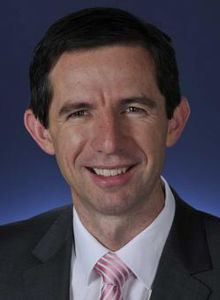
Commonwealth Education Minister Simon Birmingham, who couldn’t find $2 million per year to continue Safe Schools, but provides $60 million+ per year to the National School Chaplaincy Program.


Footnotes:

[i] “Homophobic, anti-science and frightening” religious instruction teachers remain in NSW, crikey, 12 April 2017.

[ii] See Chaplains accused of pushing religion in schools, ABC News, 8 April 2011 and Brisbane school chaplain being investigated for proselytizing after claiming his mission is to disciple school children and their families, Courier Mail, 18 May 2014.

[iii] It is considered unlikely that religious exceptions under the Commonwealth Sex Discrimination Act 1984 would be employed against intersex people.

[iv] The inclusion of religious exceptions to anti-discrimination laws actually encourages individuals and organisations to claim that anti-LGBTI prejudice is based on religious belief because it is less likely to attract consequences (even if the anti-LGBTI prejudice in fact has nothing to do with religion whatsoever).

[v] See NSW Anti-Discrimination Act 1977 sections 49ZO(3), and 38K(3).

[vi] Remembering that, in 2017, the NSW Anti-Discrimination Act 1977 still does not protect bisexual people against discrimination.

Equal Means Equal – Submission to Inquiry into Marriage Amendment (Same-Sex Marriage) Bill

Update 15 February 2017:

The Senate Committee Inquiry into the Exposure Draft Marriage Amendment (Same-Sex Marriage) Bill has been completed, with its report tabled in Parliament this afternoon (Wednesday 15 February 2017). A copy of the Report can be found here.


The Report itself includes some positives, and some areas of possible concern.


On the positive side, the Committee has acknowledged that adding a stand-alone right for ministers of religion to discriminate against same-sex couples is both unnecessary, and explicitly discriminatory (page 15).


The Committee also did not support the introduction of broad new rights for civil celebrants to discriminate against LGBTI couples, noting that they “are authorised to perform a function on behalf of the state and should be required to uphold Commonwealth law” (page 24).


On the other hand, the Committee has attempted to define a new category of ‘religious marriage celebrants’ – who are not ministers of religion but conduct marriages for faith communities – and then providing them with similar rights to discriminate as ministers of religion (page 23).


While that compromise may seem reasonable, some of these same celebrants also officiate at secular ceremonies, and under no circumstances should they be allowed to discriminate when they are effectively operating as a civil celebrant.


In the same way, the proposal that existing civil celebrants should be allowed to register as ‘religious marriage celebrants’, and therefore benefit from the same right to discriminate (page 24), must not apply to any situation in which they continue to oversee civil ceremonies.


The Committee also questioned the need for new special rights for religious bodies and organisations to discriminate against same-sex couples – although that is because it believes they may already be allowed to do so because of the overly-generous religious exceptions provided under the Sex Discrimination Act 1984 (page 31).


It also discusses, although doesn’t explicitly support, clarifying their ‘right’ to refuse to provide facilities, goods and services in situations that are “intrinsic to, directly associated with and intimately involved in a wedding ceremony” (page 32). Once again, this would unacceptably undermine a reform that is, at its heart, supposed to be about the equal recognition of equal love.


Finally, the Committee observed that “[i]n relation to military chaplains, the committee notes that the proposed amendment would not change the current law”, and then suggests the reintroduction of ‘marriage officers’ to provide an alternative method for LGBTI military couples to marry (page 24).


While it may not change existing law, a) there must not be a new stand-alone note to section 81 that singles out same-sex couples for adverse treatment and b) as public servants, paid for with our taxes, and with an obligation to serve all personnel equally, the right of military chaplains to discriminate in this way should be abolished.


With the Report finalised, pressure now returns to our 150 House of Representatives MPs, and 74 Senators (with two current vacancies), to find a way forward on marriage equality, and ensure it is passed as quickly as possible.


But it must also be done as fairly as possible. I would argue there is absolutely nothing in the Committee Report that would justify the inclusion of new special rights to discriminate against LGBTI couples in any marriage equality bill.


In which case, in the coming weeks and months it will be up to us to continue to remind Prime Minister Malcolm Turnbull – and Opposition Leader Bill Shorten, as well as the Greens and crossbench MPs and Senators, in fact anyone who will listen to us – that equal means equal, and that means passing marriage equality without new religious exceptions.


Original Post:

The Senate is currently conducting an inquiry into the Exposure Draft Marriage Amendment (Same-Sex Marriage) Bill. This is the legislation that the Government would have introduced had the marriage equality plebiscite been held, and had that vote been successful.

Full details of the inquiry can be found here. It is due to report on Monday 13 February 2017, although what happens afterwards remains unclear.

My submission to the inquiry, which focuses on the provisions of the Bill that seek to treat LGBTI couples differently to, and worse than, other couples, has now been published, and is reproduced below:


Committee Secretary

Select Committee on the Exposure Draft of the Marriage Amendment (Same-Sex Marriage) Bill

Department of the Senate

PO Box 6100

Canberra ACT 2600

samesex.marriage.sen@aph.gov.au


Friday 13 January 2017


Dear Committee Secretary


Submission on the Exposure Draft of the Marriage Amendment (Same-Sex Marriage) Bill


Thank you for the opportunity to provide a submission in relation to this inquiry, which is examining the Government’s Exposure Draft Marriage Amendment (Same-Sex Marriage) Bill (‘the Bill’).


In this submission, I will explain my personal reasons for opposing several provisions contained within the Bill, before addressing terms of reference a), b) and c) in detail. This will include my main recommendations for amendment to, and improvement of, the proposed legislation, before concluding with a short summary of this submission and its recommendations.


**********


Introduction: Equal Means Equal


I met my fiancé Steven in August 2008, two weeks after my 30th birthday and just one week after the wedding of my brother to his wife.


It was clear from the very beginning that this relationship was different from any that had come before. And I know that applies for both of us.


Within 12 months we began planning the rest of our lives together. Steven and I have lived together from January 2010 onwards, and now own a home together.


More importantly, we have been engaged to be married since 23 January of that same year.


That means, in exactly ten days’ time, we will have been waiting for the legal right to get married for a full seven years. Our engagement has already lasted longer than the marriages, from beginning to end, of many Australian couples.


All we want is exactly the same right to wed, and to have that wedding recognised under secular law, as my brother when he married his wife, and as my sister when she married her husband in 2006.


Significantly, the Bill that is being considered as part of this inquiry would allow Steven and I to finally ‘tie the knot’. That aspect of the Bill, contained in clause 1 (amending subsection 5(1) (definition of marriage) to “omit “a man and a woman”, substitute “2 people””), is obviously welcome.


However, if passed as drafted, a number of other provisions in the Bill would ensure that, rather than being treated the same as my brother and his wife, or my sister and her husband, this legislation would ensure Steven and I were subject to adverse, and discriminatory, treatment simply because of who we are.


The civil celebrant who officiated at the ceremony between my sister and her husband would have the ‘right’ to reject us because we are not “a man and a woman”.


Any ‘religious organisation or body’, broadly defined, that provided wedding-related facilities, goods and services would be able to turn us away because of our sexual orientation. And that ‘right’ would apply even where they operated for profit, and even though the same groups could not discriminate against my siblings.


In short, the Bill would establish two different classes of couples – ‘man and woman’ couples, versus everyone else – with the latter category, including Steven and me, enjoying lesser rights than the former.


While this legislation will deliver marriage, it will not deliver marriage equality. That outcome is unacceptable both to me, and to my fiancé Steven.


There is no legitimate reason why we should be treated worse than my brother and my sister were when they decided to marry their respective partners. Because we are not ‘worse than’ anyone, them included.


Equal means equal. Or at least it should – and I sincerely believe that principle must be reflected in the Marriage Act.


**********


Term of reference a) the nature and effect of proposed exemptions for ministers of religion, marriage celebrants and religious bodies and organisations, the extent to which those exemptions prevent encroachment upon religious freedoms, and the Commonwealth Government’s justification for the proposed exemptions.


The Bill proposes four new and/or expanded special rights to discriminate against couples that include lesbian, gay, bisexual, transgender and intersex (LGBTI) Australians. All four are unnecessary and unjustified. All four should be removed from the legislation to help achieve genuine marriage equality.


  1. A specific right for ministers of religion to discriminate against couples that are not “a man and a woman”


I should begin by noting that I agree with the ability of authorised celebrants who are ministers of religion to refuse to perform any religious ceremonies, including weddings, that do not fit within the beliefs of their religion. That obviously includes the right to refuse to marry LGBTI couples, even if I personally believe that such discrimination is abhorrent.


However, it is important to remember that ministers of religion already have the right to refuse to perform any ceremony under existing section 47 of the Marriage Act 1961:


Ministers of religion not bound to solemnise marriage etc.

Nothing in this Part: (a) imposes an obligation on an authorised celebrant, being a minister of religion, to solemnise any marriage…”


If the right for LGBTI couples to marry was finally recognised under Commonwealth law, that section would plainly allow ministers of religion to deny them service. Therefore, no new amendments are required to the Act to allow ministers of religion to refuse to officiate LGBTI weddings.


In which case, the proposed repeal of section 47, and replacement with a more detailed right to discriminate, is entirely unnecessary. In particular, proposed new sub-section 47(3) states:


Refusing to solemnise a marriage that is not the union of a man and woman

(3) A minister of religion may refuse to solemnise a marriage despite any law (including this Part) if:

(a) the refusal is because the marriage is not the union of a man and a woman; and

(b) any of the following applies:

(i) the refusal conforms to the doctrines, tenets or beliefs of the religion of the minister’s religious body or religious organisation;

(ii) the refusal is necessary to avoid injury to the religious susceptibilities of adherents of that religion;

(iii) the minister’s conscientious or religious beliefs do not allow the minister to solemnise the marriage.”


The inclusion of this unnecessary new sub-section, which highlights the ability of ministers of religion to discriminate against one class of couple (LGBTI people) and one class of couple only, is discriminatory and should be rejected.


Recommendation 1: Proposed new section 47, and especially sub-section 47(3), is both unnecessary and discriminatory and should be removed from the Bill. Existing section 47 of the Marriage Act would continue to allow ministers of religion to refuse to perform any marriage ceremony.


**********


  1. A new special right for civil celebrants to discriminate against couples that are not “a man and a woman”


Currently, only ministers of religion have an explicit ‘opt-out’ clause under the Marriage Act 1961, allowing them to decline to perform any marriages with which they disagree.


No equivalent provision or power exists for civil celebrants – which is entirely reasonable, given they are essentially ‘small businesses’, providing a service that the government has authorised them to, and explicitly not acting on behalf of any religion or religious organisation.


However, the Bill proposes an entirely new special right for ‘secular’ civil celebrants to reject LGBTI couples just because of who they are. Proposed new section 47A reads:


Marriage celebrants may refuse to solemnise marriages

(1) A marriage celebrant (not being a minister of religion) may refuse to solemnise a marriage despite any law (including this Part) if:

(a) the refusal is because the marriage is not the union of a man and a woman; and

(b) the marriage celebrant’s conscientious or religious beliefs do not allow the marriage celebrant to solemnise the marriage.”


This is, to put it simply, outrageous.


There is absolutely no reason why someone who is engaged in small business should be able to discriminate in such a way, against people who are LGBTI, solely because of their personal beliefs. It is the equivalent of encouraging celebrants to put up a sign saying ‘no gays (or lesbians, or bisexuals, or trans people, or intersex people) allowed’.


The fact that, unlike ministers of religion who are able to discriminate against any couples, civil celebrants will only be allowed to discriminate against LGBTI couples, merely highlights the homophobia, biphobia, transphobia and intersexphobia that lies at the heart of this proposed new section.


And, with civil ceremonies now accounting for three-in-four of all mixed-sex weddings[i], and likely forming an even higher proportion of LGBTI weddings (at least in part because some religions will continue to turn couples away that are not “a man and a woman”), this prejudiced provision will impact on a large number of LGBTI couples. For all of these reasons, it should be rejected.


Recommendation 2: Proposed new section 47A, which establishes an entirely new special right for civil celebrants to discriminate against LGBTI couples, and LGBTI couples only, is discriminatory and should be removed from the Bill.


**********


  1. A new special right for religious bodies and organisations to discriminate against couples that are not “a man and a woman”


Unfortunately, under the Bill it is not just civil celebrants who will be allowed to put up unwelcome (on multiple levels) signs saying ‘no gays, or lesbians, or bisexuals, or trans people, or intersex people, allowed.’


Religious bodies or organisations will also be able to do so under proposed new section 47B, which reads:


Religious bodies and organisations may refuse to make facilities available or provide goods or services

(1) A religious body or a religious organisation may, despite any law (including this Part), refuse to make a facility available, or to provide goods or services, for the purposes of the solemnisation of a marriage, or for purposes reasonably incidental to the solemnisation of a marriage, if:

(a) the refusal is because the marriage is not the union of a man and a woman; and

(b) the refusal:

(i) conforms to the doctrines, tenets or beliefs of the religion of the religious body or religious organisation; or

(ii) is necessary to avoid injury to the religious susceptibilities of adherents of that religion.”


There are a number of significant problems with this provision.


First and foremost, by not defining what a ‘religious body’ or ‘religious organisation’ is, it is difficult to know exactly who will be able to exercise this new specific right to discriminate (with the possibility that the number of groups permitted to turn away LGBTI couples will be quite high).


Secondly, by not defining the phrases ‘for the purposes of the solemnisation of a marriage, or for purposes reasonably incidental to the solemnisation of a marriage’, (and especially the term ‘reasonably incidental’) it is also difficult to know the scope of this new special right to discriminate.


However, even if both the number of groups allowed to discriminate, and the exact circumstances in which they were allowed to do so, were known, this proposed new section would still be fundamentally flawed.


That is because it authorises discrimination against LGBTI couples far beyond any right to refuse to conduct weddings in places of worship, like churches, which would likely be justified on the basis of religious freedom.


Instead, it permits adverse treatment of couples who are not “a man and a woman” in a wide range of circumstances, including in hiring venues where it is not a place of worship, and in the provision of goods and services even where this is engaged in on a commercial basis, for profit.


One consequence of this is that it would establish a negative precedent for the future expansion of this right to discriminate to other individuals and businesses, such as florists, bakers, photographers or wedding reception venues, who are not religious bodies or organisations, to refuse service to LGBTI couples.


If other commercial enterprises are allowed to do so (because they are run by religious groups), and even civil celebrants are permitted to discriminate on the basis of their personal beliefs, it is entirely predictable that additional groups will demand their own ability to reject couples who are not “a man and a woman.”


Despite all of the above faults, however, the major flaw with the provision is that it is a direct attack on LGBTI couples and LGBTI couples only. It singles out any relationship that doesn’t fit within the definition of “a man and a woman” for special, and detrimental treatment – and literally nobody else.


That makes this proposed provision homophobic, biphobic, transphobic and intersexphobic, and it too should be rejected.


Recommendation 3: Proposed new section 47B, which establishes an entirely new right for religious bodies or organisations to discriminate in the provision of wedding-related facilities, goods and services against LGBTI couples, and LGBTI couples only, is discriminatory and should be removed from the Bill.


**********


  1. A specific right for Defence Force chaplains to discriminate against couples that are not “a man and a woman”


The Bill’s fourth and final new and/or expanded special right to discriminate against LGBTI couples is provided to Defence Force chaplains.


This is established through the addition of a note to existing section 81 of the Marriage Act 1961, which deals with the rights of Defence Force chaplains to refuse to solemnise weddings. That note would read:


“Example: a chaplain may refuse to solemnise a marriage that is not the union of a man and a woman where the refusal conforms to the doctrines, tenets or beliefs of the chaplain’s church or faith group.”


While these chaplains are ministers of religion, and therefore would potentially have the ability to discriminate against any couple, they are also a special class of celebrant, because:


  • They are public servants, paid for out of everyone’s taxes – LGBTI and non-LGBTI, and religious and non-religious, alike[ii], and
  • In their duties, Defence Force chaplains are expected to “administer spiritual support to all members, regardless of their religion”[iii] (emphasis added).


Therefore, permitting discrimination by Defence Force chaplains fails in principle on two counts:


  • As public servants, they should not be able to discriminate against members of the public simply because of their personal beliefs – otherwise we are allowing the Australian equivalent of Kim Davis, and
  • In providing spiritual support for Defence Force personal, they are expected to do so for all people, not just those who are cisgender and heterosexual.


Which means that, if Defence Force chaplains are to continue to be authorised to officiate any weddings, it must include the weddings of LGBTI people. To do otherwise is, once again, homophobic, biphobic, transphobic and intersexphobic, and it should be rejected.


Recommendation 4: The proposed new note to section 81, which establishes a specific right for Defence Force chaplains to discriminate against LGBTI couples, and LGBTI couples only, is discriminatory and should be removed from the Bill. As public servants who are obligated to support all Defence Force personnel, these chaplains should be required to marry all couples, regardless of sexual orientation, gender identity or intersex status, otherwise their ability to officiate wedding ceremonies should be removed.


**********


As suggested by term of reference a), the above four new and/or expanded special rights to discriminate against LGBTI couples have ostensibly been included in the Bill by the Government on the basis of the need to protect ‘religious freedom’.


However, I would argue that, upon closer inspection, they do no such thing. Rather than protecting religious freedom, these provisions instead protect homophobia, biphobia, transphobia and intersexphobia and merely use religion as an excuse.


This can be seen when one remembers that there are a wide variety of different religious beliefs about marriage.


Some people believe only cisgender heterosexual couples should be able to marry.


Others do not believe in divorce, and therefore oppose the right of people to participate in second, or subsequent, weddings.


Some even continue to hold the (once widespread) belief that people of different faiths should not marry – and, in extreme cases, that people of different types of christianity should not marry.


I should note that I do not share any of the above beliefs. But others do, and I have no doubt that their views are sincerely held.


Given this, there is no possible justification for the Marriage Amendment (Same-Sex Marriage) Bill to allow civil celebrants, religious bodies and organisations and Defence Force chaplains to discriminate against LGBTI couples but not discriminate against divorced people, or against interfaith couples (or on the basis of other religious beliefs about marriage).


The fact that it does so, establishing new special rights to discriminate against LGBTI couples, and only LGBTI couples, reveals the fundamental truth of this Bill: it has very little to do with protecting religious freedom, and is more concerned with ensuring people who hold anti-LGBTI views are free to discriminate against couples who are not “a man and a woman” in a wide variety of circumstances.


In effect, the Bill privileges homophobic, biphobic, transphobic and intersexphobic beliefs, rather than protecting religious beliefs.


That is unacceptable, and merely confirms the earlier recommendations in this submission that these new and/or expanded special rights to discriminate are discriminatory and should be removed from the Bill.


I should note here that the Government, having revealed its discriminatory intentions, cannot now turn around and extend these new special rights to discriminate to cover divorced people and interfaith couples because they will only be doing so to cover up the anti-LGBTI nature of its original legislation.


Instead, the Government, and Parliament, should focus on amending the Bill to ensure that all couples are (finally) treated in exactly the same way – that equal means equal.


**********


Term of reference b) the nature and effect of the proposed amendment to the Sex Discrimination Act 1984 and the Commonwealth Government’s justification for it.


Currently, sub-section 40(2A) of the Sex Discrimination Act 1984, the legislation that establishes Commonwealth anti-discrimination protections on the basis of sexual orientation, gender identity and intersex status, ensures that “anything done by a person in direct compliance with the Marriage Act 1961” cannot be the subject of an anti-discrimination claim under that legislation.


This is justified because it would be entirely unreasonable to hold civil celebrants and others accountable for discriminating against LGBTI couples (because they legally cannot marry them) that has been made compulsory since the Howard Government prohibited marriage equality in August 2004.


The amendment of the Marriage Act, to permit all couples to marry irrespective of sexual orientation, gender identity or intersex status, and the removal of this requirement, should therefore be an opportunity to remove or at least significantly curtail this exception to the protections contained in the Sex Discrimination Act.


Indeed, the only provision of the Marriage Act that should require an exception would be the ongoing ability of ministers of religion to discriminate against any couples, as established by existing section 47.


Consequently, sub-section 40(2A) of the Sex Discrimination Act could, and I would argue should, be restricted to the following:


“Nothing in Division 1 or 2, as applying by reference to section 5A, 5B, 5C or 6, affects anything done by a person as authorised by section 47 of the Marriage Act 1961” (emphasis added).


Instead, the Bill as drafted actually proposes to expand the exception to the Sex Discrimination Act, because it would permit any discrimination that is ‘as authorised by’ the entirety of the Marriage Act, as redrafted.


This is obviously intended to capture all four of the new and/or expanded special rights to discriminate against LGBTI couples outlined earlier. Given the inclusive way this amendment is framed, it may even permit additional forms of anti-LGBTI discrimination.


In my view, this is a perverse outcome. Legislation that is intended to remove a long-standing inequality, and injustice, affecting lesbian, gay, bisexual, transgender and intersex Australians, by finally allowing them to marry, actually expands relevant exceptions to the Sex Discrimination Act, thereby increasing the circumstances in which they can lawfully be discriminated against.


Once again, this confirms the inappropriateness of the four new and/or expanded special rights to discriminate against LGBTI couples. The proposed amendment to section 40(2A) of the Sex Discrimination Act is also inappropriate, and should be replaced with a narrower exception to that legislation.


Recommendation 5: The proposed expansion to the exception contained in sub-section 40(2A) of the Sex Discrimination 1984, allowing discrimination ‘as authorised by’ the Marriage Act 1961, expands the circumstances in which LGBTI people can be discriminated against. This is inappropriate, and this provision should be removed from the Bill. It should be replaced by an amendment that limits this exception to discrimination that is authorised by existing section 47 of the Marriage Act, which allows ministers of religion (and only ministers of religion) to discriminate.


**********


Term of reference c) potential amendments to improve the effect of the bill and the likelihood of achieving the support of the Senate.


In terms of amendments to improve the effect of the Bill, I have already made five recommendations to significantly improve its impact on the recognition of the human rights of LGBTI Australians. In this section, I will nominate two further areas of necessary reform.


  1. The Bill should refer to marriage equality rather than same-sex marriage


The Bill, as drafted, would allow all couples, including those that involve lesbian, gay, bisexual, transgender and intersex individuals, to marry under the law. This is an important reform, and it will substantively improve the lives of many LGBTI Australians.


However, the title of the Bill – the Marriage Amendment (Same-Sex Marriage) Bill – only refers to ‘same-sex marriage’, rather than marriage equality.


This is problematic because the term same-sex marriage does not include all LGBTI couples. It specifically excludes some transgender people (especially those who identify as non-binary or gender-fluid) and some intersex people.


The term same-sex marriage should be replaced with marriage equality in the title of the Bill, to ensure that, alongside recognising the substantive human rights of LGBTI Australians, it symbolically recognises the diversity of these communities.


Of all major contemporary public policy issues, marriage is a subject in which both the substantive, and the symbolic, are equally important.


Recommendation 6: The Bill should be retitled the Marriage Amendment (Marriage Equality) Bill.


**********


  1. The Bill should allow couples to apply to have specified pre-existing unions recognised as marriages


The wait for marriage equality to be recognised under Australian law has been long, often painfully so.


It is entirely understandable that, in the interim, many LGBTI couples have chosen alternative ways to have their relationships recognised. This includes many who have travelled overseas (or to consulates within Australia), where marriage equality is lawful, to wed.


It also includes couples who have decided to have their relationships recognised under state and territory relationship recognition schemes, including civil partnerships and registered relationships, with or without an associated formally-recognised ceremony.


While the Bill will, thankfully, recognise the former (overseas marriages) as marriages, it will not provide any avenue for the latter (civil partnerships or registered relationships) to be recognised in a similar manner.


Allowing couples in this situation to apply to have their existing relationship recognised as married would be an acknowledgement of the fact that their mutual commitment to a shared life, and wish to be married, has existed since the date of their commitment being made.


It would also acknowledge the discrimination that these couples have endured as a result of the exclusionary nature of the Commonwealth Marriage Act 1961.


Recommendation 7: The Bill should allow couples to apply to have specified pre-existing unions, including civil partnerships and registered relationships under state and territory law, to be recognised as marriages where they so desire.


**********


  1. Marriage equality should be passed as a matter of priority


Term of reference c) asks for ‘potential amendments to improve the… likelihood of achieving the support of the Senate.’ With all due respect, I believe that to be an inappropriate request.


The real question is why the Senate – and the House of Representatives – have not yet passed legislation to recognise the equality of our relationships, irrespective of sexual orientation, gender identity or intersex status.


It has been more than a dozen years since the Howard Government’s homophobic ban on marriage equality was first passed by the Commonwealth Parliament.


That means LGBTI couples have now experienced more than a dozen years of discrimination, treated as distinctly ‘2nd class’ in comparison to the relationships of cisgender heterosexual Australians.


Tragically, in those dozen years, there have also been countless LGBTI relationships where one or both members have passed away without being able to have their relationship recognised under Commonwealth law. The longer the ban continues, the more relationships will be denied justice.


That same dozen years has witnessed much ‘sound and fury’ within the Commonwealth Parliament on this issue, including countless inquiries in the House of Representatives and the Senate (with this one now added to the list), ultimately achieving nothing – because we still cannot marry.


So, rather than asking how the Bill can be amended to improve the chances of Senators voting for it, as if just one more ‘compromise’ will be enough to secure sufficient support to get it over the line, we should be asking why won’t Senators, and their colleagues in the lower house, do their jobs and pass marriage equality as a matter of priority.


Recommendation 8: The Australian Parliament should pass marriage equality as a matter of priority, because LGBTI Australians have waited long enough – too long, in fact – to have their relationships recognised as equal under secular law.


**********


Conclusion


In this submission, I hope I have successfully conveyed my passion, not just for the subject of marriage equality generally, but also about the issue of marriage equality and religious exceptions specifically – and why any amendments to the Marriage Act should ensure that all couples are treated exactly the same.


I am glad that these issues are being examined by the Senate, through this inquiry, and I look forward to the Committee making recommendations to improve both the substance, and the symbolism, of the Marriage Amendment (Same-Sex Marriage) Bill.


Thank you for your consideration of this submission. I would welcome the opportunity to speak to the matters raised above at a Committee hearing, should one (or more) be held.


I have also included a Summary of this submission on the following two pages.


Please do not hesitate to contact me, at the contact details provided with this submission, should you require clarification, or further information.


Sincerely

Alastair Lawrie


**********


Summary


Marriage equality is an important issue that affects tens of thousands, hundreds of thousands, Australians, including couples like my fiancé Steven and me.


We have been together for more than eight and a half years, and engaged for almost seven years. All we want is the right to be married under secular law, in exactly the same way that my brother married his wife, and my sister married her husband.


Unfortunately, while the Marriage Amendment (Same-Sex Marriage) Bill would allow us to marry, it would not do so equally, because it would expose us to potential discrimination that my siblings did not experience.


It is marriage, but not marriage equality. And that is not good enough, because equal means equal – and that principle should be reflected in the Marriage Act.


I make seven recommendations to improve the Marriage Amendment (Same-Sex Marriage) Bill, as well as an eighth, that marriage equality should be passed as a matter of priority.


Recommendation 1: Proposed new section 47, and especially sub-section 47(3), is both unnecessary and discriminatory and should be removed from the Bill. Existing section 47 of the Marriage Act would continue to allow ministers of religion to refuse to perform any marriage ceremony.


Recommendation 2: Proposed new section 47A, which establishes an entirely new special right for civil celebrants to discriminate against LGBTI couples, and LGBTI couples only, is discriminatory and should be removed from the Bill.


Recommendation 3: Proposed new section 47B, which establishes an entirely new right for religious bodies or organisations to discriminate in the provision of wedding-related facilities, goods and services against LGBTI couples, and LGBTI couples only, is discriminatory and should be removed from the Bill.


Recommendation 4: The proposed new note to section 81, which establishes a specific right for Defence Force chaplains to discriminate against LGBTI couples, and LGBTI couples only, is discriminatory and should be removed from the Bill. As public servants who are supposed to support all Defence Force personnel, these chaplains should be required to marry all couples, regardless of sexual orientation, gender identity or intersex status, otherwise their ability to officiate wedding ceremonies should be removed.


Recommendation 5: The proposed expansion to the exception contained in sub-section 40(2A) of the Sex Discrimination 1984, allowing discrimination ‘as authorised by’ the Marriage Act 1961, expands the circumstances in which LGBTI people can be discriminated against. This is inappropriate, and this provision should be removed from the Bill. It should be replaced by an amendment that limits this exception to discrimination that is authorised by existing section 47 of the Marriage Act, which allows ministers of religion (and only ministers of religion) to discriminate.


Recommendation 6: The Bill should be retitled the Marriage Amendment (Marriage Equality) Bill.


Recommendation 7: The Bill should allow couples to apply to have specified pre-existing unions, including civil partnerships and registered relationships under state and territory law, to be recognised as marriages where they so desire.


Recommendation 8: The Australian Parliament should pass marriage equality as a matter of priority, because LGBTI Australians have waited long enough – too long, in fact – to have their relationships recognised as equal under secular law.


Whenever marriage equality is finally passed by the Commonwealth Parliament, and I genuinely hope it does so soon, it must ensure that all couples are treated equally, because we cannot end up with a situation where ‘some couples are more equal than others’.


equalmeansequal-4


Footnotes:


[i] “[T]he proportion of marriage ceremonies overseen by a civil celebrant increased again to 74.9 per cent of all marriages in 2015”: Marriage and Divorces, Australia, 2015, Australian Bureau of Statistics, November 2016.

[ii] The Defence Jobs Australia website indicates that chaplains are paid over $94,200 following completion of basic training.

[iii] Also from the Defence Jobs Australia website.

Back to School, Back to Discrimination for LGBT Students and Teachers

Every year, millions of students, and hundreds of thousands of teachers and other staff, start at Australian schools excited by the possibilities of the following 12 months – of the opportunities to learn (or teach) about the world around them, and about themselves.

However, for far too many students – and teachers and other staff – in schools around the country it will be another year in which they have to worry about being discriminated against, lawfully, simply because of their sexual orientation or gender identity.

That’s because, under the anti-discrimination laws of five out of nine Australian jurisdictions, lesbian, gay, bisexual and transgender (LGBT) students can legally be treated adversely by religious schools[i]. Six jurisdictions allow discrimination against LGBT teachers and other staff – plus one state which has a ‘don’t ask, don’t tell’ approach.

To find out what the law is in your jurisdiction, see below. And to find out just how many students, teachers and other staff are potentially affected by these discriminatory provisions, please read to the end of the article.

**********

Commonwealth

While LGBT students, teachers and other staff are protected against discrimination under the Commonwealth Sex Discrimination Act 1984, these protections are fundamentally undermined by the inclusion of two excessively broad exceptions for religious organisations.

The first is contained in sub-section 37(1)(d), which states that:

“Nothing in Division 1 or 2 affects… any other act or practice of a body established for religious purposes, being an act or practice that conforms to the doctrines, tenets or beliefs of that religion or is necessary to avoid injury to the religious susceptibilities of adherents of that religion.”

It is highly likely that this provision allows religious schools to discriminate against LGBT students, teachers and staff. But, just in case there was any doubt, the Act includes an additional ‘right to discriminate’ just for religious schools:

“Section 38

Educational institutions established for religious purposes

(1) Nothing in paragraph 14(1)(a) or (b) or (14)(2)(c) renders it unlawful for a person to discriminate against another person on the ground of the other person’s sex, sexual orientation, gender identity, marital or relationship status or pregnancy in connection with employment as a member of the staff of an educational institution that is conducted in accordance with the doctrines, tenets, beliefs or teachings of a particular religion or creed, if the first-mentioned person so discriminates in good faith in order to avoid injury to the religious susceptibilities of adherents of that religion or creed.”

Sub-section 38(2) establishes a similar ‘right to discriminate’ against contract workers, while sub-section 38(3) reiterates the ability of religious schools to discriminate against LGBT students.

In short, instead of protecting LGBT students and teachers at religious schools against discrimination, the Commonwealth Sex Discrimination Act 1984 authorises their mistreatment (a pattern that, as we shall below, is sadly replicated in most states and territories).

Can religious schools discriminate against LGBT students under Commonwealth law? Yes.

Can religious schools discriminate against LGBT teachers and other staff under Commonwealth law? Yes.

**********

New South Wales

As I have written elsewhere[ii], despite being the first Australian jurisdiction to introduce gay anti-discrimination laws, NSW now has perhaps the worst LGBT anti-discrimination legislation in the country. A key reason for that is the extremely generous exceptions provided to religious (and other non-government) schools.

As with the Commonwealth, it is likely NSW religious schools have the ‘right to discriminate’ against LGBT students, teachers and other staff[iii] as part of the general religious exception provided by sub-section 56(d):

“Nothing in this Act affects… any other act or practice of a body established to propagate religion that conforms to the doctrines of that religion or is necessary to avoid injury to the religious susceptibilities of the adherents of that religion.”

And, just like the Commonwealth, there is also a specific exception applying only to schools – however, in what is a unique approach, the NSW Anti-Discrimination Act 1977 actually allows all non-government schools to discriminate against students on the grounds of homosexuality or transgender status, even where they are not religious:

“Section 49ZO Education

(1) It is unlawful for an educational authority to discriminate against a person on the ground of homosexuality:

(a) by refusing or failing to accept the person’s application for admission as a student, or

(b) in the terms on which it is prepared to admit the person as a student.

(2) It is unlawful for an educational authority to discriminate against a student on the ground of homosexuality:

(a) by denying the student access, or limiting the student’s access, to any benefit provided by the educational authority, or

(b) by expelling the student or subjecting the student to any other detriment.

(3) Nothing in this section applies to or in respect of a private educational authority” (emphasis added).

Section 38K establishes a similar right for NSW non-government schools (religious and not-religious alike) to discriminate against transgender students.

There are also equivalent sections regarding lesbian, gay and transgender teachers and other staff at non-government schools (religious and not-religious alike): section 49ZH and 38C respectively.

Therefore, all NSW non-government schools are able to fire (or not hire) LGT teachers and other staff under the Anti-Discrimination Act 1977, and to refuse to admit, treat adversely and even expel students merely for being lesbian, gay or transgender. That is, in a word, appalling.

Can religious schools discriminate against LGBT students under NSW law? Yes – and that includes non-government schools that are not religious, too.

Can religious schools discriminate against LGBT teachers and other staff under NSW law? Yes, including non-government schools that are not religious.

**********

Victoria

Victoria is another jurisdiction that has adopted the ‘two-fold’ approach to permitting discrimination by religious schools against LGBT students, teachers and other staff.

First up, sub-section 82(2) of the Victorian Equal Opportunity Act 2010 states that:

“Nothing in Part 4 applies to anything done on the basis of a person’s religious belief or activity, sex, sexual orientation, lawful sexual activity, marital status, parental status or gender identity by a religious body that-

(a) conforms with the doctrines, beliefs or principles of the religion; or

(b) is reasonably necessary to avoid injury to the religious sensitivities of adherents of the religion.”

This is then supplemented by section 83, which is entirely concerned with providing religious schools with an explicit ‘right to discriminate’:

Religious schools

(1) This section applies to a person or body, including a religious body, that establishes, directs, controls, administers or is an educational institution that is, or is to be, conducted in accordance with religious doctrines, beliefs or principles.

(2) Nothing in Part 4 applies to anything done on the basis of a person’s religious belief or activity, sex, sexual orientation, lawful sexual activity, marital status, parental status or gender identity by a person or body to which this section applies in the course of establishing, directing, controlling or administering the educational institution that-

(a) conforms with the doctrines, beliefs or principles of the religion; or

(b) is reasonably necessary to avoid injury to the religious sensitivities of adherents of the religion.”

In 2016, there were two attempts to limit the impact of these sections – the first, by the Andrews Labor Government, would have compelled religious schools (and other religious employers) to demonstrate that discrimination against LGBT employees was an ‘inherent requirement’ of the respective position[iv]. The second, by the Victorian Greens, would have prohibited discrimination against LGBT students.

Unfortunately, both Bills were voted down by the Upper House (and specifically by Liberal and National Party MLCs) leaving LGBT students, teachers and other staff in Victorian religious schools exposed to mistreatment solely because of who they are.

Can religious schools discriminate against LGBT students under Victorian law? Yes.

Can religious schools discriminate against LGBT teachers and other staff under Victorian law? Yes.

**********

Queensland

It may be surprising for some (especially given they only equalised the age of consent in 2016), but Queensland is one of four jurisdictions that does not provide carte blanche for religious schools to discriminate against LGBT students, teachers and other staff.

That is because they have adopted a more limited version of the broad general exception enacted elsewhere. Section 109 of the Queensland Anti-Discrimination Act 1991 provides:

Religious bodies

(1) The Act does not apply in relation to-

(d) unless section 90 (Accommodation with religious purposes) applies – an act by a body established for religious purposes if the act is –

(i) in accordance with the doctrine of the religion concerned; and

(ii) necessary to avoid offending the religious sensitivities of people of the religion.

(2) An exemption under subsection (1)(d) does not apply in the work or work-related area or in the education area (emphasis added).

LGBT students are protected from discrimination as a result of this provision.

Prima facie, it would appear that LGBT teachers and other staff should be too – after all, sub-section (2) says the religious exception does not apply to work.

However, there is an additional section of the Anti-Discrimination Act 1991 that does authorise discrimination against LGBT employees of religious schools in certain circumstances. Section 25 states:

“25 Genuine occupational requirements

(1) A person may impose genuine occupational requirements for a position.

Example 4- employing persons of a particular religion to teach in a school established for students of the particular religion

(2) Subsection (3) applies in relation to-

(a) work for an educational institution (an employer) under the direction or control of a body established for religious purposes…

(3) It is not unlawful for an employer to discriminate with respect to a matter that is otherwise prohibited under section 14 or 15, in a way that is not unreasonable, against a person if-

(a) the person openly acts in a way that the person knows or ought reasonably to know is contrary to the employer’s religious beliefs-

(i) during a selection process; or

(ii) in the course of the person’s work; or

(iii) in doing something connected with the person’s work; and

Example for paragraph (a)- A staff member openly acts in a way contrary to a requirement imposed by the staff member’s employer in his or her contract of employment, that the staff member abstain from acting in a way openly contrary to the employer’s religious beliefs in the course of, or in connection with the staff member’s employment.

(b) it is a genuine occupational requirement of the employer that the person, in the course of, or in connection with, the person’s work, act in a way consistent with the employer’s religious beliefs.

(4) Subsection (3) does not authorise the seeking of information contrary to section 124.

(5) For subsection (3), whether the discrimination is not unreasonable depends on all the circumstances of the case, including, for example, the following-

(a) whether the action taken or proposed to be taken by the employer is harsh or unjust or disproportionate to the person’s actions;

(b) the consequences for both the person and the employer should the discrimination happen or not happen.”

Summarising the above, religious schools in Queensland can discriminate against LGBT teachers and other staff if:

  • the employee acts in a way contrary to the employer’s religious beliefs during the selection process, at work or in connection with work, and
  • the employer can show it was a genuine occupational requirement that the employee act in accordance with those religious beliefs.

But, if the teacher or staff member does not act in such a way (which presumably includes the mere acknowledgement of having a same-sex partner, for example), they cannot be punished simply for being lesbian, gay, bisexual or transgender. Further, the religious school cannot ask whether the employee is LGBT.

In short, Queensland allows a ‘don’t ask, don’t tell’ approach to LGBT teachers and staff in religious schools – but they can still be fired for being ‘out’ at work. Of course, more than two decades of US military policy demonstrated the folly of DADT – and it says a lot about the terrible state of Australian LGBT anti-discrimination laws that the Anti-Discrimination Act 1991 remains the third-best law in this particular area.

Can religious schools discriminate against LGBT students under Queensland law? No.

Can religious schools discriminate against LGBT teachers and other staff under Queensland law? Yes, in some circumstances (including where it is a genuine occupational requirement, and the employee is ‘out’ at work). No, when the employee is not ‘out’ – and a ‘don’t ask, don’t tell’ policy applies.

**********

Western Australia

The Western Australian Equal Opportunity Act 1984 is far less complex – and far less positive – in terms of its approach to LGBT anti-discrimination protections for students, teachers and staff in religious schools.

Just like the Commonwealth, NSW and Victoria, Western Australia provides ‘dual’ exceptions to religious schools granting them the ‘right to discriminate’. Sub-section 72(d) notes:

Religious bodies

Nothing in this Act affects… any other act or practice of a body established for religious purposes, being an act or practice that conforms to the doctrines, tenets or beliefs of that religion or is necessary to avoid injury to the religious susceptibilities of adherents of that religion.”

Section 73 then sets out specific, additional exceptions with respect to teachers:

(1) “Nothing in this Act renders it unlawful for a person to discriminate against another person on any one or more of the grounds of discrimination referred to in this Act in connection with employment as a member of the staff of an educational institution that is conducted in accordance with the doctrines, tenets, beliefs or teachings of a particular religion or creed, if the first-mentioned person so discriminates in good faith in order to avoid injury to the religious susceptibilities of adherents of that religion or creed”

And students:

(3) “Nothing in this Act renders it unlawful for a person to discriminate against another person on any one or more of the grounds of discrimination referred to in this Act, other than the grounds of race, impairment or age, in connection with the provision of education or training by an educational institution that is conducted in accordance with the doctrines, tenets, beliefs or teachings of a particular religion or creed, if the first-mentioned person so discriminates in good faith in favour of adherents of that religion or creed generally, but not in a manner that discriminates against a particular class or group of persons who are not adherents of that religion or creed.”

Prima facie, that possibly means Western Australian religious schools can only discriminate against students on the basis of their religion, not their sexual orientation or gender identity. However, unlike Queensland’s section 109(2), there is no equivalent limitation on the general religious exception in WA, meaning religious schools still (probably) retain the right to discriminate against LGBT students under section 72(d).

Overall, then, Western Australia provides multiple grounds for religious schools to discriminate against LGBT teachers and other staff, and likely one ground to discriminate against LGBT students.

Can religious schools discriminate against LGBT students under Western Australian law? Yes (probably).

Can religious schools discriminate against LGBT teachers and other staff under Western Australian law? Yes.

**********

South Australia

The Equal Opportunity Act 1984 makes it clear that religious schools in South Australia can discriminate against LGBT teachers and other staff, as a result of a specific exception in section 34. However, it imposes strict procedural requirements if a religious school wishes to utilise such exceptions:

(3)         This Division does not apply to discrimination on the ground of sexual orientation, gender identity or intersex status in relation to employment or engagement for the purposes of an educational institution if— 
(a)         the educational institution is administered in accordance with the precepts of a particular religion and the discrimination is founded on the precepts of that religion; and (b)         the educational authority administering the institution has a written policy stating its position in relation to the matter; and 
(c)         a copy of the policy is given to a person who is to be interviewed for or offered employment with the authority or a teacher who is to be offered engagement as a contractor by the authority; and 
(d)         a copy of the policy is provided on request, free of charge— 
(i)         to employees and contractors and prospective employees and contractors of the authority to whom it relates or may relate; and 
(ii)         to students, prospective students and parents and guardians of students and prospective students of the institution; and 
(iii)         to other members of the public.

The situation for LGBT students is slightly less clear-cut, with sub-sections 37(1) and (2) providing that:

Discrimination by educational authorities

(1) It is unlawful for an educational authority to discriminate against a person on the ground of sex, sexual orientation or gender identity-

(a) by refusing or failing to accept an application for admission as a student; or

(b) in the terms or conditions on which it offers to admit the person as a student.

(2) It is unlawful for an educational authority to discriminate against a student on the ground of sex, sexual orientation or gender identity-

(a) in the terms or conditions on which it provides the student with training or education; or

(b) by denying or limiting access to a benefit provided by the authority; or

(c) by expelling the student; or

(d) by subjecting the student to other detriment.”[v]

These protections, for LGBT students, appear to be quite strong – however, it should be noted that the general religious exceptions featured in section 50 may still apply to this situation. Again, unlike Queensland’s section 109(2), there is no equivalent limitation on the Act’s general religious exceptions, meaning religious schools still (probably) retain the right to discriminate against LGBT students under sub-sections 50(ba) and (c).

This also appears to be the view of the Equal Opportunity Commission, as expressed in its submissions to the Law Reform Institute review of LGBTI laws in South Australia[vi].

Can religious schools discriminate against LGBT students under South Australian law? Probably.

Can religious schools discriminate against LGBT teachers and other staff under South Australian law? Yes, although procedural requirements may apply.

**********

Tasmania

Despite being the last Australian jurisdiction to decriminalise homosexuality, Tasmania was the first – and, to date, remains one of only two – states or territories to ensure that all LGBT students, teachers and staff cannot be discriminated against solely because of their sexual orientation or gender identity.

That is because the religious exceptions offered under the Anti-Discrimination Act 1998 are narrowly drafted. In terms of employment, section 51 states that:

Employment based on religion

(1) A person may discriminate against another person on the ground of religious belief or affiliation or religious activity in relation to employment if the participation of the person in the observance or practice of a particular religion is a genuine occupational qualification or requirement in relation to the employment.

(2) A person may discriminate against another person on the ground of religious belief or affiliation or religious activity in relation to employment in an educational institution that is or is to be conducted in accordance with the tenets, beliefs, teachings, principles or practices of a particular religion if the discrimination is in order to enable, or better enable, the educational institution to be conducted in accordance with those tenets, beliefs, teachings, principles or practices.”

In short, a Tasmanian religious school can discriminate against a teacher or staff member because of their religion – but there is no equivalent right to discriminate on the basis of their sexual orientation or gender identity.

The protection in relation to LGBT students is even more unambiguous. Section 51A provides:

Admission of person as student based on religion

(1) A person may discriminate against another person on the ground of religious belief or affiliation or religious activity in relation to admission of that other person as a student to an educational institution that is or is to be conducted in accordance with the tenets, beliefs, teachings, principles or practices of a particular religion.

(2) Subsection (1) does not apply to a person who is enrolled as a student at the educational institution referred to in that subsection.

(3) Subsection (1) does not permit discrimination on any grounds referred to in section 16 other than those specified in that subsection.

(4) A person may, on a ground specified in subsection (1), discriminate against another person in relation to the admission of the other person as a student to an educational institution, if the educational institution’s policy for the admission of students demonstrates that the criteria for admission relates to the religious belief or affiliation, or religious activity, of the other person, the other person’s parents of the other person’s grandparents.”

Not only does this section only apply to admission (and therefore does not authorise discrimination once a student is enrolled, including potential expulsion), it also only applies to the grounds of religious belief or affiliation, and religious activity.

Once again, a religious school can only discriminate against students on the basis of their (or their parents’/grandparents’) religion – they cannot legally mistreat students on the basis of their, or their family’s, sexual orientation or gender identity. In this way, the Tasmanian Anti-Discrimination Act 1998 provides a model to which other Australian jurisdictions should aspire (and which the ACT Government has recently emulated).

Can religious schools discriminate against LGBT students under Tasmanian law? No.

Can religious schools discriminate against LGBT teachers and other staff under Tasmanian law? No.

**********

Australian Capital Territory

The ACT Government recently passed the Discrimination Amendment Act 2018 which has successfully adopted the best-practice approach of Tasmania in this area.

The previous specific exceptions for religious schools (in section 33) were abolished, and the general religious exception (in section 32) has been limited, and now does not allow religious schools to discriminate against students, teachers and other staff on the basis of their sexual orientation, gender identity or intersex status.

Like Tasmania, they do allow schools to preference students and teachers in admission and employment, respectively – although have gone even further than Tasmania by requiring schools that want to discriminate in this way to publish their policies.

Can religious schools discriminate against LGBT students under ACT law? No.

 Can religious schools discriminate against LGBT teachers and other staff under ACT law? No.

**********

Northern Territory

The Northern Territory allows discrimination by religious schools against LGBT teachers and other staff. Arguably, it does so only once (instead of providing two separate ‘rights to discriminate’, like the Commonwealth and some other states) – although once is still one time too many.

While the ‘general religious exception’ in the NT’s Anti-Discrimination Act is comparatively constrained (covering “an act by a body established for religious purposes if the act is done as part of any religious observance or practice”: sub-section 51(d)), there is an additional special ‘right to discriminate’ against LGBT teachers and staff. Section 37A provides that:

“An educational authority that operates or proposes to operate an educational institution in accordance with the doctrine of a particular religion may discriminate against a person in the area of work in the institution if the discrimination:

(a) is on the grounds of:

(i) religious belief or activity; or

(ii) sexuality; and

(b) is in good faith to avoid offending the religious sensitivities of people of the particular religion.”

However, there is no equivalent right to discriminate against LGBT students – indeed, like the current Tasmanian legislation, the NT only allows religious schools to discriminate on the basis of the student’s faith (sub-section 30(2) provides that “[a]n educational authority that operates, or proposes to operate, an educational institution in accordance with the doctrine of a particular religion may exclude applicants who are not of that religion.”)

Combined with the more limited general religious exception outlined above, that means NT religious schools probably cannot discriminate against LGBT students. Consequently, the Northern Territory actually has the fourth-best LGBT anti-discrimination laws in Australia on this issue.

Can religious schools discriminate against LGBT students under Northern Territory law? No.

Can religious schools discriminate against LGBT teachers and other staff under Northern Territory law? Yes.

**********

Summary

In conclusion, then, far too many LGBT students, teachers and other staff members will start the 2019 school year in a vulnerable position – they can be lawfully discriminated against simply because of who they are.

In terms of students, such discrimination is permitted in religious schools under the anti-discrimination laws of:

  • Commonwealth
  • New South Wales
  • Victoria
  • Western Australia, and
  • South Australia (probably).

Only Queensland, Tasmania, the Australian Capital Territory and the Northern Territory have chosen to protect students in religious schools from homophobic, biphobic and transphobic discrimination.

As we have seen, the situation for teachers and other staff members is even worse – they can be legally mistreated under anti-discrimination legislation in:

  • Commonwealth
  • New South Wales
  • Victoria
  • Western Australia
  • South Australia (although procedural requirements may apply), and
  • Northern Territory.

In Queensland, LGBT teachers at religious schools can be discriminated against if they are ‘out’ – otherwise a ‘don’t ask, don’t tell’ policy applies. Only Tasmania and the ACT refuse to provide religious schools with an explicit ‘right to discriminate’ against LGBT teachers and other staff.

Up to this point, this discussion has been very ‘legal’, and somewhat technical. But it is important to remember that the impact of these religious exceptions is significant in practical terms.

Based on data from the Australian Bureau of Statistics[vii], in 2015 there were more than 1 million students enrolled at Australian schools where lesbian, gay, bisexual and transgender students could be discriminated against simply because of who they are.

In fact, the exact number was 1,007,864[viii]. With the number of students in non-government schools rising by 1.4% per year, this has likely risen to above 1,040,000 at the start of 2019 (despite recent changes meaning LGBT students in Canberra are now protected).

The number of teachers and other staff that can be lawfully discriminated against is just as confronting.

In 2015, 110,073.8 Full Time Equivalent positions[ix] were at religious schools that could legally discriminate against teachers and other staff members who were lesbian, gay, bisexual or transgender.

An additional 28,944.1 FTE positions – employees at religious schools in Queensland – could be adversely treated if they were ‘out’ at work.


In fact, of the 141,806.1 FTE positions at religious schools nationally, only the 2,788.2 FTE positions in Tasmania were fully protected against discrimination on the basis of their sexual orientation or gender identity – or less than 2% of teachers and staff members at religious schools nationally. Although, from the 2019 school year, they will be joined by teachers and other staff at religious schools in the ACT (2,690.8 FTE positions in 2015).

The numbers of students, teachers and staff who can legally be discriminated against if they happen to be LGBT are almost too large to comprehend. They remain so even when broken down by jurisdiction.

For example, in my (adopted) home state of NSW, 409,728 students[x] attend, and 41,487.8 FTE[xi] teachers and other staff members are employed at, religious schools that can practice this (abhorrent) discrimination.

Of course, not all religious schools engage in the mistreatment of lesbian, gay, bisexual and transgender students, teachers and staff. I’m sure there are many that refuse to discriminate on the basis of sexual orientation and gender identity, and aspire to be genuinely inclusive learning environments.

But the fact remains that these schools retain the legal ability to exclude LGBT students and employees simply because of who they are – and, in my opinion at least, I do not believe they can be fully inclusive until this ‘right to discriminate’ is removed.

And so, with the school year commencing, and parliamentary sittings set to resume around the country shortly, I would argue that Commonwealth, state and territory MPs (outside Tasmania and the ACT) should educate themselves about this unacceptable discrimination.

If they do, they might finally take action to ensure that all students can learn in classrooms that are free from anti-LGBT discrimination – and are taught by the best teachers available, including LGBT teachers, and not just the best cisgender heterosexual teachers.

If they don’t – if Members of Parliament continue to allow more than 1 million students to attend, and more than 110,000 teachers and staff to be employed at, religious schools that can lawfully discriminate on the basis of sexual orientation and gender identity – then those MPs deserve to receive an ‘F’, in 2019, and for every year until this unacceptable situation is fixed.

theres-no-place-for-discrimination-in-the-classroom

And there’s no place for discrimination in the school staffroom, either.

If you have enjoyed reading this article, please consider subscribing to receive future posts, via the right-hand scroll bar on the desktop version of this blog or near the bottom of the page on mobile. You can also follow me on twitter @alawriedejesus


Footnotes:

[i] Intersex students (and teachers and other staff) are not included in this article because, irrespective of their jurisdiction, they should be protected by the Commonwealth Sex Discrimination Act 1984, and, according to major religious groupings during the development of that legislation, the religious exceptions contained therein do not apply to intersex status.

[ii] What’s Wrong With the NSW Anti-Discrimination Act 1977.

[iii] It should be noted that the NSW Anti-Discrimination Act does not prohibit discrimination on the basis of bisexuality, at all – it is included as part of the LGBT acronym here for the sake of consistency across the article.

[iv] For more, see Victoria’s Equal Opportunity Amendment (Religious Exceptions) Bill 2016.

[v] Note that these provisions only apply to students – there is no equivalent section for teachers and other staff.

[vi] This would also reflect judicial interpretation of the general religious exception in NSW (including in cases like OW & OV v Members of the Board of the Wesley Mission Council [2010] NSWADT 293 (10 December 2010)).

[vii] Australian Bureau of Statistics – 4221.0 Schools, Australia, 2015, released 04/02/2016

[viii] This calculation is based on the total number of students attending Catholic and Independent schools nationally (1,305,843) minus the number of similar students in those jurisdictions where they are protected from discrimination: Queensland (262,166); Tasmania (24,142) and Northern Territory (11,671). Unfortunately, the dataset provided does not identify Independent schools as religious versus non-religious, although the proportion that are non-religious is considered to be extremely small. Therefore, for the purposes of calculating this estimate, all Independent schools have been allocated as ‘religious’.

[ix] As with the previous calculation, this figure is based on the number of FTE positions at Catholic and Independent schools Australia-wide (141,806.1) minus the 28.944.1 in Queensland where the ‘don’t ask, don’t tell’ policy applies, and 2,788.2 in Tasmania, where LGBT teachers and staff are protected against anti-LGBT discrimination. Once again, the dataset provided does not identify Independent schools as religious versus non-religious, although the proportion that are non-religious is considered to be extremely small. Therefore, for the purposes of calculating this estimate, all Independent schools have been allocated as ‘religious’.

[x] Noting that the caveat that applies to national figures (about the treatment of religious versus non-religious Independent schools) does not apply here – all non-government schools in NSW can discriminate against LGBT students, including non-religious schools.

[xi] The caveat – about the treatment of religious versus non-religious schools – does apply here however, because non-religious Independent schools in NSW cannot discriminate against LGBT teachers and staff, only LGBT students.

You’re wrong Malcolm Turnbull, homophobia is legally acceptable in Australia

It is now one week since the tragic events in Orlando, where 49 people were murdered in a gay nightclub, simply because they were lesbian, gay, bisexual or transgender (or were there as their family or friends).


I haven’t written specifically about those events for a few reasons. First, because I guess I’m still somewhat in shock about it and, like others, it will take some time to process the sheer scale of horrific, homophobic violence involved.


Second, because I haven’t wanted to talk about Orlando in the context of other public debates and risk them being unduly conflated (although, for the record, I do think it is a warning, albeit an extreme one, of the risks of a plebiscite generating hatred and vitriol towards Australia’s LGBTI community).


Third, and perhaps most importantly, I haven’t written anything because what has been written, and said, by others has been so eloquent, and so passionate, that I haven’t really felt the need to add anything. In fact, the outpouring of words and actions (including the vigils for Orlando held in many parts of the world, including here in Sydney) by LGBTI people and our allies over the past seven days has been a beautiful, and in many ways reassuring, thing to behold.


Countless others have already said the things that needed to be said, far better than I could ever say them:


Focusing on the names of the people killed, rather than that of the killer (such as CNN reporter Anderson Cooper’s touching report about the victims).


Challenging any erasure of the fact this was explicitly a homophobic and transphobic hate-crime, including:


Reminding us that this was an attack on a minority within a minority – Latinx members of the LGBT community.


Rejecting any moves to respond to homophobia with Islamophobia, as well as respecting and actively being inclusive of another minority within a minority – LGBTI Muslims.


Last, but certainly not least, seeing the individual act of homophobic and transphobic violence in the broader frame of homophobia and transphobia across the United States – and sadly, Australia – which is perhaps summed up best by this widely-shared social media image:


You werent the gunman


*********


In this context, as someone who primarily writes about LGBTI law and public policy, I didn’t have much further to offer – that is, until Australia’s right-wing media, and Prime Minister Malcolm Turnbull, made it a policy, and political, issue.


During the week, The Australian newspaper decided to turn their focus on hate-speech by some Islamic preachers. Specifically, they campaigned for the visa of Farrokh Sekaleshfar to be revoked on the basis of a speech in 2013 where he supported the imposition of the death penalty for homosexuality in some circumstances:


“Death is the sentence. There’s nothing to be embarrassed about this. Death is the sentence. We have to have that compassion for people. With homosexuals, it’s the same. Out of compassion, let’s get rid of them now.” [Mr Sekaleshfar ultimately chose to leave the country before he was forced out].


They then swung their attention towards the guests hosted by Turnbull at an Iftar dinner in Sydney, including the President of the Australian National Imams Council, Mr Shady Alsuleiman, again bringing up comments from 2013 where he reportedly said the following:


“What’s the most common disease these days? HIV, AIDS, that’s so common and there’s no cure to it. And when did it exist? Just decades ago, and more diseases are coming… [It’s] homosexuality that’s spreading all these diseases.”


Leaving aside the clear anti-Muslim bias of this newspaper – given it champions the voices of Christian advocates who condemn homosexuality rather than attacking them (hypocrisy that is perfectly skewered by the First Dog on the Moon in this cartoon, and especially the line “Christian homophobes against Islamic homophobia”) – there is a legitimate question about where the limits of ‘acceptable’ speech should be drawn, irrespective of the religion of the person saying them (Muslim, Christian, other or none).


The fact Mr Alsuleiman was a ‘dinner guest’ of the Prime Minister means it is entirely justifiable that he was asked for his view on those comments, and this was Mr Turnbull’s response:


“Homophobia is to be condemned everywhere, number one. We are a broad, diverse country and we must respect the right of gay Australians, we respect the right of the LGBTI community and the right for them to lead their lives and gather in peace and harmony. The massacre in Orlando, that shocking assault on the people in the gay nightclub is a shocking reminder, frankly, of how much hate and intolerance there is in the world, and how important it is for us to stand up for mutual respect that I spoke about earlier. That is the very foundation of our society. So I condemn, I deplore homophobia wherever it is to be found. It is not acceptable from a legal point of view in Australia, as you know, and I just – I’m sure that – well I know that [Mr Alsuleiman] has been encouraged to reflect very deeply on his remarks which were of some years ago, and it’s up to him how he restates or reconsiders his position.”


There are, of course, some fine sentiments expressed here, as well as some less-than-stellar interventions (as a public scolding, being “encouraged to reflect deeply on his remarks” is akin to Paul Keating’s description of John Hewson: “it was like being flogged with warm lettuce”).


But the thing that has stuck with me and, to be completely honest, has thoroughly pissed me off, is that the Prime Minister is fundamentally wrong. Specifically, his comment that “I deplore homophobia wherever it is to be found. It is not acceptable from a legal point of view in Australia, as you know…” IS. SIMPLY. NOT. TRUE.


Sorry, Malcolm, but you are very, very wrong: homophobia is indeed acceptable under Australian law, and in some places it is actively encouraged.


Here, I want to discuss briefly two such examples (although I’m sure readers of this blog could come up with several others):


First, as I have written previously[i], while the Racial Discrimination Act 1975 prohibits vilification on the basis of race, there are currently no prohibitions against the vilification of lesbian, gay, bisexual, transgender and intersex people under Commonwealth law. None. Zip. Zilch. Zero. Nada.


Which means that, while the Government could take action against Mr Sekaleshfar on the basis of his visa, they legally could not do anything against Mr Alsuleiman – because he would not have breached any Commonwealth laws.


Even at state and territory level, only four jurisdictions have legislated against LGBTI vilification (NSW, Queensland, Tasmania and the ACT), and in many cases those laws are incomplete or out of date too (for example, only offering protection to some members of the LGBTI community and not others[ii]).


So, while Mr Turnbull might like to say that homophobia “is not acceptable from a legal point of view in Australia, as you know”, that’s definitely not true – especially under Commonwealth law. And, based on the past term of the Abbott-Turnbull Coalition Government, with its initial attempt to wind back racial vilification, it’s a situation doesn’t look like changing any time soon either.


Second, while the historic Sex Discrimination Amendment (Sexual Orientation, Gender Identity and Intersex Status) Act 2013 introduced LGBTI anti-discrimination protections in Commonwealth law for the first time, it also contained provisions that, at the same time, severely curtailed those protections[iii].


For example, the general religious exceptions under section 37, and the specific exceptions provided to religious schools under section 38, mean there is no obligation on religious bodies to treat LGBT people fairly, or with even a minimum of respect. Indeed, religious schools are free to fire, and refuse to hire, LGBT teachers, as well as expel or refuse to enrol LGBT students.


The vast majority of state and territory anti-discrimination schemes[iv] include similar exceptions, with NSW’s Anti-Discrimination Act 1977 featuring the broadest (a school doesn’t even need to be religious, just ‘private’, in NSW to enjoy the privilege to discriminate against LGBT teachers and students).


All of which means that, were Mr Alsuleiman, or even Mr Sekaleshfar, to make similar comments, not on YouTube but instead in the classrooms or mosques (or churches) of a religious school, I cannot see the Commonwealth Government being able to do anything much about it under the law as it stands.


One aspect of this situation that sticks in the craw of many people is that all taxpayers, including LGBTI taxpayers, are effectively paying for this discrimination against LGBTI young people – because those same schools, which do not have to abide by the community standards against homophobia and transphobia that Mr Turnbull tried to articulate on Friday, still put their hands out for Commonwealth (and state and territory) funding.


But we should never forget that it is the LGBTI young people themselves, stuck in schools their parents have chosen, and potentially exposed to homophobia, biphobia, transphobia and intersexphobia from their principals and teachers, effectively condoned by governments of all levels, are the ones who ‘pay’ the highest price.


There are, of course, other aspects of Malcolm Turnbull’s comments that are offensive, not the least of which is the fact he chose to speak out against the homophobia of an Islamic preacher, because he invited him to dinner, but has so far steadfastly refused to condemn the homophobia from MPs and Senators who form part of his Government, even, for example, when they compare a program against the bullying of LGBTI young people to ‘sexual grooming’.


Here too though, rather than trying to explain this double-standard, I will quote another person who neatly summed up the glaring disparity via twitter:


Lane Sainty (@lanesainty 17 June 2016):


“I have So Many Complicated Thoughts about the two Islamic leaders criticised in the Australian press for their anti-gay comments.


I’ve seen people slamming comparisons Australian Christians – saying it’s not the same to oppose Safe Schools and to want gay people to die.


Given the suicide rates of trans kids, there’s actually an argument to be made there. But even if you accept the distinction, it’s still…


…not being an apologist for Muslim anti-LGBTI views to point out the hypocrisy of how we address queerphobia depending on religion.


Turnbull’s failure to condemn comments linking paedophilia and Safe Schools was deeply hurtful to LGBTI people. I cannot overstate this.


Yet look at his speed to denounce the sheik. Why condemn someone he shared a meal with, but not the anti-LGBTI folk on his own backbench?


Here’s the political message this sends: Islamic queerphobia = unacceptable, but Christian queerphobia = acceptable.


Actually, none of is acceptable. As long as you’re not actively calling for gays to die, you’re fine? No. That’s not how it works.


Anyway, many Muslims have written about combating homophobia within their community since Orlando. Read their words.


Just don’t forget that queerphobia doesn’t start with calling for actual violence against LGBTI people. It finishes there, if anything.”


Lane then followed that with an excellent article on Buzzfeed, with the rather self-explanatory title “7 Other Times People were Homophobic and the PM didn’t Condemn it”.


So, if Prime Minister Malcolm Turnbull genuinely “deplore[s] homophobia wherever it is to be found”, then there are some serious examples of it very close to his political home – will George Christensen, Cory Bernardi and others be similarly told to ‘reconsider their positions’?


And, if he wants to make sure homophobia “is not acceptable from a legal point of view in Australia”, then I know two places where he can start: introducing LGBTI anti-vilification protections in Commonwealth law, and removing religious exceptions from the Sex Discrimination Act 1984. If he doesn’t, then all his ‘condemnations’ of homophobia will start to sound a little hollow to me.


Footnotes:

[i] Don’t limit racial vilification protections, introduce vilification protections for LGBTI Australians instead.

[ii] In NSW, while homosexual and transgender vilification is outlawed, bisexual and intersex vilification is lawful: see What’s wrong with the NSW Anti-Discrimination Act 1977?

[iii] See What’s wrong with the Commonwealth Sex Discrimination Act 1984?

[iv] With the exception of Tasmania and, to a lesser extent, Queensland.

Letter to Candidates and Parties re LGBTI Anti-Discrimination and Anti-Vilification

[Update 29 June 2016: Responses received by midday today have been posted at the end of this post, generally in the order they were received. Further responses will be added if they are received by 5pm Thursday 30 June.]


I will be sending the below letter to all candidates contesting my local electorate (Sydney) and all parties vying for NSW Senate seats at the upcoming July 2 Federal Election (with candidates and tickets announced by the Australian Electoral Commission on Friday 10 June 2016).


Specifically, I am asking for their views on how the anti-discrimination laws that cover lesbian, gay, bisexual, transgender and intersex (LGBTI) Australians can be improved. This includes the removal of religious exceptions, both generally and specifically in relation to education, the introduction of LGBTI anti-vilification protections, and the establishment of an LGBTI Discrimination Commissioner.


It also seeks their commitment not to introduce new ‘special rights’ to discriminate against LGBTI couples as part of any marriage equality legislation – because the recognition of equal love should not be undermined by including provisions supporting differential treatment.


As always, I will post any responses that I receive here. Please feel free to send similar letters to the candidates and parties contesting your electorate and Senate seats respectively.


**********


Dear [candidate/party]


LGBTI anti-discrimination & anti-vilification


I am writing to you in your capacity as a [candidate for my electorate of Sydney/party contesting the NSW Senate] at the July 2 Federal Election.


Specifically, I am writing to seek your commitments to help improve the current anti-discrimination and anti-vilification protections provided to lesbian, gay, bisexual, transgender and intersex (LGBTI) Australians.


While the Sex Discrimination Amendment (Sexual Orientation, Gender Identity and Intersex Status) Act 2013 was historic, introducing LGBTI anti-discrimination laws at Commonwealth level for the first time, the protection that it offers remains incomplete.


For example, the exceptions provided by sections 37 and 38 of the Sex Discrimination Act 1984 (‘the Act’) to religious organisations and religious schools ensure that LGBTI people remain subject to discrimination across a wide range of areas of public life.


Unlike the laws prohibiting racial vilification in the Racial Discrimination Act 1975, there are also no protections against LGBTI vilification under Commonwealth law.


Nor does the Act establish a Commissioner with responsibility to address LGBTI Discrimination – whereas the Australian Human Rights Commission does have Commissioners for Aboriginal and Torres Strait Islander Social Justice, Age Discrimination, Disability Discrimination, Race Discrimination, Sex Discrimination and a Children’s Commissioner.


For more on what I believe are the limitations of current Commonwealth LGBTI anti-discrimination law, please see “What’s wrong with the Sex Discrimination Act 1984?”


There is one final issue relating to LGBTI anti-discrimination law that is also likely to arise in the next term of Parliament – and that is the question of whether the legislation which, hopefully, introduces marriage equality in Australia will also include new ‘special rights’ for civil celebrants, and businesses that provide wedding-related services, to discriminate against LGBTI couples.


In my opinion, the law that finally recognises equal love in this country should not be undermined by provisions that allow for differential treatment (for more on this subject, please see “In the battle for marriage equality, we must not forget to fight against religious exceptions”).


I am seeking your views on the above issues – and would therefore appreciate your answers to the following five associated questions:


  1. Will you repeal sub-section 37(1)(d) of the Sex Discrimination Act 1984, which currently allows religious organisations to discriminate against LGBTI employees, and LGBTI people accessing services, in a wide range of areas of public life?


  1. Will you repeal section 38 of the Act that provides religious schools with the ability to discriminate against LGBTI teachers and students?


  1. Do you commit to introducing new laws to protect LGBTI Australians against vilification, on an equivalent basis to racial vilification laws?


  1. Will you establish a position of LGBTI Discrimination Commissioner within the Australian Human Rights Commission, with similar responsibilities to existing Commissioners covering the areas of Race, Sex, Disability and Age?


  1. Will you oppose the inclusion of new exceptions in any marriage equality legislation that would seek to provide civil celebrants, and businesses providing wedding-related services, with the ability to discriminate against LGBTI couples?


I look forward to receiving responses from you in advance of the July 2 Federal Election on these issues of concern to me, and to other lesbian, gay, bisexual, transgender and intersex Australians.


Sincerely,

Alastair Lawrie

N-3

Responses from Candidates for the Seat of Sydney


Tula Tzoras – Online Direct Democracy

Tom Geiser – Science Party

Peter Boyle – Socialist Alliance

Tanya Plibersek – Australian Labor Party

Sylvie Ellsmore – Greens


Responses from Candidates for the NSW Senate


Ross Fitzgerald – Australian Sex Party

Colin Broadbridge – Christian Democratic Party (Fred Nile Group)

Phil Jobe – Family First

Ray Bennie – Veterans Party

Ingrid Ralph – Australian Cyclists Party

Jai Cooper – Australian Cyclists Party

Ken Canning – Socialist Alliance

Party Response – Socialist Alliance

Andrew Katelaris – Marijuana (HEMP) Party

Greg Frearson – Mature Australia

Ken Stevens – Derryn Hinch’s Justice Party

Ann Lawler – Citizens Electoral Council

Barry Keldoulis – The Arts Party

Stacey Dowson – Drug Law Reform

Janise Farrell – Voluntary Euthanasia Party

Darren McIntosh – Pirate Party Australia

Party Response – Australian Labor Party

Shayne Higson – Voluntary Euthanasia Party


Bryan Lambert – Independent

Nick Chapman – Independent

David Ash – Independent


What’s Wrong With the Commonwealth Sex Discrimination Act 1984?

This post is part of a series examining anti-discrimination laws around the country, focusing on how well, or in many cases how poorly, they protect lesbian, gay, bisexual, transgender and intersex (LGBTI) Australians against discrimination and vilification. The other posts can be found at the page LGBTI Anti-Discrimination[i] while the text of the Commonwealth Sex Discrimination Act 1984 (‘the Act’) can be found at the Federal Register of Legislation.[ii]

In this post I will be analysing the Act in terms of three main areas: protected attributes, religious exceptions and anti-vilification coverage. I will then briefly discuss any other key ways in which the protections offered by the Act could be improved or strengthened.

As we shall see, while the fact the Sex Discrimination Act includes all sections of the LGBTI community is to be welcomed, there are still some serious deficiencies that need to be remedied before it can be considered an effective anti-discrimination, and anti-vilification, framework.

**********

Protected Attributes

The Commonwealth Sex Discrimination Act 1984 is one of only four anti-discrimination laws in Australia that explicitly includes all of lesbians, gay men and bisexuals[iii], and transgender[iv] and intersex[v] people (with the other jurisdictions being Tasmania, the ACT and South Australia).

This high level of inclusivity is in large part a consequence of the fact the Commonwealth was the last jurisdiction in Australia to introduce any protections against anti-LGBTI discrimination.

The Sex Discrimination Amendment (Sexual Orientation, Gender Identity and Intersex Status) Act 2013 was only passed in June 2013, taking effect on August 1st of that year – more than three decades after the NSW Anti-Discrimination Act 1977 first covered homosexual discrimination (way back in 1982).

It is perhaps logical then that the most recently passed anti-discrimination law in the country would use the most contemporary terminology. Nevertheless, the achievements of the Act, and the breadth of the protected attributes that are covered, should still be celebrated.

In particular, the Sex Discrimination Amendment (Sexual Orientation, Gender Identity and Intersex Status) Act 2013 was the first national anti-discrimination law in the world to explicitly include intersex status as a stand-alone protected attribute. Although, it should be noted that, in the March 2017 Darlington Statement, intersex activists called for this terminology to be replaced by the protected attribute ‘sex characteristics’ as being more accurate and more inclusive.

The definitions of the other protected attributes introduced – sexual orientation and gender identity – are progressive in that they do not reinforce a sex or gender ‘binary’.

Sexual orientation in the Act refers to attraction to “the same sex” or “a different sex” (rather than the opposite sex), while the definition of gender identity does not require a transgender person to identify as male or female (and does not impose any medical or surgical requirements to receive protection either).

Overall, then, the Sex Discrimination Act 1984 is strong in terms of the protected attributes that it covers. Unfortunately, it is mostly downhill from here.

**********

Religious Exceptions

While the Sex Discrimination Act 1984 is close to the best of any jurisdiction when it comes to protected attributes, in terms of religious exceptions it repeats the same mistakes of most state and territory anti-discrimination legislation.

Under sub-section 37(1), the Act provides religious organisations with extremely broad special rights to discriminate against LGBT[vi] Australians:

“37 Religious bodies

(1) Nothing in Division 1 or 2 affects:

(a) the ordination or appointment of priests, ministers of religion or members of any religious order;

(b) the training or education of persons seeking ordination or appointment as priests, ministers of religion or members of a religious order;

(c) the selection or appointment of persons to perform duties or functions for the purposes of or in connection with, or otherwise to participate in, any religious observance or practice; or

(d) any other act or practice of a body established for religious purposes, being an act or practice that conforms to the doctrines, tenets or beliefs of that religion or is necessary to avoid injury to the religious susceptibilities of adherents of that religion.”

If religious exceptions are supposed to protect ‘religious freedom’, then the first three paragraphs above, (a)-(c), at least have the benefit of being targeted at activities that are essentially religious in nature (the appointment of religious office-holders, and the holding of religious ceremonies).

However, paragraph (d) appears to endorse discrimination against lesbian, gay, bisexual and transgender Australians across large swathes of public life, including in community, health and welfare services, provided the organisation that does the discriminating was established by a religious body.

This is overly generous, and completely unjustified – especially, although not solely, because the vast majority of these services receive public funding. After all, the sexual orientation or gender identity of a social worker or healthcare professional has absolutely zero bearing on their competence in their role.

The same provision also means that these services can turn away lesbian, gay, bisexual and transgender clients – irrespective of their personal circumstances and need – which is perhaps even more offensive than discriminating against LGBT employees.

Just in case there was any doubt whether religious schools were covered by sub-section 37(1)(d)[vii], the Act then includes an entire section which allows these schools to discriminate against LGBT teachers[viii], contract workers[ix] and students[x].

It appears some religious schools believe the capacity of a person to teach mathematics or science or English is somehow affected by their sexual orientation or gender identity. And it seems that the teachers employed by these schools are expected to impart the values of exclusion and intolerance to their students – what better way for young people to learn to discriminate against LGBT people, all endorsed by the Sex Discrimination Act.

There is however one area in which the Act refused to provide carte blanche to religious organisations to discriminate against LGBTI people, and that was through the inclusion of sub-section 37(2):

“Paragraph (1)(d) does not apply to an act or practice of a body established for religious purposes if:

(a) the act or practice is connected with the provision, by the body, of Commonwealth-funded aged care; and

(b) the act or practice is not connected with the employment of persons to provide that aged care.”[xi]

In other words, religious organisations that operate Commonwealth-funded aged care services cannot discriminate against lesbian, gay, bisexual or transgender people accessing those services (although they can continue to fire, or refuse to hire, LGBT employees).

This ‘carve-out’ was passed despite opposition from some sections of the then Tony Abbott-led Liberal-National Opposition, including Shadow Attorney-General George Brandis[xii], as well as some particularly vocal and extreme religious organisations, with the provisions taking effect on August 1st 2013.

In practice, there has been no controversy about the operation of this carve-out[xiii] – basically, it works to protect LGBT people accessing aged care services, irrespective of who operate those services, while having no adverse impact on religious freedom.

It is now time that this approach – limiting the ability of religious organisations to discriminate against LGBT people in one area of public life – was expanded to protect LGBT employees in those same aged care services, as well protecting employees and clients across education, community, health and welfare services[xiv].

After all, the worthy objects of the Sex Discrimination Act 1984, including “to eliminate, so far as is possible, discrimination against persons on the ground of sex, sexual orientation, gender identity, intersex status, marital or relationship status, pregnancy or potential pregnancy or breastfeeding in the areas of work, accommodation, education, the provision of goods, facilities and services, the disposal of land, the activities of clubs and the administration of Commonwealth laws and programs”[xv] cannot be met if, in the same text it allows LGBT Australians to be discriminated against by a large number of organisations, and across a wide range of services.

**********

Anti-Vilification Coverage

This section will be the shortest of this post because, well, there isn’t any – the Sex Discrimination Act 1984 contains no coverage against vilification for lesbian, gay, bisexual, transgender and intersex Australians.

This stands in marked contrast to the situation for vilification based on race, which is prohibited by section 18C of the Racial Discrimination Act 1975 – a section that has operated effectively for more than two decades (just ask Andrew Bolt), and which has withstood multiple recent attempts at its severe curtailment.

Given homophobic, biphobic, transphobic and intersexphobic vilification are just as serious, and just as detrimental, as racial vilification, there is no reason why LGBTI Australians should not have equivalent protections under the Sex Discrimination Act 1984[xvi].

This would also bring the Commonwealth into line with the four Australian jurisdictions[xvii] that already prohibit vilification against at least some parts of the LGBTI community.

**********

Other Issues

There are several other areas in which the Sex Discrimination Act 1984 does not currently provide adequate protections for the LGBTI community, including:

The failure to create an LGBTI Commissioner

Part V of the Act creates the position of Sex Discrimination Commissioner within the Australian Human Rights Commission (AHRC). Other areas of discrimination also benefit from the appointment of stand-alone full-time Commissioners, whose primary purpose is to combat such discrimination (including the Race, Age and Disability Commissioners).

However, no equivalent position, addressing LGBTI discrimination, was created with the passage of the Sex Discrimination Amendment (Sexual Orientation, Gender Identity and Intersex Status) Act 2013.

This serious oversight meant that, for most of the last term of Parliament, LGBTI issues were handled on a part-time basis by the then ‘Freedom Commissioner’ (and now Liberal MP), Tim Wilson, whose primary role was to ‘defend’ traditional rights. Whenever those two areas of human rights were deemed to come into conflict, LGBTI issues seemed to come off second-best[xviii].

If LGBTI discrimination is to be treated seriously by the Commonwealth Government, it must provide the same level of resources to address it within the AHRC – and that means introducing an LGBTI Commissioner as a matter of priority.

Superannuation protections exclude transgender and intersex people

Section 14 of the Act prohibits discrimination in employment, with sub-section 14(4) focusing on superannuation. However, while it prohibits discrimination on the basis of sexual orientation, it excludes gender identity and intersex status from the list of relevant attributes[xix], apparently leaving transgender and intersex people without protection in this area.

Partnerships of five or less people can discriminate against LGBTI people

Section 17 of the Sex Discrimination Act 1984 prohibits discrimination in relation to ‘partnerships’, including who is invited to become a partner and the terms and conditions on which they are invited. However, these protections only apply to situations where there are six or more partners, meaning that LGBTI are not protected where there are five or less partners[xx].

Voluntary bodies have no restriction on their ability to discriminate

Section 39 of the Act provides a very broad ‘right’ for voluntary bodies to discriminate on a wide range of protected attributes, including sexual orientation, gender identity and intersex status, including in determining who may be admitted as members, and the benefits that members receive. While acknowledging the importance of the ‘freedom to associate’, it seems strange that there is no requirement that the discrimination be related to the purpose of the voluntary body, but is instead essentially unrestricted.

Discrimination by marriage celebrants

As part of the recent passage of LGBTI marriage by Commonwealth Parliament, the Sex Discrimination Act was amended so that, in addition to the existing ability of ministers of religion and military chaplains to decline to perform wedding ceremonies, the new category of ‘religious marriage celebrants’ will also be free to discriminate against LGBTI couples seeking to marry[xxi]. This is despite the fact this includes existing civil celebrants who have nominated to so discriminate based on nothing more than their personal religious beliefs.

Protections in sport exclude transgender and intersex people aged 12 and over

Section 42 of the Sex Discrimination Act 1984 limits the coverage of anti-discrimination protection in relation to sport, in particular by allowing discrimination against transgender and intersex people in “any competitive sporting activity in which the strength, stamina or physique of competitors is relevant” where the participants are aged 12 or over. As with the voluntary bodies provision, this exception appears unnecessarily broad.

Requesting information that does not allow options other than male or female is not prohibited

Finally, section 43A provides that “[t]he making of a request for information is not unlawful… merely because the request does not allow for a person to identify as being neither male nor female” and that “[n]othing… makes it unlawful to make or keep records in a way that does not provide for a person to be identified as being neither male nor female.” If we are to truly recognise diversity in sex and gender, it should be reflected in requests for information.

**********

Summary

Based on the above discussion, the LGBTI anti-discrimination protections that were introduced via the Sex Discrimination Amendment (Sexual Orientation, Gender Identity and Intersex Status) Act 2013 can be described as a good start (albeit one that was long overdue).

That it includes all sections of the LGBTI community is obviously welcome, and the ‘carve-out’ of aged care service provision from religious exceptions is important in and of itself, as well as demonstrating that those same kind of exceptions are both unnecessary and unjustified.

On the other hand, the fact the Act permits discrimination by religious aged care services against LGBT employees, as well as religious organisations providing education, community, health and welfare services – against employees and clients – is its biggest downfall.

Other major problems include the complete absence of anti-vilification coverage for the LGBTI community (unlike section 18C of the Racial Discrimination Act 1975), and the failure to create an LGBTI Commissioner within the Australian Human Rights Commission.

All of which means there is plenty of work left to do until the Sex Discrimination Act 1984 provides a comprehensive and effective anti-discrimination, and anti-vilification, framework for lesbian, gay, bisexual, transgender and intersex Australians.

Christian Porter

Commonwealth Attorney-General Christian Porter should spend a little more time fixing the serious problems of the Sex Discrimination Act 1984, and a little less trying to undermine it through his proposed Religious Discrimination Bill.

If you have enjoyed reading this article, please consider subscribing to receive future posts, via the right-hand scroll bar on the desktop version of this blog or near the bottom of the page on mobile. You can also follow me on twitter @alawriedejesus


Footnotes:

[i] See LGBTI Anti-Discrimination

[ii] See the Federal Register of Legislation

[iii] Discrimination on the ground of sexual orientation is prohibited by section 5A, with sexual orientation defined by the Act in section 4 as “sexual orientation means a person’s orientation towards:

(a) persons of the same sex; or

(b) persons of a different sex; or

(c) persons of the same sex and persons of a different sex.”

[iv] Discrimination on the ground of gender identity is prohibited by section 5B, with gender identity defined by the Act in section 4 as “gender identity means the gender-related identity, appearance or mannerisms or other gender-related characteristics of a person (whether by way of medical intervention or not), with or without regard to the person’s designated sex at birth.”

[v] Discrimination on the ground of intersex status is prohibited by section 5C, with intersex status defined by the Act in section 4 as “intersex status means the status of having physical, hormonal or genetic features that are:

(a) neither wholly female nor wholly male; or

(b) a combination of female and male; or

(c) neither female nor male.”

[vi] Prima facie, it also appears to allow discrimination against intersex people, although the lengthy consultation process that preceded the legislation’s passage demonstrated that religious organisations did not propose to use this exception for that purpose. The Explanatory Memorandum for the Act also indicates these exceptions should not be used with respect to this protected attribute.

[vii] There isn’t really any doubt – sub-section 37(1)(d) clearly applies to religious schools, which means that, just like the NSW Anti-Discrimination Act 1977, religious schools can actually choose from between two different exceptions to defend their discrimination against LGBT teachers and students.

[viii] Section 38 Educational institutions established for religious purpose

(1) Nothing in paragraph 14(1)(a) or (b) or 14(2)(c) renders it unlawful for a person to discriminate against another person on the ground of the other person’s sex, sexual orientation, gender identity, marital or relationship status or pregnancy in connection with employment as a member of the staff of an educational institution that is conducted in accordance with the doctrines, tenets, beliefs or teachings of a particular religion or creed, if the first-mentioned person so discriminates in good faith in order to avoid injury to the religious susceptibilities of adherents of that religion or creed.

[ix] Section 38(2) Nothing in paragraph 16(b) renders it unlawful for a person to discriminate against another person on the ground of the other person’s sex, sexual orientation, gender identity, martial or relationship status or pregnancy in connection with a position as a contract worker that involves the doing of work in an educational institution that is conducted in accordance with the doctrines, tenets, beliefs or teachings of a particular religion or creed, if the first-mentioned person so discriminates in good faith in order to avoid injury to the religious susceptibilities of adherents of that religion or creed.

[x] Section 38(3) Nothing in section 21 renders it unlawful for a person to discriminate against another person on the ground of the other person’s sexual orientation, gender identity, marital or relationship status or pregnancy in connection with the provision of education or training by an educational institution that is conducted in accordance with the doctrines, tenets, beliefs or teachings of a particular religion or creed, if the first-mentioned person so discriminates in good faith in order to avoid injury to the religious susceptibilities of adherents of that religion or creed.

[xi] This provision is reinforced by sub-section 23(3A) which states that religious organisations cannot discriminate against LGBT residents of Commonwealth-funded aged care facilities in terms of accommodation: “Paragraph 3(b) does not apply to accommodation provided by a religious body in connection with the provision, by the body of Commonwealth-funded aged care.”

[xii]See #QandA, Senator Brandis and LGBTI anti-discrimination reforms

[xiii] Given the wide range of scare campaigns run by the Australian Christian Lobby, and others, over recent years (calling for the abolition of the Safe Schools program, and their unsuccessful opposition to marriage equality) there is no doubt if there had been any practical problems with the aged care provisions they would have been splashed across the front page of The Australian by now.

[xiv] This would involve repealing sub-section 37(1)(d) entirely, as well as restricting related provisions (such as sub-section 23(3)(b) that allows religious bodies to discriminate in the provision of accommodation) so that they only apply with respect to the appointment and training of ministers of religion, and the holding of religious ceremonies.

[xv] Sub-section 3(b).

[xvi] For more on this issue – the contrast between section 18C of the RDA, and the lack of LGBTI anti-vilification protections federally – see Don’t Limit Racial Vilification Protections, Introduce Vilification Protections for LGBTI Australians Instead

[xvii] Queensland, NSW, the ACT and Tasmania.

[xviii] For more on this issue, see Why we need a full-time LGBTI Commissioner at the Australian Human Rights Commission

[xix] (4) Where a person exercises a discretion in relation to the payment of a superannuation benefit to or in respect of a member of a superannuation fund, it is unlawful for the person to discriminate, in the exercise of the discretion, against the member or another person on the ground, in either case, of the sex, sexual orientation or marital or relationship status of the member or that other person.

[xx] The same situation applies with respect to sex, marital or relationship status, pregnancy or potential pregnancy, breastfeeding or family responsibilities.

[xxi Section 40 includes the following:

“(2A)  A minister of religion (as defined in subsection 5(1) of the Marriage Act 1961) may refuse to solemnise a marriage despite anything in Division 1 or 2, as applying by reference to section 5A, 5B, 5C or 6, if any of the circumstances mentioned in paragraph 47(3)(a), (b) or (c) of the Marriage Act 1961 apply.

(2AA)  A religious marriage celebrant (as defined in subsection 5(1) of the Marriage Act 1961) may refuse to solemnise a marriage despite anything in Division 1 or 2, as applying by reference to section 5A, 5B, 5C or 6, if:

(a)  the identification of the person as a religious marriage celebrant on the register of marriage celebrants has not been removed at the time the marriage is solemnised; and

(b)  the circumstances mentioned in subsection 47A(1) of the Marriage Act 1961apply.

(2AB)  A chaplain in the Defence Force may refuse to solemnise a marriage despite anything in Division 1 or 2, as applying by reference to section 5A, 5B, 5C or 6, if any of the circumstances mentioned in paragraph 81(2)(a), (b) or (c) of the Marriage Act 1961apply.

Note: Paragraph 37(1)(d) also provides that nothing in Division 1 or 2 affects any act or practice of a body established for religious purposes that conforms to the doctrines, tenets or beliefs of that religion or is necessary to avoid injury to the religious susceptibilities of adherents of that religion.”

Submission to Victorian Greens Equal Opportunity Amendment (LGBTI Equality) Bill 2016

The Greens Member for Prahran in the Victorian Parliament, Sam Hibbins, is currently undertaking consultation on his exposure draft Bill to amend the Victorian Equal Opportunity Act 2010.

Full details of the consultation process can be found here. The following is my submission:

Mr Sam Hibbins MP

Member for Prahran

94 Chapel St

Windsor VIC 3181

sam.hibbins@parliament.vic.gov.au

Friday 12 February 2016

Dear Mr Hibbins

Consultation on Equal Opportunity Amendment (LGBTI Equality) Bill 2016

Thank you for the opportunity to provide a submission on your exposure draft Equal Opportunity Amendment Bill.

Thank you also for your commitment to improving the anti-discrimination protections that are provided to lesbian, gay, bisexual, transgender and bisexual (LGBTI) Victorians.

I agree with your statement, made as part of this consultation, that “The [Equal Opportunity] Act needs updating so that it better protects same-sex and gender diverse Victorians from discrimination at school, at work and in the community” (although I note that the phrase ‘same-sex and gender diverse’ does not include intersex people).

I believe that your exposure draft Bill addresses two of three major deficiencies in the current Act (and that I have written about previously – What’s Wrong With the Victorian Equal Opportunity Act 2010).

Specifically, the Bill would significantly improve the protected attributes that are included in the Act, by:

  • Introducing a new protected attribute of ‘intersex status’, consistent with the protections offered under the Commonwealth Sex Discrimination Act 1984, and
  • Updating the definition of ‘gender identity’ to be broader, and to remove any requirement to identify as either male or female in order to attract anti-discrimination coverage (and again in line with the 2013 Federal Labor Government reforms to the Sex Discrimination Act).

Both of these changes are overdue, and are welcome.

I also support the proposed amendments to reduce the current excessive and unjustified ‘exceptions’ that are offered to religious organisations and individuals allowing them to discriminate against LGBT Victorians in circumstances where it would otherwise be unlawful to do so.

The balance which the Bill strikes – removing religious exceptions in schools and other services, in employment and by individuals, while retaining exceptions for ‘core religious functions’, such as the appointment of ministers of religion and the conduct of religious ceremonies[i] – appears to be a reasonable one.

However, there is one major deficiency of Victorian anti-discrimination and vilification law that your exposure draft Equal Opportunity Amendment (LGBTI Equality) Bill 2016 does not address – and that is the absence of anti-vilification protections covering LGBTI people.

As I have written previously:

“There are… protections against both racial and religious vilification under Victoria’s Racial and Religious Tolerance Act 2001.

“With homophobic, biphobic, transphobic and intersexphobic vilification just as serious, and just as detrimental, as racial and religious vilification, there is no reason why LGBTI people should not have equivalent protections under Victorian law.”[ii]

In this context, the major suggestion I would make for improvement to your exposure draft Bill is for you to consider amendments to introduce protections against vilification on the basis of sexual orientation, gender identity and intersex status, equivalent to the current prohibitions on racial and religious vilification contained in the Racial and Religious Tolerance Act 2001.

Outside of these three main issues – protected attributes, religious exceptions and anti-vilification protections – the other reforms proposed by the exposure draft Bill, to “restore… the powers of the Victorian Equal Opportunity and Human Rights Commission to conduct public inquiries, enter into enforceable undertakings and to issue compliance notices” and to “restore… the power for the Commission to order someone to provide information and documents, and to order a witness… to attend and answer question” also appear reasonable.

Overall, then, I support the provisions contained in the exposure draft Equal Opportunity Amendment (LGBTI Equality) Bill 2016, but encourage you to consider adding provisions to provide protections against vilification on the basis of sexual orientation, gender identity and intersex status.

Beyond the content of the proposed Bill itself, however, I would like to make the additional point that, given the failure of the Victorian Legislative Council to support reforms in late 2015 to ensure that religious organisations could not discriminate against LGBTI people accessing adoption services, the passage of any of the above reforms would appear to be difficult, at least in the current term of Parliament.

In this context, I urge you and the Victorian Greens to work collaboratively with the state Labor Government, the Sex Party (who also supported last year’s reforms), and the Victorian LGBTI community, to persuade remaining cross-benchers, and indeed sympathetic Liberal and National MLCs, to support at least some of these reforms now – while retaining the option of passing the remainder following the 2018 election.

Thank you for taking this submission into consideration. If you would like any additional information, or to clarify any of the above, please contact me at the details provided below.

Sincerely

Alastair Lawrie

160212 Sam Hibbins

Member for Prahran, Sam Hibbins MP.

Update: 14 January 2017

The Greens introduced an amended version of this legislation into Victorian Parliament in mid-2016.

Renamed the Equal Opportunity Amendment (Equality for Students) Bill 2016, as the name suggests it focused specifically on ensuring religious schools could not discriminate against LGBT students.

Its major provision would have added the following new section to the Equal Opportunity Act 2010:

84A Discrimination against school students not exempt

Sections 82(2), 83 and 84 do not permit discrimination by a person or body that establishes, directs, controls, administers or is an educational institution that is a school against a student on the basis of the student’s sex, sexual orientation, lawful sexual activity, marital status, parental status or gender identity.”

Unfortunately, despite the modest nature of this proposed reform, it was rejected by the Victorian Legislative Council on November 9 2016, by a margin of 32 to 6 (as reported by the Star Observer here).

Footnotes:

[i] The Bill would leave sub-section 82(1) of the Victorian Equal Opportunity Act 2010 in tact:

“Nothing in Part 4 applies to-

  • the ordination or appointment of priests, ministers of religions or members of a religious order; or
  • the training or education of people seeking ordination or appointment as priests, ministers of religion or members of a religious order; or
  • the selection or appointment of people to perform functions in relation to, or otherwise participate in, any religious observance or practice.”

[ii] What’s Wrong With the Victorian Equal Opportunity Act 2010