Questions for MPs and Candidates During Sydney Gay & Lesbian Mardi Gras

Today is the official launch of Sydney Gay & Lesbian Mardi Gras, with a large and diverse festival leading up to the 37th official Mardi Gras Parade on Saturday March 7th 2015.

In recent years, as mainstream acceptance of the lesbian, gay, bisexual, transgender and intersex (LGBTI) community has grown, so too has the tendency of politicians, and would-be politicians, to appear at Mardi Gras events as a way of engaging with, and directly appealing to, LGBTI voters.

This year, Sydney Gay & Lesbian Mardi Gras overlaps with the campaign for the NSW State Election, to be held on Saturday March 28th, meaning there will likely be more Members of Parliament and candidates around than ever, trying ever-so-hard to convince us to vote for them.

Which is our opportunity to make them work (or should that be ‘werk’) for it. If MPs and candidates are going to come to our festival, then they should be made to respond to our questions (and it is our responsibility to tell them if and when their answers just aren’t good enough).

Of course, there are lots of different topics we could raise, but one issue which I would like to hear about is what each candidate – and political party – is going to do to fix the NSW Anti-Discrimination Act 1977, which now holds the dubious ‘honour’ of being the worst LGBTI anti-discrimination law in the country.

To start with, it only offers anti-discrimination protections to three of the five letters of the rainbow alphabet: lesbian, gay and transgender people.

That’s right, despite featuring the first gay anti-discrimination protections enacted in Australia (passed in 1982, so early in fact that it preceded the decriminalisation of male homosexuality in NSW by two years), the Anti-Discrimination Act has never formally protected bisexual people from discrimination[1].

All other Australian states and territories, and the Commonwealth, protect bisexuals, either specifically, or as part of ‘sexual orientation’. This ongoing exclusion from the NSW anti-discrimination scheme is nothing short of appalling.

The exclusion of intersex people, while perhaps more understandable – given the first explicit intersex anti-discrimination protections in the world were introduced in the Commonwealth’s Sex Discrimination Amendment (Sexual Orientation, Gender Identity and Intersex Status) Act 2013 less than two years ago (and only Tasmania has since followed suit) – is no less unacceptable.

The NSW Anti-Discrimination Act 1977 also has the broadest religious exceptions in the nation. Sub-section 56(d) effectively gives religious organisations carte blanche to actively discriminate against lesbian, gay and transgender people across most areas of public life.

Sub-section 56(d) states that “[n]othing in this Act affects… any other act or practice of a body established to propagate religion that conforms to the doctrines of that religion or is necessary to avoid injury to the religious susceptibilities of the adherents of that religion”.

That protects pretty much any action that a religious healthcare provider, community service, or school, might wish to take against LG&T employees, or people accessing those services, in this state.

Not that religious schools even need to rely on sub-section 56(d). In two of the most offensive provisions in Australian law today (not just anti-discrimination law, but any law), under the Anti-Discrimination Act all private schools in NSW (yes, even the non-religious ones) can explicitly refuse to enrol, can enrol under different conditions, and can expel, students solely because they are lesbian, gay or transgender.

These provisions are so utterly awful that they bear quoting in full:

Section 49ZO Education

  • It is unlawful for an educational authority to discriminate against a person on the ground of homosexuality:
    1. By refusing or failing to accept the person’s application for admission as a student, or
    2. In the terms on which it is prepared to admit the person as a student.
  • It is unlawful for an educational authority to discriminate against a student on the ground of homosexuality:
    1. By denying the student access, or limiting the student’s access, to any benefit provided by the educational authority, or
    2. By expelling the student or subjecting the student to any other detriment
  • Nothing in this section applies to or in respect of a private educational authority.” [emphasis added]

AND

Section 38K Education

  • It is unlawful for an educational authority to discriminate against a person on transgender grounds:
    1. By refusing or failing to accept the person’s application for admission as a student, or
    2. In the terms on which it is prepared to admit the person as a student.
  • It is unlawful for an educational authority to discriminate against a student on transgender grounds:
    1. By denying the student access, or limiting the student’s access, to any benefit provided by the educational authority, or
    2. By expelling the student or subjecting the student to any other detriment.
  • Nothing in this section applies to or in respect of a private educational authority.” [emphasis added]

There is absolutely no justification for this type of sexual orientation and gender identity segregation in our schools, in any schools. And we should challenge any MP or candidate who comes along to Mardi Gras and attempts to defend it.

The anti-vilification protections of the NSW Anti-Discrimination Act 1977 are only slightly less bad. On the positive side, NSW is one of only four jurisdictions in the country to have some form of anti-vilification laws covering our community – and that is certainly better than the Commonwealth, which has section 18C of the Racial Discrimination Act 1975 for racial vilification, but no LGBTI equivalent.

On the negative side, as with anti-discrimination, NSW legislation only protects against lesbian, gay and transgender vilification, and does not extend to vilification against bisexuals or intersex people.

Meanwhile, on the you’ve-got-to-be-kidding side (or, less politely, the WTF?-side), did you know that the maximum fine which an individual can receive for the offences of homosexual[2] or transgender[3] vilification is actually only one-fifth of the maximum individual fine for racial[4] vilification?

How on earth did anyone ever think that such a distinction – for offences which otherwise have exactly the same wording – was appropriate? More importantly, isn’t anyone who defends such a distinction in effect saying that vilifying lesbian, gay and transgender people is less offensive (perhaps even only one-fifth as bad) than vilifying people on the basis of race?

As you can see, there are many things distinctly wrong with the Anti-Discrimination Act 1997. As a consequence, there are many questions to ask Members of Parliament and candidates who attend Mardi Gras events over the next fortnight-and-a-bit.

And we should be asking those questions, not just at the LGBTI State Election Forum on Wednesday February 25th (details here: http://www.acon.org.au/about-acon/Newsroom/Media-Releases/2014/130 and free tickets here: http://www.eventbrite.com.au/e/nsw-state-election-forum-2015-tickets-15400759085) but also at Mardi Gras Fair Day on Sunday February 22nd, at the Parade on Saturday March 7th (asking them in the Parade marshalling area is probably your best bet), and at any other event at which they hold out a leaflet or put up a corflute.

To assist, I have attempted to summarise the above criticisms of the NSW Anti-Discrimination Act 1977 in the following six questions. Please feel free to use them whenever an MP or candidate might raise their heads during Mardi Gras (or in the run-up to polling day itself):

  1. Will you amend the Anti-Discrimination Act 1977 to protect bisexual and intersex people from discrimination?


  1. Will you repeal sub-section 56(d) of the Anti-Discrimination 1977 which currently grants the broadest religious exceptions to anti-discrimination laws in the country?


  1. Will you repeal sections 49ZO and 38K of the Anti-Discrimination Act 1977 which allow all private schools and colleges the right to refuse enrolment of, impose special conditions on or expel lesbian, gay and transgender students?


  1. Will you amend the Anti-Discrimination Act 1977 to protect bisexual and intersex people from vilification?


  1. Will you amend the Anti-Discrimination Act 1977 to harmonise the penalties for vilification, rather than having a higher penalty for racial vilification than homosexual or transgender vilification? And


  1. If you are unable to make the above commitments, will you at least agree to conduct a review of the Anti-Discrimination Act 1977, which is now the most out-dated and worst LGBTI anti-discrimination law in Australia?

These are the questions which I would like answered during Sydney Gay & Lesbian Mardi Gras. I wonder which MPs and candidates are going to ‘come to the party’ (so to speak) by supporting better anti-discrimination laws for the entire LGBTI community.
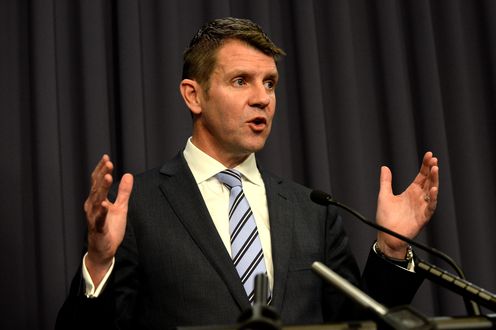
"Religious exceptions are this wide." Actually, Premier Baird, they're a lot wider than that. Time to repeal sub-section 56(d) of the NSW Anti-Discrimination Act 1977.

“Religious exceptions are this wide.” Actually, Premier Baird, they’re a lot wider than that. Time to repeal sub-section 56(d) of the  Anti-Discrimination Act 1977.
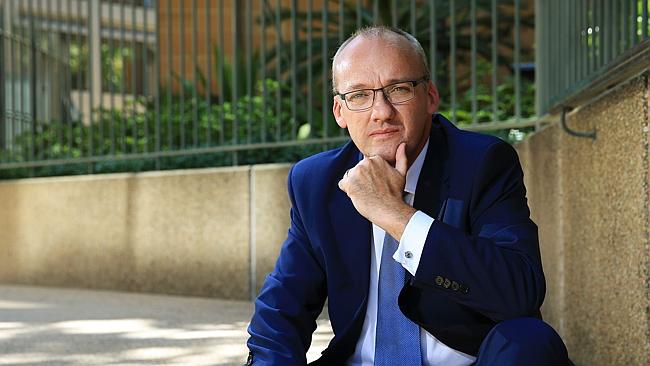
After much contemplation, Opposition Leader Luke Foley this week finally joined the 21st century by supporting marriage equality. Will he also support a 21st century Anti-Discrimination Act?

After much contemplation, Opposition Leader Luke Foley this week finally joined the 21st century by supporting marriage equality. Will he also support a 21st century Anti-Discrimination Act?

Finally, if you manage to secure a response from MPs or candidates on these questions during Sydney Gay & Lesbian Mardi Gras, whether that response is negative or positive, please leave their answers in the comments section below.

And, if you want to raise them directly with some of the relevant decision-makers, here are some people you might wish to contact:

Liberals

Premier Mike Baird

Email https://www.nsw.gov.au/your-government/contact-premier-new-south-wales

Phone 02 8574 5000

Twitter https://twitter.com/mikebairdMP

Attorney-General Brad Hazzard

Email office@hazzard.minister.gov.au

Phone 02 8574 6000

Twitter https://twitter.com/BradHazzard

Labor

Opposition Leader Luke Foley

Email leader.opposition@parliament.nsw.gov.au

Phone 02 9230 2310

Twitter https://twitter.com/Luke_FoleyNSW

Shadow Attorney-General Paul Lynch

Email ElectorateOffice.Liverpool@parliament.nsw.gov.au

Phone 02 9602 0040

Greens

Attorney-General Portfolio Spokesperson David Shoebridge

Email david.shoebridge@parliament.nsw.gov.au

Phone 02 9230 3030

Twitter https://twitter.com/ShoebridgeMLC

[1] Section 49ZG refers to discrimination on the basis of ‘homosexuality’, with ‘homosexual’ defined in section 4 as ‘homosexual means male or female homosexual’.

[2] Section 49ZTA sets the maximum individual punishment for serious homosexual vilification at 10 penalty units, or imprisonment for 6 months, or both.

[3] Section 38T provides that the maximum individual punishment for serious transgender vilification is 10 penalty units, or imprisonment for 6 months, or both.

[4] Section 20D establishes the maximum individual punishment for serious racial vilification: 50 penalty units, or imprisonment for 6 months, or both.

Submission to Australian Law Reform Commission Traditional Rights and Freedoms Inquiry

The Australian Law Reform Commission is currently conducting an inquiry into Traditional Rights and Freedoms – Encroachment by Commonwealth Laws (at the behest of Commonwealth Attorney-General, Senator the Hon George Brandis). They have released an Issues Paper for public consultation, with submissions due by Friday 27 February 2015. For more information about the inquiry, see <http://www.alrc.gov.au/inquiries/freedoms The following is my submission, focusing on LGBTI vilification, religious exceptions to anti-discrimination law, and asylum-seekers and refugees, including LGBTI refugees.

The Executive Director

Australian Law Reform Commission

GPO Box 3708

Sydney NSW 2001

c/- freedoms@alrc.gov.au

Sunday 15 February 2015

To whom it may concern

SUBMISSION TO TRADITIONAL RIGHTS AND FREEDOMS INQUIRY

Thank you for the opportunity to provide a submission to the Traditional Rights and Freedoms – Encroachment by Commonwealth Laws Inquiry.

The subject of human rights and freedoms, and how they should best be protected, both by and from Government, is an important one, and is worthy of substantive consideration.

In this submission, I will focus on three particular areas in which the rights of people are currently being breached as a result of Commonwealth Government action, or in some cases, inaction:

  1. The Commonwealth Government’s failure to protect lesbian, gay, bisexual, transgender and intersex (LGBTI) Australians from vilification
  2. The Commonwealth Government’s tacit endorsement of discrimination, by religious organisations, against lesbian, gay, bisexual and transgender (LGBT) Australians, and
  3. The gross violation of human rights of asylum-seekers and refugees, including LGBTI refugees, by the Commonwealth Government.

Before I move to these issues in more detail, however, I wish to express my concern about the Terms of Reference (provided by Attorney-General, Senator the Hon George Brandis) and therefore the overall direction of this inquiry.

The way in which the Terms of Reference have been formulated, and consequently the manner in which the Issues Paper has been drafted, appears to prioritise some rights above others, merely because they are older, or are found in common law, rather than being more modern rights or founded through legislation or international human rights documents.

This is an unjustified distinction, and makes it appear, at the very least, that property rights or ‘the common law protection of personal reputation’ (aka protection against defamation) are more important than other rights, such as freedom from vilification or discrimination.

My criticism of this inquiry is therefore similar to that of the Rights & Responsibilities 2014 Discussion Paper released by the Human Rights Commissioner Mr Tim Wilson. From my submission to that inquiry[1]:

“Specifically, I would argue that the prioritising of certain rights above others potentially neglects and devalues the importance of those other rights which are no less essential to ensuring that all Australians are able to fully participate in modern society.

From my point of view, chief among these rights is the right to non-discrimination, or to put it another way (which may be more favourably received), to be free from discrimination, including unfair or adverse treatment on the basis of sexual orientation, gender identity and intersex status.

The right to non-discrimination is fundamental in international human rights law adopted immediately post-World War II. Article 2(1) of the International Covenant on Civil and Political Rights (ICCPR) provides that:

“Each State Party to the present Covenant undertakes to respect and to ensure all individuals within its territory and subject to its jurisdiction the rights recognised in the present Covenant, without distinction of any kind such as race, colour, sex, language, religion, political or other opinion, property, birth or other status.”

Similarly, article 21 of the ICCPR establishes that:

“All persons are equal before the law and are entitled without any discrimination to the equal protection of the law. In this respect, the law shall prohibit any discrimination and guarantee to all persons equal and effective protection against discrimination on any ground such as race, colour, sex, language, religion, political or other opinion, national or social origin, property, birth or other status.”

The United Nations Human Rights Committee has, in cases which both involved complaints by Australian citizens against actions by the Tasmanian and Commonwealth Government respectively, found that the wording of these articles includes the right to be free from discrimination on the basis of sexual orientation.[2]

The Commonwealth Parliament has also recognised that the right to non-discrimination for lesbian, gay, bisexual, transgender and intersex (LGBTI) Australians is worthy of protection, with the passage of the Sex Discrimination Amendment (Sexual Orientation, Gender Identity and Intersex Status) Act 2013.

This historic legislation, providing similar rights to non-discrimination to those already enjoyed on the basis of race, sex, disability and age, was a significant, albeit long overdue, step forward for the LGBTI community. For this reason, I would not wish to see the right to be free from discrimination on these attributes to be diminished in comparison to other, more ‘traditional’ rights.

Unfortunately, that is the almost inevitable conclusion of a consultation process which aims to consider “how effectively we protect people’s human rights and freedoms in Australia”… but which then only focuses on a small number of freedoms, including the right to property, but which neglects others.”

[End extract]

Encouragingly, the ALRC at least acknowledges, on page 31, that “[f]reedom from discrimination is also a fundamental human right.” But the Issues Paper does not include a chapter on this right, nor does it include it within the list of “[o]ther rights, freedoms and privileges” in Chapter 19.

I believe that this imbalance, in examining and prioritising some fundamental rights, while essentially ignoring others, undermines the utility of this process – and is something which must be redressed in the Final Report, expected by December 2015.

I turn now to three particular areas in which the Commonwealth Government either itself breaches human rights, or authorises others to do so.

  1. The Commonwealth Government’s failure to protect lesbian, gay, bisexual, transgender and intersex (LGBTI) Australians from vilification

[NB This topic relates to Chapter Two: Freedom of Speech, and its questions:

  • What general principles or criteria should be applied to help determine whether a law that interferes with freedom of speech is justified?
  • Which Commonwealth laws unjustifiably interfere with freedom of speech, and why are these laws unjustified?]

I acknowledge the importance of the right to freedom of expression, or freedom of speech. However, I also welcome the Issues Paper’s acknowledgement that there are possible justifications for encroachment on this right. In particular, the Issues Papers notes, at paragraph 2.2.4 on page 26:

“Similarly, laws prohibit, or render unlawful, speech that causes harm, distress or offence to others through incitement to violence, harassment, intimidation or discrimination.”

This obviously includes the prohibition on racial vilification contained in section 18C of the Commonwealth Racial Discrimination Act 1975[3].

My primary question is why laws should be established to prohibit ‘advocacy of national, racial or religious hatred’ but not to prohibit advocacy of hatred on other grounds, including sexual orientation, gender identity or intersex status.

The impact of vilification on these grounds, and the negative influence of public homophobia, biphobia, transphobia and intersexphobia more generally, is just as harmful as racial or religious vilification, and therefore I can see no good reason why there should not also exist equivalent anti-vilification protections covering LGBTI Australians a Commonwealth level.

It is for this reason that I provided a submission last year in response to the Senator Brandis’ Exposure Draft Bill seeking to repeal section 18C, in which I argued that, instead of abolishing racial vilification laws, similar protections against vilification on the basis of sexual orientation, gender identity and intersex status should be added to the Sex Discrimination Act 1984[4].

In short, if there should be a law to protect against the incitement to discrimination, hostility or violence on the basis of race, then there should also be a law to protect people on the basis of sexual orientation, gender identity and intersex status.

The fact that there is no such Commonwealth law means that the Government is currently failing in its duty to protect LGBTI Australians from vilification.

Finally, I note that this answer is, in some respects, contrary to the intention of “Question 2-2: [w]hich Commonwealth laws unjustifiably interfere with freedom of speech, and why are these laws unjustified?” because it instead proposes an additional area where freedom of speech should be limited.

I submit that such an answer is necessary to redress the imbalance contained in the Terms of Reference, and Issues Paper, because the right to freedom from vilification is equally worthy of recognition, and protection, in Commonwealth law. It is a right that should be extended to LGBTI Australians as a matter of priority.

  1. The Commonwealth Government’s tacit endorsement of discrimination, by religious organisations, against lesbian, gay, bisexual and transgender (LGBT) Australians

[NB This topic relates to Chapter 3: Freedom of Religion, and its questions:

  • What general principles or criteria should be applied to help determine whether a law that interferes with freedom of religion is justified?
  • Which Commonwealth laws unjustifiably interfere with freedom of religion, and why are these laws unjustified?]

I acknowledge the fundamental importance of the right to freedom of religion. However, just as importantly, I support the statement on page 31 of the Issues Paper that:

“[f]reedom of religion is fundamental, but so too is freedom from discrimination on the grounds of gender, race, sexual orientation or some other protected attribute. Freedom from discrimination is also a fundamental human right.”

Indeed, the case at paragraph 3.20 on the same page, namely R v Secretary of state for education and employment; ex parte Williamson (2005) from the UK, provides a useful formulation:

“… there is a difference between freedom to hold a belief and freedom to express or ‘manifest’ a belief. The former right, freedom of belief, is absolute. The latter right, freedom to manifest, is qualified. This is to be expected, because the way a belief is expressed in practice may impact on others.”

Unfortunately, I do not believe that Australian law currently strikes the right balance between respecting the right to freedom of religion, and protecting others from the harms caused by the manifestation of those beliefs, including through breaches of the right to non-discrimination on the basis of sexual orientation, gender identity and intersex status.

Specifically, I am concerned that the broad exceptions and/or exemptions which are provided to religious organisations under Commonwealth, state and territory anti-discrimination laws, including those protections added by the Sex Discrimination Amendment (Sexual Orientation, Gender Identity and Intersex Status) Act 2013, are far too generous.

In practice, these exceptions provide Government approval and endorsement of the discriminatory treatment of lesbian, gay, bisexual and transgender (LGBT) Australians by religious bodies in a large number of areas of public life[5].

For example, the combined impact of sub-section 37(1)(d) of the amended Sex Discrimination Act 1984[6] and section 38 of the same law (which applies to educational institutions established for religious purposes), means that, according to Commonwealth law:

  • Religious schools can freely discriminate against lesbian, gay, bisexual and transgender students, including expelling those students simply for being who they are;
  • Religious schools can also freely discriminate against LGBT staff members, including by refusing to provide or terminating their employment, where sexual orientation and gender identity is completely irrelevant to the ability of that person to perform the duties of the role;
  • Religious health and community services can similarly discriminate against both LGBT employees/potential employees, as well as LGBT individuals and families accessing these services, with impunity; and
  • Religious aged care services can discriminate against LGBT employees or potential employees.[7]

It is difficult to see how these exemptions, which allow LGBT people to be discriminated against simply as they seek to obtain an education, or access healthcare (which are themselves fundamental international human rights), and to be treated unfairly in employment in a large number of jobs across a wide range of areas, is not a gross breach of their human rights.

Religious exceptions and exemptions under Commonwealth, state and territory anti-discrimination laws allow serious harm to be caused to LGBT Australians, on a day-to-day basis and across multiple spheres of public life, and, I submit, should be significantly curbed.

To this end, I believe the religious exemptions which are included in sub-sections 37(1)(a),(b) and (c) of the Sex Discrimination Act 1984[8], if supplemented by exemptions covering how religious ceremonies are conducted, are both more justifiable in being better targeted to protecting freedom of religious worship itself, and less likely to result in harm to LGBT people through the breach of their right to non-discrimination across broad areas of public life. These are the only religious exemptions that, I believe, should be retained.

This, much narrower, form of religious exemptions would, in my view, also be a more appropriate outcome of a system of human rights that seeks to both protect fundamental rights, and promote the responsibility not to infringe upon the fundamental rights of others.

Finally, as with my previous answer, I note that this discussion is potentially contrary to the intention of “Question 3-2: Which Commonwealth laws unjustifiably interfere with freedom of religion, and why are these laws unjustified?” because it highlights an area where, arguably, freedom of religion should be further restrained.

I believe that providing this answer is nevertheless important because, in Australia, freedom of religion is not unduly limited. Instead, freedom of religion is unjustifiably privileged, including where it tramples upon the rights of others, and especially the rights of lesbian, gay, bisexual and transgender Australians not to be discriminated against in public life.

A mature discussion of rights and freedoms would recognise this serious imbalance and seek to redress it, by ensuring that religious exceptions to and exemptions from anti-discrimination law only protected genuine freedom of religious worship, not establishing a supposed ‘right’ to discriminate against people on the basis of sexual orientation and gender identity.

  1. The gross violation of human rights of asylum-seekers and refugees, including LGBTI refugees, by the Commonwealth Government

I am not an expert in migration and refugee law, nor in the international human rights instruments that apply in this area.

Nevertheless, I know enough about this subject matter to submit that:

  • Seeking asylum is a human right, and is not a criminal act, irrespective of the manner of arrival (whether by plane or by boat),
  • Responding to people exercising their right to seek asylum by detaining them in offshore processing centres, indefinitely, in inhumane conditions, and without free and fair access to justice, is a fundamental breach of their human rights, and
  • An inquiry into the encroachment by Commonwealth laws upon traditional rights and freedoms would be incomplete without a thorough examination of this issue.

As a long-term LGBTI advocate and activist, I also feel compelled to raise the specific issue of LGBTI asylum seekers and refugees being processed and ultimately resettled in countries that criminalise homosexuality, namely Nauru and Papua New Guinea.

As I have written to several Commonwealth Immigration Ministers, under both Labor[9] and Liberal-National[10] Governments, such a policy clearly abrogates the responsibilities that the Commonwealth Government has towards LGBTI asylum-seekers.

From my letter to then Minister for Immigration the Hon Scott Morrison MP:

“… the mistreatment of LGBTI asylum seekers and refugees raises particular problems, problems that do not appear to be recognised by the Australian Government. Nor does there appear to be any evidence the Government is taking action to remedy them.

Even if the offshore processing and permanent resettlement of refugees continues, this must not include the processing and resettlement of LGBTI asylum seekers and refugees in countries which criminalise homosexuality (which both PNG and Nauru currently do).

If you, as Minister for Immigration and Border Protection and therefore Minister responsible for the welfare of asylum seekers and refugees, cannot guarantee that sections 210 and 212 of the PNG Penal Code do not apply to detainees on Manus Island, then you cannot send LGBTI people there in good conscience.

If you, as Minister for Immigration and Border Protection, cannot guarantee that LGBTI asylum seekers and refugees will not be subject to homophobic bullying and harassment, and will be free to lodge claims for protections on the basis of persecution due to their sexual orientation, gender identity or intersex status, then you must not detain them in such facilities.”

[End extract]

As I indicated at the beginning of this section, I am not an expert in this area of law, and therefore am not in a position to provide a more thorough analysis of the (multiple) breaches of human rights law involved in the offshore processing and resettlement of asylum seekers and refugees. I am confident, however, that there will be a number of submissions from human rights and refugee organisations in coming weeks that will do exactly that.

Nevertheless, I felt obliged to include this issue in my submission, given both the severity of the human rights breaches involved, and because of their particular impact on LGBTI asylum seekers and refugees, whose only ‘crime’ is to have sought the protection of our Government.

In conclusion, I wish to thank the Law Reform Commission again for the opportunity to provide this submission, and consequently to raise issues of concern for LGBTI people, namely the absence of anti-vilification protection in Commonwealth law, the breach of our right to non-discrimination because of religious exemptions in the Sex Discrimination Act, and the mistreatment of asylum seekers and refugees, including LGBTI refugees, by the Commonwealth Government.

I look forward to these issues being addressed in the inquiry’s Final Report, to be released by the end of 2015.

Sincerely

Alastair Lawrie

[1] Full submission at: https://alastairlawrie.net/2014/10/27/submission-to-rights-responsibilities-2014-consultation/

[2] Human Rights Committee, Toonen v Australia, Communication No. 488/1992, UN Doc CCPR/C/50/D/488/92 and Human Rights Committee, Young v Australia, Communication No. 941/2000, UN Doc CCPR/C/78/D/941/2000.

[3] “Offensive behaviour because of race, colour or national or ethnic origin.

  • It is unlawful for a person to an act, otherwise than in private, if:
  • the act is reasonably likely, in all the circumstances, to offend, insult, humiliate, or intimidate another person or a group of people; and
  • the act is done because of the race, colour or national or ethnic origin of the other person or of some or all of the people in the group.”

[4] Full submission at: https://alastairlawrie.net/2014/04/24/dont-limit-racial-vilification-protections-introduce-vilification-protections-for-lgbti-australians-instead/

[5] Noting that the religious exemptions contained in the Sex Discrimination Act 1984 do not apply to intersex status, only to sexual orientation and gender identity.

[6] Which provides that “[n]othing in Division 1 or 2 affects… any other act or practice of a body established for religious purposes, being an act or practice that conforms to the doctrines, tenets or beliefs of that religion or is necessary to avoid injury to the religious susceptibility of adherents of that religion.”

[7] Noting that the religious exemptions contained in the Sex Discrimination Act 1984 do not apply to LGBT people accessing aged care services.

[8] “Nothing in Division 1 or 2 affects:

  • the ordination or appointment of priests, ministers of religion or members of any religious order;
  • the training or education of persons seeking ordination or appointment as priests, ministers of religion or members of a religious order;
  • the selection or appointment of persons to perform duties or functions for the purposes of or in connection with, or otherwise to participate in, any religious observance or practice…”

[9] My letter to Labor Immigrations Ministers, the Hon Chris Bowen and the Hon Brendan O’Connor from 2012 and 2013: https://alastairlawrie.net/2012/09/07/letter-to-chris-bowen-on-lgbti-asylum-seekers/

[10] My letter to then Immigration Minister the Hon Scott Morrison from February 2014: https://alastairlawrie.net/2014/02/02/letter-to-scott-morrison-about-treatment-of-lgbti-asylum-seekers-and-refugees-sent-to-manus-island-png/

Submission to Australian Human Rights Commission Sexual Orientation, Gender Identity and Intersex (SOGII) Rights Consultation

One of my favourite campaigns of recent times – It Gets Better – performs a valuable role, letting vulnerable LGBTI youth know that, while the homophobia, biphobia, transphobia and intersexphobia they may be experiencing is awful, for most of them, it will get better. I emphasise the word most here because we should always remember that it does not get better for everyone.

Meanwhile, as the LGBTI movement itself ‘ages’, many of us are increasingly celebrating the past, and reflecting on significant community milestones (such as last year’s 30th anniversary of the decriminalisation of male homosexuality in NSW, or the 40th anniversary of Sydney’s Gay & Lesbian Mardi Gras which is now only three years away). But, while absolutely necessary, looking backwards should never obscure the challenges that remain ahead.

This consultation, including an examination of legislation, policies and practices by government(s) that unduly restrict sexual orientation, gender identity and intersex rights, provides an opportunity to highlight some of the major obstacles which continue to prevent LGBTI Australians achieving full equality. In this submission, I will concentrate on six such areas:

  1. Involuntary or coerced sterilisation of intersex children

These unjustified practices – surgeries performed with the aim of ‘normalising’ intersex children according to the expectations of their parents, their doctors, and/or society at large, so that they conform to an exclusionary man/woman binary model of sex – are human rights abuses, plain and simple.

Obviously done without the child’s consent, such practices can involve sterilisation, as well as other ‘cosmetic’ (ie unnecessary), largely irreversible surgery on genitalia to make their bodies fit within the idea of what a man or woman ‘should’ be, ignoring the individual involved and their fundamental rights to bodily integrity, and personal autonomy.

That these practices continue in 2015 is abhorrent – and the fact the Commonwealth Government has yet to formally respond to the Senate’s 2013 Report into this issue (http://www.aph.gov.au/Parliamentary_Business/Committees/Senate/Community_Affairs/Involuntary_Sterilisation/Sec_Report/~/media/Committees/Senate/committee/clac_ctte/involuntary_sterilisation/second_report/report.ashx) is, or at least should be, a scandal.

  1. Restrictions on the rights of transgender people

Another group within the LGBTI community whose rights continue to trail those whose identities are based on sexual orientation (lesbian, gay and bisexual people) are transgender Australians.

This includes the fact there continue to be ‘out-of-pocket’, in many cases quite significant, expenses for medical support for trans* people simply to affirm their gender identity. This is a denial of their human rights – access to trans* surgeries and related medical services should not be restricted by the capacity to pay, but instead should be fully publicly-subsidised through Medicare.

The ongoing requirement that married transgender Australians must divorce their spouses in order for their gender identity to be legally recognised is also a fundamental breach of their rights, and must end.

  1. Processing and resettlement of LGBTI refugees in countries which criminalise homosexuality

Australian Governments, of both persuasions, are guilty of violating the human rights of LGBTI refugees. These are people who are (often) fleeing persecution on the basis of their sexual orientation, gender identity or intersex status, and seeking our protection.

Australia’s response? To detain them, indefinitely, in inhumane prison camps on Nauru and Manus Island. For many, while detained they are at risk of prosecution under the laws of Papua New Guinea and/or Nauru, both of which continue to criminalise male-male intercourse. Even after they are found to be refugees, they are then ‘resettled’ in these countries, in effect exposing people who have fled persecution to potentially more persecution.

While I believe the offshore processing and resettlement of all refugees is unjust, it should be recognised it has a disproportionately negative impact on LGBTI refugees.

  1. Denial of the right of LGBTI students to an inclusive education

It is encouraging that greater numbers of young LGBTI people feel comfortable in disclosing their status at an earlier age – and for some, that they attend genuinely inclusive schools. However, this inclusion is by no means universal.

For example, the recently developed national Health & Physical Education curriculum does not even include the words lesbian, gay or bisexual, and does not guarantee students will be taught comprehensive sexual health education (even omitting the term HIV). This is a massive failure to ensure all students learn vital information that is relevant to their health.

Similarly, while the national Safe Schools Program is a welcome initiative to counter homophobia and bullying, participation in the program is optional, with most schools (and even some entire jurisdictions) opting out. The right to attend school free of discrimination should not depend on a student’s geographic location, or their parent/s’ choice of school.

Finally, religious exceptions to anti-discrimination legislation (in all jurisdictions outside Tasmania), mean many LGBTI students are at risk of discrimination, by their school, simply for being who they are.

  1. Limitations on anti-discrimination protections

Students are not the only LGBTI individuals let down by Australia’s current anti-discrimination framework. These same religious exceptions mean that, in most jurisdictions, LGBTI people can be discriminated against in a wide range of areas of public life, both as employees and people accessing services, in education, health, community services and (as employees) in aged care.

The attributes which are protected under anti-discrimination law also vary widely, with intersex people only truly protected under Commonwealth and Tasmanian law, different definitions of transgender (including extremely narrow protections in Western Australian legislation), and NSW excluding bisexual people altogether.

Finally, only four jurisdictions have vilification protections for (some) members of the LGBTI community – with no Commonwealth LGBTI equivalent of section 18C of the Racial Discrimination Act.

  1. Ongoing lack of marriage equality

I include this not because I consider it as important as the issues listed above, but simply as someone who has been engaged to be married for more than five years – and has no idea how much longer he will have to wait to exercise the same rights as cisgender heterosexual couples, with the only difference being who I love. Marriage discrimination is wrong, it is unjust, and it must go.

This submission is by no means comprehensive – there are a variety of other issues which I have excluded due to arbitrary word length restrictions (including mental health issues, anti-LGBTI violence, and discrimination against rainbow families – with my partner and I able to adopt in Sydney, but not Melbourne or Brisbane).

In conclusion, while it does get better, and over time, it most certainly has got better, there are still many ways in which the rights of LGBTI Australians continue to be denied – and about which we, as LGBTI advocates and activists, should remain angry, and most importantly, take action.

Human Rights Commissioner Tim Wilson, who is leading the consultation on SOGII Rights

Human Rights Commissioner Tim Wilson, who is leading the consultation on SOGII Rights

NB Public submissions to the AHRC SOGII Rights consultation close on Friday 6 February. For more details, head to: <https://www.humanrights.gov.au/sogii-rights

For more information on some of the topics listed above, see my previous posts on:

– Submission to Involuntary and Coerced Sterilisation of Intersex People Senate Inquiry <https://alastairlawrie.net/2013/07/01/submission-to-involuntary-and-coerced-sterilisation-senate-inquiry/

– Letter to Scott Morrison About Treatment of LGBTI Asylum-Seekers and Refugees Sent to Manus Island <https://alastairlawrie.net/2014/02/02/letter-to-scott-morrison-about-treatment-of-lgbti-asylum-seekers-and-refugees-sent-to-manus-island-png/

– Letter to Minister Pyne Calling for COAG to Reject Health & Physical Education Curriculum Due to Ongoing LGBTI Exclusion <https://alastairlawrie.net/2014/12/09/letter-to-minister-pyne-calling-for-coag-to-reject-health-physical-education-curriculum-due-to-ongoing-lgbti-exclusion/

– The Last Major Battle for Gay & Lesbian Legal Equality in Australia Won’t be about Marriage <https://alastairlawrie.net/2014/02/26/the-last-major-battle-for-gay-lesbian-legal-equality-in-australia-wont-be-about-marriage/  and

– Bill Shorten, Will you Lead on Marriage Equality? <https://alastairlawrie.net/2015/01/24/bill-shorten-will-you-lead-on-marriage-equality/

Bill Shorten, Will You Lead on Marriage Equality?

The Hon Bill Shorten MP

Leader of the Opposition

PO Box 6022

House of Representatives

Parliament House

CANBERRA ACT 2600

Saturday 24 January 2015

Dear Mr Shorten

PLEASE SUPPORT A BINDING VOTE IN FAVOUR OF MARRIAGE EQUALITY AT THE 2015 ALP NATIONAL CONFERENCE

Today marks six months until the Australian Labor Party is scheduled to hold its next National Conference. This Conference will determine the party’s formal position on a large number of important issues ahead of next year’s election.

One of these issues is actually unfinished business from the previous National Conference, held in December 2011, and that is the position that the ALP adopts on marriage equality.

While that gathering took the welcome step of making support for marriage equality an official part of the platform, it also immediately undermined that policy stance by ensuring all MPs were to be given a conscience vote when it came before Parliament.

That decision – to ‘support’ marriage equality, but then make that support unenforceable – guaranteed that any Bill would fail in the last Commonwealth Parliament, and continues to make passage in the current Parliament extremely difficult (even with a potential, albeit increasingly unlikely, Liberal Party conscience vote).

However, you, and the delegates to this year’s National Conference, have the opportunity to right that wrong. And make no mistake, the conscience vote is inherently wrong, not just because of its practical impact in making legislative change unobtainable, but also because it is unprincipled, and un-Labor.

Having a conscience vote on something like marriage equality, which is a matter of fundamental importance for many members of the lesbian, gay, bisexual, transgender and intersex (LGBTI) community, says that our human rights are optional, our equality is optional.

A conscience vote makes it clear that homophobia, biphobia, transphobia and intersexphobia are acceptable, that the second-class treatment of our relationships is officially condoned, that Labor Party MPs are free to treat LGBTI Australians as ‘lesser’ simply because of who we are. In essence, a conscience vote on marriage equality is unconscionable.

A non-binding vote on marriage equality is also ‘un-Labor’ because it is contrary to the principles of collective organising upon which the party is founded. Ideas of solidarity and being ‘stronger together’ are supposed to reflect core philosophy, not simply act as slogans, and definitely not something that is abandoned simply because some caucus members are so homophobic they cannot abide the thought that LGBTI people might be their equal.

A conscience vote on this issue, from a party that adopts binding votes on nearly everything else (from refugee policy to climate change and almost all things in between), also makes it difficult for the Australian community, and the LGBTI community in particular, to take the platform position in favour of marriage equality seriously.

This is something that can, and must, be changed at this year’s National Conference, given only it has the power to introduce a binding vote in favour of marriage equality for all ALP MPs.

Acknowledging that there will be groups both inside and outside the ALP who will strongly oppose any moves to support full LGBTI equality, achieving a binding vote on marriage equality will be difficult, and therefore requires the support of a party leader who is willing to do just that, to ‘lead’.

Which makes the question at the heart of this letter: Bill Shorten, will you lead on marriage equality?

There is cause for optimism in that you are already part-way there. Unlike your equivalent at the 2011 Conference, Julia Gillard, who adopted the worst possible position in opposing both marriage equality and a binding vote, you were one of the first ministers to express personal support for the right of all people to marry, irrespective of sexual orientation, gender identity or intersex status.

It’s time for you to take the vital next step, to back up this personal commitment with meaningful action, to use the influence of your position as the Parliamentary Leader of the Australian Labor Party to support a binding vote in favour of marriage equality, thereby declaring once and for all that LGBTI human rights are not optional, that LGBTI equality is absolutely not optional.

Doing so could only enhance your credibility as a leader, because it would show you were unafraid to take on people like Chris Hayes and Joe Bullock, who attempt to blackmail the party by saying they would rather cross the floor than vote for equality, and that you were willing to stand up to the SDA, a union that should spend more time looking after the interests of its members, and less resources and energy on opposing the right of LGBTI-inclusive couples to wed.

It would also show the public that when you make public commitments, when you support a position on an important policy issue like marriage equality, you are ready to take action and do what is required to make sure it happens.

Finally, if you were to support a binding vote on marriage equality it would only heighten the contrast between yourself and Prime Minister Tony Abbott, a ‘yesterday’s man’ who is so homophobic he remains personally committed to denying the right of his own sister to get married. Such a contrast would surely help you at the ballot box in 2016.

In short, the option to support a binding vote on marriage equality is full of opportunity, with many possible benefits and few, if any, adverse consequences. I sincerely hope it is an opportunity you are willing to grasp, and grasp firmly.

I started this letter by noting one anniversary – that there are now exactly six months left until the 2015 ALP National Conference. I want to conclude by telling you about another, one that probably doesn’t mean much to you, but means everything to me.

Yesterday marked the fifth anniversary of my engagement to my fiancé Steve. On 23 January 2010, he made me an incredibly happy man by saying “Of course I will” to my proposal. But, here we are five years later, and we still have no idea how many more years we will be left waiting before we can both say “I do”.

To put that in perspective, you married Chloe Bryce in November 2009, roughly two months before my engagement to Steve. Which means that, for almost the entire time you have been married, we have not been – for the simple reason that you love a woman, and I love a man.

But there is another important difference. While I have absolutely no control over whether you have the right to marry, or when you might be permitted to do so, you exert a significant amount of influence over the existence, and timing, of Steve and my wedding.

As Labor Party Leader, in this a National Conference year, you have the ability to help steer the party towards a binding vote, thus correcting the gross error of the 2011 Conference decision to support a conscience vote. You can make marriage equality a genuine possibility in 2016 or early 2017, rather than something which will continue to be delayed until 2018, 2019 or even into the 2020s.

For the benefit of Steve and myself, and thousands of other LGBTI-inclusive couples who are still waiting for the same right to marry which you and other couples can take for granted, please support a binding vote in favour of marriage equality at the 2015 National Conference, and help make our long-overdue weddings a reality.

Sincerely

Alastair Lawrie

Will Bill Shorten lead on marriage equality, or will he let this opportunity slip through his grasp?

Will Bill Shorten lead on marriage equality, or will he let this opportunity slip through his grasp?

NB If you would like to read further about why I believe a binding vote is essential to achieve marriage equality, please read “Hey Australian Labor, It’s Time to Bind on Marriage Equality”: <https://alastairlawrie.net/2014/07/13/hey-australian-labor-its-time-to-bind-on-marriage-equality/

And to see a more comprehensive LGBTI agenda for the 2015 ALP National Conference, you can go to “15 LGBTI Priorities for ALP National Conference 2015”: <https://alastairlawrie.net/2014/09/12/15-lgbti-priorities-for-alp-national-conference-2015/

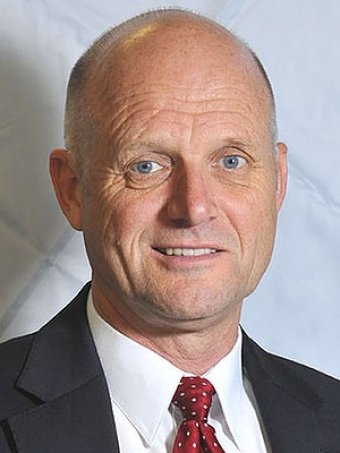
Senator Leyonhjelm’s Marriage Equality Bill undermines the principle of LGBTI anti-discrimination. Should we still support it?

Liberal Democrat Senator David Leyonhjelm introduced his Freedom to Marry Bill 2014 on Wednesday 26 November. As the name implies, if passed it would provide lesbian, gay, bisexual, transgender and intersex (LGBTI) Australians the freedom to marry their partner, something denied to them currently.

The fact it is being proposed by the Liberal Democrats, and not the Labor Opposition or the Greens, is seen as giving it a greater chance of securing the support of enough Liberal MPs to force Prime Minister Tony Abbott to grant a conscience vote within the Liberal Party, and therefore of having at least some chance of becoming law in 2015.

Which means we should automatically be putting our collective energies behind this Bill, in an effort to ensure its passage through parliament as quickly as possible, shouldn’t we? Well, no actually. Because, while the Leyonhjelm Bill gives marriage equality with one hand, it takes away from LGBTI non-discrimination with the other.

Alongside provisions which would grant all Australian couples the ability to get married, irrespective of sexual orientation, gender identity and intersex status, the Freedom to Marry Bill 2014 would also grant all non-government employed marriage celebrants, including civil celebrants, the ‘right’ to refuse to perform the marriages of LGBTI-inclusive couples.

Currently, section 47 of the Marriage Act 1961 restricts the right to refuse to officiate a marriage to ministers of religion, which is both increasingly irrelevant (given only 27.4% of marriages in 2014 were performed by religious celebrants) and at the very least philosophically consistent with existing exceptions to anti-discrimination laws which are granted to religious organisations.

Instead, the Freedom to Marry Bill 2014 would provide civil celebrants, who now perform 72.5% of weddings (up from 42.1% just twenty years ago), the ability to refuse to officiate marriages for LGBTI-inclusive couples. It would do so without even requiring them to be religious themselves, or to provide an explanation for their refusal – their ‘claims of conscience’ in this regard apparently trump any expectation they should perform their roles in a non-discriminatory manner.

Technically, the Bill grants religious and civil celebrants the right to reject heterosexual couples, too – and this is something that was stressed by Senator Leyonhjelm in spruiking the law to the Sydney Morning Herald in September (“[i]t’s a minor tweak but we envisage that there will be people who wish to specialise as same sex celebrants and they may not want to do conventional weddings. It will work both ways.”).

But, make no mistake, these provisions are squarely aimed at granting civil celebrants the right to refuse service to LGBTI-inclusive couples. That much is made clear by the Explanatory Memorandum to the Bill, which states that “[s]econd, it imposes no claims or burdens of conscience on those persons who object to marriages other than between a man and a woman for both religious and non-religious reasons”. There is no equivalent statement of principle setting out the ‘right’ of celebrants to refuse to perform man/woman marriages.

This view – that the provisions are aimed at allowing all celebrants to refuse LGBTI-inclusive couples (and not heterosexual couples) – is reinforced by the fact the only other specific example of refusal cited is in clause 10 of the Bill (“[i]f a chaplain refuses to solemnise a marriage because the marriage is not the marriage of a man and a woman, the chaplain must, if possible, substitute another chaplain who is willing to solemnise the marriage.”

In short, the Freedom to Marry Bill 2014 goes to great lengths to ensure that civil celebrants can refuse to officiate the marriages of LGBTI Australians, and they can do so for any reason whatsoever.

The instinctive response of many people to these changes is to say “so what, who would want their marriage officiated by someone who doesn’t approve of that marriage anyway?” And of course, there is much validity in this sentiment – as someone who is engaged to be married myself (and has been for almost five years now), I would obviously not want my wedding to be presided over by someone who opposed the fundamental equality of my relationship.

But, if we are to leave our response at that, then we are guilty both of intellectual laziness, and of misunderstanding the role of anti-discrimination protections. Because anti-discrimination laws are designed to protect people from adverse treatment on the basis of particular attributes (in this case, sexual orientation, gender identity and intersex status) in a wide range of areas across society, not simply to reinforce the understandable tendency for people to ‘choose’ employers, or goods and service providers, that are already favourable to them.

To presuppose that people have the ability to ‘choose’ is also to assume everyone has the same level of power or privilege in society that you may have. In many cases this is clearly not true – just because a highly-qualified gay man in inner-Sydney may be able to reject employment by a homophobe, does not mean a less-qualified trans* person in a regional centre with high unemployment would have the same power to do so.

With respect to the Freedom to Marry Bill 2014 in particular, just because LGBTI-inclusive couples in major cities could easily find alternative celebrants, does not mean people in small country towns, or even larger non-metropolitan centres, would have the same ‘freedom’. It is entirely conceivable that, in a place with few celebrants, all may exercise their ‘claim of conscience’ to refuse service.

Indeed, the Explanatory Memorandum concedes the possibility of lack of access to marriage due to geography in discussing the aforementioned defence chaplains provision (“[t]he requirement of ‘possibility’ recognises that there may be circumstances where a willing chaplain cannot be arranged (e.g. if the people involved are in a remote location”).

Why then should the Marriage Act 1961 allow the few civil celebrants that do exist in remote areas to refuse to perform LGBTI-inclusive weddings, imposing on those couples significant extra expense simply because of their sexual orientation, gender identity or intersex status? (After all, wouldn’t that be the definition of adverse treatment?)

There is an even larger problem with these provisions of the Leyonhjelm Bill, however. That is because there is absolutely no ideological or conceptual reason why, if the law is to recognise the ‘claim of conscience’ of a civil celebrant to refuse to officiate an LGBTI-inclusive wedding ceremony, it should not also allow goods and service providers to refuse to host or supply that wedding, for hotels or bed-and-breakfasts to deny accommodation to the couple on their honeymoon, for restaurants to deny reservations to that couple celebrating their wedding anniversary, and even to employers to be able to deny recognition to that relationship in the workplace.

All of these people can have similar, and similarly passionate, views and beliefs opposing LGBTI-inclusive marriages – and, perhaps in a preview of where Australia might be heading, all are the subject of ‘claims of conscience’ by individuals and groups against marriage equality in the United States.

If a claim of conscience exists for a civil celebrant – allowing them to treat LGBTI people unfavourably on the basis of sexual orientation, gender identity and intersex status – then, logically, it should also exist for anyone else in society who has an ‘objection’ to LGBTI equality, whether based on religion or otherwise.

Thus, the civil celebrant provisions of the Freedom to Marry Bill 2014 can be seen for what they are – a dangerous new precedent establishing a fundamental ‘right to discriminate’ against LGBTI Australians, one that goes much further than existing laws granting anti-discrimination exceptions to religious organisations, because they would allow private citizens, without any connection to organised religion, the ability to exercise this ‘right’.

In some respects, these provisions are simply the natural extension of Senator Brandis’ claims earlier in 2014 (in a different context) that “people do have a right to be bigots.” It certainly appears as if Senator Leyonhjelm was listening – with his first private member’s bill, he is promoting the right of civil celebrants to be homophobes (and biphobes, transphobes and intersexphobes, too).

This fits perfectly within his overall political approach as well – when describing the Bill in the Sydney Morning Herald he said “[i]t’s libertarian philosophy: Individuals should be able to discriminate but governments should not.”

It is therefore easy to see this move as the first step in efforts to unwind our relatively comprehensive system of anti-discrimination laws, not just in relation to sexual orientation, gender identity and intersex status, but also race, sex, disability and age (among other attributes).

The threat is that he is not alone in holding such an extremist view of – or more accurately, against – the principle of anti-discrimination generally, and anti-discrimination laws specifically. He is bound to receive significant support from more radical elements within the Liberal and National Parties (such as Senator Bernardi, and even the aforementioned Attorney-General) in this approach.

It will also be cheered on by conservatives in the media (hello Andrew Bolt) and by right-wing think-tanks, such as the Institute of Public Affairs, who hold an inordinate amount of influence over the current Abbott Coalition Government.

In fact, the current Australian Human Rights Commissioner with responsibility for sexual orientation, gender identity and intersex issues, Tim Wilson, made exactly the same arguments as Senator Leyonhjelm when appearing on behalf of the IPA at the Senate Legal and Constitutional Affairs Legislation Committee inquiry into the Human Rights and Anti-Discrimination Exposure Draft Bill in early 2013 (notable quotes including:

  • “We certainly support very strongly discrimination law related to government and the way it operates towards government, but in a broad philosophical concept we [the IPA] are not a big fan of discrimination law being imposed across civil society in the private sector. The private sector should be able to make choices…” (emphasis added)
  • “What we have made crystal clear is we believe that anti-discrimination laws should operate on government. That is different from what operates within the private sector and within a free society…”
  • “Discrimination occurs within society. Sometimes it exists for the right reasons, because there are organisational goals that people, when they freely come together and associate, believe in. People should be allowed to reasonably exercise those and they do themselves a disservice because of something that is not relative to the objective of the organisation. I think that is a very fair and reasonable principle.”
  • “[Y]ou have a human right of freedom of association, you have right of speech; I am not sure I am convinced there is a human right against discrimination, as abhorrent as it is.”)

Viewed in this context, the decision by Senator Leyonhjelm to introduce the civil celebrant ‘claim of conscience’ provisions, as part of the Freedom to Marry Bill 2014, is a very clever move – in the ‘John Howard’ sense of the word. It undermines the principle of LGBTI anti-discrimination as part of a law which simultaneously recognises a separate LGBTI right – to have our relationships treated in the same way as cisgender, heterosexual couples.

The question then is, how should we, as members of the LGBTI community, respond to this Bill? I would argue that the initial response is relatively straightforward – to call on Senator Leyonhjelm to withdraw these aspects of the legislation, so that the forthcoming debate can be solely about the principle of marriage equality, and not also the potential roll-back of LGBTI anti-discrimination laws.

If, as expected, he refuses to amend the Bill, then I believe we should be lobbying the ALP, Greens, crossbench Senators and LGBTI-friendly sections of the Coalition to vote against these provisions in the Parliament. Hopefully, enough votes can be secured on the floor to ensure marriage equality succeeds without establishing a new ‘right to discriminate’ against LGBTI people in the process.

But the most important question comes if this effort is unsuccessful – what should we do if the Bill reaches the final vote, unamended, especially if this is seen as the best chance of securing marriage equality during this term of parliament?

Should we support passage of the Freedom to Marry Bill 2014 even though it actively undermines the principle of LGBTI anti-discrimination? Or should we call for the Bill to be rejected, so that another marriage equality Bill can take its place, in full knowledge it could be delayed until 2017 as a result?

I acknowledge that this is a very difficult question to answer, and that there will obviously be a range of different responses across our community. For my part, I would choose the latter option – because I sincerely believe that the Senator Leyonhjelm Bill is so flawed, in its current state, that it should not be supported.

I write this as someone who strongly believes in marriage equality (both personally, and for our community), but who does not see this one issue as trumping other LGBTI rights which we have either already achieved, or for which we must still campaign.

It took 38 years from the passage of the Racial Discrimination Act 1975 for lesbian, gay, bisexual, transgender and intersex Australians to receive equivalent anti-discrimination protections under Commonwealth law (with the passage of the Sex Discrimination Amendment (Sexual Orientation, Gender Identity and Intersex Status) Act 2013).

To me, it is unconscionable that the very next major Commonwealth law reform concerning LGBTI rights would actively undermine the principles at the heart of the Sex Discrimination Act reforms.

Indeed, one of the most positive features of those amendments was the ‘carve-out’ which meant that Commonwealth-funded aged care services operated by religious organisations cannot discriminate against LGBT people accessing their services (unlike religious organisations in other areas).

This was important not just to protect ageing LGBT individuals and couples who need this care, but also because it set an important precedent, demonstrating that the ‘right’ for religious organisations to discriminate on the basis of sexual orientation and gender identity is not inviolable, thereby paving the way for future reforms in this area.

A victory for Senator Leyonhjelm and the extreme libertarians on the civil celebrant provisions would set an equally-important (and perhaps even more important) precedent in the other direction, establishing the ‘claim of conscience’ for private citizens to discriminate against LGBTI people, for any reason whatsoever, and emboldening them to pursue wider reforms aimed at unwinding anti-discrimination law. I believe this precedent should be denied to them, even if it means marriage equality might be delayed in the process.

Of course, I absolutely respect that other people may reach a different conclusion – that, having waited more than a decade since the Howard Coalition Government’s original homophobic ban on marriage equality in 2004, and the failure of successive Parliaments since then to remedy this injustice, people may be willing to accept the ‘claim of conscience’ provisions in this legislation as simply the price of doing business.

In fact, I suspect the majority of our community may feel that way – if so, I would accept that verdict, and agree we should actively lobby to have the Freedom of Marry Bill 2014 passed in 2015 (while making sure we strengthen our collective resolve to fight against any further moves against LGBTI anti-discrimination protections in the future).

But, as I have attempted to outline above, this is not an easy or straight-forward decision. I believe this debate – whether we are willing to accept a marriage equality Bill that undermines the principle of LGBTI anti-discrimination – is one that we must have first, before the Bill is to be voted upon.

We should not simply ‘sleepwalk’ into supporting the Freedom to Marry Bill 2014 without first considering the consequences. Nor should we automatically allow Senator Leyonhjelm to take the helm of the marriage equality push – because, while he might be an ally in allowing us to say “I do”, he also wants to allow civil celebrants to tell us that they won’t.

Senator Leyonhelm might want you to be able to say "I do", but he also believes civil celebrants should be able to tell you they won't.

Senator Leyonhelm might want you to be able to say “I do”, but he also believes civil celebrants should be able to tell you they won’t.

Letter to Minister Pyne Calling for COAG to Reject Health & Physical Education Curriculum Due to Ongoing LGBTI Exclusion

The Hon Christopher Pyne MP

Commonwealth Minister for Education

PO Box 6022

House of Representatives

Parliament House

CANBERRA ACT 2600

C.Pyne.MP@aph.gov.au

Tuesday 9 December 2014

Dear Minister Pyne

Call for COAG to Reject Health & Physical Education Curriculum Due to Ongoing LGBTI Exclusion

I am writing to you in advance of the COAG Education Ministers Council meeting on Friday 12 December 2014 in Canberra. Specifically, I am writing to request that you, and your state and territory ministerial counterparts, reject the national Health & Physical Education (HPE) curriculum and start again.

I make this serious request on the basis that this curriculum does not ensure that all students are provided with health and physical education that is relevant to their needs, including those students that are lesbian, gay, bisexual, transgender and intersex (LGBTI).

The development of the national HPE curriculum has, like other national curricula, been a long process, with multiple stages of public consultation.

This has included:

None of these versions of the HPE curriculum have been genuinely LGBTI-inclusive. None of these three documents have even included the words lesbian, gay or bisexual. Not once. How can a national HPE curriculum support all students, including those with diverse sexual orientations, if it cannot even name them?

It must also be pointed out that none of the three drafts of the HPE curriculum have included sufficient sexual health information, with no references to sexually transmissible infections, condoms and/or safer sex and, more than 30 years into the HIV epidemic, none have even mentioned HIV or other blood borne viruses. These omissions mean Australian students, including but not limited to LGBTI students, will not be given the information that they need to stay safe in future.

Of course, the national HPE curriculum, like other curricula, underwent an additional review during 2014, after you requested that Mr Kevin Donnelly and Mr Ken Wiltshire review the entirety of the Australian curriculum (see my submission to this review here:  https://alastairlawrie.net/2014/03/13/submission-to-national-curriculum-review-re-national-health-physical-education-curriculum/).

Unfortunately, the outcome of this review, at least as far as the HPE curriculum is concerned, is far from positive (see my summary of this: https://alastairlawrie.net/2014/11/09/the-national-curriculum-review-fails-to-support-lgbti-students/).

In their report, released in October 2014, Mr Donnelly and Mr Wiltshire noted that at least one jurisdiction, one religion-based school system, and a number of other individual schools, have each rejected the inclusion of even minimal content for same-sex attracted and gender diverse students, and will oppose any attempt to introduce comprehensive sexual health education.

The national curriculum review also found that the HPE curriculum is overcrowded, and recommended that “[t]he core content should be reduced and a significant portion should become part of school-based curriculum…” This jeopardises further the few positive references that have made it into the current draft (such as the option for schools to teach students about homophobia, alongside racism, sexism and other forms of discrimination).

Finally, the national curriculum review report supported the views of some religious organisations that the HPE curriculum should grant schools even greater flexibility in how ‘sexuality education’ should be delivered, when it should be delivered (allowing schools to delay provision of this vital information), and even flexibility in who should teach it (commenting that “[w]e think this is the way forward” in response to suggestions that older teachers should deliver these topics).

The specific recommendation in this area notes “[t]he two controversial areas of sexuality and drugs education should remain, but schools should be given greater flexibility to determine the level of which these areas are introduced and the modalities in which they will be delivered…”

The net outcome of the national curriculum review, at least as it concerns Health & Physical Education, is this: a curriculum that already largely excluded LGBTI students and content, is, in practice, found to be essentially optional, with at least one jurisdiction, one religion-based school system, and other individual schools all opting-out. What LGBTI-related subject matter there is remains under threat as the content is slimmed down, while those religious schools that do teach ‘sexuality education’ will have the ‘flexibility’ to choose when it is taught, how it is taught and even by whom it is taught.

This is the exact opposite of what a national curriculum should be. A national Health & Physical Education curriculum should be a document that recognises that, no matter what state they reside in, and irrespective of the type of school they attend (government, religious or private), all LGBTI students have the fundamental right to an inclusive education, to learn about themselves and their sexual orientations, gender identities and intersex status, to be taught that who they are is okay, and not to be silenced, excluded or marginalised.

The existing version of the HPE curriculum does not even come close to recognising that right, and, as such, I believe it should be rejected and the entire curriculum development process begun again.

I call on you and the state and territory ministers attending the COAG Education Ministers Council meeting to take this serious course of action because the failure to do so will have serious consequences for the next generation of LGBTI young people and students.

I am sure you are aware young LGBTI people are at greater risk of experiencing bullying (including homophobic, biphobic, transphobic and intersexphobic discrimination) and physical abuse, are at greater risk of depression and other mental health issues and, most tragically of all, are at greater risk of attempting or committing suicide than their non-LGBTI peers.

The development of a national Health & Physical Education curriculum was an unprecedented opportunity to address some of these issues by guaranteeing that, in their classrooms at least, young LGBTI people were provided with an inclusive and understanding environment. Unfortunately, despite two public consultations and the national curriculum review, the current draft of the national HPE curriculum fails miserably to seize this opportunity.

We can do better, we should do better, we must do better, for the sake of young LGBTI people around the country, now and in coming years. Please reject the national Health & Physical Education curriculum and start again.

Sincerely

Alastair Lawrie

Will Minister Pyne listen to the needs of LGBTI students?

Will Education Minister Christopher Pyne listen to the needs of LGBTI students?

Cc: The Hon Adrian Piccoli MP, NSW Minister for Education (office@piccoli.minister.nsw.gov.au)

The Hon James Merlino MP, Victorian Minister for Education (james.merlino@parliament.vic.gov.au)

The Hon John-Paul Langbroek MP, Queensland Minister for Education, Training and Development (education@ministerial.qld.gov.au)

The Hon Peter Collier MLA, Western Australian Minister for Education (Minister.Collier@dpc.wa.gov.au)

The Hon Jennifer Rankine MP, South Australian Minister for Education and Child Development (minister.rankine@sa.gov.au)

The  Hon Jeremy Rockliff MP, Tasmanian Minister for Education and Training (jeremy.rockliff@parliament.tas.gov.au)

The Hon Joy Burch MLA, Australian Capital Territory Minister for Education and Training (BURCH@act.gov.au)

The Hon Peter Chandler MLA, Northern Territory Minister for Education (minister.chandler@nt.gov.au)

The National Curriculum Review Fails to Support LGBTI Students

The Final Report of the Review of the Australian Curriculum, conducted by Ken Wiltshire and Kevin Donnelly, was released on Sunday 12 October 2014, accompanied by the Commonwealth Government’s Response (both documents can be found at the following link: <http://www.studentsfirst.gov.au/review-australian-curriculum ).

Based on initial reporting (including this article by Samantha Maiden in The Sunday Telegraph <http://www.dailytelegraph.com.au/news/nsw/teenagers-should-be-given-lessons-on-sex-and-drugs-national-curriculum-report-states/story-fni0cx12-1227087475187 ), you could be forgiven for believing that the outcome of the Review was, overall, a positive one for LGBTI students, with a commitment to include content relevant to their needs.

Unfortunately, however, a closer examination of the Final Report, and the Government’s Response, reveals that it is nothing more than another missed opportunity, yet another failure to ensure that the national Health & Physical Education (HPE) curriculum caters to the needs of all students, including those of different sexual orientations, gender identities and intersex status.

To understand just how far short of this standard the ‘Wiltshire & Donnelly’ Review falls, we must first look back at the development of the HPE curriculum. Drafted by the Australian Curriculum, Assessment & Reporting Authority (ACARA) during 2012 and 2013, the HPE curriculum was subject to two rounds of formal public consultation, before the current draft was submitted for the consideration of COAG Education Ministers late last year.

Despite a number of submissions highlighting the HPE curriculum’s failure to genuinely include LGBTI students and content (including two from yours truly: <https://alastairlawrie.net/2013/04/11/submission-on-national-health-physical-education-curriculum/ and <https://alastairlawrie.net/2013/07/30/submission-on-redrafted-national-health-physical-education-curriculum/ ), and even after some minor tinkering around the edges (with a couple of welcome references to ‘homophobia’ and ‘transphobia’ added), the current draft of the HPE curriculum does not guarantee that all students will learn what they need to know to be comfortable in who they are, and to stay safe.

In particular, as I made clear in my submission to the National Curriculum Review itself, the draft HPE curriculum:

  • Has significant problems in terms of terminology – for example, it does not even use the words ‘lesbian’, ‘gay’ or ‘bisexual’ once in the entire document.
  • Includes a fine-sounding commitment to student diversity that is almost immediately undermined by allowing “schools flexibility to meet the learning needs of all young people” – and which is especially poor when compared with the first draft that clearly stated that “same-sex attracted and gender diverse students exist in all Australian schools”.
  • Does not ensure students receive comprehensive sexual health education – with no year band descriptions providing a minimum level of information about sexually transmissible infections, and no references to condoms either, and
  • Completely excludes HIV and other BBVs, like hepatitis B and C – despite the fact that, more than 30 years into the HIV epidemic in Australia, the number of transmissions is rising (with one potential cause a lack of comprehensive and inclusive sexual health/BBV education for students).

[NB My full submission to the National Curriculum Review is available here: <https://alastairlawrie.net/2014/03/13/submission-to-national-curriculum-review-re-national-health-physical-education-curriculum/ ].

The choice to appoint noted homophobe Kevin Donnelly (see my letter to Minister Pyne calling for Mr Donnelly to be sacked on that basis: <https://alastairlawrie.net/2014/01/11/letter-to-minister-pyne-re-health-physical-education-curriculum-and-appointment-of-mr-kevin-donnelly/ ) to review what was already a poor document was obviously a major concern.

And I will be the first to admit that the Final Report of the National Curriculum Review, including its recommendations about the HPE curriculum, is not as bad as was initially anticipated. But just because it did not live down to some exceptionally low expectations, does not mean that the outcome for the HPE curriculum, and its potential impact on LGBTI students, was in any way positive.

The first major failing of the National Curriculum Review’s approach is that it appears to concede, without mustering much opposition, that, far from being a national minimum standard, the HPE curriculum is essentially optional.

For example, it notes that “one jurisdiction said it would refuse to implement the content in sexual orientation” (which appears to be Western Australia), while “a few schools are implacably opposed to the inclusion of such material [sexuality education] and some have refused to teach it”, and “[o]ne organisation claimed they would not teach it as prescribed as it did not fit in with their religious values.”

Presumably, that final organisation was the National Catholic Education Office (NCEC), with the Final Report noting that “the submission by the NCEC signals that Catholic schools reserve the right to implement the Australian Curriculum according to the uniquely faith-based and religious nature of such schools: For example, as usual in all Catholic schools, the new Health and Physical Education Curriculum will need to be taught in the context of a Personal Development program informed by Catholic values on the life and personal issues involved” (emphasis in original).

Which means that Catholic Schools – which now account for more than 1-in-5 students across Australia – (presumably) Western Australian schools, and select other schools, have all refused to implement a document that wasn’t even genuinely LGBTI-inclusive to start.

The second major failing, or in this case potential failing, of the National Curriculum Review’s approach is that it supports “the need to reduce the amount of content overall”, noting that “[s]ubmissions and consultations and the opinion of the subject matter specialist suggest that it is overcrowded and needs some slimming down and some restricting of year-level content. Some of the content could well be addressed more in school-based activity.”

Indeed, one of its key recommendations is that “[t]he core content should be reduced and a significant portion should become part of school-based curriculum…” While this recommendation isn’t explicitly linked to LGBTI-related content, there is now a real risk that, in finalising the HPE Curriculum, either at the COAG Education Ministers meeting in December, or subsequently during 2015, what little LGBTI-inclusive material there is may be on the chopping block. This is something that will need to be monitored closely in coming months.

The third major failing of the National Curriculum Review in this area is that, rather than mandating that every student, in every school, receives a minimum level of LGBTI-related education, it instead supports ever greater levels of ‘flexibility’ in terms of what is delivered in the classroom (noting that that the original HPE curriculum already supported ‘flexibility’ in this area).

For example, in one particularly telling paragraph it notes “[o]ther schools, including Christian schools, have advised us that they are comfortable with the inclusion of such content [sexuality education] in the health and physical education curriculum, provided there is flexibility so that they are able to teach it at the age level they deem appropriate, and by mature teachers rather than younger ones who may feel challenged in this arena. We think this is the way forward.”

Which, upon analysis, is actually a pretty bizarre statement – not just because it shouldn’t matter how old a teacher is, as long as they are appropriately qualified, but also because the National Curriculum Review is essentially agreeing to schools disregarding the evidence of when it is best to provide sexuality/sexual health education to students. Instead, the Review supports allowing schools to teach this content at whatever age they wish, without any justification, and presumably delaying it beyond the age at which it would be most valuable.

The recommendation in this area goes even further: “[t]he two controversial areas of sexuality and drugs education should remain, but schools should be given greater flexibility to determine the level at which these areas are introduced and the modalities in which they will be delivered…” (emphasis added). Which means that even how sexuality education is taught is apparently negotiable.

The net outcome of the National Curriculum Review, at least as it concerns Health & Physical Education, is this: A curriculum that already largely excludes LGBTI students and content, is, in practice, essentially optional, with at least one jurisdiction, one religion-based school system, and other individual schools all opting-out. What LGBTI-related subject matter there is remains under threat as the content is ‘slimmed down’ in coming months, while those religious schools that do teach ‘sexuality education’ will have the ‘flexibility’ to choose when it is taught, how it is taught and even by whom it is taught.

Which, to me at least, sounds like the exact opposite of what a national curriculum should be – and demonstrates just how big a missed opportunity this entire process has been.

A national Health & Physical Education curriculum should be a document that recognises that, no matter what state they reside in, and irrespective of the type of school they attend (government, religious or private), all LGBTI students have the fundamental right to an inclusive education.

The existing HPE curriculum does not even come close to recognising that right, and the Final Report of the Australian Curriculum Review will not deliver it, either. That is why we must give the ‘Wiltshire & Donnelly’ Review a fail – because it fails to support LGBTI students.

Two final points. First, at least one of the explanations for why the National Curriculum Review has ultimately failed LGBTI students lies in the fact that it actively bought into the notion that the area of ‘sexuality education’ is somehow controversial. Well, that is simply not true.

Just because there are people who disagree with something does not make it controversial. Just because some governments, religious organisations, individual schools and even some parents do not think students should be taught material because it is LGBTI-inclusive, does not mean their opinion is valid.

None of their individual or collective prejudices about sexual orientation, gender identity or intersex status trump the rights of LGBTI students to hear about themselves in the classroom, and to be taught that who they are is okay. Nor do the so-called interests of these groups override the need to reduce the number of suicides of young lesbian, gay, bisexual, transgender and intersex people, an ongoing tragedy in schools and communities across the country.

Which brings me to my final point. Some people believe that the inclusion of the following paragraph indicates that the Curriculum Review is supportive of LGBTI students:

“Expert medical opinion is clear that, along with the earlier maturation of young people, there is currently a serious crisis – including youth suicides – occurring in Australian society in this domain as a result of a lack of forums and spaces where young people can discuss such issues, including sexuality. The school setting, on the assumption that the curriculum is balanced and objective in dealing with what are sensitive and often controversial issues, offers one of the few neutral places for this to occur.”

Of course, I agree with the majority of this statement (reference to ‘controversial’ aside) – as would many advocates operating in this area. But, if you are to raise the spectre of youth suicide, and LGBTI youth suicide in particular, but then fail to deliver a document that would do anything to tackle this crisis, then, Mr Wiltshire and Mr Donnelly, your words aren’t just hollow and tokenistic, they are offensive.

Ken Wiltshire & Kevin Donnelly's National Curriculum Review has failed LGBTI students around the country.

Ken Wiltshire & Kevin Donnelly’s National Curriculum Review has failed to support LGBTI students around the country.

Submission to Rights & Responsibilities 2014 Consultation

The Human Rights Commissioner, Tim Wilson, is currently undertaking a public consultation called Rights & Responsibilities 2014. Unfortunately, similar to the ALRC Freedoms Inquiry, it is very much focused on ‘traditional’ rights at the expense of other rights like the right to non-discrimination on the basis of sexual orientation, gender identity and intersex status. This post is my submission to this consultation process.

You can find out more about the inquiry, including downloading the Discussion Paper, at the following link: https://www.humanrights.gov.au/rights-responsibilities-2014 Written submissions, including an option to complete an online survey, are due by Friday 14 November 2014. Public consultations are also being held across the country, with a session in Sydney scheduled for Wednesday 19 November 2014 (details at the AHRC website).

Mr Tim Wilson

Human Rights Commissioner

Australian Human Rights Commission

c/- rights2014@humanrights.gov.au

Monday 27 October 2014

Dear Commissioner Wilson

SUBMISSION TO RIGHTS & RESPONSIBILITIES 2014 CONSULTATION

I welcome the opportunity to provide a submission to the Rights & Responsibilities 2014 public consultation, and in particular to provide feedback on the Discussion Paper, of the same name, published on the Australian Human Rights Commission (AHRC) website.

In this submission, I will provide feedback on two of the four rights, or related sets of rights, featured in Appendix A of the discussion paper (namely, the right to freedom of expression, and the right to freedom of thought, conscience and religious worship).

However, before doing so I would like to express my serious concern that the focus of the discussion paper is limited to some rights, which could be characterised as being more ‘traditional’ in nature (for example, the right to property), to the apparent exclusion of other rights which, I believe, are no less important in the contemporary world.

Specifically, I would argue that prioritising certain rights above others potentially neglects and devalues the importance of those other rights which are no less essential to ensuring that all Australians are able to fully participate in modern society. From my point of view, chief among these rights is the right to non-discrimination, or to put it another way (which may be more favourably received), to be free from discrimination, including unfair or adverse treatment on the basis of sexual orientation, gender identity and intersex status.

The right to non-discrimination is fundamental in international human rights law adopted immediately post-World War II. Article 2(1) of the International Covenant on Civil and Political Rights (ICCPR) provides that: “Each State Party to the present Covenant undertakes to respect and to ensure all individuals within its territory and subject to its jurisdiction the rights recognised in the present Covenant, without distinction of any kind such as race, colour, sex, language, religion, political or other opinion, property, birth or other status.”

Similarly, article 21 of the ICCPR establishes that: “All persons are equal before the law and are entitled without any discrimination to the equal protection of the law. In this respect, the law shall prohibit any discrimination and guarantee to all persons equal and effective protection against discrimination on any ground such as race, colour, sex, language, religion, political or other opinion, national or social origin, property, birth or other status.”

The United Nations Human Rights Committee has, in cases which both involved complaints by Australian citizens against actions by the Tasmanian and Commonwealth Government respectively, found that the wording of these articles includes the right to be free from discrimination on the basis of sexual orientation.[1]

The Commonwealth Parliament has also recognised that the right to non-discrimination for lesbian, gay, bisexual, transgender and intersex (LGBTI) Australians is worthy of protection, with the passage of the Sex Discrimination Amendment (Sexual Orientation, Gender Identity and Intersex Status) Act 2013. This historic legislation, providing similar rights to non-discrimination to those already enjoyed on the basis of race, sex, disability and age, was a significant, albeit long overdue, step forward for the LGBTI community.

For this reason, I would not wish to see the right to be free from discrimination on these attributes to be diminished in comparison to other, more ‘traditional’ rights. Unfortunately, that is the almost inevitable conclusion of a consultation process which aims to consider “how effectively we protect people’s human rights and freedoms in Australia” (page 1 of the Discussion Paper) but which then only focuses on a small number of freedoms, including the right to property, and which neglects others.

In this way, the Rights & Responsibilities 2014 Discussion Paper appears to reinforce the message, already made clear by the Attorney-General, Senator the Hon George Brandis’ ‘Freedom Inquiry’ reference to the Australian Law Reform Commission (see http://www.alrc.gov.au/inquiries/freedoms/terms-reference for the terms of reference), that some freedoms are somehow better or more worthy of protection than others. Both inquiries appear to suggest that there is a hierarchy of rights, with ‘traditional’ rights at the top, and other rights, such as the right to non-discrimination, placed below them.

This is particularly concerning when some of those traditional rights being promoted or ‘privileged’ in these consultations, including the right to property and the right to ‘common law protection of personal reputation’ (aka defamation), are rights which are inherently more valuable to those who already enjoy ‘privilege’ within society, while other rights vital to protect the interests of people who are not ‘privileged’ are largely ignored.

Above all, I am concerned that you, in your role as Human Rights Commissioner, should actively participate in the reinforcement of this supposed hierarchy of rights, with the right to non-discrimination placed somewhere toward the bottom – especially as you are also the Commissioner at the AHRC with responsibility for sexual orientation, gender identity and intersex status issues.

I would ask that you reconsider your approach to these issues in the Rights & Responsibilities 2014 consultation process, and, instead of promoting a narrow view of what constitutes fundamental human rights, ensure that other rights, including the right to non-discrimination – or to be free from discrimination – are also given appropriate consideration.

I will now turn my attention to two of the four rights, or related sets of rights, featured in Appendix A of the Discussion Paper.

Right to freedom of expression (page 5 of the Discussion Paper)

I acknowledge the importance of the right to freedom of expression, or freedom of speech. However, I also welcome the Discussion Paper’s statement that freedom of speech is not absolute, in particular where it notes that: “Under international law, freedom of expression may only be limited where it is prescribed by law and deemed necessary to protect the rights or reputations of others, national security, public order, or public health or morals. A mandatory limitation also applies to the right to freedom of expression in relation to ‘any advocacy of national, racial or religious hatred that constitutes incitement to discrimination, hostility or violence’.”[2]

In this context, I question why laws should be established to prohibit ‘advocacy of national, racial or religious hatred’ but not to prohibit advocacy of hatred on other grounds, including sexual orientation, gender identity or intersex status. The impact of vilification on these grounds, and the negative influence of public homophobia, biphobia, transphobia and intersexphobia more generally, is just as harmful as racial or religious vilification. Therefore I can see no good reason why there should not also exist equivalent anti-vilification protections covering LGBTI Australians a Commonwealth level.

It is for this reason that I provided a submission earlier this year in response to the Attorney-General, Senator the Hon George Brandis’, Exposure Draft Bill seeking to repeal section 18C of the Racial Discrimination Act 1975, in which I argued that, instead of abolishing racial vilification laws, similar protections against vilification on the basis of sexual orientation, gender identity and intersex status should be added to the Sex Discrimination Act 1984 (a copy of this submission can be found at the following link: https://alastairlawrie.net/2014/04/24/dont-limit-racial-vilification-protections-introduce-vilification-protections-for-lgbti-australians-instead/ ).

Thus, while I understand the focus of this section of the Discussion Paper is on ensuring that there exist only narrow restrictions on ‘freedom of expression’ (as summed up in the question “how individuals can be held accountable for the use of their freedom of expression outside of law” emphasis added), I submit there remains a proper, indeed necessary, role for legal restrictions on this freedom to protect against the “incitement to discrimination, hostility or violence”.

I further submit that these protections should cover lesbian, gay, bisexual, transgender and intersex Australians against such incitements. I sincerely hope that, in your capacity as both Human Rights Commissioner and AHRC Commissioner with responsibility for sexual orientation, gender identity and intersex status issues, you agree.

Right to freedom of thought, conscience and religious worship (page 6 of the Discussion Paper)

I also acknowledge the fundamental importance of the rights to freedom of thought, conscience and religious worship. I further agree with the Discussion Paper on page 6 where it states that “[t]he internal dimension of the right – the freedom to adopt or hold a belief – is absolute.”

However, just as importantly, I support the statement that “the external dimension – the freedom to manifest that belief in worship, observance, practice or teaching – may be limited by laws when deemed necessary to protect the public safety, order, health or morals, or the fundamental rights and freedoms of others” (emphasis added). This is a vital caveat that allows Governments to protect other individuals and groups against both potential and real harm.

Unfortunately, I do not believe that Australian law currently strikes the right balance between respecting the right to freedom of religious worship, and the harms caused by breaches of the right to non-discrimination on the basis of sexual orientation, gender identity and intersex status.

Specifically, I am concerned that the broad exceptions and/or exemptions which are provided to religious organisations under Commonwealth, state and territory anti-discrimination laws, including those protections added by the Sex Discrimination Amendment (Sexual Orientation, Gender Identity and Intersex Status) Act 2013, are far too generous, and essentially approve the prejudicial and discriminatory treatment of LGBT Australians by religious bodies in a large number of areas of public life[3].

For example, the combined impact of sub-section 37(1)(d) of the amended Sex Discrimination Act 1984 (which provides that “[n]othing in Division 1 or 2 affects… any other act or practice of a body established for religious purposes, being an act or practice that conforms to the doctrines, tenets or beliefs of that religion or is necessary to avoid injury to the religious susceptibility of adherants of that religion”) and section 38 of the same law (which applies to educational institutions established for religious purposes), means that, according to Commonwealth law:

  • Religious schools can freely discriminate against lesbian, gay, bisexual and transgender students, including expelling those students simply for being who they are;
  • Religious schools can also freely discriminate against LGBT staff members, including by refusing to provide or terminating their employment, where sexual orientation and gender identity is completely irrelevant to the ability of that person to perform the duties of the role;
  • Religious health and community services can similarly discriminate, with impunity, against both LGBT employees and potential employees, as well as LGBT individuals and families accessing these services; and
  • Religious aged care services can discriminate against LGBT employees or potential employees.[4]

It is difficult to see how these exemptions, which allow LGBT people to be discriminated against simply as they seek to obtain an education, or access healthcare (which are themselves fundamental international human rights), and to be treated unfairly in employment in a large number of jobs across a wide range of areas, is not a gross breach of their human rights.

It is even more difficult to envisage how these exemptions fit with the statements on page 2 of the Discussion Paper that “[r]ights and freedoms… are about being treated fairly, treating others fairly…” (emphasis added) and that “[l]imits on rights have been established to ensure individuals do not harm others when exercising their own rights.” Religious exceptions and exemptions under Commonwealth, state and territory anti-discrimination laws allow serious harm to be caused to LGBT Australians, on a day-to-day basis and across multiple spheres of public life, and, I assert, should be significantly curbed.

To this end, I believe the religious exemptions which are included in sub-sections 37(1)(a),(b) and (c) of the Sex Discrimination Act 1984[5], if supplemented by exemptions covering how religious ceremonies are conducted, would be both more justifiable in being better targeted to protecting freedom of religious worship itself, and less likely to result in harm to LGBT people through the breach of their right to non-discrimination across broad areas of public life. Therefore, these are the only religious exemptions which should be retained.

This, much narrower, approach to religious exemptions would, in my view, also be a more appropriate outcome of a system of human rights that seeks to both protect fundamental rights, and promote the responsibility not to infringe upon the fundamental rights of others. In this respect, I question why the Discussion Paper does not live up to its title – examining both Rights AND Responsibilities – but instead focuses primarily on the expansion of some rights, including the right to freedom of religious worship, even at the possible expense of others, such as the right to non-discrimination.

For example, the conclusion of the section on “Right to freedom of thought, conscience and religious worship” notes that: “Rights & Responsibilities will focus on:

  • the ways you exercise your right to freedom of religion
  • where restrictions on freedom of religious worship exist
  • whether you have felt restricted or prohibited from exercising your right to freedom of religion
  • what could be done to enable you to exercise your right to freedom of religion.”

This focus presupposes that the only changes with respect to this area of law should be expansions to the ‘freedom of religion’, rather than allowing for the possibility that people claiming to exercise this freedom are in fact unjustifiably and inappropriately infringing upon the rights of others. The Discussion Paper does not seem to even contemplate the possibility that more protections may be needed to shield LGBT Australians from discrimination, perpetrated by religious organisations, but which at this stage is legitimated by exemptions to Commonwealth anti-discrimination law.

I submit that removing these wide-ranging, and overly-generous, religious exemptions is one of the most important, and effective, reforms the Government could make to improve the rights of any group of Australians. I sincerely hope that, as AHRC Commissioner with responsibility for sexual orientation, gender identity and intersex status issues, you agree that LGBT Australians should be free to live their lives without homophobia, biphobia, transphobia and intersexphobia. And to do so without exception. Thank you in advance for your consideration of this submission. Sincerely Alastair Lawrie

Human Rights Commissioner and Rights & Responsibilities 2014 author, Tim Wilson.

Human Rights Commissioner and Rights & Responsibilities 2014 author, Tim Wilson.

[1] Human Rights Committee, Toonen v Australia, Communication No. 488/1992, UN Doc CCPR/C/50/D/488/92 and Human Rights Committee, Young v Australia, Communication No. 941/2000, UN Doc CCPR/C/78/D/941/2000. [2] International Covenant on Civil and Political Rights, Article 20(2). [3] Noting that the religious exemptions contained in the Sex Discrimination Act 1984 do not apply to intersex status, only to sexual orientation and gender identity. [4] Noting that the religious exemptions contained in the Sex Discrimination Act 1984 do not apply to LGBT people accessing aged care services. [5] “Nothing in Division 1 or 2 affects:

  • the ordination or appointment of priests, ministers of religion or members of any religious order;
  • the training or education of persons seeking ordination or appointment as priests, ministers of religion or members of a religious order;
  • the selection or appointment of persons to perform duties or functions for the purposes of or in connection with, or otherwise to participate in, any religious observance or practice…”

Letter to Bill Shorten re LGBTI Under-Representation in Parliament

The Hon Bill Shorten MP

Leader of the Opposition

PO Box 6022

House of Representatives

Parliament House

CANBERRA ACT 2600

Monday 13 October 2014

Dear Mr Shorten

LGBTI UNDER-REPRESENTATION IN PARLIAMENT

On this day exactly one year ago, you were elected Leader of the Australian Labor Party, after the historic first ballot in which ordinary party members were allowed to cast a vote.

During the public campaign which preceded this ballot, one of the issues which you raised was the lack of representation of some groups within society inside the ALP caucus, and the Commonwealth Parliament more broadly.

Specifically, during your campaign you announced: “[w]e should consider quotas for sections of our community that are under-represented in our parliaments, including Indigenous Australians and the LGBTI (Lesbian, Gay, Bisexual, Transgender and Intersex) community.”

It is encouraging that a then candidate, and now leader, of a major Australian political party so openly acknowledges the failure of our nation’s Parliament to even come close to approximating the demography of its population.

It is shameful there have only ever been four recognised Indigenous members of the Commonwealth Parliament – and that the first Indigenous ALP MP, and first-ever female Indigenous MP, Senator Nova Peris, entered Parliament only last year, after more than 112 years of ALP caucuses.

It is almost as shameful that there have only ever been six openly identified members of the LGBTI community elected to Commonwealth Parliament, and none in the House of Representatives[1]. Of those six, only two have been from the Australian Labor Party – Senator the Hon Penny Wong and Senator Louise Pratt – and the latter was essentially ‘replaced’ in Parliament earlier this year, at the WA half-Senate election, by Senator Joe Bullock, a person who strongly opposes LGBTI equality.

It is clear from this historic under-representation that there have been countless talented and capable Aboriginal and Torres Strait Islander, and LGBTI, individuals who have not had the opportunity to serve in the nation’s Parliament – and that our Parliament has unarguably been poorer for their absence. It is also clear that this under-representation continues today.

One of the options for resolving this ongoing under-representation is, as you identified last year, the introduction of ‘quotas’ for Indigenous and LGBTI candidates (by which I assume you mean the implementation of new rules within the ALP setting minimum targets for Indigenous and LGBTI candidates in ‘winnable seats’).

The benefit of such an approach has been amply demonstrated by the success of targets for female candidates within the ALP over the past 20 years. When the 35% target (now 40%) was first adopted in 1994, the proportion of female MPs within the major parties was roughly the same: 14.5% within the ALP, 13.9% within the Liberal Party.

Two decades later, and the difference between the two major parties is stark: 42.4% of current ALP Commonwealth MPs are women, while only 21.6% of Liberal MPs are women (and, of course, there is only one woman inside the Abbott Liberal-National Cabinet, significantly lower than during the previous two terms of Labor Government).

While there have been other contributing factors, including the work of EMILY’s List, it is undeniable that the affirmative action rules first adopted in 1994 have played a major part in helping to ensure the ALP caucus is now more representative of the Australian population, and that talented and capable female candidates have a fairer chance at being elected to the nation’s parliament.

It is also no coincidence that, of the three ‘social groups’ mentioned in this letter – women, Indigenous people and LGBTI people – the only one where the ALP has adopted minimum targets is also the only one where the ALP has a significantly better track record than the Liberal Party.

All of which suggests that, despite some of the criticism which your original proposal received, ‘quotas’ – or some form of affirmative action rules – are at least worthy of further consideration as one possible policy tool to overcome Indigenous and LGBTI under-representation.

Other approaches to improve LGBTI representation specifically, include actively stamping out any institutionalised homophobia, biphobia, transphobia and intersexphobia that may exist within the Australian Labor Party, including in affiliated organisations that participate in and strongly influence the direction of the Party.

And, if you are serious, and indeed if the ALP is serious, about ensuring that the issue of ongoing LGBTI under-representation in Commonwealth Parliament is finally addressed, then I believe the ALP should also ‘reach out’ to the LGBTI community by ensuring that LGBTI equality is a core, and non-negotiable, plank in the national ALP policy platform.

That means recognising that LGBTI Australians are full and equal citizens in every single way, including in the recognition of our relationships, and not allowing ‘conscience votes’ where individual MPs are allowed to vote against this equality simply on the basis of personal prejudice(s).

Each of these three approaches – affirmative action rules, stamping out any internal homophobia, and adopting a platform supporting full equality, with no exceptions – would increase the engagement and involvement of LGBTI people inside the ALP and ultimately ensure more LGBTI members of parliament. Ideally, from my perspective, all three would be adopted.

My questions to you, Mr Shorten, are these:

12 months since you were elected Leader of the Australian Labor Party, and more than a year since you identified the under-representation of LGBTI people in parliament as an issue to be addressed, what approach(es) do you support?

With the pre-selection of some ALP candidates for the 2016 federal election already underway, what steps have you taken to ensure that these processes encourage more LGBTI people to nominate as potential candidates?

And, finally, what (if any) possible rules changes are you developing with respect to this issue, to be put forward for consideration at the next ALP National Conference in Melbourne in July 2015?

I look forward to receiving your answers to these questions, and your response to this important issue more broadly, in the near future.

Sincerely,

Alastair Lawrie

[1] For more on this, see https://alastairlawrie.net/2013/11/16/lgbti-voices-absent-from-the-chamber/

12 months after being elected, what is Bill Shorten doing on LGBTI under-representation in Parliament?

12 months after being elected, what is Bill Shorten doing on LGBTI under-representation in Parliament?

Submission to Senate Legal and Constitutional Affairs Legislation Committee Inquiry into the Recognition of Foreign Marriages Bill 2014

As I committed to in my previous post on the topic of the Recognition of Foreign Marriages Bill 2014 (see here: <https://alastairlawrie.net/2014/06/26/why-i-dont-support-the-recognition-of-foreign-marriages-bill-2014/ ), unless somebody was able to provide a satisfactory explanation as to why, as a strategy, the recognition of foreign marriages should be pursued separately to, and ahead of, equality for domestic marriages, I would lodge a submission to the Senate Inquiry into the Bill expressing my serious concerns about this proposed law.

In the absence of any such explanation, I lodged my submission at the end of July, making clear my personal opinion that the Recognition of Foreign Marriages Bill 2014 should be withdrawn, and replaced by genuine marriage equality legislation.

I understand that this position may be controversial with some people, and that my words may even be used against me by others (indeed my original post has been quoted, selectively, by the Catholic Archdiocese of Sydney in their own submission to the inquiry), but I absolutely believe that, as a movement, we should be fighting for real marriage equality, and that we should be pushing for it to be passed by the Parliament as quickly as possible – unfortunately, the Recognition of Foreign Marriages Bill 2014 is not such a law.

One final, more positive, point: it appears that, as a result of a range of submissions, and the evidence given to the Senate Inquiry by Tony Briffa, there is now a strong chance that the Bill will at least be amended to ensure that it is not discriminatory on the basis of gender identity and intersex status.

This is obviously a very welcome development, but it would nevertheless leave intact the Bill’s inherent discrimination on the basis of class and nationality. Which, at least from my perspective, remains sufficient justification to argue for the Recognition of Foreign Marriages Bill 2014 to be withdrawn.

The following is the text of my submission to the Senate Inquiry into this Bill, which has been published on the APH website, and is available at the following link: <http://www.aph.gov.au/Parliamentary_Business/Committees/Senate/Legal_and_Constitutional_Affairs/Recognition_of_Foreign_Marriages_Bill_2014/Submissions

For more than ten years, and especially since the lead-up to the passage of the ban on marriage equality by the Howard Liberal-National Government, supported by the Labor Opposition, in 2004, I have been a strong and consistent – and occasionally vocal – supporter of marriage equality.

I firmly believe that all couples deserve the right to marry, and have that marriage recognized under Commonwealth law, irrespective of their sexual orientation, gender identity or intersex status.

I do not accept that there is any valid reason for the Australian Government to continue to discriminate against lesbian, gay, bisexual, transgender and intersex (LGBTI) people, and to devalue their (our) relationships, by denying a fundamental right which is offered without question to cisgender heterosexual couples.

This is particularly true following the High Court decision in December 2013, which overturned the ACT’s same-sex marriage legislation but also established that there is no constitutional impediment to the Commonwealth Parliament passing a Bill which would finally affirm that our love is indeed truly equal.

I deliberately use the word finally because we have been waiting long enough. My fiancé and I have already been engaged for four and a half years – and it may be several more before we have the opportunity to have a legally recognised wedding, something that my sister and her husband, and my brother and his wife, simply took for granted.

I strongly urge the Commonwealth Parliament, including all Senators and Members of the House of Representatives, to pass a marriage equality Bill as a matter of priority, and thus bring to an end the sorry situation whereby LGBTI Australians are treated as second class citizens in their own country.

Unfortunately, the Recognition of Foreign Marriages Bill 2014 is not such a Bill. It will not end the second class treatment of all of our relationships, and I do not believe it should be brought before the Parliament for debate.

My problem with this proposed law is not necessarily about what is included (although there is an issue in its terminology which I will come to later). It almost goes without saying that I completely support the legal recognition of the marriages of same-sex couples that have been wed in other countries.

Instead, my problem concerns what is not included in the Bill – the recognition of domestic marriages – and the consequence of only recognising marriages conducted ‘outside’ Australia, and not those ‘inside’ at the same time.

If passed, such legislation would create a situation whereby there would be three main, distinct categories of same-sex couples who wish to be treated as married in Australia:

    • Couples who have the financial resources to take advantage of the opportunity to marry under the laws of another country;
    • Couples who have been or are able to marry under the laws of another country because of their current or former nationality (including where one partner has UK citizenship, and can therefore marry in a UK consulate in Australia, or where the couple has emigrated from a country with marriage equality); and
    • Couples who do not have the financial resources or nationality to be able to take advantage of marriage equality elsewhere. 
Under this Bill, only couples in the first two categories would be able to be considered legally married.

In effect, if the Recognition of Foreign Marriages Bill 2014 were to succeed, Australia would have a system which, far from implementing genuine ‘marriage equality’, would actually create new types of marriage inequality, only this time based on distinctions around class and nationality rather than sexual orientation. 
Put simply, I cannot advocate for the progression of a Bill which would provide the opportunity for a couple who can afford it to get married overseas and have that marriage legally recognised here, but which would tell an elderly couple barely surviving on the age pension that they cannot be married under Australian law solely because they do not have the money.

If we are genuinely interested in marriage equality, then both couples must have the same right to wed. To put it another way, I am only interested in advocating for the progression of a Bill which redresses the injustice perpetrated against both couples, not just the couple that can afford to marry.

The only argument which I can see for pursuing this legislation is that some people may view it as an incremental step towards full marriage equality. And I whole-heartedly agree that, in some cases, incremental reform may be necessary to achieve larger, longer-term change.

However, I believe that in this case the people proposing this route towards achieving full marriage equality have not understood the fact that incrementalism is only ever a strategy, and not a goal in and of itself.

In this instance, there is absolutely no need for an incrementalist approach. There is no difference in how the Recognition of Foreign Marriages Bill 2014 would be treated by Commonwealth Parliament and how a genuine Marriage Amendment Bill – one that provides for the recognition of both overseas and domestic marriages – would be received.

Both Bills would involve asking the same people, sitting in the same place, exercising the same powers, and almost inevitably using the same arguments, to vote yes (or no).

The only potential justification for proceeding with the Recognition of Foreign Marriages Bill and not a genuine Marriage Amendment Bill would be if there existed Senators and Members of the House of Representatives who would tell LGBTI-inclusive couples in Australia that they can only have their marriages recognised if they travel overseas, away from their family and friends, for the wedding.

I refuse to believe that, when it came time for the second reading debate on such a Bill in the Chamber, there is a single MP who would stand up and deliver that message. I do not accept that there would be MPs willing to tell LGBTI members of their community that yes, they can be married, but only on the proviso they go somewhere else for the ceremony. Instead, I sincerely believe the same people who would be willing to vote for the Recognition of Foreign Marriages Bill 2014 would also vote yes to full marriage equality.

In which case, there is no reason why the Commonwealth Parliament should not proceed directly to a genuine Marriage Amendment Bill, rather than consider something which falls far short of what could be considered fair, and is substantively less than what LGBTI Australians deserve.

I urge Senators who wish to pursue the Recognition of Foreign Marriages Bill 2014 to reconsider their approach. I submit that they should abandon this Bill in favour of legislation that would deliver the right to marry to all couples, not just those who can afford to take advantage of the opportunity to marry under the laws of another country first.

The next Bill to be debated in the Commonwealth Parliament should be, must be, legislation which provides for genuine marriage equality, irrespective of sexual orientation, gender identity or intersex status, and not one which would allow some same-sex couples to marry, but only those from certain classes or nationalities.

As I alluded to earlier, there is another problem with the Recognition of Foreign Marriages Bill 2014. And it is not a minor problem, either – although, as it concerns terminology, (hopefully) it is something which can be more readily resolved.

The Bill would leave intact the current definition of marriage in section 5 of the Marriage Act 1961 (“marriage means the union of a man and a woman to the exclusion of all others, voluntarily entered into for life”). Instead, it replaces section 88EA with the following:

(1) Despite the definition of marriage in subsection 5(1), a union between:

(a) a man and another man; or

(b) a woman and another woman;

solemnised in a foreign country under local law as a marriage is recognised as a marriage in Australia.

(2) The parties to a union mentioned in subsection (1) have the same rights and obligations under this Act, or under any law of the Commonwealth, as the parties to a marriage between a man and a woman.

This is explicitly, and only, a same-sex marriage Bill. It is not genuinely inclusive of any marriages of people who may not be, or who may not identify as, a man or a woman. Some couples which include trans* or intersex individuals may not be able to utilise such laws or may not want to, because the language does not reflect who they are, and therefore denies the nature of their relationships.

The Recognition of Foreign Marriages Bill 2014 does not challenge the unnecessary inclusion of ‘man’ and ‘woman’ in section 5 of the Marriage Act, something which we should be moving away from – instead, it further entrenches these concepts, by replicating this language in additional subsections.

This is an issue which, I hope, is more about drafting than any deliberate intention to exclude people on the basis of gender identity or intersex status. As such, if, after this Senate Inquiry is concluded, the Recognition of Foreign Marriages Bill 2014 does proceed to Parliamentary debate, it should be amended to ensure all couples are included, not just ‘same-sex couples’.

Nevertheless, even if the Bill were amended to ensure that it did not discriminate against some trans* and intersex inclusive couples, my fundamental problem with it would remain – this legislation would not achieve genuine marriage equality, and therefore I believe it should be replaced by something that would.

The primary positive outcome to arise from this legislation, and the Senate Inquiry which it has precipitated, is that it has placed a spotlight on the injustice perpetrated on same-sex couples that have been married overseas (either Australian couples who have travelled elsewhere, or other couples who have emigrated here) and yet are told by the Australian Government that they are not considered legally married here.

Undoubtedly, this is a horrible, and heart-breaking, situation for any couple to be placed in. And it is yet another argument for the recognition of genuine marriage equality within Australia, and additional motivation for such a law to be passed as quickly as possible.

But it is not sufficient justification to proceed with legislation that addresses only this injustice. The discrimination against these couples, and the discrimination against other Australian couples who are waiting for the opportunity to be married here, is, in practice, the same discrimination. After all, we are all told that our relationships are not worthy of the same recognition as those of other Australians, simply because we are LGBTI.

These injustices can and should be remedied through the same Bill, rather than prioritising the needs of some couples over others without any clear or rational explanation why that should be the case.

One final point. I have tried to be clear in this submission that I do not support progress of the Recognition of Foreign Marriages Bill 2014 to second reading debate, and ultimately for vote on the floor of Parliament. Instead, I have consistently argued that this Bill should be replaced with genuine marriage equality legislation before it reaches that stage.

However, if the Recognition of Foreign Marriages Bill 2014 does proceed to a vote, there is no reason for Senators and Members of the House of Representatives to vote against it, and thereby vote against the potential expansion of marriage to include more couples than are currently allowed.

Nevertheless, it is still my preferred outcome that the next Parliamentary vote on marriage be on a genuine, and genuinely inclusive, marriage equality Bill – and therefore not on the Recognition of Foreign Marriages Bill 2014.

In conclusion, while the intentions of those who have drafted this legislation are most likely sound, the outcome that its passage would deliver is not. It is time to go back to the drawing board, and return with a Bill that delivers marriage equality, not just for some couples, but for all.

Alastair Lawrie

Thursday 31 July 2014