Letter to Malcolm Turnbull About the Marriage Equality Plebiscite


The Hon Malcolm Turnbull MP

Prime Minister

PO Box 6022

House of Representatives

Parliament House

Canberra ACT 2600

Wednesday 20 January 2016


Dear Prime Minister

Re: Your Proposed Marriage Equality Plebiscite

We don’t personally know each other[i]. Which means that the only things I know about you are what I can glean from the media.

Just over four months into your Prime Ministership, three main themes have emerged:

  1. You’re rich.

Newspaper reports from around the time you deposed Tony Abbott estimated your net worth at $180 million[ii], or ‘conservatively’ at around $200 million[iii].  And you don’t just own a lot of money, you ‘own’ that description too, responding to a question from Tony Burke in Parliament in October with the following:

“… really, if the honourable member wants to go around wearing a sandwich board saying, ‘Malcolm Turnbull’s got a lot of money,’ feel free. I think people know that.”[iv]

  1. You’re Intelligent.

If there’s one thing that even your detractors are compelled to acknowledge, it is that you are not wanting for intelligence. Indeed, there are many people in public life today, no doubt including colleagues of yours, who would like to think that they are smartest person in the room. With you it seems that boast at least has the chance of being correct more often than not.

  1. You’re not Tony Abbott.

As we head into an election year, it is still not entirely clear what the Government you now lead is going to do differently from its first two years in office. What is clear, at least in presentation if not (yet) in substance, is that you are not Tony Abbott.

In fact, some might say you have rather ‘intelligently’ managed to employ that singular qualification – that you are not Tony Abbott – to retake the leadership of the Liberal Party. It also appears to be the primary explanation for why you are currently so far ahead in the polls. Right now, it even looks like you might be able to parlay the truism, that you are not someone else, into winning another term in Government.

If those three characterisations are accurate – you’re rich, you’re intelligent and you’re not Tony Abbott – then my question to you is this: why do you support a plebiscite on marriage equality?

A marriage equality plebiscite is:

  1. Profligate.

It is difficult to imagine a bigger waste of money than holding a plebiscite on this subject, when the logical alternative is introducing it through an ordinary parliamentary vote (in the same way that it was originally banned, by the then Howard Liberal-National Government, in 2004).

The Australian Electoral Commission has estimated that the cost of holding a stand-alone plebiscite would be at least $158.4 million[v]. Well, imagine one of those agile and innovative entrepreneurs (that you love so much) coming to you with the following proposition:

a) You could make this change, for no additional cost, within a month or two, and with minimal disruption to business as usual, or

b) You could instead waste the equivalent of at least three quarters of your personal net worth trying to introduce this reform, take 18 months to 2 years, and ensure there is maximum distraction from everything else you wish to accomplish?

I don’t imagine you accumulated the wealth you have today by choosing a) very often.

  1. Stupid.

What transforms choosing option b), above, from being merely a very poor decision, into an undeniably stupid one, is that even after holding a plebiscite, you will still have to pass marriage equality legislation in parliament anyway.

There is no constitutional reason for holding a public vote on this topic. The High Court has already made it abundantly clear that Commonwealth Parliament has the power to introduce marriage equality – no referendum, or plebiscite, is required.[vi]

Nor is it appropriate to subject the human rights of a minority group to what is essentially a popularity contest, preceded by what will no doubt be a vicious and ugly public debate driven by the homophobia, biphobia, transphobia and intersexphobia of many of those opposed to the legal equality of lesbian, gay, bisexual, transgender and intersex (LGBTI) Australians.

About the only reason anyone has been able to identify for holding a plebiscite on this topic is to try to paper over the cracks of deep division within the Liberal and National Parties – which sounds doesn’t sound like a very intelligent use of $158.4 million of taxpayers’ money to me.

  1. Exactly what Tony Abbott proposed.

The then Prime Minister Tony Abbott put forward the idea of a plebiscite when marriage equality was discussed at the extraordinary joint Liberal-National Party room meeting on 11 August last year.

Forgive me for being cynical for a moment, but here is a man so opposed to the concept of marriage equality that he is comfortable with his own sister being denied the same legal rights he enjoys simply because of her sexual orientation.

So, when Abbott emerged from the Coalition Party room, happy to declare support for a referendum or plebiscite as official Government policy, most LGBTI people saw it as essentially a stalling tactic, as a way to postpone the inevitable for as many years as possible – pushed by a man who, it is fair to say, does not have the best interests of LGBTI Australians at heart.

Indeed, it was reported that you spoke against the proposal for a public vote at that meeting, and told reporters the following day that a parliamentary conscience vote would have been “consistent with Liberal party tradition”, with the additional benefit that:

“One of the attractions of a free vote is that it would have meant the matter would be resolved in this Parliament, one way or another, in a couple of weeks”[vii].

And yet, despite all of this, now that you occupy the top job, you are persisting with your predecessor’s approach, of holding an unnecessary, inappropriate, wasteful and divisive plebiscite.

On marriage equality, you’re not ‘not Tony Abbott’. On marriage equality, you’re just another Tony Abbott.

**********

I started this letter by saying that we don’t personally know each other. As well as me not knowing you, that means you don’t know me either.

You don’t know that I have been together with my partner, Steven, for seven and a half years.

You don’t know that this coming Saturday, 23 January 2016, will mark the sixth anniversary of our engagement.

And, as someone who has been married to your own partner for almost 36 years, you can’t know what it feels like for successive Governments, Coalition and Labor and Coalition once more, to repeatedly tell you that your relationship is less worthy of recognition than the relationships of other Australians, simply because of who you are.

Steven and I, and tens of thousands of other couples across the country, know the bitter taste that is left in one’s mouth by this abhorrent, and completely unjustified, discrimination.

As Prime Minister of this country, a position that you have coveted for so long, you have the power to change this situation.

You could choose to start 2016 by doing what you know is right – by reverting to the policy position which you supported right up until you assumed your current titular position, and pushing for a parliamentary vote on marriage equality in the coming session.

If you did, marriage equality could be reality in Australia within a matter of months, and you would be remembered as the leader, in the true sense of the word, who helped to finally make it happen.

Or you could instead choose to continue to support a profligate and stupid plebiscite on marriage equality.

In doing so, not only would you be entirely indistinguishable from Tony Abbott on this issue, you would join the long line of other so-called ‘leaders’, from John Howard, to Kevin Rudd, Julia Gillard and Tony Abbott, whom Australians will need to achieve marriage equality in spite of, not because of.

After the last national public vote on an issue in 1999, a certain president of the Australian Republic Movement said of John Howard that:

“History will remember him for only one thing. He was the prime minister who broke this nation’s heart.”[viii]

Well, I won’t be quite so grandiose here but please know this: if you continue to support an unnecessary, inappropriate, wasteful and divisive plebiscite on marriage equality, some people will remember you for only one thing – and that is for breaking many LGBTI Australians’ hearts, mine included.

Sincerely

Alastair Lawrie


151222 Turnbull

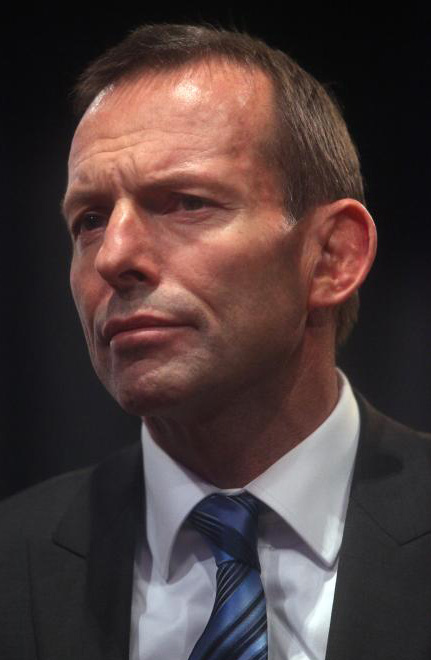
Prime Minister Malcolm Turnbull – on support for a marriage equality plebiscite, he’s indistinguishable from predecessor Tony Abbott.


[i] We did sit next to each other, once, at a forum on climate change in the lecture theatre at Parliament House in Canberra, but we weren’t introduced, so I don’t think that counts.

[ii] “The Investments that Built Prime Minister Malcolm Turnbull’s Wealth”, Herald Sun, 18 September 2015

[iii] “So Prime Minister Malcolm Turnbull is Really, Really, Rich. Get Over It”, Sydney Morning Herald, 25 September 2015, and “Malcolm Turnbull, the Member for Net Worth”, Australian Financial Review, 17 September 2015.

[iv] Hansard, 15 October 2015.

[v] As quoted on page 22 of the Senate Committee Report: Matter of a popular vote, in the form of a plebiscite or referendum, on the matter of marriage in Australia, 15 September 2015

[vi] In the 2013 case overturning the Australian Capital Territory’s same-sex marriage laws, the High Court stated, unequivocally, that: “[w]hen used in s51(xxi), “marriage” is a term which includes a marriage between persons of the same sex.” The Commonwealth v Australian Capital Territory [2013] HCA 55, para 38

[vii] “Turnbull Dismisses Gay Plebiscite”, Perth Now, 12 August 2015.

[viii] “Turnbull Re-Launches Campaign for Australian Republic”, ABC Lateline, 10 May 2013.
7 Better Ways to Spend $158.4 million

Despite the change of Prime Minister in September, from the homophobe Tony Abbott to the supposedly ‘gay-friendly’ incumbent Malcolm Turnbull, it appears we are stuck with the decidedly unfriendly option of holding a plebiscite to determine whether the relationships of lesbian, gay, bisexual, transgender and intersex (LGBTI) Australians should be treated equally under the law, or if they will continue to be treated as second class compared to the relationships of their cisgender heterosexual counterparts.


This blog has previously looked at the issue of a marriage equality plebiscite, with my submission to the recent Senate inquiry arguing that such a vote would be unnecessary, inappropriate, wasteful and divisive.


Just how wasteful a plebiscite would be became apparent during the course of that inquiry, with the Australian Electoral Commission estimating that the cost of holding a stand-alone vote to determine this issue would be at least $158.4 million.[i]


$158.4 million, to conduct what is essentially a glorified public opinion poll, which would not be binding on our elected officials, nor compelling them to implement the outcome in a timely manner (with the 1977 plebiscite, which selected ‘Advance Australia Fair’ as our new national anthem, not legislated until 1984).


$158.4 million, to determine what we already know – that the majority of Australians support the human rights of LGBTI Australians, and wish to see a Marriage Act that does not discriminate on the basis of sexual orientation, gender identity or intersex status.


$158.4 million, to do something that the 226 members of the Commonwealth Parliament could do for no extra cost, something that they are elected to do, and something that overturns what they have done before (with John Howard’s homophobic, biphobic, transphobic and intersexphobic ban on equal marriage passed by Parliament alone and not subjected to a public vote).


Surely there are a million better things that the Turnbull Liberal-National Government could spend this money on? This post looks at seven preferable alternatives – although I am confident that readers of this blog could nominate many, many more. Anyway, here goes – in no particular order, here’s 7 better ways to spend $158.4 million:


  1. Resettle an extra 2,297 refugees from Syria and Iraq


The biggest humanitarian crisis of 2015 – indeed, the biggest humanitarian crisis of the past decade and probably of the century so far – has been the civil war in Syria (which started almost five years ago), the subsequent rise of ISIS there and in Iraq and the horrific violence they have inflicted on the people in both places, and the enormous number of refugees that the Assad regime, the Syrian civil war and ISIS have collectively created.


While the vast majority of refugees remain located in neighbouring countries, the increasing numbers of people seeking asylum reaching Europe during 2015 – and, tragically, the deaths of many who were attempting to flee – finally prompted the Australian Government to announce it would accept 12,000 refugees from Syria and Iraq in addition to its annual intake of 13,750 refugees (then Prime Minister Tony Abbott announced this policy on 9 September[ii], making it one of his last acts in office).


The cost of this additional intake of refugees was not revealed until the Mid-Year Economic and Fiscal Outlook (MYEFO), released by new Treasurer Scott Morrison on 15 December 2015. The MYEFO papers showed that the net cost to the Budget of permanently resettling an extra 12,000 refugees fleeing the conflict in Syria and Iraq is $827.4 million over 4 years[iii].


Which means that, were the Turnbull Government to re-allocate the $158.4 million it is currently planning to spend on a marriage equality plebiscite, we could resettle at least an additional 2,297 refugees from Syria and Iraq[iv]. Surely most Australians, indeed most humans, would consider that a much better way to spend this money.


  1. Restore 2015-16 Foreign Aid Funding to Afghanistan… and Sub-Saharan Africa… and Palestine… and Middle East & North Africa… and UNICEF


Foreign Minister Julie Bishop is a ‘Julie-come-lately’ when it comes to supporting marriage equality – she only announced her personal support for it in early November 2015.[v]


However, in the same breath she also reiterated her commitment to a plebiscite: “I have absolutely no concerns about it myself, but I know there [are] a lot of people who are deeply concerned about the issue… I think the Australian people should have their say.”


So, rather than casting her vote as an elected representative, one out of 226 Federal Parliamentarians who have the power to change the law in a matter of weeks, Minister Bishop would instead prefer to waste years, and $158.4 million, on a completely unnecessary public vote, leaving her own vote as just one out of the 15.26 million Australians currently on the electoral roll[vi].


As well as abrogating her personal responsibility as an MP (which includes the ability, nay responsibility, to consider and pass legislation), according to the Australia Institute, “current foreign minister Julie Bishop [also holds] the dubious honour of being the minister to oversee the largest drop in aid spending [compared] to Gross National Income”[vii].


The Liberal-National Government of which she is a key member plans to cut aid funding by $1.4 billion per year, or 33 per cent, by 2017-18. These cuts include savage reductions in the 2015-16 Budget year across a large number of countries and international aid programs[viii].


Obviously, the $158.4 million intended to fund the marriage equality plebiscite is small change compared to these overall totals, but, applying that figure to the 2015-16 Budget year, it could restore current financial year funding to:


  • Afghanistan (2015-16 Budget cut by $52.4 million)
  • Sub-Saharan Africa ($74.2 million cut)
  • Palestine ($13.7 million cut)
  • Middle East and North Africa ($2.3 million cut) and
  • UNICEF ($14 million cut).[ix]


And there would almost be enough money left over to undo the $3 million cut to the United Nations Program on HIV and AIDS (UNAIDS) too. Perhaps Minister Bishop should spend more time advocating for Australian Government funding to assist the world’s disadvantaged, and less time calling for a pointless plebiscite.


  1. Support an additional 1,975 postgraduate students


Malcolm Turnbull likes to claim he is the ‘Innovation Prime Minister’, and that it is his mission to lead an ‘agile’ Government and an even more ‘agile’ economy. Well, instead of wasting $158.4 million on an unnecessary, inappropriate and divisive marriage equality plebiscite, he could fund Australian Postgraduate Awards for 1,975 extra students for three years instead.[x]


Imagine that – almost 2,000 extra PhDs in Australia contributing to science, and technology, and engineering, and mathematics, and countless other fields. Imagine what they could add to the sum of human knowledge. Alas, we will not find out if Turnbull insists on spending the money on something which he himself considered unnecessary just one month before becoming PM.[xi]


  1. Hire 477 more registered nurses


In his 2014-15 Federal Budget, then Treasurer Joe Hockey cut $80 billion from the states and territories, monies that were supposed to fund increases in spending on health and education over the subsequent decade. This included $50 billion in cuts to hospitals, and another $30 billion in cuts to schools.


The new Treasurer, Scott Morrison, has indicated that, not only will he not be reversing these cuts, even if the Turnbull Government increased the GST to 15% and expanded it to cover fresh food he still would not use the revenue collected to restore this funding.[xii]


Obviously, $158.4 million wouldn’t go very far in undoing the massive reductions in future health spending by both Hockey and now Morrison, but it would nevertheless be enough to pay the base salary of at least 477 registered nurses for four years[xiii] – and that’s nothing to be sneezed at.


  1. Employ an extra 578 teachers in public schools


Based on a similar approach, re-allocating $158.4 million from an unnecessary, inappropriate and divisive marriage equality plebiscite to instead give to the states and territories to allow them to employ an additional 578 teachers[xiv] in public schools across the country sounds like a much smarter, and productive, investment to me.


  1. Reduce Government debt


The Abbott Liberal-National Government was elected in September 2013 on the back of three relentlessly negative fear campaigns – against a carbon tax, against people seeking asylum, and against ‘Labor’s debt and deficit’. In fact, the ‘debt and deficit’ focus dates all the way back to the 2008-09 Global Financial Crisis, making it perhaps Abbott’s longest-serving attack on the Rudd, Gillard and Rudd Governments (including when Abbott was part of the Shadow Ministry).


Of course, in the years since they were elected the Abbott, and now Turnbull, Governments have overseen ongoing Budget deficits, and continued increases in net Government debt. Based on MYEFO, net debt will now not peak until 2017-18, at 18.5% of GDP (or $336.4 billion)[xv], with Treasury forecasting there will not be a Budget surplus until 2020-21 at the earliest.


Which makes any decision to hold a marriage equality plebiscite costing $158.4 million, in either 2016-17 (when there is expected to be a Budget deficit of $33.7 billion) or 2017-18 (with its anticipated deficit of $23 billion)[xvi], seem entirely profligate.


If Malcolm Turnbull, Scott Morrison, and their Coalition colleagues, are genuinely concerned about reducing Government ‘debt and deficit’, then deciding not to hold a $158.4 million opinion poll would have to be one of the easiest Budget ‘saves’ of all time.


  1. Fund the National Safe Schools Coalition… almost 20 times over


With the glaring, and profoundly disappointing, exception of marriage equality, the former Labor Government passed a large number of LGBTI reforms, including long overdue de facto relationship recognition, and the introduction of LGBTI anti-discrimination protections in federal law for the first time.


One initiative that received less coverage at the time was the 2013 decision to fund the national rollout of the Safe Schools Coalition, which had previously only operated in Victoria, with an $8 million grant. To their credit, the Liberal-National Government has not overturned this funding, and the expansion of Safe Schools has occurred under their watch.


The estimated cost of the marriage equality plebiscite would be enough to fund this rollout almost 20 times over – and, in practice, it would take much less than $158.4 million to help ensure that all schools across the country could participate in a program aimed at combatting homophobia, biphobia, transphobia and intersexphobia (and sadly one that will be even more needed given the hatred and prejudice likely to be whipped up by the plebiscite debate).


Indeed, there would be plenty of money left over to help fund the implementation of the reforms recommended by the 2013 Senate Inquiry into the Involuntary or Coerced Sterilisation of Intersex People in Australia, and to remove out-of-pocket medical expenses for transgender Australians, and even to fund housing services for LGBTI young people, who are disproportionately affected by homelessness.


If the Turnbull Government really wants to spend $158.4 million on issues that affect LGBTI Australians, it should redirect it to the above programs (and others aimed at improving LGBTI health and welfare). It could do so comfortable in the knowledge that it would still be able to pass marriage equality at, essentially, no cost.


**********


In conclusion, there is absolutely no reason for the Turnbull Government to hold a plebiscite on marriage equality, especially not when, as well as being publicly divisive, it would cost the taxpayer an estimated $158.4 million.


This reform, which is solely concerned with recognising the fundamental equality of lesbian, gay, bisexual, transgender and intersex Australians, and their relationships, under secular law, should be passed in the same way that John Howard’s ban on same-sex marriage was – by our 226 elected representatives, sitting in the Federal Parliament.


Which would leave the money that would have been spent on the plebiscite available for any of the seven options listed above, or for a myriad of other choices. There’s no denying that Malcolm Turnbull is an intelligent man – here’s hoping he’s smart enough to choose something other than to persist with Tony Abbott’s stupid, and damaging, plebiscite proposal.


151222 Turnbull

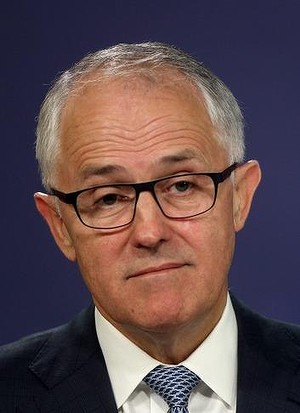
Prime Minister Malcolm Turnbull, who could spend $158.4 million on resettling an extra 2,297 refugees from Syria and Iraq, or who could waste it on an unnecessary, inappropriate and divisive plebiscite.


[i] As quoted on page 22 of the Senate Committee Report: Matter of a popular vote, in the form of a plebiscite or referendum, on the matter of marriage in Australia, 15 September 2015 http://www.aph.gov.au/Parliamentary_Business/Committees/Senate/Legal_and_Constitutional_Affairs/Marriage_Plebiscite/Report

[ii] Sydney Morning Herald, “Abbott Government agrees to resettle 12,000 Syrian refugees in Australia”, 9 September 2015: http://www.smh.com.au/federal-politics/political-news/abbott-government-agrees-to-resettle-12000-syrian-refugees-in-australia-20150909-gjibqz.html

[iii] MYEFO Expenditures can be found here: http://budget.gov.au/2015-16/content/myefo/html/11_appendix_a_expense.htm

[iv] Based on the current estimate of a cost of $68,950 spent per refugee over four years. The number of additional refugees would likely be higher than 2,297 given economies of scale.

[v] ABC, “Julie Bishop announces support for same-sex marriage”, 2 November 2015: http://www.abc.net.au/news/2015-11-02/julie-bishop-announces-support-for-same-sex-marriage/6906740

[vi] Source Australian Electoral Commission: http://www.aec.gov.au/Enrolling_to_vote/Enrolment_stats/

[vii] Matt Grudnoff & Dan Gilchrist, “Charity Ends at Home: The decline of foreign aid in Australia”, The Australia Institute, September 2015, p iii (full report available here: http://www.tai.org.au/content/charity-ends-home-decline-foreign-aid-australia

[viii] Ibid, and in Guardian Australia, “Budget cuts to foreign aid put Australia on track for least generous spend ever,” 14 May 2015: http://www.theguardian.com/news/datablog/2015/may/14/budget-cuts-to-foreign-aid-put-australia-on-track-for-least-generous-spend-ever

[ix] Figures from Guardian Australia article and Charity Ends at Home report, above.

[x] The 2016 Australian Postgraduate Award full time payment is $26,288 (https://www.education.gov.au/australian-postgraduate-awards ) and applying the current 1.7% inflation figure would make three years of support (2016-2018) cost $80,210.

[xi] “There is a huge number of big issues, so one of the attractions of a free vote is that it would have meant the matter would have been resolved in this parliament one way or another in a couple of weeks.” Guardian Australia, “Malcolm Turnbull says plebiscite on marriage equality will keep issue alive”, 12 August 2015: http://www.theguardian.com/australia-news/2015/aug/12/malcolm-turnbull-says-plebiscite-on-marriage-equality-will-keep-issue-alive

[xii] Guardian Australia, “Scott Morrison will not raise GST to fund states’ funding black holes”, 10 December 2015: http://www.theguardian.com/australia-news/2015/dec/10/scott-morrison-will-not-raise-gst-to-fund-states-funding-black-holes

[xiii] Based on the highest base wage of a registered nurse in NSW – $79,383, source: Health Times, “What do nurses earn?”, 17 September 2015 http://healthtimes.com.au/hub/nursing-careers/6/guidance/nc1/what-do-nurses-earn/605/ – and applying 3% salary increases for the subsequent 3 years.

[xiv] Based on the base salary of a five-year trained teacher (BA/MTeach, BSc/MTeach, BEd/BA, BEd/BSc) in NSW government schools – $65,486, source: University of Sydney Faculty of Education and Social Work: http://sydney.edu.au/education_social_work/future_students/careers/teacher_salaries.shtml – and applying 3% salary increases for the following 3 years.

[xv] MYEFO Debt Statement: http://www.budget.gov.au/2015-16/content/myefo/html/09_attachment_e.htm

[xvi] ABC, “Budget deficit increased as MYEFO released,” 15 December 2015: http://www.abc.net.au/news/2015-12-15/budget-deficit-increased-as-myefo-released/7029472

No Referendum. No Plebiscite. Just Pass the Bill.

The following is my submission to the current Senate Inquiry into whether there should be a referendum or plebiscite into marriage equality. As you can tell from the title of this post, I am strongly against both.

For more information, or to make your own submission, go here: http://www.aph.gov.au/Parliamentary_Business/Committees/Senate/Legal_and_Constitutional_Affairs/Marriage_Plebiscite

Committee Secretary

Senate Legal and Constitutional Affairs Committee

PO Box 6100

Parliament House

CANBERRA ACT 2600

legcon.sen@aph.gov.au

Saturday 29 August 2015

Dear Committee Members

SUBMISSION TO INQUIRY INTO “THE MATTER OF A POPULAR VOTE, IN THE FORM OF A PLEBISCITE OR REFERENDUM, ON THE MATTER OF MARRIAGE IN AUSTRALIA”

Thank you for the opportunity to provide this submission on the question of whether Australia should hold a ‘public vote’ on the issue of marriage equality, and if so what form and timing such a vote should take.

My overall response to this question is that a marriage equality plebiscite or referendum would be unnecessary, inappropriate, wasteful and divisive, and therefore should not be held.

My detailed responses to the terms of reference to the inquiry are set out below.

a. An assessment of the content and implications of a question to be put to electors

I believe that a plebiscite or referendum on marriage equality would be unnecessary, inappropriate, wasteful and divisive, and therefore will not address this term of reference.

b. An examination of the resources required to enact such an activity, including the question of the contribution of Commonwealth funding to the ‘yes’ and ‘no’ campaigns

I believe that a plebiscite or referendum on marriage equality would be unnecessary, inappropriate, wasteful and divisive, and therefore will not address this term of reference.

c. An assessment of the impact of the timing of such an activity, including the opportunity for it to coincide with a general election

I believe that a plebiscite or referendum on marriage equality would be unnecessary, inappropriate, wasteful and divisive, and therefore will not address this term of reference.

d. Whether such an activity is an appropriate method to address matters of equality and human rights

It is absolutely inappropriate to use a ‘public vote’ to determine whether all people should be treated equally under the law, irrespective of sexual orientation, gender identity or intersex status.

The recognition of the human rights of lesbian, gay, bisexual, transgender and intersex (LGBTI) Australians should not be subject to a popularity contest, and only granted if enough people express the view, through such a vote, that we are ‘worthy’.

In circumstances where it is not already formally recognised, the right for all couples to be married under secular law should be recognised in the usual place and in the usual way – in our nation’s parliament.

Turning specifically to the question of a referendum, the High Court has already found that the Commonwealth Parliament has the constitutional power to introduce marriage equality.

In the 2013 case overturning the Australian Capital Territory’s same-sex marriage laws, the High Court stated, unequivocally, that: “[w]hen used in s51(xxi), “marriage” is a term which includes a marriage between persons of the same sex.”[i]

This makes those who argue for a ‘constitutional referendum’ on this subject, or who even suggest that one could be held, seem to be one of two things, either:

  1. Completely lacking in understanding of the Constitution, and the Australian system of government generally (and arguably dangerously ill-informed where such people are current parliamentarians)

Or

  1. Motivated by a desire to block the equality of lesbian, gay, bisexual, transgender or intersex Australians by whatever means necessary, even by holding an unnecessary referendum, solely because it imposes a higher threshold for success (the requirement to be passed by both a majority of voters, and a majority of voters in a majority of states).

While there are fewer legal arguments against holding a plebiscite on marriage equality, there remain strong reasons why it would be inappropriate.

First, as described above, whether human rights are recognised or not should not be determined through a popularity contest.

Second, the result of any such plebiscite would not be binding on the Parliament, and there would obviously be no requirement for a successful result to be recognised immediately (as demonstrated by the 1977 plebiscite on the national anthem, which was not legislated until 1984).

Third, and related to the above, the suggestion to hold a plebiscite on marriage equality appears to be nothing more than a delaying tactic, designed to hold off the prospect of full equality for LGBTI Australians for at least another term, or more (especially given Prime Minister Abbott has expressed his desire for it to be held after the next federal election, and even then after the referendum on constitutional recognition for Indigenous Australians).

Fourth, and finally, it should be noted that the same people who are arguing for a plebiscite now (including Prime Minister Tony Abbott, Deputy Liberal Leader and Foreign Minister Julie Bishop and Treasurer Joe Hockey) voted against marriage equality in the Parliament in August 2004 and, joined by Social Services Minister Scott Morrison, did so again in September 2012.

At no point did they express the view that parliamentarians voting on marriage equality was somehow inappropriate – at least while the Parliament was voting ‘No’.

Indeed, in May, responding to the Irish marriage equality referendum and rejecting a similar proposal here, Prime Minister Abbott said that: “questions of marriage are the preserve of the Commonwealth Parliament”.[ii]

The only thing that appears to have changed is that, unlike 2004 and 2012, and were a Liberal Party conscience vote to be granted, marriage equality legislation would have a reasonable chance of success in 2015.

Which only makes the decision to reject the concept of a parliamentary vote, in favour of a plebiscite, appear even worse.

It is not just moving the goalposts, it is changing the fundamental rules of the game, to thwart opponents who simply want the right to be treated equally under the law.

It is beyond unreasonable, it is hypocritical and grossly unfair, and should be rejected.

A referendum or plebiscite on marriage equality would also be extraordinarily wasteful.

Public estimates of the cost of holding such a vote (particularly when it is a standalone ballot, which is the preference of Prime Minister Abbott) have put the figure at in excess of $100 million.[iii]

This is extraordinarily expensive, particularly given introducing marriage equality is something that could be done by our nation’s Parliament in the ordinary course of events, at no additional cost to the taxpayer.

Of course, if the Abbott Liberal-National Government genuinely wants to spend $100-150 million on issues of concern to lesbian, gay, bisexual, transgender and intersex Australians, then might I suggest the following:

  • Implementing the reforms recommended by the 2013 Senate Inquiry into the Involuntary or Coerced Sterilisation of Intersex People in Australia, to end this gross violation of human rights
  • Removing out-of-pocket medical expenses for transgender Australians
  • Increasing funding for the Safe Schools Coalition to ensure it reaches students in every school across the country and
  • Funding housing services for LGBTI young people, who are disproportionately affected by homelessness.

All of these suggestions, and indeed a great many others, would be better uses of public monies than throwing millions of dollars away on an unnecessary, inappropriate and wasteful plebiscite or referendum.

In addition to the above reasons, it should also be acknowledged that a public vote on marriage equality has the potential to be incredibly divisive, and therefore dangerous.

This is because any referendum or plebiscite would necessarily stir up homophobia, biphobia, transphobia and intersexphobia in the community, and especially in the media.

We experienced a small taste of what such a debate would look like this week when the Daily Telegraph newspaper devoted its front page, and several pages thereafter, to attacking the idea that students should be exposed to the reality that rainbow families exist, and are normal (with one columnist even ‘bravely’ telling a 12 year old girl that her family was not normal).

The only positive aspect of this outrageous and horrific ‘beat-up’ is that it has gradually receded in prominence, replaced by other stories as part of the regular news cycle.

Unfortunately, the holding of a plebiscite or referendum on marriage equality would all but ensure that such stories were featured prominently for days, weeks or even months on end.

We should not underestimate the damage that such a vote would cause.

Research consistently finds that young lesbian, gay, bisexual and transgender people are disproportionately affected by mental health issues, and have substantially higher rates of suicide than their cisgender heterosexual counterparts, with one of the main causes being the discrimination and prejudice to which they are exposed every day.

A bitter and protracted public debate, about whether who they are should be treated equally under the law or not, would inevitably have a significant, negative impact on their mental health.

But they would not be the only ones adversely affected. A nasty campaign against the equality of LGBTI families, which would be an inevitable part of any public vote, would also negatively impact on the wellbeing of the children of these families.

Indeed, nearly all LGBTI Australians would probably be affected in some way by the holding of a public vote to determine whether we should continue to be treated as second class citizens by our own country or not. Such a vote should not be held.

A plebiscite or referendum on marriage equality would be unnecessary, inappropriate, wasteful and divisive. It should be comprehensively rejected by this Inquiry, and by the Commonwealth Parliament.

e. The terms of the Marriage Equality Plebiscite Bill 2015 currently before the Senate

I believe that a plebiscite or referendum on marriage equality would be unnecessary, inappropriate, wasteful and divisive.

I therefore call on all Senators to reject the Marriage Equality Plebiscite Bill 2015 currently before the Senate, and to resist any and all attempts to hold a plebiscite or referendum on this subject in the future.

f. Any other related matters

There is absolutely no justification whatsoever to hold a referendum on something which the High Court has already found is within the power of the Commonwealth Parliament.

Nor is there any justification to hold a plebiscite on marriage equality. I am 37 years old, and there has not been a federal plebiscite in my lifetime.

It is bizarre, and offensive, that the first plebiscite since 1977 should be held to determine whether my relationship should be treated equally under the law.

My fiancé Steven and I recently celebrated our 7th anniversary. We have been engaged for more than five and a half years. We, like thousands of other LGBTI couples in Australia, are done waiting.

We have gone to protests, we have written submissions, we have commented in the media, we have patiently (and sometimes less than patiently) campaigned for change.

Finally, when the numbers for reform appear to exist within the Parliament, if not this year then certainly after the 2016 election (irrespective of who wins), Prime Minister Abbott and the Liberal-National Government he leads seek to change the rules.

Despite voting against my equality for more than a decade, without reservation, he and his colleagues now believe that this is not something which can be determined by the Commonwealth Parliament.

Plainly, they are wrong. Marriage equality can and should be passed, in the House of Representatives and the Senate, the same places where it was banned in August 2004.

And, if our current House of Representatives MPs and Senators will not do their job, if they refuse to legislate for the equal right to marry for all Australians irrespective of sexual orientation, gender identity or intersex status, then the Australian people must do their job next year and vote them out. Because LGBTI Australians have waited long enough.

Thank you for taking this submission into consideration.

Sincerely

Alastair Lawrie

If Prime Minister Tony Abbott, and the Government he leads, will not change the law, then the Australian people must change the Government.

If Prime Minister Tony Abbott, and the Government he leads, will not change the law, then the Australian people must change the Government.

[i] The Commonwealth v Australian Capital Territory [2013] HCA 55, para 38.

[ii] “Gay Marriage Referendum in Australia Dismissed by Tony Abbott”, ABC News Online, 25 May 2015: http://www.abc.net.au/news/2015-05-24/leaders-dismiss-same-sex-marriage-referendum-in-australia/6493180

[iii] “Williams said the average cost of a referendum was between $100m and $150m outside an election and half that if it was held in conjunction with an election”: “Tony Abbott says no to referendum on same-sex marriage, despite Irish vote”, Guardian Australia, 24 May 2015: http://www.theguardian.com/world/2015/may/24/tony-abbott-says-no-to-referendum-on-same-sex-marriage-despite-irish-vote

10 Things I Hate About Marriage Inequality. #2: Because we’ve been waiting so damn long

Updated 12 August 2016:

The twelve year anniversary of Australia’s ban on marriage equality is now only 24 hours away. Unfortunately, the long-awaited repeal of the ban is still some time off.

The best-case scenario: Malcolm Turnbull and his Liberal-National Government abandon their unnecessary, wasteful and harmful plebiscite, hold a free vote and marriage equality becomes law before the 13th anniversary. Alternatively, we could see marriage equality passed later this term, after the plebiscite has wreaked its havoc on young and vulnerable LGBTI people. We could even see marriage equality delayed beyond this term, until sometime in the 2020s (yes, you read that right – 2020s).

No matter when it (eventually) happens, there will be thousands upon thousands of Australian LGBTI-inclusive couples who have been waiting, and waiting, and then waiting some more, simply to exercise the same rights that our cisgender heterosexual counterparts enjoy without question. And, to me at least, the waiting itself has become both seemingly interminable, and insufferable.

Australian Marriage Equality effectively tapped into that sentiment with one of its main campaigns of 2014, with stories and images of couples with the ‘We’re Waiting’ message. That campaign was both an accurate reflection of the feelings of many within the LGBTI community, and a reminder to decision-makers that this policy choice is not abstract, but affects ‘real people’ in all-too-real ways [Alas, two years later that wait continues].

It is the human element of the ongoing ban, the costs of being forced to wait, that I want to concentrate on here. Because the delay of being able to get married, for years or even decades, carries with it very real consequences for the couples involved.

The first consequence is that it directly affects the ability of couples to celebrate their wedding with all of the family members and friends who they would like to be there for their special day. For those couples that do not choose to travel overseas (which itself obviously limits who is able to attend), by forcing LGBTI-inclusive couples to wait to marry within Australia the Parliament is effectively interfering with the ‘guest list’ of many couples.

From Steve and my perspective, as I have written before, we are both very conscious of the fact that, the longer the ban on marriage equality goes on, the less likely it is we will be able to have our remaining grandmothers there for the occasion (either for reasons of ill-health, or worse). They certainly could have been there had we been married four or five years ago (ie after an engagement of 12 or 24 months), but even today it is becoming doubtful [In 2016, it is now clear my grandmother won’t be able to travel to our wedding due to declining health].

I often imagine how ‘traditional marriage’ or ‘family values’ or even ‘small government’ campaigners would react if the Commonwealth Parliament intervened to tell them who they could, or could not, invite to their wedding. I suspect they would probably have a pretty spectacular hissy fit. And yet that is exactly what they are seeking to impose on us – stealing from us our ability to celebrate our weddings with who we choose.

The second consequence is another ‘theft’, but the effects of it won’t become apparent for most of us for many years, long after the ban on marriage equality is lifted. And that is they are stealing from us future ‘significant’ wedding anniversaries. Because, the longer our entry to marriage is delayed, the less likely it is that current LGBTI-inclusive couples will reach our 60th, 50th or even 40th or 30th wedding anniversaries.

Now, to some that might seem like a petty argument. After all, we will still have ‘anniversaries’ for the significant events of our relationships (for example, Tuesday was the 8th anniversary of when Steve and I first met, and we celebrated the occasion).

But it is impossible to deny that significant cultural value is still placed on long-lasting marriages, perhaps even an increasing value when so many marriages do not last that long (for whatever reason). How many of us experience an ‘awww, that’s sweet’ moment when we see the 60th or 50th wedding anniversaries of older couples, either family members or friends, or even reported on the news?

Well, far fewer of our relationships will reach those moments in the decades to come because of the actions of Commonwealth parliamentarians in 2004, 2012 and today. Once again, imagine the outcry from ‘traditional marriage’ (aka anti-LGBTI equality) campaigners if the Government were to intervene to effectively steal those anniversaries from them. They need to be reminded that it is just as unacceptable when it is done to LGBTI Australians.

However, it is the third consequence, yet another theft, which is the most offensive, and most objectionable. And that is that there are countless couples who wanted to marry but where one or both have died since the original ban on equality was introduced in 2004, and many more who will continue to die before being able to wed while this homophobic discrimination remains in place.

These are couples who have had the right to marry stolen from them, now and for all time, merely because of their sexual orientation, gender identity or intersex status. For most, they grew up at a time when homosexuality was criminalised, and when trans and intersex people were ‘invisibilised’ and subject to the worst forms of abuse, but who have then suffered one final indignity at the hands of the Australian Government – the denial of the equal recognition of their relationships during their lifetimes.

The worst thing, the most frustrating part, about this entire situation is that everyone knows marriage equality is inevitable. I know it. You know it. Julia Gillard knew it. Tony Abbott knew it. Malcolm Turnbull does too – even if he won’t grant the free vote to make it happen. In fact, all MPs, certainly since 2011 or 2012, if not before, must have recognised that marriage equality will eventually be passed in Australia, and that the only remaining question is whether that happens now, or in five or even ten years time.

And, while there is absolutely nothing that is ‘gained’ from this delay, as I have shown above there is plenty that is lost, not least of which is the undeniable loss of those couples who were never able, and will never be able, to wed.

Which makes the ongoing failure of Commonwealth Parliamentarians to pass marriage equality one of the most petty and vindictive acts – or omissions – in recent political history.

It is, frankly, unforgiveable that our MPs are not only stubbornly opposing what is right, and standing firm against the overwhelming tide of history and progress, they are rejecting the rights of Australian couples, including members of their own electorates, when they know in their hearts that all they are doing is delaying the inevitable, and making those couples pay the cost in the meantime.

This outcome, the price that is being paid by couples around the country because of this interminable ‘wait’, is definitely one of the things I hate most about marriage inequality.

10 Things I Hate About Marriage Inequality. #5: Because there’s no intellectual stimulation in arguing with our opponents

There are some public policy issues which, as well as being important, can give rise to ‘intellectual stimulation’. By that I mean something that provokes informed debate, with multiple views, genuine disagreement about the best solution, sometimes even substantive and substantial arguments about the definition of the ‘problem’ itself.

Sadly, marriage equality is not one of these issues. Instead of being an exchange of ideas, for the most part the pro- and anti-marriage equality ‘debate’ is not really a debate at all. And it can’t be. Because it is impossible to have a debate when one side turns up without any arguments whatsoever on their side.

If the past twelve years have taught us anything, it is that anti-marriage equality campaigners are the intellectual Lilliputians of Australian public life. Sure they might have company out there on their ‘island of ignorance’ (hello anti-vaxers!), but it is difficult to think of many other public discussions in recent memory when so much has been said by people who had so little of substance to say.

It has become common to say that the argument for marriage equality has been run and won. And that’s true – except ‘won’ is an understatement. The defeat of anti-marriage equality campaigners, on the intellectual playing field at least, resembles nothing more than the 7:1 drubbing handed out by Germany to Brazil in the 2014 men’s football World Cup.

It is such a one-sided affair that, at times, you almost feel tempted to invoke the ‘mercy rule’ (which the opponents of marriage equality would probably reject anyway because it has too much in common philosophically with euthanasia).

In practice, the vacuity of anti-marriage equality campaigners, like Jim Wallace, or Lyle Shelton, or Cory Bernardi (and countless others), hasn’t stopped them from spouting the same nonsense time and time again over the past decade. It doesn’t matter that what they say on this subject has no credibility, they’ll keep saying it regardless.

Lyle Shelton of the Australian Christian Lobby.

Lyle Shelton of the Australian Christian Lobby.

And that’s the frustrating thing – approaching twelve years since the original ban on same-sex marriage was introduced, and with the possibility of more before equality is finally legislated, it remains our responsibility to have the same public ‘debate’ with these people. To calmly refute the ridiculous claims that marriage equality will harm children, or impact on religious freedom, or that just because marriage has ‘traditionally’ been man-woman that it automatically must remain so in future.

And when I say ‘our’ responsibility, we should acknowledge that this burden has fallen particularly heavily on the shoulders of people like Australian Marriage Equality’s Alex Greenwich, and later Rodney Croome, and the Penny Wongs and Bob Browns of the political world, who have had to sit on countless panels and engage in countless debates with the Jim Wallaces and Lyle Sheltons of the Australian Christian Lobby, while suppressing the natural urge to react emotionally against the ignorance of what is being said. Hats off to them for doing what many of us might struggle to do.

Of course, this isn’t to say there is no intellectual stimulation in the issue of marriage equality per se. There certainly have been, and continue to be, interesting intellectual debates on this subject. It just happens that they are all held between people who already assume that everyone should be equal, irrespective of sexual orientation, gender identity and intersex status.

The debate about whether people should be aiming to make marriage inclusive or abolish it altogether, about whether there was strategic value in pursuing state-based same-sex marriage laws or not (or whether to support the Recognition of Foreign Marriages Bill 2014 or not), about where marriage equality sits on the overall list of priorities for the LGBTI community – all provide more intellectual succour than discussing the issue of marriage equality with a campaigner who seriously believes that marriage, under secular law, should be restricted to cisgender heterosexual couples.

It’s just a shame that we have been consigned to having to continue having this lop-sided non-debate. I for one can’t wait to discuss something a little bit more stimulating – and I’m sure I’m not alone in that.

One final thing – you will hopefully notice that I have been careful to restrict these comments to anti-marriage equality campaigners, rather than all people who do not (or not yet anyway) support marriage equality. I am certainly not accusing all people who hold that view of being ‘ignorant’.

However, I am most definitely saying that, if you have carefully considered the question of marriage equality, and come to the conclusion that the only acceptable form of marriage is one man and one woman, and that you will campaign for that publicly, despite having no arguments on your side that withstand any kind of scrutiny, and against the equality and human rights of your fellow citizens, well, then there’s not much that you could say that is in any way worth listening to.

10 Things I Hate About Marriage Inequality. #6: Because it Lets MPs Off the Hook

This reason is closely related to number 7 (“Because Sometimes it Overshadows Other Important LGBTI Issues”), because it too derives from the fact that marriage equality now dominates the Australian LGBTI policy landscape.

As a result of this dominance, the position that Members of Parliament – indeed, all candidates for elected office – take on marriage equality has come to be the ‘primary’ LGBTI question which they are asked during election campaigns. Of course, in many ways that makes sense, given the high level of interest in this issue, both in our community and across society.

The answer that each MP gives can also be a useful pointer to how they may vote on other issues. An MP who says they support marriage equality is assumed to be more likely to support LGBTI anti-discrimination laws, or inclusive aged care services, or safe schools.

In this way, the simple yes/no, good/bad answer on marriage equality has the potential to serve as ‘shorthand’ for whether they are likely to vote yes or no on other reforms important to our community. In fact, I used this approach (analysing past votes on marriage equality) just this week in helping to estimate whether particular MPs might be more or less sympathetic on an education-related initiative.

But we run into significant difficulties when this question becomes the only question that we ask of our MPs, when the only calculation that we make about whether an MP is ‘good’ or ‘bad’ on LGBTI issues is whether they support marriage equality or not.

First and foremost, if we only ask about marriage equality, then we are letting our MPs ‘off the hook’ in terms of their responsibilities to deal with the full range of issues which are important to and affect the LGBTI community.

If the only LGBTI topic they ever have to talk about is whether or not we can get married, then we are not making them talk about how to achieve equality of outcomes in health, in education and employment, we are not making them discuss how the state should support diversity in sexual orientation, gender identity and intersex status.

Second, we are letting our MPs off the hook because answering yes to marriage equality is, when you think about it, actually fairly easy. As the long and drawn out debate over the past 12 years has demonstrated, there really isn’t much of a debate to be had at all – either you support the equal recognition of our relationships, or you do not (for more on that particular issue, see 10 Things #5).

There are many other LGBTI issues which are either more complex (for example, what are the best or most effective ways to reduce the over-representation of LGBTI young people in terms of mental health issues, depression and suicide), or which many of our MPs have never had to genuinely turn their minds to (such as where limits on religious exceptions to anti-discrimination laws should be drawn). To say yes to marriage equality is simple – we should be making our MPs work a little bit harder than that in order to get our support.

Third, by not asking about a range of issues, we run the risk of letting off the hook those MPs who are supportive of marriage equality but who do not support other LGBTI issues. For example, it is possible to support inclusive marriage laws but also to support the exclusion of same-sex couples from the right to adopt or to access assisted reproductive technology (just ask Portugal, where gay couples can marry but not adopt or use ART).

It is also possible (and in practice it is far too common) for MPs to support marriage equality, but to simultaneously believe that religious organisations should be able to discriminate against lesbian, gay, bisexual and trans* people, in schools, in health care, in employment, in pretty much any context. In this light, the simple yes/no, good/bad ‘shorthand’ fails us – because it is possible to support marriage equality, but not support LGBTI equality more broadly.

Conversely, it is possible to oppose marriage equality but be supportive on other LGBTI reforms. The best example of this was former Prime Minister Julia Gillard. Her position on marriage equality – to oppose it, while also supporting a conscience vote inside the Labor Party, thereby ruining any chance of its passage in the last parliament – was unconscionable, and, from my perspective at least, can never be forgiven (for more on that particular issue, see 10 Things #4).

And yet, Gillard’s period of leadership saw more pro-LGBTI reforms than most, if not all, of her predecessors. The introduction of LGBTI anti-discrimination protections in Commonwealth law for the first time, progressive Guidelines on the Recognition of Sex and Gender, funding for the QLife counselling initiative, PBS listing for Gardasil vaccinations for boys and a national LGBTI Ageing and Aged Care Strategy, among other things, all happened during her (brief) tenure.

All of which goes to show that the position of our MPs on LGBTI issues is much more complicated than a single question, and much more layered than any simple yes/no answer could hope to capture. Marriage equality supporters can be poor on other reforms. Alternatively, MPs who oppose marriage equality can be supporters on other important issues.

Which means we do ourselves a great disservice if the only thing we ever talk about with MPs is whether they support our equal right to get married. We cannot, we must not, let them off the hook by allowing them to ignore the full breadth of LGBTI issues. We need to be better at putting more questions to them, and above all, we need to be better at asking more of them.

10 Things I Hate About Marriage Inequality. #7: Because Sometimes it Overshadows Other Important LGBTI Issues

In a similar way to reason #9 (“Because sometimes I feel guilty for having #firstworldproblems”), one of the things that frustrates me about marriage equality is that this issue has come to dominate domestic LGBTI politics to such an extent that it can, and has, overshadowed other important issues.

Now, that is not necessarily a criticism of marriage equality campaigners, including Australian Marriage Equality. They have done a fantastic job of promoting marriage equality and ensuring that, over the past 12 years, it has gone from what could be described as a ‘minority concern’, to one of widespread acceptance across the Australian population (even if our parliamentarians are taking far too long to catch up).

It is also not to dismiss the fact marriage equality is an important issue in and of itself – obviously, as someone who is engaged themself, I understand the emotional pull at the heart of this issue which compels so many people to take action (and any regular reader of this blog would note the high volume of posts which relate to the denial of this right, not just in Australia but around the world).

But, and this is a big but, I am not sure that this completely justifies the disproportionate attention, and in some cases, disproportionate energy, which has been given to the issue of marriage equality by our community, especially over the past four or five years.

That statement might be a little bit controversial, so allow me to provide some context before you make up your mind. Let’s compare, for example, the community response (both our own, and the broader Australian community) to marriage equality with that regarding three other important LGBTI issues.

In April 2012, the House of Representatives Standing Committee on Social Policy and Legal Affairs inquiry into two marriage equality bills conducted an online survey – to which 276,437 Australians responded (including more than 177,000 people in favour).

In subsequent months, the related Senate Standing Committee on Legal and Constitutional Affairs Inquiry received a record number of formal submissions – approximately 79,000, with roughly 46,400 people taking the time to write in support of a Marriage Act that does not discriminate on the basis of sexual orientation, gender identity and intersex status.

Around the same time, the Gillard Government was preparing legislation which would, for the first time ever, provide anti-discrimination protections under Commonwealth law on those exact same grounds.

These protections were contained, along with a range of other measures, in the Human Rights and Anti-Discrimination (HRAD) Bill 2012. The Exposure Draft of that legislation was considered by the same Senate Committee, and a still ‘healthy’ 3000 submissions were made (although, it has to be pointed out, many did not address the specific issue of LGBTI anti-discrimination but were in fact about other aspects of the Bill).

The HRAD Bill was eventually replaced by the Sex Discrimination Amendment (Sexual Orientation, Gender Identity and Intersex Status) Bill 2013, which, as the name suggests, focused exclusively on LGBTI protections. When it too was considered by the Senate Standing Committee on Legal and Constitutional Affairs, in June 2013, just 90 standalone submissions were made. Nine. Zero. Or about 0.11% of the total submissions on marriage equality, to the same Committee, just 12 months prior.

To choose another example – during 2012 and 2013 the Australian Curriculum, Assessment and Reporting Authority (ACARA) drafted the national Health & Physical Education curriculum, something which had the potential (or should have anyway) to help young lesbian, gay, bisexual, transgender and intersex students in classrooms around the country.

Except, as I have written previously, the first draft of that curriculum did not even mention the words lesbian, gay or bisexual, erroneously included trans* and intersex in the same definition (and even then only referred to them in the glossary!) and essentially ignored sexual health and HIV.

That draft was open for public consultation from December 2012 to April 2013. In four months, 279 online surveys were completed, as well as 99 formal written submissions. Removing submissions from organisations (mostly from non-LGBTI health and education groups), there were exactly 14 submissions from individuals to that public consultation. One. Four.

In 2014, the HPE curriculum, together with all other subject areas, were referred by the then Commonwealth Education Minister, the Hon Christopher Pyne MP, to homophobe Kevin Donnelly for yet another review. The grand total number of written submissions to that inquiry – of which only a small number would have focused on LGBTI exclusion from Health & Physical Education – was approximately 1,500.

One final example. Again, at the same time as the marriage equality parliamentary debates and the Sex Discrimination Act inquiry were going on, the Senate Standing Committee on Community Affairs was holding its own inquiry on the involuntary or coerced sterilisation of people with disabilities in Australia. One of the key issues examined by that inquiry – perhaps not to begin with, but certainly by the end, primarily as a result of the hard work of groups like OII Australia – was the involuntary or coerced sterilisation of intersex people.

Now, the intersex community might be small in number, even within our own community (see Notes) – but there is no denying this issue looms large in terms of all of the human rights abuses perpetrated against any member of the LGBTI community in Australia, at any point in our history. So, it was perhaps disappointing that the entire Senate inquiry – and not simply for the Report focusing on intersex issues – received just 91 standalone submissions.

But, as we have seen above, that is simply one part of a frustrating overall trend. The entire number of submissions to two LGBTI anti-discrimination inquiries, two reviews of the HPE curriculum, and an inquiry examining the coerced sterilisation of intersex people, is less than the number of submissions to one state-based same-sex marriage inquiry (NSW, in March 2013, received 7,586 submissions), let alone the 79,000 submissions to the 2012 Senate marriage inquiry.

Of course, simply counting submissions in this way doesn’t necessarily reflect other work undertaken, by a range of groups, with respect to anti-discrimination protections, the curriculum or intersex rights – much of which happens behind the scenes.

As indicated above, the high volume of submissions to marriage equality inquiries is also a testament to the hard work of groups like Australian Marriage Equality (and others, including GetUp!), in terms of mobilising the community.

There are also other advantages enjoyed by the issue of marriage equality (it is part of a clear, single-issue global movement, in recent years at least has emerged as part of the cultural zeitgeist, it is a much simpler yes/no policy question), not enjoyed by some of the other issues identified.

And it is much easier to report on – the images of brides and grooms either being denied legal equality, or enjoying newly-won rights, makes marriage equality a very ‘photogenic’ issue. The fact our opponents have given consistently outrageous comments also makes reporting on ‘conflict’ in this area much more straightforward for journalists.

It is even arguable that the disproportionate focus on marriage equality may actually be necessary in order to achieve such a significant and, until recently, almost unimaginable, social change.

And yet, when I reflect on the level of commitment which goes into marriage equality, compared to other important LGBTI issues, I find myself sometimes lamenting that we do not put the same level of energy, and dedicate the same level of time and resources, into the latter.

So, by all means I encourage you to support – or continue to support – the important work that Australian Marriage Equality does (to find out how to get involved, go here).

But, at the same time, it would be great if more people would also support some of the other organisations that, in addition to working on marriage equality, also advocate on a range of other LGBTI issues, which are no less important to the long-term health and well-being of our community. They include:

The NSW Gay & Lesbian Rights Lobby

The Victorian Gay & Lesbian Rights Lobby (<http://www.vglrl.org.au )

Transgender Victoria (<http://www.transgendervictoria.com ) and

OII Australia – Intersex Australia (<http://oii.org.au )

Those are four groups that I am or have been involved in, or have worked with – but there are a range of other LGBTI advocacy groups in states and territories around the country worthy of your support. Because, while marriage equality might be an important thing, it is not and never has been the only thing.

The national Health & Physical Education curriculum will have an impact on young LGBTI people for years, if not decades.

The national Health & Physical Education curriculum will have an impact on young LGBTI people for years, if not decades.

Notes

  • The reference to the comparative size of the intersex population is absolutely not meant to suggest that the issues it confronts does not count (as a member of another, albeit slightly larger, minority group, that is obviously not a rational position to hold), but it has been included here because it could partly explain why less people would have made a submission to this inquiry. Nevertheless, the scale of injustice involved in the sterilisation (and other unnecessary medical interventions) of intersex people without consent, in Australia, TODAY, means it is something we all should be concerned about.
  • It should also be noted that, when people were presented with a simple way of expressing their concern about the national Health & Physical Education curriculum – via a Change.org petition – at least 6000 people added their signature in less than a month. Obviously, people do care about other issues, including those listed above, so different groups also need to learn better how to engage on these issues, and translate that innate or latent support into concrete actions.

Why I Don’t Support the Recognition of Foreign Marriages Bill 2014

Tonight is the 1st anniversary of the US Supreme Court’s historic decisions in the Proposition 8 and Defense of Marriage Act cases – reinstating marriage equality in California, ensuring couples legally married under state law could not be denied federal benefits, and giving impetus to a surging tide of marriage equality litigation across the US [As an aside, if you get the chance to watch recently released documentary The Case Against 8, do, it’s amazing].

And from tomorrow, Australian couples where one partner has British citizenship will be able to start marrying in UK consulates in (selected) capital cities around the country.

Both developments mean that the question of how marriages solemnised by countries which already have marriage equality are treated under Australian law is firmly back on the public, and political, agenda.

As you may already be aware, Greens Senator Sarah Hanson-Young earlier this year introduced the Recognition of Foreign Marriages Bill 2014 in Commonwealth Parliament. If passed, it would ensure that same-sex couples validly married under the laws of another country would be treated as married under Australian law.

Which sounds eminently reasonable. Indeed, as someone who is a long-term LGBTI advocate himself, is engaged to be married (and has been for four and a half years already), and has contemplated using the laws of either New York or New Zealand to marry his own partner, what problem could I possibly have with this proposed legislation?

Here goes then – at the risk of making myself unpopular with (at least some) other marriage equality advocates, the following is why I do not support progressing with the Recognition of Foreign Marriages Bill 2014:

My problem is not necessarily about what is included in the Bill (although there is an issue in the drafting which I will come to later). It almost goes without saying that I completely support the legal recognition of the marriages of same-sex couples that have been wed in other countries.

Instead, my problem concerns what is not included in the Bill – the recognition of domestic marriages – and the consequence of only recognising marriages conducted ‘outside’ Australia, and not those ‘inside’ at the same time.

If passed, such legislation would create a situation whereby there would be three main distinct categories of same-sex couples who wish to be treated as married in Australia:

  • Couples who have the financial resources to take advantage of the opportunity to marry under the laws of another country;
  • Couples who have been or are able to marry under the laws of another country because of their current or former nationality (including where one partner has UK citizenship or where the couple has emigrated from a country with marriage equality); and
  • Couples who do not have the financial resources or nationality to be able to take advantage of marriage equality elsewhere.

Only couples in the first two categories would be able to be considered legally married.

In effect, if the Recognition of Foreign Marriages Bill were to succeed, Australia would have a system which, far from recognising genuine ‘marriage equality’, would actually create new types of marriage inequality, only this time based on distinctions around class and nationality rather than sexual orientation.

Put simply, I cannot advocate for a Bill which would provide the opportunity for a couple who can afford it to get married overseas and have that marriage legally recognised here, but which would tell an elderly couple barely surviving on the age pension that they cannot be married under Australian law because they do not have the money.

If we are genuinely interested in marriage equality, then both couples must have the same right to wed. To put it another way, I am only interested in advocating for a Bill which attempts to redress the injustice perpetrated against both couples, not just the one that can afford to.

Now, some advocates might draw parallels between the Recognition of Foreign Marriages Bill 2014 and the various state and territory same-sex marriage bills that were pursued in Tasmania, NSW and the ACT in recent years. They could argue that both reforms are about gradual or incremental change and therefore both should be supported.

I disagree. While the state and territory same-sex marriage bills raised a range of complex ethical issues, including that they were never genuinely ‘equal’ under Commonwealth law, and more substantively that their final versions were deliberately non-trans* and intersex inclusive (see Notes below), they at least had some substantive arguments in their favour.

Those Bills involved asking state and territory MPs to step in where Commonwealth Parliamentarians had clearly abrogated their responsibility to treat all couples equally. In doing so, advocates were asking state and territory parliaments to do all that they legally could to reduce the discrimination experienced by same-sex couples.

State and territory same-sex marriage bills, and most notably the Bill that was passed in the ACT, also had the benefit of clarifying the constitutional position of marriage equality in Australia. The High Court, in its decision on 12 December 2013, found that while state and territory-based same-sex marriage laws were invalid, Commonwealth parliament clearly has the legal authority to introduce marriage equality through amendments to the Marriage Act 1961.

Which means that, while the Court’s decision to invalidate the marriages of 31 same-sex couples who had been wed in Canberra during that five day window of opportunity was obviously heartbreaking for them, the overall outcome was also of immense benefit to the wider marriage equality movement – it put the pressure squarely back on Commonwealth MPs as the only people who can remove marriage discrimination in the law.

Which makes it incredibly odd – and that’s putting it kindly – that the first Bill to be introduced after that decision, and (from an outsider’s perspective anyway) what seems likely the first Bill to be debated, is legislation which asks for something less than what is necessary to achieve full equality.

The Recognition of Foreign Marriages Bill 2014 essentially involves asking the same people, sitting in the same place and exercising the same powers, who could deliver us full equality, to pass a law which falls far short of what we want, and fails to deliver the rights we deserve. In this light, the current Bill is inferior to the – already problematic – state and territory same-sex marriage laws.

It is also difficult to work out what the tactics might be in pursuing such a strategy. After all, it is hard to imagine many, or indeed any, Commonwealth MPs voting to recognise marriages solemnised elsewhere who would not also vote to recognise marriages entered into domestically.

The level of opposition to such a Bill would also probably be the same – while the people who support ongoing discrimination against LGBTI people in the Marriage Act might be a little bit slow to grasp the concept of equality, they would be quick to reject anything which ended up with the recognition of married same-sex couples on Australian shores.

Which makes the decision to pursue the recognition of overseas marriages first, isolated from the question of domestic marriages, seem too clever by half. Perhaps the only benefit is that it has instigated another parliamentary inquiry into marriage equality (although even that might not feel like much of a benefit as we all write another submission, to yet another inquiry, arguing for our equality, when what we really need is for Commonwealth MPs to just get it done already).

For those interested, the Senate Legal and Constitutional Affairs Committee is currently considering Senator Hanson-Young’s Bill, and is accepting public submissions until Thursday 31 July (details here: <http://www.aph.gov.au/Parliamentary_Business/Committees/Senate/Legal_and_Constitutional_Affairs/Recognition_of_Foreign_Marriages_Bill_2014 ).

I do commend Australian Marriage Equality for ensuring that their ‘pro forma’ online submission encourages people to call for both the recognition of foreign marriages and for marriages performed here (details here: <http://www.australianmarriageequality.org ).

Nevertheless, I would go further than that. I would explicitly argue to Senator Hanson-Young, and to anyone who wishes to proceed with the Recognition of Foreign Marriages Bill 2014, that they should reconsider. Once the Senate inquiry is completed, and presents its final report to Parliament by Wednesday 3 September, I believe this legislation should be abandoned.

The next Bill to be debated in the Senate Chamber should be, must be, legislation which provides for genuine marriage equality, irrespective of sexual orientation, gender identity or intersex status, and not one which would allow some same-sex couples to marry, but only those from certain classes or nationalities.

Still unconvinced? There is one more problem with the Recognition of Foreign Marriages Bill 2014 which, as I alluded to earlier, lies in the drafting of the Bill itself. And it is not a minor problem, either.

The Bill would leave in tact the current definition of marriage in section 5 of the Marriage Act 1961 (“marriage means the union of a man and a woman to the exclusion of all others, voluntarily entered into for life”). Instead, it replaces section 88EA with the following:

(1)  Despite the definition of marriage in subsection 5(1), a union between:

(a)  a man and another man; or

(b)  a woman and another woman;

solemnised in a foreign country under local law as a marriage is recognised as a marriage in Australia.

(2)  The parties to a union mentioned in subsection (1) have the same rights and obligations under this Act, or under any law of the Commonwealth, as the parties to a marriage between a man and a woman.

This is explicitly, and only, a same-sex marriage Bill. It is not genuinely inclusive of any marriages of people who may not be, or who may not identify as, a man or a woman. Some couples which include trans* or intersex individuals may not be able to utilise such laws or may not want to, because the language does not reflect who they are, and therefore denies the nature of their relationships.

The Recognition of Foreign Marriages Bill does not challenge the unnecessary inclusion of ‘man’ and ‘woman’ in section 5 of the Marriage Act, something which we should be moving away from – instead, it further entrenches these concepts, by replicating this language in additional subsections. Which, for me, is yet another reason – and a fairly compelling one at that – to not advocate for this Bill as it currently stands.

In conclusion, while the intentions of those who have drafted this legislation are sound, the outcome that its passage would deliver is not. It is time to go back to the drawing board, and return with a Bill that genuinely delivers marriage equality, not just to some couples, but for all.

Senator Sarah Hanson-Young, author of Recognition of Foreign Marriages Bill 2014

Senator Sarah Hanson-Young, author of Recognition of Foreign Marriages Bill 2014

Notes

  • In terms of state and territory same-sex marriage laws, I acknowledge that the question of whether they should have been supported at all was a complex one, with different people coming down on different sides of that debate. My own view was that the drafting of those Bills should have attempted to set out a range of possible relationships which could have been recognised, allowing the High Court to strike out whichever it believed did not have a constitutional basis. As it turns out, all of them would have been– but at least we would have been struck out together.
  • As with all other posts (except where explicitly stated), these are my own views, and not those of any organisation with which I am associated.
  • Finally, there are still five weeks left until submissions close to the Senate inquiry. At this stage, I plan on writing a submission that reflects the above, and calls for the Recognition of Foreign Marriage Bill 2014 to be dropped, and replaced with a genuine marriage equality bill. Of course, I am willing to hear any arguments countering what I have written, and change my position/submission if I am convinced that I have got it wrong.

Denying Marriage Equality is Theft

Next week, the High Court will hear the Commonwealth’s application for the ACT’s same-sex marriage laws to be overturned. Arguments will focus primarily on whether the 2004 amendments to the Commonwealth Marriage Act ‘cover the field’ in terms of legislating under sub-section51(xxi) of the Constitution, or whether the amendments have instead left the door open for State and Territory Governments to establish a new category of marriage, namely same-sex marriage.

But perhaps the Court should also consider sub-section 51(xxxi), which gives the Commonwealth Parliament power for “the acquisition of property on just terms from any State or person for any purpose in respect of which the Parliament has the power to make laws.” Maybe our High Court Justices should ask whether laws which take away the right of LGBTI couples to get married are tantamount to theft.

Allow me to explain. The most direct way in which the marriage equality ban takes money from LGBTI couples is that, currently, it forces couples overseas in order for their marriage to have any legal standing at the time of the ceremony. The couple obviously incurs significantly higher costs than for a domestic wedding. Even if the ACT laws are allowed to stand, for Australian couples who wish to have a ceremony with legal standing, however briefly, the vast majority will need to hold their wedding a long distance from home.

With recent estimates of the average cost of weddings being in the vicinity of $35,000, or even $54,000, it is grossly unjust to force some couples to pay even more, merely because of their sexual orientation, gender identity or intersex status.

Compounding this, a system which forces LGBTI couples to travel, either interstate or overseas, to get married reinforces a financial threshold on which couples can tie the knot, with only the well-off able to do so. Someone’s class should never determine whether they can access a legal institution like marriage.

The next theft comes when the couple returns home – at customs, they are summarily, and completely without justification, stripped of their state of being married. Something which means so much to the couple – enough for them to travel to undertake it – is confiscated, without any compensation. Surely an argument could be mounted that this amounts to “the acquisition of property on [un]just terms”?

Something else which is stolen from LGBTI couples is the ability to celebrate their wedding with their desired guests. This happens in two ways. For those who choose to travel to get married, many of their family and friends will be unable to attend the ceremony due to cost, or the need to take extended time off work. For other couples, like my fiancé Steve and myself, who instead choose to wait until they can legally wed in Australia, the passage of time will have the same effect.

In our case, we both have elderly grandmothers who we love dearly and who we would love to have at our nuptials. That would have been possible when we first got engaged, at the start of 2010, although, sadly, my grandmother is probably now too frail to travel to our wedding, even in Australia. By the time marriage equality is eventually passed, I fear the same will be the case for Steve’s grandmother – and he will be devastated by that.

The ability to celebrate our wedding with the people who matter most to us has been ripped from our grasp by the Commonwealth Parliament. We, and other couples like us, feel it acutely. As an aside, perhaps so-called ‘family values’ campaigners should consider how they would react to government intervention on their wedding guest list – because that is what has been imposed on us.

The theft which is a consequence of the ban on marriage equality will not even stop whenever a Bill is finally passed – it will keep on stealing from us into the future. Explaining this ‘future theft’ is what eventually helped my rural, LNP-voting conservative parents understand why I feel so passionately about this issue.

Earlier this year, they had their 40th wedding anniversary. Which is something worthy of celebration – and so they did. Because these things, anniversaries, matter. One day, Steve and I hope to do likewise. Except that, the longer the ban on our marriage lasts, the less likely we will both be alive in order to celebrate a 50th, or even 40th, wedding anniversary. Even after the ban is eventually lifted, it will still be lifting precious things from our pockets.

Of course, what is being stolen from us is likely too intangible to be considered by the High Court under sub-section51(xxxi). But this theft is exactly what should be reflected upon by any Parliamentarian who is considering voting against the right of LGBTI couples to get married.

What makes the current ban ever harder to stomach is that, everyone, from Tony Abbott down, knows that marriage equality is inevitable. Which makes the ongoing refusal of our MPs to pass it seem extremely petty. Especially when what they are stealing from us, both now and in the future, is something grand.