Marriage equality or marriage discrimination – a simple test

Based on media coverage over the past few days, it now seems possible that Commonwealth Parliament will – finally – hold a free vote in coming weeks on the right of lesbian, gay, bisexual, transgender and intersex (LGBTI) Australians to marry.


Of course, it is just as likely (perhaps even more likely) that the Turnbull Government will instead decide to hold a non-binding, voluntary postal vote on the subject, but that unnecessary, wasteful, divisive and downright offensive proposal is a subject for another day.


What I wanted to write about today is the kind of legislation that might ultimately be voted upon.


Because, amidst the understandable excitement of activists and advocates, the LGBTI community, our family members and friends, indeed all Australians who believe in fairness and the right of all people to marry the person they love, that progress might be imminent, we must not overlook a fundamental question:


Is it marriage equality, or is it marriage discrimination?


That is, does the Bill treat LGBTI-inclusive couples exactly the same as cisgender heterosexual couples, or will it introduce new special rights for civil celebrants and/or other wedding-related businesses to discriminate against us?


If it is the former, it is genuine marriage equality. If it is the latter, then it is something else, something lesser: marriage discrimination.


Unfortunately, based on multiple news reports it appears that the private member’s bill being drafted by Western Australian Liberal Senator Dean Smith will include new ‘protections’ that provide celebrants with the right to refuse to officiate the ceremonies of LGBTI couples.


Given religious celebrants already have this ability, presumably Senator Smith’s Bill will extend this ‘right to discriminate’ to (at least some) civil celebrants.


The argument that will inevitably be put forward to justify the differential treatment of couples under the Marriage Act 1961 is that it is necessary to protect the ‘religious freedom’ of the celebrants involved.


From my perspective, whether we should accept this argument, and indeed whether we should accept legislation that includes these types of ‘religious exceptions’, comes down to this simple test:


Will it treat LGBTI couples in the future differently from, and worse than, divorced people seeking to get (re-)married today?


Now, I admit this might seem to be a somewhat strange comparator, so please allow me to explain.


There is a wide range of religious beliefs about the rite of marriage, from groups who believe in marriage between more than two people, to others who do not believe in marriage between people of different faiths.


One of the more common religious beliefs about marriage, and indeed still the official position of what is the second-largest religious group in Australia (the Catholic Church, after ‘No religion’), is that divorce is a sin, and consequently people who have divorced should not be allowed to re-marry.


The Marriage Act currently allows churches, and religious celebrants, the ability to refuse to officiate the ceremonies of couples where one or both parties have already been divorced.


However, despite the fact some civil celebrants are Catholic themselves (and therefore may have some qualms about second, third or even fourth marriages), there is no equivalent right for civil celebrants to decline to perform these weddings.


And that seems like a reasonable distinction to make – because civil ceremonies under the Marriage Act are secular, rather than religious, in nature, there is no need to provide civil celebrants with the right to reject divorced people on the basis of their personal religious beliefs.


But, if it is not deemed essential to protect ‘religious freedom’ by allowing civil celebrants to discriminate on the basis of marital or relationship status now, then it should not be necessary to permit discrimination on the basis of sexual orientation, gender identity or intersex status in the future.


Indeed, by comparing the rights of divorced people seeking to re-marry today with the rights of LGBTI couples under any future legislation that seeks to permit all couples to marry, it becomes clear that:


Amendments that provide civil celebrants with the ‘right to discriminate’ against LGBTI couples are not based on protecting ‘religious freedom’, but instead are legislating a right to homophobia, biphobia, transphobia and intersexphobia.


As a result, any legislation that allows LGBTI Australians to get married, but does so on the condition that civil celebrants are able to turn them away because of their personal prejudices, is not marriage equality, it is marriage discrimination.


The Marriage Amendment (Same-Sex Marriage) Bill that was released by the Attorney-General, Senator George Brandis, during the debate on the (traditional) plebiscite way back in October 2016 clearly failed on this front.


Not only did it significantly expand the right of civil celebrants to discriminate against LGBTI couples, it also clarified that defence force chaplains (who are public servants) could reject people on the basis of their sexual orientation, gender identity or intersex status. It even allowed for-profit businesses, run by religious organisations on a commercial basis, to turn LGBTI couples away.


For all of these reasons, the Marriage Amendment (Same-Sex Marriage) Bill was Unacceptable.


It is possible that Senator Smith and others have ‘learned’ from that experience, and that his private member’s bill will look significantly different to the Brandis Bill on the surface. The new ‘protections’ may not even explicitly target LGBTI couples, and instead be couched in more neutral terms.


But the real question will be how it treats LGBTI people in its substance. Irrespective of the wording used, if the legislation allows civil celebrants and/or other wedding-related businesses to treat LGBTI couples differently from, and worse than, divorced people seeking to re-marry today, it is simply homophobia, biphobia, transphobia and intersexphobia in a pretty wedding dress (or tuxedo).


And so, by all means get excited by the possibility that the interminable debate about the right of LGBTI couples to marry in Australia might soon be over. But we should also be on guard against any proposals that provide civil celebrants and others with the ‘right to discriminate’ against us.


We’ve waited long enough for genuine marriage equality. We shouldn’t settle, or be forced to settle, for marriage discrimination.


Untitled design-2

We should hold off on cutting the celebratory wedding cakes until we know exactly what is in the substance of any Bill, including any religious exceptions it may contain.

Dear Malcolm Turnbull. Pass. Marriage. Equality. Now.

The Hon Malcolm Turnbull MP

Prime Minister of Australia

PO Box 6022

House of Representatives

Parliament House

Canberra ACT 2600

Saturday 27 May 2017


Dear Prime Minister

Pass. Marriage. Equality. Now.

I am writing to you again about a subject that may be just another political problem for you to deal with, but for me is something very close to my heart.

And that is to ask you, and the Government you lead, to allow a parliamentary vote on marriage equality so that tens of thousands of couples around Australia can finally get married.

Couples like my fiancé Steven and me.

We’ve been together for almost nine years. We’ve been engaged for more than seven. And yet it is now looking increasingly unlikely Steven and I will be able to wed before our 10th relationship anniversary in August 2018.

The way things are going, we may not even be able to get married by our 10th ‘engagement-versary’ in January 2020.

All because we are two men, in love, but whose Parliament continues to refuse to treat that love equally to that between a man and a woman.

It’s not right. We know it. As opinion poll after opinion poll demonstrates, the vast majority of the Australian community know it. Deep down, you know it too.

You must know that all Australians deserve the same right to marry their partner that you enjoyed with your wife Lucy more than 37 years ago – and that right must not be denied simply because of the sexual orientation, gender identity or intersex status of the people involved.

It’s time for you to act on that knowledge. It’s time for you to summon the courage to stand up to the homophobes who believe that the Marriage Act should define some couples as being more worthy of legal recognition, and acceptance, than others.

It’s time for you to bring on a free vote inside the Parliament to resolve this issue once and for all.

Steven and me – and literally tens of thousands of couples just like us – have waited long enough for the right to say ‘I do’. All it takes to fix this horrible, and frustrating, situation is for you to finally show some leadership.

In doing so, however, you must also ensure that any amendments that are passed do not simply replace one form of discrimination with another.

I make that request because the draft legislation released by your Attorney-General, Senator George Brandis, in October of last year, would have done exactly that.

The Exposure Draft Marriage Amendment (Same-Sex Marriage) Bill would have allowed same-sex couples to legally marry, but it would also have allowed civil celebrants, religious-operated ‘for profit’ businesses and even military chaplains to discriminate against lesbian, gay, bisexual, transgender and intersex (LGBTI) people who simply wanted the right to wed.

Even worse, it singled out LGBTI couples, and LGBTI couples only, for this adverse treatment. Such homophobia, biphobia, transphobia and intersexphobia is unacceptable.

Changes to the Marriage Act 1961 should be aimed at removing these prejudices from Commonwealth law, not inserting them into new areas.

Given my serious concerns about the possibility of new ‘special rights to discriminate’ being introduced as part of any reforms, I started a petition on Change.org demanding that ‘Equal love should not be treated unequally’.

With little promotion, almost 800 people have signed this petition to you, endorsing the message that:

“Marriage equality should be exactly that: equality. It should not be undermined with provisions that treat the marriages of lesbian, gay, bisexual, transgender and intersex Australians differently from anyone else.

“Unfortunately, your proposed Marriage Amendment (Same-Sex Marriage) Bill would create new special rights to discriminate against any couple that is not ‘a man and a woman’.

“Please replace this legislation with a Bill that achieves genuine marriage equality, and most importantly one that would not see LGBTI couples treated worse than their non-LGBTI counterparts.”

I attach a copy of this petition with this letter. I encourage you to read the many passionate comments shared by its signatories, including:

“Equality cannot be conditional: that means we must have the same laws and the same language for everyone.”

“I want my gay daughter to be exactly equal under the law, not almost equal!”

“Marriage equality must be equal, without any added clause that would allow discrimination.”

“There should not be any people more equal than others. And there should definitely not be anyone allowed to discriminate against LGBTI couples. Equal means equal. Full stop.”

“Equality should be equal, simple as that. The Bill should make all couples equal, not with some being more equal than others.”

“Equality has no exemption clauses.”

“To allow this bill to pass in its current form is to give approval to more homophobia. The current religious exemptions are enough – there is NO NEED to allow celebrants, or any business, to discriminate against LGBTI people and in fact to do so is just plain wrong. Change it now.”

“Everyone should have the right to marry if they wish. Allowing individuals such as celebrants and organisations that provide goods and services to discriminate is not acceptable. Equality is the aim and should be able to be achieved quite simply and easily.”

The full list of comments is available here: Equal Love should not be Treated Unequally Petition – Comments

These are people expressing not only their desire for marriage, but just as importantly the need for genuine marriage equality – with a Marriage Act that treats all couples exactly the same. Nothing more. Nothing less. And, really, that’s not much to ask for.

Finally, I am sure that you are already aware of the recent death of long-time LGBTI rights campaigner Peter ‘Bon’ Bonsall-Boone.

Earlier this year, in a much-shared video he and his partner of more than 50 years, Peter de Waal, personally urged you to pass marriage equality. Knowing that he was terminally ill, Bon said that:

“Marriage for Peter and me would be a great fulfilment of many years of association and love, and then I will know that we are officially a part of each other. Which we have been of course, for 50 years, but that’s unofficially part of each other. To make it official would be just great.”

Unfortunately, Peter and Bon never got their wish. Not because it couldn’t have been passed in time – it could have. Simply because our country’s politicians lacked the will to do so.

Obviously, that includes you too. As Prime Minister, you bear more responsibility than any other person in Australia for the failure of marriage equality to be passed this year. And last year. Indeed, you shoulder a significant share of the blame for the twenty months since you assumed ‘the top job’ in September 2015.

Peter and Bon are not the first couple in that period where one (or both) has passed away, denied forever their chance to be treated equally under the law. They are simply the most high profile.

Nor will they be the last to suffer that fate.

But the question of how many more LGBTI couples are permanently denied the right to legal equality is something you have control over.

You cannot undo the past, but, if you choose to act now, you can prevent other couples from experiencing the same heart-breaking outcome as Peter and Bon, and countless other couples before them.

The disappointing thing is, I don’t actually believe you entered politics with the desire to be the Prime Minister that unnecessarily extended the mistreatment of lesbian, gay, bisexual, transgender and intersex Australians, and our relationships.

But that is the role that you are currently playing, and will continue to play, until you allow a parliamentary vote and ensure marriage equality is finally passed.

In the meantime, Steven and I, our family members and friends, and tens of thousands of other LGBTI couples and their families and friends – indeed all Australians who support the equal treatment of equal love – are left waiting, in a state of fading hope and growing desperation.

Please, Prime Minister, allow a free vote and Pass. Marriage. Equality. Now.

Sincerely,

Alastair Lawrie

Malcolm Turnbull Hands

How many more people die without enjoying equality is in your hands, Prime Minister Turnbull.

Malcolm Turnbull – ‘Mean, tricky, out of touch and not listening’

When Malcolm Turnbull’s political career is finally over – and that could be sooner rather than later – it is likely that the ‘highlights’ package run by TV stations – which, based on his ‘achievements’ to date, will also be shorter rather than longer – will include at least a brief mention of his role as head of the unsuccessful ‘Yes’ campaign in the 1999 republic referendum.


The footage they will probably show will be his (in)famous description of John Howard as ‘the Prime Minister who broke this nation’s heart’.


Almost 18 years later, it is somewhat ironic that this description could just as easily be applied to Turnbull’s own stint as the country’s leader.


Despite coming to the top job with enormous public good will, amid widespread relief that Tony Abbott was no longer Prime Minister, just 18 months later he has seemingly squandered it all.


It is almost as if he consciously set about smashing the high hopes and expectations the public once held, as the modern, moderate Malcolm rapidly became traditional ‘Tory’ Turnbull.


We may not be ‘broken-hearted’ (that description always was a touch grandiose), but we have certainly been left disheartened, and deeply disillusioned, by a man who has sold out his principles across a wide range of issues – from climate change to marriage equality, and most things in between – merely to keep his place in The Lodge.


This past week it appears Malcolm’s stint as PM has officially reached its nadir. And this time it is a different quote about John Howard that springs to mind.


On both section 18C, and the postal plebiscite, the Turnbull Government has revealed itself to be ‘mean, tricky, out of touch and not listening’, which is how then Liberal Party President Shane Stone notoriously described the Howard Government in an internal memo in early 2001.


**********


The proposed reforms to the Racial Discrimination Act 1975, which will make it easier to vilify people on the basis of their race (or, as Attorney-General Brandis once admitted, ensure people ‘have the right to be bigots’), are nakedly ‘mean-spirited’.


The Liberal-National Government is seeking to undermine anti-vilification laws that have protected Aboriginal and Torres Strait Islander people, and other Australians from ethnically diverse backgrounds, for more than two decades.


The entire justification for their unrelenting assault on section 18C is to simply repeat the word ‘freedom’ over and over again, and hope nobody notices that a largely homogeneous group of MPs and Senators, most of whom will never experience racism, are taking away protections from people who, depressingly, still need them.


The move to change the wording of section 18C, by replacing the words ‘offend, insult, humiliate’ with ‘harass’, is tricky, too.


Not just because the Prime Minister has tried, on multiple occasions, to describe this amendment as ‘strengthening’ anti-vilification laws (sorry, Prime Minister, we’re not that gullible).


But also because, on at least five separate occasions before the July 2016 federal election, Malcolm Turnbull said that his Government had no plans to change the Racial Discrimination Act.


Being confronted with this inconvenient history this week led Mr Turnbull to engage in this, frankly, extraordinary exchange:


“Journalist: But on backflips, you back flipped on 18C, you changed your mind on 18C. Don’t you agree this is what politicians do, they change their position?


Prime Minister: Again, I don’t accept that proposition at all.


Journalist: You said five times before the election that you wouldn’t change 18C and now you’re pushing through changes?


Prime Minister: What we said before the election was that we did not have any plans to change 18C and that was absolutely true. So again, as a guardian of the truth, you should be more careful with the language you attribute to me…”


‘Honest’ John Howard would be proud of that evasion. And it seems like the Australian electorate are the ones who need to be more careful, and not believe any future promises that Malcolm Turnbull might make.


Amending the wording of 18C is also the definition of a niche political issue, demonstrating that the Government is comprehensively out of touch with the concerns ordinary Australians.


It doesn’t take Einstein to realise most Australians are far more interested in health, education and employment – and increasingly, the cost of housing – than the supposed troubles of Andrew Bolt or (the late) Bill Leak.


Speaking of which, even Deputy Prime Minister Barnaby Joyce spoke against the proposals in the joint party room meeting on Tuesday (21 March), reportedly saying ‘the move to amend 18C is really dumb and it will lose the Coalition votes’.


Barnaby knows that this issue is not what John Howard called a ‘barbecue stopper’. For many people, if 18C came up at all it would most likely be in the context of wondering why the Turnbull Government is so obsessed by an issue that, as Treasurer Scott Morrison previously conceded, ‘doesn’t create one job, doesn’t open one business, doesn’t give anyone one extra hour’.


Of course, that is not to say nobody is focused on, or affected by, this issue. For a significant minority, and especially Aboriginal and Torres Strait Islander people and Australians from ethnically diverse backgrounds, the changes to 18C are a threat to vital protections against the hate-speech that remains far-too-common.


And they have been making their voices heard, providing literally hundreds of submissions to the Parliamentary Joint Committee that considered this issue at the start of the year.


In the five days since these reforms were announced, there have also been joint statements against proposed changes to 18C by ‘[r]epresentatives from Greek, Armenian, Indigenous, Jewish, Indian, Arabic, Chinese, Vietnamese and Lebanese organisations.’


But the Turnbull Government is not listening to the millions of people who would be adversely affected by these new definitions.


Quite literally, in fact, as the Aboriginal Legal Service discovered when it attempted to provide evidence to the Senate Inquiry into the Human Rights Legislation Amendment Bill 2017 on Friday, and Liberal and National Party Senators voted not to hear them.


Instead, the Turnbull Government is listening to the (maybe) tens of people – at the Institute of Public Affairs, and the Herald Sun and The Australian newspapers – who have been clamouring for these changes.


Or, as Barnaby Joyce acknowledged (and yes, I’m just as surprised as you are that I’m quoting him, approvingly, twice in the same article):


“This is an issue, it is an issue but I’ll be frank, it lives in the extremities of the bell curve. Where do you meet those people [who care about 18C]? At party meetings, they are absolutely blessed people and they are terribly politically involved and they have an intense interest in some of the minutiae of debate. They come into your office to rant and rave about it, all four of them.”


It is hard to summarise the proposed changes to 18C much better than that – the racial vilification laws that protect millions of Australians from hate-speech are being wound back because of the passionate and vocal interest of extremists inside the Liberal and National Parties who ultimately won’t be affected by it in the slightest.


**********


Not content with displaying its fundamental flaws in relation to 18C, the past week also saw the Turnbull Government debating another subject on which it is consistently ‘mean, tricky, out of touch and not listening’: marriage equality.


Specifically, the man most likely to replace Malcolm as Prime Minister, Peter Dutton (now that’s a phrase I’d hoped never to write), has been actively pushing a proposal to hold a ‘postal plebiscite’ on this issue.


To be fair to the incumbent, Turnbull has so far not expressed formal support for this idea. But then he hasn’t ruled it out either, and, given he maintains his predecessor, Tony Abbott’s, policy in favour of a ‘traditional’ plebiscite, there is a real risk the postal plebiscite will become Government policy.


This is, at its core, another mean-spirited proposal.


Imposing a plebiscite – traditional or postal – to determine whether lesbian, gay, bisexual, transgender and intersex (LGBTI) Australians should enjoy equal rights under the law is a hurdle that no other social group has been forced to overcome.


The idea that we need to hold such a vote to determine whether couples like Steve and me can say ‘I do’ is so ridiculous that it should have been laughed off. But it isn’t just couples like Steve and me, who have only been together eight and a half years, affected by the ongoing ban on marriage equality.


It also denies the rights of couples like Peter de Waal and Peter Bonsall-Boone, who have been together for more than 50 years, and who simply want to be married under the law just like any other couple.


Holding a postal plebiscite will take several months, and a positive result would still need to be confirmed by legislation afterwards. This is time that some couples do not have:


“I doubt that I will live long enough to see same-sex marriage,” said Bonsall Boone, who is now battling cancer. 


Therefore, the idea that the Government could hold a postal plebiscite on marriage equality isn’t just unprecedented, or ridiculous, it is downright offensive, especially when the alternative is so obvious.


As De Waal says: “[t]he simplest, cheapest, quickest and fairest way to resolve this inequality is a free vote in federal parliament now!”


The postal plebiscite is also tricky in two key ways. First, the legislation to hold a traditional plebiscite on marriage equality was firmly rejected by the Senate in November last year.


Having failed in that attempt, for the Government to turn around and hold one anyway, this time via post and therefore not requiring parliamentary approval, is both sly and underhanded.


Or, as Liberal backbencher Trent Zimmerman acknowledged: “it [is] the wrong path because it would be seen as ‘tricky and sneaky’, it would be non-binding and its result could be disregarded” [emphasis added].


Second, the nature of a postal plebiscite would effectively stack the decks against marriage equality. The group most likely to engage via post – older Australians – are also the least likely to support marriage equality. The converse is also true – many younger people, who are overwhelmingly in favour of the equal rights of LGBTI people, would be less likely to vote this way.


A postal plebiscite would also inevitably be a contest between passionate advocates at either end of the debate, instead of the middle Australia who, as demonstrated by opinion poll after opinion poll, are, to use John Howard’s phrase, entirely ‘comfortable and relaxed’ about the idea of two men, or two women, marrying.


Finally, as Mr Zimmerman suggests, the lower turnout of a postal plebiscite would also reduce its legitimacy, making a public ‘yes’ vote easier for MPs to ignore (remembering that the same conservatives who now support a plebiscite questioned the validity of the Irish marriage equality referendum because ‘only’ 60% of people voted).


Just as with the changes to section 18C, the push for a postal plebiscite on marriage equality also reveals just how out of touch the current Liberal-National Government has become.


While the proposal to hold a traditional plebiscite was initially popular, that support dropped away dramatically through 2016 as people increasingly understood it would be unnecessary, wasteful and divisive.


A postal plebiscite is just as unnecessary, and would still be preceded by a bitter and hate-filled public debate. Perhaps the only ‘improvement’, if you could call it that, is that it would waste tens, rather than hundreds, of millions of dollars.


The idea itself seems to have appeared out of nowhere. I cannot recall any news story, or opinion piece, published prior to last week where anyone was calling for the plebiscite to be revived and for it to be conducted via post.


That simply confirms that this proposal is not about meeting any demonstrated need from the community – instead, it is being driven by the internal politics of a dysfunctional Government that steadfastly refuses to do the one thing that would actually end this issue once and for all: hold a free vote in parliament.


Finally, this is another instance of the Turnbull Government not listening to the people who are affected by this issue: lesbian, gay, bisexual, transgender and intersex Australians.


As a community, we said a very firm ‘no’ to the idea of a traditional plebiscite in the second half of 2016, in large part because of the harm it would cause to young and vulnerable members of our community.


Based on everything that has been said since the absurd notion of a postal plebiscite was floated last week, we reject the idea of an optional opinion poll via return mail, too (perhaps even more strongly).


As Rodney Croome of just.equal notes: “[r]egardless of the model, a plebiscite does not mean more power to the people, but an abdication of responsibility by politicians. It is the coward’s way out.”


Or, in the words of Alex Greenwich from Australian Marriage Equality, it is a ‘desperate ploy’, and “[i]t would be seen as a pretty sneaky and underhanded way to do it, I mean, bypassing the parliament.”
All-in-all, this is an issue that only really affects LGBTI people, and our family members and friends. And we’ve already made our views on this topic very clear – we want marriage equality, we want it now, and we want it passed in the ordinary way: in parliament.


Almost 13 years after marriage equality was originally banned by John Howard’s Coalition Government in August 2004, it is time for Malcolm Turnbull’s Coalition Government to start listening to us and just get it done already. If they don’t, they might find themselves with a lot more free time come 2019.


**********


These two policies – the proposed reforms to section 18C of the Racial Discrimination Act 1975, and the possible postal plebiscite – don’t just reveal a Government that is ‘mean, tricky, out of touch and not listening’. They are also two of the worst, and most indefensible, policies of an era that is already renowned for poor governance.


This Government actually wants to make it easier to vilify people on the basis of their race. Voluntarily holding a national public vote on marriage equality will see people vilified on the basis of their sexual orientation, gender identity and intersex status, too.


They also share another similarity – they are things not even John Howard did. He had almost twelve years as Prime Minister, including two and half with a Senate majority, in which to wind back our racial vilification laws, and chose not to do so.


And, even though he legislated the ‘wrong’ way, he also knew that the issue of marriage equality was one that could and should be settled by our 226 elected representatives, sitting in our nation’s parliament.


In this way, we can see that Malcolm Turnbull won’t just be remembered as one of our most disappointing, and disheartening, Prime Ministers, someone who has comprehensively failed to live up to such high expectations. He will also go down as one of the worst. Period.


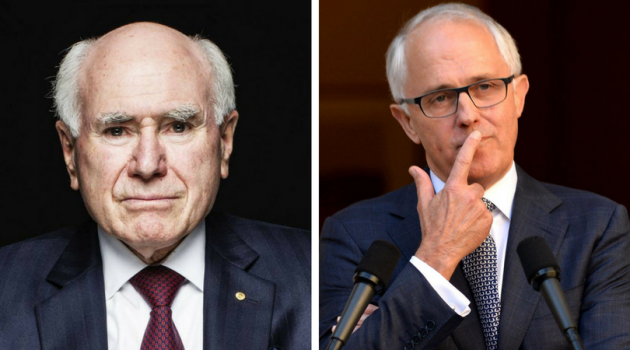
Howard and Turnbull

One of these things is too much like the other.

Equal Means Equal – Submission to Inquiry into Marriage Amendment (Same-Sex Marriage) Bill

Update 15 February 2017:

The Senate Committee Inquiry into the Exposure Draft Marriage Amendment (Same-Sex Marriage) Bill has been completed, with its report tabled in Parliament this afternoon (Wednesday 15 February 2017). A copy of the Report can be found here.


The Report itself includes some positives, and some areas of possible concern.


On the positive side, the Committee has acknowledged that adding a stand-alone right for ministers of religion to discriminate against same-sex couples is both unnecessary, and explicitly discriminatory (page 15).


The Committee also did not support the introduction of broad new rights for civil celebrants to discriminate against LGBTI couples, noting that they “are authorised to perform a function on behalf of the state and should be required to uphold Commonwealth law” (page 24).


On the other hand, the Committee has attempted to define a new category of ‘religious marriage celebrants’ – who are not ministers of religion but conduct marriages for faith communities – and then providing them with similar rights to discriminate as ministers of religion (page 23).


While that compromise may seem reasonable, some of these same celebrants also officiate at secular ceremonies, and under no circumstances should they be allowed to discriminate when they are effectively operating as a civil celebrant.


In the same way, the proposal that existing civil celebrants should be allowed to register as ‘religious marriage celebrants’, and therefore benefit from the same right to discriminate (page 24), must not apply to any situation in which they continue to oversee civil ceremonies.


The Committee also questioned the need for new special rights for religious bodies and organisations to discriminate against same-sex couples – although that is because it believes they may already be allowed to do so because of the overly-generous religious exceptions provided under the Sex Discrimination Act 1984 (page 31).


It also discusses, although doesn’t explicitly support, clarifying their ‘right’ to refuse to provide facilities, goods and services in situations that are “intrinsic to, directly associated with and intimately involved in a wedding ceremony” (page 32). Once again, this would unacceptably undermine a reform that is, at its heart, supposed to be about the equal recognition of equal love.


Finally, the Committee observed that “[i]n relation to military chaplains, the committee notes that the proposed amendment would not change the current law”, and then suggests the reintroduction of ‘marriage officers’ to provide an alternative method for LGBTI military couples to marry (page 24).


While it may not change existing law, a) there must not be a new stand-alone note to section 81 that singles out same-sex couples for adverse treatment and b) as public servants, paid for with our taxes, and with an obligation to serve all personnel equally, the right of military chaplains to discriminate in this way should be abolished.


With the Report finalised, pressure now returns to our 150 House of Representatives MPs, and 74 Senators (with two current vacancies), to find a way forward on marriage equality, and ensure it is passed as quickly as possible.


But it must also be done as fairly as possible. I would argue there is absolutely nothing in the Committee Report that would justify the inclusion of new special rights to discriminate against LGBTI couples in any marriage equality bill.


In which case, in the coming weeks and months it will be up to us to continue to remind Prime Minister Malcolm Turnbull – and Opposition Leader Bill Shorten, as well as the Greens and crossbench MPs and Senators, in fact anyone who will listen to us – that equal means equal, and that means passing marriage equality without new religious exceptions.


Original Post:

The Senate is currently conducting an inquiry into the Exposure Draft Marriage Amendment (Same-Sex Marriage) Bill. This is the legislation that the Government would have introduced had the marriage equality plebiscite been held, and had that vote been successful.

Full details of the inquiry can be found here. It is due to report on Monday 13 February 2017, although what happens afterwards remains unclear.

My submission to the inquiry, which focuses on the provisions of the Bill that seek to treat LGBTI couples differently to, and worse than, other couples, has now been published, and is reproduced below:


Committee Secretary

Select Committee on the Exposure Draft of the Marriage Amendment (Same-Sex Marriage) Bill

Department of the Senate

PO Box 6100

Canberra ACT 2600

samesex.marriage.sen@aph.gov.au


Friday 13 January 2017


Dear Committee Secretary


Submission on the Exposure Draft of the Marriage Amendment (Same-Sex Marriage) Bill


Thank you for the opportunity to provide a submission in relation to this inquiry, which is examining the Government’s Exposure Draft Marriage Amendment (Same-Sex Marriage) Bill (‘the Bill’).


In this submission, I will explain my personal reasons for opposing several provisions contained within the Bill, before addressing terms of reference a), b) and c) in detail. This will include my main recommendations for amendment to, and improvement of, the proposed legislation, before concluding with a short summary of this submission and its recommendations.


**********


Introduction: Equal Means Equal


I met my fiancé Steven in August 2008, two weeks after my 30th birthday and just one week after the wedding of my brother to his wife.


It was clear from the very beginning that this relationship was different from any that had come before. And I know that applies for both of us.


Within 12 months we began planning the rest of our lives together. Steven and I have lived together from January 2010 onwards, and now own a home together.


More importantly, we have been engaged to be married since 23 January of that same year.


That means, in exactly ten days’ time, we will have been waiting for the legal right to get married for a full seven years. Our engagement has already lasted longer than the marriages, from beginning to end, of many Australian couples.


All we want is exactly the same right to wed, and to have that wedding recognised under secular law, as my brother when he married his wife, and as my sister when she married her husband in 2006.


Significantly, the Bill that is being considered as part of this inquiry would allow Steven and I to finally ‘tie the knot’. That aspect of the Bill, contained in clause 1 (amending subsection 5(1) (definition of marriage) to “omit “a man and a woman”, substitute “2 people””), is obviously welcome.


However, if passed as drafted, a number of other provisions in the Bill would ensure that, rather than being treated the same as my brother and his wife, or my sister and her husband, this legislation would ensure Steven and I were subject to adverse, and discriminatory, treatment simply because of who we are.


The civil celebrant who officiated at the ceremony between my sister and her husband would have the ‘right’ to reject us because we are not “a man and a woman”.


Any ‘religious organisation or body’, broadly defined, that provided wedding-related facilities, goods and services would be able to turn us away because of our sexual orientation. And that ‘right’ would apply even where they operated for profit, and even though the same groups could not discriminate against my siblings.


In short, the Bill would establish two different classes of couples – ‘man and woman’ couples, versus everyone else – with the latter category, including Steven and me, enjoying lesser rights than the former.


While this legislation will deliver marriage, it will not deliver marriage equality. That outcome is unacceptable both to me, and to my fiancé Steven.


There is no legitimate reason why we should be treated worse than my brother and my sister were when they decided to marry their respective partners. Because we are not ‘worse than’ anyone, them included.


Equal means equal. Or at least it should – and I sincerely believe that principle must be reflected in the Marriage Act.


**********


Term of reference a) the nature and effect of proposed exemptions for ministers of religion, marriage celebrants and religious bodies and organisations, the extent to which those exemptions prevent encroachment upon religious freedoms, and the Commonwealth Government’s justification for the proposed exemptions.


The Bill proposes four new and/or expanded special rights to discriminate against couples that include lesbian, gay, bisexual, transgender and intersex (LGBTI) Australians. All four are unnecessary and unjustified. All four should be removed from the legislation to help achieve genuine marriage equality.


  1. A specific right for ministers of religion to discriminate against couples that are not “a man and a woman”


I should begin by noting that I agree with the ability of authorised celebrants who are ministers of religion to refuse to perform any religious ceremonies, including weddings, that do not fit within the beliefs of their religion. That obviously includes the right to refuse to marry LGBTI couples, even if I personally believe that such discrimination is abhorrent.


However, it is important to remember that ministers of religion already have the right to refuse to perform any ceremony under existing section 47 of the Marriage Act 1961:


Ministers of religion not bound to solemnise marriage etc.

Nothing in this Part: (a) imposes an obligation on an authorised celebrant, being a minister of religion, to solemnise any marriage…”


If the right for LGBTI couples to marry was finally recognised under Commonwealth law, that section would plainly allow ministers of religion to deny them service. Therefore, no new amendments are required to the Act to allow ministers of religion to refuse to officiate LGBTI weddings.


In which case, the proposed repeal of section 47, and replacement with a more detailed right to discriminate, is entirely unnecessary. In particular, proposed new sub-section 47(3) states:


Refusing to solemnise a marriage that is not the union of a man and woman

(3) A minister of religion may refuse to solemnise a marriage despite any law (including this Part) if:

(a) the refusal is because the marriage is not the union of a man and a woman; and

(b) any of the following applies:

(i) the refusal conforms to the doctrines, tenets or beliefs of the religion of the minister’s religious body or religious organisation;

(ii) the refusal is necessary to avoid injury to the religious susceptibilities of adherents of that religion;

(iii) the minister’s conscientious or religious beliefs do not allow the minister to solemnise the marriage.”


The inclusion of this unnecessary new sub-section, which highlights the ability of ministers of religion to discriminate against one class of couple (LGBTI people) and one class of couple only, is discriminatory and should be rejected.


Recommendation 1: Proposed new section 47, and especially sub-section 47(3), is both unnecessary and discriminatory and should be removed from the Bill. Existing section 47 of the Marriage Act would continue to allow ministers of religion to refuse to perform any marriage ceremony.


**********


  1. A new special right for civil celebrants to discriminate against couples that are not “a man and a woman”


Currently, only ministers of religion have an explicit ‘opt-out’ clause under the Marriage Act 1961, allowing them to decline to perform any marriages with which they disagree.


No equivalent provision or power exists for civil celebrants – which is entirely reasonable, given they are essentially ‘small businesses’, providing a service that the government has authorised them to, and explicitly not acting on behalf of any religion or religious organisation.


However, the Bill proposes an entirely new special right for ‘secular’ civil celebrants to reject LGBTI couples just because of who they are. Proposed new section 47A reads:


Marriage celebrants may refuse to solemnise marriages

(1) A marriage celebrant (not being a minister of religion) may refuse to solemnise a marriage despite any law (including this Part) if:

(a) the refusal is because the marriage is not the union of a man and a woman; and

(b) the marriage celebrant’s conscientious or religious beliefs do not allow the marriage celebrant to solemnise the marriage.”


This is, to put it simply, outrageous.


There is absolutely no reason why someone who is engaged in small business should be able to discriminate in such a way, against people who are LGBTI, solely because of their personal beliefs. It is the equivalent of encouraging celebrants to put up a sign saying ‘no gays (or lesbians, or bisexuals, or trans people, or intersex people) allowed’.


The fact that, unlike ministers of religion who are able to discriminate against any couples, civil celebrants will only be allowed to discriminate against LGBTI couples, merely highlights the homophobia, biphobia, transphobia and intersexphobia that lies at the heart of this proposed new section.


And, with civil ceremonies now accounting for three-in-four of all mixed-sex weddings[i], and likely forming an even higher proportion of LGBTI weddings (at least in part because some religions will continue to turn couples away that are not “a man and a woman”), this prejudiced provision will impact on a large number of LGBTI couples. For all of these reasons, it should be rejected.


Recommendation 2: Proposed new section 47A, which establishes an entirely new special right for civil celebrants to discriminate against LGBTI couples, and LGBTI couples only, is discriminatory and should be removed from the Bill.


**********


  1. A new special right for religious bodies and organisations to discriminate against couples that are not “a man and a woman”


Unfortunately, under the Bill it is not just civil celebrants who will be allowed to put up unwelcome (on multiple levels) signs saying ‘no gays, or lesbians, or bisexuals, or trans people, or intersex people, allowed.’


Religious bodies or organisations will also be able to do so under proposed new section 47B, which reads:


Religious bodies and organisations may refuse to make facilities available or provide goods or services

(1) A religious body or a religious organisation may, despite any law (including this Part), refuse to make a facility available, or to provide goods or services, for the purposes of the solemnisation of a marriage, or for purposes reasonably incidental to the solemnisation of a marriage, if:

(a) the refusal is because the marriage is not the union of a man and a woman; and

(b) the refusal:

(i) conforms to the doctrines, tenets or beliefs of the religion of the religious body or religious organisation; or

(ii) is necessary to avoid injury to the religious susceptibilities of adherents of that religion.”


There are a number of significant problems with this provision.


First and foremost, by not defining what a ‘religious body’ or ‘religious organisation’ is, it is difficult to know exactly who will be able to exercise this new specific right to discriminate (with the possibility that the number of groups permitted to turn away LGBTI couples will be quite high).


Secondly, by not defining the phrases ‘for the purposes of the solemnisation of a marriage, or for purposes reasonably incidental to the solemnisation of a marriage’, (and especially the term ‘reasonably incidental’) it is also difficult to know the scope of this new special right to discriminate.


However, even if both the number of groups allowed to discriminate, and the exact circumstances in which they were allowed to do so, were known, this proposed new section would still be fundamentally flawed.


That is because it authorises discrimination against LGBTI couples far beyond any right to refuse to conduct weddings in places of worship, like churches, which would likely be justified on the basis of religious freedom.


Instead, it permits adverse treatment of couples who are not “a man and a woman” in a wide range of circumstances, including in hiring venues where it is not a place of worship, and in the provision of goods and services even where this is engaged in on a commercial basis, for profit.


One consequence of this is that it would establish a negative precedent for the future expansion of this right to discriminate to other individuals and businesses, such as florists, bakers, photographers or wedding reception venues, who are not religious bodies or organisations, to refuse service to LGBTI couples.


If other commercial enterprises are allowed to do so (because they are run by religious groups), and even civil celebrants are permitted to discriminate on the basis of their personal beliefs, it is entirely predictable that additional groups will demand their own ability to reject couples who are not “a man and a woman.”


Despite all of the above faults, however, the major flaw with the provision is that it is a direct attack on LGBTI couples and LGBTI couples only. It singles out any relationship that doesn’t fit within the definition of “a man and a woman” for special, and detrimental treatment – and literally nobody else.


That makes this proposed provision homophobic, biphobic, transphobic and intersexphobic, and it too should be rejected.


Recommendation 3: Proposed new section 47B, which establishes an entirely new right for religious bodies or organisations to discriminate in the provision of wedding-related facilities, goods and services against LGBTI couples, and LGBTI couples only, is discriminatory and should be removed from the Bill.


**********


  1. A specific right for Defence Force chaplains to discriminate against couples that are not “a man and a woman”


The Bill’s fourth and final new and/or expanded special right to discriminate against LGBTI couples is provided to Defence Force chaplains.


This is established through the addition of a note to existing section 81 of the Marriage Act 1961, which deals with the rights of Defence Force chaplains to refuse to solemnise weddings. That note would read:


“Example: a chaplain may refuse to solemnise a marriage that is not the union of a man and a woman where the refusal conforms to the doctrines, tenets or beliefs of the chaplain’s church or faith group.”


While these chaplains are ministers of religion, and therefore would potentially have the ability to discriminate against any couple, they are also a special class of celebrant, because:


  • They are public servants, paid for out of everyone’s taxes – LGBTI and non-LGBTI, and religious and non-religious, alike[ii], and
  • In their duties, Defence Force chaplains are expected to “administer spiritual support to all members, regardless of their religion”[iii] (emphasis added).


Therefore, permitting discrimination by Defence Force chaplains fails in principle on two counts:


  • As public servants, they should not be able to discriminate against members of the public simply because of their personal beliefs – otherwise we are allowing the Australian equivalent of Kim Davis, and
  • In providing spiritual support for Defence Force personal, they are expected to do so for all people, not just those who are cisgender and heterosexual.


Which means that, if Defence Force chaplains are to continue to be authorised to officiate any weddings, it must include the weddings of LGBTI people. To do otherwise is, once again, homophobic, biphobic, transphobic and intersexphobic, and it should be rejected.


Recommendation 4: The proposed new note to section 81, which establishes a specific right for Defence Force chaplains to discriminate against LGBTI couples, and LGBTI couples only, is discriminatory and should be removed from the Bill. As public servants who are obligated to support all Defence Force personnel, these chaplains should be required to marry all couples, regardless of sexual orientation, gender identity or intersex status, otherwise their ability to officiate wedding ceremonies should be removed.


**********


As suggested by term of reference a), the above four new and/or expanded special rights to discriminate against LGBTI couples have ostensibly been included in the Bill by the Government on the basis of the need to protect ‘religious freedom’.


However, I would argue that, upon closer inspection, they do no such thing. Rather than protecting religious freedom, these provisions instead protect homophobia, biphobia, transphobia and intersexphobia and merely use religion as an excuse.


This can be seen when one remembers that there are a wide variety of different religious beliefs about marriage.


Some people believe only cisgender heterosexual couples should be able to marry.


Others do not believe in divorce, and therefore oppose the right of people to participate in second, or subsequent, weddings.


Some even continue to hold the (once widespread) belief that people of different faiths should not marry – and, in extreme cases, that people of different types of christianity should not marry.


I should note that I do not share any of the above beliefs. But others do, and I have no doubt that their views are sincerely held.


Given this, there is no possible justification for the Marriage Amendment (Same-Sex Marriage) Bill to allow civil celebrants, religious bodies and organisations and Defence Force chaplains to discriminate against LGBTI couples but not discriminate against divorced people, or against interfaith couples (or on the basis of other religious beliefs about marriage).


The fact that it does so, establishing new special rights to discriminate against LGBTI couples, and only LGBTI couples, reveals the fundamental truth of this Bill: it has very little to do with protecting religious freedom, and is more concerned with ensuring people who hold anti-LGBTI views are free to discriminate against couples who are not “a man and a woman” in a wide variety of circumstances.


In effect, the Bill privileges homophobic, biphobic, transphobic and intersexphobic beliefs, rather than protecting religious beliefs.


That is unacceptable, and merely confirms the earlier recommendations in this submission that these new and/or expanded special rights to discriminate are discriminatory and should be removed from the Bill.


I should note here that the Government, having revealed its discriminatory intentions, cannot now turn around and extend these new special rights to discriminate to cover divorced people and interfaith couples because they will only be doing so to cover up the anti-LGBTI nature of its original legislation.


Instead, the Government, and Parliament, should focus on amending the Bill to ensure that all couples are (finally) treated in exactly the same way – that equal means equal.


**********


Term of reference b) the nature and effect of the proposed amendment to the Sex Discrimination Act 1984 and the Commonwealth Government’s justification for it.


Currently, sub-section 40(2A) of the Sex Discrimination Act 1984, the legislation that establishes Commonwealth anti-discrimination protections on the basis of sexual orientation, gender identity and intersex status, ensures that “anything done by a person in direct compliance with the Marriage Act 1961” cannot be the subject of an anti-discrimination claim under that legislation.


This is justified because it would be entirely unreasonable to hold civil celebrants and others accountable for discriminating against LGBTI couples (because they legally cannot marry them) that has been made compulsory since the Howard Government prohibited marriage equality in August 2004.


The amendment of the Marriage Act, to permit all couples to marry irrespective of sexual orientation, gender identity or intersex status, and the removal of this requirement, should therefore be an opportunity to remove or at least significantly curtail this exception to the protections contained in the Sex Discrimination Act.


Indeed, the only provision of the Marriage Act that should require an exception would be the ongoing ability of ministers of religion to discriminate against any couples, as established by existing section 47.


Consequently, sub-section 40(2A) of the Sex Discrimination Act could, and I would argue should, be restricted to the following:


“Nothing in Division 1 or 2, as applying by reference to section 5A, 5B, 5C or 6, affects anything done by a person as authorised by section 47 of the Marriage Act 1961” (emphasis added).


Instead, the Bill as drafted actually proposes to expand the exception to the Sex Discrimination Act, because it would permit any discrimination that is ‘as authorised by’ the entirety of the Marriage Act, as redrafted.


This is obviously intended to capture all four of the new and/or expanded special rights to discriminate against LGBTI couples outlined earlier. Given the inclusive way this amendment is framed, it may even permit additional forms of anti-LGBTI discrimination.


In my view, this is a perverse outcome. Legislation that is intended to remove a long-standing inequality, and injustice, affecting lesbian, gay, bisexual, transgender and intersex Australians, by finally allowing them to marry, actually expands relevant exceptions to the Sex Discrimination Act, thereby increasing the circumstances in which they can lawfully be discriminated against.


Once again, this confirms the inappropriateness of the four new and/or expanded special rights to discriminate against LGBTI couples. The proposed amendment to section 40(2A) of the Sex Discrimination Act is also inappropriate, and should be replaced with a narrower exception to that legislation.


Recommendation 5: The proposed expansion to the exception contained in sub-section 40(2A) of the Sex Discrimination 1984, allowing discrimination ‘as authorised by’ the Marriage Act 1961, expands the circumstances in which LGBTI people can be discriminated against. This is inappropriate, and this provision should be removed from the Bill. It should be replaced by an amendment that limits this exception to discrimination that is authorised by existing section 47 of the Marriage Act, which allows ministers of religion (and only ministers of religion) to discriminate.


**********


Term of reference c) potential amendments to improve the effect of the bill and the likelihood of achieving the support of the Senate.


In terms of amendments to improve the effect of the Bill, I have already made five recommendations to significantly improve its impact on the recognition of the human rights of LGBTI Australians. In this section, I will nominate two further areas of necessary reform.


  1. The Bill should refer to marriage equality rather than same-sex marriage


The Bill, as drafted, would allow all couples, including those that involve lesbian, gay, bisexual, transgender and intersex individuals, to marry under the law. This is an important reform, and it will substantively improve the lives of many LGBTI Australians.


However, the title of the Bill – the Marriage Amendment (Same-Sex Marriage) Bill – only refers to ‘same-sex marriage’, rather than marriage equality.


This is problematic because the term same-sex marriage does not include all LGBTI couples. It specifically excludes some transgender people (especially those who identify as non-binary or gender-fluid) and some intersex people.


The term same-sex marriage should be replaced with marriage equality in the title of the Bill, to ensure that, alongside recognising the substantive human rights of LGBTI Australians, it symbolically recognises the diversity of these communities.


Of all major contemporary public policy issues, marriage is a subject in which both the substantive, and the symbolic, are equally important.


Recommendation 6: The Bill should be retitled the Marriage Amendment (Marriage Equality) Bill.


**********


  1. The Bill should allow couples to apply to have specified pre-existing unions recognised as marriages


The wait for marriage equality to be recognised under Australian law has been long, often painfully so.


It is entirely understandable that, in the interim, many LGBTI couples have chosen alternative ways to have their relationships recognised. This includes many who have travelled overseas (or to consulates within Australia), where marriage equality is lawful, to wed.


It also includes couples who have decided to have their relationships recognised under state and territory relationship recognition schemes, including civil partnerships and registered relationships, with or without an associated formally-recognised ceremony.


While the Bill will, thankfully, recognise the former (overseas marriages) as marriages, it will not provide any avenue for the latter (civil partnerships or registered relationships) to be recognised in a similar manner.


Allowing couples in this situation to apply to have their existing relationship recognised as married would be an acknowledgement of the fact that their mutual commitment to a shared life, and wish to be married, has existed since the date of their commitment being made.


It would also acknowledge the discrimination that these couples have endured as a result of the exclusionary nature of the Commonwealth Marriage Act 1961.


Recommendation 7: The Bill should allow couples to apply to have specified pre-existing unions, including civil partnerships and registered relationships under state and territory law, to be recognised as marriages where they so desire.


**********


  1. Marriage equality should be passed as a matter of priority


Term of reference c) asks for ‘potential amendments to improve the… likelihood of achieving the support of the Senate.’ With all due respect, I believe that to be an inappropriate request.


The real question is why the Senate – and the House of Representatives – have not yet passed legislation to recognise the equality of our relationships, irrespective of sexual orientation, gender identity or intersex status.


It has been more than a dozen years since the Howard Government’s homophobic ban on marriage equality was first passed by the Commonwealth Parliament.


That means LGBTI couples have now experienced more than a dozen years of discrimination, treated as distinctly ‘2nd class’ in comparison to the relationships of cisgender heterosexual Australians.


Tragically, in those dozen years, there have also been countless LGBTI relationships where one or both members have passed away without being able to have their relationship recognised under Commonwealth law. The longer the ban continues, the more relationships will be denied justice.


That same dozen years has witnessed much ‘sound and fury’ within the Commonwealth Parliament on this issue, including countless inquiries in the House of Representatives and the Senate (with this one now added to the list), ultimately achieving nothing – because we still cannot marry.


So, rather than asking how the Bill can be amended to improve the chances of Senators voting for it, as if just one more ‘compromise’ will be enough to secure sufficient support to get it over the line, we should be asking why won’t Senators, and their colleagues in the lower house, do their jobs and pass marriage equality as a matter of priority.


Recommendation 8: The Australian Parliament should pass marriage equality as a matter of priority, because LGBTI Australians have waited long enough – too long, in fact – to have their relationships recognised as equal under secular law.


**********


Conclusion


In this submission, I hope I have successfully conveyed my passion, not just for the subject of marriage equality generally, but also about the issue of marriage equality and religious exceptions specifically – and why any amendments to the Marriage Act should ensure that all couples are treated exactly the same.


I am glad that these issues are being examined by the Senate, through this inquiry, and I look forward to the Committee making recommendations to improve both the substance, and the symbolism, of the Marriage Amendment (Same-Sex Marriage) Bill.


Thank you for your consideration of this submission. I would welcome the opportunity to speak to the matters raised above at a Committee hearing, should one (or more) be held.


I have also included a Summary of this submission on the following two pages.


Please do not hesitate to contact me, at the contact details provided with this submission, should you require clarification, or further information.


Sincerely

Alastair Lawrie


**********


Summary


Marriage equality is an important issue that affects tens of thousands, hundreds of thousands, Australians, including couples like my fiancé Steven and me.


We have been together for more than eight and a half years, and engaged for almost seven years. All we want is the right to be married under secular law, in exactly the same way that my brother married his wife, and my sister married her husband.


Unfortunately, while the Marriage Amendment (Same-Sex Marriage) Bill would allow us to marry, it would not do so equally, because it would expose us to potential discrimination that my siblings did not experience.


It is marriage, but not marriage equality. And that is not good enough, because equal means equal – and that principle should be reflected in the Marriage Act.


I make seven recommendations to improve the Marriage Amendment (Same-Sex Marriage) Bill, as well as an eighth, that marriage equality should be passed as a matter of priority.


Recommendation 1: Proposed new section 47, and especially sub-section 47(3), is both unnecessary and discriminatory and should be removed from the Bill. Existing section 47 of the Marriage Act would continue to allow ministers of religion to refuse to perform any marriage ceremony.


Recommendation 2: Proposed new section 47A, which establishes an entirely new special right for civil celebrants to discriminate against LGBTI couples, and LGBTI couples only, is discriminatory and should be removed from the Bill.


Recommendation 3: Proposed new section 47B, which establishes an entirely new right for religious bodies or organisations to discriminate in the provision of wedding-related facilities, goods and services against LGBTI couples, and LGBTI couples only, is discriminatory and should be removed from the Bill.


Recommendation 4: The proposed new note to section 81, which establishes a specific right for Defence Force chaplains to discriminate against LGBTI couples, and LGBTI couples only, is discriminatory and should be removed from the Bill. As public servants who are supposed to support all Defence Force personnel, these chaplains should be required to marry all couples, regardless of sexual orientation, gender identity or intersex status, otherwise their ability to officiate wedding ceremonies should be removed.


Recommendation 5: The proposed expansion to the exception contained in sub-section 40(2A) of the Sex Discrimination 1984, allowing discrimination ‘as authorised by’ the Marriage Act 1961, expands the circumstances in which LGBTI people can be discriminated against. This is inappropriate, and this provision should be removed from the Bill. It should be replaced by an amendment that limits this exception to discrimination that is authorised by existing section 47 of the Marriage Act, which allows ministers of religion (and only ministers of religion) to discriminate.


Recommendation 6: The Bill should be retitled the Marriage Amendment (Marriage Equality) Bill.


Recommendation 7: The Bill should allow couples to apply to have specified pre-existing unions, including civil partnerships and registered relationships under state and territory law, to be recognised as marriages where they so desire.


Recommendation 8: The Australian Parliament should pass marriage equality as a matter of priority, because LGBTI Australians have waited long enough – too long, in fact – to have their relationships recognised as equal under secular law.


Whenever marriage equality is finally passed by the Commonwealth Parliament, and I genuinely hope it does so soon, it must ensure that all couples are treated equally, because we cannot end up with a situation where ‘some couples are more equal than others’.


equalmeansequal-4


Footnotes:


[i] “[T]he proportion of marriage ceremonies overseen by a civil celebrant increased again to 74.9 per cent of all marriages in 2015”: Marriage and Divorces, Australia, 2015, Australian Bureau of Statistics, November 2016.

[ii] The Defence Jobs Australia website indicates that chaplains are paid over $94,200 following completion of basic training.

[iii] Also from the Defence Jobs Australia website.

Our 7-Year Engagement (and Counting)

7 years isn’t just the name of a nauseatingly awful song by Lukas Graham. It also happens to be the length of time that, as of today, Steve and I have been engaged.


On 23 January 2010, after about 18 months together and on a trip to Melbourne, I asked him to marry me. He made me an incredibly happy man when he said, “Of course I will.”


What should have followed were several months of wedding planning – including the inevitable fights over guest-lists, and the small ‘p’ politics of who sits at which table (or, more likely in our case, arguments over the music play-list).


What has followed has been seven years of advocacy – of fighting for the right just to be treated the same as other Australians, and the capital ‘P’ politics of trying to change the ALP national platform, then attempting to make that platform binding, of resisting an unnecessary, wasteful and divisive plebiscite, and finally of arguing for Commonwealth Parliament to actually hold a vote on marriage equality, instead of countless inquiries and endless delays.


It’s fair to say that, after seven years of campaigning for change, Steve and I are becoming increasingly frustrated by the inability of our so-called leaders to pass this reform. After all, it should take seven seconds, rather than seven years, for most people to recognise that all couples deserve to be treated equally under the law, irrespective of their sexual orientation, gender identity or intersex status.


It’s also true to say that many lesbian, gay, bisexual, transgender and intersex (LGBTI) Australians are feeling worn out, and worn down, by the ongoing battle, of having exactly the same conversations, with the same nonsensical responses by those against marriage equality, ending in the same result: yet more inaction.


There is a real risk that many in the LGBTI community, not to mention our family members, friends and allies, will find this debate increasingly tiresome (I know that, even as someone who is clearly passionate about this topic, I am starting to find writing about it somewhat tedious).


To a large extent, that is what our opponents want. They would love nothing more than for people who support marriage equality to become depressed about the lack of tangible results to date, and to consequently give up the fight.


Groups like the Australian Christian Lobby lost the policy argument a long time ago – they are now engaged in a war of attrition, hoping that, if this issue sits in the too hard basket for long enough, it will disappear from the political agenda altogether.


We can’t afford to let that happen. As annoying as it is – as boring as it is – we must start the year in exactly the same way we started last year, and the year before that, and the year before that (plus several more besides).


By writing letters to, and calling, our MPs and Senators, by using traditional media, and social media, to keep marriage equality in the spotlight, by marching, and protesting, by making a noise, and generally making a nuisance of ourselves.


Our 226 elected federal representatives must be constantly reminded that we will not go away until this, the simplest of reforms, is finally passed.


It could even happen this year. All it would take is for Malcolm Turnbull to demonstrate the leadership that many once hoped he possessed. Or for the Liberal party-room to decide the issue has dragged on long enough, and by holding a conscience vote. Or even for a small handful of Liberal MPs and Senators to decide this is something worth crossing the floor over.


Of course, marriage equality may not happen this year either. It could be delayed until 2018, 2019 or even longer. But no matter how much time it takes, we will continue pushing until our parliamentarians catch up to where the Australian population has been for some time.


In the meantime, there are literally tens of thousands of couples just like Steve and I who are essentially stuck in limbo, unable to do the basic things other engaged couples do: pick a wedding date, book a venue, and send out invitations (to those who make the agreed-upon final cut anyway).


We are reminded of this discrimination every time a day like today rolls around – the anniversary of an engagement that was happily entered into, but that has been unhappily, and involuntarily, extended by our government.


On a personal level I must admit I am finding this particular anniversary – our 7-year ‘engagement-versary’ – to be a particularly frustrating one, and just a little bit odd too.


It is weird to consider that we have now been engaged so long there is even a popular myth – at least partially backed up by research[i], as it turns out – that this is the time at which many married couples actually start to divorce.


And it’s a strange event to ‘celebrate’ – or at least commemorate – when you would prefer to be able to reflect on your wedding instead (as an aside, if we were married, the traditional 7-year gifts are wool, or copper – does that mean I should be buying Steve a nice new jumper?)


It is probably fitting that I will spend our anniversary at work, listening in the background to yet another Senate Committee hearing discussing whether couples like us should have the ability to marry – and, if we do, what new special ‘rights’ civil celebrants, religious bodies and others should have to discriminate against us[ii].


If I had the opportunity to address that Committee, I’d let them know how large a difference they could make if they just made a small change to the Marriage Act, thereby allowing Steve and I – and thousands of couples just like us – to exchange wedding vows.


I’d finish my testimony by making my own vow, on behalf of Steve and I – that I will not stop fighting until our relationship is finally treated equally under the law. Because one day, hopefully not too far in the future, we deserve the right to celebrate our first wedding anniversary, and not our 8th, 9th or even 10th engagement anniversary.


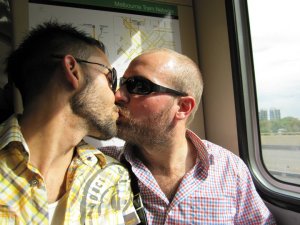
melbourne-trip

Steve (left) and I on the January 2010 trip to Melbourne during which we got engaged. 7 years later and I only love him more.


Footnotes:

[i] New York Times, Study Finds a 7-Year Itch, and a 4-Year One, 5 October 1999.

[ii] The Senate is holding an inquiry into the Marriage Amendment (Same-Sex Marriage) Bill, with the first hearing, in Melbourne, held on Monday 23 January. Full details of the inquiry can be found here.

If we want genuine marriage equality, we’re going to have to fight – & write – for it

2017 might be the year that Australia finally introduces marriage equality[i].

If it is, it will only be because lesbian, gay, bisexual, transgender and intersex (LGBTI) Australians, and our families, friends and allies, have fought long and hard to make it happen.

However, there is also a very real risk that we end up with something less than genuine equality.

This is because there are some members within the Liberal National Coalition who are willing to support the right of LGBTI couples to marry, but only on the condition that new special rights to discriminate against us are included in any amendments to the Marriage Act.

That is simply not good enough.

As the US Supreme Court found more than 60 years ago[ii], separate but equal is not equal. And so we must reject any attempt to impose a 2nd-class system of marriage for LGBTI Australians, where we can be treated differently to cisgender heterosexual couples, merely because of who we are.

In the same way that we have fought, and continue to fight, for the right to marry, we must also fight for the right to marry equally.

The battleground for this campaign is the Government’s Exposure Draft Marriage Amendment (Same-Sex Marriage) Bill, released in October 2016. This is the legislation that the Government would have introduced had its (unnecessary, wasteful and divisive) plebiscite been held, and had it been successful.

While the Bill allows any two people to marry – and therefore would provide LGBTI Australians with the ability to finally tie the knot – it also proposes four new special rights to discriminate against any relationship that is “not the union of a man and a woman[iii].” This includes:

  1. A specific provision allowing ministers of religion to reject LGBTI couples, and only LGBTI couples[iv] – even though ministers of religion can already reject any couple for any reason. That means this clause is both unnecessary, and unfairly targets our relationships.
  1. An entirely new right for civil celebrants to reject LGBTI couples, and only LGBTI couples[v]. No other section of the Marriage Act 1961 currently allows these celebrants to discriminate. This homophobic provision is especially concerning given three out of every four weddings in Australia are conducted by civil celebrants.
  1. A specific provision allowing ‘religious bodies and organisations[vi] to deny facilities to, and withhold goods and services from, LGBTI couples, and only LGBTI couples[vii]. This has been included despite existing religious exceptions to anti-discrimination laws, at both Commonwealth and state and territory level, and applies even where these groups are engaged in commercial enterprise.
  1. A new right for Defence Force chaplains to reject LGBTI couples, and only LGBTI couples[viii]. This is despite the fact these chaplains are public servants, paid for by all taxpayers – including LGBTI Australians – and that they are expected to “administer spiritual support to all members, regardless of their religion” (emphasis added)[ix].

None of these new special rights to discriminate against LGBTI couples are necessary. All are completely unjustified. All must be challenged.

Fortunately, this Bill generally, and these proposed new ‘religious exceptions’ specifically, are currently the subject of a Senate inquiry.

The Select Committee examining this Bill has called for public submissions, which close next Friday (13 January). Full details of the Inquiry, including how to lodge, can be found here.

I encourage you to make your own submission, calling for the Committee, and ultimately the Parliament, to reject these four new special rights to discriminate against LGBTI couples.

In doing so, you could make the following two main points:

  • This Bill is NOT marriage equality

While the Marriage Amendment (Same-Sex Marriage) Bill would allow LGBTI couples to finally marry, by including new special rights to discriminate against LGBTI couples – and only LGBTI couples – the Bill actually establishes a 2nd-class system of marriage for some Australians based on their sexual orientation, gender identity or intersex status. ‘Separate but equal’ is not equal – which means this Bill would not deliver genuine marriage equality.

  • The exceptions included in this Bill do not protect religious freedom, they promote homophobia and transphobia

There are a variety of different religious beliefs about marriage. Some people believe only cisgender heterosexual couples should be able to marry[x]. Others do not believe in divorce, and therefore oppose the right of people to participate in second (or subsequent) weddings. Some even continue to hold the (once widespread) belief that people of different faiths should not marry.

If the Marriage Amendment (Same-Sex Marriage) Bill reflected genuine concerns about protecting ‘religious freedom’, it would allow civil celebrants, religious bodies and organisations and Defence Force chaplains to discriminate against divorced people, or against inter-faith couples[xi].

The fact that it does not, and that it establishes new special rights to discriminate solely against LGBTI couples, reveals the fundamental truth of this legislation: it has very little to do with protecting religious freedom, and much more to do with promoting homophobia, biphobia, transphobia and intersexphobia[xii].

**********

3 Ways to Take Action

If you agree with me, then now is the time to get involved, to get fighting – and writing – to let the Senate Committee, and the Government, know that marriage equality should mean exactly that: equality. And we won’t accept anything less.

Here are three ways you can take action in the next week:

  1. Write your own submission to the Senate Inquiry. As noted above, details on how to do so can be found here. Alternatively, two LGBTI organisations have designed web platforms to make writing a submission easier:
  1. Complete these surveys about the Bill. Both the NSW Gay & Lesbian Rights Lobby and just.equal (& PFLAG Australia) are consulting the LGBTI community about what they think of the proposed religious exceptions. Let them know your views here:
  1. Sign and share this petition to Prime Minister Malcolm Turnbull, demanding that Equal love should not be treated unequally.

Above all, if you think that equal means equal, no ifs, buts, or maybes, then it’s time to get writing…

equalmeansequal-3

Footnotes:

[i] Of course, if Malcolm Turnbull continues to fail to show any leadership on this issue, we might instead be forced to wait until 2019 or 2020.

[ii] Brown v Board of Education, 347 US 483 (1954)

[iii] Interestingly, this phrase would not cover all LGBTI couples – for example, civil celebrants, religious bodies and organisations and Defence Force chaplains would not be able to reject heterosexual couples where one or both members are transgender and where the couple identifies as a man and a woman.

[iv] Proposed sub-section 47(3)

[v] Proposed new section 47A

[vi] It is worrying that these terms are not defined in the Bill, meaning the number of bodies or organisations allowed to discriminate against LGBTI couples could be high.

[vii] Proposed new section 47B

[viii] Proposed new note to section 81

[ix] For more on why these new special rights to discriminate must be rejected, see The Marriage Amendment (Same-Sex Marriage) Bill in Unacceptable.

[x] Of course, they should not be able to impose that belief on others through secular law.

[xi] I am not arguing for either to be made lawful, merely highlighting the double-standard that lies at the heart of the Marriage Amendment (Same-Sex Marriage) Bill.

[xii] The Government, having revealed its (homophobic) intentions, also cannot now turn around and extend these new special rights to discriminate against divorced people and inter-faith couples because they will only be doing so to ‘cover up’ the anti-LGBTI nature of its original legislation.

It’s time for Moderate Liberals to speak now, or forever hold their peace

Commonwealth Parliament returns this week, for the final sitting fortnight of the year.


During the previous sitting week, on Monday 7 November, the Senate finally killed off, once and for all, Tony Abbott and Malcolm Turnbull’s proposed plebiscite on marriage equality.


The welcome actions of Labor, Greens and Nick Xenophon Team Senators, and even Derryn Hinch, have spared the country from what would have been an entirely unnecessary, fundamentally wasteful and inevitably divisive public vote on the human rights of a minority group.


In doing so, they have also ensured that the public, and political, pressure to finally pass marriage equality sits squarely where it should have been all along – on Liberal and National MPs and Senators.


After all, they are the ones sitting on the Government benches, meaning they shoulder the responsibility to introduce legislation to treat all couples equally, irrespective of their sexual orientation, gender identity or intersex status.


From now until the next federal election, likely to be held in the 1st half of 2019, lesbian, gay, bisexual, transgender and intersex (LGBTI) Australians should put pressure on Coalition parliamentarians to fix this mess.


More specifically, we will need to target one of the three main groupings within the Government, the cohort who are more likely to be receptive to our messages – Moderate Liberals.


It is difficult to see the other two ‘factions’ changing their respective tunes. National Party MPs, who are supposed to represent all people in rural and regional areas, have instead shown themselves completely uninterested in the relationships of the many LGBTI couples that live in their electorates.


In fact, the old ‘Country Party’ rump of the Coalition have been so determined to delay and potentially defeat marriage equality that they included the plebiscite as a core component of its formal agreement with Malcolm Turnbull when he became Prime Minister in September 2015.


Apparently, it is far more important to spend at least $170 million, and probably more than $200 million, on a non-binding opinion poll, than on meeting the health, education and infrastructure needs of non-metropolitan Australians.


The other major grouping within the Coalition – Conservative Liberals – are even less interested in recognising the human rights of LGBTI people. They would prefer just to see marriage equality blocked, and only agreed to holding a plebiscite under then-Prime Minister Tony Abbott because they saw it, correctly, as a stalling tactic.


With the plebiscite now dead, the terrible Tory trio of Abetz, Bernardi and Christensen, and their factional colleagues, are comfortable in seeing this issue left off the political agenda – from their perspective, hopefully permanently.


All of which is to say that the only hope of passing marriage equality in the remainder of this term rests with what is, in 2016, perhaps the smallest and least powerful of the Coalition groups – Moderate Liberals[i].


These MPs and Senators are the only ones within Malcolm Turnbull’s Government who could foreseeably take any action on marriage equality, at least in the short-term.


That’s because, if they are genuinely moderate in their beliefs, they are likely to understand the following three things:


  1. There is no justification for discrimination against people solely on the basis of their sexual orientation, gender identity or intersex status under secular law – and that includes in the Marriage Act 1961.


  1. The plebiscite was the wrong process to achieve marriage equality. Not only was it unacceptable to the vast majority of LGBTI people, it also contravened the traditions of Australian democracy[ii], which has only ever witnessed three national plebiscites, and none on substantive policy for almost a century, and


  1. Most importantly, LGBTI Australians have already waited long enough (far too long actually) for their relationships to be treated equally under the law, meaning a parliamentary vote should not be delayed until 2019.


But, while they may understand these points, the real question is: What will Moderate Liberal MPs and Senators now do about it?


Will they stand up for their principles and push for a parliamentary vote, or will they continue their modus operandi from the past ten to 15 years and adopt the path of least resistance against their National Party and Conservative Liberal counterparts, by maintaining their official support for the discredited plebiscite?


Unfortunately, the signs to date are not encouraging. North Queensland LNP MP, Warren Entsch, who has pushed for marriage equality inside the Coalition for several years, has indicated that he is choosing right now, when we arguably need him most, to ‘give up the fight’[iii] on this issue for the remainder of this term.


He has, in effect, walked away from the LGBTI community rather than walking five metres across the chamber floor to vote for reform.


Disappointingly, few if any of Entsch’s colleagues have so far suggested they are interested in picking up where he left off.


warren-entsch

Warren Entsch, introducing his private member’s bill for marriage equality in 2015. Sadly, it seems he is unwilling to even vote for equality for the next two and a half years.


What would we ask them to do if they were ‘ready and willing’? There are two ways in which Moderate Liberals could progress marriage equality this term.


The first, and most challenging, path would be for them to push for a conscience vote inside the Liberal Party room (and in the absence of National MPs and Senators who, as Christopher Pyne accurately pointed out, were included by Tony Abbott in August 2015 as a means of ‘branch-stacking’ against equality).


Their arguments would be strong – the Government has tried and failed to implement its election policy (to hold the plebiscite), so it needs to find another way to recognise the legal equality of LGBTI relationships. A free vote also has the benefit of being far more consistent with the past practices of Australia’s main right-of-centre party than a public vote.


But they would also face strong resistance, led by PM-(again)-in-waiting Tony Abbott, among others, meaning it is unclear what the outcome would be.


If they failed, the second way in which Moderate Liberals could help pass marriage equality would be by ‘simply’ crossing the floor.


It would only take one or two principled Senators to secure passage in the Upper House, and probably only a small handful of MPs, perhaps half-a-dozen, to do so in the House of Representatives.


In the absence of a Prime Minister, Ministers or Assistant Ministers who were prepared to give up their positions of power for the sake of the human rights of their fellow citizens, they would all need to come from the backbench. And, by taking such a step, these backbenchers would know they were potentially jeopardising any future advancement within the Party.


It is unclear whether there are enough Coalition MPs and Senators to make that crucial difference. But, it is incredibly important that Moderate Liberals find these numbers, one way or another.


Not just for lesbian, gay, bisexual, transgender and intersex Australians, and our family members and friends, who have already endured 12 years – and counting – of John Howard’s homophobic, biphobic, transphobic and intersexphobic ban on our weddings.


It is also important for the future of Moderate Liberals themselves.


Make no mistake, this is a fundamental test for the section of the Liberal Party who identify as moderate, even ‘progressive’, on social issues.


Their ‘slice’ of the Coalition has been diminishing for decades, and their influence has waned noticeably from even the time when I was growing up.


On many issues, from the (mis)treatment of people seeking asylum, to the prioritisation of ‘national security’ over civil liberties, and even their growing obsession with section 18C of the Racial Discrimination Act, they are now almost indistinguishable from their National Party, and Conservative Liberal, colleagues.


So, if they cannot stand up to the rabid right-wing on this, a straight-forward question of inclusion versus discrimination – a clear-cut choice between granting human rights or actively denying them – it is difficult to see them standing up on anything.


If Moderate Liberals fail to ‘deliver the goods’ on marriage equality by the time the next election rolls around, it will be tempting for most Australians to reach the conclusion that they are ‘good-for-nothing’.


And, in my view at least, the public would be right – if Moderate Liberals cannot make progress on this issue before 2019, then they will have demonstrated that they have no place in contemporary Australian politics. It probably won’t be that much longer before they discover they have no place in Commonwealth Parliament either.


All of which means that, if they want LGBTI Australians to be able to walk down the aisle – and if they want to retain their seats on the ‘right’ side of the political aisle – it’s time for Moderate Liberals to speak now, or forever hold their peace.


**********


Footnotes:

[i] Irrespective of their actual factual alignment, for the purposes of this article this grouping includes the four out gay men in the Government: Trent Zimmerman, Tim Wilson, Trevor Evans and Senator Dean Smith.

[ii] The argument made by WA Liberal Senator Dean Smith in declaring that he could not, in good conscience, support the plebiscite enabling legislation.

[iii] Sydney Morning Herald, 11 November 2016, The same-sex plebiscite is dead. So what happens now?

The Marriage Amendment (Same-Sex Marriage) Bill is Unacceptable

This time last week, our major focus was, understandably, on ensuring Bill Shorten and the Australian Labor Party listened to the concerns of the lesbian, gay, bisexual, transgender and intersex (LGBTI) community and agreed to block Malcolm Turnbull’s unnecessary, wasteful and divisive plebiscite.

With that particular mission (almost) accomplished – although the plebiscite’s enabling legislation won’t be ‘dead, buried and cremated’ until it is finally voted down by the Senate in November – it is time to turn our attention to another battle, and that is the issue of religious exceptions.

Last Monday night (10 October 2016), the Government, via Attorney-General George Brandis, released an exposure draft of the legislation it would put before parliament in the event the plebiscite is held, and if that vote was successful.

Since that time, a number of people have expressed their serious concerns about the Marriage Amendment (Same-Sex Marriage) Bill, and especially about the broad ‘rights to discriminate’ contained within. Now that I have had the opportunity to examine this Bill in detail, I am afraid I must join their condemnatory chorus.

Nearly everything about this Bill, from its title down, is unacceptable. It is far more focussed on ensuring that religious organisations, and even individuals, can refuse to serve LGBTI people, than it is about ensuring LGBTI couples are treated equally, and above all fairly, under the law. And, for the reasons that I will outline below, I sincerely believe it should be rejected in its current form.

**********

First, let’s start with that title, and specifically the phrase ‘same-sex marriage’, which is also used in the Bill’s long title (“A Bill for an Act to provide for same-sex marriage, and for related purposes”).

For the umpteenth time, and for the benefit of slow learners like Prime Minister Turnbull and Senator Brandis, ensuring that all LGBTI Australians can marry is not ‘same-sex marriage’, but ‘marriage equality’.

The former phrase is narrow and excludes non-binary trans people, as well as many intersex individuals. Only the latter phrase captures all couples, irrespective of sexual orientation, gender identity and intersex status.

Fortunately, the substance of the Bill actually does include all people – the primary clause would amend the homophobic definition of the Marriage Act enacted by John Howard’s Liberal-National Government in 2004 to read “marriage means the union of 2 people to the exclusion of all others, voluntarily entered into for life.”

If that is the case, then why has the Government used the inaccurate phrase ‘same-sex marriage’ in the Bill’s title?

Perhaps it is simply politics, and the ongoing inability of the Coalition’s right-wing to acknowledge that this is, fundamentally, an issue of equality (although not referring to it as marriage equality even after the majority of the population voted for it – which is the precondition for this Bill – would seem to me incredibly petty).

On the other hand, maybe Turnbull and Brandis are right to shy away from describing this legislation as ‘marriage equality’ – because, in the vast majority of its provisions, it is nothing of the sort. Indeed, most of the Bill’s clauses are actually concerned with ensuring couples other than ‘a man and a woman’ are able to be refused service in a wide range of circumstances.

Which means that a far more accurate title for this legislation might be the ‘Marriage Amendment (Allowing any 2 adults to marry, but then allowing them to be denied service if they are LGBTI) Bill’. But, as well as being a mouthful, that might be a little too much ‘truth in advertising’ for this particular Government.

**********

Turning to the more substantive faults of the Marriage Amendment (Same-Sex Marriage) Bill, and the first concerns the rights of ministers of religion to refuse to conduct LGBTI weddings.

Now, let me begin by saying that I actually agree that ministers of religion should legally have the ability to accept, or reject, any couple who wishes to be married by them through a religious ceremony (even if I personally believe that such discrimination is abhorrent).

Indeed, that ‘right’ is already provided to ministers of religion under section 47 of the Marriage Act 1961: “Ministers of religion not bound to solemnise marriage etc. Nothing in this Part: (a) imposes an obligation on an authorised celebrant, being a minister of religion, to solemnise any marriage…”

Which means that no amendments are required to the Act to allow ministers of religion to refuse to officiate LGBTI weddings (and none have been proposed by previous marriage equality Bills from Labor, the Greens and even last-year’s cross-party Bill from MPs including Liberal Warren Entsch). So why then does the Bill repeal section 47 and replace it with the following:

Ministers of religion may refuse to solemnise marriages

Refusing to solemnise a marriage that is not the union of a man and a woman

(3) A minister of religion may refuse to solemnise a marriage despite any law (including this Part) if:

(a) the refusal is because the marriage is not the union of a man and a woman; and

(b) any of the following applies:

(i) the refusal conforms to the doctrines, tenets or beliefs of the religion of the minister’s religious body or religious organisation;

(ii) the refusal is necessary to avoid injury to the religious susceptibilities of adherents of that religion;

(iii) the minister’s conscientious or religious beliefs do not allow the minister to solemnise the marriage.”

Ministers of religion will still have exactly the same right to refuse to perform any wedding, including newly-recognised LGBTI weddings[i], that they have now. Arguably, it would provide a greater ability for religious organisations to impose their official doctrine on ministers of religion within their faith – although, as we have seen recently, imposing such views is already commonplace.

But the overall power will remain basically the same. So, why introduce these new provisions, spelling out in detail the ability to decline non- ‘man/woman’ marriages, at all?

It is difficult to see any other motivation than plain old homophobia and transphobia.

And that becomes apparent when comparing it against another issue that is also contrary to some religious views – divorce and remarriage[ii]. The Catholic Church in particular espouses an official view against both, and its ministers would therefore reserve the right to decline to officiate second (or third, fourth or even fifth) weddings.

Under both the existing, and the proposed new, sections 47 a minister of religion has the ability to reject couples in these circumstances – without it being spelled out. Just as the wording of the existing section 47 would allow them to reject LGBTI couples, were it to be retained following the introduction of marriage equality, without it necessarily being spelled out.

Which means there is absolutely no valid reason to insert new provisions that single out LGBTI couples (or non- ‘man/woman’ couples) for special, and detrimental, treatment, as part of a redrafted section 47.

Therefore, while the continuing ability of ministers of religion to decline to officiate weddings is not particularly problematic (from a legal point of view anyway), the unnecessary insertion of clauses which specify the right to discriminate against LGBTI couples – but not any other couples – definitely is.

The proposed new section 47 is homophobic and transphobic. It is unacceptable, and it must be rejected.

**********

Sadly, it only gets worse from here. The second substantive fault of the Marriage Amendment (Same-Sex Marriage) Bill is the creation of an entirely new ‘right’ to discriminate against LGBTI couples.

Currently, only ministers of religion have an explicit ‘opt-out’ clause. No equivalent provision or power exists for civil celebrants[iii] – which is entirely reasonable, given they are essentially ‘small businesses’, providing a service that the government has authorised them to, and explicitly not acting on behalf of any religion or religious organisation.

However, the Government is proposing, through this Bill, to allow even these ‘secular’ civil celebrants to reject LGBTI couples simply because of who they are (again, this is something that has not been included in most previous Bills, other than that from Senator David Leyonhjelm[iv]). Proposed new section 47A reads:

Marriage celebrants may refuse to solemnise marriages

(1) A marriage celebrant (not being a minister of religion) may refuse to solemnise a marriage despite any law (including this Part) if:

(a) the refusal is because the marriage is not the union of a man and a woman; and

(b) the marriage celebrant’s conscientious or religious beliefs do not allow the marriage celebrant to solemnise the marriage.”

This is, to put it simply, outrageous.

There is absolutely no reason why someone who is engaged in small business should be able to discriminate in such a way, against people who are LGBTI, simply because of their ‘personal beliefs’. It is the equivalent of encouraging them to put up a sign saying ‘no gays (or lesbians, or bisexuals, or trans people, or intersex people) allowed.’

And exactly how outrageous, and offensive, is revealed by once again comparing it to the situation with divorce and remarriage.

Despite whatever personal beliefs a civil celebrant may hold, and even after the Government’s Bill was passed, they would still not be able to formally decline to officiate someone’s second (or subsequent) wedding. Indeed, it is likely such discrimination would be unlawful under the Sex Discrimination Act 1984, which includes ‘marital or relationship status’ as a protected attribute in section 6[v].

In contrast, if the new section 47A was included in any amendments to the Marriage Act, these same celebrants would be able to reject LGBTI couples on the basis that they were not ‘a man and a woman’[vi], and for no other reason.

In effect, Malcolm Turnbull and his Government are saying that the religious beliefs of civil celebrants can be used to justify discrimination – but only if those religious beliefs are anti-LGBTI (and not, for example, if they are opposed to divorce).

Once again, I am forced to conclude that the proposed new section 47A is homophobic and transphobic. It is unacceptable, and it must be rejected.

**********

But it’s not just civil celebrants who will be allowed to put up unwelcome, on multiple levels, signs saying ‘no gays (or lesbians, or bisexuals, or trans people, or intersex people) allowed’. Religious bodies or organisations will also be able to do so as part of proposed new section 47B, which reads:

Religious bodies and organisations may refuse to make facilities available or provide goods or services

(1) A religious body or a religious organisation may, despite any law (including this Part), refuse to make a facility available, or to provide goods or services, for the purposes of the solemnisation of a marriage, or for purposes reasonably incidental to the solemnisation of a marriage, if:

(a) the refusal is because the marriage is not the union of a man and a woman; and

(b) the refusal:

(i) conforms to the doctrines, tenets or beliefs of the religion of the religious body or religious organisation; or

(ii) is necessary to avoid injury to the religious susceptibilities of adherents of that religion.”

If this provision were solely concerned with providing clarity that religious bodies were not obliged to conduct any weddings that they did not condone in their places of worship, like churches, then it may have almost been reasonable.

However, section 47B goes far beyond what would be required to achieve that limited goal. Instead, it provides a wide-ranging ‘right to discriminate’ against LGBTI couples, one that is problematic in at least three key ways:

  • It applies to more than just facilities, but also to the provision of ‘goods and services’, which, given the extent of influence of religious bodies and organisations in Australia, is incredibly broad
  • Sub-section (2)[vii] makes it clear that this right extends to religious bodies or organisations that are engaged in providing commercial services, for profit, and
  • The phrase “for purposes reasonably incidental to the solemnisation of a marriage” is vague, and left undefined, and could potentially capture a range of facilities, goods or services that are not directly connected to either a wedding ceremony or reception.

This section is also cause for concern in that it establishes a precedent whereby discrimination against LGBTI couples is encouraged. One consequence is that, while the current Bill does not allow florists, wedding cake-bakers, photographers or reception venues to refuse service (unless of course they themselves are run by a religious organisation), their voices demanding such exceptions in future will only get louder.

But again the major problem with this section is that it is singling out LGBTI couples – or anyone who doesn’t fit within the definition of ‘a man and a woman’[viii] – for special, and detrimental, treatment. And literally nobody else.

As with civil celebrants, it is only homophobic and transphobic religious belief that is preferenced here – other sincerely-held religious beliefs, for example, against divorce and remarriage, do not attract any such right. Which means that, yet again, the Liberal-National Government is expressing its support for religious freedom, but only as long as the beliefs concerned are anti-LGBTI.

The only possible conclusion is that proposed new section 47B is homophobic and transphobic, which makes it unacceptable. It must be rejected.

**********

The fourth and final substantive fault in the Marriage Amendment (Same-Sex Marriage) Bill is the addition of a note to section 81, which deals with the rights of Defence Force chaplains to refuse to solemnise weddings.

The new note reads: “Example: A chaplain may refuse to solemnise a marriage that is not the union of a man and a woman where the refusal conforms to the doctrines, tenets or beliefs of the chaplain’s church or faith group.”

I am strongly opposed to allowing these chaplains to discriminate against LGBTI couples in this way. Which might be surprising to some, especially given my view, expressed above, that ministers of religion should legally have this right.

Surprising, that is, until you consider that Defence Force chaplains are public servants, paid for out of everyone’s taxes – LGBTI and non-LGBTI, and religious and non-religious, alike[ix]. Indeed, the Defence Jobs Australia website indicates that chaplains are paid over $94,200 following completion of basic training.

The same website also claims that chaplains must “administer spiritual support to all members, regardless of their religion.”

Therefore, allowing discrimination by Defence Force chaplains fails in principle on two counts:

  • As public servants they should not be able to discriminate against members of the public simply because of their personal beliefs (otherwise we are allowing the Australian equivalent of Kim Davis), and
  • In providing spiritual support to Defence Force personnel, they are expected to do so for all people, not just those who are cisgender and/or heterosexual.

Which means that, if Defence Force chaplains are to continue to be authorised to officiate any weddings, then that must include the weddings of LGBTI people.

To do otherwise is, once again, homophobic and transphobic. It is unacceptable, and it must be rejected.

**********

There follows a few provisions that are actually positive in nature – removing the existing prohibition on the recognition of foreign marriages between two men, or two women[x] – before one final provision that establishes, clearly, that the Marriage Amendment (Same-Sex Marriage) Bill is more concerned with promoting homophobia and transphobia than in addressing LGBTI inequality.

That is an amendment to the Sex Discrimination Act provision[xi] that currently provides an exception for conduct which is “in direct compliance with” the Marriage Act – because, for example, a civil celebrant is unable to lawfully marry an LGBTI couple.

The introduction of genuine marriage equality should lessen that discrimination, and potentially even obviate the need for such a provision to begin with.

Instead, this amendment expands the exception, by adding conduct that is “authorised by” the Marriage Act, thus ensuring that the exceptions to Australia’s federal LGBTI anti-discrimination framework, which are already too broad[xii], are broadened even further.

**********

SENATE SINODINOS DEBATE

Attorney-General George Brandis’ Bill is not aimed at achieving genuine marriage equality, and should perhaps be renamed the Marriage Amendment (Allowing any 2 adults to marry, but then allowing them to be denied service if they are LGBTI) Bill.

It is disappointing, although perhaps not entirely surprising, to observe that Prime Minister Malcolm Turnbull and his Liberal-National Government just don’t get it when it comes to marriage equality.

First, they sought to impose an unnecessary, wasteful and divisive plebiscite on LGBTI Australians in order for our relationships to simply be recognised as equal under secular law.

Then we discover that their planned ‘reward’ – if the plebiscite is held, and if we are ultimately successful in their $200 million+ national opinion poll – is actually a fundamentally flawed piece of legislation, that spends more time and effort in expanding the rights of religious bodies, and civil celebrants, to discriminate against us than in actually implementing marriage equality.

We all know, far too well, that the equal recognition of our relationships is long overdue in Australian law. Unfortunately, that equality, genuine equality, will not be achieved via passage of the Marriage Amendment (Same-Sex Marriage) Bill.

At its core, it is homophobic and transphobic, making it unacceptable. I believe that, just as we have campaigned for Parliament to reject the plebiscite, and adopt a better process, we must also demand that they reject this ill-conceived legislation, and replace it with a better Bill.

If you believe that marriage equality should be exactly that – equality – please sign & share this petition to Prime Minister Malcolm Turnbull: Equal Love Should Not Be Treated Unequally.

Footnotes:

[i] It would appear that this provision does not explicitly allow ministers of religion to discriminate against trans individuals or couples where the union is between two people who identify as a man and a woman – although the catch-all ‘right to discriminate’ in 47(1) “A minister of religion may refuse to solemnise a marriage despite anything in this part” would nevertheless still apply.

[ii] Please note that I am not expressing support for such beliefs (against divorce and remarriage). I am merely using this example because, given many people sincerely hold such views, their differential treatment under the Bill makes it clear that the legislation is not concerned with protecting religious freedom, but instead aims to legitimise homophobia and transphobia.

[iii] Curiously, both the Attorney-General’s Media Release announcing the Exposure Draft Bill, and sub-section 2 of the proposed new section 47A, imply that civil celebrants do have such a power. This may be based on a very generous interpretation of section 39F of the Marriage Act 1961 which notes that “A person who is registered as a marriage celebrant may solemnise marriages at any place in Australia” – and in particular that the word may is used here rather than must.

However, it is just as easily argued that the fact ministers of religion currently enjoy an explicit ‘right to discriminate’ under section 47, while there is no equivalent section for civil celebrants, means civil celebrants cannot simply reject couples for any reason whatsoever.

More importantly, without an explicit power, it is likely the actions of civil celebrants would be captured by the anti-discrimination protections of the Sex Discrimination Act 1984 – currently, with respect to sex and relationship status, and, if marriage equality is passed, with respect to sexual orientation, gender identity and intersex status (unless a new right to discriminate is inserted).

[iv] For more, please see: Senator Leyonhjelm’s Marriage Equality Bill undermines the principle of LGBTI anti-discrimination. Should we still support it?

[v] With the definition of ‘marital or relationship status’ in section 4 of the Sex Discrimination Act explicitly including “(d) divorced”.

[vi] Interestingly, my interpretation of this provision means that, unlike ministers of religion, civil celebrants would not be able to reject trans individuals or couples who identify as a man and a woman, particularly because there is no other stand-alone right to refuse.

[vii] Which reads “Subsection (1) applies to facilities made available, and goods and services provided, whether for payment or not.”

[viii] Interestingly, this section would not allow religious bodies or organisations to refuse to provide facilities, goods or services to weddings involving one or two trans people where the couple identified as a man and a woman, although it is possible religious exceptions contained in the Sex Discrimination Act 1984 would make such discrimination lawful.

[ix] Of course, I would argue that the High Court should find this arrangement – the use of taxpayer funds to hire people to perform an explicitly religious function – to be unconstitutional under section 116, but that is an argument for another day (and probably for a more adventurous High Court too).

[x] Sections 88B(4) and 88EA.

[xi] Subsection 40(2A)

[xii] For more, please see: What’s Wrong With the Commonwealth Sex Discrimination Act 1984?

Pride, Pressure and Perseverance

I am a naturally introverted person, and someone who is more likely to express an opinion about an issue of public policy, than to wear my heart on my sleeve.


Which means that, when it comes to something like the Sydney Gay & Lesbian Mardi Gras Parade, I am more likely to understand the philosophical importance of ‘pride’ – of a community coming together to express pride in who they are – than to actually feel it. Think more political expression than personal emotion.


But today is different. Today I definitely feel pride, deeply and sincerely, in my community, in lesbian, gay, bisexual, transgender, intersex and queer Australia.


I feel pride not just because of what we as a community have accomplished, but also because of the reasons we took on the task in the first place.


By now you would know that, this morning, the Australian Labor Party caucus formally decided to block Malcolm Turnbull’s plebiscite on marriage equality.


Given the numbers in the Senate, and the already stated positions of the Greens, Nick Xenophon Team, Derryn Hinch and even Liberal Senator Dean Smith, that means the plebiscite’s enabling legislation will not pass the upper house, when it is ultimately voted on (whether that is in a few weeks’, or a few months’, time).


We have, through collective effort, killed the plebiscite. It merely remains to be buried.


I probably don’t need to explain to regular readers of this blog just how hard many, many people have had to work to make that happen – in the face of stiff opposition.


The plebiscite was the policy of not one but two Prime Ministers, and of a (narrowly) re-elected Liberal-National Government.


It had a vocal cheer squad across large sections of the mainstream media, and even many of those who knew it was poor public policy nevertheless urged us to accept it as a supposedly ‘pragmatic’ way forward.


It was, at least initially, popular in the electorate – although now, after we have spent months painstakingly highlighting the fact it is both non-binding, and extraordinarily expensive, it is less popular than Donald Trump.


The Government even had the easiest argument to make – ‘Let the people decide’ – despite the fact using a plebiscite to determine the rights of a minority group is a perversion of Australia’s system of representative democracy.


And it would have been comparatively ‘easy’ to adopt the path of least resistance, to roll over and accept the offer that was on the table, and the possibility it could have led to marriage equality by the middle of next year.


Given we have already been waiting so long for marriage equality, and that there are many couples who have now been engaged for many years, or even decades, waiting to simply be treated equally under Commonwealth law, that may have even been an understandable choice.


But it would not have been the right one. And I am proud we did not make it.


The LGBTIQ community decided, following much debate over the course of several months, not to roll over and ‘put up with’ a fundamentally flawed model put forward by people who clearly did not have our best interests at heart.


Instead, we stood up to say no to their unnecessary, wasteful and divisive plebiscite.


We stood up to say that, given marriage equality is, at its heart, about fairness, the manner in which it is recognised must be fair as well (contrary to Attorney-General George Brandis’ recent bleatings that ‘the ends justifies the means’).


Above all, we stood up to say that, while a plebiscite may have helped some members of our community to have their rights recognised more quickly, it would also have caused real and potentially long-lasting harm to young and vulnerable members of the LGBTIQ community, and to rainbow families.


And that trade-off was unacceptable to us.


Which means that, as well as having the right objective, we were also motivated by the right reasons – and that makes me immensely proud, too.


As an aside, I am also personally satisfied in the small but hopefully meaningful role I played in this much broader collective effort – whether that was by writing multiple submissions and letters to decision-makers, engaging in community education, refining arguments and messaging, conducting my own survey to ascertain community attitudes towards the plebiscite or even designing simple little memes that somehow managed to reach a wide audience.


As with any significant campaign, there are obviously many, many people (too many to event attempt to name here) who have all helped achieve this particular victory. I am just happy to be among them.


Of course, this is not the ultimate success that we crave – the equal recognition of our relationships under the Marriage Act 1961, irrespective of sexual orientation, gender identity or intersex status.


Defeating the plebiscite is just another battle (albeit a significant one) on the long road towards that objective. And there are, unfortunately, plenty more battles left to fight to reach that goal.


Which means that, rather than being able to sit back and rest on our laurels at this point, we must keep the pressure up – just as we have done for the past 12 years.


We must keep the pressure up on Prime Minister Malcolm Turnbull, a man who claims to support the LGBTIQ community generally, and marriage equality specifically. Well, if that is the case, then it is his responsibility to actually demonstrate that support by providing a free vote in the Parliament, so that this issue can be resolved as quickly as possible (and potentially before the end of this year).


And if Turnbull is unwilling or unable to lead on this (and all indications are that he will not show the same leadership that Bill Shorten today has), then we must keep the pressure up on other MPs and Senators within the Coalition who back marriage equality, and encourage them to follow their conscience and cross the floor to support the legislation put forward by Labor and/or the Greens.


Hon Bill Shorten MP Official portrait 20 March 2013

In blocking the plebiscite, Bill Shorten has shown the leadership that Malcolm Turnbull sadly has not.


We must also keep the pressure up on the Government over their proposals, released last night, to dramatically expand religious exceptions as part of any amendments to the Marriage Act – including by providing civil celebrants with the power to effectively put up a sign saying ‘No gays allowed’, and religious-operated businesses and services to turn away LGBTIQ couples.


Anything beyond the existing right of ministers of religion to refuse to officiate a ceremony is unacceptable and must be rejected.


And we must keep the pressure up by continuing to defend our principled stance against the plebiscite.


It is inevitable that many within the Liberal and National Parties will now turn around and blame the LGBTIQ community, and the Australian Labor Party for listening to us, for their failure to achieve marriage equality in the short-to-medium term.


But that view is based on a falsehood – because, if those same MPs and Senators are genuinely interested in resolving this issue, then they should be reminded that they sit in the place where they can do exactly that, by passing legislation in the ordinary way (and in exactly the same way that our rights were denied by John Howard’s Government in August 2004).


For however long it takes us to achieve marriage equality, we will likely need to continue to explain our justification for saying a firm ‘No thanks’ to the plebiscite – and that is because it is unnecessary, inappropriate, divisive, wasteful, unprecedented, bizarre, inconsistent, radical, unfair and dangerous.


Right now, it remains to be seen just how long that wait will be. As indicated above, if Turnbull were to do the right thing and call for a free vote immediately, marriage equality could be passed within a matter of weeks, and LGBTIQ couples could be able to marry by the start of 2017.


Or it could take slightly longer, with sustained pressure forcing the Government to change its position over the course of the next 12-18 months (or compelling enough backbenchers to summon the courage to walk 12-18 feet across the parliamentary chamber to pass the Bill).


It may even be that we will not achieve marriage equality for another three or four years, following the possible election of a Shorten Labor Government – or the Coalition coming to its senses and abandoning the unnecessary, wasteful and divisive plebiscite.


No matter how long it takes, we know that marriage equality will eventually be recognised under Australian law.


Why? Not just because it is the right thing to do. But because of one quality that LGBTIQ Australians have shown, in abundance, since Howard’s unjust ban. A quality that we continue to demonstrate today: perseverance.


Over the past 12 years, we have been let down by multiple Prime Ministers, and Governments of different persuasions. But we have kept fighting.


We have been legislated against, and then largely ignored, and yet we have continued campaigning until we made marriage equality a central issue in Australian politics.


And we have been underestimated, time and time again – most recently about the plebiscite itself (you can bet that most senior figures within the Coalition, and indeed many people in the media, believed that the LGBTIQ community would simply acquiesce to their problematic proposal).


But we have persisted in arguing for what we believe is right and fair, including the fairest way to achieve it.


We do this because it’s personal. Because, while prima facie this is an issue simply of legal discrimination, it is about far more than that.


It is about who we are as people, and our fundamental right, not just to equal treatment under the law, but to dignity and respect.


It is about our relationships, about seeing them be recognised as being as worthy as those of everyone else – and about having the same choices as others, including whether to get married or not (rather than having that decision made for us by 226 people in Canberra).


It is about our families, both the rainbow families who are raising thousands, or tens of thousands, of happy and healthy – and above all, loved – children, and our parents and siblings and extended families, who share the entirely understandable desire that their family members be treated fairly.


And it is about generations of lesbian, gay, bisexual, transgender, intersex and queer Australians still to come, who have the right to grow up in a country that does not discriminate against them simply because of who they are.


For all of these reasons, we will continue the fight for marriage equality for as long as it takes.


We will persevere. Until it is finally done.

Malcolm Turnbull wants YOU to pay $10.83 so HE can keep HIS job


Some of the details of the proposed marriage equality plebiscite were finally revealed on Tuesday (13 September), more than 12 months after it was first agreed as Coalition policy under then-Prime Minister Tony Abbott.


That includes the estimated cost: a massive $170,000,000.


In the days since, there has been plenty of coverage of the wastefulness of this national public opinion poll, especially when the alternative – passing a Bill through Parliament, in the ordinary way – would cost exactly $0.


There are, of course, an almost limitless number of ways in which this enormous sum of money could be better spent, including on funding additional nurses, teachers or postgraduate students[i].


But we also shouldn’t forget where this money comes from: from us, the taxpayer. Or, in this context, from us, the Australian voter.


The Australian Electoral Commission estimates that, at 30 June 2016, there were 15,696,874 people on the nation’s electoral roll[ii].


Which means that EVERY AUSTRALIAN VOTER – cisgender, heterosexual and lesbian, gay, bisexual, transgender and intersex (LGBTI) alike – is effectively being charged $10.83 for the ‘privilege’ of participating in a plebiscite which nobody can provide a compelling justification for.


Indeed, there are very few people or organisations who are clamouring for the marriage equality plebiscite to be held. The extreme right-wing of the Liberal-National Government. The Australian Christian Lobby and other religious fundamentalists. And the Prime Minister, one Malcolm Turnbull MP.


Yes, the same Malcolm Turnbull who argued against the plebiscite in the Coalition party-room in August 2015.


The same Malcolm Turnbull who claims to support marriage equality, but who cannot bring himself to do so on the floor of the House of Representatives.


The same Malcolm Turnbull who, even as he introduced the Plebiscite (Same-Sex Marriage) Bill 2016 on Wednesday, conceded that the cost of the vote is ‘substantial’, and that this is a ‘valid argument’ against holding it[iii].


So why exactly is he pushing ahead with a policy that he knows is wrong, both in principle and in practice?


The answer, as it nearly always is, is politics. Turnbull is tied to the plebiscite because it is only way he keeps himself tied to his job.


One year to the day before he introduced his plebiscite bill, and the day after he had rolled Tony Abbott to become Leader of the Liberal Party, Turnbull signed a new Coalition agreement with the National Party in which he committed to holding a plebiscite. In doing so, he signed away any principles he may have once held on this issue.


Even now, he is so single-minded in pursuing the plebiscite because he continually needs to appease the narrow-minded Abetz, Bernardi and Christensen, the ultra-conservative Senators and MP who, it seems, are the ones actually running the Government.


There is no moral justification for this pursuit – it is all about base political motivations. And so we are left to draw the following conclusion:


There are no good reasons to hold a plebiscite on marriage equality, but plenty of bad ones.


Chief among them is that it is being held so that Turnbull can keep his job.


You, the Australian voter, are being charged $10.83 each, so that Malcolm Bligh Turnbull can stay on as our 29th Prime Minister.


We are all being charged a ‘Turnbull Tax’.


10 dollar note

Malcolm Turnbull wants YOU to pay $10, and change, so HE can keep HIS job as Prime Minister.


Of course, the great irony of this situation is that we are all expected to pay $10.83 so he can keep his job, despite the fact he is refusing to actually do his job (by passing legislation), and is instead making us do it for him.


What a wonderful system for him. And what a horrible outcome for Australia’s LGBTI community, and indeed for all those who believe people should be treated equally under secular law, irrespective of sexual orientation, gender identity and intersex status.


Okay, so maybe the above is a little bit unfair – no, not on Malcolm Turnbull, who is after all the Prime Minister who wants to inflict an unnecessary, wasteful and divisive plebiscite on the population.


Instead, it is unfair because there are others who are also responsible for this abhorrent policy, and who therefore should be both named and blamed.


As I indicated above, this includes the extremists within the Liberal and National Parties who have advocated the plebiscite as a way to delay the equal recognition of LGBTI relationships.


And so, just as you are being asked to pay the Turnbull Tax, you will also be contributing to the ‘Extremist Excise’ if the plebiscite proceeds (I would have called it the ‘Fringe Fee’, except that these bigots are no longer fringe-dwellers within the Coalition, they seem to be in the majority).


It would also be unfair to overlook the role of the Australian Christian Lobby in this mess, as one of the few non-government organisations who believe an extended national debate about the validity of LGBTI relationships is a good idea.


Which means that the $170,000,000 spent also represents the ‘Australian Christian Lobby Levy’ – or perhaps even the ‘Lyle Levy’, so-named after its managing director Lyle Shelton.


Finally, we shouldn’t forget that of this $170 million, $15 million is being allocated towards the cost of the ‘Yes’ and ‘No’ campaigns ($7.5 million each).


Except that the ‘Yes’ side doesn’t want this money. Indeed, this public funding is one of the main reasons why practically every LGBTI organisation in the entire country came together on Wednesday to reject Malcolm Turnbull’s plebiscite[iv].


Only the ‘No’ side wants it, presumably so that the Australian Christian Lobby can have a bigger platform to compare marriage equality and safe schools to the rise of Nazism, or link rainbow families with the Stolen Generations, or to incite ‘bathroom panic’ against trans people, and trans women in particular[v].


Mr Shelton and the ACL want your money to be able to promote intolerance against LGBTI Australians on the basis of who they are. In effect, you, me, all of us, will be paying an ‘Intolerance Impost’, on top of the Turnbull Tax, Extremist Excise and Lyle Levy.


I mentioned earlier that there are no good reasons to hold the plebiscite. Well, as we all know there are plenty of reasons to oppose it[vi].


The fact that we are expected to pay for the ‘privilege’ of participating in this pointless exercise – of paying the Turnbull Tax, the Extremist Excise, the Australian Christian Lobby Levy and the Intolerance Impost – is just one more. And it’s a reason that affects all of us – because we are all being asked to cough up.


**********


Footnotes:

[i] Mamamia, There are so many better ways we could spend the same-sex marriage plebiscite funding, 15 September 2016.

[ii] Australian Electoral Commission, Enrolment Statistics, 30 June 2016.

[iii] “The other one is the cost – and that is substantial – but then you have to ask yourself: what price democracy? So those are two arguments that are valid.” Hansard, Wednesday 14 September 2016.

[iv] Media Release, LGBTI Groups Joint Statement on the Plebiscite, Wednesday 14 September 2016.

[v] Please see: Lyle Shelton’s Respectful Debate.

[vi] Please see: Letter to ALP MPs and Senators Calling on Them to Block the Plebiscite.