Submission re Australian Law Reform Commission Freedoms Inquiry Interim Report

Australian Law Reform Commission

GPO Box 3708

SYDNEY NSW 2000

freedoms@alrc.gov.au

Monday 21 September 2015

To whom it may concern

SUBMISSION RE ALRC FREEDOMS INQUIRY INTERIM REPORT

Thank you for the opportunity to provide a submission in response to the Australian Law Reform Commission (ALRC) Freedoms Inquiry Interim Report.

This submission builds on my submission in response to the Issues Paper released in December 2014[i].

As with my earlier submission, my primary focus is on the rights of lesbian, gay, bisexual, transgender and intersex (LGBTI) Australians, including:

  • The failure by the Commonwealth Government to protect LGBTI people from vilification and
  • The Commonwealth Government’s tacit endorsement of discrimination, by religious organisations, against LGBT people.

However, before I turn to these issues in detail – and specifically how they relate to Chapters 3, 4 and 5 of the Interim Report – I reiterate my concern about the Terms of Reference for this Inquiry.

From my earlier submission:

“The way in which the Terms of Reference have been formulated, and consequently the manner in which the Issues Paper has been drafted, appears to prioritise some rights above others, merely because they are older, or are found in common law, rather than being more modern rights or founded through legislation or international human rights documents.

This is an unjustified distinction, and makes it appear, at the very least, that property rights or ‘the common law protection of personal reputation’ (aka protection against defamation) are more important than other rights, such as freedom from vilification or discrimination.

My criticism of this inquiry is therefore similar to that of the Rights & Responsibilities 2014 Discussion Paper released by the Human Rights Commissioner Mr Tim Wilson. From my submission to that inquiry[ii]:

“Specifically, I would argue that the prioritising of certain rights above others potentially neglects and devalues the importance of those other rights which are no less essential to ensuring that all Australians are able to fully participate in modern society.

From my point of view, chief among these rights is the right to non-discrimination, or to put it another way (which may be more favourably received), to be free from discrimination, including unfair or adverse treatment on the basis of sexual orientation, gender identity and intersex status.

The right to non-discrimination is fundamental in international human rights law adopted immediately post-World War II. Article 2(1) of the International Covenant on Civil and Political Rights (ICCPR) provides that:

“Each State Party to the present Covenant undertakes to respect and to ensure all individuals within its territory and subject to its jurisdiction the rights recognised in the present Covenant, without distinction of any kind such as race, colour, sex, language, religion, political or other opinion, property, birth or other status.”

Similarly, article 21 of the ICCPR establishes that:

“All persons are equal before the law and are entitled without any discrimination to the equal protection of the law. In this respect, the law shall prohibit any discrimination and guarantee to all persons equal and effective protection against discrimination on any ground such as race, colour, sex, language, religion, political or other opinion, national or social origin, property, birth or other status.”

The United Nations Human Rights Committee has, in cases which both involved complaints by Australian citizens against actions by the Tasmanian and Commonwealth Government respectively, found that the wording of these articles includes the right to be free from discrimination on the basis of sexual orientation.[iii]

The Commonwealth Parliament has also recognised that the right to non-discrimination for lesbian, gay, bisexual, transgender and intersex (LGBTI) Australians is worthy of protection, with the passage of the Sex Discrimination Amendment (Sexual Orientation, Gender Identity and Intersex Status) Act 2013.

This historic legislation, providing similar rights to non-discrimination to those already enjoyed on the basis of race, sex, disability and age, was a significant, albeit long overdue, step forward for the LGBTI community. For this reason, I would not wish to see the right to be free from discrimination on these attributes to be diminished in comparison to other, more ‘traditional’ rights.

Unfortunately, that is the almost inevitable conclusion of a consultation process which aims to consider “how effectively we protect people’s human rights and freedoms in Australia”… but which then only focuses on a small number of freedoms, including the right to property, but which neglects others.”

[End extract]

Unfortunately, while the ALRC Freedoms Inquiry Issues Paper acknowledged that “[f]reedom from discrimination is also a fundamental human right”, in my opinion the Interim Report does not reflect this view and in fact further privileges some rights over the right to non-discrimination simply because they are ‘older’ in legal origin.

Nevertheless, in the remainder of this submission I will continue to focus on the important right to non-discrimination, including associated protections against vilification, as it relates to the freedoms of speech, religion and association that are discussed in Chapters 3, 4 and 5 respectively.

Chapter 3: Freedom of Speech

My first comment relates to terminology, namely the protected attributes referred to in paragraph 3.103 on page 80.

It is disappointing that the discussion of protections against breaches of human rights and discrimination under the Sex Discrimination Act 1984 (and the Australian Human Rights Commission Act 1986) would refer to the out-dated term ‘sexual preference’, rather than the more inclusive and better practice term ‘sexual orientation’.

It is also disappointing that the two other grounds added by the Sex Discrimination Amendment (Sexual Orientation, Gender Identity and Intersex Status) Act 2013 – ‘gender identity’, and ‘intersex status’ – are not included in this paragraph.

Turning now to the more substantive issue of anti-vilification laws generally, and the issue of section 18C of the Racial Discrimination Act 1975 specifically (as discussed on pages 80 to 84).

Despite public controversy in recent years (at least in the eyes of some conservative commentators), I do not believe that there has been any real evidence that the racial vilification protections of the RDA have, in practice, operated inappropriately, or that they require significant amendment.

Moreover, rather than repeal Commonwealth racial vilification protections, I continue to believe there is a strong case for the introduction of similar laws against vilification on the basis of sexual orientation, gender identity and intersex status.

As I wrote in my earlier submission [edited]:

“My primary question is why laws should be established to prohibit ‘advocacy of national, racial or religious hatred’ but not to prohibit advocacy of hatred on other grounds, including sexual orientation, gender identity or intersex status.

The impact of vilification on these grounds, and the negative influence of public homophobia, biphobia, transphobia and intersexphobia more generally, is just as harmful as racial or religious vilification, and therefore I can see no good reason why there should not also exist equivalent anti-vilification protections covering LGBTI Australians at Commonwealth level.

In short, if there should be a law to protect against the incitement to discrimination, hostility or violence on the basis of race, then there should also be a law to protect people on the basis of sexual orientation, gender identity and intersex status.

The fact that there is no such Commonwealth law means that the Government is currently failing in its duty to protect LGBTI Australians from vilification.”

[End extract]

Therefore, my response to the ‘[c]onclusions’ in paragraph 3.191 is to reject the suggestion that “[a]nti-discrimination law may also benefit from more thorough review in relation to implications for freedom of speech” but to instead submit that the Commonwealth Government should amend the Sex Discrimination Act 1984 to include vilification protections on the basis of sexual orientation, gender identity and intersex status, as a matter of priority.

Chapter 4: Freedom of Religion

It is difficult to disagree with the opening paragraph of Chapter 4, where it asserts: “[g]enerally speaking, Australians enjoy significant religious freedom, particularly by comparison to other jurisdictions. Australians enjoy the freedom to worship and practise religion, as well as the freedom not to worship or engage in religious practices,” or this description in paragraph 4.39 on page 104:

“There are few Commonwealth laws that can be said to interfere with freedom of religion. The Law Council of Australia advised that “it has not identified any laws imposing any specific restriction on the freedom of religion” and “that any specific encroachment is likely to arise in balancing religious freedom with other protected freedoms, such as freedom of speech.””

In fact, I would go further to suggest that religious freedom is unnecessarily and unjustifiably prioritised, and provided with ‘special treatment’, within Australia.

This is because legal protections surrounding freedom of religion extend far beyond the right to worship freely (or not) to incorporate other ‘rights’, including the ‘right to discriminate’ against people on the basis of their sexual orientation or gender identity.

This so-called ‘right to discriminate’ applies outside places and celebrations of worship, to allow education, health and community services that are operated by religious organisations to discriminate against LGBT Australians both in employment, and in service delivery.

This is reflected in the variety of extremely broad exceptions and exemptions under Commonwealth, state and territory anti-discrimination law, which provide that the requirement not to discriminate on the basis of sexual orientation and gender identity does not apply to these organisations.

In the Sex Discrimination Act 1984, these exceptions are contained in sections 23(3)(b), 37 and 38, with sub-section 37(1)(d) revealing exactly how broad this freedom to discriminate is in practice:

“[n]othing in Division 1 or 2 affects… any other act or practice of a body established for religious purposes, being an act or practice that conforms to the doctrines, tenets or beliefs of that religion or is necessary to avoid injury to the religious susceptibilities of adherents of that religion.”

It should be noted that there is nothing inherent in the freedom of religion that automatically requires religious organisations to be provided with what is essentially a ‘blank cheque’ to discriminate against LGBT employees and LGBT people accessing services in a wide variety of circumstances.

There are two reasons for this:

First, these services, whether they are in the fields of education, health or community services, are located squarely in the public sphere, and their primary nature is related to the delivery of education, health or community services, not to the ‘celebration’ of religion.

This means that, while discrimination against ministers of religion or worshippers within a church, mosque or synagogue on these grounds might conceptually fall within freedom of religion, it is much more difficult to argue that discrimination within a school, hospital or aged care facility is as essential to enjoyment of the same freedom.

Second, we accept that there are limits to religious freedom where it threatens public order, or causes significant harm to other people. It is clear that allowing religious organisations to discriminate freely in these settings causes considerable harm to LGBT Australians, including by:

a) Denying employment to people who are eminently qualified to perform a role, with this discrimination based solely on their sexual orientation or gender identity, attributes which are irrelevant to the job at hand, and

b) Discriminating against people who wish to access services on the same basis, the most egregious example of which is mistreatment of young lesbian, gay, bisexual and transgender students whose parents have chosen to send to schools operated by religious organisations (and where they are often unaware that their child is LGBT).

For both of these reasons, I reiterate the view from my earlier submission that the exceptions offered to religious organisations under Commonwealth, state and territory anti-discrimination law should be significantly curtailed.

As I wrote previously:

“Religious exceptions and exemptions under Commonwealth, state and territory anti-discrimination laws allow serious harm to be caused to LGBT Australians, on a day-to-day basis and across multiple spheres of public life, and, I submit, should be significantly curbed.

To this end, I believe the religious exemptions which are included in sub-sections 37(1)(a),(b) and (c) of the Sex Discrimination Act 1984[iv], if supplemented by exemptions covering how religious ceremonies are conducted, are both more justifiable in being better targeted to protecting freedom of religious worship itself, and less likely to result in harm to LGBT people through the breach of their right to non-discrimination across broad areas of public life. These are the only religious exemptions that, I believe, should be retained.

This, much narrower, form of religious exemptions would, in my view, also be a more appropriate outcome of a system of human rights that seeks to both protect fundamental rights, and promote the responsibility not to infringe upon the fundamental rights of others.”

[End extract]

Perhaps the most concerning part of the Interim Report is the stakeholder feedback from some religious organisations, lobbyists and lobby groups that, contrary to the above view, their rights to discriminate are currently too narrowly defined and they in fact demand a far greater ability to impose discrimination against LGBT Australians.

This includes submissions from the Australian Christian Lobby, Mr Patrick Parkinson, Freedom for Faith, Family Voice, the Wilberforce Foundation, Christian Schools Australia and the Presbyterian Church of Victoria. Their suggestions include replacing the existing, already overly generous exceptions to anti-discrimination law, with a positively-framed ‘right to discriminate’.

These groups are essentially arguing that religious freedom, no matter how broadly defined or how indirectly related to the actual celebration of religion, must always take precedence over the rights of others not to be discriminated against, even where such discrimination obviously causes significant harm.

I urge the ALRC to reject the views of these religious fundamentalists, and their attempts to impose the ‘supremacy’[v] of religious freedom over any or all other rights in Australian society, including through Commonwealth law.

Finally, while on Chapter 4, I note the discussion regarding solemnising marriage ceremonies on pages 111 to 113 of the Interim Report.

While I do not propose to comment on the content which is included in this section, I would note that one issue which is not canvassed is the proposal by some that, when marriage equality is finally introduced in Australian law, it should be accompanied by the establishment of a new right for civil celebrants to refuse to solemnise wedding ceremonies of LGBTI Australians.

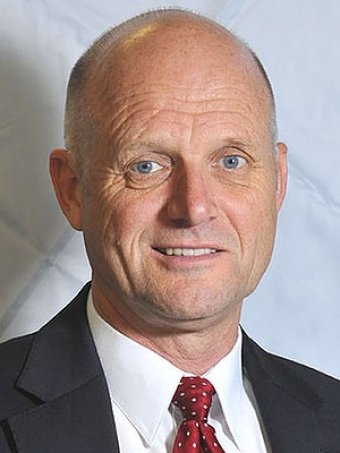
Such provisions have been included in the Freedom to Marry Bill 2014, introduced by Liberal Democratic Senator David Leyonhjelm, and similar rights to ‘conscientiously object’ have also been advocated for by the Australian Human Rights Commissioner, Mr Tim Wilson.

For reasons that I have outlined elsewhere[vi], such provisions should be rejected by the Commonwealth Parliament on the basis that this would set a concerning precedent whereby individuals would be able to discriminate in service delivery on the basis of their personal religious beliefs, and because a social reform which is based on love would be fundamentally undermined by provisions which legitimise hate.

Chapter 5: Freedom of Association

The issues which arise in this Chapter are similar to those raised in Chapter 4: Freedom of Religion. In particular, people like Mr Patrick Parkinson and Family Voice submit that freedom of association should allow religious organisations to discriminate against people who do not “fit with the mission and values of the organisation.”

To a certain extent I agree – churches, mosques and synagogues, indeed all formally and explicitly religious organisations, should be free to include or exclude whoever they want, on whatever basis they want, as ministers of religion and as worshippers or members of their respective congregations.

The ‘whoever they want, on whatever basis they want’ formulation is important – if the people making the case for freedom of religion, and freedom of association, to justify exempting religious organisations from anti-discrimination laws are philosophically consistent, they should be pushing for exceptions to be introduced into the Racial Discrimination Act 1975 and other anti-discrimination schemes as much as they argue for the existing exceptions in the Sex Discrimination Act 1984.

If they do not, then it reveals that they are not genuinely motivated by the pursuit of these freedoms, but are in fact engaged in an exercise in prejudice specifically directed against lesbian, gay, bisexual and transgender people.

In a similar way to Chapter 4, I also disagree that the freedom of association should extend to allow education, health and community services operated by religious organisations to be able to discriminate against people on the basis of their sexual orientation or gender identity.

Any argument that might be raised that these schools, hospitals or aged care facility should have the freedom to include or exclude ‘whoever they want, on whatever basis they want’ is outweighed by the public interest in having education, health and community services provided on a non-discriminatory basis, and specifically by the harm caused to LGBT people by allowing such discrimination to occur.

Thank you again for the opportunity to provide a submission in response to the Interim Report. Please do not hesitate to contact me, at the details below, should you wish to clarify any of the above or to seek additional information.

Sincerely

Alastair Lawrie

[i] https://alastairlawrie.net/2015/02/15/submission-to-australian-law-reform-commission-traditional-rights-and-freedoms-inquiry/

[ii] Full submission at: https://alastairlawrie.net/2014/10/27/submission-to-rights-responsibilities-2014-consultation/

[iii] Human Rights Committee, Toonen v Australia, Communication No. 488/1992, UN Doc CCPR/C/50/D/488/92 and Human Rights Committee, Young v Australia, Communication No. 941/2000, UN Doc CCPR/C/78/D/941/2000.

[iv] “Nothing in Division 1 or 2 affects:

  • the ordination or appointment of priests, ministers of religion or members of any religious order;
  • the training or education of persons seeking ordination or appointment as priests, ministers of religion or members of a religious order;
  • the selection or appointment of persons to perform duties or functions for the purposes of or in connection with, or otherwise to participate in, any religious observance or practice…”

[v] Indeed, it is especially concerning that the Australian Christian Lobby uses the language of ‘supremacy’ in its own submission: “Courts and legislatures need to acknowledge the supremacy of the fundamental rights of freedom of religion, conscience, speech and association… [it is] a freedom which must be placed among the top levels of human rights hierarchy” as quoted at paragraph 4.96 on page 116.

[vi] See: https://alastairlawrie.net/2014/12/21/senator-leyonhjelms-marriage-equality-bill-undermines-the-principle-of-lgbti-anti-discrimination-should-we-still-support-it/

Why we need a full-time LGBTI Commissioner at the Australian Human Rights Commission

As I have written previously, the passage of the Sex Discrimination Amendment (Sexual Orientation, Gender Identity and Intersex Status) Act 2013 was a major achievement for lesbian, gay, bisexual, transgender and intersex (LGBTI) rights in Australia[1].

It provided anti-discrimination protections for LGBTI people under Commonwealth law for the first time – including historic world-first specific protections for people with intersex variations.

However, one thing this legislation did not do was establish a statutory position for a Commissioner for Sexual Orientation, Gender Identity and Intersex (SOGII) Issues within the Australian Human Rights Commission (AHRC) – unlike existing positions for race and sex (indeed, the Sex Discrimination Commissioner is created in section 96 of the same act in which LGBTI anti-discrimination protections now live[2]).

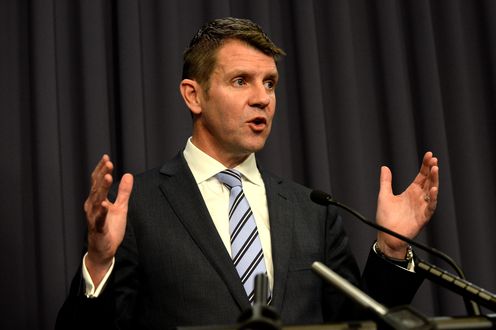
This means there is no guaranteed advocate for LGBTI equality within the AHRC. The current President of the AHRC, Gillian Triggs, has sought to overcome this serious shortcoming by asking the Human Rights Commissioner, Tim Wilson, to also accept responsibility for SOGII issues, in addition to his existing priorities.

Nevertheless, this essentially stop-gap measure does not reconcile the challenges presented when his ‘part-time’ role – his responsibilities for LGBTI matters – conflicts with his full-time role – he was appointed by the Commonwealth Attorney-General, Senator George Brandis, with the explicit mandate to advocate for ‘freedoms’, by which he meant traditional civil liberties as opposed to more contemporary rights like freedom from discrimination.

Over the past 18 months, this tension has played out in a variety of ways, including through the failure of the otherwise worthy Resilient Individuals: Sexual Orientation, Gender Identity & Intersex Rights 2015 Report[3] to adequately address the issue of state-sanctioned discrimination by religious organisations against people simply for being LGBT.

However, this conflict has come to a head in a column which Mr Wilson wrote for The Australian last week on the topic “Religious freedom and same-sex marriage need not be incompatible”[4], in which he argued that, should marriage equality legislation be passed in Australia, new rights should be created to allow not just ministers of religion, but also businesses involved in providing wedding-related services (and yes, that includes businesses selling wedding cakes), to discriminate against customers.

Through this column, Mr Wilson has indicated that his first priority is protecting the freedom to discriminate, and that the right of LGBTI Australians not to be discriminated against comes second (and even then arguably by some distance). He has therefore demonstrated that his roles as Human Rights Commissioner, and ‘part-time’ responsibility for SOGII issues, are incompatible.

In the short-term, lesbian, gay, bisexual, transgender and intersex Australians deserve a Commissioner within the AHRC whose existing responsibilities do not cause them to advocate against their interests. In the medium-term, we need a stand-alone full-time Commissioner for SOGII issues within the Commission, to avoid these problems arising in the future.

I have written below two letters, one to the President of the AHRC, Gillian Triggs, calling for Mr Wilson’s responsibilities for LGBTI matters to be reallocated within the Australian Human Rights Commission.

And I have written a second letter to the Shadow Attorney-General, Mark Dreyfus, asking him to support a resolution at the upcoming ALP National Conference to amend the Labor Party Platform to include a commitment to create a new Commissioner for Sexual Orientation, Gender Identity and Intersex Issues within the AHRC.

I have chosen not to write or send a third letter, to the current Attorney-General, George Brandis, given he likely agrees with the actions of Mr Wilson, and it is extremely unlikely that someone who axed funding for the position of Disability Commissioner (and therefore ended the role of the highly-respected disability rights advocate Graeme Innes) last year, would somehow find funding for the creation of a SOGII Commissioner today.

As always, I will publish any responses I receive from Ms Triggs and Mr Dreyfus.

Professor Gillian Triggs

President

Australian Human Rights Commission

GPO Box 5218

SYDNEY NSW 2001

Sunday 12 July 2015

Dear Professor Triggs

PLEASE REALLOCATE RESPONSIBILITY FOR SEXUAL ORIENTATION, GENDER IDENTITY AND INTERSEX ISSUES WITHIN THE AHRC

I am writing to you about the allocation of responsibility for sexual orientation, gender identity and intersex issues within the Australian Human Rights Commission (AHRC).

Specifically, I call on you to reallocate these responsibilities, which currently lie (informally at least) with the Human Rights Commissioner, Mr Tim Wilson, to another of the Commissioners within the AHRC.

I do so because I believe that the stance which Mr Wilson has adopted, in advocating for traditional freedoms like freedom of religion, has taken precedence over and is increasingly incompatible with the responsibility to advocate for the equal rights, and freedom from discrimination, of lesbian, gay, bisexual, transgender and intersex Australians.

I cite as evidence the column which Mr Wilson wrote for The Australian newspaper, published on Monday 6 July 2015, titled “Religious freedom and same-sex marriage need not be incompatible.”

In this piece, Mr Wilson does the following four things:

First, he argues that the legislation which finally introduces marriage equality in Australia should include new provisions which provide a substantive right to discriminate against couples, not just for ministers of religion (which are already proposed), but also for businesses that provide wedding-related services.

Second, the argument for this appears to be primarily to allow businesses the ability to discriminate against LGBTI couples (so that the individuals who operate these businesses are not “forced to act against their conscience”).

Not only is Mr Wilson raising this issue now as part of the broader discussion around making marriage non-discriminatory on the basis of sexual orientation, gender identity or intersex status – but, just as importantly, there does not appear to be any other public calls for a greater right to discriminate for wedding service providers outside of the marriage equality debate.

Third, the ‘solution’ which he offers, which would allow discrimination by wedding service providers on the basis of the religious (or not) nature of the wedding involved, would allow increased discrimination against a wide range of couples – in practice, this would inevitably include a detrimental impact on some LGBTI couples (although of course they would not be the only ones affected).

Fourth, at a time when one of the last major legal sources of discrimination against LGBTI Australians are the wide-ranging exceptions to anti-discrimination laws which are offered to religious organisations, instead of advocating for the curtailment of these exceptions, Mr Wilson is arguing for establish new rights to discriminate in a key area of public life.

Mr Wilson may well respond to the above description of his column by indicating he is performing his primary role, which is to advocate for traditional rights and freedoms, including the freedom of religion. I am not disputing that view.

However, I submit that, in doing so, he is not fulfilling his ‘part-time’ responsibilities, which include advocating for the removal of discrimination against lesbian, gay, bisexual, transgender and intersex people.

LGBTI Australians deserve better than to have a ‘part-time’ Commissioner for whom, when potential conflict arises between freedom of religion and their freedom from discrimination, as it does in this situation, the former takes precedence.

I urge you to reallocate the responsibility for sexual orientation, gender identity and intersex issues within the Australian Human Rights Commission from Mr Wilson to another Commissioner, hopefully to one where there is less apparent conflict between their primary role and these additional functions.

The only way in which such a conflict can be resolved on a permanent basis would be for the amendment of the Sex Discrimination Act to create, and for Government to appoint, a full-time Sexual Orientation, Gender Identity and Intersex Issues Commissioner within the AHRC. I therefore also urge you to advocate for the creation of such a position by the Government.

Thank you in advance for your consideration of this correspondence.

Sincerely

Alastair Lawrie

President of the Australian Human Rights Commission, Professor Gillian Triggs, should reallocate responsibility for LGBTI issues within the Commission.

President of the Australian Human Rights Commission, Professor Gillian Triggs, should reallocate responsibility for LGBTI issues within the Commission.

Hon Mark Dreyfus QC, MP

Shadow Attorney-General

PO Box 6022

House of Representatives

Parliament House

CANBERRA ACT 2600

Sunday 12 July 2015

Dear Mr Dreyfus

PLEASE SUPPORT THE CREATION OF A COMMISSIONER FOR SEXUAL ORIENTATION, GENDER IDENTITY AND INTERSEX ISSUES WITHIN THE AHRC

I am writing to you about the Sex Discrimination Amendment (Sexual Orientation, Gender Identity and Intersex Status) Act 2013.

Specifically, I call on you to help address one of the outstanding issues of this historic legislation – namely, the failure to create a new statutory position of Sexual Orientation, Gender Identity and Intersex (SOGII) Issues Commissioner within the Australian Human Rights Commission (AHRC).

Without such a position, the rights of lesbian, gay, bisexual, transgender and intersex (LGBTI) Australians are not being as effectively promoted as they could be, and certainly not as effectively as the rights promoted by the statutory Race and Sex Discrimination Commissioners, also within the AHRC.

For example, currently, and in the absence of a statutory position, responsibility for SOGII issues has been allocated, on a ‘part-time’ basis, to the Human Rights Commissioner, Mr Tim Wilson, whose primary role is to advocate for ‘freedoms’, meaning traditional civil liberties as opposed to more contemporary rights like freedom from discrimination.

This means that, not only do issues of discrimination that confront LGBTI Australians not receive sufficient time and resources, but they are also secondary to, and sometimes incompatible with, the promotion of other rights like the freedom of religion.

One example of this incompatibility comes from the column which Mr Wilson wrote for The Australian newspaper, published on Monday 6 July 2015, titled “Religious freedom and same-sex marriage need not be incompatible.”

In this piece, Mr Wilson does the following four things:

First, he argues that the legislation which finally introduces marriage equality in Australia should include new provisions which provide a substantive right to discriminate against couples, not just for ministers of religion (which are already proposed), but also for businesses that provide wedding-related services.

Second, the argument for this appears to be primarily to allow businesses the ability to discriminate against LGBTI couples (so that the individuals who operate these businesses are not “forced to act against their conscience”).

Not only is Mr Wilson raising this issue now as part of the broader discussion around making marriage non-discriminatory on the basis of sexual orientation, gender identity or intersex status – but, just as importantly, there does not appear to be any other public calls for a greater right to discriminate for wedding service providers outside of the marriage equality debate.

Third, the ‘solution’ which he offers, which would allow discrimination by wedding service providers on the basis of the religious (or not) nature of the wedding involved, would allow increased discrimination against a wide range of couples – in practice, this would inevitably include a detrimental impact on some LGBTI couples (although of course they would not be the only ones affected).

Fourth, at a time when one of the last major legal sources of discrimination against LGBTI Australians are the wide-ranging exceptions to anti-discrimination laws which are offered to religious organisations, instead of advocating for the curtailment of these exceptions, Mr Wilson is arguing for establish new rights to discriminate in a key area of public life.

In my opinion as an LGBTI advocate, it is simply not good enough that, when there is a conflict between the freedom of religion and freedom from discrimination, the person with responsibility for SOGII issues within the AHRC promotes the former at the expense of the latter.

The issues of homophobia, biphobia, transphobia and intersexphobia which confront LGBTI Australians, every day, are both real and serious. We deserve a full-time Commissioner within the AHRC to help address these problems – and certainly not a ‘part-time’, informal appointee, whose primary responsibilities can conflict with, and in some instances override, LGBTI rights.

I understand that, at the upcoming ALP National Conference in Melbourne, on July 24-26 2015, there will likely be a resolution to amend the Labor Party Platform to include a commitment to create a new Sexual Orientation, Gender Identity and Intersex Issues Commissioner within the Australian Human Rights Commission.

This resolution is based on recent developments in Victoria, where the new Labor Government has committed to appointing Australia’s first Gender and Sexuality Commissioner within the Victorian Equal Opportunity and Human Rights Commission (VEOHRC)[5].

I call on you, as Shadow Attorney-General, to support moves to amend the Platform in this way, so that the Federal Labor Party can establish the first stand-alone SOGII Commissioner at Commonwealth level when it returns to Government.

Thank you in advance for your consideration of this correspondence.

Sincerely,

Alastair Lawrie

[1] Highs & Lows of 2013, No 2: Australia finally adopts federal anti-discrimination protections for lesbian, gay, bisexual, transgender and intersex people: https://alastairlawrie.net/2013/12/26/no-2-australia-finally-adopts-federal-anti-discrimination-protections-for-lesbian-gay-bisexual-transgender-and-intersex-people/

[2] “Section 96. Sex Discrimination Commissioner. (1) There shall be a Sex Discrimination Commissioner, who shall be appointed by the Governor-General.”

[3] The Resilient Individuals Report is available here: https://www.humanrights.gov.au/our-work/sexual-orientation-sex-gender-identity/publications/resilient-individuals-sexual

[4] http://www.theaustralian.com.au/opinion/religious-freedom-and-same-sex-marriage-need-not-be-incompatible/story-e6frg6zo-1227429558684

[5] VEOHRC Media Release welcoming Budget funding for this appointment: http://www.humanrightscommission.vic.gov.au/index.php/news-and-events/media-releases/item/1225-commission-welcomes-funding-for-lgbti-community-in-state-budget

Submission to South Australian Law Reform Institute Consultation on Removing LGBTIQ Discrimination

South Australian Law Reform Institute

c/- salri@adelaide.edu.au

Monday 6 July 2015


To whom it may concern,

Submission to South Australian Law Reform Institute Consultation on Removing LGBTIQ Discrimination from South Australian Laws

Thank you for the opportunity to provide this submission to the South Australian Law Reform Institute (SALRI) public consultation on removing discrimination against lesbian, gay, bisexual, transgender, intersex and queer people from South Australian laws.

While I am not a resident of South Australia, I am a passionate advocate for LGBTI rights, and I provide the following comments on possible ways to improve the legal situation of LGBTI people in South Australia, especially in terms of their protections under anti-discrimination law.

Specifically, I would like to suggest three major reforms to the South Australian Equal Opportunity Act 1984 (the ‘Act’), namely:

  1. Amend protected attributes to:
    1. Modernise wording around gender identity, and
    2. Genuinely include intersex status.

The Equal Opportunity Act 1984 currently provides protection to lesbian, gay and bisexual people through section 29 (and subsequent provisions of the Act), because of the definition of ‘sexuality’ in section 5: “sexuality means heterosexuality, homosexuality and bisexuality.”

While the SALRI may wish to consider whether to recommend amendments to the wording of these attributes (potentially to ‘sexual orientation’, to ensure consistency with the provisions of the Commonwealth Sex Discrimination Amendment (Sexual Orientation, Gender Identity and Intersex Status) Act 2013), the primary concerns around protected attributes, and how they are drafted, are in respect of transgender and intersex individuals.

For example, protections for transgender people are based on the term ‘chosen gender’, which is defined under sub-section 5(5) of the Act as: “a person is a person of a chosen gender if –

  • the person identifies on a genuine basis as a member of the opposite sex by assuming characteristics of the opposite sex (whether by means of medical intervention, style of dressing or otherwise) or by living, or seeking to live, as a member of the opposite sex…”

Based on my understanding of transgender activism, and through recent developments of anti-discrimination law within Australia, it is highly likely that using the term ‘chosen gender’, and then defining it in this way, is not best practice.

For example, the Commonwealth Sex Discrimination Act 1984 protections are instead based on ‘gender identity’, which is defined in section 4 of that Act as: “gender identity means the gender-related identity, appearance or mannerisms or other gender-related characteristics of a person (whether by way of medical intervention or not), with or without regard to the person’s designated sex at birth.”

The Commonwealth definition appears to be significantly more inclusive, especially because it does not use descriptors such as ‘opposite sex’ and therefore avoids strict gender binaries, allowing people who do not identify as either male or female to also be protected.

I suggest the SALRI consider recommending the South Australian Equal Opportunity Act 1984 be amended to incorporate the term, and definition of, ‘gender identity’ from the Commonwealth Sex Discrimination Act 1984.

In a similar way, it is possible that the drafters of subsection 5(5) of the South Australian Equal Opportunity Act 1984 believed that they were including people with intersex variations, when they wrote: “a person is a person of a chosen gender if – …

  • the person, being of indeterminate sex, identifies on a genuine basis as a member of a particular sex by assuming characteristics of the particular sex (whether by means of medical intervention, style of dressing or otherwise) or by living, or seeking to live, as a member of the particular sex.”

However, once again based on my understanding of intersex activism, and on recent developments in anti-discrimination law (particularly at the Commonwealth level, and more recently in Tasmania), it is clear that this definition is not best practice – and is, in fact, inadequate to ensure protection for people on the basis of intersex status.

For this reason, the SALRI should consider recommending that South Australia adopt the provisions of the Sex Discrimination Amendment (Sexual Orientation, Gender Identity and Intersex Status) Act 2013, which was the first anti-discrimination legislation in the world to include ‘intersex status’ as a stand-alone protected attribute.

As a result of those reforms, ‘intersex status’ is now defined in section 4 of the Commonwealth Sex Discrimination Act 1984 as: “intersex status means the status of having physical, hormonal or genetic features that are:

  • neither wholly female nor wholly male; or
  • a combination of female and male; or
  • neither female nor male.”

Adopting this definition would ensure a far larger proportion of people with intersex variations would have protection under South Australia’s anti-discrimination laws.

Obviously, as a cisgender gay man, I am not an expert on either of the grounds of gender identity or intersex status. That is why these issues have been framed as suggestions – and if this is something that the SALRI wishes to take up in more detail, it should do so in close collaboration with South Australian and/or national transgender and intersex advocacy organisations to ensure that whatever language is ultimately adopted is the best, and most inclusive, possible.

  1. Remove broad exceptions granted to religious organisations

The current exceptions which are offered to religious organisations in the Equal Opportunity Act 1984 are overly generous, and their scope should be significantly narrowed.

Section 50 of the Act provides:

Religious bodies

1. This Part does not render unlawful discrimination in relation to –

a. the ordination or appointment of priests, ministers of religion or members of a religious order; or

b. the training or education of persons seeking ordination or appointment as priests, ministers of religion or members of a religious order; or

ba. the administration of a body established for religious purposes in accordance with the precepts of that religion; or

c. any other practice of a body established for religious purposes that conforms with the precepts of that religion or is necessary to avoid injury to the religious susceptibilities of the adherents of that religion.”

While both subsections 50(1)(a) and (b) appear to be necessary to protect the genuine exercise of freedom of religion, subsection 50(1)(ba) would only be justified on this basis if it was limited to the operation of explicitly or overtly religious bodies (like churches) and should not apply to other institutions which may be operated by religions but which have a different primary purpose (for example, schools, hospitals, aged care services or other community services).

Subsection 50(1)(c) is also completely unjustifiable given it provides what amounts to essentially a ‘blank cheque’ to organisations that are operated by religious groups to discriminate against lesbian, gay, bisexual or transgender (LGBT) South Australians, both in employment and in service delivery.

There should not be a general right to discriminate against LGBT people, across multiple areas of public life like education, health, aged care or community services, simply because of the religious beliefs of certain individuals or organisations. LGBT South Australians deserve the right to access services, and to apply for or undertake employment, in the public sphere without the threat of being discriminated against solely on the basis of who they are.

The Commonwealth Sex Discrimination Amendment (Sexual Orientation, Gender Identity and Intersex Status) Act 2013, which specifically excluded religious exceptions from applying to LGBT people accessing aged care services operated by religious organisations, has successfully demonstrated that:

  1. It is possible to restrict these religious exceptions in law, and
  2. After two years of operation, there have been no practical problems in the application of such provisions.

Even more relevantly, the Tasmanian Anti-Discrimination Act 1998 has not granted explicit exceptions to protections on sexual orientation, gender identity or intersex status to religious organisations – and this approach has also worked well over the past decade.

For example, under the Tasmanian legislation, religious organisations have traditionally only been allowed to discriminate in terms of:

  1. Employment based on religion (section 51)[1] or
  2. Participation in religious observance (section 52)[2].

I suggest that the SALRI consider the long-standing Tasmanian exceptions, which do not allow for general discrimination against LGBTI people on the basis of their sexual orientation, gender identity or intersex status, but only on the grounds of religious belief or activity, as a ‘best practice’ guide to help reform the South Australian Equal Opportunity Act 1984 and therefore improve the anti-discrimination protections which are offered to LGBTI South Australians.[3]

  1. Introduce anti-vilification protections for LGBTI South Australians

The final suggestion relates to the issue of anti-lesbian, gay, bisexual, transgender and intersex vilification.

Specifically, it is to recommend the creation of anti-vilification laws, on the basis of sexual orientation, gender identity and intersex status, which are equivalent to the race-based anti-vilification provisions of the South Australian Racial Vilification Act 1996[4].

To put it bluntly, there is no justification whatsoever to have anti-vilification laws which protect people from racist vilification, but to simultaneously not have anti-vilification laws which apply to homophobia, biphobia, transphobia and intersexphobia.

Homophobia, biphobia, transphobia and intersexphobia are just as unacceptable, and, most importantly, just as harmful, as racism – with significant impacts on the mental health of young LGBTI people in particular. If, as a community, we have (or in this case, South Australia, has) resolved to outlaw racist vilification, then similar laws should also be used to outlaw homophobic, biphobic, transphobic and intersexphobic vilification.

Currently, four Australian jurisdictions (NSW, Queensland, the ACT and Tasmania) have anti-vilification laws which cover (at least some of) the lesbian, gay, bisexual, transgender and intersex communities.

However, given neither the Commonwealth Sex Discrimination Act 1984, nor South Australian law, have any vilification protections on these grounds, none of the LGBTI communities in South Australia have any legal protection from similar conduct.

This situation should change – and I suggest the SALRI recommend the creation of new anti-vilification laws which prohibit vilification on the basis of sexual orientation, gender identity and intersex status.

The past 18 months have seen an extensive community conversation about race-based vilification laws at the Commonwealth level, and specifically whether section 18C of the Racial Discrimination Act 1975 should be repealed, amended or retained.

The outcome of this debate appears to be relatively strong community support for the retention of section 18C. As such, I believe the SALRI should take advantage of this moment to recommend that another marginalised group within Australian society should be offered the same shield against conduct which is similarly destructive.

Thank you again for the opportunity to make a submission to the South Australian Law Reform Institute (SALRI) public consultation on removing discrimination against lesbian, gay, bisexual, transgender, intersex and queer people from South Australian laws.

I look forward to the outcome of this consultation, and to the consequent improvements to South Australia’s laws – hopefully including the reforms to the Equal Opportunity Act 1984 recommended in this submission.

Sincerely,

Alastair Lawrie

[1] “Section 51: Employment based on religion.

(1) A person may discriminate against another person on the ground of religious belief or affiliation or religious activity in relation to employment if the participation of the person in the observance or practice of a particular religion is a genuine occupational qualification or requirement in relation to the employment.

(2) A person may discriminate against another person on the ground of religious belief or affiliation or religious activity in relation to employment in an educational institution that is or is to be conducted in accordance with the tenets, beliefs, teachings, principles or practices or a particular religion if the discrimination is in order to enable, or better enable, the educational institution to be conducted in accordance with those tenets, beliefs, teachings, principles or practices.”

[2] “Section 52: Participation in religious observance.

A person may discriminate against another person on the ground of religious belief or affiliation or religious activity in relation to –

  • the ordination or appointment of a priest; or
  • the training and education of any person seeking ordination or appointment as a priest; or
  • the selection or appointment of a person to participate in any religious observance or practice; or
  • any other act that –
    • is carried out in accordance with the doctrine of a particular religion; and
    • is necessary to avoid offending the religious sensitivities of any person of that religion.”

[3] However, I do not believe there is any reason to include the recently added, unnecessary – and unnecessarily discriminatory – provisions included in section 51A of the Tasmanian Act which state: “Section 51A. Admission of person as student based on religion.

(1) A person may discriminate against another person on the ground of religious belief or affiliation or religious activity in relation to admission of that other person as a student to an educational institution that is or is to be conducted in accordance with the tenets, beliefs, teachings, principles or practices of a particular religion.

(2) Subsection (1) does not apply to a person who is enrolled as a student at the educational institution referred to in that subsection.

(3) Subsection (1) does not permit discrimination on any grounds referred to in section 16 other than those specified in that subsection.

(4) A person may, on a ground specified in subsection (1), discriminate against another person in relation to the admission of the other person as a student to an educational institution, if the educational institution’s policy for the admission of students demonstrates that the criteria for admission relates to the religious belief or affiliation, or religious activity, of the other person, the other person’s parents or the other person’s grandparents.”

[4] Section 4 of the SA Racial Vilification Act provides: “Racial vilification. A person must not, by a public act, incite hatred towards, serious contempt for, or severe ridicule of, a person or group of persons on the ground of their race by –

  • threatening physical harm to the person, or members of the group, or to property of the person or members of the group; or
  • inciting others to threaten physical harm to the person, or members of the group, or to property of the person or members of the group.

Maximum penalty:

If the offender is a body corporate – $25 000.

If the offender is a natural person – $5 000, or imprisonment for 3 years, or both.”

An LGBTI Agenda – Submission on Draft ALP National Platform 2015

The following is my personal submission in response to the National Platform – Consultation Draft of the Australian Labor Party, released ahead of the 2015 National Conference in Melbourne in July.

While, as an individual, I am obviously concerned about a wide range of issues, including health, education, workers’ rights and climate change, this submission focuses on issues relating to the equality and human rights of lesbian, gay, bisexual, transgender and intersex (LGBTI) Australians.

In this respect, despite the inclusion of the following statement in Chapter 1: Labor’s Enduring Values: “[w]e believe in equality for lesbian, gay, bisexual, transgender and intersex Australians, in their daily lives and under the law” (on page 9), and a number of welcome commitments throughout the document (including the strong statement relating to international LGBTI rights, in Chapter 11: Australia’s place in a changing world, at paragraph 31 on page 206), there remain several areas where the National Platform could better deliver on the Party’s promise of LGBTI equality.

In this submission I will make a range of recommendations to improve the Platform with respect to LGBTI issues, and, where relevant, include an explanation of why each change is required. This includes recommendations with respect to intersex issues (based on the recommendations made by OII Australia) and concerning refugee issues (based on the recommendations made by Labor for Refugees, with two additional proposals).

I will also make two recommendations with respect to the Party’s Rules, which will also be debated at the National Conference, and which directly relate to LGBTI equality.

Thank you for the opportunity to make this submission, and for considering its contents.

Alastair Lawrie

Remove religious exceptions to anti-discrimination laws

Recommendation 1: In Chapter 9: A fair go for all, under the heading “Removing discrimination”, on page 167 after paragraph 186, add the following:

“Labor will support the right of lesbian, gay, bisexual and transgender people not to be discriminated against by strengthening the protections currently contained in the Sex Discrimination Act.

Labor will remove the extremely broad exceptions which are granted to religious organisations in sub-section 37(1)(d) of the Act, and to religious schools in section 38, because LGBT people deserve the right not to be discriminated against in the public sphere, which includes health, education, aged care and other community services.”

Explanation

I have included this recommendation first both because I believe it will likely be the last major LGBTI law reform to be achieved in Australia, and because there are multiple references to the right to non-discrimination, including in the workplace, which are scattered throughout the National Platform – Consultation Draft (for example, in Chapter 5: Decent jobs with fair pay and conditions, at paragraph 21 on page 80: “Labor believes in protecting people from discrimination in obtaining and keeping employment” and in Chapter 10: Strong democracy and effective government, at paragraph 58 on page 194: “[s]trengthen laws and expand programs against discrimination and harassment on the basis of sexual orientation and gender identity.”)

If these references are to mean anything – if Labor is genuine about tackling the discrimination which is all-too-frequently experienced by lesbian, gay, bisexual and transgender people – then the Sex Discrimination Act must be amended to ensure LGBT people cannot be discriminated against either as employees, or as people accessing services, across a wide range of the public sphere (health, education, community services, and aged care – as employees only, see below).

The exceptions which would remain in sub-section 37(1) of the Sex Discrimination Act would guarantee that employment within religious bodies like churches, but not in schools, hospitals or other community services, would remain exempt from the requirement not to discriminate, as would the conduct of religious ceremonies, thereby retaining the fundamental freedom of religion.

[Note: The recommendation relates only to LGBT and not LGBTI discrimination because the religious exceptions contained in the Sex Discrimination Act do not operate with respect to intersex status. Nevertheless, it should be highlighted that all state and territory anti-discrimination laws, outside Tasmania, also need to be amended to include intersex status as a protected attribute in the same way as the historic Commonwealth Sex Discrimination Amendment (Sexual Orientation, Gender Identity and Intersex Status) Act 2013.]

Further improve LGBTI equality in aged care services

Recommendation 2: Retain the commitment to LGBTI inclusion in aged care services, as set out in Chapter 6: New opportunities for an ageing Australia, at paragraph 35 on page 95, but add an additional point:

“To help promote a genuinely inclusive aged care environment, Labor will remove exceptions from anti-discrimination law which currently allow religious-operated aged care facilities to discriminate against lesbian, gay, bisexual and transgender employees.”

Explanation

The previous Federal Labor Government had a strong record in LGBTI aged care, in delivering the historic first-ever National LGBTI Ageing and Aged Care Strategy, and in ensuring that, under the historic Sex Discrimination Amendment (Sexual Orientation, Gender Identity and Intersex Status) Act 2013 LGBTI people accessing aged care services would have protection from discrimination.

However, in order to create a genuinely inclusive environment in aged care facilities, and to respect the rights of LGBT employees in the aged care sector, these protections should be expanded to also cover employees (noting that intersex employees should already be covered by the existing law).

Support programs to prevent bullying and harassment of LGBTI students

Recommendation 3: In Chapter 7: A world-class education for all Australians, amend paragraph 10 on page 99 to read:

“The right to education includes an environment free from bullying and harassment, including racist, sexist, homophobic, biphobic, transphobic or intersexphobic bullying and harassment”, and insert a new paragraph in the same Chapter:

“Labor will continue to support and fund national programs to address homophobia, biphobia, transphobia and intersexphobia in schools.”

Explanation

The language change to paragraph 10 is important because, while homophobia is sometimes used as a catch-all for all forms of discrimination against LGBTI people, it is best practice, more accurate and more inclusive to also include references to biphobia, transphobia and intersexphobia.

The previous Federal Labor Government provided initial funding to the National Safe Schools Program in 2013, which is a valuable initiative in addressing LGBTI harassment and bullying, and improving LGBTI inclusion. Given the ongoing challenges in this area, a new Labor Government should commit to continue to support programs like Safe Schools.

Ensure LGBTI content is included in the National Health & Physical Education Curriculum

Recommendation 4: In Chapter 7, after paragraph 37 on page 103, insert a new paragraph:

“Labor acknowledges that the curriculum development process has produced a National Health & Physical Education (HPE) Curriculum that excludes content that is vital to meet the needs of LGBTI students and young people. Labor commits to reviewing the HPE curriculum and producing a new HPE curriculum, that genuinely includes LGBTI students and content, as well as enhanced and inclusive sexual health education.”

Explanation

Chapter 7: A world-class education for all Australians notes, at paragraph 6 on page 98, that “[e]very student in every school should have access to a quality education that meets their individual needs.”

Unfortunately, the National HPE Curriculum that has been developed under successive Governments fails to meet the needs of LGBTI students. It does not even use the words lesbian, gay or bisexual (and does not use the words transgender or intersex in the year level descriptions which set out what is to be taught), and, despite an ‘aspirational statement’ about student diversity, does not guarantee that content relevant to their needs will be taught in classrooms around the country.

The HPE curriculum also fails to ensure that all students, including LGBTI students, will receive comprehensive and inclusive sexual health education. Providing comprehensive sexual health education is also necessary to take action on the statement in Chapter 8: A health system for all, at paragraph 103 on page 132, that “[l]abor recognises the importance of renewing efforts to reduce the spread of HIV/AIDS, sexually-transmitted infections, and blood borne viruses, in partnership with the non-government organisation sector and driven by expert evidence.”

Labor should commit to rectifying these glaring omissions (relating to LGBTI students and content, and sexual health education) in the HPE curriculum.

Abolish the National School Chaplaincy Programme

Recommendation 5: In Chapter 7, after paragraph 44 on page 103, insert a new paragraph:

“Labor will abolish the National School Chaplaincy Programme and redirect moneys saved to support government schooling.”

Explanation

In Chapter 7, paragraph 44 on page 44 starts: “[e]very Australian in every community should have access to high-quality free, secular government schooling.”

The National School Chaplaincy Programme (NSCP), which involves employing people in government (and non-government) schools based on religious affiliation, is in direct contravention of this principle and is a serious misallocation of public resources.

Abolishing the NSCP will:

  • Recommit the Labor Party to supporting genuinely ‘free & secular’ education,
  • Provide an additional $250 million, over four years, to support government schooling, and
  • Remove the risk which some parts of the National School Chaplaincy Programme present to LGBTI students and young people.

Remove out-of-pocket medical expenses for transgender Australians

Recommendation 6: In Chapter 8: A health system for all, insert a new paragraph:

“Labor acknowledges the right of all Australians, including transgender and gender diverse people, to live their gender identity. For many, this includes accessing specialist health services and for some people can involve gender affirmation surgery. Cost should not be a barrier to accessing these services and/or surgery, and Labor commits to removing, wherever possible, out-of-pocket health expenses for transgender people incurred in relation to their gender identity.”

Explanation

In Chapter 8, at paragraph 9 on page 113, it says “[a] fairer and more equitable society is one in which all Australians are able to access high-quality and affordable health care, including any necessary medicines, on the basis of health care need, not their capacity to pay.” It is difficult to see a better application of this principle than in removing out-of-pocket expenses for transgender Australians in accessing health services and/or gender affirmation surgery, incurred in relation to their gender identity.

This goes beyond the commitment at paragraph 78 on page 127 (“[c]ontinue to ensure that Medicare and the PBS supports anti-discriminatory policies for lesbian, gay, bisexual, transgender and intersex Australians and that same sex couples and their families are not discriminated against in their access to Medicare and the Pharmaceutical Benefits Scheme”), because this commitment is about more than simply ‘non-discrimination’, it is about removing price barriers to essential services.

Improve mental health support for LGBTI people, including LGBTI young people

Recommendation 7: In Chapter 8, at paragraph 74 on page 126, amend the last dot point to read:

  • “Act to reduce the rate of youth suicide in rural communities, especially among young men, young Aboriginal and Torres Strait Islander people and young lesbian, gay, bisexual, transgender and intersex people” and

amend the third dot point at paragraph 78 on page 127 to read:

  • “Continue to support programs aimed at prevention of suicide, and for improved mental health, for high risk groups, including lesbian, gay, bisexual, transgender and intersex Australians.”

Explanation

The first amendment is to ensure that any specific regional, rural and remote health policies which are aimed to reducing youth suicide should explicitly include LGBTI young people in these regions as a high-risk group.

The second amendment is recognition that mental health issues for LGBTI people are bigger than ‘just’ suicide prevention, and must include programs for improved mental health more generally.

Support programs to address LGBT homelessness

Recommendation 8: In Chapter 9: A fair go for all, under heading “Homelessness” on page 156, add the following:

“Labor acknowledges the young lesbian, gay, bisexual and transgender people are at significantly higher risk of homelessness, and commits to support dedicated services aimed at addressing this issue.”

Explanation

Lesbian, gay, bisexual and transgender youth experience much greater rates of homelessness than their cisgender heterosexual counterparts. This is in part caused by familial rejection, through challenges posed by school-based, or societal, homophobia, biphobia and transphobia, as well as other factors.

Given the specific causes of LGBT youth homelessness, and the need for cultural sensitivity in responding to the needs of homeless lesbian, gay, bisexual and transgender young people, Labor should support specific programs to deal with this issue.

[Note: I am unaware of research on intersex youth homelessness. Obviously, if such research exists, intersex young people should be added to this recommendation.]

Improve recognition of LGBTI parents in domestic law

Recommendation 9: In Chapter 9: A fair go for all, after paragraph 172 on page 165, add the following:

“Labor will seek national agreement on the recognition of lesbian, gay, bisexual, transgender and intersex parents, based on the principle that LGBTI-inclusive couples should be able to access assisted reproductive technology, to adopt, and to enter into domestic surrogacy arrangements, on an equal basis to cisgender heterosexual couples in every Australian State and Territory.”

Explanation

LGBTI-inclusive families continue to confront a patch-work of different laws around the country, with their ability to lawfully found a family dependent upon where they live.

A newly-elected Labor Government should seek to end this unacceptable situation, and pursue national agreement on consistent recognition of parenting laws, which do not discriminate on the basis of sexual orientation, gender identity or intersex status.

Ensure LGBTI parents have equality in inter-country adoption

Recommendation 10: In Chapter 9, after paragraph 172 on page 165, also add the following:

“Where adoption arrangements already exist between Australia and other countries, Labor will seek to ensure these arrangements are expanded to allow for inter-country adoption by LGBTI parents on an equal basis to cisgender heterosexual people.

Where Australia seeks to enter into new inter-country adoption arrangements, Labor will only sign such arrangements if they treat LGBTI parents equally.”

Explanation

The inter-country adoption arrangement between Australia and South Africa, negotiated in 2014, is the first Australian agreement which allows for LGBTI couples to adopt on an equal basis to non-LGBTI couples.

There is no reason why existing inter-country adoption arrangements should not be renegotiated by a newly-elected Labor Government to treat Australian couples equally irrespective of sexual orientation, gender identity or intersex status, or why the Australian Government should enter into any new agreements unless they are non-discriminatory on the basis of these attributes.

[Note: This is neither an endorsement nor repudiation of the practice of inter-country adoption, merely a resolution which seeks to ensure that, where it exists, it must treat lesbian, gay, bisexual, transgender and intersex Australians fairly.]

Improve LGBTI Inclusion in Sport

Recommendation 11: In Chapter 9: A Fair go for all, under the heading “Sport”, on page 178, after paragraph 265, insert the following paragraphs:

  • “Labor acknowledges the impact of homophobia and biphobia in sport, both on and off the field, and is committed to improving the inclusion of lesbian, gay and bisexual athletes and spectators.
  • Labor acknowledges the serious discrimination experienced by transgender participants in sport, as well as by transgender people off the field, and will work with the Australian Human Rights Commission on measures to address this discrimination.
  • Labor also acknowledges the serious discrimination experienced by intersex athletes, and especially women athletes with intersex variations, as well as intersex people off the field, and will also work with the Australian Human Rights Commission on measures to address this discrimination.”

Explanation

Recent work, by the Australian Human Rights Commission, Out on the Fields and other organisations, has demonstrated the significant issues surrounding homophobia, biphobia, transphobia and intersexphobia in sport. There has already been some work to address homophobia and biphobia, on and off the field, and this work should continue (and be supported).

However, the issues which confront transgender and intersex athletes are greater and, to a large extent, remain unaddressed. These specific challenges should be prioritised by the AHRC and others in coming years, to achieve acceptance for all people in sport, irrespective of sexual orientation, gender identity or intersex status.

Appoint a Spokesperson for LGBTI Equality

Recommendation 12: In Chapter 10: Strong democracy and effective government, on page 194 under the heading “LGBTI place in a stronger democracy”, add the following:

“Labor will appoint a spokesperson for lesbian, gay, bisexual, transgender and intersex equality and, in Government, will establish an office for LGBTI equality within the Department of Prime Minister and Cabinet.”

Explanation

Federal Labor should follow the lead of the recently elected Victorian Labor Government, which has appointed both the first ever Australian Minister for Equality, the Hon Martin Foley MP, and established an Office for Equality within the Victorian Department of Premier and Cabinet.

These moves help to ensure that LGBTI issues have a central point of coordination within Government, and are necessary to prevent LGBTI issues from being left off the political agenda – something which still happens far too often.

Establish an LGBTI Ministerial Advisory Committee

Recommendation 13: In Chapter 10, on page 194, amend the last dot point of paragraph 58 to read:

“Support and engage with communities and stakeholders to provide input into government decision-making, and establish a lesbian, gay, bisexual, transgender and intersex ministerial advisory committee.”

Explanation

There is no need for the equivocation which is currently contained in the National Platform – Consultation Draft on this issue (which reads “including consideration of a … ministerial advisory committee”). This should simply be done, and, together with the appointment of a Spokesperson for LGBTI Equality and Office for LGBTI Equality (recommended above) would provide the overall framework for effective, ongoing engagement between a Labor Government and the LGBTI community.

Appoint a Sexual Orientation, Gender Identity and Intersex Status Commissioner within the Australian Human Rights Commission

Recommendation 14: In Chapter 10, on page 194 under heading “LGBTI place in a stronger democracy”, add the following:

“Labor will amend the Sex Discrimination Act to establish a stand-alone Commissioner for Sexual Orientation, Gender Identity and Intersex Status issues, with equivalent powers, responsibilities and funding to the Sex Discrimination Commissioner.”

Explanation

There is currently no statutory figure within the Australian Human Rights Commission with responsibility for LGBTI issues – instead, these functions are performed on a part-time basis by the Human Rights Commissioner (aka the ‘Freedoms Commissioner’) Tim Wilson.

LGBTI issues, and homophobic, biphobic, transphobic and intersexphobic discrimination, are sufficiently serious to warrant the establishment of a stand-alone Commissioner, with similar powers, responsibilities and funding to the existing Sex Discrimination Commissioner (and this would again match the policies of the recently-elected Victorian Labor Government).

Introduce LGBTI Anti-Vilification Protections

Recommendation 15: In Chapter 10: Strong democracy and effective government, at paragraph 96 on page 199, amend the paragraph to read:

“Labor also recognises that homophobic, biphobic, transphobic and intersexphobic harassment by the written or spoken word causes actual harm, not mere offence, to people with a history of suffering discrimination and prejudice, and particular harm to young same-sex attracted, gender-questioning and intersex people, and considers such harmful harassment is an unacceptable abuse of the responsibilities that come with freedom of speech and must be subject to effective sanctions. As such, Labor will introduce anti-vilification protections for lesbian, gay, bisexual, transgender and intersex Australians, which are based on and equivalent to existing racial vilification protections in the Racial Discrimination Act.”

Explanation

The discussion at paragraphs 95 and 96 is already strong, noting that “Labor stood with the community to successfully oppose the Government’s attack on the Racial Discrimination Act” as well as acknowledging the harms of homophobic harassment, particularly on vulnerable young people.

However, the commitment could be made stronger, both to be more inclusive (by genuinely include bisexual, transgender and intersex people), and to contain a clear and specific commitment to introduce anti-vilification laws. After all, homophobia, biphobia, transphobia and intersexphobia are just as offensive, and harmful, as racism –which means LGBTI Australians also deserve the same protections under the law.

Include LGBTI people in foreign aid

Recommendation 16: In Chapter 11: Australia’s place in a changing world, at paragraph 62 on page 210, amend the paragraph to read:

“Labor’s overseas aid efforts will focus on advancing human rights while addressing important development challenges, including ensuring people have the opportunity to lead healthy and prosperous lives regardless of gender, sexual orientation, gender identity, intersex status, ethnicity, religion or cultural beliefs and with access to shelter, education food and clean water, health and sanitation, and emergency services support.”

Explanation

This paragraph on foreign aid should be amended to include LGBTI people to match the strong statement on support for international LGBTI human rights, which is included at paragraph 31 on page 206 of the same Chapter.

Intersex Recommendations

I support the recommendations made by OII Australia (Organisation Intersex International Australia) in response to the National Platform – Consultation Draft, namely (renumbered here):

Recommendation 17: Inclusion of “intersex status” Change each instance of “sexual orientation and gender identity” to “sexual orientation, gender identity and intersex status” throughout the document.

Recommendation 18: Add specific content about intersex health and human rights Add content on intersex health to the section on “Lesbian, gay, bisexual, transgender and intersex health”, including the following objectives:

  • The deferral of non-necessary medical intervention on infants and children with intersex variations until such times as the person concerned can give informed consent.
  • The prohibition of modifications to sex characteristics undertaken for social rationales, without informed consent.
  • Ensuring that intersex persons’ right not to undergo sex assignment treatment is respected.

Recommendation 19: Create a specific institutional framework In “LGBTI place in a stronger democracy”, remove references to intersex people in discussion about a National Gender Centre. In place of this, add to the section on “Lesbian, gay, bisexual, transgender and intersex health” the following:

  • Fund national intersex-led organisations to provide support to intersex persons and their families, and advocate on intersex issues.

Recommendation 20: End PBS and Medicare discrimination In paragraph 78, recognise that current access to PBS and Medicare remains discriminatory in some contexts. Examples include access to testosterone by women with Complete Androgen Insensitivity Syndrome, and other people with gender markers other than male.

Recommendation 21: End discrimination against intersex women athletes Paragraph 62 should include a commitment to end discrimination against women athletes with intersex variations.

Recommendation 22: Ensure consent and proportionality in improvements to sex or gender markers on identification documents In paragraph 62:

  • Ensure proportionality in the use of sex and gender markers on official documents so that any presence of such markers fulfils a genuine and proportionate need.
  • Ensure that all people with intersex variations are able to exercise autonomy regarding sex/gender markers, and obtain identification options that match their sex characteristics and/or gender identities, as preferred.

As indicated above, I support all of these recommendations (and have incorporated the sport recommendation in my own recommendations, earlier). However, I would like to particularly emphasise OII recommendation 2 (renumbered as recommendation 18 here), which seeks to end the gross violations of human rights which were highlighted by the Senate Community Affairs Committee’s report on “Involuntary or coerced sterilization of intersex people in Australia” in October 2013, and also to note that the failure of Governments to act on these recommendations, almost two years later, should be a national scandal.

Refugee Recommendations

I support all of the recommendations made by Labor for Refugees.

Recommendation 23: In particular, I support their recommendation to amend Chapter 9: A fair go for all, paragraph 225 at page 173, by deleting “To support Australia’s strong border security regime, Labor will maintain:

  • An architecture of excised offshore places; and
  • The non statutory processing on Christmas Island of persons who arrive unauthorised at an excised place, except where other arrangements are entered into under bilateral and regional arrangements”

and replacing it with the following:

  • “Labor will dismantle the architecture of excision and end the associated non-statutory processing or applications for protections visas.
  • Labor will close the detention centres in Nauru and Manus Island.”

Explanation I am opposed to the offshore detention, processing and resettlement of refugees, and believe that the system of offshore detention centres, in Nauru and Manus Island, and the policy of resettlement in Nauru and Papua New Guinea, is cruel and inhumane, and a gross violation of the human rights of people who are simply seeking Australia’s protection.

I am also opposed to these policies as an LGBTI advocate and activist, and note that male homosexuality is currently criminalised by both the Nauru and Papua New Guinea Governments. This makes these environments unsafe for any refugee who is lesbian, gay, bisexual, transgender or intersex.

As such, if the above Labor for Refugees recommendation with respect to paragraph 225 is not agreed, I would propose the following recommendation:

Recommendation 24: “To add to Chapter 9: A fair go for all: Labor will not detain, process or resettle lesbian, gay, bisexual, transgender or intersex refugees in countries which have criminal laws against any of these communities as it makes these places unsafe environments for all of them.”

Irrespective of whether the original or alternative recommendations (or neither) are adopted, I would also make the following additional recommendation:

Recommendation 25: “To add to Chapter 9: A fair go for all: Labor will not return lesbian, gay, bisexual, transgender of intersex refugees to countries which have criminal laws against any of these communities as it makes these places unsafe environments for all of them.”

Changes to the Party Rules

1. Pre-selection of LGBTI candidates

Rule Change 1: The Australian Labor Party Rules should be amended to include the following:

“Labor aims to improve the representation of lesbian, gay, bisexual, transgender and intersex people in the nation’s parliaments. As such, Labor aims to pre-select a minimum of 2% of candidates who are lesbian, gay, bisexual, transgender or intersex for the next Federal Election, scheduled for 2016.

This equates to a minimum of 3 candidates for the House of Representatives (out of 150), and 1 candidate for the Senate (out of a maximum of 40). If there is a double dissolution election, this would increase to a minimum of 2 candidates for the Senate.

Of the pre-selected candidates, at least half should be in ‘winnable’ seats and/or positions – equating to at least 2 candidates in total at a normal election, and at least 3 candidates in total at a double dissolution election.

If Labor does not meet these targets at the Federal Election scheduled for 2016, the Party President and National Policy Forum are instructed to jointly prepare more substantive Rules changes, to be brought to the next National Conference, establishing a system of affirmative action rules for LGBTI candidates in Federal, State and Territory Elections.

If the Party President and National Policy Forum are unable to reach agreement on proposed Rules, they are required to each bring forward proposed Rules changes on this subject for the consideration of National Conference.”

Explanation

There has never been an openly lesbian, gay, bisexual, transgender or intersex Member of the House of Representatives. From any political Party. And there has never been an identified transgender or intersex member of either chamber.

The Labor Party has also only ever had two out LGBTI Senators. There is currently only one identified LGBTI member of a Federal ALP caucus of 80. This stands in marked contrast to comparable Parliaments in Western democracies – with at least 32 lesbian, gay and bisexual MPs elected in the recent UK election.

The Opposition Leader, the Hon Bill Shorten MP, was correct to identify the historic under-representation of LGBTI people in Parliament as an issue when he ran for Party Leader in September and October 2013, and he was right to suggest that targets and/or quotas should be considered as a possible solution to the marginalisation of LGBTI people from elected politics in Australia.

This proposal is an interim step, announcing clear goals for the 2016 Federal Election, targets which, at 2%, could be described as incredibly modest. However, if the ALP is unable to meet even these modest targets then the Party President and National Policy Forum should be required to prepare further Rules changes, including affirmative action rules for LGBTI candidates, to be presented to the next ALP National Conference, and, if they are unable to agree, to bring forward two sets of proposals.

[Note: This is not to preclude other proposals for increased representation of different under-represented groups in Parliament, including Aboriginal and Torres Strait Islander people, especially given the Australian Labor Party has still only ever had one indigenous member of Federal Parliament.]

2. Introduce a binding vote for Marriage Equality

Rule Change 2: Abolish the following paragraph at page 262 of the current ALP Platform and Rules:

“Same sex marriage Conference resolves that the matter of same sex marriage can be freely debated at any state or federal forum of the Australian Labor Party, but any decision reached is not binding on any member of the Party.”

Explanation

The existing Platform’s policy commitment to marriage equality, and the proposed policy commitment in the National Platform – Consultation Draft (in Chapter 9: A fair go for all, at paragraph 190 on page 167: “Labor will amend the Marriage Act to ensure equal access to marriage under statute for all adult couples irrespective of sex who have a mutual commitment to a shared life”) is, of course, welcome.

However, this commitment is undermined by Rules which effectively make an issue of fundamental equality and human rights ‘optional’ for Labor MPs and Senators. This is wrong in principle, it is wrong for a Party based on solidarity and collective action, and it is a position which has actively wronged Australia’s LGBTI community, by further delaying a reform which, had the 2011 National Conference made the right decision, should have been passed in 2012.

It’s time the ALP acknowledged these wrongs, by removing the conscience vote on this issue from the Party’s Rules and adopting a binding vote in favour of marriage equality. #ItsTimeToBind

ALP Party President, and new Senator for NSW, Jenny McAllister, who is co-ordinating the review of the ALP Platform.

ALP Party President, and new Senator for NSW, Jenny McAllister, who is co-ordinating the review of the ALP Platform.

Letter to Bruce Notley-Smith re Baird Liberal-National Government Commitments on NSW Anti-Discrimination Act 1977

Mr Bruce Notley-Smith MP

80 Bronte Road

Bondi Junction NSW 2022

coogee@parliament.nsw.gov.au

Sunday 1 March 2015

Dear Mr Notley-Smith

REVIEW OF NSW ANTI-DISCRIMINATION ACT 1977

I am writing as an attendee at the recent #rainbowvotes forum, where five Members of Parliament from across the political spectrum, including yourself, outlined their respective approaches to lesbian, gay, bisexual, transgender and intersex (LGBTI) issues ahead of the upcoming NSW State Election.

Specifically, I am seeking clarification of your answers concerning the NSW Anti-Discrimination Act 1977 and what action you, and the Liberal-National Government, will take if you are re-elected.

At the forum, the representative attending on behalf of the NSW Labor Opposition, Ms Penny Sharpe MLC, gave a clear commitment that, if elected, a Foley Labor Government would undertake a formal review of the Anti-Discrimination Act 1977.

Following that clear commitment, you made several comments that appeared to indicate your personal support for such an approach.

However, later during the same forum, you indicated that you were appearing at the forum in your capacity as an individual MP only, and not as a spokesperson for the current Baird Liberal-National Government.

As a result, I sought clarification from you, via twitter, whether it is indeed NSW Liberal policy to support a formal review of the Anti-Discrimination Act 1977.

Given I have not received a response via social media, I am now writing to you more formally, with essentially the same question: is the Baird Liberal-National Government committed to reviewing the Anti-Discrimination Act 1977 if it is re-elected on Saturday 28 March 2015?

As I have written previously (see: https://alastairlawrie.net/2015/02/20/questions-for-mps-and-candidates-during-sydney-gay-lesbian-mardi-gras/ ), I believe the NSW Anti-Discrimination Act 1977 is now the worst LGBTI anti-discrimination legislation in Australia.

This is because:

  • It fails for protect bisexual people from discrimination (the only jurisdiction in the country to do so)
  • It fails to protect intersex people from discrimination
  • The religious exceptions in sub-section 56(d) are the broadest in Australia
  • The exceptions allowing all private schools to discriminate against lesbian, gay and transgender students are abhorrent
  • It fails to protect both bisexuals and intersex people from vilification and
  • The maximum individual fine for lesbian, gay and transgender vilification is only one-fifth of the maximum fine for racial vilification.

For all of these reasons, I believe that the Anti-Discrimination Act 1977 should be amended as a matter of priority.

However, if you are unable to give a clear commitment that a re-elected Baird Liberal-National Government would make changes to these provisions, I submit that, at the bare minimum you, and the Government, should be able to commit to holding a formal review of this narrow and out-dated legislation.

Given there are now less than four weeks left until polling day, I would appreciate a response to this letter, outlining what commitments (if any) the Liberal-National Government is prepared to make in this area, at your earliest convenience.

I have also copied the Premier, the Hon Mike Baird MP, and the Attorney-General, the Hon Brad Hazzard MP, into this correspondence.

Thank you in advance for you consideration of the issues raised in this letter.

Sincerely,

Alastair Lawrie

cc: The Hon Mike Baird MP, NSW Premier

GPO Box 5341

Sydney NSW 2001

The Hon Brad Hazzard MP, NSW Attorney-General

GPO Box 5341

Sydney NSW 2001

office@hazzard.minister.nsw.gov.au

Will Liberal Member for Coogee, Bruce Notley-Smith, be able to provide a clear commitment to review the Anti-Discrimination Act 1977?

Will Liberal Member for Coogee, Bruce Notley-Smith, be able to provide a clear commitment to review the Anti-Discrimination Act 1977?

Questions for MPs and Candidates During Sydney Gay & Lesbian Mardi Gras

Today is the official launch of Sydney Gay & Lesbian Mardi Gras, with a large and diverse festival leading up to the 37th official Mardi Gras Parade on Saturday March 7th 2015.

In recent years, as mainstream acceptance of the lesbian, gay, bisexual, transgender and intersex (LGBTI) community has grown, so too has the tendency of politicians, and would-be politicians, to appear at Mardi Gras events as a way of engaging with, and directly appealing to, LGBTI voters.

This year, Sydney Gay & Lesbian Mardi Gras overlaps with the campaign for the NSW State Election, to be held on Saturday March 28th, meaning there will likely be more Members of Parliament and candidates around than ever, trying ever-so-hard to convince us to vote for them.

Which is our opportunity to make them work (or should that be ‘werk’) for it. If MPs and candidates are going to come to our festival, then they should be made to respond to our questions (and it is our responsibility to tell them if and when their answers just aren’t good enough).

Of course, there are lots of different topics we could raise, but one issue which I would like to hear about is what each candidate – and political party – is going to do to fix the NSW Anti-Discrimination Act 1977, which now holds the dubious ‘honour’ of being the worst LGBTI anti-discrimination law in the country.

To start with, it only offers anti-discrimination protections to three of the five letters of the rainbow alphabet: lesbian, gay and transgender people.

That’s right, despite featuring the first gay anti-discrimination protections enacted in Australia (passed in 1982, so early in fact that it preceded the decriminalisation of male homosexuality in NSW by two years), the Anti-Discrimination Act has never formally protected bisexual people from discrimination[1].

All other Australian states and territories, and the Commonwealth, protect bisexuals, either specifically, or as part of ‘sexual orientation’. This ongoing exclusion from the NSW anti-discrimination scheme is nothing short of appalling.

The exclusion of intersex people, while perhaps more understandable – given the first explicit intersex anti-discrimination protections in the world were introduced in the Commonwealth’s Sex Discrimination Amendment (Sexual Orientation, Gender Identity and Intersex Status) Act 2013 less than two years ago (and only Tasmania has since followed suit) – is no less unacceptable.

The NSW Anti-Discrimination Act 1977 also has the broadest religious exceptions in the nation. Sub-section 56(d) effectively gives religious organisations carte blanche to actively discriminate against lesbian, gay and transgender people across most areas of public life.

Sub-section 56(d) states that “[n]othing in this Act affects… any other act or practice of a body established to propagate religion that conforms to the doctrines of that religion or is necessary to avoid injury to the religious susceptibilities of the adherents of that religion”.

That protects pretty much any action that a religious healthcare provider, community service, or school, might wish to take against LG&T employees, or people accessing those services, in this state.

Not that religious schools even need to rely on sub-section 56(d). In two of the most offensive provisions in Australian law today (not just anti-discrimination law, but any law), under the Anti-Discrimination Act all private schools in NSW (yes, even the non-religious ones) can explicitly refuse to enrol, can enrol under different conditions, and can expel, students solely because they are lesbian, gay or transgender.

These provisions are so utterly awful that they bear quoting in full:

Section 49ZO Education

  • It is unlawful for an educational authority to discriminate against a person on the ground of homosexuality:
    1. By refusing or failing to accept the person’s application for admission as a student, or
    2. In the terms on which it is prepared to admit the person as a student.
  • It is unlawful for an educational authority to discriminate against a student on the ground of homosexuality:
    1. By denying the student access, or limiting the student’s access, to any benefit provided by the educational authority, or
    2. By expelling the student or subjecting the student to any other detriment
  • Nothing in this section applies to or in respect of a private educational authority.” [emphasis added]

AND

Section 38K Education

  • It is unlawful for an educational authority to discriminate against a person on transgender grounds:
    1. By refusing or failing to accept the person’s application for admission as a student, or
    2. In the terms on which it is prepared to admit the person as a student.
  • It is unlawful for an educational authority to discriminate against a student on transgender grounds:
    1. By denying the student access, or limiting the student’s access, to any benefit provided by the educational authority, or
    2. By expelling the student or subjecting the student to any other detriment.
  • Nothing in this section applies to or in respect of a private educational authority.” [emphasis added]

There is absolutely no justification for this type of sexual orientation and gender identity segregation in our schools, in any schools. And we should challenge any MP or candidate who comes along to Mardi Gras and attempts to defend it.

The anti-vilification protections of the NSW Anti-Discrimination Act 1977 are only slightly less bad. On the positive side, NSW is one of only four jurisdictions in the country to have some form of anti-vilification laws covering our community – and that is certainly better than the Commonwealth, which has section 18C of the Racial Discrimination Act 1975 for racial vilification, but no LGBTI equivalent.

On the negative side, as with anti-discrimination, NSW legislation only protects against lesbian, gay and transgender vilification, and does not extend to vilification against bisexuals or intersex people.

Meanwhile, on the you’ve-got-to-be-kidding side (or, less politely, the WTF?-side), did you know that the maximum fine which an individual can receive for the offences of homosexual[2] or transgender[3] vilification is actually only one-fifth of the maximum individual fine for racial[4] vilification?

How on earth did anyone ever think that such a distinction – for offences which otherwise have exactly the same wording – was appropriate? More importantly, isn’t anyone who defends such a distinction in effect saying that vilifying lesbian, gay and transgender people is less offensive (perhaps even only one-fifth as bad) than vilifying people on the basis of race?

As you can see, there are many things distinctly wrong with the Anti-Discrimination Act 1997. As a consequence, there are many questions to ask Members of Parliament and candidates who attend Mardi Gras events over the next fortnight-and-a-bit.

And we should be asking those questions, not just at the LGBTI State Election Forum on Wednesday February 25th (details here: http://www.acon.org.au/about-acon/Newsroom/Media-Releases/2014/130 and free tickets here: http://www.eventbrite.com.au/e/nsw-state-election-forum-2015-tickets-15400759085) but also at Mardi Gras Fair Day on Sunday February 22nd, at the Parade on Saturday March 7th (asking them in the Parade marshalling area is probably your best bet), and at any other event at which they hold out a leaflet or put up a corflute.

To assist, I have attempted to summarise the above criticisms of the NSW Anti-Discrimination Act 1977 in the following six questions. Please feel free to use them whenever an MP or candidate might raise their heads during Mardi Gras (or in the run-up to polling day itself):

  1. Will you amend the Anti-Discrimination Act 1977 to protect bisexual and intersex people from discrimination?


  1. Will you repeal sub-section 56(d) of the Anti-Discrimination 1977 which currently grants the broadest religious exceptions to anti-discrimination laws in the country?


  1. Will you repeal sections 49ZO and 38K of the Anti-Discrimination Act 1977 which allow all private schools and colleges the right to refuse enrolment of, impose special conditions on or expel lesbian, gay and transgender students?


  1. Will you amend the Anti-Discrimination Act 1977 to protect bisexual and intersex people from vilification?


  1. Will you amend the Anti-Discrimination Act 1977 to harmonise the penalties for vilification, rather than having a higher penalty for racial vilification than homosexual or transgender vilification? And


  1. If you are unable to make the above commitments, will you at least agree to conduct a review of the Anti-Discrimination Act 1977, which is now the most out-dated and worst LGBTI anti-discrimination law in Australia?

These are the questions which I would like answered during Sydney Gay & Lesbian Mardi Gras. I wonder which MPs and candidates are going to ‘come to the party’ (so to speak) by supporting better anti-discrimination laws for the entire LGBTI community.

"Religious exceptions are this wide." Actually, Premier Baird, they're a lot wider than that. Time to repeal sub-section 56(d) of the NSW Anti-Discrimination Act 1977.

“Religious exceptions are this wide.” Actually, Premier Baird, they’re a lot wider than that. Time to repeal sub-section 56(d) of the  Anti-Discrimination Act 1977.

After much contemplation, Opposition Leader Luke Foley this week finally joined the 21st century by supporting marriage equality. Will he also support a 21st century Anti-Discrimination Act?

After much contemplation, Opposition Leader Luke Foley this week finally joined the 21st century by supporting marriage equality. Will he also support a 21st century Anti-Discrimination Act?

Finally, if you manage to secure a response from MPs or candidates on these questions during Sydney Gay & Lesbian Mardi Gras, whether that response is negative or positive, please leave their answers in the comments section below.

And, if you want to raise them directly with some of the relevant decision-makers, here are some people you might wish to contact:

Liberals

Premier Mike Baird

Email https://www.nsw.gov.au/your-government/contact-premier-new-south-wales

Phone 02 8574 5000

Twitter https://twitter.com/mikebairdMP

Attorney-General Brad Hazzard

Email office@hazzard.minister.gov.au

Phone 02 8574 6000

Twitter https://twitter.com/BradHazzard

Labor

Opposition Leader Luke Foley

Email leader.opposition@parliament.nsw.gov.au

Phone 02 9230 2310

Twitter https://twitter.com/Luke_FoleyNSW

Shadow Attorney-General Paul Lynch

Email ElectorateOffice.Liverpool@parliament.nsw.gov.au

Phone 02 9602 0040

Greens

Attorney-General Portfolio Spokesperson David Shoebridge

Email david.shoebridge@parliament.nsw.gov.au

Phone 02 9230 3030

Twitter https://twitter.com/ShoebridgeMLC

[1] Section 49ZG refers to discrimination on the basis of ‘homosexuality’, with ‘homosexual’ defined in section 4 as ‘homosexual means male or female homosexual’.

[2] Section 49ZTA sets the maximum individual punishment for serious homosexual vilification at 10 penalty units, or imprisonment for 6 months, or both.

[3] Section 38T provides that the maximum individual punishment for serious transgender vilification is 10 penalty units, or imprisonment for 6 months, or both.

[4] Section 20D establishes the maximum individual punishment for serious racial vilification: 50 penalty units, or imprisonment for 6 months, or both.

Senator Leyonhjelm’s Marriage Equality Bill undermines the principle of LGBTI anti-discrimination. Should we still support it?

Liberal Democrat Senator David Leyonhjelm introduced his Freedom to Marry Bill 2014 on Wednesday 26 November. As the name implies, if passed it would provide lesbian, gay, bisexual, transgender and intersex (LGBTI) Australians the freedom to marry their partner, something denied to them currently.

The fact it is being proposed by the Liberal Democrats, and not the Labor Opposition or the Greens, is seen as giving it a greater chance of securing the support of enough Liberal MPs to force Prime Minister Tony Abbott to grant a conscience vote within the Liberal Party, and therefore of having at least some chance of becoming law in 2015.

Which means we should automatically be putting our collective energies behind this Bill, in an effort to ensure its passage through parliament as quickly as possible, shouldn’t we? Well, no actually. Because, while the Leyonhjelm Bill gives marriage equality with one hand, it takes away from LGBTI non-discrimination with the other.

Alongside provisions which would grant all Australian couples the ability to get married, irrespective of sexual orientation, gender identity and intersex status, the Freedom to Marry Bill 2014 would also grant all non-government employed marriage celebrants, including civil celebrants, the ‘right’ to refuse to perform the marriages of LGBTI-inclusive couples.

Currently, section 47 of the Marriage Act 1961 restricts the right to refuse to officiate a marriage to ministers of religion, which is both increasingly irrelevant (given only 27.4% of marriages in 2014 were performed by religious celebrants) and at the very least philosophically consistent with existing exceptions to anti-discrimination laws which are granted to religious organisations.

Instead, the Freedom to Marry Bill 2014 would provide civil celebrants, who now perform 72.5% of weddings (up from 42.1% just twenty years ago), the ability to refuse to officiate marriages for LGBTI-inclusive couples. It would do so without even requiring them to be religious themselves, or to provide an explanation for their refusal – their ‘claims of conscience’ in this regard apparently trump any expectation they should perform their roles in a non-discriminatory manner.

Technically, the Bill grants religious and civil celebrants the right to reject heterosexual couples, too – and this is something that was stressed by Senator Leyonhjelm in spruiking the law to the Sydney Morning Herald in September (“[i]t’s a minor tweak but we envisage that there will be people who wish to specialise as same sex celebrants and they may not want to do conventional weddings. It will work both ways.”).

But, make no mistake, these provisions are squarely aimed at granting civil celebrants the right to refuse service to LGBTI-inclusive couples. That much is made clear by the Explanatory Memorandum to the Bill, which states that “[s]econd, it imposes no claims or burdens of conscience on those persons who object to marriages other than between a man and a woman for both religious and non-religious reasons”. There is no equivalent statement of principle setting out the ‘right’ of celebrants to refuse to perform man/woman marriages.

This view – that the provisions are aimed at allowing all celebrants to refuse LGBTI-inclusive couples (and not heterosexual couples) – is reinforced by the fact the only other specific example of refusal cited is in clause 10 of the Bill (“[i]f a chaplain refuses to solemnise a marriage because the marriage is not the marriage of a man and a woman, the chaplain must, if possible, substitute another chaplain who is willing to solemnise the marriage.”

In short, the Freedom to Marry Bill 2014 goes to great lengths to ensure that civil celebrants can refuse to officiate the marriages of LGBTI Australians, and they can do so for any reason whatsoever.

The instinctive response of many people to these changes is to say “so what, who would want their marriage officiated by someone who doesn’t approve of that marriage anyway?” And of course, there is much validity in this sentiment – as someone who is engaged to be married myself (and has been for almost five years now), I would obviously not want my wedding to be presided over by someone who opposed the fundamental equality of my relationship.

But, if we are to leave our response at that, then we are guilty both of intellectual laziness, and of misunderstanding the role of anti-discrimination protections. Because anti-discrimination laws are designed to protect people from adverse treatment on the basis of particular attributes (in this case, sexual orientation, gender identity and intersex status) in a wide range of areas across society, not simply to reinforce the understandable tendency for people to ‘choose’ employers, or goods and service providers, that are already favourable to them.

To presuppose that people have the ability to ‘choose’ is also to assume everyone has the same level of power or privilege in society that you may have. In many cases this is clearly not true – just because a highly-qualified gay man in inner-Sydney may be able to reject employment by a homophobe, does not mean a less-qualified trans* person in a regional centre with high unemployment would have the same power to do so.

With respect to the Freedom to Marry Bill 2014 in particular, just because LGBTI-inclusive couples in major cities could easily find alternative celebrants, does not mean people in small country towns, or even larger non-metropolitan centres, would have the same ‘freedom’. It is entirely conceivable that, in a place with few celebrants, all may exercise their ‘claim of conscience’ to refuse service.

Indeed, the Explanatory Memorandum concedes the possibility of lack of access to marriage due to geography in discussing the aforementioned defence chaplains provision (“[t]he requirement of ‘possibility’ recognises that there may be circumstances where a willing chaplain cannot be arranged (e.g. if the people involved are in a remote location”).

Why then should the Marriage Act 1961 allow the few civil celebrants that do exist in remote areas to refuse to perform LGBTI-inclusive weddings, imposing on those couples significant extra expense simply because of their sexual orientation, gender identity or intersex status? (After all, wouldn’t that be the definition of adverse treatment?)

There is an even larger problem with these provisions of the Leyonhjelm Bill, however. That is because there is absolutely no ideological or conceptual reason why, if the law is to recognise the ‘claim of conscience’ of a civil celebrant to refuse to officiate an LGBTI-inclusive wedding ceremony, it should not also allow goods and service providers to refuse to host or supply that wedding, for hotels or bed-and-breakfasts to deny accommodation to the couple on their honeymoon, for restaurants to deny reservations to that couple celebrating their wedding anniversary, and even to employers to be able to deny recognition to that relationship in the workplace.

All of these people can have similar, and similarly passionate, views and beliefs opposing LGBTI-inclusive marriages – and, perhaps in a preview of where Australia might be heading, all are the subject of ‘claims of conscience’ by individuals and groups against marriage equality in the United States.

If a claim of conscience exists for a civil celebrant – allowing them to treat LGBTI people unfavourably on the basis of sexual orientation, gender identity and intersex status – then, logically, it should also exist for anyone else in society who has an ‘objection’ to LGBTI equality, whether based on religion or otherwise.

Thus, the civil celebrant provisions of the Freedom to Marry Bill 2014 can be seen for what they are – a dangerous new precedent establishing a fundamental ‘right to discriminate’ against LGBTI Australians, one that goes much further than existing laws granting anti-discrimination exceptions to religious organisations, because they would allow private citizens, without any connection to organised religion, the ability to exercise this ‘right’.

In some respects, these provisions are simply the natural extension of Senator Brandis’ claims earlier in 2014 (in a different context) that “people do have a right to be bigots.” It certainly appears as if Senator Leyonhjelm was listening – with his first private member’s bill, he is promoting the right of civil celebrants to be homophobes (and biphobes, transphobes and intersexphobes, too).

This fits perfectly within his overall political approach as well – when describing the Bill in the Sydney Morning Herald he said “[i]t’s libertarian philosophy: Individuals should be able to discriminate but governments should not.”

It is therefore easy to see this move as the first step in efforts to unwind our relatively comprehensive system of anti-discrimination laws, not just in relation to sexual orientation, gender identity and intersex status, but also race, sex, disability and age (among other attributes).

The threat is that he is not alone in holding such an extremist view of – or more accurately, against – the principle of anti-discrimination generally, and anti-discrimination laws specifically. He is bound to receive significant support from more radical elements within the Liberal and National Parties (such as Senator Bernardi, and even the aforementioned Attorney-General) in this approach.

It will also be cheered on by conservatives in the media (hello Andrew Bolt) and by right-wing think-tanks, such as the Institute of Public Affairs, who hold an inordinate amount of influence over the current Abbott Coalition Government.

In fact, the current Australian Human Rights Commissioner with responsibility for sexual orientation, gender identity and intersex issues, Tim Wilson, made exactly the same arguments as Senator Leyonhjelm when appearing on behalf of the IPA at the Senate Legal and Constitutional Affairs Legislation Committee inquiry into the Human Rights and Anti-Discrimination Exposure Draft Bill in early 2013 (notable quotes including:

  • “We certainly support very strongly discrimination law related to government and the way it operates towards government, but in a broad philosophical concept we [the IPA] are not a big fan of discrimination law being imposed across civil society in the private sector. The private sector should be able to make choices…” (emphasis added)
  • “What we have made crystal clear is we believe that anti-discrimination laws should operate on government. That is different from what operates within the private sector and within a free society…”
  • “Discrimination occurs within society. Sometimes it exists for the right reasons, because there are organisational goals that people, when they freely come together and associate, believe in. People should be allowed to reasonably exercise those and they do themselves a disservice because of something that is not relative to the objective of the organisation. I think that is a very fair and reasonable principle.”
  • “[Y]ou have a human right of freedom of association, you have right of speech; I am not sure I am convinced there is a human right against discrimination, as abhorrent as it is.”)

Viewed in this context, the decision by Senator Leyonhjelm to introduce the civil celebrant ‘claim of conscience’ provisions, as part of the Freedom to Marry Bill 2014, is a very clever move – in the ‘John Howard’ sense of the word. It undermines the principle of LGBTI anti-discrimination as part of a law which simultaneously recognises a separate LGBTI right – to have our relationships treated in the same way as cisgender, heterosexual couples.

The question then is, how should we, as members of the LGBTI community, respond to this Bill? I would argue that the initial response is relatively straightforward – to call on Senator Leyonhjelm to withdraw these aspects of the legislation, so that the forthcoming debate can be solely about the principle of marriage equality, and not also the potential roll-back of LGBTI anti-discrimination laws.

If, as expected, he refuses to amend the Bill, then I believe we should be lobbying the ALP, Greens, crossbench Senators and LGBTI-friendly sections of the Coalition to vote against these provisions in the Parliament. Hopefully, enough votes can be secured on the floor to ensure marriage equality succeeds without establishing a new ‘right to discriminate’ against LGBTI people in the process.

But the most important question comes if this effort is unsuccessful – what should we do if the Bill reaches the final vote, unamended, especially if this is seen as the best chance of securing marriage equality during this term of parliament?

Should we support passage of the Freedom to Marry Bill 2014 even though it actively undermines the principle of LGBTI anti-discrimination? Or should we call for the Bill to be rejected, so that another marriage equality Bill can take its place, in full knowledge it could be delayed until 2017 as a result?

I acknowledge that this is a very difficult question to answer, and that there will obviously be a range of different responses across our community. For my part, I would choose the latter option – because I sincerely believe that the Senator Leyonhjelm Bill is so flawed, in its current state, that it should not be supported.

I write this as someone who strongly believes in marriage equality (both personally, and for our community), but who does not see this one issue as trumping other LGBTI rights which we have either already achieved, or for which we must still campaign.

It took 38 years from the passage of the Racial Discrimination Act 1975 for lesbian, gay, bisexual, transgender and intersex Australians to receive equivalent anti-discrimination protections under Commonwealth law (with the passage of the Sex Discrimination Amendment (Sexual Orientation, Gender Identity and Intersex Status) Act 2013).

To me, it is unconscionable that the very next major Commonwealth law reform concerning LGBTI rights would actively undermine the principles at the heart of the Sex Discrimination Act reforms.

Indeed, one of the most positive features of those amendments was the ‘carve-out’ which meant that Commonwealth-funded aged care services operated by religious organisations cannot discriminate against LGBT people accessing their services (unlike religious organisations in other areas).

This was important not just to protect ageing LGBT individuals and couples who need this care, but also because it set an important precedent, demonstrating that the ‘right’ for religious organisations to discriminate on the basis of sexual orientation and gender identity is not inviolable, thereby paving the way for future reforms in this area.

A victory for Senator Leyonhjelm and the extreme libertarians on the civil celebrant provisions would set an equally-important (and perhaps even more important) precedent in the other direction, establishing the ‘claim of conscience’ for private citizens to discriminate against LGBTI people, for any reason whatsoever, and emboldening them to pursue wider reforms aimed at unwinding anti-discrimination law. I believe this precedent should be denied to them, even if it means marriage equality might be delayed in the process.

Of course, I absolutely respect that other people may reach a different conclusion – that, having waited more than a decade since the Howard Coalition Government’s original homophobic ban on marriage equality in 2004, and the failure of successive Parliaments since then to remedy this injustice, people may be willing to accept the ‘claim of conscience’ provisions in this legislation as simply the price of doing business.

In fact, I suspect the majority of our community may feel that way – if so, I would accept that verdict, and agree we should actively lobby to have the Freedom of Marry Bill 2014 passed in 2015 (while making sure we strengthen our collective resolve to fight against any further moves against LGBTI anti-discrimination protections in the future).

But, as I have attempted to outline above, this is not an easy or straight-forward decision. I believe this debate – whether we are willing to accept a marriage equality Bill that undermines the principle of LGBTI anti-discrimination – is one that we must have first, before the Bill is to be voted upon.

We should not simply ‘sleepwalk’ into supporting the Freedom to Marry Bill 2014 without first considering the consequences. Nor should we automatically allow Senator Leyonhjelm to take the helm of the marriage equality push – because, while he might be an ally in allowing us to say “I do”, he also wants to allow civil celebrants to tell us that they won’t.

Senator Leyonhelm might want you to be able to say "I do", but he also believes civil celebrants should be able to tell you they won't.

Senator Leyonhelm might want you to be able to say “I do”, but he also believes civil celebrants should be able to tell you they won’t.

Submission to Rights & Responsibilities 2014 Consultation

The Human Rights Commissioner, Tim Wilson, is currently undertaking a public consultation called Rights & Responsibilities 2014. Unfortunately, similar to the ALRC Freedoms Inquiry, it is very much focused on ‘traditional’ rights at the expense of other rights like the right to non-discrimination on the basis of sexual orientation, gender identity and intersex status. This post is my submission to this consultation process.

You can find out more about the inquiry, including downloading the Discussion Paper, at the following link: https://www.humanrights.gov.au/rights-responsibilities-2014 Written submissions, including an option to complete an online survey, are due by Friday 14 November 2014. Public consultations are also being held across the country, with a session in Sydney scheduled for Wednesday 19 November 2014 (details at the AHRC website).

Mr Tim Wilson

Human Rights Commissioner

Australian Human Rights Commission

c/- rights2014@humanrights.gov.au

Monday 27 October 2014

Dear Commissioner Wilson

SUBMISSION TO RIGHTS & RESPONSIBILITIES 2014 CONSULTATION

I welcome the opportunity to provide a submission to the Rights & Responsibilities 2014 public consultation, and in particular to provide feedback on the Discussion Paper, of the same name, published on the Australian Human Rights Commission (AHRC) website.

In this submission, I will provide feedback on two of the four rights, or related sets of rights, featured in Appendix A of the discussion paper (namely, the right to freedom of expression, and the right to freedom of thought, conscience and religious worship).

However, before doing so I would like to express my serious concern that the focus of the discussion paper is limited to some rights, which could be characterised as being more ‘traditional’ in nature (for example, the right to property), to the apparent exclusion of other rights which, I believe, are no less important in the contemporary world.

Specifically, I would argue that prioritising certain rights above others potentially neglects and devalues the importance of those other rights which are no less essential to ensuring that all Australians are able to fully participate in modern society. From my point of view, chief among these rights is the right to non-discrimination, or to put it another way (which may be more favourably received), to be free from discrimination, including unfair or adverse treatment on the basis of sexual orientation, gender identity and intersex status.

The right to non-discrimination is fundamental in international human rights law adopted immediately post-World War II. Article 2(1) of the International Covenant on Civil and Political Rights (ICCPR) provides that: “Each State Party to the present Covenant undertakes to respect and to ensure all individuals within its territory and subject to its jurisdiction the rights recognised in the present Covenant, without distinction of any kind such as race, colour, sex, language, religion, political or other opinion, property, birth or other status.”

Similarly, article 21 of the ICCPR establishes that: “All persons are equal before the law and are entitled without any discrimination to the equal protection of the law. In this respect, the law shall prohibit any discrimination and guarantee to all persons equal and effective protection against discrimination on any ground such as race, colour, sex, language, religion, political or other opinion, national or social origin, property, birth or other status.”

The United Nations Human Rights Committee has, in cases which both involved complaints by Australian citizens against actions by the Tasmanian and Commonwealth Government respectively, found that the wording of these articles includes the right to be free from discrimination on the basis of sexual orientation.[1]

The Commonwealth Parliament has also recognised that the right to non-discrimination for lesbian, gay, bisexual, transgender and intersex (LGBTI) Australians is worthy of protection, with the passage of the Sex Discrimination Amendment (Sexual Orientation, Gender Identity and Intersex Status) Act 2013. This historic legislation, providing similar rights to non-discrimination to those already enjoyed on the basis of race, sex, disability and age, was a significant, albeit long overdue, step forward for the LGBTI community.

For this reason, I would not wish to see the right to be free from discrimination on these attributes to be diminished in comparison to other, more ‘traditional’ rights. Unfortunately, that is the almost inevitable conclusion of a consultation process which aims to consider “how effectively we protect people’s human rights and freedoms in Australia” (page 1 of the Discussion Paper) but which then only focuses on a small number of freedoms, including the right to property, and which neglects others.

In this way, the Rights & Responsibilities 2014 Discussion Paper appears to reinforce the message, already made clear by the Attorney-General, Senator the Hon George Brandis’ ‘Freedom Inquiry’ reference to the Australian Law Reform Commission (see http://www.alrc.gov.au/inquiries/freedoms/terms-reference for the terms of reference), that some freedoms are somehow better or more worthy of protection than others. Both inquiries appear to suggest that there is a hierarchy of rights, with ‘traditional’ rights at the top, and other rights, such as the right to non-discrimination, placed below them.

This is particularly concerning when some of those traditional rights being promoted or ‘privileged’ in these consultations, including the right to property and the right to ‘common law protection of personal reputation’ (aka defamation), are rights which are inherently more valuable to those who already enjoy ‘privilege’ within society, while other rights vital to protect the interests of people who are not ‘privileged’ are largely ignored.

Above all, I am concerned that you, in your role as Human Rights Commissioner, should actively participate in the reinforcement of this supposed hierarchy of rights, with the right to non-discrimination placed somewhere toward the bottom – especially as you are also the Commissioner at the AHRC with responsibility for sexual orientation, gender identity and intersex status issues.

I would ask that you reconsider your approach to these issues in the Rights & Responsibilities 2014 consultation process, and, instead of promoting a narrow view of what constitutes fundamental human rights, ensure that other rights, including the right to non-discrimination – or to be free from discrimination – are also given appropriate consideration.

I will now turn my attention to two of the four rights, or related sets of rights, featured in Appendix A of the Discussion Paper.

Right to freedom of expression (page 5 of the Discussion Paper)

I acknowledge the importance of the right to freedom of expression, or freedom of speech. However, I also welcome the Discussion Paper’s statement that freedom of speech is not absolute, in particular where it notes that: “Under international law, freedom of expression may only be limited where it is prescribed by law and deemed necessary to protect the rights or reputations of others, national security, public order, or public health or morals. A mandatory limitation also applies to the right to freedom of expression in relation to ‘any advocacy of national, racial or religious hatred that constitutes incitement to discrimination, hostility or violence’.”[2]

In this context, I question why laws should be established to prohibit ‘advocacy of national, racial or religious hatred’ but not to prohibit advocacy of hatred on other grounds, including sexual orientation, gender identity or intersex status. The impact of vilification on these grounds, and the negative influence of public homophobia, biphobia, transphobia and intersexphobia more generally, is just as harmful as racial or religious vilification. Therefore I can see no good reason why there should not also exist equivalent anti-vilification protections covering LGBTI Australians a Commonwealth level.

It is for this reason that I provided a submission earlier this year in response to the Attorney-General, Senator the Hon George Brandis’, Exposure Draft Bill seeking to repeal section 18C of the Racial Discrimination Act 1975, in which I argued that, instead of abolishing racial vilification laws, similar protections against vilification on the basis of sexual orientation, gender identity and intersex status should be added to the Sex Discrimination Act 1984 (a copy of this submission can be found at the following link: https://alastairlawrie.net/2014/04/24/dont-limit-racial-vilification-protections-introduce-vilification-protections-for-lgbti-australians-instead/ ).

Thus, while I understand the focus of this section of the Discussion Paper is on ensuring that there exist only narrow restrictions on ‘freedom of expression’ (as summed up in the question “how individuals can be held accountable for the use of their freedom of expression outside of law” emphasis added), I submit there remains a proper, indeed necessary, role for legal restrictions on this freedom to protect against the “incitement to discrimination, hostility or violence”.

I further submit that these protections should cover lesbian, gay, bisexual, transgender and intersex Australians against such incitements. I sincerely hope that, in your capacity as both Human Rights Commissioner and AHRC Commissioner with responsibility for sexual orientation, gender identity and intersex status issues, you agree.

Right to freedom of thought, conscience and religious worship (page 6 of the Discussion Paper)

I also acknowledge the fundamental importance of the rights to freedom of thought, conscience and religious worship. I further agree with the Discussion Paper on page 6 where it states that “[t]he internal dimension of the right – the freedom to adopt or hold a belief – is absolute.”

However, just as importantly, I support the statement that “the external dimension – the freedom to manifest that belief in worship, observance, practice or teaching – may be limited by laws when deemed necessary to protect the public safety, order, health or morals, or the fundamental rights and freedoms of others” (emphasis added). This is a vital caveat that allows Governments to protect other individuals and groups against both potential and real harm.

Unfortunately, I do not believe that Australian law currently strikes the right balance between respecting the right to freedom of religious worship, and the harms caused by breaches of the right to non-discrimination on the basis of sexual orientation, gender identity and intersex status.

Specifically, I am concerned that the broad exceptions and/or exemptions which are provided to religious organisations under Commonwealth, state and territory anti-discrimination laws, including those protections added by the Sex Discrimination Amendment (Sexual Orientation, Gender Identity and Intersex Status) Act 2013, are far too generous, and essentially approve the prejudicial and discriminatory treatment of LGBT Australians by religious bodies in a large number of areas of public life[3].

For example, the combined impact of sub-section 37(1)(d) of the amended Sex Discrimination Act 1984 (which provides that “[n]othing in Division 1 or 2 affects… any other act or practice of a body established for religious purposes, being an act or practice that conforms to the doctrines, tenets or beliefs of that religion or is necessary to avoid injury to the religious susceptibility of adherants of that religion”) and section 38 of the same law (which applies to educational institutions established for religious purposes), means that, according to Commonwealth law:

  • Religious schools can freely discriminate against lesbian, gay, bisexual and transgender students, including expelling those students simply for being who they are;
  • Religious schools can also freely discriminate against LGBT staff members, including by refusing to provide or terminating their employment, where sexual orientation and gender identity is completely irrelevant to the ability of that person to perform the duties of the role;
  • Religious health and community services can similarly discriminate, with impunity, against both LGBT employees and potential employees, as well as LGBT individuals and families accessing these services; and
  • Religious aged care services can discriminate against LGBT employees or potential employees.[4]

It is difficult to see how these exemptions, which allow LGBT people to be discriminated against simply as they seek to obtain an education, or access healthcare (which are themselves fundamental international human rights), and to be treated unfairly in employment in a large number of jobs across a wide range of areas, is not a gross breach of their human rights.

It is even more difficult to envisage how these exemptions fit with the statements on page 2 of the Discussion Paper that “[r]ights and freedoms… are about being treated fairly, treating others fairly…” (emphasis added) and that “[l]imits on rights have been established to ensure individuals do not harm others when exercising their own rights.” Religious exceptions and exemptions under Commonwealth, state and territory anti-discrimination laws allow serious harm to be caused to LGBT Australians, on a day-to-day basis and across multiple spheres of public life, and, I assert, should be significantly curbed.

To this end, I believe the religious exemptions which are included in sub-sections 37(1)(a),(b) and (c) of the Sex Discrimination Act 1984[5], if supplemented by exemptions covering how religious ceremonies are conducted, would be both more justifiable in being better targeted to protecting freedom of religious worship itself, and less likely to result in harm to LGBT people through the breach of their right to non-discrimination across broad areas of public life. Therefore, these are the only religious exemptions which should be retained.

This, much narrower, approach to religious exemptions would, in my view, also be a more appropriate outcome of a system of human rights that seeks to both protect fundamental rights, and promote the responsibility not to infringe upon the fundamental rights of others. In this respect, I question why the Discussion Paper does not live up to its title – examining both Rights AND Responsibilities – but instead focuses primarily on the expansion of some rights, including the right to freedom of religious worship, even at the possible expense of others, such as the right to non-discrimination.

For example, the conclusion of the section on “Right to freedom of thought, conscience and religious worship” notes that: “Rights & Responsibilities will focus on:

  • the ways you exercise your right to freedom of religion
  • where restrictions on freedom of religious worship exist
  • whether you have felt restricted or prohibited from exercising your right to freedom of religion
  • what could be done to enable you to exercise your right to freedom of religion.”

This focus presupposes that the only changes with respect to this area of law should be expansions to the ‘freedom of religion’, rather than allowing for the possibility that people claiming to exercise this freedom are in fact unjustifiably and inappropriately infringing upon the rights of others. The Discussion Paper does not seem to even contemplate the possibility that more protections may be needed to shield LGBT Australians from discrimination, perpetrated by religious organisations, but which at this stage is legitimated by exemptions to Commonwealth anti-discrimination law.

I submit that removing these wide-ranging, and overly-generous, religious exemptions is one of the most important, and effective, reforms the Government could make to improve the rights of any group of Australians. I sincerely hope that, as AHRC Commissioner with responsibility for sexual orientation, gender identity and intersex status issues, you agree that LGBT Australians should be free to live their lives without homophobia, biphobia, transphobia and intersexphobia. And to do so without exception. Thank you in advance for your consideration of this submission. Sincerely Alastair Lawrie

Human Rights Commissioner and Rights & Responsibilities 2014 author, Tim Wilson.

Human Rights Commissioner and Rights & Responsibilities 2014 author, Tim Wilson.

[1] Human Rights Committee, Toonen v Australia, Communication No. 488/1992, UN Doc CCPR/C/50/D/488/92 and Human Rights Committee, Young v Australia, Communication No. 941/2000, UN Doc CCPR/C/78/D/941/2000. [2] International Covenant on Civil and Political Rights, Article 20(2). [3] Noting that the religious exemptions contained in the Sex Discrimination Act 1984 do not apply to intersex status, only to sexual orientation and gender identity. [4] Noting that the religious exemptions contained in the Sex Discrimination Act 1984 do not apply to LGBT people accessing aged care services. [5] “Nothing in Division 1 or 2 affects:

  • the ordination or appointment of priests, ministers of religion or members of any religious order;
  • the training or education of persons seeking ordination or appointment as priests, ministers of religion or members of a religious order;
  • the selection or appointment of persons to perform duties or functions for the purposes of or in connection with, or otherwise to participate in, any religious observance or practice…”

Letter to NSW Premier Mike Baird re LGBTI Equality and Conscience Votes

In Question Time on Wednesday 7 May 2014, the Independent Member for Sydney, Alex Greenwich MP, asked the new Liberal-National Premier, the Hon Mike Baird MP, about his, and his Government’s, support for the lesbian, gay, bisexual, transgender and intersex (LGBTI) community of NSW.

I have reproduced the text of both the question and answer below, along with highlighting a couple of points of particular interest:

LESBIAN, GAY, BISEXUAL, TRANSGENDER AND INTERSEX COMMUNITY SUPPORT

Mr ALEX GREENWICH: My question is addressed to the Premier. Will he build on the support of previous Premiers for the lesbian, gay, bisexual, transgender and intersex communities, including supporting ACON, the Sydney Gay and Lesbian Mardi Gras, Twenty10 and the Gender Centre, and allowing at least a free vote on lesbian, gay, bisexual, transgender and intersex-related legislation?

Mr MIKE BAIRD: I thank the member for his sensible question and for the work he does in his community. One of the hallmarks of my Government will be respect for all people and all communities. My Government will not judge people on the basis of race, religion or sexuality. My Government will judge each individual by how he or she behaves and what he or she contributes to the community and those around them. Discrimination against any individual or group on the basis of race, religion or sexuality has no place in New South Wales. Members of the lesbian, gay, bisexual, transgender and intersex community can continue to have the Government as a great supporter. I give the same personal commitment as Premier. One of the biggestevents staged in Sydney every year is the Gay and Lesbian Mardi Gras parade, which enjoys strong bipartisan support. It has enjoyed funding since 2009, which continues under a Liberal-Nationals Government, and some 20,000 overseas and interstate visitors generate approximately $30 million for the visitor economy.

This financial year the Government has provided more than $300,000 in funding for ACON to deliver a range of HIV prevention, care and support programs for people with HIV, sex workers, outreach projects, and needle and syringe programs. Earlier this year the Government and ACON jointly funded the Ending HIV campaign. In 2013-14 the Government has provided more than $600,000 to the Gender Centre and Twenty10, which is a non-profit welfare organisation located in Chippendale that has been operating for more than 30 years. Government support is provided through the Sydney West Local Health District Youth Service and the Department of Family and Community Services. I thank and admire the hardworking staff at these organisations for the work they do in the community.

In August this year the Gay Rugby World Cup, known as the Bingham Cup, is coming to Sydney. The Government will provide financial and in-kind support for up to 40 teams from 15 countries. Some 1,500 players and 10,000 spectators will flock to the event. I refer to conscience votes and pay tribute to the former Premier. His leadership on matters of conscience was exemplary and showed this Parliament how members should respond on matters of conscience. I say to the member for Sydney that my position will be exactly the same as the position of the former Premier, who showed great leadership on matters of conscience; so too will the Government I lead. I look forward to working together on these issues.

The two issues highlighted – the unequivocal commitment to equality based on sexuality, and the question of when a conscience vote should be granted – have prompted me to write the following letter to Mr Baird.

The Hon Mike Baird MP

Premier of NSW

GPO Box 5341

Sydney NSW 2001

Sunday 25 May 2014

Dear Premier Baird

SUPPORT FOR THE LGBTI COMMUNITY OF NSW

I am writing regarding the answer which you gave in the Legislative Assembly on Wednesday 7 May 2014 to a question from the Member for Sydney about your, and your Government’s, support for the lesbian, gay, bisexual, transgender and intersex (LGBTI) community of NSW.

In particular, I would like to ask you questions about two of the comments which you gave. First, I note that in your answer you said the following:

“Discrimination against any individual or group on the basis of race, religion or sexuality has no place in New South Wales. Members of the lesbian, gay, bisexual, transgender and intersex community can continue to have the Government as a great supporter. I give the same personal commitment as Premier.”

I am interested to know how far your personal commitment to and support for the LGBTI community extends. Specifically, in this quote you state that “[d]iscrimination against any individual or group on the basis of… sexuality has no place in New South Wales” and yet you have previously voted against equal adoption rights for same-sex couples.

Does this statement, which contains no equivocation, mean that you now concede your previous position on same-sex adoption was wrong? Will you give an explicit commitment to support equal adoption and other parenting rights for LGBTI couples and families in the future?

Given the absence of any qualifications on your support for non-discrimination on the basis of sexuality, I am also interested to know your position on the exceptions which are offered to religious organisations under the Anti-Discrimination Act 1977. These exceptions significantly and substantively undermine the anti-discrimination protections which currently exist for lesbian, gay and trans* people in NSW.

Do you support the removal of religious exceptions, such as section 56(d), from the NSW Anti-Discrimination Act 1977 in order to better protect LGBTI people from discrimination? Or do you wish to amend the answer that you gave in Question Time to instead read: “[d[iscrimination against any individual or group on the basis of… sexuality has no place in New South Wales unless it is performed by a religious organisation, in which case such actions will be protected by law”?

Secondly, I would like to find out more details about your position on conscience votes regarding LGBTI rights. In your answer in Parliament, you made the following comment:

“I say to the member for Sydney that my position will be exactly the same as the position of the former Premier, who showed great leadership on matters of conscience; so too will the Government I lead.”

It is unclear from this answer exactly where you would draw the line on conscience votes. It is assumed that this means you would allow a conscience vote on same-sex marriage were it to return to the NSW Parliament for a fresh vote (although, given the High Court’s decision last December, that would appear to be both unlikely and unproductive).

Alternatively, does this mean that you would allow conscience votes for Liberal and National Party members if Bills were introduced seeking to wind back rights which are already enjoyed by LGBTI people in NSW? For example, would you support a conscience vote on a Bill which sought to remove the equal rights of same-sex couples to adopt? It would be disappointing if your Government did anything other than vote against such a Bill en bloc.

It is also expected that legislation will be introduced in the next few months which seeks to allow gay and bisexual men who were convicted because of the illegality of homosexuality before 1984, and because of the unequal age of consent between 1984 and 2003, to have their convictions expunged. This Bill will go some way to redressing the very real injustices, and long-term consequences, caused by the homophobic criminalization of homosexuality, and the equally homophobic unequal age of consent.

Again, it would be incredibly disappointing if members of the Government were free to vote against such a Bill, especially because the only way that this Bill would be a ‘matter of conscience’ for an MP is if they still believed that sexual intercourse between men was morally wrong.

For these reasons, I would greatly appreciate it if you could clarify your position on conscience votes, in particular whether they would extend beyond state-based same-sex marriage, and whether you would allow Liberal-National Government MPs to vote to repeal same-sex adoption rights, or to vote against the expungement of historical convictions.

Thank you in advance for considering the issues and questions raised in this correspondence.

Sincerely,

Alastair Lawrie

How far does Premier Baird's support for the LGBTI community extend? (image source: The Conversation).

How far does Premier Baird’s support for the LGBTI community really extend? (image source: The Conversation).

2014 GLORIAs Form Guide

The 2014 annual GLORIAs (standing for Gay & Lesbian Outrageous, Ridiculous and Ignorant comment Awards) are coming up next week – Wednesday 14 May.

I enjoy the GLORIAs for a few reasons, not the least of which is host David Marr’s dry wit. The awards are also an important reminder that, no matter how much progress we have made, and continue to make, towards legal equality, the battle against homophobia, transphobia, biphobia and anti-intersex prejudice in social and cultural life goes on.

The GLORIAs, like the Ernies (for misogyny), are a way to hold bigots to account for the awful things that they say – it is a chance for our community to ‘take revenge’ and tell them that enough is enough. Oh, and did I mention that it is usually quite a fun night? Tickets are available here: <http://www.trybooking.com/Booking/BookingEventSummary.aspx?eid=83377

Voting for the worst comment in each of the six categories (International, Media, Politics/Law, Religion, Silliest comment within the LGBTI community, and Sport) is also open online until 5pm on the evening of the 14th: <http://www.theglorias.com.au/home So, get voting.

I have reproduced the nominees from the 6 categories below, along with the person I voted for, who I think will win, and a space to update with the name of each winner after the event. I would love to hear your thoughts on whether you agree or disagree with my reasoning.

And one final thing, thanks should go to lesbian Labor MLC Penny Sharpe, and her staff, for organising the event (which, it should be pointed out, especially after recent events at ICAC, is NOT a political fundraiser).

1. The worst INTERNATIONAL Comment of the year:

Mary Baker, Tea Party activist and leader of Conservative Moms for America: “Gay Supremacy is becoming a monster that carries greater evils than white supremacy ever did.”

Guido Barilla (of Barilla pasta fame): “For us the concept of the sacred family remains one of the fundamental values of the company… I have no respect for adoption by gay families because this concerns a person who is not able to choose”.

Brunei for adopting a new penal code that calls for death by stoning for consenting same-sex sexual activity, adultery, rape, extramarital sexual relations, and for declaring oneself to be non-Muslim.

India’s Supreme Court has refused to review the ban on gay sex it imposed last month, rejecting arguments from civil rights campaigners and the Indian government that the move was unconstitutional.

Delta County School Board member Katherine Svenson said she opposed the recently passed laws in California and Massachusetts that allow transgender students equal access to school facilities such as locker rooms and bathrooms: “I just want to emphasise: not in this district. Not until the plumbing’s changed. There would have to be castration in order to pass something like that around here.”

Nigerian President Goodluck Jonathan signed a bill on Monday that criminalizes same-sex relationships, contains penalties of up to 14 years in prison and bans gay marriage, same-sex “amorous relationships” and membership in gay rights groups.

Zimbabwe President Robert Mugabe described homosexuals as “worse than pigs, goats and birds” and “If you take men and lock them in a house for five years and tell them to come up with two children and they fail to do that, then we will chop off their heads.

Gambian President Yahya Jammeh: “We will fight these vermins called homosexuals or gays the same way we are fighting malaria-causing mosquitoes, if not more aggressively… As far as I am concerned, LGBT can only stand for Leprosy, Gonorrhoea, Bacteria and Tuberculosis; all of which are detrimental to human existence.”

Ugandan President Yoweri Museveni: “Homosexuals are actually mercenaries. They are heterosexual people but because of money they say they are homosexuals. These are prostitutes because of money”

Ugandan Ethics & Integrity Minister Simon Lokodo: “It is a social style of life that is acquired… They chose to be homosexual and are trying to recruit others. … If they were doing it in their own rooms we wouldn’t mind, but when they go for children, that’s not fair. They are beasts of the forest…. Homosexuality is unnatural, abnormal and strange to our cultures… It has no output whatsoever; it only does damage and destruction. You cannot have a right to be a sick human being. There is no right in homosexuality. It must be cured…. Excretion is through the anus, like the exhaust of an engine. The human body receives what it takes from the mouth. They’re twisting nature the wrong way. Homosexuality will destroy humanity because there is no procreation; it will destroy health because the backsides will not hold.”

Michelle Bachmann: “… the gay community, they have so bullied the American people, and they’ve so intimidated politicians. The politicians fear them, so that they think they get to dictate the agenda everywhere.”

Russian President Vladimir Putin: “We do not have a ban on non-traditional sexual relationships. We have a ban on the propaganda of homosexuality and paedophilia… You can feel relaxed and calm [in Russia], but leave children alone please”

Who I voted for: Simon Lokodo, for demonstrating in one long quote just how ‘anally-focused’ many homophobes tend to be.

Who I think will win: This has to be the toughest category to predict. Each of Ugandan President Yoweri Museveni, Gambian President Yahya Jammeh (and his acronym) and perennial nominee Zimbabwean President Robert Mugabe has a strong claim but, simply given the attention his position attracted in the lead-up to Sochi, I suspect Russian President Vladimir Putin might ice-skate his way across the line.

Who did win: In a pleasant surprise (and possibly because of he extremely unpleasant nature of the comments) Simon Lokodo.

2. The worst MEDIA comment of the year:

A poster advertising the Brisbane Queer Film Festival that featured two men kissing was deemed too explicit and banned by Brisbane City Council.

Des Houghton columnist for the Courier Mail for the column ‘Dangers Lurk on Queer Street’: “Is the push for gay marriage just another fad like chai latte with Mt Kosciuszko yak milk, fixed-wheel bicycles and Vietnamese pork belly buns?” (read it here http://www.couriermail.com.au/news/opinion/opinion-dangers-lurk-on-queer-street/story-fnihsr9v-1226703120375).

This ad for The Yellow Pages: http://www.youtube.com/watch?v=NHVjKta5FTk&feature=youtu.be&noredirect=1

Andrew Bolt: “ABC staff must call Manning a woman even when he’s still a man, just because he says so. Just like I must call a white… No. Best not go there.”

Editorial in the Bairnsdale Advertiser ‘Trans-genderism is the enemy of healthy childhood development’.

Who I voted for: Des Houghton, because if you read the entirety of his column, you get an insight into how unhappy his world must be now that the LGBTI community has the temerity to demand genuine equality.

Who I think will win: The explicitly transphobic nature of Andrew Bolt’s column must make him a strong contender.

Who did win: The Bairnsdale Advertiser.

3. The worst POLITICS / LAW comment of the year:

Tasmanian “True Green” party representative Andrew Roberts’s election leaflets: “Most parents will admit that they do not want their kiddies growing up to be more and more corrupted, as they will witness an ever increasing sodomite and lesbian behaviour in public like it’s ‘the norm,’” says the flyer, which associates gay people with disease, child abuse and drug abuse, and calls for the recriminalisation of homosexuality in Tasmania.

Dennis Jensen MP for Tangney WA, speaking on the Marriage Equality Amendment Bill 2013: “This bill is a piece of enabling legislation: it enables the dismantling of society as we know it. In essence, this bill is the apotheosis of a movement bent on legislating a social experiment. Gay marriage is a social experiment. Social experiments have poor results when viewed historically. One need only think of phrenology and eugenics, both of which, thankfully, have been consigned to the dustbins of history but not before having damaging social consequences…”

Federal election campaign flyer in Moreton, QLD with a picture of a crying child stating “I want my mum and dad … Loving kids and respecting their rights means keeping marriage laws that put kids first” (source unknown), https://www.facebook.com/TheGLORIAs/posts/508063229281606

Joe Bullock (Labor Senator-Elect) on running mate Senator Louise Pratt: “she’s a lesbian I think, although after her partner’s sex change I can’t be sure”.

Fred Nile’s (#3) speech in Parliament in support of Reparative Therapy (gay cure therapy). Hansard 14 November 2013.

NSW Premier Mike Baird for his views on “choosing to live a homosexual lifestyle” and his refusal to answer questions about this statement at a press conference after he became Premier.

George Brandis for this on QandA: TONY JONES: But just on principle, you are saying that religious freedom supersedes the freedom of your sexuality? GEORGE BRANDIS: Yes, I am, as a matter of fact. Yes, I am.

Fred Nile (#2) on the NSW Same-Sex Marriage Bill: The so-called marriage between two males is unnatural. Homosexual relations between a male and a male are strongly forbidden in both the Old Testament and the New Testament—in the New Testament particularly by Apostles Paul and Peter and, by implication, by the moral teachings of Jesus Christ. I believe that God’s creative purpose for planet Earth—which is a sensitive issue to discuss—is that the basis for the foundation of the family and the continuation of the human race is the institution of marriage.

Tony Abbott, discussing marriage equality: “I’m not saying our culture, our traditions are perfect but we have to respect them… … I’m not someone who wants to see radical change based on the fashion of the moment.”

A fundraising event for the Liberal Party hosted by Victorian Premier Denis Napthine has seen independent Frankston MP Geoff Shaw ridiculed as a “poofter bastard” by comedian Nick Giannopoulos in front of more than 300 guests.

Fred Nile (#1) for this section of Christian Democratic Party’s National Charter: (c) GOD’S GIFT OF SEX: We believe that God has established laws of sexual morality for the well-being of society prohibiting pornography, adultery, incest, homosexuality, and other sexual aberrations which debase man, as well as defile and pollute our nation. (Note that ‘homosexuality’ is listed after ‘incest’).

Alby Schultz: “I think it is abominable that gay activists continue to focus on and manipulate civil rights strategies to justify claims for same-sex marriage and keep using accusations of discrimination, inequality and homophobia to intimidate politicians and the general public.”

Cory Bernardi’s book ‘The Conservative Revolution’.

WA Liberal Upper House Member Nick Goiran for linking gay marriage to incest in a speech in Parliament.

Federal election campaign flyer in Jagajaga, VIC: “Jenny Macklin voted for same-sex marriage. Same-sex marriage WILL MEAN same-sex education in kindergartens and schools” (source unknown): https://www.facebook.com/photo.php?fbid=5080622 “92615033&set=a.358377574250173.91788.274008212687110&type=1&theatre

Who I voted for: George Brandis (and not just because it was my question on #QandA which precipitated the exchange between Tony Jones and him). Despite other comments being more overtly ‘offensive’, the fact that the then shadow/now Commonwealth Attorney-General was prepared to say, without any qualification whatsoever, that religious rights automatically trump LGBTI rights is, when you think about it, actually pretty outrageous.

Who I think will win: While I’m not confident of this prediction, the combination of the popularity or marriage equality, and current lack of popularity of our Prime Minister, makes me think Tony Abbott could take home the gong.

Who did win: As predicted Tony Abbott took out the gong (better luck next year Senator Brandis).

4. The worst RELIGION comment of the year:

Pastor Kevin Swanson of the Colorado based Reformation Church, thinks that the Disney movie ‘Frozen’ indoctrinates five-year-olds into lesbianism and bestiality: “You wonder sometimes if maybe there’s something very evil happening here … I wonder if people are thinking: ‘You know I think this cute little movie is going to indoctrinate my 5-year-old to be a lesbian or treat homosexuality or bestiality in a light sort of way.’”

Far-right American Christian author Linda Harvey blames gay teens for running away from ‘heart-broken’ homophobic parents who want to control their lives – saying they only have themselves to blame for their homelessness.

Australian Christian Lobby/Lyle Shelton for the Media Release ‘Rudd’s change on marriage sets up a new stolen generation’: “Australian Christian Lobby Managing Director Lyle Shelton said Kevin Rudd’s overnight change of mind on redefining marriage ignored the consequence of robbing children of their biological identity through same-sex surrogacy and other assisted reproductive technologies”.

Ex-Anglican Archbishop Peter Jensen: ”How do two men have sexual union? …You have joined a couple of people together at a spot where they shouldn’t be joined together, really.”

Penrith Christian School’s statement which includes the following: “We believe that homosexuality and specific acts of homosexuality are an abomination unto God, a perversion of the natural order and not to be entered into by His people.” And “We believe the practice of attempting to or changing ones gender through surgical and/or hormonal or artificial genetic means is contrary to the natural order ordained by God.”

Who I voted for: Peter Jensen. In Australia we often judge religious (and political – see Simon Lokodo’s comments, earlier) leaders in other countries for making anal sex-obsessed homophobic comments. Last year, we had the leader of the Anglican Church right here in Sydney saying basically the same thing. The fact he has now retired and may not be nominated again provided another incentive for this vote.

Who I think will win: It’s hard to look past the ACL media release equating Kevin Rudd’s support for marriage equality with the stolen generations as a ‘winner’. Which reminds me: can we officially make an Australian version of Godwin’s Law that the first person to bring up the stolen generations in an unrelated argument automatically loses?

Who did win: Penrith Christian School (NB I also collected the GLORIA for the person who nominated them, even though I still would have preferred Peter Jensen to have won).

5. The SILLIEST GLBTI comment from someone within the GLBTI community

Openly Gay Federal Election Liberal candidate for Sydney Sean O’Connor for preferencing the Christian Democratic Party (CDP) on his How To Vote card above Tanya Plibersek for Labor and The Greens (See:http://www.starobserver.com.au/news/local-news/new-south-wales-news/gay-liberal-candidate-prefers-reverend-fred-niles-party-for-sydney/108672).

Brian Coleman, the gay former Conservative London Assembly Member and ex-mayor of Barnet who described the Marriage (Same Sex Couples) Act as a “silly” and “dreadful” piece of legislation.

Gay CNN host Don Lemon talking about ex-figure skater Johnny Weir: “No one likes a gay minstrel show … so let’s just put that out there. About some of his flamboyant and over the top and all those, it seems those are the people who get the attention, but they don’t represent all of gay America.”

Who I voted for: Don Lemon. The idea of calling someone else who could be described as camp (possibly something of an understatement) as a ‘gay minstrel’ reveals much more about Don Lemon than it does about Johnny Weir. We need to accept people for whoever they are, and however they choose to express themselves. At the same time, it is not the responsibility of each and every gay man in public life to be the sole representation or role model of gay life, either in America or elsewhere.

Who I think will win: Don Lemon.

Who did win: Sean O’Connor (who, like Duncan Gay last year, had the good grace – and PR advice – to attend and collect the award in person).

6. The worst SPORT comment of the year:

Newcastle Knights NRL footballer Ryan Stig who posted a long message to Facebook and Twitter titled ‘Homosexuality demonic work’ about his opposition to marriage equality: “Homosexuality is a fairly good example of distortion of design for fairly obvious reasons. When laws such as this … are created it makes covenant with unseen realms of the demonic which work to infiltrate and come against the thought lives of our cities states [sic] and nations”.

Anthony Mundine for this comment about Redfern Now: “Watching redfern now & they promoting homosexuality! (Like it’s ok in our culture) that ain’t in our culture & our ancestors would have there head for it! Like my dad told me GOD made ADAM & EVE not Adam & Steve,” he wrote.

Alex Rodrigo Dias da Costa, former Chelsea player: “We love everyone but do not like those who do not stand for what the Bible says. But this is not homophobia…. I don’t agree that it is OK that a man lives with another man and a woman with a woman.”

PGA Golfer Steve Elkington for this tweet regarding openly gay NFL hopeful, Michael Sam: “ESPN reporting Michael Sam is leading the handbag throw at NFL combine …. No one else expected to throw today”.

Who I voted for: Anthony Mundine, not just because the comment was idiotic, or because of his repetition of the immensely stupid catch-phrase ‘Adam & Steve’, but because he disparaged the wonderful Redfern Now. At least his ignorant twitter outburst had the positive outcome of helping to inspire the creation of the Black Rainbow facebook community.

Who I think will win: Anthony Mundine, although the long-on-content but short-on-intelligence rant from Ryan Stig could be a very close second.

Who did win: Anthony Mundine (in a well-deserved effort).

Stand-in host Barbara Blacksheep, performing the now-accustomary lip-synch of 'Gloria'.

Stand-in host Barbra Blacksheep, performing the now-accustomary lip-synch of ‘Gloria’.

The Golden GLORIA

This is particularly difficult to predict, given the winner must come from the 6 winners of the above categories, and is then decided by a ‘boo-off’ on the night. Still, I will put forward my preference, and hazard a guess who the community might help ‘elect’ as the prestigious title-holder for the next 12 months, replacing the outgoing winner, NSW Roads Minister The Hon Duncan Gay.

Who I want to win: George Brandis. As explained above, I find his elevation of the religious ‘freedom to discriminate’ above the LGBTI community’s right not to be discriminated against offensive in the extreme. For more on why, feel free to read my earlier column: The last major battle for gay & lesbian legal equality in Australia won’t be about marriage, here: <https://alastairlawrie.net/2014/02/26/the-last-major-battle-for-gay-lesbian-legal-equality-in-australia-wont-be-about-marriage/

Who I think will win: Perhaps Vladimir Putin, or maybe Yahya Jammeh.

Who did win: Well, after winning his category, and in a decision which is possibly somewhat related to the unpopularity of last night’s Federal Budget, the winner of the 2014 Golden GLORIA, was Prime Minister Tony Abbott.

One final category, which wasn’t in the program, but which was awarded for the first time on the night, was the inaugural ‘good’ GLORIA, for people or organisations which have shown the most improvement in terms of accepting LGBTI people. The winner was the anti-homophobia initiative in April involving the leaders of major Australian sporting codes, and the #YouCanPlay campaign alongside it. Fittingly, ex-NRL trailblazer Ian Roberts was on hand to accept the award on their behalf.

So, that’s the GLORIAs done for another year. Thanks again to Penny Sharpe for another fabulous event – and I understand that nominations for next year’s event should open by the weekend (there is already an early frontrunner, given Miranda Devine’s recent efforts, but there’s still plenty of time left for more ridiculous, outrageous and ignorant comments to be made).