If we want genuine marriage equality, we’re going to have to fight – & write – for it

2017 might be the year that Australia finally introduces marriage equality[i].

If it is, it will only be because lesbian, gay, bisexual, transgender and intersex (LGBTI) Australians, and our families, friends and allies, have fought long and hard to make it happen.

However, there is also a very real risk that we end up with something less than genuine equality.

This is because there are some members within the Liberal National Coalition who are willing to support the right of LGBTI couples to marry, but only on the condition that new special rights to discriminate against us are included in any amendments to the Marriage Act.

That is simply not good enough.

As the US Supreme Court found more than 60 years ago[ii], separate but equal is not equal. And so we must reject any attempt to impose a 2nd-class system of marriage for LGBTI Australians, where we can be treated differently to cisgender heterosexual couples, merely because of who we are.

In the same way that we have fought, and continue to fight, for the right to marry, we must also fight for the right to marry equally.

The battleground for this campaign is the Government’s Exposure Draft Marriage Amendment (Same-Sex Marriage) Bill, released in October 2016. This is the legislation that the Government would have introduced had its (unnecessary, wasteful and divisive) plebiscite been held, and had it been successful.

While the Bill allows any two people to marry – and therefore would provide LGBTI Australians with the ability to finally tie the knot – it also proposes four new special rights to discriminate against any relationship that is “not the union of a man and a woman[iii].” This includes:

  1. A specific provision allowing ministers of religion to reject LGBTI couples, and only LGBTI couples[iv] – even though ministers of religion can already reject any couple for any reason. That means this clause is both unnecessary, and unfairly targets our relationships.
  1. An entirely new right for civil celebrants to reject LGBTI couples, and only LGBTI couples[v]. No other section of the Marriage Act 1961 currently allows these celebrants to discriminate. This homophobic provision is especially concerning given three out of every four weddings in Australia are conducted by civil celebrants.
  1. A specific provision allowing ‘religious bodies and organisations[vi] to deny facilities to, and withhold goods and services from, LGBTI couples, and only LGBTI couples[vii]. This has been included despite existing religious exceptions to anti-discrimination laws, at both Commonwealth and state and territory level, and applies even where these groups are engaged in commercial enterprise.
  1. A new right for Defence Force chaplains to reject LGBTI couples, and only LGBTI couples[viii]. This is despite the fact these chaplains are public servants, paid for by all taxpayers – including LGBTI Australians – and that they are expected to “administer spiritual support to all members, regardless of their religion” (emphasis added)[ix].

None of these new special rights to discriminate against LGBTI couples are necessary. All are completely unjustified. All must be challenged.

Fortunately, this Bill generally, and these proposed new ‘religious exceptions’ specifically, are currently the subject of a Senate inquiry.

The Select Committee examining this Bill has called for public submissions, which close next Friday (13 January). Full details of the Inquiry, including how to lodge, can be found here.

I encourage you to make your own submission, calling for the Committee, and ultimately the Parliament, to reject these four new special rights to discriminate against LGBTI couples.

In doing so, you could make the following two main points:

  • This Bill is NOT marriage equality

While the Marriage Amendment (Same-Sex Marriage) Bill would allow LGBTI couples to finally marry, by including new special rights to discriminate against LGBTI couples – and only LGBTI couples – the Bill actually establishes a 2nd-class system of marriage for some Australians based on their sexual orientation, gender identity or intersex status. ‘Separate but equal’ is not equal – which means this Bill would not deliver genuine marriage equality.

  • The exceptions included in this Bill do not protect religious freedom, they promote homophobia and transphobia

There are a variety of different religious beliefs about marriage. Some people believe only cisgender heterosexual couples should be able to marry[x]. Others do not believe in divorce, and therefore oppose the right of people to participate in second (or subsequent) weddings. Some even continue to hold the (once widespread) belief that people of different faiths should not marry.

If the Marriage Amendment (Same-Sex Marriage) Bill reflected genuine concerns about protecting ‘religious freedom’, it would allow civil celebrants, religious bodies and organisations and Defence Force chaplains to discriminate against divorced people, or against inter-faith couples[xi].

The fact that it does not, and that it establishes new special rights to discriminate solely against LGBTI couples, reveals the fundamental truth of this legislation: it has very little to do with protecting religious freedom, and much more to do with promoting homophobia, biphobia, transphobia and intersexphobia[xii].

**********

3 Ways to Take Action

If you agree with me, then now is the time to get involved, to get fighting – and writing – to let the Senate Committee, and the Government, know that marriage equality should mean exactly that: equality. And we won’t accept anything less.

Here are three ways you can take action in the next week:

  1. Write your own submission to the Senate Inquiry. As noted above, details on how to do so can be found here. Alternatively, two LGBTI organisations have designed web platforms to make writing a submission easier:
  1. Complete these surveys about the Bill. Both the NSW Gay & Lesbian Rights Lobby and just.equal (& PFLAG Australia) are consulting the LGBTI community about what they think of the proposed religious exceptions. Let them know your views here:
  1. Sign and share this petition to Prime Minister Malcolm Turnbull, demanding that Equal love should not be treated unequally.

Above all, if you think that equal means equal, no ifs, buts, or maybes, then it’s time to get writing…

equalmeansequal-3

Footnotes:

[i] Of course, if Malcolm Turnbull continues to fail to show any leadership on this issue, we might instead be forced to wait until 2019 or 2020.

[ii] Brown v Board of Education, 347 US 483 (1954)

[iii] Interestingly, this phrase would not cover all LGBTI couples – for example, civil celebrants, religious bodies and organisations and Defence Force chaplains would not be able to reject heterosexual couples where one or both members are transgender and where the couple identifies as a man and a woman.

[iv] Proposed sub-section 47(3)

[v] Proposed new section 47A

[vi] It is worrying that these terms are not defined in the Bill, meaning the number of bodies or organisations allowed to discriminate against LGBTI couples could be high.

[vii] Proposed new section 47B

[viii] Proposed new note to section 81

[ix] For more on why these new special rights to discriminate must be rejected, see The Marriage Amendment (Same-Sex Marriage) Bill in Unacceptable.

[x] Of course, they should not be able to impose that belief on others through secular law.

[xi] I am not arguing for either to be made lawful, merely highlighting the double-standard that lies at the heart of the Marriage Amendment (Same-Sex Marriage) Bill.

[xii] The Government, having revealed its (homophobic) intentions, also cannot now turn around and extend these new special rights to discriminate against divorced people and inter-faith couples because they will only be doing so to ‘cover up’ the anti-LGBTI nature of its original legislation.

What’s Wrong With the Queensland Anti-Discrimination Act 1991?

This post is part of a series examining the anti-discrimination laws that exist in each Australian jurisdiction and analysing how well, or how poorly, they protect lesbian, gay, bisexual, transgender and intersex (LGBTI) people from discrimination. Other posts in the series can be found here.

Specifically, each post considers three main aspects of LGBTI anti-discrimination legislation:

  • Protected attributes
  • Religious exceptions, and
  • Anti-vilification coverage.

Contrary to what some might expect, Queensland’s laws are at least ‘average’, and in some cases, particularly in relation to anti-vilification laws, ‘better than average’, across these three areas. Unfortunately, that says more about the major flaws that exist across most anti-discrimination laws in Australia than it necessarily does about the Anti-Discrimination Act 1991 (‘the Act’) itself.

There are still significant problems that must be addressed with this legislation, beginning with the issue of who is – and isn’t – covered.

**********

Protected Attributes

Like most of its counterparts in other states, Queensland’s Anti-Discrimination Act does not protect all parts of the LGBTI community from discrimination.

On the positive side, it does cover all lesbian, gay and bisexual people – with discrimination on the basis of ‘sexuality’ prohibited in section 7 of the Act (defined as “sexuality means heterosexuality, homosexuality or bisexuality” in the Dictionary found in the Schedule).

On the less positive side, it only covers some transgender people, and not others. That is because, while section 7 also includes ‘gender identity’, the Act’s definition of this term is out-dated:

“gender identity, in relation to a person, means that the person-

(a) identifies, or has identified, as a member of the opposite sex by living or seeking to live as a member of that sex; or

(b) is of indeterminate sex and seeks to live as a member of a particular sex.”

While this does protect transgender people who were previously identified as male but now identify as female (and vice-versa), it does not include non-binary trans people. In order to rectify this situation, the Act’s definition of gender identity should be updated to reflect the definition used in the Commonwealth Sex Discrimination Act 1984[i].

Even worse off than transgender Queenslanders, however, are people with intersex variations – while part (b) of the definition of ‘gender identity’ may apply to some intersex people in limited circumstances, there is no stand-alone protected attribute for intersex people and therefore no clear-cut protection against discrimination for them.

Again, this could be rectified with the introduction of ‘sex characteristics’ as a protected attribute in the legislation[ii].

Overall: While the Queensland Anti-Discrimination Act 1991 does protect lesbian, gay and bisexual people, and some transgender people, from discrimination, it leaves other trans people (especially those whose identity is non-binary) and most intersex people out in the cold. This should be fixed as a matter of priority, by updating the definition of gender identity, and adding sex characteristics as a protected attribute.

**********

Religious Exceptions

Queensland has adopted a unique approach to religious exceptions through the Anti-Discrimination Act 1991, in which case I will spend more time than normal discussing this element.

The primary religious exception is found in section 109:

“Religious bodies

(1) The Act does not apply in relation to-

(a) the ordination or appointment of priests, ministers of religion or members of a religious order; or

(b) the training or education of people seeking ordination or appointment as priests, ministers of religion or members of a religious order; or

(c) the selection or appointment of people to perform functions in relation to, or otherwise participate in, any religious observance or practice; or

(d) unless section 90 (Accommodation with religious purposes) applies – an act by a body established for religious purposes if the act is –

(i) in accordance with the doctrine of the religion concerned; and

(ii) necessary to avoid offending the religious sensitivities of people of the religion.

(2) An exemption under subsection (1)(d) does not apply in the work or work-related area or in the education area.”

The first three sub-sections ((a), (b) and (c)) are at least concerned with the appointment of ministers of religion, or the conduct of religious celebrations, and are therefore more likely to be excusable on the basis of protecting ‘religious freedom’.

Unfortunately, the wording used in sub-section (d) – “in accordance with the doctrine of the religion concerned and necessary to avoid offending the religious sensitivities of people of the religion” – is incredibly broad, and permits discrimination against a wide range of people in terms of service delivery.

However, sub-section (2) is unusual and, as far as I can tell, not replicated in any other state or territory legislation. In essence, it provides that religious bodies cannot discriminate against employees unless their role is directly connected with ‘religious observance or practice’. It also means religious schools cannot discriminate against students on the basis of their sexuality or gender identity[iii].

If section 109 was the only source of religious exceptions in the legislation, Queensland’s Act would almost be assessed as positive. However, there are other sections that complicate this assessment.

Chief among them is section 25:

“Genuine occupational requirements

(1) A person may impose genuine occupational requirements for a position.

Examples of genuine requirements for a position-

…Example 4-

Employing persons of a particular religion to teach in a school established for students of the particular religion

(2) Subsection (3) applies in relation to-

(a) work for an educational institution (an employer) under the direction or control of a body established for religious purposes; or

(b) any other work for a body established for religious purposes (also an employer) if the work genuinely and necessarily involves adhering to and communicating the body’s religious beliefs.

(3) It is not unlawful for an employer to discriminate with respect to a matter that is otherwise prohibited under section 14 or 15, in a way that is not unreasonable, against a person if-

(a) the person openly acts in a way that the person knows or ought reasonably to know is contrary to the employer’s religious beliefs-

(i) during a selection process; or

(ii) in the course of the person’s work; or

(iii) in doing something connected with the person’s work; and

Example for paragraph (a)

A staff member openly acts in a way contrary to a requirement imposed by the staff member’s employer in his or her contract of employment, that the staff member abstain from acting in a way openly contrary to the employer’s religious beliefs in the course of, or in connection with the staff member’s employment.

(b) it is a genuine occupational requirement of the employer that the person, in the course of, or in connection with, the person’s work, act in a way consistent with the employer’s religious beliefs.

(4) Subsection (3) does not authorise the seeking of information contrary to section 124[iv].

(5) For subsection (3), whether the discrimination is not unreasonable depends on all the circumstances of the case, including, for example, the following-

(a) whether the action taken or proposed to be taken by the employer is harsh or unjust or disproportionate to the person’s actions;

(b) the consequences for both the person and the employer should the discrimination happen or not happen.

(6) Subsection (3) does not apply to discrimination on the basis of age, race or impairment.

(7) To remove any doubt, it is declared that subsection (3) does not affect a provision of an agreement with respect to work to which subsection (3) applies, under which the employer agrees not to discriminate in a particular way.

(8) In this section-

religion includes religious affiliation, beliefs and activities.”

That is obviously a lot to take in. So here are my three key observations:

  • This section expands the religious exceptions offered under section 109, so that religious bodies can discriminate on the basis of sexuality and gender identity against teachers and other staff in schools generally, but against employees in other religious organisations only “if the work genuinely and necessarily involves adhering to and communicating the body’s religious beliefs”.
  • In both cases this is limited by a potentially vague ‘reasonableness test’ (determining “whether the action taken or proposed to be taken by the employer is harsh or unjust or disproportionate to the person’s actions”), and
  • In both cases it is also limited by a ‘Don’t Ask, Don’t Tell’ clause – discrimination is only permitted where “the person openly acts in a way that the person knows or ought reasonably to know is contrary to the employer’s religious beliefs” and the religious school or body cannot ask about sexuality or gender identity. This would therefore protect teachers or other staff who did not discuss their sexual orientation at their school or workplace[v].

Of course, as even the US Government and Military has eventually been forced to concede, ‘Don’t Ask, Don’t Tell’ is a terrible policy, ‘invisibilising’ LGBT people in the workplace, forcing them to deny who they are and silencing them in everyday conversations (for example, gay teachers would not be able to openly acknowledge their partners at all in the classroom or even in the staffroom). It also exposes LGBT employees to potential harassment and bullying.

‘Don’t Ask, Don’t Tell’ is also a terrible policy with respect to LGBT students, because it denies them visible role models to look up to, or from whom to seek relevant information.

But, and here is the extraordinary part, these exceptions – allowing religious schools and other bodies to discriminate against ‘out’ lesbian, gay, bisexual and transgender employees – are actually the third-best religious exceptions in Australia (behind only Tasmania and recently-passed ACT laws), because they don’t allow these organisations to explicitly deny employment solely on the basis of sexuality or gender identity.

The other, much more unambiguously positive part of the Act’s religious exceptions is that section 25 does not apply to students – which means that, while a religious school can reject students who are not from a particular religion, they cannot reject students on the basis of their sexuality or gender identity.

Overall: Queensland’s approach to religious exceptions is unique, and its protection of LGBT students against discrimination is to be welcomed. However, other parts of the Anti-Discrimination Act 1991 provide overly-generous rights to religious schools and other bodies to discriminate against LGBT employees, and people accessing services, and these should be significantly curtailed.

Specifically, subsection 109(1)(d), which allows discrimination on the basis of sexuality and gender identity in relation to service-provision, should be repealed.

And, while the limitations on discrimination in relation to employment (including a ‘reasonableness test’ and a ‘Don’t Ask, Don’t Tell’ clause) might mean Queensland’s legislation is better than most, permitting discrimination in such circumstances is still unacceptable in the 21st century, meaning section 25 should ultimately also be abolished.

**********

Anti-Vilification Coverage

Queensland is one of only four Australian jurisdictions to provide anti-vilification protections to LGBT people – the others being NSW, the ACT and Tasmania (noting that Commonwealth anti-vilification law only applies to race).

Unlike NSW, the Queensland Anti-Discrimination Act treats all types of prohibited vilification exactly the same – establishing vilification on the basis of race, religion, sexuality and gender identity in the same section (124A)[vi], and creating the offence of serious racial, religious, sexuality or gender identity vilification in another (section 131A).

The same penalties apply irrespective of attribute (“for an individual – 70 penalty units or 6 months imprisonment; or for a corporation – 350 penalty units”).

Of course, given the out-dated definition of gender identity used, and the Act’s exclusion of sex characteristics, not all parts of Queensland’s LGBTI community are currently protected against vilification – although this could be rectified at the same time as the protected attributes, described earlier.

One other, relatively minor, fault that should also be corrected is that, while the offences themselves cover sexuality and gender identity alongside race and religion, the titles of the relevant Parts or Chapters do not (“Part 4 Racial and religious vilification” and “Chapter 5A Serious racial and religious vilification”).

This obviously does not impact on the substantive rights involved. However, it may be misleading to a casual reader of the legislation, and in some cases may cause people to mistakenly believe that they are not protected against vilification. As a result, it would be preferable if these titles were renamed to be genuinely inclusive.

Overall: Queensland’s anti-vilification protections are comparatively strong, but could be further strengthened by updating the definition of gender identity, adding sex characteristics, and ensuring that the titles of relevant Parts/Chapters are inclusive and not potentially misleading.

**********

Other Issues

There are two additional serious problems with the Anti-Discrimination Act 1991, and it would be negligent to conclude this analysis without addressing them.

The first is the truly awful subsection 28(1), which states:

“Work with children

(1) It is not unlawful to discriminate on the basis of lawful sexual activity[vii] or gender identity against a person with respect to a matter that is otherwise prohibited under subdivision 1 if-

(a) the work involves the care or instruction of minors; and

(b) the discrimination is reasonably necessary to protect the physical, psychological or emotional wellbeing of minors having full regard to all the relevant circumstances of the case, including the person’s actions.”

This is genuinely appalling – the very law that is supposed to protect transgender people against discrimination implies that trans employees may be unsuitable to work with children, and could even be a threat to the ‘physical, psychological or emotional wellbeing of minors’.

There was never a time that such a prejudiced subsection would have been acceptable, and it most definitely is not today – there is no excuse for the Palaszczuk Labor Government to leave this provision in place today.

The second additional flaw is found in section 45A, which states that the protection against discrimination in goods and services, located in section 46, “does not apply to the provision of assisted reproductive technology services if the discrimination is on the basis of relationship status or sexuality.”

Again, there can be no justification for such discrimination against lesbian, gay and bisexual people in terms of their access to in-vitro fertilisation, artificial insemination or gamete, zygote or embryo transfer. This section must also be repealed as part of the overall much-needed updating of the Queensland Anti-Discrimination Act 1991.

Annastacia Palaszczuk

Premier Annastacia Palaszczuk needs to raise the standard of the ‘so-so’ Queensland Anti-Discrimination Act 1991 before the State election due on 31 October 2020.

If you have enjoyed reading this article, please consider subscribing to receive future posts, via the right-hand scroll bar on the desktop version of this blog or near the bottom of the page on mobile. You can also follow me on twitter @alawriedejesus

Footnotes:

[i] Defined in section 4 of that Act as “gender identity means the gender-related identity, appearance or mannerism or other gender-related characteristics of a person (whether by way of medical intervention or not), with or without regard to the person’s designated sex at birth.”

[ii] In March 2017, intersex activists issued the Darlington Statement, which called for this terminology (sex characteristics) to be used instead of the protected attribute of ‘intersex status’, which is found in the Commonwealth Sex Discrimination Act 1984.

[iii] Although section 42 does allow religious schools to discriminate against “applicants who are not of the particular sex or religion”. A similar provision allows religious boarding schools to discriminate on the basis of sex or religion as well (section 89).

[iv] “124 Unnecessary information

(1) A person must not ask another person, either orally or in writing, to supply information on which unlawful discrimination might be based.”

[v] Without looking at relevant case law, it is unclear how well, or poorly, the ‘Don’t Ask, Don’t Tell’ approach serves transgender people in the workplace.

[vi] “Section 124A Vilification on grounds of race, religion, sexuality or gender identity unlawful

(1) A person must not, by a public act, incite hatred towards, serious contempt for, or severe ridicule of, a person or group of persons on the ground of the race, religion, sexuality or gender identity of the person or members of the group.

(2) Section (1) does not make unlawful-

(a) the publication of a fair report of a public act mentioned in subsection (1); or

(b) the publication of material in circumstances in which the publication would be subject to a defence of absolute privilege in proceedings for defamation; or

(c) a public act, done reasonably and in good faith, for academic, artistic, scientific or research purposes or for other purposes in the public interest, including public discussion or debate about, and expositions of, any act or matter.”

[vii] The Act defines lawful sexual activity as “means a person’s status as a lawfully employed sex worker, whether or not self-employed”.

What’s Wrong With Western Australia’s Equal Opportunity Act 1984?

This post is part of a series examining the anti-discrimination laws that exist in each Australian jurisdiction and analysing how well, or how poorly, they protect lesbian, gay, bisexual, transgender and intersex (LGBTI) people from discrimination. Other articles in the series can be found here.

Specifically, each post considers three main aspects of LGBTI anti-discrimination legislation:

  • Protected attributes
  • Religious exceptions, and
  • Anti-Vilification Coverage.

Unfortunately, as we shall see below, the Western Australian Equal Opportunity Act 1984 (‘the Act’) has significant problems in terms of all three elements, making it serious competition to the NSW Anti-Discrimination Act 1977 for the (unwanted) title of worst LGBTI anti-discrimination law in the country.

**********

Protected Attributes

As with most Australian anti-discrimination laws (other than those in the Commonwealth, South Australia, Tasmania and the ACT), the Equal Opportunity Act 1984 only protects some parts of the LGBTI community from discrimination, but not others.

On the positive side, it does include all lesbian, gay and bisexual members of the community – with ‘sexual orientation’ defined in section 4 as:

“in relation to a person, means heterosexuality, homosexuality, lesbianism or bisexuality and includes heterosexuality, homosexuality, lesbianism or bisexuality imputed to the person.”[i]

On the negative side, however, it completely excludes intersex people from anti-discrimination protection, an omission that should be rectified immediately.

On the negative and downright bizarre side, the Western Australian Act adopts a completely unique approach that results in only transgender people whose gender identity as been officially recognised by the State Government benefiting from anti-discrimination coverage.

Specifically, rather than prohibiting discrimination on the basis of gender identity (which would be best practice), the Act only prohibits discrimination against “a gender reassigned person on gender history grounds”.[ii]

Section 4 of the Act states that “gender reassigned person means a person who has been issued with a recognition certificate under the Gender Reassignment Act 2000 or a certificate which is an equivalent certificate for the purposes of that Act”, while section 35AA prescribes that “[f]or the purposes of this Part, a person has a gender history if the person identifies as a member of the opposite sex by living, or seeking to live, as a member of the opposite sex.”

Prima facie, the combination of these two definitions mean that only people who have transitioned from male to female, or vice versa, and had that transition recognised by the Government via the Gender Reassignment Act are protected from discrimination. People who have yet to transition, or any trans person who is non-binary, are not covered by these clauses. This is a serious flaw, and one that must be corrected by the WA State Government.

Conclusion: While lesbian, gay and bisexual Western Australians are included in the protected attributes of the Equal Opportunity Act 1984, intersex people are completely excluded, as are a large number of trans people (either because their gender identity has not been formally recognised under the Gender Reassignment Act, or because their gender identity is non-binary).

Both flaws should be rectified as a matter of priority, with the adoption of the protected attribute of ‘gender identity’ as found in the Commonwealth Sex Discrimination Act 1984, and the inclusion of ‘sex characteristics’ as called for by intersex activists in the March 2017 Darlington Statement.

**********

Religious Exceptions

While it’s approach to trans anti-discrimination regulation is unique, the Equal Opportunity Act’s provisions surrounding the rights of religious organisations to discriminate against LGBT people are pretty standard for a state and territory (or even Commonwealth) law[iii]. Unfortunately, that ‘standard’ allows homophobic, biphobic and transphobic discrimination in an incredibly wide range of circumstances.

Section 72 of the Act states:

Religious bodies

Nothing in this Act affects-

(a) the ordination or appointment of priests, ministers of religion or members of any religious order; or

(b) the training or education of persons seeking ordination or appointment as priests, ministers of religion or members of a religious order; or

(c) the selection or appointment of persons to perform duties or functions for the purposes of or in connection with, or otherwise to participate in any religious observance or practice; or

(d) any other act or practice of a body established for religious purposes, being an act or practice that conforms to the doctrines, tenets or beliefs of that religion or is necessary to avoid injury to the religious susceptibilities of adherents of that religion.”

The first three sub-sections ((a), (b) and (c)), can potentially be justified on the basis that there is a direct connection with the appointment and training of religious office-holders, or the conduct of religious ceremonies.

However, sub-section 72(d) is effectively a blanket exception that allows any religious organisation – including religious-operated schools, hospitals and community services – to discriminate against LGBT employees, and LGBT people accessing their services. This is clearly unacceptable.

Religious schools don’t even need to rely on this broad exception. That’s because they have additional, specific protections in section 73, which allow them to discriminate against teachers and other employees (sub-section (1)), contract workers (sub-section (2)), and even students (sub-section (3)).

Sub-section (1) is incredibly generous (with sub-section (2) adopting similar wording):

“(1) Nothing in this Act renders it unlawful for a person to discriminate against another person on any one or more of the grounds of discrimination referred to in this Act in connection with employment as a member of the staff of an educational institution that is conducted in accordance with the doctrines, tenets, beliefs or teachings of a particular religion or creed, if the first-mentioned person so discriminates in good faith in order to avoid injury to the religious susceptibilities of adherents of that religion or creed.”

Even though the wording used in relation to students is slightly narrower, it nevertheless envisages discrimination against students on the basis of sexual orientation or against gender reassigned persons on the basis of their gender history:

“(3) Nothing in this Act renders it unlawful for a person to discriminate against another person on any one or more of the grounds of discrimination referred to in this Act, other than the grounds of race, impairment or age, in connection with the provision of education or training by an educational institution that is conducted in accordance with the doctrines, tenets, beliefs or teachings of a particular religion or creed, if the first-mentioned person so discriminates in good faith in favour of adherents of that religion or creed generally, but not in a manner that discriminates against a particular class or group of persons who are not adherents of that religion or creed.”[iv]

Given education is conducted in the public sphere, it is, in nearly all circumstances, at least partially paid for by taxpayers, and above all it is the right of students to receive a comprehensive and inclusive education free from discrimination, there can be no justification for the continued existence of the exceptions for religious schools outlined in section 73. Just like sub-section 72(d), they should be repealed as a matter of priority.

Conclusion: The religious exceptions contained in the WA Equal Opportunity Act are, sadly, similar to those that exist in most Australian jurisdictions, in that they provide religious organisations generally, and religious schools in particular, extremely generous rights to discriminate against lesbian, gay, bisexual and trans employees and people accessing services. These religious exceptions must be curtailed to better protect LGBT Western Australians against discrimination.

**********

Anti-Vilification Coverage

This will be the shortest section of this post because, well, there isn’t any: there is currently no prohibition on vilification of LGBTI people under the Equal Opportunity Act 1984. This lack of protection is similar to the Commonwealth, Victoria, South Australia and the Northern Territory.

Interestingly, the Act also excludes racial vilification. Instead, Western Australia has chosen to outlaw racial vilification via the Criminal Code 1913, which creates a total of eight related offences, including:

Section 77. Conduct intended to incite racial animosity or racist harassment

Any person who engages in any conduct, otherwise than in private, by which the person intends to create, promote or increase animosity towards, or harassment of a racial group, or a person as a member of a racial group, is guilty of a crime and is liable to imprisonment for 14 years” and

Section 78. Conduct likely to incite racial animosity or racist harassment

Any person who engages in any conduct, otherwise than in private, that is likely to create, promote or increase animosity towards, or harassment of, a racial group, or a person as a member of a racial group, is guilty of a crime and is liable to imprisonment for 5 years.”[v]

However, there are exactly zero offences outlawing vilification of LGBTI people in the Code. This disparity is completely unjustified, especially given the real and damaging impact of homophobia, biphobia, transphobia and intersexphobia on people’s lives (similar to the detrimental impact of racism).

If vilification offences are to be retained, as I believe they should (even if some right-wing Commonwealth MPs and Senators may disagree), then they should be expanded to cover vilification against members of the LGBTI community.

Conclusion: Neither the Equal Opportunity Act nor the Criminal Code prohibit LGBTI vilification, despite the latter creating a number of offences against racial vilification. Similar offences should also be established against the vilification of lesbian, gay, bisexual, transgender and intersex Western Australians.

**********

Other Issues

We have already seen, under ‘Protected Attributes’ above, that the Equal Opportunity Act offers only limited anti-discrimination protections to Western Australia’s trans and gender diverse community.

Unfortunately, this ‘anti-trans’ approach is replicated in a number of other sections of the Act, and is even featured in the Long Title: “An Act to promote equality of opportunity in Western Australia and to provide remedies in respect of discrimination on the grounds of sex, marital status, pregnancy, sexual orientation, family responsibility or family status, race, religious or political conviction, impairment, age, or publication of details on the Fines Enforcement Registrar’s website, or involving sexual or racial harassment or, in certain cases, on gender history grounds” [emphasis added].

Note that, not only does ‘gender history’ come last, it is also the only ground which features the qualifier ‘in certain cases’.

The objects of the Act are also exclusionary with respect to trans people. While object (a) in section 3 the Act seeks to ‘eliminate, so far as possible’ discrimination on grounds including sexual orientation and “in certain cases, gender history”, object (d) excludes trans people altogether:

“to promote recognition and acceptance within the community of the equality of persons of all races and of all persons regardless of their sexual orientation, religious or political convictions or their impairments or ages.”

Apparently, promoting recognition and acceptance of transgender people is not a priority.

This approach is also reflected in substantive parts of the Bill. Whereas section 35ZD allows discrimination in favour of people on the basis of their sexual orientation “to ensure that persons of a particular sexual orientation have equal opportunities with other persons” and “to afford persons of a particular sexual orientation access to facilities, services or opportunities to meet their special needs” (ie positive discrimination), there is no equivalent section for transgender people (or gender reassigned people with a gender history).

There is even a sub-section (74(3a)) that ensures an aged care service cannot discriminate solely in favour of transgender people (even though other aged care services can discriminate on the basis of ‘class, type, sex, race, age or religious or political conviction’[vi]).

Even the way some sections of Part IX, which aims to provide ‘Equal opportunity in public employment’, are drafted indicate that transgender discrimination is to be considered separately. For example, section 140 states:

“The objects of this Part are-

(a) to eliminate and ensure the absence of discrimination in employment on the ground of sex, marital status, pregnancy, family responsibility or family status, sexual orientation, race, religious or political conviction, impairment, age or the publication of relevant details on the Fines Enforcement Registrar’s website; and

(aa) to eliminate and ensure the absence of discrimination in employment against gender reassigned persons on gender history grounds; and

(b) to promote equal employment opportunity for all persons.”[vii]

It is bizarre that even the protected attribute of ‘publication of relevant details on the Fines Enforcement Registrar’s website’ is included with sex, race and sexual orientation (among others), while gender reassigned persons are included in a separate sub-section.

Whenever the Western Australian Equal Opportunity Act 1984 is finally updated to ensure all transgender and gender diverse people are protected from discrimination, these additional sections will need to be updated to ensure that, as a protected attribute, gender identity is finally treated equally to other attributes.

Update:

In October 2018, the Western Australian Attorney-General John Quigley announced that the Equal Opportunity Act would be referred to the Law Reform Commission of Western Australia for a comprehensive review. This was in the wake of the leaking of the recommendations from the Ruddock Religious Freedom Review, and publicity about the issue of discrimination against LGBT students and teachers in religious schools.

In March 2019, the Law Reform Commission of Western Australia confirmed the details of this review (which can be found here).

Importantly, from an LGBTI perspective, this includes consideration of:

a. the objects of the Act and other preliminary provisions;

b. the grounds of discrimination including (but not limited to) introducing grounds of gender identity and intersex status;

e. the inclusion of vilification, including racial, religious, sexual orientation and impairment vilification;

g. exceptions to grounds of discrimination including (but not limited to) those for religious institutions;

l. interaction with the Commonwealth Marriage Amendment (Definition and Religious Freedoms) Act 2017 and with other relevant Commonwealth laws or proposed laws.

It will be essential for LGBTI advocates within WA, and with support nationally, to engage with the Law Reform Commission process, and then to pressure the McGowan Government to bring the Equal Opportunity Act 1984 into the 21st century.

Update 11 July 2020:

Unfortunately, while the Law Reform Commission process was commenced in early 2019, as of mid-2020 there have been no official consultations or publications arising from this Review. The website for the inquiry has not even been updated since 6 March 2019. With the next State election due on 13 March 2021, it is now highly unlikely the Review will be completed this term.

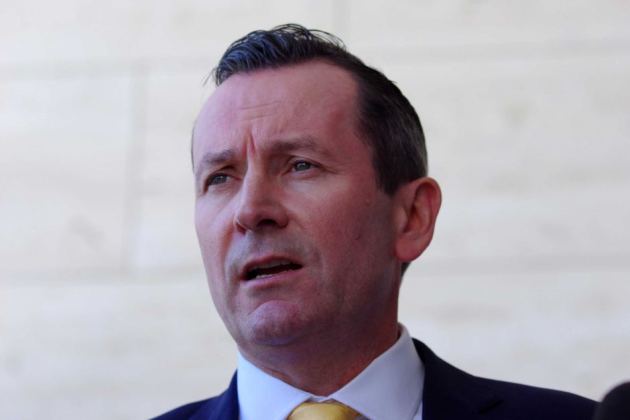
Mark McGowan

Will WA Labor Premier Mark McGowan, elected in March 2017, update the out-dated Equal Opportunity Act 1984?

If you have enjoyed reading this article, please consider subscribing to receive future posts, via the right-hand scroll bar on the desktop version of this blog or near the bottom of the page on mobile. You can also follow me on twitter @alawriedejesus

Footnotes:

[i] With discrimination on the basis of sexual orientation then prohibited under Part IIB of the Act.

[ii] Section 35AB.

[iii] Other than Tasmania’s exceptions, which are significantly narrower and, to a lesser extent, Queensland’s and the Northern Territory’s.

[iv] Interestingly, the phrase “other than the grounds of race, impairment or age” is omitted from the exceptions relating to teachers and contract workers – presumably religious schools can discriminate on these attributes then too.

[v] Other related offences include:

79 Possession of material for dissemination with intent to incite racial animosity or racist harassment

80 Possession of material that is likely to incite racial animosity or racist harassment

80A Conduct intended to racially harass

80B Conduct likely to racially harass

80C Possession of material for display with intent to racially harass

80D Possession of material for display that is likely to racially harass

[vi] Sub-section 74(2)(a).

[vii] Section 146 includes a similar delineation.

The Marriage Amendment (Same-Sex Marriage) Bill is Unacceptable

This time last week, our major focus was, understandably, on ensuring Bill Shorten and the Australian Labor Party listened to the concerns of the lesbian, gay, bisexual, transgender and intersex (LGBTI) community and agreed to block Malcolm Turnbull’s unnecessary, wasteful and divisive plebiscite.

With that particular mission (almost) accomplished – although the plebiscite’s enabling legislation won’t be ‘dead, buried and cremated’ until it is finally voted down by the Senate in November – it is time to turn our attention to another battle, and that is the issue of religious exceptions.

Last Monday night (10 October 2016), the Government, via Attorney-General George Brandis, released an exposure draft of the legislation it would put before parliament in the event the plebiscite is held, and if that vote was successful.

Since that time, a number of people have expressed their serious concerns about the Marriage Amendment (Same-Sex Marriage) Bill, and especially about the broad ‘rights to discriminate’ contained within. Now that I have had the opportunity to examine this Bill in detail, I am afraid I must join their condemnatory chorus.

Nearly everything about this Bill, from its title down, is unacceptable. It is far more focussed on ensuring that religious organisations, and even individuals, can refuse to serve LGBTI people, than it is about ensuring LGBTI couples are treated equally, and above all fairly, under the law. And, for the reasons that I will outline below, I sincerely believe it should be rejected in its current form.

**********

First, let’s start with that title, and specifically the phrase ‘same-sex marriage’, which is also used in the Bill’s long title (“A Bill for an Act to provide for same-sex marriage, and for related purposes”).

For the umpteenth time, and for the benefit of slow learners like Prime Minister Turnbull and Senator Brandis, ensuring that all LGBTI Australians can marry is not ‘same-sex marriage’, but ‘marriage equality’.

The former phrase is narrow and excludes non-binary trans people, as well as many intersex individuals. Only the latter phrase captures all couples, irrespective of sexual orientation, gender identity and intersex status.

Fortunately, the substance of the Bill actually does include all people – the primary clause would amend the homophobic definition of the Marriage Act enacted by John Howard’s Liberal-National Government in 2004 to read “marriage means the union of 2 people to the exclusion of all others, voluntarily entered into for life.”

If that is the case, then why has the Government used the inaccurate phrase ‘same-sex marriage’ in the Bill’s title?

Perhaps it is simply politics, and the ongoing inability of the Coalition’s right-wing to acknowledge that this is, fundamentally, an issue of equality (although not referring to it as marriage equality even after the majority of the population voted for it – which is the precondition for this Bill – would seem to me incredibly petty).

On the other hand, maybe Turnbull and Brandis are right to shy away from describing this legislation as ‘marriage equality’ – because, in the vast majority of its provisions, it is nothing of the sort. Indeed, most of the Bill’s clauses are actually concerned with ensuring couples other than ‘a man and a woman’ are able to be refused service in a wide range of circumstances.

Which means that a far more accurate title for this legislation might be the ‘Marriage Amendment (Allowing any 2 adults to marry, but then allowing them to be denied service if they are LGBTI) Bill’. But, as well as being a mouthful, that might be a little too much ‘truth in advertising’ for this particular Government.

**********

Turning to the more substantive faults of the Marriage Amendment (Same-Sex Marriage) Bill, and the first concerns the rights of ministers of religion to refuse to conduct LGBTI weddings.

Now, let me begin by saying that I actually agree that ministers of religion should legally have the ability to accept, or reject, any couple who wishes to be married by them through a religious ceremony (even if I personally believe that such discrimination is abhorrent).

Indeed, that ‘right’ is already provided to ministers of religion under section 47 of the Marriage Act 1961: “Ministers of religion not bound to solemnise marriage etc. Nothing in this Part: (a) imposes an obligation on an authorised celebrant, being a minister of religion, to solemnise any marriage…”

Which means that no amendments are required to the Act to allow ministers of religion to refuse to officiate LGBTI weddings (and none have been proposed by previous marriage equality Bills from Labor, the Greens and even last-year’s cross-party Bill from MPs including Liberal Warren Entsch). So why then does the Bill repeal section 47 and replace it with the following:

Ministers of religion may refuse to solemnise marriages

Refusing to solemnise a marriage that is not the union of a man and a woman

(3) A minister of religion may refuse to solemnise a marriage despite any law (including this Part) if:

(a) the refusal is because the marriage is not the union of a man and a woman; and

(b) any of the following applies:

(i) the refusal conforms to the doctrines, tenets or beliefs of the religion of the minister’s religious body or religious organisation;

(ii) the refusal is necessary to avoid injury to the religious susceptibilities of adherents of that religion;

(iii) the minister’s conscientious or religious beliefs do not allow the minister to solemnise the marriage.”

Ministers of religion will still have exactly the same right to refuse to perform any wedding, including newly-recognised LGBTI weddings[i], that they have now. Arguably, it would provide a greater ability for religious organisations to impose their official doctrine on ministers of religion within their faith – although, as we have seen recently, imposing such views is already commonplace.

But the overall power will remain basically the same. So, why introduce these new provisions, spelling out in detail the ability to decline non- ‘man/woman’ marriages, at all?

It is difficult to see any other motivation than plain old homophobia and transphobia.

And that becomes apparent when comparing it against another issue that is also contrary to some religious views – divorce and remarriage[ii]. The Catholic Church in particular espouses an official view against both, and its ministers would therefore reserve the right to decline to officiate second (or third, fourth or even fifth) weddings.

Under both the existing, and the proposed new, sections 47 a minister of religion has the ability to reject couples in these circumstances – without it being spelled out. Just as the wording of the existing section 47 would allow them to reject LGBTI couples, were it to be retained following the introduction of marriage equality, without it necessarily being spelled out.

Which means there is absolutely no valid reason to insert new provisions that single out LGBTI couples (or non- ‘man/woman’ couples) for special, and detrimental, treatment, as part of a redrafted section 47.

Therefore, while the continuing ability of ministers of religion to decline to officiate weddings is not particularly problematic (from a legal point of view anyway), the unnecessary insertion of clauses which specify the right to discriminate against LGBTI couples – but not any other couples – definitely is.

The proposed new section 47 is homophobic and transphobic. It is unacceptable, and it must be rejected.

**********

Sadly, it only gets worse from here. The second substantive fault of the Marriage Amendment (Same-Sex Marriage) Bill is the creation of an entirely new ‘right’ to discriminate against LGBTI couples.

Currently, only ministers of religion have an explicit ‘opt-out’ clause. No equivalent provision or power exists for civil celebrants[iii] – which is entirely reasonable, given they are essentially ‘small businesses’, providing a service that the government has authorised them to, and explicitly not acting on behalf of any religion or religious organisation.

However, the Government is proposing, through this Bill, to allow even these ‘secular’ civil celebrants to reject LGBTI couples simply because of who they are (again, this is something that has not been included in most previous Bills, other than that from Senator David Leyonhjelm[iv]). Proposed new section 47A reads:

Marriage celebrants may refuse to solemnise marriages

(1) A marriage celebrant (not being a minister of religion) may refuse to solemnise a marriage despite any law (including this Part) if:

(a) the refusal is because the marriage is not the union of a man and a woman; and

(b) the marriage celebrant’s conscientious or religious beliefs do not allow the marriage celebrant to solemnise the marriage.”

This is, to put it simply, outrageous.

There is absolutely no reason why someone who is engaged in small business should be able to discriminate in such a way, against people who are LGBTI, simply because of their ‘personal beliefs’. It is the equivalent of encouraging them to put up a sign saying ‘no gays (or lesbians, or bisexuals, or trans people, or intersex people) allowed.’

And exactly how outrageous, and offensive, is revealed by once again comparing it to the situation with divorce and remarriage.

Despite whatever personal beliefs a civil celebrant may hold, and even after the Government’s Bill was passed, they would still not be able to formally decline to officiate someone’s second (or subsequent) wedding. Indeed, it is likely such discrimination would be unlawful under the Sex Discrimination Act 1984, which includes ‘marital or relationship status’ as a protected attribute in section 6[v].

In contrast, if the new section 47A was included in any amendments to the Marriage Act, these same celebrants would be able to reject LGBTI couples on the basis that they were not ‘a man and a woman’[vi], and for no other reason.

In effect, Malcolm Turnbull and his Government are saying that the religious beliefs of civil celebrants can be used to justify discrimination – but only if those religious beliefs are anti-LGBTI (and not, for example, if they are opposed to divorce).

Once again, I am forced to conclude that the proposed new section 47A is homophobic and transphobic. It is unacceptable, and it must be rejected.

**********

But it’s not just civil celebrants who will be allowed to put up unwelcome, on multiple levels, signs saying ‘no gays (or lesbians, or bisexuals, or trans people, or intersex people) allowed’. Religious bodies or organisations will also be able to do so as part of proposed new section 47B, which reads:

Religious bodies and organisations may refuse to make facilities available or provide goods or services

(1) A religious body or a religious organisation may, despite any law (including this Part), refuse to make a facility available, or to provide goods or services, for the purposes of the solemnisation of a marriage, or for purposes reasonably incidental to the solemnisation of a marriage, if:

(a) the refusal is because the marriage is not the union of a man and a woman; and

(b) the refusal:

(i) conforms to the doctrines, tenets or beliefs of the religion of the religious body or religious organisation; or

(ii) is necessary to avoid injury to the religious susceptibilities of adherents of that religion.”

If this provision were solely concerned with providing clarity that religious bodies were not obliged to conduct any weddings that they did not condone in their places of worship, like churches, then it may have almost been reasonable.

However, section 47B goes far beyond what would be required to achieve that limited goal. Instead, it provides a wide-ranging ‘right to discriminate’ against LGBTI couples, one that is problematic in at least three key ways:

  • It applies to more than just facilities, but also to the provision of ‘goods and services’, which, given the extent of influence of religious bodies and organisations in Australia, is incredibly broad
  • Sub-section (2)[vii] makes it clear that this right extends to religious bodies or organisations that are engaged in providing commercial services, for profit, and
  • The phrase “for purposes reasonably incidental to the solemnisation of a marriage” is vague, and left undefined, and could potentially capture a range of facilities, goods or services that are not directly connected to either a wedding ceremony or reception.

This section is also cause for concern in that it establishes a precedent whereby discrimination against LGBTI couples is encouraged. One consequence is that, while the current Bill does not allow florists, wedding cake-bakers, photographers or reception venues to refuse service (unless of course they themselves are run by a religious organisation), their voices demanding such exceptions in future will only get louder.

But again the major problem with this section is that it is singling out LGBTI couples – or anyone who doesn’t fit within the definition of ‘a man and a woman’[viii] – for special, and detrimental, treatment. And literally nobody else.

As with civil celebrants, it is only homophobic and transphobic religious belief that is preferenced here – other sincerely-held religious beliefs, for example, against divorce and remarriage, do not attract any such right. Which means that, yet again, the Liberal-National Government is expressing its support for religious freedom, but only as long as the beliefs concerned are anti-LGBTI.

The only possible conclusion is that proposed new section 47B is homophobic and transphobic, which makes it unacceptable. It must be rejected.

**********

The fourth and final substantive fault in the Marriage Amendment (Same-Sex Marriage) Bill is the addition of a note to section 81, which deals with the rights of Defence Force chaplains to refuse to solemnise weddings.

The new note reads: “Example: A chaplain may refuse to solemnise a marriage that is not the union of a man and a woman where the refusal conforms to the doctrines, tenets or beliefs of the chaplain’s church or faith group.”

I am strongly opposed to allowing these chaplains to discriminate against LGBTI couples in this way. Which might be surprising to some, especially given my view, expressed above, that ministers of religion should legally have this right.

Surprising, that is, until you consider that Defence Force chaplains are public servants, paid for out of everyone’s taxes – LGBTI and non-LGBTI, and religious and non-religious, alike[ix]. Indeed, the Defence Jobs Australia website indicates that chaplains are paid over $94,200 following completion of basic training.

The same website also claims that chaplains must “administer spiritual support to all members, regardless of their religion.”

Therefore, allowing discrimination by Defence Force chaplains fails in principle on two counts:

  • As public servants they should not be able to discriminate against members of the public simply because of their personal beliefs (otherwise we are allowing the Australian equivalent of Kim Davis), and
  • In providing spiritual support to Defence Force personnel, they are expected to do so for all people, not just those who are cisgender and/or heterosexual.

Which means that, if Defence Force chaplains are to continue to be authorised to officiate any weddings, then that must include the weddings of LGBTI people.

To do otherwise is, once again, homophobic and transphobic. It is unacceptable, and it must be rejected.

**********

There follows a few provisions that are actually positive in nature – removing the existing prohibition on the recognition of foreign marriages between two men, or two women[x] – before one final provision that establishes, clearly, that the Marriage Amendment (Same-Sex Marriage) Bill is more concerned with promoting homophobia and transphobia than in addressing LGBTI inequality.

That is an amendment to the Sex Discrimination Act provision[xi] that currently provides an exception for conduct which is “in direct compliance with” the Marriage Act – because, for example, a civil celebrant is unable to lawfully marry an LGBTI couple.

The introduction of genuine marriage equality should lessen that discrimination, and potentially even obviate the need for such a provision to begin with.

Instead, this amendment expands the exception, by adding conduct that is “authorised by” the Marriage Act, thus ensuring that the exceptions to Australia’s federal LGBTI anti-discrimination framework, which are already too broad[xii], are broadened even further.

**********

SENATE SINODINOS DEBATE

Attorney-General George Brandis’ Bill is not aimed at achieving genuine marriage equality, and should perhaps be renamed the Marriage Amendment (Allowing any 2 adults to marry, but then allowing them to be denied service if they are LGBTI) Bill.

It is disappointing, although perhaps not entirely surprising, to observe that Prime Minister Malcolm Turnbull and his Liberal-National Government just don’t get it when it comes to marriage equality.

First, they sought to impose an unnecessary, wasteful and divisive plebiscite on LGBTI Australians in order for our relationships to simply be recognised as equal under secular law.

Then we discover that their planned ‘reward’ – if the plebiscite is held, and if we are ultimately successful in their $200 million+ national opinion poll – is actually a fundamentally flawed piece of legislation, that spends more time and effort in expanding the rights of religious bodies, and civil celebrants, to discriminate against us than in actually implementing marriage equality.

We all know, far too well, that the equal recognition of our relationships is long overdue in Australian law. Unfortunately, that equality, genuine equality, will not be achieved via passage of the Marriage Amendment (Same-Sex Marriage) Bill.

At its core, it is homophobic and transphobic, making it unacceptable. I believe that, just as we have campaigned for Parliament to reject the plebiscite, and adopt a better process, we must also demand that they reject this ill-conceived legislation, and replace it with a better Bill.

If you believe that marriage equality should be exactly that – equality – please sign & share this petition to Prime Minister Malcolm Turnbull: Equal Love Should Not Be Treated Unequally.

Footnotes:

[i] It would appear that this provision does not explicitly allow ministers of religion to discriminate against trans individuals or couples where the union is between two people who identify as a man and a woman – although the catch-all ‘right to discriminate’ in 47(1) “A minister of religion may refuse to solemnise a marriage despite anything in this part” would nevertheless still apply.

[ii] Please note that I am not expressing support for such beliefs (against divorce and remarriage). I am merely using this example because, given many people sincerely hold such views, their differential treatment under the Bill makes it clear that the legislation is not concerned with protecting religious freedom, but instead aims to legitimise homophobia and transphobia.

[iii] Curiously, both the Attorney-General’s Media Release announcing the Exposure Draft Bill, and sub-section 2 of the proposed new section 47A, imply that civil celebrants do have such a power. This may be based on a very generous interpretation of section 39F of the Marriage Act 1961 which notes that “A person who is registered as a marriage celebrant may solemnise marriages at any place in Australia” – and in particular that the word may is used here rather than must.

However, it is just as easily argued that the fact ministers of religion currently enjoy an explicit ‘right to discriminate’ under section 47, while there is no equivalent section for civil celebrants, means civil celebrants cannot simply reject couples for any reason whatsoever.

More importantly, without an explicit power, it is likely the actions of civil celebrants would be captured by the anti-discrimination protections of the Sex Discrimination Act 1984 – currently, with respect to sex and relationship status, and, if marriage equality is passed, with respect to sexual orientation, gender identity and intersex status (unless a new right to discriminate is inserted).

[iv] For more, please see: Senator Leyonhjelm’s Marriage Equality Bill undermines the principle of LGBTI anti-discrimination. Should we still support it?

[v] With the definition of ‘marital or relationship status’ in section 4 of the Sex Discrimination Act explicitly including “(d) divorced”.

[vi] Interestingly, my interpretation of this provision means that, unlike ministers of religion, civil celebrants would not be able to reject trans individuals or couples who identify as a man and a woman, particularly because there is no other stand-alone right to refuse.

[vii] Which reads “Subsection (1) applies to facilities made available, and goods and services provided, whether for payment or not.”

[viii] Interestingly, this section would not allow religious bodies or organisations to refuse to provide facilities, goods or services to weddings involving one or two trans people where the couple identified as a man and a woman, although it is possible religious exceptions contained in the Sex Discrimination Act 1984 would make such discrimination lawful.

[ix] Of course, I would argue that the High Court should find this arrangement – the use of taxpayer funds to hire people to perform an explicitly religious function – to be unconstitutional under section 116, but that is an argument for another day (and probably for a more adventurous High Court too).

[x] Sections 88B(4) and 88EA.

[xi] Subsection 40(2A)

[xii] For more, please see: What’s Wrong With the Commonwealth Sex Discrimination Act 1984?

Victoria’s Equal Opportunity Amendment (Religious Exceptions) Bill 2016

Update: 15 January 2017


Unfortunately, this legislation was voted down by the Victorian Legislative Council on 6 December 2016.


As reported by The Age here (‘Coalition and conservative crossbenchers unite to vote down equal rights bills’), the Liberal and National Parties rejected the Equal Opportunity Amendment (Religious Exceptions) Bill 2016, describing it as an attack on ‘religious freedom’.


Of course, it was nothing of the sort – instead it was a modest (some might argue too modest) reform that would have simply required religious schools and other religious bodies to demonstrate that any discrimination against LGBT employees was because of an ‘inherent requirement’ of the relevant job. Nothing less, and nothing more.


But even that was too much for Coalition MLCs, meaning lesbian, gay, bisexual and transgender teachers at religious schools, and LGBT employees at other religious organisations, can continue to be discriminated against for at least another two years, solely because of who they are and irrespective of the responsibilities of the actual role they are performing.


Hopefully, Victoria’s LGBTI community remembers this shameful sell-out by the Liberal and National Parties when they cast their ballots on 24 November 2018 – and that the next Parliament strengthens the state’s LGBTI anti-discrimination laws as a matter of priority in early 2019.


Original Post:


Ten days ago I wrote about the first of two LGBTI law reforms put forward by the Andrews Labor Government that are currently before the Victorian Parliament – the Births, Deaths and Marriages Registration Amendment Bill 2016.

This post will discuss the second – the Equal Opportunity Amendment (Religious Exceptions) Bill 2016.

As the title suggests, this Bill will amend the religious exceptions currently contained in the Equal Opportunity Act 2010, making it more difficult, in certain circumstances, for religious bodies and schools to discriminate against employees on the basis of their sexual orientation or gender identity[i].

It does this by reintroducing the ‘inherent requirements test’ for employment by religious bodies or schools, which was part of the Act as passed in 2010, but which was subsequently repealed by the Baillieu Liberal-National Government in 2011 before it commenced operation.

This test is set out in clauses 3 and 4 of the Bill, which would amend the current exceptions applying to religious bodies and religious schools featured in sections 82 and 83 respectively:

“(3) Nothing in Part 4 applies to anything done in relation to the employment of a person by a religious body where-

(a) conformity with the doctrines, beliefs or principles of the religion is an inherent requirement of the particular position; and

(b) the person’s religious belief or activity, sex, sexual orientation, lawful sexual activity, marital status, parental status or gender identity means that the person does not meet that inherent requirement.

(4) The nature of the religious body and the religious doctrines, beliefs or principles in accordance with which it is conducted must be taken into account in determining what is an inherent requirement for the purposes of subsection (3).”[ii]

As you can see from this proposed wording, these are very modest changes. All the Bill does is to remove the ‘blanket’ ability for religious bodies and schools to discriminate against all employees on the basis of these attributes, replacing it with a slightly narrower ability whereby, in order to discriminate, the body or school must show that such discrimination is required because of the particular position involved.

As described by Attorney-General Martin Pakula in his second reading speech:

“A large number of people are employed by or seek to be employed by religious bodies and schools in Victoria, in a range of different positions. In these circumstances, it is fair to ask these organisations to demonstrate the necessary connection between their religious beliefs and principles, and proposed discrimination in employment because of an individual’s personal attribute…

“What the test will do, and appropriately so, is require those organisations that do seek to discriminate in employment on religious grounds to demonstrate the necessary connection between their particular religious beliefs and the need to discriminate.”

pakulamartin58250

Victorian Attorney-General Martin Pakula

Despite the extremely modest nature of the Bill, it has nevertheless attracted strong opposition from the Australian Christian Lobby[iii] and the Liberal and National Opposition, meaning that, although it has cleared the Legislative Assembly where the Government has the numbers, it is unclear whether it will be passed in the Legislative Council where the Government does not, and where it is expected to be debated later this week (with Victorian Parliament sitting from Tuesday 11 October).

Given this, I have sent a short email to all members of the Victorian upper house, encouraging them to pass this Bill, with the text included at the end of this post.

Before we get to that, however, an important caveat. Regular readers of this blog would be aware that I am opposed to religious exceptions beyond those that are necessary for the appointment of religious office-holders, and for the observance of religious ceremonies.

Indeed, these views formed part of my criticisms of the Victorian anti-discrimination framework, expressed earlier this year in my post What’s Wrong With Victoria’s Equal Opportunity Act 2010?[iv]

On this basis, I would obviously support amendments to the religious exceptions contained in the Act that go beyond what has been proposed by the Andrews Labor Government. This would, at the very least, include extending the ‘inherent requirement test’ to protect those people accessing services, including education, from these religious bodies and schools, in addition to employees.

However, we have already seen an unsuccessful attempt by the Victorian Government, this term, to restrict the rights of religious bodies to discriminate against people accessing services – it sought to prevent discrimination against same-sex couples by religious adoption agencies as part of the broader introduction of adoption equality.

Those particular amendments to religious exceptions were defeated in the Victorian Legislative Council, while the overall reform passed.

In this context, it is difficult to see how any amendments to religious exceptions that go further than those currently proposed would be passed by the upper house[v]. Indeed, the fate of the narrow changes that are contained in the Equal Opportunity Amendment (Religious Exceptions) Bill 2016 still seems precarious.

As a result, I have chosen to send this short email calling for these reforms to be passed, as a minimum standard, and in the hope that more comprehensive changes may be able to be made by a subsequent parliament, one where (hopefully) the influence of the extreme right is less powerful[vi].

**********

Monday 10 October 2016

Dear Member of the Victorian Legislative Council

Please Support the Equal Opportunity Amendment (Religious Exceptions) Bill 2016

I am writing to call on you to support the Equal Opportunity Amendment (Religious Exceptions) Bill 2016 when it comes before the Legislative Council.

This Bill is an important reform that will better protect lesbian, gay, bisexual and transgender (LGBT) employees, and prospective employees, from discrimination that has absolutely nothing to do with their ability to do their jobs.

As noted by Attorney-General Martin Pakula in his second reading speech, these reforms simply ask religious bodies and schools to “demonstrate the necessary connection between their religious beliefs and principles, and proposed discrimination in employment because of an individual’s personal attribute.”

These are modest changes, and it is difficult to see how the introduction of an ‘inherent requirement test’ can be argued against.

In practice, voting against the reforms contained in the Equal Opportunity Amendment (Religious Exceptions) Bill 2016 is effectively saying that LGBT people can be discriminated against simply because of their sexual orientation or gender identity, even where there is absolutely no reason why they cannot perform a particular role.

I do not believe such an extreme ideological position is sustainable in 2016. I sincerely hope you agree, and in doing so, vote for this Bill.

Please do not hesitate to contact me, at the details provided below, should you have any questions, or wish to clarify any of the above.

Sincerely,

Alastair Lawrie

Footnotes:

[i] Noting that intersex status is not a protected attribute under Victorian law.

[ii] The wording of the amendment in relation to religious schools is largely similar.

[iii] Media Release, Is this kind of Government interference really warranted?, 1 September 2016.

[iv] Also expressed through my Submission to Victorian Greens Equal Opportunity Amendment (LGBTI Equality) Bill 2016.

[v] Perhaps the only complementary change that stands some chance of success in the current political environment would be the introduction of a provision requiring religious bodies and schools seeking to use the ‘inherent requirement exception’ to advertise the fact it will discriminate against LGBT employees with respect to particular positions, rather than simply asserting this ability as part of any defence to discrimination proceedings. However, determining whether such an amendment would be passed is best left to Victorian LGBTI advocates.

[vi] In drafting this email I have been careful to avoid language that rules out the need for further reform, or that would contradict amendments to the Bill, such as those proposed by the Victorian Greens (which would limit the ability of religious bodies or schools to discriminate to a greater degree), even if it is my personal view that such amendments are unlikely to be successful at this time.

What’s Wrong With the ACT Discrimination Act 1991?

This post is part of a series looking at Australia’s anti-discrimination laws, analysing them to determine how well, or in many cases how poorly, they protect lesbian, gay, bisexual, transgender and intersex (LGBTI) people from discrimination and vilification. The other articles in the series can be found here.

In each post, the laws of each jurisdiction are assessed in relation to the following three areas:

  • Protected Attributes
  • Religious Exceptions, and
  • Anti-Vilification Coverage.

Based on these criteria, the Australian Capital Territory Discrimination Act 1991 was already better than average in terms of its LGBTI anti-discrimination laws. The good news is that, as a result of the passage of the Discrimination Amendment Act 2016 and the Discrimination Amendment Act 2018, the ACT’s LGBTI protections have improved further.

However, while many of the previous issues with this Act have been remedied, this doesn’t mean the ACT’s law is without faults – chief among them the ongoing broad exceptions provided to religious organisations (other than schools) allowing them to discriminate against LGBTI people.

Nevertheless, let’s focus on the positives first:

**********

Protected Attributes

The ACT Discrimination Act 1991 includes sexuality as a protected attribute in section 7(1)(w), which is defined in the Act’s dictionary as ‘heterosexuality, homosexuality (including lesbianism) or bisexuality’. This includes all of LGB people, and is better than some jurisdictions (including NSW, which excludes bisexuals), but could be improved by adopting the more inclusive term ‘sexual orientation’.

As a result of the Justice Legislation Amendment Act 2020, the Act’s protected attribute of gender identity in section 7(1)(g) is now defined as:

the gender expression or gender-related identity, appearance or mannerisms or other gender-related characteristics of a person, with or without regard to the person’s designated sex at birth.

Note Gender identity includes the gender identity that the person has or has had in the past, or is thought to have or have had in the past.

This includes all trans and gender diverse people, including those with non-binary gender identities.

Finally, 2016 amendments added intersex status as a protected attribute in section 7(1)(k), defined as ‘status as an intersex person’ – however, intersex advocates called for discrimination protections to be based on ‘sex characteristics’ in the influential March 2017 Darlington Statement.

In August 2020, the ACT Government responded, replacing intersex status with sex characteristics, with a definition based on the Yogyakarta Principles plus 10 (from the Act’s Dictionary:

sex characteristics-

(a) means a person’s physical features relating to sex; and

(b) includes-

(i) genitalia and other sexual and reproductive parts of the person’s anatomy; and

(ii) the person’s chromosomes, hormones and secondary physical features emerging as a result of puberty.

The ACT is now one of only four Australian jurisdictions to provide coverage for lesbian, gay, bisexual, transgender and gender diverse and intersex people, the others being the Commonwealth, Tasmania and South Australia, and more importantly has up to date definitions for all attributes.

**********

Anti-Vilification Coverage

The ACT’s vilification protections also cover all parts of the LGBTI community, with prohibitions on vilification on the basis of sexuality, gender identity and intersex status (making it only the second jurisdiction, after Tasmania, to cover anti-intersex vilification – although again note the calls by intersex organisations for this term to be replaced by the protected attribute of sex characteristics).

In fact, the ACT’s LGBTI vilification protections are now the equal best in the country, given the offence of serious vilification, contained in section 750 of the Criminal Code 2002, applies to serious vilification on the basis of intersex status (the other jurisdiction with best practice anti-vilification laws is Tasmania).

**********

Religious Exceptions

On the basis of the above, it is clear the ACT now has close-to-best practice anti-discrimination laws in terms of their protected attributes (covering all parts of the LGBTI community) and anti-vilification coverage (again, protecting lesbian, gay, bisexual, transgender and intersex people).

Alas, the Discrimination Act 1991 falls down (from its pedestal) when it comes to religious exceptions, aka special provisions that allow religious organisations to discriminate against people on the basis of their sexual orientation, gender identity or intersex status.

The primary religious exceptions are outlined in section 32 Religious bodies, which states that:

“Part 3 [which contains the prohibitions of discrimination] does not apply in relation to-

(a) the ordination or appointment of priests, ministers of religion or members of any religious order; or

(b) the training or education of people seeking ordination or appointment as priests, ministers of religion or members of a religious order; or

(c) the selection or appointment of people to exercise functions for the purposes of, or in connection with, any religious observance or practice; or

(d) any other act or practice (other than a defined act) of a body established for religious purposes, if the act or practice conforms to the doctrines, tenets or beliefs of that religion and is necessary to avoid injury to the religious susceptibilities of adherents of that religion.”

As has been noted in previous posts, the first three sub-sections ((a), (b) and (c)), can potentially be justified on the basis that there is a direct connection with the appointment and training of religious office-holders, or the conduct of religious ceremonies.

However, sub-section 32(d) is effectively a blanket exception that allows any religious organisation – including religious-operated hospitals and community and social services – to discriminate against LGBTI employees, and LGBTI people accessing their services. This is clearly unacceptable.

Nevertheless, recent amendments passed by the ACT Parliament in the wake of the Ruddock Religious Freedom Review have at least ensured that these religious exceptions do not permit religious schools to discriminate against LGBTI students or teachers and other staff.

The Discrimination Amendment Act 2018 abolished the specific exception for ‘Educational institutions conducted for religious purposes’ which was previously found in section 33 (see footnotes*).

Importantly, it also amended the general religious exception in section 32(1)(d) so that it does not apply to ‘defined acts’, which section 32(2) defines as:

means an act or practice in relation to-

(a) the employment of contracting of a person by the body to work in an educational institution; or

(b) the admission, treatment or continued enrolment of a person as a student at an educational institution.

In short, religious schools now cannot discriminate against LGBTI students, teachers and other staff on the basis of their sexuality, gender identity or intersex status.

The ACT Government has instead adopted the best-practice Tasmanian approach where religious schools can discriminate in terms of the admission of students and employment of teachers on the grounds of the student or teacher’s respective religious belief (although they’ve gone further than Tasmania by requiring any school that wishes to discriminate in this way to publish its policies up-front – section new section 46(2)-(5)).

However, the ACT Government has left in place – at least for the moment – the special privileges that allow religious organisations other than schools, such as hospitals, community and social services, to discriminate against employees and people accessing those services on the basis of their sexuality, gender identity or intersex status.

There can be no justification for such wide-ranging discrimination. Hopefully, with the issue of discrimination by religious schools now addressed, the ACT Government can move on to limiting discrimination by these other bodies too – although time is running out before the next election, due on 17 October 2020.

andrewbarr

ACT Chief Minister Andrew Barr, who has successfully removed the right of religious schools to discriminate against LGBTI students and teachers, but still needs to address religious exceptions for other organisations.

Summary

As a result of amendments in both 2016 and 2018, the ACT Discrimination Act 1991 now protects all sections of the LGBTI community from discrimination. It also features the equal best anti-vilification coverage of any state, territory or federal framework in Australia, and has prohibited discrimination by religious schools against LGBTI students, teachers and other staff.

However, the ACT Government still needs to take action to limit the ability of other religious organisations, including hospitals, community and social services, to discriminate against employees and people accessing their services on the basis of sexuality, gender identity or intersex status.


If you have enjoyed reading this article, please consider subscribing to receive future posts, via the right-hand scroll bar on the desktop version of this blog or near the bottom of the page on mobile. You can also follow me on twitter @alawriedejesus

Footnotes:

NB Footnotes [i] to [iv] have been deleted as a result of editing.

*The Discrimination Amendment Act 2018 abolished section 33 of the Act, which previously provided:

“Educational institutions conducted for religious purposes

(1) Section 10 or 13 [which prohibit discrimination against applicants, employees and contract workers] does not make it unlawful for a person (the first person) to discriminate against someone else in relation to-

(a) employment as a member of the staff of an educational institution; or

(b) a position as a contract worker that involves doing work in an educational institution;

if the institution is conducted in accordance with the doctrines, tenets, beliefs or teachings or a particular religion or creed, and the first person so discriminates in good faith to avoid injury to the religious susceptibilities of adherents of that religion or creed.

(2) Section 18 [which prohibits discrimination in relation to education] does not make it unlawful for a person (the first person) to discriminate against someone else in relation to the provision of education or training by an educational institution that is conducted in accordance with the doctrines, tenets, beliefs or teachings of a particular religion or creed, if the first person so discriminates in good faith to avoid injury to the religious susceptibilities of adherents of that religion or creed.”

Submission re Tasmania’s Proposed Anti-Discrimination Amendment Bill 2016

Update 19 January 2017:

Unfortunately, the Tasmanian Government has pushed ahead with its flawed legislation to allow greater rights to vilify LGBTI people, and especially vilification by religious organisations.

The Anti-Discrimination Amendment Bill 2016 – full text here – was passed by the Legislative Assembly on 25 October 2016.

This includes an expansion of the ‘public purpose’ defence for vilification, to cover “a public act done in good faith for… religious purposes” where religious purpose is defined as “includes, but is not limited to, conveying, teaching or proselytising a religious belief.”

Disappointingly, the Legislative Council failed to refer the Bill to an inquiry, although the Government ran out of time for the Bill to be passed in 2016 – the Attorney-General, Vanessa Goodwin, stated that:

“Due to our heavy legislative agenda and given the proximity to the end of the parliamentary year, the Government does not intend to bring the bill on for debate until next year. This will allow further time for community debate and stakeholder feedback to MLCs on this important issue.”

With Tasmanian Parliament resuming on March 7, that means there’s now less than 7 weeks left to convince upper house MPs not to undermine what has been, until now, Australia’s best anti-discrimination scheme.

Original Post:

Department of Justice

Office of Strategic Legislation and Policy

GPO Box 825

Hobart TAS 7001

c/ legislation.development@justice.tas.gov.au

Friday 9 September 2016

To whom it may concern

Submission re Proposed Anti-Discrimination Amendment Bill 2016

Thank you for the opportunity to provide a submission in relation to the Government’s proposed amendments to Tasmanian anti-vilification laws, which are included in the Anti-Discrimination Amendment Bill 2016 (‘the Bill’).

I make this submission as an advocate for lesbian, gay, bisexual, transgender and intersex (LGBTI) equality, and as someone who takes a keen interest in anti-discrimination and anti-vilification laws, both at the Commonwealth level, and in Australia’s states and territories.

My first comment in response to the proposed Bill is to observe that it appears to be a ‘solution’ in search of a problem.

As far as I can ascertain, there seem to be two main motivations for these reforms. The first is to satisfy the demands of the Australian Christian Lobby (ACL), who have repeatedly requested that state and territory LGBTI anti-vilification laws (where they exist) be suspended, or even abolished, in the lead-up to the potential national plebiscite on marriage equality.

The obvious response to such a demand is that, if their arguments against the equal treatment of LGBTI people under secular law require them to breach anti-vilification laws, perhaps they need better arguments rather than worse laws.

The second motivation appears to be a recent case, involving Mr Julian Porteous, following the distribution of the Don’t Mess with Marriage booklet by the Tasmanian Catholic Church that stated same-sex parents “mess with kids”, and that same-sex partners are not “whole people”. Possibly the most salient point to note is that the complaint was subject to attempted conciliation, which did not result in it being resolved, but then did not even proceed to the Tribunal.

I would argue that these two motivations – to allow the ACL to contravene vilification standards during any forthcoming plebiscite debate, and to respond to a single case that did not even make it to the Tribunal – are not sufficient justification to propose reforms that would ‘water down’ the anti-vilification protections that are currently offered to LGBTI Tasmanians.

Unfortunately, that is exactly what this Bill attempts to do. By replacing the wording of section 55, and expanding the exceptions to the vilification protections offered under sections 17(1) and 19 of the Anti-Discrimination Act 1998 (‘the Act’), the Bill would effectively allow greater vilification of people on the grounds of sexual orientation, lawful sexual activity, gender identity and intersex (among other grounds).

In doing so, it would wind back hard-fought, and hard-won, protections introduced after the long-running decriminalisation campaign of the 1980s and 1990s. It is very hard to see, 18 years since its original passage, why there is a need to make anti-LGBTI hate speech easier in the contemporary environment.

I have two more-specific concerns about the proposed changes to section 55.

The first is to question why the exception, which would be expanded to include ‘public acts done reasonably and in good faith’ for a ‘religious’ purpose (where ‘religious purpose includes, but is not limited to, conveying, teaching or proselytising a religious belief’), should apply with respect to section 19[i], which establishes the more serious offence of ‘inciting hatred’ (whereas sub-section 17(1)[ii] regulates ‘conduct which offends, humiliates, intimidates, insults or ridicules’).

It is difficult to comprehend why the Act should be amended to make lawful the incitement of ‘hatred towards, serious contempt for, or severe ridicule of’ people who are lesbian, gay or bisexual (noting that section 19 currently does not offer protection to transgender or intersex people) merely because it is done for a ‘religious purpose’.

According to advocate Rodney Croome “Worst of all is the Government’s decision to erode hate speech protections even more than people like Julian Porteous want. He has called for the law against denigrating statements to be watered down, but has said the law against the more severe crime of incitement to hatred [ie section 19] should be kept intact.”[iii]

It seems this particular ‘solution’ isn’t just in search of a problem, it is lacking beneficiaries too (although it is clear who the losers will be from such an amendment: lesbian, gay and bisexual Tasmanians).

My second concern is to question the limits of the proposed exception for vilification for ‘religious purposes’, with respect to both sections 17(1) and 19. In particular, and noting it will be challenging for the Tribunal, or courts more broadly, to determine when a public act for a ‘religious purpose’ is ‘done reasonably and in good faith’ or not, how far will religious individuals or groups be allowed to go in ‘proselytising’ a religious belief that itself incites hatred?

An example of such a belief would be for an extremist christian organisation to promote a ‘literal’ reading of Leviticus 20:13, which has been interpreted as “If a man lies with a male as with a woman, both of them have committed an abomination; they shall surely be put to death; their blood is upon them”[iv].

And, before it is suggested that this example is implausible, we should recall that it is only four years since a senior figure within the Salvation Army publicly defended this belief – that gay people should be put to death – live on radio[v].

Given this, how would the proposed amended law deal with a situation where, instead of distributing the booklet Don’t Mess with Marriage, a religious school sent children home with a pamphlet entitled Gay Men Should Die (or perhaps slightly more generously, Gay Men Should Die Unless they are Celibate) conveying the ‘religious belief’ that men who have same-sex sexual intercourse ‘shall surely be put to death’?

It is reasonably clear such a pamphlet would ‘offend, humiliate, intimidate, insult or ridicule’, as well as likely inciting ‘hatred, serious contempt for or severe ridicule’ of, people on the basis of both sexual orientation and lawful sexual activity, and in doing so contravene both sections 17(1) and 19 of the Act.

But it is also possible the proposed new section 55 would ‘excuse’ these actions because it would be a public act done in ‘good faith for a religious purpose’, as it was ‘conveying, teaching or proselytising a religious belief’, no matter how offensive it is, to young people at a school operated by that organisation[vi].

I would argue that this would be an unacceptable outcome, and hope that the legislative sponsors of these amendments, and indeed anyone pushing for changes to Tasmania’s vilification laws, would agree.

It is particularly concerning that such an undesirable result could be achieved given we have seen above that there doesn’t actually appear to be any justification for the introduction of this Bill.

More generally, as someone from outside the State I would argue that the undermining of Tasmania’s anti-vilification regime, which is currently among the best, if not the best, law in the country, in this way would be a negative precedent for other jurisdictions.

This is especially important given only four states and territories currently have any anti-vilification protections for any sections of the LGBTI community (Tasmania, Queensland, NSW and the ACT). Nor do such laws exist federally. Even where they do exist, such as in NSW, they have significant flaws (for example, only protecting lesbians, gay men and some transgender people from vilification, and not protecting bisexuals or intersex people at all).

In my view, the Tasmanian Government should be concentrating on ensuring its anti-vilification laws are comprehensive (such as by amending section 19 to prohibit the incitement of hatred, serious contempt for or severe ridicule of transgender and intersex people) and effective, instead of making it easier for people to vilify others because of their sexual orientation, gender identity or intersex status.

Thank you again for the opportunity to make this submission and for taking it into consideration. Should you require clarification, or additional information, please do not hesitate to contact me at the details provided below.

Sincerely,

Alastair Lawrie

Footnotes:

[i]19. Inciting hatred

A person, by a public act, must not incite hatred towards, serious contempt for, or severe ridicule of, a person or a group of persons on the ground of –

  • the race of the person or any member of the group; or
  • any disability of the person or any member of the group; or
  • the sexual orientation or lawful sexual activity of the person or any member of the group; or
  • the religious belief or affiliation or religious activity of the person or any ember of the group.”

[ii]17. Prohibition of certain conduct and sexual harassment

(1) A person must not engage in any conduct which offends, humiliates, intimidates, insults or ridicules abother person on the basis of an attribute referred to in section 16(e), (a), (b), (c), (d), (ea), (eb) and (k), (f), (fa), (g), (h), (i) or (j) in circumstances in which a reasonable person, having regard to all the circumstances would have anticipated that the other person would be offended, humiliated, intimidated, insulted or ridiculed.”

NB This covers sexual orientation (16(c)), lawful sexual activity (d), gender identity (ea) and intersex (eb).

[iii] The Mercury, Talking Point: Green light being given to homophobia and any bigot with a bible’, 31 August 2016. http://www.themercury.com.au/news/opinion/talking-point-green-light-being-given-to-homophobia/news-story/00ffb213c903540b1febfdb94dbef243

[iv] Of course, such a position would overlook the inherent contradictions of adopting a ‘literal’ interpretation of some sections of the bible, while rejecting literal readings of others, a double standard which has been perfectly encapsulated by the now famous ‘Letter to Dr Laura’ (responding to a US radio host’s bible-based description of homosexuality as an ‘abomination’):

dear-dr-laura

[v] Huffington Post, Andrew Craibe, Salvation Army Official, Implies Gays Should be Put to Death in Interview, 26 June 2012. http://www.huffingtonpost.com/2012/06/26/andrew-craibe-salvation-army-official-gays-put-to-death_n_1628135.html

Joy 94.9FM presenter Serena Ryan: According to the Salvation Army, [gay people] deserve death. How do you respond to that, as part of your doctrine?

Craibe: Well, that’s a part of our belief system.

Ryan: So we should die.

Craibe: You know, we have an alignment to the Scriptures, but that’s our belief.

[vi] The only question is whether the public act was ‘done reasonably’, although I would suggest there is a risk at least some Tribunal members or judges may view the promotion of any religious belief, no matter how offensive, to be reasonable provided that belief was sincerely held.

What’s Wrong With the Northern Territory Anti-Discrimination Act?

This post is part of a series of posts looking at Australian anti-discrimination laws and analysing how well, or in many cases how poorly, they protect lesbian, gay, bisexual, transgender and intersex (LGBTI) people from discrimination and vilification. The other articles can be found here.

These articles look at the laws that exist in each jurisdiction, and assess them in three key areas:

  • Protected attributes
  • Religious exceptions, and
  • Anti-vilification coverage.

Unfortunately, the Northern Territory Anti-Discrimination Act has significant problems in relation to all three issues, meaning there is plenty of work to do for the Legislative Assembly to ensure LGBTI people are adequately protected against discrimination and vilification.

Protected Attributes

Sub-section 19(1) of the Northern Territory Anti-Discrimination Act sets out the grounds on which discrimination is prohibited, including “19(1)(c) sexuality.”

Sexuality itself is defined in section 4 of the Act as: “sexuality means the sexual characteristics or imputed sexual characteristics of heterosexuality, homosexuality, bisexuality or transsexuality.”[i]

On a positive note, employing this definition means the Act does offer protection to lesbians, gay men and bisexual people (something not all state and territory laws do – for example, New South Wales does not cover discrimination or vilification against bisexual people). Although arguably it could still benefit from the more inclusive definition of ‘sexual orientation’, as featured in the Commonwealth Sex Discrimination Act 1984[ii].

However, there are significant problems in terms of the Act’s application to discrimination against transgender people. First, because it includes ‘transsexuality’ within the term ‘sexuality’, when it is in fact about gender identity.

Second, and more importantly, by using the word ‘transsexuality’ rather than transgender (or including the term ‘gender identity’[iii] as its Commonwealth equivalent does, which would be preferred), it is possible that the Act fails to protect transgender people who are not ‘transsexual’ from discrimination, which is clearly a significant failing.

Another significant failing is the complete absence of protection against discrimination for intersex people. This stands in contrast to the Commonwealth, Tasmania, the ACT and South Australia who have all prohibited discrimination on the basis of ‘intersex status’[iv].

Summary: The Act does cover discrimination against lesbian, gay and bisexual Northern Territorians (although it could be further improved by adopting a more inclusive definition of sexual orientation). However, by using the term ‘transsexuality’, and including it within the term ‘sexuality’, it is likely the Act does not cover all transgender people. It also fails to offer any protection to intersex people.

Religious Exceptions

There are some positive, but also several negative, features of the Northern Territory Anti-Discrimination Act in terms of the special rights it grants religious organisations to discriminate against LGBTI people.

The primary provision establishing ‘religious exceptions’ is section 51:

“This Act does not apply to or in relation to:

(a) the ordination or appointment of priests, ministers of religion or members of a religious order; or

(b) the training or education of people seeking ordination or appointment as priests, ministers of religion or members of a religious order; or

(c) the selection or appointment of people to perform functions in relation to, or otherwise participate in, any religious observance or practice; or

(d) an act by a body established for religious purposes if the act is done as part of any religious observance or practice.”

The drafting of these exceptions is actually relatively narrow when compared with those that exist in other states and territories.

For example, while the first two paras above (section 51(a) and (b)) are identical to the NSW Anti-Discrimination Act 1977 section 56(a) and (b), the NSW legislation subsequently goes much further, allowing discrimination in relation to:

“(c) the appointment of any other person in any capacity by a body established to propagate religion; or

(d) any other act or practice of a body established to propagate religion that conforms to the doctrines of that religion or is necessary to avoid injury to the religious susceptibilities of the adherents of that religion.”

In contrast, the primary Northern Territory provision appears to more closely target the appointment of ministers of religion, and religious celebrations and practices, rather than the more nebulous criteria of ‘avoid[ing] injury to the religious susceptibilities of the adherents of that religion”.

Indeed, depending on the scope of ‘religious observance or practice’, and how this phrase has been interpreted by the judiciary, the NT provision is arguably more justifiable on the basis it seems to be concerned with religious freedom, rather than providing religious organisations with carte blanche to discriminate against LGBTI people.

Unfortunately, the same cannot be said of other sections of the Act. Section 37A provides an incredibly broad exception to religious schools:

“An educational authority that operates or proposes to operate an educational institution in accordance with the doctrine of a particular religion may discriminate against a person in the area of work in the institution if the discrimination:

(a) is on the grounds of:

(i) religious belief or activity; or

(ii) sexuality; and

(b) is in good faith to avoid offending the religious sensitivities of people of the particular religion.”

In effect, any religious school in the Northern Territory can discriminate against any employee or potential employee solely because they are LGBTI, irrespective of the role and no matter how qualified they may be. This is simply unacceptable and must be removed.

The section covering discrimination against students is not as broad. Sub-section 30(2) provides that:

“An educational authority that operates, or proposes to operate, an educational institution in accordance with the doctrine of a particular religion may exclude applicants who are not of that religion.”

Note that this only permits discrimination against students on the basis of their religion, and not because of their sexuality (or transsexuality). This is to be welcomed and, if 51(d) (above) has been interpreted narrowly, means LGBT students are protected against discrimination in NT religious schools.

The other provision that grants special rights to religious organisations to discriminate is sub-section 40(3), in relation to accommodation:

“A person may discriminate against a person with respect to a matter that is otherwise prohibited under this Division if:

(a) the accommodation concerned is under the direction or control of a body established for religious purposes; and

(b) the discrimination:

(i) is in accordance with the doctrine of the religion concerned; and

(ii) is necessary to avoid offending the religious sensitivities of people of the religion.”

If discrimination in relation to the appointment or training of ministers of religion is already allowed under section 51(a) and (b), which would presumably include the facilities used for housing these ministers/trainees, it is difficult to see how this particular section would be justified. As a result, it should be repealed alongside section 37A.

Summary: The main religious exceptions offered under the NT Act are relatively modest when compared to some other states and territories. Provided that ‘religious observance or practice’ has been interpreted to mean religious ceremonies and little else, section 51 may not require substantial amendment.

However, there is no justification for discrimination against LGBTI employees or potential employees in religious schools, meaning section 37A should be repealed as a matter of priority. Sub-section 40(3), allowing discrimination in relation to accommodation, also appears excessively broad.

Anti-Vilification Coverage

The Northern Territory is the only jurisdiction in Australia that does not prohibit racial vilification. In which case, it is perhaps unsurprising that there are no prohibitions on vilification against LGBTI people either (the definition of ‘discrimination’ in section 20(1) does include “harassment on the basis of an attribute”, however this falls far short of the usual standard of ‘offend, insult, humiliate or intimidate’[v]).

The Government should introduce prohibitions against anti-LGBTI vilification, as well as in relation to other attributes, including race.

Michael_Gunner

Will Chief Minister Michael Gunner fix the NT Anti-Discrimination Act?

On a positive note, during this term of Parliament the Northern Territory Government released a discussion paper looking at Modernisation of the Anti-Discrimination Act. It included examination of all of the above issues (protected attributes, religious exceptions and anti-vilification coverage), with submissions due by 31 January 2018.

However, more than two years later and nothing appears to have come from this consultation. Which means that, heading into the next Northern Territory election on 22 August 2020, the NT Anti-Discrimination Act remains in desperate need of reform. Will whoever is elected by up to the challenge?


If you have enjoyed reading this article, please consider subscribing to receive future posts, via the right-hand scroll bar on the desktop version of this blog or near the bottom of the page on mobile. You can also follow me on twitter @alawriedejesus

Footnotes:

[i] It should be noted here that these concepts (heterosexuality, homosexuality, bisexuality and transsexuality) are not further defined in the legislation.

[ii] Section 4: “sexual orientation means a person’s sexual orientation towards:

(a) persons of the same sex; or

(b) persons of a different sex; or

(c) persons of the same sex and persons of a different sex.”

[iii] “[G]ender identity means the gender-related identity, appearance or mannerisms or other gender-related characteristics of a person (whether by way of medical intervention or not), with or without regard to the person’s designated sex at birth.”

[iv] In March 2017, intersex activists from around Australia released the Darlington Statement which called for the protected attribute of ‘intersex status’ to be replaced by ‘sex characteristics’. For more information, see the OII Australia website, here.

[v] For example, sub-section 18C of the Commonwealth Racial Discrimination Act 1975 provides that:

“(1) It is unlawful for a person to do an act, otherwise than in private, if:

(a) the act is reasonably likely, in all the circumstances, to offend, insult, humiliate or intimidate another person or a group of people…”

Letter to Paul Lynch re LGBTI Anti-Vilification Reform

In June, NSW Shadow Attorney-General Mr Paul Lynch MP introduced the Crimes and Anti-Discrimination Legislation Amendment (Vilification) Bill 2016. Details of the Bill can be found here.


In short, the legislation seeks to implement the recommendations of the Legislative Council Standing Committee on Law and Justice’s 2013 Inquiry into Racial Vilification Law in NSW.


Importantly, in doing so the Bill ignores the Report’s (implicit) approach to treat racial vilification differently from the other forms of vilification currently prohibited by the Anti-Discrimination 1977: namely homosexual, transgender and HIV/AIDS vilification.


Just as importantly, however, the Bill fails to update the definitions of these grounds, and also fails to extend anti-vilification coverage to bisexual and intersex people in NSW.


The following is my letter to the Shadow Attorney-General about his Bill, sent before the return of State Parliament next week (Tuesday 2 August 2016).


**********


Mr Paul Lynch MP

Shadow Attorney-General

100 Moore St

Liverpool NSW 2170

liverpool@parliament.nsw.gov.au


24 July 2016


Dear Mr Lynch


LGBTI Anti-Vilification Reform


I am writing to you about your Crimes and Anti-Discrimination Legislation Amendment (Vilification) Bill 2016 (‘the Bill’), currently before NSW Parliament.


Specifically, I am writing to congratulate you on what is included in the Bill, while also encouraging you to amend the Bill to address other inadequacies within the NSW anti-vilification framework.


First, to the positives. I welcome the fact that the Bill removes one of the more bizarre and, in my opinion, completely unjustifiable aspects of the NSW Anti-Discrimination Act 1977 (‘the Act’) – that the penalties for the offences of serious racial and HIV/AIDS vilification are different to, and slightly higher than, the penalties for the offences of serious homosexual and transgender vilification.


By consolidating these offences in one place – the proposed new section 91N of the NSW Crimes Act 1900 – your Bill would ensure there is no difference in severity in how these offences are treated by the Government, and therefore avoids sending the signal that some forms of vilification are worse than others.


I also welcome the fact you have avoided one of the key pitfalls of the Legislative Council Standing Committee on Law and Justice’s Inquiry into Racial Vilification Law in NSW, which, given it exclusively focused on racial vilification, only suggested changes to the laws surrounding one of the four existing attributes that attract anti-vilification protection.


Were these recommendations to be implemented in their entirety (and no other changes made), it would exacerbate, rather than remove, the inequality in treatment between serious racial vilification and the three other current grounds (homosexual, transgender and HIV/AIDS vilification).


I further support the substantive amendments proposed in your Bill, including:


  • Removing the requirement for the Attorney-General to give consent to prosecution for any vilification offence
  • Extending the time within which prosecutions for vilification offences must be commenced from 6 months to 12 months (addressing a flaw in the current Act highlighted by the case of Simon Margan v Director of Public Prosecutions & Anor [2-13] NSWSC 44)
  • Adopting the recommendation of the Law and Justice Standing Committee report that recklessness is sufficient to establish intention to vilify
  • Clarifying which public acts constitute unlawful vilification
  • Providing that vilification applies whether or not the person or members of the group vilified have the characteristic that was the ground for the promotion of hatred, contempt or ridicule concerned, and
  • Ensuring that the President of the Anti-Discrimination Board refers vilification complaints to the Commissioner of Police where the President considers that the offence of serious racial, transgender, homosexual or HIV/AIDS vilification may have been committed.


In terms of the proposal to replace ‘incitement’ with ‘promotion’ within the definition of vilification itself, while I have not had the opportunity to examine this amendment in great depth, on a prima facie basis it appears reasonable.


Finally, I agree with your decision to relocate the offence of serious vilification to the Crimes Act 1900, for the reasons outlined in your Second Reading Speech:


“Certainly, the legal effect of a provision should be the same whether it is located in the Crimes Act or in the Anti-Discrimination Act. However, there is significant symbolism in the provision being located in the Crimes Act in the new section 91N. And symbolism, as everyone in this Chamber knows, is important.”


Now, I will turn my attention to the shortcomings of the Bill and, unfortunately, in my opinion they are significant.


Specifically, while what the Bill includes is to be welcomed, it is flawed because of what it excludes. It fails to address one of the main problems of the Anti-Discrimination Act 1977, which is that it only protects some parts of the lesbian, gay, bisexual, transgender and intersex (LGBTI) community, and not others.


As I have detailed elsewhere (see “What’s wrong with the NSW Anti-Discrimination Act 1977?”), the out-dated terminology used in the Act means that only lesbian, gay and transgender people are protected (and even then not all transgender people are covered).


Meanwhile, there is still no anti-vilification protection for bisexual people, or for intersex people, in NSW (with the absence of Commonwealth LGBTI anti-vilification laws only compounding this problem).


In my view, the limited coverage offered by the NSW anti-vilification framework is an even greater problem than those issues identified by the Standing Committee on Law and Justice’s Inquiry into Racial Vilification Law.


As such, I believe this issue should be addressed before, or at least simultaneously to, those provisions contained in your Bill. Otherwise, the differential treatment of groups within the LGBTI community would only become further entrenched.


For these reasons, I strongly encourage you to consider amending your Bill to ensure that all sections of the LGBTI community are protected against vilification. To achieve this, you may wish to incorporate the definitions included in the historic Commonwealth Sex Discrimination Amendment (Sexual Orientation, Gender Identity and Intersex Status) Act 2013.


This would involve:


  • Replacing the current protected attribute of homosexual with ‘sexual orientation’ (and which would therefore cover bisexual people)
  • Amending the protected attribute of transgender to the more inclusive term ‘gender identity’, and
  • Introducing the new protected attribute of ‘intersex status’.


If you are interested in pursuing these changes then I also encourage you to consult with the LGBTI community, and its representative organisations, beforehand (to ensure that any consequential difficulties are avoided).


To conclude, and despite the issues described above, I genuinely welcome the provisions contained in the Crimes and Anti-Discrimination Legislation Amendment (Vilification) Bill 2016. However, by extending the scope of vilification offences to protect bisexual and intersex people, I sincerely believe you would significantly improve your legislation.


Thank you for your consideration of this letter. I am of course happy to discuss any of the issues raised at the contact details provided below.


Sincerely,

Alastair Lawrie


print.jpg

NSW Shadow Attorney-General Paul Lynch


You’re wrong Malcolm Turnbull, homophobia is legally acceptable in Australia

It is now one week since the tragic events in Orlando, where 49 people were murdered in a gay nightclub, simply because they were lesbian, gay, bisexual or transgender (or were there as their family or friends).


I haven’t written specifically about those events for a few reasons. First, because I guess I’m still somewhat in shock about it and, like others, it will take some time to process the sheer scale of horrific, homophobic violence involved.


Second, because I haven’t wanted to talk about Orlando in the context of other public debates and risk them being unduly conflated (although, for the record, I do think it is a warning, albeit an extreme one, of the risks of a plebiscite generating hatred and vitriol towards Australia’s LGBTI community).


Third, and perhaps most importantly, I haven’t written anything because what has been written, and said, by others has been so eloquent, and so passionate, that I haven’t really felt the need to add anything. In fact, the outpouring of words and actions (including the vigils for Orlando held in many parts of the world, including here in Sydney) by LGBTI people and our allies over the past seven days has been a beautiful, and in many ways reassuring, thing to behold.


Countless others have already said the things that needed to be said, far better than I could ever say them:


Focusing on the names of the people killed, rather than that of the killer (such as CNN reporter Anderson Cooper’s touching report about the victims).


Challenging any erasure of the fact this was explicitly a homophobic and transphobic hate-crime, including:


Reminding us that this was an attack on a minority within a minority – Latinx members of the LGBT community.


Rejecting any moves to respond to homophobia with Islamophobia, as well as respecting and actively being inclusive of another minority within a minority – LGBTI Muslims.


Last, but certainly not least, seeing the individual act of homophobic and transphobic violence in the broader frame of homophobia and transphobia across the United States – and sadly, Australia – which is perhaps summed up best by this widely-shared social media image:


You werent the gunman


*********


In this context, as someone who primarily writes about LGBTI law and public policy, I didn’t have much further to offer – that is, until Australia’s right-wing media, and Prime Minister Malcolm Turnbull, made it a policy, and political, issue.


During the week, The Australian newspaper decided to turn their focus on hate-speech by some Islamic preachers. Specifically, they campaigned for the visa of Farrokh Sekaleshfar to be revoked on the basis of a speech in 2013 where he supported the imposition of the death penalty for homosexuality in some circumstances:


“Death is the sentence. There’s nothing to be embarrassed about this. Death is the sentence. We have to have that compassion for people. With homosexuals, it’s the same. Out of compassion, let’s get rid of them now.” [Mr Sekaleshfar ultimately chose to leave the country before he was forced out].


They then swung their attention towards the guests hosted by Turnbull at an Iftar dinner in Sydney, including the President of the Australian National Imams Council, Mr Shady Alsuleiman, again bringing up comments from 2013 where he reportedly said the following:


“What’s the most common disease these days? HIV, AIDS, that’s so common and there’s no cure to it. And when did it exist? Just decades ago, and more diseases are coming… [It’s] homosexuality that’s spreading all these diseases.”


Leaving aside the clear anti-Muslim bias of this newspaper – given it champions the voices of Christian advocates who condemn homosexuality rather than attacking them (hypocrisy that is perfectly skewered by the First Dog on the Moon in this cartoon, and especially the line “Christian homophobes against Islamic homophobia”) – there is a legitimate question about where the limits of ‘acceptable’ speech should be drawn, irrespective of the religion of the person saying them (Muslim, Christian, other or none).


The fact Mr Alsuleiman was a ‘dinner guest’ of the Prime Minister means it is entirely justifiable that he was asked for his view on those comments, and this was Mr Turnbull’s response:


“Homophobia is to be condemned everywhere, number one. We are a broad, diverse country and we must respect the right of gay Australians, we respect the right of the LGBTI community and the right for them to lead their lives and gather in peace and harmony. The massacre in Orlando, that shocking assault on the people in the gay nightclub is a shocking reminder, frankly, of how much hate and intolerance there is in the world, and how important it is for us to stand up for mutual respect that I spoke about earlier. That is the very foundation of our society. So I condemn, I deplore homophobia wherever it is to be found. It is not acceptable from a legal point of view in Australia, as you know, and I just – I’m sure that – well I know that [Mr Alsuleiman] has been encouraged to reflect very deeply on his remarks which were of some years ago, and it’s up to him how he restates or reconsiders his position.”


There are, of course, some fine sentiments expressed here, as well as some less-than-stellar interventions (as a public scolding, being “encouraged to reflect deeply on his remarks” is akin to Paul Keating’s description of John Hewson: “it was like being flogged with warm lettuce”).


But the thing that has stuck with me and, to be completely honest, has thoroughly pissed me off, is that the Prime Minister is fundamentally wrong. Specifically, his comment that “I deplore homophobia wherever it is to be found. It is not acceptable from a legal point of view in Australia, as you know…” IS. SIMPLY. NOT. TRUE.


Sorry, Malcolm, but you are very, very wrong: homophobia is indeed acceptable under Australian law, and in some places it is actively encouraged.


Here, I want to discuss briefly two such examples (although I’m sure readers of this blog could come up with several others):


First, as I have written previously[i], while the Racial Discrimination Act 1975 prohibits vilification on the basis of race, there are currently no prohibitions against the vilification of lesbian, gay, bisexual, transgender and intersex people under Commonwealth law. None. Zip. Zilch. Zero. Nada.


Which means that, while the Government could take action against Mr Sekaleshfar on the basis of his visa, they legally could not do anything against Mr Alsuleiman – because he would not have breached any Commonwealth laws.


Even at state and territory level, only four jurisdictions have legislated against LGBTI vilification (NSW, Queensland, Tasmania and the ACT), and in many cases those laws are incomplete or out of date too (for example, only offering protection to some members of the LGBTI community and not others[ii]).


So, while Mr Turnbull might like to say that homophobia “is not acceptable from a legal point of view in Australia, as you know”, that’s definitely not true – especially under Commonwealth law. And, based on the past term of the Abbott-Turnbull Coalition Government, with its initial attempt to wind back racial vilification, it’s a situation doesn’t look like changing any time soon either.


Second, while the historic Sex Discrimination Amendment (Sexual Orientation, Gender Identity and Intersex Status) Act 2013 introduced LGBTI anti-discrimination protections in Commonwealth law for the first time, it also contained provisions that, at the same time, severely curtailed those protections[iii].


For example, the general religious exceptions under section 37, and the specific exceptions provided to religious schools under section 38, mean there is no obligation on religious bodies to treat LGBT people fairly, or with even a minimum of respect. Indeed, religious schools are free to fire, and refuse to hire, LGBT teachers, as well as expel or refuse to enrol LGBT students.


The vast majority of state and territory anti-discrimination schemes[iv] include similar exceptions, with NSW’s Anti-Discrimination Act 1977 featuring the broadest (a school doesn’t even need to be religious, just ‘private’, in NSW to enjoy the privilege to discriminate against LGBT teachers and students).


All of which means that, were Mr Alsuleiman, or even Mr Sekaleshfar, to make similar comments, not on YouTube but instead in the classrooms or mosques (or churches) of a religious school, I cannot see the Commonwealth Government being able to do anything much about it under the law as it stands.


One aspect of this situation that sticks in the craw of many people is that all taxpayers, including LGBTI taxpayers, are effectively paying for this discrimination against LGBTI young people – because those same schools, which do not have to abide by the community standards against homophobia and transphobia that Mr Turnbull tried to articulate on Friday, still put their hands out for Commonwealth (and state and territory) funding.


But we should never forget that it is the LGBTI young people themselves, stuck in schools their parents have chosen, and potentially exposed to homophobia, biphobia, transphobia and intersexphobia from their principals and teachers, effectively condoned by governments of all levels, are the ones who ‘pay’ the highest price.


There are, of course, other aspects of Malcolm Turnbull’s comments that are offensive, not the least of which is the fact he chose to speak out against the homophobia of an Islamic preacher, because he invited him to dinner, but has so far steadfastly refused to condemn the homophobia from MPs and Senators who form part of his Government, even, for example, when they compare a program against the bullying of LGBTI young people to ‘sexual grooming’.


Here too though, rather than trying to explain this double-standard, I will quote another person who neatly summed up the glaring disparity via twitter:


Lane Sainty (@lanesainty 17 June 2016):


“I have So Many Complicated Thoughts about the two Islamic leaders criticised in the Australian press for their anti-gay comments.


I’ve seen people slamming comparisons Australian Christians – saying it’s not the same to oppose Safe Schools and to want gay people to die.


Given the suicide rates of trans kids, there’s actually an argument to be made there. But even if you accept the distinction, it’s still…


…not being an apologist for Muslim anti-LGBTI views to point out the hypocrisy of how we address queerphobia depending on religion.


Turnbull’s failure to condemn comments linking paedophilia and Safe Schools was deeply hurtful to LGBTI people. I cannot overstate this.


Yet look at his speed to denounce the sheik. Why condemn someone he shared a meal with, but not the anti-LGBTI folk on his own backbench?


Here’s the political message this sends: Islamic queerphobia = unacceptable, but Christian queerphobia = acceptable.


Actually, none of is acceptable. As long as you’re not actively calling for gays to die, you’re fine? No. That’s not how it works.


Anyway, many Muslims have written about combating homophobia within their community since Orlando. Read their words.


Just don’t forget that queerphobia doesn’t start with calling for actual violence against LGBTI people. It finishes there, if anything.”


Lane then followed that with an excellent article on Buzzfeed, with the rather self-explanatory title “7 Other Times People were Homophobic and the PM didn’t Condemn it”.


So, if Prime Minister Malcolm Turnbull genuinely “deplore[s] homophobia wherever it is to be found”, then there are some serious examples of it very close to his political home – will George Christensen, Cory Bernardi and others be similarly told to ‘reconsider their positions’?


And, if he wants to make sure homophobia “is not acceptable from a legal point of view in Australia”, then I know two places where he can start: introducing LGBTI anti-vilification protections in Commonwealth law, and removing religious exceptions from the Sex Discrimination Act 1984. If he doesn’t, then all his ‘condemnations’ of homophobia will start to sound a little hollow to me.


Footnotes:

[i] Don’t limit racial vilification protections, introduce vilification protections for LGBTI Australians instead.

[ii] In NSW, while homosexual and transgender vilification is outlawed, bisexual and intersex vilification is lawful: see What’s wrong with the NSW Anti-Discrimination Act 1977?

[iii] See What’s wrong with the Commonwealth Sex Discrimination Act 1984?

[iv] With the exception of Tasmania and, to a lesser extent, Queensland.