Will Christine Forster Apologise for her Pre-Election Column?

Ms Christine Forster

cforster@cityofsydney.nsw.gov.au

Monday 24 August 2015

Dear Ms Forster,

I am writing to you concerning an opinion piece you wrote before the 2013 Federal Election for the Star Observer called “Vote Liberal for Real Change”.[i]

Specifically, you began by writing:

“You only have one vote on September 7 and this election is the most important in a generation.

“For many of us in the GLBTI community marriage equality is a key political issue at a federal level and the positions of the two major parties on this important question are virtually the same. Both are leaving it up to their new members of parliament to decide, after the election” [emphasis added].

It was abundantly clear at the time that this description was inaccurate – that in no way, shape or form could the positions of Labor and the Coalition be described as “virtually the same”.

Indeed, as I commented on your opinion piece at the time:

“The second paragraph in this op-ed is rubbish. No, Ms Forster, the positions of the two major parties on this important question are NOT virtually the same.

“One major party has a party platform in favour of marriage equality, rules which guarantee its MPs a conscience vote, a majority of sitting MPs who voted in favour of marriage equality just last year, a Prime Minister who supports it, and a commitment to reintroduce a Bill within 100 days.

“The other – your brother’s Coalition – has left it up to whoever is elected at this election to decide whether to even have a conscience vote (with the possibility that there is not a conscience vote/all its MPs are forced to vote against), a Leader who continues to oppose marriage equality, and who does not expect a Bill to even arise in the next parliament, and not a single sitting MP who voted for marriage equality in 2012 (despite Liberals always saying that backbenchers can vote freely on every Bill).

“I don’t know what your definition of ‘virtually the same’ is, but it is in no dictionary that I can find.”

Unfortunately, the description that you used then has turned out to be even more inaccurate now, almost two years later.

The Labor Opposition today is led by a supporter of marriage equality, who has made a similar commitment to his predecessor (to introduce a Bill within 100 days, if elected), with the vast majority of ALP MPs and Senators indicating they will vote in favour of marriage equality when it next comes to a vote.

Meanwhile, the Liberal-National Government remains led by a Prime Minister who is strongly opposed to the full legal equality of lesbian, gay, bisexual, transgender and intersex Australians, and a Coalition party room that spoke two to one against even allowing a conscience vote on the subject, meaning only a small handful of Coalition MPs will be able to vote in favour of reform.

To make matters worse, the Abbott Liberal-National Government is apparently intent on denying a House of Representatives vote on this matter during the current term of parliament (by using its numbers on the Selection of Bills Committee), instead concentrating on finding ways to defer the issue for yet another term, even considering the option of an inappropriate and unnecessary constitutional referendum to help ‘stack the decks’ against marriage equality.

Given all of the above, I have two simple questions for you:

  1. Do you now concede that your pre-election opinion piece was inaccurate?
  2. Will you apologise to anyone who was silly enough to actually believe what you wrote?

I look forward to receiving your correspondence addressing the above questions.

Sincerely,

Alastair Lawrie

[i] 4 September 2013: http://www.starobserver.com.au/opinion/election-opinion-vote-liberal-for-real-change/108960

Christine Forster (source: ABC).

Christine Forster (source: ABC).

Why the Australian Labor Party should still adopt a binding vote on marriage equality

Over the past couple of months, a large number of people have invested a lot of time and energy in the possibility of a conscience vote within the Liberal Party, and that such a vote will, alongside the votes of the majority of ALP (and all Greens) MPs and Senators, help to deliver marriage equality in the second half of 2015.

And many have argued that, given this focus, we should no longer pursue a binding vote in favour of marriage equality within the Australian Labor Party at their National Conference, which will be held in Melbourne in ten days’ time (Friday 24 July to Sunday 26 July 2015, with the binding versus conscience debate likely to be held on the Sunday afternoon).

But we should remember that these two goals – seeking a conscience vote within the Liberal Party, and an ALP binding vote – are not mutually exclusive (as I have explained in previous posts)[1].

Even more importantly, we should acknowledge that, while we may hope for a Liberal Party conscience vote, it would be dangerous to expect it to happen.

Much of the optimism of recent times relates to Prime Minister Tony Abbott’s comments in Parliament in the week after the successful Irish marriage equality referendum, in which said:

“If our Parliament were to make a big decision on a matter such as this, it ought to be owned by the Parliament and not by any particular party.”[2]

A number of people interpreted this statement to mean that he was open to the possibility of a Liberal Party conscience vote, and that he was in fact inviting Coalition backbenchers to start work on a cross-party Marriage Equality Bill, to be introduced in Parliament after the winter recess.

Except that the Prime Minister gave no such invitation, and certainly did not provide an unambiguous commitment – all he did was offer an observation, and one that started with a very big “IF”.

And of course, even if Tony Abbott had given a commitment, we would do well to remember that, based on the long trail of wreckage he has already left in less than two years in the Lodge – and the 40 promises to the Australian people he has already broken[3] – he is arguably the biggest commitment-breaker ever to hold the highest political office in the country, so it would be very difficult to hold him to his ‘word’ in any event.

Events since that statement have also confirmed the substantial obstacles that remain in the way of a Coalition conscience vote. They include:

  • Liberal MPs who oppose a conscience vote within the Liberal Party
  • National MPs who oppose a conscience vote within the National Party
  • Liberal MPs who would like the issue of a conscience vote to be considered by the joint party room, rather than the Liberal Party room alone, because it would stand a better chance of defeat
  • Coalition MPs who have argued that Australia should only recognise LGBTI relationships through civil unions rather than marriage, and
  • Coalition MPs who have advocated the holding of a referendum or plebiscite rather than allowing the matter to be decided by the Parliament.

We have even had the Leader of the Government in the Senate, Liberal Senator Eric Abetz, suggest that frontbenchers that support marriage equality should resign their Cabinet position if they wanted to advocate on this issue. As quoted in the Australian Financial Review:

“There is very strong support in favour of maintaining the definition of marriages as it is in the marriage act… If you can’t support party policy, like I did with emissions trading, you do the honourable thing and I resigned from the front bench.”[4]

Not to forget the ‘stellar’ contribution of Agriculture Minister, Deputy Leader of the National Party (and future Deputy Prime Minister) Barnaby Joyce’s implication that marriage equality should be resisted because it might damage our cattle and beef exports to South East Asia (a suggestion so embarrassing to Australia it has been reported on around the world)[5].

Perhaps most worrying of all was the reaction of the Prime Minister’s office to the news earlier this month that a cross-party working group had in fact drafted a Marriage Equality Bill, with the aim of consideration by the Liberal Party room, and hopefully the Parliament, in August.

Abbott’s office released the following statement:
“Any member can introduce a private member’s bill into the parliament but they do not come before the joint party room for discussion unless they will be voted on in the parliament.

“It is rare for a private member’s bill to be voted on and any bill would be subject to the usual process. The prime minister’s position remains the same as it has always been and he supports the current policy that marriage is between a man and a woman. The government’s priority is strong economic management and keeping Australians safe.”[6]

There are (at least) three issues of particular concern with this statement:

  1. The reference to the joint party room (rather than Liberal Party room), making a conscience vote less likely to succeed
  2. The reference to parliamentary procedure, hinting that debate on any private member’s Marriage Equality Bill could be blocked by the Selection of Bills Committee (which is dominated by Liberal and National Party MPs who are themselves opposed to LGBTI equality), and
  3. The reference to other priorities (including the economy and national security), indicating that the Prime Minister could oppose the Bill progressing because it would somehow detract from these issues.

All in all, it would be heroic to assume there will inevitably be a conscience vote within the Liberal Party on this issue – and there is indisputably a very real risk that they reject a free vote, with that risk existing irrespective of whatever position the Labor Party adopts at its National Conference later this month.

That’s right – despite some people arguing that the Australian Labor Party should not adopt a binding vote because such a move will automatically prevent the Liberals from adopting a conscience vote, it is unlikely that Labor’s position will be the sole, or even decisive, factor.

A number of Liberal MPs have shown, quite comprehensively, over the past two months that they have their own reasons for opposing a conscience vote, and these reasons exist regardless of what delegates to ALP National Conference choose to do.

And that is entirely logical – after all, if the ALP’s position was so persuasive across the political aisle as to be almost irresistible (as some apparently believe it to be), the Liberals would have adopted a conscience vote on marriage equality at some point in the more than three and a half years Labor has already had one.

Of course, that does not mean that, should the Labor Party adopt a binding vote on marriage equality, and the Liberals subsequently choose to reject a conscience vote, the Liberal Party, and its few remaining moderate MPs, will not try to blame the ALP for this outcome[7].

In fact, that would be the most predictable development in this entire debate – the Party blocking reform would point the finger at anyone, and everyone, but itself in an effort to deflect responsibility for its own actions. It is not even a ‘risk’, but a guarantee.

But that is a political debate, and surely one the Australian Labor Party should be willing to take on.

If, come August, the ALP supports marriage equality with a binding vote, something which is both the right thing to do, and a position which is supported by between two thirds and three quarters of the population, and the Liberal and National Parties, who form the majority of the House of Representatives, oppose marriage equality with their own binding vote, then Labor MPs must be able to apportion blame squarely where it belongs – on Tony Abbott and his colleagues.

And, putting it frankly, if they can’t win that particular political argument, with almost everything stacked in their favour, then perhaps we should sack the entire Federal Parliamentary Labor Party and start again.

We should also acknowledge that there are real and serious risks for the Labor Party in the opposite direction – that choosing to continue with a conscience vote at the National Conference in July brings with it its own dangers.

First, even if the ALP maintains a conscience vote in the hope of enticing the Liberal Party into adopting one, for the reasons outlined above, Liberal (or Coalition) MPs could still refuse, thus rendering marriage equality unachievable this term.

Not only will that leave Labor looking somewhat silly, but, given they will be unable to change their rules until the next National Conference (due in 2018), for the remainder of this term Labor will be left in a position where it too is vulnerable on this issue, because it doesn’t support marriage equality 100%.

Second, even if the ALP maintains a conscience vote, and the Liberal Party adopts one, marriage equality could still fall a handful of votes short when it is considered later in 2015 (or early in 2016).

In these circumstances, it is almost inevitable that people will look to where else those ‘missing’ votes could have come from – and at least some fingers will point in the direction of Labor’s failure to adopt a binding vote.

Indeed, this is something that Katherine Murphy of the Guardian Australia has already written about:

“I’m not quite sure what the panic is, because whether or not same-sex marriage becomes law in this country is 95% in the hands of the Abbott government, and the prime minister is not a supporter of marriage equality.

I say 95% because if the vote in the House of Representatives is as close as I suspect it is, Labor binding its MPs to vote yes to marriage equality could be the extra element to get the proposal over the line. If same-sex marriage eventually comes to a vote, and that vote falls just short, do remember that fact. Bill Shorten has plumped his credentials on this topic, but he’s also effectively killed off a binding vote for Labor on gay marriage” (emphasis added)[8].

Third, failing to adopt a binding vote could seriously harm a new Labor Government should it win the 2016 Federal election. Here’s how:

Marriage equality is defeated this year (either because a conscience vote on both sides falls short, or because the Liberal Party continues to bind against). Possible.

Labor is elected at the 2016 Federal election with a narrow majority (or relying on cross bench support). Possible.

The number of ALP MPs who would exercise any conscience vote against the full equality of lesbian, gay, bisexual, transgender and intersex Australians exceeds the size of their overall parliamentary majority. Possible.

The Liberal-National Opposition, now led by Scott Morrison, retreats – even further, if that’s possible – into ‘conservatism’ after losing Government, and binds (or continues to bind) against marriage equality. Possible – and thoroughly terrifying.

And marriage equality is consequently defeated, at least until the 2018 ALP National Conference, which is the next opportunity to change the Party’s rules.

While the above sequence of events is admittedly not the most likely to occur, it is by no means beyond the realms of possibility – and its impact would be devastating.

Because newly-elected Prime Minister Bill Shorten, who personally supported marriage equality so much he moved his own Marriage Equality Bill, and consistently criticised Prime Minister Tony Abbott for refusing to support it, and leading a political party which supports marriage equality in its platform, and being elected to Government with the good will of the population (at least on this issue), would still be unable to deliver this important social reform.

This would make both Prime Minister Shorten, and the Party that he leads, look completely ineffectual – thus frustrating the hell out of the electorate, who would have every right to expect that a new Labor Government would be able to deliver a reform that is, in 2015, already years overdue.

The best way, indeed the only way, to ensure that a newly-elected ALP Government would be able to deliver marriage equality in 2016 is for it to adopt a binding vote at its 2015 National Conference.

Obviously, most of the above discussion is about politics – both small ‘p’, and capital ‘P’ – about internal divisions in the Liberal Party, and what they might do on this issue in coming months, about hypotheticals, and strategy, and about the political risks, on both sides of this debate, for the Australian Labor Party.

This is not to suggest these considerations are what should ultimately guide the delegates in Melbourne on Sunday 26 July when they decide whether to adopt a binding vote – indeed far from it (as I will explain below).

However, it is necessary to discuss these issues in some depth because anyone who asserts that the current ‘politics’ of marriage equality are straightforward – that the ALP must retain its conscience vote so the Liberal Party adopts their own, leading to marriage equality being passed in the second half of 2015 – is wrong.

Even if the Labor Party keeps their conscience vote, there is absolutely no guarantee that the Liberal Party introduces their own. And even if Tony Abbott does grant (or at least accept) a ‘free vote’ inside his Party, it doesn’t necessarily follow that marriage equality will be passed this term.

There is real uncertainty about what happens next – and, as I have detailed above, there are real dangers for the Labor Party in retaining a conscience vote, and hoping (or wishing) that the Liberal Party ‘plays ball’.

In this context, where there is both genuine doubt, and genuine risk, no matter what position the ALP takes, I would argue that delegates should decide the issue on its merits: Is a binding vote in favour of marriage equality the principled position for the Australian Labor Party to adopt?

And the answer to that question must be an unequivocal “YES”.[9]

As a political party based on solidarity and collective action, there are no legitimate arguments to say that the issue of marriage equality is so special, so exceptional, that the ordinary process of ‘binding’ on policy positions should not apply here too.

Indeed, for more than two thirds of the time this issue has been voted on in Federal Parliament, the Australian Labor Party has adopted a binding vote on marriage equality – from August 2004 to December 2011, it bound its MPs and Senators to vote against.

Now that the Labor Party has a platform position in favour of removing discrimination against lesbian, gay, bisexual, transgender and intersex Australians from the Marriage Act, it is inappropriate, almost offensive, to turn around and say that its removal should be deemed ‘optional’.

As Deputy Leader Tanya Plibersek put it so eloquently, when asked about this issue in April, the choice is in fact remarkably clear:

“Do we support legal discrimination against one group in this country? Or do we not?”[10]

And that is the decision that confronts delegates to ALP National Conference in ten days’ time. Not considering the hypothetical: “If we do this, Abbott might do that, and then something else might happen.”

But asking the practical question: “If we support marriage equality, if we genuinely believe that lesbian, gay, bisexual, transgender and intersex Australians should be treated equally under the law, then why should some ALP MPs and Senators be allowed to continue to vote against the rights of their fellow citizens solely on the basis of their sexual orientation, gender identity or intersex status?”

The answer is, obviously, that they should not. And I still hope that is the conclusion that the majority of National Conference delegates reach on Sunday 26 July.

Protesters outside the 2011 ALP National Conference, calling for Labor to support marriage equality, and adopt a binding vote. Only the first half was achieved - in 2015, it's time to finish the job.

Protesters outside the 2011 ALP National Conference in Sydney, calling for Labor to support marriage equality, and to do so through a binding vote. Only the first half was achieved – in 2015, it’s time to finish the job.

PS If you support a binding vote, and are in Melbourne during ALP National Conference, please consider coming along to the rally outside the Melbourne Convention and Exhibition Centre, from 1pm on Saturday July 25. Full details here: <https://www.facebook.com/events/343248609218667/ #ItsTimeToBind

[1] “Hey Australian Labor, It’s Time to Bind on Marriage Equality” https://alastairlawrie.net/2014/07/13/hey-australian-labor-its-time-to-bind-on-marriage-equality/ ; “4 more arguments against an ALP binding vote on marriage equality, and why they’re wrong too” https://alastairlawrie.net/2015/04/16/4-more-arguments-against-an-alp-binding-vote-on-marriage-equality-and-why-theyre-wrong-too/

[2] From Sydney Morning Herald, “Same-sex marriage vote should be owned by the Parliament: Tony Abbott” http://www.smh.com.au/federal-politics/political-news/samesex-marriage-vote-should-be-owned-by-the-parliament-tony-abbott-20150527-ghaohc.html

[3] From the webpage “Abbott’s Wreckage” http://sallymcmanus.net/abbotts-wreckage/

[4] “Gay Marriage Causes Coalition Civil War”, 2 July 2015: http://www.afr.com/news/politics/gay-marriage-causes-coalition-civil-war-20150702-gi33uh

[5] From The Independent (UK): http://www.independent.co.uk/news/people/australian-minister-barnaby-joyce-claims-legalising-samesex-marriage-could-damage-cattle-trading-with-asia-10369540.html and Time: http://time.com/3947537/australia-barnaby-joyce-cattle-gay-same-sex-marriage/

[6] As reported in the Guardian Australia, “Tony Abbott digs in to frustrate any possibility of same-sex marriage vote” 2 July 2015: http://www.theguardian.com/australia-news/2015/jul/02/tony-abbott-digs-in-to-frustrate-any-posibillity-of-same-sex-marriage-vote

[7] Indeed, gay Liberal Senator Dean Smith has already attempted to make this argument, when Tanya Plibersek was publicly advocating a binding vote in April: http://www.smh.com.au/national/gay-liberal-senator-dean-smith-slams-tanya-plibersek-over-gay-marriage-move-20150427-1mu99l.html

[8] “Tony Abbott digs in to frustrate any possibility of same-sex marriage vote” 2 July 2015: http://www.theguardian.com/australia-news/2015/jul/02/tony-abbott-digs-in-to-frustrate-any-posibillity-of-same-sex-marriage-vote

[9] Regular readers of this blog know there are large number of reasons why I believe Labor should bind. This post will only cover a few – if you would like to read more, you should start with “Hey Australian Labor, It’s Time to Bind on Marriage Equality”: https://alastairlawrie.net/2014/07/13/hey-australian-labor-its-time-to-bind-on-marriage-equality/

[10] Sydney Morning Herald, “Plibersek push to make Labor MPs vote for same-sex marriage”, 27 April 2015: http://www.smh.com.au/federal-politics/political-news/plibersek-push-to-make-labor-mps-vote-for-samesex-marriage-20150427-1mteon.html

4 More Arguments Against an ALP Binding Vote on Marriage Equality… And Why They’re Wrong, Too

Last week I wrote about, and responded to, four of the most common arguments that will be used by opponents of a binding vote on marriage equality between now and the ALP National Conference in July (see: https://alastairlawrie.net/2015/04/09/4-arguments-against-an-alp-binding-vote-on-marriage-equality-and-why-theyre-wrong/ ).

Well, they are not the only arguments that will be employed by people resisting any move to a bound Labor Party vote in favour of full LGBTI equality. This post looks at four more arguments that we are likely to hear… and explains why they are wrong, too.

  1. A conscience vote on both sides is the only way marriage equality can happen

The current make-up of Commonwealth Parliament, with a large Liberal-National Party majority in the House of Representatives, means that marriage equality cannot be passed in this term without a formal conscience vote within the Liberal Party. It is no surprise then that so much effort, from Australian Marriage Equality and others, has gone into trying to secure that outcome.

But, even if the Prime Minister, the Hon Tony Abbott MP, grants a ‘free vote’ – and that remains a pretty big if – it does not mean marriage equality will necessarily pass.

In fact, looking at the numbers, it would be very difficult (although not impossible) for it to succeed, even with a conscience vote on both sides – largely because the number of moderate Coalition MPs voting in favour is unlikely to be enough to get it over the line, especially given the significant minority of socially conservative ALP MPs that would still use their conscience vote to oppose it.

Which means it is incumbent upon us to consider other ways of reaching 75. One would be for the ALP to adopt a binding vote for marriage equality, ensuring all 55 of its lower house MPs support it, and for the Liberals to adopt a conscience vote, meaning the votes of only 1 in 5 Coalition MPs would be required for passage. Of course, the inherent risk of this strategy is that, once Labor adopts a binding vote in favour, the Coalition continues to embrace a ‘party vote’ against.

And that might happen. But it is by no means guaranteed – there is no reason why the decision of one side should automatically be reflected by the other (noting that we are already 3 and a half years into a period of ‘asymmetry’, with a bound vote on one side and conscience vote on the other). There will also be some MPs, with surnames like Gambaro, O’Dwyer and Turnbull, who would have a compelling electoral reason to keep trying for a conscience vote in any event.

All of which means that it is unclear whether marriage equality can be achieved this term, and if so, under what circumstances. What is clear, however, is that, given there is a real risk it will not be passed, we need to be actively considering what happens at the 2016 election, and how marriage equality might best be achieved in its aftermath.

The most direct path to marriage equality is for the ALP to adopt a binding vote at this year’s National Conference, and for it to win the 2016 federal election. In that scenario, marriage equality is passed, no ifs or buts.

Even if the election result is close either way –a small Labor victory, minority government/hung parliament, or a small Coalition victory – an ALP binding vote still probably means marriage equality is passed (because most crossbenchers are in favour, and a handful of Liberal Party backbenchers would likely cross the floor to support).

On the flipside, a conscience vote within the Labor Party, and either a conscience vote within the Liberal Party or a Coalition vote against marriage equality (with a small number of dissenters), would still leave marriage equality in plenty of doubt, and some doubt even if Labor wins the election next year.

So, while there is obviously a strong case for people to be pushing for a Coalition conscience vote on marriage equality at the moment, it is by no means the only way to achieve this important reform – and, in some scenarios, it might not be needed at all.

  1. If Liberal MPs enjoy a conscience vote, Labor MPs should have one too

This argument is related to the first, and suggests that, if and when Tony Abbott (or his successor) eventually grants a conscience vote within the Liberal party room, giving his colleagues a ‘free vote’ on the issue, Labor Party parliamentarians would also deserve a conscience vote.

Leaving aside the fact that marriage equality concerns the rights of LGBTI-inclusive couples, not the supposed ‘rights’ of ALP MPs and Senators, there are two main problems with this approach.

First, as we have already seen, there is no reason why the decision by one side of politics to grant a conscience vote (or not) must automatically be reflected by the other. It has been more than three years since the ALP granted its parliamentarians a conscience vote on this issue, something that has still not been replicated by either the Liberal Party or National Party.

Just because the Liberal Party might adopt a conscience vote in the future does not mean the ALP must keep theirs.

Second, using this rationale to argue against a binding vote within the ALP is effectively giving power to Prime Minister Abbott to determine both whether the Liberal Party has a conscience vote, and whether (or at least when) the ALP moves to a binding vote.

I can think of very few policy issues where the delegates to ALP National Conference would happily cede their authority, on an issue of fundamental importance to a large number of ALP members, to Tony Abbott. Here’s hoping they don’t do this, on marriage equality, come July.

Why should Tony Abbott get to decide, on one hand, whether Liberal MPs get a conscience vote, and on the other, whether Labor MPs should be bound?

Why should Tony Abbott get to decide, on one hand, whether Liberal MPs get a conscience vote, and on the other, whether Labor MPs should be bound?

  1. Passing marriage equality through an ALP binding vote would place it in danger of being repealed in the future

I have heard this argument a few times – that, if we manage to secure marriage equality solely, or even primarily, because of a binding vote within the ALP, then we risk it being repealed by a subsequent Coalition Government.

In reality, there is very little danger of this happening. If the ALP adopts a binding vote at the 2015 National Conference, and marriage equality is passed this term, it means, at a minimum, that the Liberals have granted their MPs a conscience vote (and, given the direction of progress across society, it is unlikely they would retreat from that commitment in the future).

Labor is also highly likely to narrow the gap in terms of numbers in the House of Representatives at the 2016 election, further entrenching this reform under a combined bound vote/conscience vote approach.

If the Liberal Party does not agree to a conscience vote now, and marriage equality is instead passed via a binding vote under a new Labor Government in 2016, it is nevertheless hard to see it being repealed at a later date.

That would involve the Coalition returning to power in 2019, maintaining its ‘party vote’ against equality (which, with the passage of another four years, will be increasingly difficult to sustain) and ensuring no Liberal or National backbench Senators cross the floor to prevent repeal. Which is an unlikely combination.

It also dramatically underestimates how quickly marriage equality would become an accepted part of the law, and culture. With approximately two thirds of the population already supportive, even some people who are presently opposed would be left wondering, in a relatively short timeframe after it was passed, just what all the fuss was about.

Indeed, the only comparable situation I can think of is Canada, where the Conservative Party, led by Stephen Harper, won minority Government in January 2006, just six months after Parliament passed its nation-wide marriage equality legislation.

Elected with a promise to hold a parliamentary vote on ‘re-opening the same-sex marriage debate’, within months it was clear that opposition had diminished, and acceptance of equality had grown, even within his own party.

By December 2006 a vote was indeed held – and lost by 175 to 123 – leaving Mr Harper to admit “I don’t see reopening this question in the future”. And, almost ten years later, it is clear he was right.

Australia would almost definitely be the same – once passed by Parliament, it is highly unlikely a future Parliament would vote to repeal marriage equality.

  1. A binding vote on marriage equality would ‘split’ the Labor Party, and therefore shouldn’t be pursued

Again, I have seen this argument used a few times recently, and it deserves a response. From a marriage equality advocate’s point of view, this possibility should be assessed through the prism of whether it helps, or hinders, the passage of marriage equality legislation. Nothing more or less.

And from that perspective, it is difficult to see a potential ‘split’ harming the cause. This is because, in 2012, more than 40% of the ALP caucus failed to vote in favour of marriage equality. Even assuming the proportion of MPs backing reform has risen since then, and that perhaps up to three quarters of House of Representatives ALP MPs would now support it, that still leaves 14 out of 55 who would likely exercise their ‘conscience vote’ against LGBTI equality.

I have seen no reports or estimates, anywhere, to suggest that 14 or more ALP MPs would cross the floor against a binding vote and therefore be expelled from the Party (and an additional number in the Senate). And I don’t think any serious commentator genuinely believes the number of people willing to break the rules of their political party, over this matter, would be that high.

Which means that, even accounting for a very small handful of MPs and Senators who could conceivably leave the Party over this issue, the number of votes for marriage equality would nevertheless be higher under a binding vote than under a conscience vote, thereby making passage through the parliament easier. End of story.

Of course, as someone who is both a marriage equality advocate and a long-term ALP member, the issue of a potential ‘split’ raises other considerations. I wrote about these in greater length in my post “Hey Australian Labor, it’s time to bind on marriage equality”, last year (https://alastairlawrie.net/2014/07/13/hey-australian-labor-its-time-to-bind-on-marriage-equality/ ), and I do not propose to repeat all of those arguments here.

However, I would make the following brief points:

a) The number of MPs and Senators who end up crossing the floor against a binding vote, and being expelled from the party, is likely to be much smaller than many people think. Despite repeated claims that ‘at least half a dozen Senators’ could cross the floor, we should note that only two caucus members – Mr Chris Hayes MP and Senator Joe Bullock – have so far put their names publicly to this threat (and even they have not repeated these claims recently).

The inflated numbers that appear in stories in the lead-up to National Conference, without names attached, should be seen for what they are – attempts to intimidate or ‘blackmail’ the Party into backing down from making support for LGBTI equality a core Labor value.

b) The people making this threat (publicly or otherwise), were also quite happy for a binding vote to be imposed on progressives who supported equality, from 2004 to 2011, and did not object to Senators Penny Wong and Louise Pratt being forced to vote against their own human rights. To argue now that it is okay to bind progressives, and even members of the LGBTI community, against equality, but that binding religious conservatives to support equality is unacceptable, is hypocrisy at its worst.

c) Any decision by an MP or Senator to cross the floor in contravention of a decision by ALP National Conference, the supreme decision-making body of their chosen political party, and contrary to the broader philosophy of a party and movement founded on collective action and solidarity, would be an act of profound disloyalty and one that I, and the vast majority of ordinary Labor members will never, can never, respect.

The fact that it would be done because the parliamentarian(s) concerned could not abide the idea that couples like Steve and I might have the same rights – under secular law – that they enjoy, simply because of our sexual orientation, makes their prospective choice all the more disreputable.

All of which is to say that I concede there may well be some MPs and Senators who feel compelled to cross the floor on marriage equality, and therefore be expelled from the Australian Labor Party as a result.

But it will be a very small handful who choose to ‘split’ themselves from the party, and they would be doing so on the basis of hypocrisy, and disloyalty, and for a motivation that very closely resembles prejudice. To be frank, the loss of a few such individuals would not be much of a loss at all. And it is even less of a reason not to pursue a binding vote for marriage equality at this year’s ALP National Conference.

10 Things I Hate About Marriage Inequality. #2: Because we’ve been waiting so damn long

Updated 12 August 2016:

The twelve year anniversary of Australia’s ban on marriage equality is now only 24 hours away. Unfortunately, the long-awaited repeal of the ban is still some time off.

The best-case scenario: Malcolm Turnbull and his Liberal-National Government abandon their unnecessary, wasteful and harmful plebiscite, hold a free vote and marriage equality becomes law before the 13th anniversary. Alternatively, we could see marriage equality passed later this term, after the plebiscite has wreaked its havoc on young and vulnerable LGBTI people. We could even see marriage equality delayed beyond this term, until sometime in the 2020s (yes, you read that right – 2020s).

No matter when it (eventually) happens, there will be thousands upon thousands of Australian LGBTI-inclusive couples who have been waiting, and waiting, and then waiting some more, simply to exercise the same rights that our cisgender heterosexual counterparts enjoy without question. And, to me at least, the waiting itself has become both seemingly interminable, and insufferable.

Australian Marriage Equality effectively tapped into that sentiment with one of its main campaigns of 2014, with stories and images of couples with the ‘We’re Waiting’ message. That campaign was both an accurate reflection of the feelings of many within the LGBTI community, and a reminder to decision-makers that this policy choice is not abstract, but affects ‘real people’ in all-too-real ways [Alas, two years later that wait continues].

It is the human element of the ongoing ban, the costs of being forced to wait, that I want to concentrate on here. Because the delay of being able to get married, for years or even decades, carries with it very real consequences for the couples involved.

The first consequence is that it directly affects the ability of couples to celebrate their wedding with all of the family members and friends who they would like to be there for their special day. For those couples that do not choose to travel overseas (which itself obviously limits who is able to attend), by forcing LGBTI-inclusive couples to wait to marry within Australia the Parliament is effectively interfering with the ‘guest list’ of many couples.

From Steve and my perspective, as I have written before, we are both very conscious of the fact that, the longer the ban on marriage equality goes on, the less likely it is we will be able to have our remaining grandmothers there for the occasion (either for reasons of ill-health, or worse). They certainly could have been there had we been married four or five years ago (ie after an engagement of 12 or 24 months), but even today it is becoming doubtful [In 2016, it is now clear my grandmother won’t be able to travel to our wedding due to declining health].

I often imagine how ‘traditional marriage’ or ‘family values’ or even ‘small government’ campaigners would react if the Commonwealth Parliament intervened to tell them who they could, or could not, invite to their wedding. I suspect they would probably have a pretty spectacular hissy fit. And yet that is exactly what they are seeking to impose on us – stealing from us our ability to celebrate our weddings with who we choose.

The second consequence is another ‘theft’, but the effects of it won’t become apparent for most of us for many years, long after the ban on marriage equality is lifted. And that is they are stealing from us future ‘significant’ wedding anniversaries. Because, the longer our entry to marriage is delayed, the less likely it is that current LGBTI-inclusive couples will reach our 60th, 50th or even 40th or 30th wedding anniversaries.

Now, to some that might seem like a petty argument. After all, we will still have ‘anniversaries’ for the significant events of our relationships (for example, Tuesday was the 8th anniversary of when Steve and I first met, and we celebrated the occasion).

But it is impossible to deny that significant cultural value is still placed on long-lasting marriages, perhaps even an increasing value when so many marriages do not last that long (for whatever reason). How many of us experience an ‘awww, that’s sweet’ moment when we see the 60th or 50th wedding anniversaries of older couples, either family members or friends, or even reported on the news?

Well, far fewer of our relationships will reach those moments in the decades to come because of the actions of Commonwealth parliamentarians in 2004, 2012 and today. Once again, imagine the outcry from ‘traditional marriage’ (aka anti-LGBTI equality) campaigners if the Government were to intervene to effectively steal those anniversaries from them. They need to be reminded that it is just as unacceptable when it is done to LGBTI Australians.

However, it is the third consequence, yet another theft, which is the most offensive, and most objectionable. And that is that there are countless couples who wanted to marry but where one or both have died since the original ban on equality was introduced in 2004, and many more who will continue to die before being able to wed while this homophobic discrimination remains in place.

These are couples who have had the right to marry stolen from them, now and for all time, merely because of their sexual orientation, gender identity or intersex status. For most, they grew up at a time when homosexuality was criminalised, and when trans and intersex people were ‘invisibilised’ and subject to the worst forms of abuse, but who have then suffered one final indignity at the hands of the Australian Government – the denial of the equal recognition of their relationships during their lifetimes.

The worst thing, the most frustrating part, about this entire situation is that everyone knows marriage equality is inevitable. I know it. You know it. Julia Gillard knew it. Tony Abbott knew it. Malcolm Turnbull does too – even if he won’t grant the free vote to make it happen. In fact, all MPs, certainly since 2011 or 2012, if not before, must have recognised that marriage equality will eventually be passed in Australia, and that the only remaining question is whether that happens now, or in five or even ten years time.

And, while there is absolutely nothing that is ‘gained’ from this delay, as I have shown above there is plenty that is lost, not least of which is the undeniable loss of those couples who were never able, and will never be able, to wed.

Which makes the ongoing failure of Commonwealth Parliamentarians to pass marriage equality one of the most petty and vindictive acts – or omissions – in recent political history.

It is, frankly, unforgiveable that our MPs are not only stubbornly opposing what is right, and standing firm against the overwhelming tide of history and progress, they are rejecting the rights of Australian couples, including members of their own electorates, when they know in their hearts that all they are doing is delaying the inevitable, and making those couples pay the cost in the meantime.

This outcome, the price that is being paid by couples around the country because of this interminable ‘wait’, is definitely one of the things I hate most about marriage inequality.

Hey Australian Labor, It’s Time to Bind on Marriage Equality

[Updated 31 March 2015] After narrowly falling short at the 2011 National Conference, and with less than 4 months left until the next gathering, now is definitely the time to (re)start the push for the Australian Labor Party to adopt a binding vote in favour of marriage equality.

In this post, I will discuss the issue of binding versus conscience votes by looking at the state of play in the current Parliament, the arguments for and against changing the party’s rules, the internal consequences of adopting a binding vote, external strategic considerations in determining whether to pursue this change and, if you agree with my approach, I will end by suggesting ways in which you can assist the push for reform.

One last thing before we begin, however: I am a Labor Party member, and have been for about 13 years. But I am also an LGBTI advocate and activist and, where the ALP falls short of the standards which we, as a community, have every right to expect of it – as it does with respect to marriage equality – then I will call it out, and agitate for reform, both from within and from without. Because that is the only way to achieve change. It's Time to Bind Graphic It’s Time to Bind: The Numbers
This wouldn’t be a post about a Labor Party rule change if it didn’t start by looking at the numbers – in this case, the current numbers in Commonwealth Parliament.

The prevailing narrative in the push for marriage equality in early 2015 appears to be that all efforts must be directed at achieving a conscience vote within the Liberal-National Coalition, and that once this is achieved, marriage equality stands a reasonable chance of being passed in the remaining 12 to 18 months of this term.

But what if this narrative is wrong? What if a Coalition conscience vote is not enough?

If we look at the numbers closely, with the Abbott-led Government standing on 90 seats out of a possible 150 in the House of Representatives, and adopting increasingly conservative views on a range of social issues (section 18C of the Racial Discrimination Act, asylum seekers etc), do we really think there would be enough Coalition MPs willing to vote for marriage equality for any Bill to be successful, if the Labor Party were to continue to adopt a conscience vote?

Those who would answer that question in the affirmative point to two recent examples, from the past 2 years, where marriage equality was achieved in comparable countries, with conscience votes, and under (although not by) conservative governments: New Zealand, and England & Wales.

However, there are at least four key differences between the experience in those countries, and the current situation in Australia:

i) The conservative Prime Ministers of both, John Key and David Cameron respectively, were personally committed to marriage equality

ii) A significant minority of conservative party MPs in both were willing to vote yes (46% in New Zealand, 49% in England & Wales)

iii) The conservative Governments of both are minority Governments, meaning it did not take a large majority of other party MPs’ support to reach 50% plus one, and

iv) In both countries, roughly 90% of Labour MPs voted in favour, meaning the reform was passed easily in any event.

Of course, the size of the parliamentary victories for marriage equality in each country (395 to 170 in the House of Commons, 77 to 44 in New Zealand), mean that perhaps not all of these conditions need to be replicated in Australia in order for a Bill to pass here. But currently none of these conditions exist.

Prime Minister Tony Abbott is staunchly opposed to marriage equality. He refused to allow a ‘formal’ conscience vote in the last parliament when the Marriage Amendment Bill was debated. He refuses to even consider changing his position despite the fact his own sister is in a same-sex relationship and wishes simply to have the same right to marry that he currently enjoys.

And, while others might place their hope in the possibility that his position in the Lodge might be involuntarily changed for him by his colleagues in the Liberal party room, that is still less likely to happen than not before the 2016 Federal election (at least in part because of the reaction to the Labor Party’s change of leaders in the lead-up to the 2010 poll).

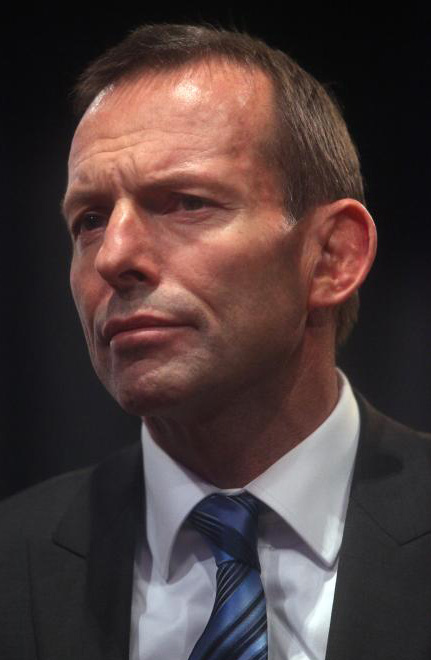
Australian Prime Minister Tony Abbott, who, unlike his conservative counterparts in the UK (David Cameron) and NZ (John Keys), strongly opposes marriage equality.

Australian Prime Minister Tony Abbott, who, unlike his conservative counterparts in the UK (David Cameron) and NZ (John Key), strongly opposes marriage equality.

The imposing 90 to 55 parliamentary majority enjoyed by the Liberal and National Parties over the ALP isn’t going to change (barring unforeseen by-elections, and even then only by one or two) before 2016, either.

The level of support for marriage equality amongst Labor MPs in Australia falls far short of their comrades in New Zealand and England & Wales, too. Instead of 90% support, only a slim majority of all Labor Party House of Representative MPs (and just under 60% of those that voted), did the right thing back in September 2012 – a low figure which undermines the party’s overall progressive credentials.

But the number of Liberal and National MPs who voted in favour of the Marriage Amendment Bill 2012 was even lower: zero. While acknowledging that there wasn’t a ‘formal’ conscience vote – meaning that members of the frontbench were prohibited from voting yes – we should remember that the Liberal Party in particular is fond of saying that all of its (backbench) MPs have a conscience vote on every single issue.

And yet, of the 60 or so Liberal and National MPs who theoretically could have exercised that freedom, just one – Senator Sue Boyce from Queensland – abstained. And, as of 1 July 2014, she is not even there anymore. Not a single one of her colleagues joined her in abstaining, let alone voting to support the legal equality of LGBTI Australians.

Moving forward just two and a half years, it stretches credulity to suggest that, in the event a formal conscience vote were provided today, the level of support for marriage equality from Coalition MPs would even come close to approaching the 45% plus figure reached by conservative party MPs in New Zealand and England & Wales.

Putting the scale of the numerical challenge in front of us even more bluntly, if the level of ALP support for marriage equality were to be the same in 2015 as it was in 2012 (60%, now the equivalent of 33 House of Representatives MPs), and taking into account the support of cross-bench MPs Adam Bandt, Cathy McGowan and Andrew Wilkie, reaching the magical 75 votes needed to secure passage would require the support of 39 Coalition MPs – or 44% of all Liberal and National MPs in the House of Representatives (NB This calculation excludes the Speaker’s vote).

Based on everything we know – and under the leadership of someone like Prime Minister Abbott, whose personal opposition would influence some of the MPs in the Liberal party room in particular to cast their vote against – that bar seems very high, so high that it is arguably unachievable.

Let’s be generous then, and assume that the level of support amongst Labor Party MPs has risen to two thirds, meaning 37 MPs voting in favour (which is possible, given that some intellectual ‘dead wood’ was removed in September 2013). That would still mean 39% of Liberal and National MPs having to vote yes to achieve even the slimmest of victories in the lower house.

Now, that might, just might, be possible. But, if you were a gambling person, would you be willing to put any money on that outcome?

With the future of marriage equality – something of much higher value than mere money – at stake, why aren’t we considering these numerical hurdles, and asking whether there might be other ways to reach 75?

One of these ways is if the Australian Labor Party were to adopt a binding vote on marriage equality for its Federal MPs, through a rule change at its July 2015 National Conference in Melbourne. That move would instantly change the equation – with a guaranteed 58 votes in favour (55 from the ALP, plus three from the cross-bench), only 17 Liberal and National MPs (or 19% of the total) would need to support a Bill to get it across the line.

Less than one in five would still be difficult, although it is eminently more achievable than the two in five required in the other scenarios described above. However, as the outcome of the 2012 legislation clearly demonstrates, even reaching this figure would still require a formal conscience vote for Coalition MPs.

Which brings me to my conclusion on this section. Looking at the numbers alone, it is highly likely that, in order for marriage equality to be passed in the current term of Parliament, we need for there to be both a conscience vote for Liberal and National Party MPs and a binding vote for Labor MPs.

I will readily admit that those dual, and potentially competing, objectives, may or may not be achievable – something I will examine later in this post (see ‘The Strategy’, below) – but before we get there, I want to talk further about the policy arguments for and against an ALP rule change, as well as the potential internal consequences of such a reform.

It’s Time to Bind: The Merits

As many people would be aware, one of the major achievements of the 2011 ALP National Conference in Sydney was the adoption of a commitment in the national platform to support marriage equality. As a result, the current platform includes the following (at paragraphs 126 and 127):

“Labor will amend the Marriage Act to ensure equal access to marriage under statute for all adult couples irrespective of sex who have a mutual commitment to a shared life. These amendments should ensure that nothing in the Marriage Act imposes an obligation on a minister of religion to solemnise any marriage.”

However, during the very same debate, that Conference passed a resolution that fatally undermined any chance of marriage equality passing in the last parliament and which, as we have seen above, continues to jeopardise its passage today. Specifically, “[c]onference resolves that the matter of same sex marriage can be freely debated at any state or federal forum of the Australian Labor Party, but any decision reached is not binding on any member of the Party.”

Putting aside numerical considerations for a moment, let’s examine the merits of such a position. Is there any justification for adopting such a position, for supporting legal equality irrespective of sexual orientation, gender identity and intersex status, but then allowing MPs to vote against such equality?

The short answer: no. And the long answer: no.

In short, there is absolutely no reason why, of all the various policy issues which the Australian Labor Party adopts binding positions on, marriage equality should be considered so ‘special’, so extraordinary, as to justify a disregard to, and breakdown of, solidarity on this issue.

Turning to this question in slightly (okay, a lot) more detail. The Australian Labor Party is founded on the labour movement, and as such has adopted at its core the principles of collective organising, of being stronger together than as individuals.

In its rules, these ideas of solidarity have translated into the practical requirement that all parliamentary representatives are bound to vote together on nearly all issues. The ALP has certainly never argued, as the Liberal Party has done, that its backbenchers enjoy a conscience vote on every single issue.

Any differences on policies are debated, often passionately, at conferences, and inside caucus rooms – but they are resolved there, and the Party adopts a united front on the floors of parliamentary chambers across the country.

Except when it doesn’t. On a small number of issues, the Labor Party does have a history of allowing conscience votes, usually for things that are described as ‘matters of life and death’, although it is hard to see how laws relating to homosexuality, or LGBTI rights more generally, have much to do with that criteria.

The problem for those that would try to use the history of LGBTI-related conscience votes to argue for a free vote on marriage equality today is that, for each of these votes, when we reflect on them critically, it is clear that the granting of a conscience vote was wrong. Wrong on principle, and wrong in practice.

For example, the 1984 law decriminalising homosexuality in NSW was not formal Government legislation – it was a private member’s Bill, put forward by the then Premier, the late Neville Wran, and voted on by all parliamentarians, including Labor MPs, through a conscience vote.

Does anyone who is involved in public life today – anyone outside the religious fundamentalist fringes of society – actually believe that this legislation was wrong? Is there anyone in the modern ALP who is prepared to say that Labor MPs should have been allowed to vote against the decriminalisation of male same-sex sexual intercourse in 1984? Anyone at all?

The counter-argument is probably that the vote on decriminalisation took place thirty-plus years ago, and that times, and attitudes, have changed in the decades since. Fine, let’s look at a more recent example. It took until 2003 for the NSW Parliament to equalise the age of consent between male same-sex sexual intercourse and mixed-sex intercourse.

Again, it was achieved through a conscience vote, and again a small number of ALP MPs (including, it should be pointed out, a current Federal shadow minister, together with Eddie Obeid and Joe Tripodi) voted against this proposal. Just over a decade later, would anyone seriously try to mount the argument that ‘gay sex’ should attract a higher age of consent than ‘straight sex’? Or that the ALP should have abandoned the principle of a binding vote on this issue? I suspect the answer would be a resounding no.

There are other examples, from other jurisdictions, as well as examples relating to other LGBTI topics (such as adoption or parenting), but each has the same outcome – a conscience vote which opponents of equality argue for vociferously at the time, citing all sorts of ‘moral hazards’, but which looks patently ridiculous in hindsight.

Those that say the history of conscience votes on homosexuality inside the ALP justifies a free vote on marriage equality now, should feel free to explain how the use of a conscience vote in each of these cases was justified – because these are the precedents, and this is the intellectual ‘legacy’, with which they are associating.

If they cannot demonstrate that those conscience votes were morally justified – and I would strongly suggest they can’t – then perhaps they should reconsider their arguments for a conscience vote on marriage equality today. Otherwise, they will simply be consigning the Labor Party to making the same mistake again, and again, and again.

Instead, I believe the Labor Party should fast forward through the all-too-frequent embarrassing ‘phase’ when it allows some MPs to vote for legal discrimination against a minority group before it belatedly corrects itself, and reach the right conclusion now – which is that all of its MPs should be bound to vote in favour of marriage equality in this term.

On a related topic, some have argued that the ALP should adopt conscience votes relating to the broad topic of ‘marriage’ per se (not just whether LGBTI couples should be included, but also on other marriage-related matters such as divorce). However, there isn’t a strong historical precedent for their use here, either.

In one of the more bizarre political speeches in recent times, speaking against marriage equality in her address to the ALP National Conference in December 2011, then Prime Minister Julia Gillard argued that a conscience vote should be granted because a conscience vote had been granted to Labor MPs with respect to the ‘no fault’ divorce reforms in 1975 (for the full text of her speech see here: <http://www.theaustralian.com.au/archive/national-affairs/julia-gillards-address-to-the-alp-national-conference-on-a-conscience-vote-for-gay-marriage/story-fnba0rxe-1226213001184 ).

Then Prime Minister celebrates after a conscience vote is approved at ALP National Conference in December 2011, a move that destroyed any chance of marriage equality being passed in the last Parliament, and continues to make passage difficult today.

Then Prime Minister Julia Gillard celebrates after a conscience vote is approved at ALP National Conference in December 2011, a move that destroyed any chance of marriage equality being passed in the last Parliament, and continues to make passage difficult today.

Gillard did not even attempt to acknowledge the fact that, from the time then Prime Minister John Howard introduced his ban on marriage equality in 2004, until her speech that day, all ALP Parliamentary Members had been subject to a binding vote on marriage broadly, and marriage equality specifically – they had been obliged to vote against LGBTI equality.

This glaring omission, ignoring the most recent seven years and instead grasping at an example from 36 years prior, was necessary because there was no intellectual rationale for that binding vote to become a conscience vote in 2011. The substantive arguments for and against marriage equality had not changed, the rights and wrongs of the issue were no different than they had been in 2004, or 2007, or 2009.

The only thing that had changed was the numbers within the ALP (something I will come to in the next section). In practice, there was no new ‘moral hazard’ which had suddenly transformed this issue from something which the Labor Party could bind on, to something so complex or controversial that it required a free vote.

There wasn’t even a legitimate question of religious freedom at stake – because, as made clear in paragraph 127 of the platform (see above), no church or religious group would be obliged to perform an LGBTI-inclusive marriage ceremony. This was a secular party, supporting the position that a secular Parliament should vote in favour of LGBTI relationships being recognised as equal under secular law. Nothing more and nothing less.

The ridiculousness of the ALP’s position – in supporting a platform position in favour of marriage equality, but then allowing its MPs to depart from that platform whenever they wished – is revealed when we compare it with the other main social policy issue currently the source of controversy within the ALP (and across Australia generally): asylum seeker and refugee policy.

Now that is an issue which is genuinely ‘life and death’, with policies that have directly led to the murder of Reza Berati, in Australian custody in an offshore detention centre which the last ALP Government re-established, which continues to drive scores of asylum seekers in numerous camps both here and abroad to, and beyond, breaking point and yes, which has also involved several mass drownings at sea.

If ever there was a subject that raised substantive moral and ethical concerns that would be it. And yet there is no conscience vote on that issue, nor is there a push for one (and, it must be added, nor do I believe there should be one – while obviously I think current ALP policies on refugees are appalling, the only way they can be changed is in Government, with all ALP members bound to vote in favour of a more humane approach).

The moral and ethical concerns of those who would oppose marriage equality, because of their belief that marriage is something which must be reserved solely for heterosexual relationships, pale in comparison, indeed fade into complete insignificance, when assessed against those concerns raised by refugee policies.

In fact, one could assert that in contrast to refugee policy the topic of marriage equality looks like an ‘ordinary’ issue, and definitely something which can be resolved in the ‘ordinary’ way – by a Conference vote, for and against, and then implemented by a binding vote on Labor’s parliamentary representatives.

But there is one last comparison that I wish to make which I think shows that the ALP’s position in favour of a conscience vote on marriage equality is not just ridiculous, but outrageous as well.

Imagine, for a second, that in 2011 the original ‘White Australia Policy’ still existed, and that in response the Labor Party National Conference adopted in its platform a position that it would remove discrimination based on race from all immigration policies and laws. Now imagine that same Conference then turned around and said that ALP MPs could vote against these changes if they believed that some migrants were less deserving of rights simply because of their race.

Outrageous, isn’t it? I believe that not only would the modern ALP not allow a conscience vote in these circumstances, it would expel, without a moment’s hesitation, any MP who even threatened to crossed the floor. And yet the only difference between that example and the issue of marriage equality is that the former is about racial equality, and the latter is about the equality of all people irrespective of sexual orientation, gender identity and intersex status.

As this comparison makes abundantly clear, while overt discrimination on the basis of race is, thankfully, not permitted (at least in the Party’s rules), there remains a special privilege for some MPs within the Labor Party to vote against the fundamental rights and equality of lesbian, gay, bisexual, transgender and intersex Australians.

12 months ago, Commonwealth Attorney-General Senator the Hon George Brandis encountered significant, and entirely justified, criticism, including from the ALP, when he told Parliament that “people have the right to be bigots.” But isn’t this criticism just a little bit hypocritical when, at the same time, Labor’s rules state that Federal Members of Parliament have the right to be homophobes?

I’ll concede that some people don’t believe opposing marriage equality necessarily equates with ‘homophobia’ (I do, but, to some extent, that is a debate for another day). Nevertheless, the point remains: there isn’t really any substantive difference between the Attorney-General saying that people have the right to be bigots, and the Australian Labor Party saying that its parliamentary representatives have the right to discriminate against LGBTI people.

Just as it has done, so effectively, in the racial vilification debate, the Labor Party should be standing up for members of a minority group who are vulnerable to discrimination on the basis of their attributes. Instead, while its platform says the ALP supports finally conferring LGBTI Australians with ‘1st class’ citizenship, its rules allow a significant proportion of its MPs to continue to vote to entrench our 2nd class status.

It’s time to say that this situation is offensive – as I believe many people, both inside and outside the ALP, find it to be.

It’s time to point out that allowing a conscience vote on marriage equality is a gross violation of the principle of collective organising that lies at the heart of the ALP, a violation that has no merit or justification in principle whatsoever.

It’s time to say that allowing conscience votes on LGBTI rights of any kind, and permitting some Labor Party parliamentarians to vote against legal equality on the basis of sexual orientation, gender identity and intersex status, is no longer acceptable in a contemporary political party that likes to refer to itself as progressive.

It’s time for the Australian Labor Party to adopt a binding vote in favour of marriage equality.

It’s Time to Bind: The Split?

When the merits of the arguments for and against a binding vote are all said and done, there are only two things left to debate – the internal consequences of adopting a binding vote for the ALP, and the external strategic considerations, for marriage equality campaigners, concerning when to push for such a vote.

Turning first to the internal consequences. There is an accusation which is made against people calling for a binding vote on issues like marriage equality, that we are somehow trying to ‘split’ the party. It is certainly an accusation which I would expect to hear frequently in the lead-up to July’s National Conference, particularly as the push for a binding vote gathers steam.

In fact, the exact opposite is true – those who staunchly oppose being bound are the ones who threaten to split the party because of their own narrow self-interest.

Supporters of marriage equality inside the Australian Labor Party have spent more than a decade meticulously playing by the rules. From the bleak days of August 2004, when the Latham-led Opposition chose to roll over and vote against marriage equality in response to John Howard’s attempted political ‘wedge’, through the following six years slowly building the case for full equality, while also gradually addressing other areas of discrimination (including securing de facto relationship recognition at the federal level for the first time in 2008).

By 2011 the time had come to make the final push for a change to the national platform. But that delay had come at a cost. For more than seven years, progressive Federal MPs had, in line with the Party’s binding policy position, been voting against LGBTI equality.

This included openly lesbian Senator Penny Wong, who was bound from the first vote in August 2004, until the December 2011 National Conference, to vote against her own equality, and that of her relationship. Her position invited, and attracted, much opprobrium from her own community, with suggestions that she had sold them out – even though she was playing the long game.

The same is true of out (and sadly, now out of Parliament) Senator Louise Pratt, who was bound to vote against the equality of her community from the time she was sworn in, in July 2008, until the end of 2011. But it was not just LGBTI MPs that were affected. Any progressive MP who genuinely believed the stance against marriage equality was discriminatory and wrong (and there were plenty from the very beginning), accepted these restrictions, and the criticisms that went along with them.

There were no public threats to cross the floor and bring forth a split in the Party – just a quiet determination to slowly build support towards an eventual change to the platform. That is exactly how a collectivist party should operate. And, in the lead up to the last National Conference it was clear that these tactics had paid off, with momentum firmly on the side of the angels.

In absolutely no coincidence whatsoever, that was also the moment opponents of marriage equality inside the ALP suddenly discovered that this topic was an ethically fraught one, and therefore required a conscience vote. Note that they did not make these arguments at the National Conferences of 2006 or 2009, both of which had occurred during the period when a binding position was being imposed on progressives.

No, the opponents of marriage equality only truly discovered the ‘benefits’ of a conscience vote when the number of people supporting equality inside the Party had finally outgrown the number of people opposed, and that as a result there was a very real risk that a binding vote might actually be applied on them.

It is plain to see how this Damascene conversion, adopted in quick succession by opponents of equality from the then Prime Minister down, was in fact intellectually bankrupt. In essence, they were saying that, while it was perfectly acceptable to impose a binding vote against progressives from 2004 to 2011, it was totally unacceptable to impose a binding vote on social conservatives from 2011 onwards.

In short, “binding votes are for people like them, not people like me.” That, my friends, is the antithesis of collectivism.

But worse than this blatant hypocrisy are the threats of socially conservative ALP MPs who state, usually in private or off-the-record, but occasionally in public, that even if the ALP were to adopt a binding position in favour of marriage equality, they reserve the right to thumb their noses at the bonds of solidarity and instead cross the floor.

As reported by Phillip Coorey in the Sydney Morning Herald at the start of the 2011 conference: A handful of Right MPs, including Chris Hayes from western Sydney, told the Herald yesterday they would never vote for gay marriage, even if party policy dictated it. “You do believe in certain things. I can’t apologise for my beliefs,” Mr Hayes said. (full article: <http://www.smh.com.au/national/we-wont-vote-for-gay-marriage-even-if-party-changes-its-position-say-labor-right-mps-20111130-1o766.html#ixzz371gEEuUI )

In more recent times, Mr Hayes has been joined by another Federal Parliamentary colleague in saying that, no matter what the supreme decision-making body of the Australian Labor Party decides, his own views against LGBTI equality mean that he feels no requirement to be bound by it.

As reported by Phillip Hudson in The Australian on 4 April 2014, then candidate, now Senator, Joe Bullock, declared that, “[i]f the party decides it [marriage equality] is not a conscience vote and expels me, so be it.” (full article: <http://www.theaustralian.com.au/national-affairs/labor-senate-candidate-joe-bullock-sorry-for-offensive-speech/story-fn59niix-1226874445978 )
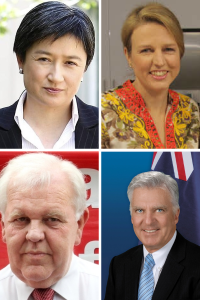
If a binding vote was good enough for Senators Wong & Pratt before the 2011 National Conference, it is good enough for Mr Hayes and Senator Bullock in 2015.

If a binding vote was good enough for Senators Wong & Pratt before the 2011 National Conference, it is good enough for Mr Hayes and Senator Bullock in 2015.

It is hard to work out which part of these comments is most offensive. Whether it is the complete disregard for not just the rules of the party of which they are representatives, but its philosophical underpinnings too. Or the absolute sense of personal entitlement which spouts from their mouths (for the record, this attitude, that an MP considers themselves above the party, is one ‘age of entitlement’ that I would definitely like to see come to an end).

But for me, it is not something either Mr Hayes or Senator Bullock said which is most repugnant. It is what they didn’t say. Neither finished their statement by saying that they would resign from Parliament.

Any member of the Australian Labor Party, from Federal Opposition Leader to local branch member, is free to decide at any time that they can no longer abide by the Party’s rules, and therefore to resign. But, for Members of Parliament, elected as candidates for a collectivist party, standing on and bound by a collectivist platform, the consequence of doing so should be that they resign their seat in Parliament as well.

The fact that neither Mr Hayes nor Senator Bullock committed to doing so speaks volumes about their honour, or (arguable) lack thereof.

Because, as much as (some) News Ltd columnists and the Australian Christian Lobby would try to turn any MP who crossed the floor on this issue and was subsequently expelled into some sort of martyr, abandoning solidarity but retaining the seat in Parliament which they secured as a member of, and with the assistance of, the Australian Labor Party would, in my view, be the height (or indeed depth) of dishonour.

The attitude of Mr Hayes and Senator Bullock also amply demonstrates exactly who would be responsible for any ALP ‘split’ in the event that the Party does adopt a binding vote.

It would not be the fault of those who painstakingly make their case in the Party’s internal forums, who secure the passage of a binding resolution at the next National Conference in July 2015, all in accordance with the Party’s rules and processes.

No, any split would be the responsibility of those who would do their best to burn the place down if they did not get their way.

I used to think that the most appropriate analogy for this situation – of the ALP continually succumbing to demands for ‘conscience votes’ whenever social conservatives refused to abide by a particular decision – was that of parents giving in to the tantrums of a two-year old. That, by continuing to give that toddler what it wants rather than saying “no”, the Labor Party had created a monster that keeps on demanding more and more and more.

On reflection, however, that is grossly unfair on two-year olds. They don’t actually know what they are doing. Well, they might, but they are not yet old enough to be held liable for their behaviour.

Whereas the people who make these threats, time and time again, know exactly what they are doing. They are blackmailing their own political party, a group that they should hold and demonstrate allegiance towards, knowing that the party is more likely to give in to their extortionate demands than stand up to them.

Well, the time has come to say no more to their hypocrisy, and no more to their blackmail. It is no longer acceptable to simply give in to people who have zero respect for the party of which they are a member. Who believe that they alone have the right to deviate from a collectively-determined platform which is binding on everyone else.

It’s time to push for a binding vote in favour of marriage equality on all ALP Members of Parliament. And, if there are some MPs who decide they cannot abide by that decision (and there may well be some, although probably far fewer than many people expect), then by all means, the door is that way, but the seat should stay here.

In practice, any member who does decide to leave, ‘split’ in terms of their commitment to the party a long time ago. Besides, these are people whose one noteworthy ‘achievement’ in life will be having left their political party, while a sitting member of parliament, because they couldn’t live with the idea of all Australians being equal regardless of sexual orientation, gender identity and intersex status. Their loss would not really be any loss at all.

It’s Time to Bind: The Strategy

Questions about parliamentary numbers, internal ALP rules and any potential party ‘split’ are actually the easy part of this discussion. The most complex issue in this entire debate concerns strategy, namely whether now is the appropriate time for marriage equality campaigners to restart the push for a binding vote.

And I will begin this section by acknowledging that different people, well-motivated and on the same side of this campaign (the broader movement for marriage equality), will arrive at a different assessment on this subject. There are people who I respect who will argue that any push for a binding vote inside the ALP jeopardises the overall campaign and therefore should be abandoned.

But, while I understand their opinions, I respectfully disagree.

For me, the framework for approaching this issue comes in the form of the following three questions – presented together with my answers:

i) Is there an inherent philosophical inconsistency in pushing for a binding vote inside the ALP while also pushing for a conscience vote in the Coalition? No.

ii) Would a binding vote in the ALP automatically mean there is no chance of a conscience vote inside the Coalition? No.

iii) Does pushing for a binding vote inside the ALP make it more difficult to achieve a conscience vote within the Coalition? Possibly.

Looking at these issues in more detail. The answer to the first question – concerning philosophical inconsistency – might seem counter-intuitive to some, but here is why I answered “no”.

First, we should always remember that there is nothing inherently ‘good’ about a conscience vote (there is nothing inherently ‘bad’ either, unless you are part of a collectivist organisation). A conscience vote is simply a process, an instrument, a means to an end.

I am sure nearly all marriage equality campaigners would be satisfied if there was both a binding vote inside the ALP and a ‘party vote’ in the Coalition, not only meaning that marriage equality was passed, but also that it would be done with a large majority and in a spirit of true bipartisanship.

Sadly, that is not going to happen. There is no chance of the Liberal and National Parties, in their current forms, adopting a formal position in favour of full LGBTI equality. Hence, it is entirely rational to push for a conscience vote within the Coalition, both to improve the overall numbers in the Parliament, and to ensure that no MP is forced to vote against the fundamental rights of other Australians on the basis of their sexual orientation, gender identity or intersex status.

On the other side of the political aisle, the ALP already has a conscience vote, which means the only procedural change which can increase the share of Labor Party MPs voting in favour of marriage equality is to adopt a binding vote instead. From an advocate’s point of view, again, it is perfectly justifiable as a strategy to be arguing for the Australian Labor Party to maximise the number of its MPs voting in support.

Meanwhile, the same philosophical arguments would still apply – it would remain the case that no MP would be forced to vote against the fundamental rights of their fellow Australians (the same as for the Coalition).

No corresponding argument can be made by those opposed to marriage equality. This is because the right to get married, in secular law, has exactly zero impact on anyone else’s human rights. More couples would be married, and recognised as such by the State. LGBTI Australians would finally be treated equally in the Marriage Act 1961. That is all.

No-one else’s rights to be married, or have their own marriages recognised, would be affected. No religion’s right to recognise marriages (or not recognise, as the case may be) within their own religion would be compromised. And, despite whatever the Australian Christian Lobby and other extremists might try to argue, there is no fundamental right to impose one’s religious beliefs onto others, or to deny other people their human rights for religious reasons.

Which means that, as well as a compelling numerical reason to argue for a binding vote within the ALP, and a conscience vote inside the Coalition, there is also a philosophical approach which can provide it with moral justification.

In response to the second question, while what the ALP decides could have an influence on what position the Liberal and National Parties adopts (see below), it is definitely not automatic. For example, we have already witnessed a parliamentary vote where one side was ‘bound’ and the other had a conscience vote – in September 2012, with the Liberal and National Parties deciding not to follow the ALP’s lead in adopting a conscience vote.

Similarly, even if the ALP was to retain a conscience vote for the remainder of this term, there is no guarantee that Coalition MPs will end up with a free vote. While it appears that some progress is being made inside the Liberal and National Parties, the ultimate decision still rests with the party room – and there remains a real chance that there will be no Coalition conscience vote this side of the 2016 election regardless of what Labor does.

Of course, it makes no sense to deny at least the potential that the push for an ALP binding vote may make it more difficult to achieve a conscience vote within the Coalition, which is why I answered the third question “possibly”.

But, just because that outcome is a possibility (how big that possibility is depends on one’s subjective point of view), does not necessarily mean we shouldn’t try. There are, for example, several reasons why I believe we should continue to pursue a binding vote within the ALP while also acknowledging and assuming this risk.

First, as I noted in ‘The Numbers’ section earlier, it is highly likely that for any Bill to succeed in this term of Parliament, it will need both a binding vote inside the Labor Party and a conscience vote inside the Coalition. So it seems logical to me that, while groups like Australian Marriage Equality make the case for a Liberal and National Party conscience vote, other groups (and I’m looking squarely at you, Rainbow Labor, among others) simultaneously pursue a binding vote inside the ALP.

Second, there is the question of timing. If the ALP is to adopt a binding vote, it can only be done at its National Conference, to be held on July 24-26, 2015 in Melbourne. That will be almost two years into this three-year term of Parliament (and approaching four years since the ALP first adopted a conscience vote).

If the Coalition hasn’t agreed to a conscience vote by then, then it is highly unlikely to agree to one at any point this term (and, if it is willing to say no this term, under sustained pressure from groups like AME and in the face of a growing majority of community support for marriage equality, it could very well say no next term, too).

Third, if we were to make an honest assessment of where things stand at this moment, it is still more likely than not that marriage equality will fail this term. While there is a (very) small chance that a conscience vote on both sides could get the job done, or that a combined ALP binding vote/Coalition conscience vote secures its passage, most possible permutations lead to the Bill’s failure.

Which means we must keep a close eye on the next term of Parliament, to be decided at the 2016 Federal election. And, given that election looks like it will at least be competitive, wouldn’t there arguably be more benefit than cost in having one of the two ‘parties of government’ standing on a platform of a binding vote?

Such a position would mean that marriage equality would have a strong chance of passage if the ALP were to win Government (success would be almost guaranteed) or if there was a close election result either way (with only a small number of Coalition MPs needing to break ranks to secure victory).

On the other hand, if the ALP continues to adopt a conscience vote, the success of marriage equality will remain dependent on whether the Liberal and National Parties also adopt a conscience vote, and even then on the vagaries of the balance between progressives versus social conservatives inside both the ALP caucus and Coalition party room.

Fourth, there is an argument that the ALP adopting a binding vote at the 2015 National Conference would actually increase pressure on the Liberal and National Parties to agree to a conscience vote ahead of the 2016 poll. After all, opinion polls consistently show support for marriage equality standing at a minimum of 55-60%, increasing with each passing year, and strongest amongst young voters (ie new voters entering the ‘electoral market’).

In this context, it would take a truly ‘courageous’ party (in the Sir Humphrey sense of the word) to bind itself to a position shared by at most a third of the electorate – and a diminishing proportion at that. I’m sure we can all think of a few Coalition MPs who would have extra incentive to push for a conscience vote in such a scenario (the name of an Australian TV prison drama springs to mind, for some reason).

As I said before, different people will hold different views about some of these strategic considerations. And, depending on how they see them playing out, I completely respect that they might arrive at the conclusion that we should not be pushing for an ALP binding vote at this point in time.

But I hope that they are also willing to acknowledge that there is no absolute ‘cut and dried’ case that the only way marriage equality can be achieved is through a conscience vote on both sides. That on this rainbow-hued issue, there are at least some strategic shades of grey.

In that case, where at a minimum there is doubt about whether to pursue a binding vote or not, I submit that we should fall back on our values, on what is ‘right’. From my point of view – and this post is simply my own perspective – I think we should be guided by the arguments for and against a binding vote. And, as discussed earlier (see ‘The Merits’), that case is open-and-shut: the ALP should adopt a binding vote in favour of marriage equality.

Putting it another way, if there is a strong case that a binding vote is the correct ideological position to take, then it would take an equally strong strategic counter-argument to tell progressive members of the ALP not to purse that objective at this year’s National Conference. To suggest to them that, even though a binding vote is the right thing to do, you should explicitly not pursue it because members of the Coalition are yet to secure a conscience vote. In my opinion, no such ‘overwhelming’ strategic argument exists.

Instead, I believe we should do exactly the same thing as we did at the 2011 National Conference – campaign for a binding vote. It was the right thing to do then. And it will still be the right thing to do come July. I hope that, after reading these arguments, you agree.

One final point. Some might argue that we should wait for a conscience vote (presumably on Senator Leyonhjelm’s flawed Freedom to Marry Bill) to be held at some point in the next three to four months and, presuming it loses, to only push for a binding vote following that defeat.

But there are two problems with that argument. The first is that it took most of 2011, in the lead-up to December’s conference, to build momentum for the platform change. To have the same chance of success at this year’s conference means starting campaigning now (or, to be frank, yesterday). And that’s even leaving aside the problem that we don’t even know if Senator Leyonhjelm’s Bill will be debated, let alone voted on, before July.

Second, I believe that doing so would expose the marriage equality movement to (probably quite fair) criticisms that it was merely being opportunistic, or disingenuous, because it was only pushing for a binding vote because the conscience vote had lost, and not because a binding vote was also the correct position to take. I would prefer to take this stance from the beginning of the campaign so that we can have credibility when it comes time for the debate on the floor of Conference.

Overall, while ‘strategic considerations’ are definitely the most complicated part of this debate, I think it leaves us exactly where we have been all along: that it’s time for the Australian Labor Party to adopt a binding vote in favour of marriage equality.

It’s Time to Bind: Take Action

As noted throughout this post, the main decision on whether the ALP adopts a binding vote on marriage equality will be made at the next National Conference, to be held in Melbourne on 24, 25 and 26 July 2015 (unless of course marriage equality is passed beforehand, in which case I will have been wrong, but very gladly so).

That means we now have only four months left to make the case for change, to persuade the Opposition Leader, the Hon Bill Shorten, his colleagues in the Parliamentary Labor Party, and all delegates to the National Conference (well, the majority of them anyway), that a binding vote is essential to achieving full marriage equality.

The first two places to contact are the Opposition Leader himself, and the Australian Labor Party Head Office directly. Their contact details are:

Twitter (NB Please use the #ItsTimeToBind hashtag)

Bill Shorten @billshortenmp https://twitter.com/billshortenmp

Australian Labor @AustralianLabor https://twitter.com/AustralianLabor

Suggested tweet: Hey @AustralianLabor & @billshortenmp, I believe #ItsTimeToBind in favour of #marriageequality. Please support a binding vote on all MPs

Call

Bill Shorten (02) 6277 4022

Australian Labor (02) 6120 0800

Write

The Hon Bill Shorten MP

Leader of the Opposition

PO Box 6022

House of Representatives

Parliament House

CANBERRA ACT 2600

Australian Labor

5/9 Sydney Avenue

BARTON ACT 2600

Email

Bill Shorten Online contact form: http://billshorten.com.au/contact

Australian Labor Online contact form: http://www.alp.org.au/contact_us

If you are in need of inspiration for what to write or say, how about something like this:

“I support the equal right of all Australians to marry, irrespective of sexual orientation, gender identity and intersex status.

While I welcome the decision of the 2011 ALP National Conference to adopt a platform position in favour of marriage equality, I strongly oppose the decision to provide a conscience vote, allowing some Labor MPs to vote against the fundamental rights of lesbian, gay, bisexual, transgender and intersex Australians.

I believe it’s time for the Australian Labor Party to adopt a binding vote in favour of marriage equality. I call on you to support a resolution which makes support for marriage equality a binding position on all ALP Federal MPs at this July’s National Conference.”
Will Federal ALP Leader Bill Shorten 'do the right thing' and support a binding vote at the 2015 ALP National Conference?

Will Federal ALP Leader Bill Shorten ‘do the right thing’ and support a binding vote at the 2015 ALP National Conference?

If you liked this post, if you agree with it, or even if you think it is simply worthy of further debate, then please also share it with others.

And if you want to stay up to date with more on this issue, please follow me on twitter (@alawriedejesus https://twitter.com/alawriedejesus ).

You can also find out more about the marriage equality campaign generally, including the #ItsTimeToBind campaign, by liking the Equal Marriage Rights Australia Facebook page: <https://www.facebook.com/GMRA1

Finally, I wanted to say thank you for reading what has turned out to be a pretty lengthy post – I appreciate your interest in something which I feel so passionately about. I do sincerely believe that we can achieve a binding vote at this year’s ALP National Conference, but only if we start campaigning for it right now.

So let’s get to work, to achieve a binding vote in support of marriage equality inside the ALP, and most importantly a legislative victory for marriage equality inside the Australian Parliament. Because, as we know all-too-well by now, we’ve waited long enough.

Letter to Prime Minister Abbott re Intercountry Adoption by Same-Sex Couples Part 2

In early March I wrote to Prime Minister Abbott about the review, then being undertaken by his department, of Australia’s inter-country adoption arrangements. Specifically, I asked that same-sex couples be included in any potential reforms to be considered at the Council of Australian Governments (COAG) meeting scheduled for Friday 2 May (see original letter here: <https://alastairlawrie.net/2014/03/08/letter-to-prime-minister-abbott-re-inter-country-adoption-by-same-sex-couples/ )

I did not receive a response to my letter until after the COAG meeting (on Monday 5 May), although it was dated 1 May. The reply stated:


Dear Mr Lawrie


Thank you for your letter of 8 March 2014 to the Prime Minister regarding overseas adoption. I have been asked to reply on the Prime Minister’s behalf. I apologise for the delay in replying.


This is an issue that could benefit from attention at the highest levels of government. That’s what it will be getting between now and the next meeting of the Council of Australian Governments.


As you note, at present there is no consistency across Australia on whether same-sex couples can adopt a child. The requirements of foreign countries are also relevant, with most of Australia’s current partner countries not allowing adoption by same-sex couples.


The Commonwealth Government is committed to working with our state and territory colleagues and stakeholders in this area, including the non-government sector, to deliver reform.


Thank you for letting the Government know your views on this issue.


Yours sincerely


Name Withheld

Assistant Secretary

Which, it has said to be said, was a pretty underwhelming response, especially given the paucity of firm details or commitments. I also cracked a wry smile at the statement that the issue would be getting attention between now (ie the time of writing) and the next COAG meeting – which was held the following day.

In any event, the issue of inter-country adoption was discussed at COAG on Friday 2 May. The Prime Minister, and State Premiers and Territory Chief Ministers, agreed to the following in the official Communique:

Intercountry adoption of children


Adopting a child from overseas is an emotional and complex undertaking. Different requirements across Australia can create even more difficulty for families wanting to adopt a child from overseas.


COAG supports adoption conducted in the best interests of the child and consistent with the safeguards of the Hague Conventions.


COAG agreed in principle to the Commonwealth’s proposal to provide a new national intercountry adoption service for all Australians wanting to adopt a child from overseas.


Under the new service, the Commonwealth will fund either a new accredited non-government organisation or organisations, or a Commonwealth agency, to provide services for intercountry adoption by early 2015.


The Commonwealth and the States and Territories will work closely together to make sure there is a smooth transition to the new system.

So, some more detail (albeit only a little bit), but also some unanswered questions (including whether same-sex couples are to be included), as well as some new questions (if a non-government organisation contracted to provide inter-country adoption services was religious, could they refuse to provide those services to same-sex couples – but more on that particular issue later).

On the following Monday, 5 May, Prime Minister Abbott issued a Media Release, which revealed a little bit more:

REFORM AND ACTION ON INTERCOUNTRY ADOPTION


The Commonwealth Government is committed to adoption reform to enable more people to find families.


A new report has identified significant barriers facing Australian families wanting to adopt from overseas.  Inconsistent rules, costs and the lengthy wait to adopt currently deter many people from even starting the adoption process.


Last Friday, COAG agreed to a national system for intercountry adoption. The Commonwealth will work vigorously with the States and Territories to have a new system operating by early 2015.


The report into intercountry adoption also recommended establishing new country programmes to help more Australian families to adopt.  A new intercountry adoption programme between Australia and South Africa is now in place.


South Africa has a strong commitment to finding families within its borders to care for children in need. Where, for whatever reason, a South African family cannot be found, Australian families will be able to help provide permanent loving homes to South African children.  Many of these children will have health needs, and would benefit from the caring environment that Australian families can provide.


The Government will introduce amendments to the Australian Citizenship Act so that obtaining Australian citizenship can happen in a child’s country of origin. As well, we will fix the problems associated with the visa system. It is too complicated at the moment and processing times are too long.


For too long children who legitimately need a safe and loving home and Australians who dream of providing this home have been hindered by red tape and confusion. The Government is pleased to be able to undertake real action to bring families together.

The accompanying Report of the Interdepartmental Committee on Intercountry Adoption provided some additional information (see link to report here: <http://www.dpmc.gov.au/publications/docs/idc_report_intercountry_adoption.pdf ), although undoubtedly would have provided more had pages 41 onwards, which contained Options for Reform and Recommendations to Government, not been deliberately withheld from the public.

The table on page 30 of the section of the Report that was released at least acknowledged that in four Australian jurisdictions – NSW, Western Australia, Tasmania and the ACT – adoption by same-sex couples is already legal.

On page 32, Table 11: Country of Origin Requirements then spelled out all the different countries where agreements exist, but which deem same-sex couples to be ineligible. Sadly, none of the countries listed currently permit inter-country adoption that does not discriminate on the basis of sexual orientation.

The discussion on page 31 helpfully (or should I say rather unhelpfully), noted that “[r]estrictions on same-sex couples adopting was raised by several submissions as a problem… [But] It seems that changes to these criteria would probably have limited impact on intercountry adoption given the country of origins’ criteria.”

Which is absolutely correct. But still does not answer the question of what would happen if Australia were to sign an inter-country agreement which did allow same-sex adoption (or even, as I suggested in my original letter, if Australia were to actively seek to include non-discrimination as a key clause in all of our inter-country agreements)?

And the media release, and accompanying IDC report, didn’t even address the most obvious question of all – given South Africa already allows same-sex couple adoption, and Prime Minister Abbott announced a new inter-country adoption program with South Africa, would Australian same-sex couples be able to adopt under that program?

The mainstream media didn’t appear to follow up on this question – although fortunately, Benjamin Riley of the Star Observer newspaper stepped into the breach to report the following:

SAME-SEX COUPLES INCLUDED IN OVERSEAS ADOPTION AGREEMENT FOR THE FIRST TIME


BEJAMIN RILEY – May 5, 2014


SAME-sex couples are included in Australia’s new agreement with South Africa on overseas adoption announced today by Prime Minister Tony Abbott, after being excluded from every previous intercountry adoption agreement between Australia and another country.

A spokesperson for the Department of Prime Minister and Cabinet told the Star Observer the agreement with South Africa is the first such arrangement with a country that allows same-sex couples to adopt children.


Although there is currently inconsistency across Australian states and territories around same-sex adoption, same-sex couples can legally adopt in NSW, ACT, Tasmania and Western Australia. However, until now this has been irrelevant due to the explicit exclusion of same-sex couples from Australia’s intercountry adoption agreements.


The Prime Minister announced the agreement with South Africa today along with a range of reforms to streamline the overseas adoption process, allowing children to obtain Australian citizenship in their country of origin, and simplify visa processes. These reforms have come out of a new report by the Interdepartmental Committee on Intercountry Adoption.


The Prime Minister’s office confirmed the eligibility of same-sex couples to adopt under the new agreement with South Africa, and told the Star Observer these reforms will consider inconsistencies between the states and territories on same-sex couples adopting.


“Current eligibility requirements vary across Australia via states and territory requirements. We will most be certainly considering this issue — together with other eligibility criteria — as we finalise the new national approach to intercountry adoption,” press secretary Sally Branson said.


“This just isn’t an issue for the home country of the adoptive parents — the requirements of overseas countries are also relevant. The South Africa agreement will allow for same sex couples to adopt.”


A Council of Australian Governments (COAG) meeting on Friday also flagged the development of a new national service for intercountry adoption by early-2105. The service would be either a funded non-government organisation or a Commonwealth agency.


The announcement prompted calls by the NSW Gay and Lesbian Rights lobby to ensure a new national framework would operate with equality for LGBTI people looking to adopt, and said the same should be true for any organisations assisting in the adoption process.


The Prime Minister’s office told the Star Observer there is no detail yet around how the national service would operate, but said the Federal Government would “ensure non-discriminatory service is provided to all stakeholders, and work with all stakeholders in a the same manner”.


Rodney Chiang-Cruise from Gay Dads Australia said the streamlined citizenship and visa processes wouldn’t change a great deal for Australian same-sex couples looking to adopt from overseas, but was glad the issue was being discussed.


“The Federal Government has not done anything on overseas adoption for decades… It sounds like a positive move, and hopefully it’s an indication of further moves in regards to what is a complex and difficult area,” Chiang-Cruise told the Star Observer [emphasis added, abridged]. Link to original article here: <http://www.starobserver.com.au/news/local-news/same-sex-couples-included-in-overseas-adoption-agreement-for-the-first-time/122370

As the article reports, this is a potentially significant breakthrough in terms of LGBTI equality – provided this agreement is implemented in line with state and territory requirements, for the first time ever, same-sex couples in NSW, WA, Tasmania and ACT will be treated equally in terms of overseas adoption.

However, the notes of caution expressed by Mr Chiang-Cruise also seem to be appropriate. After all, that still leaves LGBTI-inclusive couples in four Australian jurisdictions (Victoria, Queensland, South Australia and the Northern Territory) out in the cold.

And, as described earlier, there is genuine concern that, should a religious organisation be awarded the contract to deliver inter-country adoption services, they might discriminate against same-sex couples and then use the (incredibly broad) religious exemptions offered under the Sex Discrimination Act 1984 to essentially ‘get away with’ such discrimination.

Which means, while some questions have been resolved – and the South African agreement is indeed a big step forward for same-sex couple adoption in Australia – there are still plenty of issues to be worked through in coming months. It also means there was certainly plenty of material to write a follow-up letter to Prime Minister Abbott on this subject. As always, I will post any reply that I receive.

The Hon Tony Abbott MP

Prime Minister

PO Box 6022

House of Representatives

Parliament House

CANBERRA ACT 2600

Thursday 29 May 2014

Dear Prime Minister

INTER-COUNTRY ADOPTION BY SAME-SEX COUPLES

Thank you for the reply, from your Department, to my letter of 8 March, concerning the issue of inter-country adoption by same-sex couples.

Unfortunately, some of the issues raised in my letter were not answered. Additional issues have also arisen from the Communique of the COAG meeting on Friday 2 May, and from your media release on Monday 5 May, which was accompanied by the release of some sections of the Report of the Interdepartmental Committee on Intercountry Adoption.

First of all, however, I wish to congratulate you on your commitment, as expressed by your office to the Star Observer newspaper on Monday 5 May, that same-sex couples will be eligible to adopt under the newly-finalised agreement with South Africa. This is a major step forward for the equal treatment of lesbian, gay, bisexual, transgender and intersex-inclusive families.

Nevertheless, as highlighted in my original letter, and confirmed in the Report of the Interdepartmental Committee, it is highly unlikely that, due to differing legislation, same-sex couples in Victoria, Queensland, South Australia and the Northern Territory will be able to take advantage of this new agreement.

This is obviously an unsatisfactory outcome – that arrangements entered into by the Commonwealth will only provide benefit to couples in Sydney, not Melbourne, Perth not Brisbane, and Hobart but not Adelaide.

I therefore reiterate my call that you should use the process of establishing new inter-country arrangements over the coming year to urge those states and territories that have not yet made adoption non-discriminatory on the basis of sexual orientation, gender identity or intersex status to finally do so.

Second, I wish to ask you about the proposal being considered that a non-government organisation may be funded to provide inter-country adoption services on behalf of the Commonwealth and states and territories. Specifically, if this organisation is itself, or is run by, a religious body, will you guarantee that they will not be able to deny these services to same-sex couples?

Again, it would be a deeply unsatisfactory outcome if, despite the successful inclusion of same-sex couples in formal arrangements between Australia and South Africa, these were undermined in practice because of the exemptions offered to religious organisations under the Sex Discrimination Act 1984.

Please ensure that whichever non-government organisation is funded to provide inter-country adoptions services on behalf of the Australian Government, and therefore the Australian people, they are legally bound not to discriminate on the basis of sexual orientation, gender identity or intersex status.

Third, and finally, I return to a point made in my initial correspondence and that is that I believe the Australian Government should be actively seeking to include non-discrimination clauses in all future inter-country adoption agreements. This stance should apply irrespective of whether the country is like South Africa, and itself already recognises same-sex adoption, or another country that does not.

I acknowledge that it may not be possible to secure the inclusion of such a clause in every single signed agreement – because it is dependent on the response of the other country – but I can see no reason why Australia should not be directly and firmly putting forward the principle that all couples are able to be loving and nurturing parents, irrespective of their sexual orientation, gender identity or intersex status.

Congratulations again on the inclusion of same-sex couples in the inter-country adoption agreement with South Africa.

I look forward to your response to the other matters raised in this correspondence.

Sincerely

Alastair Lawrie

Dear Joe Hockey, $245 million for School Chaplains? You Cannot be Serious

Just over a month ago I wrote to you arguing that, if you were serious about cutting Commonwealth expenditure, you must axe the National School Chaplaincy Program. (link: <https://alastairlawrie.net/2014/04/12/dear-joe-hockey-if-youre-serious-about-cutting-expenditure-you-must-axe-school-chaplains/ )

This program is a completely unjustifiable breach of the principle of the separation of church and state, supporting the appointment of people whose primary ‘qualification’ is their religion to positions in secular, government-run schools. It is also ineffective, with little or no evidence that employing chaplains benefits students overall (especially when compared with appointing properly-trained and qualified student welfare workers or counsellors).

Above all, with the National School Chaplaincy Program costing more than $50 million each and every year, this initiative is the epitome of waste. $50 million per year may not have seemed like a huge spend when it was first introduced (as Howard and Costello bathed in the rivers of cash flowing into the treasury coffers) but, in a post-GFC world, when the revenue stream has well and truly dried up, the largesse of this scheme is apparent.

Since I wrote to you, the final report of the National Commission of Audit has been released, and, much to my surprise, they recognised both the extravagance of, and lack of policy rationale for, this scheme, recommending that it be abolished. Even your hand-picked, right-wing Audit warriors thought funding school chaplains could not be justified.

So, when you rose to your feet to deliver the Budget on Tuesday night, the pressure was on you: were you in fact serious about cutting expenditure, including abolishing wasteful and ineffective programs irrespective of which side of politics had introduced them, or did balancing the Budget not matter as much as supporting narrow, ideological interests?

Alas, in the Budget papers, we the Australian public quickly discovered that, despite all the talk of ‘fiscal responsibility’ and ‘repairing the Budget’, you nevertheless had chosen to provide $245 million to the National School Chaplaincy Program, to continue its operation from 1 January 2015 to the end of 2018.

That decision in and of itself was terrible, but it is made worse, by several orders of magnitude, when it is contrasted with some of the other decisions contained in the Budget, including:

  • The introduction of a $7 co-payment for visiting a doctor, as well as a $5 increase in the cost of prescriptions through the Pharmaceutical Benefits Scheme;
  • A $7.9 billion cut in the foreign aid budget over the next 5 years;
  • A $500 million cut to expenditure on indigenous programs over the next 5 years (this under the ‘Prime Minister for Indigenous affairs’);
  • A rise in the pension age from 67 to 70 (phased in to 2035), as well as a reduction in future pension increases;
  • An increase in university fees, with loans to be charged at much higher interest rates and the repayment threshold significantly lowered; and
  • The introduction of a 6-month wait for access to unemployment benefits for people under 30 (and even then, payment at a reduced rate).

That list sounds like a ‘Tea Party’ inspired re-imagining of The New Colossus: “Give me your tired, your (global) poor, your sick, your Aboriginal, your elderly, your young, your students and your unemployed, and we will make them pay.” When you spoke of ‘sharing the burden’, it seems like you almost went out of your way to ensure that the burden was shared, disproportionately, by the most vulnerable.

In that context, it looks more than bizarre that one of the main groups who do not have to experience any Budget pain are school chaplains. The decision to give them almost a quarter of a billion dollars doesn’t even make sense when looked at exclusively in the context of the Education Budget.

The $245 million provided to the National School Chaplaincy Program is the single biggest spending initiative in the budget for schools, which implies that it is the Abbott Government’s biggest school-related priority for its first year in office. This funding also stands in marked contrast to the decision not to provide any additional funding for students with disabilities, despite that being a major pre-election commitment.

Do you really think that subsidising chaplains is more important than funding students with disabilities, or indeed funding anything else to do with schools?

The worst part is that the decision to refund the School Chaplaincy program is not even the worst part about this announcement.

In Tuesday night’s media release (“Keeping our Commitments: Funding a National School Chaplaincy Program”, issued by Senator the Hon Scott Ryan, the Parliamentary for Education) the Government stated that “[t]he renewed programme will be returned to its original intent; to provide funding for school chaplains.”

As made clear, in supporting documentation and subsequent media coverage, this means that, from 1 January next year, only religious appointees, from ‘recognised denominations’, need apply.

This is a return to the Howard Government designed scheme from 2007, and abolishes the only redeeming feature of the entire program – which was the 2012 amendment, made by then Education Ministers the Hon Peter Garrett MP, to allow schools the choice to employ secular student welfare workers rather than chaplains.

In doing away with qualified student welfare workers, you have also removed the only fig-leaf of credibility which (partially) covered up the nakedly-ideological, and evidence-free, nature of the overall scheme.

It is impossible for you, and the Commonwealth Government in general, to claim that the National School Chaplaincy Program is genuinely about improving the welfare of students, when you are explicitly denying schools the opportunity to employ the best people for the job.

In the absence of any student welfare-based rationale, everyone can now see that the decision to provide new funding to the National School Chaplaincy Program is, at its core, a joke. The changes to the scheme’s rules, which mean that all 2,900 people employed under the scheme must be religious appointees, and cannot be secular student welfare workers, make it a bad joke at that.

But maybe we only see it as a bad joke because the joke is on us. After all, we the taxpayers are the ones footing the $245 million bill to allow chaplains and other religious office-holders inappropriate access to the schoolyard, and the classroom.

There are, of course, others who are laughing at our expense: the religious organisations who have their ‘outreach’ work to young impressionable minds publicly-subsidised; the religious fundamentalists in the Liberal-National Government (and, it must be said, some in the ALP Opposition) who believe it is the role of Government to ensure Australia is a ‘Christian nation’; and the major churches who want to break down, once and for all, the already fragile separation of church and state in this country.

The group laughing hardest, though, must be the Australian Christian Lobby, because this is your, and Prime Minister Tony Abbott’s, extravagant, quarter of a billion dollar gift to them. It must gladden your heart that, in his post-Budget media release (where it should be acknowledged he at least made the effort to criticise the overall impact of Budget cuts on the poor and disadvantaged) ACL Managing Director Lyle Shelton still found time to be thankful for the Chaplaincy Program. As an aside: Lyle, if you are genuinely concerned about cuts to foreign aid, maybe you should by lobbying for that $245 million to go overseas instead.

So, when you stood up on Tuesday night and said that ‘we are a nation of lifters, not leaners’, it was, like so much of what you said, just empty rhetoric. Because, as you have so amply demonstrated through this single, fundamentally wasteful decision, groups like the Australian Christian Lobby can always lean on you.

Of course, funding the National School Chaplaincy Program for another four years, and even changing its rules, probably wasn’t the worst decision contained in the Federal Budget. It definitely isn’t the decision that will cause the most harm to struggling individuals, both here and overseas (the list of other changes outlined above will likely all have far more deleterious consequences than simply putting 2,900 religious appointees in schools).

But the decision to award $245 million to this scheme reveals, probably more than any other choice made by you and the other members of the Expenditure Review Committee, just how twisted the Budget priorities of this Government really are. In amongst the carnage of savage cuts to health, to education, to the pension and to foreign aid, you and your colleagues nevertheless found room in your hearts, and our wallets, to fund the National School Chaplaincy Program.

The role of the nation’s Treasurer is a serious one, bringing with it solemn responsibilities. You are supposed to tax wisely, spend fairly, look after the most vulnerable and invest for our collective future. In your first Budget, you instead chose to hurt some of those who are the most disadvantaged, while still helping your – ideological and political – friends. I am sorry to say, Mr Hockey, but on May 13, you failed to live up to the serious responsibilities of Treasurer.

Treasurer Joe Hockey, not serious about cutting wasteful programs like school chaplains. Is serious about granting the wishes of groups like the ACL. (image source: news.com.au)

Treasurer Joe Hockey, not serious about cutting wasteful programs like school chaplains. Is serious about granting the wishes of groups like the ACL (image source: news.com.au).

2014 GLORIAs Form Guide

The 2014 annual GLORIAs (standing for Gay & Lesbian Outrageous, Ridiculous and Ignorant comment Awards) are coming up next week – Wednesday 14 May.

I enjoy the GLORIAs for a few reasons, not the least of which is host David Marr’s dry wit. The awards are also an important reminder that, no matter how much progress we have made, and continue to make, towards legal equality, the battle against homophobia, transphobia, biphobia and anti-intersex prejudice in social and cultural life goes on.

The GLORIAs, like the Ernies (for misogyny), are a way to hold bigots to account for the awful things that they say – it is a chance for our community to ‘take revenge’ and tell them that enough is enough. Oh, and did I mention that it is usually quite a fun night? Tickets are available here: <http://www.trybooking.com/Booking/BookingEventSummary.aspx?eid=83377

Voting for the worst comment in each of the six categories (International, Media, Politics/Law, Religion, Silliest comment within the LGBTI community, and Sport) is also open online until 5pm on the evening of the 14th: <http://www.theglorias.com.au/home So, get voting.

I have reproduced the nominees from the 6 categories below, along with the person I voted for, who I think will win, and a space to update with the name of each winner after the event. I would love to hear your thoughts on whether you agree or disagree with my reasoning.

And one final thing, thanks should go to lesbian Labor MLC Penny Sharpe, and her staff, for organising the event (which, it should be pointed out, especially after recent events at ICAC, is NOT a political fundraiser).

1. The worst INTERNATIONAL Comment of the year:

Mary Baker, Tea Party activist and leader of Conservative Moms for America: “Gay Supremacy is becoming a monster that carries greater evils than white supremacy ever did.”

Guido Barilla (of Barilla pasta fame): “For us the concept of the sacred family remains one of the fundamental values of the company… I have no respect for adoption by gay families because this concerns a person who is not able to choose”.

Brunei for adopting a new penal code that calls for death by stoning for consenting same-sex sexual activity, adultery, rape, extramarital sexual relations, and for declaring oneself to be non-Muslim.

India’s Supreme Court has refused to review the ban on gay sex it imposed last month, rejecting arguments from civil rights campaigners and the Indian government that the move was unconstitutional.

Delta County School Board member Katherine Svenson said she opposed the recently passed laws in California and Massachusetts that allow transgender students equal access to school facilities such as locker rooms and bathrooms: “I just want to emphasise: not in this district. Not until the plumbing’s changed. There would have to be castration in order to pass something like that around here.”

Nigerian President Goodluck Jonathan signed a bill on Monday that criminalizes same-sex relationships, contains penalties of up to 14 years in prison and bans gay marriage, same-sex “amorous relationships” and membership in gay rights groups.

Zimbabwe President Robert Mugabe described homosexuals as “worse than pigs, goats and birds” and “If you take men and lock them in a house for five years and tell them to come up with two children and they fail to do that, then we will chop off their heads.

Gambian President Yahya Jammeh: “We will fight these vermins called homosexuals or gays the same way we are fighting malaria-causing mosquitoes, if not more aggressively… As far as I am concerned, LGBT can only stand for Leprosy, Gonorrhoea, Bacteria and Tuberculosis; all of which are detrimental to human existence.”

Ugandan President Yoweri Museveni: “Homosexuals are actually mercenaries. They are heterosexual people but because of money they say they are homosexuals. These are prostitutes because of money”

Ugandan Ethics & Integrity Minister Simon Lokodo: “It is a social style of life that is acquired… They chose to be homosexual and are trying to recruit others. … If they were doing it in their own rooms we wouldn’t mind, but when they go for children, that’s not fair. They are beasts of the forest…. Homosexuality is unnatural, abnormal and strange to our cultures… It has no output whatsoever; it only does damage and destruction. You cannot have a right to be a sick human being. There is no right in homosexuality. It must be cured…. Excretion is through the anus, like the exhaust of an engine. The human body receives what it takes from the mouth. They’re twisting nature the wrong way. Homosexuality will destroy humanity because there is no procreation; it will destroy health because the backsides will not hold.”

Michelle Bachmann: “… the gay community, they have so bullied the American people, and they’ve so intimidated politicians. The politicians fear them, so that they think they get to dictate the agenda everywhere.”

Russian President Vladimir Putin: “We do not have a ban on non-traditional sexual relationships. We have a ban on the propaganda of homosexuality and paedophilia… You can feel relaxed and calm [in Russia], but leave children alone please”

Who I voted for: Simon Lokodo, for demonstrating in one long quote just how ‘anally-focused’ many homophobes tend to be.

Who I think will win: This has to be the toughest category to predict. Each of Ugandan President Yoweri Museveni, Gambian President Yahya Jammeh (and his acronym) and perennial nominee Zimbabwean President Robert Mugabe has a strong claim but, simply given the attention his position attracted in the lead-up to Sochi, I suspect Russian President Vladimir Putin might ice-skate his way across the line.

Who did win: In a pleasant surprise (and possibly because of he extremely unpleasant nature of the comments) Simon Lokodo.

2. The worst MEDIA comment of the year:

A poster advertising the Brisbane Queer Film Festival that featured two men kissing was deemed too explicit and banned by Brisbane City Council.

Des Houghton columnist for the Courier Mail for the column ‘Dangers Lurk on Queer Street’: “Is the push for gay marriage just another fad like chai latte with Mt Kosciuszko yak milk, fixed-wheel bicycles and Vietnamese pork belly buns?” (read it here http://www.couriermail.com.au/news/opinion/opinion-dangers-lurk-on-queer-street/story-fnihsr9v-1226703120375).

This ad for The Yellow Pages: http://www.youtube.com/watch?v=NHVjKta5FTk&feature=youtu.be&noredirect=1

Andrew Bolt: “ABC staff must call Manning a woman even when he’s still a man, just because he says so. Just like I must call a white… No. Best not go there.”

Editorial in the Bairnsdale Advertiser ‘Trans-genderism is the enemy of healthy childhood development’.

Who I voted for: Des Houghton, because if you read the entirety of his column, you get an insight into how unhappy his world must be now that the LGBTI community has the temerity to demand genuine equality.

Who I think will win: The explicitly transphobic nature of Andrew Bolt’s column must make him a strong contender.

Who did win: The Bairnsdale Advertiser.

3. The worst POLITICS / LAW comment of the year:

Tasmanian “True Green” party representative Andrew Roberts’s election leaflets: “Most parents will admit that they do not want their kiddies growing up to be more and more corrupted, as they will witness an ever increasing sodomite and lesbian behaviour in public like it’s ‘the norm,’” says the flyer, which associates gay people with disease, child abuse and drug abuse, and calls for the recriminalisation of homosexuality in Tasmania.

Dennis Jensen MP for Tangney WA, speaking on the Marriage Equality Amendment Bill 2013: “This bill is a piece of enabling legislation: it enables the dismantling of society as we know it. In essence, this bill is the apotheosis of a movement bent on legislating a social experiment. Gay marriage is a social experiment. Social experiments have poor results when viewed historically. One need only think of phrenology and eugenics, both of which, thankfully, have been consigned to the dustbins of history but not before having damaging social consequences…”

Federal election campaign flyer in Moreton, QLD with a picture of a crying child stating “I want my mum and dad … Loving kids and respecting their rights means keeping marriage laws that put kids first” (source unknown), https://www.facebook.com/TheGLORIAs/posts/508063229281606

Joe Bullock (Labor Senator-Elect) on running mate Senator Louise Pratt: “she’s a lesbian I think, although after her partner’s sex change I can’t be sure”.

Fred Nile’s (#3) speech in Parliament in support of Reparative Therapy (gay cure therapy). Hansard 14 November 2013.

NSW Premier Mike Baird for his views on “choosing to live a homosexual lifestyle” and his refusal to answer questions about this statement at a press conference after he became Premier.

George Brandis for this on QandA: TONY JONES: But just on principle, you are saying that religious freedom supersedes the freedom of your sexuality? GEORGE BRANDIS: Yes, I am, as a matter of fact. Yes, I am.

Fred Nile (#2) on the NSW Same-Sex Marriage Bill: The so-called marriage between two males is unnatural. Homosexual relations between a male and a male are strongly forbidden in both the Old Testament and the New Testament—in the New Testament particularly by Apostles Paul and Peter and, by implication, by the moral teachings of Jesus Christ. I believe that God’s creative purpose for planet Earth—which is a sensitive issue to discuss—is that the basis for the foundation of the family and the continuation of the human race is the institution of marriage.

Tony Abbott, discussing marriage equality: “I’m not saying our culture, our traditions are perfect but we have to respect them… … I’m not someone who wants to see radical change based on the fashion of the moment.”

A fundraising event for the Liberal Party hosted by Victorian Premier Denis Napthine has seen independent Frankston MP Geoff Shaw ridiculed as a “poofter bastard” by comedian Nick Giannopoulos in front of more than 300 guests.

Fred Nile (#1) for this section of Christian Democratic Party’s National Charter: (c) GOD’S GIFT OF SEX: We believe that God has established laws of sexual morality for the well-being of society prohibiting pornography, adultery, incest, homosexuality, and other sexual aberrations which debase man, as well as defile and pollute our nation. (Note that ‘homosexuality’ is listed after ‘incest’).

Alby Schultz: “I think it is abominable that gay activists continue to focus on and manipulate civil rights strategies to justify claims for same-sex marriage and keep using accusations of discrimination, inequality and homophobia to intimidate politicians and the general public.”

Cory Bernardi’s book ‘The Conservative Revolution’.

WA Liberal Upper House Member Nick Goiran for linking gay marriage to incest in a speech in Parliament.

Federal election campaign flyer in Jagajaga, VIC: “Jenny Macklin voted for same-sex marriage. Same-sex marriage WILL MEAN same-sex education in kindergartens and schools” (source unknown): https://www.facebook.com/photo.php?fbid=5080622 “92615033&set=a.358377574250173.91788.274008212687110&type=1&theatre

Who I voted for: George Brandis (and not just because it was my question on #QandA which precipitated the exchange between Tony Jones and him). Despite other comments being more overtly ‘offensive’, the fact that the then shadow/now Commonwealth Attorney-General was prepared to say, without any qualification whatsoever, that religious rights automatically trump LGBTI rights is, when you think about it, actually pretty outrageous.

Who I think will win: While I’m not confident of this prediction, the combination of the popularity or marriage equality, and current lack of popularity of our Prime Minister, makes me think Tony Abbott could take home the gong.

Who did win: As predicted Tony Abbott took out the gong (better luck next year Senator Brandis).

4. The worst RELIGION comment of the year:

Pastor Kevin Swanson of the Colorado based Reformation Church, thinks that the Disney movie ‘Frozen’ indoctrinates five-year-olds into lesbianism and bestiality: “You wonder sometimes if maybe there’s something very evil happening here … I wonder if people are thinking: ‘You know I think this cute little movie is going to indoctrinate my 5-year-old to be a lesbian or treat homosexuality or bestiality in a light sort of way.’”

Far-right American Christian author Linda Harvey blames gay teens for running away from ‘heart-broken’ homophobic parents who want to control their lives – saying they only have themselves to blame for their homelessness.

Australian Christian Lobby/Lyle Shelton for the Media Release ‘Rudd’s change on marriage sets up a new stolen generation’: “Australian Christian Lobby Managing Director Lyle Shelton said Kevin Rudd’s overnight change of mind on redefining marriage ignored the consequence of robbing children of their biological identity through same-sex surrogacy and other assisted reproductive technologies”.

Ex-Anglican Archbishop Peter Jensen: ”How do two men have sexual union? …You have joined a couple of people together at a spot where they shouldn’t be joined together, really.”

Penrith Christian School’s statement which includes the following: “We believe that homosexuality and specific acts of homosexuality are an abomination unto God, a perversion of the natural order and not to be entered into by His people.” And “We believe the practice of attempting to or changing ones gender through surgical and/or hormonal or artificial genetic means is contrary to the natural order ordained by God.”

Who I voted for: Peter Jensen. In Australia we often judge religious (and political – see Simon Lokodo’s comments, earlier) leaders in other countries for making anal sex-obsessed homophobic comments. Last year, we had the leader of the Anglican Church right here in Sydney saying basically the same thing. The fact he has now retired and may not be nominated again provided another incentive for this vote.

Who I think will win: It’s hard to look past the ACL media release equating Kevin Rudd’s support for marriage equality with the stolen generations as a ‘winner’. Which reminds me: can we officially make an Australian version of Godwin’s Law that the first person to bring up the stolen generations in an unrelated argument automatically loses?

Who did win: Penrith Christian School (NB I also collected the GLORIA for the person who nominated them, even though I still would have preferred Peter Jensen to have won).

5. The SILLIEST GLBTI comment from someone within the GLBTI community

Openly Gay Federal Election Liberal candidate for Sydney Sean O’Connor for preferencing the Christian Democratic Party (CDP) on his How To Vote card above Tanya Plibersek for Labor and The Greens (See:http://www.starobserver.com.au/news/local-news/new-south-wales-news/gay-liberal-candidate-prefers-reverend-fred-niles-party-for-sydney/108672).

Brian Coleman, the gay former Conservative London Assembly Member and ex-mayor of Barnet who described the Marriage (Same Sex Couples) Act as a “silly” and “dreadful” piece of legislation.

Gay CNN host Don Lemon talking about ex-figure skater Johnny Weir: “No one likes a gay minstrel show … so let’s just put that out there. About some of his flamboyant and over the top and all those, it seems those are the people who get the attention, but they don’t represent all of gay America.”

Who I voted for: Don Lemon. The idea of calling someone else who could be described as camp (possibly something of an understatement) as a ‘gay minstrel’ reveals much more about Don Lemon than it does about Johnny Weir. We need to accept people for whoever they are, and however they choose to express themselves. At the same time, it is not the responsibility of each and every gay man in public life to be the sole representation or role model of gay life, either in America or elsewhere.

Who I think will win: Don Lemon.

Who did win: Sean O’Connor (who, like Duncan Gay last year, had the good grace – and PR advice – to attend and collect the award in person).

6. The worst SPORT comment of the year:

Newcastle Knights NRL footballer Ryan Stig who posted a long message to Facebook and Twitter titled ‘Homosexuality demonic work’ about his opposition to marriage equality: “Homosexuality is a fairly good example of distortion of design for fairly obvious reasons. When laws such as this … are created it makes covenant with unseen realms of the demonic which work to infiltrate and come against the thought lives of our cities states [sic] and nations”.

Anthony Mundine for this comment about Redfern Now: “Watching redfern now & they promoting homosexuality! (Like it’s ok in our culture) that ain’t in our culture & our ancestors would have there head for it! Like my dad told me GOD made ADAM & EVE not Adam & Steve,” he wrote.

Alex Rodrigo Dias da Costa, former Chelsea player: “We love everyone but do not like those who do not stand for what the Bible says. But this is not homophobia…. I don’t agree that it is OK that a man lives with another man and a woman with a woman.”

PGA Golfer Steve Elkington for this tweet regarding openly gay NFL hopeful, Michael Sam: “ESPN reporting Michael Sam is leading the handbag throw at NFL combine …. No one else expected to throw today”.

Who I voted for: Anthony Mundine, not just because the comment was idiotic, or because of his repetition of the immensely stupid catch-phrase ‘Adam & Steve’, but because he disparaged the wonderful Redfern Now. At least his ignorant twitter outburst had the positive outcome of helping to inspire the creation of the Black Rainbow facebook community.

Who I think will win: Anthony Mundine, although the long-on-content but short-on-intelligence rant from Ryan Stig could be a very close second.

Who did win: Anthony Mundine (in a well-deserved effort).

Stand-in host Barbara Blacksheep, performing the now-accustomary lip-synch of 'Gloria'.

Stand-in host Barbra Blacksheep, performing the now-accustomary lip-synch of ‘Gloria’.

The Golden GLORIA

This is particularly difficult to predict, given the winner must come from the 6 winners of the above categories, and is then decided by a ‘boo-off’ on the night. Still, I will put forward my preference, and hazard a guess who the community might help ‘elect’ as the prestigious title-holder for the next 12 months, replacing the outgoing winner, NSW Roads Minister The Hon Duncan Gay.

Who I want to win: George Brandis. As explained above, I find his elevation of the religious ‘freedom to discriminate’ above the LGBTI community’s right not to be discriminated against offensive in the extreme. For more on why, feel free to read my earlier column: The last major battle for gay & lesbian legal equality in Australia won’t be about marriage, here: <https://alastairlawrie.net/2014/02/26/the-last-major-battle-for-gay-lesbian-legal-equality-in-australia-wont-be-about-marriage/

Who I think will win: Perhaps Vladimir Putin, or maybe Yahya Jammeh.

Who did win: Well, after winning his category, and in a decision which is possibly somewhat related to the unpopularity of last night’s Federal Budget, the winner of the 2014 Golden GLORIA, was Prime Minister Tony Abbott.

One final category, which wasn’t in the program, but which was awarded for the first time on the night, was the inaugural ‘good’ GLORIA, for people or organisations which have shown the most improvement in terms of accepting LGBTI people. The winner was the anti-homophobia initiative in April involving the leaders of major Australian sporting codes, and the #YouCanPlay campaign alongside it. Fittingly, ex-NRL trailblazer Ian Roberts was on hand to accept the award on their behalf.

So, that’s the GLORIAs done for another year. Thanks again to Penny Sharpe for another fabulous event – and I understand that nominations for next year’s event should open by the weekend (there is already an early frontrunner, given Miranda Devine’s recent efforts, but there’s still plenty of time left for more ridiculous, outrageous and ignorant comments to be made).

Dear Joe Hockey, If you’re serious about cutting expenditure, you must axe school chaplains

As promised during the 2013 federal election campaign, one of the first actions of the Tony Abbott-led Liberal-National Government was to establish a National Commission of Audit, to review all Commonwealth expenditure in an effort to reduce spending and ultimately deliver a Budget surplus.

Indeed, the Terms of Reference for the Commission of Audit described it as a “full-scale review of the activities of the Commonwealth government to:

-ensure taxpayers are receiving value-for-money from each dollar spent;

-eliminate wasteful spending; …

-identify areas or programs where Commonwealth involvement is inappropriate…” [among other objectives].

The Commission’s first report was delivered to the Treasurer, Joe Hockey, in mid-February, and the second was handed over at the end of March. The contents of both reports were, quite cynically, kept from the public ahead of the Western Australian half-Senate election on 5 April (because you wouldn’t want an electorate to actually be informed about impending spending cuts before they vote), although, with only one month left until the Federal Budget is handed down it’s highly likely they will be released in the next week or two.

It is expected that the Commission will recommended that the axe fall on (or at least make significant cuts to) a wide range of different programs, with apparently ‘authorised’ leaks focusing on things like the aged pension, Medicare (through a $6 co-payment) and other vital health, education and welfare services.

However, there is one program that, I believe, meets all of the above criteria and thoroughly deserves to be cut as part of any serious expenditure review: the National School Chaplaincy and Student Welfare Program. It is almost impossible to argue that putting ministers of religion into government schools could ever be value-for-money, when compared with almost any other government expense. As well as being enormously wasteful spending, it would also seem to be the definition of a program where Commonwealth involvement is inappropriate.

And yet, given the highly political nature of the Commission of Audit, I suspect it is unlikely the National School Chaplaincy Program is under any real threat. Even if the Commission were to recommend its abolition, it is hard to believe that Joe Hockey would actually follow through on any such advice when he rises to the dispatch box on the night of Tuesday 13 May.

More’s the pity. The National School Chaplaincy Program is amongst the worst examples of public policy over the past decade (and there have been some absolute shockers in that time). It was introduced by John Howard in the dying days of his government (2007), as he realised his grip on power was loosening with age – basically, it was a sop to ultra-conservatives and religious fundamentalists (both of which can be found in the form of the Australian Christian Lobby) to entice them to remain aboard his sinking electoral ship.

Alas, in a demonstration that poor policy, and religious pork-barrelling, can be bipartisan, the incoming Prime Minister, Kevin Rudd, maintained the National Schools Chaplaincy Program throughout his first stint in the Lodge. When it came time to review the first three years of its operation, frustratingly he and his then Deputy, Education Minister Julia Gillard, chose to continue, rather than close, the program.

As Prime Minister in the lead-up to the 2010 poll, Gillard then announced a $222 million extension of the program til the end of this year (2014). This money was also provided to allow for expansion of the scheme’s coverage, from 2,700 schools up to 3,550 schools.

The only figure that accomplished anything to at least partially mitigate the genuine awfulness of the National Schools Chaplaincy Program over the past seven years was Education Minister Peter Garrett, who changed the program guidelines from the start of 2012 to allow schools to choose between chaplains or qualified student counsellors (hence the revised name). He also attempted to introduce a requirement that all workers, including chaplains, have some level of relevant qualifications, although recognition of ‘prior learning’ on the job was also encouraged.

Nevertheless, the vast majority of people employed as a result of this scheme remain ministers of religion. Imagine that: in 2014, the Commonwealth Government provides up to $24,000 per year to more than three and a half thousand schools to subsidise the employment of someone whose primary ‘qualification’, indeed whose primary vocation full stop, is to proselytise.

Ironically, the National School Chaplaincy and Student Welfare Program Guidelines then go to great lengths to attempt to limit the ability of chaplains to proselytise or evangelise from their position of authority within the school community, which is about as useful as telling a tree to stop growing leaves (or telling Cory Bernardi to stop being a bigot). It seems like the apotheosis of a set of rules where adherence, rather than breach, will be the exception.

The Guidelines themselves are also full of loopholes, allowing chaplains to “provid[e] services with a spiritual content (excluding religious education) including facilitating discussion groups and lunch time clubs” with approval and consent, as well as “performing religious services/rites (such as worship or prayer during school assembly etc), with… appropriate prior consent”.

This is an obvious and serious contravention of the principle of the separation of church and state. In the United States, such a program – paying for men (and some women) of faith to introduce their religion into government schools – would be struck out as unconstitutional by their Supreme Court.

Sadly, the anaemic interpretation of section 116 of the Constitution adopted by the High Court of Australia in the “DOGS case” [Attorney-General (Vic); Ex Rel Black v Commonwealth [1981] HCA 2; (1981) 146 CLR 559 (2 February 1981)] meant that it was never going to be struck down here, or at least not on those grounds.

Even after the program was successfully challenged by Toowoomba father, and man of principle, Ron Williams in 2012, with the High Court finding that the scheme did not have a legislative basis to appropriate money, the Government squibbed the ideal chance to abandon a flawed program and instead rushed through legislation to support its ongoing operation [as an aside, the High Court will be hearing a further challenge from Mr Williams, on May 6-8 2014, that the rushed omnibus Bill was itself unconstitutional].

And even if the National School Chaplaincy Program is ultimately found to be constitutional, there is still absolutely zero evidence that it is effective at improving the overall welfare of students.

If any of the Howard, Rudd, Gillard, Rudd (again) or now Abbott Governments genuinely considered that student welfare was a matter of priority, they would properly fund, rather than part subsidise, actual student counsellors or social workers to perform that function in every school, not implement a scheme where cashed-up churches could target individual cash-starved schools and offer the ‘services’ of ministers of religion, essentially as a backdoor way of indoctrinating a fresh generation of children.

There are ways in which the introduction of ministers of religion into schools can lead to direct harm too, not least of which being the issue of potential child sex abuse. In fact, at the same time as the hearings of the Royal Commission into Institutional Responses to Child Sex Abuse, the Government continues to encourage the employment of ministers of religion in public schools, with a code of conduct that allows them to have physical contact with students because “there may be some circumstances where physical contact may be appropriate such as where the student is injured or distraught”. [NB Obviously I am not saying that most, or even many, school chaplains are child sex abusers, but it seems unnecessary, and unnecessarily risky, to bring in people from institutions with a long history of covering-up such abuse and placing them in positions of trust in public schools.]

In addition, some (although obviously not all) ministers of religion also present a clear and present danger to young lesbian, gay, bisexual, transgender and intersex (LGBTI) students, given the blatant homophobia adopted by particular churches and their officials. This threat is explicitly acknowledged by the Guidelines, which in response attempts to prohibit discriminatory behaviour on the basis of sexuality (although it doesn’t appear as though either gender identity or intersex status are mentioned at all).

In the same way as the prohibition on ‘proselytising’ described above, however, it is inevitable that there will be some ministers of religion, in some schools, who deliberately flout those rules, and in the process cause untold harm to young LGBTI students.

In short, the National Schools Chaplaincy Program is philosophically unsound, has no evidence that it benefits student welfare, is expensive, potentially causes harm and is clearly an inappropriate activity to be funded through taxpayers’ money. Surely, out of all of the programs funded by the Commonwealth, across almost all areas, it should be at or near the top of any Commission of Audit ‘hit-list’.

Even if the Commission of Audit abrogates its basic responsibility to recommend that the National School Chaplaincy Program be axed, Treasurer Joe Hockey will still have to make a decision on the future of the program as part of the 2014-15 Budget, because, as noted earlier, funding for the scheme runs out at the end of this year.

What action Joe Hockey takes on this will reveal a great deal about what kind of Treasurer he intends to be. Of all the incoming Abbott Ministers, Hockey has been the loudest in condemning middle-class welfare, in arguing that the role of Government must be smaller, and that inappropriate or unjustifiable programs should be cut.

Well, here is an ideal opportunity to live up to at least some of that rhetoric, savings upwards of $222 million in the process (that’s the equivalent of one and a half $6 GP co-payments for every person in Australia). If he does so on 13 May, then he should be applauded for it (noting of course that there might, just might, be some other things in the Budget that warrant a somewhat different response).

If Hockey fails to rise to the occasion, and extends or even expands funding for ministers of religion in our public schools, then it will show that he is not serious at all about reining in inappropriate spending, and does not believe in small Government – instead, it will simply demonstrate that he believes in big government of a different kind, one that takes money from genuine welfare programs and places it in the hands of ministers of religion for the propagation of their beliefs.

So, now it’s over to you Joe: would you rather take money from people who simply want to see their doctor via a bulk-billed appointment, or from a program which funds the placement of ministers of religion into our public schools? I know which one I would choose. I guess we’ll find out on Budget night which one you do.

Letter to Prime Minister Abbott re Intercountry Adoption by Same-Sex Couples

The Hon Tony Abbott MP

Prime Minister

PO Box 6022

House of Representatives

Parliament House

CANBERRA ACT 2600

Cc Dr Ian Watt

Secretary

Department of Prime Minister & Cabinet

PO Box 6500

CANBERRA ACT 2600

Saturday March 8 2014

Dear Prime Minister

INTER-COUNTRY ADOPTIONS BY SAME-SEX COUPLES

I am writing regarding the issue of inter-country adoptions. Specifically, I call on you to ensure that the processes governing inter-country adoptions treat all couples equally, regardless of sexual orientation, gender identity or intersex status.

I note that you announced in December 2013 that the Department of Premier and Cabinet would be investigating the issue of inter-country adoptions, reporting to you on ways the processes governing inter-country adoptions can be streamlined ahead of the Council of Australian Governments (COAG) meeting, now scheduled for Friday 2 May in Canberra.

I also note recent reports about the potential for new arrangements for recognising adoptions by Australians with respect to children from Taiwan and South Korea.

However, I am unaware of any reports about work underway to ensure that all bilateral and, where relevant, multilateral, agreements concerning adoption entered into by Australia recognise the equal rights of all couples, including same-sex couples, to adopt.

There is no legitimate reason to prevent couples that may include lesbian, gay, bisexual, transgender or intersex (LGBTI) individuals from adopting.

In fact, the most recent report on the issue of same-sex parenting, commissioned by the Australian Institute of Family Studies, reaffirmed independent research over the past decade in finding that “there is now strong evidence that same-sex parented families constitute supportive environments in which to raise children.”

The report – Same-Sex Parented Families in Australia by Dr Deborah Dempsey (December 2013) – further confirmed that “children in such families do as well emotionally, socially and educationally as their peers from heterosexual couple families.”

Speaking about the report to the Sydney Morning Herald in February 2014, author Dr Dempsey said “[i]t’s not the family structure that matters so much as the kind of care; that children are loved, and are taken care of.” In practice, same-sex couples are just as capable of providing for the best interests of the child as opposite-sex couples.

Given these and other research results, I seek your commitment to ensure there is no discrimination against same-sex couples contained in any inter-country adoption agreement which Australia signs.

On a related issue, one of the administrative barriers to efficient inter-country adoption processes must be the variety of different, often conflicting, adoption criteria that operate in Australian states and territories.

For example, while my fiancé Steven and I would likely be eligible to adopt in Sydney, we would not be eligible to adopt were we to relocate to Melbourne. I doubt that our suitability as parents would differ simply because we moved 1000km to the South.

As before, there is no legitimate reason to prevent couples that include LGBTI individuals from adopting, and that must include within and between Australian jurisdictions.

The report which you have commissioned and will be presenting to the COAG meeting in May is an ideal opportunity for you to call on the states and territories to adopt uniform adoption laws, in particular to ensure that all Australian states and territories allow all couples to adopt, irrespective of sexual orientation, gender identity or intersex status.

This would be a benefit not just to the administrative efficiency of Australia’s inter-country adoption processes, but also to the equal rights and status of lesbian, gay, bisexual, transgender and intersex Australians.

Finally, I note during the week reports of disagreement within the Coalition partyroom on the subject of single and same-sex couple parenting. Specifically, it was reported that Senator Cory Bernardi expressed his support for Minister Kevin Andrews’ defence of so-called ‘traditional families’.

In response, Liberal MP for Herbert, Ewen Jones, defended families headed by single people, and same-sex couples, saying that what was more important was that children were loved, not what gender their parents were. Mr Jones later told Fairfax Radio “I think it’s the quality of the role model, male or female, not the sexuality of the parents that maters” – a sentiment similar to that expressed by Dr Dempsey, above.

It was also reported that you responded to the debate by saying “[w]e need to be as supportive of people as possible, regardless of their circumstances.”

Taking you at your word, I sincerely hope that you will be supportive of all Australian couples, including same-sex or otherwise LGBTI-inclusive couples, having the same rights to adopt children from other countries.

You have the chance to demonstrate this support through the review of inter-country adoption which you have commissioned, and through your advocacy at the upcoming COAG meeting which will discuss this issue. I and other same-sex couples around the country will be watching which approach you take.

Thank you in for your consideration of this correspondence.

Sincerely,

Alastair Lawrie