Submission re the Anti-Discrimination Bill 2024 (Exposure Draft)
Thank you for the opportunity to provide this short submission in response to the Queensland Anti-Discrimination Bill 2024 (Exposure Draft) as released in February 2024.
I do so as a long-term advocate for the human rights of lesbian, gay, bisexual, transgender, intersex and queer (LGBTIQ) Australians, with a particular focus on anti-discrimination and vilification law reform.
I note that this consultation has coincided with a number of other developments in LGBTIQ human rights, both federally (renewed debate about a Religious Discrimination Bill, and Sex Discrimination Act 1984 (Cth) amendments to protect LGBTQ students and teachers in religious schools) and in my home state of NSW (including the Conversion Practices Ban Act 2024 (NSW), which was passed this morning), that have restricted my ability to engage more fully with this important consultation process.
However, I did wish to make the following four brief points in relation to key aspects of the Exposure Draft as released.
First, I welcome the fact that the Bill would protect all parts of the LGBTIQ community against discrimination, through the inclusion of the protected attributes of sexual orientation, gender identity and sex characteristics (as proposed in clause 10).
This would retain the status quo, as created by the Births, Deaths and Marriages Registration Act 2023 (Qld), which ensured that non-binary people were finally included within the scope of gender identity, and that intersex people were finally protected by the addition of sex characteristics as a separate attribute (while noting that these amendments have yet to commence).
I also welcome the expansive and inclusive definitions of these attributes, as proposed in Schedule 1 of the Exposure Draft, as well as the explicit inclusion of sex work activity as a protected attribute (replacing lawful sexual activity).
Second, I welcome the fact that the Bill would protect all parts of the LGBTIQ community against vilification, through the inclusion of sexual orientation, gender identity and sex characteristics in clause 84 which regulates ‘hateful, reviling, seriously contemptuous, or seriously ridiculing conduct.’
Once again, this is consistent with the existing Anti-Discrimination Act 1991 (Qld) as amended by the Births, Deaths and Marriages Registration Act (although once again not yet commenced).
I also particularly welcome the inclusion of disability as a relevant attribute for the purposes of this clause, which would be a positive development arising out of the Exposure Draft.
Third, I welcome the narrower approach the Exposure Draft Bill takes in relation to exceptions for employment by religious bodies, and especially for employment by religious educational institutions.
Proposed clause 29, which only allows discrimination on the basis of religious belief or religious activity if: religious participation is a genuine occupational requirement of the work; the worker cannot meet this requirement because of their religious belief or religious activity; and ‘the discrimination is reasonable and proportionate in the circumstances’ – is a significant improvement on the equivalent provision in the existing Anti-Discrimination Act.
Section 25, which essentially creates a ‘Don’t Ask, Don’t Tell’ environment for LGBTQ teachers and other staff in Queensland’s religious schools, is one of the worst features of the current law, not only from an LGBTIQ human rights perspective but more broadly.
Teachers should be employed on the basis of their ability to teach, not their sexual orientation or gender identity.
Removing ‘Don’t Ask, Don’t Tell’, thereby lifting the requirement for many LGBTQ teachers and other workers in religious schools to remain in the closet and maintain hyper-vigilance to prevent unintended disclosure of their orientation or identity, would also have the consequence of allowing them to focus on doing the best job they can – to teach students.
Which means that this reform will ultimately benefit everyone.
Fourth, I welcome the retention of a narrow approach to exceptions for religious educational institutions, as proposed in clause 36.
The Exposure Draft Bill is similar to section 41(a) the existing Act, in allowing discrimination by religious schools against students, but only on the basis of their religion, and only at the point of enrolment.
I also specifically welcome proposed sub-clause 36(2):
‘To remove any doubt, it is declared that a person can not rely on subsection (1) to discriminate against another person on the basis of a protected attribute other than religious belief or religious activity.’
As well as the example provided: ‘A person can not rely on subsection (1) to discriminate against another person on the basis of the other person’s gender identity.’
These provisions are essential to ensure all LGBTQ students are protected, both at enrolment and beyond.
They also have the added benefit of supporting the religious freedom of children and young people, to learn and to grow as they engage in their education, including to question, challenge and develop their own faith, which may be different to the faith of their school.
Finally, I am aware of the submission made by the Australian Discrimination Law Experts Group (ADLEG) and endorse their position on the Exposure Draft Bill, including their specific comments and suggestions regarding a range of further improvements to this legislation.
Thank you in advance for your consideration of this short submission. Please do not hesitate to contact me, at the details provided, should you require any additional information.
I realised I was same-gender attracted on my first day at a religious boarding school in Brisbane in the 1990s. It was terrible timing, and meant my high school experience there was a living hell.
This was a school that was proud to publish its homophobia in its school rules – homosexuality would not be tolerated because it was not in accordance with god’s will.
It was abundantly clear that ‘coming out’ as gay was simply not an option. To do so would likely be met with punishment. And so I didn’t.
At its worst, I vividly recall a school pastor giving a sermon to a chapel full of 600-or-so year 11 and 12 students, talking about how a child from his former parish had come to see him ‘struggling with confusion’ about who he was. He said the child ultimately committed suicide – before observing this was not the worst thing he could have done.
For many queer kids sitting there that day, like me, the sermon’s underlying message was obvious: much better to be dead than gay.
The school’s overall approach to LGBTQ issues oscillated between that kind of explicit prejudice on one hand, and silence and invisibility on the other (including failing to provide any relevant sex education, which was particularly dangerous at a time when HIV/AIDS was still killing thousands).
Looking back, I think this ‘invisibilisation’ was actually more detrimental in terms of its impact on me, because it meant suffering in silence, completely alone, with the people who were supposed to be looking after me offering no solace.
The climate created by the school’s silence on sexual orientation and gender identity also allowed anti-LGBTQ bigotry to flourish amongst its students.
While I cannot be certain homophobia was a conscious motivator in the multiple physical assaults I experienced in Year 11 (which went unpunished by the school), the fact I was ‘different’ in some fundamental way, left cowered by fear into being withdrawn and isolated, rendered me vulnerable.
I can be more confident homophobia was behind the choice by Year 11 students to bestow on me the ‘Big fat poof’ award at the end of Year 12, in front of both peers and boarding school staff, with the latter doing nothing to respond to it.
Not even to check if I was okay.
That was almost three decades ago, so why I am writing about it now?
Because, with Commonwealth Parliament yet again debating the issue of protections for LGBTQ students and teachers – and yet again looking like letting the LGBTQ community down – there’s two points I want people, and especially politicians, to know.
First, that religious school homophobia, biphobia and transphobia causes serious harm. For me, that meant thinking about committing suicide every single day from the start of Term 2 in Year 8, until the final term of Year 12. Sometimes upwards of twenty times a day.
That is no way for a child to live. And definitely no way to learn, or to grow.
Nor does it suddenly end when the students who are the victims of this prejudice leave the school gates for the final time.
Trust me, I know. Those terrible five years have impacted me for much, much longer than that again.
The hurt and the harm I suffered was a major contributing factor to the lost decade that was my twenties, culminating in my thankfully unsuccessful attempt at suicide around my 29th birthday, more than a decade post-school.
Life got better when I met partner just after I turned 30, but I am not ashamed to admit that even now the trauma from my schooling is something I have discussed with my psychologist multiple times over the past 12 months.
And so, if the Labor Government chooses to break their clear election promise to protect LGBTQ students in religious schools, it won’t just be a betrayal of the students currently enrolled in homophobic, biphobic and transphobic schools – who, as highlighted by Equality Australia’s ‘Dismissed, Denied and Demeaned’ report released on Monday, continue to be vulnerable now.
It will be a betrayal of their futures too, with the impacts continuing to be felt in the 2030s, 40s and 50s.
Second, while it may not initially seem like it, my story is one of hope.
Because those experiences were in Queensland – a state which legislated to protect LGBTQ students in religious schools against discrimination two decades ago, and which is currently consulting on promised reforms to protect LGBTQ teachers too.
Far from causing religious schools to cease to exist, as baseless scare-mongering by groups like Christian Schools Australia assert, the main outcome has simply been that LGBTQ students can finally learn and grow safe from discrimination on the basis of who they are.
And, I’m reliably informed by people whom I trust, that includes at the school I went to. Change is possible.
Sadly, that still has not happened everywhere, with religious schools legally free to discriminate against LGBTQ students under Commonwealth law, and in NSW, WA and SA too.
Commonwealth Parliament can rectify this by immediately implementing the straight-forward recommendations of the ALRC report. If they do, they would be choosing to bestow a brighter future on LGBTQ students right across Australia.
*****
For LGBTIQ people, if this post has raised issues for you, please contact QLife on 1800 184 527, or via webchat: https://qlife.org.au/resources/chat
Or contact Lifeline Australia on 13 11 14.
Five years at a homophobic religious boarding school caused decades of harm.
*****
For an extended account of my experiences at that homophobic and harmful religious boarding school, you can read the following:
Finally, if you have appreciated reading this article, please consider subscribing to receive future posts, via the right-hand scroll bar on the desktop version of this blog or near the bottom of the page on mobile. You can also follow me on twitter @alawriedejesus
The Senate Legal and Constitutional Affairs Committee has been conducting an inquiry into the Religious Discrimination Bill 2021 over summer.
As part of that inquiry, it held two days of public hearings, on Thursday 20 and Friday 21 January, with a range of witnesses from religious organisations, civil society, business, legal groups, the Australian Human Rights Commission and Attorney-General’s Department.
Here are five things we learned from those hearings, ahead of the Committee’s final report, which is due to be tabled this afternoon (Friday 4 February), prior to debate on the Bill resuming in the House of Representatives next Tuesday (8 February).
Citipointe’s conduct is not an outlier – in fact, it’s exactly the point
By now, most people will be familiar with the situation at Citipointe Christian College in Brisbane, which this time last week, issued a new enrolment contract seeking to discriminate against LGBT students generally, and trans and gender diverse students in particular.
What is also important to note is the way in which they sought to justify this discrimination. Clause 26 of their contract in particular tries to dress it up as discrimination on the basis of religious belief about gender identity, rather than on the basis of gender identity itself:
‘The Parents acknowledge and accept that, should I/we not share the College’s commitment to fostering these fundamental doctrinal precepts, this will constitute a serious departure from the religious precepts upon which Citipointe Christian College is based and will afford Citipointe Christian College the right to exclude a student from the College who no longer adheres to the College’s doctrinal precepts including those as to biological sex, which constitute an important tenet of the College’s Christian religion (emphasis added).’
Now, it is highly likely that Citipointe’s actions would be unlawful under the Queensland Anti-Discrimination Act 1991, not just because that legislation does not allow religious schools to discriminate against students on the basis of gender identity, at all, but also because neither does it allow them to discriminate against students on the basis of religious belief beyond the point of initial enrolment.
Therefore, even if the school was successful in arguing this was indeed discrimination on the ground of religious belief about gender identity, it still couldn’t lawfully discriminate against existing trans and gender diverse kids.
Unfortunately, the same safeguard does not exist in the Religious Discrimination Bill, which allows religious schools to discriminate against students on the basis of religious belief not just at the point of enrolment, but throughout their education.
And this right will exist, even if Liberal moderates are successful in amending the Sex Discrimination Act 1984 (Cth) to remove specific exceptions allowing religious schools to discriminate under that law.
Which means, if the Religious Discrimination Bill is passed in its current form, religious schools will continue to discriminate against LGBT students, ‘under the guise of religious views’, rather than sexual orientation and gender identity.
But the outcome will still be the same: LGBT kids mistreated because of who they are.
Above all, the attempted actions by Citipointe on this issue are not an outlier – in fact, multiple religious organisations at the Senate hearings told us this is what they would do.
For example, there was this exchange involving Mr Mark Spencer, Director of Public Policy, Christian Schools Australia:
Senator Andrew Bragg (Liberal): Finally – I’m just conscious of time – on the issue of children in schools, I understand that there was some discussion earlier about the different clauses that may or may not be considered by this parliament. My question is really more on the principle here, which is: do you want to have a right in the law to expel gay kids?
Mr Spencer: Again, you’re making a sweeping statement there that needs a bit more nuance. For a start, you talk about gay kids. Are you talking about same-sex attracted kids who might be committed to living a biblical authentic life? Are you talking about young people who may be, by their behaviour, not meeting the conduct standards of the school? There are a whole range of difference scenarios in there that you need to be unpacking and considering. The short answer is: no, no child has been, and no child do we want to sack simply because they might be same-sex attracted.
Senator Bragg: So your answer is no?
Mr Spencer: The answer is: no child do we want to expel simply because they’re same-sex attracted (emphasis added).
Translation: Christian Schools Australia reserve the right to discriminate against, and even expel, any gay student who is not ‘committed to living a biblical authentic life’. Which means affirming statements like ‘homosexuality is intrinsically disordered’, and pledging to be celibate for life.
In other words (or my words in fact): If a gay kid hates themself enough, they can stay. But if they do not believe who they are is inherently wrong, they can be lawfully mistreated.
Or this exchange with Right Reverend Dr Micheal Stead, Bishop of South Sydney, Anglican Church Diocese of Sydney:
Senator Bragg: I guess the question is: should you be allowed to discriminate against someone based on their sexual preference if they are teaching in accordance with the ethos of the school?
Bishop Stead: No – sorry, I may have misunderstood your question. None of the religious bodies are arguing for the right to discriminate on the basis of sexuality or gender. What we’re arguing for is the right to be able to discriminate on the basis of religious belief. If it happens that somebody’s religious belief also reflects their sexuality or their gender in a way which is inconsistent with the belief of the organisation-
…
Bishop Stead: Yes. The religious institutions are not seeking the right to discriminate on the basis of sexuality, gender or any of the other protected attributes-
Senator Deb O’Neill (ALP): Race, disability, age-
Bishop Stead: Thank you. They’re looking for the right to, in the wrong language, ‘discriminate on the basis of religion’. We would say ‘to preference on the basis of religion’ – to act in accordance with their religious belief. It’s only at the point at which somebody’s religious belief has changed to reflect their sexuality or gender that makes it inconsistent with the school that we’re into this area of intersectionality (emphasis added).
Again, they might say it’s discrimination on the basis of religious belief (or ‘preferencing’, to use their term), but it’s clear that in practice LGBT students and teachers will be the victims.
Or this exchange with Mrs Moira Deeming, Researcher, Church and Nation Committee, Presbyterian Church of Victoria:
Mrs Deeming: There are gay Christians and teachers – I am a teacher – who are Christians first and the way that they deal with whatever their sexuality feels like is expressed in a Christian manner. It’s about religious freedom and it’s about religious association. It’s not about finding out if someone is gay and cutting them out. It’s about working out: are you like minded with us? If you are like minded, join with us. Then there shouldn’t be an issue.
Senator Bragg: That wasn’t my question, but I know I am out of time. On notice, can you come back with exactly what your position is because, frankly, it’s a bit murky.
Mrs Deeming: Would you mind restating your question clearly just one more time?
Senator Bragg: The question is: do you want to be able to discriminate based on sexual orientation or preference in the hiring of your staff?
Mrs Deeming: That’s a corollary to preferencing based on religious belief. We’re not targeting anybody- (emphasis added)
All three witnesses appear to be saying: we reserve the right to discriminate against LGBT people, we’ll just call it discrimination on the basis of religious belief.
Which is exactly what Citipointe Christian College was trying to do with its contract. Fortunately, that was unlawful because of the much stronger anti-discrimination laws in Queensland.
But, discrimination protections for students and teachers under the Religious Discrimination Bill are much, much weaker, because of the excessive and extreme exceptions provided to religious organisations under this legislation, allowing them to lawfully discriminate.
As a result, there will be plenty more Citipointes around the country in future. And that’s not ‘murky’, it’s perfectly clear.
2. Workers from minority faiths are left unprotected by the Bill
The excessive and extreme religious exceptions contained in the Religious Discrimination Bill 2021 don’t just affect LGBT people.
In fact, one of the groups who stand to lose the most are workers from minority faiths. This is because large, usually-Christian, publicly-funded service delivery organisations – including hospitals, aged care facilities, accommodation providers and disability service providers – will be able to lawfully discriminate on the basis of religious belief in employment.
That means hiring (and firing), and providing (or denying) training, promotion, and other benefits, on the basis of faith rather than ability. Workers who are Muslim, Jewish, Hindu, Buddhist, agnostic and atheist can be treated less favourably than Christians, just because of who they are.
But don’t take my word for it. Here’s Mr Surinder Jain, National Vice President of the Hindu Council of Australia, explaining the Bill’s impact on his community:
‘We have a lot of Hindus who work in aged-care services and disability services, predominantly being run by religious organisations. We have doctors working in private hospitals. We have IT people. Their jobs would be questionable. There is another category of people who are new migrants, who come here and who are desperately looking for a job and they find a job in a religious organisation. There is unsaid pressure on them that they should adapt to the religion of the organisation that they are in. This way the religious freedom [Bill] would actually be taking away their freedom of ideology and religion in declaring their faith and practising their faith and in not being pressured into adopting another faith.’
In short, the Religious Discrimination Bill privileges larger faiths at the expense of smaller ones, and especially employees of the latter.
3.A ‘mask off’ moment revealed what the statement of belief provision is really about
Through much of the hearings, and especially during the appearance by the Attorney-General’s Department on the Friday afternoon, defenders of the Bill attempted to downplay the impact of the unprecedented statement of belief override of all other Commonwealth, state and territory anti-discrimination laws that protects religiously-motivated comments that offend, humiliate, insult and ridicule others.
They tried to make it seem like it was all very reasonable, rather than an extraordinary legal privilege to allow people to make demeaning and derogatory comments about women, LGBT people, people with disability and people of minority faiths in all areas of public life.
Well, not all of them – one witness on the Thursday afternoon let the ‘reasonable’ mask slip, confirming the statement of belief provision will provide a platform for transphobia: Mrs Moira Deeming, Researcher, Church and Nation Committee of the Presbyterian Church of Victoria.
I’ll reproduce the relevant part of the transcript below, but for context, remember that Greens Senator Janet Rice’s late wife was a trans woman:
Senator Janet Rice (Greens): We’re talking about, particularly, clauses 11 and 12 of this bill and, particularly, the statements of belief. The Australian Human Rights Commission say that statements of belief that will be legal under this legislation, which will override state and territory legislation, are currently considered discrimination, and they will no longer be considered discrimination.
Mrs Deeming: Multipartisan support – let’s get a controversial statement. ‘Trans women are men’. Would you consider that, in and of itself, a discriminatory statement that should never be uttered?
Senator Rice: If that were being stated in a workplace to a trans woman, absolutely.
Senator Rice: Do you believe that’s not discrimination?
Mrs Deeming: I just think it’s a statement of belief, and I don’t think it’s necessarily a religious belief.
Senator Rice: And, if it’s offensive to that trans woman, you that it’s acceptable?
Mrs Deeming: I think-
Senator Rice: It’s deeply offensive and potentially causing that trans woman to have severe mental health illness… to not be accepted in their gender identity.
Chair: Senator Rice, I’m just going to ask you to pause here.
Senator Louise Pratt (ALP): But, in the same workplace, someone won’t have the right to call the person who said that a bigot.
Chair: Senator Pratt, I’m just going to ask you to pause as well. Senator Rice has put a question to Mrs Deeming. Mrs Deeming, please answer the question. I don’t want any witness being interrupted, please.
Mrs Deeming: I pose that question because it’s obviously the most controversial one at the moment. It’s not specifically a religious view that biological sex cannot be altered. It’s not. There are many, many people – lesbians, in fact, and homosexual men and people from across the political spectrum, people in every single party here – that would agree with the statement that trans women are, by definition, male. They wouldn’t be making it on the basis of hate. What I’m interested her is finding out whether you’re going to try and take statements like that and class them as inherently harmful, where no offence was intended. It’s just a difference of belief. It’s a belief we don’t subscribe to.
Senator Rice: A difference of belief?… In that sort of instance, in a workplace, if that statement has been given to a young person who is attempting to affirm their gender, it leads to severe mental unwellness and severe impact on them – not being able to affirm their gender. It leads to suicidal ideation. It leads to potential suicide. That is the reality for trans and gender diverse people. So I put it to you that that is, in and of itself, a discriminatory and hateful statement if it is being made to those people.
Mrs Deeming: And I put it to you that it is psychologically abusive to coerce students and other people to say things that they do not believe, especially about the nature of biological-
*****
There’s a lot to take in there obviously, but some things stand out:
Deeming pro-actively chose to raise the statement ‘trans women are men’ – during an exchange with a Senator whose late wife was a trans woman
She argued that it’s ‘just a statement of belief’, and therefore should be legally protected
She did not agree with Rice’s comments about the harm caused by such statements to trans and gender diverse people
Instead, Deeming claimed it is ‘psychologically abusive’ to require students and other people to effectively treat trans and gender diverse people with respect.
In this exchange, Deeming confirmed that the statement of belief provision is not about providing protection for people who simply state ‘marriage is between a man and a woman’ – it is instead really about allowing people to make deeply transphobic comments to others, even to fellow employees in the workplace who are simply trying to do their job.
4. ‘The limit does not exist’ to the religious freedom agenda
There was another development over the course of the hearings which reveals a helluva lot about the ever-growing demands of the ‘religious freedom’ movement – and how it will continue to strip away the rights of others, with little care for the consequences it creates.
This relates to proposals to redraft clause 12 of the Bill – which is the ‘statement of belief’ provision – ostensibly to ensure it is constitutional. These changes were put forward by Professor Nicholas Aroney, who had previously served as a member of the Ruddock Religious Freedom Review (which helped to create the mess we are now in).
Anyway, from Mr Aroney’s submission to the Committee:
‘To maintain this policy objective while addressing any doubts about the effectiveness of clause 12 under section 109 of the Constitution it would be sufficient to amend the clause so that it reads:
(1) A statement of belief, in and of itself, does not constitute discrimination for the purposes of this Act.
(2) Notwithstanding any of the following State of Territory laws, it is not unlawful to make a statement of belief, in and of itself:’
The redrafted amendment then lists all four of the Commonwealth anti-discrimination Acts (Racial, Sex, Disability and Age), and each of the primary state and territory anti-discrimination laws (such as the NSW Anti-Discrimination Act 1977).
Now, I am not a constitutional lawyer, so I can’t tell you whether it has made the provision more, or less, constitutional.
However, I am an expert on the Religious Discrimination Bill and I can tell you that with this drafting Mr Aroney has made sure the ‘statement of belief’ clause would explicitly override section 18C of the Racial Discrimination Act 1975 (Cth).
As well as all state and territory anti-vilification provisions found in their primary Acts (like the prohibitions on racial, homosexual, transgender and HIV/AIDS vilification in the NSW Anti-Discrimination Act 1977).
This is because his version of clause 12 overrides all parts of these laws (by using the general phrase ‘it is not unlawful’), whereas even the current version of the Religious Discrimination Bill applies to discrimination only (it uses the phrase ‘does not constitute discrimination’ instead).
I can’t speak for Mr Aroney, so I don’t know whether this drafting is deliberate – and he meant to ensure religiously-motivated comments that breach laws like s18C should be protected – or whether it is simply careless.
But even if it was the latter, I think it is symptomatic of the overall ‘religious freedom’ agenda – and that is it is only ever concerned with securing more, and more, and more, rights for religious fundamentalists, like the right to be a bigot towards women, LGBT people, people with disability and people of minority faiths.
And rarely, if ever, do religious freedom advocates bother to step back to consider what is being stripped away from other groups in society. Such as, in this instance, racial minorities.
My view is reinforced by the fact, on Thursday 20 January, multiple witnesses, from a variety of different religious organisations, were asked whether they supported Mr Aroney’s changes. Those that offered their support for his drafting include:
Mr John Steenhof, Principal Lawyer, Human Rights Law Alliance
Mr Mark Sneddon, Executive Director, Institute for Civil Society
Professor Patrick Parkinson, Director, Freedom for Faith
Right Reverend Dr Michael Stead, Bishop of South Sydney, Anglican Church Diocese of Sydney
Reverend Christopher Duke, Convener, Church and Nation Committee, Presbyterian Church of Victoria
Pastor Michael Worker, General Secretary and Director, Public Affairs and Religious Liberty, Seventh-day Adventist Church in Australia, and
Pastor Mark Llewellyn Edwards, Australian Christian Churches.
Again, I have no idea if they each consciously support overriding s18C of the Racial Discrimination Act 1975 (Cth), and other state and territory anti-vilification laws. But they absolutely supported amendments that have this practical effect. And at the very least it seems nobody even stopped to think about who was going to lose out as a result.
That is the insatiable religious freedom agenda in action. And you had best believe that, even if the Religious Discrimination Bill is passed, it will not stop eating away at the rights of others to live their lives free from discrimination.
5. Government Senators still haven’t grasped the full dangers of the Religious Discrimination Bill
It is fair to describe the Religious Discrimination Bills as complex, particularly because it contains a number of unique provisions that do things no other Australian anti-discrimination law has ever done before (like clauses 11 and 12, which specifically override, and undermine, anti-discrimination protections in other jurisdictions).
Nevertheless, it was disheartening when, on the final afternoon of two Senate hearings – which followed another three days of hearings into the Bill by the Joint Committee on Human Rights – the Chair of the Committee (Senator Sarah Henderson), was involved in the following exchanges, demonstrating she still hadn’t fully understood one of the Bill’s main problems:
Chair: Do you have to believe that it’s part of the doctrines and tenets of that religion? There has got to be a factual basis for that. You can’t just subjectively believe that.
Mr Walter [from the Attorney-General’s Department]: It’s a test of whether the individual believes it or not…
…
Chair: Does it have to be genuinely held in relation to you’ve got to factually be able to demonstrate that what you hold as your genuine belief reflect the doctrines and tenets of that religion? Your so-called relationship with God can’t be separated from, or not connected with, the doctrines and tenets of that religion. In other words, you can’t just make something up.
Senator Rice: You can. If you genuinely believe that your religion says so, you can.
Chair: That’s what I’m seeking to clarify. There’s been a genuine concern that many have expressed during these two days of hearings.
Mr Walter: Yes. What it doesn’t do is it doesn’t apply an objective text of saying, for example, ‘I believe X’…
…
Chair: Just to give you an example, could someone who is pro-euthanasia and has made some comments in relation to that issue genuinely consider that such a position is in accordance with the doctrines and tenets of Catholicism, for instance? The concern is that when you start to rely on the individual’s-
Senator Rice: It’s how it’s drafted.
Chair: genuine belief, which might not be connected in any way with the doctrine or tenet of that particular religion, isn’t there an issue with an objective test not applying?
Mr Walter: In that particular example, in theory, yes. However, that person needs to establish that they genuinely believe that. You’re going to be looking for a pattern of evidence that they’ve held that belief for a long time or they’ve expressed it in many ways-
Chair: Surely that doesn’t make sense, because that’s not consistent with the Catholic doctrine. How can they genuinely believe that that’s part of a tenet of that faith when it clearly, on its face, does not accord with the doctrines or tenets of Catholicism? How could that-
Senator O’Neill (ALP): That’s before we get to the religions that are new and don’t have such a body of evidence.
Senator Rice: Exactly.
Chair: That’s what makes this very complicated. Is there not a difficulty because there’s not an objective text; it’s a subjective test?
*****
At the very end, Senator Henderson was finally at least starting to ask the right question – because yes, there is a massive difficulty in that the definition of statement of belief is entirely subjective (with clause 5 of the Bill stating that only the person making the statement needs to ‘genuinely consider’ it to be in accordance with the religion).
That’s why this provision will protect an almost unlimited array of fringe beliefs – including white supremacist speech, as long as the person making it ‘genuinely considers’ it relates to their particularly-warped views of Christianity. It would not matter if every single church in Australia disagreed with them.
And the Attorney-General’s Department’s response – You’re going to be looking for a pattern of evidence that they’ve held that belief for a long time or they’ve expressed it in many ways – only makes things worse.
Apparently, if you can show you’ve made white supremacist comments, dressed up as religious belief, many times before, then it makes it more likely your comments will be protected from discrimination claims under Commonwealth, state and territory law.
The statement of belief provision is a mess. The whole Religious Discrimination Bill is a mess. And it must be rejected.
Conclusion
The above are just five of the issues which arose during the two days of hearings by the Senate Legal and Constitutional Affairs Committee into the Religious Discrimination Bill. There were many more I could have chosen to highlight here.
Despite this, based on media reports this morning, it seems likely that both Liberal and Labor Senators will recommend that the legislation be passed.
Which gives us just a matter of days to help stop this extreme, radical and unprecedented assault on the human rights of everyday Australians.
The Religious Discrimination Bill might have been introduced by PM Scott Morrison, but it is just as big a test for Opposition Leader Anthony Albanese: will he support legislation that takes away rights from women, LGBT people, people with disability and people from minority faiths?
If you have enjoyed reading this article, please consider subscribing to receive future posts, via the right-hand scroll bar on the desktop version of this blog or near the bottom of the page on mobile. You can also follow me on twitter @alawriedejesus
[NB This article is written in a personal capacity and does not represent the views of employers, past or present.]
On Thursday, it was reported that Attorney-General Michaelia Cash has written to the Australian Law Reform Commission, asking for ‘detailed drafting’ to protect LGBT children from discrimination in faith-based schools.
‘It is … the government’s position that no child should be suspended or expelled from school on the basis of their sexuality or gender identity,’ wrote Cash.
There are at least six reasons why this seemingly positive expression of support for LGBT kids is a bitterly disappointing statement of hollow nothingness.
First, we’ve heard this all before. On 11 October 2018 the Prime Minister, Scott Morrison, stated unequivocally: ‘We do not think that children should be discriminated against’. He promised to amend the Sex Discrimination Act to protect LGBT students in religious schools against discrimination before the end of that year.
That was more than 3 years ago. 1,137 days to be exact (and yes, I’m counting). In that time, the Morrison Government has failed to do anything concrete to implement its promise.
Second, the Attorney-General was writing to ask the ALRC to do what it was already tasked to do by her predecessor, Christian Porter, back in April 2019. His original terms of reference requested the Commission to review religious exemptions, ‘having regard to… the importance of protecting the rights of all people, and children in particular, to be free from discrimination in education.’
More than 30 months later, the new Attorney-General is trying to spin a request for ‘detailed drafting’ as being something new. Exactly how that varies from ordinary ALRC recommendations is a distinction without a difference.
Third, we don’t need ‘detailed drafting’. We know how to protect LGBT students in religious schools against discrimination. Four jurisdictions – Queensland, Tasmania, the ACT and NT – have already done so. Tasmania has been protecting LGBT kids, successfully, for more than 23 years. The amendments required are simple. There’s no need to reinvent the wheel.
Fourth, there’s not even a need to invent a new Bill. In response to the Prime Minister’s promise to protect LGBT kids in October 2018, the Labor Opposition introduced their own legislation the following month (the Sex Discrimination Amendment (Removing Discrimination Against Students) Bill 2018). The schedule of substantive amendments came to a grand total of 70 words.
If the ALRC reports in 2023, and the Government finally takes action that same year (both of which remain big ifs), it could end up taking them 5 years to draft 70 words. At just over one word per month, they’re certainly pacing themselves.
Fifth, we can see from the time and energy expended on the Religious Discrimination Bill where the Government’s real priorities lie.
We’ve already gone through two rounds of public exposure drafts on the ‘religious freedom’ Bills package (which actually comprises three separate Bills). We’ve had 157 pages of draft legislation, before we even get to the third and final version(s) next week.
The drafting effort that has gone into the Religious Discrimination Bill demonstrates what happens when a Government wants to get something done. The comparative lack of effort in drafting straight-forward amendments to protect LGBT kids reveals what happens when they don’t.
Sixth, based on Senator Cash’s correspondence, it’s not even clear whether the Government supports ending all discrimination against LGBT students, or only removing the ability of religious schools to suspend or expel them. If it’s just the latter, then other forms of mistreatment would continue to be permitted, and the harm they experience will go on.
A child who was in Year 7 when the Prime Minister first promised to protect them from discrimination is on track to finish high school before he keeps that promise. That’s an entire generation of LGBT kids abandoned because they’re not considered a priority by their own Government.
LGBT kids don’t need more ‘detailed drafting’. They need action. What do we have instead? The Attorney-General sending the emptiest of gestures to the Australian Law Reform Commission, asking them to do something they’ve already been tasked to do.
It is a fig-leaf trying to cover up years of the Morrison Government’s inaction. But nothing can hide their lack of care about this issue. Because if they cared, it would have been fixed years ago.
The tragedy of it all is that, for as long as the Government prevaricates and obfuscates, vulnerable children are left exposed to abuse and mistreatment, discrimination, suspension and even expulsion, just because of who they are.
LGBT students deserve the right to learn in safety. Instead, Commonwealth anti-discrimination laws grant religious schools extraordinary special privileges to discriminate against them.
If you have enjoyed reading this article, please consider subscribing to receive future posts, via the right-hand scroll bar on the desktop version of this blog or near the bottom of the page on mobile. You can also follow me on twitter@alawriedejesus
It was a promise made amidst the significant backlash following the leaking of the Religious Freedom Review recommendations, from a public who were surprised to learn taxpayer-funded faith schools could mistreat, and even expel, kids just because of who they are. And it was made in the middle of the Wentworth by-election campaign.
In committing to remove these special privileges before the end of 2018, Morrison said what he needed to say to get himself out of a tricky political situation. But he never did what was needed to be done to ensure LGBT students were finally protected under the Sex Discrimination Act.
Instead, Morrison has been running away from his promise ever since. If only he ran the national vaccine rollout as quickly, maybe I wouldn’t be writing this from lockdown.
Morrison never even introduced amendments to Parliament to give effect to his commitment, let alone tried to pass them. And refused to support Labor legislation which would have achieved the same goal.
By April 2019 – on the day before the writs were issued for the federal election – Morrison’s then-Attorney-General Christian Porter referred the broader issue of ‘religious exceptions’ to anti-discrimination law to the Australian Law Reform Commission (ALRC) for review.
After his re-election, Morrison preferred to prioritise granting even more special privileges to religious organisations through the ‘Religious Freedom Bills’, and put the fate of LGBT students on hold. Literally. In March 2020, Porter amended the ALRC reporting deadline to be ’12 months from the date the Religious Discrimination Bill is passed by Parliament.’
With the Religious Discrimination Bill delayed by the pandemic, the earliest it could be passed is the end of 2021, meaning the ALRC won’t report until at least late 2022.
And, of course, given the serious problems of the first two exposure draft Religious Discrimination Bills – including undermining inclusive workplaces and access to healthcare – there are many who will be trying to stop it from passing (myself included).
Either way, based on current ALRC timelines, and assuming both that Morrison wins re-election and still feels bound by a promise first made in October 2018, he will not even start drafting legislation until 2023. LGBT students in religious schools would not be protected against discrimination until 2024. At the earliest.
Put another way, LGBT students in year 7 when Scott Morrison first promised to protect them will have finished school before he finally gets around to doing it. If he ever does.
Today might mark 1,000 days since Morrison’s broken promise, but I am more concerned about a larger number: the thousands, and perhaps even tens of thousands, of LGBT students who have been, and are still being, harmed because of his inaction.
For many, that harm will be long-lasting, scarring them far beyond the school gates. I know, because that’s what happened to me.
Not only was my religious boarding school in 1990s Queensland deeply homophobic, from rules targeting same-sex students to a pastor implying gay kids should kill themselves, it helped create a toxic environment which encouraged verbal, and physical, abuse by students against any kid who exhibited any kind of difference. I suffered both.
Like Scott Morrison, I attempted to run away; I spent more than a decade trying to outrun the depression caused by those experiences. But it eventually caught up to me, and age 29 I almost succeeded in what that pastor had hinted I should do.
I was extremely lucky to survive, and even luckier that, with self-care, plenty of support and the love of a good man, I finally managed to thrive.
But whether LGBT kids are able to survive their childhoods should not be a matter of chance. Every LGBT student, in every school, deserves the right to thrive.
As dark as my story is, there is also hope. Because in 2002, the Queensland Government amended their Anti-Discrimination Act to remove the ability of religious schools to discriminate against LGBT students. And I am reliably informed, by multiple sources, that my boarding school is now vastly more accepting of diversity of sexual orientation.
All it takes is a commitment to actions, not just words. Indeed, the ACT Government also responded to the 2018 Religious Freedom Review with a promise to protect LGBT students, and teachers, in religious schools – something they passed before the end of that year.
In contrast, Prime Minister Morrison is still running. Running away from his October 2018 promise. And running away from his obligation to ensure all students have the right to learn in a safe environment. It’s time Morrison stopped running, and allowed LGBT kids to thrive.
*****
Take Action
It is clear from the history of this issue that Prime Minister Morrison is not going to take action just because it is the right thing to do. He will only make this change if we put enough pressure on him. On that basis, it’s up to all of us to tell Morrison that:
It’s time to honour your October 2018 promise to protect LGBT students in religious schools against discrimination on the basis of who they are
It’s time to help LGBT kids thrive no matter which school they attend, and
It’s time to stop delaying this much-needed reform and just get it done already.
There are a variety of ways you can let him know your thoughts:
Mail: The Hon Scott Morrison MP Prime Minister Parliament House Canberra ACT 2600
Telephone (Parliament House Office): (02) 6277 7700
Don’t forget to add a personal comment explaining why this issue is important to you.
Oh, and just in case Opposition Leader Anthony Albanese feels like he can avoid this issue, we also need the ALP to be much clearer on where it stands. In particular, we should be asking ‘Albo’:
Do you publicly commit to protecting LGBT students in religious schools against discrimination on the basis of who they are? and
Will you pass legislation giving effect to this commitment in the first six months of your term if you win the next federal election?
Mail: The Hon Anthony Albanese MP PO Box 6022 House of Representatives Parliament House Canberra ACT 2600
Telephone (Parliament House Office): (02) 6277 4022
So, readers, it’s time to get writing/calling. Thanks in advance for standing up for LGBT kids.
*****
For LGBTI people, if this post has raised issues for you, please contact QLife on 1800 184 527, or via webchat: https://qlife.org.au/
Or contact Lifeline Australia on 13 11 14.
[Scott Morrison with Member for Wentworth, Dave Sharma]. Morrison first committed to protecting LGBT students in religious schools against discrimination during the October 2018 Wentworth by-election – a promise he has been running away from ever since.
Finally, if you have appreciated reading this article, please consider subscribing to receive future posts, via the right-hand scroll bar on the desktop version of this blog or near the bottom of the page on mobile. You can also follow me on twitter @alawriedejesus
Submission re: Equal Opportunity (Religious Bodies) Amendment Bill 2020
Thank you for the opportunity to provide a submission on the draft Equal Opportunity (Religious Bodies) Amendment Bill 2020.
I do so as a long-term advocate for the rights of the lesbian, gay, bisexual, transgender and intersex (LGBTI) community, and as someone with particular expertise in anti-discrimination legislation, including comparative analysis of LGBTI anti-discrimination protections across Australia.[i]
First, I welcome the intention of the draft legislation, which is to narrow the scope of the excessive and extreme religious exceptions currently found in section 50 of the Equal Opportunity Act 1984 (SA). These exceptions allow religious organisations to discriminate against LGBTI South Australians in a wide range of everyday situations, causing direct and significant harm to a vulnerable population.
Second, I particularly welcome proposed section 50(1)(c)(ix), which would have the effect of protecting LGBTI students in religious schools against discrimination on the basis of who they are. This protection is long overdue, with change in South Australia made necessary because of the failure of the Morrison Government to deliver on his October 2018 promise to prohibit such discrimination under the Sex Discrimination Act 1984 (Cth).[ii]
However, while passage of this legislation would represent an improvement in terms of the rights of LGBTI South Australians to participate in public life without fear of discrimination, I would like to highlight three major problems with the Bill as drafted:
The scope of areas where LGBTI people will be protected – or not
The draft Equal Opportunity (Religious Bodies) Amendment Bill 2020 effectively creates a ‘carve-out’ from the general religious exception found in section 50(c)[iii] of the Equal Opportunity Act 1984 (SA) so that it does not apply in relation to certain areas of public life.
This approach appears to be based on section 37(2) of the Sex Discrimination Act 1984 (Cth), which provides that the general religious exception in section 37(1) of that Act does not allow aged care services operated by religious organisations to discriminate against LGBT people accessing those services (although, disappointingly, it continues to allow religious aged care services to discriminate against LGBT employees).
It is encouraging that the draft South Australian Bill extends this carve-out to a wider range of areas of public life, including:
Children’s education
Health care and disability support
Aged care
Emergency accommodation
Public housing, and
Foster care placement.
In another welcome development, the carve-out also applies to employees in these areas (other than in relation to educational institutions, an issue which is discussed further below).
However, the carve-out approach has inherent limitations. In particular, the boundary between areas of public life where LGBTI people will be protected, and those where they will not, may appear arbitrary and difficult to justify.
For example, while proposed sections 50(1)(c)(ix) and 50(1)(c)(x) mean that religious pre-schools, primary schools and secondary schools will not be able to discriminate against LGBTI students, the absence of a similar carve-out for tertiary education means that religious universities will nevertheless still be able to discriminate against LGBTI students.
In an environment when many university-age students are exploring and ultimately affirming their sexual orientation and/or gender identity, I do not believe it is acceptable to allow religious universities to discriminate against those students simply because of who they are (and especially where religious universities use public funds to do so).
In a similar way, while it is pleasing that emergency accommodation services operated by religious organisations will not be able to turn away LGBTI people in need of their assistance, it seems arbitrary that other essential service providers (such as food services or other forms of welfare support)[iv] will be able to reject people on the basis of their sexual orientation, gender identity or intersex status.[v]
Finally, proposed section 50(1)(c)(i) would ensure that religious foster care agencies will not be able to discriminate against LGBTI people (including employees, potential foster carers and children being placed). However, the absence of a similar provision in relation to adoption agencies presumably means that religious organisations providing that particular service will be able to discriminate in this way.
This double-standard – where rainbow families are ‘good enough’ to be foster carers, but can still be rejected as adoptive parents just because of who they are – cannot be justified.
Therefore, if the carve-out approach is retained, in my view it should at a minimum be extended to include tertiary education, broader welfare services and adoption agencies.
Recommendation 1: If the ‘carve-out’ approach in section 50(1)(c) of the draft Bill is retained, the following areas of public life should be added:
Tertiary education
Welfare services generally, and
Adoption agencies.
2. The ongoing ability of religious organisations to discriminate on the basis of gender identity, sexual orientation and intersex status
I have framed the above recommendation in a qualified manner because I believe the ‘carve-out’ approach is itself problematic. That is because, in any area of public life that is not listed in section 50(1)(c), religious organisations will continue to be permitted to discriminate on the basis of gender identity, sexual orientation and intersex status, including in terms of who they employ and who they provide their services to.
This will obviously have a negative impact on LGBTI South Australians by restricting their ability to participate in public life without fear of discrimination. And it falls well below the best practice approach to religious exceptions, which has been adopted in the Anti-Discrimination Act 1998 (Tas), and in a more limited way the Discrimination Act 1991 (ACT).[vi]
The Tasmanian ‘gold standard’ allows religious organisations to discriminate – but only on the basis of religious belief or activity, and not on other grounds, such as sexual orientation, gender identity or intersex variations of sex characteristics.
For example, section 51 allows religious organisations to discriminate in employment in the following way:
(1) A person may discriminate against another person on the ground of religious belief or affiliation or religious activity in relation to employment if the participation of the person in the teaching, observance or practice of a particular religious is a genuine occupational qualification or requirement in relation to the employment.
(2) A person may discriminate against another person on the ground of religious belief or affiliation or religious activity in relation to employment in an educational institution that is or is to be conducted in accordance with the tenets, beliefs, teachings, principles or practices of a particular religion if the discrimination is in order to enable, or better enable, the educational institution to be conducted in accordance with those tenets, beliefs, teachings, principles or practices.
Section 51A then allows discrimination on the ground of religious belief or affiliation or religious activity in relation to enrolment at religious educational institutions (although not after the point of admission), while section 52 allows discrimination by religious organisations on the ground of religious belief or affiliation or religious activity in relation to ‘participation in religious observance’.[vii]
From my perspective, this is a fairer way in which to allow religious organisations to prioritise people from their own faith, while not infringing upon the rights of others – including LGBTI people – to live their lives free from discrimination.
I strongly urge the South Australian Government to improve the proposed Equal Opportunity (Religious Bodies) Amendment Bill 2020 by moving to a model where religious organisations are only allowed to discriminate on the basis of religious belief or activity, and not in relation to other protected attributes, including gender identity, sexual orientation and intersex status.
Recommendation 2: The South Australian Government should consider adopting the Tasmanian best practice approach to religious exceptions, allowing religious organisations to discriminate on the basis of religious belief and activity, but not in relation to other protected attributes including gender identity, sexual orientation and intersex status.
3. The ongoing ability of religious schools and universities to discriminate against LGBTI teachers, lecturers and other staff
The final, and arguably most important, problem with the Equal Opportunity (Religious Bodies) Amendment Bill 2020 is something it does not do – it does not remove the ability of religious education institutions (including schools and universities) to discriminate against LGBTI teachers, lecturers and other staff (which is currently permitted under section 34(3) of the Equal Opportunity Act 1984 (SA)).
In my view, this exception is unacceptable, for several reasons.
First, it is unfair on LGBTI teachers, lecturers and other staff. They may be the best qualified person for a job, but they can be denied employment (or, where they already work for a religious school or university, fired), on the basis of something which has no connection to their ability to perform the role. This is especially egregious given the large amounts of public funding provided to these institutions.
Second, it is unfair to students generally – who are denied being taught by the best possible teacher or lecturer for their class.
Third, it is unfair on LGBTI students in particular. Not only are they denied positive role models, they are also enrolled in an educational institution which has adopted a hostile attitude towards LGBTI teachers, lecturers and other staff, something which will inevitably influence the broader culture of the school or university.
Fourth, I do not believe the supposed ‘safeguard’ contained in sections 34(3)(b), (c) and (d) – which requires educational institutions wishing to rely on this exception to have a written policy stating its (discriminatory) position, that is provided to employees and potential employees, and on request to students, their families and members of the public – is sufficient.[viii]
Transparency doesn’t make prejudice any less real, or any more acceptable. LGBTI teachers, lecturers and other staff members can still be denied employment simply because of their gender identity, sexual orientation or intersex status – attributes which have absolutely nothing to do with their ability to perform the role.
Further, and even more damagingly, LGBTI students at these institutions who are aware of such policies will be acutely aware their presence there is only ‘tolerated’ because the institution is legally prohibited from discriminating against them (in other words, they would discriminate against these students if they could). They will know that they will never be truly accepted for who they are.
This last reason alone justifies removal of the exception for religious educational institutions in section 34(3) of the Equal Opportunity Act 1984 (SA) and instead prohibit all religious schools and universities from discriminating against LGBTI employees.
Recommendation 3: The exception allowing religious education institutions to discriminate against LGBTI teachers, lecturers and other staff in section 34(3) of the Equal Opportunity Act 1984 (SA) must be repealed, with these institutions prohibited from discriminating against employees on the basis of gender identity, sexual orientation and intersex status.
In conclusion, I should reiterate that, despite the problems identified above, the draft Equal Opportunity (Religious Bodies) Amendment Bill 2020 would, if passed in its current form, still significantly improve the rights of LGBTI people in South Australia to go about their lives free from discrimination.
In particular, I welcome the commitment of the South Australian Government to protect LGBTI students at religious schools against discrimination. This is much needed, and would have an immediate and appreciable benefit for vulnerable students across the state.
Nevertheless, I firmly believe the proposed legislation can be substantially strengthened, including by extending the scope of areas in which LGBTI people are protected to include tertiary education, welfare services and adoption agencies – or, even better, to adopt the best practice Tasmanian approach to religious exceptions (as discussed earlier).
Above all, I strongly encourage the South Australian Government to remove the ability of religious educational institutions to discriminate against LGBTI teachers, lecturers and other staff members, so that these places can become welcoming and inclusive places for all people seeking to learn, or impart knowledge, irrespective of their gender identity, sexual orientation or intersex status.
Thank you in advance for your consideration of this submission. Please contact me at the details provided should you wish to clarify any of the above, or for further information.
[iii] ‘This Part does not render unlawful discrimination in relation to- any other practice of a body established for religious purposes that conforms with the precepts of that religion or is necessary to avoid injury to the religious susceptibilities of the adherents of that religion.’
[iv] In many cases, these services will be using local, state and/or Commonwealth funding to do so. In nearly all cases, they will be relying on tax exemptions supporting them to carry out this work.
[v] Intersex status is the protected attribute currently included in the Equal Opportunity Act 1984 (SA). However, I support the replacement of intersex status with ‘sex characteristics’, as called for by Intersex Human Rights Australia, as well as intersex advocates in the March 2017 Darlington Statement.
[vi] The ACT has adopted the Tasmanian approach in relation to religious schools (only allowing discrimination on the basis of religious conviction, and not on the ground of sexuality, gender identity or sex characteristics), but not for other religious organisations.
[vii] Noting that section 52(d) of the Anti-Discrimination Act 1998 (Tas) is quite generous: ‘A person may discriminate against another person on the ground of religious belief or affiliation or religious activity in relation to- (d) any other act that- (i) is carried out in accordance with the doctrine of a particular religion; and (ii) is necessary to avoid offending the religious sensitivities of any person of that religion.’
[viii] Even if, in some circumstances, it may be useful in applying external pressure on religious educational institutions whose employment practices fall short of community standards.
Today marks three years since Scott Morrison first stated ‘We do not think that children should be discriminated against’, before going on to promise to amend the Sex Discrimination Act to protect LGBT students in religious schools against discrimination before the end of 2018.
Three years later, and not only has the Prime Minister failed to take any steps to implement this promise, but the prospect of the Morrison Liberal/National Government doing anything about it seems more distant than ever.
The losers from Scott Morrison’s broken promise are the generation of students, going to school right now, being discriminated against right now, being harmed right now, because he said one thing to try to win the Wentworth by-election, and then did nothing afterwards – presumably because he doesn’t really care about LGBT kids, and he never really did.
**********
Original Post: 11 October 2020
Two years ago today, Prime Minister Scott Morrison promised to protect lesbian, gay, bisexual and transgender (LGBT) students in religious schools against discrimination. He stated, unequivocally: ‘We do not think that children should be discriminated against.’
This promise was made following the leaking of the Ruddock Religious Freedom Review’s recommendations, which sought to clarify but not repeal the existing ability of religious schools to discriminate against LGBT kids just because of who they are, and the significant public backlash it received from people who did not realise these schools already enjoyed this extraordinary special privilege under the Commonwealth Sex Discrimination Act 1984.
Scott Morrison has reneged on his promise to protect LGBT students in religious schools against discrimination. Brazenly. Deliberately. And without any apparent consideration of the serious harms his broken promise will cause to a generation of LGBT kids.
Morrison’s Government never even bothered to introduce a Bill into Parliament to attempt to implement his commitment, let alone tried to have it passed.
When the Greens, with the Discrimination Free Schools Bill 2018, and then Labor, with the Sex Discrimination Amendment (Removing Discrimination Against Students) Bill 2018, both sought to do so themselves, the Liberal/National Government referred these Bills to Senate inquiries rather than debating them.
After the Morrison Government was re-elected on 18 May 2019, they returned to power with even less sense of urgency to give effect to his promise from October 2018. Instead, they gave priority to preparing two Exposure Drafts of the Religious Discrimination Bill, in late 2019 and early 2020, legislation that would:
Make it easier to make comments that ‘offend, humiliate, intimidate, insult or ridicule’ minorities, including LGBTI people
Make it easier for health practitioners to refuse to provide services that benefit minorities, including LGBTI people
Make it easier for religious organisations to discriminate against others, and
Make it more difficult for big business to promote diversity and inclusion, including for LGBTI people.
On the other hand, they first delayed the ALRC’s reporting timeline until December 2020. And then, on 2 March 2020, the Attorney-General amended the ALRC’s reporting deadline to be ‘12 months from the date the Religious Discrimination Bill is passed by Parliament.’
That change alone is enough to guarantee Morrison’s promise – which, let’s remember, was to protect LGBT students before the end of 2018 – will not happen this term.
First, the Religious Discrimination Bill may not pass (and, in its current form, it most definitely should not). Second, even if it passes, it will not happen until the first half of 2021 at the earliest. At a minimum, that makes the ALRC’s new reporting deadline the first half of 2022, which is when the next federal election is due (by May 2022, although there is increasing speculation it will instead be held in late 2021).
Even after the ALRC ultimately delivers its report, it usually takes a Government at least six months to prepare a formal response, and six months again to introduce legislation based on its response.
Which means, even if the Government still feels bound by Morrison’s original promise from October 2018, even if the Liberal/National Government is re-elected, even if Morrison remains Prime Minister, even if the ALRC recommends how to implement his commitment, even if the Government accepts the ALRC recommendation, even if the Government prepares and introduces legislation to make this change and even if Parliament passes it, that legislation will not happen until 2023, and will likely not take effect until 2024.
A student in Year 7 when Scott Morrison first promised to urgently protect LGBT kids in religious schools against discrimination will finish Year 12 before his Government gives effect to it – if they ever do.
This isn’t just any ordinary broken promise either. In raising hopes that some of the most vulnerable members of our community might finally be legally protected, and then comprehensively dashing them, Morrison has broken hearts, while leaving a trail of broken lives in his wake.
That’s because anti-discrimination exceptions allowing religious schools to mistreat LGBT students just because of who they are inflict serious, real-life harm on those kids.
Religious schools can harm LGBT kids through the hateful things they say to them. And they can harm LGBT kids by not saying anything positive at all, leaving children who are struggling to figure out who they are to suffer, alone, in the all-enveloping silence of the closet.
Religious schools can harm LGBT kids by expelling them because of their sexual orientation or gender identity. But, generally, they don’t need to – the threat alone is enough. Where a student does bravely decide to come out despite that school’s prejudiced views, the school can ‘encourage parents to find a more suitable environment for their child’ (and what parent would force a school to expel their child in such circumstances?).
Religious schools can harm LGBT kids in myriad ways that fall short of expulsion too, from special rules targeting same-sex attraction, and erasing gender diversity.
Above all, religious schools can harm LGBT kids by creating a toxic environment, where those students know they will not receive safety and protection if they need it – something other kids figure out all too quickly, and take advantage of with impunity.
When they weren’t saying hateful things about my sexual orientation (like the pastor who suggested that, for kids struggling with ‘confusion’, killing themselves was not the worst possible outcome), they said nothing at all, leaving a dangerous void in which homophobia can, and did, flourish.
Their explicit rules against same-sex attraction didn’t need to be enforced either – all students knew being ‘out and proud’ simply wasn’t an option. Worst of all, the school’s anti-LGBT stance meant other boarders were free to ‘police’ any students who displayed even the subtlest signs of difference: I was subjected to both verbal, and at times physical, abuse.
The most depressing part of all is the realisation that, in many parts of Australia, little has changed in the past 25 years. While, thankfully, Queensland, Tasmania, the ACT and Northern Territory have all legislated to remove the special privileges allowing religious schools to discriminate against LGBT kids, other jurisdictions have not.
In 2020, it is appalling and infuriating that religious schools in NSW, Victoria, Western Australia and South Australia can still legally mistreat LGBT students simply because of who they are.
‘Growing up gay in an environment like this is a challenge because you are faced with your realisation of your own identity and at the same time are taught by people you trust that you are a deviant, a danger to society, and otherwise should be shunned from the community… the open criticism of homosexuality meant that I was always aware that revealing who I was to the people around me could result in being ostracised from my friends and the teachers I had learnt to respect. Despite becoming aware of my sexuality at the age of 14, I never revealed this publicly until I was in my 20s.’
My, and Oliver’s, stories of survival are by no means unique. And, of course, there are the countless stories we will never get to hear, because those students took their own lives as a direct consequence of the homophobia, biphobia and transphobia of religious schools, all legally supported by our Commonwealth Government.
The serious harms caused by the special exceptions provided to religious schools is backed up by the evidence. As expert in this area, Dr Tiffany Jones, wrote in the conclusion of their submission to the 2018 Senate inquiry titled ‘The Wrong of ‘Discrimination Rights’’:
The data outlined in this submission adds to the author’s past submissions on [Sex Discrimination Act] Drafts citing evidence showing that the majority of LGBT students who attended religious schools rated them as homophobic spaces and that many LGBT students in religious schools suffered attempts to be ‘converted to heterosexuality’ or were forced out of their schools (eg in 2012). This submission shows new evidence that this trend continues in Australian religious schools, especially for people on the trans-spectrum. This is despite the fact that conversion attempts are widely and strongly denounced by peak psychology bodies.
Past submissions from the author showed there are significantly fewer policy-based protections for LGBT students in religious schools, which is highly problematic as policy protections are associated with decreased risks of experiencing homophobic and transphobic violence and decreased risks of self-harm and suicide rates for the group. However, the 2018 data shows that anti-LGBT conversion approaches contribute to harm the wellbeing of not only LGBT students, but most people attending those schools – who are significantly more likely to consider self-harm and suicide, and attempt self-harm and suicide.
The 2018 data show ‘gay’ is still the top insult in Australian schools. Trans-spectrum people suffer from more staff targeting just attending school as legally enforced. If our nation requires youth to attend school, and insists on funding religious schools, then those schools must be safe. The small portion of extremist conservative religious schools of Australia (not all religious schools, but those taking advantage of the SDA’s exemptions which effectively endorse anti-LGBT approaches) provide an educational environment lacking in basic social competencies for entering a modern diverse Australia and following its laws outside of the unrealistic ‘bubble’ of these schools. We need to ensure safety and better citizenship education at these schools. Not only for LGBTs, but for all students experiencing the wellbeing and educational deficits of discrimination on gender identity, gender expression and sexual orientation. [emphasis in original]
Dr Jones is correct – if we compel students to attend school, then we must ensure that all school environments are safe for all students, including lesbian, gay, bisexual and transgender kids.
Currently, they are not. Religious schools are legally allowed to harm LGBT students, by what they say, and what they don’t say. By what they do (in enforcing anti-LGBT policies and rules), and what they don’t need to (because of the threat hanging over the heads of LGBT kids). And most of all, religious schools are legally permitted to harm LGBT students by creating toxic cultures in which homophobic, biphobic and transphobic bullying and violence can thrive.
Two years ago today, Prime Minister Scott Morrison promised to protect LGBT students in religious schools against discrimination. He has done nothing in the two years since to give effect to this commitment.
While Scott Morrison might be able to walk away from his words, he cannot walk away from his responsibility for the serious harm being inflicted, needlessly, on another generation of LGBT kids because of his inaction. Harm that will still be felt by too many long after his time as Prime Minister comes to an end.
**********
It is clear from the history of this issue that the PM is not going to take action just because it is the right thing to do. He will only make this change if we put enough pressure on him. On that basis, it’s up to all of us to tell Morrison that:
It’s time to honour your October 2018 promise to protect LGBT students in religious schools against discrimination on the basis of who they are
It’s time to help LGBT kids thrive no matter which school they attend, and
It’s time to stop delaying this much-needed reform and just get it done already.
There are a variety of ways you can let him know your thoughts:
Mail: The Hon Scott Morrison MP Prime Minister Parliament House Canberra ACT 2600
Telephone (Parliament House Office): (02) 6277 7700
Most importantly, don’t forget to add a personal explanation of why this issue is important to you. Thanks!
**********
For LGBTI people, if this post has raised issues for you, please contact QLife on 1800 184 527, or via webchat: https://qlife.org.au/ or contact Lifeline Australia on 13 11 14.
Scott Morrison’s broken promise to protect LGBT students in religious schools against discrimination turns two years old today (11 October 2021).
If you have enjoyed reading this article, please consider subscribing to receive future posts, via the right-hand scroll bar on the desktop version of this blog or near the bottom of the page on mobile. You can also follow me on twitter @alawriedejesus
[Update: For a response from the re-elected Labor Government, please scroll to the end of the post]
The Northern Territory election will be held on Saturday 22 August 2020. One of the many issues that could be affected by the outcome is the future of the Anti-Discrimination Act (NT), which commenced on 1 August 1993.
This legislation is now out-dated, and does not offer appropriate protection to the lesbian, gay, bisexual, transgender and intersex (LGBTI) community. For more information on its problems, see: What’s Wrong With the Northern Territory Anti-Discrimination Act?
While the Northern Territory Department of the Attorney-General and Justice conducted a public consultation on modernisation of the Act in 2018, no reforms have been proposed or progressed prior to the current election campaign.
In this context, I have sent the below questions to the leaders of the three main parties contesting the election: Territory Labor; the Country Liberal Party; and the Territory Alliance. If I receive answers from any Party prior to the poll, they will be published below.
**********
8 August 2020
The Northern Territory Anti-Discrimination Act is now more than a quarter of a century old, and does not offer appropriate protections against discrimination for the lesbian, gay, bisexual, transgender and intersex (LGBTI) community.
If your Party forms government after the election on 22 August 2020, will you commit to, as a matter of priority:
Update the definition of ‘sexuality’ to be consistent with the definition of ‘sexual orientation’ in the Sex Discrimination Act 1984 (Cth)?
Introduce a new protected attribute of ‘gender identity’, to ensure all trans and gender diverse people are protected against discrimination?
Introduce a new protected attribute of ‘sex characteristics’, to ensure all intersex people are protected against discrimination?
Amend section 37A(a)(ii) to remove the ability of religious schools to discriminate against teachers and other staff members simply because they are lesbian, gay, bisexual and transgender (LGBT)?
Remove the ability of religious organisations to discriminate against LGBT people in relation to accommodation under section 40(3)?
Introduce new prohibitions against vilification, including on the basis of race, as well as in relation to sexual orientation, gender identity and sex characteristics?
No responses were received from Territory Labor, the Country Liberal Party or Territory Alliance prior to the election on 22 August 2020.
**********
The below response was received from Labor Attorney-General Selena Uibo on 5 October 2020. It is disappointing in two key ways. First, most obviously, they did not comment in time for NT voters to consider ahead of the 22 August election.
Second, and more importantly, it abdicates responsibility for fixing the outdated NT Anti-Discrimination Act, preferring to wait until after the Australian Law Reform Commission (ALRC) to complete its review of religious exceptions at Commonwealth, state and territory law.
However, as I have written previously, that review has been delayed until 12 months after the Commonwealth Religious Discrimination Bill has been *passed* by Commonwealth Parliament, which a) hopefully will not happen and b) if it does, won’t be until the first half of 2021 – meaning the ALRC will not report until 2022 at the earliest.
There is absolutely no justification for the re-elected NT Government to postpone taking urgent action to provide LGBTI Territorians with essential protection against discrimination and vilification. Anyway, here is the short response from Minister Uibo:
Dear Alastair,
I refer to your correspondence dated 8 August 2020 in relation to the Anti-Discrimination Act 1991.
The Territory Labor Government is committed to making changes to modernise the Territory legislation based on feedback received.
The Commonwealth Government have referred a number of recommendations following the Federal Report into Religious Freedoms to the Australian Law Reform Committee [sic]. Given the impact that Commonwealth legislation can have on the Northern Territory, we have been awaiting their report, before any changes are considered. This Report was originally due in April 2020; however, this date has now been extended to allow passage of the Federal Religious Discrimination Bill. It is expected that the Law Reform Committee [sic] Report will be returned sometime in 2021.
Thank you for taking the time to write to me regarding this important issue.
Yours sincerely,
Selena Uibo
Chief Minister Michael Gunner (Territory Labor), Opposition Leader Lia Finocchiaro (Country Liberal Party) and Territory Alliance Leader Terry Mills.
The Religious Discrimination Bill, released in late August by Attorney-General Christian Porter, would be the biggest reform to anti-discrimination law in Australia in at least 15 years, since the passage of the Age Discrimination Act 2004.
In fact, it is potentially the most radical change to our federal anti-discrimination system since, well, the beginnings of anti-discrimination law in this country.
That’s because it fundamentally undermines one of the key concepts of this framework: concurrent Commonwealth, and State/Territory, jurisdictions.
Since the passage of the Commonwealth Racial Discrimination Act 1975, NSW Anti-Discrimination Act 1977, and similar laws elsewhere, these laws have operated effectively alongside each other, without directly interfering with each other.
Where conduct was prohibited under laws at both levels, the victims of such discrimination were able to choose where to lodge their complaint. Successive Commonwealth Governments haven’t sought to cover the field, or explicitly override the provisions of State and Territory anti-discrimination laws.
But this is no longer the case. The Religious Discrimination Bill dramatically, and unprecedentedly, upsets Australia’s anti-discrimination applecart.
Section 41 provides that ‘statements of belief’ do not constitute discrimination for the purposes of any anti-discrimination law – including each of the Racial, Sex, Disability and Age Discrimination Acts at Commonwealth level, and all equivalent state and territory laws.
The Apple Isle has even more to lose than the others – with section 17(1) of their Anti-Discrimination Act 1998 singled out by name as being specifically overruled.
This is undoubtedly because it offers the most effective form of protection against conduct that ‘offends, humiliates, intimidates, insults or ridicules’ a wide range of groups, including LGBTI people, women, single parents, people in de facto relationships, divorced people and people with disability, among others.
But all State and Territory Governments should be alert and alarmed at this unwanted and unwarranted intrusion, not least because of the proposal that the Commonwealth Attorney-General be allowed to override even more laws by future regulation, without needing the approval of federal Parliament (and with Senate numbers making it extremely difficult for these regulations to be disallowed).
It is not just the principle of federalism that is offended by this hostile takeover. It is the fact the Religious Discrimination Bill makes it easier to offend the rights of vulnerable groups in each and every Australian jurisdiction that makes its contents so disturbing.
This makes the current religious discrimination debate a major test for State and Territory Governments around the country. Will they stand up to the Commonwealth Government’s decision to undermine their anti-discrimination laws?
More importantly, will they stand up for the communities in their respective states and territories – LGBTI people, women, single parents, people in de facto relationships, divorced people and people with disability – who stand to lose the most as a consequence of the Religious Discrimination Bill?
There is another, related challenge for State and Territory Governments from these developments. At the same time as the Attorney-General was releasing his exposure draft Bill, the reporting date for the Australian Law Reform Commission’s review of ‘religious exceptions’ was pushed back to December 2020.
This is the inquiry that was established earlier this year to examine whether provisions which allow religious schools to discriminate against LGBT students, and teachers, should be amended, or repealed entirely.
The delay means any legislation arising from this inquiry will likely not be passed until the second half of 2021 – and therefore won’t be in place until the 2022 school year at the earliest.
This is incredibly disappointing given Prime Minister Scott Morrison’s broken promise, in October 2018, that he would ensure LGBT students were protected before the end of last year. Effectively, this will now be delayed by more than three years.
The contrast with the Religious Discrimination Bill is also revealing. On one hand, the Morrison Government wants to pass a stand-alone Religious Discrimination Bill before the end of this year – a substantial, and radical, change to our federal anti-discrimination regime, with just one month of public consultation.
On the other, it refuses to make what are modest, straight-forward changes to protect LGBT students and teachers in religious schools for several years. It has decided to vacate that field, and consequently to vacate their responsibilities to vulnerable kids.
In the meantime, LGBT students and teachers will continue to be subject to abuse and mistreatment, simply on the basis of who they are, in schoolyards, classrooms and staff-rooms around the country.
And so it is now up to State and Territory Governments to show the leadership that the Commonwealth Government won’t. For NSW, Victoria, South Australia and Western Australia to pass urgent changes to protect LGBT students. And for all jurisdictions other than Tasmania and the ACT to cover LGBT teachers.
Because all kids deserve to grow and learn in a safe environment. And they don’t deserve to wait until 2022 to know what that feels like.
NSW Premier Gladys Berejiklian at Sydney Gay & Lesbian Mardi Gras, and Victorian Premier Daniel Andrews at Midsumma. Will they stand up against the Religious Discrimination Bill which will make it easier to discriminate against LGBTI people in their respective states?
If you have enjoyed reading this article, please consider subscribing to receive future posts, via the right-hand scroll bar on the desktop version of this blog or near the bottom of the page on mobile. You can also follow me on twitter @alawriedejesus
The right to education is one of the most fundamental of all human rights.
This is both because education has incredible intrinsic value, and because of the significant consequences it can have on an individual’s life outcomes, from employment to health, housing and justice, as well as the ability to fully participate in society.
The community also has a collective interest in ensuring that all of its members are able to access the right to learn. Why then does Australia allow ongoing inequality in the enjoyment of this important right?
I could be talking here about the gross disparity in educational outcomes for Indigenous Australians compared to their non-Indigenous counterparts (with the latest Closing the Gap report showing that Governments are not on track to meet commitments for school attendance, and literacy and numeracy).
I could also be talking about the completely disproportionate levels of funding provided by the Commonwealth to private schools over public schools, with ACARA estimating that the Commonwealth Government allocated $8,053 for every private school student compared to just $2,645 per public school student in 2016-17. (Apparently some students are worth more than others.)
Instead, for the purposes of this article, I will focus on the fact that cisgender heterosexual students are better able to exercise their right to learn than lesbian, gay, bisexual and transgender (LGBT) students.
This is because cisgender heterosexual students in Australia are free to enjoy the right to education without fear of discrimination simply on the basis of these attributes. Unfortunately, the same is not true for far too many LGBT students around the country.
That is because the anti-discrimination laws of several Australian jurisdictions allow religious schools to lawfully discriminate against students on the basis of their sexual orientation and gender identity. This includes:
The NSW Anti-Discrimination Act 1977 (which in fact allows all private schools and colleges to discriminate on the basis of homosexuality, and transgender, even where the school is not religious)
The South Australian Equal Opportunity Act 1984 (although for South Australia the legal situation is not entirely certain).
On the other hand, LGBT students are legally protected against discrimination at religious schools in Queensland, Tasmania, the ACT and the Northern Territory [for a complete summary of the situation nationally see: Back to School, Back to Discrimination for LGBT Students and Teachers].
However, we should not allow this conversation to be dominated by dry legal analysis, when it is the discrimination these laws permit that we should highlight.
“I was given detention and threatened with suspension for revealing I was attracted to girls at a Christian high school. I was forced to endure hands-on prayer to rid me of the homosexual demons.”
“I was at a Christian private school in north Sydney, we had lessons in religion that focused on why being gay is wrong and how you can change.”
“My friend goes to a Catholic school and is bisexual. Her music teacher gives her shit about being bisexual and says that she is sinning and she will be going to hell.”
I also know from bitter personal experience just how toxic these environments can be, having (barely) survived five years at a religious boarding school in Queensland in the early 1990s.
As these accounts demonstrate, the discrimination LGBT students endure at the hands of religious schools concerns far more than simply admission, or expulsion – instead, it is more insidious, and effects every moment of every school day.
The fact this prejudice is legally allowed in several Australian jurisdictions is almost unbelievable – and totally unacceptable.
Students should be focused on studying for their exams, not studying how to conceal their sexual orientation or gender identity.
Students should be worrying about whether the person they ask to take to the formal says yes, not worrying that they will be suspended because their date is the same gender they are.
Students should be doing what most teenagers do – complaining about their school uniform – not fearing punishment for wearing the uniform that matches their gender identity.
Students should be learning what they need to stay safe in their health and physical education, and sex-ed, classes, not being made to feel invisible and forced to pick up bits and pieces from far less reliable sources.
Students who experience homophobic, biphobic or transphobic bullying should be able to have confidence that their school will be on their side, not wondering whether they will be the ones disciplined instead simply because they are LGBT.
Students should be thinking about what they would like to do after they finish their education, not contemplating whether they will even survive it.
Above all, students should be given the gift of curiosity about the world around them, not taught that the world hates them because of who they are.
These are just some of the ways in which lesbian, gay, bisexual and transgender students are currently denied the same right to learn that their cisgender heterosexual equivalents enjoy.
It is a situation that has been created by the actions of politicians – and has been allowed to persist because of their inaction.
That includes Prime Minister Scott Morrison’s broken promise, made in October last year, to protect LGBT students in religious schools against discrimination by amending the Sex Discrimination Act before the end of 2018.
This is simply not good enough. We must remind them of that fact every single day until they act – because LGBT students will be discriminated against every single day until they do.
We must also pressure the state governments of NSW, Victoria, Western Australia and South Australia to fix their own broken laws. There is no possible excuse any of them could proffer that would justify allowing this mistreatment to continue.
Because reading is fundamental, as is writing, arithmetic, and all of the other essential skills that are imparted by teachers today. And all students deserve access to them, irrespective of who they are.
Education is a human right that must be provided to everyone equally, without discrimination on the basis of sexual orientation or gender identity. That currently isn’t the case in Australia. It’s something we must change for the sake of LGBT students now, and for the generations yet to come.
All students have an equal right to education, including LGBT students.


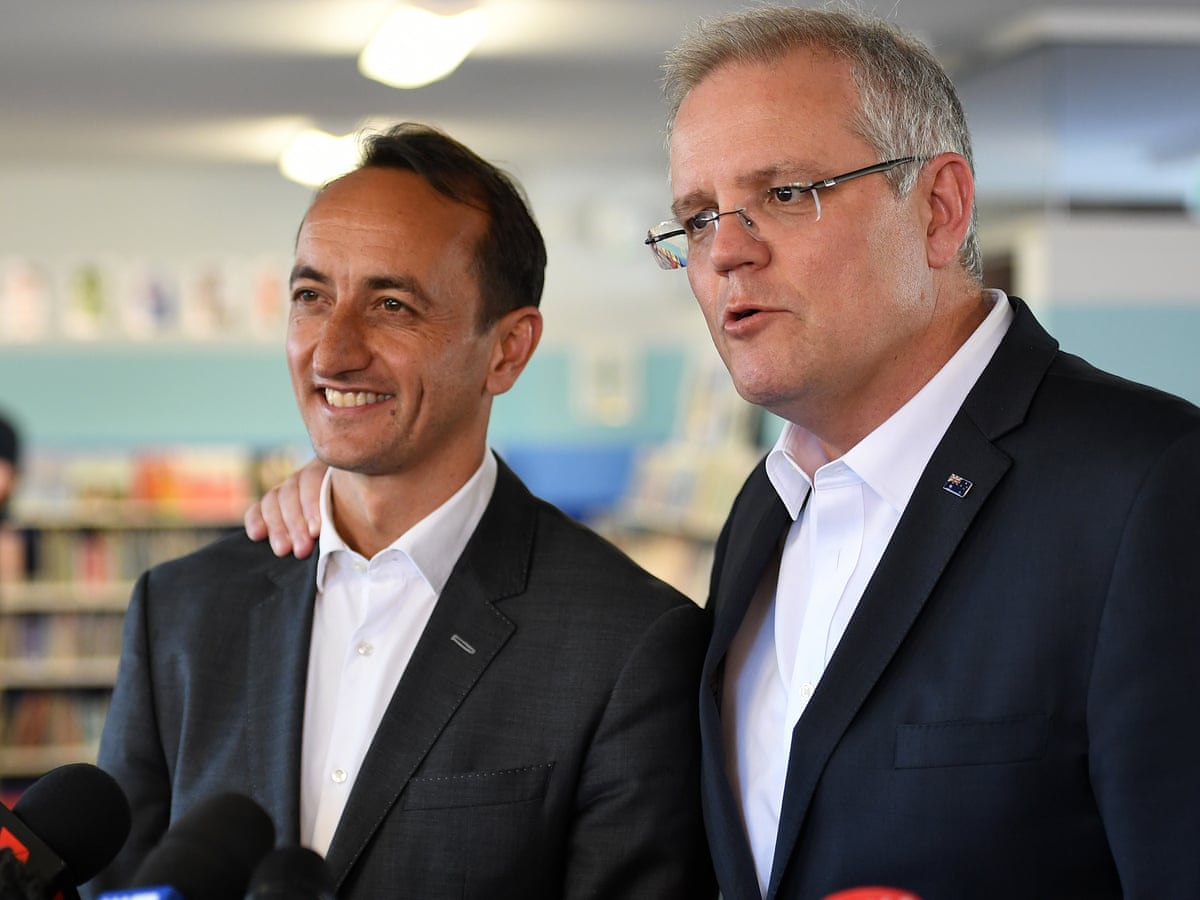





 alastairlawrie