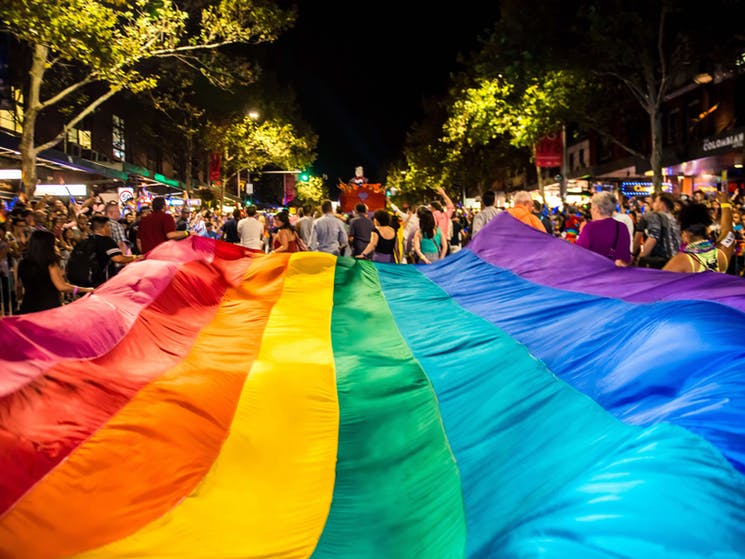
The Year the Commonwealth Government Went MIA on LGBTIQ Issues

[I wrote this piece about 10 days ago, in the lead-up to the anniversary of the horrific events at Victorian Parliament in March last year. Unfortunately, it wasn’t picked up by media outlets – but the past week has made these comments even more urgent, so I am publishing it here.]

One year ago last Monday (on Saturday 18 March 2023), Australians witnessed the horrific sight of neo-Nazis turning up to an anti-trans rally on the steps of Victorian Parliament, holding a banner saying ‘destroy paedo freaks’ and performing Nazi salutes.

It was a chilling reminder of the serious threat posed by right-wing extremism to LGBTIQ communities in general, and trans and gender diverse people in particular.

Rather than being a one-off, that awful anti-LGBTIQ spectacle was just the first in a long line of rallies and related hate speech threatening our communities over the past 12 months.

Within days, so-called ‘Christian Lives Matter’ members engaged in what can only be described as a riot against peaceful LGBTIQ protestors (and NSW Police) in the Sydney suburb of Belfield.

April onwards saw a dramatic rise in threats of violence and intimidation by right-wing extremists across the country, directed to local councils and libraries holding Drag Story Times.

Most recently, the ABC was forced to cancel a Drag Story Time that was to be held in conjunction with the Sydney Gay & Lesbian Mardi Gras following death threats against their employees.

The attacks on our communities have been terrifying. They have been relentless. And they are part of a disturbing international trend of intolerance.

But where has the Commonwealth Government been when we have needed their leadership? 

They were quick to introduce legislation to ban the display of Nazi hate symbols, later amended to also prohibit the Nazi salute. This was welcome, but addresses only part of the problem.

A group of thugs intimidating trans people with a banner saying ‘destroy paedo freaks’ is a serious issue irrespective of what clothes they wear, flags they fly or salutes they perform.

Sadly, though, we have not seen the Albanese Government respond to the rise in anti-LGBTIQ right-wing extremism with the seriousness it deserves. 

We have not seen or heard clear and consistent condemnation of growing homophobia, biphobia and transphobia, or even of the violent threats against community events.

There has been no commitment to introduce much-needed Commonwealth laws prohibiting anti-LGBTIQ vilification.

And no open engagement with LGBTIQ communities about the threats we face, or additional funds committed to help with our safety.

Instead, it has been left to unfunded groups like Rainbow Community Angels, who attempt to make events like Drag Story Time a safe place for attendees, to stand up against the far-right, unassisted.

It’s possible the Government would say that primary responsibility for these issues lies with states and territories, but these are problems that call for national leadership.

By contrast, faith communities have been actively engaged and largely supported when they have raised concerns about intolerance. 

Government representatives, from Prime Minister Albanese down, have spoken up in recent months against religious hate speech, particularly in the form of anti-semitism. The Government has made repeated promises to introduce religious vilification laws, expected to be tabled within weeks.

[NB Since this piece was written, the Government has confirmed it is pushing ahead with these amendments, separate to the Religious Discrimination Bill and any Sex Discrimination Act changes, meaning it may be the only part of those overall reforms that actually pass.]

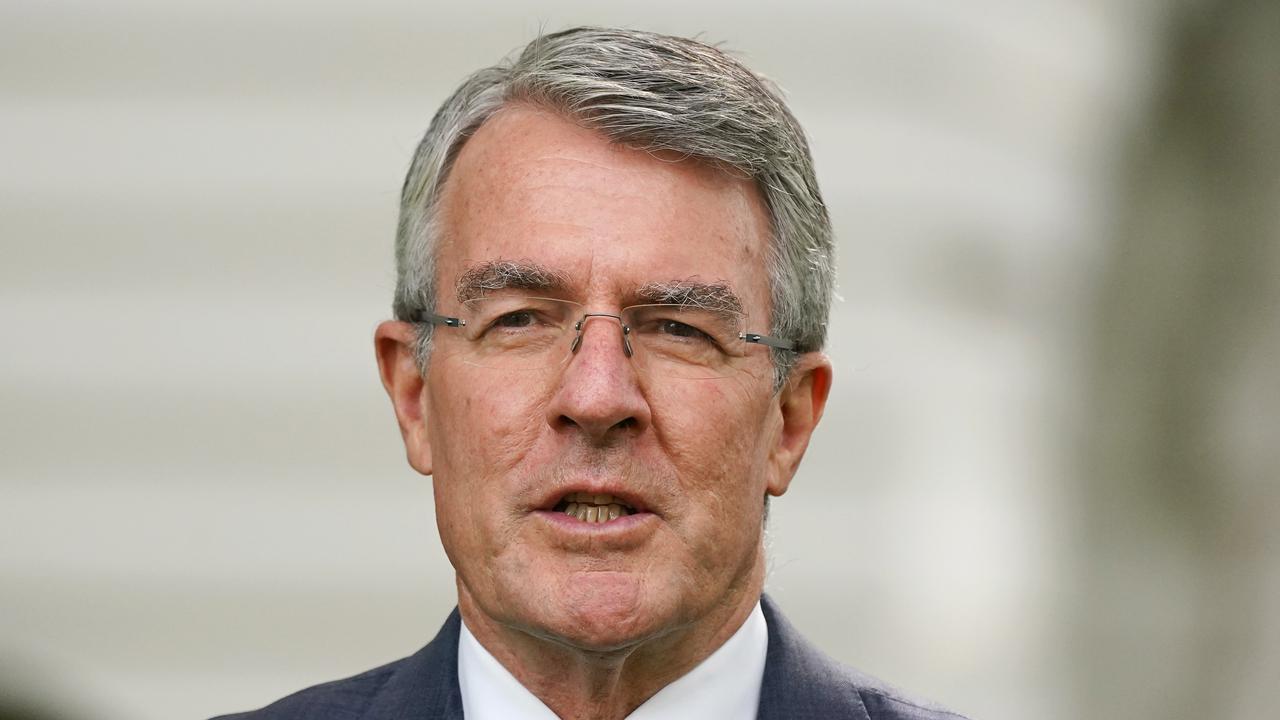
And $40 million in Commonwealth funding for the safety of religious organisations was announced by Attorney-General Mark Dreyfus last May (on the International Day Against Homophobia, Biphobia and Transphobia no less).

The LGBTIQ community can’t even convince the Government to create and appoint a stand-alone LGBTIQ+ Discrimination Commissioner at the Australian Human Rights Commission. LGBTIQ issues remain a part-time, ad hoc responsibility of the Sex Discrimination Commissioner.

Promises to address anti-LGBTIQ vilification, and funding for LGBTIQ community safety, remain nowhere to be seen.

I’m a 45-year old cis gay man. I grew up in Joh Bjelke-Petersen’s Queensland, and survived five years at a deeply homophobic religious boarding school. Coming out of, and coming out after, that environment was tough.

But the rise in overt, targeted, public bigotry over the past 12 months has left me feeling less safe than at any time since the 1990s.

What has made things worse is the silence and inaction of the Albanese Government. This has left me, and many others in our community, feeling forgotten too.

Source: Herald Sun.

If you have enjoyed reading this article, please consider subscribing to receive future posts, via the right-hand scroll bar on the desktop version of this blog or near the bottom of the page on mobile. You can also follow me on twitter/X @alawriedejesus

Submission to Draft National Care and Support Strategy 2023

Submitted online 

26 June 2023

To whom it may concern

Thank you for the opportunity to provide this submission in response to the Draft National Care and Support Strategy 2023.

I do so as a long-standing advocate for lesbian, gay, bisexual, transgender, intersex and queer (LGBTIQ) Australians, with a particular focus on ensuring our communities are legally protected and can live our lives free from discrimination on the basis of who we are.

At the outset, I would like to commend the Government for taking on the issue of ensuring the ‘care and support economy’ is working effectively and efficiently for the benefit of all people, including the people accessing these services as well as the workers providing them.

As noted in the draft strategy as circulated, this is especially important given ‘Australian Government spending in these sectors is projected to rise from around $60bn in 2021-22 to more than $110bn by 2026-27.’

In this context, however, it is disappointing that so little consideration is given to how the care and support economy impacts LGBTIQ people.

Indeed, as far as I can tell, there is only one reference to LGBTIQ people in the entire 56 pages of the proposed strategy (which I will address in more detail below).

Almost inevitably, this means that the impact of the care and support economy on LGBTIQ people accessing services, and LGBTIQ workers – as well as the inter-relationship between these two cohorts – is not adequately addressed.

I therefore call for the following issues to be addressed in more detail in the final version of the strategy to be released later this year.

  1. Better protections for LGBTQ people accessing care and support services

While increased Government funding for care and support services overall is obviously welcome, one particular aspect of this funding which causes potential problems for the LGBTIQ community is that a significant share is provided to religious organisations to operate what are essential public services.

Although many religious organisations are now accepting of LGBTQ people and our families, many others remain discriminatory in their approaches towards diversity in sexual orientation and gender identity.

And in at least some of these cases, although thankfully not all, this discrimination is legally permitted under the Commonwealth Sex Discrimination Act 1984.

First, on the positive side, the 2013 amendments to this legislation, which protected LGBTI people against discrimination under federal law for the first time, included a ‘carve-out’ which provides that Commonwealth-funded age care services operated by religious organisations are not permitted to discriminate against LGBTQ people accessing those services (sub-section 37(2)(a): ‘Paragraph (1)(d) does not apply to an act or practice of a body established for religious purposes if… the act or practice is connected with the provision, by the body, of Commonwealth-funded aged care.’)

While welcome, this carve-out is also extremely narrow. It does not protect LGBTQ people accessing non-Commonwealth Government funded aged care services against discrimination because of their sexual orientation and/or gender identity.

Even worse, the fact this carve-out only applies to aged care, means that other parts of the care and support economy – from disability services, through veterans’ care and early childhood education and care – are not covered.

In other words, religious organisations which operate services in these sectors are free to discriminate against LGBTQ people accessing them, even where the service is being provided with Australian Government money. With taxpayers’ money. With our money.

This is completely unacceptable in 2023. People should be able to access these services – disability services, veterans’ care and early childhood education and care – without having to fear such discrimination.

It is also completely contradictory to the otherwise-worthy stated objectives of the Draft Strategy.

This includes 1.4 ‘Services are culturally and psychologically safe for all people.’ Supported by the discussion on page 19 – which is the only place LGBTIQ people are explicitly mentioned in the document: ‘In addition to formal qualifications, the increasingly diverse Australian population also requires a workforce that is culturally competent for First Nations people, people from culturally and linguistically diverse backgrounds and lesbian, gay, bisexual, transgender and intersex people.’

Services cannot be culturally and psychologically safe for all people if some services are granted special privileges to discriminate against LGBTQ people accessing them.

And aiming for a workforce that is culturally competent to engage with LGBTI people is undermined if those services are permitted to refuse to engage with LGBTQ people anyway.

Therefore, if the Draft Strategy is to meet its stated objectives it must also include a recommendation, and commitment, to remove the exceptions in the Sex Discrimination Act that currently allow religious organisations to discriminate against LGBTQ people accessing disability services, veterans’ care and early childhood education and care.

2. Better protections for LGBTQ workers providing services

The need to improve legal protections for LGBTQ people under the Sex Discrimination Act doesn’t just apply to the people accessing those services – but also extends to the workers providing them.

This is especially important when, as noted in the draft Strategy, ‘The health care and social assistance industry now accounts for 15 per cent of Australia’s workforce, making it the largest employing industry in Australia’ and that ‘The care and support workforce is growing 3 times faster than other sectors in the Australian economy.’

Being able to enjoy safe and secure jobs, and ultimately careers, is therefore important for all cohorts within the Australian community – but this is something currently denied to too many LGBTQ workers.

That is because religious organisations receiving Commonwealth, State and Territory funding to deliver these services are legally permitted under federal anti-discrimination law to discriminate against workers simply based on their sexual orientation and/or gender identity.

Unlike LGBTQ people accessing aged care services, this includes LGBTQ workers in those services – sub-section 37(2)(d) makes it clear that the ‘carve-out’ does not apply where ‘the act or practice is… connected with the employment of persons to provide that aged care.’

There is also no Commonwealth protection for LGBTQ workers delivering disability services, veterans’ care or early childhood education and care, where their employers are faith bodies.

This is unacceptable. Workers should be hired, fired, promoted or otherwise engaged or not engaged on the basis of their ability to deliver this vital ‘care and support’ – not on their sexual orientation and/or gender identity.

This obviously has direct negative impacts on the LGBTQ workers involved – and potential workers too, who may be dissuaded from entering the care and support workforce to begin with if they are aware large sections of these industries are legally empowered to mistreat them just because of who they are.

But it also undermines the stated objectives of the draft strategy, including:

2.4 ‘Workplaces are safe and healthy, and psychological and physical risks are eliminated or, if this is not possible, minimised’ and

2.6 ‘Workplaces are inclusive of diverse cultures, genders, ages and abilities and are culturally safe for all workers, including First Nations workers.’

Psychological risks for LGBTQ workers are not being eliminated or minimised however long religious organisations in the care and support economy are legally permitted to discriminate against them.

And workplaces can never be ‘culturally safe for all workers’ while this situation prevails too.

If the Government is serious about achieving both of those objectives, then it must include a recommendation, and commitment, to remove the exceptions in the Sex Discrimination Act that currently allow religious organisations to discriminate against LGBTQ workers providing aged care, disability services, veterans’ care and early childhood education and care.

3. Better protections for LGBTQ workers will lead to better services for all people, including LGBTQ people, accessing these services

It should be noted that, as well as benefitting individual LGBTQ workers, removing the ability of religious organisations in this sector to discriminate against LGBTQ workers will also deliver a higher quality of care – which is something all Australians have an interest in.

I have been writing about this phenomenon for several years, including the following section from my 2019 submission to the Royal Commission into Aged Care

The first and most obvious way in which the ability of religious organisations to discriminate against LGBT employees impacts on the quality of aged care services is the reduction of potential talent in their aged care workforce.

This is an entirely logical, and foreseeable, outcome; by excluding some highly-qualified applicants, for reasons that have nothing whatsoever to do with their ability to perform the relevant role(s), the number of qualified applicants from which to choose is inevitably diminished.

This impact may be exacerbated in remote, rural and regional Australia, where the number of applicants for a position may be much smaller to begin with – any loss of highly-qualified applicants, simply because of their sexual orientation or gender identity, could have a severe impact on service standards.

And this impact will likely exist for as long as the general exception in the Sex Discrimination Act 1984 allows religious aged care services to discriminate in this way.

Because, even if a particular aged care facility doesn’t discriminate at a particular point in time, highly-qualified LGBT employees may nevertheless be discouraged from applying because of the possibility of being legally discriminated against in the future. In remote, rural and regional Australia, where there may be limited employment options, this could even result in qualified employees being lost to the aged care services industry entirely.

There is also a compelling argument that the stress of LGBT employees working in religious aged care services that may lawfully discriminate against them, where they may need to be constantly vigilant in self-censoring their words and actions lest they be ‘found out’, undermines the quality of service provided because it serves as a potential distraction from their day-to-day responsibilities.

People accessing aged care services have the right to expect the highest possible standard of care. That is not provided when an aged care service refuses to employ highly-qualified people simply because they are lesbian, gay, bisexual or transgender.

The second practical reason why allowing religious aged care services to discriminate against LGBT employees impacts on the quality of aged care services is that it can contribute to an organisational culture of homophobia, biphobia and transphobia.

Once an organisation acts in a manner that suggests discriminating against employees on the basis of their sexual orientation or gender identity is acceptable, it is hard not to see this abuse spilling over into the treatment of LGBT people accessing these services.

LGBT individuals and couples in aged care facilities may directly witness the homophobic, biphobic and transphobic mistreatment of staff, and feel less safe in their surroundings as a result. Or they could be subject to direct or indirect anti-LGBT discrimination themselves.

There is already a significant power imbalance between people accessing these services and the service-providers themselves. As a result, even if the LGBT person accessing the service technically has a right not to be discriminated against under the Sex Discrimination Act 1984, they may feel uncomfortable in making a formal complaint because of a legitimate fear that the organisation will not be responsive to it.

LGBT people accessing these services are also denied natural allies because any LGBT employees at the facility may feel unable to advocate on their behalf because they are also afraid of retribution from the organisation itself (in this case, entirely legal).

Homophobic, biphobic and transphobic discrimination against LGBT employees inevitably has a detrimental impact on LGBT individuals and couples accessing aged care services.

The third and final practical reason why allowing religious aged care services to discriminate against LGBT employees impacts on the quality of aged care services, especially for LGBT people, is that it denies them an opportunity for human connection.

Residential aged care facilities, in particular, are the ‘homes’ of the people living in them, usually for the final years or decades of their lives. The provision of services is about much more than simply providing shelter, food and health care.

For LGBT individuals and couples, having one or more LGBT employees offers the opportunity to bond with them over potential interests, and to share stories with each other (including, I might add, the ability for younger LGBT employees to learn from the older LGBT residents).

However, this opportunity is lost if an LGBT employee is unable to discuss this aspect of their lives, for fear of being discriminated against. For the resident, the possibility of conversation is replaced by silence.

Discrimination against LGBT employees in aged care services can exacerbate the social isolation experienced by LGBT individuals and couples accessing those services.

In conclusion, there are principled reasons why religious aged care services should not be able to discriminate against LGBT employees. These employees should be judged on their ability to perform the role, not on the basis of their sexual orientation or gender identity. And taxpayers’ money should not be used to subsidise anti-LGBT discrimination.

There are also practical reasons why such discrimination should be prohibited, including that it impacts on the quality of aged care services provided, contributes to a culture of homophobia, biphobia and transphobia, and denies LGBT residents an opportunity for human connection.

Therefore, to improve the quality of aged care services, including although not only for LGBT residents, the special privilege allowing such discrimination should be repealed.

*****

The same or similar arguments can be made with respect to LGBTQ workers providing other services in the care and support economy.

If we care about the care and support economy, if we care about the people working in it, and above all the people accessing the services within it, then the special privileges which allow religious organisations to discriminate against LGBTQ people must be repealed.

Sadly, not a lot has changed since I wrote that Aged Care Royal Commission submission more than four years ago. Perhaps the only two developments to note are a) even more money seems to be going to these sectors (and therefore to faith-based organisations providing these services), and b) the change to the Commonwealth Government in May 2022.

The previous Morrison Liberal/National Government was clearly uninterested in protecting LGBTQ people accessing services, and LGBTQ workers (indeed, with their thankfully abandoned Religious Discrimination Bill, they potentially sought to increase discrimination against both groups).

The questions now are for the Albanese Labor Government:

How serious are you about ensuring care and support economy services are ‘culturally and psychologically safe for all people’, including LGBTQ people?

What priority do you give to eliminating as far as possible psychological risks to workers, and ensuring workplaces are ‘culturally safe for all workers’, including LGBTQ workers?

Because if you’re serious about this, if it’s a priority to you, then the final version of the National Care and Support Economy Strategy 2023 must include recommendations, and commitments, to remove the special privileges under the Sex Discrimination Act 1984 (Cth) which allow religious organisations to discriminate against people on the basis of their sexual orientation and/or gender identity.

Thank you in advance for taking the issues raised in this submission into consideration as the National Care and Support Strategy is finalised. Please do not hesitate to contact me, at the details provided, should you require more information.

Sincerely

Alastair Lawrie

The Commonwealth Sex Discrimination Act has included LGBTI Australians for a decade. But it still fails to protect too many LGBTI people against mistreatment.

Commonwealth Parliament passed the Sex Discrimination Amendment (Sexual Orientation, Gender Identity and Intersex Status) Act 2013 ten years ago today.

This was historic legislation, finally offering federal anti-discrimination protections to lesbian, gay, bisexual, transgender and intersex (LGBTI) Australians.[i]

And it was long overdue, more than 30 years after NSW became the first jurisdiction in Australia to prohibit discrimination on the basis of homosexuality, way back in 1982.

But, even at the time of passage it was clear these Sex Discrimination Act amendments were incomplete, and their limitations have only become more apparent in the decade since.

Here then are some[ii] of the key short-comings which need to be addressed in order for the Sex Discrimination Amendment (Sexual Orientation, Gender Identity and Intersex Status) Act 2013 to live up to its potential.

  1. Replace the protected attribute of intersex status with sex characteristics

The 2013 amendments meant Australia became one of the first jurisdictions in the world to offer anti-discrimination protections to intersex people. It did so by the inclusion of ‘intersex status’ as a protected attribute, defined as:

‘the status of having physical, hormonal or genetic features that are:

(a) neither wholly female nor wholly male; or

(b) a combination of female and male; or

(c) neither female nor male.’

This terminology (intersex status) and associated definition are no longer considered best practice, with peak body Intersex Human Rights Australia advocating for its replacement with ‘sex characteristics’, which was recently defined in amendments to the Queensland Anti-Discrimination Act 1991 in the following way:

‘sex characteristics, of a person, means the person’s physical features and development related to the person’s sex, and includes-

(a) genitalia, gonads and other sexual and reproductive parts of the person’s anatomy; and

(b) the person’s chromosomes, genes and hormones that are related to the person’s sex; and

(c) the person’s secondary physical features emerging as a result of puberty.’

Fortunately, the Commonwealth Government has actually committed to making this change – Industrial Relations Minister Tony Burke promised to replace intersex status with sex characteristics in Parliament in November 2022.[iii]It’s time for the Albanese Government to follow through on this commitment.

2. Protect LGBTQ students in religious schools against discrimination

It is appalling that, in 2023, Commonwealth anti-discrimination laws – which are supposed to protect LGBTI Australians – instead continue to allow religious schools and colleges to discriminate against some of the most vulnerable among us.

The special privileges permitting religious schools to mistreat LGBTQ young people in myriad ways (from refusing to enrol, through to suspension, expulsion and other forms of punishment, as well as an almost unlimited variety of differential treatment to their cis-het counterparts) were never justified. But they look especially archaic, and abhorrent, today.

All students have the right to education, and must be allowed to exercise this right in safety. And because any student, in any school, can be LGBTQ, all schools must be LGBTI-inclusive.

Once again, the Albanese Government has promised to protect LGBTQ students against discrimination. However, rather than simply following the precedents of multiple states and territories which have already legislated to protect LGBTQ kids – some for more than two decades – they chose to refer the issue of the exceptions enjoyed by religious schools to the Australian Law Reform Commission in November 2022 for a six-month inquiry.

Disappointingly, in April 2023, Attorney-General Mark Dreyfus announced that this inquiry was being extended until 31 December 2023. As a result, LGBTQ Year 12 students in 2023 will not be protected against discrimination before they leave school (despite both major parties promising to do so since October 2018, when they were only in Year 7). And another class will likely start, in 2024, still not protected against discrimination on the basis of who they are.

This simply isn’t good enough.

3. Protect LGBTQ teachers in religious schools against discrimination

Of course, LGBTQ students are not the only people in religious schools and colleges who deserve protection against mistreatment. So too do LGBTQ teachers and other workers.

Teachers should be judged simply according to their ability to teach – not their sexual orientation and/or gender identity.

This would not only benefit LGBTQ teachers, who would finally enjoy the same ability to apply for jobs, and promotions, across their industry as cis-het teachers, and would also be free to focus on teaching rather than having to hide in the closet and spend time and emotional energy worrying about whether they will be outed, and sacked as a result.

But it would benefit students too, who would be taught by the best person for the job (not the best cis-het person), and learn from LGBTQ teachers not distracted by the ever-present threat of discrimination. For LGBTQ students, out teachers also offer the prospect of role modelling what a happy life might look like, reducing their potential isolation.

The imperative to remove the ability of religious schools to discriminate against teachers on the basis of their sexual orientation and/or gender identity is only strengthened when we consider the massive sums of taxpayer money – ourmoney – given to these institutions.

Yet again, the Albanese Government has promised to remove the special privileges which allow religious schools to discriminate against LGBTQ workers. But, as with LGBTQ students, the possible protection of LGBTQ teachers has been held up by the lengthy extension to the ALRC inquiry.

LGBTQ teachers shouldn’t have to wait until 2024, or beyond, to enjoy protection against discrimination in the workplace. They should be allowed to focus on lesson plans and marking, not planning how to mask their sexual orientation or gender identity.

4. Protect LGBTQ workers in Government-funded aged care services operated by religious organisations

One of the best provisions of the Sex Discrimination Amendment (Sexual Orientation, Gender Identity and Intersex Status) Act 2013 (Cth) was new sub-section 37(2)(a) which states that the Act’s general religious exception (contained in sub-section 37(1)(d):

‘does not apply to an act or practice of a body established for religious purposes if… the act or practice is connected with the provision, by the body, of Commonwealth-funded aged care.’

In effect, nearly all aged care services across Australia are now prohibited from discriminating against people accessing those services on the basis of their sexual orientation and/or gender identity. In other words, LGBTQ people in all Government-funded aged care services are legally protected against discrimination.

The fact this provision has operated successfully, for a decade, demonstrates that special privileges allowing discrimination by religious organisations delivering what are essentially public services are unnecessary, and should be removed.

We should start by repealing sub-section 37(2)(b),[iv] which still allows faith-based aged care services to discriminate against LGBTQ workers.

All of the arguments which applied to LGBTQ teachers in religious schools, outlined above, also apply to LGBTQ aged care workers. This includes ensuring that the best person for the job is hired, not just the best cis-het person, allowing LGBTQ aged care workers to focus on the important task of delivering care to the elderly rather than worrying about being discovered, and allowing LGBTQ people accessing aged care to see openly-LGBTQ people looking after them.

5. Remove the general religious exception in section 37(1)(d) of the Sex Discrimination Act entirely

The same arguments which apply to LGBTQ students, teachers and aged care workers, also apply to LGBTQ people accessing services and employees across a broad range of other public services – such as disability, health, housing and other community services – which have been increasingly outsourced by state, territory and commonwealth governments over recent years.

All people accessing these services should be free to do so without having to fear discrimination on the basis of their sexual orientation and/or gender identity.

All workers in these industries should have the right to be judged on their ability to perform their role, not on who they are or how they identify. 

Several Australian states and territories have already reformed their anti-discrimination laws to narrow their general religious exceptions along these lines, including Tasmania, Victoria, the ACT and NT, while Queensland and Western Australia have in-principle commitments to implement law reform recommendations achieving the same.[v] It’s time for Commonwealth Parliament to catch up.

Importantly, even if the general religious exception in sub-section 37(1)(d) of the Sex Discrimination Act 1984 (Cth) were removed, religious organisations would continue to enjoy the right to religious freedom through sub-sections (a), (b) and (c), which cover the training and appointment of ministers of religion, and selection of other people to perform functions in connection with religious observances or practices.

6. Prohibit vilification against LGBTI Australians

One major gap which exists in the Sex Discrimination Act, and which unfortunately was not addressed by the historic 2013 amendments, is a lack of Commonwealth prohibition on vilification on the grounds of sexual orientation, gender identity and sex characteristics.

The first half of 2023 has comprehensively demonstrated why such nation-wide prohibitions are essential, with TERFs and neo-Nazis rallying against trans rights on the steps of Victorian Parliament, the Christian Lives Matter riot against LGBTIQ protestors in Sydney, and growing threats of violence and intimidation against drag story time and other local LGBTIQ community events across several jurisdictions.

Disappointingly, there has so far been no national response to the anti-LGBTI substance of these developments. 

The Albanese Government has instead proposed legislation banning the display of Nazi symbols which, while obviously welcome, in the absence of LGBTI vilification laws raises the following question: is anti-LGBTI hate speech acceptable as long as the people engaging in it aren’t wearing Nazi uniforms?

What has been happening so far this year is nothing short of a national crisis. What we need is a national response, including the introduction of Sex Discrimination Amendments prohibiting vilification against LGBTI Australians, equivalent to section 18C of the Racial Discrimination Act 1975 (Cth).

7. Create and appoint a Commissioner for Sexual Orientation, Gender Identity and Sex Characteristics

The dire situation confronting LGBTI Australians in 2023 has highlighted another structural weakness in our anti-discrimination framework – the lack of a stand-alone independent Commissioner for Sexual Orientation, Gender Identity and Sex Characteristics within the Australian Human Rights Commission.

This absence puts LGBTI people at a distinct disadvantage compared to other groups for which dedicated Commissioners have been created, including:

  • Race
  • Sex
  • Disability
  • Age
  • Children
  • Aboriginal and Torres Strait Islander Social Justice, and
  • Human Rights.

Responsibility for LGBTI issues has instead been seen as an ‘add-on’, with the portfolio at various times being held by the Human Rights Commissioner, Sex Discrimination Commissioner and even the President (where it currently sits, although it will likely revert to the Sex Discrimination Commissioner when a replacement for Kate Jenkins is appointed).

But as an ‘add-on’, it never receives the same level of attention as other portfolios, nor the same amounts of funding and resources.

This lower relative prioritisation of LGBTI rights can be seen in the Commission’s muted response to the disturbing developments in the first half of 2023 – as far as I can tell, there have been no media releases or other public policy contributions in response to the TERF and neo-Nazi rally, Christian Lives Matter riot, or escalating wave of anti-LGBTI threats around the country.

Our community is under attack, and Australia’s national human rights institution does not appear to be coming to our defence.

The most straight-forward way to remedy this would be to address the structural weakness which has contributed to it – and that is by creating, and urgently appointing, a stand-alone independent Commissioner for Sexual Orientation, Gender Identity and Sex Characteristics within the AHRC.

NB This post is written in a personal capacity, and does not reflect the views of employers past or present, nor of any community organisations with which I am involved.

Commonwealth Attorney-General Mark Dreyfus, who has responsibility for the Sex Discrimination Act 1984 (Cth), and who therefore has responsibility for amending it to better protect LGBTI Australians.

If you have enjoyed reading this article, please consider subscribing to receive future posts, via the right-hand scroll bar on the desktop version of this blog or near the bottom of the page on mobile. You can also follow me on twitter @alawriedejesus

Footnotes:


[i] Although the Commonwealth Fair Work Act had offered limited protections to LGB workers, on the basis of ‘sexual preference’, from 2009.

[ii] This is by no means an exhaustive list of the Act’s faults. Other issues which should be addressed include narrowing the exceptions applying to transgender and intersex people in sport, as well as removing the exceptions relating to data collection.

[iii] During debate on legislation that finally included gender identity and intersex status as protected attributes in the Fair Work Act for the purposes of adverse action and unlawful termination provisions.

[iv] Which clarifies that the protection of LGBTQ people in relation to aged care services operated by faith bodies only applies where ‘the act or practice is not connected with the employment of persons to provide that aged care.’

[v] From the Queensland Human Rights Commission and WA Law Reform Commission respectively.

The worst of times

As the dust settles on the recent federal election, and the new Albanese Labor Government settles into office, I wanted to take this short(ish) opportunity to reflect on the term of Parliament just ended, and especially its impact on LGBTIQ Australians.

To the surprise of few readers of this blog, the reflection of the past three years in the rear-view mirror (now thankfully receding into the distance) is far from pretty. Indeed, in my opinion, the 2019-2022 term of the Morrison Liberal/National Government was the worst for LGBTIQ people in my lifetime, by some margin.

There are many reasons for arriving at this conclusion, chief among them the Religious Discrimination Bill, which came to dominate the Morrison Government’s legislative agenda, especially in its dying days.

Remember, this was a law that sought to legally protect offensive, humiliating, insulting and ridiculing comments against women, LGBT people, people with disability and people of minority faiths. By over-riding existing state and territory anti-discrimination laws, it also procedurally denied access to justice for victims of discrimination.

The Coalition’s Religious Discrimination Bill featured the broadest special privileges allowing religious organisations to discriminate against employees and people accessing their services of any anti-discrimination law in Australia. 

If passed, it could have entrenched existing discrimination against LGBT students ‘under the guise of religious views’ – while it definitely would have permitted new forms of discrimination against LGBT teachers by over-riding states and territories that had already protected them.

For more on the problems of the Religious Discrimination Bill, read: Why the Religious Discrimination Bill must be rejected (in 1,000 words or less) 

And even though LGBT people were obviously not the only targets of what I would describe as legislated hatred, I don’t think anyone would deny that denying the rights of LGBT Australians was a primary motivator both for the Morrison Government itself, and for the religious fundamentalists who supported the Bill.

But the Religious Discrimination Bill was by no means the only attack on LGBTIQ people by the Morrison Government.

In the final 12 months alone, we saw all bar six Liberal and National Party Senators vote for a One Nation motion calling for an end to gender-affirming and supporting health care for trans children and teenagers (in June 2021).

In September, the Coalition also rejected straight-forward amendments to the Fair Work Act 2009 (Cth) which would have seen trans, gender diverse and intersex workers protected on exactly the same basis as others, including lesbian, gay and bisexual workers (for more, see: Pathetic, and antipathetic, in equal measure).

In February 2022, on the very day that the Religious Discrimination Bill was finally abandoned, Tasmanian Liberal Senator Claire Chandler introduced legislation seeking to ban trans women and girls from participating in sport. Despite being a private member’s bill, it was later explicitly and repeatedly supported by Morrison himself, and no doubt would have been a priority for his Government had they been re-elected.

And of course the election campaign itself was marred by the toxic transphobia of candidate for Warringah, Katherine Deves, hand-picked by Morrison himself in a transparent effort to invent a culture war and win the votes of bigots (for more, see: Ten months of transphobia). 

Then there was the issue of LGBT students in religious schools, a topic about which the Morrison Government continually found new ways to disappoint, ultimately abandoning some of the most vulnerable members of the community.

Morrison had promised way back in October 2018 to protect LGBT kids before the end of that year – a commitment he spent the following three and a half years running away from (for more, see: Scott Morrison’s Broken Promise to Protect LGBT Students is Now Three Years Old). By the time he was booted from office, his broken promise to end discrimination against LGBT students was 1,318 days old (and yes, I was counting).

The appalling treatment of LGBT kids during the Religious Discrimination Bill debate in February demonstrates just how little he, and his Ministers, cared about this group. Not only did Morrison’s proposed amendments only seek to prohibit expulsion – which would have allowed religious schools to continue to mistreat students in 1,001 other ways, from differential treatment and exclusion, through to discipline, detention, suspension and even asking them to leave).

But the calculated choice to exclude trans and non-binary children from any and all protection whatsoever (and therefore only to prohibit the technical expulsion of lesbian, gay and bisexual kids), was a wholly-prejudiced policy so heinous it can never be forgiven, and that includes anyone who voted for it.

The mistreatment of LGBT students also neatly illustrates why the last term of Parliament was truly the worst of times because, as much as what made the past three years horrific were the constant attacks on our community, just as damaging in the long run was the Morrison Government’s failure to take action to address long-standing human rights abuses against LGBTIQ Australians.

Not least of which are coercive surgeries and other non-consenting medical interventions on children born with innate variations of sex characteristics (otherwise known as intersex children).

Not only did the Abbott, Turnbull and Morrison Governments successively fail to implement any of the recommendations of the ground-breaking Senate Inquiry into this issue from October 2013 – almost nine years ago – but, as far as I am aware, they also didn’t even acknowledge, let alone respond to, the Australian Human Rights Commission’s Report from October 2021 either (‘Ensuring health and bodily integrity: Protecting the human rights of people born with variations in sex characteristics in the context of medical interventions’).

Now, as someone who is in their mid-40s, I’m old enough to recognise that the last term of Parliament is not the only three-year period which has been challenging for LGBTIQ Australians.

Indeed, I suspect readers are probably thinking of two other terms which were also brutal – the 2001-2004 term of the Howard Government during which the marriage ban was originally passed, and the 2016-2019 term of the Turnbull/Morrison Government, and especially the plebiscite debate and then postal survey.

But I would argue that neither was as relentlessly awful as the three years just concluded.

In terms of Howard, it was really only the final six months of the 2001-2004 term during which he sought to use same-sex marriage (as it was then called) as a wedge against the Labor Opposition – the first two and a half years were awful for other reasons (especially in the (mis)treatment of First Nations people, and people seeking asylum) but did not specifically target LGBTIQ Australians in the same way as the Morrison Government.

And in terms of the 2016-2019 term of the Turnbull (and later Morrison) Government, I absolutely acknowledge that the debate about the plebiscite, in the last half of 2016, and then the postal survey (which, let’s not forget, was the idea of now-Opposition Leader Peter Dutton) in the last half of 2017, were completely unnecessary, totally divisive and ultimately damaging for far too many LGBTIQ people.

At the same time, it was nevertheless a debate about improving the legal recognition of LGBTIQ relationships, and the Australian people eventually delivered marriage equality, which was a welcome and long-overdue step forward (no thanks to the Liberal Party, who must never be allowed to claim credit for this outcome – see: Liberals Claiming Credit for Marriage Equality Can Get in the Bin).

In contrast, the debate around the Religious Discrimination Bill concerned a law that sought to strip existing rights away from LGBT people, including protections against discrimination, and the ability to go about our day-to-day lives without being subjected to offensive, humiliating, insulting and ridiculing comments simply because of who we are.

The Religious Discrimination Bill debate also dragged on far longer than the plebiscite/postal survey – with the first exposure draft released in August 2019 (followed by a second in December of that year), and the Bill not stopped until February 2022 (30 months later).

I should at least acknowledge two additional contextual factors which help to explain just why the past three years have been so rough – although neither reduces the culpability of the Morrison Government for its actions.

The first is that there was obviously a cumulative effect of the Abbott/Turnbull/Morrison Government’s homophobia, biphobia, transphobia and anti-intersex discrimination. With the safe schools debate and decision to de-fund it occurring in the first term, and the plebiscite debate and postal survey (plus religious freedom review) in the second, the LGBTIQ community was already worn down by seemingly continuous debates about our lives.

Although, as the Treasurer who allocated funding for the plebiscite and then postal survey, Scott Morrison is responsible for a significant share of that accumulated stress.

The second is there is no doubt the ongoing COVID-19 pandemic since early 2020 has exacerbated the harms caused by the Morrison Government’s attacks on our community, especially because it left us isolated and alone in our homes when we needed each other for support and reinforcement to fight back against the Religious Discrimination Bill.

But once again, that context does nothing to exculpate the outgoing Government – indeed, the fact they were willing to push ahead with this divisive legislation, during bushfires, and floods, and a global pandemic, and instead of doing anything to alleviate climate change, only renders them more guilty.

There is one last question which needs to be addressed, and that is: why does writing this down matter? Especially post-election?

After all, the Morrison Government has been defeated. The country has (thankfully) moved on. While for the LGBTIQ community, we already know the past three years were the worst of times, because we endured them, and for many have the scars to prove it.

To which I say there are still (at least) two reasons for publishing this article.

The first is to ensure the Coalition’s homophobia, biphobia, transphobia and anti-intersex discrimination is properly recorded.

This is especially important as the Liberal Party inevitably tries to rewrite the history of the recent past, to present some kind of softer, kinder, gentler image to the electorate. But there was nothing soft, or kind, or gentle, about 2019, 2020, 2021, and early 2022 for lesbian, gay, bisexual, transgender, intersex and queer Australians.

The second is because I think it helps to explain how many of us are feeling, right now. Yes, there is a sense of relief the attacks on us have ended (for now), but that welcome feeling doesn’t even begin to outweigh the sheer exhaustion from fighting constant battles over the last three, or six, or nine, years.

The tiredness in our collective bones.

On a personal level, and as an advocate with more than two decades experience, I will willingly concede the past three years have been the toughest of them all. 

The end of 2021, when two years of a global pandemic was followed by the introduction of the final Religious Discrimination Bill in late November, was particularly rough. It is definitely no coincidence that, in late December, exactly three days after lodging our submissions to both Parliamentary inquiries into the Bill, I came down with shingles (the working title for this post was actually ‘Scott Morrison’s Homophobia Gave Me Shingles’ but I assumed, probably correctly, nobody would click on that).

My body was saying, loudly and clearly, enough. Especially as illness ruined the planned summer break, preventing me from seeing my parents in Queensland.

Of course, the Religious Discrimination Bill debate continued, relentless, rolling on into Committee hearings in early January and Parliamentary debate in early February. But so did my need to stand up for my community, and try to see it defeated. Which we did. Collectively. But it came with a significant cost.

For me, that was burnout worse than anything I have experienced before, and – being completely honest – which I’ve only just recovered from (and which helps to explain the lack of recent posts).

Anyway, the point of this is not to say ‘woe is me’ (I’m fine, now). But it is to acknowledge there are a lot of people still feeling pretty bruised and battered by the past three years. And so we should try to show the care towards each other that the Morrison Government didn’t.

Together, we saw off the Religious Discrimination Bill. Together, we can put the worst of times behind us.

NB This post is written in a personal capacity, and does not reflect the views of employers past or present.

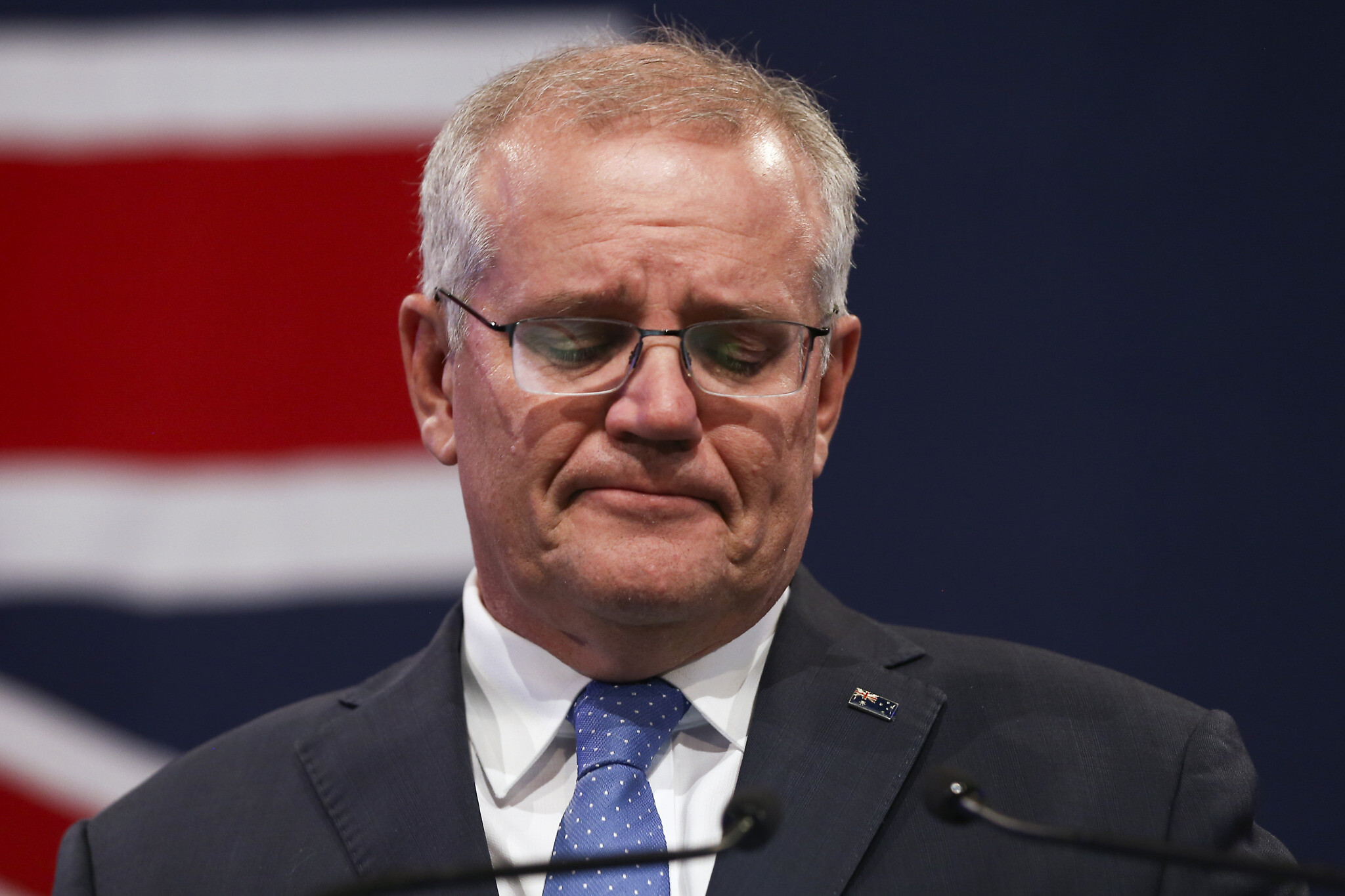
Scott Morrison’s defeat ended the worst Commonwealth Parliamentary term for LGBTIQ rights in my lifetime.

If you have enjoyed reading this article, please consider subscribing to receive future posts, via the right-hand scroll bar on the desktop version of this blog or near the bottom of the page on mobile. You can also follow me on twitter @alawriedejesus

Why the Religious Discrimination Bill must be rejected (in 1000 words or less)

The Morrison Government’s Religious Discrimination Bill is a serious threat to the rights of women, LGBT people, people with disability, people of minority faiths and many other Australians.

However, because anti-discrimination law is already highly technical, and the proposed Bill is both incredibly complex, and contains a range of provisions that are completely unprecedented, it can be difficult to understand exactly what is at stake.

The following, then, is my attempt to explain the major problems contained in the Religious Discrimination Bill in 1000 words or less:

*****

The statement of belief’ provision protects offensive, humiliating, insulting and ridiculing comments against women, LGBT people, people with disability, people of minority faiths and others on the basis of who they are.

It does this by taking away existing protections against discrimination under all Commonwealth, state and territory anti-discrimination laws, including targeting the best practice provisions of Tasmania’s Anti-Discrimination Act.

As long as they are motivated by religious belief, people will be empowered to make demeaning and derogatory comments in all areas of public life: in workplaces, schools and universities, hospitals, aged care, public transport, cafes, restaurants and shops. Everywhere.

And because the definition of statement of belief depends only on the subjective interpretation of the person making them, it protects fringe or radical views, including religiously-motivated anti-Semitism, Islamophobia and even racism.

By overriding all other anti-discrimination laws, the ‘statement of belief’ provision also denies access to justice to victims of discrimination.

This is because it effectively introduces a Commonwealth ‘defence’ to state laws, meaning state tribunals – which hear the majority of anti-discrimination cases – will be unable to resolve complaints where this issue is raised.

These cases will instead need to be heard by state supreme courts, or federal courts, at massively-increased costs to complainants.

The groups most likely to experience religiously-motivated discrimination – women, LGBT people, people with disability and people of minority faiths – will lose the most.

The ‘statement of belief’ provision also grants extraordinary powers to the Commonwealth Attorney-General to take away existing rights in other areas, by ‘prescribing’ additional laws that will be undermined.

Laws that are at risk include:

  • ‘Safe access zone’ protections covering pregnant people seeking lawful terminations
  • Bans on sexual orientation and gender identity conversion practices, and even
  • Section 18C of the Racial Discrimination Act, which prohibits racial vilification.

The ‘religious exceptions’ in the proposed Bill are just as dangerous.

While many anti-discrimination laws contain ‘religious exceptions’, the special privileges allowing religious organisations to discriminate under the Religious Discrimination Bill are far broader than any other Commonwealth, state or territory anti-discrimination law.

This is both because it adopts a much more lenient test than other laws to determine when this discrimination is permitted (only requiring that one other person of the same religion could reasonably consider the discrimination to be justified).

And because it applies to a much wider range of organisations than other laws, covering charities, hospitals, aged care facilities, accommodation providers, disability service providers, camps and conference sites and even religious organisations undertaking some commercial activities.

Unlike the Sex Discrimination Act and similar laws, the Bill does not require these bodies to have been ‘established for religious purposes’, imposing the much easier test of ‘conducted in accordance with’ religious beliefs.

The people who stand to lose most from these exceptions are Muslim, Jewish, Buddhist, Hindu, agnostic and atheist workers denied jobs, promotions and training they are qualified for simply because of their religious beliefs (or lack thereof).

These exceptions also apply to ‘religious educational institutions’, covering everything from child-care and early learning centres, through to schools, colleges and universities.

However, unlike best practice provisions in Tasmania, Queensland, the ACT and NT which limit these exceptions to enrolment only, the proposed Bill permits discrimination against students on the basis of religious belief throughout their education.

In this way, the Religious Discrimination Bill allows discrimination against children and young people, denying them their religious freedom to question, explore and develop their own faith as they learn and grow, without fear of punishment.

The same provisions could also be used by religious schools to discriminate against LGBT kids, not on the basis of their sexual orientation or gender identity itself, but on whether they affirm statements like ‘homosexuality is intrinsically disordered’ or ‘God created man and woman, therefore being transgender is sinful’. The outcome would nevertheless be the same: LGBT kids being mistreated because of who they are.

This means that, even if the Morrison Government finally implements its promise to amend the Sex Discrimination Act to protect LGBT students, religious schools could still discriminate against them via alternative means.

The Bill also allows discrimination against teachers and other employees of religious educational institutionsmeaning they can be hired and fired on the basis of their faith, not their skills.

In addition, it grants extraordinary powers to the Commonwealth Attorney-General, allowing them to take away existing rights from teachers under state and territory anti-discrimination laws.

This includes recently-passed laws in Victoria which only permit discrimination where it is an inherent requirement of the role, and ‘reasonable and proportionate in the circumstances’, as well as similar laws in operation in Queensland for two decades, and in Tasmania and the ACT.

As with students, these provisions could also provide an alternative means to permit discrimination against LGBT workers ‘under the guise of religious views’. LGBT teachers and other staff are potentially at risk in Victoria, Queensland, Tasmania and the ACT.

Finally, the Bill includes a range of other significant problems:

  • Removing the ability of qualifying bodies to take appropriate action about harmful ‘statements of belief’ made by professionals outside the workplace (for example, protecting repeated homophobic and transphobic comments by a doctor in a small town, even where this makes it unsafe for LGBT people to access essential healthcare)
  • Providing an unprecedented ability for religious organisations to make discrimination complaints in their own right, including allowing faith bodies to take legal action to prevent Commonwealth, state and territory governments from requiring organisations that receive public funding not to discriminate against LGBT people
  • Preventing local governments from passing by-laws to address harmful anti-LGBT ‘street preachers’
  • Introducing a totally unnecessary amendment to the Charities Act to ‘protect’ charities advocating a ‘traditional view of marriage’ (and those charities only), and
  • Expanding ‘religious exceptions’ in the Marriage Act to allow religious educational institutions to deny the use of their facilities for LGBTI-inclusive weddings, even where these facilities are offered to the public on a commercial basis.

Overall, the Religious Discrimination Bill promotes rather than prohibits discrimination. It must be blocked.

(999 words)

*****

The above summary does not even cover all of the many problems created by the Religious Discrimination Bill. If you would like to know more of the technical details, I encourage you to read the public submissions made by:

  • the Public Interest Advocacy Centrehere;

and

  • the Australian Discrimination Law Experts Grouphere

to the two Parliamentary committees (Joint Committee on Human Rights, and Senate Committee on Legal and Constitutional Affairs) which have been holding inquiries into this legislation over summer.

Both Committees are due to table their final reports to Parliament on Friday 4 February, meaning the Religious Discrimination Bill could be debated, and passed, in the sitting weeks beginning on Tuesday 8 February.

There is, however, still time to stop this extraordinary and extreme, radical and unprecedented – and downright dangerous – law, but only if you make your opposition to it known right now.

There are a number of actions you can take, today:

  • Contact the following list of moderate and/or lesbian and gay Liberal MPs and Senators, expressing your serious concerns about the Bill and asking them to cross the floor to protect the rights of all Australians (using their contact details from Parliament House):
    • Angie Bell (Member for Moncrieff)
    • Dave Sharma (Wentworth)
    • Katie Allen (Higgins)
    • Fiona Martin (Reid)
    • Trevor Evans (Brisbane)
    • Tim Wilson (Goldstein)
    • Trent Zimmerman (North Sydney)
    • Warren Entsch (Leichhardt)
    • Bridget Archer (Bass)
    • Andrew Bragg (Senator for New South Wales)
    • Richard Colbeck (Senator for Tasmania), and
    • Dean Smith (Senator for Western Australia).

Together, we can ensure the Religious Discrimination Bill is rejected, for the benefit of women, LGBT people, people with disability, people of minority faiths and many, many other Australians whose rights would be at risk if this divisive law was allowed to pass.

If you have enjoyed reading this article, please consider subscribing to receive future posts, via the right-hand scroll bar on the desktop version of this blog or near the bottom of the page on mobile. You can also follow me on twitter @alawriedejesus

[NB This article is written in a personal capacity and does not represent the views of employers, past or present.]

NSW MPs can be champions for trans and gender diverse kids. Or bullies.

This Valentine’s Day, I have written the below letter to NSW Parliamentarians, asking them to show love for trans and gender diverse kids by unequivocally opposing Mark Latham’s proposed legislation which seeks to deny their existence. Please read through to the end of the article to find out what you can do to help fight back against his bullying.

14 February 2021

Dear NSW MPs

I am writing to urge you to immediately and publicly express your opposition to the Education Legislation Amendment (Parental Rights) Bill 2020.

This legislation makes me sick.

This legislation is sick.

This legislation is based on a sick ideology that it is better for trans and gender diverse kids not to exist at all, than for them to be happy and healthy, and to feel safe and supported in NSW schools.

I, and lesbian, gay, bisexual, transgender and intersex (LGBTI) people in this state, are sick and tired of wasting precious time and energy fighting against such ill-intentioned attacks on our community.

Especially when there is still so much progress left to achieve, including on legal rights for trans and gender diverse people, like providing access to birth certificates without the need for surgery or other invasive medical procedures, or ensuring the Anti-Discrimination Act 1977 covers non-binary people (something it currently does not).

Instead, the NSW Legislative Council’s Education Committee is holding an inquiry into a Bill which is nothing short of the worst legislative attack on LGBTI rights in Australia this century.

A Bill that seeks to prohibit any and all teaching that someone’s gender identity can be different to the gender assigned to them at birth.

That weaponises the so-called morality of transphobes to deny the reality of trans people.

A Bill that actually goes much, much further, by banning any ‘teaching, instruction, counselling and advice’ that acknowledges said lived reality, by anybody remotely connected to a school, from principals to parents volunteering in the school canteen.

That compels a school counsellor to remain silent when a suicidal trans student just needs to hear the most basic words of comfort: that they are not alone, and who they are is okay.

A Bill that recycles failed and flawed policies from Thatcher-era Britain, reviving ‘section 28’-style laws which saw a generation of lesbian, gay and bisexual students marginalised and made invisible, without access to safe sex education even at the height of the HIV epidemic.

Policies that were abandoned in the UK almost two decades ago, now being contemplated for LGBT students right here in 2021.

A Bill that seeks to insert an ignorant, inappropriate and incorrect definition of intersex in NSW law for the first time, further stigmatising individuals that still endure the most significant human rights abuses of any group within the LGBTI community.

It does all of this based on misguided claims that the rights of parents are somehow more important than those of their children. Perhaps the best that could be said regarding this stated motivation is that at least they are being transparent.

For decades, opponents of LGBTI rights have argued that we are a serious threat to the rights of children to be themselves. Demands for our equality have frequently been met with the pleas of excitable Helen Lovejoy-types exclaiming ‘won’t somebody please think of the children’.

Well, this legislation pulls back the curtain to reveal where the real danger lies, and it’s not us. The threat to LGBTI kids comes from parents who would prefer their own children not to exist than to be who they are, and from the politicians who wish to empower them.

This legislation is an admission that, if the criteria for assessing policy proposals is whether it is in the best interests of children, then the homophobes, biphobes and transphobes have lost. Because decades of evidence clearly shows the best response to LGBT kids is to offer them love not judgement, support not suppression.

Instead, anti-LGBTI activists have moved the goalposts, so that the rights of children are no longer supreme, but must be made secondary to the perspectives of parents. But even then only the views of some parents are considered paramount.

This legislation, if passed, would mean not only that transphobic parents succeed in ensuring their own children are not taught about gender identity issues, but that no child is, in any class, anywhere. That includes the trans and gender diverse kids of parents who accept them (as any parent should).

Education is, or at least should be, for all, not just for students who are cisgender, heterosexual and endosex. Schools must not be compelled to be participants in and proponents for the prejudices of some parents.

Teachers must be allowed to teach the truth. The undeniable truth is that trans people exist. Gay, lesbian, and bisexual people as well. Intersex people, too. 

These truths might be inconvenient for those who would prefer otherwise. But that is not a good enough reason to pass a law to impose silence where our stories should be.

The Education Legislation Amendment (Parental Rights) Bill 2020 was released more than six months ago. Its discriminatory pillars have been public knowledge for just as long.

Which makes it deeply disappointing, distressing even, that neither the NSW Government nor Opposition have clearly committed to voting against it in the time since then.

Recent events in the United States have served as a stark warning of the profound consequences of playing footsie with fascism.

NSW Parliamentarians should not encourage extremism, by entertaining the exclusion of an entire category of person from education. Make no mistake, that is exactly what this Bill does: it enables the erasure of trans and gender diverse students in every classroom and schoolyard across the state.

I understand that, regrettably, One Nation holds part of the balance of power in the Legislative Council this term. But it is a craven political calculation which concludes two Upper House votes are worth more than the happiness, the childhoods and in some cases even the lives of some of the community’s most vulnerable members.

Surely it is time for you to find your voice and say, finally, you cannot in good conscience stay silent on a proposal that silences trans kids. That you will oppose this harmful and hateful legislation in committee, in debate and whenever it comes up for a vote.

If you are not convinced by the above arguments, then I implore you to do one simple thing: put yourself in the position of a trans child following the potential passage of this Bill.

Imagine realising that, at a fundamental level, you are not like most of the other boys, or girls. You may not have the language yet, yet you know you are different.

But the words you need to express yourself aren’t able to be uttered in the place the Government compels you to attend most days of the first 18 years of your life. A place where you’re supposed to feel safe, but instead are sidelined.

There is nothing in the Personal Development, Health and Physical Education curriculum to say other people like you even exist. They have been excised from the textbooks, just as they’ve been excluded from English, History and other subjects too.

You cannot find any information about who you are in the school library because any books that mention gender diversity have been purged.

You cannot see yourself in any of the trans or gender diverse teachers who might be there either, because they are busy hiding themselves lest they be accused of ‘indoctrination’.

Imagine overcoming these barriers, and, with the support of your family, beginning to affirm who you really are. And then your problems really begin.

Your teacher cannot actively support your transition because to do so could be interpreted as ‘instruction’ to the rest of your class that trans people do, in fact, exist.

They also can’t intervene to stop you from being misgendered and deadnamed by other kids. To some extent, such bullying is inevitable because they’ve never been taught anything about people like you and ‘different’ too-easily, and too-rapidly, becomes ‘wrong’.

You cannot seek advice from the school counsellor, because the moment you start to say anything about gender identity they are forced to shut the conversation down. They’re not even allowed to refer you to the wonderful support service they’re aware of just down the road, but may as well be in a different universe.

And you cannot seek protection from the school principal because of the attitudes of parents and politicians who have never met you, but who hate who you are anyway.

Imagine how you might feel in this situation. How scared. And small. And alone. Even with the backing of a supportive family, it would be difficult. Without it, it would be almost impossible.

I don’t need to imagine very hard. Because there is a lot of similarity in what I described above to the circumstances I confronted as a gay student at a religious boarding school in Brisbane in the early 1990s.

And, if we’re being completely honest, there are still far too many same-sex attracted kids who find themselves in the same scenario in schools all over NSW today.

But it absolutely destroys my heart to think that, even today, NSW Parliament is holding an inquiry into a Bill that would guarantee this mistreatment for trans and gender diverse kids into the future, with the long-term psychological harm that all-too-often goes with it.

It doesn’t need to be this way.

I started this letter by talking about the sickness that lies at the centre of the Education Legislation Amendment (Parental Rights) Bill 2020, and the dangerous views that it espouses. But those views should not be the centre of this debate.

Instead, this discussion is about how we treat people who are not sick, but who are actually beautiful: trans and gender diverse kids.

Kids who deserve the same love, and care, and nurturing, as anybody else. Kids who have the same right to education as anybody else. Kids who should have the same ability to determine for themselves who they are, as anybody else.

As an elected representative in the NSW Parliament, you can be their champion. As part of the debate surrounding this Bill you can stand up and say that trans kids are welcomed and accepted, while transphobia is not.

You can let the people of NSW know, right now, that you will not let this legislation, or any subsequent legislative attacks on trans kids, pass.

Of course, you do have another option. Alternatively, you could choose to progress with consideration of this Bill, through the committee inquiry, and then onto the floor of Parliament for debate. You might even ultimately decide to vote for it.

If you do, then instead of being a champion for trans and gender diverse kids, you would be joining their bullies. And responsibility for the harms caused would be yours to own.

It’s time for you to make your decision about the Education Legislation Amendment (Parental Rights) Bill 2020. Champion. Or bully. The choice is yours.

Sincerely,

Alastair Lawrie

Things you can do:

The NSW Legislative Council Education Committee (chaired by Mark Latham himself) is conducting an online questionnaire about community views towards the Education Legislation Amendment (Parental Rights) Bill 2020, closing on Sunday 28 February 2021.

Unfortunately, many of the questions asked are (mis)leading. Nevertheless, organisations like the NSW Gay and Lesbian Rights Lobby and Equality Australia recommend completing the survey in the following way:

  • Go to the survey on the Committee’s website 
  • Fill in your details in response to the first question
  • At question 2 click ‘oppose’
  • Skip through the other questions
  • At question 8 share a story of a teacher who made an impact on your life
  • Identify yourself only to the extent you feel comfortable.

If you feel comfortable, you should also raise this issue directly with your local member of parliament (you can find a list of MPs here) and let them know you expect them to stand up for the right of everyone to an education, and that includes trans and gender diverse kids.

If you would like more information about the Bill itself, you can read my original post summarising the proposed legislation from August 2020, ‘I Stand With Trans Kids, and Against Mark Latham’.

Finally, you can sign up to receive updates about this and other issues from this blog, via the right-hand scroll bar on desktop, or near the bottom of the page on mobile. You can also follow me on twitter @alawriedejesus [NB Given the events of the past week – with this website being blocked by Facebook for being ‘news’ – it is more important than ever to sign up if you want to receive updates, especially with the possibility of further disruptions].

*****

Update 28 February 2021

I received the following correspondence on Thursday:

Dear Mr Lawrie

I write in response to your email of 14 and 15 February 2021, to the Hon Gladys Berejiklian MP, Premier and the Hon John Barilaro MP, Deputy Premier and Minister for Regional New South Wales, Industry and Trade, and Hon Sarah Mitchell MLC, Minister for Education and Early Childhood Learning regarding the Education Legislation Amendment (Parental Rights) Bill 2020. The Premier and Deputy Premier referred your correspondence to the Hon Sarah Mitchell MLC, Minister for Education and Early Childhood Learning. The Minister has asked me to respond on her behalf.

The NSW Government will respond to the proposed bill after careful consideration to ensure all relevant legislation and protections are considered.

The Department of Education is committed to providing safe and supportive learning environments that respect and value diversity and are free from violence, discrimination, harassment and vilification. NSW public schools have legal obligations to protect and support their students.

We thank you for taking the time to express your concerns over the proposed bill. The NSW Government is working through the formal parliamentary process to address the matter and will communicate this once the process is finalised.

Should you require any further information you are welcome to contact [name and contact details omitted].

Yours sincerely

[Name omitted]

A/Director, Curriculum Secondary Learners

25 February 2021

Upon receiving this correspondence, I had three main thoughts:

First, it is disappointing that none of the Premier, Deputy Premier or even the Minister for Education responded directly to my original letter, instead delegating it to the Department of Education.

Second, it is frankly pathetic for the NSW Government to hide behind the committee inquiry process, as if this is an ordinary bill. It is not. It is an extreme proposal that seeks to erase an entire group of students from schools across the state. How much worse must a law be before NSW’s leaders show some leadership and declare that this type of legislation will not be tolerated, let alone considered?

Third, it reinforces the need for everyone who believes in an inclusive education, where all students have the right to learn irrespective of their sexual orientation, gender identity or sex characteristics, to make their voices heard. If you are reading this on Sunday 28 February 2021, please, please, please complete the parliamentary survey expressing your opposition to this Bill in question 2.

Submission re Aged Care Worker Regulation Scheme – Consultation Paper

Department of Health

Submitted online

Monday 29 June 2020


To whom it may concern

Submission re Aged Care Worker Regulation Scheme – Consultation Paper

Thank you for the opportunity to provide a submission on this important topic. In this submission, I will respond to the information presented in the Consultation Paper, while highlighting a fundamental issue that is not addressed in its 56 pages.

Specifically, in discussing existing screening of aged care workers, as well as options for increased screening and/or registration, the Consultation Paper fails to mention a de facto form of screening which already takes place – the lawful exclusion of lesbian, gay, bisexual and transgender (LGBT) employees by some government-funded aged care services operated by religious organisations.

This discrimination is permitted because of the religious exceptions included in the Sex Discrimination Act 1984 (Cth).

While sub-section 37(2)(a) provides that government-funded aged care services operated by religious organisations are not able to discriminate against lesbian, gay, bisexual and transgender people accessing their services, sub-section 37(2)(b) allows those same organisations to fire, or refuse to hire, LGBT employees simply because of who they are.

Such workplace discrimination is unacceptable in principle. But it is also unacceptable in the context of issues confronting the aged care sector, as articulated in the Consultation Paper.

For example, one of the three problems highlighted on pages 7 and 8, under the heading ‘What are the limitations of the existing approach?’ is the following:

Concern that some critical workers (such as personal care workers) may not have adequate qualifications or skills, English proficiency and/or access to continuous professional development (CPD) to support the delivery of safe and high-quality consumer-centred care

-As noted above, PCWs comprise approximately 70 per cent of the aged care workforce. Over the coming years, there will be an increasing demand for PCWs with industry estimates suggesting that an additional 980,000 workers will need to be recruited to perform roles such as those of PCWs.

In a system with concerns about workforce skills, and a looming shortage of personal care workers (as identified in the quote above), it makes absolutely zero sense to allow a significant proportion of aged care services to legally discriminate against employees on the basis of their sexual orientation and/or gender identity.

This discrimination has a range of negative consequences, both for the individual aged care service, as well as for the system as a whole.

For individual services, by limiting the pool of applicants to cisgender, heterosexual people, it is inevitable that in some circumstances better qualified applicants will be rejected because of personal attributes that have no connection to their ability to perform the role.

In other words, where services only hire the best cisgender, heterosexual person for the job, rather than the best person full stop, the overall quality of care provided will be adversely affected, to the detriment of people accessing that service.

However, the systemic outcomes of such discrimination are even worse.

LGBT people considering a career in aged care may decide against entering the industry entirely if they are aware that a substantial proportion of aged care services can refuse to hire them solely on the basis of their sexual orientation and/or gender identity.

Further, LGBT people who are already in the industry and experience discrimination because of who they are may be more likely to exit the industry prematurely rather than risk being confronted by additional mistreatment.

In this way, the ability of government-funded aged care services operated by religious organisations to discriminate against LGBT employees both limits the number of people considering working in aged care in the first place, and accelerates current employees leaving – at the exact same time the Consultation Paper suggests there is a growing demand for more aged care workers.

Sub-section 37(2)(b) of the Sex Discrimination Act 1984 is therefore a structural barrier to an expanded, and better-qualified, aged care workforce, and one that must be removed as a matter of priority.

This view is reinforced by examining the ‘Objectives of an aged care worker screening or registration scheme’, as outlined on pages 13 and 14 of the Consultation Paper.

All six of these objectives are compromised by the ability of government-funded aged care services operated by religious organisations to discriminate against LGBT employees.

  1. Improve the quality and safety of aged care and enhance protections for consumers

As seen in the above discussion, allowing individual aged care services to hire the best cisgender, heterosexual person for the job, rather than the best person overall irrespective of their sexual orientation and/or gender identity, inevitably means that centre is not able to provide the best possible care to consumers.

This problem is amplified for LGBT employees who are currently employed in government-funded aged care services operated by religious organisations and who must constantly worry about the potential of being discriminated against by current, or future, service operators. Every extra second employees spend hiding who they are for fear of mistreatment is one less second they are able to devote to providing the best possible care to consumers.

  1. Avoid unnecessary barriers to workforce entry and facilitate the attraction and retention of aged care workers

Allowing discrimination against current and potential employees simply because they are lesbian, gay, bisexual and transgender seems to be the definition of unnecessary.

  1. Promote consumer-directed care

This is an often-overlooked problem created by the current inconsistent approach adopted in sub-section 37(2) of the Sex Discrimination Act: while LGBT people accessing government-funded aged care services operated by religious organisations have the right to be out, employees of the same services do not.

The absence of ‘out’ LGBT employees – and the (understandable) reluctance of LGBT workers to disclose their sexual orientation and/or gender identity in the workplace, even to LGBT residents – actually heightens the isolation LGBT residents may feel, at a time when they are already facing increased loneliness.

  1. Avoid duplicative regulatory requirements for providers and workers operating across sectors

It is inconsistent to determine that an employee is capable to provide aged care services in one government-funded facility, but not another, simply because of their sexual orientation and/or gender identity. The role is essentially the same. The qualifications for performing it should be, too.

  1. Protect the rights of workers

This is perhaps the most obvious of the objectives – a person’s sexual orientation and/or gender identity is irrelevant to their ability to perform the role of an aged care worker. It is unnecessary, and above all unjustified, discrimination to allow these workers to be fired, or refused to be hired, just because of who they are.

  1. Minimise the cost to workers, providers, consumers and governments

Encouraging more people to train to be aged care workers, but then allowing them to be discriminated against because they are lesbian, gay, bisexual and transgender, is inherently wasteful.

It is a waste of the individual’s time, and in many cases, money (both spending to obtain the necessary qualifications, and lost income because of discrimination). It is wasteful for governments, who subsidise their training and must train even more people to replace those who may be lost to the industry because of discrimination. And it is wasteful for consumers, who miss out on the best possible care because of an irrelevant attribute.

Based on all of these arguments, and while I acknowledge the Consultation Paper’s arguments in favour of enhanced screening and/or registration requirements for aged care workers, I submit that the first step to improve the quality of the aged care workforce should be to remove an existing, unnecessary and harmful de facto screening process.

That is to remove the ability of government-funded aged care services operated by religious organisations to discriminate against employees and potential employees on the basis of their sexual orientation and/or gender identity.

This would obviously have a positive outcome for LGBT aged care workers, including making their retention in the overall industry more likely.

Above all, it would improve the quality of aged care provided in Australia – and that would meet the objectives of any aged care worker regulation scheme.

Recommendation: That sub-section 37(2) of the Sex Discrimination Act 1984 (Cth) be amended to remove the ability of government-funded aged care services operated by religious organisations to discriminate against LGBT employees and potential employees.

Thank you in advance for considering this submission. Please do not hesitate to contact me at the details provided if you require additional information.

Sincerely

Alastair Lawrie

Richard Colbeck

Minister for Aged Care and Senior Australians, Senator the Hon Richard Colbeck

Submission to NSW Parliament Inquiry into Gay and Transgender Hate Crimes Between 1970 and 2010 – 57th Parliament

Standing Committee on Social Issues

NSW Legislative Council

via email: socialissues@parliament.nsw.gov.au

Thursday 30 April 2020


To the Committee

Submission re Gay and Transgender Hate Crimes Between 1970 and 2010

Thank you for the opportunity to provide this submission on the subject of ‘Gay and Transgender hate crimes between 1970 and 2010’ in NSW.

I do so further to my original submission to the inquiry into the same subject, held in the previous Parliament.

I welcome the decision by the NSW Legislative Council to re-establish an inquiry into this important topic, and continue this work, this term.

In this submission, I endorse the submissions already made to the re-established inquiry by organisations that represent the LGBT community in NSW. This includes the submission made by ACON.

Specifically, I endorse ACON’s comments relating to Recommendation 3 of the Interim Report (‘That the NSW Police Force ensure that all officers have the skills and knowledge to engage with lesbian, gay, bisexual, transgender, intersex and queer (LGBTIQ) people respectfully and equally’), namely:[i]

The recommendation of the Interim Report relating to the responsibility of the New South Wales Police Force fails to recognise the historical context that this Inquiry examined. We would assert that the NSW Police Force also needs to consider the impact of their policing and its effect on our communities in the past. It is only in conjunction with ongoing reflection on these issues that skills and knowledge will have any effect on the relationship between our communities and the Police.

I also endorse ACON’s comments about the disappointing response to the Interim Report provided by the Minister for Police, the Hon David Elliott:[ii]

ACON believes the response does not adequately take into consideration the overall content of the Committee’s Report on the Inquiry, focusing only on a singular recommendation. The work of the Committee in putting together the Report reflects, to a degree, the personal stories and experiences of community members and organisations. While the Report goes some way to frame these stories in the context of problems with policing and our communities, the response from Minister Elliott downplays these experiences. The brevity of the response, and its ignorance of the full subject matter of the Report, is disappointing…

The crimes that occurred in the past are abhorrent, and the police response to these crimes was negligent at best. These facts are known by our communities. ACON was extremely disappointed that no such acknowledgement was included in Minister Elliott’s response.

Finally, I endorse the call made by ACON for the Committee to seek evidence from NSW Police to assess the four measures that are proposed in the one-page response by Minister Elliott, including how they are being implemented in practice:[iii]

  1. Revised bias crime indicator assessment tools supported by appropriate training packages
  2. A review of internal policies ensuring open-mindedness regarding motive
  3. Ongoing internal ethical and cultural training to specifically include LGBTIQ experiences
  4. Ongoing improvements to ensure bias crimes are centrally captured for state-wide investigations.

I also endorse the submission to the re-established inquiry made by the NSW Gay & Lesbian Rights Lobby. This includes their comments that:[iv]

The trust to which our community can place in the NSW Police Force will continue to suffer as long as the Force continues to come to grips with its culture of homophobia. As per our previous submission, we want to see ongoing education modules relating to LGBTIQ people as a standard of employment for every employee of NSW Police Force, from the Commissioner down. It is no longer good enough to have a handful of ‘trained’ GLLOs, unevenly distributed across the state…

An individual living in any corner of this state should be able to deal with any NSW Police Officer or any other public service employee with confidence, knowing they will be treated equally and respectfully.

I also endorse the NSW Gay & Lesbian Rights Lobby’s submission on the need for anti-discrimination law reform to help address homophobia and transphobia in NSW:[v]

[T]he tacit approval of discrimination must be avoided. Anti-discrimination laws, and their exemptions, have been the subject of wide-spread consideration in recent years. The swift public backlash to exemptions which permit discrimination by religious schools against LGBTIQ people are heartening. However, as yet, the GLRL eagerly awaits the removal of these exemptions. The research and lived experiences … demonstrate how discrimination permitted by laws such as the Anti-Discrimination Act 1977 (NSW) contribute to a culture which sees hate crimes committed against LGBTIQ people.

Finally, I support the submission made by the Pride History Group (submission number 15), and draw the Committee’s attention to the personal accounts of homophobia and transphobia, including homophobic and transphobic violence, which it contains.

In terms of my own substantive comments, I have two criticisms of the Interim Report which I would like to make to the Committee.

The first concerns observations, both in the Chair’s foreword, and in evidence provided by Assistant Commissioner Anthony Crandell of the NSW Police Force, that appears to frame NSW Police as passively reflecting the homophobia and transphobia of NSW society, rather than being an active contributor to this discrimination and intolerance.

For example, the Hon Shayne Mallard MLC wrote on page vii that:

For many decades, pervasive prejudices against LGBTIQ people ran deeply in society. Even with legislative change following the decriminalisation of homosexuality in 1984, bias attitudes were still being perpetuated within the broader community with a legacy that is still keenly experienced today. The ensuing violence and crime against gay and transgender people, particularly in the 1970s, 1980s and 1990s, was shocking, abhorrent and all too common. Amidst this stood a NSW Police Force and a broader criminal justice system with a culture influenced by the social values of the time [emphasis added].

Similarly, on page 8, the Interim Report noted that:

While Assistant Commissioner Anthony Crandell, Police Education and Training, NSW Police Force acknowledged that the ‘police force reflected the community and was no different, with culture and values taking far longer to evolve.’

And again on page 45:

In evidence to the inquiry, Assistant Commissioner Crandell acknowledged that historically, the ‘NSW Police Force accepted a culture and society that marginalised people who happened to be sexually or gender diverse.’

He made further comments along the same lines on page 69:

Assistant Commissioner Crandell observed that at no stage had the NSW Police Force indicated that there was ‘no more homophobia, transphobia or that sort of sentiment’ within the force. Rather, he stated: ‘We reflect the community.’ He explained: ‘If we can say that about the community then perhaps I could say that about the police force, but you cannot say that about the community and I cannot say that about the police force…’

The overall impression of these comments is that NSW Police was only ever a ‘mirror’ reflecting society’s homophobia and transphobia back to itself, rather than an organisation with agency that itself generated homophobia and transphobia through its own culture, policies and operational decisions.

I would dispute this ‘mirror’ characterisation in at least two ways. First, the police force is a key shaper of societal attitudes. It plays a role in deciding those rules that are actively enforced, and those that are not (because there will always be far more ‘crimes’ committed than are investigated or prosecuted at any one time) – and this sends a signal to ordinary community members about what are serious breaches of the law versus minor infractions. In this way, the law enforcement actions of police carry a ‘normative’ value.

Indeed, this can be seen in prioritisation of anti-homosexual policing described on page 7 of the Interim Report:

Societal views and attitudes of the time were said to have been compounded by the leadership approach taken by senior policy officers. For example, during the 1950s, the then NSW Police Commissioner Colin Delaney voiced personal views regarding homosexuality that encouraged vigilant detecting and prosecution of homosexual acts and homosexual men by police. In 1958, Commissioner Delaney described homosexuality as “Australia’s greatest menace’; that homosexuals were a “cancer in the community”, who threatened to damage society’s “moral welfare.”

I submit it is impossible to argue that these comments, from the ‘top cop’ in the biggest jurisdiction in Australia, did not have an impact on societal homophobia – especially when it was reinforced by police entrapment and harassment of gay and bisexual men.

The second way in which NSW Police contributed to homophobia and transphobia in society (rather than the other way around), was by failing to properly investigate crimes against gay, bisexual and transgender victims of crime.

While I concede many people at the time may have considered LGBT people to be ‘lesser’ than other members of the community, the actions of NSW Police actually made them so under the law, and therefore actively encouraged others to treat them in the same way.

As noted by the Committee itself on page 35:

Throughout the inquiry the committee heard that police investigations into a number of suspected gay hate crimes during the 1980s and 1990s were inadequate, ineffective and in some cases absent almost entirely, with victims and loved ones never receiving adequate justice.

As described by Mr Larry Galbraith on page 32:

[E]fforts to encourage victims to report were often ‘undermined by the police themselves’, which in turn impacted on the willingness of victims to report crimes. Mr Galbraith recounted a sentiment expressed to him, that going to the police was like a ‘lucky dip – expect it was a lucky dip that too many gay men were not prepared to risk’. He explained: ‘For many gay men, it was sheer luck if the cop you saw took your matter seriously and was willing to do something about it.’

By failing to do their jobs and investigating crimes committed against anyone, irrespective of who they were, NSW Police sent a message to the community that crimes committed against gay and bisexual men, and transgender people, were less serious than crimes committed against cisgender and heterosexual people. That reflects the special role of police in law enforcement, and goes far beyond simply ‘mirroring’ intolerant attitudes.

For these reasons, it was incredibly disappointing to see on page 94 that key sections of the draft Interim Report were removed by Committee members prior to its publication.

This includes the [now deleted] observation that:

The committee accepts the view put forward by a number of inquiry participants that the homophobic culture within NSW Police during the time period examined has significantly obstructed the delivery of justice for members of the LGBTIQ community subjected to violence and hate crimes, in addition to further marginalising a community that already felt ‘rejected’ by many in society’.

Most disappointingly, it involved removing Finding 2:

That the NSW Police Force failed in its responsibility to properly investigate cases of historic hate crime and this has undermined the confidence of lesbian, gay, bisexual, transgender, intersex and queer (LGBTIQ) communities in the NSW Police Force and the criminal justice system more broadly.

I strongly urge the committee to make this finding as part of the re-established inquiry.

My second substantive criticism of the Interim Report relates to how it dealt with the issue of the gay panic, or ‘homosexual advance’, defence – or, more accurately, how it failed to properly address this topic.

The terms of reference specifically included the following:

(b) in relation to LGBTIQ hate crimes more generally:

i. what role the so-called ‘Gay panic’ defence played in the culture of LGBTIQ hate crimes between 1970 and 2010,

ii. how the so-called ‘Gay panic’ defence impacted the delivery of justice and the treatment of Gay men during LGBTIQ hate crime investigations and court proceedings

However, despite this term of reference, and Chapter 4 of the Interim Report discussing this issue at some length, the Interim Report does not include any findings or recommendations on this subject.

Even worse, once again strong statements on this subject, including a proposed Recommendation, were removed by the Committee prior to the public of the Interim Report (as noted on page 99 of the Report). These deleted paras stated:

While the Crimes Act 1900 has been amended to finally reflect the recommendations of both the 1995 NSW Attorney-General’s Working Party on Homosexual Advance Defence and the parliamentary inquiry into the partial defence of provocation, the committee acknowledges that there is a ‘gay panic’ defence legacy.

The committee supports the NSW Government’s 2013 directive for the NSW Law Reform Commission to conduct a comprehensive review of the law of homicide and homicide defences, as initially recommended by the 2013 Legislative Council Select Committee on the Partial Defence of Provocation to ensure that recent legal reforms have effectively removed any potential for further injustice to occur. The committee therefore recommends that the NSW Attorney General issue a reference to the NSW Law Reform Commission to require it to undertake a comprehensive review of the law of homicide and homicide defences in New South Wales.

Recommendation 10

That the NSW Attorney General issue a reference to the NSW Law Reform Commission to require that it undertake a comprehensive review of the law of homicide and homicide defences in New South Wales to ensure that recent legal reforms have effectively removed any potential for injustice to occur.

I believe that these paras, and the proposed Recommendation 10, were justified on the basis of evidence provided to the inquiry by ACON, Mr Larry Galbraith,[vi] and Mr Nathan Johnstone,[vii] among others.

I strongly urge the Committee to incorporate these comments, and to make a similar recommendation to the deleted Recommendation 10, in its Final Report.

This would highlight the deleterious impact of the gay panic defence, not just on the individual victims whose lives were treated as somehow being less worthy by the criminal justice system, but also the entire LGBT community because crimes against them were seen as less serious than crimes committed against others.

My final comment in relation to the Interim Report is to express my support for the position of the NSW Young Lawyers Human Rights Committee, as summarised on page 50:

The NSW Young Lawyers Human Rights Committee argued that there are limitations to the current GLLO program that need to be addressed. These include:

  • the name of the program creates barriers to access for bisexual, transgender, intersex and queer people
  • there are significant gaps in when and where GLLOs are available; and
  • there is limited evaluation of the performance of GLLOs in their role.

Given the perceived limitations of the GLLO program, the NSW Young Lawyers Human Rights Committee put forward three recommendations to improve its accessibility and effectiveness. These were:

  • Changing the name of the program to the LGBTIQ Liaison Officer program
  • Increasing the number of LGBTIQ liaison officers particularly in areas where gaps exist
  • Regularly evaluating the performance of LGBTIQ liaison officers and ensuring adequate support is provided for such officers to perform effectively in their roles.

I urge the Committee to adopt these suggestions in its Final Report. In this way, and provided they are subsequently adopted by NSW Police, it would help to strengthen this program – and, most importantly, to prevent some of the historical injustices heard by the Committee from being repeated in the future.

Thank you for taking this submission into consideration as part of this important inquiry. Please do not hesitate to contact me, at the details provided, should you require additional information.

Sincerely

Alastair Lawrie

w1-truthandjustice

ACON’s In Pursuit of Truth and Justice Report, which documents gay and transgender prejudice killings in NSW in the late 20th century, can be found here.

Footnotes:

[i]  Submission Number 12, ACON, page 11.

[ii] Submission Number 12, ACON, pages 12-13.

[iii] Submission Number 12, ACON, pages 14-15.

[iv] Submission Number 14, NSW Gay & Lesbian Rights Lobby, page 6.

[v] Submission Number 14, NSW Gay & Lesbian Rights Lobby, page 8.

[vi] From page 61 of the Interim Report:

Mr Galbraith was of the view that the ‘gay panic’ defence ‘helped perpetuate the idea that… somehow the crime was lesser and therefore… should not be treated as seriously’. He added it was likely that the ‘gay panic’ defence fed ‘into a culture where other crimes against gay men should not be treated as seriously.’

[vii] Noting that the following para, describing Mr Johnstone’s evidence, was also removed from the final report:

Mr Nathan Johnstone, Committee member, NSW Gay and Lesbian Rights Lobby summarised for the committee the legacy of the “gay panic” defence:

I certainly think that it feeds into the level of distrust or the damage to the relationship between perhaps our community and not just police but perhaps the whole criminal justice system. You have got at least, I think it was, 13 people in about a three- or five-year period… who successfully used this before it was abolished. This is remarkable… That will still breed that culture and fuel that culture of distrust.

Don’t Rain on Our Parade

It’s reached that point in late February where, every day at 4:20pm, I visit the Bureau of Meteorology website to check the forecast for Saturday night’s Sydney Gay & Lesbian Mardi Gras Parade.


But, irrespective of whether the BoM says it will rain, hail, (smoke) or shine, there’s a much larger cloud hanging over Australia’s LGBTI community: the Morrison Government’s proposed Religious Discrimination Bill.


This legislation has the potential to adversely affect nearly every aspect of our existence.


From health-care, where it will allow doctors and pharmacists to deny hormone therapy, including puberty blockers, to trans and gender diverse people. And to refuse to provide access to PEP, and PrEP, exposing gay and bisexual men to greater risk of HIV transmission.


To the workplace, where employers and colleagues will be able to make comments that offend, humiliate, intimidate, insult or ridicule us, as long as those statements are based on religious belief.


A manager could tell a staff member that gay sex is sinful, and same-sex relationships are intrinsically disordered.


An interviewer may inform a trans applicant that gender is binary, and therefore their gender identity is not real.


A colleague could respond to a lesbian co-worker showing pictures of her family in the lunch-room that she has deliberately denied her children of a father, and will be condemned by god for her ‘lifestyle’ choices.


These are all entirely plausible scenarios. And all would be legally permitted under the Religious Discrimination Bill, because statements of belief are effectively exempt from all Commonwealth, state and territory anti-discrimination laws.


Indeed, statements of belief would be protected across all areas of public life, not just employment.


If this legislation passes, international tourists visiting Sydney this time next year could be subjected to degrading and demeaning comments anywhere and everywhere, at the airport, in the taxi or uber, on buses, trains and ferries, at the hotel or B&B, at tourist attractions, in cafes and restaurants, at shops and on the streets.


That sounds more like hate-song than ‘matesong’.


Except, once the party is over tourists will be able to leave these homophobic, biphobic, transphobic and intersexphobic comments behind, while LGBTI Australians will be stuck with them, like unshakeable glitter, invading every nook and cranny for years to come.


As a certain bank tried to remind us last week – and was then itself reminded by the community – ‘words do hurt’. It is unacceptable that our own Government is so focussed on ensuring we are all exposed to more hurtful words in our lives.


The Bill also further entrenches the special privileges granted to religious schools and other faith-based organisations to discriminate against teachers, other employees, students and, in some cases, people accessing their services, on the grounds of religious belief or lack of belief. Even where these services are being delivered using public funding.


It doesn’t explicitly grant new powers to religious schools to discriminate against LGBT teachers and students. But then it doesn’t need to, either – because those powers already exist under the Sex Discrimination Act and, despite promising to protect LGBT students before the end of 2018, the Morrison Government has so far failed to shield some of the most vulnerable members of our community.


The theme for this year’s Mardi Gras is ‘What Matters’. In pushing ahead with the Religious Discrimination Bill, despite criticism from LGBTI organisations and a wide range of other civil society bodies, while failing to protect students in religious schools, it is clear the right to be a bigot matters much more to them than the safety of LGBT kids.


Perhaps the most frustrating part of the current debate is that, from an LGBTI advocate’s perspective, it is a purely reactive one – defending existing rights under what are already-flawed anti-discrimination laws, rather than trying to make those laws better (for example, including bisexual, non-binary and intersex people in NSW’s out-dated Anti-Discrimination Act).


It takes attention away from other urgent law and policy reform, too.


We shouldn’t forget that this Saturday’s march takes place in a state where trans people still need to have surgery – which is both expensive, and for some people, unwanted – before being able to update their identity documentation.


And in a country where children born with variations in sex characteristics continue to suffer massive human rights violations, including coercive, intrusive and irreversible surgery and other medical treatments.


The Religious Discrimination Bill will take LGBTI rights in Australia backwards, when there is still so much progress left to be made, on these and many other issues.


It’s time the Morrison Government abandoned this legislative attack on our community, and instead worked with us to achieve positive change – maybe then we can finally celebrate under clear skies.


Mardi Gras flag


For more on this subject, see The Religious Discrimination Bill: What you should know.


If you have enjoyed reading this article, please consider subscribing to receive future posts, via the right-hand scroll bar on the desktop version of this blog or near the bottom of the page on mobile. You can also follow me on twitter @alawriedejesus

The ‘Bad Faith’ Religious Discrimination Bill Must Be Blocked

Update 10 December 2020:

The Morrison Government’s Second Exposure Draft Religious Discrimination Bill was released one year ago today (on Human Rights Day, which was particularly ironic given its contents trample on the rights of women, LGBTI people, single parents, divorced people and people in de facto relationships, and people with disability, among many others).

Following public consultation during January and February, it was expected the final version of the Bill would be introduced in Commonwealth Parliament by Attorney-General Christian Porter in March 2020.

Of course, COVID-19 had other plans – who knew all it took to stop this awful law was the worst global pandemic in a century? Although, in reality, their proposed legislation was only ever placed on pause – and there is increasing evidence PM Morrison and AG Porter plan to introduce their Religious Discrimination Bill in early 2021.

On Sunday 6 December, the Guardian Australia reported that:

The attorney general, Christian Porter, said in a statement: “The government will revisit its legislative program as the situation develops, and bring the religious discrimination bill forward at an appropriate time.”

This was followed by a story in Monday 7 December’s Australian, stating that:

Australia’s faith leaders are urging Scott Morrison to put the implementation of a Religious Discrimination Act at the top of his political agenda next year, warning their congregations would hold the Prime Minister to his election pledge once COVID-19 passes…

Catholic, Anglican and Muslim leaders told The Australian work on a Religious Discrimination Act must begin as early as February when federal parliament returned from its summer break.

It is clear that religious fundamentalists both within and without the Government want to push ahead with this deeply-flawed legislation come hell or high water, the rights of other Australians be damned.

There is a very real risk the final Bill will be introduced in the first half of 2021, perhaps as soon as when Commonwealth Parliament resumes on February 2nd. Scott Morrison is fond of (over-)using the word ‘comeback’ at the moment – but reviving the Religious Discrimination Bill is one comeback that most definitely should not happen.

The Religious Discrimination Bill must be resisted, in the strongest possible way, for all of the reasons outlined below in my original post about the Second Exposure Draft. To allow it to pass would mean undermining the rights of many, many Australians to live our lives free from discrimination.

Original Post:

It is ironic that a Bill that uses the phrase ‘in good faith’ multiple times (four times in the First Exposure Draft, and nine times in the Second) was itself developed through a process that was the polar opposite.

The Religious Discrimination Bill is the end product of the Religious Freedom Review, which was a gift to religious fundamentalists during parliamentary debate about marriage equality in 2017, and was payback against LGBTI Australians for having the temerity to demand equal rights under secular law.

When that review was finally released in December 2018, Attorney-General Christian Porter promised that the Government’s Religious Discrimination Bill would be similar to other anti-discrimination laws, and ‘follow a very standard architecture’.[i] Instead he has delivered incredibly complex legislation with several unique, special rights for religious individuals and organisations to discriminate against others (more on that below).

Mr Porter also stated in December 2018 that ‘we are well-advanced on the drafting of [the Bill] and which we would have out early next year [2019], so that people can see it.’ Yet the Liberal-National Government did not reveal any details of the Bill until after the May 2019 federal election, leaving voters in the dark about a central plank of their platform (perhaps some voters may have voted differently had they known their human rights would later come under sustained attack).

In August, the Guardian Australia reported that:

Christian Porter has sought to allay concerns that a federal religious discrimination bill could water down protections for LGBT people in state legislation. The attorney general told Guardian Australia the bill “is not intended to displace state law…”’[ii]

But when the First Exposure Draft Bill was released on 29 August it did exactly that, with clause 41 directly over-riding Commonwealth, state and territory anti-discrimination legislation, and specifically over-riding Tasmania’s best practice protections against ‘conduct which offends, humiliates, intimidates, insults of ridicules’[iii] others, including women, LGBTI people and others.

At no point between December 2018 and August 2019 did the Morrison Government consult with anyone other than the religious organisations who would benefit from the Bill. There was no engagement with any of the people who stood to lose the most, from women, to LGBTI people, single parents, divorced people and people in de facto relationships, and people with disability.

Even when the Attorney-General released the Exposure Draft Religious Discrimination Bill for public comment – and received a deluge of criticism from representatives of those groups, as well as the vast majority of civil society organisations, and even the Australian Human Rights Commission, the independent body who would be responsible for overseeing any legislation once passed – Porter, and the Government, have chosen to ignore that feedback.

In fact, the only major substantive change to the Bill was something demanded by religious organisations – to expand its religious exceptions even further, allowing religious hospitals and aged care services to discriminate on the basis of religious belief in employment. Even when receiving taxpayers money to deliver public services.

It is completely unsurprising that, having undertaken a bad faith process to develop its legislation, the Government has produced what is essentially a ‘bad faith’ Religious Discrimination Bill. A Bill that prioritises and privileges the rights of religious individuals and organisations over and above everyone else.

This can be seen in how the Second Exposure Draft[iv] differs from the First in relation to its four major problems[v] – or, rather, in how there is nothing to separate the two Bills, meaning the Government has not addressed these flaws.

The Religious Discrimination Bill will still make it easier to make comments that ‘offend, humiliate, intimidate, insult or ridicule’ minorities

Clause 42 (which was previously clause 41) continues to exempt ‘statements of belief’ from discrimination complaints under all Commonwealth, state and territory anti-discrimination legislation, including the Fair Work Act 2009 (Cth) and Tasmania’s best practice Anti-Discrimination Act 1998.

Indeed, multiple changes to the Bill will actually ensure more discriminatory statements of belief are protected from legal consequences. This includes expanding the definition of statements of belief (so that they do not need to align with the mainstream views of any religion, but can be from the extreme fringes of faith), as well as providing that comments will be protected even where they are ‘moderately’ intimidating towards the victim.[vi]

Nor has the Government addressed the constitutional flaws of this provision. Because the Bill would introduce a Commonwealth defence to state laws, state tribunals would legally be unable to determine whether the defence was valid. So where a person makes a complaint of discrimination, and a respondent claims it was a ‘statement of belief’, it would need to be referred from the tribunal to a court to hear that particular issue, and then referred back to the tribunal to determine the remainder of the complaint – massively increasing the costs and time involved, with the likely outcome that many discrimination complaints will be withdrawn no matter how valid they are.

Overall, clause 42 will still encourage degrading and demeaning comments about women, LGBTI people, single parents, people in de facto relationships, divorced people, people with disability, and even people from minority faiths,[vii] in all areas of public life, from workplaces to schools and universities, health care, aged care and other community services, to cafes, restaurants and even shops.

The Religious Discrimination Bill will still make it easier for health practitioners to refuse to serve minorities

There have been some minor improvements to the ‘conscientious objection’ provisions in the Second Exposure Draft (previously clauses 8(5) and (6), now clauses 8(6) and (7) of the Bill). This includes narrowing the list of health practitioners who will be able to take advantage of these sections, as well as including a note that they are not intended to allow practitioners to refuse to provide a service to a category of people.

But, in practice, these changes are superficial rather than substantive. The list of practitioners who remain covered:

  • Doctors
  • Midwives
  • Nurses
  • Pharmacists, and
  • Psychologists

means the vast majority of interactions between patients and the health system are nevertheless potentially jeopardised via ‘conscientious objection’.

Meanwhile, the distinction between refusing to provide a service to a category of people (which would not be permitted) and refusing to provide a category of service to people (which would be) is so blurry as to be meaningless.

As Attorney-General Porter himself confirmed when releasing the Second Exposure Draft, it is designed to protect ‘a GP who did not want to “engage in hormone therapies” for a trans person. “That’s fine, but you have to exercise that in a consistent way, so you don’t engage in the procedure at all.”’[viii]

The net effect is that GPs and pharmacists will be empowered to:

  • Refuse to provide reproductive health services, even where this disproportionately affects women
  • Refuse to provide PEP and/or PrEP, even there this disproportionately affects gay, bisexual and other men who have sex with men, and
  • Refuse to provide hormone therapy (including puberty blockers), even where this disproportionately affects trans and gender diverse people.

Overall, clauses 8(6) and (7) will still encourage practitioners to refuse to provide vital health care services to some of the most vulnerable members of the Australian community.

The Religious Discrimination Bill will still make it easier for religious bodies to discriminate against others

In fact, as hinted at earlier, the religious exceptions contained in the Second Exposure Draft will make it even easier for even more religious organisations to discriminate in even more circumstances.

Clause 11 (which was previously clause 10), provides an exception to all religious schools and universities, as well as ‘registered public benevolent institutions’ (even where providing commercial services to members of the public), as well as ‘any other body that is conducted in accordance with the doctrines, tenets, beliefs or teachings of a particular religion (other than a body that engages solely or primarily in commercial activities)’.

This exception allows these bodies to discriminate on the ground of religion in both employment, and who they provide services to (or withhold services from).

The test for determining whether the organisation can (ab)use these special privileges is also much easier to satisfy in the Second Exposure Draft. In fact, there are now two alternative tests, and the organisation need only satisfy one:

  • Clause 11(3) is already a lower standard than the existing religious exception in the Sex Discrimination Act 1984 (Cth), because the organisation can simply act, ‘in good faith, in conduct to avoid injury to the religious susceptibilities of adherents of the same religion’ – unlike section 37(1)(d) of the SDA, these acts do not need to be ‘necessary’.
  • Clause 11(1) sets an even lower standard again. It provides that a ‘religious body does not discriminate against a person under this Act by engaging, in good faith, in conduct that a person of the same religion as the religious body could reasonably consider to be in accordance with the doctrines, tenets, beliefs or teachings of that religion.’

This second test is entirely subjective. A religious body is only required to demonstrate that one other person considers their discrimination is in accordance with their faith. They don’t even have to agree with the discrimination itself! This hurdle is so easy to clear that it is almost impossible to imagine any scenario where a court or tribunal will disallow religious discrimination by these organisations.

Which is particularly devastating because the Second Exposure Draft also expands the types of organisations that can take advantage of these privileges.

Clauses 32(8) and (10) allow religious hospitals, aged care services and accommodation providers to discriminate in employment on the ground of religion. And clauses 33(2) and (4) permit religious camps and conference sites to discriminate in who they provide services to (even where these are facilities run on a commercial basis and otherwise open to the public).

As I have written previously, these religious exceptions will mean that:

  • A professor can be denied a job because they are Jewish.
  • A doctor can be refused employment at a hospital because they are Muslim.
  • A school student can be expelled because they are atheist.
  • A homeless person can miss out on a bed in a shelter because they are Hindu.
  • A charity worker can be rejected for promotion because they are Buddhist.
  • An aged care employee can lose shifts because they are agnostic.

Overall, clause 11 (and related clauses) will fundamentally divide Australia, by empowering religious organisations to discriminate both in employment, and in who they provide services to, on the grounds of religion. And they will be able to do so while using taxpayers’ money. Your money. My money, Our money.

The Religious Discrimination Bill will still make it more difficult for big business to promote diversity and inclusion

Clauses 8(3) and (5) (which were previously 8(3) and (4)) are the provisions which were created in response to the circumstances of a certain ex-footballer – by making it incredibly difficult for organisations with revenue of at least $50 million per annum to impose codes of conduct that prevent an employee from making discriminatory comments outside their ordinary hours of employment.

These clauses have been slightly improved in the Second Exposure Draft. By clarifying they only protect employees in conduct ‘other than in the course of the employee’s employment’, it actually applies to a reduced set of circumstances.

But Attorney-General Porter has also included a new clause 8(4), which makes things much worse again – by preventing qualifying bodies (like legal admission or medical registration bodies) from taking into account degrading or demeaning public comments which applicants may have made ‘unless compliance with the rule by the person is an essential requirement of the profession, trade or occupation’.

Previously, these bodies may have denied admission or registration on the basis that the applicant was not a ‘fit and proper person’ – instead, homophobes, biphobes and transphobes will be encouraged to discriminate with little or no professional consequences.

**********

Any of these problems should be sufficient in and of itself for anyone interested in human rights for all Australians, and not just for some, to oppose the Bill. All of them together should be enough for Labor, the Greens and Senate Cross-Bench to vote against it – although only the Greens’ opposition is secure at this stage.

And that’s not even including some of the other ‘lesser’ problems in the package of ‘religious freedom’ laws the Government is seeking to pass, which are each significant in their own right:[ix]

  • Creating a ‘Religious Freedom Commissioner’ within the Australian Human Rights Commission, to advance the ‘religious freedom’ agenda, even though such a position was not recommended by the Government’s own Ruddock Review, and while LGBTI Australians continue to be denied a Sexual Orientation, Gender Identity and Sex Characteristics Commissioner.
  • Amending the Marriage Act 1961 (Cth) to reinforce the ability of religious educational institutions to reject same-sex weddings, even where they provide those services to the public on a commercial basis – and despite the fact such a ban was not previously required to reject divorced people remarrying (meaning this is essentially an anti-marriage equality provision),[x] and
  • Amending the Charities Act 2013 (Cth) to ‘protect’ charities advocating against an inclusive definition of marriage, even though the Australian Charities and Not-for-profits Commission (ACNC) explicitly stated such a clause was not needed, and despite the fact no other type of advocacy (from Indigenous, to environmental or LGBTI) is protected in this way.

Unfortunately, there are even more problems in the Religious Discrimination Bill, and its two related Bills (the Religious Discrimination (Consequential Amendments) Bill, and the Human Rights Legislation Amendment (Freedom of Religion) Bill), although it would take too long to describe them all in detail here.

In short, these are deeply flawed Bills, developed through a bad faith process, that will have a terrible impact on women, LGBTI people, people with disability and others. If passed, they would lead to increased division between different communities, changing our country for the worse. They must be blocked.

Perhaps the most frustrating part of this debate is that a genuine Religious Discrimination Bill, one that protected people of faith and no faith against discrimination on the basis of who they are, would have been a welcome development.

If the Government had prepared the Religious Discrimination Bill in good faith, it would have been met with substantial community goodwill. Instead, they listened to religious fundamentalists, and have now released two slightly different versions of legislation containing the same fundamental flaw – it increases discrimination rather than reducing it.

Significantly, the victims of the Government’s Bill will not only be women, LGBTI people, single parents, people in de facto relationships, divorced people, and people with disability. People from minority faiths, atheists and agnostics all stand to lose under Attorney-General Porter’s, and Prime Minister Morrison’s, disingenuous and disastrous Second Exposure Draft ‘Religious Freedom’ Bills.

Anti-discrimination legislation should reduce discrimination, not increase it. It should unite us, rather than divide us. The Religious Discrimination Bill fails on those most fundamental criteria. It is a bad faith Bill, and the only possible good outcome from here would be for it to be rejected in its entirety.

Take Action

One of my main objectives for the blog this year is to include practical information on as many posts as possible about actions readers can take. In this instance, there are at least three things you can do:

  1. Write a submission on the Second Exposure Draft Bills

The Second Exposure Draft ‘Religious Freedom’ Bills are open for public consultation until Friday 31 January 2020. Details of the Bills are here, and you can send written submissions via email to FoRConsultation@ag.gov.au

You don’t have to be a lawyer to make a submission, nor do you need to comment on all of the Bills’ many problems. Instead, you can simply describe your general concerns about the proposed legislation, as well as any specific fears about its impact on you and your community. Some suggested points include:

  • All Australians deserve to be protected against discrimination.
  • This includes people of faith, and no faith. But it must also include women, LGBTI people, single parents, people in de facto relationships, divorced people, people with disability and others.
  • Unfortunately, the Second Exposure Draft Religious Freedom Bill will increase discrimination against many groups, including people from minority faiths, rather than reduce it.
  • It will encourage people to make ‘statements of belief’ that degrade and demean others just because of who they are, in workplaces, schools and universities, health care, aged care and community services, cafes, restaurants, shops and other public places.
  • It will encourage doctors, pharmacists and other health practitioners to refuse to provide vital health services to vulnerable Australians.
  • It will encourage religious organisations to discriminate against people on the basis of their faith, in schools and universities, hospitals, aged care and other community services, even where they are delivering essential public services using public funding.
  • The Government should scrap the current version of the Religious Discrimination Bill, and prepare a new Bill that reduces discrimination rather than increasing it.
  • If the Government fails to do so, the Parliament must reject the Second Exposure Draft Religious Discrimination Bill, and associated ‘Religious Freedom’ Bills.
  1. Write to MPs and Senators expressing your concerns

While submissions about the Exposure Draft Bills are valuable, it is essential you also convey your concerns directly to your elected representatives.

It is especially important to write to the following:

  • ALP MPs and Senators
  • Greens MP and Senators
  • Centre Alliance Senators (if you’re in South Australia)
  • Senator Jacqui Lambie (if you’re in Tasmania), and
  • Liberate moderate/gay and lesbian MPs (including Trent Zimmerman, Trevor Evans, Tim Wilson, Angie Bell, Warren Entsch, Senator Dean Smith).

PFLAG Australia has made this process easy, using the website Equality, Not Discrimination.

You can also access a range of materials from Equality Australia here, including a submission-writing toolkit.

  1. Attend a public rally against the Bills

For those who prefer their activism to be on the streets, there will also be a number of public rallies around the country in coming weeks, including:

Sydney: Saturday 8 February at 1pm, Sydney Town Hall

Melbourne: Sunday 9 February at 1pm, State Library of Victoria

Brisbane: Saturday 1 February at 5pm, King George Square, and

Perth: Saturday 8 February at 1pm, Forrest Chase

The bad faith Religious Discrimination Bill, and the two other proposed ‘Religious Freedom’ Bills, can be blocked, but only if we all take action together.

Christian Porter

Attorney-General Christian Porter, author of the ‘Bad Faith’ Religious Discrimination Bill.

If you have enjoyed reading this article, please consider subscribing to receive future posts, via the right-hand scroll bar on the desktop version of this blog or near the bottom of the page on mobile. You can also follow me on twitter @alawriedejesus

Footnotes:

[i] Attorney-General Media Conference, 13 December 2018.

[ii]Christian Porter says religious freedom bill won’t erode state LGBT protections’ 12 July 2019.

[iii] Section 17(1) Anti-Discrimination Act 1998 (Tas).

[iv] The complete Religious Freedom Bills – Second Exposure Drafts (which includes the updated Religious Discrimination Bill) can be found here.

[v] See The Growing List of Problems with the Religious Discrimination Bill.

[vi] Clause 42(2) provides that statements of belief will not be protected if it is:

  • malicious
  • that would, or is likely to, harass, threaten, seriously intimidate or vilify another person or group of persons; or
  • would be considered ‘counselling, promoting, encouraging or urging conduct that would constitute a serious offence.’

[vii] See The Internal Contradiction of the Morrison Government’s Religious Discrimination Bill.

[viii] ‘Rules for doctors, pharmacists tightened in new religious discrimination bill’, Sydney Morning Herald, 10 December 2019.

[ix] For more detail, see The Growing List of Problems with the Religious Discrimination Bill.

[x] Unfortunately, it would not be the only provision in the Marriage Act 1961 (Cth) which discriminated against same-sex couples, despite the postal survey result. For more see: No, We Don’t Have Marriage Equality Yet.