Submission to Victorian Government Consultation on Banning Conversion Practices

Update 6 February 2021:

On Thursday night (4 February 2021), the Victorian Parliament passed the Change or Suppression (Conversion) Practices Prohibition Act 2021. Significantly, this Bill goes even further than recent reforms in Queensland and the Act in terms of the anti-gay and anti-trans practices that are now banned, including in religious settings.

This legislation is the product of decades of advocacy by the survivors of conversion practices, and sets the benchmark for other states and territories to follow, including obviously NSW (which, as with so many LGBTI law reform priorities, has fallen behind other jurisdictions). At this stage, it seems like Tasmania will be the next cab off the rank (with the issue currently being considered by the Tasmanian Law Reform Institute – see my submission to their consultation, here).

Original Post:

The Victorian Government is currently consulting on legislative options to ban conversion practices, including ‘ex-gay therapy’ and ‘ex-trans therapy’. Submissions close 24 November 2019, with more details here. The following is my personal submission:

**********

Thank you for the opportunity to provide this submission in response to the Discussion Paper: ‘Legislative options to implement a ban of conversion practices.’

I write this as a long-term advocate for the lesbian, gay, bisexual, transgender and intersex (LGBTI) community, as someone who survived five years at an explicitly homophobic religious boarding school in Queensland in the early 1990s,[i] and as someone who has written on this issue previously.[ii]

While I am not Victorian, given early-adopting jurisdictions will be effectively setting the standard for other states and territories to follow (including my current state of NSW), I am interested to ensure that the scheme introduced by the Victorian Government is as strong as possible.

On that basis, my answers to the consultation questions are as follows:

Do you agree with the HCC’s definition?

Would you suggest any changes?

Should the definition of conversion practices be broad enough to capture the practices that do not involve health services or counselling?

What treatments and practices should be expressly excluded from the definition?

The Health Complaints Commissioner’s definition appears reasonable. It is particularly important that the second part of the definition – ‘including efforts to eliminate sexual and/or romantic attractions or feelings toward individuals of the same gender, or efforts to change gender expressions’ – is retained.

This is because the harms caused by conversion practices arise exclusively in the context of activities trying to prevent people from identifying as lesbian, gay, bisexual or transgender.

There is no evidence of harmful ‘conversion practices’ in the other direction (forcing people to be LGBT), and therefore care should be taken to ensure that support services for LGBT people, and especially LGBT children and young people, are not inadvertently captured in any definition of conversion practices.

The definition should, however, capture anti-LGBT conversion practices outside health services or counselling. Conversion practices are basically psychological torture and as such they should not be acceptable in any context.

There may nevertheless be scope for increased penalties, or additional regulatory responses, where these practices occur in health services or counselling given the duty of care involved in these settings.

Who do you think should be protected?

Should protection be limited to children and people experiencing vulnerability? If so, what vulnerable groups should be included?

Should protection be available to all members of the community?

In what ways do you think the issue of consent is relevant to determining who should be protected?

I think all people should be protected, including adults. Again, my starting position is that conversion practices are psychological torture. And torture is not acceptable in any context, or with respect to any victim.

We should also remember that an adult who seeks out conversion practices has likely grown up in a homophobic, biphobic or transphobic environment, and that the cumulative effect of years or even decades of this bigotry and intolerance is probably the primary causative factor in them agreeing to participate in such harmful activities. It is therefore not truly free and informed consent.

Of course, there are some groups who are particularly vulnerable, including children as well as people with mental ill-health or other reasons for diminished legal capacity. The penalties for engaging in conversion practices aimed at these vulnerable groups could be made higher than for other adults (for example, by making the vulnerability of the victim an aggravating factor in sentencing).

Who do you think should be banned from providing conversion practices?

Specific professionals or persons? Or everyone who offers conversion practices?

These practices should be banned by anyone. There is no justification to allow psychological torture in any context.

There may however be reasons to provide additional regulatory responses for health practitioners, including counsellors, who engage in these practices (including referring people to these practices). This could include being suspended, or deregistered from providing any health services in the future, in addition to criminal or other penalties which apply to everyone.

Do you think conversion practices should be regulated wherever they occur or only in certain contexts or places?

If only health professionals are regulated, then again it should not matter where the conversion practices take place, because psychological torture should be prohibited wherever it occurs. It is a breach of the duty to care for patients for health practitioners to engage in these practices, or to refer others to them, in any context or place.

Do you think conversion practices should be regulated through criminal law, civil regulatory schemes or civil laws, or a combination of these?

What aspects of each approach would be effective in regulating conversion practices?

What aspects of each approach would be less effective in regulating conversion practices?

Given the abhorrent practices involved, and their harmful consequences on the lives of victims, I believe there should be criminal penalties for providing conversion practices, and for referring people to conversion practices.

This is a proportionate response to the seriousness of the underlying offence, and necessary to send a signal to the community that such practices will not be tolerated, any time, any where.

However, acknowledging the potential difficulty in criminal prosecution in these areas, these laws should be supplemented by civil regulatory sanctions, enforced by the Health Complaints Commissioner, Commissioner for Children and Young People or another similar body.

Finally, victims of such practices should be able to make claims of negligence against the people providing them, especially where it involves health practitioners and/or counsellors. Again, this is in recognition of the damage caused to their lives. Any laws necessary should be changed to allow this outcome, and provide financial redress for the victims.

What rights do you think are relevant to consider when determining how best to implement a ban of conversion practices?

Can the impact on these rights be justified in light of the harm conversion practices cause?

The most important rights in terms of this debate are the right to health, and the right to non-discrimination (given conversion practices are an attack on people with diverse sexual orientations and/or gender identities).

I acknowledge that there may be an adverse impact on freedom of religion, in that some individuals and organisations may assert that these practices are in line with their religious beliefs against LGBT identities.

However, their religious beliefs do not justify the imposition of psychological torture on others, including children and vulnerable people. In the same way that religious beliefs do not justify physical torture, including female genital mutilation, a position already reflected in Australian law.[iii]

Are there other matters that you consider critical for the design of legislation or effective implementation?

I reiterate my view that the approach adopted in states like Victoria will exert considerable influence on the position that will ultimately be embraced in others states and territories. As such, I strongly encourage the Victorian Government to introduce the strongest possible ban on these abhorrent practices, for the benefit of LGBT people nation-wide.

Thank you in advance for taking this submission into consideration. Please do not hesitate to contact me at the details supplied should you require clarification or additional information.

Sincerely

Alastair Lawrie

Footnotes:

[i] See The Longest Five Years.

[ii] See Criminalising Ex-Gay Therapy August 6, 2018; Submission to NSW Parliament Inquiry into False or Misleading Health Practices re Ex-Gay Therapy and Intersex Sterilisation 16 June, 2014.

[iii] And, hopefully, one day religious beliefs will not be used to justify male genital mutilation/circumcision either.

The Religious Discrimination Debate is a Test for the States and Territories

The Religious Discrimination Bill, released in late August by Attorney-General Christian Porter, would be the biggest reform to anti-discrimination law in Australia in at least 15 years, since the passage of the Age Discrimination Act 2004.


In fact, it is potentially the most radical change to our federal anti-discrimination system since, well, the beginnings of anti-discrimination law in this country.


That’s because it fundamentally undermines one of the key concepts of this framework: concurrent Commonwealth, and State/Territory, jurisdictions.


Since the passage of the Commonwealth Racial Discrimination Act 1975, NSW Anti-Discrimination Act 1977, and similar laws elsewhere, these laws have operated effectively alongside each other, without directly interfering with each other.


Where conduct was prohibited under laws at both levels, the victims of such discrimination were able to choose where to lodge their complaint. Successive Commonwealth Governments haven’t sought to cover the field, or explicitly override the provisions of State and Territory anti-discrimination laws.


But this is no longer the case. The Religious Discrimination Bill dramatically, and unprecedentedly, upsets Australia’s anti-discrimination applecart.


Section 41 provides that ‘statements of belief’ do not constitute discrimination for the purposes of any anti-discrimination law – including each of the Racial, Sex, Disability and Age Discrimination Acts at Commonwealth level, and all equivalent state and territory laws.


The Apple Isle has even more to lose than the others – with section 17(1) of their Anti-Discrimination Act 1998 singled out by name as being specifically overruled.


This is undoubtedly because it offers the most effective form of protection against conduct that ‘offends, humiliates, intimidates, insults or ridicules’ a wide range of groups, including LGBTI people, women, single parents, people in de facto relationships, divorced people and people with disability, among others.


But all State and Territory Governments should be alert and alarmed at this unwanted and unwarranted intrusion, not least because of the proposal that the Commonwealth Attorney-General be allowed to override even more laws by future regulation, without needing the approval of federal Parliament (and with Senate numbers making it extremely difficult for these regulations to be disallowed).


It is not just the principle of federalism that is offended by this hostile takeover. It is the fact the Religious Discrimination Bill makes it easier to offend the rights of vulnerable groups in each and every Australian jurisdiction that makes its contents so disturbing.


This makes the current religious discrimination debate a major test for State and Territory Governments around the country. Will they stand up to the Commonwealth Government’s decision to undermine their anti-discrimination laws?


More importantly, will they stand up for the communities in their respective states and territories – LGBTI people, women, single parents, people in de facto relationships, divorced people and people with disability – who stand to lose the most as a consequence of the Religious Discrimination Bill?


There is another, related challenge for State and Territory Governments from these developments. At the same time as the Attorney-General was releasing his exposure draft Bill, the reporting date for the Australian Law Reform Commission’s review of ‘religious exceptions’ was pushed back to December 2020.


This is the inquiry that was established earlier this year to examine whether provisions which allow religious schools to discriminate against LGBT students, and teachers, should be amended, or repealed entirely.


The delay means any legislation arising from this inquiry will likely not be passed until the second half of 2021 – and therefore won’t be in place until the 2022 school year at the earliest.


This is incredibly disappointing given Prime Minister Scott Morrison’s broken promise, in October 2018, that he would ensure LGBT students were protected before the end of last year. Effectively, this will now be delayed by more than three years.


The contrast with the Religious Discrimination Bill is also revealing. On one hand, the Morrison Government wants to pass a stand-alone Religious Discrimination Bill before the end of this year – a substantial, and radical, change to our federal anti-discrimination regime, with just one month of public consultation.


On the other, it refuses to make what are modest, straight-forward changes to protect LGBT students and teachers in religious schools for several years. It has decided to vacate that field, and consequently to vacate their responsibilities to vulnerable kids.


In the meantime, LGBT students and teachers will continue to be subject to abuse and mistreatment, simply on the basis of who they are, in schoolyards, classrooms and staff-rooms around the country.


And so it is now up to State and Territory Governments to show the leadership that the Commonwealth Government won’t. For NSW, Victoria, South Australia and Western Australia to pass urgent changes to protect LGBT students. And for all jurisdictions other than Tasmania and the ACT to cover LGBT teachers.


Because all kids deserve to grow and learn in a safe environment. And they don’t deserve to wait until 2022 to know what that feels like.


Berejiklian Andrews RD Bill

NSW Premier Gladys Berejiklian at Sydney Gay & Lesbian Mardi Gras, and Victorian Premier Daniel Andrews at Midsumma. Will they stand up against the Religious Discrimination Bill which will make it easier to discriminate against LGBTI people in their respective states?


If you have enjoyed reading this article, please consider subscribing to receive future posts, via the right-hand scroll bar on the desktop version of this blog or near the bottom of the page on mobile. You can also follow me on twitter @alawriedejesus

The Growing List of Problems with the Religious Discrimination Bill(s)

The Religious Discrimination Bill(s), released by Attorney-General Christian Porter in late August, remind me a lot of the ongoing Sydney apartment crisis.


They are the inevitable consequence of a system that has been designed to serve the interests of one group over and above everyone else. Except instead of property developers, these new laws would benefit religious fundamentalists. While those left picking up the tab are women, LGBTI people, single parents, people in de facto relationships, divorced people, people with disabilities, and plenty of others.


And, just like a recently-built Sydney apartment, what might seem shiny and new on first inspection reveals a growing list of defects the closer one looks.


Here then is a look at the serious problems with the Religious Discrimination Bill(s) that we are already aware of (a list I’m sure will grow if we ever have the misfortune of ‘living’ under these shoddily-constructed laws):


The Religious Discrimination Bill will make it easier to make comments that ‘offend, humiliate, intimidate, insult or ridicule’ minorities


The worst provision of the Exposure Draft Religious Discrimination Bill is proposed section 41. This provides that ‘statements of belief’ are basically exempt from discrimination complaints under all Commonwealth, State and Territory anti-discrimination laws (including the Fair Work Act 2009).


As long as the person making such comments does so on the basis of their religion and they are made ‘in good faith’, they will be lawful unless the person on the receiving end can show they are malicious, or likely to harass, vilify, incite hatred or violence. In practice, that would be extremely difficult to prove.


This section is a radical departure from our current anti-discrimination framework, under which Commonwealth laws like the Sex Discrimination Act 1984, and State and Territory laws like the NSW Anti-Discrimination Act 1977, operate alongside each other, allowing victims to decide where to complain.


The provision also specifically overrides section 17(1) of Tasmania’s Anti-Discrimination Act 1998, which prohibits conduct that ‘offends, humiliates, intimidates, insults or ridicules’ people on the basis of a wide range of protected attributes, including:

  • Gender
  • Race
  • Age
  • Sexual orientation
  • Lawful sexual activity
  • Gender identity
  • Intersex variations of sex characteristics
  • Disability
  • Marital status
  • Relationship status
  • Pregnancy
  • Breastfeeding
  • Parental status, [and]
  • Family responsibilities.


That’s a long list of groups who will find themselves the targets of derogatory comments having lost one of the few effective shields against them.


But that’s exactly what section 41 seems intended to achieve: to make it easier for religious fundamentalists to speak evil, and write evil, comments about different groups. With the obvious consequence that women, LGBTI people and others will be forced to see evil and hear evil comments about themselves.


This provision would build a fundamental imbalance into our existing anti-discrimination system, privileging the rights of one group within society at the expense of everyone else. It must not be allowed to pass.


The Religious Discrimination Bill will make it more difficult for big business to promote diversity and inclusion


Another serious problem of the Exposure Draft Religious Discrimination Bill are provisions which are based on the circumstances of a certain (ex-)footballer.


Proposed sub-sections 8(3) and 8(4) would make it much more difficult for major employers (organisations with revenue of at least $50 million per year) to introduce codes of conduct that prevent employees from making derogatory comments about minorities outside ordinary working hours where those comments are ‘statements of belief’.


The only way an employer will be able to enforce such restrictions is if they are able to demonstrate failure to do so would inflict ‘unjustifiable financial hardship’ on them. On a practical level, it will be extremely difficult to prove hypothetical yet significant future harm in order to justify imposing these rules in the here and now. Many big businesses will (quite understandably) simply avoid doing so.


It should also be noted that ‘unjustifiable financial hardship’ is the only criteria to permit these codes of conduct. They cannot be implemented on the basis of wanting to promote diversity and inclusion within the workplace (including to make other employees feel welcome), or to associate their ‘brand’ with values of diversity and inclusion more broadly – unless they can attach a sufficiently-large dollar value to it.


Once again the likely consequence of these provisions is to make it easier for religious fundamentalists to make offensive comments about women, LGBTI people, single parents, people in de facto relationships, divorced people and people with disabilities, among others. That seems to be the opposite outcome to what a well-constructed anti-discrimination law should achieve.


The Religious Discrimination Bill will make it easier for health practitioners to refuse to serve minorities


The next major defect of the Exposure Draft Religious Discrimination Bill is also found in proposed section 8 – this time sub-sections 8(5) and 8(6). These provisions make it easier for health practitioners to conscientiously object to providing health services.


If, upon reading this, you think these provisions must be referring to ‘controversial’ medical procedures such as abortion and euthanasia, you should be aware they actually cover a much, much wider range of health services.


This includes assisted reproductive technology, where health practitioners would presumably be empowered to ‘conscientiously object’ to providing access to single women, unmarried couples and LGBTI people.


But even that is just the tip of the iceberg in terms of services where it will be more difficult to impose ‘health practitioner conduct rules’ to treat all patients with dignity and respect. Indeed, the definition of ‘health service’ in section 5 ‘means a service provided in the practice of any of the following health professions:

  • Aboriginal and Torres Strait Islander health practice
  • Dental …
  • Medical
  • Medical radiation practice
  • Midwifery
  • Nursing
  • Occupational therapy
  • Optometry
  • Pharmacy
  • Physiotherapy
  • Podiatry, [and]
  • Psychology.’


This full list makes it abundantly clear these provisions are not restricted to permitting health practitioners to refuse to perform certain acts, but instead will encourage them to refuse to serve certain classes of people (unless someone can explain what ‘controversial’ procedures are involved in dentistry, medical radiation practice, or optometry).


For example, it could allow a pharmacist to refuse to dispense hormone treatments to trans customers, while providing them to cisgender women. Indeed, this is something that the Human Rights Law Alliance (which is aligned to the Australian Christian Lobby) has been publicly advocating.


If you are now thinking that these provisions have the potential to substantively undermine Australia’s health care system, and in particular the right of all people to access essential health services without fear of discrimination on the basis of who they are, you would be right.


Both of these sets of unusual amendments to the ordinary ‘reasonableness’ test for indirect discrimination (sub-sections 8(3) and (4) re big business, and sub-sections 8(5) and (6) re health practitioners) must be rejected.


The Religious Discrimination Bill will make it easier for religious bodies to discriminate against others


The fourth and final serious problem in the Exposure Draft Religious Discrimination Bill is the broad ‘exception’ in proposed section 10 that would allow religious bodies, including religious schools and registered charities, to discriminate against others on the basis of religious belief, or lack of belief.


Given this provision effectively allows discrimination between religions, it would be tempting for women’s organisations, and groups representing LGBTI Australians, to give it less attention than those outlined above. But it would be ill-advised to ignore its potentially far-reaching consequences.


For example, the test to allow discrimination: ‘conduct that may reasonably be regarded as being in accordance with the doctrines, tenets, beliefs or teachings of the religion’, will be much easier to satisfy than the existing criteria in section 37 of the Sex Discrimination Act 1984: ‘an act or practice that conforms to the doctrines, tenets or beliefs of that religion or is necessary to avoid injury to the religious susceptibilities of adherents of that religion’ [emphasis added].


If the test in section 10 of the Religious Discrimination Bill becomes law, it would set a negative precedent, with some in the Government then pushing for the same, lower standard to be included in the Sex Discrimination Act (potentially through the current Australian Law Reform Commission inquiry into religious exceptions).


The exception in section 10 also applies to an incredibly wide range of circumstances. For example, it would allow a religious school to expel a student in year 12 for expressing doubts about the school’s religion (something that is specifically excluded under equivalent laws in Queensland, Tasmania, the ACT and Northern Territory, which allow discrimination on the basis of religious belief at admission, but not once enrolled).


Finally, if section 10 becomes law it could set up a potential ‘time-bomb’ for future anti-discrimination reform. If and when we finally achieve repeal of the religious exceptions in the Sex Discrimination Act, this provision could allow religious schools to expel LGBT students who refuse to repent for their sexual orientation or gender identity (where the school attempts to claim they are not discriminating because they are LGBT, but instead on the basis of their religious beliefs about being LGBT).


For all of these reasons, proposed section 10 must be substantially narrowed in order to avoid creating a structural flaw not just in the Religious Discrimination Bill itself, but across anti-discrimination legislation more generally.


**********


These four sets of provisions are dangerous, unprecedented, unwanted and unwarranted additions to Australia’s anti-discrimination regime (so much so they might be described as the four horsemen of our ‘religious freedom’ apocalypse).


They will disturb any sense of balance or proportion in our laws, by making it clear the right of religious fundamentalists to discriminate against others is more important than the rights of women, LGBTI people, single parents, people in de facto relationships, divorced people, people with disabilities and others to live their lives free from discrimination.


The Religious Discrimination Bill will ensure that religious belief is privileged in several key ways, in an almost unlimited range of everyday situations.


But they are not the only threats in the draft laws released by the Attorney-General a fortnight ago.


You may have noticed in this article’s title, and introduction, references to Religious Discrimination Bill(s). That’s because, along with the Exposure Draft Religious Discrimination Bill itself, Mr Porter also released the Religious Discrimination (Consequential Amendments) Bill 2019, and the Human Rights Legislation Amendment (Freedom of Religion) Bill 2019.


While these two Bills have received far less attention than the Religious Discrimination Bill, they too contain provisions that could undermine the human rights of other Australians, including:


The Religious Discrimination (Consequential Amendments) Bill creates the unnecessary position of Religious Freedom Commissioner


The Government’s own Religious Freedom Review (aka the ‘Ruddock Review’) found it was not necessary to create the position of Religious Discrimination Commissioner within the Australian Human Rights Commission.


Despite this, the Consequential Amendments Bill would do exactly that. Further, it frames this position as a Religious Freedom Commissioner, in contrast to the Age, Disability, Race and Sex Commissioners who are all explicitly appointed as ‘Discrimination’ Commissioners.


Finally, adding insult to injury, the Government would be appointing a Religious Freedom Commissioner when LGBTI Australians still do not have our own Commissioner, more than six years since the introduction of protections on the basis of sexual orientation, gender identity and intersex status.


The Human Rights Legislation Amendment (Freedom of Religion) Bill unnecessarily amends the objects clauses of anti-discrimination laws


This Bill would introduce the following words into the objects clauses of all other Commonwealth anti-discrimination laws:


‘In giving effect to the objects of this Act, regard is to be had to the indivisibility and universality of human rights, and the principle that every person is free and equal in dignity and rights.’


Which sounds innocuous enough, except that in the explanatory notes for the Bill the only other human right that is specifically mentioned by name is ‘the right to freedom of religion.’


These explanatory notes can and will be used by the judiciary in determining how these amended objects clauses affect the interpretation of the Racial, Sex, Disability and Age Discrimination Acts, potentially giving more weight to so-called religious freedom (at a time when we need to be reducing religious exceptionalism, not exacerbating it).


The Human Rights Legislation Amendment (Freedom of Religion) Bill unnecessarily ‘protects’ charities advocating discriminatory marriage


This Bill would also amend the Charities Act 2013 (Cth) to ensure that charities that advocate for only cisgender heterosexual marriage are not de-registered. Specifically, it would include the following in section 11:


‘To avoid doubt, the purpose of engaging in, or promoting, activities that support a view of marriage as a union of a man and woman to the exclusion of all others, voluntarily entered into for life, is not, of itself, a disqualifying purpose.’


Except, when the Marriage Act 1961 (Cth) was amended in 2017, the Charities and Not-for-profits Commission advised Parliament such an amendment was not needed. And, in the two years since then, there is exactly zero evidence of any charity being adversely affected.


Nor is there any justification for singling out this one discriminatory and exclusionary belief for special protection in our charities regulation.


The Human Rights Legislation Amendment (Freedom of Religion) Bill inserts more discriminatory religious exceptions into the Marriage Act


Speaking of the Marriage Act, this Bill would also insert even more religious exceptions into that law. Specifically, new section 47C would explicitly allow religious educational institutions to discriminate in the provision of facilities, goods and services for the purposes of the solemnisation of marriage.


This would permit schools to discriminate against LGBTI couples, divorced people re-marrying and people who had previously cohabitated – even where these facilities, goods and services are provided publicly on a commercial or for-profit basis.


As I have written previously, the amendments that were included in the Marriage Amendment (Definition and Religious Freedoms) Act 2017 already mean we do not currently enjoy genuine marriage equality in this country. We should be aiming to remove those religious exceptions, not entrench them.


**********


I wrote at the beginning of this post that the Religious Discrimination Bill(s) share several similarities with the ongoing Sydney apartment crisis.


But there is also one key difference – while these plans have been drafted, they have not yet been ‘built’. Which means there is still time to avert this new crisis, for the Morrison Government, and Parliament more generally, to amend the Religious Discrimination Bill and its two accompanying laws, and thereby avoid their adverse impact on large numbers of everyday Australians.


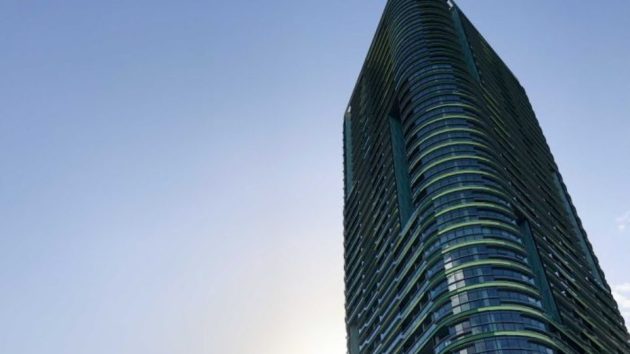
However, if the Government and Parliament fail to listen and take action, and instead pass these Bills unamended, they will be condemning women, LGBTI people, single parents, people in de facto relationships, divorced people, people with disabilities and others to live under the legislative equivalent of Opal Tower, or Mascot Towers.


We will always be fearful of the next crack to emerge: of the next time we are discriminated against simply because of who we are, entirely lawfully, because of somebody else’s religious beliefs. We will never get to feel at home.


Opal Tower

The Religious Discrimination Bill(s) are the legislative equivalent of Opal Tower – but there’s still time to avert a new crisis, if the Government and Parliament are willing to listen.


To find out more about everyday situations in which religious beliefs will be privileged, check out this twitter thread. And if you’ve enjoyed reading this article, please consider subscribing to receive future posts, via the right-hand scroll bar on the desktop version of this blog or near the bottom of the page on mobile.


What to Expect, and What to Fear, from the Religious Discrimination Bill

Prime Minister Scott Morrison’s proposed Religious Discrimination Bill is overdue.


Conceived eight months ago, when the Bill was announced as part of the Government’s response to the Religious Freedom Review in December 2018 Attorney-General Christian Porter stated that “we are well-advanced on the drafting and… we would have [it] out early [this] year, so that people can see it”.[i]


Yet in late August 2019 this legislation remains nowhere to be seen – at least not in public, and definitely not by the LGBTI community (although given Morrison’s consultation with 21 religious leaders,[ii] of various faiths, in early August it is a safe bet they have been advised of its key features).


The longer the gestational period for the Religious Discrimination Bill is, and the more details that are kept hidden from the people who it could adversely affect – LGBTI Australians, women, single parents, de factos and divorced people – the greater the levels of collective anxiety about what it may contain.


So, what can we expect when Morrison and Porter are ‘expecting’?


**********


If we are to take the Attorney-General at his word, we have nothing to fear from this reform. From the time it was first announced, Porter has consistently stated that it would be relatively straight-forward:


The architecture for discrimination legislation in Australia is well-known, it’s not overly complicated. An attribute is defined – such as age or race or sex or disability or, in this case, the adherence to a religion or the right to not adhere to a religion – and then certain prohibitions are placed on people in terms of their treatment of other Australians based on that attribute. So you are protected from discrimination because of that attribute and then there are certain exemptions drafted as is appropriate. I don’t think that that would be a very contentious bill, necessarily, it follows a very standard architecture.[iii]


He has made similarly reassuring comments since the 18 May election:


“Porter said the government was doing ‘precisely what we said we would do’ at the election. He believed a ‘classical formulation of rights’ that protected people from the behaviour of other people through the architecture of anti-discrimination bills was superior to a religious freedom bill.”[iv]


And just today: “Mr Porter told The Australian that the final bill would deliver a religious discrimination act that ‘mirrors other anti-discrimination acts such as those already covering race, sex and aged discrimination’”.[v]


Based on these comments, the Morrison Government should shortly give birth[vi] to a Religious Discrimination Bill that, similar to something like the Age Discrimination Act 2004 (Cth), protects people against discrimination on the basis of religious belief, or lack of religious belief, and nothing else.


Such a narrow law would in fact be a welcome development, especially because it would protect religious minorities against discrimination – something that is long overdue in multicultural Australia.


But it would not be welcomed by everyone, especially not religious fundamentalists like the Australian Christian Lobby, and parts of the Catholic and Anglican Churches, who have been relentlessly campaigning for a more expansive Religious Freedom Bill, one that would provide people of faith with the ability to discriminate against others on the basis of their sexual orientation, gender identity, sex and relationship status (among other attributes).


And that’s why the delay in releasing the Bill is so concerning. Because preparing a genuine Religious Discrimination Bill is a relatively straight-forward task, and one that should have been completed months ago.


Whereas cooking up a Religious Freedom Bill is a much more complicated process, as more and more potential ‘nasties’ are added into the mix. Which is one possible reading of media reports from early July suggesting the legislation has ‘already had more than 50 drafts.’[vii]


So, if the Morrison Government is indeed preparing to introduce a Religious Freedom Bill, what exactly should LGBTI Australians be afraid of?


**********


My number one worry is that the legislation will undermine our existing framework of LGBTI anti-discrimination protections.


Now, I am the first to admit that these laws are deeply flawed[viii] (in most jurisdictions other than Tasmania anyway) and in need of significant reform, including to remove the overly-generous religious exceptions which allow religious organisations to discriminate against LGBTI people.


The problem is that the Religious Discrimination Bill could make things much, much worse.


For example, the Government could create a positive right for religious individuals and organisations to ‘manifest’ their religious belief, even where it has a negative impact on the rights of others, such as the right to be protected against discrimination.


They could explicitly provide that the Religious Discrimination Bill overrides the laws of state and territories that establish better protections for LGBTI people. Even if they don’t include a ‘cover the field’ type provision, depending on how they legislate any inconsistency between Commonwealth and State and Territory laws could invalidate the latter.


To take a specific example, the Religious Discrimination Bill could override the anti-discrimination laws in Queensland, Tasmania, the ACT and Northern Territory which currently protect LGBT students in religious schools against discrimination. And it could preclude other jurisdictions, like NSW and Victoria, from adopting the same approaches in the future.


Another way in which the Religious Discrimination Bill could undermine anti-discrimination protections for other groups, is through the inclusion of new ‘objectives clauses’ in all Commonwealth anti-discrimination laws, as recommended by the Religious Freedom Review.[ix]


Recommendation 3: Commonwealth, State and Territory governments should consider the use of objects, purposes or other interpretive clauses in anti-discrimination legislation to reflect the equal status in international law of all human rights, including freedom of religion.


The risk lies in how this recommendation is implemented. It is possible that the Government does what then-Attorney-General George Brandis tried to do during the marriage legislation debate in November 2017, and only incorporate Article 18(1) of the International Covenant on Civil and Political Rights (ICCPR):


Everyone shall have the right to freedom of thought, conscience and religion. This right shall include freedom to have or to adopt a religion or belief of his choice, and freedom, either individually or in community with others and in public or private, to manifest his religion or belief in worship, observance, practice and teaching.


Significantly, Brandis did so while excluding the equally-important Article 18(3):


Freedom to manifest one’s religion or beliefs may be subject only to such limitations as are prescribed by law and are necessary to protect public safety, order, health, or morals or the fundamental rights and freedoms of others.[x]


If the Government adopts this approach, prioritising the objective of religious freedom over other human rights, we can be in no doubt the (misnamed) Human Rights Law Alliance will file as many legal ccomplaints at it takes to have courts reinterpret LGBTI anti-discrimination laws as narrowly as possible.


Just this week we also discovered that the Religious Discrimination Bill could provide anti-discrimination ‘protection’ not just to individuals, but also to religious organisations[xi] – something that is unprecedented in Commonwealth anti-discrimination law.


As Anna Brown from Equality Australia stated:


It would be extremely unorthodox for the religious discrimination bill to include provisions to protect organisations or religious institutions given the historical focus of discrimination law in protecting the rights and dignity of individuals.


Another risk from the Commonwealth creating positive rights for people to ‘manifest’ their religious belief is that it could undermine LGBTI anti-vilification laws in Queensland, Tasmania and the ACT.[xii]


Currently, none of those jurisdictions include ‘religious discussion’ as a defence to their vilification provisions (although the Hodgman Liberal Government in Tasmania tried to introduce this defence in the last term of parliament, but was defeated in their upper house).


The Religious Discrimination Bill could instead make it easier for people in those jurisdictions to vilify LGBTI people as long as they could say this vilification was motivated by their religious beliefs.


**********


The second major fear is that we could end up with a system where religious belief attracts more rights than other protected attributes, including sexual orientation, gender identity or intersex status/sex characteristics.


For example, there is a possibility (albeit small) that the Religious Discrimination Bill will create anti-vilification protections for religious belief.


Which, in principle, is perfectly reasonable – because nobody deserves to be vilified on the basis of who they are (although religious vilification laws would need to be carefully crafted so as not to create de facto blasphemy laws).


The problem arises because it would be only the second attribute to attract protection against vilification under Commonwealth law – the other being racial vilification prohibited under section 18C of the Racial Discrimination Act 1975.


None of sex, disability, age, sexual orientation, gender identity or intersex status attract equivalent protections. No matter how plaintively religious fundamentalists are performing their persecution at the moment (especially regarding the Folau case), it is impossible to argue that vilification against people because of their religious belief is any more common, or harmful, than homophobic, biphobic, transphobic or intersexphobic vilification.


There is another situation, however, where it is already certain that religious Australians will end up with greater human rights representation than LGBTI people – because the Morrison Government has committed to establish a ‘Religious Freedom Commissioner’ within the Australian Human Rights Commission.


In principle, a Religious Discrimination Commissioner (along the lines of the existing Race, Sex, Age and Disability Commissioners) makes sense – although its focus should be on removing discrimination against people on the basis of religion, not prosecuting the case for ever-greater ‘religious freedoms’.


In practice, though, even the Government’s own Religious Freedom Review, chaired by the hand-picked former Liberal Attorney-General Philip Ruddock, found that a stand-alone Religious Discrimination Commissioner was unnecessary:


Recommendation 19: The Australian Human Rights Commission should take a leading role in the protection of freedom of religion, including through enhancing engagement, understanding and dialogue. This should occur within the existing commissioner model and not necessarily through the creation of a new position [emphasis added].


Appointing a Religious Freedom Commissioner would also create a stark contrast with LGBTI Australians, who, despite being protected against discrimination following the historic Sex Discrimination Amendment (Sexual Orientation, Gender Identity and Intersex Status) Act 2013, still do not have a human rights commissioner of our own.[xiii]


Therefore, if either or both religious anti-vilification laws and a Religious Freedom Commissioner are introduced, LGBTI Australians will quite rightly be left wondering why some Australians are more equal than others.


**********


My third major worry concerns a litany of other new special rights that could be created for religious individuals and organisations, across a range of other laws.


We have already seen a preview of this, with the Government’s legislative agenda, published on the website of the Department of Prime Minister and Cabinet,[xiv] suggesting they will introduce not just a Religious Discrimination Bill, but also a Religious Discrimination (Consequential Amendments) Bill and a Human Rights Legislation Amendment (Freedom of Religion) Bill.


The latter two bills in particular will ‘amend existing Commonwealth legislation relating to freedom of religion, including amendments to marriage law, [and] charities law.’


The reference to marriage law may be linked to Recommendation 12 of the Religious Freedom Review, which stated:


The Commonwealth should progress legislative amendments to make it clear that religious schools are not required to make available their facilities, or to provide goods or services, for any marriage, provided that the refusal:

(a) conforms to the doctrines, tenets or beliefs of the religion of the body; or

(b) is necessary to avoid injury to the religious susceptibilities of adherents of that religion.


This is wrong in practice – if a religious school is offering its facilities, goods or services to the public (usually to make a profit), there doesn’t seem to be any good reason why it should be able to reject couples simply on the basis of their sexual orientation, gender identity or relationship status.


But it is even worse in principle. As a result of the Marriage Amendment (Definition and Religious Freedoms) Act 2017, Australia already has one of the worst same-sex marriage laws in the world.[xv] That legislation allowed existing civil celebrants to register in order to be able to refuse to officiate at ceremonies for LGBTI couples based on nothing more than their personal prejudice.


The 2017 marriage amendments also explicitly incorporated religious exceptions into the Marriage Act 1961 (Cth) for the first time, granting religious organisations the ability to refuse to provide wedding-related services (even where those services were offered to the public on a commercial basis).


We should be aiming to purge these discriminatory provisions from the Marriage Act, not add to them with even more religious exceptions, this time to further entrench the legal privileges enjoyed by religious schools.


The amendment to charities law is likely to relate to implementation of the following recommendation of the Religious Freedom Review:


Recommendation 4: The Commonwealth should amend section 11 of the Charities Act 2013 to clarify that advocacy of a ‘traditional’ view of marriage would not, of itself, amount to a ‘disqualifying purpose’.


This is despite the fact that, during the 2017 marriage amendments, the Australian Charities and Not-for-profits Commission itself advised the Senate that such amendments were unnecessary.


Given same-sex marriage has now been legal for more than 18 months, there have also been no real-world examples of when this protection was actually required (if there had been, nobody would have been able to miss the squeals from the Australian Christian Lobby).


Even worse, the charities amendment could go further and protect other specific ‘religious beliefs’, including those proposed by then-Treasurer Morrison in his unsuccessful amendment to the Marriage Amendment (Definition and Religious Freedoms) Bill 2019,[xvi] such as:


‘the family structure of a man and a woman united in marriage with their children is a fundamental building block of human society, and this family structure has significant advantages for the nurture and raising of children…

‘the gender difference and complementarity of men and women is an inherent and fundamental feature of human society and is reflected in the gender difference and complementarity of a man and a woman united in marriage… [and]

‘the normative state of gender is binary and can, in the overwhelming majority of cases, be identified at birth.’


It goes without saying that these offensive provisions should be kept out of the Charities Act 2013, or from any Australian law for that matter.


There are a range of other possible amendments that would increase, rather than reduce, discrimination in Australian society.


This includes changes to the Fair Work Act 2009 to specifically provide that employment Codes of Conduct cannot restrict the expression of religious views in the workplace no matter how offensive they may be to their colleagues or clients.


It could also include allowing parents or guardians to withdraw their children from any school class they morally disagree with, along the lines of this provision from Liberal Senator James Paterson’s failed Marriage Amendment (Definition and Protection of Freedoms) Bill 2017:[xvii]


if a person genuinely believes that material taught by the educational institution in a class is not consistent with the relevant marriage belief or relevant belief held by the person, the person may request the principal of the educational institution to… release the student from attendance of that class and any subsequent class.


Obviously, with a definition that broad, we could see parents withdrawing their children from a wide range of classes, anything from health and physical education, to science (where evolution may be taught) or even history.


**********


There are too many other possible negative amendments to even try to mention here. The list is as long as the imagined persecution of religious fundamentalists is wide.


It should be acknowledged that some of these amendments are more likely to be introduced, and passed, than others. I would sincerely hope that the Government simply ignores the more extreme calls for new special rights to discriminate.


But this is hope rather than expectation because, despite committing to let us see their Religious Discrimination Bill early this year, lesbian, gay, bisexual, transgender and intersex Australians have yet to be formally consulted on its contents.


In this vacuum, it is only natural for all groups who stand to lose from the Religious Discrimination Bill – not just LGBTI people, but women, single parents, de factos and divorced people too – to be fearful about what it may contain.


The only way for the Morrison Government to assuage these fears is to ensure that it produces a Religious Discrimination Bill, along the lines of the Age Discrimination Act, rather than a Religious Freedom Bill. And then to ensure that its legislation meets community expectations by engaging in genuine consultation with all sections of society, including LGBTI Australians.


I guess we’ll find out which option they’ve chosen in the days and weeks ahead.


Christian Porter

What kind of Religious Discrimination Bill will Attorney-General Christian Porter deliver?


If you have enjoyed reading this article, please consider subscribing to receive future posts, via the right-hand scroll bar on the desktop version of this blog or near the bottom of the page on mobile. You can also follow me on twitter @alawriedejesus


Footnotes:

[i] Comments by Attorney-General Christian Porter, 13 December 2018, transcript.

[ii] Scott Morrison meets with faith leaders on religious freedom bill but not LGBTQI advocates, Star Observer, 7 August 2019.

[iii] Comments by Attorney-General Christian Porter, 13 December 2018, transcript.

[iv] Religious discrimination bill will safeguard people of faith, says attorney-general, Guardian Australia, 8 July 2019.

[v] Catholics, Scott Morrison to clash on religious freedom, The Australian, 20 August 2019.

[vi] And I promise that’s the end of my tortured metaphor…

[vii] ‘A pox on both their houses’: Senator warns of voter backlash if religious freedoms not protected, Sydney Morning Herald, 6 July 2019.

[viii] See A Quick Guide to Australian LGBTI Anti-Discrimination Laws.

[ix] Religious Freedom Review: Final Report.

[x] Such as the right to be protected against discrimination, as found in Article 26 of the ICCPR:

All persons are equal before the law and are entitled without any discrimination to the equal protection of the law. In this respect, the law shall prohibit any discrimination and guarantee to all persons equal and effective protection against discrimination on any ground such as race, colour, sex, language, religion, political or other opinion, national or social origin, property, birth or other status.

[xi] Coalition pressured to include protections for religious institutions in discrimination bill, Guardian Australia, 15 August 2019.

[xii] NSW is the only other jurisdiction that includes protections against LGT vilification, although it does allow religious discussion as a defence. See for example section 38S(2)(c) of the Anti-Discrimination Act 1977:

a public act, done reasonably and in good faith, for academic, artistic, scientific, research or religious discussion or instruction purposes or for other purposes in the public interest, including discussion or debate about and expositions of any act or matter [emphasis added].

[xiii] See Why we need a full-time LGBTI Commissioner at the Australian Human Rights Commission.

[xiv] See the Department of Prime Minister & Cabinet website.

[xv] See No, we don’t have genuine marriage equality yet.

[xvi] From Parliament House website.

[xvii] From Senator Paterson’s website.

Stonewall 50: Bouquets & Bricks

Today marks 50 years since the Stonewall Riots, a key moment in the history of LGBTI rights activism, both in the United States and around the world.

In a different world I had hoped to be in New York, attending the World Pride celebrations marking this significant anniversary – although unfortunately sometimes the more mundane parts of life, like mortgage payments, have other plans.

I wanted to be there to pay my respects to the activists who have come before us, and on whose shoulders we stand, who have paved the way towards the improved rights and increased acceptance many of us enjoy today.

Even though I may not be there in person I can still honour their achievements in my own small way, on this somewhat niche LGBTI rights blog, on the other side of the globe.

Thank you to the brave people at the Stonewall Inn who, in the early hours of June 28 1969, fought back against police oppression, and fought to end the injustice that was ubiquitous in the lives of queer people at that time.

Thank you to the trans and gender diverse people, the drag queens and the people of colour who have been at the forefront of this battle from the very beginning.

Of course, the Stonewall Riots was not the first instance of LGBTI people fighting back against abuse and mistreatment. Thank you too to the people at Compton’s Cafeteria, and Cooper Do-nuts, and likely other instances of queer rebellion that have been lost to history, because we were not the ones who were writing it.

Nor was Stonewall the starting point for LGBTI rights within the United States, with groups like the Mattachine Society and Daughters of Bilitis undertaking the comparatively-boring legal reform work – but who, in doing so, took far greater risks than we could possibly appreciate today.

Obviously, the story of LGBTI activism did not begin and does not end with the US either (a mistake we make all-too-often, especially on anniversaries like this).

Thank you as well to the countless campaigners for our rights around the world, from the advocates for homosexual recognition in Germany in the second half of the 19th century, to the courageous people fighting for decriminalisation in the 68 UN Member States where homosexuality remains criminalised today.

Looking closer to home, Australia’s most-famous instance of queer people celebrating amidst the spectre of police brutality had its own 40th anniversary just last year. Thank you to the 78ers, whose courage at that first Sydney Gay Mardi Gras helped inspire the generations here that followed.

Just as in the US, however, Mardi Gras was not the starting point for LGBTI rights in Australia.

Thank you to the people who stood up in the preceding decade, from the formation of the Homosexual Law Reform Society of the ACT in July 1969 (just one month after Stonewall, and who will celebrate their own 50th anniversary in four weeks’ time), through the early 70s activism of groups like Campaign Against Moral Persecution (CAMP for short), to the decriminalisation advocates in South Australia and elsewhere.

Thank you to the people who responded to the HIV/AIDS crisis in the 1980s, which decimated our community when it had only just begun to emerge from the darkness. You fought for your lives – and for all of us – and in doing so you kept the (candle)light alive.

Thank you to the HIV activists today, who understand that this struggle is not over.

Thank you to the law reformers, who over decades have secured the building blocks of legal equality, from anti-discrimination protections, to relationship recognition and most recently the right to marry the person we love.

Thank you to the trans and gender diverse activists, who have been fighting – against even greater resistance – for the right to live the lives you were always meant to. The battles for access to birth certificates and identity documentation, and health care, are not over.

Thank you to the intersex activists whose struggles seem bigger still. Many of whom are survivors of gross violations of the human right to bodily autonomy, but who speak out to stop those same coercive surgeries and treatments from being inflicted on others. And who must fight against the indifference of politicians, the arrogance of medical professionals and too-often the ignorance of other members of the LGBTI community.

Thank you to the queer people of colour, and especially to Aboriginal and Torres Strait Islander LGBTI people, who fight not just against homophobia, biphobia, transphobia and intersexphobia, but also against the racism that lies at the heart of our country (and, sadly, within our own community too).

As can be seen from the above, the incredible progress made so far on LGBTI rights has been achieved because of the work of more than any one particular individual or organisation. We have all played a role.

From the brave people who threw the first bricks at Stonewall. To others who have thrown bricks through the legal, social and cultural discrimination which LGBTI people all-too-commonly faced. And everyone who has thrown their own bricks through the closet of invisibility and shame that too many people have endured.

With those bricks we have built ourselves a community, and a home, where more people than at any point in history can feel accepted for who they are, no matter their sexual orientation, gender identity or sex characteristics.

But, as we all know, the house of LGBTI rights remains incomplete – there is still much unfinished business, in Australia, the United States and around the world, before all lesbian, gay, bisexual, transgender and intersex people can finally be considered ‘free & equal’.

Which means we need more (metaphorical) brick-throwers, to smash down the walls of homophobia, biphobia, transphobia and intersexphobia that keep many LGBTI community members imprisoned.

So today, as we celebrate Stonewall 50, and give thanks to the LGBTI activists who have made our world a better place, we should take a moment to reflect on what each of us can do, what we should do, and what we must do, to carry on their work.

the_stonewall_riots_didnt_start_the_gay_rights_movement_1050x700

If you have enjoyed reading this article, please consider subscribing to receive future posts, via the right-hand scroll bar on the desktop version of this blog or near the bottom of the page on mobile. You can also follow me on twitter @alawriedejesus

The Right to Learn

The right to education is one of the most fundamental of all human rights.


This is both because education has incredible intrinsic value, and because of the significant consequences it can have on an individual’s life outcomes, from employment to health, housing and justice, as well as the ability to fully participate in society.


The community also has a collective interest in ensuring that all of its members are able to access the right to learn. Why then does Australia allow ongoing inequality in the enjoyment of this important right?


I could be talking here about the gross disparity in educational outcomes for Indigenous Australians compared to their non-Indigenous counterparts (with the latest Closing the Gap report showing that Governments are not on track to meet commitments for school attendance, and literacy and numeracy).


I could also be talking about the completely disproportionate levels of funding provided by the Commonwealth to private schools over public schools, with ACARA estimating that the Commonwealth Government allocated $8,053 for every private school student compared to just $2,645 per public school student in 2016-17. (Apparently some students are worth more than others.)


Instead, for the purposes of this article, I will focus on the fact that cisgender heterosexual students are better able to exercise their right to learn than lesbian, gay, bisexual and transgender (LGBT) students.


This is because cisgender heterosexual students in Australia are free to enjoy the right to education without fear of discrimination simply on the basis of these attributes. Unfortunately, the same is not true for far too many LGBT students around the country.


That is because the anti-discrimination laws of several Australian jurisdictions allow religious schools to lawfully discriminate against students on the basis of their sexual orientation and gender identity. This includes:


The Commonwealth Sex Discrimination Act 1984


The NSW Anti-Discrimination Act 1977 (which in fact allows all private schools and colleges to discriminate on the basis of homosexuality, and transgender, even where the school is not religious)


The Victorian Equal Opportunity Act 2010


The Western Australian Equality Opportunity Act 1984, and


The South Australian Equal Opportunity Act 1984 (although for South Australia the legal situation is not entirely certain).


On the other hand, LGBT students are legally protected against discrimination at religious schools in Queensland, Tasmania, the ACT and the Northern Territory [for a complete summary of the situation nationally see: Back to School, Back to Discrimination for LGBT Students and Teachers].


However, we should not allow this conversation to be dominated by dry legal analysis, when it is the discrimination these laws permit that we should highlight.


For example, these were just some of the responses to my 2017 survey looking at The State of Homophobia, Biphobia and Transphobia in Australia:


“I was given detention and threatened with suspension for revealing I was attracted to girls at a Christian high school. I was forced to endure hands-on prayer to rid me of the homosexual demons.”


“I was at a Christian private school in north Sydney, we had lessons in religion that focused on why being gay is wrong and how you can change.”


“My friend goes to a Catholic school and is bisexual. Her music teacher gives her shit about being bisexual and says that she is sinning and she will be going to hell.”


I also know from bitter personal experience just how toxic these environments can be, having (barely) survived five years at a religious boarding school in Queensland in the early 1990s.


As these accounts demonstrate, the discrimination LGBT students endure at the hands of religious schools concerns far more than simply admission, or expulsion – instead, it is more insidious, and effects every moment of every school day.


The fact this prejudice is legally allowed in several Australian jurisdictions is almost unbelievable – and totally unacceptable.


Students should be focused on studying for their exams, not studying how to conceal their sexual orientation or gender identity.


Students should be worrying about whether the person they ask to take to the formal says yes, not worrying that they will be suspended because their date is the same gender they are.


Students should be doing what most teenagers do – complaining about their school uniform – not fearing punishment for wearing the uniform that matches their gender identity.


Students should be learning what they need to stay safe in their health and physical education, and sex-ed, classes, not being made to feel invisible and forced to pick up bits and pieces from far less reliable sources.


Students who experience homophobic, biphobic or transphobic bullying should be able to have confidence that their school will be on their side, not wondering whether they will be the ones disciplined instead simply because they are LGBT.


Students should be thinking about what they would like to do after they finish their education, not contemplating whether they will even survive it.


Above all, students should be given the gift of curiosity about the world around them, not taught that the world hates them because of who they are.


These are just some of the ways in which lesbian, gay, bisexual and transgender students are currently denied the same right to learn that their cisgender heterosexual equivalents enjoy.


It is a situation that has been created by the actions of politicians – and has been allowed to persist because of their inaction.


That includes Prime Minister Scott Morrison’s broken promise, made in October last year, to protect LGBT students in religious schools against discrimination by amending the Sex Discrimination Act before the end of 2018.


Instead, we now have an Australian Law Reform Commission inquiry into religious exceptions that won’t report until April 2020, and a re-elected Liberal-National Government that likely won’t do anything until the second half of next year (at the earliest).


This is simply not good enough. We must remind them of that fact every single day until they act – because LGBT students will be discriminated against every single day until they do.


We must also pressure the state governments of NSW, Victoria, Western Australia and South Australia to fix their own broken laws. There is no possible excuse any of them could proffer that would justify allowing this mistreatment to continue.


Because reading is fundamental, as is writing, arithmetic, and all of the other essential skills that are imparted by teachers today. And all students deserve access to them, irrespective of who they are.


Education is a human right that must be provided to everyone equally, without discrimination on the basis of sexual orientation or gender identity. That currently isn’t the case in Australia. It’s something we must change for the sake of LGBT students now, and for the generations yet to come.


The right to learn

All students have an equal right to education, including LGBT students.

What Happens Now for LGBTI Rights?

It is two weeks on from the Federal election, in which the Liberal-National Coalition was surprisingly (some might say shockingly) re-elected. It was a disappointing result from an LGBTI rights perspective, given Labor had adopted the most progressive major-party platform on LGBTI issues in history.


The Morrison Government’s position on a range of topics that affect our community is a lot less clear. Now that the dust has settled after the May 18 poll, what does the future hold for LGBTI rights in Australia?


  1. Threat


The most immediate issue that confronts the lesbian, gay, bisexual, transgender and intersex community is the potential threat of a Religious Discrimination Bill.


I write ‘potential’ because it remains unclear exactly what type of legislation the Government is proposing to implement its commitment arising from the Ruddock Religious Freedom Review.


On one hand, it could be a Religious Anti-Discrimination Bill, which would add religious belief, including lack of belief, as a protected attribute to Commonwealth anti-discrimination law. This would be welcome, given religious minorities in particular should be protected against discrimination simply because of who they are (something LGBTI Australians have much empathy for).


Indeed, that is what was promised by Attorney-General Christian Porter, in his joint press conference with Prime Minister Morrison in December 2018, when they announced the Government’s response to the Ruddock Review:


“The architecture for discrimination legislation is well-known, it’s not overly complicated. An attribute is defined – such as age or race or sex or disability or, in this case, the adherence to a religion or the right to not adhere to a religion – and then certain prohibitions are placed on people in terms of their treatment of other Australians based on that attribute. So you are protected from discrimination because of that attribute and then there are certain exemptions drafted as is appropriate. I don’t think that that would be a very contentious bill, necessarily, it follows a very standard architecture. But what the Ruddock Report said, is that there is a need for such a bill.


“I would put it to you all this way. In Australia at the moment, if you’re invited to a function at Parliament and at entry to the room of that function, you were denied entry because of the fact that you had a disability or because of your race, or because of your age, or because of your sex, that would be unlawful. But if you were turned away because of your religion, that would not be unlawful in Australia. So this, if you like, is the fifth and final pillar of an overarching architecture that prevents discrimination for Australians, directed to Australians, based on attributes which should never be the basis for discrimination.”


On the other hand, the Government could instead introduce a Religion Pro-Discrimination Bill, which further entrenches the special privileges of religious organisations to discriminate against others, including (but not limited to – see below) LGBTI Australians.


This discriminatory type of legislation was this week publicly-supported by Government MPs Barnaby Joyce and Concetta Fierravanti-Wells (‘Folau’s Law: Coalition MPs push for bolder action in a ‘new dawn’ for religious freedom, Sydney Morning Herald, 29 May 2019). It is also being advocated for by religious fundamentalist groups like the Australian Christian Lobby, while backed by a campaign from The Australian newspaper.


A Religious Pro-Discrimination Bill would present the greatest threat to LGBTI rights in Australia since criminalisation. It is entirely natural for us to feel threatened by this possible development. Indeed, the Government has created the vacuum allowing this fear to arise, given it would not reveal the contents of its proposal before the election (despite Porter saying in December 2018 that: “the Religious Discrimination Bill, which we are well-advanced on the drafting of and which we would have out early next year, so that people can see it”).


Therefore, while it was encouraging that Porter pushed back on the calls from his colleagues (Attorney-General Christian Porter pushes back on ‘Folau’s law’ idea, Sydney Morning Herald, 30 May 2019), we must prepare for either possibility, a Religious Anti-Discrimination Bill or a Religious Pro-Discrimination Bill.


And we must do so as a matter of urgency, with Porter indicating that he wants to introduce the legislation – whichever it is – when Parliament resumes in July.


  1. Uncertainty


While it is almost certain the Morrison Government will proceed with a Religious Discrimination Bill (of some kind) in the near-term, the future for LGBT students in religious schools is far less clear.


Despite the Prime Minister himself promising to protect LGBT students against discrimination before the end of 2018, he obviously failed to do so. Instead, the day before the election was called, Attorney-General Porter referred the issue of religious exceptions to the Australian Law Reform Commission for review.


At this stage, “[t]he ALRC is planning to release a Discussion Paper on 2 September 2019 which will set out proposed reforms and ask questions to assist the ALRC to prepare formal recommendations. Submissions on the Discussion Paper will be due by 15 October 2019.” The final report is due by 10 April 2020 (for more details, see the ALRC website).


The LGBTI community must be heavily involved in this process, to ensure that our interests are appropriately considered at every step. This includes advocating for the full removal of the ability of religious schools to discriminate against LGBT students under the Sex Discrimination Act 1984 (Cth), rather than allowing such discrimination to continue just under a different name. And we must engage politically (see below) to pressure the Government to finally fulfil its commitment to protect LGBT kids.


Unfortunately, the election result makes the removal of similar discrimination against LGBT teachers that much more difficult (although not impossible). Ditto for abolishing the exceptions that allow religious organisations to lawfully discriminate against LGBT Australians in employment generally, and in the provision of services.


But that doesn’t mean we give up. It just means we fight harder. Because LGBTI Australians will not truly be equal until we have the right to learn, the freedom to earn and the ability to access services without fear of discrimination on the basis of our sexual orientation, gender identity or sex characteristics.


  1. Targets


As after any election, the personnel in Federal parliament have changed (even if perhaps not as much as many LGBTI Australians would have liked). This means we must adapt the targets of our advocacy regarding the above two issues.


In addition to lobbying (where possible) Prime Minister Morrison and Attorney-General Porter, we should also focus on the growing ‘rainbow’ group within the Liberal Party, with lesbian Angie Bell elected to represent Moncrieff in the House of Representatives, joining Trent Zimmerman, Trevor Evans, Tim Wilson and Senator Dean Smith, plus long-term LGBTI ally Warren Entsch.


The likely composition of the new Senate also means that returning Tasmanian Senator Jacqui Lambie now wields significant power, together with the two Centre Alliance Senators from South Australia, Rex Patrick and Stirling Griff. It is not an exaggeration to say that these three Senators will hold our collective fate in their hands on a large number of Bills.


Finally, following Labor’s election loss, and the election of new Opposition Leader Anthony Albanese, the ALP’s positions on all issues, including LGBTI issues, is now up for grabs. We will need to make sure that they do not back-track on any of the positive positions which they took to the election, including the full removal of discrimination against LGBT students and teachers. In this push, we should also engage with Rainbow Labow MPs, including Penny Wong, Louise Pratt, Julian Hill and the newly-elected Queensland Senator Nita Green.


[I have deliberately not mentioned the Australian Greens here, including bisexual Victorian Senator Janet Rice, because their support on LGBTI issues can usually be relied upon].


Lambie Griff Patrick

Senators Jacqui Lambie, Stirling Griff and Rex Patrick will play a significant role in determining what LGBTI law reforms can be achieved – and whether a Religious Pro-Discrimination Bill can be defeated.


  1. Allies


One of the main lessons of the marriage equality campaign was the vital role of allies in achieving progress on LGBTI issues. This is equally important in terms of the push to protect LGBT students and teachers against discrimination and – if necessary – to fight against a Religious Pro-Discrimination Bill.


We have seen that the vast majority of Australians are already onside when it comes to protecting LGBT students against discrimination, with the immense public backlash against these exceptions when the Ruddock Review was leaked in October 2018 (and which prompted Morrison’s promise in the first place).


With regards to protecting LGBT teachers, we must work better together with education unions (including the Australian Education Union, and Independent Education Union). The same applies to building our relationship with the ACTU, and union movement more broadly, to remove all religious exceptions from employment law, including the Fair Work Act 2009 (Cth).


Thinking about the potential Religious Pro-Discrimination Bill, the legislation itself presents us with natural allies – because it is not just LGBTI Australians who would be subjected to discrimination as a result.


A Religious Pro-Discrimination Bill could also increase discrimination against women, especially in relation to their marital or relationship status, and their ability to access reproductive health services. Unmarried/single mothers are at particular risk (alongside divorced people generally). It’s time to build bridges between LGBTI and women’s organisations to respond to this common threat.


Finally, perhaps the most important allies we have in this struggle are good people of faith. We simply cannot afford to let this issue be defined as ‘god versus gays’, especially because the majority of religious people support the equality of their fellow citizens – as demonstrated through the same-sex marriage postal survey.


Instead, our enemies are religious fundamentalist groups, like the ACL and some established churches (the formal organisations – not the followers), and any individuals who are acting in bad faith to impose their religious beliefs on others, including demanding the ability to lawfully discriminate against LGBTI people. They are who we are fighting against, not ordinary Australians.


This means that throughout this debate, no matter how ugly it may become, we should strive to be respectful of people’s faith, or lack of faith, in the same way we are fighting for the right to be treated fairly, with decency and respect (some might even say at this point ‘Do unto others…’).


  1. Opportunities


It may seem strange, given the current political environment in which we are operating and the threat of a Religious Pro-Discrimination Bill, to talk about opportunities for progress on LGBTI rights but there are several.


The first is for action to (finally) be taken to stop coercive and invasive surgeries and other medical interventions on intersex children. These human rights violations continue unabated, despite a bipartisan 2013 Senate Inquiry recommending that such surgeries and/or treatments be stopped.


In 2017-18, the Australian Human Rights Commission initiated a new project focusing on ‘Protecting the human rights of people born with variations in sex characteristics in the context of medical interventions’, with a final report expected shortly.


This will be an opportunity for non-intersex LGBT individuals and for LGBT/I organisations to support the work of groups like Intersex Human Rights Australia and their campaign to end these practices once and for all (noting that there is no right-wing, or left-wing, justification for such interventions, so there is no political rationale for the Government not to intervene).


The second opportunity is on ex-gay or ex-trans therapy, with the Morrison Liberal-National Government providing the following response to Equality Australia’s pre-election survey:


“As the Prime Minister has said, the Morrison Government does not support LGBTIQ+ conversion therapy. The use of conversion therapy has long been discredited with no scientific or medical evidence to support its use.


“The Morrison Government remains committed to addressing the mental health of all Australians, including the LGBTI community, and this also relates to opposition to gay conversion therapy. The Government will work with the states, which have legal responsibility in this area, to ensure such practices are not supported or occurring [emphasis added].


We should take them at their word and seek to make urgent progress to end this psychological torture.


The other main opportunities lie at state and territory level. This includes the ongoing campaign to provide trans and gender diverse people with better access to appropriate identity documentation.


With Tasmania recently passing best practice laws that allow individuals to update their birth certificate on the basis of self-identification – without the need for surgery, other treatment or medical approval – we must pressure the seven other jurisdictions to quickly follow suit.


It also includes working towards reform of state and territory anti-discrimination laws. Because, while the Sex Discrimination Act 1984 allows discrimination against LGBT students and teachers under Commonwealth law, some states and territories have adopted preferable provisions.


For example, last year the ACT amended its Discrimination Act 1991 to protect both LGBT students and teachers in religious schools against discrimination. Queensland and the Northern Territory already protected LGBT students against discrimination, while once again Tasmania has best practice laws in this area (their Anti-Discrimination Act 1998 only allows religious organisations to discriminate on the basis of religious belief, and not on the basis of sexual orientation, gender identity or intersex variations of sex characteristics).


Given the vulnerability of LGBT kids in particular, there is no reason why we should not pressure state and territory governments to amend their own laws, even before the ALRC completes its report.


  1. Certainty


I have written about the threats we potentially face, as well as some of the uncertainty that now confronts us. But there is one thing that is absolutely sure: nothing will get better unless we act to make it better.


The Government won’t make changes on our behalf out of the kindness of its heart. Just like with countless LGBTI law reforms in the past, the only way to improve our situation – especially for vulnerable members of our community – is to get involved and collectively force them to do it.


This will be especially important if the Morrison Government decides to introduce a Religious Pro-Discrimination Bill. We will need all hands on deck, including people who (completely understandably) needed to take time away after the horrific experience that was the same-sex marriage postal survey.


And so I would conclude by encouraging you to join one or more of the many LGBTI advocacy organisations that will be fighting on our behalf in the coming months and years. This includes:


NSW Gay & Lesbian Rights Lobby


Victorian Gay & Lesbian Rights Lobby


Equality Tasmania


Transgender Victoria


A Gender Agenda


Intersex Human Rights Australia


Just Equal


Rainbow Families


Rainbow Families Victoria


PFLAG Australia


Equality Australia


(as well as plenty of others I have inadvertently omitted, including in the other states and territories).


You can also stay up to date with latest developments by following LGBTI Rights Australia on Facebook.


Finally, I will continue writing regular articles about the campaign to protect LGBT students and teachers in religious schools against discrimination, as well as key developments surrounding the Religious Anti- or Pro-Discrimination Bill. To receive these posts direct to your email, please sign up via the right-hand scroll bar on the desktop version of this blog, or near the bottom of the page on mobile. Thanks.

Australia’s (Mis)Treatment of LGBTI Refugees

This post is part of a series looking at the unfinished business of LGBTI equality in Australia. You can see the rest of the posts here


Of all the issues that involve human rights violations against lesbian, gay, bisexual, transgender and intersex people in Australia there are two that particularly stand out (at least in my view).


One – ongoing coercive medical treatments and surgeries on children born with intersex variations – I have written about previously.


The other is the deliberate mistreatment of LGBTI refugees and people seeking asylum by the Australian Government.


Of course, this abuse is only one small part of Australia’s broader shameful approach to refugee issues, but, as we shall see below, it does raise specific issues around where people are processed and how claims are assessed.


The following are three key areas where the Australian Government’s approach to LGBTI refugees and people seeking asylum should urgently be improved, as well as one suggestion for further consideration.


  1. End the detention, processing and settlement of LGBTI refugees in countries that criminalise homosexuality


To begin, I should reiterate my personal opposition to Australia’s overall ‘offshore processing’ policy, which essentially involves the indefinite detention of refugees in prisons in the South Pacific. There is no justification for this approach.


There can also be no possible justification for the detention, processing and settlement of LGBTI refugees and people seeking asylum in countries that criminalise homosexuality. And yet that is exactly what Australia has done for the past seven years.


This includes Nauru, where homosexuality remained criminalised until May 2016,[i] and Manus Island in Papua New Guinea, a country where the maximum penalty for male same-sex intercourse is still 14 years imprisonment.


There is no exception for people held in Australia’s immigration detention facilities in these countries either. This is demonstrated by the following report from Behrouz Boochani in The Guardian:


It was five years ago in Fox prison camp. A group of immigration officers accompanied by a number of interpreters burst in. All of a sudden, one of the officers stood on a chair precisely like a king’s representative in ancient times, like one of those men reading the king’s announcement for convicts. The officer took a piece of paper, and surrounded by dozens of refugees he started to read. The announcement was serious, decisive, to the point and threatening, like his voice. “Homosexuality is illegal in Papua New Guiana [sic] and considered as a crime. If anyone in the immigration detention engages in this behaviour, he will be sentenced to 14 years in prison.” It was a dire warning from the prison’s officials and directly targeted homosexual prisoners.


The article then details the horrendous impact of these laws on Alex* (pseudonym), a gay Iranian refugee imprisoned on Manus Island, who was gradually but inevitably broken by the homophobic environment there, through intimidation, harassment, abuse and even rape. His experiences ultimately led him to risk his life again by returning to Iran, before seeking asylum elsewhere – and served as a cautionary tale to other queer men on the island. As Boochani concluded:


No one knows how many gay, transgender or bisexual refugees live on Manus, but what is clear is that the suffering they experienced in their countries has been repeated on Manus in a disastrous way. Fear, humiliation, threat, banishment, rape – these are all concepts and experiences lived daily by these men. Gay, transgender and bisexual men here have experienced even greater torment than other refugees. [emphasis added]


Successive Australian Governments have been fully aware of these abuses. I know, because I have written about this issue to multiple Immigration Ministers,[ii] including then Minister – now Prime Minister – Scott Morrison in 2014. His Department’s response failed to even guarantee that LGBTI asylum seekers would not be reported to PNG police for same-sex sexual activity.


Given his ‘tough on border security’ rhetoric, there appears little hope that a re-elected Morrison Liberal-National Government would take any action to address these human rights violations.


On the other hand, there is some chance that a Shorten Labor Government might finally take a different approach. This is at least in part due to a commitment in the 2018 Australian Labor Party National Platform that:


Labor will not detain, process or resettle lesbian, gay, bisexual, transgender or intersex refugees or asylum seekers in countries which have criminal laws against any of these communities as it makes these places unsafe environments for all of them.[iii]


Consequently, there is a possibility the situation may change, along with the Government, on Saturday 18 May – although that will only happen if LGBTI and refugee advocates maintain pressure on Labor to fulfil this commitment.


160427 Refugee Submission No Kissing

The slide from the Salvation Army presentation that was shown to people seeking asylum after their arrival on Manus Island (source: Guardian Australia).


  1. Improve the assessment process for LGBTI claims for asylum


This is another major problem confronting lesbian, gay, bisexual, transgender and intersex refugees and people seeking asylum in Australia, one that has existed for many years, even decades.


Practically, the decision-makers of the Refugee and Migration Division of the Administrative Appeals Tribunal (known until 2015 as the Refugee Review Tribunal) have struggled to appropriately consider the diversity of sexual orientations and gender identities from other countries, leading to a very low rate of success in receiving refugee protection (a 2003 study by Professor Jenni Millbank showed that at most only 20% of claims were approved).


As reported in the Sydney Morning Herald:


Tribunal officials have long been accused of judging applicants based on a slew of Western gay stereotypes, such as effeminate manner or dress. In one notorious case, an applicant was deemed not gay after failing questions about Madonna, Better Midler, Oscar Wilde and Greco-Roman wrestling. The man barely spoke English and was mystified by the topics. “I don’t understand it,” he said to his interviewer. “I’m sorry.”


When in 2004 his case came before the High Court on appeal (after the Federal Court had first ruled against the applicant), the justices were staggered by the line of questioning used by the Tribunal, describing it as very odd, and almost bordering on the bizarre. “Madonna, Better Midler and so on are phenomena of Western culture,” declared Justice Michael Kirby at the time. “In Iran, where there is death for some people who are homosexuals, these are not in the forefront of the mind. Survival is.”


Unfortunately, more recent cases do not indicate that this inherent Western-gay bias has been overcome. The SMH further reported that:


Last year [2016], a man from Bangladesh was rejected in part because he was unable to correctly pronounce or spell the name of a Sydney gay club he’d visited called the Stonewall, according to Tribunal documents – which incorrectly referred to the nightclub as a “day venue”. In a similar 2014 case, an asylum seeker was told he wasn’t gay because, although he described having two monogamous relationships, he hadn’t “explored his homosexuality” by going to Sydney’s gay bars, and had little knowledge of Oxford Street.


There are additional reports of Tribunal members asking inappropriately sexual questions, as well as applicants being encouraged to supply video of themselves engaging in sexual activity in an attempt to ‘prove’ their homosexuality to the Tribunal. This occurs because, as the SMH notes, “there are no guidelines for dealing with LGBTQI applicants.”


This situation must change, as a matter of priority. Unfortunately, there is no indication that a re-elected Morrison Liberal-National Government will take action to address these problems.


Once again, however, these is some reason to be optimistic about a Shorten Labor Government, which includes these commitments in its Platform:


The assessment and review of protection claims of specific lesbian, gay, bisexual, transgender, intersex and queer asylum seekers will be underpinned by appropriate and relevant assessment tools and processes that reflect cultural experiences of the lesbian, gay, bisexual, transgender, intersex and queer community.

In assessing asylum claims where the fear of persecution arises from a person’s lesbian, gay, bisexual, transgender, intersex and queer status, the fact that the country the person is fleeing has criminal penalties for engaging in homosexual sex is sufficient of itself to establish that fear of persecution is well-founded, and any assessment of the asylum seeker’s identity and fear must take account of the very different manifestations of lesbian, gay, bisexual, transgender, intersex and queer identity that other cultures, especially ones profoundly hostile to lesbian, gay, bisexual, transgender, intersex and queer people, necessarily engender.


Labor will ensure asylum seekers who self-identify as lesbian, gay, bisexual, transgender, intersex and queer will be assessed by officers who have expertise and empathy with anti-discrimination principles and human rights law. Officers, translators and interpreters at all levels of the assessment process will have specific lesbian, gay, bisexual, transgender, intersex and queer cultural awareness training to ensure the discrimination asylum seekers face in their country of origin or transit are not replicated.


As with ending detention of LGBTI refugees in countries criminalising homosexuality however, the challenge will be in ensuring that a new Government follows through on its promises.


  1. Increase support for LGBTI refugees and people seeking asylum in Australia


Another area where urgent reform is needed is the level of support provided to lesbian, gay, bisexual, transgender and intersex refugees within Australia.


The few dedicated support services that exist receive minimal funding, and consequently are unable to meet the significant needs of this vulnerable population.


Particular challenges include the fact that LGBTI refugees and people seeking asylum may not be comfortable in disclosing their sexual orientation, gender identity or sex characteristics to services based on their ethnicity or background, but at the same time may not be welcomed by or receive adequate support from LGBTI services.


As noted in a 2018 Star Observer article on this topic:


LGBTI asylum seekers can also find themselves caught between lack of acceptance from diaspora communities and lack of understanding from mainstream LGBTI communities.


First and foremost, these gaps should be addressed by providing direct Government funding for peer-led LGBTI refugee services. However, this alone may not be sufficient to ensure LGBTI refugees and people seeking asylum are able to access the full breadth of services they may require.


Therefore, there should also be funding to support education and training programs for ethnic community organisations to assist them to be welcoming environments for LGBTI refugees (as well as inclusiveness training for interpreters, who have a key role to play not just in supporting LGBTI people seeking asylum to access services, but also in their claims for protection).


There is also a need for LGBTI community organisations to provide greater social support and outreach to LGBTI refugees and people seeking asylum in Australia. This would help to establish connections between LGBTI refugees and the wider LGBTI community, and may result in better social outcomes over the medium- to long-term.


**********


While the above three issues are presented as concrete recommendations for change, the following suggestion is raised to prompt further discussion:


  1. Introduce quotas or targets for the intake of LGBTI refugees


I should preface this discussion by saying that, philosophically, I don’t support the introduction of quotas or targets within Australia’s overall refugee program based on demographic criteria. Instead, Australia should accept refugees based on the assessment of need by the UN Refugee Agency (the UNHCR).


However, that is not how the Australian refugee framework currently operates.


Since 2015, the Australian Government has adopted a policy of prioritising Christian refugees from the Middle East (which itself is/was a part of the special quota for refugees fleeing the conflict in Syria and Iraq, operating in addition to Australia’s regular refugee intake).


I agree with many of the criticisms of this approach made in this New York Times column, Australia’s immoral preference for Christian refugees, although these criticisms do not appear to have influenced Australia’s ongoing pro-Christian bias.


Indeed, it seems the Morrison Liberal-National Government wants to introduce even greater demographic criteria within the refugee program.


During the election campaign, it has announced ‘the proposed makeup of the humanitarian program for the first time. This will include an overall target of 60% of the offshore component allocated to women. Women made up 50.8% in 2017-18.’[iv] [emphasis added]


In this context, the obvious question is: if Christians and women receive allocated quotas (or targets), then why not lesbian, gay, bisexual, transgender and intersex refugees?


Indeed, there are strong arguments in favour of this approach.


Based on analysis of 2018 UNHCR figures, and the 2019 ILGA State-Sponsored Homophobia Report, of the five top refugee-hosting countries, four retain criminal sanctions for homosexuality:


Country

Number of refugees Criminal penalties for homosexuality
Turkey 3.5 million Not criminalised
Uganda 1.4 million Life imprisonment
Pakistan 1.4 million 10 years
Lebanon 1 million 1 year
Iran 979,400

Death penalty


A significant number of LGBTI refugees are therefore unsafe and at risk even after they have fled persecution elsewhere.


There are also a number of countries in our own Oceania region that criminalise homosexuality, including PNG, Kiribati, Solomon Islands, Tuvalu and Cook Islands (all of which have a maximum penalty of 14 years imprisonment), Tonga (10 years imprisonment) and Samoa (5 years imprisonment). And that’s not mentioning the recent attempt by the Government of Brunei to introduce the death penalty (which they have backed down from – for now – but retain a punishment of imprisonment up to 10 years).


As stated earlier, my personal preference is that there are no demographic criteria for determining the intake of refugees. But, if Australia’s current approach, which gives priority to Christians and women, does continue, I can see no good reason why there should not also be quotas or targets for the intake of refugees who are lesbian, gay, bisexual, transgender and intersex.


**********


Disclaimer: As with all posts, this article reflects my own views and not those of any employer, past or present.


If you have enjoyed reading this article, please consider subscribing to receive future posts, via the right-hand scroll bar on the desktop version of this blog or near the bottom of the page on mobile. You can also follow me on twitter @alawriedejesus


Footnotes:

[i] Of course, just because homosexuality has been decriminalized in Nauru doesn’t necessarily mean it is now a welcoming environment for LGBTI refugees and people seeking asylum. This is confirmed by the following accounts, including:

In detention: Gay on Nauru, in Archer Magazine (July 2018) and

True love in Nauru, in The Monthly (September 2017)

[ii] Lest I be accused of partisanship, I also wrote to Labor Immigration Ministers Chris Bowen and Brendan O’Connor on the same subject in 2012 and 2013.

[iii] This is a commitment I drafted ahead of the 2015 National Conference, and remains one of my proudest achievements in LGBTI advocacy.

[iv] Of course, there is a great irony in the Coalition supporting a gender-based quota for refugee intake, while it steadfastly opposes gender-based quotas for the pre-selection of its candidates.

The longest five years

[Content warning: homophobia; violence; suicidal ideation]

Those eyelashes.

He had beautiful blue eyes, scruffy blond hair and a mischievous smile, but it’s his eyelashes I remember most more than a quarter of a century later.

The day before, my Mum had driven me the eight hours from the farm west of Rockhampton where I was raised, to this boarding school in Brisbane’s inner-west. The day after I would start year 8, and what would be the longest five years of my life.

But that January afternoon, as the new boarders got to know each other down at the pool, I was transfixed by his eyelashes, droplets of water on them glistening in the Queensland summer sun.

That moment crystallised the feelings of difference that had slowly accumulated over the previous few years. At 10 and 11, I had grown increasingly bewildered as the other boys and girls at Blackwater primary began to express interest in each other.

At 12, in this unfamiliar environment, a long, long way from home, I finally understood why.

I liked boys.

**********

It took me another month or so to learn the right language to describe who I was. But I realised quickly afterwards that being gay was unlikely to be welcomed. Not by my National Party-voting parents (my Dad had actually nominated for federal pre-selection the year before). Not by my classmates. And definitely not by my school.

This was 1991. Homosexuality in Queensland had only just been decriminalised – and even then, the Parliament had imposed an unequal age of consent for anal intercourse (to ‘protect’ boys from being recruited to the homosexual lifestyle), something that would not be repealed until 2016.

Social attitudes were changing, but at a glacial pace. Many parts of the state were still firmly stuck in the Joh Bjelke-Petersen era. My school was one of them.

Based on the Lutheran faith, it enforced both religious indoctrination, and homophobia, with steely German efficiency.

We had chapel five times a week (Mondays, Tuesdays, Thursdays, Fridays, and an hour-plus every Sunday), and bible studies another two or three times.

The school rules, which were printed in the student diary, were based on supposedly ‘christian’ principles, and included the statement that homosexuality would not be tolerated because it was not in accordance with god’s will.

The sex education that was provided was a superficial, hetero-normative joke. While the jokes made by my classmates, often within earshot of unresponsive staff, were frequently homophobic.

If I was going to survive here, I would have to suppress my burgeoning same-sex attraction with all my might.

**********

It is hard, even now, especially now, to find the words to describe the utter loneliness of what followed.

Being surrounded 24/7 by 180 other boys, at a school of 1600 students overall, but having absolutely no-one to talk to, or confide in.

Needless to say there were no ‘out’ role models to look up to.

So, I quickly cut myself off, socially and emotionally, rather than risk the ostracism – or worse – of letting slip my secret.

Looking back, it was probably the only rational course of action. But it would slowly erode, and corrode, my self-esteem.

**********

I became so withdrawn that the rest of year 8, and most of year 9, was a numb blur.

As an academic child – some (well, if I’m being honest, most) might say nerd – I concentrated on my schoolwork.

The only snippets I learnt about what it meant to be gay came from pop-culture.

Sneaking peaks at Outrage magazine at the newsagent between school and the local shopping centre.

Scanning newspapers for any gay references I could find. One article about homosexuality from The Australian, back when it actually did journalism, sticks out in my mind, at least in part because of the scantily clad male torso it featured.

Trying to stay up late in the dorm to watch Sex with Sophie Lee, and Melrose Place featuring Matt the (largely-sexless) gay social worker.

Not exactly the most well-rounded education on ‘gayness’, but I devoured any morsel I could get.

**********

My clearest memory of year 9 came one evening during our allocated study period, during which each boarding house year group was supervised by a year 12 student.

This particular night our allocated ‘senior’ was joined by his twin brother and their friend, and they proceeded to discuss, in front of us, what they had got up to during the previous weekend.

On the Saturday night they and some others had apparently gone to a major bridge in Brisbane, found a toilet block where ‘faggots’ (their word, not mine) congregated, and ‘rolled’ them.

They were confessing to gay-bashing. Except this was no ordinary confession. They were smiling. Joking. Laughing. They were bragging.

Long before the term ‘toxic masculinity’ was popularised, I was learning what it meant, face-to-face.

I could not be 100 per cent certain whether what they were saying was true, or just teenage ‘bravado’ (even if it was the opposite of real bravery).

But I was now absolutely sure of one thing. Being gay at this school would not just lead to social exclusion, and possible expulsion. Being gay here was physically dangerous too.

I retreated even further into my closet. It became my whole world.

**********

Unsurprisingly, denying who I was, and isolating myself from my surrounds, was profoundly damaging to my mental health.

I suffered what I would later understand was major depression.

By the second term of year 8, I was already contemplating what seemed like the only way out: ending my life.

At first these thoughts came weekly. Then every few days.

By the start of year 10, I was thinking of killing myself upwards of a dozen times every 24 hours.

There wasn’t a day from then until after I finished year 12 that I didn’t think of committing suicide.

**********

Amidst the gloom, year 10 provided the one enjoyable term of my entire five-year stint of boarding school.

That was an eight-week ‘outdoor education’ program, where each class of about 30 lived in spartan accommodation in the hills north of Toowoomba.

By spartan, I really mean it. No flushing toilets. No running water full stop. To have a hot shower you had to build the fire, and boil the water, yourself. And after all that it only lasted for a total of about 30 seconds.

Still, there was something enjoyable about having no classes, and being immersed in an environment where kids could just be kids for a bit. I finally managed to make a few friends, mostly among the female students, something that would come in handy during the remaining two and a half years of hell in that school.

**********

Even out there, however, we couldn’t fully escape the religious inculcation the school was so expert in. We still had group daily prayer. And church every Sunday.

As part of its stereotypically ‘protestant’ emphasis on self-reliance, towards the end of the eight weeks we were also made to do a 24- or 48-hour ‘solo’, where we were left in the middle of the bush, with little other than a flashlight and a bible for company.

So I read it, cover to cover, in the desperate hope I might find something in there to help me overcome my predicament.

Which began a period of about 6 months where I would engage in an individual nightly prayer, wishing I would wake up as something other than myself. Each morning I was profoundly disappointed.

I was more lost than ever.

**********

The nadir of this search for ‘redemption’ came late in year 10, when I sought the assistance of one of the pastors to be baptised.

For a couple of months that involved spending an hour each week with him, discussing faith and what it meant to me.

We didn’t discuss homosexuality. I wasn’t going to raise it, and he certainly didn’t ask.

But it must been have clear to this kind old man (and that is still how I remember him) that the young boy in front of him was drowning.

If it was, then he himself was too far out of his depth to help.

My strongest memory of that entire process was sitting in his office, listening to – but not really hearing – his words, as it felt like my whole body dissolved into the couch, until I wasn’t there anymore.

It was clear that religion was not going to be my life-raft.

**********

Perhaps surprisingly, by year 11, things had slowly started to improve.

The friendships I had made with a few of the female day students strengthened. Even if I felt I couldn’t disclose my secret to them, just having someone, anyone, to talk to, even about random, meaningless stuff, made the days seem not so long, and the nights not quite so terrifyingly alone.

I was also learning more about this whole ‘gay’ thing.

One of the advantages of being a nerd meant I was free to visit, unsupervised, the University of Queensland Social Sciences Library, ostensibly to undertake research for my school assessments. In fact, I was becoming closely acquainted with the work of Alfred Kinsey and his ‘Sexual Behaviour in the Human Male’.

I surreptitiously picked up a few copies of Brother-Sister (the 90s, Brisbane equivalent of the Star Observer), reading them cover-to-cover and then throwing them away before heading back to campus.

It was reassuring to know that a gay world did exist out there, somewhere – a suburb, and a galaxy, removed from where I was.

Pop-culture was also steadily expanding its, and my, gayze. Tales of the City (the TV series) was an eye-opener, with its heady depiction of gay life in 70s San Francisco. It even made being gay look like it could be fun.

And I distinctly recall the moment I first saw the photos of Ian Roberts in Blue Magazine (images that were committed to memory for several years after that).

Life in the dorms even got slightly easier with the installation of shower curtains. Which, unless you’ve lived in a boarding house, may not seem like a big deal, but finally provided enough privacy to do what teenage boys do… A lot…

It felt like the invisible but ever-present weight I had been carrying was slowly lifting. There was much less ‘praying the gay away’, replaced with the almost imperceptibly small beginnings of self-acceptance.

**********

Any progress I had made was stopped in its tracks by a moment of brutality.

Well, two moments.

Physically, I had matured faster than some of my peers, and at 15 had a nascent patch of hair on my chest (which, I’ll be honest, I was a little bit chuffed about).

One evening early in year 11, after study a group of about half-a-dozen boys from my year ambushed me between two buildings, pinned me down and removed my shirt.

I struggled to break free, but there were too many of them.

I called out for help, which was then muffled by one of their hands across my mouth.

No-one came.

I didn’t comprehend what was going on, until one of them took out a razor and shaved my chest.

I think the whole thing was all over in about three minutes.

Looking back, I don’t know how but I somehow managed to compartmentalise this un-provoked attack. Pretending it didn’t mean anything. That it was ‘just’ some harmless hazing. That this kind of thing happened to everyone. Didn’t it?

Perversely, the dissociation of more than three years in the closet helped me to detach myself from this incident.

I tried to move on. I was even partially successful. Until it happened again.

**********

The second assault, towards the end of year 11, was much, much worse.

The modus operandi was similar – the shaving of my by-then slightly thicker thatch.

There were more people involved, this time at least a dozen, maybe 15 (including, sadly, my year 8 crush, the one with those ‘eyelashes’).

It happened in the dorm cubicle I shared with three other students, on the floor right next to my bed, stripping away any sense of safety it had previously provided.

The fact they came prepared with shaving cream, in addition to a razor, revealed just how pre-meditated it was.

I didn’t struggle. Or call out for help. The first attack had shown there was no point.

In fact, what sticks with me is just how quiet it was.

The sound of squeaky sneakers on the wooden floor. The whirr of the shaving cream. That’s all.

They didn’t even need to talk to each other. They knew what they were doing, having taken the school’s German efficiency and applied it to brutalising another student.

This was an act of dominance, and humiliation. I was confronted by my sheer powerlessness in comparison.

But the biggest psychological damage was inflicted by its mere repetition.

This was not, could not, be written off as simple ‘hazing’, lazily picking on outward physical difference.

Even if they didn’t express it – and I couldn’t say the words out loud – I knew they had worked out I was different in an inward, and far more significant way.

They were going to make me pay for it. I did. They had broken me.

**********

I didn’t report them. How could I? They constituted about a third of all the year 11 students in the boarding house. The popular boys. The rugby players. People who I continued to share a ‘home’ with, and see every morning, afternoon and evening of every single day.

I knew, without qualification, that if I complained, and any of them (or all of them) were punished as a result, the following 12 months would be living hell. The violence wouldn’t stop; it would escalate.

So I lowered my head.

I did confide in a couple of my female friends, Jo and Cindy. Who were rightly horrified and who, unbeknownst to me, reported the second incident to the school.

The school’s response was, to put it mildly, shocking.

They knew what had happened. And they knew exactly who had been involved. Nevertheless, they refused to take action unless I made a formal complaint – something which they must also have realised I couldn’t do, based on an entirely legitimate fear for my own safety.

We reached a stand-off.

The boarding house’s improvised approach was to take me out of study one night, and sit me alone on an uncomfortable chair in a fluorescently-lit corridor. They forced all of the boys who had been involved (thus conceding they knew exactly who did it) to come and apologise to me, one after another.

I don’t remember much of that experience. I certainly don’t recall any genuine contrition on their parts for the actual attack. Although I do remember several of them thanking me for not ‘dobbing’, and others apologising to me because they incorrectly thought that I had complained but now knew I hadn’t. Such were the warped moral priorities of the teenage male boarding student.

**********

About a week after those ‘nonpologies’, the school announced the student body leaders for the following year.

One of the boys who had assaulted me was named school captain.

Another was made head boarder.

If that wasn’t enough of a sick joke, because of my grades I was also named a prefect – and so would have to spend even more time alongside them.

**********

The icing on the cake of that almost unbelievably horrible year came a couple of weeks later.

As was the style at the time – but probably also as a reaction to what had happened to me – I had clippered my hair in a buzz cut.

Sitting in the back row of my Economics class, the teacher, who was also the ‘dean of student welfare’ for year 11, joked to the class, “didn’t you get enough of having your hair shaved in the boarding house, Alastair?”

**********

It was clear the school would never give a shit about me.

After four years in the closet, and beatings both physical and psychological, I barely cared about myself.

Which meant that year 12, for me, was simply a battle for survival.

The lowest point arrived in chapel one morning when, in front of years 11 and 12, a new pastor gave a sermon about a teenager from his previous parish.

The boy had come to see him, ‘confused’ about life and his place in it. The pastor claimed he had tried to help, but the boy ultimately took his life.

The pastor described how he was now in a better place, in a way that suggested this was not the worst thing the boy could have done in those circumstances.

That pastor had effectively ‘dog-whistled’ his insidious homophobia to a room full of 600 impressionable 15, 16 and 17 year-olds, intimating that they should consider killing themselves if they were confused.

Fortunately, my contrarian nature meant my immediate reaction was to think, “fuck you, I won’t do what you tell me”. It was possibly even the first day I believed I might eventually outlive that school.

But I often think about how the other 40 or 50 queer kids who were in chapel that morning reacted to his hate.

**********

The highest point of senior year came one August afternoon, as I sat in the office of my favourite English teacher, and the dean of student welfare for year 12, crying.

Yes, crying. Why was that a highlight? Because I had just committed the ultimate act of defiance in a school that was intent on erasing any student who happened to be gay or lesbian.

I had come out.

It almost goes without saying that it was the most difficult thing I had ever done. I was so emotionally spent afterwards that, even though Gayle was supportive (and wanted to help me attend a support group outside of school), I did not have sufficient energy left to take the next step. Or any steps.

Indeed, it would be another two years before I told another soul.

But it was enough that someone finally knew my secret.

It was also a pre-emptive act of remembrance. If I took my life in the weeks or months that followed, someone would know why. And they might be able to address the set of circumstances that contributed to it.

**********

The final term of year 12 was like the home straight of a marathon, as I limped and staggered towards the end. I literally had nothing left of myself to give.

Even my grades started to suffer (although I suspect Gayle encouraged some of the other teachers to give me special consideration).

But as I fell through the finish line tape, and started to maybe hope that the future could have something, anything, better to offer than the previous five years had mercilessly dispensed, the school had one last insult to add to my many injuries.

At the conclusion of each year in the boarding house, the senior students handed out ‘awards’ to the year 8, 9, 10 and 11 kids, while the year 11 students were given responsibility to dole out awards to the seniors.

Mine? In front of the entire boarding house, including staff, I had to walk up and collect the ‘Big Fat Poof’ award.

None of the staff intervened. All of the other kids laughed.

Those students had found the language to describe what the year 11s the year before – my classmates – had suspected. They saw right through me.

It almost seems appropriate my time at that wretched institution ended in one final act of humiliation before I walked out of its unwelcoming gates.

**********

A couple of days after final exams, my Dad drove me that same eight hour-trip back to my childhood farm in Central Queensland for the final time.

Sitting in the passenger seat, I was, in many ways, the same kid I had been five years prior. My physical age might have been 17, but emotionally I was only 12; specifically, that 12 year-old boy transfixed by those eyelashes, experiencing the exciting and confusing first throes of a teenage crush.

Except those subsequent years had stripped away any optimism I might have once held about the future, as my school and classmates collectively drummed into me that who I was was something to be ashamed of.

My teenage years had been stolen from me by religious indoctrination, and homophobia – which, at least in that environment, were very closely inter-twined.

I would have to ‘do over’ my adolescence, in the months and years to come. To make stupid mistakes, and learn from them. To grow up. To fall in – and out – of love.

Fortunately, the world outside would prove a far more accepting, and interesting, place than my boarding school had been.

It’s hard to imagine how it could have been any worse.

**********

Ten years later I found myself attending my school reunion on a rainy night in a dingy function room in the Valley.

You may ask why I would subject myself to that (and I certainly am as I write this) but, at the time, I felt like I had something to prove.

Unlike Romy, it wasn’t to show how successful or popular I was, merely to demonstrate that they hadn’t broken me. After everything they had put me through, I was still standing.

It wasn’t necessarily true. My personal life was basically a mess, and would be for another few years, right up until I met my fiancé Steve. But that wasn’t going to stop me from faking it.

Nevertheless, I am thankful I went for one reason. Early in the evening, one of the boys who had been involved in the second assault on me saw me through the crowd, made a beeline straight toward me, and unprompted offered me his apology for what he, and the others, had done.

Not only was it sincere, it was obvious the incident had weighed heavily on him in the decade since.

Nothing was going to take back what had happened. But it was comforting to hear the wrong acknowledged, and to know at least one of the perpetrators was genuinely remorseful.

**********

Another decade later I went to my school’s 20-year reunion on a sunny afternoon at a bowling club down by the Brisbane River.

This time I didn’t have anything to prove, but I did have something to gain – to reconnect with some of the friends I had made during my time there. Which I did, although once again the highlight was a pleasant surprise.

Mid-afternoon I found myself having a chat with the boy (well, now middle-aged man) with those ‘eyelashes’, as well as another student with whom I had shared a dorm cubicle all the way back in 1991.

The crush was long gone (what had I been thinking?). Instead, we had a lovely conversation about our lives and what we were up to. They offered their heart-felt congratulations on my engagement to Steve, even remarking that he was a ‘good-looking fella’ (well, I certainly think so).

It was all incredibly natural, and showed how much they had evolved in the intervening decades.

Indeed, we had all changed.

**********

Well, nearly all. While it had eventually got better for me, I was soon reminded that it didn’t get better for everyone.

I sat outside on the wooden steps leading down to the green chatting with another student from my year. After I told him about my relationship, he volunteered that he had been out on the gay scene during his twenties, but that he had since rediscovered Jesus and was now straight.

Worse still, he was employed by a faith-based organisation working with troubled youth on the streets. He was likely perpetuating the same harmful messages we had received, and subsequently contributed to him becoming ‘ex-gay’, inflicting them on another generation.

While I had somehow managed to survive that horrific school, and was living a beautiful life teenage Alastair scarcely would have dreamed possible, for him those same five years seemed to be stuck on repeat.

**********

For LGBTI people, if this post has raised issues for you, please contact QLife on 1800 184 527, or via webchat: https://qlife.org.au/

Or contact Lifeline Australia on 13 11 14.
Untitled design (1)

At my grandma’s house, during a break between school terms.

Postscript: 19 April 2019

It is now just over a month since I shared this story. It’s fair to say it is the hardest thing I’ve ever written. But choosing to press publish was even harder. The response has been overwhelming. From friends who offered their love and support. I thank you from the bottom of my heart.

From others who shared their own, similar experiences. The countless tweets, and messages, saying that if you simply changed the date or location, their story mirrored mine. I thank you for your honesty, and honour your courage.

From people who I went to school with. Many of whom who wrote to say they wish they had known at the time, and could have done something to help (that’s one of the worst things about ‘the closet’, it isolates you from people who could be allies). I thank you for your support.

I have also received messages from other students who attended the same school, who’ve detailed their own shocking experiences of abuse and discrimination. Except for them the cause wasn’t homophobia, but racism. Which is not at all surprising – if an environment is toxic for one group, it’s highly likely to be toxic for others too. But it was still depressing to learn the horrors they endured. I thank you for your strength.

Just this week I received a message from one of the teachers at the school. Who expressed her sincerest sympathy about what had happened to me. In doing so, she confirmed one of the worst elements of the story: the pastor’s sermon. And she informed me that multiple teachers had told the school afterwards that it was unacceptable.

I’m thankful for that as well. Not just to know some of the teachers had tried to stand up for teenage me, and all the other queer kids who were there. But also because it was the part I had most trouble writing, and publishing. Ultimately, the version I included in the story was toned down from the reality – in truth, the pastor was much more explicit that gay kids should consider killing themselves.

While my recollection of what had happened was extremely vivid, the possibility that anyone would tell a chapel full of several hundred 15, 16 and 17 year olds that ending their life was a better outcome than being homosexual was so horrific that I doubted myself. I shouldn’t have.

Several people have asked why I wrote this story. The answer to that is complex. In part, it is an act of preservation, of making sure stories like mine are not forgotten. In another sense it has been about catharsis – it has been genuinely liberating to share these experiences publicly, and let go of them privately.

It is also an act of defiance. To let schools like mine know that mistreating kids just because they are gay, or lesbian, or bisexual, or trans, was not acceptable in Queensland in the 1990s. It’s not acceptable in Australia in 2019. And it won’t be acceptable in the future. Your religion has never been, is not, and will never be, justification for homophobia, transphobia or any other kind of prejudice.

That message is especially important now, as religious organisations desperately fight to retain their special privileges that allow them to discriminate against students, teachers and other staff solely on the basis of their sexual orientation and gender identity.

We must not let them get away with it. Because if we do, we’ll be reading stories like mine in 2043. And, most importantly, let’s never forget those stories we will never get to hear.

**********

Finally, if you have appreciated reading this article, please consider subscribing to receive future posts, via the right-hand scroll bar on the desktop version of this blog or near the bottom of the page on mobile. You can also follow me on twitter @alawriedejesus

Increasing LGBTI Representation

This post is part of a series looking at the unfinished business of LGBTI equality in Australia. You can see the rest of the posts here.


Over recent years there have been a number of legal and policy reforms that have benefitted the lesbian, gay, bisexual, transgender and intersex community (not the least of which was the passage of same-sex marriage).


However, many of these changes have been piecemeal in nature, and too often they have been unnecessarily compromised by limitations or religious exceptions (once again including same-sex marriage, see No, we don’t have marriage equality yet).


At least part of the reason for the ad hoc and incomplete nature of these reforms is the lack, or insufficient amount, of representation of the LGBTI community in decision-making.


For the purposes of this article, by LGBTI representation I mean:


  • Representation in Parliament
  • Representation in the Executive, and
  • Representation through Consultation


I will address each of these areas in turn.


bob-brown_217x200px

Australia’s first out Commonwealth representative, former Senator Bob Brown.


LGBTI Representation in Parliament


It is fair to say that there has been rapid improvement in this area in the last four years, especially in relation to Commonwealth Parliament.


When I wrote about this issue early last term (see LGBTI Voices Absent from the Chamber), there had still never been an out LGBTI member of the House of Representatives. Now there are five:


  • Trent Zimmerman, who was the first out gay man elected to the lower house in late 2015
  • Julian Hill, Trevor Evans and Tim Wilson, who were all elected at the 2016 federal election, and
  • Kerryn Phelps, who became the first out lesbian elected to the House of Representatives in late 2018.


These MPs have joined the four current LGBTI Senators:


  • Penny Wong, who was the first out lesbian elected to either chamber
  • Louise Pratt and Dean Smith, and
  • Janet Rice, who I understand was the first out bisexual elected at Commonwealth level.


There have also been three previous gay Senators (Bob Brown, who was the first out gay man elected to either chamber, Brian Greig and Robert Simms).


So, in the lead-up to the 2019 election, we now have nine LGBTI MPs and Senators, out of 226 in total, which is an encouraging start.


However, if one of the main benefits of having LGBTI representation in Parliament is to ensure it hears from a diversity of views, then those LGBTI representatives should themselves reflect the diversity of our community.


Unfortunately, at this stage that is clearly not the case. As with the Parliament more generally, LGBTI MPs and Senators have so far been predominantly cis white men.


There have been twice as many male LGBTI MPs and Senators as female ones (with a similar discrepancy in the NSW Parliament as well).


There has still never been a transgender MP or Senator in Australia, or even an MP at state or territory level (for comparison, New Zealand’s first transgender MP, Georgina Beyer, was elected almost two decades ago).


Despite making up a large proportion of the LGBTI community, there has only been one out bisexual MP or Senator.


There has also been only limited representation of queer people of colour, with Penny Wong federally, Harriet Shing in Victoria’s upper house and Chansey Paech, the first gay Indigenous MP in the Northern Territory Parliament, and


There has never been an out intersex MP, at Commonwealth or state and territory level, although Tony Briffa was the first intersex person elected mayor in the Western World.


While increasing the number of MPs and Senators who are LGBTI is important, so too is ensuring that they come from across the LGBT and I communities, so that we do not continue to have a mostly white, mostly gay male, with some lesbian and one bisexual, but not transgender or intersex, parliamentary contingent.


150404 Penny Wong

Australia’s first out female Commonwealth representative, Senator the Hon Penny Wong.


LGBTI Representation in the Executive


Perhaps just as important as having LGBTI voices in the Parliament, is having LGBTI representation formally embedded within the executive arm of Government.


The most obvious example of this would be having a formally appointed Minister for Equality, a role Martin Foley has played in the Victorian Government for more than four years.


There is no equivalent position within the Morrison Liberal-National Government federally, although Louise Pratt is currently the Shadow Assistant Minister for Equality in the Labor Opposition (and would presumably fulfil this role in a Shorten Government, should they be elected in May).


As far as I am aware, there is also no current Minister or Shadow Minister for Equality in NSW, although perhaps that is something that could change after the upcoming state election on Saturday 23 March 2019.


At the Commonwealth level at least there is another way in which LGBTI issues should be represented, and that is through the appointment of a standalone Commissioner for LGBTI issues within the Australian Human Rights Commission.


As I have written previously (see 5 Years of Commonwealth LGBTI Anti-Discrimination Laws. 5 Suggestions for Reform), the Commission is currently unable to adequately perform this function, with LGBTI issues forming just one part of the overall policy responsibilities of the Human Rights Commissioner, sitting alongside ‘religious freedom’ (with which it often competes for attention, sometimes unsuccessfully).


Fortunately, the appointment of a standalone LGBTI Commissioner within the Australian Human Rights Commission has been promised by the Shorten Labor Opposition, so this is potentially something that may change in the near future.


Another model of LGBTI representation that has been adopted in Victoria is a Commissioner for Gender and Sexuality within the public service, to coordinate LGBTI policy and programs across Government. This is something that again should be considered elsewhere, including at Commonwealth level and in NSW.


Any Minister for Equality and/or public service LGBTI Commissioner should also be supported by an office for equality within a central agency, preferably the Department of Prime Minister and Cabinet, and its respective state and territory equivalents.


Adopting any of the above formalised representation structures within executive government (and preferably all of them), will hopefully ensure that LGBTI issues are adequately considered by Governments of all persuasions.


LGBTI Representation through Consultation


The third and final means of LGBTI representation is no less important than the first two – and that is ensuring Government hears from lesbian, gay, bisexual, transgender and intersex communities themselves about the issues that affect them.


While this happens occasionally now (with Governments consulting directly with a few key groups on select policy proposals) what is needed is an ongoing, formalised structure whereby LGBTI organisations, and individuals with relevant expertise, are appointed to panels to represent the views of the LGBTI communities to decision-makers on a consistent basis.


Given the impact of justice, health and education laws and policies on LGBTI communities, especially at state and territory level, I would suggest (at least) three standing committees on each of these respective portfolio areas, and in other areas on an ‘as needed’ basis.


There are of course risks to this model, including that panel members do not accurately, or adequately, reflect the views of the communities they are supposed to represent.


These risks can be minimised by ensuring there are open application processes, and that applicants demonstrate how they propose to reflect the opinions of the LGBTI community in performing their role. Consideration could also be given to term limits to ensure appointees are not ‘captured’ by the bureaucratic process, thereby reducing their effectiveness in advocating to Government.


Ultimately, if LGBTI representation can be increased in Parliament, the Executive and through Consultation, we will see better decision-making by Governments on LGBTI issues, for the benefit of the entire community.


If you have enjoyed reading this article, please consider subscribing to receive future posts, via the right-hand scroll bar on the desktop version of this blog or near the bottom of the page on mobile. You can also follow me on twitter @alawriedejesus