Invisibility in the Curriculum

This post is part of a series looking at the unfinished business of LGBTI equality in Australia. You can see the rest of the posts here.


Did you know that the NSW Personal Development, Health and Physical Education K-10 Syllabus does not require schools to teach students what lesbian, gay, bisexual, transgender and intersex mean, or even that they exist?


The NSW Education Standards Authority reviewed the PDHPE curriculum in 2017 (see my submission to that consultation here), and released its consultation report and final K-10 syllabus in early 2018.


It is now being progressively rolled out in NSW classrooms, with full implementation by the start of the 2020 school year.


This is despite the fact the new PDHPE curriculum is entirely unfit for the 21st century, contributing to the ongoing invisibility of lesbian, gay, bisexual, transgender and intersex (LGBTI) content, and therefore of LGBTI students.


This can be seen in a number of ways. The first, and perhaps most important, is in its use – or, more accurately, lack of use – of the terms lesbian, gay, bisexual, transgender and intersex themselves.


In the 138 pages of the syllabus, these words occur three times each.[i] However, two out of these three appearances are found in the document’s glossary – with a definition of each term, and then as part of the broader definition of LGBTI people.


But teachers do not teach the glossary to their students. Instead, they are only required to teach the content for each year stage of the syllabus. And the terms lesbian, gay, bisexual, transgender and intersex can be found only once in the prescribed content, together on page 96:


‘investigate community health resources to evaluate how accessible they are for marginalised individuals and groups and propose changes to promote greater inclusiveness and accessibility eg people in rural and remote areas, lesbian, gay, bisexual, transgender and intersex people (LGBTI), people from culturally and linguistically diverse (CALD) backgrounds, people with disability.’


The problem with this is that LGBTI comes after ‘for example’ and therefore even referring to LGBTI people in this exercise is, on a prima facie reading, optional.


This issue – the status of content that appears after ‘eg’ in the syllabus – was raised, by myself and others, during the consultation process. The answer at the time was that whether this information was taught was at the discretion of the school and/or teacher. This appears to be confirmed in the consultation report, which states on page 18 that:


‘The content defines what students are expected to know and do as they work towards syllabus outcomes. Content examples clarify the intended learning. Teachers will make decisions about content regarding the sequence, emphasis and any adjustments required based on the needs, interests, abilities and prior learning of students.’


In practice, LGBTI people appear just once in the entire NSW PDHPE K-10 Syllabus, as part of an exercise about marginalised groups and inclusiveness, but schools and/or teachers can choose to remove even this most cursory of references.[ii]


This marginalisation, and exclusion, of LGBTI content and students is simply not good enough.


Another cause of the curriculum’s problems can be found if we return to the glossary, and inspect the definition of sexuality:


‘A central aspect of being human throughout life. It is influenced by an interaction of biological, psychological, social, economic, political, cultural, ethical, legal, historical, religious and spiritual factors. It is experienced and expressed in thoughts, feelings, desires, beliefs, attitudes, values, behaviours, practices, roles and relationships.’


On a philosophical level, this is actually quite an inclusive and even progressive view of the complexity of human sexuality. But on a practical level, the absence of specificity in this definition undermines any obligation for schools and/or teachers to teach about real-world diversity of sexual orientation.


This lack of prescription means that, on page 96 – which is the only place in the general syllabus where ‘sexuality’ appears not following an ‘eg’ (and therefore is the only reference that isn’t optional)[iii] – content to ‘explore external influences on sexuality and sexual health behaviours and recognise the impact these can have on their own and others’ health, safety and wellbeing’ does not necessarily include lesbian, gay or bisexual sexualities.


It is a similar story in terms of gender,[iv] with the glossary definition (‘Refers to the concepts of male and female as well as the socially constructed expectations about what is acceptable for males and females’) not particularly useful in ensuring students learn about the diversity of gender identities. There also do not appear to be any references to non-binary or gender diverse identities.[v]


These definitions of sexuality and gender, and how they are employed throughout the syllabus, could be interpreted by some supportive schools and teachers to include lesbian, gay, bisexual and transgender subject matter. But there is absolutely nothing that ensures schools and/or teachers must teach this content.


This erasure, or invisibilisation, of LGBTI people in the NSW PDHPE K-10 Syllabus is nothing short of homophobic, biphobic, transphobic and intersexphobic.


Which makes it somewhat ironic then that there are more references to homophobia and transphobia in its content than there are to LGBTI people.


On page 77: ‘describe forms of bullying, harassment, abuse, neglect, discrimination and violence and the impact they have on health, safety and wellbeing, eg family and domestic violence, homophobic and transphobic bullying, racism, cyberbullying, discrimination against people with disability.’


And on page 88: ‘propose protective strategies for a range of neglect and abuse situations, eg family and domestic violence, bullying, harassment, homophobia, transphobia and vilification.’


Although note of course that both times homophobia and transphobia appear after an ‘eg’, meaning whether they are taught in these contexts remains optional (and obviously neither of these sections explicitly refers to biphobia or intersexphobia either).[vi]


Another major problem with the new NSW PDHPE K-10 Syllabus is its approach to sexual health.


There are only two compulsory references to sexual health in the content of the syllabus, one of which we have already seen (on page 96: ‘explore external influences on sexuality and sexual health behaviours and recognise the impact these can have on their own and others’ health, safety and wellbeing’).


The other reference, on page 95, describes ‘identify methods of contraception and evaluate the extent to which safe sexual health practices allow people to take responsibility for managing their own sexual health.’


There are two problems with this statement. First, it puts the emphasis on ‘contraception’ when sexual health, and LGBTI sexual health especially, is a much broader concept. Second, it does not specifically mandate that schools and teachers instruct students about sexually transmissible infections (STIs).


In fact, quite astoundingly, the only reference to STIs in the general syllabus,[vii] on page 84 (‘identify and plan preventive health practices and behaviours that assist in protection against disease, eg blood-borne viruses, sexually transmissible infections’) makes teaching about them optional. The only time the term HIV even appears in the entire document is in the glossary.[viii]


In terms of STI-prevention, it seems the NSW PDHPE syllabus has actually gone backwards from the previous 2003 document, which at least prescribed that students learn about:


‘sexual health

-acknowledging and understanding sexual feelings

-expectations of males and females

-rights and responsibilities in sexual relationships

-sexually transmitted infections, blood-borne viruses and HIV/AIDS’ as well as to

‘identify behaviours that assist in preventing STIs, BBVs and HIV/AIDS and explore the interrelationship with drug use.’[ix]


**********


The aim of the PDHPE K-10 Syllabus is explained on page 12 of the document:


‘The study of PDHPE in K-10 aims to enable students to develop the knowledge, understanding, skills, values and attitudes required to lead and promote healthy, safe and active lives.’


Unfortunately, the more than 100 pages of the new syllabus which follow that statement make clear that it does not, and cannot, promote healthy, safe and active lives for lesbian, gay, bisexual, transgender and intersex students. After all, it is impossible for students to learn everything they need to be safe when they cannot see themselves in the curriculum.


This document represents a complete derogation of duty by the NSW Education Standards Authority, and Education Minister Rob Stokes and the Berejiklian Liberal-National that have overseen them.


They have also failed in their duty to keep all students safe, LGBTI and non-LGBTI alike, given the paucity of sexual health information, and specific content around sexually transmissible infections, in the syllabus.


To some extent it is perhaps a little unfair to single out NSW for these failures, because they are not alone in responsibility for them.


As this author has previously written, the national Health and Physical Education curriculum (which provides the framework for the NSW syllabus) developed earlier this decade by the Australian Curriculum, Assessment and Reporting Authority (ACARA), also abjectly fails to take the needs of LGBTI students seriously.


Despite repeated calls for him to intervene, then-Commonwealth Education Minister Christopher Pyne refused to take action to make LGBTI-inclusive content a priority either.


Ensuring that all teachers, in all schools, provide health and physical education content that is inclusive of all students and their needs has been placed in the ‘too hard basket’ by educational authorities, and Ministers, at multiple levels of government over multiple years.


It seems they would prefer to pretend LGBTI students do not exist rather than to take on the influence of religious schools and others who see anything that promotes the view that LGBTI people are part of the natural, beautiful diversity of humanity as some sort of ‘radical agenda’.


In this respect, the exclusion of LGBTI content from the NSW PDHPE K-10 Syllabus shares a lot in common with the current debate about the exceptions to anti-discrimination law that allow religious schools to discriminate against LGBT students, something the NSW Government has also ruled out fixing.


As with that issue, the losers out of the new PDHPE curriculum are the lesbian, gay, bisexual, transgender and intersex kids who have the right to learn about themselves, and to receive the information they need to keep themselves safe, but who are instead being made to feel invisible.


55d947e87811a0c2c684e8ea8a5b3a90fa7ed982

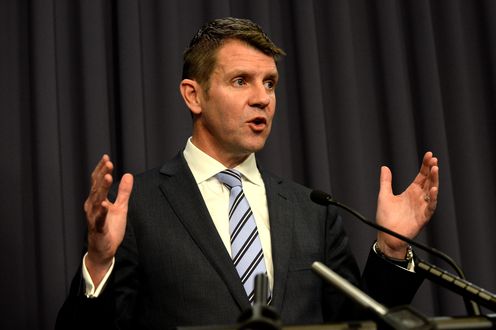
NSW Education Minister Rob Stokes has overseen the development of a PDHPE K-10 Syllabus that is almost completely silent on LGBTI issues.


If you have enjoyed reading this article, please consider subscribing to receive future posts, via the right-hand scroll bar on the desktop version of this blog or near the bottom of the page on mobile. You can also follow me on twitter @alawriedejesus


Footnotes:

[i] The term bisexual actually appears four times, with an additional appearance in the glossary in the definition of ‘same-sex attracted’, alongside ‘homosexual’ in its only appearance.

[ii] This interpretation – that teaching the examples which are included in the content is optional – is supported by page 24 of the consultation report, which states: ‘The content is presented to be inclusive and provide the flexibility for delivery based on the context and the ethos of schools. Schools will make decisions about the scope and range of examples to illustrate the diversity of groups in Australian society.’

[iii] There is a separate reference to ‘sexuality’ that is not optional on page 119 in the Life Skills section, for students with special needs, although it does not specifically refer to diversity of sexual orientations.

[iv] The definition of sex on page 135, described as ‘The biological characteristics that define humans as female or male. While these sets of biological characteristics are not mutually exclusive, as there are individuals who possess both, they tend to differentiate humans as males and females’, also does not ensure students learn about variations of sex characteristics.

[v] The definition of transgender or trans on page 137 states ‘A general term for a person whose gender is different to their sex at birth’.

[vi] As an aside, it must surely be difficult to teach students about homophobia and transphobia when the syllabus doesn’t require instruction about the terms lesbian, gay, bisexual, transgender and intersex in the first place.

[vii] At a minimum the Life Skills content for students with special needs makes teaching about sexually transmissible infections mandatory (on page 119: ‘recognise issues of safety in relation to sexual relationships, including contraception, sexually transmissible infections’).

[viii] In the glossary definition of sexually transmissible infections: ‘Any infection that can be passed from one person to another during sexual activity. Sexually transmissible infections include chlamydia, herpes, gonorrhea, syphilis, genital herpes, scabies, pubic lice, hepatitis and HIV.’

[ix] On page 27 of the 2003 PDHPE 7-10 Syllabus, here.

Submission to NSW Parliamentary Inquiry into Gay and Trans Hate Crimes

Update 31 August 2019:


In what was a big news week re LGBTI rights in Australia (see also the release of the Government’s draft Religious Discrimination Bill), the NSW Parliament also tabled the Berejiklian Government’s short response to the Parliamentary Inquiry into Gay and Trans Hate Crimes.


Well, a partial response anyway, with NSW Police responding to recommendation 3 only, with a one-page letter including this statement:

“While the Inquiry identified historically negative attitudes from Officers towards members of the LGBTIQ community, I am confident the views and attitudes of the NSW Police Force today towards this community are positive, respectful and professional.”


At this stage, the new Parliament (elected on 23 March 2019) hasn’t re-established the inquiry, which was the primary recommendation of the original inquiry (see below).


Update 4 March 2019:


The Committee handed down an interim report on Tuesday 26 February (just before the issuing of the writs for the 2019 State election). That report can be found here.


The primary recommendation (Recommendation 1) is:


That the NSW Legislative Council re-establish the inquiry into Gay and Transgender hate crimes between 1970 and 2010 in the 57th Parliament and the terms of reference for further inquiry and report be subject to a decision of the House.


This is important, both because the work of the inquiry could not possibly have been completed in the short time available, and also to ensure that evidence of anti-LGBT hate crimes from regional, rural and remote NSW is gathered.


The other encouraging recommendation (Recommendation 4) is:


That, should the inquiry be re-established consistent with Recommendation 1, the committee invite witnesses to address the issue of the appropriate mechanism for independent review of past gay and transgender hate crimes.


Therefore, while the Committee has not agreed to support a Royal Commission at this stage (which was the main recommendation in my personal submission, published below), it has left the door open to recommending a Royal Commission or some other form of independent judicial inquiry in the future.


Perhaps just as interesting are the recommendations that had been featured in the draft report, but were removed at the behest of Committee members (as detailed in the minutes of the Committee published in an appendix).


Thus (Christian fundamentalist) Labor MLC, Greg Donnelly, moved that the following recommendations be axed:


That the NSW Police Force, in meeting Recommendation 3, increase the time currently allocated to the training of new policy recruits in modules relating to lesbian, gay, bisexual, transgender, intersex and queer (LGBTIQ) people.


That the NSW Police Force implement a program of ongoing education modules relating to lesbian, gay, bisexual, transgender, intersex and queer (LGBTIQ) people for all officers and other employees.


That the NSW Police Force increase the number of specialist Lesbian, Gay, Bisexual, Transgender, Intersex and Queer (LGBTIQ) Liaison Officers, particularly in rural, regional and others areas that do not currently have access to such officers.


That the NSW Police Force implement a new service to enable lesbian, gay, bisexual, transgender, intersex and queer (LGBTIQ) people to more readily access the services and support of a specialist officer to make it easier to report crimes or seek the assistance of police.


Christian Democrat MLC, Fred Nile, also caused the following recommendation to be removed:


That the NSW Police Force change the name of the Gay and Lesbian Liaison Officer program to the Lesbian, Gay, Bisexual, Transgender, Intersex and Queer (LGBTIQ) Liaison Officer Program.


Meanwhile, National MLC Trevor Khan (who is usually an ally for the LGBTI community) moved that the following recommendations be axed:


That the NSW Attorney General issue a reference to the NSW Law Reform Commission to require that it undertake a comprehensive review of the law of homicide and homicide defences in New South Wales to ensure that recent legal reforms have effectively removed any potential for injustice to occur.


That the Judicial Commission of New South Wales review the content of jury directions to ensure that they adequately ensure the fair and equal treatment of lesbian, gay, bisexual, transgender, intersex and queer (LGBTIQ) people and acknowledge the historical legacy of the ‘gay panic defence’.


Thus, while the interim report itself is not bad – recommending further investigation by the next Parliament, and leaving the door open to a Royal Commission or other independent judicial inquiry – it could, and indeed should, have been a whole lot better.


Original submission:


NSW Legislative Council Standing Committee on Social Issues


Wednesday 7 November 2018


To whom it may concern


Submission re Inquiry into gay and transgender hate crimes between 1970 and 2010


Thank you for the opportunity to provide a submission to this important inquiry.


I do so as a long-term advocate for the rights of the lesbian, gay, bisexual, transgender and intersex (LGBTI) community, including for the past six years in New South Wales.


However, this timeframe means I did not live in NSW during the period 1970 to 2010. I consequently do not have a personal experience of anti-LGBTI hate crimes in this jurisdiction during that period.


Nevertheless, I acknowledge and endorse the work of others, both individuals and organisations, who have documented the appallingly high number of gay and trans hate crimes which occurred here over the course of the past four or five decades.


This obviously includes the work of ACON, whose excellent ‘In pursuit of truth and justice’ report is cited in the terms of reference to this inquiry, as well as that of journalist Rick Feneley, whose stories over recent years have finally started to give these crimes the attention, and scrutiny, they deserve.


And it includes the work of three former NSW Police employees or consultants – Steve Page, Sue Thompson and Duncan McNab – whose work has confirmed the failure by NSW Police to adequately investigate many of these same crimes.


This failure can be seen as one reason, perhaps even the primary reason, why, of the 88 homicide cases identified in In pursuit of truth and justice, approximately 30 remain unsolved today.


I therefore welcome the initiative of the Legislative Council in establishing this inquiry, to hear from people who have been affected by these hate crimes, either directly or who have valuable information about crimes committed against others.


Indeed, this fits with ACON’s recommendation 1.2:


ACON recommends the NSW Government, in partnership with community, undertake a process to comprehensively explore, understand and document the extent of historical violence experienced by the LGBTI community.


And also with recommendation 4.1:


ACON recommends an independent investigation into the actions of the various arms of the criminal justice system to fully understand the impediments to justice during this period in history, their relevance to current practices, and to identify opportunities to finalise unsolved cases.


However, I would argue that, while a positive start, a short parliamentary inquiry is unlikely to be sufficient in and of itself to comprehensively address these issues. I form this view on the basis of the following factors:


  • The sheer scale, and seriousness, of the subject matter involved, noting that we are discussing at least 88 homicides, with more that may yet be identified through this process,
  • Remembering that figure does not include the hundreds, perhaps thousands, of additional homophobic and transphobic hate crimes that occurred during this period, including serious and violent assaults, many of which have never been properly documented,
  • The role of NSW Police in failing to adequately investigate many of these crimes (both homicides and assaults), and
  • The allegations of complicity and/or even direct participation by NSW Police members in some of these horrific crimes.


Given all of the above, I believe that this subject matter should be investigated through a Royal Commission, which would have the appropriate powers, resources and timeframes to fully explore the gay and trans hate crimes which occurred in NSW over the past half-century.


Recommendation 1: That the Committee call on the NSW Government to establish a Royal Commission into the issue of gay and trans hate crimes in NSW since 1970.


In terms of the ‘gay panic’ or ‘homosexual advance defence’ and the role it ‘played in the culture of LGBTIQ hate crimes between 1970 and 2010’ and how it ‘impacted the delivery of justice and the treatment of gay men during LGBTIQ hate crime investigations and court proceedings’, I believe it did contribute both to helping to incite these crimes, and in undermining their proper investigation.


As I wrote to the Legislative Council Provocation Committee in 2012, calling for the abolition of the gay panic defence:


In my opinion, there is nothing so different, so special or so extraordinary, in the situation where the non-violent sexual advance is made by a man to another man, as to justify offering the offender in such cases any extra legal protection. In contemporary Australia, a man who receives an unwanted sexual advance should exercise the same level of self-control as we expect of any other person.


To have a separate legal standard apply to these cases is homophobic because it implies there is something so abhorrent about a non-violent sexual advance by a man to another man that a violent reaction is almost to be expected, and at least somewhat excused. This does not reflect the reality of contemporary Australia, where, with the exception of marriage, gay men enjoy the same rights as other men, and are accepted as equals by the majority of society.


Even if a small minority of people remain firmly intolerant of homosexuality, that does not mean there should be a ‘special’ law to reduce the culpability of such a person where they are confronted by an unwanted homosexual sexual advance. To retain such a provision is unjust and discriminatory, and is a mark against any legal system which aspires to fairness.


The above discussion outlines why the homosexual advance defence is wrong in principle. What should not be forgotten is that the homosexual advance defence is also wrong in practice, or in the outcomes which it generates. After all, the defence does not simply exist in the statute books, ignored and unused. Instead, it has been argued in a number of different criminal cases, sometimes successfully.


This means there are real offenders who are in prison (or who have already been released), who have had their conviction reduced from murder to manslaughter, and most likely their sentence reduced along with it, simply because they killed in response to a non-violent homosexual advance. The legal system has operated to reduce the liability of these offenders even when broader society does not accept that such a reduction is justified. As a result, these offenders have not been adequately punished, meaning that above all these victims have not received justice.


Similarly, the family members and friends of the victims killed in such circumstances have witnessed the trials of these offenders, expecting justice to be served, only to find that the killer is not considered a murderer under the law. Instead, these family members and friends find some level of blame is placed on the actions of the victim, that somehow by engaging in a non-violent sexual advance they have helped to cause and even partly deserved their own death.


The painful ‘lessons’ of the gay panic defence, which were learnt over many decades by the LGBTI community, included the following:


  • That the life of a gay man was valued at less than that of other victims,
  • That a non-violent sexual advance by a gay man to another man was abhorrent, and that a violent response to such an advance was at least partially justified, and
  • That the law enforcement and justice systems of NSW were not on our side.


These same lessons were learnt by the perpetrators of anti-gay and anti-trans hate crimes. They worked out that LGBTI people made for easy targets, both because we were unlikely to report crimes and, even if we did, that NSW Police were unlikely to do anything about it.


Based on the behaviour of some NSW Police officers, including reportedly in the 1989 assault of Alan Rosendale, as witnessed by Paul Simes (see Rick Feneley, ‘Erased from the records; Investigation into bashing of gay man by police in Surry Hills in 1989’, Sydney Morning Herald, 19 January 2015), it seems that they too believed the lives of gay men mattered less than others.


It is perhaps unsurprising that, when the law – via the homosexual advance defence – said gay men’s lives were less valuable than those of heterosexual people, some members of the law enforcement arm of government acted in the same way.


So, while the abolition of the gay panic defence by NSW Parliament in May 2014 was a major step forward for LGBTI rights in this state, we should not underestimate the damage it caused during its (too-many) years of operation.


Thank you in advance for taking this submission into consideration as part of this inquiry. If you would like to clarify any of the above, or for additional information, please do not hesitate to contact me at the details provided.


Sincerely

Alastair Lawrie


w1-truthandjustice

ACON’s excellent ‘In pursuit of Truth and Justice’ Report is available here.

Submission to NSW Parliamentary Inquiry into Youth Suicide

Update: 19 December 2018

The NSW Parliamentary Committee on Children and Young People handed down its report on Prevention of Youth Suicide on 25 October 2018.


On the positive side, it acknowledged that LGBTI young people are a vulnerable group requiring specific attention, with higher rates of mental health issues than their cisgender heterosexual counterparts.


This included Recommendation 13 , that: ‘The Committee recommends that the NSW Government support research into suicide prevention programs for LGBTI young people.”


However, it is disappointing that the Committee did not go beyond simply calling for more research in this area.


Despite quoting organisations like Twenty10 that the increased risks of suicide and self-harm are ‘directly related to experiences of stigma, prejudice, discrimination and abuse’, and despite the terms of reference requiring the Committee to specifically consider the approaches taken by primary and secondary schools, they made no recommendations about the inclusion of LGBTI students in schools.


They therefore ignored the fact that the NSW Government abolished an evidence-based anti-bullying program for LGBTI students (Safe Schools) in 2017, and that the new Personal Development, Health and Physical Education (PDHPE) curriculum excludes LGBTI students and content that is relevant to their needs (something I will write more about early in the new year).


The Committee wrote in their report that: “The prevalence of suicide and self-harm among LGBTI young people is concerning to the Committee.” Although apparently they were not concerned enough to recommend concrete steps to make all NSW schools accepting places for LGBTI students.


Original Post:

The NSW Parliamentary Committee on Children and Young People is currently holding an inquiry into the prevention of youth suicide. Full details can be found here. The following is my personal submission:


c/- childrenyoungpeople@parliament.nsw.gov.au

Sunday 27 August 2017


Dear Committee


Submission to Inquiry into Youth Suicide in NSW


Thank you for the opportunity to provide a submission to this important inquiry.


In this submission, I will be focusing on items (g) and (h) from the inquiry’s terms of reference: ‘Approaches taken by primary and secondary schools’ and ‘Any other related matters’ respectively.


Specifically, I will be discussing these terms of reference and how they relate to one of the groups that is disproportionately affected by mental health issues, depression and suicide: young lesbian, gay, bisexual, transgender and intersex people.


The National LGBTI Health Alliance confirms that LGBTI people, and especially young LGBTI people, are at much higher risk of suicide than non-LGBTI people. From the Alliance’s July 2016 ‘Snapshot of Mental Health and Suicide Prevention Statistics for LGBTI People’:


“Compared to the general population, LGBTI people are more likely to attempt suicide in their lifetime, specifically:


  • LGBTI young people aged 16 to 27 are five times more likely
  • Transgender people aged 18 and over are nearly eleven times more likely
  • People with an intersex variation aged 16 and over are nearly six times more likely
  • LGBT young people who experience abuse and harassment are even more likely to attempt suicide.


Statistics for LGBTI Population:


  • 16% of LGBTI young people aged 16 to 27 reported that they had attempted suicide
  • 35% of Transgender people aged 18 and over have attempted suicide in their lifetime
  • 19% of people with an Intersex variation aged 16 and over had attempted suicide on the basis of issues related [to] their Intersex status
  • 8% of Same-Gender Attracted and Gender Diverse young people aged between 14 and 21 years had attempted suicide, 18% had experienced verbal abuse, and 37% of those who experienced physical abuse.


Statistics for General Population:


  • 2% of people (4.4% females; 2.1% males) aged 16 and over have attempted suicide in their lifetime; 0.4% of general population (0.5% females; 0.3% males) in the last 12 months
  • 1% of people (1.7% females; 0.5% males) aged 16 to 24 have attempted suicide in the past 12 months.”


These statistics are obviously incredibly alarming, and reveal the scale of the challenge of mental health issues experienced by LGBTI people, and especially young LGBTI people.


What should not be forgotten is that there is nothing inherently ‘wrong’ with LGBTI people, and LGBTI young people – their disproportionate rates of suicide are in response to external factors, including a lack of acceptance (or feared lack of acceptance) from parents, other family members and friends, as well as society-wide homophobia, biphobia, transphobia and intersexphobia.


Another contributing factor to high rates of LGBTI youth suicide – and perhaps most relevantly to this inquiry – is the school environment. While some schools are welcoming to all young people, including those of diverse sexual orientations, gender identities and sex characteristics, other schools are far less welcoming – and some are even outright hostile.


For the purposes of this submission, I would nominate two key factors that help determine whether a school is welcoming of LGBTI young people:


  • Whether it has an explicit program addressing anti-LGBTI bullying (such as Safe Schools), and
  • Whether it has an inclusive curriculum for LGBTI students, with content that is relevant to their needs.


The importance of these two factors is confirmed by the 2010 Writing Themselves In 3 Report (by La Trobe University), which found that:


  • “61% of young people reported verbal abuse because of homophobia.
  • 18% of young people reported physical abuse because of homophobia.
  • School was the most likely place of abuse – 80% of those who were abused” (p39).


This last statistic is perhaps the most disturbing. Instead of being a place of learning, for far too many LGBTI young people, school is a place of intimidation, intolerance, and fear.


Although even more worrying is the fact that the proportion of students nominating school as a site of abuse increased from 1998 to 2004, and then again from 2004 to 2010 (p45) – rather than being more welcoming today, the schoolyard and the classroom is becoming more abusive.


Similarly, the Writing Themselves In 3 Report demonstrated that, in far too many schools, LGBTI students are not being included in the curriculum, both generally and specifically in relation to Health & Physical Education (including sex education).


From page 79: “10% of young people reported that their school did not provide any form of Sexuality Education at all.”


Even where some sexuality education was provided, it was primarily targeted at cisgender and heterosexual students. While almost 60% of students reported that the school provided information about heterosexual relationships, less than 20% received education about gay or lesbian relationships (p81).


And, while approximately 70% reported education about safe heterosexual sex, less than a quarter were instructed about safe gay sex and less than 20% about safe lesbian sex (p82).


Finally, roughly 1 in 10 reported learning that ‘homophobia is wrong’ as part of their sexuality education (p83), meaning that almost 90% of students were not receiving this important message.


Unfortunately, on both of these issues (anti-bullying programs, and an inclusive curriculum) NSW is clearly failing in its obligations to LGBTI young people.


First, in terms of Safe Schools, it was incredibly disappointing that the NSW Government abandoned this vital LGBTI anti-bullying program in April 2017.


Yes, there were some significant problems with this program – although not the ones that religious fundamentalists lied about in their dishonest campaign to undermine and destroy it.


Chief among the actual shortcomings of Safe Schools was the fact that it was an entirely optional program, meaning only a small proportion of schools had even begun to implement it by the time it was axed. Further, the schools that chose to implement it were likely the same schools that were already LGBTI-inclusive, while those that were less inclusive were far less likely to adopt the program.


Instead of abolishing Safe Schools, the NSW Government should have been working to ensure that it was rolled-out more widely, and ultimately to reach every school in the state (following the lead of Victoria) – because LGBTI students and young people exist in every school in the state.


Perhaps even worse than axing this program is the fact it has been replaced with a ‘general’ anti-bullying program and one that, based on media reports, does not include appropriate materials and resources to address the specific needs of LGBTI students and young people.


As reported in the Star Observer (Experts Slam NSW Anti-Bullying Resource as ‘Missed Opportunity for LGBTI Youth’, 21 July 2017:


“Leading health organisation ACON has expressed concern over the lack of LGBTI-specific tools and information in the new [anti-bullying] resource, despite liaising with the government in the months leading up to its launch.


Chief Executive of ACON Nicolas Parkhill said the new resource failed to meaningfully address the bullying, abuse, and discrimination faced by young LGBTI people.


“Bullying is an acute problem for young LGBTI people and this resources does not respond to their unique needs,” he said.


“Of concern is the absence of tools and resources that specifically address LGBTI bullying in schools – especially when we know it affects a significant proportion of young people.


“The government’s own report released earlier this month stated that 16.8 per cent of secondary school students in Australia are attracted to people of the same sex. That’s one in six students…


“We believe this resource falls short in responding to LGBTI bullying and there needs to be more emphasis placed on the needs of young LGBTI people.”


Based on this critique, it appears that the NSW Government has axed a program that was specifically designed to address anti-LGBTI bullying – which, as we saw earlier, is a contributing factor to LGBTI youth suicide – and replaced it with a ‘generalist’ anti-bullying program that does little to reduce this behaviour.


That is clearly not good enough.


Recommendation 1: The NSW Government should roll-out the Safe Schools program, or a similar program that specifically and explicitly deals with anti-LGBTI bullying, in every school across the state.


The Personal Development, Health and Physical Education (PDHPE) Syllabus is also not good enough in terms of how it includes – or, in many cases, excludes – LGBTI students and information that is relevant to their needs.


Earlier this year, the NSW Education Standards Authority (NESA) released a new draft PDHPE K-10 Syllabus for public consultation. Unfortunately, it fell far short of what is necessary to educate LGBTI students across the state, or to contribute to a reduction in youth suicide among this group.


As I outlined in my submission to NESA about the draft Syllabus (see Every Student. Every School. Submission on Draft NSW Personal Development, Health and Physical Education (PDHPE) Syllabus K-10), its problems include that:


  • It does not define the terms lesbian, gay, bisexual, transgender or intersex
  • It does not guarantee that all students in all schools will learn about these sexual orientations, gender identities or sex characteristics
  • It does not include sufficient LGBTI anti-bullying content, and
  • It does not offer appropriate, or adequate, sexual health education for students who are not cisgender and heterosexual, including a lack of information about sexually transmissible infections and diverse sexual practices.


If the PDHPE K-10 Syllabus is implemented without significant and substantive changes to the draft that was released, another generation of LGBTI young people will grow up without being told in the classroom that who they are is okay, and without learning vital information on how to keep themselves safe.


That would represent a failure of the NSW Government to exercise the duty of care that it owes to all students across the state.


Recommendation 2: The NSW Government should ensure that the PDHPE K-10 Syllabus is inclusive of LGBTI students, and provides content that is relevant to their needs, including comprehensive sexual health education.


The previous two issues – anti-bullying programs, and an inclusive curriculum – relate to term of reference (g) (Approaches taken by primary and secondary schools).


However, there is one final, non-school related matter that I would like to raise in this submission (under term of reference (h) – ‘Any other related matters’).


That is the issue of ‘ex-gay therapy’ or ‘gay conversion therapy’. As the name suggests, this practice aims to convince LGBT people that who they are is wrong, and that they should try to stop being who they are and instead attempt to be cisgender and heterosexual.


Let us be clear – ‘ex-gay therapy’ or ‘gay conversion therapy’ is not therapy, and does not offer anything ‘therapeutic’ to the people who are subjected to it. It is not counselling, nor does it have any basis in medical or scientific fact.


It is fundamentally harmful, and preys upon vulnerable people, exploiting their fears, their isolation and their insecurities. It leaves the vast majority of people feeling far worse, and can cause, or exacerbate, depression and other mental health issues, including leading to suicide.


Ex-gay therapy is psychological abuse, and the people who continue to ‘offer’ this practice are psychological abusers.


The NSW Government should outlaw this practice both because it is wrong, and because it is inherently harmful. This should be implemented by a criminal penalty for anyone conducting ex-gay therapy, with a separate penalty for advertising such services.


The imposition of ex-gay therapy on young LGBT people is particularly heinous, given they are especially vulnerable. Therefore, the fact that a person being subjected to ex-gay therapy is under 18 should be an aggravating factor for these criminal offences, attracting an increased penalty.


The prohibition of ex-gay therapy, and the protection of vulnerable LGBT people – and especially young LGBT people – from this practice is urgently required to help remove another cause of mental health issues, including possible suicide, of LGBTI youth in NSW.


Recommendation 3: The NSW Government should ban the practice of ‘ex-gay therapy’ or ‘gay conversion therapy’, making both conducting this practice, and advertising it, criminal offences. Offering these services to LGBT people under the age of 18 should be considered aggravating factors, attracting increased penalties.


Thank you for taking this submission into consideration. Please do not hesitate to contact me at the details provided should you require additional information, or to clarify any of the above.


Sincerely

Alastair Lawrie


There's no place for discrimination in the classroom-7

NSW schools have an important role to play in preventing LGBTI youth suicide – one that they are currently failing to fulfil.

Every Student. Every School. Submission on Draft NSW Personal Development, Health and Physical Education (PDHPE) K-10 Syllabus

There's no place for discrimination in the classroom-6

The NSW Education Standards Authority is currently undertaking public consultations about its draft Personal Development, Health and Physical Education (PDHPE) K-10 Syllabus.

Unfortunately, as you will see below in my submission, the Syllabus as drafted does not include LGBTI students, or content that is relevant to their needs.

Written submissions are due by Friday 5 May 2017. To find out more about the consultation process, and how you can write your own submission to support an inclusive PDHPE Syllabus, go here.

**********

Dominique Sidaros

Senior Curriculum Officer, PDHPE

NSW Education Standards Authority

GPO Box 5300

Sydney NSW 2001

dominique.sidaros@nesa.nsw.edu.au


Wednesday 3 May 2017


Dear Ms Sidaros


Submission on Draft NSW PDHPE K-10 Syllabus


Thank you for the opportunity to provide a submission about the draft NSW Personal Development, Health and Physical Education (PDHPE) K-10 Syllabus.


This is a personal submission, reflecting my interest in this issue as an advocate for the lesbian, gay, bisexual, transgender and intersex (LGBTI) community, and builds on my previous submissions to the Australian Curriculum, Assessment and Reporting Authority (ACARA) regarding its development of the national Health & Physical Education (HPE) curriculum.


This submission is guided by one principle above all else:


Any student, in any school, could be lesbian, gay, bisexual, transgender or intersex (LGBTI). Therefore, the Government has a responsibility to ensure that every student, in every school, is taught a Personal Development, Health and Physical Education (PDHPE) Syllabus that is inclusive of LGBTI students, and features content that is relevant to their needs.


This principle applies irrespective of the type of school involved, whether that is government, religious or otherwise independent. Importantly, the best interests of these LGBTI young people also take precedence over the views of other groups, including parents, parliamentarians, religious groups or the media.


Unfortunately, the NSW PDHPE K-10 Syllabus as drafted manifestly does not meet the needs of LGBTI students. It is not inclusive of students of diverse sexual orientations and/or gender identities, does not promote the acceptance of all students no matter who they are, and fails to provide adequate sexual health education for students who are not cisgender and/or heterosexual.


Disappointingly, some of the few occasions where the draft PDHPE Syllabus does attempt to include relevant content have been made optional (because it follows the words ‘for example’ or ‘eg’), with individual schools and teachers free to teach, or not teach, this content, depending on their own view and not the best interests of the students.


In this submission I will make a number of recommendations to improve the PDHPE K-10 Syllabus by making it explicitly inclusive of LGBTI students, and ensuring that they receive information that is relevant to their needs. These recommendations will be organised around the following five main areas:


  • Terminology
  • Inclusive Information
  • Acceptance & Anti-Bullying
  • Sexual Health Education
  • Life Skills


**********


Terminology


The problems with the draft PDHPE K-10 begin with the terminology that is used, and not used, throughout the document, and particularly in the Glossary on pages 132 to 139.


For example, the document includes the words lesbian, gay, bisexual, transgender, intersex and queer exactly once each – all in the same dot point on page 97, in Stage 5:


“analyse how societal norms, stereotypes and expectations influence the way young people think, behave and act in relation to their own and others’ health, safety and wellbeing eg Lesbian, Gay, Bisexual, Transgender, Intersex and Queer (LGBTIQ) health, people from culturally and linguistically diverse (CALD) backgrounds.”


That’s it. These terms are not used at any other point in the Syllabus, nor are they defined in the Glossary. Worse, because the words above immediately follow the use of ‘eg’, whether LGBTIQ health is mentioned in even this cursory way is entirely dependent on the views of the teacher and/or school involved.


As a result, the PDHPE Syllabus as drafted could mean many, if not the majority of, NSW students complete Year 10 having never heard the words lesbian, gay, bisexual, transgender or intersex used in this Syllabus, let alone having them appropriately explained. This omission is negligent, and will be detrimental to the health of future generations of young people.


Recommendation 1: The Glossary must include definitions of lesbian, gay, bisexual, transgender and intersex.


The almost complete absence of the words lesbian, gay, bisexual, transgender and intersex from the Syllabus is compounded by the, in most cases, exclusionary definitions provided for the terms that are included in the Glossary.


This includes the definition of ‘sexuality’ on page 138:


“A central aspect of being human throughout life. It is influenced by an interaction of biological, psychological, social, economic, political, cultural, ethical, legal, historical, religious and spiritual factors. It is experienced and expressed in thoughts, feelings, desires, beliefs, attitudes, values, behaviours, practices, roles and relationships.”


In some respects, this is an incredibly ‘inclusive’ definition, acknowledging the wide range of factors that can contribute to an individual’s ‘sexuality’. On the other hand, it is so vague that it doesn’t actually include differences in sexual orientation, from heterosexual (which is not included in the Syllabus either) to bisexual and homosexual or same-sex attracted.


To remedy this, an additional definition should be added for ‘sexual orientation’, one that explicitly includes the words heterosexual, lesbian, gay and bisexual (and, for the latter three, is linked to the newly-added definitions of these terms).


Recommendation 2: The Glossary should include a definition of ‘sexual orientation’, with links to the terms lesbian, gay and bisexual.


In contrast to the omission of sexual orientation, the Glossary does actually include a definition for the term ‘gender identity’ on page 135:


“Refers to a person’s sense of being masculine or feminine, both or neither, and how they identify. Gender identity does not necessarily relate to the sex assigned at birth.”


There are some positive elements of this definition, including recognition that gender identity can differ from the sex assigned at birth. However, it could also benefit from including additional detail, such as making explicit reference to ‘non-binary’ gender identities (beyond the acknowledgement of “both or neither” in the current definition) although this should be done in close consultation with trans groups.


Recommendation 3: The Glossary definition of ‘gender identity’ should be expanded, including use of the term ‘non-binary’ and linking to the term transgender. These changes should be made in consultation with trans groups.


The final term in the Glossary that requires updating is ‘diversity’ on page 133:


“Differences that exist within a group including age, sex, gender, gender expression, sexuality, ethnicity, ability, body shape and composition, culture, religion, learning styles, socioeconomic background, values and experience. Appreciating, understanding and respecting diversity impacts on an individual’s sense of self and their relations to others. Diversity can be acknowledged through shared activities that may involve building knowledge and awareness.”


It should be noted that this is the only time in the entire document that the phrase ‘gender expression’ is used – and it is not defined, meaning it does not automatically include transgender students. Similarly, the use of the word ‘sexuality’ here is based on the existing definition that, as we have seen above, does not actually include lesbian, gay or bisexual students. Finally, the exclusion of the word intersex – and the failure to define ‘sex’, here or elsewhere – means students with intersex variations are not necessarily included either.


In short, the current definition of ‘diversity’ in the Glossary appears to be ironic, given it does not include students who are lesbian, gay, bisexual, transgender or intersex.


Recommendation 4: The Glossary definition of diversity should be amended to include references to differences in sexual orientation, gender identity and intersex variations.


**********


Inclusive Information


The adoption of the above recommendations would be an important first step towards an inclusive PDHPE K-10 Syllabus. However, they will not have a significant impact unless the content of the Syllabus itself, and specifically the material that must be taught in its respective Stages, is also updated.


This means ensuring that the following concepts are introduced, and explained, at appropriate points in the Syllabus:


  1. Sexual orientation


The concept of sexual orientation, including differences in sexual orientation and the existence of lesbian, gay and bisexual people, should be introduced by stage 3 of the Syllabus (at the latest). Equally importantly, it must not be ‘optional’ to teach the fact that people can be any of heterosexual, lesbian, gay or bisexual, and that each sexual orientation should be accepted.


On a practical level, there are several places in the draft Syllabus where this could be achieved, including:


  • In Stage 3, on page 66, where it says “examine how identities and behaviours are influenced by people, places and the media, for example: – distinguish different types of relationships and their diversity”, the ‘for example’ should be removed. The words ‘including relationships between people of different sexes, and of the same sex’ should be added after ‘their diversity’.
  • In Stage 3, also on page 66, where it says “investigate resources and strategies to manage change and transition, for example: – understand that individuals experience change associated with puberty at different times, intensity and with different responses eg menstruation, body change emotional change, sexuality”, both the ‘for example’ and ‘eg’ should be removed. The term ‘sexual orientation’ should also be added after sexuality (acknowledging the different between these two concepts, as described above).
  • In Stage 4, on page 78, after it says “investigate the impact of transition and change on identities: – examine the impact of physical, social and emotional change during adolescence on gender, cultural and sexual identity” add a new point ‘- examine and discuss different sexual orientations, including heterosexual, lesbian, gay and bisexual’.
  • In Stage 4, also on page 78, the point “describe how rights and responsibilities contribute to respectful relationships: – recognise types and variety of relationships” should be amended along similar lines to the first dot point above in relation to Stage 3, page 66.
  • In Stage 4, on page 85, where it says “plan and use health practices, behaviours and resources to enhance the health, safety, wellbeing and physical activity participation of their communities: – design and implement health promotion activities targeting preventive health practices relevant to young people and those with diverse backgrounds or circumstances eg diversity of culture, gender or sexuality”, the word ‘eg’ should be removed, and the term ‘sexual orientation’ should replace ‘sexuality’.
  • In Stage 5, on page 92, where it says “evaluate factors that impact on the identities of individuals and groups including Aboriginal and Torres Strait Islander Peoples: – examine how diversity and gender are represented in the media and communities, and investigate the influence these representations have on identities” the term ‘sexual orientation’ should be added after gender (to read ‘diversity, gender and sexual orientation’).


  1. Gender identity


The concept of gender identity should be introduced earlier than sexual orientation, especially given the recent (welcome) increase in children expressing their own gender identities, rather than identities that are expected of, or even imposed on, them. Ideally, this information would be featured from Stage 1 onwards, and acknowledge the diversity of gender identities that exist.


The concept of gender identity could also be added, or expanded upon, at several other points in the Syllabus, including:


  • In Stage 2, on page 55, where it says “explore strategies to manage physical, social and emotional change, for example: – discuss physical, social and emotional changes that happen as people get older and how this can impact on how they think and feel about themselves and different situations eg friendships, gender identity, appearance, interests” both ‘for example’ and ‘eg’ should be deleted, so that it is mandatory for all students to learn about gender identity at this point.
  • In Stage 4, on page 85 where it says “plan and use health practices, behaviours and resources to enhance the health, safety, wellbeing and physical activity participation of their communities: – design and implement health promotion activities targeting preventive health practices relevant to young people and those with diverse backgrounds or circumstances eg diversity of culture, gender or sexuality”, in addition to the changes proposed earlier re sexual orientation, the term ‘gender identity’ should be added after ‘gender’.
  • In Stage 5, on page 92, where it says “evaluate factors that impact on the identities of individuals and groups including Aboriginal and Torres Strait Islander Peoples: – examine how diversity and gender are represented in the media and communities, and investigate the influence these representations have on identities”, the term ‘gender identity’ should also be added (so that it reads ‘diversity, gender, gender identity and sexual orientation’).


  1. Intersex


As with gender identity, the concept of intersex – and the existence of people with intersex variations – should be introduced earlier than sexual orientation. Again, this should ideally be introduced in Stage 1, to allow students to grow up knowing that there aren’t just exclusively ‘male’ and ‘female’ bodies.


This recognition of bodily diversity should also be incorporated into the Syllabus in Early Stage 1 on page 35, and Stage 1 on page 45, where it includes references to learning about ‘male and female anatomy’. The discussion of intersex should then be incorporated at similar points to sexual orientation and gender identity throughout the remaining stages of the Syllabus.


Doing so would also help to meet one of the goals of the recent Darlington Statement of intersex organisations:


“54. We call for the inclusion of accurate and affirmative material on bodily diversity, including intersex variations, in school curricula, including in health and sex education.”[i]


  1. Rainbow families


The existence of a diversity of families, including children who grow up with same-sex parents, should also be included in the Syllabus. There are already multiple points in the Syllabus where this could be easily added, such as:


  • In Stage 1, on page 45, after “describe ways to develop respectful relationships and include others to make them feel they belong, for example: – explore kinship as an important part of Aboriginal and Torres Strait Islander cultures”, the ‘for example’ should be removed and a new point added “- explore the diversity of family types, including families with mixed-sex parents and families with same-sex parents.”
  • In Stage 2, on pages 54-55, where it says “explore how success, challenge and overcoming adversity strengthens identity, for example: – explore contextual factors that influence the development of personal identity eg family, parents/carers…” both the ‘for example’ and ‘eg’ should be removed, and the term ‘rainbow families’ should be added (so that it reads ‘family including rainbow families[ii]’).
  • In Stage 3, on page 66, where it says “examine how identities and behaviours are influenced by people, places and the media, for example: – distinguish different types of relationships and their diversity” this could also include a reference to diversity in family relationships, including mixed-sex and same-sex parents.


Finally, as noted earlier there is already one place where the words lesbian, gay, bisexual, transgender and intersex already appear in the curriculum – in Stage 5, on page 97. This point should also be made mandatory rather than optional, by removing the ‘eg’ (so that it reads “analyse how societal norms, stereotypes and expectations influence the way young people think, behave and act in relation to their own and others’ health, safety and wellbeing, including lesbian, gay, bisexual, transgender, intersex and queer (LGBTIQ) health, people from culturally and linguistically diverse backgrounds (CALD)”.


Recommendation 5: The content for the Stages of the Syllabus should be amended to ensure all students learn about sexual orientation, gender identity, intersex and rainbow families.


**********


Acceptance & Anti-Bullying


One of the welcome features of the draft PDHPE K-10 Syllabus is the significant focus on combating bullying, and on promoting what is described as ‘upstander behaviour’.


This includes introducing content around confronting discrimination from Stage 2 onwards – see page 55 (“predict and reflect on how other students might feel in a range of challenging situations and discuss what they can do to support them eg confronting discrimination) and twice on page 57 (“recognise types of abuse and bullying behaviours and identify safe and supportive upstander behaviour” and “share ideas, feelings and opinions about the influence of peers and significant others in relation to bullying, discrimination, eating habits and nutrition, drug use, online safety and physical activity levels”).


However, I believe there is a need to ensure this anti-bullying content explicitly addresses anti-LGBTI bullying, given both its widespread prevalence and devastating impact on thousands of LGBTI young people. There are multiple opportunities to make these changes:


  • In Stage 3, on pages 69-70, where it says “plan and practise assertive responses, behaviours and actions that protect and promote health, safety and wellbeing, for example: – practise safe and supportive upstander behaviour and discuss how they can prevent and/or stop bullying and other forms of discrimination and harassment” the ‘for example’ should be removed, and the words ‘including racism, sexism, homophobia, biphobia, transphobia and intersexphobia’ should be added after ‘harassment’.
  • Also in Stage 3, on page 70, where it says “recommend appropriate alternatives and take action to improve health, safety, wellbeing or physical activity issues within the school or wider community, for example: – explore initiatives that challenge stereotypes to support the diversity of individuals and communities eg racism, gender stereotypes, discrimination [and] – model behaviour that reflects sensitivity to the needs, rights and feelings of others and explore ways to create safe and inclusive schools for minority groups eg challenge discrimination, peer support” the ‘for example’ and two instances of ‘eg’ should be removed to ensure this content is mandatory. Further, either ‘anti-LGBTI prejudice’ or ‘homophobia, biphobia, transphobia and intersexphobia’ should be added to ‘racism, gender stereotypes, discrimination’.
  • In Stage 4, on pages 79-80, where it says “discuss the impact of power in relationships and identify and develop skills to challenge the abuse of power: – discuss the influence of family, media and peer attitudes to power and explore how these may lead to an abuse of power in relationships eg bullying, homophobia, intolerance, family and domestic violence [and] – recognise forms of bullying, harassment, abuse, discrimination and violence and how they impact health and wellbeing”. It should be noted that this is the only time ‘homophobia’ is mentioned in the entire document and, unfortunately, it is after an ‘eg’, meaning it is entirely optional for teachers and schools to teach. The ‘eg’ should be deleted, and either ‘homophobia, biphobia, transphobia and intersexphobia’ or ‘anti-LGBTI prejudice’ should be added.
  • In Stage 4, on page 83, where it says “investigate the benefits to individuals and communities of valuing diversity and promoting inclusivity: – explore their own and others’ values and beliefs towards issues of racism, discrimination, sexuality and investigate the impact of contextual factors on young people, particularly those from diverse backgrounds, including Aboriginal and/or Torres Strait Islander Peoples [and] – describe how pro-social behaviour, respecting diversity, challenging racism and discrimination are inclusive ways of supporting and enhancing individual; and community health and wellbeing”. Based on the existing definitions of ‘sexuality’ and ‘diversity’ in the Glossary, these points currently do not include promoting LGBTI inclusivity. Even if those definitions are updated in line with the above recommendations, these points should still be made more explicit, with the first amended to read ‘racism, sexism, anti-LGBTI discrimination’ and the second to read ‘challenging racism, sexism, anti-LGBTI prejudice and discrimination’.
  • In Stage 4, also on page 83, where it says “plan and implement inclusive strategies to promote health and wellbeing and to connect with their communities: – describe the skills, strengths and strategies required to contribute to inclusive communities and implement strategies to challenge racist and prejudicial views of diversity within the community”, it should be amended to read ‘challenge, racist, sexist, anti-LGBTI and prejudicial views’.
  • In Stage 5, on page 93, where it says “investigate how the balance of power influences the nature of relationships and propose actions to build and maintain relationships that are respectful: – discuss discrimination as an abuse of power and evaluate legislation, policies and practices that address discrimination eg past policies affecting Aboriginal Peoples such as segregation and Aboriginal Self Determination” the words ‘, or the Sex Discrimination Act’ could be added.


Recommendation 6: The content for the Stages of the Syllabus should explicitly include discussion of anti-LGBTI bullying and discrimination and how to address it, beyond the single – optional – reference to homophobia that currently exists.


**********


Sexual Health Education


Another positive feature of the draft PDHPE K-10 Syllabus is the inclusive definition of ‘sexual health’ in the Glossary:


“A state of physical, mental and social wellbeing in relation to sexuality. It requires a positive and respectful approach to sexuality and sexual relationships, as well as a possibility of having pleasurable and safe sexual experiences, free of coercion, discrimination and violence.”


The explicit acknowledgement of ‘pleasurable and safe sexual experiences’, and the need for sexual experiences to be ‘free of coercion’, is particularly welcome.


However, adopting an inclusive definition doesn’t mean much when the only time the phrase sexual health actually appears in the Syllabus prior to Stage 5 (which would generally be students in Years 9 and 10), is one brief reference in Stage 4 (covering students in Years 7 and 8), on page 84:


“explore the relationship between various health, safety and physical activity issues affecting young people and assess the impact it has on the health, safety and wellbeing of the community:

  • examine the impact that body image and personal identity have on young people’s mental health, drug use, sexual health and participation in physical activity.”


This isn’t explicitly about teaching the fundamentals of sexual health, merely its connection to, and interrelationship with, ‘body image and personal identity’ (which, while important, is not sufficient in and of itself).


Similarly, there is only one reference in the general curriculum to ‘sexually transmissible infections’, also in Stage 4, on page 85:


“plan and use health practices, behaviours and resources to enhance the health, safety, wellbeing and physical activity participation of their communities:

  • identify and apply preventive health practices and behaviours that assist in protection against disease eg blood borne viruses, sexually transmissible infections”.


Note that the reference to BBVs and STIs here also follows an ‘eg’, meaning that the decision whether to teach students about STIs (such as HIV) is discretionary. That is simply not good enough in 2017 – all students should receive information about STIs to empower them to control their own health.


Recommendation 7: Stage 4 of the Syllabus should include comprehensive education about sexual health, including mandatory information about sexually transmissible infections.


There is more information around sexual health in Stage 5 of the draft Syllabus, although even it is problematic. On page 95, it states:


“evaluate strategies and actions that aim to enhance health, safety, wellbeing and physical activity levels and plan to promote these in the school and community:

  • explore methods of contraception and evaluate the extent to which safe sexual health practices allow them to take responsibility for managing their own sexual health”


Given ‘contraception’ is generally understood to mean prevention of pregnancy, this content is therefore skewed towards vagina-penis sexual intercourse. To address the fact there are a range of other sexual practices (not just for LGBTI students, but also for cisgender heterosexual students too), this point should be amended to explicitly discuss sexual health and STI-prevention with respect to a range of practices. To not do so means denying the stated aim for all students “to take responsibility for managing their own sexual health.”


Recommendation 8: The Syllabus should move beyond discussion of ‘methods of contraception’ to discuss sexual health education around a range of different practices so that all students can ‘take responsibility for managing their own sexual health’.


**********


Life Skills


The students who are enrolled in the Years 7-10 Life Skills version of the PDHPE Syllabus can (obviously) also be lesbian, gay, bisexual, transgender or intersex, and therefore also have the right for LGBTI content to be included throughout.


There are a variety of points at which the draft Life Skills content should be amended to achieve this important goal, including:


  • On page 113, where it says “What personal characteristics make us unique? Students recognise personal characteristics that are the same and/or different as others, for example: – gender [and] – diversity” the terms ‘gender identity’, ‘intersex’ and ‘sexual orientation’ should also be added.
  • Also on page 113, where it says “What changes do adolescents go through? Recognise visible features that undergo change during adolescence, for example: – female and male body changes” it should acknowledge the existence of intersex bodies.
  • On page 114, where it says “recognise changes in relationships that occur in adolescence, for example: – social and emotional relationships with other genders” it should be reworded to say “social and emotional relationships with people of the same or different genders”.
  • Also on page 114, where it says “understand that physical changes are a normal part of adolescence, for example: – identify the stages of the reproductive process, eg menstrual cycle, sperm production, conception, pregnancy, childbirth” it should also include discussion of sexual health, and sexual practices, that are not ‘reproductive’ in nature.
  • On page 115, where it says “recognise factors that impact negatively on relationships, for example: – bullying, coercion, harassment, violence, threats, bribes [and] –sexism [and] –racism” it should also include either ‘anti-LGBTI prejudice’ or ‘homophobia, biphobia, transphobia and intersexphobia’.
  • Finally, on page 122, where it says “identify matters associated with sexuality, for example: privacy and ethical behaviour – responsibilities associated with sexual activity for themselves and others – safe sex – contraception – fertility and pregnancy – sexually transmitted infections – sexual behaviours and expectations – appropriate sources for advice on and assistance – potential outcomes of sexual activity” once again it should explicitly include discussion of sexual health, and sexual practices, that are not ‘reproductive’ in nature.


Recommendation 9: The Years 7-10 Life Skills Syllabus should be amended to explicitly include LGBTI students and content that is relevant to their needs.


**********


Thank you for taking this submission into consideration as the NSW Education Standards Authority finalises the PDHPE K-10 Syllabus. Please do not hesitate to contact me at the details below should you wish to clarify any of the information provided, or to seek additional information.


Sincerely

Alastair Lawrie


**********


Update 25 January 2019:

The final NSW PDHPE K-10 Syllabus was released in April 2018, and is being progressively rolled out from the start of the 2019 school year. Unfortunately, as this post – Invisibility in the Curriculum – makes clear, despite some minor improvements, the syllabus continues to ignore LGBTI students and content that is relevant to their needs, including sexual health education. This situation is a scandal, but one that seems to be largely ignored.


Footnotes:

[i] For more on the Darlington Statement, see the OII Australia website: https://oii.org.au/darlington-statement/

[ii] If the term ‘rainbow families’ is used at this point, it should also be defined in the Glossary.

An LGBTI Agenda for NSW

Today marks exactly two years until the next NSW State election (scheduled for Saturday 23 March, 2019).


Despite the fact we are half-way through it, there has been a distinct lack of progress on policy and law reform issues that affect NSW’s lesbian, gay, bisexual, transgender and intersex (LGBTI) communities during the current term of Parliament.


This is in marked contrast to the previous term – which saw the abolition of the homosexual advance defence (or ‘gay panic’ defence), as well as the establishment of a framework to expunge historical convictions for gay sex offences.


The parliamentary term before that was even more productive, with a suite of measures for rainbow families (including the recognition of lesbian co-parents, equal access to assisted reproductive technology and altruistic surrogacy, and the introduction of same-sex adoption) as well as the establishment of the registered relationships scheme.


With a (relatively) new Premier in Gladys Berejiklian, now is the time for the Liberal-National Government specifically, and the NSW Parliament generally, to take action to remedy their disappointing recent lack of activity.


Here are 12 issues, in no particular order, which I believe need to be addressed as a matter of priority – and if Premier Berejiklian won’t fix them in the next 24 months, then they must be on the agenda of whoever forms government in March 2019.


**********


The first four issues relate to the state’s fundamentally broken anti-discrimination laws, with the Anti-Discrimination Act 1977 now one of, if not, the worst LGBTI anti-discrimination regime in the country[i].


  1. Include bisexual people in anti-discrimination laws


NSW was actually the first jurisdiction in Australia to introduce anti-discrimination protections on the basis of homosexuality, in 1982.


However, 35 years later and these laws still do not cover bisexuality – meaning bisexual people do not have legal protection against discrimination under state law (although, since 2013, they have enjoyed some protections under the Commonwealth Sex Discrimination Act 1984).


NSW is the only state or territory where bisexuality is excluded. This is a gross omission, and one that the NSW Parliament must rectify urgently.


  1. Include intersex people in anti-discrimination laws


The historic 2013 reforms to the Commonwealth Sex Discrimination Act 1984 also meant that Australia was one of the first jurisdictions in the world to provide explicit anti-discrimination protection to people with intersex traits.


Since then, Tasmania, the ACT and more recently South Australia have all included intersex people in their respective anti-discrimination laws. It is time for other jurisdictions to catch up, and that includes NSW.


  1. Remove excessive and unjustified religious exceptions


The NSW Anti-Discrimination Act 1977 also has the broadest ‘religious exceptions’ in the country. These legal loopholes allow religious organisations to discriminate against lesbian, gay and trans people in a wide variety of circumstances, and even where the organisation itself is in receipt of state or Commonwealth money.


The most egregious of these loopholes allow all ‘private educational authorities’, including non-religious schools and colleges, to discriminate against lesbian, gay and trans teachers and students.


There is absolutely no justification for a school – any school, religious and non-religious alike – to be able to fire a teacher, or expel a student, on the basis of their sexual orientation or gender identity.


All religious exceptions, including those exceptions applying to ‘private educational authorities’, should be abolished beyond those which allow a religious body to appoint ministers of religion or conduct religious ceremonies.


  1. Reform anti-vilification offences


NSW is one of only four Australian jurisdictions that provide anti-vilification protections to any part of the LGBTI community. But the relevant provisions of the Anti-Discrimination Act 1977 are flawed in two key ways:


  • As with anti-discrimination (described above), they do not cover bisexual or intersex people, and
  • The maximum fine for a first time offence of homosexual or transgender vilification is lower than the maximum fine for racial or HIV/AIDS vilification.


There is no legitimate reason why racial vilification should be considered more serious than anti-LGBTI vilification so, at the same time as adding bisexuality and intersex status to these provisions, the penalties that apply must also be harmonised.


**********


The following are four equally important law reform and policy issues for the state:


  1. Reform access to identity documentation for trans people


The current process for transgender people to access new identity documentation in NSW – which requires them to first undergo irreversible sex affirmation surgical procedures – is inappropriate for a number of reasons.


This includes the fact it is overly-onerous (including imposing financial and other barriers), and makes an issue that should be one of personal identification into a medical one. It also excludes trans people who do not wish to undergo surgical interventions, and does not provide a process to recognise the identities of non-binary gender diverse people.


As suggested in the Member for Sydney Alex Greenwich’s Discussion Paper on this subject[ii], the process should be a simple one, whereby individuals can change their birth certificates and other documentation via statutory declaration, without the need for medical interference.


At the same time, the requirement for married persons to divorce prior to obtaining new identity documentation (ie ‘forced trans divorce’) should also be abolished.


  1. Ban involuntary sterilisation of intersex infants


One of the major human rights abuses occurring in Australia today – not just within the LGBTI community, but across all communities – is the ongoing practice of involuntary, and unnecessary, surgical interventions on intersex children.


Usually performed for entirely ‘cosmetic’ reasons – to impose a binary sex on a non-binary body – this is nothing short of child abuse. People born with intersex characteristics should be able to make relevant medical decisions for themselves, rather than have procedures, and agendas, imposed upon them.


The NSW Government has a role to play in helping to end this practice within state borders, although ultimately the involuntary sterilisation of intersex infants must also be banned nation-wide.


  1. Ban gay conversion therapy


Another harmful practice that needs to be stamped out is ‘gay conversion therapy’ (sometimes described as ‘ex-gay therapy’).


While thankfully less common that it used to be, this practice – which preys on young and other vulnerable LGBT people who are struggling with their sexual orientation or gender identity, and uses pseudo-science and coercion in an attempt to make them ‘straight’/cisgender – continues today.


There is absolutely no evidence that it works, and plenty of evidence that it constitutes extreme psychological abuse, often causing or exacerbating mental health issues such as depression.


There are multiple policy options to address this problem; my own preference would be to make both the advertising, and provision, of ‘conversion therapy’ criminal offences. Where this targets people aged under 18, the offence would be aggravated, attracting a higher penalty (and possible imprisonment)[iii].


  1. Improve the Relationship Register


As Prime Minister Malcolm Turnbull and his Liberal-National Government continue to dither on marriage equality (despite it being both the right thing to do, and overwhelmingly popular), in NSW the primary means to formalise a same-sex relationship remains the relationships register.


However, there are two main problems with the ‘register’ as it currently stands:


  • Nomenclature: The term ‘registered relationship’ is unappealing, and fails to reflect the fundamental nature of the relationship that it purports to describe. I believe it should be replaced with Queensland’s adopted term: civil partnership.
  • Lack of ceremony. The NSW relationship register also does not provide the option to create a registered relationship/civil partnership via a formally-recognised ceremony. This should also be rectified.


Fortunately, the five-year review of the NSW Relationships Register Act 2010 was conducted at the start of last year[iv], meaning this issue should already be on the Government’s radar. Unfortunately, more than 12 months later no progress appears to have been made.


**********


The following two issues relate to the need to ensure education is LGBTI-inclusive:


  1. Expand the Safe Schools program


Despite the controversy, stirred up by the homophobic troika of the Australian Christian Lobby, The Australian newspaper and right-wing extremists within the Commonwealth Government, Safe Schools remains at its core an essential anti-bullying program designed to protect vulnerable LGBTI students from harassment and abuse.


Whereas the Victorian Government has decided to fund the program itself, and aims to roll it out to all government secondary schools, in NSW the implementation of Safe Schools has been patchy at best, with limited take-up, and future funding in extreme doubt.


Whatever the program is called – Safe Schools, Proud Schools (which was a previous NSW initiative) or something else – there is an ongoing need for an anti-bullying program to specifically promote the inclusion of LGBTI students in all NSW schools, and not just those schools who put their hands up to participate.


  1. Ensure the PDHPE curriculum includes LGBTI content


Contrary to what Lyle Shelton et al might believe, the LGBTI agenda for schools goes far beyond just Safe Schools. There is also a need to ensure the curriculum includes content that is relevant for lesbian, gay, bisexual, transgender and intersex students.


One of the key documents that should include this information is the Personal Development, Health and Physical Education (PDHPE) curriculum.


The NSW Education Standards Authority is currently preparing a new K-10 PDHPE curriculum. Unfortunately, it does not appear to be genuinely-inclusive of LGBTI students, with only one reference to LGBTI issues (conveniently, all in the same paragraph, on the same page), and inadequate definitions of sexuality/sexual orientation.


Fortunately, there is an opportunity to make a submission to the consultation process: full details here. But, irrespective of what the Education Standards Authority recommends, if the PDHPE curriculum does not appropriately include LGBTI students and content, then the Parliament has a responsibility to step in to ensure it is fixed.


**********


The final two issues do not involve policy or law reform, but do feature ‘borrowing’ ideas from our colleagues south of the Murray River:


  1. Appoint an LGBTI Commissioner


The appointment of Rowena Allen as Victorian Commissioner for Gender and Sexuality appears to have been a major success, bringing together LGBTI policy oversight in a central point whilst also ensuring that LGBTI inclusion is made a priority across all Government departments and agencies.


I believe NSW should adopt a similar model, appointing an LGBTI Commissioner (possibly within the NSW Department of Premier and Cabinet), supported by an equality policy unit, and facilitating LGBTI community representative panels on (at a minimum) health, education and law/justice.


  1. Create a Pride Centre


Another promising Victorian initiative has been the decision to fund and establish a ‘Pride Centre’, as a focal point for the LGBTI community, and future home for several LGBTI community organisations (with the announcement, just last week, that it will be located in St Kilda).


If it acted quickly, the NSW Government could acquire the T2 Building in Taylor Square – just metres from where the 1st Sydney Gay Mardi Gras Parade started in June 1978 – before it is sold off by the City of Sydney. This is an opportunity to use this historic site for purposes that benefit the LGBTI community, and including the possible housing of an LGBTI Museum and/or exhibition space.


**********


This is obviously not an exhaustive list. I’m sure there are issues I have forgotten (sorry), and I’m equally sure that readers of this blog will be able to suggest plenty of additional items (please leave your ideas in the comments below).


But the most important point is that, if we are going to achieve LGBTI policy and law reform in the remaining two years of this parliamentary term, we need to be articulating what that agenda looks like.


And, just as importantly, if we want to achieve our remaining policy goals in the subsequent term – from 2019 to 2023 – then, with only two years left until the next election, we must be putting forward our demands now.


Gladys Berejiklian at Mardi Gras

NSW Premier Gladys Berejiklian at the recent Sydney Gay & Lesbian Mardi Gras Parade. It’s time to back up this symbolic display of support with progress on policies and law reform.


Footnotes:

[i] For more, see What’s Wrong With the NSW Anti-Discrimination Act 1977.

[ii] See my submission to that consultation, here: Submission to Alex Greenwich Discussion Paper re Removing Surgical Requirement for Changes to Birth Certificate.

[iii] For more on both of the last two topics – intersex sterilization, and gay conversion therapy – see my Submission to NSW Parliament Inquiry into False or Misleading Health Practices re Ex-Gay Therapy and Intersex Sterilisation.

[iv] See my submission to that review, here: Submission to Review of NSW Relationships Register Act 2010.

The GLORIAs 2016 – ‘Winners’

The annual GLORIA awards – for the worst homophobic, biphobic, transphobic and intersexphobic comments of the past year – were held last night at NSW Parliament House.

Organised by NSW Labor MLC Penny Sharpe, they are an opportunity to reflect on all the stupid things that are said about us as a community – and making fun of the stupid people who say them.

So, here they are, the nominees, and winners, of the GLORIA awards 2016, including the winner of the 2016 Golden GLORIA (taking the mantle from last year’s worthy title-holder Germaine Greer):


  1. International


  • The Indonesian Government who told WHATSAPP to remove gay emojis.


  • Uzbekistani President, Islam Karimov who said: “When men live with men and women live with women, I think there must be something wrong up here [points at head]. Something is broken here. There is a saying: When God wants to reveal someone’s vulgarity, he first takes his reason away.” (Pink News, 9 February 2016)


  • ISIS for their continued persecution of gay men (see for example Pink News 18 January 2016)


  • Qatar for banning film screenings of The Danish Girl on the grounds of moral depravity (Pink News, 13/01/2016)


  • Irish Councillor Paddy Kilduff who said at a council meeting: “Personally I won’t be voting for it and the reason I am not voting for it – no problem with gays and lesbians – but the problem I have is with the children… when you have two women having babies and artificially inseminated… It’s gross, it’s gross. So I won’t be supporting it anyway, so you can take that back to Dublin.”


  • Prime minister of Fiji Frank Bainimarama who slammed same-sex marriage as “rubbish” and advised same-sex couples to move to Iceland and stay there if they want marriage equality. (SBS Online, 7 January 2016)


  • Marco Rubio who says that gay adoption is a “social experiment,” and children better off orphaned. (SLATE, 16 December 2015)


Who I wanted to win: It’s hard to go past ISIS

Who actually won: Marco Rubio


  1. Media


  • Miranda Devine for her column “Same sex marriage: Totalitarian tolerance”.


  • Angela Shanahan writing in the Australian, 27 February 2016: “Both sides of this argument are shying away from the truth. Bullying is not the issue here. It is the LGBTI education agenda that seeks to normalise behaviour that most parents do not consider normal.”


  • 2CH’s evening host Kel Richards who said on radio: “You really are doing something really dangerous and really terrible to those children.” According to him, the Safe Schools program is “an attempt to sexualise and recruit children for the gay and lesbian movement.” He sums it up as “disgusting gay and lesbian propaganda.” (Same Same).


  • Piers Ackerman for this column in the Daily Tele: “McGregor may identify as a woman and may even, with the blessing of the politically correct military establishment, use women’s lavatories, but until the chromosomes undergo some miraculous alchemic transformation, McGregor ¬remains by all biological and scientific rules, a bloke…”


  • Rowan Dean, for his column in the Courier Mail “Bullying in the name of dogma”


Who I wanted to win: Angela Shanahan (for implying that any child who is not cisgender and heterosexual is not normal)

Who actually won: Kel Richards


  1. Politics


  • George Christensen, who told Parliament on 25 February 2016: “If someone proposed exposing a child to this material, the parents would probably call the police, because it would sound a lot like grooming work a sexual predator might undertake.”


  • NATIONALS MP Andrew Broad, who represents the Victorian electorate of Mallee, who said to regional newspaper Sunraysia Daily: “Do I support calling a relationship between a man and a man, and a woman and a woman marriage? … I can put the rams in the paddock and they might mount one another but no lambs will come out.”


  • Former Australian Prime Minister Tony Abbott who addressed anti-gay lobby group Alliance Defending Freedom in New York saying that same-sex marriage is still “a huge ask” that would see “the erosion of family”. (Attitude, 29 January 2016)


  • Cory Bernardi who emailed a constituent to say: “You clearly haven’t got any idea what is in the program. If you did then you would be worried about your children being exposed to unhealthy ideas from such an early age.” The email then went on to say Safe Schools links to websites about “bondage clubs and adult sex toys”.


  • Former ALP Minister, Gary Johns, writing in Australian: “Private homosexual acts are not an offence by law in any state jurisdiction. Rest assured, there is no discrimination in law against gay people. Gay people are free to pursue their lives, especially happiness with a life partner.” (22 March 2016)


  • Reclaim Australia protesters who confronted Perth’s Save Safe Schools insisting they weren’t anti-gay, but needed to protect children from Safe Schools’ “Marxist ideology.” They later shouted “paedo scum, off our streets!” (Same Same)


  • Former ALP Senator Joe Bullock who quit the Senate stating: “How can I in good conscience recommend to the people that they vote for a party which is determined to deny its parliamentarians a conscience vote on the homosexual marriage question?”


  • Malcolm Turnbull for effectively saying nothing to help defend the LGBTI community from attacks on Safe Schools, and for refusing to overturn the unnecessary, inappropriate, wasteful & divisive plebiscite on marriage equality.


Who I wanted to win: Either George Christensen for comparing Safe Schools to grooming by paedophiles, or Malcolm Turnbull for failing to condemn the attacks on Safe Schools by Christensen, Cory Bernardi and others

Who actually won: Malcolm Turnbull


  1. Religion


  • Lyle Shelton, managing director of the Australian Christian Lobby, speaking on Q&A on February 29, 2016. “Studies that have been done of transgendered people who have had sex reassignment surgery, people who have been followed for 20 or so years have found that after 10 years from the surgery, that their suicide mortality rate was actually 20 times higher than the non-transgendered population. So I’m very concerned that here we are encouraging young people to do things to their bodies … like chest binding for young girls … [and] penis tucking”


  • Lyle Shelton (again) who was asked on Sky News how allowing same-sex marriage would affect his own marriage. His answer: “If the definition of marriage is changed, it’s no longer assumed … that I’m married to a woman. So that affects me straight away.”


  • Christian Activist Theodore Shoebat who claimed that the “SWAT team or the National Guard” should be used to take away children raised by “dykes and faggots” because they’re “in danger of being raped”. He continued: “Dykes are criminals! Two dykes that are supposedly married, that’s not marriage, that’s a criminal partnership. That’s an agreement between two criminals.” (Pink News, 16 January 2016)


  • The Marriage Alliance for the infamous rainbow noose image tweet


  • Colorado evangelical pastor turned random headline generator Kevin Swanson who wants girl scouts put to death for being too pro LGTB (Pink News, 14 March 2016)


  • Lyle Shelton managing director of the Australian Christian Lobby, for a third time, for his claims same-sex marriage would lead to a new “stolen generation”. (The Guardian, 1 March 2016).


  • Greek Orthodox Bishop Amvrosios of Kalavryta who said of gay couples: “Spit on them! Deprecate them! Vote against them!” (Pink News, 14 December 2015)


  • The Australian Christian Lobby for wanting the “two dads” episode of Play School cancelled.


Who I wanted to win: While it is clear Lyle Shelton desperately wants the title of Australia’s biggest homophobe, it has to be the Marriage Alliance for suggesting legalising marriage equality will lead to people killing themselves as a result of ‘PC bullying’. Seriously, how unhinged can you get?

Who actually won: Lyle Shelton – for his comment that if marriage equality was introduced, people might no longer assume he’s married to a woman.


  1. Sport


  • Jeremy Clarkson who attacked the trans community in his column for The Sunday Times – claiming the issues facing transgender people have been over exaggerated. “They were called lady boys, and in my mind they were nothing more than the punchline in a stag night anecdote.”(Pink News, 24 January 2016).


  • Footballer Serge Aurier who was been suspended for making alleged homophobic comments during a Periscope broadcast to fans. In the live video chat, Aurier claimed that coach Laurent Blanc and teammate Zlatan Ibrahimovic had engaged in oral sex – referring to Blanc as “une fiotte” (faggot). (PINK NEWS, 15/02/2016)


  • World boxing champion Manny Pacquiao has sparked criticism in the Philippines after describing gay couples as “worse than animals”. “It’s common sense. Do you see animals mating with the same sex?” Pacquiao told local broadcaster TV5.


Who I wanted to win: Manny Pacquiao (at least in part because this week he has been elected to the Philippines Parliament)

Who actually won: Manny Pacquiao


And the overall award, voted on by crowd participation (aka who got the loudest boos in the room on the night), the winner of the 2016 Golden GLORIA was:


Prime Minister Malcolm Turnbull (emerging victorious after a three-way boo-off against Marco Rubio and Lyle Shelton).


151222 Turnbull

Winner of the 2016 Golden Gloria – Prime Minister the Hon Malcolm Turnbull MP.


One final note on the winner: Some people might think it unfair that he won the politics category, let alone the Golden Gloria, especially because he didn’t actually say anything. But then that is kind of the point – when the right-wing campaign against Safe Schools was in full swing, and people like George Christensen and Cory Bernardi were intent on making Australia a less safe space for young LGBTI people, he said nothing, therefore encouraging their attacks to continue.


And, even though he knows that the plebiscite is unnecessary, inappropriate, wasteful and divisive, and as Prime Minister he should be able to do something about it, he is still pursuing Tony Abbott’s public vote as his own policy – not because it is the right thing for the country, but because it appears to be the right thing for his career. Both things make him a worthy, albeit somewhat controversial, ‘winner’.


See you all next year when, if we do have a marriage equality plebiscite, there will be absolutely no shortage of nominations (and where Lyle Shelton might finally get to take home the coveted crown).

What’s Wrong With the NSW Anti-Discrimination Act 1977?

UPDATED 11 March 2023:

This post is part of a series looking at anti-discrimination laws around Australia and examining how well, or how poorly, they protect lesbian, gay, bisexual, transgender and intersex (LGBTI) people against discrimination and vilification.[i]

This includes analysing three key issues: protected attributes, religious exceptions and anti-vilification coverage. Unfortunately, as we shall see below, the Anti-Discrimination Act 1977 has serious shortcomings in all of these areas, and NSW has gone from having the first gay anti-discrimination laws in Australia, to having the worst.

It is clear this legislation is in urgent need of major reform. What is less clear is whether the current NSW Government is up to the task.

Protected Attributes

As indicated above, NSW was the first jurisdiction in Australia to introduce anti-discrimination protections for ‘homosexuals’. In fact, it passed these laws in late 1982, 18 months before homosexuality was decriminalised, meaning a gay man could not be discriminated against for who he was (in some areas of public life at least), but could still be convicted for having sexual intercourse in private. The problem is that the protected attributes included in the Anti-Discrimination Act 1977 have not kept pace with community standards in the decades since.

There was one positive clarification in 1994 that “homosexual means male or female homosexual”[ii] (to overcome any erroneous assumption that homosexuality only referred to gay men). However, the only significant expansion in the past 41 years was the introduction of transgender as a protected attribute in 1996:

Section 38A Interpretation

A reference in this Part to a person being transgender or a transgender person is a reference to a person, whether or not the person is a recognised transgender person[iii]:

(a) who identifies as a member of the opposite sex by living, or seeking to live, as a member of the opposite sex, or

(b) who has identified as a member of the opposite sex by living as a member of the opposite sex, or

(c) who, being of indeterminate sex, identifies as a member of a particular sex by living as a member of that sex,

and includes a reference to the person being thought of as a transgender person, whether the person is, or was, in fact a transgender person.”

While this reform was a major step forward, it nevertheless failed to cover all discrimination on the basis of gender identity. This protected attribute focuses only on binary genders – covering people whose sex was designated as male at birth, but now identify as female (and vice versa). It does not cover other people along a more inclusive spectrum, including people who do not identify exclusively as either male or female.

Section 38A of the NSW Anti-Discrimination Act 1977 is therefore no longer best practice, and a new, more inclusive definition[iv] should be adopted to ensure all trans and gender diverse people, including non-binary people, benefit from anti-discrimination protection.

Intersex people are even worse off under the Act. Paragraph (c) of the definition above offers their only protection under NSW law, but it is problematic because:

  • It inappropriately conflates intersex, which relates to physical sex characteristics, with gender identity, and
  • It only appears to protect people with innate variations of sex characteristics where they identify as either male or female.

To remedy this situation, a stand-alone protected attribute of ‘sex characteristics’ should be introduced, based on the March 2017 Darlington Statement by intersex activists.[v]

There is, however, one section within the LGBTI community that is not included in the entire Anti-Discrimination Act, not even in an out-dated, fundamentally flawed or only partial way. In fact, one of the five letters of the acronym has no anti-discrimination coverage at all: bisexual people.

NSW is the only jurisdiction in Australia where its anti-discrimination laws do not cover discrimination on the basis of bisexuality. That is as bizarre as it is offensive.

It must be remedied at the earliest possible opportunity by the NSW Parliament, with either the introduction of a new stand-alone protected attribute of ‘bisexual’, or (preferably) by the modernisation of the current protected attribute of ‘homosexual’ to instead refer to ‘sexual orientation’, in line with the Commonwealth Sex Discrimination Act 1984[vi].

Summary: The protected attributes contained in the NSW Anti-Discrimination Act 1977 are the narrowest in the country, only offering protection to gay men, lesbians, and some transgender people. It needs to be updated to ensure it covers gender identity and sex characteristics – so that non-binary and intersex people are protected – as well as extending anti-discrimination protection to bisexual people, whose exclusion is a gross oversight that has been allowed to stand for far too long.

**********

Religious Exceptions

In contrast to its narrowly-defined protected attributes, the religious exceptions included in the NSW Anti-Discrimination Act are in fact the broadest in Australia.

These loopholes allow religious organisations to discriminate against lesbian, gay and transgender people in a wide variety of circumstances, and are so generous that they substantially, and substantively, undermine the overall purpose of the legislation (which is supposedly “[a]n Act to render unlawful racial, sex and other types of discrimination in certain circumstances and to promote equality of opportunity between all persons”).

The main exceptions permitting anti-LG&T discrimination by religious organisations are found in section 56 of the Act:

Section 56 Religious bodies

Nothing in this Act affects:

(a) the ordination or appointment of priests, ministers of religion or members of any religious order,

(b) the training or education of persons seeking ordination or appointment as priests, ministers of religion or members of a religious order,

(c) the appointment of any other person in any capacity by a body established to propagate religion, or

(d) any other act or practice of a body established to propagate religion that conforms to the doctrines of that religion or is necessary to avoid injury to the religious susceptibilities of the adherents of that religion.”

While sub-sections (a) and (b) might appear reasonable, as they are at least related to the internal training and appointment of ministers of religion, sub-sections (c) and especially (d) are outrageous in their breadth, essentially sanctioning discrimination against lesbian, gay and transgender employees and people accessing services in any organisation that is considered ‘religious’, including schools, hospitals and social services.

The operation of these provisions, and sub-section 56(d) in particular, in giving effective carte blanche to religious organisations to discriminate on the basis of sexual orientation and gender identity in NSW was confirmed in a 2010 decision of the Court of Appeal[vii], allowing Wesley Mission to discriminate against a male same-sex couple who had applied to be foster carers to children in need.

Wesley successfully defended its prejudiced approach on the basis that “[t]he biblical teaching on human sexuality makes it clear that monogamous heterosexual partnership within marriage is both the norm and ideal.”[viii] This was in spite of the fact Wesley allowed single men and women to be carers (apparently they believed two dads or two mums had less to offer than one).

The ‘right to discriminate’ provided to religious organisations by section 56 of the NSW Anti-Discrimination Act 1977 is essentially without restriction. And this general ability to exclude lesbian, gay and transgender people in NSW is supplemented by additional loopholes covering specific areas of public life.

One of these covers discrimination in adoption services. While the equal right of same-sex couples to adopt was recognised in NSW law in 2010, those very same reforms inserted the following into the Anti-Discrimination Act 1977:

Section 59A Adoption services

(1) Nothing in Part 3A [transgender protections] or 4C [homosexual protections] affects any policy or practice of a faith-based organisation concerning the provision of adoption services under the Adoption Act 2000 or anything done to give effect to any such policy or practice.”

Which means that a religious organisation that operates an adoption service is legally permitted to deny a child the best possible adoptive parents solely because they might be lesbian, gay or transgender.

Perhaps the most (in)famous exceptions in the Act are those that apply to ‘private educational authorities’.[ix] Even though subsection 56(d) already allows religious schools to do whatever they want in relation to lesbian, gay and transgender teachers and students, NSW Parliament added specific clauses to ensure that private educational authorities can:

  • Discriminate against transgender employees[x]
  • Discriminate against transgender students, including by refusing their admission, attaching conditions to their admission, denying them benefits as a student, or by expelling them[xi]
  • Discriminate against lesbian and gay employees[xii] and
  • Discriminate against lesbian and gay students, including by refusing their admission, attaching conditions to their admission, denying them benefits as a student, or by expelling them[xiii].

Imagine considering it justified to seek special privileges to discriminate against these groups, let alone for State Parliament to condone such discrimination via legislation?

Perhaps the most extraordinary part of the ‘private educational authorities’ exceptions is that they aren’t even restricted to religious schools – in fact, the Anti-Discrimination Act 1977 allows all non-government schools and colleges, even where they have absolutely nothing to do with religion, to refuse to employ lesbian, gay and transgender people, and exclude or expel LG&T students.

Summary: The religious exceptions contained in the NSW Anti-Discrimination Act 1977 are the broadest in Australia, and fundamentally undermine the integrity of a framework which is supposed to address discrimination on the basis of sexual orientation and gender identity. Subsections 56(c) and (d) should be repealed, as well as the more specific exceptions offered to religious organisations in relation to adoption services, and those allowing private educational authorities to discriminate against lesbian, gay and transgender employees and students.

**********

Anti-Vilification Coverage

There is one area where anti-discrimination law in NSW has improved recently, and that is anti-vilification coverage, with the passage of the Crimes Amendment (Publicly Threatening and Inciting Violence) Act 2018.

However, because this was a piecemeal change, rather than part of a comprehensive reform package, it means NSW is left with a two-tier, fundamentally inconsistent anti-vilification regime.

On one hand, the civil prohibitions against vilification contained in the Anti-Discrimination Act 1977 only apply to homosexuality [xiv] and, as explained above, narrowly-defined transgender [xv] .

This means that bisexuals, non-binary people and people with innate variations of sex characteristics are not able to make complaints of vilification to Anti-Discrimination NSW.

On the other hand, the new Crimes Act 1900 offence of ‘publicly threatening or inciting violence’ in section 93Z applies to all of:

  • Sexual orientation
  • Gender identity, and
  • Intersex status.

All three are defined in section 93Z(5) [xvi] using the broadly-inclusive definitions of the Commonwealth Sex Discrimination Act 1984, and mean that bisexuals, non-binary people and people with innate variations of sex characteristics are protected in NSW anti-discrimination laws for the first time (although note that, once again, intersex advocates have called for intersex status to be replaced by the protected attribute of sex characteristics). [xvii]

The penalty for this offence is also relatively high: up to three years imprisonment for individuals, and up to 500 penalty units for corporations.

Summary: The 2018 anti-vilification reforms are welcome, both for bringing anti-LGBTI vilification provisions into closer alignment with other forms of vilification, and also for including bisexual, non-binary and intersex people for the first time. However, if anything, these changes have underscored just how out of date the other anti-vilification provisions of the Anti-Discrimination Act itself are, given it still covers only lesbian, gay and some trans people. This remains an area in desperate need of reform.

**********

Other Issues

While the ‘What’s Wrong With’ series concentrates on the three main areas of protected attributes, religious exceptions and anti-vilification coverage, I will also raise other issues relating to LGBTI anti-discrimination laws where they are significant.

In the case of the NSW Anti-Discrimination Act 1977, these include:

  • An incredibly broad exception allowing “the exclusion of a transgender person from participation in any sporting activity for members of the sex with which the transgender person identifies”[xviii]
  • An inappropriate exception allowing superannuation funds to “treat… the transgender person as being of the opposite sex to the sex with which the transgender person identifies”[xix] and
  • Perhaps most alarmingly, exceptions which allow employers to discriminate against lesbian, gay and transgender applicants and employees “if the number of persons employed by the employer… does not exceed 5”[xx].

In fact, a similar exception also permits discrimination in relation to the ground of sex[xxi] – but no such limitation applies to race[xxii].  Which means that the NSW Parliament has effectively determined that racial discrimination cannot be tolerated in employment in any circumstances – but discrimination against lesbians, gay men, transgender people and even women is acceptable in some circumstances. That message is unconscionable, and these provisions must be made uniform (by abolishing the exceptions applying to homosexual, transgender and sex discrimination in employment).

**********

In conclusion, it is clear that, while NSW once had the first gay anti-discrimination laws in Australia, it now has the nation’s worst LGBTI laws – with significant problems in terms of protected attributes and religious exceptions, and serious shortcomings where it does have anti-vilification coverage. These and other issues must be addressed by the Government, and Parliament more broadly, as a matter of priority.

NSW ADA homosexuality 1982

NSW was the first Australian jurisdiction to introduce anti-discrimination laws covering any part of the LGBTI community – but 41 years later still doesn’t protect bisexual, non-binary or intersex people.

If you have enjoyed reading this article, please consider subscribing to receive future posts, via the right-hand scroll bar on the desktop version of this blog or near the bottom of the page on mobile. You can also follow me on twitter @alawriedejesus

Footnotes:

[i] The other posts in the series can be found here: LGBTI Anti-Discrimination

[ii] Section 4 Definitions.

[iii] From section 4: “recognised transgender person means a person the record of whose sex is altered under Part 5A of the Births, Deaths and Marriages Registration Act 1995 or under the corresponding provisions of a law of another Australian jurisdiction.”

[iv] Potentially modelled on the definition adopted by the Commonwealth Sex Discrimination Act 1984: “gender identity means the gender-related identity, appearance or mannerisms or other gender-related characteristics of a person (whether by way of medical intervention or not), with or without regard to the person’s designated sex at birth” [Although obviously exact wording should be agreed with NSW’s trans and gender diverse community.]

[v] Intersex Human Rights Australia, and other intersex activists from Australia and Aotearoa/New Zealand, issued the Darlington Statement as a call for wide-ranging law and policy reforms, including ‘for effective legislative protection from discrimination and harmful practices on grounds of sex characteristics’ (paragraph 9, here).

This terminology (‘sex characteristics’) is intended to replace the previous protected attribute of ‘intersex status’, as included in section 4 of the Sex Discrimination Act 1984, and defined as: “intersex status means the status of having physical, hormonal or genetic features that are:

(a) neither wholly female nor wholly male; or

(b) a combination of female and male; or

(c) neither female nor male.”

[vi] Section 4 of the Sex Discrimination Act 1984 states ““sexual orientation” means a person’s sexual orientation towards:

(a) persons of the same sex; or

(b) persons of a different sex; or

(c) persons of the same sex and persons of a different sex.”

[vii] OV & OW v Members of the Board of the Wesley Council [2010] NSWCA 155 (6 July 2010).

[viii] OW & OV v Members of the Board of the Wesley Mission Council [2010] NSWADT 293 (10 December 2010).

[ix] Defined in section 4 as “private educational authority means a person or body administering a school, college, university or other institution at which education or training is provided, not being:

(a) a school, college, university or other institution established under the Education Reform Act 1990 (by the Minister administering that Act), the Technical and Further Education Commission Act 1990 or an Act of incorporation of a university, or

(b) an agricultural college administered by the Minister for Agriculture.”

[x] Section 38C prohibits discrimination against transgender applicants and employees, but subsection (3)(c) clarifies that this prohibition does not apply to discrimination by private educational authorities.

[xi] Section 38K Education

(1) It is unlawful for an educational authority to discriminate against a person on transgender grounds:

(a) by refusing or failing to accept the person’s application for admission as a student, or

(b) in the terms on which it is prepared to admit the person as a student.

(2) It is unlawful for an educational authority to discriminate against a student on transgender grounds:

(a) by denying the student access, or limiting the student’s access, to any benefit provided by the educational authority, or

(b) by expelling the student or subjecting the student to any other detriment.

(3) Nothing in this section applies to or in respect of a private educational authority.”

[xii] Section 49ZH prohibits discrimination against lesbian and gay applicants and employees, but, just like for transgender people, subsection (3)(c) clarifies that this prohibition does not apply to discrimination by private educational authorities.

[xiii] Section 49ZO Education

(1) It is unlawful for an educational authority to discriminate against a person on the ground of homosexuality:

(a) by refusing or failing to accept the person’s application for admission as a student, or

(b) in the terms on which it is prepared to admit the person as a student.

(2) It is unlawful for an educational authority to discriminate against a student on the ground of homosexuality:

(a) by denying the student access, or limiting the student’s access, to any benefit provided by the educational authority, or

(b) by expelling the student or subjecting the student to any other detriment.

(3) Nothing in this section applies to or in respect of a private educational authority.”

[xiv] Section 49ZT

[xv] Section 39S

[xvi] Gender identity means the gender related identity, appearances or mannerisms or other gender related characteristics of a person (whether by way of medical intervention or not), with or without regard to the person’s designated sex at birth.

Intersex status means the status of having physical, hormonal or genetic features that are:

  • neither wholly female nor wholly male,
  • a combination of female and male, or
  • neither female nor male.

Sexual orientation means a person’s orientation towards:

  • persons of the same sex, or
  • persons of a different sex, or
  • persons of the same sex and persons of a different sex.

[xvii] Interestingly, it also means heterosexual people are covered by the publicly threatening or inciting violence offence in the Crimes Act 1900, although they still don’t have any coverage under the Anti-Discrimination Act 1977 itself (for discrimination, or civil complaints of vilification).

[xviii] Section 38P. It is hoped that, given the work in recent years by transgender groups, the Australian Human Rights Commission and Australian sporting organisations, these provisions could be narrowed if not repealed entirely in future years.

[xix] Section 38Q.

[xx] Included in both sub-sections 38C(3)(b) and 49ZO(3)(b).

[xxi] Section 25(3)(b).

[xxii] Section 8, which covers Discrimination against applicants and employees on the ground of race, does not include any exception based on the number of employees that an employer has.

Submission to Review of NSW Relationships Register Act 2010

Update 18 January 2017:

In progressively updating posts of my various law reform submissions from 2016, this one is the easiest. Why? Well, because it seems like nothing has actually happened in response to this review.

The NSW Department of Justice homepage for the ‘Statutory review of the Relationships Register Act 2010 (NSW)’ notes that submissions closed on Wednesday 6 January 2016.

It even includes links to the seven submissions it received, from the Anti-Discrimination Board of NSW, Chief Justice of NSW, Jamie Gardiner, NSW Gay & Lesbian Rights Lobby, ACON and the Law Society of NSW (plus yours truly – see below).

And then? Nothing. No updates for more than 12 months. Hopefully 2017 sees at least some action taken in response to this review, including potentially changing the name from registered relationship to civil partnership, especially given the ongoing failure of the Turnbull Government to take action on marriage equality federally.

Original Post:

The NSW Relationships Register Act 2010 is currently under review. Details of the review can be found here, with public submissions closing Wednesday January 6 2016. The following is my submission:

Director

Civil Law and Cabinet

NSW Department of Justice

GPO Box 31

Sydney NSW 2001

c/- policy@justice.nsw.gov.au

Tuesday 5 January 2016

To whom it may concern

SUBMISSION TO REVIEW OF RELATIONSHIPS REGISTER ACT 2010 (NSW)

Thank you for the opportunity to make a submission as part of the five year statutory review of the NSW Relationships Register Act 2010 (‘the Act’).

In this submission I would like to make two main recommendations to improve the Act:

  1. The term ‘registered relationship’ should be replaced by the term ‘civil partnership’.
  2. The Act should be amended to allow people entering into civil partnerships to hold a formally recognised civil partnership ceremony if they so choose.

Nomenclature

What a relationship is called, both in society and under the law, is important for many, if not most, people.

Unfortunately, the term that is currently used in the Act – ‘registered relationship’ – is unsuitable for its purpose. This is because it fails to capture the fundamental nature of the relationship that it purports to describe, instead reflecting the process in which the relationship is recorded.

In my view, the NSW scheme adopts the worst terminology of all of the state and territory schemes that provide for the formal recognition of relationships between couples (outside of marriage).

Other state and territory approaches include:

  • ‘Significant relationships’ in Tasmania[i]
  • Both ‘civil partnerships’[ii] and ‘civil unions’[iii] in the Australian Capital Territory (ACT)
  • ‘Domestic relationships’ in Victoria[iv] and
  • ‘Civil partnerships’ in Queensland[v].

Of these options, I recommend that the NSW scheme adopt the term ‘civil partnership’, both because it would be consistent with Queensland and the ACT, and also because it is likely to be understood, and accepted, by members across the community, including by people within the lesbian, gay, bisexual, transgender and intersex (LGBTI) community.

Alternatively, in my opinion any of the other terms (significant relationships, domestic relationships and civil unions) would be preferable to the current name ‘registered relationships’ (although adopting ‘civil unions’ may imply that a ceremony must be held in order to recognise that relationship, as it is in the ACT, which is an outcome that I submit should be avoided – see below).

Recommendation 1: The term ‘registered relationship’ should be replaced by the term ‘civil partnership’.

Ceremonies

The second improvement to the Act that I suggest would be the introduction of an ability for couples to hold a formally recognised civil partnership ceremony if they so choose.

Currently, the Relationships Register Act 2010 makes no provision for optional ceremonies, which differentiates it from the approach adopted in other state and territory schemes:

  • Tasmania allows for ceremonies to be held on the day on which the deed of relationship is registered[vi]
  • The ACT does not provide for formal ceremonies as part of its civil partnership scheme[vii], but a ceremony is required in order to enter into a civil union[viii]
  • Victoria does not currently provide for a formal ceremony, although this issue is being actively considered as part of debate of the Relationships Amendment Bill 2015 which is currently before Parliament[ix] and
  • The Queensland Palaszczuk Labor Government recently reintroduced optional ceremonies for civil partnerships, reversing their abolition by the previous Newman Liberal-National Government[x].

The introduction of an optional ceremony as part of the NSW relationship scheme would therefore bring it into closer alignment with other, existing schemes.

Much more importantly, however, it provides an avenue for couples to have their relationships recognised, through a formal ceremony, and in front of their families and friends, where that couple so desires.

Introducing such a scheme would show that the state of NSW is doing what it can, within the powers of a state parliament, to recognise the diversity of relationships that exist in contemporary society.

With the High Court finding in December 2013 that only the Commonwealth Parliament has the power to legislate for marriage equality[xi], but the majority of Members and Senators of that Parliament showing their continued unwillingness to recognise the full equality of lesbian, gay, bisexual, transgender and intersex (LGBTI) Australians, I believe it is incumbent upon state and territory parliaments to provide the opportunity for all couples, including LGBTI couples, to enter into civil partnerships and to offer the choice to hold a formal civil partnership ceremony, too.

Even after marriage equality is finally enacted by our recalcitrant federal parliamentarians, the ability to enter into a civil partnership under state law would remain a material option for those couples who do not wish to marry for whatever reason (and that includes both cisgender heterosexual couples, and LGBTI couples) – and these couples should retain the ability to hold a ceremony if they desire.

Importantly, I do not believe holding such a ceremony should be compulsory – couples that wish to pursue this option should be able to do so, while other couples should be able to enter into a civil partnership without holding a ceremony.

Recommendation 2: The Act should be amended to allow people entering into civil partnerships to hold a formally recognised civil partnership ceremony if they so choose.

Thank you for taking this submission into account as part of the five year statutory review of the NSW Relationships Register Act 2010.

Sincerely

Alastair Lawrie

[i] Under the Relationships Act 2003.

[ii] Domestic Relationships Act 1994

[iii] Civil Unions Act 2012

[iv] Relationships Act 2008

[v] Under the recently passed Relationships (Civil Partnerships) and Other Acts Amendment Act 2015, which will take effect later in 2016.

[vi] From the Tasmanian Births, Deaths and Marriages website: http://www.justice.tas.gov.au/bdm/relationships/ceremonies

[vii] From the Access Canberra website: https://www.accesscanberra.act.gov.au/app/answers/detail/a_id/1694/~/civil-partnership-registration

[viii] Access Canberra: https://www.accesscanberra.act.gov.au/app/answers/detail/a_id/2096/kw/civil%20unions

[ix] Details of the Bill can be found here: http://www.parliament.vic.gov.au/static/www.legislation.vic.gov.au-bills.html This includes an amendment, adopted by the Legislative Council, that “[t]he Registrar may conduct a ceremony in connection with the registration of a registrable domestic relationship under this section”.

[x] Relationships (Civil Partnerships) and Other Acts Amendment Act 2015

[xi] The Commonwealth of Australia v The Australian Capital Territory [2013] HCA 55: http://eresources.hcourt.gov.au/showCase/2013/HCA/55

30th anniversary of decriminalisation of homosexuality in NSW

Tonight, at midnight, it will be exactly 30 years since gay and bisexual adult men in New South Wales moved from being criminals to being able to engage in consensual sexual intercourse without fear of prosecution.

Then NSW Premier, the Hon Neville Wran MP’s, private member’s bill – the Crimes (Amendment) Act 1984 – had passed the NSW Parliament on 22 May, but did not take effect until the 8th of June, 1984.

This legislation, decriminalising male same-sex sexual intercourse (for people aged 18 or over – sadly, an equal age of consent had to wait another 19 years), was the product of 14 years of hard work and tireless campaigning of gay and lesbian (and of course some early trans*) rights activists.

From the founding of the Campaign Against Moral Persecution (CAMP) in September 1970, through the proliferation of gay liberation groups during the 1970s, to the courageous ‘78ers’ who resisted NSW Police violence at the first Sydney Gay Mardi Gras Parade, and the Gay Rights Lobby, formed in 1980 – as well as numerous other groups advocating for equality on the basis of sexual orientation – this achievement was truly a collective effort.

It is thanks to the courage of these activists, who stood up and fought for their (and our) rights, to be public and be proud at a time when they were threatened with criminal sanction for simply being who they were, that people like my fiancé Steve and I can enjoy, and even take for granted, such a wide range of freedoms today.

It is because of this that I simply wanted to take this opportunity to express my gratitude for what they achieved, for themselves, for us and for future generations. To them, I say thank you. Thank you, thank you, thank you, thank you, thank you, thank you, thank you, thank you, thank you, thank you, thank you, thank you, thank you, thank you, thank you, thank you, thank you, thank you, thank you, thank you, thank you, thank you, thank you, thank you, thank you, thank you, thank you, thank you, thank you.

That’s one thanks for every year of freedom that we have enjoyed since the decriminalisation of homosexuality 30 years ago. To any of those activists who might one day read this post (highly unlikely, but then you never know), please know that we appreciate what was done, and that we owe you.

Of course, there is one way that we can try to repay at least a small part of that debt, and that is to continue pushing for legislation which allows all those who were convicted due to the homophobia of the criminal law – both before decriminalisation in 1984, and because of the unequal age of consent between 1984 and 2003 – to have those convictions expunged.

The Liberal Member for Coogee, Bruce Notley-Smith, is expected to introduce a private member’s bill to achieve just that later in June. We should lobby to ensure as many MPs as possible support this effort at redressing past injustices.

At the same time, the NSW Parliament should expressly apologise to all those harmed – both at the time and, for many, for a lifetime – by the homophobic laws which emanated from that place for far too long.

Legislation to expunge historical convictions, accompanied by a parliamentary apology for historic injustices, would be a fitting way to mark the 30th anniversary of decriminalisation of homosexuality in NSW. Let’s do what we can to make sure it happens.

Decriminalisation campaigners, including Lex Watson, at the Gay Rights Embassy opposite then Premier Neville Wran's home in 1983 (source: Adrian Short as published in Sydney Morning Herald).

Decriminalisation campaigners, including Lex Watson, at the Gay Rights Embassy opposite then Premier Neville Wran’s home in 1983 (source: Adrian Short as published in Sydney Morning Herald).

Letter to NSW Premier Mike Baird re LGBTI Equality and Conscience Votes

In Question Time on Wednesday 7 May 2014, the Independent Member for Sydney, Alex Greenwich MP, asked the new Liberal-National Premier, the Hon Mike Baird MP, about his, and his Government’s, support for the lesbian, gay, bisexual, transgender and intersex (LGBTI) community of NSW.

I have reproduced the text of both the question and answer below, along with highlighting a couple of points of particular interest:

LESBIAN, GAY, BISEXUAL, TRANSGENDER AND INTERSEX COMMUNITY SUPPORT

Mr ALEX GREENWICH: My question is addressed to the Premier. Will he build on the support of previous Premiers for the lesbian, gay, bisexual, transgender and intersex communities, including supporting ACON, the Sydney Gay and Lesbian Mardi Gras, Twenty10 and the Gender Centre, and allowing at least a free vote on lesbian, gay, bisexual, transgender and intersex-related legislation?

Mr MIKE BAIRD: I thank the member for his sensible question and for the work he does in his community. One of the hallmarks of my Government will be respect for all people and all communities. My Government will not judge people on the basis of race, religion or sexuality. My Government will judge each individual by how he or she behaves and what he or she contributes to the community and those around them. Discrimination against any individual or group on the basis of race, religion or sexuality has no place in New South Wales. Members of the lesbian, gay, bisexual, transgender and intersex community can continue to have the Government as a great supporter. I give the same personal commitment as Premier. One of the biggestevents staged in Sydney every year is the Gay and Lesbian Mardi Gras parade, which enjoys strong bipartisan support. It has enjoyed funding since 2009, which continues under a Liberal-Nationals Government, and some 20,000 overseas and interstate visitors generate approximately $30 million for the visitor economy.

This financial year the Government has provided more than $300,000 in funding for ACON to deliver a range of HIV prevention, care and support programs for people with HIV, sex workers, outreach projects, and needle and syringe programs. Earlier this year the Government and ACON jointly funded the Ending HIV campaign. In 2013-14 the Government has provided more than $600,000 to the Gender Centre and Twenty10, which is a non-profit welfare organisation located in Chippendale that has been operating for more than 30 years. Government support is provided through the Sydney West Local Health District Youth Service and the Department of Family and Community Services. I thank and admire the hardworking staff at these organisations for the work they do in the community.

In August this year the Gay Rugby World Cup, known as the Bingham Cup, is coming to Sydney. The Government will provide financial and in-kind support for up to 40 teams from 15 countries. Some 1,500 players and 10,000 spectators will flock to the event. I refer to conscience votes and pay tribute to the former Premier. His leadership on matters of conscience was exemplary and showed this Parliament how members should respond on matters of conscience. I say to the member for Sydney that my position will be exactly the same as the position of the former Premier, who showed great leadership on matters of conscience; so too will the Government I lead. I look forward to working together on these issues.

The two issues highlighted – the unequivocal commitment to equality based on sexuality, and the question of when a conscience vote should be granted – have prompted me to write the following letter to Mr Baird.

The Hon Mike Baird MP

Premier of NSW

GPO Box 5341

Sydney NSW 2001

Sunday 25 May 2014

Dear Premier Baird

SUPPORT FOR THE LGBTI COMMUNITY OF NSW

I am writing regarding the answer which you gave in the Legislative Assembly on Wednesday 7 May 2014 to a question from the Member for Sydney about your, and your Government’s, support for the lesbian, gay, bisexual, transgender and intersex (LGBTI) community of NSW.

In particular, I would like to ask you questions about two of the comments which you gave. First, I note that in your answer you said the following:

“Discrimination against any individual or group on the basis of race, religion or sexuality has no place in New South Wales. Members of the lesbian, gay, bisexual, transgender and intersex community can continue to have the Government as a great supporter. I give the same personal commitment as Premier.”

I am interested to know how far your personal commitment to and support for the LGBTI community extends. Specifically, in this quote you state that “[d]iscrimination against any individual or group on the basis of… sexuality has no place in New South Wales” and yet you have previously voted against equal adoption rights for same-sex couples.

Does this statement, which contains no equivocation, mean that you now concede your previous position on same-sex adoption was wrong? Will you give an explicit commitment to support equal adoption and other parenting rights for LGBTI couples and families in the future?

Given the absence of any qualifications on your support for non-discrimination on the basis of sexuality, I am also interested to know your position on the exceptions which are offered to religious organisations under the Anti-Discrimination Act 1977. These exceptions significantly and substantively undermine the anti-discrimination protections which currently exist for lesbian, gay and trans* people in NSW.

Do you support the removal of religious exceptions, such as section 56(d), from the NSW Anti-Discrimination Act 1977 in order to better protect LGBTI people from discrimination? Or do you wish to amend the answer that you gave in Question Time to instead read: “[d[iscrimination against any individual or group on the basis of… sexuality has no place in New South Wales unless it is performed by a religious organisation, in which case such actions will be protected by law”?

Secondly, I would like to find out more details about your position on conscience votes regarding LGBTI rights. In your answer in Parliament, you made the following comment:

“I say to the member for Sydney that my position will be exactly the same as the position of the former Premier, who showed great leadership on matters of conscience; so too will the Government I lead.”

It is unclear from this answer exactly where you would draw the line on conscience votes. It is assumed that this means you would allow a conscience vote on same-sex marriage were it to return to the NSW Parliament for a fresh vote (although, given the High Court’s decision last December, that would appear to be both unlikely and unproductive).

Alternatively, does this mean that you would allow conscience votes for Liberal and National Party members if Bills were introduced seeking to wind back rights which are already enjoyed by LGBTI people in NSW? For example, would you support a conscience vote on a Bill which sought to remove the equal rights of same-sex couples to adopt? It would be disappointing if your Government did anything other than vote against such a Bill en bloc.

It is also expected that legislation will be introduced in the next few months which seeks to allow gay and bisexual men who were convicted because of the illegality of homosexuality before 1984, and because of the unequal age of consent between 1984 and 2003, to have their convictions expunged. This Bill will go some way to redressing the very real injustices, and long-term consequences, caused by the homophobic criminalization of homosexuality, and the equally homophobic unequal age of consent.

Again, it would be incredibly disappointing if members of the Government were free to vote against such a Bill, especially because the only way that this Bill would be a ‘matter of conscience’ for an MP is if they still believed that sexual intercourse between men was morally wrong.

For these reasons, I would greatly appreciate it if you could clarify your position on conscience votes, in particular whether they would extend beyond state-based same-sex marriage, and whether you would allow Liberal-National Government MPs to vote to repeal same-sex adoption rights, or to vote against the expungement of historical convictions.

Thank you in advance for considering the issues and questions raised in this correspondence.

Sincerely,

Alastair Lawrie

How far does Premier Baird's support for the LGBTI community extend? (image source: The Conversation).

How far does Premier Baird’s support for the LGBTI community really extend? (image source: The Conversation).