Why we need a full-time LGBTI Commissioner at the Australian Human Rights Commission

As I have written previously, the passage of the Sex Discrimination Amendment (Sexual Orientation, Gender Identity and Intersex Status) Act 2013 was a major achievement for lesbian, gay, bisexual, transgender and intersex (LGBTI) rights in Australia[1].

It provided anti-discrimination protections for LGBTI people under Commonwealth law for the first time – including historic world-first specific protections for people with intersex variations.

However, one thing this legislation did not do was establish a statutory position for a Commissioner for Sexual Orientation, Gender Identity and Intersex (SOGII) Issues within the Australian Human Rights Commission (AHRC) – unlike existing positions for race and sex (indeed, the Sex Discrimination Commissioner is created in section 96 of the same act in which LGBTI anti-discrimination protections now live[2]).

This means there is no guaranteed advocate for LGBTI equality within the AHRC. The current President of the AHRC, Gillian Triggs, has sought to overcome this serious shortcoming by asking the Human Rights Commissioner, Tim Wilson, to also accept responsibility for SOGII issues, in addition to his existing priorities.

Nevertheless, this essentially stop-gap measure does not reconcile the challenges presented when his ‘part-time’ role – his responsibilities for LGBTI matters – conflicts with his full-time role – he was appointed by the Commonwealth Attorney-General, Senator George Brandis, with the explicit mandate to advocate for ‘freedoms’, by which he meant traditional civil liberties as opposed to more contemporary rights like freedom from discrimination.

Over the past 18 months, this tension has played out in a variety of ways, including through the failure of the otherwise worthy Resilient Individuals: Sexual Orientation, Gender Identity & Intersex Rights 2015 Report[3] to adequately address the issue of state-sanctioned discrimination by religious organisations against people simply for being LGBT.

However, this conflict has come to a head in a column which Mr Wilson wrote for The Australian last week on the topic “Religious freedom and same-sex marriage need not be incompatible”[4], in which he argued that, should marriage equality legislation be passed in Australia, new rights should be created to allow not just ministers of religion, but also businesses involved in providing wedding-related services (and yes, that includes businesses selling wedding cakes), to discriminate against customers.

Through this column, Mr Wilson has indicated that his first priority is protecting the freedom to discriminate, and that the right of LGBTI Australians not to be discriminated against comes second (and even then arguably by some distance). He has therefore demonstrated that his roles as Human Rights Commissioner, and ‘part-time’ responsibility for SOGII issues, are incompatible.

In the short-term, lesbian, gay, bisexual, transgender and intersex Australians deserve a Commissioner within the AHRC whose existing responsibilities do not cause them to advocate against their interests. In the medium-term, we need a stand-alone full-time Commissioner for SOGII issues within the Commission, to avoid these problems arising in the future.

I have written below two letters, one to the President of the AHRC, Gillian Triggs, calling for Mr Wilson’s responsibilities for LGBTI matters to be reallocated within the Australian Human Rights Commission.

And I have written a second letter to the Shadow Attorney-General, Mark Dreyfus, asking him to support a resolution at the upcoming ALP National Conference to amend the Labor Party Platform to include a commitment to create a new Commissioner for Sexual Orientation, Gender Identity and Intersex Issues within the AHRC.

I have chosen not to write or send a third letter, to the current Attorney-General, George Brandis, given he likely agrees with the actions of Mr Wilson, and it is extremely unlikely that someone who axed funding for the position of Disability Commissioner (and therefore ended the role of the highly-respected disability rights advocate Graeme Innes) last year, would somehow find funding for the creation of a SOGII Commissioner today.

As always, I will publish any responses I receive from Ms Triggs and Mr Dreyfus.

Professor Gillian Triggs

President

Australian Human Rights Commission

GPO Box 5218

SYDNEY NSW 2001

Sunday 12 July 2015

Dear Professor Triggs

PLEASE REALLOCATE RESPONSIBILITY FOR SEXUAL ORIENTATION, GENDER IDENTITY AND INTERSEX ISSUES WITHIN THE AHRC

I am writing to you about the allocation of responsibility for sexual orientation, gender identity and intersex issues within the Australian Human Rights Commission (AHRC).

Specifically, I call on you to reallocate these responsibilities, which currently lie (informally at least) with the Human Rights Commissioner, Mr Tim Wilson, to another of the Commissioners within the AHRC.

I do so because I believe that the stance which Mr Wilson has adopted, in advocating for traditional freedoms like freedom of religion, has taken precedence over and is increasingly incompatible with the responsibility to advocate for the equal rights, and freedom from discrimination, of lesbian, gay, bisexual, transgender and intersex Australians.

I cite as evidence the column which Mr Wilson wrote for The Australian newspaper, published on Monday 6 July 2015, titled “Religious freedom and same-sex marriage need not be incompatible.”

In this piece, Mr Wilson does the following four things:

First, he argues that the legislation which finally introduces marriage equality in Australia should include new provisions which provide a substantive right to discriminate against couples, not just for ministers of religion (which are already proposed), but also for businesses that provide wedding-related services.

Second, the argument for this appears to be primarily to allow businesses the ability to discriminate against LGBTI couples (so that the individuals who operate these businesses are not “forced to act against their conscience”).

Not only is Mr Wilson raising this issue now as part of the broader discussion around making marriage non-discriminatory on the basis of sexual orientation, gender identity or intersex status – but, just as importantly, there does not appear to be any other public calls for a greater right to discriminate for wedding service providers outside of the marriage equality debate.

Third, the ‘solution’ which he offers, which would allow discrimination by wedding service providers on the basis of the religious (or not) nature of the wedding involved, would allow increased discrimination against a wide range of couples – in practice, this would inevitably include a detrimental impact on some LGBTI couples (although of course they would not be the only ones affected).

Fourth, at a time when one of the last major legal sources of discrimination against LGBTI Australians are the wide-ranging exceptions to anti-discrimination laws which are offered to religious organisations, instead of advocating for the curtailment of these exceptions, Mr Wilson is arguing for establish new rights to discriminate in a key area of public life.

Mr Wilson may well respond to the above description of his column by indicating he is performing his primary role, which is to advocate for traditional rights and freedoms, including the freedom of religion. I am not disputing that view.

However, I submit that, in doing so, he is not fulfilling his ‘part-time’ responsibilities, which include advocating for the removal of discrimination against lesbian, gay, bisexual, transgender and intersex people.

LGBTI Australians deserve better than to have a ‘part-time’ Commissioner for whom, when potential conflict arises between freedom of religion and their freedom from discrimination, as it does in this situation, the former takes precedence.

I urge you to reallocate the responsibility for sexual orientation, gender identity and intersex issues within the Australian Human Rights Commission from Mr Wilson to another Commissioner, hopefully to one where there is less apparent conflict between their primary role and these additional functions.

The only way in which such a conflict can be resolved on a permanent basis would be for the amendment of the Sex Discrimination Act to create, and for Government to appoint, a full-time Sexual Orientation, Gender Identity and Intersex Issues Commissioner within the AHRC. I therefore also urge you to advocate for the creation of such a position by the Government.

Thank you in advance for your consideration of this correspondence.

Sincerely

Alastair Lawrie

President of the Australian Human Rights Commission, Professor Gillian Triggs, should reallocate responsibility for LGBTI issues within the Commission.

President of the Australian Human Rights Commission, Professor Gillian Triggs, should reallocate responsibility for LGBTI issues within the Commission.

Hon Mark Dreyfus QC, MP

Shadow Attorney-General

PO Box 6022

House of Representatives

Parliament House

CANBERRA ACT 2600

Sunday 12 July 2015

Dear Mr Dreyfus

PLEASE SUPPORT THE CREATION OF A COMMISSIONER FOR SEXUAL ORIENTATION, GENDER IDENTITY AND INTERSEX ISSUES WITHIN THE AHRC

I am writing to you about the Sex Discrimination Amendment (Sexual Orientation, Gender Identity and Intersex Status) Act 2013.

Specifically, I call on you to help address one of the outstanding issues of this historic legislation – namely, the failure to create a new statutory position of Sexual Orientation, Gender Identity and Intersex (SOGII) Issues Commissioner within the Australian Human Rights Commission (AHRC).

Without such a position, the rights of lesbian, gay, bisexual, transgender and intersex (LGBTI) Australians are not being as effectively promoted as they could be, and certainly not as effectively as the rights promoted by the statutory Race and Sex Discrimination Commissioners, also within the AHRC.

For example, currently, and in the absence of a statutory position, responsibility for SOGII issues has been allocated, on a ‘part-time’ basis, to the Human Rights Commissioner, Mr Tim Wilson, whose primary role is to advocate for ‘freedoms’, meaning traditional civil liberties as opposed to more contemporary rights like freedom from discrimination.

This means that, not only do issues of discrimination that confront LGBTI Australians not receive sufficient time and resources, but they are also secondary to, and sometimes incompatible with, the promotion of other rights like the freedom of religion.

One example of this incompatibility comes from the column which Mr Wilson wrote for The Australian newspaper, published on Monday 6 July 2015, titled “Religious freedom and same-sex marriage need not be incompatible.”

In this piece, Mr Wilson does the following four things:

First, he argues that the legislation which finally introduces marriage equality in Australia should include new provisions which provide a substantive right to discriminate against couples, not just for ministers of religion (which are already proposed), but also for businesses that provide wedding-related services.

Second, the argument for this appears to be primarily to allow businesses the ability to discriminate against LGBTI couples (so that the individuals who operate these businesses are not “forced to act against their conscience”).

Not only is Mr Wilson raising this issue now as part of the broader discussion around making marriage non-discriminatory on the basis of sexual orientation, gender identity or intersex status – but, just as importantly, there does not appear to be any other public calls for a greater right to discriminate for wedding service providers outside of the marriage equality debate.

Third, the ‘solution’ which he offers, which would allow discrimination by wedding service providers on the basis of the religious (or not) nature of the wedding involved, would allow increased discrimination against a wide range of couples – in practice, this would inevitably include a detrimental impact on some LGBTI couples (although of course they would not be the only ones affected).

Fourth, at a time when one of the last major legal sources of discrimination against LGBTI Australians are the wide-ranging exceptions to anti-discrimination laws which are offered to religious organisations, instead of advocating for the curtailment of these exceptions, Mr Wilson is arguing for establish new rights to discriminate in a key area of public life.

In my opinion as an LGBTI advocate, it is simply not good enough that, when there is a conflict between the freedom of religion and freedom from discrimination, the person with responsibility for SOGII issues within the AHRC promotes the former at the expense of the latter.

The issues of homophobia, biphobia, transphobia and intersexphobia which confront LGBTI Australians, every day, are both real and serious. We deserve a full-time Commissioner within the AHRC to help address these problems – and certainly not a ‘part-time’, informal appointee, whose primary responsibilities can conflict with, and in some instances override, LGBTI rights.

I understand that, at the upcoming ALP National Conference in Melbourne, on July 24-26 2015, there will likely be a resolution to amend the Labor Party Platform to include a commitment to create a new Sexual Orientation, Gender Identity and Intersex Issues Commissioner within the Australian Human Rights Commission.

This resolution is based on recent developments in Victoria, where the new Labor Government has committed to appointing Australia’s first Gender and Sexuality Commissioner within the Victorian Equal Opportunity and Human Rights Commission (VEOHRC)[5].

I call on you, as Shadow Attorney-General, to support moves to amend the Platform in this way, so that the Federal Labor Party can establish the first stand-alone SOGII Commissioner at Commonwealth level when it returns to Government.

Thank you in advance for your consideration of this correspondence.

Sincerely,

Alastair Lawrie

[1] Highs & Lows of 2013, No 2: Australia finally adopts federal anti-discrimination protections for lesbian, gay, bisexual, transgender and intersex people: https://alastairlawrie.net/2013/12/26/no-2-australia-finally-adopts-federal-anti-discrimination-protections-for-lesbian-gay-bisexual-transgender-and-intersex-people/

[2] “Section 96. Sex Discrimination Commissioner. (1) There shall be a Sex Discrimination Commissioner, who shall be appointed by the Governor-General.”

[3] The Resilient Individuals Report is available here: https://www.humanrights.gov.au/our-work/sexual-orientation-sex-gender-identity/publications/resilient-individuals-sexual

[4] http://www.theaustralian.com.au/opinion/religious-freedom-and-same-sex-marriage-need-not-be-incompatible/story-e6frg6zo-1227429558684

[5] VEOHRC Media Release welcoming Budget funding for this appointment: http://www.humanrightscommission.vic.gov.au/index.php/news-and-events/media-releases/item/1225-commission-welcomes-funding-for-lgbti-community-in-state-budget

Submission to South Australian Law Reform Institute Consultation on Removing LGBTIQ Discrimination

South Australian Law Reform Institute

c/- salri@adelaide.edu.au

Monday 6 July 2015


To whom it may concern,

Submission to South Australian Law Reform Institute Consultation on Removing LGBTIQ Discrimination from South Australian Laws

Thank you for the opportunity to provide this submission to the South Australian Law Reform Institute (SALRI) public consultation on removing discrimination against lesbian, gay, bisexual, transgender, intersex and queer people from South Australian laws.

While I am not a resident of South Australia, I am a passionate advocate for LGBTI rights, and I provide the following comments on possible ways to improve the legal situation of LGBTI people in South Australia, especially in terms of their protections under anti-discrimination law.

Specifically, I would like to suggest three major reforms to the South Australian Equal Opportunity Act 1984 (the ‘Act’), namely:

  1. Amend protected attributes to:
    1. Modernise wording around gender identity, and
    2. Genuinely include intersex status.

The Equal Opportunity Act 1984 currently provides protection to lesbian, gay and bisexual people through section 29 (and subsequent provisions of the Act), because of the definition of ‘sexuality’ in section 5: “sexuality means heterosexuality, homosexuality and bisexuality.”

While the SALRI may wish to consider whether to recommend amendments to the wording of these attributes (potentially to ‘sexual orientation’, to ensure consistency with the provisions of the Commonwealth Sex Discrimination Amendment (Sexual Orientation, Gender Identity and Intersex Status) Act 2013), the primary concerns around protected attributes, and how they are drafted, are in respect of transgender and intersex individuals.

For example, protections for transgender people are based on the term ‘chosen gender’, which is defined under sub-section 5(5) of the Act as: “a person is a person of a chosen gender if –

  • the person identifies on a genuine basis as a member of the opposite sex by assuming characteristics of the opposite sex (whether by means of medical intervention, style of dressing or otherwise) or by living, or seeking to live, as a member of the opposite sex…”

Based on my understanding of transgender activism, and through recent developments of anti-discrimination law within Australia, it is highly likely that using the term ‘chosen gender’, and then defining it in this way, is not best practice.

For example, the Commonwealth Sex Discrimination Act 1984 protections are instead based on ‘gender identity’, which is defined in section 4 of that Act as: “gender identity means the gender-related identity, appearance or mannerisms or other gender-related characteristics of a person (whether by way of medical intervention or not), with or without regard to the person’s designated sex at birth.”

The Commonwealth definition appears to be significantly more inclusive, especially because it does not use descriptors such as ‘opposite sex’ and therefore avoids strict gender binaries, allowing people who do not identify as either male or female to also be protected.

I suggest the SALRI consider recommending the South Australian Equal Opportunity Act 1984 be amended to incorporate the term, and definition of, ‘gender identity’ from the Commonwealth Sex Discrimination Act 1984.

In a similar way, it is possible that the drafters of subsection 5(5) of the South Australian Equal Opportunity Act 1984 believed that they were including people with intersex variations, when they wrote: “a person is a person of a chosen gender if – …

  • the person, being of indeterminate sex, identifies on a genuine basis as a member of a particular sex by assuming characteristics of the particular sex (whether by means of medical intervention, style of dressing or otherwise) or by living, or seeking to live, as a member of the particular sex.”

However, once again based on my understanding of intersex activism, and on recent developments in anti-discrimination law (particularly at the Commonwealth level, and more recently in Tasmania), it is clear that this definition is not best practice – and is, in fact, inadequate to ensure protection for people on the basis of intersex status.

For this reason, the SALRI should consider recommending that South Australia adopt the provisions of the Sex Discrimination Amendment (Sexual Orientation, Gender Identity and Intersex Status) Act 2013, which was the first anti-discrimination legislation in the world to include ‘intersex status’ as a stand-alone protected attribute.

As a result of those reforms, ‘intersex status’ is now defined in section 4 of the Commonwealth Sex Discrimination Act 1984 as: “intersex status means the status of having physical, hormonal or genetic features that are:

  • neither wholly female nor wholly male; or
  • a combination of female and male; or
  • neither female nor male.”

Adopting this definition would ensure a far larger proportion of people with intersex variations would have protection under South Australia’s anti-discrimination laws.

Obviously, as a cisgender gay man, I am not an expert on either of the grounds of gender identity or intersex status. That is why these issues have been framed as suggestions – and if this is something that the SALRI wishes to take up in more detail, it should do so in close collaboration with South Australian and/or national transgender and intersex advocacy organisations to ensure that whatever language is ultimately adopted is the best, and most inclusive, possible.

  1. Remove broad exceptions granted to religious organisations

The current exceptions which are offered to religious organisations in the Equal Opportunity Act 1984 are overly generous, and their scope should be significantly narrowed.

Section 50 of the Act provides:

Religious bodies

1. This Part does not render unlawful discrimination in relation to –

a. the ordination or appointment of priests, ministers of religion or members of a religious order; or

b. the training or education of persons seeking ordination or appointment as priests, ministers of religion or members of a religious order; or

ba. the administration of a body established for religious purposes in accordance with the precepts of that religion; or

c. any other practice of a body established for religious purposes that conforms with the precepts of that religion or is necessary to avoid injury to the religious susceptibilities of the adherents of that religion.”

While both subsections 50(1)(a) and (b) appear to be necessary to protect the genuine exercise of freedom of religion, subsection 50(1)(ba) would only be justified on this basis if it was limited to the operation of explicitly or overtly religious bodies (like churches) and should not apply to other institutions which may be operated by religions but which have a different primary purpose (for example, schools, hospitals, aged care services or other community services).

Subsection 50(1)(c) is also completely unjustifiable given it provides what amounts to essentially a ‘blank cheque’ to organisations that are operated by religious groups to discriminate against lesbian, gay, bisexual or transgender (LGBT) South Australians, both in employment and in service delivery.

There should not be a general right to discriminate against LGBT people, across multiple areas of public life like education, health, aged care or community services, simply because of the religious beliefs of certain individuals or organisations. LGBT South Australians deserve the right to access services, and to apply for or undertake employment, in the public sphere without the threat of being discriminated against solely on the basis of who they are.

The Commonwealth Sex Discrimination Amendment (Sexual Orientation, Gender Identity and Intersex Status) Act 2013, which specifically excluded religious exceptions from applying to LGBT people accessing aged care services operated by religious organisations, has successfully demonstrated that:

  1. It is possible to restrict these religious exceptions in law, and
  2. After two years of operation, there have been no practical problems in the application of such provisions.

Even more relevantly, the Tasmanian Anti-Discrimination Act 1998 has not granted explicit exceptions to protections on sexual orientation, gender identity or intersex status to religious organisations – and this approach has also worked well over the past decade.

For example, under the Tasmanian legislation, religious organisations have traditionally only been allowed to discriminate in terms of:

  1. Employment based on religion (section 51)[1] or
  2. Participation in religious observance (section 52)[2].

I suggest that the SALRI consider the long-standing Tasmanian exceptions, which do not allow for general discrimination against LGBTI people on the basis of their sexual orientation, gender identity or intersex status, but only on the grounds of religious belief or activity, as a ‘best practice’ guide to help reform the South Australian Equal Opportunity Act 1984 and therefore improve the anti-discrimination protections which are offered to LGBTI South Australians.[3]

  1. Introduce anti-vilification protections for LGBTI South Australians

The final suggestion relates to the issue of anti-lesbian, gay, bisexual, transgender and intersex vilification.

Specifically, it is to recommend the creation of anti-vilification laws, on the basis of sexual orientation, gender identity and intersex status, which are equivalent to the race-based anti-vilification provisions of the South Australian Racial Vilification Act 1996[4].

To put it bluntly, there is no justification whatsoever to have anti-vilification laws which protect people from racist vilification, but to simultaneously not have anti-vilification laws which apply to homophobia, biphobia, transphobia and intersexphobia.

Homophobia, biphobia, transphobia and intersexphobia are just as unacceptable, and, most importantly, just as harmful, as racism – with significant impacts on the mental health of young LGBTI people in particular. If, as a community, we have (or in this case, South Australia, has) resolved to outlaw racist vilification, then similar laws should also be used to outlaw homophobic, biphobic, transphobic and intersexphobic vilification.

Currently, four Australian jurisdictions (NSW, Queensland, the ACT and Tasmania) have anti-vilification laws which cover (at least some of) the lesbian, gay, bisexual, transgender and intersex communities.

However, given neither the Commonwealth Sex Discrimination Act 1984, nor South Australian law, have any vilification protections on these grounds, none of the LGBTI communities in South Australia have any legal protection from similar conduct.

This situation should change – and I suggest the SALRI recommend the creation of new anti-vilification laws which prohibit vilification on the basis of sexual orientation, gender identity and intersex status.

The past 18 months have seen an extensive community conversation about race-based vilification laws at the Commonwealth level, and specifically whether section 18C of the Racial Discrimination Act 1975 should be repealed, amended or retained.

The outcome of this debate appears to be relatively strong community support for the retention of section 18C. As such, I believe the SALRI should take advantage of this moment to recommend that another marginalised group within Australian society should be offered the same shield against conduct which is similarly destructive.

Thank you again for the opportunity to make a submission to the South Australian Law Reform Institute (SALRI) public consultation on removing discrimination against lesbian, gay, bisexual, transgender, intersex and queer people from South Australian laws.

I look forward to the outcome of this consultation, and to the consequent improvements to South Australia’s laws – hopefully including the reforms to the Equal Opportunity Act 1984 recommended in this submission.

Sincerely,

Alastair Lawrie

[1] “Section 51: Employment based on religion.

(1) A person may discriminate against another person on the ground of religious belief or affiliation or religious activity in relation to employment if the participation of the person in the observance or practice of a particular religion is a genuine occupational qualification or requirement in relation to the employment.

(2) A person may discriminate against another person on the ground of religious belief or affiliation or religious activity in relation to employment in an educational institution that is or is to be conducted in accordance with the tenets, beliefs, teachings, principles or practices or a particular religion if the discrimination is in order to enable, or better enable, the educational institution to be conducted in accordance with those tenets, beliefs, teachings, principles or practices.”

[2] “Section 52: Participation in religious observance.

A person may discriminate against another person on the ground of religious belief or affiliation or religious activity in relation to –

  • the ordination or appointment of a priest; or
  • the training and education of any person seeking ordination or appointment as a priest; or
  • the selection or appointment of a person to participate in any religious observance or practice; or
  • any other act that –
    • is carried out in accordance with the doctrine of a particular religion; and
    • is necessary to avoid offending the religious sensitivities of any person of that religion.”

[3] However, I do not believe there is any reason to include the recently added, unnecessary – and unnecessarily discriminatory – provisions included in section 51A of the Tasmanian Act which state: “Section 51A. Admission of person as student based on religion.

(1) A person may discriminate against another person on the ground of religious belief or affiliation or religious activity in relation to admission of that other person as a student to an educational institution that is or is to be conducted in accordance with the tenets, beliefs, teachings, principles or practices of a particular religion.

(2) Subsection (1) does not apply to a person who is enrolled as a student at the educational institution referred to in that subsection.

(3) Subsection (1) does not permit discrimination on any grounds referred to in section 16 other than those specified in that subsection.

(4) A person may, on a ground specified in subsection (1), discriminate against another person in relation to the admission of the other person as a student to an educational institution, if the educational institution’s policy for the admission of students demonstrates that the criteria for admission relates to the religious belief or affiliation, or religious activity, of the other person, the other person’s parents or the other person’s grandparents.”

[4] Section 4 of the SA Racial Vilification Act provides: “Racial vilification. A person must not, by a public act, incite hatred towards, serious contempt for, or severe ridicule of, a person or group of persons on the ground of their race by –

  • threatening physical harm to the person, or members of the group, or to property of the person or members of the group; or
  • inciting others to threaten physical harm to the person, or members of the group, or to property of the person or members of the group.

Maximum penalty:

If the offender is a body corporate – $25 000.

If the offender is a natural person – $5 000, or imprisonment for 3 years, or both.”

Questions for MPs and Candidates During Sydney Gay & Lesbian Mardi Gras

Today is the official launch of Sydney Gay & Lesbian Mardi Gras, with a large and diverse festival leading up to the 37th official Mardi Gras Parade on Saturday March 7th 2015.

In recent years, as mainstream acceptance of the lesbian, gay, bisexual, transgender and intersex (LGBTI) community has grown, so too has the tendency of politicians, and would-be politicians, to appear at Mardi Gras events as a way of engaging with, and directly appealing to, LGBTI voters.

This year, Sydney Gay & Lesbian Mardi Gras overlaps with the campaign for the NSW State Election, to be held on Saturday March 28th, meaning there will likely be more Members of Parliament and candidates around than ever, trying ever-so-hard to convince us to vote for them.

Which is our opportunity to make them work (or should that be ‘werk’) for it. If MPs and candidates are going to come to our festival, then they should be made to respond to our questions (and it is our responsibility to tell them if and when their answers just aren’t good enough).

Of course, there are lots of different topics we could raise, but one issue which I would like to hear about is what each candidate – and political party – is going to do to fix the NSW Anti-Discrimination Act 1977, which now holds the dubious ‘honour’ of being the worst LGBTI anti-discrimination law in the country.

To start with, it only offers anti-discrimination protections to three of the five letters of the rainbow alphabet: lesbian, gay and transgender people.

That’s right, despite featuring the first gay anti-discrimination protections enacted in Australia (passed in 1982, so early in fact that it preceded the decriminalisation of male homosexuality in NSW by two years), the Anti-Discrimination Act has never formally protected bisexual people from discrimination[1].

All other Australian states and territories, and the Commonwealth, protect bisexuals, either specifically, or as part of ‘sexual orientation’. This ongoing exclusion from the NSW anti-discrimination scheme is nothing short of appalling.

The exclusion of intersex people, while perhaps more understandable – given the first explicit intersex anti-discrimination protections in the world were introduced in the Commonwealth’s Sex Discrimination Amendment (Sexual Orientation, Gender Identity and Intersex Status) Act 2013 less than two years ago (and only Tasmania has since followed suit) – is no less unacceptable.

The NSW Anti-Discrimination Act 1977 also has the broadest religious exceptions in the nation. Sub-section 56(d) effectively gives religious organisations carte blanche to actively discriminate against lesbian, gay and transgender people across most areas of public life.

Sub-section 56(d) states that “[n]othing in this Act affects… any other act or practice of a body established to propagate religion that conforms to the doctrines of that religion or is necessary to avoid injury to the religious susceptibilities of the adherents of that religion”.

That protects pretty much any action that a religious healthcare provider, community service, or school, might wish to take against LG&T employees, or people accessing those services, in this state.

Not that religious schools even need to rely on sub-section 56(d). In two of the most offensive provisions in Australian law today (not just anti-discrimination law, but any law), under the Anti-Discrimination Act all private schools in NSW (yes, even the non-religious ones) can explicitly refuse to enrol, can enrol under different conditions, and can expel, students solely because they are lesbian, gay or transgender.

These provisions are so utterly awful that they bear quoting in full:

Section 49ZO Education

  • It is unlawful for an educational authority to discriminate against a person on the ground of homosexuality:
    1. By refusing or failing to accept the person’s application for admission as a student, or
    2. In the terms on which it is prepared to admit the person as a student.
  • It is unlawful for an educational authority to discriminate against a student on the ground of homosexuality:
    1. By denying the student access, or limiting the student’s access, to any benefit provided by the educational authority, or
    2. By expelling the student or subjecting the student to any other detriment
  • Nothing in this section applies to or in respect of a private educational authority.” [emphasis added]

AND

Section 38K Education

  • It is unlawful for an educational authority to discriminate against a person on transgender grounds:
    1. By refusing or failing to accept the person’s application for admission as a student, or
    2. In the terms on which it is prepared to admit the person as a student.
  • It is unlawful for an educational authority to discriminate against a student on transgender grounds:
    1. By denying the student access, or limiting the student’s access, to any benefit provided by the educational authority, or
    2. By expelling the student or subjecting the student to any other detriment.
  • Nothing in this section applies to or in respect of a private educational authority.” [emphasis added]

There is absolutely no justification for this type of sexual orientation and gender identity segregation in our schools, in any schools. And we should challenge any MP or candidate who comes along to Mardi Gras and attempts to defend it.

The anti-vilification protections of the NSW Anti-Discrimination Act 1977 are only slightly less bad. On the positive side, NSW is one of only four jurisdictions in the country to have some form of anti-vilification laws covering our community – and that is certainly better than the Commonwealth, which has section 18C of the Racial Discrimination Act 1975 for racial vilification, but no LGBTI equivalent.

On the negative side, as with anti-discrimination, NSW legislation only protects against lesbian, gay and transgender vilification, and does not extend to vilification against bisexuals or intersex people.

Meanwhile, on the you’ve-got-to-be-kidding side (or, less politely, the WTF?-side), did you know that the maximum fine which an individual can receive for the offences of homosexual[2] or transgender[3] vilification is actually only one-fifth of the maximum individual fine for racial[4] vilification?

How on earth did anyone ever think that such a distinction – for offences which otherwise have exactly the same wording – was appropriate? More importantly, isn’t anyone who defends such a distinction in effect saying that vilifying lesbian, gay and transgender people is less offensive (perhaps even only one-fifth as bad) than vilifying people on the basis of race?

As you can see, there are many things distinctly wrong with the Anti-Discrimination Act 1997. As a consequence, there are many questions to ask Members of Parliament and candidates who attend Mardi Gras events over the next fortnight-and-a-bit.

And we should be asking those questions, not just at the LGBTI State Election Forum on Wednesday February 25th (details here: http://www.acon.org.au/about-acon/Newsroom/Media-Releases/2014/130 and free tickets here: http://www.eventbrite.com.au/e/nsw-state-election-forum-2015-tickets-15400759085) but also at Mardi Gras Fair Day on Sunday February 22nd, at the Parade on Saturday March 7th (asking them in the Parade marshalling area is probably your best bet), and at any other event at which they hold out a leaflet or put up a corflute.

To assist, I have attempted to summarise the above criticisms of the NSW Anti-Discrimination Act 1977 in the following six questions. Please feel free to use them whenever an MP or candidate might raise their heads during Mardi Gras (or in the run-up to polling day itself):

  1. Will you amend the Anti-Discrimination Act 1977 to protect bisexual and intersex people from discrimination?


  1. Will you repeal sub-section 56(d) of the Anti-Discrimination 1977 which currently grants the broadest religious exceptions to anti-discrimination laws in the country?


  1. Will you repeal sections 49ZO and 38K of the Anti-Discrimination Act 1977 which allow all private schools and colleges the right to refuse enrolment of, impose special conditions on or expel lesbian, gay and transgender students?


  1. Will you amend the Anti-Discrimination Act 1977 to protect bisexual and intersex people from vilification?


  1. Will you amend the Anti-Discrimination Act 1977 to harmonise the penalties for vilification, rather than having a higher penalty for racial vilification than homosexual or transgender vilification? And


  1. If you are unable to make the above commitments, will you at least agree to conduct a review of the Anti-Discrimination Act 1977, which is now the most out-dated and worst LGBTI anti-discrimination law in Australia?

These are the questions which I would like answered during Sydney Gay & Lesbian Mardi Gras. I wonder which MPs and candidates are going to ‘come to the party’ (so to speak) by supporting better anti-discrimination laws for the entire LGBTI community.

"Religious exceptions are this wide." Actually, Premier Baird, they're a lot wider than that. Time to repeal sub-section 56(d) of the NSW Anti-Discrimination Act 1977.

“Religious exceptions are this wide.” Actually, Premier Baird, they’re a lot wider than that. Time to repeal sub-section 56(d) of the  Anti-Discrimination Act 1977.

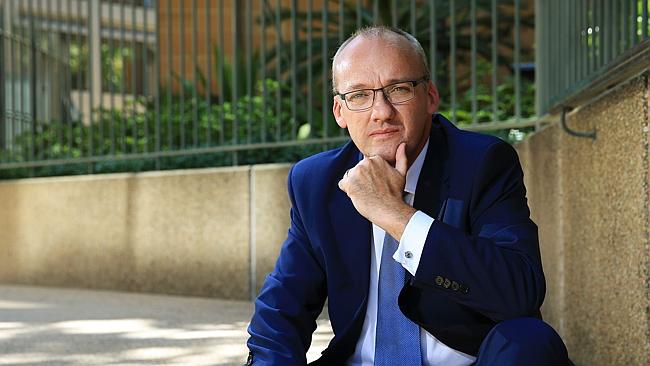
After much contemplation, Opposition Leader Luke Foley this week finally joined the 21st century by supporting marriage equality. Will he also support a 21st century Anti-Discrimination Act?

After much contemplation, Opposition Leader Luke Foley this week finally joined the 21st century by supporting marriage equality. Will he also support a 21st century Anti-Discrimination Act?

Finally, if you manage to secure a response from MPs or candidates on these questions during Sydney Gay & Lesbian Mardi Gras, whether that response is negative or positive, please leave their answers in the comments section below.

And, if you want to raise them directly with some of the relevant decision-makers, here are some people you might wish to contact:

Liberals

Premier Mike Baird

Email https://www.nsw.gov.au/your-government/contact-premier-new-south-wales

Phone 02 8574 5000

Twitter https://twitter.com/mikebairdMP

Attorney-General Brad Hazzard

Email office@hazzard.minister.gov.au

Phone 02 8574 6000

Twitter https://twitter.com/BradHazzard

Labor

Opposition Leader Luke Foley

Email leader.opposition@parliament.nsw.gov.au

Phone 02 9230 2310

Twitter https://twitter.com/Luke_FoleyNSW

Shadow Attorney-General Paul Lynch

Email ElectorateOffice.Liverpool@parliament.nsw.gov.au

Phone 02 9602 0040

Greens

Attorney-General Portfolio Spokesperson David Shoebridge

Email david.shoebridge@parliament.nsw.gov.au

Phone 02 9230 3030

Twitter https://twitter.com/ShoebridgeMLC

[1] Section 49ZG refers to discrimination on the basis of ‘homosexuality’, with ‘homosexual’ defined in section 4 as ‘homosexual means male or female homosexual’.

[2] Section 49ZTA sets the maximum individual punishment for serious homosexual vilification at 10 penalty units, or imprisonment for 6 months, or both.

[3] Section 38T provides that the maximum individual punishment for serious transgender vilification is 10 penalty units, or imprisonment for 6 months, or both.

[4] Section 20D establishes the maximum individual punishment for serious racial vilification: 50 penalty units, or imprisonment for 6 months, or both.

The last major battle for gay & lesbian legal equality in Australia won’t be about marriage

[Updated March 4th 2015]

This Saturday, the 37th annual Sydney Gay & Lesbian Mardi Gras Parade will work its way up Oxford St with its now traditional mix of politics, colour and movement, and above all, pride. Pride in who we are, pride in our community, and pride in what we have managed to achieve.

Because life is unarguably better for the vast majority of Australia’s lesbian, gay, bisexual, transgender and intersex (LGBTI) population in 2015 than it has ever been before. And that indeed is something to be proud about.

Following the first Mardi Gras on 24 June 1978, many of the barriers to legal equality have been removed. NSW passed anti-discrimination laws in 1982, followed by the decriminalisation of gay sex in 1984. Same-sex couples have since achieved de facto relationship recognition, and there is now equal access to assisted reproductive technology and adoption in most Australian jurisdictions.

It is likely that one area where legal rights have yet to be achieved will, once again, be the dominant theme of many of the more politically-oriented floats in this year’s parade – the Australian Parliament’s ongoing refusal to recognise marriage equality between all couples.

As someone who is engaged to be married, and who has been for more than four years but is currently prohibited from doing so, I understand why marriage equality is an issue which arouses such intense passion, and an admirable level of commitment from many activists around Australia.

But marriage equality is also something which most of us know is probably, some might say almost inevitably, going to be achieved at some point in the next five, at most 10, years.

When that day comes, when the first couples legally married under federal law have shared their vows and celebrated their commitments to each other in front of their families and friends, there will still be a major outstanding issue of legal inequality confronting lesbian, gay, bisexual and transgender (LGBT) Australians.

It appears just as inevitable that, long after those couples dance their waltzes and cut their wedding cakes, the anti-discrimination protections which are offered to LGBT Australians under most state and federal laws will continue to be seriously undermined by the wide-ranging exceptions which are offered to religious organisations (NB Intersex is not included here because religious exemptions under the Commonwealth Sex Discrimination Act 1984 do not apply on those grounds).

These exceptions allow religious schools to actively discriminate against LGBT teachers and students. Religious hospitals and community welfare organisations can utilise these loopholes to discriminate against LGBT employees, as well as patients and clients. And, while the historic federal reforms passed via the Sex Discrimination Amendment (Sexual Orientation, Gender Identity and Intersex Status) Act 2013 do not allow religious-operated aged care facilities to discriminate against LGBT people accessing their services, LGBT people can still be denied employment in those facilities simply because of who they are.

All of these services – education and health, community welfare and aged care – are located firmly and squarely in the public sphere, and address some of the most fundamental human needs in life. It is these same characteristics, that they are public services meeting public needs, that are used to justify the substantial amounts of public funding which subsidise the religious organisations running them, money which comes from all taxpayers, religious and non-religious, LGBTI and non-LGBTI alike.

Yet, despite operating in the public sphere, almost always using public money, these organisations are granted exceptions from the same legal obligations that are imposed on any other group, namely the responsibility not to discriminate on the basis of sexual orientation and gender identity.

The justification for these ‘special rights’? Basically, that the ability to discriminate against lesbian, gay, bisexual and transgender people is so fundamental to the exercise of religious freedom that it cannot be limited.

Note that we are not here talking about who is appointed as office-holders, including ministers, within a religion itself, what a particular religion may or may not believe in terms of morality, how religious ceremonies are undertaken, or even who can attend a religious ceremony. These are things that are central to religious freedom, and most people would not advocate the imposition of limits on the ability of religious organisations to discriminate in these areas.

Instead, some religious organisations (and we must say some, because not all groups hold these views) believe that they should have the right to fire a gay teacher, to expel a bisexual school student, to refuse to employ a lesbian aged care worker, or to deny services to someone who is transgender, even when all of the above is clearly done in the public sphere.

This is a much more substantive denial of rights than simply being denied access to marriage rites. Religious exceptions to anti-discrimination laws can affect LGBT people in multiple areas of their lives, including times and places when they are at their most vulnerable. In practical terms, I believe it is religious exceptions and not marriage inequality that is the biggest battle left to be won for full gay and lesbian legal equality.

It is also a battle that looks set to be fought more ferociously than that over marriage equality. Some of the largest religious organisations in the country don’t just support these exceptions, they are prepared to wage cultural war to defend them.

The Wesley Mission recently spent eight years, and went all the way to the NSW Court of Appeal, defending their right to deny allowing a male same-sex couple to become foster carers to children in need. Wesley did so on the basis that: “[t]he biblical teaching on human sexuality makes it clear that monogamous heterosexual partnership within marriage is both the norm and ideal” (OW & OV v Members of the Board of the Wesley Mission Council [2010] NSWADT 293 (10 December 2010).

Further, they submitted that: “Wesley Mission’s tradition views a monogamous heterosexual partnership in marriage as the ideal family role model for the vulnerable and sometimes damaged children we foster. Other understandings fall short of that norm.” And finally that “[t]he proposition that we should provide a framework for children to be cared for and nurtured within the context of a homosexual lifestyle is fundamentally unacceptable to our evangelical teaching and practice.”

The irony, some might say hypocrisy, of these statements is that, in the same case, Wesley Mission admitted that single people could themselves become foster carers through their service. Apparently they believed that two dads or two mums had less to offer foster children than one.

The net effect of the Wesley Mission case was to provide judicial confirmation of the breadth of the religious exceptions offered under section 56(d) of the NSW Anti-Discrimination Act 1977. That section reads: “[n]othing in this Act affects: any other act or practice of a body established to propagate religion that conforms to the doctrines of that religion or is necessary to avoid injury to the religious susceptibilities of the adherents of that religion.”

In short, if you are lesbian, gay, bisexual or transgender, then you have no legal right or expectation to be treated fairly and without discrimination by a religious employer, or religious-operated service, in NSW.

It is no surprise then that, when the Federal Parliament was considering the Exposure Draft Human Rights and Anti-Discrimination (HRAD) Bill 2012, the precursor of the Sex Discrimination Amendment (Sexual Orientation, Gender Identity and Intersex Status) Act 2013, key NSW religious organisations would argue for religious exceptions to be established in Commonwealth law, too.

What is perhaps surprising is that some churches made submissions to the Senate inquiry considering the HRAD Bill that these exceptions do not go far enough.

The Standing Committee of the Synod of the Anglican Church Diocese of Sydney, and the Catholic Archdiocese of Sydney (including the Diocese of Parramatta and the Catholic Education Commission of NSW), both argued that the concept of exceptions was problematic, and that the right to discriminate against LGBT people should instead be re-contextualised as a positive right.

From the Anglican submission: “[w]hile exceptions are necessary, casting the protection of these rights in a wholly negative manner, in the form of ‘exceptions’, does not do justice to their importance. It suggests they are merely to be tolerated rather than positively recognised and upheld as legitimate and important in themselves.”

Meanwhile, in a ‘Diedre Chambers’ style coincidence, the Catholic submission also wrote: “the terminology of “exceptions” is problematic and fails to acknowledge that the right of freedom of religion is a fundamental human right, which the Commonwealth government is obliged to protect under international law. In our view, the terminology of “exceptions” should be replaced with the terminology of “protections”. Using the terminology of “protections” would recognise that conduct which is deemed not to be unlawful because it is covered by an exception related to religion is in fact lawful because it accords with the fundamental human right of freedom of religion” [emphasis in original].

Both submissions also go further than concerns surrounding terminology to argue that the exceptions which are offered to religious organisations should also be available to individuals – that is, that their personal beliefs should allow them to discriminate, even in their professional lives and when not working for a religious organisation.

For example, the Anglican submission recommended that “[a]n employee should not be required by their employer to undertake particular tasks or provide services in a particular context that are contrary to the employee’s genuinely held religious convictions where this is reasonable.”

Thankfully, that style of exception, which is located somewhere on the bottom half of the slippery slope down to the abhorrent type of laws currently attracting controversy in several US states, was not included in the final Commonwealth legislation. But in making that submission, the Anglican Church of Sydney has made clear the direction it wants anti-discrimination, or more accurately, pro-discrimination, laws to head [As an aside, if it had been passed then, when marriage equality does eventually become a reality, such provisions would have allowed individual employees to refuse to sell wedding cakes, or serve as wedding photographers, merely because of the sexual orientation and/or gender identities of the couples involved].

And they will fight equally hard to ensure that the current framework of exceptions applies in as many contexts as possible. The eventual removal of these exceptions in terms of people accessing aged care services was strongly resisted from some religious bodies, even if their arguments for doing so were quite weak (the Anglican submission on the HRAD Bill suggested that “[i]t may be unsettling to these communities to have residents who do not share their beliefs, values and ethos facility on matters of sexual practice”).

They have been more successful in fighting against recent proposed changes to NSW law that were simply attempting to remove the right of religious and other private schools to discriminate against gay, lesbian and transgender students (NB Bisexuality is shamefully still not a protected attribute in the NSW Anti-Discrimination Act 1977). Alex Greenwich’s amendments are currently on hold, at least in part because of the influence of the two major churches in the Parliament.

As we have seen, some religious organisations have demonstrated over the past 10 years that they are prepared to fight, by whatever means necessary (through the courts, in parliamentary inquiries, by lobbying parliamentarians directly and in public debate) to maintain and even extend the reach of these exceptions.

While this may seem to some like a theoretical (or even theological) debate, they are not doing so because they want the law to recognise abstract rights – they are engaged in this battle because they want the retain the ability to actively discriminate against LGBT people in real life.

Sadly, there are too many stories of this happening, of religious exceptions causing real-world harm to LGBT people. In the lead-up to Mr Greenwich’s Bill being introduced, several lesbian and gay students came forward with stories of being sent to the counsellor’s office for being “sick” (that is, for being gay), of being called disgusting and a disgrace – by a teacher no less – and threatened with exclusion from senior school, and of being told not to talk about their sexuality in addition to being excluded from school events (source: “Discrimination has no place in schools” Alex Greenwich, Sydney Morning Herald, 19 September, 2013).

Not forgetting the recent incident where the Sacred Heart Primary School at Broken Hill, which falls within the Wilcannia-Forbes Catholic Diocese, rejected a young girl’s kindergarten application simply because her parents were two women (source: “Same-sex enrolment row prompts call for law change”, ABC News Online, 15 December 2011).

Of course, these are just some of the stories that we are aware about. Most people who are discriminated against by religious organisations, either directly or indirectly, do not speak up, because they are aware that the discriminatory actions of those bodies are entirely lawful, or because they fear retribution from those organisations if they do so.

Which brings me back to the Mardi Gras Parade. While for many of us the decision to participate on Saturday is an easy one, choosing to celebrate pride in who we are and as part of our community, for others the decision whether to be visible or not in this manner can be significantly more complicated.

For people already engaged with religious organisations in different ways, or whose profession may involve applying for jobs with them (for example, more than a third of schools in Australia are religious, an even higher proportion amongst secondary schools), choosing to be ‘out’ through Mardi Gras can have serious repercussions.

Some people can and do have a legitimate fear that being identified as lesbian, gay, bisexual or transgender could result in them being fired, or being refused employment in the first place, in being expelled from school (or seriously mistreated while there), or being denied necessary services. Neither state nor federal anti-discrimination law would currently protect them in these circumstances.

In this respect, despite all of the progress in law reform since the first Mardi Gras parade was held back in 1978, there is still an incredibly long way to go. That is one of the reasons why we must ensure that Mardi Gras, as well as being a celebration of pride, also continues to serve its role as a political protest.

It is also why me must continue to campaign for equality, and to fight for our rights, including the right not to be discriminated against. Given the scale of the challenge involved in removing these unjust religious exceptions, and how hard (some) religious organisations will struggle to retain them (and therefore to maintain their position of privilege in society), we should be aware that it is not a fight that we will win in months. It will take several years, at least – if not decades.

But it is a battle we must wage nonetheless. Because, if LGBT Australians are ever to be truly equal under the law, then the special exceptions granted to religious organisations under Commonwealth, state and territory laws must end.

Explanatory notes: I have attempted to be clear in this post about when I am speaking about gay and lesbian, or LGBT, or LGBTI, because sometimes the law affects these groups in different ways (and please accept my apologies if I have made some errors in this respect). For example, removing religious exceptions cannot be the last major battle for bisexual legal equality – especially if they are not included in the NSW Anti-Discrimination Act in the first place.

Equally, I am not in a position to argue that religious exceptions are the biggest legal issue confronting transgender Australians when uniform positive recognition of gender identity is not yet a reality. And, while intersex people are not subject to religious exceptions under the Sex Discrimination Act, I also wouldn’t describe this issue as more important than banning involuntary medical sterilisation, something I have written about previously (see link: https://alastairlawrie.net/2013/12/25/no-3-senate-report-on-involuntary-or-coerced-sterilisation-of-intersex-people-in-australia/).

Finally, while I wrote in the second paragraph that, for the vast majority of LGBTI Australians, life is unarguably better than it has ever been before, I do not wish to underestimate the ongoing problems of mental illness, depression and suicide which affect many young LGBTI people, or indeed the plight of LGBTI asylum-seekers, who Australia continues to send to Nauru and Manus Island, PNG, for ‘processing and resettlement’.

One (more) final thing: if you liked this post, please consider sharing. Thanks, Alastair

No Homophobia, No Exceptions

During the week, the NSW Gay & Lesbian Rights Lobby (which I am involved in as the Policy Working Group Chair), launched its No Homophobia, No Exceptions campaign, calling for the removal of religious exceptions to LGBTI anti-discrimination protections contained in the Commonwealth Sex Discrimination Act 1984 and the NSW Anti-Discrimination Act 1977.

This is an incredibly important campaign, given these exceptions will possibly be the last barriers to full LGBTI equality in Australia to fall, and a campaign which I am very proud to be involved in.

Now, while this blog, and the posts which I put up here, only ever reflect my personal views on things (ie in this blog I do not speak on behalf of the GLRL, or any other organisation), I would like to take the opportunity to put up a link to two other pages which form key parts of the No Homophobia, No Exceptions campaign.

The first is an op-ed I wrote for the Star Observer newspaper, outlining the reasons for the campaign, and calling for the LGBTI community to get involved. Link here: <http://www.starobserver.com.au/opinion/soapbox-opinion/no-homophobia-no-exceptions/117476

The second link is to a Change.org petition which asks people to support the campaign, by calling on Commonwealth Attorney-General, Senator the Hon George Brandis, and NSW Attorney-General, The Hon Greg Smith MP, to repeal these provisions.

If you support the campaign, and the principle that all people deserve to be treated equally in all areas of public life, irrespective of sexual orientation, gender identity or intersex status, then I strongly encourage you to sign. Link here: http://www.change.org/en-AU/petitions/senator-hon-george-brandis-remove-religious-exceptions-from-anti-discrimination-laws

Thanks.

Submission on Alex Greenwich’s Anti-Discrimination Amendment (Private Educational Authorities) Bill 2013

The following is my submission, lodged today, in response to a discussion paper and Bill released by the Member for Sydney, Mr Alex Greenwich. The Paper and Bill seek to remove exceptions which allow private educational authorities, including religious schools, the right to discriminate against lesbian, gay and transgender students. Unfortunately, I think that to achieve that goal, more amendments to the NSW Anti-Discrimination Act 1977 may need to be made. In any event, I believe that there are a range of other amendments which should also be made at the same time, including the removal of section 56 generally. Anyway, here it is:

Mr Alex Greenwich

Member for Sydney

Sydney@parliament.nsw.gov.au

Monday 30 September 2013

Dear Mr Greenwich

Submission on Anti-Discrimination Amendment (Private Educational Authorities) Bill 2013

Thank you for the opportunity to provide a submission in response to your discussion paper on anti-discrimination law reform, released in August 2013, and in particular in relation to your Anti-Discrimination Amendment (Private Educational Authorities) Bill 2013 (the Bill), which you introduced into NSW Parliament on 19 September 2013.

First of all, let me say that I welcome your strong commitment to removing the discrimination that can be experienced by lesbian, gay and transgender students in private educational institutions, including private schools. As has been demonstrated by the Writing Themselves In reports, and countless other research projects over the years, schools can be one of the major sources of homophobia and trans-phobia in the lives of young people.

It is vital that any ‘exceptions’ in the NSW Anti-Discrimination Act 1977 which may authorise schools to discriminate against lesbian, gay and transgender students are removed, and this must apply to all types of private schools, including religious schools. From what I have read, both in the Discussion Paper and associated media, as well as in your Second Reading Speech, I believe this is what your Bill is attempting to achieve.

However, I do have some concerns about the Anti-Discrimination (Private Educational Authorities) Bill 2013, in particular:

  • It is unclear whether the Bill, as drafted, will accomplish this aim
  • There are a range of other amendments which also need to be made to the Anti-Discrimination Act 1997 and
  • If the Bill is aimed at removing the right to discriminate from religious schools, thereby provoking an expected negative response from religious organisations, then I believe that the right of religious organisations to discriminate more broadly under s56 should be removed at the same time.

Turning first to the question of whether the Bill, if passed, would actually achieve the aim of removing the right to discriminate from all schools, including religious schools, I note that the Bill simply removes those provisions of the Anti-Discrimination Act 1997 which provide a specific right to discriminate (namely, sections 31A(3)(a), 38K(3), 46A(3), 49L(3)(a), 49ZO(3) and 49ZYL(3)(b)).

However, the Bill does not amend or seek to repeal the catch-all section which provides exceptions to religious organisations to discriminate – and that is found in section 56(d) which states: “Nothing in this Act affects: (d) any other act or practice of a body established to propagate religion that conforms to the doctrines of that religion or is necessary to avoid injury to the religious susceptibilities of the adherents of that religion.”

I am concerned that, by leaving this section unamended, the effect of your Bill would be to remove the right to discriminate from private educational authorities that are not religious, but that religious schools would retain the right to discriminate against lesbian, gay and transgender students on the basis of their ‘religious principles or beliefs’. The practical effect of the Bill would therefore have a positive outcome for a much, much smaller cohort of students than what is intended.

This reading of the Anti-Discrimination Act 1977, and in particular s56(d), appears to be supported by the main case in this area in recent years: OW & OV v Members of the Board of the Wesley Mission Council [2010] NSWADT 293. This case involved a service operated by the Wesley Mission, which sought to utilise the ‘protections’ offered in s56(d) to discriminate against gay male foster carers. The Wesley Mission was ultimately successful in its appeal.

While foster care is obviously not exactly the same as providing education in religious schools, I believe that it is potentially analogous in terms of indicating how broad the religious exceptions under s56(d) are in practice, and in particular in suggesting that they would operate to shield religious schools that discriminate against lesbian, gay and transgender students from the scope of the Anti-Discrimination Act 1977.

This also appears to be the opinion of the current Attorney-General of NSW, the Hon Greg Smith SC MP. In a speech titled Religious Vilification, Anti-Discrimination Law and Religious Freedom, which he gave on 24 August 2011, the Attorney-General discussed the operation of s56:

“116. Section 56 creates a general exemption from the ADA for religious bodies. Religious bodies are not required to comply with the ADA in relation to:

  1. The training, education, ordination or appointment of religious leaders [s56(a)&(b)];
  2. The appointment of any other person [s56(c)];
  3. Any other act or practice that conforms to the doctrines of that religion or is necessary to avoid injury to the religious susceptibilities of the adherents of thast religion [s56(d)].

117. Section 56 was included in the ADA when first enacted. While other jurisdictions have adopted a general exception from their anti-discrimination statutes for religious bodies, the exceptions are narrower than that under the ADA in the following ways:

a. While section 56(c) of the ADA exempts the appointment of persons ‘in any capacity’ by a religious body, other jurisdictions exempt only appointment of persons to perform functions related to religious practices;

b. Some other jurisdictions have provisions equivalent to s56(d) of the ADA, but others are narrower. Those that are narrower limit the exemption to acts done as part of a religious practice [NT], or don’t extend the exemption to discrimination in work or education [Qld], or limit the grounds of discrimination that are exempt.” [emphasis added]

The implication from this speech, and in particular from para 117(b) above, is that the Attorney-General believes that the protections offered by s56(d) would be available to a school or educational facility run by a religious organisation. This also appears to be the interpretation of s 56(d) by other organisations and advocacy groups which work in this area, including the Inner-City Legal Centre and Public Interest Advocacy Centre.

If that is the case – that either your Bill does not operate to limit the right of religious schools to discriminate against lesbian, gay and transgender students, or that there may be some ongoing uncertainty in this area – then might I suggest you seek additional legal advice on the scope of s56(d), and whether further amendments to your Bill might be necessary to guarantee the rights of lesbian, gay and transgender students in religious schools not to be discriminated against. Obviously, if the Bill is to be debated and ultimately voted upon in late 2013 or early 2014, it would be useful to have clarity about the exact protections to be offered by the Bill beforehand.

Moving on to my second concern about the Bill, which applies irrespective of whether students at religious schools are covered or not, specifically that there are a range of other serious problems with the NSW Anti-Discrimination Act 1977, and it is my belief that these issues should be considered at the same time by the Parliament.

For example, as well as protecting lesbian, gay and transgender students, anti-discrimination protections should also be offered to teachers and other employees at the same schools, irrespective of their sexual orientation or gender identity.

In fact, I believe that religious exceptions should be limited to only cover the appointment of ministers of religion, and the conduct of religious ceremonies. In short, religious organisations should no longer be sanctioned by the State to discriminate in employment and service delivery in places like hospitals or social services – and a reform to the existing law is a perfect opportunity to make such changes.

There are also a range of problems with the current scope of, and definitions included in, the NSW Anti-Discrimination Act 1977, including the fact that it protects homosexuals (in s49ZF) rather than people with different sexual orientations (with the effect that, while lesbians and gay men are covered, bisexuals are not).

The NSW Act also includes what I understand to be an out-dated definition of transgender (in s38A), rather than the preferred definition of gender identity as passed in the Commonwealth Sex Discrimination Amendment (Sexual Orientation, Gender Identity and Intersex Status) Act 2013. Indeed, the NSW Act does not even cover intersex status at all, unlike its Commonwealth counterpart. I hope that you, and other MPs involved in this area of public policy, are consulting with groups representing the transgender and intersex communities about whether, and how, to deal with these issues.

There are also other problems with the current Act, including what I find to be an objectionable difference in financial penalties for individual offenders found guilty of vilification; the maximum financial penalty for racial or HIV/AIDS vilification (set at 50 Penalty Units) is five times higher than that for homosexual or transgender vilification (set at 10 Penalty Units). There can be no justification for this discrepancy, which effectively creates a hierarchy of offensiveness, with some types of vilification considered more serious than others.

The above problems with the NSW Anti-Discrimination Act 1977 are simply those which I have identified from my own reading and research. I am sure that there are other issues which also need to be addressed. This to me suggests that there is sufficient impetus for a more comprehensive re-write of the Act. While the subject of protecting lesbian, gay and transgender students is an incredibly important one, I believe that the range of problems identified above should all be dealt with at the same time.

Which brings me to my third concern with the draft Anti-Discrimination Amendment (Private Educational Authorities) Bill 2013, and that is a concern around tactics or strategy.

By attempting to limit the right of religious organisations to discriminate against lesbian, gay and transgender students in their schools, you are taking on something which many churches take to be an inalienable ‘right’ – the ability to indoctrinate young people with their religious teachings against homosexuality or transgender identity.

As a result, I would expect a significant backlash from those same religious organisations against your Bill. The size or scale of that backlash might only be slightly less than that which could be expected from an attempt to narrow the broader exceptions contained in section 56 (by limiting its coverage to the appointment of ministers and conduct of religious ceremonies).

In that case, it is my personal view that, as well as removing the specific provisions concerning private educational authorities (as featured in your Bill), any attempt to reform the NSW Anti-Discrimination Act 1977 should also contain provisions which significantly reduce the scope of s56. If people such as yourself are going to take on the right of religious organisations to discriminate, then why not do so more comprehensively, rather than in what could be described a piecemeal (or at the very least, narrowly-targeted) fashion?

Which is not to say that moves to protect lesbian, gay and transgender students from discrimination are not welcome – they obviously are. And I also wish to restate my support for the overall intention of the Bill; protecting young people who are lesbian, gay and transgender from homophobia and trans-phobia is an incredibly important objective.

However, any attempt to do so must ensure that the Bill captures all private schools, including religious schools. And, even if that drafting issue is resolved, it remains my personal view that reform to the NSW Anti-Discrimination Act 1977 should go much further, and address broader issues including but not limited to restricting the scope of section 56.

Thank you for considering this submission.

Yours sincerely,

Alastair Lawrie

#QandA, Senator Brandis and LGBTI Anti-Discrimination Reforms

On Monday night (June 24th) I had the opportunity to attend the filming of QandA at the ABC studios in Ultimo, Sydney. As on two previous occasions, I was told that my question had been shortlisted. However, unlike those previous occasions, this time I got to ask it.

I feel privileged to have done so. I got to ask Senator George Brandis, the Shadow Attorney-General, live on national television why the Liberal and National Parties were so desperate that religious aged care facilities should be able to discriminate on the basis on sexual orientation and gender identity, that they would scupper the entire anti-discrimination reform if this exception was not preserved.

And it was also timely – the Senate had voted on the Sex Discrimination Amendment (Sexual Orientation, Gender Identity and Intersex Status) Bill 2013 that evening (where it was passed by the Labor Government and the Greens), and it was due to be voted on by the House of Representatives the following day (and where the numbers were also far closer).

The answer given by Senator Brandis to my question (and to my supplementary) was of course disappointing, confirming that the Liberal and National Parties do not believe that the right of lesbian, gay, bisexual, transgender and intersex Australians not to be discriminated against is either fundamental or universal.

But it was his answer to Tony Jones’ follow-up that was truly extraordinary, particularly this exchange:

Tony Jones: But just on principle, you are saying that religious freedom supersedes the freedom of your sexuality?

George Brandis: Yes, I am, as a matter of fact. Yes I am.

All Australians, and especially LGBTI Australians, should consider this statement, from the likely Attorney-General under a Tony Abbott-led Government, before casting their ballot later this year.

There was one final bonus of my appearance on QandA, and it was unexpected. On Thursday (June 27th) the Australian Christian Lobby put out a media release condemning the Government for the passage of the Sex Discrimination Amendment Bill, and supporting Senator Brandis’ position. This media release included the full transcript of my exchange with Senator Brandis, as well as Tony Jones’ questions.

So, not only do I now have the ‘street cred’ of having been quoted disapprovingly in an ACL media release, but they also saved me the time and effort of having to put together the following transcript. Thanks ACL!

ALASTAIR LAWRIE: My question is to Senator Brandis. Last Tuesday you announced that the Coalition would block any LGBIT anti-discrimination bill that did not allow religious aged-care service providers to discriminate on the basis of sexual orientation and gender identity. This is despite the fact that these agencies themselves do not believe they need this exception. You seem to be putting a theoretical religious freedom above practical protections. Why don’t you believe that older lesbians, gay men, bisexuals and transgender Australians, people who have grown up when their love was criminalised, who lost friends and lovers to HIV and AIDS, have the right to grow old in dignity and respect that they deserve?

GEORGE BRANDIS: It is a very important question that you ask and let me explain what the Opposition’s position is. But there was one statement in your question which wasn’t quite right. You said that the religious institutions, the churches, didn’t themselves want the exemption so far as concerned aged care facilities. That’s not right. Some said they didn’t want it. Most said they did. So don’t be misled by a misleading statement by the Attorney-General. On the broader issue, when the bill, the sex discrimination bill, was introduced into the Parliament, I took a submission to the Shadow Cabinet and to our party room which was, I think without a dissenting voice, endorsed that we should support it. And the reason we support it is because it is actually the policy we took to the 2010 election, that the provisions of the Sex Discrimination Act should extend to sexuality as a protected attribute. The Government knew that they had the Opposition on board with this. In fact, the Government’s measure was itself taken from the Opposition’s report on the broader human rights and anti-discrimination bill, the bill that was abandoned by the Government earlier this year because it was acknowledged to have gone way too far. So we had, on this very tricky and important issue of discrimination against gay people, we had bipartisanship and unanimity. And then into the middle of this harmonious bipartisan moment, the Labor Party, out of the blue, threw in an amendment never anticipated, never expected, that would have caused the religious exemption issue to come into play. Now, if you want to build a consensus around this issue, that gay people should be protected from discrimination by the Sex Discrimination Act, then you would not have done that and the Labor Party, on all other grounds, in all other arenas, has said that it will respect the religious exemption. I am cynical about why the Labor Party did that…

TONY JONES: Okay, George.

GEORGE BRANDIS: …knowing that by introducing the religious exemption, it would make it impossible for that bipartisanship to continue.

TONY JONES: George Brandis, the questioner has his hand up so we’ll go back to you.

ALASTAIR LAWRIE: I would just like to pick up a point you seem to be making. In Senator Humphrey’s dissenting report to the sex discrimination senate inquiry, the two organisations that he quoted justifying the call for religious exception in that circumstance were the Australian Christian Lobby and the Catholic Women’s League. Neither of them provide religious aged care services. So in that circumstance, why are we trying to impose a religious exception to the detriment of older LGBT people for those groups that don’t actually run those services?

GEORGE BRANDIS: Well, I’m very familiar with that minority report because I was one of the signatories to it and I had a lot to do with drafting it. There were many more submissions to the inquiry from other churches and religious institutions than those two. So don’t infer that because those two were mentioned as a ‘For example’, those were the only ones, because they weren’t.

TONY JONES: Okay. George, I would like the hear other people on this subject. Anne Summers?

ANN SUMMERS: Well, I’m afraid I don’t know much about the legislation. I mean I just obviously would support the principle that LGBT people should be able to go to retirement homes and nursing homes free from any form of discrimination, which I take to be the central point and I know that, you know, one of the problems with homes that are run by some religions is they have been discriminatory in the past and I imagine what we are trying to avoid is the continuation of that discrimination and I would support that.

TONY JONES: Yeah, very briefly, George, before I go back to the other panelists, shouldn’t anti-discrimination be universal?

GEORGE BRANDIS: No.

TONY JONES: Why shouldn’t it?

GEORGE BRANDIS: Anti-discrimination laws should not be universal because the right to fair treatment is one of several very important but sometimes inconsistent values. The right of people who practice or profess a particular religious faith to live their lives and to conduct their institutions in accordance with the precepts of their religious faith is integral to religious freedom and religious freedom is also a fundamentally important value.

TONY JONES: So religious…

GEORGE BRANDIS: And if I may say…

TONY JONES: But just on principle, you are saying that religious freedom supersedes the freedom of your sexuality?

GEORGE BRANDIS: Yes, I am, as a matter of fact. Yes, I am. But I am also making a political point. There are – we in the Liberal Party have joined with people in the Labor Party to progress this agenda for years and those who wanted to see the Sex Discrimination Act extend to protect people on the grounds of their sexuality were furious that the Labor Party decided to throw in a curve ball into the debate that deprived the country of the opportunity for unanimity on this.

Sex Discrimination Amendment Bill 2013 – The Final Countdown

There are now only two sitting weeks left before the upcoming federal election. Which means there are only 8 days during which Parliament can pass the Sex Discrimination Amendment (Sexual Orientation, Gender Identity and Intersex Status) Bill 2013, historic legislation which would finally provide federal anti-discrimination protections to Australia’s lesbian, gay, bisexual, transgender and intersex community.

It goes without saying that this could go down to the wire. Which is why I sent the email posted below to all cross-bench MPs, as well as key figures in the Opposition and Greens (and a slightly re-worded version to the Government). I don’t think that we, as members of the LGBTI community, should ‘die wondering’ about this Bill. So, I would encourage you to consider sending you own emails to these parliamentarians, to help get the Sex Discrimination Amendment Bill 2013 over the line.

To help you on your way, I have included the email addresses of a range of relevant MPs at the end of this post. And please feel free to ‘borrow’ any and all of the following:

I am writing to you regarding the Sex Discrimination Amendment (Sexual Orientation, Gender Identity and Intersex Status) Bill 2013.

In particular, I am requesting that you:

  • Please support the Government’s proposed amendments which exclude the operation of religious exceptions in the area of aged care service provision; and
  • Please support the passage of the amended Sex Discrimination Amendment Bill 2013 in the final two sitting weeks of this Parliamentary term.

This Bill is a significant reform that will benefit the lesbian, gay, bisexual, transgender and intersex (LGBTI) citizens of Australia, because, if passed, it will be the first term LGBTI people will enjoy anti-discrimination protections under federal law.

It is historic because it will be the first time any federal anti-discrimination law, anywhere in the world, explicitly covers intersex people. And the Sex Discrimination Amendment Bill 2013 will also help to protect more people than some state and territory schemes – for example, the NSW Anti-Discrimination Act 1977 does not currently apply to bisexual or intersex people, both groups that are protected under this proposed law.

Unfortunately, the Bill as drafted will ensure that religious organisations are provided with wide-ranging exceptions from otherwise lawful obligations not to discriminate against lesbian, gay, bisexual and transgender people. This will allow religious organisations to continue to discriminate on the basis of sexual orientation and gender identity in employment and service provision, which will operate to undermine the scope and effectiveness of these anti-discrimination provisions. In principle, I do not support the operation of any religious exceptions outside the appointment of religious officials, membership of religious organisations and celebration of religious ceremonies.

However, I understand that LGBTI anti-discrimination legislation which did not contain any religious exceptions would be unlikely to pass the current Parliament. What is possible is for the Sex Discrimination Amendment Bill 2013 to be passed with amendments proposed by the Government that exclude the operation of religious exceptions in the area of aged care provision.

I strongly support the removal of religious exceptions in these circumstances. Older lesbian, gay, bisexual and transgender people should not be subjected to discrimination on the basis of sexual orientation or gender identity when they are accessing aged care services. This is particularly important when you consider that for many people, aged care facilities will be their home for long periods of their life – nobody deserves to be lawfully discriminated against in their home.

Above all, I see this as the very least which should be done for older lesbian, gay, bisexual and transgender Australians. These are people who grew up when homosexuality was still a criminal offence, who had to fight simply for the right to be who they are, who lost partners and friends through the devastation caused by HIV/AIDS, particularly in the 1980s and 1990s. These are people who deserve our respect, not the operation of provisions which could force them back into ‘the closet’ because of the fear of being discriminated against.

It is my sincere hope that all Parliamentarians will vote in favour of the Government’s amendments to exclude the operation of religious exceptions in the area of aged care services.

It is also my sincere hope that all Parliamentarians will unite and work together to ensure that the Sex Discrimination Amendment Bill 2013 is passed, as amended, in the final two sitting weeks of this Parliamentary term.

With Parliament rising on 27 June, there is only limited time to ensure this legislation is passed. Please help ensure that the Bill receives sufficient priority, through both Chambers, that it will finally be made law before the upcoming federal election.

I believe that the lesbian, gay, bisexual, transgender and intersex citizens of Australia, like myself, have waited long enough to be protected under federal anti-discrimination laws. I hope that you agree.

Attorney-General, The Hon Mark Dreyfus QC MP Mark.Dreyfus.MP@aph.gov.au

Mental Health and Ageing Minister, The Hon Mark Butler MP Mark.Butler.MP@aph.gov.au

Leader of the Opposition, the Hon Tony Abbott MP Tony.Abbott.MP@aph.gov.au

Shadow Attorney-General, Senator George Brandis senator.brandis@aph.gov.au

Greens Spokesperson for Attorney-General, Senator Penny Wright senator.wright@aph.gov.au

Greens Spokesperson for LGBTI issues, Senator Sarah Hanson-Young senator.hanson-young@aph.gov.au

Member for Kennedy, the Hon Bob Katter MP Bob.Katter.MP@aph.gov.au

Member for Fisher, the Hon Peter Slipper MP Peter.Slipper@aph.gov.au

Member for Dobell, Mr Craig Thomson MP Craig.Thomson.MP@aph.gov.au

Member for Lyne, Mr Rob Oakeshott MP Robert.Oakeshott.MP@aph.gov.au

Member for New England, Mr Tony Windsor MP Tony.Windsor.MP@aph.gov.au

Member for Denison, Mr Andrew Wilkie MP Andrew.Wilkie.MP@aph.gov.au

Member for O’Connor, Mr Tony Crook MP Tony.Crook.MP@aph.gov.au

Member for Melbourne, Mr Adam Bandt MP Adam.Bandt.MP@aph.gov.au

Senator for South Australia, Senator Nick Xenophon senator.xenophon@aph.gov.au

Senator for Victoria, Senator John Madigan senator.madigan@aph.gov.au

Sex Discrimination Amendment (LGBTI) Bill Senate Inquiry Submission

Another week, another submission, this time to the Senate Legal & Constitutional Affairs Committee Inquiry into the Sex Discrimination Amendment (Sexual Orientation, Gender Identity and Intersex Status) Bill 2013.

Now that the Government has ‘deferred’ the Human Rights and Anti-Discrimination Bill/consolidation reforms, this Bill is the vehicle it has chosen to progress federal anti-discrimination protections for the lesbian, gay, bisexual, transgendernand intersex (LGBTI) community.

It is by no means a perfect Bill – at the very least it should incorporate the Government’s own policy of removing religious exceptions for people accessing aged care services. At best, it should remove all religious exceptions outside of the appointment of ministers of religion and religious ceremonies.

Nevertheless, this Bill, if passed, would be a significant step forward in terms of LGBTI law reform. If you have a chance to write your own submission before this Friday (26 April), I strongly encourage you to do so. Details here: http://www.aph.gov.au/Parliamentary_Business/Committees/Senate_Committees?url=legcon_ctte/sex_discrim_sexual_orientation/info.htm

NB I have also not included the appendix to this submission, because it is simply the discussion about religious exceptions from my submission on the HRAD Bill last year.

Senate Legal and Constitutional Affairs Committee

Inquiry into Sex Discrimination Amendment (Sexual Orientation, Gender Identity and Intersex Status) Bill 2013

Submission by Alastair Lawrie

I am writing this submission to make three main recommendations:

i)                    That the Sex Discrimination Amendment (Sexual Orientation, Gender Identity and Intersex Status) Bill 2013, which introduces federal anti-discrimination protections for lesbian, gay, bisexual, transgender and intersex (LGBTI) Australians for the first time, should be supported.

ii)                   That the Sex Discrimination Amendment (Sexual Orientation, Gender Identity and Intersex Status) Bill 2013 should be passed as a matter of priority by the Commonwealth Parliament; and

iii)                 That the Sex Discrimination Amendment (Sexual Orientation, Gender Identity and Intersex Status) Bill 2013 should be amended to remove all religious exceptions which would otherwise allow discrimination against LGBTI Australians, outside of appointments of religious office-holders (such as priests) and religious ceremonies.

I was born in 1978. That is three years after the passage of the Racial Discrimination Act 1975. In the year I turned 6, the Commonwealth Parliament supported the Sex Discrimination Act 1984. The Disability Discrimination Act was passed in 1992, about three years before I first came out as gay at age 17. Even the most recent stand-alone Commonwealth anti-discrimination law, the Age Discrimination Act 2002, has already been in operation for more than a decade.

In 2013, I am 34 years old, and I have still never enjoyed the protection of federal anti-discrimination laws on the basis of my sexual orientation. Discrimination on the basis of race has been prohibited for my entire life, and on the basis of sex for almost as long. But up until now, successive Governments have not seen fit to legislate to prohibit discrimination on the basis of sexual orientation, gender identity and intersex status.

Which means that the reforms contained in the Labor Government’s Sex Discrimination Amendment (Sexual Orientation, Gender Identity and Intersex Status) Bill 2013 are both incredibly welcome, and long overdue. Lesbian, gay, bisexual, transgender and intersex (LGBTI) Australians deserve the right to be employed, to access services, indeed to simply go about their everyday lives, without the threat of being discriminated against on these grounds.

If and when this Bill is eventually passed, it will be another key milestone on the long journey towards full equality for our LGBTI citizens. Which is why my first recommendation is that this legislation should be supported.

My second recommendation is that the Sex Discrimination Amendment (Sexual Orientation, Gender Identity and Intersex Status) Bill 2013 should be passed by the Commonwealth Parliament as a matter of priority.

There are now only five Parliamentary sitting weeks left before the end of this term, ahead of the federal election which is currently expected to be held on September 14th. Having waited so long – decades, in fact – it would be a devastating blow to the LGBTI community were this legislation to be delayed yet again because the current Parliament simply ran out of time.

The future is always unknowable: it may be that, should these reforms not be passed now, a new Parliament or even Government introduces similar legislation later this year, or early next year. That would obviously be a welcome development. But it may also be that, after the upcoming election, LGBTI anti-discrimination reforms are delayed for several more years.

The current Bill fulfils the general objective of signalling that discrimination on the basis of sexual orientation, gender identity and intersex status is no longer tolerated, by society and by the Parliament. It is already drafted, and (leaving aside the amendments suggested in my third recommendation) it is ready to go.

That is why all serving Parliamentarians, from all political parties and independents, should pass the Sex Discrimination Amendment (Sexual Orientation, Gender Identity and Intersex Status) Bill 2013 as soon as possible.

My third and final recommendation is that the Bill should be amended to ensure that religious exceptions from LGBTI-anti-discrimination requirements are narrowly drafted, only covering religious appointments, such as priests, and religious ceremonies.

The justification for this position involves my personal experience. Like many, indeed probably most, LGBTI Australians I have been discriminated against in a wide variety of different situations. I have been abused on the street, and threatened with violence, simply for holding my boyfriend’s hand. I have received sub-standard treatment from different service-providers simply because of my sexual orientation, or at least because of their perceptions of me.

I have likely been discriminated against in terms of employment, because I have always been upfront about who I am, including through my job applications. But I will probably never know for sure, because discrimination like homophobia is insidious, and its victims can never know all of the different ways in which they are mistreated.

But by far the activity in which I have been discriminated against the most was the education I received during the five years that I attended a religious boarding school. There was, from memory, a school rule against homosexuality, I was bullied on the basis of my (perceived) sexual orientation and this was effectively condoned by the school which was aware of it but failed to take any action, the sex education that was provided completely ignored homosexuality (including omitting essential safe sex/HIV-prevention messages), and I had a pastor intimate that killing yourself because you were gay was not the worst possible outcome.

It distresses me to think that, if religious organisations are granted wide-ranging exceptions under anti-discrimination laws, they will lawfully be able to (mis)treat future students in this way.

No student should be subject to prejudice, from their schools as well as from other students, because of their sexual orientation, gender identity or intersex status. No teacher should have to fear for their job simply because of who they are, or who they are attracted to.

This principle extends far and wide across a range of different activities. Patients receiving hospital and other health or community services should not have to consider whether disclosing their identity will compromise the standard of care they receive. LGBTI doctors, nurses and other employees in the health and community sector should be able to be confident in talking about who they are without fearing possible repercussions.

This principle obviously also includes aged care services. And I welcome the Labor Government’s commitment that they will legislate to protect people accessing aged care services from discrimination on the basis of sexual orientation, gender identity and intersex status.

However, I question why these protections are not included in the current Bill – the drafting of such provisions is not overly complicated, and I would like to believe that no Parliamentarian could argue, or vote, against such a basic proposition.

I also question why such protections should not equally apply to the employees of aged care services. If we are going to have truly inclusive aged care services, then neither the service recipients nor the employees should be subject to discrimination simply because they are LGBTI.

But, for the reasons outlined above, I do not believe that even ‘carving out’ the aged care sector from the operation of religious exceptions goes far enough. There is no justification for allowing religious organisations to discriminate against service recipients or employees in any activity which is carried on in the public sphere. For further discussion of this, please see Appendix A, which I provided to the Senate Inquiry into the Exposure Draft of the Human Rights and Anti-Discrimination Bill 2012 in December last year on this very topic.

In conclusion, I would like to thank the Committee for the opportunity to comment on the Sex Discrimination Amendment (Sexual Orientation, Gender Identity and Intersex Status) Bill 2013. As I have indicated, I think this Bill could be significantly improved by limiting the operation of religious exceptions which undermine protections that would otherwise cover LGBTI Australians.

However, even if these exceptions are not removed by the current Bill, the fact that some LGBTI anti-discrimination protections will finally be enacted federally is sufficient justification to recommend both that the Commonwealth Parliament support the Bill, and that it be passed as a matter of priority. The Australian LGBTI community has waited long enough for these reforms. It’s time to just get it done.

Submission on Human Rights and Anti-Discrimination Bill 2012

I am very happy that my submission to the Senate Legal and Constitutional Affairs Committee inquiry into the exposure draft Human Rights and Anti-Discrimination Bill 2012 was published this afternoon

(http://www.aph.gov.au/Parliamentary_Business/Committees/Senate_Committees?url=legcon_ctte/anti_discrimination_2012/submissions.htm).

The full text of my submission is reproduced below:

Exposure Draft Human Rights and Anti-Discrimination Bill 2012

Inquiry by the Senate Standing Committee on Legal and Constitutional Affairs

Submission by Alastair Lawrie

Friday 21 December 2012

Thank you for the opportunity to make a submission on the exposure draft of the Human Rights and Anti-Discrimination Bill 2012. This submission reflects my personal views on the Bill, and makes a number of recommendations for improvements to the draft legislation to ensure that it provides adequate protection to lesbian, gay, bisexual, transgender and intersex Australians from – what will hopefully be – unlawful discrimination. Nevertheless, these recommendations for improvements do not change my primary recommendation; namely, that the Parliament should pass this Bill as a matter of priority in 2013.

Recommendations:

  1. The Parliament should pass the Human Rights and Anti-Discrimination Bill 2012 as a matter of priority in 2013.
  2. The Bill should retain the exposure draft definitions of ‘sexual orientation’ and ‘relationship status’ so that discrimination on these grounds is prohibited under Commonwealth law.
  3. The Bill should amend the definition of ‘gender identity’ to reflect the Tasmanian Anti-Discrimination Bill 2012 definition, so that it removes the phrase ‘genuine basis’ and includes gender expression and presentation.
  4. The Bill should include the definition of ‘intersex’ as used in the Tasmanian Anti-Discrimination Bill 2012, so that anti-discrimination protections adequately cover this protected attribute.
  5. Exceptions from anti-discrimination requirements should only be provided to religious organisations where it relates to religious appointments or celebrations (for example, appointment of ministers of religion, admission to membership of the religion or celebrating sacraments within the religion).
  6. Religious organisations should not be provided with exceptions in terms of service-delivery, including service delivery in schools and education, healthcare, aged care and other community services.
  7. If Recommendation 6 is not agreed, the existing provisions of the Human Rights and Anti-Discrimination Bill 2012 which preclude the application of exceptions with respect to aged care service delivery by religious organisations should be retained.
  8. Religious organisations should not be provided with exceptions in terms of employment, in any area outside appointment of ministers of religion or other appointments which are essentially religious in nature.
  9. If either or both recommendations 6 or 8 are not accepted, or if recommendation 7 is accepted, then wherever religious organisations are provided with exceptions with respect to either service delivery or employment, they must publish a statement outlining their intention to discriminate in position descriptions and job advertisements, on their website and in any brochures or advertisements of their service.
  10. The Bill should expand anti-vilification protections to cover sexual orientation, gender identity and intersex.
  11. The Bill should provide for the appointment of a dedicated Sexual Orientation and Gender Identity Commissioner.

The draft Human Rights and Anti-Discrimination Bill 2012 covers subject matter which is close to my heart, and which is also an important issue of public policy; namely, providing legal protections to lesbian, gay, bisexual, transgender and intersex (LGBTI) Australians against unjust discrimination, harassment and abuse.

These legal protections are long overdue. By the time this legislation is (hopefully) passed in 2013, it will be 38 years since the passage of the Racial Discrimination Act 1975, 29 years since the Sex Discrimination Act 1984, more than two decades since the Disability Discrimination Act 1992 and almost a decade since the Age Discrimination Act 2004. These Acts were passed to address major problems of discrimination within society on each of these grounds.

Discrimination on the basis of sexual orientation, gender identity and intersex is no less offensive, and tackling this discrimination is no less urgent. It is a failing of successive Commonwealth Governments that they have not introduced anti-discrimination legislation covering these attributes before now, but happily this is something that the current Parliament can address in this term.

There is abundant evidence that discrimination against LGBTI Australians is both serious and widespread. The 2003 NSW Attorney-General’s Department report You Shouldn’t Have to Hide to be Safe, found that 56% of respondents had been the victims of homophobic abuse, violence or harassment in the previous 12 months. 85% of respondents had experienced abuse, violence or harassment at some point in their life. That fact alone is sickening: 5 out of every 6 LGBTI Australians have suffered some form of homophobic abuse, violence or harassment simply for being themselves.

This discrimination can particularly target, and have the most damaging effects on, young people. The Writing Themselves In 3 report found that 60% of young same-sex attracted and gender questioning young people had experienced some form of physical or verbal abuse. Homophobic, bi-phobic and trans-phobic discrimination, and discrimination against intersex people, can have a lasting, negative impact on their mental health, and limit their ability to fully participate in society. LGBTI youth should not have to suffer because of the prejudices of others.

But you do not need to consult these reports to understand that discrimination against LGBTI people is rife. Instinctively, we all know, simply as ordinary members of Australian society, that homophobia is an unacceptably widespread phenomenon, and that it has the potential to affect almost every facet of life. As individuals, we have likely seen it, heard about it, felt its impact on family members or friends.

For those of us who are LGBTI, we have been on the receiving end of this abuse, this violence, this harassment. As a gay man, I have been the victim of numerous counts of homophobic discrimination. I have been ‘moved on’ by police officers simply for kissing another man. I have been yelled at on the street for holding my boyfriend’s hand, and called ‘faggot’ more times than I care to remember. I have been subjected to multiple instances of prejudice and exclusion by my school. And I have probably been discriminated against in other ways which I didn’t even know at the time, because discrimination can be insidious.

My fiancé Steve has similar stories. His lesbian sister and her partner have been discriminated against too, both as individuals, and as mothers in a rainbow family. Steve’s best friends, another lesbian couple, have their own stories of prejudice, as do many of our other gay and lesbian friends. Sadly, each and everyone one of us has our own story of how discrimination has affected our everyday lives, in so many different situations.

What we have not had, until now, is any protection under Commonwealth law against this discrimination. Federal anti-discrimination legislation, covering LGBTI Australians, is essential to complement existing protections under state and territory law, and ensure that there are no holes or gaps in this coverage.

Even more importantly, the passage of this bill would be a statement by our elected leaders that prejudice and discrimination on the basis of sexual orientation, gender identity and intersex will no longer be tolerated. I urge the Commonwealth parliament to pass this law, and do so as quickly as possible.

Recommendation 1: The Parliament should pass the Human Rights and Anti-Discrimination Bill 2012 as a matter of priority in 2013.


The exposure draft Bill already features a useful and inclusive definition for ‘sexual orientation’ which will ensure that lesbians, gay men and bisexuals are afforded anti-discrimination protection. The amendment of the previously protected ground of ‘marital status’ to ‘relationship status’ will also ensure that all relationships are covered, irrespective of the sex or gender of the participants. Both of these definitions should be retained in the final Bill.

Recommendation 2: The Bill should retain the exposure draft definitions of ‘sexual orientation’ and ‘relationship status’ so that discrimination on these grounds is prohibited under Commonwealth law.

I am also supportive of the inclusion of anti-discrimination protection for transgender people. However, I understand that the definition of ‘gender identity’ in the exposure draft Bill requires significant improvement. In particular, it is unclear why the definition includes the additional test of living on a “genuine basis” for transgender people. The definition also does not appear to adequately capture and protect gender expression, including mannerisms and appearance. A much better definition is contained in the Tasmanian Anti-Discrimination Bill 2012, which is currently before their state parliament. That definition should be used in the Commonwealth’s Human Rights and Anti-Discrimination Bill 2012.

Recommendation 3: The Bill should amend the definition of ‘gender identity’ to reflect the 2012 Tasmanian Anti-Discrimination Bill definition, so that it removes the test of ‘genuine basis’ and includes gender expression and presentation.

An even larger drafting problem concerns the definition of, and therefore protection for, intersex people. The exposure draft Human Rights and Anti-Discrimination Bill 2012 appears to try to include intersex under part (b) of gender identity. This is incorrect, because intersex is not a matter of identity, instead it is a biological fact.

It should also be noted that similar definitions which have been included previously under state and territory laws have either operated to provide only limited protection from discrimination to intersex people, or provided no protection at all.

It would be tragic if, 38 years after the Racial Discrimination Act 1975, the Commonwealth parliament finally acted to extend anti-discrimination protection to lesbian, gay, bisexual and transgender people, but, at the same time, failed to cover intersex people and instead further entrenched rather than remedied discrimination on this ground.

Once again, the definition of intersex which has been used in the Tasmanian Anti-Discrimination Bill 2012 appears to offer a better and more inclusive basis for this protected attribute, and one that should be included in the Human Rights and Anti-Discrimination Bill 2012 as a stand-alone attribute, rather than inappropriately subsumed within gender identity.

Recommendation 4: The Bill should include the definition of ‘intersex’ as used in the Tasmanian Anti-Discrimination Bill, so that anti-discrimination protections adequately cover this protected attribute.

One of the most controversial elements of any anti-discrimination regime, and the one that regularly receives the most attention, is the topic of exceptions. In particular, there is usually significant focus on the question of whether religious organisations should be granted exceptions from the obligation not to discriminate on the basis of sexual orientation, gender identity and intersex (and, it must also be noted, on the basis of sex and relationship status). As a result, I will devote the largest section of this submission to addressing these questions, firstly on a philosophical basis and, secondly, on a more personal level.

To begin with, I think it is important to remember the justification for implementing anti-discrimination protections in the first place. These laws are designed to publicly state that some forms of prejudice are not acceptable and to prohibit discrimination on illegitimate grounds (such as race, sex or religion), thereby protecting people from these groups against discrimination in a range of public areas, such as employment, education, healthcare and other forms of service delivery.

By introducing anti-discrimination protections covering sexual orientation, gender identity and intersex in this Bill, parliament would be effectively saying that discrimination on these grounds is no longer acceptable, and that all LGBTI people should be protected from discrimination in all areas of public life. Exceptions from this principle, if they are to be introduced, must therefore have a clear rationale and must be adopted only where it furthers the public interest.

The argument for providing exceptions to religious organisations from obligations under anti-discrimination law is based on the separation of church and state, and respect for religious freedoms for people of all faiths. That is, religious exceptions are intended to allow the free celebration of religious beliefs, even if these beliefs include discrimination against other groups that would not otherwise be acceptable.

This argument potentially has some merit in terms of public policy. Religion is an intensely personal matter, and something which individuals and groups should be allowed to pursue however they so choose. This would apply to all matters within that religion which have no impact on the rest of society – such as determining who may join that religion, who may be a minister within that religion, and how the religion is celebrated.

As a result, philosophically, this approach would allow anything which occurs entirely within that religion to be free from anti-discrimination obligations – so, for example, the religious exception would allow religions to discriminate when determining who to employ as ministers, who is admitted as a member of the religious community, who is provided with a funeral, even who is married within that religion (although obviously not who can marry through a civil ceremony).

As a consequence, if religions wanted to discriminate against any group in any of these areas (for example, by excluding LGBTI people) then that right would be allowed through a religious exception in these narrow or confined circumstances. [Of course, it should be noted at this point that state and territory parliaments have in fact legislated to restrict this right – so that, while religions can discriminate on sex, relationship status and LGBTI grounds, they are not allowed to discriminate on race. But that inconsistency is an argument for another day.]

The problem comes when religious organisations seek to broaden that exception to cover a wide range of scenarios which are not primarily based on the celebration of that religion. So, for example, some religions seek to use the religious exception to cover anything that is done in connection with a school where it is run by a religious organisation. They argue that they should be able to discriminate in terms of what may be taught within that school, who may be employed (including not employing LGBTI staff) and even being able to directly discriminate against LGBTI students.

This is an inappropriate extension of the principle of respecting religious freedom. The main function of a school is to provide education. This is a service or transaction which occurs primarily in the ‘public sphere’, which is why it is subject to many levels of government regulation, in terms of teacher qualifications, starting and finishing ages, and agreed state and territory (and soon to be federal) curricula. Even home-schooling by a parent is strictly regulated by the state because the provision of education services is in and of itself a ‘public good’.

Just because a school is run by a religious organisation, does not automatically mean that school education suddenly becomes primarily concerned with ‘celebrating religious freedom’ and thereby removed from the public sphere. The day-to-day provision of classes, by teachers to students, is not in its very nature or essence a religious sacrament. Even where there is direct religious instruction offered by a religious-run school, it is usually only a very small component of their curriculum, the vast majority of which is the same no matter who is offering it, religious or non-religious.

As a result, I submit that providing education services is not at its core about ‘celebrating religious freedom’ but, rather mundanely, is actually mostly just about providing education services. The service provision within those schools, and the employment contracts which they enter into, are not fundamentally religious in nature, meaning that the state has a legitimate interest in regulating both areas. Consequently, it is not an inappropriate restriction of fundamental religious freedom to rule that a religious school cannot discriminate against LGBTI teachers, and cannot exclude LGBTI students.

In short, the rationale of respecting religious freedom is not sufficient to allow a religious-run school to be granted an exception from lawful obligations with which it would otherwise have to comply, including anti-discrimination obligations. The proposition put forward by religious organisations, to exclude religious-run schools from anti-discrimination law, does not have sufficient weight to pass the public interest test.

I am aware that I have chosen what is perhaps the most hotly-contested area of service-delivery to make my case. The basic argument is even clearer if we examine other services which may be provided by a religious-run organisation. Take, for example, the case of a ‘for-profit’ business, which is purchased by a religious organisation to make money to divert back into its religious activities. In this example, it doesn’t actually matter what the business makes, sells or provides, just that the process involved is not religious, and that the product or service is not religious.

Philosophically, there is no justification to allow the for-profit business to discriminate against employees on the basis of their LGBTI status because the business at its core is not religious – and this applies irrespective of the fact it is owned by a religious organisation. Further, people would be outraged, quite legitimately, if the business was allowed to discriminate in its service-provision (for example, by not serving certain people because of sexual orientation, gender identity or intersex, or even sex or relationship status) simply because it was owned by the religion involved.

The same arguments can in fact be made with respect to all employment contracts and service-provision which is not inherently about religious celebration. This would include healthcare services, education services, other community services, and employment as anything other than religious ministers or religious office-holders. In each of these cases, the service provision or employment contract is part of the public sphere and the fact that it merely involves a religious organisation is not enough to justify the transaction being excluded from the operation of the law.

There is another popular argument why religious-run schools, and other religious-run services, should not be provided with exceptions from anti-discrimination obligations. This is the fact that nearly all of these services are in receipt of public funding, and often significant sums. As a matter of fairness, everyday taxpayers – including, it must be highlighted, LGBTI taxpayers – should not be subsidising the religious freedoms of others, especially the so-called religious ‘freedom’ to not hire a gay doctor in a religious hospital, to fire a lesbian teacher, or to expel a transgender student from a high school. If religious organisations want to exercise these ‘rights’, then they should not be using public funding to do so.

While this argument is morally attractive, I do not think it goes far enough in practice. That is, even if a religious-run high school received no public funding, the fact that it is a high school, which is primarily concerned with providing education services and is firmly in the ‘public sphere’, is sufficient to attract government intervention, including the requirement to comply with anti-discrimination legislation.

After all, an LGBTI student who might be discriminated against by the school should, philosophically, have the same right to be treated fairly irrespective of the funding breakdown for that particular school. The discrimination is no less egregious, and the homophobia no more acceptable, where no money comes from public funding, rather than if 10, 40 or even 70 % of the school’s funding is provided by the government. It genuinely doesn’t matter who funds the discrimination against that student, only that the student has a legitimate public interest in being protected from it.

Which brings me to the much more ‘personal’ argument for why exceptions for religious organisations should be narrow in scope. I mentioned earlier that, like most LGBTI Australians, I have been subjected to numerous instances of homophobic discrimination and harassment over the course of my life (I am now 34 years old). Well, I experienced the vast, vast majority of that prejudice during my time as a boarding student at a religious school in Queensland in the early to mid-1990s.

I have chosen not to include the name of the school here because I don’t think it actually matters – only the instances of homophobic discrimination which I experienced matter for the purposes of this inquiry. And, sadly, I don’t think what I experienced sets me apart from what many other students have experienced over the years, at many different schools.

During my time at his particular school, being gay was either not mentioned at all, or was mentioned in a negative context. This tyranny of silence extended to sex education, which, over the course of five years, made not one mention of same-sex attraction, or even of anal intercourse.

Imagine that, at the peak of the HIV/AIDS epidemic, while it was still very much a matter of life and death (before protease inhibitors and combination therapies), actively ignoring a major risk factor of HIV transmission simply because it didn’t fit within the religious philosophy of the school. That is not a celebration of religious freedom; that is criminal negligence.

Homophobic bullying was also common – including regular taunts of ‘faggot’, ‘poofter’, graffiti-ing of those words on books and bags, physical confrontations such as pushing and shoving – and was never actively discouraged by the school. In fact, at one end of year boarding house awards ceremony, I was given the ‘big fat poof’ award, which I was expected to get up and accept in front of everyone, including in the presence of school authorities, and to take in good humour (but, of course, which caused great personal anguish and distress).

An even worse example: in year 11, I was twice held down by a large group of students and had my chest hair shaved off. This was done because I was academic, non-sporting, basically an outsider who was not interested in girls – and, I suspect, because some of the students had correctly assumed I was gay (based on the award described above, some obviously had). The school was aware of both of these assaults and yet, within a few days of the second attack, appointed one the boys responsible school captain, and another as boarding house captain.

But the worst example of homophobic bullying at the school came during a speech by a pastor. He talked about a student at a former parish, who had struggled with his ‘identity’ for some time, and how it did not fit within god’s plan. Ultimately, he said, the student had committed suicide. The pastor made it clear that this was not the worst thing which could have happened (the former student was now at ‘peace’ and no longer struggling).

This pastor was clever – he did not use the exact words, but through his intimations he made it clear that killing yourself could be a better option than growing up and adopting a ‘homosexual lifestyle’. To be honest, I am not even sure that the heterosexual students who were present would have known the full import of what was being said – but the LGBTI students certainly would have, and they were the real ‘target’ of his hate speech.

And that is the fundamental nature of homophobic (and bi-phobic, trans-phobic and anti-intersex) discrimination. It can be insidious, and subtly but harmfully pervade everyday life. At a religious school like mine, these instances do not happen in isolation either – they are allowed to happen, cultivated and even nurtured, because the school adopts an active policy of not tolerating homosexuality or bisexuality (I am not sure they would have even understood transgender or intersex – if they did, I am sure they would have been actively against those too – but through their silence they would have seriously harmed any transgender or intersex student there as well).

Of course, I am not saying that my experience of discrimination at school is unique. There are thousands, probably tens or perhaps even hundreds of thousands, of other people with horror stories of their own from their school days, and their accounts relate to both government and religious schools. You just have to ask your LGBTI family members and friends about what their experiences were like to begin to understand.

But, in doing so, always remember that these stories are just from the adults who have survived their ordeals – sadly, some LGBTI students do not survive, and instead take their own lives along the way. Sexual orientation, gender identity and intersex-related youth suicide in Australia remains disproportionately high, and it is fair to point the finger at school-based silence, exclusion and prejudice as one of the key factors involved.

Unfortunately, the evidence is clear that discrimination against LGBTI students is still occurring in our schools today. As indicated earlier, the 2010 Writing Themselves In 3 report found that 60% of same-sex attracted and gender questioning young people had experienced some form of physical or verbal abuse. More pertinently here, the same report found that 80% of all harassment, discrimination and abuse actually happened in school settings.

This is a major national scandal. Anti-LGBTI prejudice in schools is something which all levels of government should address, in all states and territories, and in all types of school, government, non-government, religious and non-religious. There is indeed some work which is being done in different jurisdictions, such as the NSW Proud Schools initiative, and the efforts of Daniel Witthaus through his ‘Beyond That’s So Gay’ projects (www.thatssogay.com.au). But this work, without the support of every government and every school system, will never reach each and every student who needs support and protection.

More importantly, any campaign to address prejudice based on sexual orientation, gender identity and intersex is fatally undermined if we provide religious schools with exceptions from anti-discrimination obligations. We cannot in good conscience say that we support the rights of LGBTI students if, at the same time, we allow schools which are run by religious organisations to continue to actively discriminate against or marginalise students because of their sexual orientation, gender identity or intersex.

To apply this to my own experiences, providing that school with an exception under anti-discrimination legislation would mean that everything they did (with the exception of the chest shaving incidents, because, after all, assault is still assault) would have been legally protected. Not including homosexuality in sex education would be acceptable because they would claim they have a religious objection to teaching about ‘sinful’ activities.

Allowing students to denigrate other students because of their apparent homosexuality would be fine because the abusers would simply be following the teachings of their religion. And a pastor implying that killing yourself rather than lead a ‘gay lifestyle’ would be protected because they would argue that their religion included proclamations against the ‘abomination’ of homosexuality.

This situation – allowing religious schools to hide behind religious exceptions to commit acts which essentially amount to child abuse – is no longer acceptable in 2013 (if it ever was).

Thus, for both philosophical and intensely personal reasons, I submit that if the Human Rights and Anti-Discrimination Bill 2012 is to include exceptions for religious organisations, these exceptions should only apply to religious appointments or celebrations.

Recommendation 5: Exceptions from anti-discrimination requirements should only be provided to religious organisations where it relates to religious appointments or celebrations (for example, appointment of ministers of religion, admission to membership of the religion or celebrating sacraments within the religion).

This means that, in practice, these exceptions should not apply to any other area of service-delivery where it is provided by a religious organisation, including service delivery in schools and education, healthcare, aged care and other community services.

Of course, I am realistic enough to know that campaigning by religious organisations to maintain their ‘religious freedom’ (or, in other words, to retain their right to exercise prejudice on the basis of sexual orientation, gender identity and intersex) will be successful, and that, shamefully, religious schools will continue to be able to discriminate against and marginalise LGBTI people for a long time to come.

In this case, I would submit that, at a minimum, the existing provisions of the Human Rights and Anti-Discrimination Bill 2012 which remove the ability of religious organisations from discriminating in aged care service delivery should be retained.

This is a positive move by the federal government, and complements their work in releasing the National LGBTI Ageing and Aged Care Strategy on 20 December 2012. The removal of the exception from this area also recognises the very personal nature of aged care services, and the fact that LGBTI people, and their families and carers, should not be discriminated against in accessing these services.

Recommendation 6: Religious organisations should not be provided with exceptions in terms of service-delivery, including service delivery in schools and education, healthcare, aged care and other community services.

Recommendation 7: If Recommendation 6 is not agreed, the existing provisions of the Human Rights and Anti-Discrimination Bill 2012 which preclude the application of exceptions with respect to aged care service delivery by religious organisations should be retained.

The same arguments which dictate that religious organisations should not be able to discriminate in terms of service delivery, also mean that the religious exception should not apply to employment. After all, employment as anything other than a minister of religion (or other internal religious appointments), is a contract or transaction undertaken in the ‘public sphere’, and is not something which is so fundamental to the ‘celebration of religious freedom’ that it should be excluded from lawful obligations not to discriminate.

In practical terms, there is nothing fundamentally religious about the role of a doctor in a public hospital, meaning a religious hospital should not be able to sack someone from this role simply for being gay. Nor is there anything inherently religious about teaching maths in a secondary school, hence a lesbian teacher should not be able to be dismissed on that basis. And an employee in an aged care facility is there to provide services to the elderly – provided they do their job well, it is irrelevant that the employee may be transgender or intersex.

Recommendation 8: Religious organisations should not be provided with exceptions in terms of employment, in any area outside appointment of ministers of religion or other appointments which are essentially religious in nature.

Once again, I am realistic enough to know that it is highly likely at least some of the exceptions which are currently provided to religious organisations – in either or both service delivery and employment – will be retained when the Human Rights and Anti-Discrimination Bill 2012 is eventually passed.

In this case, I submit that religious organisations should be required to actively disclose any and all situations where they intend to use their ‘religious freedoms’ in ways which discriminate on the basis of sexual orientation, gender identity and intersex. This disclosure should be included in positions descriptions and part of job advertisements, should be included in the organisation’s websites (including at individual school or healthcare service level), and in brochures advertising the services which they provide.

This is a minimum level of public accountability and transparency, and is not a significant regulatory burden if we are allowing an organisation to evade what are otherwise lawful obligations. It will also mean that everyone is clear on the situations in which a religious organisation intends to exercise its prejudice against LGBTI people.

For example, a gay teacher would be able to take into consideration the fact that the school could reject him for no other reason than his sexuality. Parents of a lesbian daughter would be able to choose an alternative and more inclusive environment for their child. And citizens who do not support homophobia, bi-phobia, trans-phobia and anti-intersex discrimination will be able to boycott discriminatory services if they so desire.

Obviously, this is not an ideal situation – and clearly it is far removed from my preferred model. But if we are to allow religious organisations the ‘right’ to be excepted from their obligations under anti-discrimination legislation, at the very least the potential victims of this discrimination equally have the right to know and be forewarned.

Recommendation 9: If either or both recommendations 6 or 8 are not accepted, or if recommendation 7 is accepted, then wherever religious organisations are provided with exceptions with respect to either service delivery or employment, they must publish a statement outlining their intention to discriminate in position descriptions and job advertisements, on their website and in any brochures or advertisements of their service.

There is one area which the Bill has essentially ignored – despite reproducing the existing ban on racial vilification, the Human Rights and Anti-Discrimination Bill 2012 does not extend these protections to the grounds of sexual orientation, gender identity or intersex.

This is a significant shortcoming in the exposure draft legislation. As outlined earlier, the majority of LGBTI Australians have experienced homophobic, bi-phobic, trans-phobic and anti-intersex abuse, violence or harassment.

The level of this abuse – and its corollary, the legitimate fear of it – means that I am not at all surprised by the findings of the Private Lives survey, which showed that 67% of participants’ fear of prejudice or discrimination caused them, at least sometimes, to modify their daily activities in particular environments. This same survey revealed that 90% of participants had at some time avoided expressions of public affections and disclosure of their sexual orientation or gender identity.

My fiancé Steve and I have made the conscious decision to ignore the abuse which we might receive and behave in exactly the way we choose – including kissing, holding hands and expressing our affection in public. This is a right which every couple should have. As a result of merely exercising our ‘rights’, we have been yelled at, with ‘faggot’ an all-too-common word in the bigot’s vocabulary. We are also aware that in a couple of situations things have had the potential to turn violent, with an unspoken level of threat present. And we have had nails put through all four tyres on our car, we suspect simply because we were the neighbours of someone who disagreed with our sexual orientation, and our relationship.

Of course, others do not have the ability to make a conscious decision – they may be more easily identifiable as LGBTI simply because of how they appear, or certain sex or gender characteristics which they may have. This means they are exposed to the risk of violence, abuse or harassment irrespective of how they behave, solely for having the temerity of being in a public space.

It shouldn’t be this way. LGBTI people should not be forced to accept a threat of verbal and sometimes physical violence simply for being themselves in a public space. Commonwealth law should embrace the approach already adopted by some states and territories and prohibit vilification on the basis of sexual orientation, gender identity and intersex.

This could be based on anti-vilification measures contained in the NSW Anti-Discrimination Act 1977, which outlaws public acts which “[i]ncite hatred towards, serious contempt for, or ridicule of, a person or group of persons on the ground of the homosexuality of the person or members of the group.”

Such anti-vilification measures should also be adopted because there is no intellectual distinction between vilification on the basis of race, and vilification on the basis of sexual orientation, gender identity and intersex. Both are abhorrent, and both should be banned – as such both should be included in the Human Rights and Anti-Discrimination Bill 2012.

Recommendation 10: The Bill should expand anti-vilification protections to cover sexual orientation, gender identity and intersex.

The final recommendation of this submission relates back to the justification for the Commonwealth legislating to protect LGBTI Australians in the first place: and that is, to address the significant problems of homophobia, bi-phobia, trans-phobia and anti-intersex discrimination which exist across our society.

If that is our goal, then simply providing a legal remedy for some individuals to take action against the individual or organisation that has directly discriminated against them will not be sufficient to achieve it. That is why the existing Commonwealth Acts which have prohibited discrimination on the basis of race, sex, disability and age, have also created specific commissioners within the Australian Human Rights Commission to take primary responsibility for these issues (namely the Race, Aboriginal and Torres Strait Islander, Sex, Disability and Age Commissioners).

These Commissioners, in addition to overseeing the disputes which arise under their respective portfolio, can take on a wider role to redress discrimination more broadly across society. The appointment of a specific commissioner, together with proper resourcing, is also a powerful statement of the significance which the Government places on combating discrimination in a particular area. Conversely, not appointing a commissioner, and instead subsuming it within an existing, completely unrelated portfolio, would demonstrate that the Government does not believe these issues warrant any particular attention.

For all of these reasons, I believe that the Bill should provide for a dedicated or stand-alone Sexual Orientation and Gender Identity Commissioner. This Commissioner would not only assist with implementation of the range of new attributes under Commonwealth legislation, but would also be able to take an active role in fighting the homophobia which I, my fiancé, and all of our LGBTI family members and friends know all-too-well.
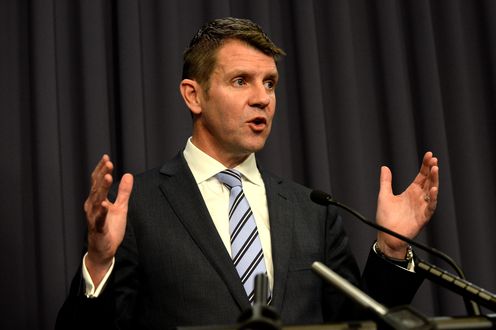
Recommendation 11: The Bill should provide for the appointment of a dedicated Sexual Orientation and Gender Identity Commissioner.