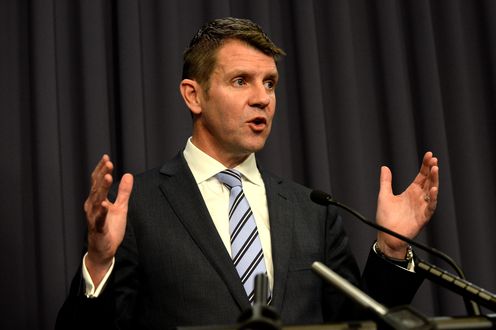
You’re wrong Malcolm Turnbull, homophobia is legally acceptable in Australia

It is now one week since the tragic events in Orlando, where 49 people were murdered in a gay nightclub, simply because they were lesbian, gay, bisexual or transgender (or were there as their family or friends).


I haven’t written specifically about those events for a few reasons. First, because I guess I’m still somewhat in shock about it and, like others, it will take some time to process the sheer scale of horrific, homophobic violence involved.


Second, because I haven’t wanted to talk about Orlando in the context of other public debates and risk them being unduly conflated (although, for the record, I do think it is a warning, albeit an extreme one, of the risks of a plebiscite generating hatred and vitriol towards Australia’s LGBTI community).


Third, and perhaps most importantly, I haven’t written anything because what has been written, and said, by others has been so eloquent, and so passionate, that I haven’t really felt the need to add anything. In fact, the outpouring of words and actions (including the vigils for Orlando held in many parts of the world, including here in Sydney) by LGBTI people and our allies over the past seven days has been a beautiful, and in many ways reassuring, thing to behold.


Countless others have already said the things that needed to be said, far better than I could ever say them:


Focusing on the names of the people killed, rather than that of the killer (such as CNN reporter Anderson Cooper’s touching report about the victims).


Challenging any erasure of the fact this was explicitly a homophobic and transphobic hate-crime, including:


Reminding us that this was an attack on a minority within a minority – Latinx members of the LGBT community.


Rejecting any moves to respond to homophobia with Islamophobia, as well as respecting and actively being inclusive of another minority within a minority – LGBTI Muslims.


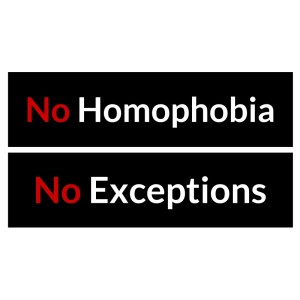
Last, but certainly not least, seeing the individual act of homophobic and transphobic violence in the broader frame of homophobia and transphobia across the United States – and sadly, Australia – which is perhaps summed up best by this widely-shared social media image:


You werent the gunman


*********


In this context, as someone who primarily writes about LGBTI law and public policy, I didn’t have much further to offer – that is, until Australia’s right-wing media, and Prime Minister Malcolm Turnbull, made it a policy, and political, issue.


During the week, The Australian newspaper decided to turn their focus on hate-speech by some Islamic preachers. Specifically, they campaigned for the visa of Farrokh Sekaleshfar to be revoked on the basis of a speech in 2013 where he supported the imposition of the death penalty for homosexuality in some circumstances:


“Death is the sentence. There’s nothing to be embarrassed about this. Death is the sentence. We have to have that compassion for people. With homosexuals, it’s the same. Out of compassion, let’s get rid of them now.” [Mr Sekaleshfar ultimately chose to leave the country before he was forced out].


They then swung their attention towards the guests hosted by Turnbull at an Iftar dinner in Sydney, including the President of the Australian National Imams Council, Mr Shady Alsuleiman, again bringing up comments from 2013 where he reportedly said the following:


“What’s the most common disease these days? HIV, AIDS, that’s so common and there’s no cure to it. And when did it exist? Just decades ago, and more diseases are coming… [It’s] homosexuality that’s spreading all these diseases.”


Leaving aside the clear anti-Muslim bias of this newspaper – given it champions the voices of Christian advocates who condemn homosexuality rather than attacking them (hypocrisy that is perfectly skewered by the First Dog on the Moon in this cartoon, and especially the line “Christian homophobes against Islamic homophobia”) – there is a legitimate question about where the limits of ‘acceptable’ speech should be drawn, irrespective of the religion of the person saying them (Muslim, Christian, other or none).


The fact Mr Alsuleiman was a ‘dinner guest’ of the Prime Minister means it is entirely justifiable that he was asked for his view on those comments, and this was Mr Turnbull’s response:


“Homophobia is to be condemned everywhere, number one. We are a broad, diverse country and we must respect the right of gay Australians, we respect the right of the LGBTI community and the right for them to lead their lives and gather in peace and harmony. The massacre in Orlando, that shocking assault on the people in the gay nightclub is a shocking reminder, frankly, of how much hate and intolerance there is in the world, and how important it is for us to stand up for mutual respect that I spoke about earlier. That is the very foundation of our society. So I condemn, I deplore homophobia wherever it is to be found. It is not acceptable from a legal point of view in Australia, as you know, and I just – I’m sure that – well I know that [Mr Alsuleiman] has been encouraged to reflect very deeply on his remarks which were of some years ago, and it’s up to him how he restates or reconsiders his position.”


There are, of course, some fine sentiments expressed here, as well as some less-than-stellar interventions (as a public scolding, being “encouraged to reflect deeply on his remarks” is akin to Paul Keating’s description of John Hewson: “it was like being flogged with warm lettuce”).


But the thing that has stuck with me and, to be completely honest, has thoroughly pissed me off, is that the Prime Minister is fundamentally wrong. Specifically, his comment that “I deplore homophobia wherever it is to be found. It is not acceptable from a legal point of view in Australia, as you know…” IS. SIMPLY. NOT. TRUE.


Sorry, Malcolm, but you are very, very wrong: homophobia is indeed acceptable under Australian law, and in some places it is actively encouraged.


Here, I want to discuss briefly two such examples (although I’m sure readers of this blog could come up with several others):


First, as I have written previously[i], while the Racial Discrimination Act 1975 prohibits vilification on the basis of race, there are currently no prohibitions against the vilification of lesbian, gay, bisexual, transgender and intersex people under Commonwealth law. None. Zip. Zilch. Zero. Nada.


Which means that, while the Government could take action against Mr Sekaleshfar on the basis of his visa, they legally could not do anything against Mr Alsuleiman – because he would not have breached any Commonwealth laws.


Even at state and territory level, only four jurisdictions have legislated against LGBTI vilification (NSW, Queensland, Tasmania and the ACT), and in many cases those laws are incomplete or out of date too (for example, only offering protection to some members of the LGBTI community and not others[ii]).


So, while Mr Turnbull might like to say that homophobia “is not acceptable from a legal point of view in Australia, as you know”, that’s definitely not true – especially under Commonwealth law. And, based on the past term of the Abbott-Turnbull Coalition Government, with its initial attempt to wind back racial vilification, it’s a situation doesn’t look like changing any time soon either.


Second, while the historic Sex Discrimination Amendment (Sexual Orientation, Gender Identity and Intersex Status) Act 2013 introduced LGBTI anti-discrimination protections in Commonwealth law for the first time, it also contained provisions that, at the same time, severely curtailed those protections[iii].


For example, the general religious exceptions under section 37, and the specific exceptions provided to religious schools under section 38, mean there is no obligation on religious bodies to treat LGBT people fairly, or with even a minimum of respect. Indeed, religious schools are free to fire, and refuse to hire, LGBT teachers, as well as expel or refuse to enrol LGBT students.


The vast majority of state and territory anti-discrimination schemes[iv] include similar exceptions, with NSW’s Anti-Discrimination Act 1977 featuring the broadest (a school doesn’t even need to be religious, just ‘private’, in NSW to enjoy the privilege to discriminate against LGBT teachers and students).


All of which means that, were Mr Alsuleiman, or even Mr Sekaleshfar, to make similar comments, not on YouTube but instead in the classrooms or mosques (or churches) of a religious school, I cannot see the Commonwealth Government being able to do anything much about it under the law as it stands.


One aspect of this situation that sticks in the craw of many people is that all taxpayers, including LGBTI taxpayers, are effectively paying for this discrimination against LGBTI young people – because those same schools, which do not have to abide by the community standards against homophobia and transphobia that Mr Turnbull tried to articulate on Friday, still put their hands out for Commonwealth (and state and territory) funding.


But we should never forget that it is the LGBTI young people themselves, stuck in schools their parents have chosen, and potentially exposed to homophobia, biphobia, transphobia and intersexphobia from their principals and teachers, effectively condoned by governments of all levels, are the ones who ‘pay’ the highest price.


There are, of course, other aspects of Malcolm Turnbull’s comments that are offensive, not the least of which is the fact he chose to speak out against the homophobia of an Islamic preacher, because he invited him to dinner, but has so far steadfastly refused to condemn the homophobia from MPs and Senators who form part of his Government, even, for example, when they compare a program against the bullying of LGBTI young people to ‘sexual grooming’.


Here too though, rather than trying to explain this double-standard, I will quote another person who neatly summed up the glaring disparity via twitter:


Lane Sainty (@lanesainty 17 June 2016):


“I have So Many Complicated Thoughts about the two Islamic leaders criticised in the Australian press for their anti-gay comments.


I’ve seen people slamming comparisons Australian Christians – saying it’s not the same to oppose Safe Schools and to want gay people to die.


Given the suicide rates of trans kids, there’s actually an argument to be made there. But even if you accept the distinction, it’s still…


…not being an apologist for Muslim anti-LGBTI views to point out the hypocrisy of how we address queerphobia depending on religion.


Turnbull’s failure to condemn comments linking paedophilia and Safe Schools was deeply hurtful to LGBTI people. I cannot overstate this.


Yet look at his speed to denounce the sheik. Why condemn someone he shared a meal with, but not the anti-LGBTI folk on his own backbench?


Here’s the political message this sends: Islamic queerphobia = unacceptable, but Christian queerphobia = acceptable.


Actually, none of is acceptable. As long as you’re not actively calling for gays to die, you’re fine? No. That’s not how it works.


Anyway, many Muslims have written about combating homophobia within their community since Orlando. Read their words.


Just don’t forget that queerphobia doesn’t start with calling for actual violence against LGBTI people. It finishes there, if anything.”


Lane then followed that with an excellent article on Buzzfeed, with the rather self-explanatory title “7 Other Times People were Homophobic and the PM didn’t Condemn it”.


So, if Prime Minister Malcolm Turnbull genuinely “deplore[s] homophobia wherever it is to be found”, then there are some serious examples of it very close to his political home – will George Christensen, Cory Bernardi and others be similarly told to ‘reconsider their positions’?


And, if he wants to make sure homophobia “is not acceptable from a legal point of view in Australia”, then I know two places where he can start: introducing LGBTI anti-vilification protections in Commonwealth law, and removing religious exceptions from the Sex Discrimination Act 1984. If he doesn’t, then all his ‘condemnations’ of homophobia will start to sound a little hollow to me.


Footnotes:

[i] Don’t limit racial vilification protections, introduce vilification protections for LGBTI Australians instead.

[ii] In NSW, while homosexual and transgender vilification is outlawed, bisexual and intersex vilification is lawful: see What’s wrong with the NSW Anti-Discrimination Act 1977?

[iii] See What’s wrong with the Commonwealth Sex Discrimination Act 1984?

[iv] With the exception of Tasmania and, to a lesser extent, Queensland.
Letter to Candidates and Parties re LGBTI Anti-Discrimination and Anti-Vilification

[Update 29 June 2016: Responses received by midday today have been posted at the end of this post, generally in the order they were received. Further responses will be added if they are received by 5pm Thursday 30 June.]


I will be sending the below letter to all candidates contesting my local electorate (Sydney) and all parties vying for NSW Senate seats at the upcoming July 2 Federal Election (with candidates and tickets announced by the Australian Electoral Commission on Friday 10 June 2016).


Specifically, I am asking for their views on how the anti-discrimination laws that cover lesbian, gay, bisexual, transgender and intersex (LGBTI) Australians can be improved. This includes the removal of religious exceptions, both generally and specifically in relation to education, the introduction of LGBTI anti-vilification protections, and the establishment of an LGBTI Discrimination Commissioner.


It also seeks their commitment not to introduce new ‘special rights’ to discriminate against LGBTI couples as part of any marriage equality legislation – because the recognition of equal love should not be undermined by including provisions supporting differential treatment.


As always, I will post any responses that I receive here. Please feel free to send similar letters to the candidates and parties contesting your electorate and Senate seats respectively.


**********


Dear [candidate/party]


LGBTI anti-discrimination & anti-vilification


I am writing to you in your capacity as a [candidate for my electorate of Sydney/party contesting the NSW Senate] at the July 2 Federal Election.


Specifically, I am writing to seek your commitments to help improve the current anti-discrimination and anti-vilification protections provided to lesbian, gay, bisexual, transgender and intersex (LGBTI) Australians.


While the Sex Discrimination Amendment (Sexual Orientation, Gender Identity and Intersex Status) Act 2013 was historic, introducing LGBTI anti-discrimination laws at Commonwealth level for the first time, the protection that it offers remains incomplete.


For example, the exceptions provided by sections 37 and 38 of the Sex Discrimination Act 1984 (‘the Act’) to religious organisations and religious schools ensure that LGBTI people remain subject to discrimination across a wide range of areas of public life.


Unlike the laws prohibiting racial vilification in the Racial Discrimination Act 1975, there are also no protections against LGBTI vilification under Commonwealth law.


Nor does the Act establish a Commissioner with responsibility to address LGBTI Discrimination – whereas the Australian Human Rights Commission does have Commissioners for Aboriginal and Torres Strait Islander Social Justice, Age Discrimination, Disability Discrimination, Race Discrimination, Sex Discrimination and a Children’s Commissioner.


For more on what I believe are the limitations of current Commonwealth LGBTI anti-discrimination law, please see “What’s wrong with the Sex Discrimination Act 1984?”


There is one final issue relating to LGBTI anti-discrimination law that is also likely to arise in the next term of Parliament – and that is the question of whether the legislation which, hopefully, introduces marriage equality in Australia will also include new ‘special rights’ for civil celebrants, and businesses that provide wedding-related services, to discriminate against LGBTI couples.


In my opinion, the law that finally recognises equal love in this country should not be undermined by provisions that allow for differential treatment (for more on this subject, please see “In the battle for marriage equality, we must not forget to fight against religious exceptions”).


I am seeking your views on the above issues – and would therefore appreciate your answers to the following five associated questions:


  1. Will you repeal sub-section 37(1)(d) of the Sex Discrimination Act 1984, which currently allows religious organisations to discriminate against LGBTI employees, and LGBTI people accessing services, in a wide range of areas of public life?


  1. Will you repeal section 38 of the Act that provides religious schools with the ability to discriminate against LGBTI teachers and students?


  1. Do you commit to introducing new laws to protect LGBTI Australians against vilification, on an equivalent basis to racial vilification laws?


  1. Will you establish a position of LGBTI Discrimination Commissioner within the Australian Human Rights Commission, with similar responsibilities to existing Commissioners covering the areas of Race, Sex, Disability and Age?


  1. Will you oppose the inclusion of new exceptions in any marriage equality legislation that would seek to provide civil celebrants, and businesses providing wedding-related services, with the ability to discriminate against LGBTI couples?


I look forward to receiving responses from you in advance of the July 2 Federal Election on these issues of concern to me, and to other lesbian, gay, bisexual, transgender and intersex Australians.


Sincerely,

Alastair Lawrie

N-3

Responses from Candidates for the Seat of Sydney


Tula Tzoras – Online Direct Democracy

Tom Geiser – Science Party

Peter Boyle – Socialist Alliance

Tanya Plibersek – Australian Labor Party

Sylvie Ellsmore – Greens


Responses from Candidates for the NSW Senate


Ross Fitzgerald – Australian Sex Party

Colin Broadbridge – Christian Democratic Party (Fred Nile Group)

Phil Jobe – Family First

Ray Bennie – Veterans Party

Ingrid Ralph – Australian Cyclists Party

Jai Cooper – Australian Cyclists Party

Ken Canning – Socialist Alliance

Party Response – Socialist Alliance

Andrew Katelaris – Marijuana (HEMP) Party

Greg Frearson – Mature Australia

Ken Stevens – Derryn Hinch’s Justice Party

Ann Lawler – Citizens Electoral Council

Barry Keldoulis – The Arts Party

Stacey Dowson – Drug Law Reform

Janise Farrell – Voluntary Euthanasia Party

Darren McIntosh – Pirate Party Australia

Party Response – Australian Labor Party

Shayne Higson – Voluntary Euthanasia Party


Bryan Lambert – Independent

Nick Chapman – Independent

David Ash – Independent


What’s Wrong With the Commonwealth Sex Discrimination Act 1984?

This post is part of a series examining anti-discrimination laws around the country, focusing on how well, or in many cases how poorly, they protect lesbian, gay, bisexual, transgender and intersex (LGBTI) Australians against discrimination and vilification. The other posts can be found at the page LGBTI Anti-Discrimination[i] while the text of the Commonwealth Sex Discrimination Act 1984 (‘the Act’) can be found at the Federal Register of Legislation.[ii]

In this post I will be analysing the Act in terms of three main areas: protected attributes, religious exceptions and anti-vilification coverage. I will then briefly discuss any other key ways in which the protections offered by the Act could be improved or strengthened.

As we shall see, while the fact the Sex Discrimination Act includes all sections of the LGBTI community is to be welcomed, there are still some serious deficiencies that need to be remedied before it can be considered an effective anti-discrimination, and anti-vilification, framework.

**********

Protected Attributes

The Commonwealth Sex Discrimination Act 1984 is one of only four anti-discrimination laws in Australia that explicitly includes all of lesbians, gay men and bisexuals[iii], and transgender[iv] and intersex[v] people (with the other jurisdictions being Tasmania, the ACT and South Australia).

This high level of inclusivity is in large part a consequence of the fact the Commonwealth was the last jurisdiction in Australia to introduce any protections against anti-LGBTI discrimination.

The Sex Discrimination Amendment (Sexual Orientation, Gender Identity and Intersex Status) Act 2013 was only passed in June 2013, taking effect on August 1st of that year – more than three decades after the NSW Anti-Discrimination Act 1977 first covered homosexual discrimination (way back in 1982).

It is perhaps logical then that the most recently passed anti-discrimination law in the country would use the most contemporary terminology. Nevertheless, the achievements of the Act, and the breadth of the protected attributes that are covered, should still be celebrated.

In particular, the Sex Discrimination Amendment (Sexual Orientation, Gender Identity and Intersex Status) Act 2013 was the first national anti-discrimination law in the world to explicitly include intersex status as a stand-alone protected attribute. Although, it should be noted that, in the March 2017 Darlington Statement, intersex activists called for this terminology to be replaced by the protected attribute ‘sex characteristics’ as being more accurate and more inclusive.

The definitions of the other protected attributes introduced – sexual orientation and gender identity – are progressive in that they do not reinforce a sex or gender ‘binary’.

Sexual orientation in the Act refers to attraction to “the same sex” or “a different sex” (rather than the opposite sex), while the definition of gender identity does not require a transgender person to identify as male or female (and does not impose any medical or surgical requirements to receive protection either).

Overall, then, the Sex Discrimination Act 1984 is strong in terms of the protected attributes that it covers. Unfortunately, it is mostly downhill from here.

**********

Religious Exceptions

While the Sex Discrimination Act 1984 is close to the best of any jurisdiction when it comes to protected attributes, in terms of religious exceptions it repeats the same mistakes of most state and territory anti-discrimination legislation.

Under sub-section 37(1), the Act provides religious organisations with extremely broad special rights to discriminate against LGBT[vi] Australians:

“37 Religious bodies

(1) Nothing in Division 1 or 2 affects:

(a) the ordination or appointment of priests, ministers of religion or members of any religious order;

(b) the training or education of persons seeking ordination or appointment as priests, ministers of religion or members of a religious order;

(c) the selection or appointment of persons to perform duties or functions for the purposes of or in connection with, or otherwise to participate in, any religious observance or practice; or

(d) any other act or practice of a body established for religious purposes, being an act or practice that conforms to the doctrines, tenets or beliefs of that religion or is necessary to avoid injury to the religious susceptibilities of adherents of that religion.”

If religious exceptions are supposed to protect ‘religious freedom’, then the first three paragraphs above, (a)-(c), at least have the benefit of being targeted at activities that are essentially religious in nature (the appointment of religious office-holders, and the holding of religious ceremonies).

However, paragraph (d) appears to endorse discrimination against lesbian, gay, bisexual and transgender Australians across large swathes of public life, including in community, health and welfare services, provided the organisation that does the discriminating was established by a religious body.

This is overly generous, and completely unjustified – especially, although not solely, because the vast majority of these services receive public funding. After all, the sexual orientation or gender identity of a social worker or healthcare professional has absolutely zero bearing on their competence in their role.

The same provision also means that these services can turn away lesbian, gay, bisexual and transgender clients – irrespective of their personal circumstances and need – which is perhaps even more offensive than discriminating against LGBT employees.

Just in case there was any doubt whether religious schools were covered by sub-section 37(1)(d)[vii], the Act then includes an entire section which allows these schools to discriminate against LGBT teachers[viii], contract workers[ix] and students[x].

It appears some religious schools believe the capacity of a person to teach mathematics or science or English is somehow affected by their sexual orientation or gender identity. And it seems that the teachers employed by these schools are expected to impart the values of exclusion and intolerance to their students – what better way for young people to learn to discriminate against LGBT people, all endorsed by the Sex Discrimination Act.

There is however one area in which the Act refused to provide carte blanche to religious organisations to discriminate against LGBTI people, and that was through the inclusion of sub-section 37(2):

“Paragraph (1)(d) does not apply to an act or practice of a body established for religious purposes if:

(a) the act or practice is connected with the provision, by the body, of Commonwealth-funded aged care; and

(b) the act or practice is not connected with the employment of persons to provide that aged care.”[xi]

In other words, religious organisations that operate Commonwealth-funded aged care services cannot discriminate against lesbian, gay, bisexual or transgender people accessing those services (although they can continue to fire, or refuse to hire, LGBT employees).

This ‘carve-out’ was passed despite opposition from some sections of the then Tony Abbott-led Liberal-National Opposition, including Shadow Attorney-General George Brandis[xii], as well as some particularly vocal and extreme religious organisations, with the provisions taking effect on August 1st 2013.

In practice, there has been no controversy about the operation of this carve-out[xiii] – basically, it works to protect LGBT people accessing aged care services, irrespective of who operate those services, while having no adverse impact on religious freedom.

It is now time that this approach – limiting the ability of religious organisations to discriminate against LGBT people in one area of public life – was expanded to protect LGBT employees in those same aged care services, as well protecting employees and clients across education, community, health and welfare services[xiv].

After all, the worthy objects of the Sex Discrimination Act 1984, including “to eliminate, so far as is possible, discrimination against persons on the ground of sex, sexual orientation, gender identity, intersex status, marital or relationship status, pregnancy or potential pregnancy or breastfeeding in the areas of work, accommodation, education, the provision of goods, facilities and services, the disposal of land, the activities of clubs and the administration of Commonwealth laws and programs”[xv] cannot be met if, in the same text it allows LGBT Australians to be discriminated against by a large number of organisations, and across a wide range of services.

**********

Anti-Vilification Coverage

This section will be the shortest of this post because, well, there isn’t any – the Sex Discrimination Act 1984 contains no coverage against vilification for lesbian, gay, bisexual, transgender and intersex Australians.

This stands in marked contrast to the situation for vilification based on race, which is prohibited by section 18C of the Racial Discrimination Act 1975 – a section that has operated effectively for more than two decades (just ask Andrew Bolt), and which has withstood multiple recent attempts at its severe curtailment.

Given homophobic, biphobic, transphobic and intersexphobic vilification are just as serious, and just as detrimental, as racial vilification, there is no reason why LGBTI Australians should not have equivalent protections under the Sex Discrimination Act 1984[xvi].

This would also bring the Commonwealth into line with the four Australian jurisdictions[xvii] that already prohibit vilification against at least some parts of the LGBTI community.

**********

Other Issues

There are several other areas in which the Sex Discrimination Act 1984 does not currently provide adequate protections for the LGBTI community, including:

The failure to create an LGBTI Commissioner

Part V of the Act creates the position of Sex Discrimination Commissioner within the Australian Human Rights Commission (AHRC). Other areas of discrimination also benefit from the appointment of stand-alone full-time Commissioners, whose primary purpose is to combat such discrimination (including the Race, Age and Disability Commissioners).

However, no equivalent position, addressing LGBTI discrimination, was created with the passage of the Sex Discrimination Amendment (Sexual Orientation, Gender Identity and Intersex Status) Act 2013.

This serious oversight meant that, for most of the last term of Parliament, LGBTI issues were handled on a part-time basis by the then ‘Freedom Commissioner’ (and now Liberal MP), Tim Wilson, whose primary role was to ‘defend’ traditional rights. Whenever those two areas of human rights were deemed to come into conflict, LGBTI issues seemed to come off second-best[xviii].

If LGBTI discrimination is to be treated seriously by the Commonwealth Government, it must provide the same level of resources to address it within the AHRC – and that means introducing an LGBTI Commissioner as a matter of priority.

Superannuation protections exclude transgender and intersex people

Section 14 of the Act prohibits discrimination in employment, with sub-section 14(4) focusing on superannuation. However, while it prohibits discrimination on the basis of sexual orientation, it excludes gender identity and intersex status from the list of relevant attributes[xix], apparently leaving transgender and intersex people without protection in this area.

Partnerships of five or less people can discriminate against LGBTI people

Section 17 of the Sex Discrimination Act 1984 prohibits discrimination in relation to ‘partnerships’, including who is invited to become a partner and the terms and conditions on which they are invited. However, these protections only apply to situations where there are six or more partners, meaning that LGBTI are not protected where there are five or less partners[xx].

Voluntary bodies have no restriction on their ability to discriminate

Section 39 of the Act provides a very broad ‘right’ for voluntary bodies to discriminate on a wide range of protected attributes, including sexual orientation, gender identity and intersex status, including in determining who may be admitted as members, and the benefits that members receive. While acknowledging the importance of the ‘freedom to associate’, it seems strange that there is no requirement that the discrimination be related to the purpose of the voluntary body, but is instead essentially unrestricted.

Discrimination by marriage celebrants

As part of the recent passage of LGBTI marriage by Commonwealth Parliament, the Sex Discrimination Act was amended so that, in addition to the existing ability of ministers of religion and military chaplains to decline to perform wedding ceremonies, the new category of ‘religious marriage celebrants’ will also be free to discriminate against LGBTI couples seeking to marry[xxi]. This is despite the fact this includes existing civil celebrants who have nominated to so discriminate based on nothing more than their personal religious beliefs.

Protections in sport exclude transgender and intersex people aged 12 and over

Section 42 of the Sex Discrimination Act 1984 limits the coverage of anti-discrimination protection in relation to sport, in particular by allowing discrimination against transgender and intersex people in “any competitive sporting activity in which the strength, stamina or physique of competitors is relevant” where the participants are aged 12 or over. As with the voluntary bodies provision, this exception appears unnecessarily broad.

Requesting information that does not allow options other than male or female is not prohibited

Finally, section 43A provides that “[t]he making of a request for information is not unlawful… merely because the request does not allow for a person to identify as being neither male nor female” and that “[n]othing… makes it unlawful to make or keep records in a way that does not provide for a person to be identified as being neither male nor female.” If we are to truly recognise diversity in sex and gender, it should be reflected in requests for information.

**********

Summary

Based on the above discussion, the LGBTI anti-discrimination protections that were introduced via the Sex Discrimination Amendment (Sexual Orientation, Gender Identity and Intersex Status) Act 2013 can be described as a good start (albeit one that was long overdue).

That it includes all sections of the LGBTI community is obviously welcome, and the ‘carve-out’ of aged care service provision from religious exceptions is important in and of itself, as well as demonstrating that those same kind of exceptions are both unnecessary and unjustified.

On the other hand, the fact the Act permits discrimination by religious aged care services against LGBT employees, as well as religious organisations providing education, community, health and welfare services – against employees and clients – is its biggest downfall.

Other major problems include the complete absence of anti-vilification coverage for the LGBTI community (unlike section 18C of the Racial Discrimination Act 1975), and the failure to create an LGBTI Commissioner within the Australian Human Rights Commission.

All of which means there is plenty of work left to do until the Sex Discrimination Act 1984 provides a comprehensive and effective anti-discrimination, and anti-vilification, framework for lesbian, gay, bisexual, transgender and intersex Australians.

Christian Porter

Commonwealth Attorney-General Christian Porter should spend a little more time fixing the serious problems of the Sex Discrimination Act 1984, and a little less trying to undermine it through his proposed Religious Discrimination Bill.

If you have enjoyed reading this article, please consider subscribing to receive future posts, via the right-hand scroll bar on the desktop version of this blog or near the bottom of the page on mobile. You can also follow me on twitter @alawriedejesus


Footnotes:

[i] See LGBTI Anti-Discrimination

[ii] See the Federal Register of Legislation

[iii] Discrimination on the ground of sexual orientation is prohibited by section 5A, with sexual orientation defined by the Act in section 4 as “sexual orientation means a person’s orientation towards:

(a) persons of the same sex; or

(b) persons of a different sex; or

(c) persons of the same sex and persons of a different sex.”

[iv] Discrimination on the ground of gender identity is prohibited by section 5B, with gender identity defined by the Act in section 4 as “gender identity means the gender-related identity, appearance or mannerisms or other gender-related characteristics of a person (whether by way of medical intervention or not), with or without regard to the person’s designated sex at birth.”

[v] Discrimination on the ground of intersex status is prohibited by section 5C, with intersex status defined by the Act in section 4 as “intersex status means the status of having physical, hormonal or genetic features that are:

(a) neither wholly female nor wholly male; or

(b) a combination of female and male; or

(c) neither female nor male.”

[vi] Prima facie, it also appears to allow discrimination against intersex people, although the lengthy consultation process that preceded the legislation’s passage demonstrated that religious organisations did not propose to use this exception for that purpose. The Explanatory Memorandum for the Act also indicates these exceptions should not be used with respect to this protected attribute.

[vii] There isn’t really any doubt – sub-section 37(1)(d) clearly applies to religious schools, which means that, just like the NSW Anti-Discrimination Act 1977, religious schools can actually choose from between two different exceptions to defend their discrimination against LGBT teachers and students.

[viii] Section 38 Educational institutions established for religious purpose

(1) Nothing in paragraph 14(1)(a) or (b) or 14(2)(c) renders it unlawful for a person to discriminate against another person on the ground of the other person’s sex, sexual orientation, gender identity, marital or relationship status or pregnancy in connection with employment as a member of the staff of an educational institution that is conducted in accordance with the doctrines, tenets, beliefs or teachings of a particular religion or creed, if the first-mentioned person so discriminates in good faith in order to avoid injury to the religious susceptibilities of adherents of that religion or creed.

[ix] Section 38(2) Nothing in paragraph 16(b) renders it unlawful for a person to discriminate against another person on the ground of the other person’s sex, sexual orientation, gender identity, martial or relationship status or pregnancy in connection with a position as a contract worker that involves the doing of work in an educational institution that is conducted in accordance with the doctrines, tenets, beliefs or teachings of a particular religion or creed, if the first-mentioned person so discriminates in good faith in order to avoid injury to the religious susceptibilities of adherents of that religion or creed.

[x] Section 38(3) Nothing in section 21 renders it unlawful for a person to discriminate against another person on the ground of the other person’s sexual orientation, gender identity, marital or relationship status or pregnancy in connection with the provision of education or training by an educational institution that is conducted in accordance with the doctrines, tenets, beliefs or teachings of a particular religion or creed, if the first-mentioned person so discriminates in good faith in order to avoid injury to the religious susceptibilities of adherents of that religion or creed.

[xi] This provision is reinforced by sub-section 23(3A) which states that religious organisations cannot discriminate against LGBT residents of Commonwealth-funded aged care facilities in terms of accommodation: “Paragraph 3(b) does not apply to accommodation provided by a religious body in connection with the provision, by the body of Commonwealth-funded aged care.”

[xii]See #QandA, Senator Brandis and LGBTI anti-discrimination reforms

[xiii] Given the wide range of scare campaigns run by the Australian Christian Lobby, and others, over recent years (calling for the abolition of the Safe Schools program, and their unsuccessful opposition to marriage equality) there is no doubt if there had been any practical problems with the aged care provisions they would have been splashed across the front page of The Australian by now.

[xiv] This would involve repealing sub-section 37(1)(d) entirely, as well as restricting related provisions (such as sub-section 23(3)(b) that allows religious bodies to discriminate in the provision of accommodation) so that they only apply with respect to the appointment and training of ministers of religion, and the holding of religious ceremonies.

[xv] Sub-section 3(b).

[xvi] For more on this issue – the contrast between section 18C of the RDA, and the lack of LGBTI anti-vilification protections federally – see Don’t Limit Racial Vilification Protections, Introduce Vilification Protections for LGBTI Australians Instead

[xvii] Queensland, NSW, the ACT and Tasmania.

[xviii] For more on this issue, see Why we need a full-time LGBTI Commissioner at the Australian Human Rights Commission

[xix] (4) Where a person exercises a discretion in relation to the payment of a superannuation benefit to or in respect of a member of a superannuation fund, it is unlawful for the person to discriminate, in the exercise of the discretion, against the member or another person on the ground, in either case, of the sex, sexual orientation or marital or relationship status of the member or that other person.

[xx] The same situation applies with respect to sex, marital or relationship status, pregnancy or potential pregnancy, breastfeeding or family responsibilities.

[xxi Section 40 includes the following:

“(2A)  A minister of religion (as defined in subsection 5(1) of the Marriage Act 1961) may refuse to solemnise a marriage despite anything in Division 1 or 2, as applying by reference to section 5A, 5B, 5C or 6, if any of the circumstances mentioned in paragraph 47(3)(a), (b) or (c) of the Marriage Act 1961 apply.

(2AA)  A religious marriage celebrant (as defined in subsection 5(1) of the Marriage Act 1961) may refuse to solemnise a marriage despite anything in Division 1 or 2, as applying by reference to section 5A, 5B, 5C or 6, if:

(a)  the identification of the person as a religious marriage celebrant on the register of marriage celebrants has not been removed at the time the marriage is solemnised; and

(b)  the circumstances mentioned in subsection 47A(1) of the Marriage Act 1961apply.

(2AB)  A chaplain in the Defence Force may refuse to solemnise a marriage despite anything in Division 1 or 2, as applying by reference to section 5A, 5B, 5C or 6, if any of the circumstances mentioned in paragraph 81(2)(a), (b) or (c) of the Marriage Act 1961apply.

Note: Paragraph 37(1)(d) also provides that nothing in Division 1 or 2 affects any act or practice of a body established for religious purposes that conforms to the doctrines, tenets or beliefs of that religion or is necessary to avoid injury to the religious susceptibilities of adherents of that religion.”

What’s Wrong With the NSW Anti-Discrimination Act 1977?

UPDATED 11 March 2023:

This post is part of a series looking at anti-discrimination laws around Australia and examining how well, or how poorly, they protect lesbian, gay, bisexual, transgender and intersex (LGBTI) people against discrimination and vilification.[i]

This includes analysing three key issues: protected attributes, religious exceptions and anti-vilification coverage. Unfortunately, as we shall see below, the Anti-Discrimination Act 1977 has serious shortcomings in all of these areas, and NSW has gone from having the first gay anti-discrimination laws in Australia, to having the worst.

It is clear this legislation is in urgent need of major reform. What is less clear is whether the current NSW Government is up to the task.

Protected Attributes

As indicated above, NSW was the first jurisdiction in Australia to introduce anti-discrimination protections for ‘homosexuals’. In fact, it passed these laws in late 1982, 18 months before homosexuality was decriminalised, meaning a gay man could not be discriminated against for who he was (in some areas of public life at least), but could still be convicted for having sexual intercourse in private. The problem is that the protected attributes included in the Anti-Discrimination Act 1977 have not kept pace with community standards in the decades since.

There was one positive clarification in 1994 that “homosexual means male or female homosexual”[ii] (to overcome any erroneous assumption that homosexuality only referred to gay men). However, the only significant expansion in the past 41 years was the introduction of transgender as a protected attribute in 1996:

Section 38A Interpretation

A reference in this Part to a person being transgender or a transgender person is a reference to a person, whether or not the person is a recognised transgender person[iii]:

(a) who identifies as a member of the opposite sex by living, or seeking to live, as a member of the opposite sex, or

(b) who has identified as a member of the opposite sex by living as a member of the opposite sex, or

(c) who, being of indeterminate sex, identifies as a member of a particular sex by living as a member of that sex,

and includes a reference to the person being thought of as a transgender person, whether the person is, or was, in fact a transgender person.”

While this reform was a major step forward, it nevertheless failed to cover all discrimination on the basis of gender identity. This protected attribute focuses only on binary genders – covering people whose sex was designated as male at birth, but now identify as female (and vice versa). It does not cover other people along a more inclusive spectrum, including people who do not identify exclusively as either male or female.

Section 38A of the NSW Anti-Discrimination Act 1977 is therefore no longer best practice, and a new, more inclusive definition[iv] should be adopted to ensure all trans and gender diverse people, including non-binary people, benefit from anti-discrimination protection.

Intersex people are even worse off under the Act. Paragraph (c) of the definition above offers their only protection under NSW law, but it is problematic because:

  • It inappropriately conflates intersex, which relates to physical sex characteristics, with gender identity, and
  • It only appears to protect people with innate variations of sex characteristics where they identify as either male or female.

To remedy this situation, a stand-alone protected attribute of ‘sex characteristics’ should be introduced, based on the March 2017 Darlington Statement by intersex activists.[v]

There is, however, one section within the LGBTI community that is not included in the entire Anti-Discrimination Act, not even in an out-dated, fundamentally flawed or only partial way. In fact, one of the five letters of the acronym has no anti-discrimination coverage at all: bisexual people.

NSW is the only jurisdiction in Australia where its anti-discrimination laws do not cover discrimination on the basis of bisexuality. That is as bizarre as it is offensive.

It must be remedied at the earliest possible opportunity by the NSW Parliament, with either the introduction of a new stand-alone protected attribute of ‘bisexual’, or (preferably) by the modernisation of the current protected attribute of ‘homosexual’ to instead refer to ‘sexual orientation’, in line with the Commonwealth Sex Discrimination Act 1984[vi].

Summary: The protected attributes contained in the NSW Anti-Discrimination Act 1977 are the narrowest in the country, only offering protection to gay men, lesbians, and some transgender people. It needs to be updated to ensure it covers gender identity and sex characteristics – so that non-binary and intersex people are protected – as well as extending anti-discrimination protection to bisexual people, whose exclusion is a gross oversight that has been allowed to stand for far too long.

**********

Religious Exceptions

In contrast to its narrowly-defined protected attributes, the religious exceptions included in the NSW Anti-Discrimination Act are in fact the broadest in Australia.

These loopholes allow religious organisations to discriminate against lesbian, gay and transgender people in a wide variety of circumstances, and are so generous that they substantially, and substantively, undermine the overall purpose of the legislation (which is supposedly “[a]n Act to render unlawful racial, sex and other types of discrimination in certain circumstances and to promote equality of opportunity between all persons”).

The main exceptions permitting anti-LG&T discrimination by religious organisations are found in section 56 of the Act:

Section 56 Religious bodies

Nothing in this Act affects:

(a) the ordination or appointment of priests, ministers of religion or members of any religious order,

(b) the training or education of persons seeking ordination or appointment as priests, ministers of religion or members of a religious order,

(c) the appointment of any other person in any capacity by a body established to propagate religion, or

(d) any other act or practice of a body established to propagate religion that conforms to the doctrines of that religion or is necessary to avoid injury to the religious susceptibilities of the adherents of that religion.”

While sub-sections (a) and (b) might appear reasonable, as they are at least related to the internal training and appointment of ministers of religion, sub-sections (c) and especially (d) are outrageous in their breadth, essentially sanctioning discrimination against lesbian, gay and transgender employees and people accessing services in any organisation that is considered ‘religious’, including schools, hospitals and social services.

The operation of these provisions, and sub-section 56(d) in particular, in giving effective carte blanche to religious organisations to discriminate on the basis of sexual orientation and gender identity in NSW was confirmed in a 2010 decision of the Court of Appeal[vii], allowing Wesley Mission to discriminate against a male same-sex couple who had applied to be foster carers to children in need.

Wesley successfully defended its prejudiced approach on the basis that “[t]he biblical teaching on human sexuality makes it clear that monogamous heterosexual partnership within marriage is both the norm and ideal.”[viii] This was in spite of the fact Wesley allowed single men and women to be carers (apparently they believed two dads or two mums had less to offer than one).

The ‘right to discriminate’ provided to religious organisations by section 56 of the NSW Anti-Discrimination Act 1977 is essentially without restriction. And this general ability to exclude lesbian, gay and transgender people in NSW is supplemented by additional loopholes covering specific areas of public life.

One of these covers discrimination in adoption services. While the equal right of same-sex couples to adopt was recognised in NSW law in 2010, those very same reforms inserted the following into the Anti-Discrimination Act 1977:

Section 59A Adoption services

(1) Nothing in Part 3A [transgender protections] or 4C [homosexual protections] affects any policy or practice of a faith-based organisation concerning the provision of adoption services under the Adoption Act 2000 or anything done to give effect to any such policy or practice.”

Which means that a religious organisation that operates an adoption service is legally permitted to deny a child the best possible adoptive parents solely because they might be lesbian, gay or transgender.

Perhaps the most (in)famous exceptions in the Act are those that apply to ‘private educational authorities’.[ix] Even though subsection 56(d) already allows religious schools to do whatever they want in relation to lesbian, gay and transgender teachers and students, NSW Parliament added specific clauses to ensure that private educational authorities can:

  • Discriminate against transgender employees[x]
  • Discriminate against transgender students, including by refusing their admission, attaching conditions to their admission, denying them benefits as a student, or by expelling them[xi]
  • Discriminate against lesbian and gay employees[xii] and
  • Discriminate against lesbian and gay students, including by refusing their admission, attaching conditions to their admission, denying them benefits as a student, or by expelling them[xiii].

Imagine considering it justified to seek special privileges to discriminate against these groups, let alone for State Parliament to condone such discrimination via legislation?

Perhaps the most extraordinary part of the ‘private educational authorities’ exceptions is that they aren’t even restricted to religious schools – in fact, the Anti-Discrimination Act 1977 allows all non-government schools and colleges, even where they have absolutely nothing to do with religion, to refuse to employ lesbian, gay and transgender people, and exclude or expel LG&T students.

Summary: The religious exceptions contained in the NSW Anti-Discrimination Act 1977 are the broadest in Australia, and fundamentally undermine the integrity of a framework which is supposed to address discrimination on the basis of sexual orientation and gender identity. Subsections 56(c) and (d) should be repealed, as well as the more specific exceptions offered to religious organisations in relation to adoption services, and those allowing private educational authorities to discriminate against lesbian, gay and transgender employees and students.

**********

Anti-Vilification Coverage

There is one area where anti-discrimination law in NSW has improved recently, and that is anti-vilification coverage, with the passage of the Crimes Amendment (Publicly Threatening and Inciting Violence) Act 2018.

However, because this was a piecemeal change, rather than part of a comprehensive reform package, it means NSW is left with a two-tier, fundamentally inconsistent anti-vilification regime.

On one hand, the civil prohibitions against vilification contained in the Anti-Discrimination Act 1977 only apply to homosexuality [xiv] and, as explained above, narrowly-defined transgender [xv] .

This means that bisexuals, non-binary people and people with innate variations of sex characteristics are not able to make complaints of vilification to Anti-Discrimination NSW.

On the other hand, the new Crimes Act 1900 offence of ‘publicly threatening or inciting violence’ in section 93Z applies to all of:

  • Sexual orientation
  • Gender identity, and
  • Intersex status.

All three are defined in section 93Z(5) [xvi] using the broadly-inclusive definitions of the Commonwealth Sex Discrimination Act 1984, and mean that bisexuals, non-binary people and people with innate variations of sex characteristics are protected in NSW anti-discrimination laws for the first time (although note that, once again, intersex advocates have called for intersex status to be replaced by the protected attribute of sex characteristics). [xvii]

The penalty for this offence is also relatively high: up to three years imprisonment for individuals, and up to 500 penalty units for corporations.

Summary: The 2018 anti-vilification reforms are welcome, both for bringing anti-LGBTI vilification provisions into closer alignment with other forms of vilification, and also for including bisexual, non-binary and intersex people for the first time. However, if anything, these changes have underscored just how out of date the other anti-vilification provisions of the Anti-Discrimination Act itself are, given it still covers only lesbian, gay and some trans people. This remains an area in desperate need of reform.

**********

Other Issues

While the ‘What’s Wrong With’ series concentrates on the three main areas of protected attributes, religious exceptions and anti-vilification coverage, I will also raise other issues relating to LGBTI anti-discrimination laws where they are significant.

In the case of the NSW Anti-Discrimination Act 1977, these include:

  • An incredibly broad exception allowing “the exclusion of a transgender person from participation in any sporting activity for members of the sex with which the transgender person identifies”[xviii]
  • An inappropriate exception allowing superannuation funds to “treat… the transgender person as being of the opposite sex to the sex with which the transgender person identifies”[xix] and
  • Perhaps most alarmingly, exceptions which allow employers to discriminate against lesbian, gay and transgender applicants and employees “if the number of persons employed by the employer… does not exceed 5”[xx].

In fact, a similar exception also permits discrimination in relation to the ground of sex[xxi] – but no such limitation applies to race[xxii].  Which means that the NSW Parliament has effectively determined that racial discrimination cannot be tolerated in employment in any circumstances – but discrimination against lesbians, gay men, transgender people and even women is acceptable in some circumstances. That message is unconscionable, and these provisions must be made uniform (by abolishing the exceptions applying to homosexual, transgender and sex discrimination in employment).

**********

In conclusion, it is clear that, while NSW once had the first gay anti-discrimination laws in Australia, it now has the nation’s worst LGBTI laws – with significant problems in terms of protected attributes and religious exceptions, and serious shortcomings where it does have anti-vilification coverage. These and other issues must be addressed by the Government, and Parliament more broadly, as a matter of priority.

NSW ADA homosexuality 1982

NSW was the first Australian jurisdiction to introduce anti-discrimination laws covering any part of the LGBTI community – but 41 years later still doesn’t protect bisexual, non-binary or intersex people.

If you have enjoyed reading this article, please consider subscribing to receive future posts, via the right-hand scroll bar on the desktop version of this blog or near the bottom of the page on mobile. You can also follow me on twitter @alawriedejesus

Footnotes:

[i] The other posts in the series can be found here: LGBTI Anti-Discrimination

[ii] Section 4 Definitions.

[iii] From section 4: “recognised transgender person means a person the record of whose sex is altered under Part 5A of the Births, Deaths and Marriages Registration Act 1995 or under the corresponding provisions of a law of another Australian jurisdiction.”

[iv] Potentially modelled on the definition adopted by the Commonwealth Sex Discrimination Act 1984: “gender identity means the gender-related identity, appearance or mannerisms or other gender-related characteristics of a person (whether by way of medical intervention or not), with or without regard to the person’s designated sex at birth” [Although obviously exact wording should be agreed with NSW’s trans and gender diverse community.]

[v] Intersex Human Rights Australia, and other intersex activists from Australia and Aotearoa/New Zealand, issued the Darlington Statement as a call for wide-ranging law and policy reforms, including ‘for effective legislative protection from discrimination and harmful practices on grounds of sex characteristics’ (paragraph 9, here).

This terminology (‘sex characteristics’) is intended to replace the previous protected attribute of ‘intersex status’, as included in section 4 of the Sex Discrimination Act 1984, and defined as: “intersex status means the status of having physical, hormonal or genetic features that are:

(a) neither wholly female nor wholly male; or

(b) a combination of female and male; or

(c) neither female nor male.”

[vi] Section 4 of the Sex Discrimination Act 1984 states ““sexual orientation” means a person’s sexual orientation towards:

(a) persons of the same sex; or

(b) persons of a different sex; or

(c) persons of the same sex and persons of a different sex.”

[vii] OV & OW v Members of the Board of the Wesley Council [2010] NSWCA 155 (6 July 2010).

[viii] OW & OV v Members of the Board of the Wesley Mission Council [2010] NSWADT 293 (10 December 2010).

[ix] Defined in section 4 as “private educational authority means a person or body administering a school, college, university or other institution at which education or training is provided, not being:

(a) a school, college, university or other institution established under the Education Reform Act 1990 (by the Minister administering that Act), the Technical and Further Education Commission Act 1990 or an Act of incorporation of a university, or

(b) an agricultural college administered by the Minister for Agriculture.”

[x] Section 38C prohibits discrimination against transgender applicants and employees, but subsection (3)(c) clarifies that this prohibition does not apply to discrimination by private educational authorities.

[xi] Section 38K Education

(1) It is unlawful for an educational authority to discriminate against a person on transgender grounds:

(a) by refusing or failing to accept the person’s application for admission as a student, or

(b) in the terms on which it is prepared to admit the person as a student.

(2) It is unlawful for an educational authority to discriminate against a student on transgender grounds:

(a) by denying the student access, or limiting the student’s access, to any benefit provided by the educational authority, or

(b) by expelling the student or subjecting the student to any other detriment.

(3) Nothing in this section applies to or in respect of a private educational authority.”

[xii] Section 49ZH prohibits discrimination against lesbian and gay applicants and employees, but, just like for transgender people, subsection (3)(c) clarifies that this prohibition does not apply to discrimination by private educational authorities.

[xiii] Section 49ZO Education

(1) It is unlawful for an educational authority to discriminate against a person on the ground of homosexuality:

(a) by refusing or failing to accept the person’s application for admission as a student, or

(b) in the terms on which it is prepared to admit the person as a student.

(2) It is unlawful for an educational authority to discriminate against a student on the ground of homosexuality:

(a) by denying the student access, or limiting the student’s access, to any benefit provided by the educational authority, or

(b) by expelling the student or subjecting the student to any other detriment.

(3) Nothing in this section applies to or in respect of a private educational authority.”

[xiv] Section 49ZT

[xv] Section 39S

[xvi] Gender identity means the gender related identity, appearances or mannerisms or other gender related characteristics of a person (whether by way of medical intervention or not), with or without regard to the person’s designated sex at birth.

Intersex status means the status of having physical, hormonal or genetic features that are:

  • neither wholly female nor wholly male,
  • a combination of female and male, or
  • neither female nor male.

Sexual orientation means a person’s orientation towards:

  • persons of the same sex, or
  • persons of a different sex, or
  • persons of the same sex and persons of a different sex.

[xvii] Interestingly, it also means heterosexual people are covered by the publicly threatening or inciting violence offence in the Crimes Act 1900, although they still don’t have any coverage under the Anti-Discrimination Act 1977 itself (for discrimination, or civil complaints of vilification).

[xviii] Section 38P. It is hoped that, given the work in recent years by transgender groups, the Australian Human Rights Commission and Australian sporting organisations, these provisions could be narrowed if not repealed entirely in future years.

[xix] Section 38Q.

[xx] Included in both sub-sections 38C(3)(b) and 49ZO(3)(b).

[xxi] Section 25(3)(b).

[xxii] Section 8, which covers Discrimination against applicants and employees on the ground of race, does not include any exception based on the number of employees that an employer has.

Submission to Victorian Greens Equal Opportunity Amendment (LGBTI Equality) Bill 2016

The Greens Member for Prahran in the Victorian Parliament, Sam Hibbins, is currently undertaking consultation on his exposure draft Bill to amend the Victorian Equal Opportunity Act 2010.

Full details of the consultation process can be found here. The following is my submission:

Mr Sam Hibbins MP

Member for Prahran

94 Chapel St

Windsor VIC 3181

sam.hibbins@parliament.vic.gov.au

Friday 12 February 2016

Dear Mr Hibbins

Consultation on Equal Opportunity Amendment (LGBTI Equality) Bill 2016

Thank you for the opportunity to provide a submission on your exposure draft Equal Opportunity Amendment Bill.

Thank you also for your commitment to improving the anti-discrimination protections that are provided to lesbian, gay, bisexual, transgender and bisexual (LGBTI) Victorians.

I agree with your statement, made as part of this consultation, that “The [Equal Opportunity] Act needs updating so that it better protects same-sex and gender diverse Victorians from discrimination at school, at work and in the community” (although I note that the phrase ‘same-sex and gender diverse’ does not include intersex people).

I believe that your exposure draft Bill addresses two of three major deficiencies in the current Act (and that I have written about previously – What’s Wrong With the Victorian Equal Opportunity Act 2010).

Specifically, the Bill would significantly improve the protected attributes that are included in the Act, by:

  • Introducing a new protected attribute of ‘intersex status’, consistent with the protections offered under the Commonwealth Sex Discrimination Act 1984, and
  • Updating the definition of ‘gender identity’ to be broader, and to remove any requirement to identify as either male or female in order to attract anti-discrimination coverage (and again in line with the 2013 Federal Labor Government reforms to the Sex Discrimination Act).

Both of these changes are overdue, and are welcome.

I also support the proposed amendments to reduce the current excessive and unjustified ‘exceptions’ that are offered to religious organisations and individuals allowing them to discriminate against LGBT Victorians in circumstances where it would otherwise be unlawful to do so.

The balance which the Bill strikes – removing religious exceptions in schools and other services, in employment and by individuals, while retaining exceptions for ‘core religious functions’, such as the appointment of ministers of religion and the conduct of religious ceremonies[i] – appears to be a reasonable one.

However, there is one major deficiency of Victorian anti-discrimination and vilification law that your exposure draft Equal Opportunity Amendment (LGBTI Equality) Bill 2016 does not address – and that is the absence of anti-vilification protections covering LGBTI people.

As I have written previously:

“There are… protections against both racial and religious vilification under Victoria’s Racial and Religious Tolerance Act 2001.

“With homophobic, biphobic, transphobic and intersexphobic vilification just as serious, and just as detrimental, as racial and religious vilification, there is no reason why LGBTI people should not have equivalent protections under Victorian law.”[ii]

In this context, the major suggestion I would make for improvement to your exposure draft Bill is for you to consider amendments to introduce protections against vilification on the basis of sexual orientation, gender identity and intersex status, equivalent to the current prohibitions on racial and religious vilification contained in the Racial and Religious Tolerance Act 2001.

Outside of these three main issues – protected attributes, religious exceptions and anti-vilification protections – the other reforms proposed by the exposure draft Bill, to “restore… the powers of the Victorian Equal Opportunity and Human Rights Commission to conduct public inquiries, enter into enforceable undertakings and to issue compliance notices” and to “restore… the power for the Commission to order someone to provide information and documents, and to order a witness… to attend and answer question” also appear reasonable.

Overall, then, I support the provisions contained in the exposure draft Equal Opportunity Amendment (LGBTI Equality) Bill 2016, but encourage you to consider adding provisions to provide protections against vilification on the basis of sexual orientation, gender identity and intersex status.

Beyond the content of the proposed Bill itself, however, I would like to make the additional point that, given the failure of the Victorian Legislative Council to support reforms in late 2015 to ensure that religious organisations could not discriminate against LGBTI people accessing adoption services, the passage of any of the above reforms would appear to be difficult, at least in the current term of Parliament.

In this context, I urge you and the Victorian Greens to work collaboratively with the state Labor Government, the Sex Party (who also supported last year’s reforms), and the Victorian LGBTI community, to persuade remaining cross-benchers, and indeed sympathetic Liberal and National MLCs, to support at least some of these reforms now – while retaining the option of passing the remainder following the 2018 election.

Thank you for taking this submission into consideration. If you would like any additional information, or to clarify any of the above, please contact me at the details provided below.

Sincerely

Alastair Lawrie

160212 Sam Hibbins

Member for Prahran, Sam Hibbins MP.

Update: 14 January 2017

The Greens introduced an amended version of this legislation into Victorian Parliament in mid-2016.

Renamed the Equal Opportunity Amendment (Equality for Students) Bill 2016, as the name suggests it focused specifically on ensuring religious schools could not discriminate against LGBT students.

Its major provision would have added the following new section to the Equal Opportunity Act 2010:

84A Discrimination against school students not exempt

Sections 82(2), 83 and 84 do not permit discrimination by a person or body that establishes, directs, controls, administers or is an educational institution that is a school against a student on the basis of the student’s sex, sexual orientation, lawful sexual activity, marital status, parental status or gender identity.”

Unfortunately, despite the modest nature of this proposed reform, it was rejected by the Victorian Legislative Council on November 9 2016, by a margin of 32 to 6 (as reported by the Star Observer here).

Footnotes:

[i] The Bill would leave sub-section 82(1) of the Victorian Equal Opportunity Act 2010 in tact:

“Nothing in Part 4 applies to-

  • the ordination or appointment of priests, ministers of religions or members of a religious order; or
  • the training or education of people seeking ordination or appointment as priests, ministers of religion or members of a religious order; or
  • the selection or appointment of people to perform functions in relation to, or otherwise participate in, any religious observance or practice.”

[ii] What’s Wrong With the Victorian Equal Opportunity Act 2010 

What’s Wrong With the Victorian Equal Opportunity Act 2010?

This post is part of a series looking at Australia’s Commonwealth, state and territory anti-discrimination laws analysing how well – or in some cases, how poorly – they protect lesbian, gay, bisexual, transgender and intersex (LGBTI) people from discrimination and vilification (other posts in the series can be found here).

Each post examines that jurisdiction’s LGBTI anti-discrimination laws, focusing on three main areas:

  • Protected attributes
  • Religious exceptions, and
  • Anti-vilification coverage.

Unfortunately, as we shall see below, Victoria’s Equal Opportunity Act 2010 has serious deficiencies in two of these three categories. It is time for the Parliament to act to ensure LGBTI Victorians enjoy adequate protections against homophobic, biphobic, transphobic and intersexphobic discrimination and vilification, including by religious institutions.

**********

Protected Attributes

Protection against discrimination for LGBTI Victorians has developed across three distinct stages.

Victoria’s first anti-discrimination protections for lesbian, gay and bisexual people were introduced in 1995. However, rather than protecting people from discrimination on the basis of sexual orientation or homosexuality and bisexuality, the Act instead covered ‘lawful sexual activity’.

This protected attribute was defined as “engaging in, not engaging in or refusing to engage in a lawful sexual activity”[i] and, with its focus on behaviour rather than identity, it is questionable how effective these protections were in practice.

Fortunately, as the name suggests, the Equal Opportunity (Gender Identity and Sexual Orientation) Act 2000 signalled a second stage of reform, by introducing ‘sexual orientation’ as a protected attribute, defined as “homosexuality (including lesbianism), bisexuality or heterosexuality.”[ii]

While the language used may not be the same that would be used today[iii], it is clear that lesbian, gay and bisexual Victorians are all covered from that point onwards.

The same amending legislation in 2000 also introduced anti-discrimination protections for transgender Victorians for the first time.

This is because it introduced ‘gender identity’ as a protected attribute, with the following definition:

gender identity means-

(a) the identification on a bona fide basis by a person of one sex as a member of the other sex (whether or not the person is recognised as such)-

(i) by assuming characteristics of the other sex, whether by means of medical intervention, style of dressing or otherwise; or

(ii) by living, or seeking to live, as a member of the other sex; or

(b) the identification on a bona fide basis by a person of indeterminate sex as a member of a particular sex (whether or not the person is recognised as such)-

(i) by assuming characteristics of that sex, whether by means of medical intervention, style of dressing or otherwise; or

(ii) by living, or seeking to live, as a member of that sex.”[iv]

Paragraph (a) of this definition applied to transgender people, although, given its focus on ‘binary’ genders, it would appear it only covered those people whose sex was designated as male at birth, but subsequently identified as female (and vice versa). It did not appear to cover people with non-binary gender identities.

The definition in the Victorian Equal Opportunity Act 2010 was therefore no longer best practice, and a new, more inclusive definition of gender identity was needed[v] to ensure all transgender people benefitted from anti-discrimination protection.

Intersex Victorians were even worse off under the 2000 reforms. Paragraph (b) of the definition of gender identity, above, offered their only protection under Victorian law, and was problematic because:

  • It inappropriately conflated intersex status, which relates to physical sex characteristics, with gender identity, and
  • It only appeared to protect people with intersex variations where they identified as either male or female.

In order to remedy this situation, a stand-alone protected attribute of ‘sex characteristics’ was needed in the Act, based on the call by intersex activists in the March 2017 Darlington Statement[vi].

Fortunately, all of the above limitations appear to have been addressed in the third stage of LGBTI anti-discrimination protections, which were introduced as part of recent legislation prohibiting anti-gay and anti-trans conversion practices (as amendments in the Change or Suppression (Conversion) Practices Prohibition Act 2021).

This included:

  1. Introducing a new definition of sexual orientation: ‘means a person’s emotional, affectional and sexual attraction to, or intimate or sexual relations with, persons of a different gender or the same gender or more than one gender.’ This clearly protects lesbian, gay and bisexual people, as well as pansexuals and other sexual orientations.
  2. Introducing a new definition of gender identity: ‘means a person’s gender-related identity, which may or may not correspond with their designated sex at birth, and includes the personal sense of the body (whether this involves medical intervention or not) and other expressions of gender, including dress, speech, mannerisms, names and personal references.’ This means gender identity is no longer described in binary terms, thus protecting non-binary people against discrimination.
  3. Introducing a new protected attribute of ‘sex characteristics’, with the following definition: ‘means a person’s physical features relating to sex, including- (a) genitalia and other sexual and reproductive parts of the person’s anatomy; and (b) the person’s chromosomes, genes, hormones, and secondary physical features that emerge as a result of puberty.’ This means people with intersex variations of sex characteristics will finally be protected when these changes to the Equal Opportunity Act 2010 take effect (expected shortly).

Summary: It has taken longer than it should, but the Victorian Equal Opportunity Act 2010 will soon finally protect all groups within the LGBTI community against discrimination.

**********

Religious Exceptions

The religious exceptions contained in Victoria’s Equal Opportunity Act 2010, are, to put it bluntly, outrageous. They are so broad, and so generous, that they substantially, and substantively, undermine laws that are supposed to redress discrimination against LGBTI people (amongst other groups).

While the exceptions for religious bodies[vii] contained in subsection 82(1)[viii] appear largely innocuous, relating to the appointment or training of religious ministers and the selection of people to perform religious services, it is only downhill from there.

For example, subsection 82(2) states that:

“Nothing in Part 4 applies to anything done on the basis of a person’s religious belief or activity, sex, sexual orientation, lawful sexual activity, marital status, parental status or gender identity by a religious body that-

(a) conforms with the doctrines, beliefs or principles of the religion; or

(b) is reasonably necessary to avoid injury to the religious sensitivities of adherents of the religion.”

Essentially, as long as a religious organisation can show that discriminating against LGBTI people is related to their religion, they have carte blanche to do so in areas where it would be otherwise unlawful.

And, lest there be any doubt that these provisions cover religious schools – allowing them to discriminate against LGBTI teachers and students – section 83 reinforces the ‘right’ to discriminate on these grounds:

83 Religious schools

(1) This section applies to a person or body, including a religious body, that establishes, directs, controls, administers or is an educational institution that is, or is to be, conducted in accordance with religious doctrines, beliefs or principles.

(2) Nothing in Part 4 applies to anything done on the basis of a person’s religious belief or activity, sex, sexual orientation, lawful sexual activity, marital status, parental status or gender identity by a person or body to which this section applies in the course of establishing, directing, controlling or administering the educational institution that-

(a) conforms with the doctrines, beliefs or principles of the religion; or

(b) is reasonably necessary to avoid injury to the religious sensitivities of adherents of the religion.”

The Victorian Equal Opportunity Act 2010 even includes a somewhat unusual, ‘special right’ for individuals to discriminate against other individuals:

84 Religious beliefs or principles

Nothing in Part 4 applies to discrimination by a person against another person on the basis of that person’s religious belief or activity, sex, sexual orientation, lawful sexual activity, marital status, parental status or gender identity if the discrimination is reasonably necessary for the first person to comply with the doctrines, beliefs or principles of their religion.”[ix]

Tasmania is the only other jurisdiction to include a similar ‘individual’ right to discriminate, although it only allows discrimination on the basis of religion – and not on the basis of sexual orientation, gender identity or intersex status.

Perhaps the most disappointing aspect of these exceptions is that the most recent changes in this area took the law backwards.

In 2010, the then Labor Government introduced amendments to both the general religious exception, and the specific religious schools exception, so that, in order to discriminate in employment the religious body or school would first need to show that:

“(a) conformity with the doctrines, beliefs or principles of the religion is an inherent requirement of the particular position; and

(b) the person’s religious belief or activity, sex, sexual orientation, lawful sexual activity, marital status, parental status or gender identity means that he or she does not meet that inherent requirement.”[x]

However, before this ‘inherent requirement’ test could even take effect, the newly-elected Liberal-National Government repealed these provisions in 2011, effectively restoring the previous broad and generous exceptions.

Not only are groups like the Australian Christian Lobby, Christian Schools Australia and the Catholic Education Office all (predictably and) vehemently opposed to limiting what is in practice an almost unfettered right to discriminate against LGBTI employees[xi], the history of recent adoption equality legislation also shows just how committed the Liberal and National parties are to protecting this so-called ‘right’.

For those who may be unaware, as part of the long overdue introduction of equal adoption rights for same-sex couples in Victoria[xii], the Andrews Labor Government proposed that religious agencies providing adoption services should not be allowed to discriminate against LGBT people. The amendment sought to add a new subsection (3) to section 82 of the Act:

“Despite subsection (2), Part 4 applies to anything done by a religious body that is an approved agency within the meaning of the Adoption Act 1984 in relation to its exercise of any power or performance of any function or duty under that Act for or with respect to adoption, whether or not the power, function or duty relates to a service for a child within the meaning of that Act or for any other purpose.”

Unfortunately, the Liberal and National parties combined with some cross-bench MPs to defeat this amendment, meaning that, while the right of same-sex couples to adopt has now finally been passed, adoption services operated by religious organisations will continue to have the ‘right’ to turn those same couples away.

Undeterred by this setback, in the second half of 2016 the Andrews Labor Government attempted to implement its election commitment by reintroducing the inherent requirements test for anti-LGBT discrimination in employment via the Equal Opportunity Amendment (Religious Exceptions) Bill 2016.

Yet again, however, the Liberal and National parties used their numbers in the Legislative Council to block this modest reform, meaning LGBT teachers at religious schools, and employees at other religious organisations, can still be discriminated against simply because of who they are, and even where this discrimination has nothing whatsoever to do with the actual role they are performing.

With the Andrews Labor Government re-elected on 24 November 2018, and a potentially more supportive Legislative Council, it is now up to Minister for Equality Martin Foley MP and his Government to push for broader reforms than simply re-instating the ‘inherent requirement’ test for employment to considering how best to prohibit discrimination against LGBTI people accessing services.

Ultimately, of course, there is a need to remove all religious exceptions outside those required for the training and appointment of religious ministers, and for the conduct of religious ceremonies.

Summary: The religious exceptions contained in the Victorian Equal Opportunity Act 2010 are overly broad, too generous, and – frankly – outrageous. Current provisions give religious bodies and religious schools wide powers to discriminate both against LGBTI employees and against LGBTI people accessing their services.

The Labor Government is to be commended for attempting to reinstate the ‘inherent requirement’ test for discrimination in employment, and to remove exceptions for religious adoption agencies – but now, following their re-election, they must go further and, at the very least, remove exceptions which allow religious schools to discriminate against LGBT students, teachers and other staff.

**********

Anti-Vilification Coverage

This section will be the shortest of the post – because, unlike NSW, Queensland, Tasmania and the ACT, there are no anti-vilification laws covering any parts of the LGBTI community.

Given the similar absence of LGBTI anti-vilifications provisions under Commonwealth law, this means Victoria’s lesbian, gay, bisexual, transgender and intersex community do not have any recourse to legislative anti-vilification protection.

There are, however, protections against both racial and religious vilification under Victoria’s Racial and Religious Tolerance Act 2001.[xiii]

With homophobic, biphobic, transphobic and intersexphobic vilification just as serious, and just as detrimental, as racial and religious vilification, there is no reason why LGBTI people should not have equivalent protections under Victorian law.

Summary: There is currently no anti-vilification coverage for LGBTI people under Victorian law. However, given there are existing protections against racial and religious vilification, LGBTI anti-vilification laws should be introduced, too.

Significantly, in 2019, Fiona Patten MLC of the Reason Party introduced a Bill to amend the Racial and Religious Tolerance Act to include sexual orientation, gender identity and sex characteristics as protected attributes (alongside gender and disability). This prompted a parliamentary inquiry into anti-vilification protections – see my submission to that inquiry here.

This inquiry is expected to report in March 2021. Hopefully, this Bill and inquiry prompts the Victorian Government and Parliament to pass this long-overdue, and much-needed, reform.

**********

In conclusion, while the Equal Opportunity Act 2010 covers all groups within the Victorian LGBTI community against discrimination (or at least will soon, when the amendments introduced as part of the ban on conversion practices take effect), it is clear there is still plenty of work to do, including reforming the overly-generous religious exceptions contained in the Act, and ensuring LGBTI Victorians have equivalent access to anti-vilification protections as those based on race and religion.

Daniel Andrews

It’s time for Victorian Premier Daniel Andrews to make sure all Victorians are protected against discrimination, including LGBT students and teachers in religious schools, and introducing prohibitions on anti-LGBTI vilification.

If you have enjoyed reading this article, please consider subscribing to receive future posts, via the right-hand scroll bar on the desktop version of this blog or near the bottom of the page on mobile. You can also follow me on twitter @alawriedejesus

Footnotes:

[i] This definition remains in subsection 4(1) of the Equal Opportunity Act 2010.

[ii] Subsection 4(1), Equal Opportunity Act 2010.

[iii] For example, the Commonwealth Sex Discrimination Act 1984, which was amended in 2013, defines ‘sexual orientation’ as “a person’s sexual orientation towards:

(a) persons of the same sex; or

(b) persons of a different sex; or

(c) persons of the same sex and persons of a different sex.”

[iv] Subsection 4(1), Equal Opportunity Act 2010.

[v] Potentially modelled on the definition adopted by the Commonwealth Sex Discrimination Act 1984: “gender identity means the gender-related identity, appearance or mannerisms or other gender-related characteristics of a person (whether by way of medical intervention or not), with or without regard to the person’s designated sex at birth.” [Although obviously exact wording should be agreed with Victoria’s transgender community.]

[vi] While the inclusion of ‘intersex status’ in the Commonwealth Sex Discrimination Amendment (Sexual Orientation, Gender Identity and Intersex Status) Act 2013 was seen as world leading at the time, intersex activists now prefer the terminology ‘sex characteristics’ be used as a protected attribute.

[Again, the final wording of the new definition would need to be agreed in consultation with Victoria’s intersex community.]

[vii] Defined in section 81 as “(a) a body established for a religious purpose; or (b) an entity that establishes, or directs, controls or administers, an educational or other charitable entity that is intended to be, and is, conducted in accordance with religious doctrines, beliefs or principles.”

[viii] Subsection (82)(1) “Nothing in Part 4 applies to-

(a) the ordination or appointment of priests, ministers of religion or members of a religious order;

(b) the training or education of people seeking ordination or appointment as priests, ministers of religion or members of a religious order; or

(c) the selection or appointment of people to perform functions in relation to, or otherwise participate in, any religious observance or practice.”

[ix] Not only is it unclear why this section is necessary (given the protections contained in Part 4 only apply in specific areas of public life, such as employment, education, the provision of goods and services and accommodation, rather than establishing a general right to non-discrimination), it is also concerning that this ‘special right’ extends to unincorporated associations (because ‘person’ is defined in subsection 4(1) of the Equal Opportunity Act as “person includes an unincorporated association and, in relation to a natural person, means a person of any age.”)

[x] The same wording was used in both subsections 82(3) and 83(3) of the then Equal Opportunity Act 2010.

[xi] “Religious groups hit out at Labor’s move to rewrite state’s equal opportunity laws”, The Age, 8 December 2014.

[xii] As passed in the Adoption Amendment (Adoption by Same-Sex Couples) Act 2015.

[xiii] Section 7 prohibits racial vilification while section 8 prohibits religious vilification: Racial and Religious Tolerance Act 2001.

Will NSW Reforms Prioritise Racial Vilification at the Expense of LGBTI Vilification?

Post Update #3: 12 January 2017

Contrary to the response received from the Department of Justice in November 2015 (included below), and commitments given by Attorney-General Gabrielle Upton in October 2015, the NSW Government did not release an Exposure Draft Bill to reform vilification laws in early 2016.

In fact, as noted by the Sydney Morning Herald in November 2016: “NSW Parliament has risen for the year without any action on reforms promised by the NSW Attorney-General to ethnic communities a year ago to make it easier to prosecute serious racial vilification cases in the state.”

That means there has been an entire year of inaction on much-needed reforms to vilification laws, that would have not only strengthened racial vilification laws, but also harmonised provisions across the different grounds for vilification (including homosexual, transgender and HIV/AIDS vilification).

This inaction is incredibly disappointing given that same 12-month period has seen a wide range of homophobic and transphobic public debate in NSW, and across Australia (see 2016: Annus Homophobicus). Hopefully 2017 will see this situation change – although, based on the past year, I certainly won’t be holding my breath.


Post Update #2: 23 December 2015

I received the following response to my letter (below) on 19 November 2015, not from the Attorney-General Ms Upton, but instead from the Director of the Community Relations Unit in the Department of Justice [and apologies for the delay in posting before now]:

“I refer to your email to the Attorney General, the Hon Gabrielle Upton MP, about your concerns regarding a review of the NSW racial vilification laws. The Attorney General has asked me to reply on her behalf.

NSW is one of the most culturally, linguistically and religiously diverse
communities in the world. To protect the diversity of our community, the
Government has committed to amending the Anti-Discrimination Act 1977 (the Act), in particular the racial vilification laws.

Currently, the vilification offences make it clear that for vilification to
be an offence it must threaten violence or incite others to threaten
violence.

As you are aware, the New South Wales Legislative Council’s Law and Justice Committee conducted a review of racial vilification laws in New South Wales, in particular section 20D of the Act.

Section 20D of the Act makes it a criminal offence to incite hatred
towards, serious contempt for, or severe ridicule of, a person or group of
persons on the grounds of race by means which include; threatening physical harm towards, or towards any property of, the person or group of persons, or inciting others to threaten physical harm towards, or towards any property of, the person or group of persons.

In its Report, the Committee concluded that improvements were required to the Act. These improvements include allowing the President of the
Anti-Discrimination Board to refer complaints directly to the NSW Police,
extending the time limit for commencing prosecutions from six months to 12 months and clarifying reckless actions are sufficient to establish an
intention to incite under section 20D.

In light of the Committee’s Report, the NSW Government considers the racial vilification offence and other vilification offences relating to
homosexuality, HIV/AIDS status and transgender status in the Act also need revising.

The Government intends to release for public consultation an exposure draft Bill amending the State’s vilification laws, with legislation to be
introduced into Parliament in the first half of 2016. Details regarding the
draft exposure Bill will be released in early 2016.

Thank you for taking the time to write about this issue.

Yours faithfully

Director
Community Relations Unit
NSW Department of Justice”


Post Update #1: 1 November 2015

The NSW Attorney-General, the Hon Gabrielle Upton MP, announced the NSW Government’s position of vilification reforms on Monday 19 October 2015.

According to the Sydney Morning Herald[i]:

“The government will overhaul hate speech laws in NSW following the terror attack at Parramatta police headquarters and calls from the opposition for stronger laws to clamp down on ‘radical preachers’.

Attorney-General Gabrielle Upton said the government will strengthen and streamline racial vilification laws, defying right-wing commentators who have previously said proposed reforms were ‘straight out of the Leninist playbook.’

Ms Upton said recent events had ‘reinforced the necessarily of being vigilant to and guarding against the spread of racial vilification’.”

Importantly, the Guardian[ii] also reported that “LGBTIQ groups have been lobbying for hate speech against members of their communities to be included in any new laws and it is understood the proposed changes would include them” although it did not provide any further information on this issue.

I sought clarification through twitter from the Attorney-General on the inclusion, or exclusion, of LGBTI vilification in the reforms, and received the following reply:

IMG_0640

This response obviously gives hope that vilification provisions contained in the Anti-Discrimination Act 1977 may finally be amended to be genuinely LGBTI inclusive, although it will be important to closely scrutinise the Government’s exposure draft Bill, which is expected to be released for public consultation in January 2016.

One final cause for optimism – on the day before Attorney-General Upton’s announcement, the Leader of the NSW Opposition, Luke Foley, made a similar commitment on vilification reform. As reported by samesame[iii]:

“The Labor opposition in New South Wales wants to ensure people who promote or advocate violence based on race, gender or sexual orientation are punished under the law.”

All we need to do now is hold both the Liberal-National Government, and Labor Opposition, to their public commitments.

[i] “Hate speech overhaul to try to spread of racial vilification”, Sydney Morning Herald, 19 October 2015: http://www.smh.com.au/nsw/hate-speech-overhaul–to-try-to-stop-spread-of-racial-vilification-20151018-gkbukb.html

[ii] “New South Wales hate speech laws to clamp down on ‘violent extremists’”, The Guardian, 19 October 2015: http://www.theguardian.com/australia-news/2015/oct/19/new-south-wales-hate-speech-laws-to-clamp-down-on-violent-extremists

[iii] “NSW Opposition: ‘Hate speech should be a crime’”, samesame, 19 October 2015: http://www.samesame.com.au/news/12884/NSW-opposition-Hate-speech-should-be-a-crime


Original Post: 16 October 2015

The Hon Gabrielle Upton MP

Attorney-General

GPO Box 5341

Sydney NSW 2001

office@upton.minister.nsw.gov.au

Friday 16 October 2015

Dear Attorney-General

REFORMS TO NSW ANTI-VILIFICATION LAWS

I am writing to you on the subject of possible changes to anti-vilification laws in the Anti-Discrimination Act 1977(‘the Act’), as flagged by you in two tweets on 18 September 2015[i], and as confirmed in an article which appeared in The Australian on 23 September 2015, in which your spokesperson “said the NSW government was ‘working towards reform’ in the area”.[ii]

Specifically, I am writing to seek your assurance that any reforms to anti-vilification laws will apply equally across all grounds of vilification, including homosexual, transgender and HIV vilification which are also included in the Act, and will not prioritise racial vilification as more important, or worthy of punishment, than vilification on the basis of other attributes.

Instead, I urge you and the Liberal-National Government to ensure that anti-vilification laws apply fairly both to members of NSW’s ethnic communities, and to the state’s lesbian, gay, bisexual, transgender and intersex (LGBTI) community.

To begin with, I note that currently the provisions of the Anti-Discrimination Act only protect lesbian, gay[iii] and transgender[iv] members of the LGBTI community. There is no legal protection for bisexual and intersex people against vilification on the basis of who they are (or against discrimination more broadly, for that matter).

If reforms are to be made to anti-vilification laws in NSW, then the specific inclusion of bisexual and intersex people in the Act must be a priority.

Even more concerningly, I note that there is a discrepancy in the penalties for vilification which are contained in the Act, depending on the attribute which is involved.

For example, while the maximum penalty for homosexual and transgender vilification by an individual is set at “10 penalty units or imprisonment for 6 months, or both”[v], the penalty for racial or HIV vilification by an individual is set at “50 penalty units or imprisonment for 6 months, or both.”[vi]

Given the vast majority of prosecutions for vilification offences in NSW are unlikely to result in imprisonment, the consequence of this discrepancy is to send the message to the community, whether intentionally or otherwise, that racial and HIV vilification is five times more important, or worthy of punishment, than homosexual or transgender vilification.

I find this message to be inherently offensive – that equivalent acts of vilification should attract differing penalties simply because it involved sexual orientation or gender identity rather than race. I sincerely hope that you agree – and that you will therefore commit to harmonising the penalties for vilification contained in the Act.

However, I am concerned that, rather than ameliorating existing problems, the reforms to NSW’s anti-vilification laws which you have indicated you are considering will instead compound the differential treatment of racial vilification compared to homosexual or transgender vilification.

That is because these reforms appear to be based primarily on the recommendations of the 2013 Legislative Council Standing Committee on Law and Justice Inquiry into Racial Vilification Law in New South Wales.[vii]

This Inquiry made a number of recommendations to amend racial vilification laws, including to:

  • Include “quasi-public places, such as the lobby of a strata or company title apartment block” (Recommendation 1)
  • Clarify that “recklessness is sufficient to establish intention to incite” (Recommendation 3)
  • “[R]eview the adequacy of the maximum penalty units in section 20D of the Anti-Discrimination Act 1977, taking into account the maximum penalty units for comparable offences within the Crimes Act 1900 and other Australian jurisdictions” (Recommendation 6)
  • “[R]epeal the requirement for the Attorney-General’s consent to prosecutions of serious racial vilification” (Recommendation 7)
  • Extend the time limits for commencing prosecutions for racial vilification offences to 12 months, or alternatively to extend the timeframe for the President of the Anti-Discrimination Board to refer complaints to the Attorney-General (Recommendations 9, 10)
  • “[A]llow the President of the Anti-Discrimination Board of NSW to directly refer serious racial vilification complaints to the NSW Police Force” (Recommendation 11) and
  • Provide training to NSW Police Force members about the offence of serious racial vilification (Recommendation 14).[viii]

It is arguable that the inquiry itself was flawed from the beginning given it focused on only one out of the four existing grounds of vilification in the Act.

However, what is beyond doubt is that, were you to adopt the recommendations of this Inquiry as a whole, but only with respect to racial vilification, you and the Liberal-National Government would in effect be creating a discriminatory ‘hierarchy’ of vilification laws and procedures in NSW law.

The offences of racial and homosexual vilification are drafted in exactly the same way – the only difference being substitution of the word homosexuality for race.[ix]

In which case, there cannot be any justification for the introduction and passage of laws which would mean that only racial vilification applies in quasi-public places, or includes recklessness, or attracts higher penalties, or does not need Attorney-General approval to commence proceedings, or has longer timeframes for prosecution, or can be directly referred to Police, or for which NSW Police Force members are specifically trained.

Therefore, the implementation of these reforms, if applied exclusively to racial vilification, would be both discriminatory and unjustifiable.

However, what would make them repugnant is the fact that the Standing Committee on Law and Justice’s own rationale for at least one of its recommendations – to extend the time limits for commencing prosecution of vilification offences to 12 months – is in fact based on a case of alleged homosexual vilification. As discussed in Chapter 6 of the Committee Report:

“6.20 The Board referred to a recent case involving homosexual vilification, Simon Margan v Director of Public Prosecutions & Anor [2013] NSWSC 44, which illustrated the potential issues surrounding the timeframe for lodging vilification complaints. In that case, Mr Margan lodged a complaint with the Anti-Discrimination Board of NSW within the 12 month timeframe required under s89B of the Anti-Discrimination Act. However the Director of Prosecutions (DPP), and later the Supreme Court, dismissed the offence as statute barred as it was a summary offence and proceedings were required to be commenced within six months.

Committee comment

6.21 The Committee understands that there is a significant discrepancy between the timeframes for lodging complaints under s89B of the Anti-Discrimination Act (12 months of an incident occurring) and s179 of the Criminal Procedure Act 1986 (summary offences must commence within six months of an incident occurring). The case of Simon Margan v Director of Public Prosecutions & Anor highlighted the injurious impact that this discrepancy can have on vilification complaints.

6.22 It appears sensible to align the above timeframes. Therefore the Committee recommends that the NSW Government extend the time limit for prosecutions under section 179 of the Criminal Procedure Act to 12 months to be consistent with the time limit for lodging complaints under section 89B of the Anti-Discrimination Act.”[x]

And yet, despite noting the ‘injurious impact’ of the discrepancies in time limits on Mr Margan, whose complaint was based on homosexual vilification, the Committee’s recommendation was explicitly restricted to racial vilification:

Recommendation 9

That, for the purposes of racial vilification proceedings only [emphasis added], the NSW Government extend the time limit for commencing prosecutions under section 79 of the Criminal Procedure Act 1986 to 12 months to be consistent with the time limit for lodging complaints under section 89B of the Anti-Discrimination Act 1977.”[xi]

If you and the Liberal-National Government were to implement Recommendation 9 as it stands then you would only be adding insult to injury.

For all of the reasons outlined above, I urge you to ensure that any reforms which you make to the anti-vilification laws contained in the Anti-Discrimination Act treat vilification equally across all grounds, and do not unjustifiably, and above all unjustly, prioritise racial vilification offences and discriminate against homosexual, transgender and HIV vilification protections.

Finally, if you are serious about modernising the vilification provisions contained in the Act you should also expand the grounds covered to offer vilification protection to bisexual and intersex people for the first time (and indeed to provide them with anti-discrimination coverage too), and to remove the existing discrepancies in penalties between racial and HIV vilification offences on the one hand, and homosexual and transgender vilification offences on the other.

Thank you in advance for taking my correspondence into consideration. Should you require additional information, or wish to clarify any of the above comments, please do not hesitate to contact me at the details provided below.

Sincerely

Alastair Lawrie

NSW Attorney-General the Hon Gabrielle Upton MP

NSW Attorney-General the Hon Gabrielle Upton MP

[i] Gabrielle Upton MP (@gabrielleupton), 8:55am – 18 Sep 2015: “.@shumba60 Racial vilification abhorrent. NSW Govt considering proposed changes to streamline/strengthen race hate laws @mikebairdMP #nswpol”

Gabrielle Upton MP (gabrielleupton), 3:39pm – 18 Sep 2015: “.@VicAlhadeff #NSWGovt wants inclusive, diverse comm. Considering changes to streamline/strengthen race hate laws @NSWJBD @ajnnews #nswpol”

[ii] “Taunts to Trigger Race-Hate Law Overhaul”, The Australian, September 23 2015: http://www.theaustralian.com.au/national-affairs/state-politics/taunts-to-trigger-race-hate-law-overhaul/story-e6frgczx-1227539272920?sv=64dde3a02ebcfb4c634183c907bbeacf

[iii] Sub-section 49ZT(1) Homosexual vilification unlawful “It is unlawful for a person, by a public act, to incite hatred towards, serious contempt for, or severe ridicule of, a person or group of persons on the ground of the homosexuality of the person or members of the group.”

[iv] Sub-section 38S(1) Transgender vilification unlawful “It is unlawful for a person, by a public act, to incite hatred towards, serious contempt for, or severe ridicule of: (a) a person on the ground that the person is a transgender person, or (b) a group of persons on the ground that the members of the group are transgender persons.”

[v] S49ZTA(1)(b), s38T(1)(b)

[vi] S20D(1)(b), s49ZXC(1)(b)

[vii] “Racial Vilification Law in New South Wales – Final Report”, 3 December 2013: https://www.parliament.nsw.gov.au/prod/parlment/committee.nsf/0/E08D4387100A3C56CA257C35007FCC4D?open&refnavid=x

[viii] Ibid, pp xii-xiii.

[ix] S20D Offence of serious racial vilification (1) A person shall not, by a public act, incite hatred towards, serious contempt for, or severe ridicule of, a person or group of persons on the ground of the race of the person or members of the group by means which include: (a) threatening physical harm towards, or towards any property of, the person or group of persons, or (b) inciting others to threaten physical harm towards, or towards any property of, the person or group of persons.”

S49ZTA Offence of serious homosexual vilification (1) A person shall not, by a public act, incite hatred towards, serious contempt for, or severe ridicule of, a person or group of persons on the ground of the homosexuality of the person or members of the group by means which include: (a) threatening physical harm towards, or towards any property of, the person or group of persons, or (b) inciting others to threaten physical harm towards, or towards any property of, the person or group of persons.”

[x] “Racial Vilification Law in New South Wales – Final Report”, 3 December 2013, pp84-85.

[xi] Ibid, p85.

Submission re Australian Law Reform Commission Freedoms Inquiry Interim Report

Australian Law Reform Commission

GPO Box 3708

SYDNEY NSW 2000

freedoms@alrc.gov.au

Monday 21 September 2015

To whom it may concern

SUBMISSION RE ALRC FREEDOMS INQUIRY INTERIM REPORT

Thank you for the opportunity to provide a submission in response to the Australian Law Reform Commission (ALRC) Freedoms Inquiry Interim Report.

This submission builds on my submission in response to the Issues Paper released in December 2014[i].

As with my earlier submission, my primary focus is on the rights of lesbian, gay, bisexual, transgender and intersex (LGBTI) Australians, including:

  • The failure by the Commonwealth Government to protect LGBTI people from vilification and
  • The Commonwealth Government’s tacit endorsement of discrimination, by religious organisations, against LGBT people.

However, before I turn to these issues in detail – and specifically how they relate to Chapters 3, 4 and 5 of the Interim Report – I reiterate my concern about the Terms of Reference for this Inquiry.

From my earlier submission:

“The way in which the Terms of Reference have been formulated, and consequently the manner in which the Issues Paper has been drafted, appears to prioritise some rights above others, merely because they are older, or are found in common law, rather than being more modern rights or founded through legislation or international human rights documents.

This is an unjustified distinction, and makes it appear, at the very least, that property rights or ‘the common law protection of personal reputation’ (aka protection against defamation) are more important than other rights, such as freedom from vilification or discrimination.

My criticism of this inquiry is therefore similar to that of the Rights & Responsibilities 2014 Discussion Paper released by the Human Rights Commissioner Mr Tim Wilson. From my submission to that inquiry[ii]:

“Specifically, I would argue that the prioritising of certain rights above others potentially neglects and devalues the importance of those other rights which are no less essential to ensuring that all Australians are able to fully participate in modern society.

From my point of view, chief among these rights is the right to non-discrimination, or to put it another way (which may be more favourably received), to be free from discrimination, including unfair or adverse treatment on the basis of sexual orientation, gender identity and intersex status.

The right to non-discrimination is fundamental in international human rights law adopted immediately post-World War II. Article 2(1) of the International Covenant on Civil and Political Rights (ICCPR) provides that:

“Each State Party to the present Covenant undertakes to respect and to ensure all individuals within its territory and subject to its jurisdiction the rights recognised in the present Covenant, without distinction of any kind such as race, colour, sex, language, religion, political or other opinion, property, birth or other status.”

Similarly, article 21 of the ICCPR establishes that:

“All persons are equal before the law and are entitled without any discrimination to the equal protection of the law. In this respect, the law shall prohibit any discrimination and guarantee to all persons equal and effective protection against discrimination on any ground such as race, colour, sex, language, religion, political or other opinion, national or social origin, property, birth or other status.”

The United Nations Human Rights Committee has, in cases which both involved complaints by Australian citizens against actions by the Tasmanian and Commonwealth Government respectively, found that the wording of these articles includes the right to be free from discrimination on the basis of sexual orientation.[iii]

The Commonwealth Parliament has also recognised that the right to non-discrimination for lesbian, gay, bisexual, transgender and intersex (LGBTI) Australians is worthy of protection, with the passage of the Sex Discrimination Amendment (Sexual Orientation, Gender Identity and Intersex Status) Act 2013.

This historic legislation, providing similar rights to non-discrimination to those already enjoyed on the basis of race, sex, disability and age, was a significant, albeit long overdue, step forward for the LGBTI community. For this reason, I would not wish to see the right to be free from discrimination on these attributes to be diminished in comparison to other, more ‘traditional’ rights.

Unfortunately, that is the almost inevitable conclusion of a consultation process which aims to consider “how effectively we protect people’s human rights and freedoms in Australia”… but which then only focuses on a small number of freedoms, including the right to property, but which neglects others.”

[End extract]

Unfortunately, while the ALRC Freedoms Inquiry Issues Paper acknowledged that “[f]reedom from discrimination is also a fundamental human right”, in my opinion the Interim Report does not reflect this view and in fact further privileges some rights over the right to non-discrimination simply because they are ‘older’ in legal origin.

Nevertheless, in the remainder of this submission I will continue to focus on the important right to non-discrimination, including associated protections against vilification, as it relates to the freedoms of speech, religion and association that are discussed in Chapters 3, 4 and 5 respectively.

Chapter 3: Freedom of Speech

My first comment relates to terminology, namely the protected attributes referred to in paragraph 3.103 on page 80.

It is disappointing that the discussion of protections against breaches of human rights and discrimination under the Sex Discrimination Act 1984 (and the Australian Human Rights Commission Act 1986) would refer to the out-dated term ‘sexual preference’, rather than the more inclusive and better practice term ‘sexual orientation’.

It is also disappointing that the two other grounds added by the Sex Discrimination Amendment (Sexual Orientation, Gender Identity and Intersex Status) Act 2013 – ‘gender identity’, and ‘intersex status’ – are not included in this paragraph.

Turning now to the more substantive issue of anti-vilification laws generally, and the issue of section 18C of the Racial Discrimination Act 1975 specifically (as discussed on pages 80 to 84).

Despite public controversy in recent years (at least in the eyes of some conservative commentators), I do not believe that there has been any real evidence that the racial vilification protections of the RDA have, in practice, operated inappropriately, or that they require significant amendment.

Moreover, rather than repeal Commonwealth racial vilification protections, I continue to believe there is a strong case for the introduction of similar laws against vilification on the basis of sexual orientation, gender identity and intersex status.

As I wrote in my earlier submission [edited]:

“My primary question is why laws should be established to prohibit ‘advocacy of national, racial or religious hatred’ but not to prohibit advocacy of hatred on other grounds, including sexual orientation, gender identity or intersex status.

The impact of vilification on these grounds, and the negative influence of public homophobia, biphobia, transphobia and intersexphobia more generally, is just as harmful as racial or religious vilification, and therefore I can see no good reason why there should not also exist equivalent anti-vilification protections covering LGBTI Australians at Commonwealth level.

In short, if there should be a law to protect against the incitement to discrimination, hostility or violence on the basis of race, then there should also be a law to protect people on the basis of sexual orientation, gender identity and intersex status.

The fact that there is no such Commonwealth law means that the Government is currently failing in its duty to protect LGBTI Australians from vilification.”

[End extract]

Therefore, my response to the ‘[c]onclusions’ in paragraph 3.191 is to reject the suggestion that “[a]nti-discrimination law may also benefit from more thorough review in relation to implications for freedom of speech” but to instead submit that the Commonwealth Government should amend the Sex Discrimination Act 1984 to include vilification protections on the basis of sexual orientation, gender identity and intersex status, as a matter of priority.

Chapter 4: Freedom of Religion

It is difficult to disagree with the opening paragraph of Chapter 4, where it asserts: “[g]enerally speaking, Australians enjoy significant religious freedom, particularly by comparison to other jurisdictions. Australians enjoy the freedom to worship and practise religion, as well as the freedom not to worship or engage in religious practices,” or this description in paragraph 4.39 on page 104:

“There are few Commonwealth laws that can be said to interfere with freedom of religion. The Law Council of Australia advised that “it has not identified any laws imposing any specific restriction on the freedom of religion” and “that any specific encroachment is likely to arise in balancing religious freedom with other protected freedoms, such as freedom of speech.””

In fact, I would go further to suggest that religious freedom is unnecessarily and unjustifiably prioritised, and provided with ‘special treatment’, within Australia.

This is because legal protections surrounding freedom of religion extend far beyond the right to worship freely (or not) to incorporate other ‘rights’, including the ‘right to discriminate’ against people on the basis of their sexual orientation or gender identity.

This so-called ‘right to discriminate’ applies outside places and celebrations of worship, to allow education, health and community services that are operated by religious organisations to discriminate against LGBT Australians both in employment, and in service delivery.

This is reflected in the variety of extremely broad exceptions and exemptions under Commonwealth, state and territory anti-discrimination law, which provide that the requirement not to discriminate on the basis of sexual orientation and gender identity does not apply to these organisations.

In the Sex Discrimination Act 1984, these exceptions are contained in sections 23(3)(b), 37 and 38, with sub-section 37(1)(d) revealing exactly how broad this freedom to discriminate is in practice:

“[n]othing in Division 1 or 2 affects… any other act or practice of a body established for religious purposes, being an act or practice that conforms to the doctrines, tenets or beliefs of that religion or is necessary to avoid injury to the religious susceptibilities of adherents of that religion.”

It should be noted that there is nothing inherent in the freedom of religion that automatically requires religious organisations to be provided with what is essentially a ‘blank cheque’ to discriminate against LGBT employees and LGBT people accessing services in a wide variety of circumstances.

There are two reasons for this:

First, these services, whether they are in the fields of education, health or community services, are located squarely in the public sphere, and their primary nature is related to the delivery of education, health or community services, not to the ‘celebration’ of religion.

This means that, while discrimination against ministers of religion or worshippers within a church, mosque or synagogue on these grounds might conceptually fall within freedom of religion, it is much more difficult to argue that discrimination within a school, hospital or aged care facility is as essential to enjoyment of the same freedom.

Second, we accept that there are limits to religious freedom where it threatens public order, or causes significant harm to other people. It is clear that allowing religious organisations to discriminate freely in these settings causes considerable harm to LGBT Australians, including by:

a) Denying employment to people who are eminently qualified to perform a role, with this discrimination based solely on their sexual orientation or gender identity, attributes which are irrelevant to the job at hand, and

b) Discriminating against people who wish to access services on the same basis, the most egregious example of which is mistreatment of young lesbian, gay, bisexual and transgender students whose parents have chosen to send to schools operated by religious organisations (and where they are often unaware that their child is LGBT).

For both of these reasons, I reiterate the view from my earlier submission that the exceptions offered to religious organisations under Commonwealth, state and territory anti-discrimination law should be significantly curtailed.

As I wrote previously:

“Religious exceptions and exemptions under Commonwealth, state and territory anti-discrimination laws allow serious harm to be caused to LGBT Australians, on a day-to-day basis and across multiple spheres of public life, and, I submit, should be significantly curbed.

To this end, I believe the religious exemptions which are included in sub-sections 37(1)(a),(b) and (c) of the Sex Discrimination Act 1984[iv], if supplemented by exemptions covering how religious ceremonies are conducted, are both more justifiable in being better targeted to protecting freedom of religious worship itself, and less likely to result in harm to LGBT people through the breach of their right to non-discrimination across broad areas of public life. These are the only religious exemptions that, I believe, should be retained.

This, much narrower, form of religious exemptions would, in my view, also be a more appropriate outcome of a system of human rights that seeks to both protect fundamental rights, and promote the responsibility not to infringe upon the fundamental rights of others.”

[End extract]

Perhaps the most concerning part of the Interim Report is the stakeholder feedback from some religious organisations, lobbyists and lobby groups that, contrary to the above view, their rights to discriminate are currently too narrowly defined and they in fact demand a far greater ability to impose discrimination against LGBT Australians.

This includes submissions from the Australian Christian Lobby, Mr Patrick Parkinson, Freedom for Faith, Family Voice, the Wilberforce Foundation, Christian Schools Australia and the Presbyterian Church of Victoria. Their suggestions include replacing the existing, already overly generous exceptions to anti-discrimination law, with a positively-framed ‘right to discriminate’.

These groups are essentially arguing that religious freedom, no matter how broadly defined or how indirectly related to the actual celebration of religion, must always take precedence over the rights of others not to be discriminated against, even where such discrimination obviously causes significant harm.

I urge the ALRC to reject the views of these religious fundamentalists, and their attempts to impose the ‘supremacy’[v] of religious freedom over any or all other rights in Australian society, including through Commonwealth law.

Finally, while on Chapter 4, I note the discussion regarding solemnising marriage ceremonies on pages 111 to 113 of the Interim Report.

While I do not propose to comment on the content which is included in this section, I would note that one issue which is not canvassed is the proposal by some that, when marriage equality is finally introduced in Australian law, it should be accompanied by the establishment of a new right for civil celebrants to refuse to solemnise wedding ceremonies of LGBTI Australians.

Such provisions have been included in the Freedom to Marry Bill 2014, introduced by Liberal Democratic Senator David Leyonhjelm, and similar rights to ‘conscientiously object’ have also been advocated for by the Australian Human Rights Commissioner, Mr Tim Wilson.

For reasons that I have outlined elsewhere[vi], such provisions should be rejected by the Commonwealth Parliament on the basis that this would set a concerning precedent whereby individuals would be able to discriminate in service delivery on the basis of their personal religious beliefs, and because a social reform which is based on love would be fundamentally undermined by provisions which legitimise hate.

Chapter 5: Freedom of Association

The issues which arise in this Chapter are similar to those raised in Chapter 4: Freedom of Religion. In particular, people like Mr Patrick Parkinson and Family Voice submit that freedom of association should allow religious organisations to discriminate against people who do not “fit with the mission and values of the organisation.”

To a certain extent I agree – churches, mosques and synagogues, indeed all formally and explicitly religious organisations, should be free to include or exclude whoever they want, on whatever basis they want, as ministers of religion and as worshippers or members of their respective congregations.

The ‘whoever they want, on whatever basis they want’ formulation is important – if the people making the case for freedom of religion, and freedom of association, to justify exempting religious organisations from anti-discrimination laws are philosophically consistent, they should be pushing for exceptions to be introduced into the Racial Discrimination Act 1975 and other anti-discrimination schemes as much as they argue for the existing exceptions in the Sex Discrimination Act 1984.

If they do not, then it reveals that they are not genuinely motivated by the pursuit of these freedoms, but are in fact engaged in an exercise in prejudice specifically directed against lesbian, gay, bisexual and transgender people.

In a similar way to Chapter 4, I also disagree that the freedom of association should extend to allow education, health and community services operated by religious organisations to be able to discriminate against people on the basis of their sexual orientation or gender identity.

Any argument that might be raised that these schools, hospitals or aged care facility should have the freedom to include or exclude ‘whoever they want, on whatever basis they want’ is outweighed by the public interest in having education, health and community services provided on a non-discriminatory basis, and specifically by the harm caused to LGBT people by allowing such discrimination to occur.

Thank you again for the opportunity to provide a submission in response to the Interim Report. Please do not hesitate to contact me, at the details below, should you wish to clarify any of the above or to seek additional information.

Sincerely

Alastair Lawrie

[i] https://alastairlawrie.net/2015/02/15/submission-to-australian-law-reform-commission-traditional-rights-and-freedoms-inquiry/

[ii] Full submission at: https://alastairlawrie.net/2014/10/27/submission-to-rights-responsibilities-2014-consultation/

[iii] Human Rights Committee, Toonen v Australia, Communication No. 488/1992, UN Doc CCPR/C/50/D/488/92 and Human Rights Committee, Young v Australia, Communication No. 941/2000, UN Doc CCPR/C/78/D/941/2000.

[iv] “Nothing in Division 1 or 2 affects:

  • the ordination or appointment of priests, ministers of religion or members of any religious order;
  • the training or education of persons seeking ordination or appointment as priests, ministers of religion or members of a religious order;
  • the selection or appointment of persons to perform duties or functions for the purposes of or in connection with, or otherwise to participate in, any religious observance or practice…”

[v] Indeed, it is especially concerning that the Australian Christian Lobby uses the language of ‘supremacy’ in its own submission: “Courts and legislatures need to acknowledge the supremacy of the fundamental rights of freedom of religion, conscience, speech and association… [it is] a freedom which must be placed among the top levels of human rights hierarchy” as quoted at paragraph 4.96 on page 116.

[vi] See: https://alastairlawrie.net/2014/12/21/senator-leyonhjelms-marriage-equality-bill-undermines-the-principle-of-lgbti-anti-discrimination-should-we-still-support-it/

Submission to South Australian Law Reform Institute Consultation on Removing LGBTIQ Discrimination

South Australian Law Reform Institute

c/- salri@adelaide.edu.au

Monday 6 July 2015


To whom it may concern,

Submission to South Australian Law Reform Institute Consultation on Removing LGBTIQ Discrimination from South Australian Laws

Thank you for the opportunity to provide this submission to the South Australian Law Reform Institute (SALRI) public consultation on removing discrimination against lesbian, gay, bisexual, transgender, intersex and queer people from South Australian laws.

While I am not a resident of South Australia, I am a passionate advocate for LGBTI rights, and I provide the following comments on possible ways to improve the legal situation of LGBTI people in South Australia, especially in terms of their protections under anti-discrimination law.

Specifically, I would like to suggest three major reforms to the South Australian Equal Opportunity Act 1984 (the ‘Act’), namely:

  1. Amend protected attributes to:
    1. Modernise wording around gender identity, and
    2. Genuinely include intersex status.

The Equal Opportunity Act 1984 currently provides protection to lesbian, gay and bisexual people through section 29 (and subsequent provisions of the Act), because of the definition of ‘sexuality’ in section 5: “sexuality means heterosexuality, homosexuality and bisexuality.”

While the SALRI may wish to consider whether to recommend amendments to the wording of these attributes (potentially to ‘sexual orientation’, to ensure consistency with the provisions of the Commonwealth Sex Discrimination Amendment (Sexual Orientation, Gender Identity and Intersex Status) Act 2013), the primary concerns around protected attributes, and how they are drafted, are in respect of transgender and intersex individuals.

For example, protections for transgender people are based on the term ‘chosen gender’, which is defined under sub-section 5(5) of the Act as: “a person is a person of a chosen gender if –

  • the person identifies on a genuine basis as a member of the opposite sex by assuming characteristics of the opposite sex (whether by means of medical intervention, style of dressing or otherwise) or by living, or seeking to live, as a member of the opposite sex…”

Based on my understanding of transgender activism, and through recent developments of anti-discrimination law within Australia, it is highly likely that using the term ‘chosen gender’, and then defining it in this way, is not best practice.

For example, the Commonwealth Sex Discrimination Act 1984 protections are instead based on ‘gender identity’, which is defined in section 4 of that Act as: “gender identity means the gender-related identity, appearance or mannerisms or other gender-related characteristics of a person (whether by way of medical intervention or not), with or without regard to the person’s designated sex at birth.”

The Commonwealth definition appears to be significantly more inclusive, especially because it does not use descriptors such as ‘opposite sex’ and therefore avoids strict gender binaries, allowing people who do not identify as either male or female to also be protected.

I suggest the SALRI consider recommending the South Australian Equal Opportunity Act 1984 be amended to incorporate the term, and definition of, ‘gender identity’ from the Commonwealth Sex Discrimination Act 1984.

In a similar way, it is possible that the drafters of subsection 5(5) of the South Australian Equal Opportunity Act 1984 believed that they were including people with intersex variations, when they wrote: “a person is a person of a chosen gender if – …

  • the person, being of indeterminate sex, identifies on a genuine basis as a member of a particular sex by assuming characteristics of the particular sex (whether by means of medical intervention, style of dressing or otherwise) or by living, or seeking to live, as a member of the particular sex.”

However, once again based on my understanding of intersex activism, and on recent developments in anti-discrimination law (particularly at the Commonwealth level, and more recently in Tasmania), it is clear that this definition is not best practice – and is, in fact, inadequate to ensure protection for people on the basis of intersex status.

For this reason, the SALRI should consider recommending that South Australia adopt the provisions of the Sex Discrimination Amendment (Sexual Orientation, Gender Identity and Intersex Status) Act 2013, which was the first anti-discrimination legislation in the world to include ‘intersex status’ as a stand-alone protected attribute.

As a result of those reforms, ‘intersex status’ is now defined in section 4 of the Commonwealth Sex Discrimination Act 1984 as: “intersex status means the status of having physical, hormonal or genetic features that are:

  • neither wholly female nor wholly male; or
  • a combination of female and male; or
  • neither female nor male.”

Adopting this definition would ensure a far larger proportion of people with intersex variations would have protection under South Australia’s anti-discrimination laws.

Obviously, as a cisgender gay man, I am not an expert on either of the grounds of gender identity or intersex status. That is why these issues have been framed as suggestions – and if this is something that the SALRI wishes to take up in more detail, it should do so in close collaboration with South Australian and/or national transgender and intersex advocacy organisations to ensure that whatever language is ultimately adopted is the best, and most inclusive, possible.

  1. Remove broad exceptions granted to religious organisations

The current exceptions which are offered to religious organisations in the Equal Opportunity Act 1984 are overly generous, and their scope should be significantly narrowed.

Section 50 of the Act provides:

Religious bodies

1. This Part does not render unlawful discrimination in relation to –

a. the ordination or appointment of priests, ministers of religion or members of a religious order; or

b. the training or education of persons seeking ordination or appointment as priests, ministers of religion or members of a religious order; or

ba. the administration of a body established for religious purposes in accordance with the precepts of that religion; or

c. any other practice of a body established for religious purposes that conforms with the precepts of that religion or is necessary to avoid injury to the religious susceptibilities of the adherents of that religion.”

While both subsections 50(1)(a) and (b) appear to be necessary to protect the genuine exercise of freedom of religion, subsection 50(1)(ba) would only be justified on this basis if it was limited to the operation of explicitly or overtly religious bodies (like churches) and should not apply to other institutions which may be operated by religions but which have a different primary purpose (for example, schools, hospitals, aged care services or other community services).

Subsection 50(1)(c) is also completely unjustifiable given it provides what amounts to essentially a ‘blank cheque’ to organisations that are operated by religious groups to discriminate against lesbian, gay, bisexual or transgender (LGBT) South Australians, both in employment and in service delivery.

There should not be a general right to discriminate against LGBT people, across multiple areas of public life like education, health, aged care or community services, simply because of the religious beliefs of certain individuals or organisations. LGBT South Australians deserve the right to access services, and to apply for or undertake employment, in the public sphere without the threat of being discriminated against solely on the basis of who they are.

The Commonwealth Sex Discrimination Amendment (Sexual Orientation, Gender Identity and Intersex Status) Act 2013, which specifically excluded religious exceptions from applying to LGBT people accessing aged care services operated by religious organisations, has successfully demonstrated that:

  1. It is possible to restrict these religious exceptions in law, and
  2. After two years of operation, there have been no practical problems in the application of such provisions.

Even more relevantly, the Tasmanian Anti-Discrimination Act 1998 has not granted explicit exceptions to protections on sexual orientation, gender identity or intersex status to religious organisations – and this approach has also worked well over the past decade.

For example, under the Tasmanian legislation, religious organisations have traditionally only been allowed to discriminate in terms of:

  1. Employment based on religion (section 51)[1] or
  2. Participation in religious observance (section 52)[2].

I suggest that the SALRI consider the long-standing Tasmanian exceptions, which do not allow for general discrimination against LGBTI people on the basis of their sexual orientation, gender identity or intersex status, but only on the grounds of religious belief or activity, as a ‘best practice’ guide to help reform the South Australian Equal Opportunity Act 1984 and therefore improve the anti-discrimination protections which are offered to LGBTI South Australians.[3]

  1. Introduce anti-vilification protections for LGBTI South Australians

The final suggestion relates to the issue of anti-lesbian, gay, bisexual, transgender and intersex vilification.

Specifically, it is to recommend the creation of anti-vilification laws, on the basis of sexual orientation, gender identity and intersex status, which are equivalent to the race-based anti-vilification provisions of the South Australian Racial Vilification Act 1996[4].

To put it bluntly, there is no justification whatsoever to have anti-vilification laws which protect people from racist vilification, but to simultaneously not have anti-vilification laws which apply to homophobia, biphobia, transphobia and intersexphobia.

Homophobia, biphobia, transphobia and intersexphobia are just as unacceptable, and, most importantly, just as harmful, as racism – with significant impacts on the mental health of young LGBTI people in particular. If, as a community, we have (or in this case, South Australia, has) resolved to outlaw racist vilification, then similar laws should also be used to outlaw homophobic, biphobic, transphobic and intersexphobic vilification.

Currently, four Australian jurisdictions (NSW, Queensland, the ACT and Tasmania) have anti-vilification laws which cover (at least some of) the lesbian, gay, bisexual, transgender and intersex communities.

However, given neither the Commonwealth Sex Discrimination Act 1984, nor South Australian law, have any vilification protections on these grounds, none of the LGBTI communities in South Australia have any legal protection from similar conduct.

This situation should change – and I suggest the SALRI recommend the creation of new anti-vilification laws which prohibit vilification on the basis of sexual orientation, gender identity and intersex status.

The past 18 months have seen an extensive community conversation about race-based vilification laws at the Commonwealth level, and specifically whether section 18C of the Racial Discrimination Act 1975 should be repealed, amended or retained.

The outcome of this debate appears to be relatively strong community support for the retention of section 18C. As such, I believe the SALRI should take advantage of this moment to recommend that another marginalised group within Australian society should be offered the same shield against conduct which is similarly destructive.

Thank you again for the opportunity to make a submission to the South Australian Law Reform Institute (SALRI) public consultation on removing discrimination against lesbian, gay, bisexual, transgender, intersex and queer people from South Australian laws.

I look forward to the outcome of this consultation, and to the consequent improvements to South Australia’s laws – hopefully including the reforms to the Equal Opportunity Act 1984 recommended in this submission.

Sincerely,

Alastair Lawrie

[1] “Section 51: Employment based on religion.

(1) A person may discriminate against another person on the ground of religious belief or affiliation or religious activity in relation to employment if the participation of the person in the observance or practice of a particular religion is a genuine occupational qualification or requirement in relation to the employment.

(2) A person may discriminate against another person on the ground of religious belief or affiliation or religious activity in relation to employment in an educational institution that is or is to be conducted in accordance with the tenets, beliefs, teachings, principles or practices or a particular religion if the discrimination is in order to enable, or better enable, the educational institution to be conducted in accordance with those tenets, beliefs, teachings, principles or practices.”

[2] “Section 52: Participation in religious observance.

A person may discriminate against another person on the ground of religious belief or affiliation or religious activity in relation to –

  • the ordination or appointment of a priest; or
  • the training and education of any person seeking ordination or appointment as a priest; or
  • the selection or appointment of a person to participate in any religious observance or practice; or
  • any other act that –
    • is carried out in accordance with the doctrine of a particular religion; and
    • is necessary to avoid offending the religious sensitivities of any person of that religion.”

[3] However, I do not believe there is any reason to include the recently added, unnecessary – and unnecessarily discriminatory – provisions included in section 51A of the Tasmanian Act which state: “Section 51A. Admission of person as student based on religion.

(1) A person may discriminate against another person on the ground of religious belief or affiliation or religious activity in relation to admission of that other person as a student to an educational institution that is or is to be conducted in accordance with the tenets, beliefs, teachings, principles or practices of a particular religion.

(2) Subsection (1) does not apply to a person who is enrolled as a student at the educational institution referred to in that subsection.

(3) Subsection (1) does not permit discrimination on any grounds referred to in section 16 other than those specified in that subsection.

(4) A person may, on a ground specified in subsection (1), discriminate against another person in relation to the admission of the other person as a student to an educational institution, if the educational institution’s policy for the admission of students demonstrates that the criteria for admission relates to the religious belief or affiliation, or religious activity, of the other person, the other person’s parents or the other person’s grandparents.”

[4] Section 4 of the SA Racial Vilification Act provides: “Racial vilification. A person must not, by a public act, incite hatred towards, serious contempt for, or severe ridicule of, a person or group of persons on the ground of their race by –

  • threatening physical harm to the person, or members of the group, or to property of the person or members of the group; or
  • inciting others to threaten physical harm to the person, or members of the group, or to property of the person or members of the group.

Maximum penalty:

If the offender is a body corporate – $25 000.

If the offender is a natural person – $5 000, or imprisonment for 3 years, or both.”

Questions for MPs and Candidates During Sydney Gay & Lesbian Mardi Gras

Today is the official launch of Sydney Gay & Lesbian Mardi Gras, with a large and diverse festival leading up to the 37th official Mardi Gras Parade on Saturday March 7th 2015.

In recent years, as mainstream acceptance of the lesbian, gay, bisexual, transgender and intersex (LGBTI) community has grown, so too has the tendency of politicians, and would-be politicians, to appear at Mardi Gras events as a way of engaging with, and directly appealing to, LGBTI voters.

This year, Sydney Gay & Lesbian Mardi Gras overlaps with the campaign for the NSW State Election, to be held on Saturday March 28th, meaning there will likely be more Members of Parliament and candidates around than ever, trying ever-so-hard to convince us to vote for them.

Which is our opportunity to make them work (or should that be ‘werk’) for it. If MPs and candidates are going to come to our festival, then they should be made to respond to our questions (and it is our responsibility to tell them if and when their answers just aren’t good enough).

Of course, there are lots of different topics we could raise, but one issue which I would like to hear about is what each candidate – and political party – is going to do to fix the NSW Anti-Discrimination Act 1977, which now holds the dubious ‘honour’ of being the worst LGBTI anti-discrimination law in the country.

To start with, it only offers anti-discrimination protections to three of the five letters of the rainbow alphabet: lesbian, gay and transgender people.

That’s right, despite featuring the first gay anti-discrimination protections enacted in Australia (passed in 1982, so early in fact that it preceded the decriminalisation of male homosexuality in NSW by two years), the Anti-Discrimination Act has never formally protected bisexual people from discrimination[1].

All other Australian states and territories, and the Commonwealth, protect bisexuals, either specifically, or as part of ‘sexual orientation’. This ongoing exclusion from the NSW anti-discrimination scheme is nothing short of appalling.

The exclusion of intersex people, while perhaps more understandable – given the first explicit intersex anti-discrimination protections in the world were introduced in the Commonwealth’s Sex Discrimination Amendment (Sexual Orientation, Gender Identity and Intersex Status) Act 2013 less than two years ago (and only Tasmania has since followed suit) – is no less unacceptable.

The NSW Anti-Discrimination Act 1977 also has the broadest religious exceptions in the nation. Sub-section 56(d) effectively gives religious organisations carte blanche to actively discriminate against lesbian, gay and transgender people across most areas of public life.

Sub-section 56(d) states that “[n]othing in this Act affects… any other act or practice of a body established to propagate religion that conforms to the doctrines of that religion or is necessary to avoid injury to the religious susceptibilities of the adherents of that religion”.

That protects pretty much any action that a religious healthcare provider, community service, or school, might wish to take against LG&T employees, or people accessing those services, in this state.

Not that religious schools even need to rely on sub-section 56(d). In two of the most offensive provisions in Australian law today (not just anti-discrimination law, but any law), under the Anti-Discrimination Act all private schools in NSW (yes, even the non-religious ones) can explicitly refuse to enrol, can enrol under different conditions, and can expel, students solely because they are lesbian, gay or transgender.

These provisions are so utterly awful that they bear quoting in full:

Section 49ZO Education

  • It is unlawful for an educational authority to discriminate against a person on the ground of homosexuality:
    1. By refusing or failing to accept the person’s application for admission as a student, or
    2. In the terms on which it is prepared to admit the person as a student.
  • It is unlawful for an educational authority to discriminate against a student on the ground of homosexuality:
    1. By denying the student access, or limiting the student’s access, to any benefit provided by the educational authority, or
    2. By expelling the student or subjecting the student to any other detriment
  • Nothing in this section applies to or in respect of a private educational authority.” [emphasis added]

AND

Section 38K Education

  • It is unlawful for an educational authority to discriminate against a person on transgender grounds:
    1. By refusing or failing to accept the person’s application for admission as a student, or
    2. In the terms on which it is prepared to admit the person as a student.
  • It is unlawful for an educational authority to discriminate against a student on transgender grounds:
    1. By denying the student access, or limiting the student’s access, to any benefit provided by the educational authority, or
    2. By expelling the student or subjecting the student to any other detriment.
  • Nothing in this section applies to or in respect of a private educational authority.” [emphasis added]

There is absolutely no justification for this type of sexual orientation and gender identity segregation in our schools, in any schools. And we should challenge any MP or candidate who comes along to Mardi Gras and attempts to defend it.

The anti-vilification protections of the NSW Anti-Discrimination Act 1977 are only slightly less bad. On the positive side, NSW is one of only four jurisdictions in the country to have some form of anti-vilification laws covering our community – and that is certainly better than the Commonwealth, which has section 18C of the Racial Discrimination Act 1975 for racial vilification, but no LGBTI equivalent.

On the negative side, as with anti-discrimination, NSW legislation only protects against lesbian, gay and transgender vilification, and does not extend to vilification against bisexuals or intersex people.

Meanwhile, on the you’ve-got-to-be-kidding side (or, less politely, the WTF?-side), did you know that the maximum fine which an individual can receive for the offences of homosexual[2] or transgender[3] vilification is actually only one-fifth of the maximum individual fine for racial[4] vilification?

How on earth did anyone ever think that such a distinction – for offences which otherwise have exactly the same wording – was appropriate? More importantly, isn’t anyone who defends such a distinction in effect saying that vilifying lesbian, gay and transgender people is less offensive (perhaps even only one-fifth as bad) than vilifying people on the basis of race?

As you can see, there are many things distinctly wrong with the Anti-Discrimination Act 1997. As a consequence, there are many questions to ask Members of Parliament and candidates who attend Mardi Gras events over the next fortnight-and-a-bit.

And we should be asking those questions, not just at the LGBTI State Election Forum on Wednesday February 25th (details here: http://www.acon.org.au/about-acon/Newsroom/Media-Releases/2014/130 and free tickets here: http://www.eventbrite.com.au/e/nsw-state-election-forum-2015-tickets-15400759085) but also at Mardi Gras Fair Day on Sunday February 22nd, at the Parade on Saturday March 7th (asking them in the Parade marshalling area is probably your best bet), and at any other event at which they hold out a leaflet or put up a corflute.

To assist, I have attempted to summarise the above criticisms of the NSW Anti-Discrimination Act 1977 in the following six questions. Please feel free to use them whenever an MP or candidate might raise their heads during Mardi Gras (or in the run-up to polling day itself):

  1. Will you amend the Anti-Discrimination Act 1977 to protect bisexual and intersex people from discrimination?


  1. Will you repeal sub-section 56(d) of the Anti-Discrimination 1977 which currently grants the broadest religious exceptions to anti-discrimination laws in the country?


  1. Will you repeal sections 49ZO and 38K of the Anti-Discrimination Act 1977 which allow all private schools and colleges the right to refuse enrolment of, impose special conditions on or expel lesbian, gay and transgender students?


  1. Will you amend the Anti-Discrimination Act 1977 to protect bisexual and intersex people from vilification?


  1. Will you amend the Anti-Discrimination Act 1977 to harmonise the penalties for vilification, rather than having a higher penalty for racial vilification than homosexual or transgender vilification? And


  1. If you are unable to make the above commitments, will you at least agree to conduct a review of the Anti-Discrimination Act 1977, which is now the most out-dated and worst LGBTI anti-discrimination law in Australia?

These are the questions which I would like answered during Sydney Gay & Lesbian Mardi Gras. I wonder which MPs and candidates are going to ‘come to the party’ (so to speak) by supporting better anti-discrimination laws for the entire LGBTI community.

"Religious exceptions are this wide." Actually, Premier Baird, they're a lot wider than that. Time to repeal sub-section 56(d) of the NSW Anti-Discrimination Act 1977.

“Religious exceptions are this wide.” Actually, Premier Baird, they’re a lot wider than that. Time to repeal sub-section 56(d) of the  Anti-Discrimination Act 1977.

After much contemplation, Opposition Leader Luke Foley this week finally joined the 21st century by supporting marriage equality. Will he also support a 21st century Anti-Discrimination Act?

After much contemplation, Opposition Leader Luke Foley this week finally joined the 21st century by supporting marriage equality. Will he also support a 21st century Anti-Discrimination Act?

Finally, if you manage to secure a response from MPs or candidates on these questions during Sydney Gay & Lesbian Mardi Gras, whether that response is negative or positive, please leave their answers in the comments section below.

And, if you want to raise them directly with some of the relevant decision-makers, here are some people you might wish to contact:

Liberals

Premier Mike Baird

Email https://www.nsw.gov.au/your-government/contact-premier-new-south-wales

Phone 02 8574 5000

Twitter https://twitter.com/mikebairdMP

Attorney-General Brad Hazzard

Email office@hazzard.minister.gov.au

Phone 02 8574 6000

Twitter https://twitter.com/BradHazzard

Labor

Opposition Leader Luke Foley

Email leader.opposition@parliament.nsw.gov.au

Phone 02 9230 2310

Twitter https://twitter.com/Luke_FoleyNSW

Shadow Attorney-General Paul Lynch

Email ElectorateOffice.Liverpool@parliament.nsw.gov.au

Phone 02 9602 0040

Greens

Attorney-General Portfolio Spokesperson David Shoebridge

Email david.shoebridge@parliament.nsw.gov.au

Phone 02 9230 3030

Twitter https://twitter.com/ShoebridgeMLC

[1] Section 49ZG refers to discrimination on the basis of ‘homosexuality’, with ‘homosexual’ defined in section 4 as ‘homosexual means male or female homosexual’.

[2] Section 49ZTA sets the maximum individual punishment for serious homosexual vilification at 10 penalty units, or imprisonment for 6 months, or both.

[3] Section 38T provides that the maximum individual punishment for serious transgender vilification is 10 penalty units, or imprisonment for 6 months, or both.

[4] Section 20D establishes the maximum individual punishment for serious racial vilification: 50 penalty units, or imprisonment for 6 months, or both.