Sex Discrimination Amendment (LGBTI) Bill Senate Inquiry Submission

Another week, another submission, this time to the Senate Legal & Constitutional Affairs Committee Inquiry into the Sex Discrimination Amendment (Sexual Orientation, Gender Identity and Intersex Status) Bill 2013.

Now that the Government has ‘deferred’ the Human Rights and Anti-Discrimination Bill/consolidation reforms, this Bill is the vehicle it has chosen to progress federal anti-discrimination protections for the lesbian, gay, bisexual, transgendernand intersex (LGBTI) community.

It is by no means a perfect Bill – at the very least it should incorporate the Government’s own policy of removing religious exceptions for people accessing aged care services. At best, it should remove all religious exceptions outside of the appointment of ministers of religion and religious ceremonies.

Nevertheless, this Bill, if passed, would be a significant step forward in terms of LGBTI law reform. If you have a chance to write your own submission before this Friday (26 April), I strongly encourage you to do so. Details here: http://www.aph.gov.au/Parliamentary_Business/Committees/Senate_Committees?url=legcon_ctte/sex_discrim_sexual_orientation/info.htm

NB I have also not included the appendix to this submission, because it is simply the discussion about religious exceptions from my submission on the HRAD Bill last year.

Senate Legal and Constitutional Affairs Committee

Inquiry into Sex Discrimination Amendment (Sexual Orientation, Gender Identity and Intersex Status) Bill 2013

Submission by Alastair Lawrie

I am writing this submission to make three main recommendations:

i)                    That the Sex Discrimination Amendment (Sexual Orientation, Gender Identity and Intersex Status) Bill 2013, which introduces federal anti-discrimination protections for lesbian, gay, bisexual, transgender and intersex (LGBTI) Australians for the first time, should be supported.

ii)                   That the Sex Discrimination Amendment (Sexual Orientation, Gender Identity and Intersex Status) Bill 2013 should be passed as a matter of priority by the Commonwealth Parliament; and

iii)                 That the Sex Discrimination Amendment (Sexual Orientation, Gender Identity and Intersex Status) Bill 2013 should be amended to remove all religious exceptions which would otherwise allow discrimination against LGBTI Australians, outside of appointments of religious office-holders (such as priests) and religious ceremonies.

I was born in 1978. That is three years after the passage of the Racial Discrimination Act 1975. In the year I turned 6, the Commonwealth Parliament supported the Sex Discrimination Act 1984. The Disability Discrimination Act was passed in 1992, about three years before I first came out as gay at age 17. Even the most recent stand-alone Commonwealth anti-discrimination law, the Age Discrimination Act 2002, has already been in operation for more than a decade.

In 2013, I am 34 years old, and I have still never enjoyed the protection of federal anti-discrimination laws on the basis of my sexual orientation. Discrimination on the basis of race has been prohibited for my entire life, and on the basis of sex for almost as long. But up until now, successive Governments have not seen fit to legislate to prohibit discrimination on the basis of sexual orientation, gender identity and intersex status.

Which means that the reforms contained in the Labor Government’s Sex Discrimination Amendment (Sexual Orientation, Gender Identity and Intersex Status) Bill 2013 are both incredibly welcome, and long overdue. Lesbian, gay, bisexual, transgender and intersex (LGBTI) Australians deserve the right to be employed, to access services, indeed to simply go about their everyday lives, without the threat of being discriminated against on these grounds.

If and when this Bill is eventually passed, it will be another key milestone on the long journey towards full equality for our LGBTI citizens. Which is why my first recommendation is that this legislation should be supported.

My second recommendation is that the Sex Discrimination Amendment (Sexual Orientation, Gender Identity and Intersex Status) Bill 2013 should be passed by the Commonwealth Parliament as a matter of priority.

There are now only five Parliamentary sitting weeks left before the end of this term, ahead of the federal election which is currently expected to be held on September 14th. Having waited so long – decades, in fact – it would be a devastating blow to the LGBTI community were this legislation to be delayed yet again because the current Parliament simply ran out of time.

The future is always unknowable: it may be that, should these reforms not be passed now, a new Parliament or even Government introduces similar legislation later this year, or early next year. That would obviously be a welcome development. But it may also be that, after the upcoming election, LGBTI anti-discrimination reforms are delayed for several more years.

The current Bill fulfils the general objective of signalling that discrimination on the basis of sexual orientation, gender identity and intersex status is no longer tolerated, by society and by the Parliament. It is already drafted, and (leaving aside the amendments suggested in my third recommendation) it is ready to go.

That is why all serving Parliamentarians, from all political parties and independents, should pass the Sex Discrimination Amendment (Sexual Orientation, Gender Identity and Intersex Status) Bill 2013 as soon as possible.

My third and final recommendation is that the Bill should be amended to ensure that religious exceptions from LGBTI-anti-discrimination requirements are narrowly drafted, only covering religious appointments, such as priests, and religious ceremonies.

The justification for this position involves my personal experience. Like many, indeed probably most, LGBTI Australians I have been discriminated against in a wide variety of different situations. I have been abused on the street, and threatened with violence, simply for holding my boyfriend’s hand. I have received sub-standard treatment from different service-providers simply because of my sexual orientation, or at least because of their perceptions of me.

I have likely been discriminated against in terms of employment, because I have always been upfront about who I am, including through my job applications. But I will probably never know for sure, because discrimination like homophobia is insidious, and its victims can never know all of the different ways in which they are mistreated.

But by far the activity in which I have been discriminated against the most was the education I received during the five years that I attended a religious boarding school. There was, from memory, a school rule against homosexuality, I was bullied on the basis of my (perceived) sexual orientation and this was effectively condoned by the school which was aware of it but failed to take any action, the sex education that was provided completely ignored homosexuality (including omitting essential safe sex/HIV-prevention messages), and I had a pastor intimate that killing yourself because you were gay was not the worst possible outcome.

It distresses me to think that, if religious organisations are granted wide-ranging exceptions under anti-discrimination laws, they will lawfully be able to (mis)treat future students in this way.

No student should be subject to prejudice, from their schools as well as from other students, because of their sexual orientation, gender identity or intersex status. No teacher should have to fear for their job simply because of who they are, or who they are attracted to.

This principle extends far and wide across a range of different activities. Patients receiving hospital and other health or community services should not have to consider whether disclosing their identity will compromise the standard of care they receive. LGBTI doctors, nurses and other employees in the health and community sector should be able to be confident in talking about who they are without fearing possible repercussions.

This principle obviously also includes aged care services. And I welcome the Labor Government’s commitment that they will legislate to protect people accessing aged care services from discrimination on the basis of sexual orientation, gender identity and intersex status.

However, I question why these protections are not included in the current Bill – the drafting of such provisions is not overly complicated, and I would like to believe that no Parliamentarian could argue, or vote, against such a basic proposition.

I also question why such protections should not equally apply to the employees of aged care services. If we are going to have truly inclusive aged care services, then neither the service recipients nor the employees should be subject to discrimination simply because they are LGBTI.

But, for the reasons outlined above, I do not believe that even ‘carving out’ the aged care sector from the operation of religious exceptions goes far enough. There is no justification for allowing religious organisations to discriminate against service recipients or employees in any activity which is carried on in the public sphere. For further discussion of this, please see Appendix A, which I provided to the Senate Inquiry into the Exposure Draft of the Human Rights and Anti-Discrimination Bill 2012 in December last year on this very topic.

In conclusion, I would like to thank the Committee for the opportunity to comment on the Sex Discrimination Amendment (Sexual Orientation, Gender Identity and Intersex Status) Bill 2013. As I have indicated, I think this Bill could be significantly improved by limiting the operation of religious exceptions which undermine protections that would otherwise cover LGBTI Australians.

However, even if these exceptions are not removed by the current Bill, the fact that some LGBTI anti-discrimination protections will finally be enacted federally is sufficient justification to recommend both that the Commonwealth Parliament support the Bill, and that it be passed as a matter of priority. The Australian LGBTI community has waited long enough for these reforms. It’s time to just get it done.

George Brandis, Tony Abbott, Marriage Equality & CNIs

Marriage Equality Red Background Rings

This week saw the passage of marriage equality in Uruguay, and then New Zealand. Next week will witness France adopt marriage equality legislation. These are the 12th, 13th and 14th countries around the world to have done so.

This spate of activity has provided renewed focus on the issue of marriage equality within Australia. In particular, it has prompted more people to scrutinise the position of Tony Abbott and the Liberal-National Opposition, because they will almost inevitably form Government after the election on September 14th.

Some people have pointed to Tony Abbott’s recent comments to say that he is softening his stance of marriage equality. Specifically, he has said that the matter will be debated inside the Coalition party-room after the election, with the possibility that they may adopt a conscience vote on the matter.

I disagree that this is necessarily a positive development. Instead, I think Abbott’s position is a complete cop-out. It avoids legitimate scrutiny in the lead-up to the poll, leaving voters unclear exactly what he, and his Government, will do once in office.

It also means that people and groups who oppose marriage equality can exert their homophobic influence behind closed doors to ensure that there is no progress. No doubt bigots like the Australian Christian Lobby will be there, actively lobbying in secret, with their decidely un-christian views.

The potential outcomes of this ‘evasive manoeuvre’ by Abbott include that the Coalition’s policy does not change, and that there is therefore no conscience vote next term. We could also end up with civil unions, a so-called compromise which basically nobody wants, but which seems to be favoured by people like Warren Entsch, who has traditionally been one of the more progressive Liberal MPs.

In fact, civil unions seem to me like the most likely outcome of an incoming Liberal-National Government. I genuinely can’t see marriage equality happening under someone as fundamentally conservative as one T Abbott, and that is why I fear we may still be three terms away from Australia-wide reform. Imagine how many countries we will have fallen behind by then?

But, there is one scenario in which we could even go backwards in terms of marriage equality in Australia. I know, that doesn’t seem possible, but there is actually one marriage reform which has been implemented by the current Labor Government which could be wound back under a Coalition Government, in what would be a worst-case scenario.

This would involve the incoming Attorney-General, who will most likely be Senator the Hon George Brandis SC, revoking the January 2012 decision by the then Labor Attorney-General, the Hon Nicola Roxon MP, which allowed Australian LGBTI-inclusive couples to obtain Certificates of No Impediment (CNIs) to marry overseas (in the countries that require them).

In fact, this would simply be the Coalition reverting to the policy which they adopted from 2004 to 2007, when, under then Attorney-General, the Hon Philip Ruddock MP, the Liberal-National Government refused to issue CNIs to same-sex couples, thereby cruelling the chances of most Australian LGBTI-inclusive couples from taking advantage of overseas developments.

To be honest, I don’t know how likely this worst-case scenario is. I would hope that we have come a long way since the end of the Howard era in 2007, and that an incoming Abbott regime would not wind back this particular right.

On the other hand, many Queenslanders probably thought last year that, even if he wasn’t going to be a pro-equality champion, Campbell Newman and the LNP wouldn’t wind back existing LGBTI rights. How wrong they were.

Anyway, that is why I have written the following letter to Shadow Attorney-General Brandis, and copied it to Mr Abbott. Basically, I am asking them to support marriage equality, through party policy or at least a conscience vote. But, if they are unable to do either of those, to at the very least continue to grant CNIs to Australian LGBTI-inclusive couples to marry overseas.

I don’t know what kind of reply to expect. But, as always, whatever I get I will post here.

This is the text of the letter which I sent yesterday:

Dear Senator Brandis

Marriage Equality and Certificates of No Impediment

I am writing to you about the issue of marriage equality, and specifically the policy which the Liberal-National Opposition will take on this issue to the Federal election to be held on 14 September 2013.

I am a 34 year old man who has been together with my wonderful fiancé for almost 5 years – and we have been engaged to be married for more than 3 of those.

All we want is to be able to have a legally-recognised wedding ceremony in front of our family and friends in our own country. All we want is exactly the same rights which other Australians already enjoy.

I strongly encourage the Liberal-National Opposition to support marriage equality as formal policy ahead of the September poll. This would show that the Liberal-National Coalition accept lesbian, gay, bisexual, transgender and intersex (LGBTI) Australians as first-class citizens, deserving of both respect and full legal equality.

Failing that, and as a bare minimum, the Liberal and National Parties should publicly commit to holding a conscience vote on this issue in the next term of Parliament, so that those MPs who wish to support LGBTI equality are free to do so. There have already been several Liberal MPs and candidates who have expressed their desire to take advantage of a non-binding vote to support marriage equality, should one be granted.

Finally, I have a specific question relating to the Attorney-General portfolio. In 2005, your Coalition colleague, the Hon Philip Ruddock MP, as Attorney-General prohibited the granting of Certificates of No Impediment (CNIs) to Australian LGBTI-inclusive couples who wished to marry overseas.

This ban remained in place until overturned by the Hon Nicola Roxon MP on 1 February 2012. This allows Australians couples, and those LGBTI-inclusive couples which include dual or multiple nationalities, to take advantage of the growing number of countries to have implemented marriage equality.

Just this month, Uruguay, New Zealand and France have become the 12th, 13th and 14th countries to accept marriage equality, as part of a growing worldwide movement. Even if the Australian Parliament does not grant marriage equality in the near future, should not mean we are prevented from taking advantage of the equality that already exists overseas.

My question is this: Do you commit a Liberal-National Government to continuing to grant CNIs to LGBTI-inclusive couples who wish to marry overseas?

I would appreciate your reply on all the issues raised in this letter, but in particular, on whether a Liberal-National Government would continue to grant CNIs to all Australian couples, irrespective of sexual orientation, gender identity and intersex status.

Thank you in advance for considering this important issue.

Yours sincerely,

Alastair Lawrie

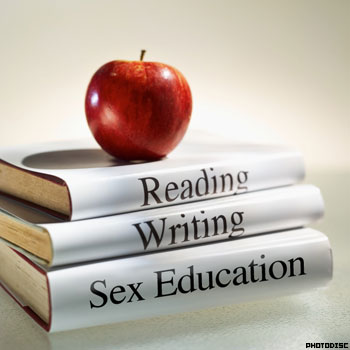
Submission on National Health & Physical Education Curriculum

Below is the text of my submission to ACARA about the draft national Health & Physcial Education curriculum (due tomorrow 12 April). I think that my concern with the consultation draft, as released, shows through. I find it particularly worrying that the curriculum does not use the words lesbian, gay, bisexual, transgender or intersex.

But it is even more worrying that it omits the terms or phrases condoms, safe sex and HIV/AIDS – that, to me, is negligently putting the lives of young people, and young gay and bisexual men in particular, at risk. Here’s hoping that ACARA listens to this submission, and to others from people writing about this issue.

Curriculum Photo

Submission on Draft National Health and Physical Education Curriculum: Foundation to Year 10

Thursday 11 April 2013

I am writing this submission as an ordinary member of the community. But I am also writing this submission as a gay man, and someone who was profoundly let down by my school education with respect to both inclusivity, and sexual health education.

In my opinion, both of these things – being genuinely inclusive of diverse sexual orientations, gender identities and of intersex people, and providing comprehensive and detailed sexual health education, including HIV prevention – are absolutely essential in any Health and Physical Education (HPE) curriculum.

Inclusivity is necessary because all students, whether they be heterosexual, lesbian, gay, bisexual, transgender or intersex (LGBTI), or a combination of these, have the right to an inclusive education, to learn about who they are, to develop their identity in a safe place, and to be provided with all of the information which they need as they grow up.

These rights are particularly important for LGBTI students because they will be entering a world in which homophobia, bi-phobia, trans-phobia and anti-intersex prejudice remain a sad and unarguable fact. The consequences of not providing an inclusive education can be severe – LGBTI students can be the victims of harassment and bullying on account of their sexual orientations, gender identity or intersex status. LGBTI students, and later adults, also have higher rates of mental health issues, including rates of suicide, as a result of the discrimination which they experience. Any HPE curriculum which is adopted should be furthering the health of LGBTI people – and should not instead perpetuate their exclusion.

Sexual health education is necessary for all students, again, irrespective of whether they are gay or straight and no matter their gender identity or intersex status. However, unless they are specifically mentioned, the needs of LGBTI people can easily be overlooked with teachers and schools sometimes providing for the needs of the majority of their students, while ignoring the fact that every student should receive all the information they need to stay safe.

This is especially important for same-sex attracted boys, given that men who have sex with men remain a high-priority population in terms of HIV prevention. This means that sexual health education cannot be limited to ‘reproductive health’ or simply outline the risks of heterosexual intercourse, but must be comprehensive and teach all students about the risks involved in different types of intercourse, and above all the measures, such as condoms, which reduce those risks.

Of course, there is an additional reason why a HPE curriculum must be inclusive of LGBTI students, and must provide inclusive sexual health education – and that is because in many cases teachers and schools will be unaware which of their students are LGBT or I. Some students do ‘come out’ while at school, and obviously I believe that all schools should provide encouraging and nurturing environments to allow those students to do so. But many students do not come out while at school.

And I do not believe that they should be compelled to do so in order to receive an education which teaches them what they need to know about their identity, and the sexual health education which they need to stay safe.

As I mentioned before, my school education failed, and failed miserably, on both of these grounds. My school did not mention homosexuality, unless it was from a negative perspective. And throughout my education, at both primary and secondary schools, I not once was taught about safe sex in a same-sex attracted (or ‘non-reproductive’) context. Sadly, while many schools have become better at both inclusivity and sexual health education since that time (the early to mid-1990s), many have not.

The development of a national Health and Physical Education curriculum presents an ideal opportunity to address these issues. It is a chance to ensure that HPE, taught in any class room in any school across the country, is inclusive of LGBTI students, and provides sexual health education that is appropriate for all students, not just those who are heterosexual.

Unfortunately, the draft national HPE curriculum released by ACARA in December 2012 does not seize this historic opportunity. In my opinion, it falls far short in terms of its inclusivity (or, more accurately, lack thereof) of LGBTI students. For example, it does not even mention the words lesbian, gay, bisexual, transgender and intersex (LGBTI), and therefore contributes to what can feel like an all-pervasive silence about these issues. I do not understand how any document can aspire to being inclusive of the full diversity of students when it deliberately omits the words lesbian, gay, bisexual, transgender and intersex.

The draft national HPE curriculum also falls short in terms of the sexual health education which it provides. As well as beginning too late (in year 7 rather than year 5), the sexual health education which is included appears to focus on ‘reproductive health’ rather than genuinely inclusive sexual health. It should, but does not, cover everything necessary for same-sex attracted students and for HIV prevention.

The remainder of this submission will focus on some of the specific parts of the draft HPE curriculum which I believe should be amended, focusing on the many opportunities for improvement. I hope that these recommendations or suggestions are taken up, so that all students, including LGBTI students, get the education which they deserve.

1. On pages 3 and 4 of the draft HPE curriculum, the ‘key idea’ of being ‘healthy, safe and active’ could be amended to read: ‘confident, healthy, safe and active’. This would reflect the need for students to be confident in their personal identity (which is discussed briefly on page 4, but should be elevated in importance). Personal identity is fundamental to a student’s sense of wellbeing, and just as important as being ‘healthy’ or ‘safe’. It should also be noted that personal identity is not limited to LGBTI students, but would include a wide range of diverse backgrounds and therefore benefit students from across the spectrum.

2. On page 6, under the heading ‘relationships and sexuality’, the dot point which currently reads ‘exploring sexual and gender identities’ could be amended to be more explicit. A possible replacement could read ‘exploring different sexual orientations, gender identities and sex and intersex status’.

3. On page 15, I disagree with the choice to delay relationships and sexuality education until years 5-6 onwards. Instead, I believe it should commence in years 3-4, in the same way that alcohol and other drugs education does. This would ensure that students are aware of the full range of identities as they enter puberty, and do not need to ‘suffer in silence’ because they might be attracted to someone of the same sex. This outcome could be achieved by introducing the ‘themes’ or general concepts of relationships and sexuality in years 3-4 (including the identities of lesbian, gay and bisexual), and then providing more detailed sexual health education in years 5 and 6. As it currently stands, students would not receive detailed sexual health education until year 7 at the earliest, when students are generally turning 13. Given what we know about the sexual activity of young people, and the fact that puberty is starting earlier and earlier, this is too late for effective sexual health education to begin.

4. Onto a more specific issue – I think that more consideration could be given to introducing the particular topics relating to transgender and intersex from Foundation onwards, rather than waiting for 3-4 when lesbian, gay and bisexual issues are introduced. This is because gender identity and intersex are not related to sexual attraction, but instead may well be known before or at the commencement of schooling. Obviously I am not an expert on these issues, and would defer to the input of transgender organisations and groups like OII Australia. I am merely raising this issue because it would not appear logical to delay teaching these particular matters until closer to puberty (unlike arguably the same-sex attracted issues referred to above).

5. I welcome the inclusion of a statement about same-sex attracted (SSA) and gender diverse students on page 18 of the draft HPE curriculum – at the very least the curriculum acknowledges that these students exist and have specific needs. However, I reject the idea that the curriculum should provide schools with the ‘flexibility’ to include these students, with a vague and non-committal ‘expectation’ that schools will take opportunities to be inclusive. This seems fundamentally inconsistent with a sentence in the same paragraph which correctly notes that ‘students facing these issues exist in all school communities’.

If that statement is correct, then ALL schools across the country MUST be inclusive. The best way to achieve this is to provide specific and detailed requirements for the inclusion of LGBTI-related content throughout the text of the curriculum, rather than through a non-binding ‘aspirational’ statement at the beginning of the document which will likely only be referred to and applied by those schools and teachers which are already supportive of LGBTI students.

6. As a broader point, while I understand that the terms same-sex attracted (SSA) and gender diverse are included on page 18 because they are considered more inclusive of the diverse range of possible identities, I disagree that these should be the only terms used in the document to describe these groups. The vast majority of students who grow up who are SSA or gender diverse, will over time identify with one or more of the following identities: lesbian, gay, bisexual, transgender or intersex.

For this reason, I believe that these specific identities/descriptors should be included in the curriculum as well. These students deserve to have their identities spoken about in the classroom – and other students should also learn about the diversity of sexual orientations, gender identities and intersex people, rather than just the catch-all phrases SSA and gender diverse. After all, these are the terms which all students are likely to be exposed to after they depart the school environment. If any students leave school without understanding these terms then I think we are doing them a great disservice.

7. On page 49, at heading 4.2, I welcome the introduction of discrimination on the basis of sexuality as one of the particular examples of negative forms of discrimination which may be discussed in the classroom. However, I would like to see this broadened to look at discrimination on the basis of sexual orientation, gender identity or intersex status (rather than the more generic term ‘sexuality’), and I would also like teachers to be required to use all of these examples (including race, gender, disability etc), rather than simply choosing one or two from the list and potentially ignoring or omitting discrimination on the basis of sexual orientation, gender identity and intersex.

8. In the discussion of years 7-8, from page 58 onwards, the curriculum finally looks at sexual health education in detail. As discussed above, I believe this is far too late (and should instead be taught from year 5 onwards). However, turning to the substance of what is proposed, I also believe that it is too narrowly defined and limited in content.

For example, on page 59 the draft curriculum only refers to ‘reproductive health and wellbeing’. This is a very exclusionary term, traditionally focusing on sexual practices which are related to reproduction. This does NOT include other forms of sexual intercourse, including the behaviours of people who are same-sex attracted (as well as a range of other behaviours of heterosexual students which are also unrelated to reproduction). It is for this reason that the term sexual health should be used instead (or at least sexual and reproductive health), as it captures all of the behaviours which should be discussed.

9. The discussion of sexual health also needs to be made significantly longer, with more detail provided about what exactly has to be taught. This should include explicit reference to condoms, safe sex and the need for the prevention of HIV and other STIs. As a gay man who grew up in the 1980s and 1990s, I believe that it is negligent to draft a curriculum for primary and secondary students that does not include the words condom, safe sex or even HIV. Any comprehensive guide for the ‘health and physical education’ of young people must include these terms, especially when considering the health and wellbeing of young gay men, bisexual men and men who have sex with men generally. I would hope that organisations from the HIV/AIDS sector will be making similar points on this particular issue.

10. Finally, in years 9-10, on page 70, in addition to the reference to homophobia, there should also be references to bi-phobia, trans-phobia and anti-intersex discrimination. Students should be aware of the existence of, and unacceptability of, each of these types of prejudice. Of course, logically these types of discrimination cannot be discussed without an understanding of the identities lesbian, gay, bisexual, transgender and intersex, further underscoring the need for these issues to be taught from earlier in the curriculum.

As discussed earlier, I believe that significant amendments and improvements should be made to the draft national HPE curriculum to ensure that it is genuinely inclusive of, and provides appropriate sexual health education for, LGBTI students. I hope that ACARA takes these suggestions or recommendations for improvement into consideration as it revises the HPE curriculum before it is submitted to the Commonwealth and State and Territory education ministers for approval later this year.

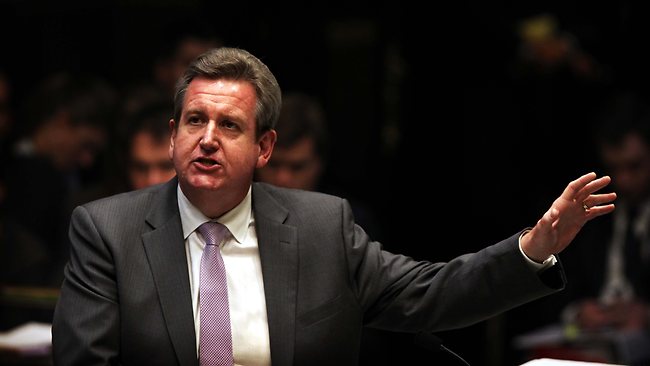
2nd Anniversary of Election of O’Farrell Government

So, last week I wrote a column on behalf of the NSW Gay and Lesbian Rights Lobby (GLRL) for the Star Observer, looking at the 2 year anniversary of the election of the O’Farrell Liberal-National Government in NSW. It has been published today, and can be found at the following link: http://www.starobserver.com.au/opinion/2013/04/03/speaking-out-6/101597 . I will publish the full text of the article here next week (ie after the current edition).

Basically, NSW has not gone backwards on LGBTI law reform over the past 2 years, unlike our neighbours North of the Tweed under Premier Campbell Newman (who continues to wage war against the rights of and services for the Queensland LGBTI community). It is unclear which model the likely incoming Prime Minister Tony Abbott will follow (although one has to suspect he will be more like Newman than O’Farrell).

But just because O’Farrell and his Government have not gone backwards doesn’t mean there has been any great progress either. The next 12 months will be key, in particular seeing whether he and his Government support state-based marriage equality, abolish the homosexual advance or gay panic defence and continue, and hopefully expand, the Proud Schools program.

Full text:

As always, there has been a lot going on over the past month, including the community’s response to police (mis)conduct during the Mardi Gras Festival, as well as the Legislative Council’s hearings into State-based marriage equality laws.

One event which almost went unnoticed was the 2nd anniversary of the election of the O’Farrell Government, which happened last week. This officially marked the halfway point of this term of Parliament.

Many people in the LGBTI community probably greeted the election of a Liberal/National Government back in March 2011 with a degree of trepidation, not knowing exactly what to expect on gay and lesbian issues. The good news is that there have not been any major backwards steps on gay and lesbian law reform in NSW.

In fact, there have been some small wins, with the continuation of the Proud Schools pilot, and the passage of a symbolic motion in favour of marriage equality by the Legislative Council in mid-2012. However, there have been no major advances on gay and lesbian rights under the O’Farrell Government so far either.

As the Gay & Lesbian Rights Lobby, we believe that over the next 12 months it is time for the Liberal/National Government, and the Parliament more broadly, to demonstrate its commitment to treating the LGBTI people of NSW equally.

There are three major legislative and policy issues which are already on the agenda for the coming year. The first is the Upper House Inquiry into the partial defence of provocation, which is due to report by 2 May. We will be looking for the O’Farrell Government to abolish the homosexual advance or ‘gay panic’ defence, because non-violent sexual advances should never be a justification to downgrade a murder conviction to manslaughter.

The second issue is the State-based marriage equality Bill, which should be voted on later in 2013. The GLRL wants parliamentarians of all political persuasions to support the legal recognition of the equality of same-sex relationships.

The third issue which is already on the agenda is a decision on the long-term future of Proud Schools. At the Lobby, we believe that all LGBTI students deserve to have an education free from bullying, prejudice and discrimination. Consequently, we want to see Proud Schools continued and indeed expanded across NSW.

This is obviously not an exhaustive list, and the Lobby will be campaigning on other issues, including removing religious exceptions in anti-discrimination law and calling for a review of the criminalisation of commercial surrogacy arrangements, during the ‘second half’ of this term.

But, by acting on the three issues identified above, the O’Farrell Government, and the NSW Parliament generally, would demonstrate that they genuinely believe LGBTI people should be treated equally. Time will tell.

OFarrell hand

Premier O’Farrell – We won’t let you put these issues to one side this year…