Decoding Life, Freedoms and Governance

On April 16 2024, I was invited to give the keynote address to launch Issue 47(1) of the UNSW Law Journal.

I was asked to talk about the Issue’s theme – ‘Decoding Life, Freedoms and Governance’ – with reference to at least some of the Issue’s articles (which are open-source, and can be found here), as well as my background as a long-term LGBTIQ advocate and professional experience in public policy.

The following is what I came up with (the two sections in square brackets were omitted on the night to keep to time, but are included here for completeness). Thanks for reading, I hope you find it interesting. 

‘Decoding Life, Freedoms and Governance’

Thank you for that generous introduction. And of course for the invitation to speak here tonight.

Thank you also for the broad theme of Issue 47(1) to address in my remarks – ‘Decoding Life, Freedoms and Governance’ – which took me several days to ‘decode’.

I must confess I don’t feel particularly qualified to talk in detail on the topic of ‘decoding life’ – which is something most people do in consultation with their therapist.

I do, however, have plenty to say on the twin, and intertwining, topics of ‘decoding freedoms’ and ‘decoding governance’, at least partly based on my lived experience.

That’s because, as a 45-year-old gay man, it has been impossible to avoid thinking about the meaning of freedom – of what I have been free to do, or not do, or protected from, or not, at different stages of my life. And what others, including religious organisations, have been legally free to do to me.

Or to deny the role of governance, and governments – state and federal – in determining the extent of those ‘freedoms’, far-too-often without consultation with or even consideration of those most affected by their decisions.

Indeed, some of the key events in my life overlap with milestones in the history of LGBTIQ rights in Australia.

I was born in July 1978, just weeks after NSW Police arrested 53 people for participating in the first Sydney Gay Mardi Gras parade – an indication of how unwelcoming both the law, and its enforcement, were for LGBTIQ people here.

Although I grew up in rural Joh Bjelke-Petersen-era Queensland, which was undoubtedly worse.

Queensland did not decriminalise male homosexuality between adults until January 1991 – but even then it introduced a differing age of consent for anal intercourse (18, compared to 16 for other sexual acts), a discrepancy that was not abolished until 2016, and with charges and convictions arising because of this inequality still not included in their historical homosexual conviction expungement scheme today.

January 1991 was also personally significant for a couple of reasons. Just one week after decriminalisation, I found myself travelling 800 kilometres from the family farm to a religious boarding school in Brisbane. Then, on my first day there, I found I was same-gender attracted too.

Audience members will be unsurprised to learn religious schools were lawfully permitted to discriminate against LGBTQ students (and teachers) in Queensland at that time. Loopholes my school took full advantage of over the following five years.

While I will spare you the details tonight, it would be an understatement to describe growing up gay at a religious boarding school which enjoyed special privileges to be prejudiced, as horrific. [You can read more about my experiences, here].

Fast forward to 2008, and to another coincidence. I was employed as a ministerial adviser to the Rudd Labor Government. At the same time as I met, and began my first de facto relationship with, the man who is still my partner today, I was provided internal on the details of Commonwealth same-gender de facto relationship recognition.

Some younger members of the crowd may not be aware this recognition did not exist before 1 July 2009.

Then, in January 2010, my partner Steve and I got engaged – meaning I would spend the remainder of my time working for a Government which did not support the legal equality of my own relationship.

Despite departing Canberra in mid-2012, I continued to advocate for the introduction of Commonwealth anti-discrimination protections for LGBTIQ people, something that was finally achieved in June 2013 – just 10 years ago, but almost four decades after race discrimination was prohibited federally, and more than three decades after homosexual discrimination protections were introduced in NSW (something we will return to later).

The subsequent four years were predictably dominated by the subject of marriage equality – not only campaigning for it to be passed, but also debating the manner of its passage, from conscience votes through to the push for the ALP to hold a binding vote.

And from successful LGBTIQ community efforts to stop the Turnbull Coalition Government’s plebiscite, to failed attempts to prevent their postal survey – in another coincidence, I started at the Public Interest Advocacy Centre just a couple of months before we helped one of the unsuccessful High Court challenges to block what may have technically been a statistical survey but was also an anti-democratic anomaly.

I note this challenge fell just prior to the relevant time period for the article ‘How does the High Court interpret the Constitution? A Qualitative Analysis between 2019-21’ – it would have been interesting to see how Tan, Paige, Hrambanis and Green characterised that Wilkie decision. 

In any event, thank you for indulging me in sharing a little of my back-story. Which I think reinforces that to be a gay man – or any member of the LGBTIQ community – in the final two decades of the 20thcentury, and the first few of the 21st, is to have been engaged in a constant state of contestation of our legal rights.

Our lives have been made inherently political, with participation in the political process rendered essential – even if ‘the State’ has frequently been our oppressor, or at least acted on the oppressor’s side.

That background also helps to explain why I am an LGBTIQ advocate today.

Why I chose ‘sexuality-related anti-discrimination law in practice’ as the topic of my law honours paper at ANU.

Why I’ve spent much of the past two decades volunteering for a range of LGBTIQ community organisations, including both the Victorian, and NSW, Gay & Lesbian Rights Lobbies.

And why I have ended up at PIAC, where over the past seven years I have been fortunate enough to work not just on marriage equality, but also on advocacy against the Morrison Government’s Religious Discrimination Bills, which presented a grave threat to the rights of LGBTQ people (as well as women, people with disability and even people of minority faiths).

Above all, I’ve focused on efforts to secure anti-discrimination protections for LGBTQ students and teachers in religious schools, under both state and federal law. Which is obviously a full-circle moment given where I started!

I intend to use the remainder of this speech to talk about what LGBTIQ rights look like in NSW today, across four key issues: conversion practices; birth certificates; medical interventions on intersex children; and anti-discrimination protections.

Now, had I given this address a month ago, I would have been able to make the pithy observation that we live in the worst jurisdiction in Australia for LGBTIQ laws.

Instead, following passage of the Conversion Practices Ban Act in late March, we’ve moved all the way up to equal worst, with Western Australia (actually, that’s perhaps uncharitable – if we’re being generous, we might even be able to say we are now second-worst… just).

From an LGBTIQ advocate’s perspective, this legislation is both welcome and long overdue.

It will legally prohibit conversion practices, defined in section 3 as:

‘a practice, treatment or sustained effort that is (a) directed to an individual on the basis of the individual’s sexual orientation or gender identity, and (b) directed to changing or suppressing the individual’s sexual orientation or gender identity.’

This is needed because, as described in the opening article in issue 47(1) – Martin Clark and Brendan Gogarty’s excellent ‘Searching the Reins and Hearts: Conversion Practices Reforms in Australia’: 

Quote

‘[S]cientific and clinical evidence has consistently shown that there is no evidence that conversion practices are ‘effective’ in their capacity to effect a change or suppression of sexual orientation or gender identity. There is also consistent evidence that conversion practices carry clear risks of harmful effects on those subjected to them, including physical and psychological harms, such as increased suicidality, self-harm, post-traumatic stress disorders, anxiety and depression, feelings of alienation, loneliness and exclusion, sexual dysfunction, substance abuse, internalised homophobia and feelings of failure, and reluctance to seek medical treatment.’

Endquote

Disappointingly to Clark and Gogarty, who argue against a carceral approach, the new Act implements both a criminal offence, and civil complaints scheme, for conversion practices.

Although I must respectfully disagree with them – given the seriousness of the harms they outline, I would suggest criminal penalties for the worst examples are appropriate.

Either way, the passage of this law is a testament to the advocacy of conversion practices survivors like Anthony Venn-Brown, Chris Csabs and Nathan Despott, over many decades.

But I would not be honouring their work without also highlighting their primary criticism of the law as passed – that, unlike the ‘best practice’ scheme in Victoria, the NSW law does not provide a formal mechanism for third-party complaints to Anti-Discrimination NSW.

As it stands, the only complaints that can be made are from survivors directly, or via representative complaints with the consent of each of those survivors.

This framework not only reinforces one of the limitations of anti-discrimination law more broadly – that the onus for seeking redress falls on the people who have been mistreated.

It ignores the particular characteristics of conversion practices, where the people undergoing them appear to do so ‘voluntarily’ (despite what, as Martin and Gogarty note, is the ‘impossibility of genuine consent’ in these circumstances), and are therefore unlikely to bring, or consent to, complaints until after they have extricated themselves from them. If they first survive them.

The lack of third-party complaints is a major gap in this scheme that must be rectified.

The Act also includes a range of ‘carve-outs’, providing that activities like ‘clinically appropriate’ healthcare, ‘stating what relevant religious teachings are or what a religion says about a specific topic’, and ‘parents discussing matters relating to sexual orientation, gender identity, sexual activity or religion with their children’, do not constitute conversion practices.

Despite this, a number of conservative religious organisations campaigned against the law in its totality, alleging it constituted an attack on ‘religious freedom’.

I must, perhaps a little less respectfully this time, disagree with them too. There is no philosophical justification for the right to inflict serious psychological harm, on children and young people, in the (misused) name of religious freedom.

Even in the case of adults – where there is at least a possible argument for the freedom to engage in practices which may result in self-harm – I would submit there is a clear justification for government regulation.

This is because of what Clark and Gogarty describe as the role played by ‘conversion ideology’ as a precursor to ‘conversion practices’:

Quote

‘Survivor-advocates have consistently contended that ‘conversion ideology’ – the worldview that it is possible and necessary for LGBTQA+ people to change their sexual orientation and gender identity, and that being LGBTQA+ is due to trauma, spiritual brokenness, and can be fixed by prayer – is central to defining and understanding conversion practices’,

because

‘the inculcation of these beliefs in congregants is important for smoothing the path for them taking part in actual conversion practices.’

Endquote

In other words, perpetrators of conversion practices first convince healthy people to believe their sexual orientation or gender identity is somehow ‘sick’ (when it is not), before offering a ‘cure’ that actually causes serious psychological harm.

The law should not protect the ‘freedom’ to engage in this abuse.

Before I conclude on this subject, I feel compelled to express my condemnation of the role played by the Liberal/National Coalition during parliamentary consideration of this law.

And especially of their vote in favour of minor-party amendments to remove ‘gender identity’ from any protection under the Conversion Practices Ban Act.

In other words, the NSW Opposition voted for the continued legality of ‘practices, treatments or sustained efforts’ to stop trans people, and especially trans young people, from being trans.

This was a shameful act, and one I would strongly urge them to reconsider in relation to future LGBTIQ law reform – including on the next topic we will turn to.

That is birth certificate legislation, and in particular, the regulation of access by trans and gender diverse people to identity documents reflecting who they are. Sadly, the NSW Births, Deaths and Marriages Registration Act 1995 is unequivocally the worst such law in the nation.

We are the only jurisdiction which still requires people to undergo genital surgery before being able to update their birth certificates – surgery many trans people do not wish to undertake, and of those that do, many cannot afford, because of a lack of Medicare funding.

While we are one of only two jurisdictions, alongside Western Australia, with no legislative options for sex or gender markers beyond male or female: non-binary people cannot access state-issued ID stating they are, in fact, non-binary.

These laws aren’t just an insult to the human dignity of trans and gender diverse people. The requirement for surgery, which causes sterilisation, is a denial of reproductive freedom and therefore the right to found a family.

While the inability of many trans and gender diverse people to access birth certificates reflecting who they are at all, means they are confronted by the possibility of ‘outing’ in the growing range of contemporary scenarios where ID is mandated.

Fortunately, the Equalities Legislation Amendment (LGBTIQA+) Bill 2023, introduced by the Independent Member for Sydney Alex Greenwich and currently being considered by a Parliamentary Inquiry, would address these problems, and at least bring NSW law up to the standard of Victoria and Queensland.

Although even then, and this is my personal rather than professional view, it would fall short of the ‘best practice’ approach of Tasmania, which is the only Australian state or territory to adopt a true ‘self-identification’ model for trans and gender diverse people.

Instead, the NSW law – like Victoria and Queensland – would still require a trans person, in addition to their own statutory declaration, to submit:

‘a support statement by an adult who has known the applicant for at least 12 months stating that (i) the adult believes the person is making the application in good faith, and (ii) the adult supports the person making the application…’

Given identity, including the characteristic of gender identity, is an inherently personal attribute, I do not agree the recognition of someone’s gender should be dependent on whether another person ‘supports’ it.

Looked at from another perspective, I do not concede that my sexual orientation, as a gay man, should only be acknowledged if I am able to produce a statutory declaration from another person saying they ‘support’ it.

I am who I say I am, a fact generally accepted by others. Trans and gender diverse people deserve to enjoy exactly the same respect.

Nevertheless, we (being PIAC), support the Equality Bill as a significant step forward along the long journey to LGBTIQ, and especially trans, equality. We urge both the NSW Government, and Opposition, to support it.

Turning to the third topic I flagged earlier, and in which NSW law is manifestly deficient: medical interventions on intersex children.

For audience members new to this subject, intersex people have innate sex characteristics that do not fit medical norms for female or male bodies. It is estimated somewhere up to 1.7% of children are born with these variations of sex characteristics.

Tragically, the medical system’s response to many intersex children is to perform so-called ‘normalising’ surgeries on them.

These interventions are frequently not clinically necessary for the child’s health, but instead performed for non-therapeutic or ‘psycho-social’ reasons, including to assuage the disappointment of parents who expected their child’s body to conform to societal norms, or to ‘assist’ the child to fulfil gendered stereotypes in the future.

For those curious about what that means in practice, I suggest reading the 2016 Family Court case of Re: Carla, which ruled that a family can consent to the sterilisation of their 5-year-old child without court approval, without clear medical necessity and at least partly motivated by gendered expectations, including attitudes to that young child’s potential future sexuality. It was then, and remains today, a genuinely heart-breaking decision.

These unnecessary surgeries are obviously done without the consent of the person affected by them, who should be free to agree, or not agree, to them when they have at least reached Gillick competency and understand what is involved.

In my view, medical interventions on intersex children, which are a fundamental denial of bodily autonomy, are one of the gravest human rights violations happening in Australia today – not just in relation to the LGBTIQ community, but across society.

There have been multiple public inquiries recommending these practices be ended, including the 2013 Senate ‘Inquiry into the involuntary or coerced sterilisation of intersex people in Australia’, and the Australian Human Rights Commission’s 2021 report ‘Ensuring health and bodily integrity: towards a human rights approach for people born with variations in sex characteristics.’

Sadly, however, only one Australian jurisdiction has so far passed legislation to prohibit these surgeries: the ACT. While I understand Victoria may be close to finalising its own laws.

In contrast, there is no NSW Government commitment to introducing equivalent laws here, nor was it included in Mr Greenwich’s Equality Bill.

This is a gross failure of governments, in NSW and elsewhere, to protect the rights of the most vulnerable.

It is unsurprising I had this issue front-of-mind while reading the article ‘Out-of-Home Care, Contact Orders and Infant Mental Health: Recognising a Unique Developmental Stage in Law, Policy and Practice’ by Rachel Gregory-Wilson, Elizabeth Handsley, Liesel Spencer and Toby Raeburn, including their observation that:

Quote

‘Infancy is, therefore, a special and critically important stage of human development, and infants as a class of persons require special recognition and safeguards, including under child protection law. Infants are not little children, just as children are not little adults; they need different and unique exposures in their environments to facilitate optimum physical growth and emotional development’.

Endquote

While they made this observation in a different context, I think it reasonable to apply these principles to intersex children, who deserve legislative safeguards for their bodily autonomy, and who should be allowed to grow and develop free from unnecessary medical interventions to try to change their bodies into what society expects them to be.

Let intersex kids be free from surgeries performed according to the wants of others, rather than their own needs – and only performed following their own timeframes, if they so consent.

[One final point before moving on – while the circumstances, and associated rights, of trans young people, and intersex children, are quite distinct, it is depressing to observe the intellectual inconsistency of those who oppose the rights of both.

For example, Liberal Senator Alex Antic’s Childhood Gender Transition Prohibition Bill 2023, currently before Commonwealth Parliament, seeks to ban access by trans and gender diverse young people to gender-affirming health care, even puberty blockers and even where they are Gillick competent.

While simultaneously providing a specific carve-out to allow non-consenting medical interventions to continue to be performed on intersex children.

According to Antic, there should be no gender-affirming health care for trans kids who want it and who are able to consent. But no protection for intersex kids from harmful surgeries that are not clinically necessary and where they are in no position to consent.

Trans and intersex kids lose either way].

Turning to the final topic of my speech – anti-discrimination coverage – once again NSW has the worst laws in the country. Nowhere is this more apparent than in the protections the Anti-Discrimination Act 1977 offers, or more accurately fails to offer, LGBTIQ people.

It wasn’t always this way. In fact, NSW was the first Australian jurisdiction to protect lesbians and gay men against discrimination, in late 1982. Incidentally, this was before the decriminalisation of homosexuality in mid-1984, meaning there was an 18-month period during which gay men were criminals but legally could not be denied housing.

But the lack of subsequent reform, especially over the past 28 years, has allowed this law to atrophy.

We are now the only place nation-wide which does not protect bisexual people against discrimination. And one of two, with Western Australia, that does not protect non-binary and intersex people.

The provisions allowing discrimination by religious schools are the broadest in Australia too.

Indeed, they are so broad they apply to all ‘private educational authorities’, not just religious schools. And they offer complete or ‘blanket’ privileges to discriminate – unlike all other jurisdictions, there is no test which NSW schools must satisfy before being permitted to discriminate. The Act simply does not apply to them.

These serious flaws are just some of the reasons PIAC has made comprehensive anti-discrimination law reform a priority, including through our August 2021 report ‘Leader to Laggard: The case for modernising the NSW Anti-Discrimination Act’.

We were obviously pleased NSW Labor listened to that report and made comprehensive review of the ADA an election commitment. And we have welcomed, participated in and will continue to participate in the current NSW Law Reform Commission inquiry into this broken and outdated law.

But, as people discovered at the start of the century – when the Law Reform Commission completed its last review of this legislation, with its report then gathering dust rather than being implemented – an inquiry is meaningless if nothing subsequently changes.

We will continue to advocate to the Minns Labor Government until we finally have an Anti-Discrimination Act fit for the 21st century, one offering genuine protection against discrimination for all communities, including LGBTIQ people.

Speaking of Law Reform Commission reports at risk of gathering dust, I cannot discuss anti-discrimination law reform tonight without also addressing the current situation federally.

[Before we get into those details, however, and on indulgence, I might take this opportunity to vent the frustrations of an advocate for protecting LGBTQ students in religious schools who regularly comes up against the intellectually disingenuous, and sometimes downright dishonest, arguments of those opposed to reform.

I speak of some conservative religious schools, and their representative bodies, who simultaneously claim that religious schools do not discriminate against lesbian, gay, bisexual and trans students – but that under no circumstances can their legal privileges to do so ever be repealed.

They can never satisfactorily answer why that should be the case.

Until you realise it is because these religious schools do in fact discriminate against queer kids – they just call it something else.

Which is how you end up with the anti-LGBTQ, and especially anti-trans, student enrolment contract, proposed by Citipointe Christian College in Brisbane in 2022.

Or the situation in late 2023, when a Sydney Catholic school rejected a female student’s request to bring their same-gender partner to their formal (with it later becoming apparent this was policy across that entire Catholic school network).

Indeed, Catholic schools seem to be experts in this special kind of hypocrisy – claiming not to discriminate, while doing exactly that – as can be seen in the 2023 Sydney Catholic Schools’ ‘Gender Dysphoria Policy’ – a 6-page guide that only ever refers to students with ‘gender dysphoria’, never once acknowledging some students are trans.

I would submit it is fundamentally discriminatory to refuse to acknowledge who a trans child is.

It is almost refreshing to witness the comparative honesty of an organisation like the Presbyterian Church of Australia, who have publicly stated gay students cannot hold leadership positions within their schools because they are unable to ‘model Christian living’.

Almost – until you remember they are unashamedly, and unrepentantly, saying they will actively mistreat young people solely because of an intrinsic attribute.

That is nothing more than bullying, pure and simple. There should be no place for it in places of learning.

Anyway, thanks again for your forbearance.]

As audience members are aware, this issue has been ongoing for several years – since late 2018, when both the then-Morrison Government, and then-Shorten Opposition, promised to protect LGBTQ students. With Labor going further in promising to protect LGBTQ teachers too.

Albanese took these commitments to the May 2022 election, with Attorney-General Mark Dreyfus referring the question of how they should be implemented to the Australian Law Reform Commission in November that year.

The ALRC handed its report to Dreyfus in December. They proposed straight-forward amendments, to the Sex Discrimination Act 1984, and Fair Work Act 2009, to reflect the following two principles:

  1. That LGBTQ young people should enjoy the freedom to learn and to grow, without fear of discrimination on the basis of who they are, and
  2. That LGBTQ teachers should be employed on the basis of their skills and experience, rather than their sexual orientation and gender identity.

We hoped the privileges for prejudice enjoyed by religious schools might finally end.

But, when the Government released the ALRC report in March, those hopes were immediately dashed – because Prime Minister Albanese indicated no legislation would even be introduced to Parliament without bipartisan support from the now-Dutton Opposition. Effectively abdicating responsibility for his own election promises to the parties he had defeated.

Remember, not only did the Coalition do nothing to implement Morrison’s 2018 promise to protect LGBTQ kids, they withdrew their own Religious Discrimination Bills from Senate consideration because of amendments to prohibit discrimination against trans students.

Just today, Shadow Attorney-General Michaelia Cash has written an opinion piece not just opposing reforms to the Sex Discrimination Act, but also backing calls by religious schools for ‘positive rights’ to discriminate under federal law, with the consequence of overriding protections for LGBTQ teachers, and even students, in states and territories that have progressive laws.

It was abundantly clear to observers when Mr Albanese announced his ‘bipartisanship’ push, and is undeniable now, there are only two possible outcomes:

  1. There is no agreement, and therefore no protection for LGBTQ students and teachers
  2. There is agreement – but any Bill supported by the Coalition will not offer genuine protection for LGBTQ students and teachers.

Either way, LGBTQ Australians lose again.

It is hard not to share the sentiments, if not the choice of language, of religious school discrimination survivor James Elliot-Watson, when he described the impasse thus:

Quote

‘MPs are paid in excess of $200,000 so everybody should do their fucking job.

And I think that’s especially true for the leader of the government and my Prime Minister.

The purpose of parliament is to enact laws that ensure the safety, integrity and protection of… Australian citizens and that’s what this is about.

It needs to protect vulnerable children from legal discrimination practices that religious institutions are allowed to engage by chang[ing] the law.

Let’s get it done.’

Endquote

If Albanese doesn’t ‘get it done’ this term, it will be no less a failure of governance, and governments, to realise the basic freedoms of LGBTIQ Australians as the failure to achieve marriage equality over many years.

Indeed, there are many similarities between these two issues.

Both were reforms supported by a large majority of the Australian community.

Both could be delivered with legislative ease, following well-established precedents (in the case of marriage equality, overseas examples; in anti-discrimination law, the successful operation of state and territory laws).

Both issues had politicians who claimed to support change, but were recalcitrant in delivering it.

Significantly, both marriage equality and anti-discrimination reform have seen Prime Ministers impose artificial barriers hindering change – in the former, an unnecessary plebiscite-cum-postal survey; in the latter, the unnecessary need for bipartisan support.

With the result that on both issues LGBTIQ Australians are made to wait far too long for positive change.

Which is the most important point. It is LGBTIQ Australians who suffer real-world harm because of political intransigence.

In marriage equality, we remember Peter ‘Bon’ Bonsall-Boone and Peter De Waal, who were together for 50 years, and, in the face of Bon’s declining health, desperately pleaded for Malcolm Turnbull to introduce marriage equality so they could finally wed.

Bon died 6 months before it was passed.

In relation to LGBTQ students, I think about the person whose story we will never get to hear – because the mistreatment they experience causes them to prematurely end their life.

I say that with confidence – because it was nearly my story.

The horrific discrimination I suffered at the hands of my religious boarding school, which I mentioned earlier, caused me to experience suicide ideation from the second term of year 8, through the final term of Year 12. And beyond.

I am, in many respects, very lucky to still be here.

But I am also full of resolve. Because that is no way for a child to learn, or to grow up.

And so I can state with equal confidence that I, and PIAC, will continue to advocate until no child has to endure the same.

As I come to the end of tonight’s speech, I’m tempted to apologise for the ‘heaviness’ of some of the subjects I’ve spoken about, including the personal impacts of anti-LGBTIQ prejudice.

It is an ‘occupational hazard’ of being an advocate, and especially one who focuses on policy and law reform, to be constantly critical, to highlight where the law is deficient, and the terrible outcomes of those shortcomings.

I do not intend to convey the impression there has been no positive law reform in my lifetime (or since that very first Mardi Gras) – not just on conversion practices, but also decriminalisation, de facto and rainbow family rights, and in many other areas.

Nor is the plight of LGBTQ people in religious schools intractable. I am reliably informed my own boarding school is now welcoming of same-gender attracted and gender diverse students, a product of anti-discrimination protections for students that have existed in Queensland for twenty years.

But I do mean to impart the understanding that the struggle for the full realisation of LGBTIQ human rights and freedoms in Australia is far from over, and that we will never reach that end-point without the concerted efforts of the community, both LGBTIQ and non-LGBTIQ alike.

I welcome those present tonight as fellow travellers on the long journey ahead.

Congratulations on Issue 47(1) of the UNSW Law Journal to Jessie Liu, your editorial team and to all of the authors published. It is truly impressive in its breadth, and depth, of scholarship.

And thank you for listening to my remarks.

[The video of this event has been published here. My speech begins at the 20-minute mark].

Photo credit: UNSW Law Journal

If you have appreciated reading this article, please consider subscribing to receive future posts, via the right-hand scroll bar on the desktop version of this blog or near the bottom of the page on mobile. You can also follow me on twitter @alawriedejesus
The Commonwealth Sex Discrimination Act has included LGBTI Australians for a decade. But it still fails to protect too many LGBTI people against mistreatment.

Commonwealth Parliament passed the Sex Discrimination Amendment (Sexual Orientation, Gender Identity and Intersex Status) Act 2013 ten years ago today.

This was historic legislation, finally offering federal anti-discrimination protections to lesbian, gay, bisexual, transgender and intersex (LGBTI) Australians.[i]

And it was long overdue, more than 30 years after NSW became the first jurisdiction in Australia to prohibit discrimination on the basis of homosexuality, way back in 1982.

But, even at the time of passage it was clear these Sex Discrimination Act amendments were incomplete, and their limitations have only become more apparent in the decade since.

Here then are some[ii] of the key short-comings which need to be addressed in order for the Sex Discrimination Amendment (Sexual Orientation, Gender Identity and Intersex Status) Act 2013 to live up to its potential.

  1. Replace the protected attribute of intersex status with sex characteristics

The 2013 amendments meant Australia became one of the first jurisdictions in the world to offer anti-discrimination protections to intersex people. It did so by the inclusion of ‘intersex status’ as a protected attribute, defined as:

‘the status of having physical, hormonal or genetic features that are:

(a) neither wholly female nor wholly male; or

(b) a combination of female and male; or

(c) neither female nor male.’

This terminology (intersex status) and associated definition are no longer considered best practice, with peak body Intersex Human Rights Australia advocating for its replacement with ‘sex characteristics’, which was recently defined in amendments to the Queensland Anti-Discrimination Act 1991 in the following way:

‘sex characteristics, of a person, means the person’s physical features and development related to the person’s sex, and includes-

(a) genitalia, gonads and other sexual and reproductive parts of the person’s anatomy; and

(b) the person’s chromosomes, genes and hormones that are related to the person’s sex; and

(c) the person’s secondary physical features emerging as a result of puberty.’

Fortunately, the Commonwealth Government has actually committed to making this change – Industrial Relations Minister Tony Burke promised to replace intersex status with sex characteristics in Parliament in November 2022.[iii]It’s time for the Albanese Government to follow through on this commitment.

2. Protect LGBTQ students in religious schools against discrimination

It is appalling that, in 2023, Commonwealth anti-discrimination laws – which are supposed to protect LGBTI Australians – instead continue to allow religious schools and colleges to discriminate against some of the most vulnerable among us.

The special privileges permitting religious schools to mistreat LGBTQ young people in myriad ways (from refusing to enrol, through to suspension, expulsion and other forms of punishment, as well as an almost unlimited variety of differential treatment to their cis-het counterparts) were never justified. But they look especially archaic, and abhorrent, today.

All students have the right to education, and must be allowed to exercise this right in safety. And because any student, in any school, can be LGBTQ, all schools must be LGBTI-inclusive.

Once again, the Albanese Government has promised to protect LGBTQ students against discrimination. However, rather than simply following the precedents of multiple states and territories which have already legislated to protect LGBTQ kids – some for more than two decades – they chose to refer the issue of the exceptions enjoyed by religious schools to the Australian Law Reform Commission in November 2022 for a six-month inquiry.

Disappointingly, in April 2023, Attorney-General Mark Dreyfus announced that this inquiry was being extended until 31 December 2023. As a result, LGBTQ Year 12 students in 2023 will not be protected against discrimination before they leave school (despite both major parties promising to do so since October 2018, when they were only in Year 7). And another class will likely start, in 2024, still not protected against discrimination on the basis of who they are.

This simply isn’t good enough.

3. Protect LGBTQ teachers in religious schools against discrimination

Of course, LGBTQ students are not the only people in religious schools and colleges who deserve protection against mistreatment. So too do LGBTQ teachers and other workers.

Teachers should be judged simply according to their ability to teach – not their sexual orientation and/or gender identity.

This would not only benefit LGBTQ teachers, who would finally enjoy the same ability to apply for jobs, and promotions, across their industry as cis-het teachers, and would also be free to focus on teaching rather than having to hide in the closet and spend time and emotional energy worrying about whether they will be outed, and sacked as a result.

But it would benefit students too, who would be taught by the best person for the job (not the best cis-het person), and learn from LGBTQ teachers not distracted by the ever-present threat of discrimination. For LGBTQ students, out teachers also offer the prospect of role modelling what a happy life might look like, reducing their potential isolation.

The imperative to remove the ability of religious schools to discriminate against teachers on the basis of their sexual orientation and/or gender identity is only strengthened when we consider the massive sums of taxpayer money – ourmoney – given to these institutions.

Yet again, the Albanese Government has promised to remove the special privileges which allow religious schools to discriminate against LGBTQ workers. But, as with LGBTQ students, the possible protection of LGBTQ teachers has been held up by the lengthy extension to the ALRC inquiry.

LGBTQ teachers shouldn’t have to wait until 2024, or beyond, to enjoy protection against discrimination in the workplace. They should be allowed to focus on lesson plans and marking, not planning how to mask their sexual orientation or gender identity.

4. Protect LGBTQ workers in Government-funded aged care services operated by religious organisations

One of the best provisions of the Sex Discrimination Amendment (Sexual Orientation, Gender Identity and Intersex Status) Act 2013 (Cth) was new sub-section 37(2)(a) which states that the Act’s general religious exception (contained in sub-section 37(1)(d):

‘does not apply to an act or practice of a body established for religious purposes if… the act or practice is connected with the provision, by the body, of Commonwealth-funded aged care.’

In effect, nearly all aged care services across Australia are now prohibited from discriminating against people accessing those services on the basis of their sexual orientation and/or gender identity. In other words, LGBTQ people in all Government-funded aged care services are legally protected against discrimination.

The fact this provision has operated successfully, for a decade, demonstrates that special privileges allowing discrimination by religious organisations delivering what are essentially public services are unnecessary, and should be removed.

We should start by repealing sub-section 37(2)(b),[iv] which still allows faith-based aged care services to discriminate against LGBTQ workers.

All of the arguments which applied to LGBTQ teachers in religious schools, outlined above, also apply to LGBTQ aged care workers. This includes ensuring that the best person for the job is hired, not just the best cis-het person, allowing LGBTQ aged care workers to focus on the important task of delivering care to the elderly rather than worrying about being discovered, and allowing LGBTQ people accessing aged care to see openly-LGBTQ people looking after them.

5. Remove the general religious exception in section 37(1)(d) of the Sex Discrimination Act entirely

The same arguments which apply to LGBTQ students, teachers and aged care workers, also apply to LGBTQ people accessing services and employees across a broad range of other public services – such as disability, health, housing and other community services – which have been increasingly outsourced by state, territory and commonwealth governments over recent years.

All people accessing these services should be free to do so without having to fear discrimination on the basis of their sexual orientation and/or gender identity.

All workers in these industries should have the right to be judged on their ability to perform their role, not on who they are or how they identify. 

Several Australian states and territories have already reformed their anti-discrimination laws to narrow their general religious exceptions along these lines, including Tasmania, Victoria, the ACT and NT, while Queensland and Western Australia have in-principle commitments to implement law reform recommendations achieving the same.[v] It’s time for Commonwealth Parliament to catch up.

Importantly, even if the general religious exception in sub-section 37(1)(d) of the Sex Discrimination Act 1984 (Cth) were removed, religious organisations would continue to enjoy the right to religious freedom through sub-sections (a), (b) and (c), which cover the training and appointment of ministers of religion, and selection of other people to perform functions in connection with religious observances or practices.

6. Prohibit vilification against LGBTI Australians

One major gap which exists in the Sex Discrimination Act, and which unfortunately was not addressed by the historic 2013 amendments, is a lack of Commonwealth prohibition on vilification on the grounds of sexual orientation, gender identity and sex characteristics.

The first half of 2023 has comprehensively demonstrated why such nation-wide prohibitions are essential, with TERFs and neo-Nazis rallying against trans rights on the steps of Victorian Parliament, the Christian Lives Matter riot against LGBTIQ protestors in Sydney, and growing threats of violence and intimidation against drag story time and other local LGBTIQ community events across several jurisdictions.

Disappointingly, there has so far been no national response to the anti-LGBTI substance of these developments. 

The Albanese Government has instead proposed legislation banning the display of Nazi symbols which, while obviously welcome, in the absence of LGBTI vilification laws raises the following question: is anti-LGBTI hate speech acceptable as long as the people engaging in it aren’t wearing Nazi uniforms?

What has been happening so far this year is nothing short of a national crisis. What we need is a national response, including the introduction of Sex Discrimination Amendments prohibiting vilification against LGBTI Australians, equivalent to section 18C of the Racial Discrimination Act 1975 (Cth).

7. Create and appoint a Commissioner for Sexual Orientation, Gender Identity and Sex Characteristics

The dire situation confronting LGBTI Australians in 2023 has highlighted another structural weakness in our anti-discrimination framework – the lack of a stand-alone independent Commissioner for Sexual Orientation, Gender Identity and Sex Characteristics within the Australian Human Rights Commission.

This absence puts LGBTI people at a distinct disadvantage compared to other groups for which dedicated Commissioners have been created, including:

  • Race
  • Sex
  • Disability
  • Age
  • Children
  • Aboriginal and Torres Strait Islander Social Justice, and
  • Human Rights.

Responsibility for LGBTI issues has instead been seen as an ‘add-on’, with the portfolio at various times being held by the Human Rights Commissioner, Sex Discrimination Commissioner and even the President (where it currently sits, although it will likely revert to the Sex Discrimination Commissioner when a replacement for Kate Jenkins is appointed).

But as an ‘add-on’, it never receives the same level of attention as other portfolios, nor the same amounts of funding and resources.

This lower relative prioritisation of LGBTI rights can be seen in the Commission’s muted response to the disturbing developments in the first half of 2023 – as far as I can tell, there have been no media releases or other public policy contributions in response to the TERF and neo-Nazi rally, Christian Lives Matter riot, or escalating wave of anti-LGBTI threats around the country.

Our community is under attack, and Australia’s national human rights institution does not appear to be coming to our defence.

The most straight-forward way to remedy this would be to address the structural weakness which has contributed to it – and that is by creating, and urgently appointing, a stand-alone independent Commissioner for Sexual Orientation, Gender Identity and Sex Characteristics within the AHRC.

NB This post is written in a personal capacity, and does not reflect the views of employers past or present, nor of any community organisations with which I am involved.

Commonwealth Attorney-General Mark Dreyfus, who has responsibility for the Sex Discrimination Act 1984 (Cth), and who therefore has responsibility for amending it to better protect LGBTI Australians.

If you have enjoyed reading this article, please consider subscribing to receive future posts, via the right-hand scroll bar on the desktop version of this blog or near the bottom of the page on mobile. You can also follow me on twitter @alawriedejesus
Footnotes:


[i] Although the Commonwealth Fair Work Act had offered limited protections to LGB workers, on the basis of ‘sexual preference’, from 2009.

[ii] This is by no means an exhaustive list of the Act’s faults. Other issues which should be addressed include narrowing the exceptions applying to transgender and intersex people in sport, as well as removing the exceptions relating to data collection.

[iii] During debate on legislation that finally included gender identity and intersex status as protected attributes in the Fair Work Act for the purposes of adverse action and unlawful termination provisions.

[iv] Which clarifies that the protection of LGBTQ people in relation to aged care services operated by faith bodies only applies where ‘the act or practice is not connected with the employment of persons to provide that aged care.’

[v] From the Queensland Human Rights Commission and WA Law Reform Commission respectively.

The ALP has cut back on LGBTIQ policy commitments in its party platform. Again.

In 2015 and 2018, under then-Leader Bill Shorten, the Australian Labor Party adopted national party platforms with wide-ranging policy commitments on LGBTIQ issues. These helped to inform the promises taken to the federal elections in the following years, which were similarly-broad in scope.

In 2021, the ALP, under Shorten’s replacement Anthony Albanese, adopted a much more narrowly-drafted party platform, which involved jettisoning some previously-held LGBTIQ policies (although a few of these were restored via conference resolutions from the floor). This was then reflected in an relatively narrow range of LGBTIQ promises at the May 2022 election.

With the next ALP National Conference coming up in Brisbane on August 17-19 2023, this week the Party’s national policy forum released its draft Platform for public consultation.

Unfortunately, the LGBTIQ policy commitments it contains have been pared back even further than the already-limited 2021 offerings, including in the following key areas:

  1. The draft platform axes previous support for LGBTIQ vilification protections

 The 2021 National ALP Platform includes a commitment that:

‘Labor will work closely with LGBTIQ Australians and advocates to develop policy that will…

b. strengthen laws and expand initiatives against discrimination, vilification and harassment on the basis of sexual orientation, gender identity or sex characteristics.’ (p64).

The 2023 draft Platform instead includes the general statement that: ‘Labor will work closely with LGBTIQ+ Australians and advocates to develop policy that meets the specific needs of the community to ensure equality with broader Australian society.’ (p56).

This clause is so generic, and so bland, as to be almost meaningless.

It is difficult to comprehend why previous ALP support for vilification protections has been axed in the current political climate, with TERFs and neo-Nazis rallying on the steps of Victorian Parliament, Christian Lives Matter rioting in Sydney, Mark Latham being Mark Latham, and escalating violent threats against local councils hosting Drag Story Time events (and LGBTIQ community events more broadly).

What makes this axing even worse is that, just two pages later, under the heading ‘Freedom of thought, conscience and religion’, the 2023 draft Platform actually retains its previous commitment from the 2021 Platform for Commonwealth religious vilification laws:

‘Labor believes that people of faith deserve the same human rights, equality, respect and safety as every other Australian. No Australian should ever be vilified, discriminated against or subjected to violence or threats of violence because of that person’s religion or religious belief. Labor will work to ensure that Australia’s anti-vilification laws and discrimination framework are fit for purpose.’ (p58).

Those are strong sentiments. I, and I’m sure many other LGBTIQ Australians, could perhaps suggest another community, currently under sustained attack from far-right extremists, who could perhaps do with a similar expression of support…

But the piece de resistance of this shameful situation is that the draft Platform actually repeats the promise of religious vilification laws on the following page for a second time:

‘Labor believes that people of faith deserve the same human rights, equality, respect and safety as every other Australian. No Australian should ever be vilified, discriminated against or subjected to violence or threats of violence because of that person’s religion or religious belief. Labor will therefore ensure that Australia’s anti-vilification laws are fit for purpose.’ (p59).

So, the draft 2023 ALP Platform axes support for LGBTIQ vilification protections, at a time when we need them more than ever, while promising it to people of faith. Twice.

That’s the opposite of great.

2. The draft platform axes previous support for affordable trans health care

The 2015 and 2018 ALP National Platforms included commitments to, where possible, reducing out-of-pocket medical costs for gender-affirming health care.

While this was cut from the official platform in 2021, a conference resolution was passed which included the following:

‘Labor acknowledges the needs and rights of transgender and gender diverse people to fair, equal and affordable access to health care services. For many, this many include accessing vital specialist health services and gender-affirming medical technologies. Labor commits to removing, wherever possible, barriers to accessing these services in consultation with medical experts and government.’ (p140).

That statement appears to have been significantly cut back, reappearing in the following form in the 2023 draft:

‘Labor supports queer, transgender and gender diverse Australians and their families, and will work to support their agency in health decisions. Labor will provide access to the vital health and support services LGBTIQ+ Australians need.’ (p44).

Worryingly, this redrafted clause removes any specific reference to the affordability of trans health care, which is really the point: far too many trans and gender diverse people are currently blocked from accessing the care they need because they simply cannot afford it.

3. The draft platform axes most intersex-specific commitments

Intersex Australians fare even worse than their trans and gender diverse counterparts in the draft 2023 Platform.

The 2021 version included a commitment to: ‘support intersex-led organisations to provide support to intersex persons and their families, and advocate on intersex issues.’ (p64).

The 2021 conference also passed multiple resolutions from the floor, including statements that:

‘Labor will recognise the bodily integrity of intersex persons, prohibiting modifications to the sex characteristics of people with innate variations of sex characteristics performed for social or cultural reasons, and ensuring respect for intersex persons right not to undergo sex normalisation treatment. Labor commits to supporting the development and implementation with community participation of human-rights affirming oversight and standards of care, including for accessing lifetime medical treatments and procedures.’ (p140).

and

‘Labor will ensure that the actions of a Federal Labor Government are informed by the Yogyakarta Principles on the Application of International Human Rights Law in Relation to sexual orientation, gender identity, gender expression and sex characteristics and the Plus 10 Supplementary Principles. Further, Labor acknowledges the Darlington Statement as a guide to intersex policy responses within Australia.’ (p142).

As far as I can tell, not one of these commitments made it into the draft 2023 Platform. This is deeply troubling given the human rights abuses experienced by intersex Australians aren’t just the worst of those affecting the LGBTIQ community, they are some of the worst affecting any group in Australia.

4. The draft platform fails to support an LGBTIQA+ Human Rights Commissioner at the Australian Human Rights Commission

One area where the draft Platform hasn’t gone backwards from 2021 is on the question of a stand-alone, dedicated Commissioner for Sexual Orientation, Gender Identity and Sex Characteristics at the Australian Human Rights Commission (AHRC) – because neither version commits to creating this much-needed role.

However, the 2015 and 2018 platforms did, with the Shorten Labor Opposition promising to introduce one at both the 2016 and 2019 federal elections.

Recent events have, I believe, demonstrated the urgent need for such a position. Unfortunately, in the absence of an LGBTIQA+ Commissioner, the AHRC has not issued any media releases in response to the TERF and neo-Nazi rally, Christian Lives Matter riot, or escalating threats of violence against Drag Story Times.

The LGBTIQ community is under attack, and it feels like nobody federally is on our side.

Instead of seeking to rectify this situation, the draft 2023 Platform offers this acceptance of the unsatisfactory status quo: ‘Labor supports the Australian Human Rights Commission and its commissioners, including the important work they do to promote a more inclusive and respectful society.’ (p59).

We need an LGBTIQA+ Commissioner, and we need it yesterday.

Who knows, perhaps if there already was such an office-holder, the people responsible for drafting the consultation version of the 2023 national platform might have done a better job at understanding the need for more, and more-detailed, LGBTIQ policy commitments?

*****

If you haven’t guessed by now, I am genuinely disappointed (#understatement) by the draft national ALP platform released this week, and its omission of key policy commitments affecting the LGBTIQ community.

Beyond that, I am perturbed by the thought process that must have gone into the decision to cut support for things like LGBTIQ vilification protections, at a time of growing threats of violent extremism against our community.

The four issues outlined above are just those I have identified today. I am sure there will be others, affecting different parts of our community, which will become apparent in the coming days.

But there is an urgency to this analysis, because the draft platform is only open for public consultation until 23 June (ie just over three weeks away).

You can find the draft 2023 platform, and consultation form, at this link: https://alp.org.au/2023-draft-Platform

You can find the 2021 Platform for comparison, including to see which previous LGBTIQ commitments have been axed, here: https://www.alp.org.au/about/national-platform/

It’s time to get writing – and get lobbying – because what the ALP national policy forum has released this week is simply not good enough on LGBTIQ issues.

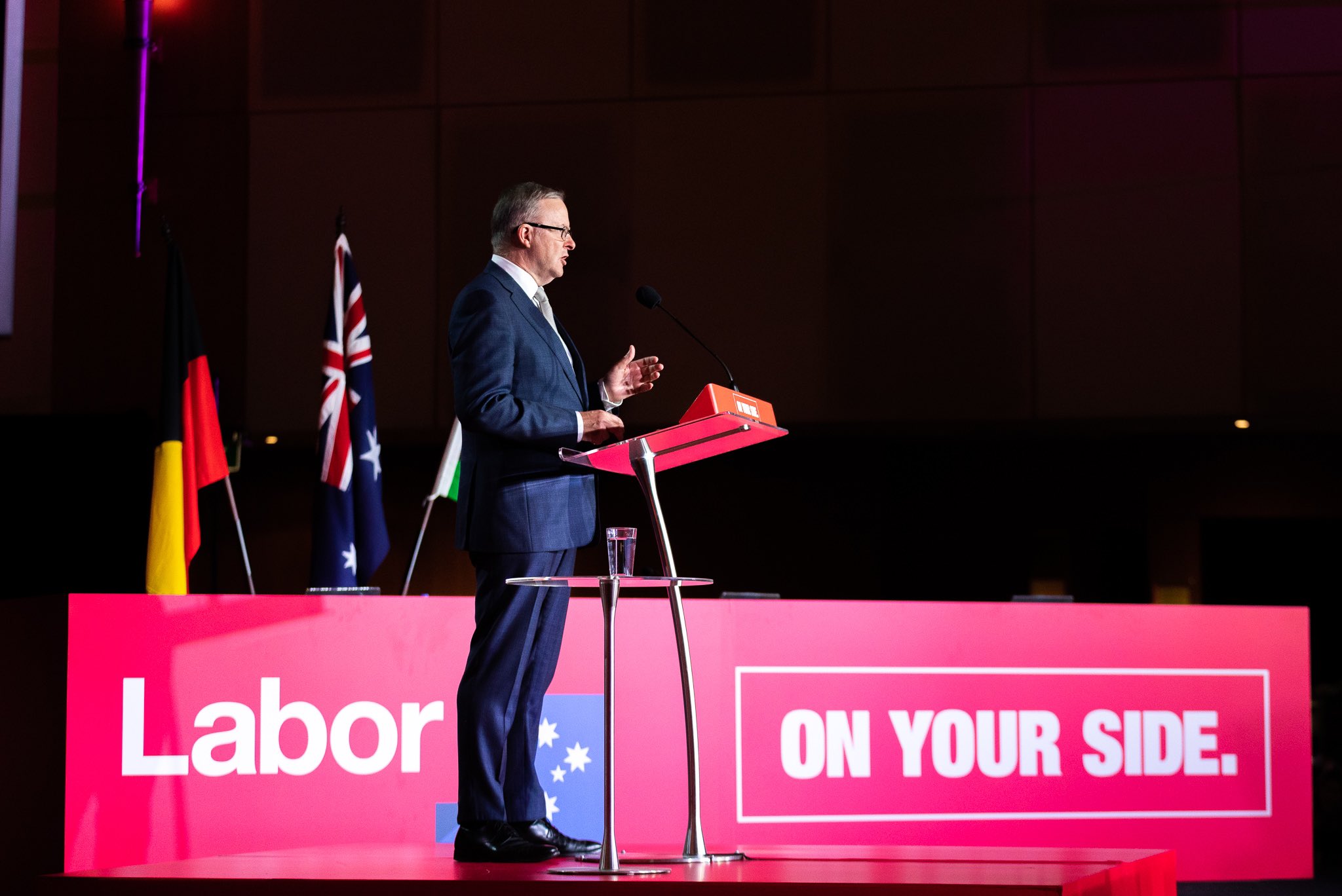
Anthony Albanese at the 2021 ALP National Conference.

The Jobs and Skills Summit and LGBTIQ Australians Part 2

Last Sunday, I posted about the upcoming Jobs and Skills Summit, and the inclusion (or, at that stage, exclusion) of issues affecting LGBTIQ workers.

This included a letter to Prime Minister Albanese, Treasurer Chalmers, and seven of their ministerial colleagues, calling on them to include consideration of two matters in particular that affect LGBTIQ people in the workplace:

  • The absence of explicit protections for trans, gender diverse and intersex employees in the Fair Work Act 2009(Cth), and
  • The breadth of exceptions, in the Sex Discrimination Act 1984 (Cth) and elsewhere, allowing religious organisations to discriminate against employees on the basis of their sexual orientation and/or gender identity, including in the delivery of public services using taxpayers’ money.

Since then, the issue of potential LGBTIQ exclusion from the Jobs and Skills Summit has been picked up by my friends at Just.Equal Australia, as well as being reported on by:

I also received the below, generic response from the Treasurer’s office, which, to be honest, did not inspire much confidence that my concerns, and the concerns of my community, were being taken seriously:

Dear Alastair,

Thank you for your email and attached correspondence about the Albanese Government’s Jobs and Skills Summit, which is scheduled to held over the 1st and 2nd of September.

The Jobs and Skills Summit will bring together around 100 representatives including from unions, employers, civil society and governments, to address our shared economic challenges.

The outcomes of the Summit will inform the Employment White Paper, which will be a shared vision and comprehensive blueprint for the future of Australia’s labour market.

Although Summit attendance will be limited and invite only, Treasury will be opening a submission process to collect insights and perspectives from the wider community later in 2022.

You can find out more information about the Summit and the White Paper, including up to date advice on when public submissions will be opened, by visitinghttps://treasury.gov.au/employment-whitepaper/jobs-summit.

Again, thanks for taking the time to share your thoughts and views on the above which will be brought to the attention of the Treasurer’s ministerial team.

Best wishes

[Name withheld], on behalf of the Hon. Jim Chalmers MP

Office of the Hon. Jim Chalmers MP | Treasurer of Australia and Federal Member for Rankin

Which made it a pleasant surprise to read, via Out in Perth, the Treasurer Jim Chalmers confirm that LGBTIQA+ issues would indeed be on the agenda at the conference:

‘We recognise that many LGBTIQA+ Australians often face a range of unique challenges when it comes to secure employment.

‘These are exactly the issues that we hope to address through our Jobs and Skills Summit.

‘That’s why removing barriers to employment and workforce participation are central themes of our Jobs and Skills Summit. Our aim is to bring people together around our big economic challenges to ensure more Australians can get a secure, well-paid job.’

Of course, just because LGBTIQ issues might actually be discussed, does not mean the Summit itself, or the Government afterwards, will recommend or commit to taking action to fix the problems which lead to workplace discrimination against, and exclusion of, LGBTIQ people.

I should also note I have not had a response from Albanese, Chalmers or any of the other seven Ministers addressing the substantive concerns raised by my letter.

In which case, the push continues to ensure the Fair Work ActSex Discrimination Act and other relevant laws are amended so that LGBTIQ workers are judged on the basis of their ability, not their sexual orientation, gender identity or sex characteristics.

In that context, today I have sent the below emails to two of the primary non-Government voices that will be represented at the Jobs and Skills Summit: ACTU Secretary Sally McManus and Business Council of Australia CEO Jennifer Westacott.

Hopefully their assistance will help give voice to the need to legislate better protections for LGBTIQ workers in Australia.

*****

Sunday 28 August 2022

Sally McManus

Secretary

Australian Council of Trade Unions

Dear Ms McManus

Please support reforms to protect LGBTIQ workers at the Jobs and Skills Summit

I am writing to you about the upcoming Jobs and Skills Summit, at which you will be a key voice advocating for the interests of Australian workers.

In particular, I am writing, both as a union member for two decades, and as a leading advocate for my community, to ask you to support important reforms to protect the rights of lesbian, gay, bisexual, transgender, intersex and queer (LGBTIQ) workers.

These include:

  • Reforms to the Fair Work Act 2009 (Cth) to explicitly protect trans, gender diverse and intersex workers against adverse action and unlawful termination. This could be achieved, easily, by adding gender identity and sex characteristics as protected attributes in relevant sections where categories such as race, sex, disability, age and even sexual orientation are already covered.
  • Reforms to the Sex Discrimination Act 1984 (Cth) and other Commonwealth and State and Territory anti-discrimination laws to remove the special privileges granted to religious organisations allowing them to discriminate against workers on the basis of their sexual orientation and/or gender identity, including in the delivery of public services using taxpayers’ money. This problem is especially acute in what is described in the Issues Paper as the ‘care economy’ and their removal would, I believe, lead to more LGBTQ people entering professions like education, disability services and aged care.

I attach with this correspondence a letter which was sent to Prime Minister Albanese, Treasurer Chalmers and seven of their ministerial colleagues, that provides more detail about these issues, and the compelling reasons why changes must be made to both.

I note both your own strong personal support, and the strong support of many unions and members of the ACTU, to LGBTIQ rights over the past decade, including through the campaign for marriage equality.

I look forward to your support once again, on Thursday and Friday of this week, and over the following months, for the interests of LGBTIQ workers.

Because I am confident that you agree trans, gender diverse and intersex workers should have the same Fair Work Act protections as any employee. And that LGBTQ workers should be judged on their ability, rather than their sexual orientation and/or gender identity.

Sincerely

Alastair Lawrie

*****

Sunday 28 August 2022

Jennifer Westacott

Chief Executive Officer

Business Council of Australia

Dear Ms Westacott

Please support reforms to protect LGBTIQ workers at the Jobs and Skills Summit

I am writing to you about the upcoming Jobs and Skills Summit, at which you will be a key voice in central debates around economic and industrial relations reforms.

In particular, I am writing as a leading advocate for my community to ask you to support important reforms to protect the rights of lesbian, gay, bisexual, transgender, intersex and queer (LGBTIQ) workers.

These include:

  • Reforms to the Fair Work Act 2009 (Cth) to explicitly protect trans, gender diverse and intersex workers against adverse action and unlawful termination. This could be achieved, easily, by adding gender identity and sex characteristics as protected attributes in relevant sections where categories such as race, sex, disability, age and even sexual orientation are already covered.
  • Reforms to the Sex Discrimination Act 1984 (Cth) and other Commonwealth and State and Territory anti-discrimination laws to remove the special privileges granted to religious organisations allowing them to discriminate against workers on the basis of their sexual orientation and/or gender identity, including in the delivery of public services using taxpayers’ money. This problem is especially acute in what is described in the Issues Paper as the ‘care economy’ and their removal would, I believe, lead to more LGBTQ people entering professions like education, disability services and aged care.

I attach with this correspondence a letter which was sent to Prime Minister Albanese, Treasurer Chalmers and seven of their ministerial colleagues, that provides more details about these issues, and the compelling reasons why changes must be made to both.

Indeed, I note that you made some of the same arguments for better workplace inclusion in your speech on 27 May this year at the 2022 Australian LGBTIQ Inclusion Awards:

‘[T]oday we are here to celebrate and applaud the excellence of employers and their teams for their commitment to advancing inclusion and diversity.

It’s the right thing to do.

And not just that – it’s also smart business.

When every person can be their best selves at work:

  • They’re happier
  • They’re more productive
  • They’re more creative
  • They’re more loyal, and
  • They’re more likely to stay with their current employer.

Doing the right thing is a win-win…

I do not believe that any person should be made to feel excluded.

I do not believe that any person should be made to feel less than they are.

I do not believe that anyone’s personal struggle should be used as a political football.

So today I want to spend the bulk of my time apologising.

I want to apologise to our transgender colleagues.

I want to apologise:

  • For the hurt you have endured
  • For the cruelty you have been subjected to, and
  • For the fundamental misinformation and unfairness that has shrouded the discussion over the last year, but particularly during the election.’

You went on to acknowledge:

‘I understand the fear and worry when you turn up to work and every single new encounter is potentially:

  • A rejection
  • The loss of your employment status, or
  • The loss of your job.

I understand that there is only one choice you have to make.

It is not a flippant or superficial lifestyle choice.

Instead, it’s a difficult and often agonising acceptance to either be yourself or to pretend to be someone else.’

The upcoming Jobs and Skills Summit is another opportunity to demonstrate your commitment to improving the lives of trans and gender diverse Australians, who are affected by both the lack of explicit protections under the Fair Work Act, and the broad special privileges granted to religious organisations under the Sex Discrimination Act.

I look forward to you building on your public apology in May by supporting essential reforms to both these laws later this week.

Because I am confident, based on your speech, that you agree trans, gender diverse and intersex workers should have the same Fair Work Act protections as any employee. And that LGBTQ workers should be judged on their ability, rather than their sexual orientation and/or gender identity.

Sincerely

Alastair Lawrie

*****

ACTU Secretary Sally McManus and Business Council of Australia CEO Jennifer Westacott will play a key role in whether the upcoming Jobs and Skills Summit supports much-needed law reform to protect the rights of LGBTIQ workers.

NB This post is written in a personal capacity, and does not reflect the views of employers past or present.

If you have enjoyed reading this article, please consider subscribing to receive future posts, via the right-hand scroll bar on the desktop version of this blog or near the bottom of the page on mobile. You can also follow me on twitter @alawriedejesus

The Jobs and Skills Summit and LGBTIQ Australians

The Albanese Labor Government’s Jobs and Skills Summit will be held on September 1 and 2, 2022, now just eleven days away.

While there has been significant coverage of a wide range of issues relevant to this conference, there has been little to no reporting of how it will affect lesbian, gay, bisexual, transgender, intersex and queer (LGBTIQ) workers.

The letter below, to Prime Minister Albanese, Treasurer Chalmers and a number of other Ministers, seeks to place at least two important and urgent LGBTIQ policy matters onto the Jobs and Skills Summit agenda.

As always, I will publish any responses received.

*****

Prime Minister Anthony Albanese

Treasurer Jim Chalmers

Attorney-General Mark Dreyfus

Minister for Employment and Workplace Relations Tony Burke

Minister for Health and Aged Care Mark Butler

Minister for Aged Care Anika Wells

Minister for Education Jason Clare

Minister for Social Services Amanda Rishworth

Minister for the NDIS Bill Shorten

Sunday 21 August 2022

Dear Prime Minister Albanese and other Ministers

Please include LGBTIQ workers in the Jobs and Skills Summit

I am writing to you about the upcoming Jobs and Skills Summit, and the need to include lesbian, gay, bisexual, transgender, intersex and queer (LGBTIQ) workers and the issues which affect them.

I was initially encouraged to observe the Summit would include a focus on ‘expanding employment opportunities for all Australians including the most disadvantaged.’[i]

However, I am both concerned and deeply disappointed by the Jobs and Skills Summit Issues Paper, released on 17 August,[ii] which completely omits LGBTIQ Australians as one of the groups which should be considered as part of this focus.

Specifically, page 2 of that document states:

‘While the participation rate is around historically high levels, many Australians still face barriers to secure and well-paid employment. In particular, women, First Nations people, people with disability, older Australians, migrants and refugees, and those living in certain regional and remote areas face specific barriers to entering the workforce. This means there are further opportunities and obligations to ensure the benefits of strong labour market conditions are accessible to all people in Australia.’

There is no mention of LGBTIQ workers here, nor on any other of the Issues Paper’s 14 pages.

This is despite the fact employment-related discrimination against LGBTIQ workers, including and perhaps especially transgender and gender diverse workers, is well-documented.

For example, a 2021 paper[iii] found that for transgender, including gender diverse and nonbinary (trans), people:

‘The unemployment rate of 19% was three times that of the Australian general population rate of 5.5% in May 2018 and well above the youth unemployment rate (12.2%). Notably, 33% of respondents perceived discrimination in employment. Unemployment may also occur due to difficulty with name and identity documents, discrimination in basic housing and health care, and the impact of mental health conditions such as depression and anxiety on an individual’s ability to seek or maintain employment. Conversely, levels of depression and anxiety may be higher due to unemployment.’

The omission of LGBTIQ workers from the Jobs and Skills Summit Issues Paper also comes despite many LGBTIQ workers enjoying lesser workplace rights and protections than other employees, and a large number of employers being legally entitled to fire, to refuse to hire, or to otherwise discriminate against, LGBTQ workers simply because of their sexual orientation and/or gender identity. This often includes the use of taxpayers’ money in said discrimination.

These issues must be addressed if the Jobs and Skills Summit is to indeed focus on ‘expanding employment opportunities for all Australians including the most disadvantaged.’

I include below two fundamental, urgent issues which therefore must be included in the Summit’s agenda.

  1. Protect transgender, gender diverse and intersex workers under the Fair Work Act

Currently, transgender, gender diverse and intersex workers do not enjoy the same legal status under the Fair Work Act 2009 (Cth) as other employees, including women, people with disability, and even lesbian, gay and bisexual people.

This is because the adverse action protections in section 351, and unlawful termination protections in section 772, contain a long list of protected attributes – such as ‘race, colour, sex, sexual orientation, age, physical or mental disability, marital status, family or carer’s responsibilities, pregnancy, religion, political opinion, national extraction or social origin’ – but omit the protected attributes of gender identity and sex characteristics (intersex status).

In practice, this means transgender, gender diverse and intersex workers may not have the same guaranteed access to the low-cost, low-barrier Fair Work Commission as other employees who are subjected to mistreatment or unfair dismissal simply because of who they are.

Despite raising the lack of explicit Fair Work Act protections for these workers with the previous Government for several years,[iv] they refused to take any action to address this discrepancy, even voting against straight-forward Greens amendments to the 2021 Respect@Work Bill which would have remedied the situation, providing much-needed remedies to workers.[v]

I note the then-Labor Opposition voted for some, although not all, of those Greens amendments.[vi] I also note that, as a result of advocacy from myself and others, the 2021 ALP National Conference passed the following special resolution:[vii]

‘Aligning the Fair Work Act and Sex Discrimination Act

Labor will amend the relevant sections of the Fair Work Act to align with the Sex Discrimination Act to cover workers who are currently not protected.’

Unfortunately, while implementing this commitment – which would involve adding gender identity and intersex status as protected attributes in the Fair Work Act – would achieve some improvement, it would not bring that legislation up to best practice.

This is because sex characteristics[viii] is considered a more accurate, and more inclusive, protected attribute, and is the terminology preferred by intersex advocates, including Intersex Human Rights Australia.

Therefore, at least part of the response to this question on page 5 of the Jobs and Skills Summit Issues Paper:

‘How can we ensure workplaces are safe and fair, particularly for those people at higher risk of harassment, discrimination and other breaches of workplace minimum standards?’

is to add gender identity and sex characteristics as protected attributes in the Fair Work Act 2009 (Cth), including in relation to adverse action (s351) and unlawful termination (s772), so that transgender, gender diverse and intersex workers have the same rights and protections as everyone else.

Recommendation 1: The Jobs and Skills Summit must ensure transgender, gender diverse and intersex workers have the same rights and protections under the Fair Work Act as other employees, including in relation to adverse action and unlawful termination.

2. Remove special exceptions allowing religious organisations to discriminate against LGBTQ workers

That same question – ‘How can we ensure workplaces are safe and fair, particularly for those people at higher risk of harassment, discrimination and other breaches of workplace minimum standards?’ – is also relevant to the second issue which I submit must be on the Jobs and Skills Summit agenda: removing special exceptions which allow religious bodies to discriminate against lesbian, gay, bisexual, transgender and queer (LGBTQ) workers.

In fact, this issue is pertinent to a range of discussion, and questions, covered in the Issues Paper, including this statement on pages 6 and 7:

‘Addressing the barriers to participation and promoting equality of opportunity will contribute to a stronger and more inclusive economy, enable more Australians to realise their full potential, and help address current labour market challenges. This, in turn, will help ensure that the benefits of full employment are shared fairly across our community.’

And the associated questions on page 7:

  • ‘How can we reduce the barriers to employment for some Australians? How should governments, unions, business and the broader community best coordinate efforts to achieve this?’ and
  • ‘What strategies can be used to reduce discrimination and increase awareness of the value that diversity can bring to business and the broader economy?’

And on page 11: ‘How do we navigate workforce shortages in the care economy while supporting our frontline workers?’

Many people are aware of this issue because of public debate over the past five years surrounding ‘religious freedom’, the previous Government’s proposed (but thankfully-defeated) Religious Discrimination Bill, and the discriminatory (mis)treatment of LGBTQ students, teachers and other staff under the Sex Discrimination Act 1984 (Cth).

Many people may not be aware of how broad these exceptions are in practice, not just under the Sex Discrimination Act, but also under the Age Discrimination Act 2004 (Cth), Fair Work Act itself (undermining both its adverse action and unlawful termination protections), and the majority of state and territory anti-discrimination laws (including in my home state of NSW where the Anti-Discrimination Act 1977 has the broadest religious exceptions in the country).

The effects of these exceptions are all-too-real for LGBTQ workers.

Not only can LGBTQ teachers be denied, or fired from, jobs for which they are otherwise eminently qualified, simply because of their sexual orientation and/or gender identity.

But so too can LGBTQ aged care workers, nurses, doctors, social workers, disability workers and other employees across what is described in the Issues Paper as the care economy.

There are a range of serious consequences which flow from this discrimination, including:

  • For LGBTQ workers, obviously this includes being denied employment, and losing significant financial benefits, or alternatively being forced to stay closeted while in the workplace, with associated mental health harms.
  • For the LGBTQ community more broadly, this discrimination reinforces poorer health and well-being outcomes, as well as entrenching economic disadvantage.
  • For the services themselves, they are rejecting the best person for the job on the basis of criteria which has nothing whatsoever to do with their ability to do the job. Alternatively, they are forcing some employees to not bring their whole selves to work, thereby diminishing the quality of the work those employees do.
  • This also means that, for people accessing these services, they are effectively denied being served by the most qualified person for the role. A person in an aged care home deserves the best aged care worker possible, not the best cisgender-heterosexual worker. A student deserves to learn from the most qualified teacher, not the most qualified cisgender-heterosexual one. And so on. And so on. Across society.
  • It should be remembered that the vast majority of these roles are delivering what are basically public services, like education, health, aged care, or social and disability services, and in nearly all cases using public – or taxpayers’ – money to do so. That means every Australian is helping to fund this discrimination, and even more egregiously, that LGBTQ workers are being asked to subsidise their own oppression.
  • Finally, in an era of large and growing worker shortages across education, health, aged care, and social and disability services, permitting lawful discrimination on the basis of sexual orientation and gender identity discourages at least some members of the LGBTQ community from considering careers in these areas – which is perhaps a rational response to the knowledge that large employers in your chosen profession may be lawfully able to refuse to hire you, or fire you, just because of who you are.

For all of these reasons, a Jobs and Skills Summit that is focused on ‘expanding employment opportunities for all Australians including the most disadvantaged’ must seriously consider the harmful impacts of special exceptions which allow religious organisations to discriminate against LGBTQ workers simply because of their sexual orientation and/or gender identity.

And I submit it should recommend that such exceptions be abolished, not just for the benefit of those LGBTQ workers, but for the benefit of people accessing publicly-funded services in education, health, aged care, and social and disability services, and the benefit of the Australian community generally.

Recommendation 2: The Jobs and Skills Summit should call for the repeal of special exceptions allowing religious organisations to discriminate against LGBTQ workers simply because of their sexual orientation and/or gender identity.

Thank you in advance for considering the above issues ahead of the Jobs and Skills Summit. Please do not hesitate to contact me at the details provided should you require additional information.

Sincerely

Alastair Lawrie

Will Prime Minister Anthony Albanese ensure that significant issues affecting LGBTIQ workers are considered at the Jobs and Skills Summit?

NB This post is written in a personal capacity, and does not reflect the views of employers past or present.

If you have enjoyed reading this article, please consider subscribing to receive future posts, via the right-hand scroll bar on the desktop version of this blog or near the bottom of the page on mobile. You can also follow me on twitter @alawriedejesus
Footnotes:


[i] Prime Minister and Treasurer Joint Media Release, ‘Jobs and Skills Summit to be Held in September’, 11 July 2022, available at: https://www.pm.gov.au/media/jobs-and-skills-summit-be-held-september

[ii] Department of the Treasury, ‘Jobs and Skills Summit Issues Paper’, 17 August 2022, available at: https://treasury.gov.au/publication/2022-302672

[iii] Ingird Bretherton et al, ‘The Health and Well-Being of Transgender Australians: A National Community Survey’, LGBT Health Vol 8, No 1, 12 January 2021, available at: https://www.liebertpub.com/doi/10.1089/lgbt.2020.0178

[iv] See for example: Unfairness in the Fair Work Act.

[v] See: Pathetic and Antipathetic, in Equal Measure.

[vi] The Labor Party supported the inclusion of gender identity and intersex status as protected attributes in the Fair Work Act – which are the same attributes already covered under the Sex Discrimination Act 1984 (Cth) – but did not support amendments which would have added gender identity and sex characteristics as protected attributes, with the latter terminology now considered best practice, and supported by intersex community organisations including Intersex Human Rights Australia.

[vii] ALP 2021 National Platform, page 137, available at: https://alp.org.au/media/2594/2021-alp-national-platform-final-endorsed-platform.pdf

[viii] This is defined in section 4(1) of the Equal Opportunity Act 2010 (Vic) as:

‘sex characteristics means a person’s physical features relating to sex, including-

(a) genitalia and other sexual and reproductive parts of the person’s anatomy; and

(b) the person’s chromosomes, genes, hormones, and secondary physical features that emerge as a result of puberty.’

This is the easiest LGBTIQ election promise a political party could make. But the Morrison Government still probably won’t commit to it.

Problem: Transgender and intersex workers are not explicitly protected under the Fair Work Act 2009 (Cth).

While discrimination on the basis of sexual orientation, gender identity and intersex status are all prohibited under the Sex Discrimination Act 1984 (Cth), only sexual orientation is included as a relevant attribute in the Fair Work Act for the purposes of protections against ‘adverse action’ (section 351(1)), and ‘unlawful termination’ (section 772(1)(f)), as well as in sections covering the contents of awards (section 153) and enterprise agreements (section 195), and the functions of the Fair Work Commission (section 578(c)).

This means that while the ability of lesbian, gay and bisexual workers to bring complaints to the Fair Work Commission (FWC) is certain, there is significant doubt about whether trans, nonbinary and intersex employees can do the same.

In practice, a trans worker who is mistreated in the workplace because of their gender identity, or an intersex employee who is fired on the basis of their sex characteristics, may be unable to have their issue resolved quickly and at low cost via the FWC, and instead be forced to go through a much less timely, and potentially more expensive, complaint to the Australian Human Rights Commission (and then in federal court after that).

This is a completely unjustified discrepancy in the rights of LG and B Australians on one hand, and transgender and intersex people on the other, and it must be resolved.

Solution: Amend the Fair Work Act to explicitly protect transgender and intersex workers.

Simple, right? Well, it certainly should be.

Sadly, however, the Liberal/National Government has proven itself to be completely uninterested in doing anything to address this most straightforward of problems.

I have been raising the lack of explicit protections for trans, nonbinary and intersex workers in the Fair Work Act since Malcolm Turnbull was Prime Minister. And on multiple occasions since then, to multiple Attorneys-General.

Not only have they refused to take action, but last September current Attorney-General Michaelia Cash, and the Morrison Government generally, voted *against* amendments to the Fair Work Act which would have, at a minimum, brought it into line with Sex Discrimination Act (SDA).

What makes that vote even more disappointing is the then Opposition, under Tony Abbott, had actually voted in favour of protecting transgender and intersex people in the SDA back in 2013 – meaning the Liberal/National Coalition has gone *backwards* in its support for these groups in the subsequent eight years.

In any event, with the election expected to be called today (and at the latest by Monday 18 April), it is clear the lack of explicit protections for trans, nonbinary and intersex workers in the Fair Work Act will not be addressed this term.

In which case, I think we should ensure that finally addressing this problem is made an election issue for the upcoming poll (on May 14 or 21).

What policy commitments do we want?

From my perspective, any election commitment on this issue should comprise four, inter-related parts.

First, a commitment to ensure the Fair Work Act explicitly covers trans, nonbinary and intersex workers.

Second, a commitment to use best practice terminology to do so.

This includes adding a protected attribute of ‘gender identity’, using the definition in section 4 of the Sex Discrimination Act (‘the gender-related identity, appearance or mannerisms or other gender-related characteristics of a person (whether by way of medical intervention or not), with or without regard to the person’s designated sex at birth’) as a starting point, and finalised in consultation with trans community organisations.

However, while the SDA currently uses the protected attribute ‘intersex status’ (defined in section 4 as ‘the status of having physical, hormonal or genetic features that are (a) neither wholly female nor wholly male; or (b) a combination of female and male; or (c) neither female nor male’) this is no longer supported by the intersex community, at least in part because it has been interpreted by some as relating to identity rather than biology.

Instead, the best practice terminology is now ‘sex characteristics’, as called for in the historic March 2017 Darlington Statement, and most recently defined in the Equal Opportunity Act 2010 (Vic) as:

‘a person’s physical features relating to sex, including-

(a) genitalia and other sexual and reproductive parts of the person’s anatomy; and

(b) the person’s chromosomes, genes, hormones, and secondary physical features that emerge as a result of puberty.’

The definition of sex characteristics should also be finalised in consultation with intersex community organisations, particularly Intersex Human Rights Australia.

Third, if the attribute of ‘sex characteristics’ is added to the Fair Work Act, the Parliament should use the same opportunity to update the Sex Discrimination Act, replacing the protected attribute of intersex status with sex characteristics.

Fourth, a commitment to make these reforms within the first 12 months of the next Parliamentary term.

This discrepancy has existed since the passage of the Sex Discrimination Amendment (Sexual Orientation, Gender Identity and Intersex Status) Act 2013, in June of that year.

Which means by mid-2023 it would have been a full decade of trans, nonbinary and intersex workers having less clear, and potentially lesser, workplace rights than lesbian, gay and bisexual employees.

That is far too long for workers to wait for what are basic protections, making a request that it be fixed in the next year entirely reasonable.

In this context, today I sent the below emails to the Government, Opposition and Greens.

The email to the Government highlights their rejection of amendments to the Fair Work Act in September last year, and asks them to take concrete action to protect trans, nonbinary and intersex workers as a matter of urgency.

The email to the Opposition welcomes their vote to support adding ‘intersex status’ to the Fair Work Act last September, while calling on them to go further, and commit to instead add the protected attribute of ‘sex characteristics’ if they form Government.

Finally, the email to the Greens thanks them for their leadership on this issue to date (it was their amendments that were voted on last year) and urges them to continue to prioritise this reform in the upcoming term of Parliament.

*****

Senator the Hon Michaelia Cash

Attorney-General

Via email: senator.cash@aph.gov.au

10 April 2022

Dear Senator Cash

Please commit to protecting trans, nonbinary and intersex workers in the Fair Work Act 2009 (Cth)

All workers should be protected against adverse action, and unlawful termination, on the basis of who they are.

These protections must include transgender and intersex employees.

As you are aware, these groups are not explicitly covered by relevant provisions of the Fair Work Act 2009 (Cth), unlike other protected attributes like race, sex, age, disability, religious belief and even sexual orientation.

In this context, it was extremely disappointing that you, and other Government Senators, voted to reject straight-forward amendments to address this discrepancy in September 2021, thus leaving the position of trans, nonbinary and intersex workers unclear.

In light of the upcoming federal election, I call on you, and the Liberal/National Coalition, to unequivocally commit to fixing this problem as a matter of priority next term.

Not only would this be the right thing to do in principle, it would also be consistent with the actions of the then Abbott Opposition in 2013 (of which you were a member), to support the prohibition of discrimination on the basis of gender identity and intersex status in the Sex Discrimination Act 1984 (Cth).

A commitment in four, inter-related parts

From my perspective, this commitment should include the following four, closely-linked, elements:

First, a commitment to protect transgender and intersex workers on exactly the same basis as other groups.

Second, a commitment to add the protected attributes of ‘gender identity’ (based on the definition in the Sex Discrimination Act, and finalised in consultation with transgender community groups) and ‘sex characteristics’ (which is now best practice rather than intersex status, based on the recently-added definition in the Equal Opportunity Act 2010 (Vic), and finalised in consultation with Intersex Human Rights Australia) to the Fair Work Act.

Third, a commitment to use the same legislation to replace the protected attribute of intersex status in the Sex Discrimination Act with the best practice terminology sex characteristics.

Fourth, a commitment to complete the above steps within the first 12 months of the next Parliamentary term, especially given trans, nonbinary and intersex workers have been waiting for these protections since mid-2013.

I look forward to receiving your response to this correspondence, and sincerely hope you are able to provide clear promises on these issues on behalf of the Morrison Liberal/National Government.

Please note that, as your commitments (or lack of commitments) on the above will be in the public interest, I will publish the contents of any response I receive on my personal website: www.alastairlawrie.net

Sincerely,

Alastair Lawrie

*****

The Hon Mark Dreyfus QC MP

Shadow Attorney-General

Via online contact form 

10 April 2022

Dear Mr Dreyfus

Please commit to protecting trans, nonbinary and intersex workers in the Fair Work Act 2009 (Cth)

All workers should be protected against adverse action, and unlawful termination, on the basis of who they are.

These protections must include transgender and intersex employees.

As you are aware, these groups are not explicitly covered by relevant provisions of the Fair Work Act 2009 (Cth), unlike other protected attributes like race, sex, age, disability, religious belief and even sexual orientation.

In this context, the ALP’s support for amendments in September 2021 to add gender identity and intersex status as protected attributes in the Fair Work Act was obviously welcome, although it was disappointing this did not extend to supporting the best practice terminology of sex characteristics.

In light of the upcoming federal election, I call on you, and the Australian Labor Party, to commit to protecting trans, nonbinary and intersex workers as a matter of priority next term.

Not only would this be the right thing to do in principle, it would also be consistent with, and build on, one of the major achievements of the most recent Labor Government, the passage of the historic Sex Discrimination Amendment (Sexual Orientation, Gender Identity and Intersex Status) Act 2013 (during your term as Attorney-General).

A commitment in four, inter-related parts

From my perspective, this commitment should include the following four, closely-linked, elements:

First, a commitment to protect transgender and intersex workers on exactly the same basis as other groups.

Second, a commitment to add the protected attributes of ‘gender identity’ (based on the definition in the Sex Discrimination Act, and finalised in consultation with transgender community groups) and ‘sex characteristics’ (which is now best practice rather than intersex status, based on the recently-added definition in the Equal Opportunity Act 2010 (Vic), and finalised in consultation with Intersex Human Rights Australia) to the Fair Work Act.

Third, a commitment to use the same legislation to replace the protected attribute of intersex status in the Sex Discrimination Act with the best practice terminology sex characteristics.

Fourth, a commitment to complete the above steps within the first 12 months of the next Parliamentary term, especially given trans, nonbinary and intersex workers have been waiting for these protections since mid-2013.

I look forward to receiving your response to this correspondence, and sincerely hope you are able to provide clear promises on these issues on behalf of the Albanese Labor Opposition.

Please note that, as your commitments (or lack of commitments) on the above will be in the public interest, I will publish the contents of any response I receive on my personal website: www.alastairlawrie.net

Sincerely,

Alastair Lawrie

*****

Senator Janet Rice

Australian Greens

Via email: senator.rice@aph.gov.au

10 April 2022

Dear Senator Rice

Lack of explicit protections for trans, nonbinary and intersex workers under the Fair Work Act 2009 (Cth)

Thank you for your ongoing leadership on this issue in the Commonwealth Parliament.

This includes regularly raising the lack of explicit protections for transgender and intersex employees in the Fair Work Act 2009 (Cth) during Senate Estimates hearings.

Most importantly, thank you for introducing amendments to the Sex Discrimination and Fair Work (Respect at Work) Amendment Bill 2021 in September last year which, at best, would have added gender identity and sex characteristics as protected attributes to the Fair Work Act or, at a minimum, would have included gender identity and intersex status instead.

As you know, I shared your disappointment when neither set of amendments was successful.

However, I also share your passion to ensure this work is finally completed.

For your information, and in light of the upcoming federal election, this morning I have written to both the Attorney-General and Shadow Attorney-General calling on the Government and Opposition respectively to promise the following:

First, a commitment to protect transgender and intersex workers on exactly the same basis as other groups.

Second, a commitment to add the protected attributes of ‘gender identity’ (based on the definition in the Sex Discrimination Act, and finalised in consultation with transgender community groups) and ‘sex characteristics’ (which is now best practice rather than intersex status, based on the recently-added definition in the Equal Opportunity Act 2010 (Vic), and finalised in consultation with Intersex Human Rights Australia) to the Fair Work Act.

Third, a commitment to use the same legislation to replace the protected attribute of intersex status in the Sex Discrimination Act with the best practice terminology sex characteristics.

Fourth, a commitment to complete the above steps within the first 12 months of the next Parliamentary term, especially given trans, nonbinary and intersex workers have been waiting for these protections since mid-2013.

Ideally, both major parties will commit to protecting the rights of trans, nonbinary and intersex workers, and this reform will be passed quickly and on a bipartisan basis.

However, in the event that neither of the major parties is willing to make these promises, or that they do but do not follow through on them with appropriate and timely action, I urge you to continue fighting on this issue.

In particular, if no amendments are forthcoming by mid-2023, I call on you to reintroduce your amendments to the Fair Work Act either as part of a relevant legislative package, or via a private members Bill.

I look forward to receiving your response to this correspondence.

As with my emails to the Government and Opposition, please note that, as your response on the above will be in the public interest, I will publish the contents of any correspondence I receive on my personal website: www.alastairlawrie.net

Sincerely,

Alastair Lawrie

*****

Update, Sunday 8 May 2022:

On Friday (6 May) I received the following response from Greens Senator, and LGBTIQA+ spokesperson, Janet Rice:

Dear Alistair Lawrie

Thank you for your correspondence of 10 April 2022, in relation to improvements to antidiscrimination legislation, in order to protect members of LGBTIQA+ communities.
I would like to thank you for your tireless and important advocacy on such important issues, and in particular the legal expertise you have brought to issues which have such crucial importance for people’s lives.

Let me re-affirm the Greens’ commitment to fighting for LGBTIQA+ rights, as set out in our policy.

We will continue to advocate for the necessary changes to the Fair Work Act 2009 to ensure that workers who are trans or have intersex variations are protected on the same basis as other groups. That should include appropriate definitions in relation to gender identity and sex characteristics, developed in consultation with relevant communities. Those changes should also be accompanied by relevant updates to the Sex Discrimination Act 1984 as needed.

As you are aware, the Greens have a significant opportunity in this Parliament to achieve balance of power, potentially in both the House of Representatives and the Senate. We will continue to advocate as forcefully as we are able to, for these changes and others to protect the rights of LGBTIQA+ people.

Yours sincerely

Senator Janet Rice
Australian Greens LGBTIQA+ spokesperson

This is obviously encouraging, including commitments to advocate for the introduction of gender identity and sex characteristics as protected attributes in the Fair Work Act, with definitions to be developed in consultation with trans and intersex communities.

Disappointingly, I am yet to receive any response from either Senator Cash on behalf of the Government, or Mark Dreyfus on behalf of the Australian Labor Party.

Today I have written again to both, asking for any response to be provided by Sunday 15 May, so that they can be published prior to the election. I will obviously update this post if and when any such response is received.

*****

Update Wednesday 18 May:

Well, the update is really that there is nothing to update.

Unfortunately, despite writing again to both the Attorney-General Michaelia Cash and her Shadow Mark Dreyfus, I have received no response from either the Morrison Liberal/National Coalition, or the Albanese Labor Party. Which is perhaps not surprising in the case of the former (given they voted against protecting trans, gender diverse and intersex workers in the Fair Work Act in September last year), but is more disappointing in the case of the latter given they actually supported including gender identity and intersex status as protected attributes at a minimum (although need to go one step further by supporting the best practice terminology of sex characteristics).

I will of course update the post further if any response is received between now (COB Wednesday) and the opening of polls on Saturday morning.

NB This post is written in a personal capacity, and does not reflect the views of employers past or present.

Commonwealth Attorney-General Michaelia Cash and Shadow Attorney-General Mark Dreyfus

If you have enjoyed reading this article, please consider subscribing to receive future posts, via the right-hand scroll bar on the desktop version of this blog or near the bottom of the page on mobile. You can also follow me on twitter @alawriedejesus

LGBTIQ Law Reform Priorities for 2022

The next 12 months will be important in the history of LGBTIQ law reform in Australia.

There is the genuine possibility of long-overdue progress finally being made on key LGBTIQ human rights issues, at least in some jurisdictions.

At the same time, there is a real risk rights will be stripped away from our community, under Commonwealth law, in NSW and potentially elsewhere.

This post discusses five LGBTIQ law reform issues which, in my view, must be high priorities in 2022.

Please note before we start that a) they are *not* listed in order of priority and b) this list is by no means exhaustive – there is still a long way to go on the road to genuine legal and substantive equality for lesbian, gay, bisexual, transgender, intersex and queer Australians.

  1. Stopping the Commonwealth Religious Discrimination Bill

The Morrison Government introduced the Religious Discrimination Bill 2021 into Commonwealth Parliament at the end of last year, and will attempt to pass it before the federal election in May.

It must be stopped before it inflicts significant harm on women, LGBT people, people with disability and people of minority faiths, among many other members of the Australian community.

The Bill takes away existing protections under all Commonwealth, state and territory anti-discrimination laws, including the best practice Tasmanian Anti-Discrimination Act 1998, in order to allow offensive, humiliating, insulting and ridiculing comments, as long as they are motivated by religious belief.

This will obviously include legal protection for a wide range of demeaning and derogatory speech that is homophobic, biphobic and transphobic.

The Bill also introduces ‘religious exceptions’ that are far broader than any other Commonwealth, state and territory anti-discrimination law, both in the excessive scope of the organisations covered, and by adopting a test to determine whether these organisations are allowed to discriminate that is much, much more lenient than any other law.

The people at most risk are Muslim, Jewish, Buddhist, Hindu, agnostic and atheist employees of publicly-funded religious schools, hospitals, aged care facilities, housing and disability service providers.

However, these extraordinary exceptions will also be used to discriminate against LGBT students and teachers in religious schools. This discrimination will be done ‘under the guise of religious views’ – on the basis of a student’s or teacher’s religious beliefs about sexual orientation and gender identity, rather than on those attributes directly – but the outcome is still the same: LGBT kids and workers being legally discriminated against.

To find out more about the serious threat posed by the Religious Discrimination Bill, and some simple actions you can take to help stop it, check out: Why the Religious Discrimination Bill must be rejected (in 1000 words or less).

2. Ending coercive surgeries on intersex children

In my view, the worst human rights violations currently occurring against any part of the Australian LGBTIQ community are coercive surgeries and other non-consensual medical interventions on children born with variations in sex characteristics.

There is no justification for the ongoing contravention of the right to bodily integrity for intersex children.

Nor is there any excuse for the fact that, as at February 2022, no Australian Government has legislated to ban these human rights abuses. Especially when ending these practices was first recommended by a bi-partisan Senate Committee way back in October 2013.

Thankfully, 2022 might be the year progress is finally achieved, with the ACT Government committing to introduce legislation in the first half of the year. The Victorian Government has also promised to end these practices, although it is unclear whether they will take action before the state election in November 2022 (and would be incredibly disappointing if they didn’t).

There have been reports in other jurisdictions, including a 2020 Tasmanian Law Reform Institute Inquiry report, and a 2021 report from the Australian Human Rights Commission. But, really, the time for reports is over. It’s time for all states and territories, as well as the Commonwealth Government, to take concrete steps to end these human rights violations.

To stay up to date, follow Intersex Human Rights Australia on twitter and facebook and check out their website where you can donate if you have the capacity.

3. Removing barriers to identity documents for trans and gender diverse people

In 2022, there are still two Australian jurisdictions that require transgender people to have genital surgery in order to access birth certificates and other identity documents which reflect their gender identity: New South Wales and Queensland.

One other jurisdiction, Western Australia, requires transgender people to have physical medical treatments before updating their identity documents.

This situation is simply not good enough.

Trans and gender diverse people must be allowed to update their birth certificates on the basis of self-identification alone, without the need for surgery or other physical medical treatments, and without the need for doctors or other medical gate-keepers like counsellors or psychologists to ‘approve’ their identity.

And obviously all jurisdictions must provide recognition for gender identities beyond the binaries of male and female.

In good news, the Queensland Government has promised to take action on this issue early this year. While the Western Australian Government is sitting on a 2018 WA Law Reform Commission report which recommended sweeping changes to their laws.

Meanwhile in NSW? Nothing. No signs of progress. At all. Which will be incredibly embarrassing in February and March 2023, as Sydney plays host to World Pride, with what will likely be the worst birth certificate laws in the country.

For more on this subject, see: Did you know? Trans people in NSW and Queensland still require surgery to update their birth certificates.

4. Stopping Mark Latham’s anti-trans kids Bill

NSW is also the site of one of the worst attacks on LGBTI rights in Australia this century: Mark Latham’s Education Legislation Amendment (Parental Rights) Bill 2020.

This legislation would effectively erase trans and gender diverse children from classrooms and schoolyards across the state. Teachers and principals would be liable to be dismissed simply for acknowledging the existence of trans and gender diverse people, while the kids themselves would be left completely on their own, exposed to bullying, and without the life-saving support of school counsellors.

Other LGBT students would also suffer, with the Bill including a provision based on the infamous section 28 from Thatcher-era Britain, which harmed a generation of LGBT kids before being abandoned two decades ago. And there’s an offensive and stigmatising definition of intersex in the Bill, too.

A Committee chaired by Mark Latham himself recommended core parts of the Bill be implemented as policy in NSW (with other recommendations going even further, such as banning trans girls from using bathrooms matching their gender identity). Disappointingly, all three Coalition MPs, and one of the two Labor MPs, on that Committee, supported these recommendations.

The NSW Government, and new(ish) Premier Dominic Perrottet, must respond to this Committee report by 7 March (ie the Monday after Mardi Gras). There is a very real risk NSW will introduce changes this year that would not look out of place in Republican-heartland USA. This disgusting transphobic attack on vulnerable kids must be resisted.

For more on this subject, see: I Stand with Trans Kids, and Against Mark Latham.

5. Fixing Australia’s broken LGBTI anti-discrimination laws

Rather than simply defending our existing anti-discrimination laws from attack (see the Religious Discrimination Bill, above), we need to also take urgent action to address many of the serious short-comings of Australia’s current LGBTI anti-discrimination framework.

Indeed, both the Commonwealth Sex Discrimination Act 1984, and the laws of most – although not all* – states and territories should be significantly improved. This includes:

Commonwealth

The Sex Discrimination Act 1984 (Cth), should be amended to:

  • Replace the protected attribute of ‘intersex status’ with ‘sex characteristics’
  • Remove religious exceptions which allow religious organisations to discriminate against LGBT workers and people accessing services, including LGBT students, teachers and other staff at religious schools
  • Prohibit vilification on the basis of sexual orientation, gender identity and sex characteristics, and
  • Create a Discrimination Commissioner with responsibility for sexual orientation, gender identity and sex characteristics.

The Fair Work Act 2009 (Cth) must also be amended to explicitly cover gender identity and sex characteristics – currently, it only mentions sexual orientation, meaning protections for trans, gender diverse and intersex employees are not guaranteed.

New South Wales

The Anti-Discrimination Act 1977 (NSW) is the worst LGBTI anti-discrimination law in Australia, and needs significant modernisation, including:

  • Protect bisexual people against discrimination by replacing the protected attribute of ‘homosexuality’ with ‘sexual orientation’ (NSW is the only jurisdiction in Australia that currently does not protect bisexuals)
  • Protect non-binary people against discrimination by replaced the protected attribute of ‘transgender’ with ‘gender identity’
  • Protect intersex people against discrimination by introducing a protected attribute of sex characteristics
  • Remove specific exceptions which allow all private schools, colleges and universities (religious and non-religious alike) to discriminate against LGBT students and staff
  • Remove specific exceptions which allow discrimination by religious adoption agencies
  • Remove the general religious exceptions which allow religious organisations to discriminate against LGBT workers and people accessing services, and
  • Ensure prohibitions on vilification apply to all of sexual orientation, gender identity and sex characteristics.

Victoria

Recent amendments to the Equal Opportunity Act 2010 (Vic), which have yet to take effect, mean many problems there have already been addressed (although the Commonwealth Religious Discrimination Bill could strip away hard-won protections from LGBT teachers and other staff in religious schools, before they even commence).

However, the major outstanding item of business is the introduction of prohibitions on anti-LGBTI vilification (something which has already been considered by a Parliamentary Committee, and the Government has committed to do, but is awaiting implementation).

Queensland

The Anti-Discrimination Act 1991 (Qld) could be improved in several key areas, including:

  • Introduce a protected attribute of sex characteristics, for both discrimination and anti-vilification
  • Update the definition of ‘gender identity’ to ensure non-binary people are protected against discrimination
  • Amend the religious exceptions applying to LGBT teachers and other staff in religious schools, to remove the ‘Don’t Ask, Don’t Tell’ approach and replace it with stronger protection (noting that LGBT students are already protected)
  • Remove the general religious exceptions which allow other religious organisations to discriminate against LGBT workers), and
  • Remove the specific exception which allows discrimination against transgender employees where the job involves working with children (s28(1), which is particularly abhorrent).

Fortunately, the Queensland Human Rights Commission is currently undertaking a review of discrimination protections under the Act, while a Parliamentary Committee has recently recommended updating its anti-vilification protections.

Western Australia

The Equal Opportunity Act 1984 (WA) is probably second only to NSW in terms of worst LGBTI anti-discrimination legislation in Australia. It desperately needs amendments, including:

  • Protect intersex people against discrimination by adding a protected attribute of sex characteristics
  • Replace the current extremely-limited transgender protections (which only cover people who have had their gender identity recognised by the Government, and which is therefore restricted to people who have had genital surgery) with the much broader protected attribute of ‘gender identity’
  • Remove religious exceptions which allow religious organisations to discriminate against LGBT workers and people accessing services, including LGBT students, teachers and other staff at religious schools, and
  • Prohibit vilification on the basis of sexual orientation, gender identity and sex characteristics.

The Western Australian Law Reform Commission is currently undertaking a review of the Equal Opportunity Act.

South Australia

The Equal Opportunity Act 1984 (SA) could be improved in a number of ways, such as:

  • Replace the protected attribute of ‘intersex status’ with ‘sex characteristics’, while amending its religious exceptions to ensure they do not permit discrimination on this attribute
  • Clarify that the religious exceptions are not intended to allow discrimination against LGBT students in religious schools
  • Remove other religious exceptions which allow religious organisations to discriminate against LGBT workers and people accessing services, including LGBT teachers and other staff at religious schools, and
  • Prohibit vilification on the basis of sexual orientation, gender identity and sex characteristics.

Australian Capital Territory

The Discrimination Act 1991 (ACT) is the second best LGBTI anti-discrimination law in Australia. There is one major reform outstanding – removing the ability of religious organisations, other than schools, to discriminate against LGBT workers and peoples accessing their services (noting that LGBT students, teachers and other staff in religious schools are already protected against discrimination).

Thankfully, the issue of religious exceptions is currently under review by the ACT Government.

Northern Territory

Unlike the ACT, the Anti-Discrimination Act (NT) has fallen well behind best practice, and requires significant updating to:

  • Replace the current definition of ‘sexuality’ (which erroneously includes ‘transsexuality’) with a protected attribute of ‘sexual orientation’
  • Protect trans and gender diverse people against discrimination by adding a protected attribute of ‘gender identity’
  • Protect intersex people against discrimination by adding a protected attribute of ‘sex characteristics’
  • Remove religious exceptions which allow religious organisations to discriminate against LGBT workers and people accessing services, including LGBT teachers and other staff at religious schools (noting that LGBT students are already protected), and
  • Prohibit vilification on the basis of sexual orientation, gender identity and sex characteristics.

*Observant readers would note the Tasmanian Anti-Discrimination Act 1998 is not included in this list, because it is already close to best practice on these key points (protected attributes, religious exceptions and anti-vilification prohibition).

For more on this subject, see: A Quick Guide to Australian LGBTI Anti-Discrimination Laws.

Conclusion

In my opinion, these five LGBTIQ law reform issues should be high priorities in 2022. However, as well as being placed in no particular order, I would also reiterate this list is by no means exhaustive either.

Other important LGBTIQ law reform priorities include ensuring that states and territories other than Victoria and the ACT prohibit sexual orientation and gender identity conversion practices (including making sure the partial ban in Queensland is extended beyond health care settings).

Nor is law reform the only necessary pre-condition for substantive equality for LGBTIQ people, which must also be achieved through a variety of other measures, not least of which is funding (such as providing no-cost access via Medicare for gender identity-related health care, including full coverage of transition expenses).

Anyway, as with previous years, our agenda is big but our ambition, and determination, are bigger. Let’s get to work to make a better future for LGBTIQ Australians.

If you have enjoyed reading this article, please consider subscribing to receive future posts, via the right-hand scroll bar on the desktop version of this blog or near the bottom of the page on mobile. You can also follow me on twitter @alawriedejesus

[NB This article is written in a personal capacity and does not represent the views of employers, past or present.]

Submission to the WA Law Reform Commission Review of the Equal Opportunity Act 1984

Law Reform Commission

GPO Box F317

Perth WA 6841

Via email: equalopportunityreview@justice.wa.gov.au

Friday 5 November 2021

To the Commission

Submission to Review of the Equal Opportunity Act 1984 (WA)

Thank you for the opportunity to provide this individual submission in response to the Commission’s Discussion Paper as part of this important and long-overdue review.

I do so as a long-standing advocate for the lesbian, gay, bisexual, transgender and intersex (LGBTI) community, and as a leading expert on LGBTI anti-discrimination law in Australia, as demonstrated by my personal website www.alastairlawrie.net

Based on this experience, I submit that the Equal Opportunity Act 1984 (WA) is one of the worst LGBTI anti-discrimination laws in Australia, failing to offer necessary protections to multiple sections of the LGBTI community, across multiple areas.[i]

In this submission, I will provide major comments in relation to three primary areas for reform:[ii]

  • Protected attributes
  • Religious exceptions, and
  • Anti-vilification coverage.

I will then provide some additional comments regarding a number of other issues raised in the Discussion Paper.

Protected Attributes

Gender identity

I welcome the Discussion Paper’s focus on the issue of ‘gender history discrimination and gender identity’ on pages 107 to 109 (although I also note the problematic aspects of this discussion in relation to sex characteristics, which I will address further below).

Western Australia’s anti-discrimination protections for trans and gender diverse people are the narrowest and therefore most limited in Australia.

It is the only jurisdiction to limit anti-discrimination coverage to people who have undergone surgical and/or hormonal gender affirmation treatment, and have also had that gender affirmation recognised by the State (in this case, under the Gender Reassignment Act 2000 (WA)).[iii]

This is because of the combination of three provisions: the definition of gender reassigned person in section 4:

‘gender reassigned person means a person who has been issued with a recognition certificate under the Gender Reassignment Act 2000 or a certificate which is an equivalent certificate for the purposes of that Act’;

the definition of ‘gender history’ in section 35AA:

(1) ‘For the purposes of this Part, a person has a gender history if the person identifies as a member of the opposite sex by living, or seeking to live, as a member of the opposite sex.

(2) In subsection (1)-

opposite sex means a sex of which the person was not a member at birth’;

and the test for discrimination on the protected attribute of ‘gender history’ in section 35AB (and subsequent sections):

(1) ‘For the purposes of this Act, a person (in this subsection referred to as the discriminator) discriminates against a gender reassigned person on gender history grounds if, on the ground of the gender reassigned person having a gender history, the discriminator treats the gender reassigned person less favourably than, in circumstances that are the same or are not materially different, the discriminator treats or would treat a person not thought by the discriminator to have a gender history.’

In my view, there is no justification to limit protections for gender identity-related discrimination to the comparatively small group of people who have had their gender identity recognised by the State, while leaving the much larger group of other trans and gender diverse people without any protections whatsoever.

It is time for Western Australia to remove this limitation, and follow the lead of the Commonwealth Government, and all other states and territories, by removing any link between formal gender recognition and anti-discrimination protection.

A related problem is caused by the definition of ‘gender history’ in section 35AA, which limits protections to people who ‘identify as a member of the opposite sex’ – meaning a person who was assigned female at birth but whose gender identity is male, and vice versa.

Irrespective of the gender recognition restriction (above), this definition itself excludes a wide range of nonbinary and gender diverse people whose gender identities do not neatly fit within this supposed ‘gender binary’.

Unfortunately, in this respect, Western Australia has some company – anti-discrimination coverage in NSW, Queensland and the Northern Territory also excludes nonbinary and gender diverse people.

However, that means all other jurisdictions, including the Commonwealth, Victoria, South Australia, Tasmania and the ACT, have amended their laws to protect nonbinary and gender diverse people.

Once again, I can see no legitimate justification to allow discrimination against nonbinary and gender diverse people on the basis of their gender identity.

It is time for Western Australia to follow the best practice approach of other jurisdictions. The most recent, and not-coincidentally most inclusive, is the definition of gender identity which commenced in the Victoria Equal Opportunity Act 2010 on 26 October 2021:

‘gender identity means a person’s gender-related identity, which may or may not correspond with their designated sex at birth, and includes the personal sense of the body (whether this involves medical intervention or not) and other expressions of gender, including dress, speech, mannerisms, names and personal references’ (section 4).

Finally, I see no justification for why anti-discrimination protections for trans and gender diverse people should apply in fewer areas of public life compared to other protected attributes. The Act should be amended so that the prohibition on discrimination on the basis of gender identity applies in the same areas as race, sex and sexual orientation.

Recommendation 1:

Trans and gender diverse people in Western Australia should be protected against discrimination irrespective of whether their gender identity is formally recognised by the State, and irrespective of whether their gender identity is binary, nonbinary or gender diverse.

This should be achieved by replacing the protected attribute of ‘gender history’ with a protected attribute of ‘gender identity’, and adopting the best practice definition from the Victorian Equal Opportunity Act 2010:

‘gender identity means a person’s gender-related identity, which may or may not correspond with their designated sex at birth, and includes the personal sense of the body (whether this involves medical intervention or not) and other expressions of gender, including dress, speech, mannerisms, names and personal references’.

Prohibitions against discrimination on the basis of gender identity should also apply in the same areas of public life as existing core protected attributes, such as race, sex and sexual orientation.

Sex characteristics

As flagged earlier, perhaps the most disappointing aspect of the entire Discussion Paper is the conflation of the two distinct protected attributes of gender identity and sex characteristics.

In the section ‘Gender history discrimination / gender identity / intersex status’ on pages 107 to 109, it is unclear whether the Discussion Paper’s author(s) understand the differences between trans and gender diverse people, and people with innate variations of sex characteristics (intersex people).

Indeed, the questions posed on page 109 – ‘Should the protections in the Act be expanded beyond the currently defined gender reassigned persons (for example, persons identifying as another sex)? Should there be exceptions? What other legislation is relevant to this provision?’ – do not even ask directly about what attribute should be introduced to protect people with innate variations of sex characteristics against discrimination.

Obviously, I believe that intersex people in Western Australia do require protection against discrimination under the Equal Opportunity Act.

In my view, this should be achieved by introducing a new protected attribute of ‘sex characteristics’, as called for by intersex people and organisations in the March 2017 Darlington Statement, and as reflected in the Yogyakarta Principles plus 10

The terminology ‘sex characteristics’ is best practice, and has been recently introduced in both the ACT and Victoria (with ‘intersex variations of sex characteristics’ covered in Tasmania). Sex characteristics is also preferred compared to older attributes of ‘intersex status’, as protected in the Sex Discrimination Act 1984 (Cth), and in South Australia.

I endorse the definition of sex characteristics proposed by Intersex Human Rights Australia in their submission in response to the Discussion Paper:[iv]

‘sex characteristics means a person’s physical features relating to sex, and includes:

(a) the person’s genitalia and other sexual and reproductive parts of the person’s anatomy; and

(b) the person’s chromosomes; and

(c) the person’s hormones; and

(d) secondary features emerging as a result of puberty.’

Recommendation 2:

People with innate variations of sex characteristics (intersex people) in Western Australia should be protected against discrimination on the basis of who they are.

This should be achieved by introducing a protected attribute of ‘sex characteristics’, based on the wording used in the submission by Intersex Human Rights Australia:

‘sex characteristics means a person’s physical features relating to sex, and includes:

(a) the person’s genitalia and other sexual and reproductive parts of the person’s anatomy; and

(b) the person’s chromosomes; and

(c) the person’s hormones; and

(d) secondary features emerging as a result of puberty.’

Sexual orientation

One issue not addressed at all in the Discussion Paper is the need to update the definition of the protected attribute of sexual orientation.

Currently, section 4 of the Act defines sexual orientation as:

‘in relation to a person, means heterosexuality, homosexuality, lesbianism or bisexuality and includes heterosexuality, homosexuality, lesbianism or bisexuality imputed to the person.’

While this does include people who identify as lesbian, gay and bisexual, it does not expressly include other sexual orientations such as pansexuality. It has also fallen behind the best practice definitions of sexual orientation adopted elsewhere in Australia.

For example, recent amendments to the Victorian Equal Opportunity Act 2010, which commenced on 26 October 2021, define sexual orientation as:

‘means a person’s emotional, affectional and sexual attraction to, or intimate or sexual relations with, persons of a different gender or the same gender or more than one gender.’

The WA Equal Opportunity Act 1984 should be amended in a similar manner to ensure sexual orientations other than lesbian, gay and bisexual – including people identifying as pansexual – are explicitly protected.

Recommendation 3:

People with sexual orientations other than lesbian, gay and bisexual – such as pansexual people – in Western Australia should be protected against discrimination on the basis of who they are.

This should be achieved by modernising the definition of ‘sexual orientation’ in section 4 of the Act, with reference to the best practice definition in the Victorian Equal Opportunity Act 2010:

‘sexual orientation means a person’s emotional, affectional and sexual attraction to, or intimate or sexual relations with, persons of a different gender or the same gender or more than one gender.’

*****

Religious Exceptions

The religious exceptions contained in the Equal Opportunity Act 1984 (WA) are excessive, and do not reflect contemporary community standards. Nor do they respect the right of LGBT people in Western Australia to go about their daily lives, free from discrimination. In employment. In education. In health and community services. In all areas of public life.

For example, section 72 currently provides:

‘Nothing in this Act affects-

(a) the ordination or appointment of priests, ministers of religion or members of any religious order; or

(b) the training or education of persons seeking ordination or appointment as priests, ministers of religion or members of a religious order; or

(c) the selection or appointment of persons to perform duties or functions for the purposes of or in connection with, or otherwise to participate in any religious observance or practice; or

(d) any other act or practice of a body established for religious purposes, being an act or practice that conforms to the doctrines, tenets or beliefs of that religion or is necessary to avoid injury to the religious susceptibilities of adherents of that religion.’

While there may be some possible justification for sub-sections (a) through (c) (although I would argue (c) needs to be more narrowly drafted), in order to respect the ability of religious bodies to employ, train and appoint people to engage in religious ceremonies, there can be no possible justification for granting religious organisations an effective ‘blank cheque’ to discriminate against people in all areas of public life, and in relation to all protected attributes, including sexual orientation and gender identity.

In this respect, the Western Australian Equal Opportunity Act has fallen well behind best practice, and in particular the approach to religious exceptions adopted by Tasmania 23 years ago.

Under the Tasmania Anti-Discrimination Act 1998, the circumstances in which religious organisations may discriminate are more narrowly constrained. More importantly, such discrimination is only allowed on the ground of religious belief or activity or religious activity, and therefore not on other grounds such as sexual orientation, gender identity or intersex variations of sex characteristics.

Not only is this, in my view, a preferrable accommodation of the legitimate needs of religious organisations to form communities of faith, but it has also operated successfully for more than two decades, thereby setting an example I would strongly encourage Western Australia to follow.

The arguments against allowing religious organisations to discriminate against LGBT people generally are even stronger in relation to LGBT students, teachers and other staff in the context of religious schools.

Under section 73 of the Equal Opportunity Act, religious schools are permitted to discriminate against:

  • LGBT teachers (sub-section (a))
  • LGBT contract workers (sub-section (b)), and
  • LGBT students and/or families (sub-section (c)).

This is unacceptable. LGBT teachers should be free to impart their knowledge, and utilise their skills, in any environment without having to fear that their sexual orientation, gender identity or relationship status will be used to discipline them in, or even dismiss them from, their role. 

LGBT students should also be free to learn without fearing that their place of learning will discriminate against them. The parents of LGBT students, as well as rainbow families with children, should be able to feel confident in sending their children to any school in the knowledge they will not be mistreated because of who they, or their families, are.

Currently, Western Australia’s anti-discrimination laws fall well short of this ideal.

Instead, both in relation to religious exceptions broadly, and in relation to religious schools specifically, I submit that Western Australia should adopt similar provisions to those already successfully operating in the Tasmanian Anti-Discrimination Act 1998, namely:

51. Employment based on religion

(1) A person may discriminate against another person on the grounds of religious belief or affiliation or religious activity in relation to employment if the participation of the person in the teaching, observance or practice of a particular religion is a genuine occupational qualification or requirement in relation to the employment.

(2) A person may discriminate against another person on the ground of religious belief or affiliation or religious activity in relation to employment in an educational institution that is to be conducted in accordance with the tenets, belief, teachings, principles or practices of a particular religion if the discrimination is in order to enable, or better enable, the educational institution to be conducted in accordance with those tenets, beliefs, teachings, principles or practices.

51A. Admission of person as student based on religion

(1) A person may discriminate against another person on the ground of religious belief or affiliation or religious activity in relation to admission of that other person as a student to an educational institution that is or is to be conducted in accordance with the tenets, beliefs, teachings, principles or practices of a particular religion.

(2) Subsection (1) does not apply to a person who is enrolled as a student at the educational institution referred to in that subsection.

(3) Subsection (1) does not permit discrimination on any grounds referred to in section 16 other than those specified in that subsection.

(4) A person may, on a ground specified in subsection (1), discriminate against another person in relation to the admission of the other person as a student to an educational institution, if the educational institution’s policy for the admission of students demonstrates that the criteria for admission relates to the religious belief or affiliation, or religious activity, of the other person, the other person’s parents or the other person’s grandparents.

52. Participation in religious observance

A person may discriminate against another person on the ground of religious belief or affiliation or religious activity in relation to-

(a) the ordination or appointment of a priest; or

(b) the training and education of any person seeking ordination or appointment as a priest; or

(c) the selection or appointment of a person to participate in any religious observance or practice; or

(d) any other act that-

(i) is carried out in accordance with the doctrine of a particular religion; and

(ii) is necessary to avoid offending the religious sensitivities of any person of that religion.

There is obviously a lot of detail in these sections, but one particular point I would like to draw to the Commission’s attention is that it does allow religious schools to discriminate on the basis of religious belief or affiliation or religious activity against students, but only at admission or enrolment, and not post-enrolment.

Preferencing students of a particular religion is a concession to the ability of denominations to form communities of faith in which to educate children. However, the limitation – only allowing discrimination at enrolment and not beyond – is just as important, for two reasons.

First, it allows the child to determine their own religious beliefs as they age. Schools should not be able to discriminate against students who, as they grow older, question the faith of the school, or particular elements of that faith, adopt a different faith, or decide to have no faith at all.

Second, prohibiting discrimination on the basis of religious belief beyond enrolment is a necessary safeguard against religious schools imposing discrimination on the basis of other attributes, including sexual orientation or gender identity, via alternative or indirect routes.

For example, were religious schools permitted to discriminate on the basis of religious belief throughout a student’s education, they could potentially ask students to sign codes of conduct which state that ‘homosexuality is intrinsically disordered’ or that ‘sex is binary and determined at birth’ (thereby erasing trans and gender diverse children).

The school in these circumstances could claim students who refused to sign such a document, and were subsequently punished, were not being discriminated against because of their sexual orientation or gender identity, but because of the specific tenets of the faith of the school. This discrimination would nevertheless inflict the same harmful outcome on LGBT students and should be prohibited.

Indeed, each of the four Australian jurisdictions which have already legislated to protect LGBT students in religious schools against discrimination (Queensland, the Northern Territory and the ACT, in addition to Tasmania) only allow religious schools to discriminate against students on the basis of religious belief, and only at the point of enrolment.

Finally, in relation to religious exceptions, I would like to highlight three alternative approaches to this issue which I would caution against being adopted in the Western Australian Equal Opportunity Act.

First, the Queensland Anti-Discrimination Act 1991, and specifically section 25, establishes what I describe as a ‘Don’t Ask, Don’t Tell’ scheme, whereby religious schools are not allowed to ask teachers about their sexual orientation or gender identity.

However, where LGBT teachers and other staff members are ‘out’, disclose anything about their orientation, identity or relationship status – or ‘openly act in a way that the person knows or ought reasonably to know is contrary to the employer’s religious beliefs’ (sub-section 25(3)(a)) – they can be fired.

Forcing LGBT teachers into the closet in order to teach is inhumane. Compelling them to continually watch over the shoulders, and be ever-vigilant in policing their own sexual orientation and/or gender identity, is intolerable.

Don’t Ask, Don’t Tell was a failed policy in the US military. It is an awful approach under the Queensland Anti-Discrimination Act. And it must not be replicated in Western Australia.

Second, the South Australian Equal Opportunity Act 1984, and specifically section 4, adopts what I consider to be an unsatisfactory approach in allowing discrimination by religious schools against LGBTI teachers, but only where the person discriminated against was provided with a publicly-available policy spelling out this discrimination.

Specifically, subsection 34(3) states:

This Division does not apply to discrimination on the ground of sexual orientation, gender identity or intersex status in relation to employment or engagement for the purposes of an educational institution if-

(a) the educational institution is administered in accordance with the precepts of a particular religion and the discrimination is founded on the precepts of that religion; and

(b) the educational authority administering the institution has a written policy stating its position in relation to the matter; and

(c) a copy of the policy is given to a person who is to be interviewed for or offered employment with the authority or a teacher who is to be offered engagement as a contractor by the authority; and

(d) a copy of the policy is provided on request, free of charge-

(i) to employees and contractors and prospective employees and contractors of the authority to whom it relates or may relate; and

(ii) to students, prospective students and parents and guardians of students and prospective students of the institution; and

(iii) to other members of the public.

In my view, the publication of such a policy does not ameliorate the discrimination involved. It does not make discrimination against LGBTI teachers any more acceptable, only more public.

Indeed, attempting to justify such a policy on the basis of ‘transparency’ is akin to suggesting the White Australia Policy was something less than racist because it was written down. Anti-LGBTI prejudice is just as unacceptable when it is published.

Third, the Victorian Government recently proposed amendments to the religious exceptions in their Equal Opportunity Act 2010 (via the Equal Opportunity (Religious Exceptions) Amendment Bill 2021, currently awaiting debate).

While passage of this legislation would result in significant improvements to their anti-discrimination framework, including removing the ability of religious schools to discriminate against LGBT students, teachers and other staff, it also introduces a dichotomy into the Act, establishing different protections in some circumstances based on whether the services being delivered are government funded or not (proposed new section 82B).

Where those services are not government funded – even if they are in the public sphere (such as community services) – religious organisations would retain the ability to discriminate against people accessing those services on the basis of ‘religious belief or activity, sex, sexual orientation, lawful sexual activity, marital status, parental status or gender identity’ (existing section 82(2)).

In my view, the discrimination itself remains unacceptable irrespective of the source of the funds used in its execution. This is both a practical consideration – that the individuals who are discriminated against in this way would suffer adverse and unjustified impacts.

And a normative one. A primary function of anti-discrimination laws is to signal to society what types of discrimination are acceptable, and what types are not. Retaining provisions which explicitly state there will be certain situations in which it is acceptable to discriminate on the basis of sexual orientation or gender identity reinforces negative anti-LGBT attitudes. 

In this way, while a large step forward, the proposed Victorian amendments still fall short of the best practice Tasmanian approach.

Recommendation 4:

Lesbian, gay, bisexual and transgender people in Western Australia should be protected against discrimination by religious organisations, both in employment and in relation to access to services.

This should include protection for LGBT students and their families, and for teachers and other staff members, in relation to religious schools and other religious educational institutions.

Where discrimination by religious schools is allowed in relation to students, this must be limited to the ground of religious belief or activity, and must not be legally permitted beyond enrolment.

This should be achieved by using the best practice provisions of the Tasmanian Anti-Discrimination Act 1998 – and specifically sections 51, 51A and 52 – as a starting point.

*****

Anti-Vilification Protections

I welcome the Discussion Paper’s focus on the issue of anti-vilification protections, from page 150 onwards, including acknowledgement that in Western Australia, only racial harassment and some aspects of racial vilification are prohibited, and not general vilification on the basis of other protected attributes.

In my view, this is a significant weakness of the Equal Opportunity Act 1984 (WA), especially given the ongoing high levels of anti-LGBTI harassment and hate speech in the community.

It also means that, in yet another core area of anti-discrimination legislation, Western Australia has fallen behind the standard set by other jurisdictions.[v]

Specifically, Tasmania and the ACT both prohibit vilification against all parts of the lesbian, gay, bisexual, transgender and intersex community.

Meanwhile, Queensland prohibits vilification against lesbian, gay, bisexual and some transgender people (those with binary gender identities), but does not prohibit vilification against nonbinary people or people with innate variations of sex characteristics.

Finally, NSW provides different parts of the LGBTI community with different levels of protection – all LGBTI people are protected by the Crimes Act 1900 (NSW) offence of publicly threatening or inciting violence (section 93Z), but only lesbian, gay and some transgender people (those with binary gender identities) are able to access civil anti-vilification protections under the Anti-Discrimination Act 1977 (NSW).

Importantly, it should be noted that the Victorian Government recently committed to extending its own vilification protections to cover sexual orientation, gender identity and sex characteristics, meaning a clear majority of Australian jurisdictions have already, or will soon, cover the LGBTI community against vilification either in part or in full.

In my view, LGBTI people in Western Australia should also be protected against vilification by the introduction of explicit vilification protections in the Equal Opportunity Act 1984. These should cover the protected attributes of:

  • sexual orientation
  • gender identity, and
  • sex characteristics

as defined earlier in this submission.

Recommendation 5:

Lesbian, gay, bisexual, transgender and intersex (LGBTI) people in Western Australia should be protected against vilification.

This should be achieved by the inclusion of prohibitions on vilification within the Equal Opportunity Act 1984 which cover (at least):

  • sexual orientation
  • gender identity, and
  • sex characteristics.

In terms of what form these provisions should take, I believe the Tasmanian Anti-Discrimination Act 1998 demonstrates best practice in this area.

Specifically, Tasmania adopts a bifurcated approach. Section 17(1) provides that:

‘A person must not engage in any conduct which offends, humiliates, intimidates, insults or ridicules another person on the basis of an attribute… in circumstances in which a reasonable person, having regard to all the circumstances, would have anticipated that the other person would be offended, humiliated, intimidated, insulted or ridiculed.’

While section 19 states that:

‘A person, by a public act, must not incite hatred towards, serious contempt for, or severe ridicule of, a person or a group of persons on the ground of-

(a) the race of the person or any member of the group; or

(b) any disability of the person or any member of the group; or

(c) the sexual orientation or lawful sexual activity of the person or any member of the group; or

(d) the religious belief or affiliation or religious activity of the person or any member of the group; or

(e) the gender identity or intersex variations of sex characteristics of the person or any member of the group.’

This approach – a broad-based prohibition on conduct which offends, humiliates, intimidates, insults or ridicules, supplemented by a narrower prohibition on the even more serious acts of inciting hatred, serious contempt or severe ridicule – ensures that all types of behaviour which should be banned are in fact covered.

Recommendation 6:

LGBTI people in Western Australia should enjoy both broad-based protections against conduct which offends, humiliates, intimidates, insults or ridicules, as well as narrower protections against conduct which incites hatred, serious contempt or severe ridicule.

This should be achieved by adopting the bifurcated model of the Tasmanian Anti-Discrimination Act 1998, and specifically sections 17(1) and 19 of that legislation.

I note that the Discussion Paper asks the following questions on page 153:

Should or how may vilification provisions address concerns about the impact on other rights and exemptions under the Act?

and

Should or how may vilification provisions address concerns around the loss of freedom of speech?

In response, I would like to highlight that we are talking about harmful speech, objectively-determined (the test in section 17(1) of the Tasmanian Anti-Discrimination Act provides that it must be ‘in circumstances in which a reasonable person, having regard to all the circumstances, would have anticipated that the other person would be offended, humiliated, intimidated, insulted or ridiculed’).

It is not a question of how the victim of such harmful speech feels, but about whether such harmful speech would be seen by others as causing offence, humiliation, intimidation, insult or ridicule.

Having said that, Tasmania, like all other jurisdictions which have adopted prohibitions on vilification, does provide an exception for speech which is for a public purpose. Section 55 of the Anti-Discrimination Act 1998 (Tas) states:

‘The provisions of section 17(1) and section 19 do not apply if the person’s conduct is-

(a) a fair report of a public act; or

(b) a communication or dissemination of a matter that is subject to a defence of absolute privilege in proceedings for defamation; or

(c) a public act done in good faith for-

(i) academic, artistic, scientific or research purposes; or

(ii) any purpose in the public interest.’

These carve-outs are relatively broad, especially sub-section 55(c)(ii), and would seem to provide adequate and appropriate balance in the interests of free speech where that speech is in good faith and for a public purpose.

I should note that some other jurisdictions go slightly further. For example, civil vilification prohibitions in NSW include the following carve-out (taken from section 49ZT(2)(c) of the Anti-Discrimination Act 1977, which deals with homosexual vilification):

‘a public act, done reasonably and in good faith, for academic, artistic, religious instruction, scientific or research purposes or for other purposes in the public interest, including discussion or debate about and expositions of any act or matter.’

I do not support the express inclusion of ‘religious instruction’ in this context. There does not appear to be a legitimate reason why religious instruction should be elevated above other ‘public purposes’ in this way (noting that it is already exempt under the Tasmanian provisions where it is ‘done in good faith for any purpose in the public interest’). 

Indeed, there was an attempt in 2016 and 2017 to amend the Tasmanian Anti-Discrimination Act in a similar way, which was thankfully defeated by their Legislative Council.

In my view, section 55 of the Tasmanian Act remains the best attempt to ensure that harmful speech is prohibited while legitimate speech is allowed.

Recommendation 7:

In order to ensure legitimate speech continues to be allowed, there is a need to introduce a provision exempting conduct which is done in good faith and for a public interest purpose.

This should be achieved by adopting the best practice exemption found in section 55 of the Tasmanian Anti-Discrimination Act 1998:

‘The provisions of section 17(1) and section 19 do not apply if the person’s conduct is-

(a) a fair report of a public act; or

(b) a communication or dissemination of a matter that is subject to a defence of absolute privilege in proceedings for defamation; or

(c) a public act done in good faith for-

(i) academic, artistic, scientific or research purposes; or

(ii) any purpose in the public interest.’

*****

Other Issues

Removing Barriers to Identity Documentation for Trans and Gender Diverse People

The current restriction of anti-discrimination protections in the Act to ‘gender reassigned persons on gender history grounds’ inevitably raises the issue of lack of access to identity documentation, including birth certificates, for trans and gender diverse people.

Even if, as recommended earlier, a new protected attribute of gender identity replaces gender history, there is still an urgent need to remove barriers to this documentation.

Indeed, the terms of the Gender Reassignment Act 2000 (WA) make Western Australia the third worst jurisdiction in Australia for trans and gender diverse people to access birth certificates reflecting their gender identity.[vi]

The only reason it is not equal worst, with NSW and Queensland, is because the High Court decision in AB v Western Australia; AH v Western Australia [2011] HCA 42 removed the requirement for genital surgery – although there remains a requirement for physical treatment of some kind.

In this way, the approach to this issue in Western Australia falls a long way behind the best practice of other jurisdictions, a fact acknowledged by the WA Law Reform Commission previously in its ‘Review of Western Australian legislation in relation to the registration or change of a person’s sex and/or gender and status relating to sex characteristics’ (Project 108). The final report of that review recommended both that:

‘The Gender Reassignment Act 2000 (WA) and Gender Reassignment Regulations 2001 (WA) be repealed’ (Recommendation 10), and

‘The Births, Deaths and Marriages Registration Act 1998 (WA) be amended to provide an administrative process to change the gender classification on a Gender Identity Certificate’ (Recommendation 11).

From my perspective, legislation which provides trans and gender diverse people access to identity documents, including birth certificates, that reflect their gender identity, should meet at least the following three principles:[vii]

  1. Access to amended identity documentation must not depend on surgery or other medical treatments
  2. Access to amended identity documentation must not depend on approval by doctors or other medical professionals, and
  3. Access to amended identity documentation should be granted on the basis of self-identification, through a statutory declaration.

Currently, only one Australian jurisdiction’s birth certificate framework satisfies these criteria: the Tasmanian Births, Deaths and Marriages Registration Act 1999, which – following amendments in 2019 – now allows for complete self-identification of gender identity.[viii]

In modernising its approach to identity documentation, Western Australia should therefore follow the best practice example of Tasmania.

Recommendation 8:

Trans and gender diverse people in Western Australia should be able to access identity documents, including birth certificates, that reflect their gender identities, without the need for surgery or other medical treatments, and without doctors or other medical professionals playing the role of gate-keeper. Access to identity documents should be based on self-identification alone.

This should be achieved by adopting the best practice provisions of the Tasmanian Births, Deaths and Marriages Registration Act 1999.

Prohibiting Coercive Surgeries and Other Medical Treatments on People with Innate Variations of Sex Characteristics

Earlier in this submission, I called for the inclusion of a new protected attribute of sex characteristics, to ensure that people with innate variations of sex characteristics are protected against discrimination in all areas of public life.

While the introduction of this attribute would be an important step towards recognition of the human rights and dignity of intersex people, it is not nearly as important as ending what I consider to be the greatest violation of LGBTI rights in Australia: the ongoing performance of coercive surgeries and other involuntary medical treatments on people with innate variations of sex characteristics, and especially intersex children.

I therefore fully endorse the recommendation made by Intersex Human Rights Australia in its submission to the current consultation, that:[ix]

‘Protections from harmful practices in medical settings

In line with evolving best practice, as described in public commitments and action in the Australian Capital Territory and Victoria, and in line with recommendations of UN Treaty Bodies to Australia, we recommend that the Western Australian government enact separate protections from harmful practices in medical settings for people with innate variations of sex characteristics.’

Recommendation 9:

People with innate variations of sex characteristics in Western Australia should be legally protected from harmful practices in medical settings. Prohibitions on these practices should be developed in partnership with the intersex community and its representatives, including Intersex Human Rights Australia.

Prohibiting Conversion Practices

I welcome the Discussion Paper’s inclusion of a section on the prohibition of sexual orientation and gender identity conversion practices (on page 193).

In my view, such practices constitute psychological torture, and should be prohibited in all settings, including religious environments. This should apply irrespective of whether the person undergoing this torture is a minor or an adult (on the basis that it is not possible to give ‘informed consent’ to torture).

As to the question of whether Western Australia should adopt the models already in place in Queensland, the ACT, or Victoria, a combination of these approaches, or a new approach – and therefore whether this prohibition should be included in the Equal Opportunity Act or elsewhere – I defer to the views of survivors of conversion practices, and encourage the Commission to consult directly with the Brave Network and other survivor organisations.

Recommendation 10:

Lesbian, gay, bisexual and transgender people in Western Australia should be protected against sexual orientation and gender identity conversion practices. Prohibitions on these practices should be developed in partnership with survivors of these practices and their representatives, including the Brave Network.

Long Title and Objects Clause

Both the Long Title of the Act, and the Objects Clause (in section 3), should be updated to reflect improvements recommended above. This includes:

  • Replacing gender history with gender identity
  • Removing limitations in relation to gender identity (ie removing the qualifier ‘in certain cases’)
  • Adding sex characteristics, and
  • Updating sub-section 3(d) to provide that ‘to promote recognition and acceptance within the community of the equality of persons…’ applies to all protected attributes, including gender identity and sex characteristics.

This last change to the objects should also be reflected in the substantive provisions of the Act. For example, section 35ZD of the of Act currently provides an exemption covering ‘measures intended to achieve equality’ for people on the basis of sexual orientation:

‘Nothing in Division 2 or 3 renders it unlawful to do an act a purpose of which is-

(a) to ensure that persons of a particular sexual orientation have equal opportunities with other persons in circumstances in relation to which provisions is made by this Act; or

(b) to afford persons of a particular sexual orientation access to facilities, services or opportunities to meet their special needs in relation to employment, education, training or welfare.’

There is no equivalent provision in relation to gender identity – but there should be.

Interpretive Provision

I note the discussion of a possible interpretive provision on pages 104 to 106 of the Discussion Paper. This includes an interpretive provision proposed by Christian Schools Australia on page 105.

This interpretive provision appears to be taken directly from the One Nation Anti-Discrimination Amendment (Religious Freedoms and Equality) Bill 2020 in NSW – and it should be rejected for the same reasons it should be rejected in NSW, too.

This is best explained by looking at the Explanatory Memorandum for the One Nation Bill, and in particular the example of the Jewish employer of a publisher:

‘As for the remaining provisions of the Act, section 22L must be interpreted in accordance with new section 3 [the interpretive provision proposed by Christian Schools Australia], Principles of Act. In particular, the Siracusa Principles apply the requirement that limitations on religious manifestation must ‘pursue a legitimate aim and be proportionate to that aim’. The following example assists in clarifying this intended operation.

Example: A Satanist requests that a publisher prints material that promote the teachings of Satanism. A Jewish employee of the publisher requests that she not be required to facilitate the order. Having fundamental regard to the International Covenant on Civil and Political Rights and the Siracusa Principles on the Limitation and Derogation Provisions in the International Covenant on Civil and Political Rights, it would not be necessary or proportionate, for the employer to require her involvement in the order where alternative employees who do not have a genuine religious objection are available to facilitate the order. Similarly, it would not be necessary or proportionate for the employer to require her involvement in the order where alternative publishers are reasonably available to facilitate the order. In both of these cases, for the employer to require her involvement in the order would use ‘more restrictive means than are required’. In addition, to require such conduct would not be compatible with the international instruments stated at section 3.’

As I wrote in the Sydney Morning Herald last October,[x] this outcome is perverse, and creates more rather than less discrimination:

‘[A]n employee can refuse to perform the core component of their role (in this case, publishing materials) solely on the basis of their personal religious beliefs, even if this means sending the customer’s business to a competitor.

This would give employees the right to veto the decisions of their employer, including what goods and services are offered and to whom.

And what of the customer? In this example, they are turned away by the publisher because their religious belief does not accord with that of the employee, which is surely the type of discrimination that should be prohibited under a genuine Religious Discrimination Bill.

It’s important also to get a sense of how far this would go. If this is how the bill is intended to operate, employees may refuse to provide goods or services to a wide range of people because of the employee’s religious beliefs: not just to people from different religions, or no religion, but to single parents, unmarried couples, women, people with disability and lesbian, gay, bisexual, transgender or intersex people, among others.

Importantly, from the customer’s perspective, there is no way of knowing in advance whether a particular business will refuse to serve them. Based on the scenario set out in the explanatory notes, any commercial busines could turn away any customer based on the religious beliefs of an individual worker. That is a recipe for chaos.

And it will leave employers around the state in an invidious position: either they compel their employee to perform the inherent requirements of their job and risk the employee claiming discrimination on the basis of religious belief, or they refuse to provide goods and services to customers on the basis of who they are and guarantee not just loss of income, but risk a discrimination complaint for the customer instead.

It’s an unholy mess.’

Western Australia must avoid making the same mistakes as the extreme and unprecedented Bill proposed by One Nation in NSW, where one human right (‘religious freedom’) is prioritised over and above other human rights, including what is the fundamental purpose of anti-discrimination laws: the right to live free from discrimination.

Interpretive provisions which single out ‘religious freedom’ must therefore be rejected.

Additional Protected Attributes

I would like to express my in-principle support for the inclusion of additional protected attributes within the Equal Opportunity Act, particularly where those attributes may be disproportionately relevant to the LGBTI community. These include:

  • Lawful sexual activity (discussed on page 123), and
  • Irrelevant medical record (discussed on page 121).

In terms of this latter attribute, I also endorse the recommendation made by Intersex Human Rights Australia in their submission to the current inquiry that:[xi]

‘In line with best practice international developments and recommendations for Australian jurisdictions, we recommend that the Western Australian government prohibit genetic discrimination in insurance and employment.’

Finally, I support the inclusion of a new protected attribute of ‘irrelevant criminal record’ (as discussed on page 120). I note the Discussion Paper’s acknowledgement there are already some protections for ‘expunged homosexual convictions’ in relation to work as created by the Historical Homosexual Convictions Expungement Act 2018 (WA).

While I believe expunged homosexual convictions would likely fall within irrelevant criminal record – and therefore be protected against discrimination in areas beyond work – this should include clarification that expunged homosexual convictions will always be ‘irrelevant’.

This is in recognition of the fact such convictions are solely the product of state-sponsored homophobia, biphobia and transphobia, and should never have constituted offences in the first place.

Definition of Religious or Political Conviction

I note the Discussion Paper considers whether to add a definition in relation to the existing protected attribute of ‘religious or political conviction’.

As part of this Discussion, an overly-expansive, and in my view, entirely-inappropriate definition for religion is provided by Christian Schools Australia (see page 122). In fact, this definition appears to be taken directly from the One Nation Anti-Discrimination Amendment (Religious Freedoms and Equality) Bill 2020 in NSW.

This would introduce an unnecessarily vague test for determining whether something constitutes religious belief or activity. It would be almost impossible to apply in practice, and should be rejected.

Instead, I submit that, should the Commission recommend the inclusion of definitions for political conviction and religious conviction, it should do so on the basis of the definitions in the ACT Discrimination Act 1991, namely:

‘political conviction includes-

(a) having a political conviction, belief, opinion or affiliation; and

(b) engaging in political activity; and

(c) not having a political conviction, belief, opinion or affiliation; and

(d) not engaging in political activity.’

‘religious conviction includes-

(a) having a religious conviction, belief, opinion or affiliation; and

(b) engaging in religious activity; and

(c) the cultural heritage and distinctive spiritual practices, observances, beliefs and teachings of Aboriginal and Torres Strait Islander people; and

(d) engaging in the cultural heritage and distinctive spiritual practices, observances, beliefs and teachings of Aboriginal and Torres Strait Islander peoples; and

(e) not having a religious conviction, belief, opinion or affiliation’ and

(f) not engaging in religious activity.’

Discrimination in Provision of Goods and Services Where Motivated by Religious Belief

While on the subject of religious belief, I would like to express my strong opposition to any proposal to allow individuals and businesses to refuse to provide goods and services, including on the basis of sexual orientation and gender identity, where that refusal is motivated by religious belief (as discussed on page 173).

Such a proposal would allow significant new discrimination against LGBT people individually, and LGBT couples. This discrimination would also be unpredictable in its operation – LGBT people going about their everyday life would know that any potential interaction could involve being lawfully discriminated against because of how they identity, or who they love.

The introduction of a new ‘exception’ of this kind would seriously undermine the purpose of having an anti-discrimination law in the first place, and should be categorically rejected.

*****

Thank you in advance for your consideration of this submission. Please do not hesitate to contact me, at the details supplied below, should you require additional information.

Sincerely

Alastair Lawrie


Footnotes:

[i] For a comparative analysis of LGBTI anti-discrimination laws across Australia, please see: ‘A Quick Guide to Australian LGBTI Anti-Discrimination Laws. https://alastairlawrie.net/2017/07/29/a-quick-guide-to-australian-lgbti-anti-discrimination-laws/

[ii] These three areas draw from my article about the WA legislation: ‘What’s Wrong With Western Australia’s Equal Opportunity Act 1984?’ https://alastairlawrie.net/2016/10/23/whats-wrong-with-western-australias-equal-opportunity-act-1984/

[iii] While the definition of ‘recognised transgender person’ in section 4 of the NSW Anti-Discrimination Act 1977 is similarly restrictive, the interpretive clause in section 38A makes it clear that NSW anti-discrimination protections apply to transgender people with binary gender identities irrespective of whether their gender identity has been recognised by the State.

[iv] Intersex Human Rights Australia, Submission to the WA Law Reform Commission on Anti-Discrimination Law Reform, 13 October 2021, available at: https://ihra.org.au/39075/walrc-anti-discrimination-2021/

[v] For a comparative analysis of LGBTI anti-vilification laws across Australia, please see: ‘Did You Know? Most Australian Jurisdictions Don’t Prohibit Anti-LGBTI Vilification’. https://alastairlawrie.net/2020/06/01/did-you-know-most-australian-jurisdictions-dont-prohibit-anti-lgbti-vilification/

[vi] For a comparative analysis of birth certificate legislation across Australia, please see: ‘Did You Know? Trans People in NSW and Queensland Still Require Surgery to Update Their Birth Certificates’. https://alastairlawrie.net/2020/05/02/did-you-know-trans-people-in-nsw-and-queensland-still-require-surgery-to-update-their-birth-certificates/

[vii] As articulated in this post from my website: ‘Identity, Not Surgery’. https://alastairlawrie.net/2018/07/17/identity-not-surgery/

[viii] The approach in Victoria, via the Births, Deaths and Marriages Registration Amendment Act 2019, comes close, including that it removes requirements for medical treatment, and removes medical gatekeepers to accessing new identity documents. However, it does not fully satisfy the criteria of self-determination, because under section 30A, an applicant must include a ‘supporting statement’ from another person who both ‘believes that the applicant makes the application to alter the record of the sex of the applicant in good faith, and supports the application.’

[ix] Intersex Human Rights Australia, Submission to the WA Law Reform Commission on Anti-Discrimination Law Reform, 13 October 2021, available at: https://ihra.org.au/39075/walrc-anti-discrimination-2021/

[x] Alastair Lawrie, ‘Religious discrimination bill will create an unholy mess’, Sydney Morning Herald, 26 October, 2020, available here: https://www.smh.com.au/national/nsw/religious-discrimination-bill-will-create-an-unholy-mess-20201022-p567jx.html

[xi] Intersex Human Rights Australia, Submission to the WA Law Reform Commission on Anti-Discrimination Law Reform, 13 October 2021, available at: https://ihra.org.au/39075/walrc-anti-discrimination-2021/

Pathetic, and antipathetic, in equal measure

Pathetic: adjective, ‘unsuccessful or showing no ability, effort, or bravery, so that people feel no respect’

Last week, the Senate witnessed one of the most pathetic votes by any Government in recent memory: on Wednesday 1 September, Liberal and National Party Senators voted against amendment sheet 1427 to the Sex Discrimination and Fair Work (Respect at Work) Amendment Bill 2021.

As that description suggests, those amendments, moved by the Australian Greens, were largely technical in nature. All they did (or at least would have done, had they passed), was ensure the terms gender identity and intersex status were included in exactly the same sections of the Fair Work Act 2009 (Cth) which cover other protected attributes, such as race, sex, disability and sexual orientation.

That includes provisions which protect workers against adverse action (section 351(1)) and unlawful termination (section 772(1)(f)) on the basis of who they are, meaning the amendments would have guaranteed trans, gender diverse and intersex employees the exact same ability to access the Fair Work Commission as women, people with disability and even lesbians, gay men and bisexuals. [For more background on this issue, see ‘Unfairness in the Fair Work Act’]

As well as being largely technical, they also should have been entirely uncontroversial. Gender identity and intersex status are already protected attributes in the Sex Discrimination Act 1984 (Cth). The amendments were simply intended to bring these two pieces of legislation into closer alignment.

Indeed, the Greens changes in sheet 1427 directly tied the proposed definitions in the Fair Work Act back to the Sex Discrimination Act:

‘gender identity has the same meaning as in the Sex Discrimination Act 1984.

intersex status has the same meaning as in the Sex Discrimination Act 1984.’[i]

And yet, these largely technical and entirely uncontroversial changes were still rejected by the Coalition Government. Together with One Nation, their votes were enough for the amendments to be voted down, leaving the rights of trans, gender diverse and intersex workers in doubt.

It seems like anything that advances the rights of LGBTI Australians, even if just an inch, will inevitably be rejected by the Morrison Liberal/National Government. Which is, frankly, pathetic.

*****

Antipatheic: adjective, ‘showing or feeling a strong dislike, opposition, or anger’

Perhaps the most depressing aspect of this situation is that the 2021 Coalition were voting against the protection of groups which the Coalition had actually supported eight years earlier.

In 2013, the Liberal/National Opposition, under the leadership of Tony ‘no friend of the gays’ Abbott, voted in favour of the then-Labor Government’s historic Sex Discrimination Amendment (Sexual Orientation, Gender Identity and Intersex Status) Act 2013.

That legislation inserted gender identity and intersex status into the Sex Discrimination Act in the first place. But, eight years later, the Coalition refused to back the inclusion of the exact same terms, with the exact same definitions, in the Fair Work Act.

Think about that for a second. The current Government is more opposed to the rights of trans, gender diverse and intersex Australians than the Abbott Opposition was back then.

The ‘strong dislike, opposition or anger’ towards trans rights from notoriously transphobic Senators like Claire Chandler has overwhelmed any semblance of support from other, more sympathetic sections of the Morrison Government.[ii]

The Coalition’s antipathy to trans rights also seems to have overwhelmed their ability to make political judgements that benefit them.

This amendment was a potential win for them. Almost 28 months into a maximum 36-month parliamentary term, it is increasingly likely the Government will not pass a single pro-LGBTI Bill before the next election (including a failure to introduce legislation to implement Scott Morrison’s since-broken promise to protect LGBT students in religious schools against discrimination).

If they had chosen to vote for these changes – the most straight-forward of amendments, merely introducing consistency in the groups protected under the Sex Discrimination and Fair Work Acts – moderate Liberal Senators, and Liberal candidates for socially-progressive electorates, could have pointed to this outcome as evidence they care about LGBTI rights.

Instead, by voting against these amendments, everybody can see that they don’t care, about anybody whose gender identities or sex characteristics are different to societal expectations.

*****

The Government’s reasons for not supporting these amendments also demonstrate the simultaneously pathetic and antipathetic nature of their opposition. Attorney-General, Senator Michaelia Cash, made the following comments in relation to the Greens’ amendments:

‘The government will also be opposing the amendment moved by the Australian Greens. The government believes that people are entitled to respect, dignity and the opportunity to participate in society and receive the protection of the law, regardless of their sexual orientation, gender identity or intersex status. The Sex Discrimination Act prohibits discrimination on these grounds in a range of areas of public life. The primary purpose of this bill is to implement the government’s commitments in its response to the Respect@Work report and to implement, as a matter of urgency, measures to strengthen national laws to better prevent and respond to sexual harassment in Australian workplaces. Discrimination on the basis of gender identity and intersex status is already prohibited in the Sex Discrimination Act…’

Cash raises a number of different arguments there. Unfortunately, none of them are compelling upon closer inspection.

For example, her attempt to declare that the primary purpose of the legislation is ‘to implement the government’s commitments in its response to the Respect@Work report’, might be an explanation of why they did not include these changes in the original Bill. It is not a justification for voting against these changes when they are moved by others.

Even worse, Cash’s argument is directly undermined by the words of her own Department, exactly one year-to-the-day beforehand. In response to my letter to then-Attorney-General Christian Porter calling for him to address this very issue, I received a reply dated 1 September 2020 from an Assistant Secretary in the Attorney-General’s Department, which included the following paragraph:

‘I note the discrepancies you raise between the language in the Fair Work Act 2009 and the Sex Discrimination Act 1984. At this point in time, the Australian Government has not indicated an intention to amend the Fair Work Act 2009 to explicitly include gender identity or intersex status as grounds for lodging an adverse action or unlawful termination application. In saying this, however, you may be interested to know that the Australian Government is currently considering its response to a number of recommendations made in the Australian Human Rights Commission’s Respect@Work: Sexual Harassment National Inquiry Report. This process provides scope for the issues you have raised here to be considered further in the implementation of any proposed recommendations.’ [emphasis added]

Not only did the Department acknowledge this legislative gap, but they highlighted the Respect@Work response as an opportunity for this issue to be resolved. It was the Government itself, and possibly even Michaelia Cash herself or her predecessor Christian Porter, who actively decided to ignore, rather than address, this discrepancy.

Cash’s other arguments are just as flawed. She mentions not once, but twice, that discrimination on the basis of gender identity and intersex status is already prohibited under the Sex Discrimination Act. Which, well, yes, of course it is. As is discrimination on the basis of sex and sexual orientation.

The point is, while sex and sexual orientation are also explicitly included in the Fair Work Act, gender identity and intersex status are not. Meaning women, lesbians, gay men and bisexuals have clear rights to access the Fair Work Commission, while trans, gender diverse and intersex workers do not. That inequality of access is exactly the issue the Greens’ amendments were intended to address, amendments the Government chose to reject.

Which reveals the lie at the heart of Cash’s introductory comment, that ‘[t]he government believes that people are entitled to respect, dignity and the opportunity to participate in society and receive the protection of the law, regardless of their sexual orientation, gender identity or intersex status.’

No. No, you don’t. If you did, you would have voted for these amendments.

*****

Of course, for most people paying attention to Australian politics these days, the fact the Coalition Government doesn’t really give a shit about LGBTI Australians is no surprise.

Last Wednesday’s vote by Liberal and National Party Senators against amendments to explicitly include trans, gender diverse and intersex workers in the Fair Work Act wouldn’t even make a list of the top five worst things the Abbott/Turnbull/Morrison Government has done in relation to LGBTI rights over the past eight years.

[A list that, from my perspective, would include (in no particular order):

  • Holding an unnecessary, wasteful and divisive public vote on our fundamental human rights
  • Defunding an evidence-based program against anti-LGBTI bullying in schools
  • Detaining LGBTI people seeking asylum in countries that criminalise homosexuality
  • Failing to implement the recommendations of the 2013 Senate Inquiry into the Involuntary or Coerced Sterilisation of Intersex People (allowing these human rights violations to continue to this day), and
  • Breaking its promise to protect vulnerable LGBT kids against abuse and mistreatment by publicly-funded religious schools.]

It probably won’t even be the worst thing the Coalition Government does to LGBTI Australians this year, with Cash also committing to introduce the recently-revived Religious Discrimination Bill before the end of 2021.

This is legislation that, based on the Second Exposure Draft, would encourage anti-LGBT comments in all areas of public life, as well as making access to essential healthcare much more difficult, among other serious threats. [For more background on this issue, see ‘The ‘Bad Faith’ Religious Discrimination Bill Must Be Blocked’

Nevertheless, just because this isn’t the worst thing they’ve ever done, doesn’t mean their vote on Wednesday was any less abhorrent.

And just because I earlier described these amendments as largely technical in nature, doesn’t mean they were any less important.

As well as guaranteeing access to the Fair Work Commission, these amendments were an opportunity for the Government, and Parliament more broadly, to reaffirm that trans, gender diverse and intersex Australians should enjoy the same rights as everyone else.

In rejecting the Greens’ amendments to add gender identity and intersex status to the Fair Work Act, the Government repudiated this fundamental principle.

The Senate vote last Wednesday perfectly encapsulates the Morrison Government’s pettiness, and the meanness of its approach, when it comes to LGBTI rights.

How pathetic in their lack of principle, and basic decency.

How antipathetic to the human rights and dignity of their fellow Australians.

In roughly equal measure.

Morrison, Turnbull and Abbott, divided by political ambition but united in their pathetic, and antipathetic, approach to LGBTI rights.

If you have enjoyed reading this article, please consider subscribing to receive future posts, via the right-hand scroll bar on the desktop version of this blog or near the bottom of the page on mobile. You can also follow me on twitter @alawriedejesus
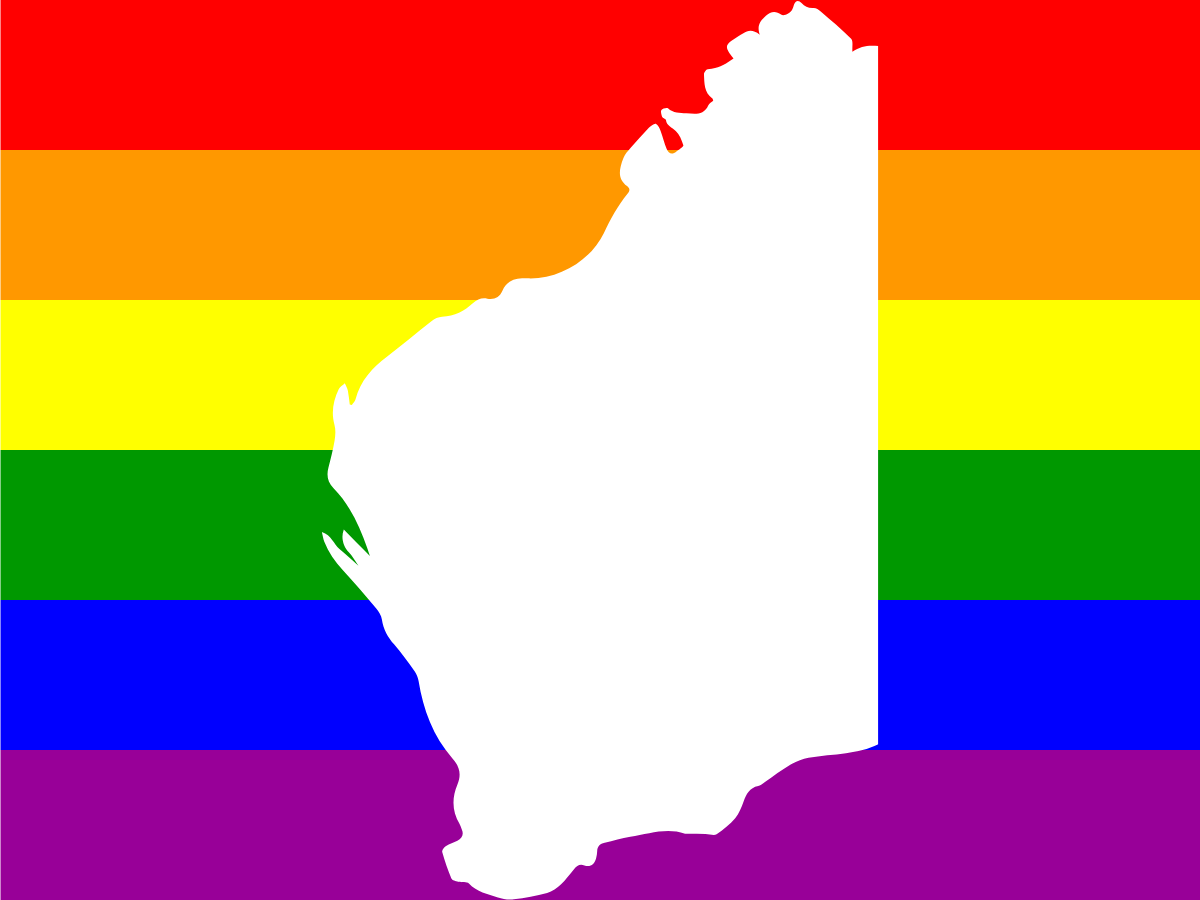
Footnotes:


[i] Earlier amendments (sheet 1373) that would have introduced the protected attribute of sex characteristics, rather than intersex status, in the Fair Work Act to reflect both best practice and the views of intersex advocates such as Intersex Human Rights Australia, failed with both the Government and Labor expressing their opposition. Sheet 1427, which included intersex status based on the definition in the Sex Discrimination Act was then moved by the Greens because it was seen as being entirely uncontroversial and therefore more chance of succeeding.

[ii] NSW Liberal Senator Andrew Bragg did refer to the issue of trans, gender diverse and intersex inclusion in the Fair Work Act in his second reading debate speech, expressing support for it being addressed at some point, but did not find the courage to cross the floor on the amendment itself.

Northern Territory Election: Anti-Discrimination Questions

[Update: For a response from the re-elected Labor Government, please scroll to the end of the post]

The Northern Territory election will be held on Saturday 22 August 2020. One of the many issues that could be affected by the outcome is the future of the Anti-Discrimination Act (NT), which commenced on 1 August 1993.

This legislation is now out-dated, and does not offer appropriate protection to the lesbian, gay, bisexual, transgender and intersex (LGBTI) community. For more information on its problems, see: What’s Wrong With the Northern Territory Anti-Discrimination Act?

While the Northern Territory Department of the Attorney-General and Justice conducted a public consultation on modernisation of the Act in 2018, no reforms have been proposed or progressed prior to the current election campaign.

In this context, I have sent the below questions to the leaders of the three main parties contesting the election: Territory Labor; the Country Liberal Party; and the Territory Alliance. If I receive answers from any Party prior to the poll, they will be published below.

**********

8 August 2020

The Northern Territory Anti-Discrimination Act is now more than a quarter of a century old, and does not offer appropriate protections against discrimination for the lesbian, gay, bisexual, transgender and intersex (LGBTI) community.

If your Party forms government after the election on 22 August 2020, will you commit to, as a matter of priority:

  • Update the definition of ‘sexuality’ to be consistent with the definition of ‘sexual orientation’ in the Sex Discrimination Act 1984 (Cth)?
  • Introduce a new protected attribute of ‘gender identity’, to ensure all trans and gender diverse people are protected against discrimination?
  • Introduce a new protected attribute of ‘sex characteristics’, to ensure all intersex people are protected against discrimination?
  • Amend section 37A(a)(ii) to remove the ability of religious schools to discriminate against teachers and other staff members simply because they are lesbian, gay, bisexual and transgender (LGBT)?
  • Remove the ability of religious organisations to discriminate against LGBT people in relation to accommodation under section 40(3)?
  • Introduce new prohibitions against vilification, including on the basis of race, as well as in relation to sexual orientation, gender identity and sex characteristics?

Please note that, if received, your answers will be published on www.alastairlawrie.net, and at ‘No Homophobia, No Exceptions’.

Sincerely,

Alastair Lawrie

No responses were received from Territory Labor, the Country Liberal Party or Territory Alliance prior to the election on 22 August 2020.

**********

The below response was received from Labor Attorney-General Selena Uibo on 5 October 2020. It is disappointing in two key ways. First, most obviously, they did not comment in time for NT voters to consider ahead of the 22 August election.

Second, and more importantly, it abdicates responsibility for fixing the outdated NT Anti-Discrimination Act, preferring to wait until after the Australian Law Reform Commission (ALRC) to complete its review of religious exceptions at Commonwealth, state and territory law.

However, as I have written previously, that review has been delayed until 12 months after the Commonwealth Religious Discrimination Bill has been *passed* by Commonwealth Parliament, which a) hopefully will not happen and b) if it does, won’t be until the first half of 2021 – meaning the ALRC will not report until 2022 at the earliest.

There is absolutely no justification for the re-elected NT Government to postpone taking urgent action to provide LGBTI Territorians with essential protection against discrimination and vilification. Anyway, here is the short response from Minister Uibo:

Dear Alastair,

I refer to your correspondence dated 8 August 2020 in relation to the Anti-Discrimination Act 1991.

The Territory Labor Government is committed to making changes to modernise the Territory legislation based on feedback received.

The Commonwealth Government have referred a number of recommendations following the Federal Report into Religious Freedoms to the Australian Law Reform Committee [sic]. Given the impact that Commonwealth legislation can have on the Northern Territory, we have been awaiting their report, before any changes are considered. This Report was originally due in April 2020; however, this date has now been extended to allow passage of the Federal Religious Discrimination Bill. It is expected that the Law Reform Committee [sic] Report will be returned sometime in 2021.

Thank you for taking the time to write to me regarding this important issue.

Yours sincerely,

Selena Uibo

Untitled design (1)

Chief Minister Michael Gunner (Territory Labor), Opposition Leader Lia Finocchiaro (Country Liberal Party) and Territory Alliance Leader Terry Mills.