I realised I was same-gender attracted on my first day at a religious boarding school in Brisbane in the 1990s. It was terrible timing, and meant my high school experience there was a living hell.
This was a school that was proud to publish its homophobia in its school rules – homosexuality would not be tolerated because it was not in accordance with god’s will.
It was abundantly clear that ‘coming out’ as gay was simply not an option. To do so would likely be met with punishment. And so I didn’t.
At its worst, I vividly recall a school pastor giving a sermon to a chapel full of 600-or-so year 11 and 12 students, talking about how a child from his former parish had come to see him ‘struggling with confusion’ about who he was. He said the child ultimately committed suicide – before observing this was not the worst thing he could have done.
For many queer kids sitting there that day, like me, the sermon’s underlying message was obvious: much better to be dead than gay.
The school’s overall approach to LGBTQ issues oscillated between that kind of explicit prejudice on one hand, and silence and invisibility on the other (including failing to provide any relevant sex education, which was particularly dangerous at a time when HIV/AIDS was still killing thousands).
Looking back, I think this ‘invisibilisation’ was actually more detrimental in terms of its impact on me, because it meant suffering in silence, completely alone, with the people who were supposed to be looking after me offering no solace.
The climate created by the school’s silence on sexual orientation and gender identity also allowed anti-LGBTQ bigotry to flourish amongst its students.
While I cannot be certain homophobia was a conscious motivator in the multiple physical assaults I experienced in Year 11 (which went unpunished by the school), the fact I was ‘different’ in some fundamental way, left cowered by fear into being withdrawn and isolated, rendered me vulnerable.
I can be more confident homophobia was behind the choice by Year 11 students to bestow on me the ‘Big fat poof’ award at the end of Year 12, in front of both peers and boarding school staff, with the latter doing nothing to respond to it.
Not even to check if I was okay.
That was almost three decades ago, so why I am writing about it now?
Because, with Commonwealth Parliament yet again debating the issue of protections for LGBTQ students and teachers – and yet again looking like letting the LGBTQ community down – there’s two points I want people, and especially politicians, to know.
First, that religious school homophobia, biphobia and transphobia causes serious harm. For me, that meant thinking about committing suicide every single day from the start of Term 2 in Year 8, until the final term of Year 12. Sometimes upwards of twenty times a day.
That is no way for a child to live. And definitely no way to learn, or to grow.
Nor does it suddenly end when the students who are the victims of this prejudice leave the school gates for the final time.
Trust me, I know. Those terrible five years have impacted me for much, much longer than that again.
The hurt and the harm I suffered was a major contributing factor to the lost decade that was my twenties, culminating in my thankfully unsuccessful attempt at suicide around my 29th birthday, more than a decade post-school.
Life got better when I met partner just after I turned 30, but I am not ashamed to admit that even now the trauma from my schooling is something I have discussed with my psychologist multiple times over the past 12 months.
And so, if the Labor Government chooses to break their clear election promise to protect LGBTQ students in religious schools, it won’t just be a betrayal of the students currently enrolled in homophobic, biphobic and transphobic schools – who, as highlighted by Equality Australia’s ‘Dismissed, Denied and Demeaned’ report released on Monday, continue to be vulnerable now.
It will be a betrayal of their futures too, with the impacts continuing to be felt in the 2030s, 40s and 50s.
Second, while it may not initially seem like it, my story is one of hope.
Because those experiences were in Queensland – a state which legislated to protect LGBTQ students in religious schools against discrimination two decades ago, and which is currently consulting on promised reforms to protect LGBTQ teachers too.
Far from causing religious schools to cease to exist, as baseless scare-mongering by groups like Christian Schools Australia assert, the main outcome has simply been that LGBTQ students can finally learn and grow safe from discrimination on the basis of who they are.
And, I’m reliably informed by people whom I trust, that includes at the school I went to. Change is possible.
Sadly, that still has not happened everywhere, with religious schools legally free to discriminate against LGBTQ students under Commonwealth law, and in NSW, WA and SA too.
Commonwealth Parliament can rectify this by immediately implementing the straight-forward recommendations of the ALRC report. If they do, they would be choosing to bestow a brighter future on LGBTQ students right across Australia.
*****
For LGBTIQ people, if this post has raised issues for you, please contact QLife on 1800 184 527, or via webchat: https://qlife.org.au/resources/chat
Or contact Lifeline Australia on 13 11 14.
Five years at a homophobic religious boarding school caused decades of harm.
*****
For an extended account of my experiences at that homophobic and harmful religious boarding school, you can read the following:
Finally, if you have appreciated reading this article, please consider subscribing to receive future posts, via the right-hand scroll bar on the desktop version of this blog or near the bottom of the page on mobile. You can also follow me on twitter @alawriedejesus
[I wrote this piece about 10 days ago, in the lead-up to the anniversary of the horrific events at Victorian Parliament in March last year. Unfortunately, it wasn’t picked up by media outlets – but the past week has made these comments even more urgent, so I am publishing it here.]
One year ago last Monday (on Saturday 18 March 2023), Australians witnessed the horrific sight of neo-Nazis turning up to an anti-trans rally on the steps of Victorian Parliament, holding a banner saying ‘destroy paedo freaks’ and performing Nazi salutes.
It was a chilling reminder of the serious threat posed by right-wing extremism to LGBTIQ communities in general, and trans and gender diverse people in particular.
Rather than being a one-off, that awful anti-LGBTIQ spectacle was just the first in a long line of rallies and related hate speech threatening our communities over the past 12 months.
Within days, so-called ‘Christian Lives Matter’ members engaged in what can only be described as a riot against peaceful LGBTIQ protestors (and NSW Police) in the Sydney suburb of Belfield.
April onwards saw a dramatic rise in threats of violence and intimidation by right-wing extremists across the country, directed to local councils and libraries holding Drag Story Times.
Most recently, the ABC was forced to cancel a Drag Story Time that was to be held in conjunction with the Sydney Gay & Lesbian Mardi Gras following death threats against their employees.
The attacks on our communities have been terrifying. They have been relentless. And they are part of a disturbing international trend of intolerance.
But where has the Commonwealth Government been when we have needed their leadership?
They were quick to introduce legislation to ban the display of Nazi hate symbols, later amended to also prohibit the Nazi salute. This was welcome, but addresses only part of the problem.
A group of thugs intimidating trans people with a banner saying ‘destroy paedo freaks’ is a serious issue irrespective of what clothes they wear, flags they fly or salutes they perform.
Sadly, though, we have not seen the Albanese Government respond to the rise in anti-LGBTIQ right-wing extremism with the seriousness it deserves.
We have not seen or heard clear and consistent condemnation of growing homophobia, biphobia and transphobia, or even of the violent threats against community events.
There has been no commitment to introduce much-needed Commonwealth laws prohibiting anti-LGBTIQ vilification.
And no open engagement with LGBTIQ communities about the threats we face, or additional funds committed to help with our safety.
Instead, it has been left to unfunded groups like Rainbow Community Angels, who attempt to make events like Drag Story Time a safe place for attendees, to stand up against the far-right, unassisted.
It’s possible the Government would say that primary responsibility for these issues lies with states and territories, but these are problems that call for national leadership.
By contrast, faith communities have been actively engaged and largely supported when they have raised concerns about intolerance.
Government representatives, from Prime Minister Albanese down, have spoken up in recent months against religious hate speech, particularly in the form of anti-semitism. The Government has made repeated promises to introduce religious vilification laws, expected to be tabled within weeks.
[NB Since this piece was written, the Government has confirmed it is pushing ahead with these amendments, separate to the Religious Discrimination Bill and any Sex Discrimination Act changes, meaning it may be the only part of those overall reforms that actually pass.]
And $40 million in Commonwealth funding for the safety of religious organisations was announced by Attorney-General Mark Dreyfus last May (on the International Day Against Homophobia, Biphobia and Transphobia no less).
The LGBTIQ community can’t even convince the Government to create and appoint a stand-alone LGBTIQ+ Discrimination Commissioner at the Australian Human Rights Commission. LGBTIQ issues remain a part-time, ad hoc responsibility of the Sex Discrimination Commissioner.
Promises to address anti-LGBTIQ vilification, and funding for LGBTIQ community safety, remain nowhere to be seen.
I’m a 45-year old cis gay man. I grew up in Joh Bjelke-Petersen’s Queensland, and survived five years at a deeply homophobic religious boarding school. Coming out of, and coming out after, that environment was tough.
But the rise in overt, targeted, public bigotry over the past 12 months has left me feeling less safe than at any time since the 1990s.
What has made things worse is the silence and inaction of the Albanese Government. This has left me, and many others in our community, feeling forgotten too.
Source: Herald Sun.
If you have enjoyed reading this article, please consider subscribing to receive future posts, via the right-hand scroll bar on the desktop version of this blog or near the bottom of the page on mobile. You can also follow me on twitter/X @alawriedejesus
Commonwealth Parliament passed the Sex Discrimination Amendment (Sexual Orientation, Gender Identity and Intersex Status) Act 2013 ten years ago today.
This was historic legislation, finally offering federal anti-discrimination protections to lesbian, gay, bisexual, transgender and intersex (LGBTI) Australians.[i]
And it was long overdue, more than 30 years after NSW became the first jurisdiction in Australia to prohibit discrimination on the basis of homosexuality, way back in 1982.
But, even at the time of passage it was clear these Sex Discrimination Act amendments were incomplete, and their limitations have only become more apparent in the decade since.
Here then are some[ii] of the key short-comings which need to be addressed in order for the Sex Discrimination Amendment (Sexual Orientation, Gender Identity and Intersex Status) Act 2013 to live up to its potential.
Replace the protected attribute of intersex status with sex characteristics
The 2013 amendments meant Australia became one of the first jurisdictions in the world to offer anti-discrimination protections to intersex people. It did so by the inclusion of ‘intersex status’ as a protected attribute, defined as:
‘the status of having physical, hormonal or genetic features that are:
(a) neither wholly female nor wholly male; or
(b) a combination of female and male; or
(c) neither female nor male.’
This terminology (intersex status) and associated definition are no longer considered best practice, with peak body Intersex Human Rights Australia advocating for its replacement with ‘sex characteristics’, which was recently defined in amendments to the Queensland Anti-Discrimination Act 1991 in the following way:
‘sex characteristics, of a person, means the person’s physical features and development related to the person’s sex, and includes-
(a) genitalia, gonads and other sexual and reproductive parts of the person’s anatomy; and
(b) the person’s chromosomes, genes and hormones that are related to the person’s sex; and
(c) the person’s secondary physical features emerging as a result of puberty.’
Fortunately, the Commonwealth Government has actually committed to making this change – Industrial Relations Minister Tony Burke promised to replace intersex status with sex characteristics in Parliament in November 2022.[iii]It’s time for the Albanese Government to follow through on this commitment.
2. Protect LGBTQ students in religious schools against discrimination
It is appalling that, in 2023, Commonwealth anti-discrimination laws – which are supposed to protect LGBTI Australians – instead continue to allow religious schools and colleges to discriminate against some of the most vulnerable among us.
The special privileges permitting religious schools to mistreat LGBTQ young people in myriad ways (from refusing to enrol, through to suspension, expulsion and other forms of punishment, as well as an almost unlimited variety of differential treatment to their cis-het counterparts) were never justified. But they look especially archaic, and abhorrent, today.
All students have the right to education, and must be allowed to exercise this right in safety. And because any student, in any school, can be LGBTQ, all schools must be LGBTI-inclusive.
Once again, the Albanese Government has promised to protect LGBTQ students against discrimination. However, rather than simply following the precedents of multiple states and territories which have already legislated to protect LGBTQ kids – some for more than two decades – they chose to refer the issue of the exceptions enjoyed by religious schools to the Australian Law Reform Commission in November 2022 for a six-month inquiry.
Disappointingly, in April 2023, Attorney-General Mark Dreyfus announced that this inquiry was being extended until 31 December 2023. As a result, LGBTQ Year 12 students in 2023 will not be protected against discrimination before they leave school (despite both major parties promising to do so since October 2018, when they were only in Year 7). And another class will likely start, in 2024, still not protected against discrimination on the basis of who they are.
This simply isn’t good enough.
3. Protect LGBTQ teachers in religious schools against discrimination
Of course, LGBTQ students are not the only people in religious schools and colleges who deserve protection against mistreatment. So too do LGBTQ teachers and other workers.
Teachers should be judged simply according to their ability to teach – not their sexual orientation and/or gender identity.
This would not only benefit LGBTQ teachers, who would finally enjoy the same ability to apply for jobs, and promotions, across their industry as cis-het teachers, and would also be free to focus on teaching rather than having to hide in the closet and spend time and emotional energy worrying about whether they will be outed, and sacked as a result.
But it would benefit students too, who would be taught by the best person for the job (not the best cis-het person), and learn from LGBTQ teachers not distracted by the ever-present threat of discrimination. For LGBTQ students, out teachers also offer the prospect of role modelling what a happy life might look like, reducing their potential isolation.
The imperative to remove the ability of religious schools to discriminate against teachers on the basis of their sexual orientation and/or gender identity is only strengthened when we consider the massive sums of taxpayer money – ourmoney – given to these institutions.
Yet again, the Albanese Government has promised to remove the special privileges which allow religious schools to discriminate against LGBTQ workers. But, as with LGBTQ students, the possible protection of LGBTQ teachers has been held up by the lengthy extension to the ALRC inquiry.
LGBTQ teachers shouldn’t have to wait until 2024, or beyond, to enjoy protection against discrimination in the workplace. They should be allowed to focus on lesson plans and marking, not planning how to mask their sexual orientation or gender identity.
4. Protect LGBTQ workers in Government-funded aged care services operated by religious organisations
One of the best provisions of the Sex Discrimination Amendment (Sexual Orientation, Gender Identity and Intersex Status) Act 2013 (Cth) was new sub-section 37(2)(a) which states that the Act’s general religious exception (contained in sub-section 37(1)(d):
‘does not apply to an act or practice of a body established for religious purposes if… the act or practice is connected with the provision, by the body, of Commonwealth-funded aged care.’
In effect, nearly all aged care services across Australia are now prohibited from discriminating against people accessing those services on the basis of their sexual orientation and/or gender identity. In other words, LGBTQ people in all Government-funded aged care services are legally protected against discrimination.
The fact this provision has operated successfully, for a decade, demonstrates that special privileges allowing discrimination by religious organisations delivering what are essentially public services are unnecessary, and should be removed.
We should start by repealing sub-section 37(2)(b),[iv] which still allows faith-based aged care services to discriminate against LGBTQ workers.
All of the arguments which applied to LGBTQ teachers in religious schools, outlined above, also apply to LGBTQ aged care workers. This includes ensuring that the best person for the job is hired, not just the best cis-het person, allowing LGBTQ aged care workers to focus on the important task of delivering care to the elderly rather than worrying about being discovered, and allowing LGBTQ people accessing aged care to see openly-LGBTQ people looking after them.
5. Remove the general religious exception in section 37(1)(d) of the Sex Discrimination Act entirely
The same arguments which apply to LGBTQ students, teachers and aged care workers, also apply to LGBTQ people accessing services and employees across a broad range of other public services – such as disability, health, housing and other community services – which have been increasingly outsourced by state, territory and commonwealth governments over recent years.
All people accessing these services should be free to do so without having to fear discrimination on the basis of their sexual orientation and/or gender identity.
All workers in these industries should have the right to be judged on their ability to perform their role, not on who they are or how they identify.
Several Australian states and territories have already reformed their anti-discrimination laws to narrow their general religious exceptions along these lines, including Tasmania, Victoria, the ACT and NT, while Queensland and Western Australia have in-principle commitments to implement law reform recommendations achieving the same.[v] It’s time for Commonwealth Parliament to catch up.
Importantly, even if the general religious exception in sub-section 37(1)(d) of the Sex Discrimination Act 1984 (Cth) were removed, religious organisations would continue to enjoy the right to religious freedom through sub-sections (a), (b) and (c), which cover the training and appointment of ministers of religion, and selection of other people to perform functions in connection with religious observances or practices.
6. Prohibit vilification against LGBTI Australians
One major gap which exists in the Sex Discrimination Act, and which unfortunately was not addressed by the historic 2013 amendments, is a lack of Commonwealth prohibition on vilification on the grounds of sexual orientation, gender identity and sex characteristics.
The first half of 2023 has comprehensively demonstrated why such nation-wide prohibitions are essential, with TERFs and neo-Nazis rallying against trans rights on the steps of Victorian Parliament, the Christian Lives Matter riot against LGBTIQ protestors in Sydney, and growing threats of violence and intimidation against drag story time and other local LGBTIQ community events across several jurisdictions.
Disappointingly, there has so far been no national response to the anti-LGBTI substance of these developments.
The Albanese Government has instead proposed legislation banning the display of Nazi symbols which, while obviously welcome, in the absence of LGBTI vilification laws raises the following question: is anti-LGBTI hate speech acceptable as long as the people engaging in it aren’t wearing Nazi uniforms?
What has been happening so far this year is nothing short of a national crisis. What we need is a national response, including the introduction of Sex Discrimination Amendments prohibiting vilification against LGBTI Australians, equivalent to section 18C of the Racial Discrimination Act 1975 (Cth).
7. Create and appoint a Commissioner for Sexual Orientation, Gender Identity and Sex Characteristics
The dire situation confronting LGBTI Australians in 2023 has highlighted another structural weakness in our anti-discrimination framework – the lack of a stand-alone independent Commissioner for Sexual Orientation, Gender Identity and Sex Characteristics within the Australian Human Rights Commission.
This absence puts LGBTI people at a distinct disadvantage compared to other groups for which dedicated Commissioners have been created, including:
Race
Sex
Disability
Age
Children
Aboriginal and Torres Strait Islander Social Justice, and
Human Rights.
Responsibility for LGBTI issues has instead been seen as an ‘add-on’, with the portfolio at various times being held by the Human Rights Commissioner, Sex Discrimination Commissioner and even the President (where it currently sits, although it will likely revert to the Sex Discrimination Commissioner when a replacement for Kate Jenkins is appointed).
But as an ‘add-on’, it never receives the same level of attention as other portfolios, nor the same amounts of funding and resources.
This lower relative prioritisation of LGBTI rights can be seen in the Commission’s muted response to the disturbing developments in the first half of 2023 – as far as I can tell, there have been no media releases or other public policy contributions in response to the TERF and neo-Nazi rally, Christian Lives Matter riot, or escalating wave of anti-LGBTI threats around the country.
Our community is under attack, and Australia’s national human rights institution does not appear to be coming to our defence.
The most straight-forward way to remedy this would be to address the structural weakness which has contributed to it – and that is by creating, and urgently appointing, a stand-alone independent Commissioner for Sexual Orientation, Gender Identity and Sex Characteristics within the AHRC.
NB This post is written in a personal capacity, and does not reflect the views of employers past or present, nor of any community organisations with which I am involved.
Commonwealth Attorney-General Mark Dreyfus, who has responsibility for the Sex Discrimination Act 1984 (Cth), and who therefore has responsibility for amending it to better protect LGBTI Australians.
If you have enjoyed reading this article, please consider subscribing to receive future posts, via the right-hand scroll bar on the desktop version of this blog or near the bottom of the page on mobile. You can also follow me on twitter @alawriedejesus
Footnotes:
[i] Although the Commonwealth Fair Work Act had offered limited protections to LGB workers, on the basis of ‘sexual preference’, from 2009.
[ii] This is by no means an exhaustive list of the Act’s faults. Other issues which should be addressed include narrowing the exceptions applying to transgender and intersex people in sport, as well as removing the exceptions relating to data collection.
[iii] During debate on legislation that finally included gender identity and intersex status as protected attributes in the Fair Work Act for the purposes of adverse action and unlawful termination provisions.
[iv] Which clarifies that the protection of LGBTQ people in relation to aged care services operated by faith bodies only applies where ‘the act or practice is not connected with the employment of persons to provide that aged care.’
[v] From the Queensland Human Rights Commission and WA Law Reform Commission respectively.
This week saw the 100-day milestone for the new Albanese Labor Government, with lots of attention on issues like climate change, a federal Independent Commission Against Corruption, a referendum to create a constitutionally-enshrined Voice to Parliament, and of course the Jobs and Skills Summit (which I have written about here, and here).
One issue that has received comparatively little focus, but which will be considered by the Senate next week (beginning 5 September), is the possible creation of a Commissioner for Lesbian, Gay, Bisexual, Transgender, Intersex, Queer and Asexual (LGBTIQA+) issues within the Australian Human Rights Commission (AHCR).
I bring this to your attention because there is a strong chance the Government will reject amendments to establish this much-needed position, and this weekend is your last chance to take action to let Prime Minister Albanese and his ministerial colleagues know that you support an LGBTIQA+ Commissioner. But first, some background.
Why an LGBTIQA+ Commissioner?
The AHRC is our national anti-discrimination body, with responsibility for receiving and conciliating discrimination complaints under Commonwealth anti-discrimination laws, including the Racial Discrimination Act 1975, Sex Discrimination Act 1984, Disability Discrimination Act 1992 and Age Discrimination Act 2004.
The AHRC also has a number of statutory office-holders, with responsibility for publicly advocating for equality and human rights generally, including the President and the Human Rights Commissioner, as well as positions dedicated to specific attributes or communities, including the:
Aboriginal and Torres Strait Islander Social Justice Commissioner
Age Discrimination Commissioner
Children’s Commissioner
Disability Discrimination Commissioner
Race Discrimination Commissioner, and
Sex Discrimination Commissioner.
Notice who’s missing? That’s right, there’s no Commissioner with responsibility for LGBTIQA+ issues.
That’s because the 2013 amendments to the Sex Discrimination Act which added sexual orientation, gender identity and intersex status as protected attributes in that law did not create such a position. These are now the only attributes in the four main Commonwealth anti-discrimination laws not to have a Commissioner attached to them.
This omission has left LGBTIQA+ Australians at a distinct disadvantage over the past nine years, with no Commissioner with primary responsibility to speak on issues affecting our community, including during the marriage equality debate (while former Human Rights Commissioner Ed Santow did a good job, it was still only a small part of his overall role).
With ongoing attacks on LGBTIQA+ rights, including the rise of transphobia in both politics and the media, I believe it is beyond time there was a Commissioner within the AHRC empowered to advocate on our behalf, without other competing responsibilities.
The Australian Human Rights Commission Legislation Amendment (Selection and Appointment) Bill 2022
The absence of an LGBTIQA+ Commissioner has become topical in the context of the Government’s Australian Human Rights Commission Legislation Amendment (Selection and Appointment) Bill 2022, one of the first laws introduced since the election.
This is an important Bill, which seeks to enforce a transparent and merit-based appointment process for the statutory office-holders discussed above, both to prevent a repeat of the previous Government’s appointments which failed to meet these criteria, and to maintain the AHRC’s international accreditation as an ‘A-status’ national human rights institution (which is under threat because of those same non-transparent appointments). I support its passage.
However, introducing legislation which focuses on the appointment of Commissioners under national anti-discrimination laws obviously draws attention to the lack of an LGBTIQA+ Commissioner under those same laws.
In this context, and responding to lobbying from LGBTIQA rights group Just.Equal Australia, new Greens MP for Brisbane Stephen Bates introduced the following amendment during the Bill’s Second Reading debate in the House of Representatives in early August:
‘whilst not declining to give the bill a second reading, the House calls on the Government to establish a Human Rights Commissioner for LGBTIQA+ people within the Australian Human Rights Commission.’
In the words of Mr Bates:
‘The lack of such a commissioner is an obvious oversight that we can remedy here today. This remedy would send a strong and clear message to the LGBTIQA+ community that the era of the homophobia and transphobia from the previous government has come to an end, and signal a new approach in engaging with and protecting communities that have suffered systemic oppression for centuries. The community is not asking for anything unreasonable. There already exist commissioners for race discrimination, disability discrimination and so many others. It is vitally important that the LGBTIQA+ community have the same protection of our rights afforded to us.’
This amendment was supported by a number of cross-bench MPs. This includes MP for Kooyong, Dr Monique Ryan, who said:
‘There is a clear and urgent need for a dedicated LGBTIQA+ human rights commissioner. The absence of such diminishes the reality of discrimination against this group of individuals. The absence of such means that no-one at the AHRC has the resources or experience to advocate for and articulate the concerns of the community in legislation, policy reform or public education.’
And the MP for Goldstein Zoe Daniel, who noted:
‘Traditionally, the human rights of the LGBTQI+ community were part of the Human Rights Commissioner’s portfolio, but with that portfolio also holding religious freedom, in recent history I think there’s been a conflict between those two areas. We know that in the last parliament this led to a toxic debate that caused great distress to members of the LGBTQI+ community, particularly trans people, compounding mental health issues for children in this community particularly. For that reason, I think that direct representation is needed.’
While the MP for Warringah Zali Steggall spoke of her front-row view of the transphobic campaign of her failed Liberal Opponent during the recent election:
‘it is clear that in Warringah during the election we had very inflammatory debates about members of our community and their opportunity for inclusion. I have to say that it did raise concerns for me. There was a lack of information in the public domain about the real status of the law when it came to transgender rights and issues within the LGBTQI community. I am concerned that issues that are specific to members of the LGBTQI community do at times get overlooked or submerged into the greater responsibilities of the Sex Discrimination Commissioner, so I think there is merit in there being a more specific mandate for addressing those issues.’
Despite these, what I would describe as compelling, reasons, the Government chose to vote against the Bates amendment, ensuring its defeat.
Attorney-General Mark Dreyfus made two main arguments against the amendment in his own speech:
‘The government will not support that second reading amendment. Let’s be clear about this: the effect of the second reading amendment, if it succeeds, would be to negate the bill, to stop these important measure that are contained in this bill from coming into effect…
‘While we of course understand the strong sentiment expressed by members of the community in support of a dedicated LGBTIQA+ commissioner, this bill is not the vehicle to create such a position. The government recognises that it is important to consider how best the commission can operate to promote and protect the human rights of all members of the Australian community, including LGBTIQA+ people. I acknowledge and commend the work that the commission already undertakes in relation to LGBTIQA+ rights, which is led by the Sex Discrimination Commissioner, Kate Jenkins. There will no doubt be further discussion on this proposal, as well as, I hope, discussion on other opportunities to strengthen the work of the commission in the future.’
The first argument is a matter of debate around the wording of the Bates amendment, and may or may not be correct. It is also probably not relevant to the different, substantive amendments proposed by Greens Senator David Shoebridge and to be voted on in coming days (discussed in more detail below).
However, the second argument is incredibly weak. Claiming LGBTIQA+ rights are already worked on by the Sex Discrimination Commissioner is simply not good enough, for at least two reasons. First, the Sex Discrimination Commissioner has a full-time role of their own, with plenty to focus on in terms of sexism, and sexual harassment – they, understandably, have limited capacity to simultaneously focus on anti-LGBTIQA+ discrimination.
Second, this arrangement does not seem to be working, especially when checking the LGBTI section of the AHRC website itself. Where not only are there no current projects on LGBTI issues – and haven’t been any since October 2021 – there are no news items from the past eleven months either. After all, it’s not like there are any substantive issues of LGBTIQA+ equality which still need to be addressed, or any major debates involving transphobia which have happened during that time… [sarcasm]
What is perhaps most disappointing about the Attorney’s comments is that, irrespective of the Government’s position on the specific Bates amendment, he was unwilling to make a commitment to creating an LGBTIQA+ Commissioner at all, even at some point in the future.
This disappointment was compounded two days later when the Government and Opposition united to defeat a Greens motion in the Senate to at least hold an inquiry into the Bill, to allow for consultation with the LGBTIQA+ community about the need to create a Commissioner within the AHRC.
All hope is not lost
While there is no denying those two votes were setbacks, there is still a third chance for this issue to be progressed.
As mentioned above, Greens Senator for NSW David Shoebridge has introduced a more comprehensive set of amendments to the Bill, which would create an LGBTIQA+ Commissioner on exactly the same basis as the other attribute-based Commissioners. You can see the details of those amendments here.
I understand these amendments are likely to be voted on in the Senate this coming week, and potentially on Tuesday 6 September. Which means we have just days left to convince the Government, as well as cross-benchers like David Pocock, Jacqui Lambie and Tammy Tyrrell, to support these amendments.
The easiest thing you can do, right now, is to sign and then share this petition from Just.Equal Australia calling on the Government to support an LGBTIQA+ Commissioner.
If you have more time, you can also write to the Prime Minister, Attorney-General and/or other members of the Government (like your local MP or Senator), urging them to support the equal treatment of LGBTIQA+ people by establishing an AHRC Commissioner for our community.
Below is the letter I have sent this morning to Attorney-General Dreyfus.
*****
3 September 2022
The Hon Mark Dreyfus QC MP
Attorney-General
PO Box 6022
House of Representatives
Parliament House
CANBERRA ACT 2600
Dear Mr Dreyfus
Please create an LGBTIQA+ Commissioner within the Australian Human Rights Commission
I am writing to call on you to create a Commissioner for Lesbian, Gay, Bisexual, Transgender, Intersex, Queer and Asexual (LGBTIQA+) issues within the Australian Human Rights Commission (AHRC).
The establishment of this position is long-overdue. While there are Commissioners at the AHRC for a number of other attributes within Commonwealth anti-discrimination law, there are none with specific responsibility for advocating for LGBTIQA+ equality and human rights.
This has caused a distinct disadvantage for the LGBTIQA+ community when our rights are up for debate, including during the emergence of transphobic campaigns in politics and in the media over the past 12 months.
The creation of an LGBTIQA+ Commissioner within the AHRC would also be consistent with the 2021 ALP National Platform, which was developed ahead of the election. This included commitments that:
‘Labor will work closely with LGBTIQ Australians and advocates to develop policy that will… strengthen laws and expand initiatives against discrimination, vilification and harassment on the basis of sexual orientation, gender identity or sex characteristics’ (page 64), and
‘All Australians should be able to go about their lives free from discrimination. Labor is the primary architect of the anti-discrimination law framework in Australia. We will continue to defend and enhance that framework to ensure that it is fit for purpose, accessible and promotes equality’ (page 66).
I hope you would agree that creating an LGBTIQA+ Commissioner will ‘strengthen’ and ‘enhance’ initiatives against discrimination on the basis of sexual orientation, gender identity and sex characteristics, while ‘enhancing’ the Commonwealth anti-discrimination framework.
I note that you, and therefore the Government, opposed a second reading amendment in the House of Representatives to your Australian Human Rights Commission Legislation Amendment (Selection and Appointment) Bill 2022 from the Greens which called on the Government to ‘establish a Human Rights Commissioner for LGBTIQA+ people’ within the AHRC.
While one of your arguments was technical (which has hopefully been addressed by the revised, comprehensive amendments proposed by the Greens in the Senate), I am disappointed by another argument you raised, that this work is already being performed by the Sex Discrimination Commissioner.
In my opinion, the Sex Discrimination Commissioner already has a (more than) full-time role in advocating on issues of sexism, and sexual harassment. They do not have the capacity to address LGBTIQA+ discrimination as well, nor should addressing LGBTIQA+ discrimination be treated as some kind of add-on to somebody else’s role, with the consequence that our community’s issues are inevitably ignored (noting, for example, that the AHRC has no current projects on LGBTI discrimination listed on its website, and have not posted even a news item since October 2021).
Now that the Bill has progressed to the Senate, I urge you and the Albanese Labor Government to support Senator David Shoebridge’s amendments to create an LGBTIQA+ Commissioner with the same powers and responsibilities as existing office-holders within the AHRC.
In the event you continue to oppose these specific amendments, for whatever reason, I call on you to:
Commit to the Government itself creating an LGBTIQA+ Commissioner within the AHRC, and
Provide a clear timeline for when this position will be established.
Thank you in advance for considering the issues raised in this correspondence. Please do not hesitate to contact me at the details provided should you like to discuss the above.
Sincerely
Alastair Lawrie
*****
Update: I received the following reply from a Director in the Human Rights Branch of the Attorney-General’s Department:
4 October 2022
Dear Mr Lawrie
Thank you for your email of 3 September 2022 to the Attorney-General, the Hon Mark Dreyfus KC MP, regarding the creation of a LGBTIQA+ Commissioner at the Australian Human Rights Commission (the Commission). The Attorney-General has requested that the Attorney-General’s Department respond to you on his behalf.
The Government believes that all Australians are entitled to respect and dignity, the opportunity to participate in society, and receive the protection of the law regardless of their gender identity, sexual orientation and intersex status. The Sex Discrimination Act 1984 (Cth) prohibits discrimination on the grounds of gender identity, sexual orientation and intersex status in many areas of public life, including employment, education, in the provision of goods, services and facilities. The Government acknowledges the work that the Commission already undertakes in relation to LGBTIQA+ rights, led by the Sex Discrimination Commissioner, Kate Jenkins.
The Government recognises that it is important to consider how best the Commission can operate to promote and protect human rights of all members of the Australian community, including LGBTIQA+ people. The Government understands the strong sentiment expressed by members of the community in support of a dedicated LGBTIQA+ Commissioner. There will no doubt be further discussion on this proposal, as well as other opportunities to strengthen the work of the Commission, in the future.
Thank you for bringing your concerns to the Attorney-General’s attention.
Yours sincerely
[Details redacted]
Commonwealth Attorney-General Mark Dreyfus QC MP.
NB This post is written in a personal capacity, and does not reflect the views of employers past or present.
If you have enjoyed reading this article, please consider subscribing to receive future posts, via the right-hand scroll bar on the desktop version of this blog or near the bottom of the page on mobile. You can also follow me on twitter @alawriedejesus
This is the second in a two-part series of articles reflecting on the recent federal election and its impact on LGBTIQ Australians, with this post focusing on what it means for the upcoming Parliamentary term. You can read the first post, looking back on the past three years, ‘The worst of times’, here.
The same thing could just as easily be written now after the federal election on May 21 which saw the Morrison Liberal/National Government defeated.
Yes, this outcome is a massive relief for LGBTIQ Australians, who, as I wrote last weekend, have just endured the worst Commonwealth Parliamentary term for our rights in my lifetime.
And it obviously means the threats of the Coalition’s damaging and divisive Religious Discrimination Bill (or ‘Religious Freedom Bill’ in disguise), and Liberal Senator Claire Chandler’s legislation attacking trans women and girls’ participation in sport, have receded (for now).
But, just like in NSW, not going backwards on LGBTIQ rights is not the same thing as going forwards: the many changes to Commonwealth laws and policies to make our lives better which were needed on May 20 were not somehow magically introduced on May 22.
Progress still needs to be delivered. In many, many areas.
I wrote about some of those LGBTIQ law reform priorities earlier this year, here.
But perhaps a better and more comprehensive outline of what needs to happen is found in the Just.Equal Australia pre-election survey of the LGBTIQ community and its priorities, which included (but was definitely not limited to):
Removing current exemptions in the Sex Discrimination Act that allow discrimination against LGBT people, for example, by faith-based schools, hospitals and charities
Improving LGBTIQA+ safety and inclusion in schools
Improving LGBTIQA+ access to appropriate and inclusive aged care
Establishing LGBTIQA+ policy groups in federal government agencies such as health, education, the federal police, justice and the Prime Minister’s department
Developing mechanisms to consult with all existing LGBTIQA+ organisations and fund them to properly represent their constituents
Developing strategies around suicide and mental health, aged-care, homelessness, Indigenous LGBTIQA+ people and family violence prevention
Recognising LGBTIQA+ people in the Census by asking questions about sexual orientation, gender identity and variations of sex characteristics
Removing the ban on sexually-active gay/bi men, and trans women, giving blood and replacing it with a policy of individual risk assessment for all potential donors
Medicare funding for gender transition and other gender-affirming health care, and
Legislative prohibition of unconsented and deferrable medical interventions on children born with innate variations of sex characteristics.
I can almost hear the reactions of the ACL, and extremist columnists in the Murdoch media, to such a list: that it represents some kind of radical and dangerous left-wing agenda. Or, to transphobic bigots like Katherine Deves, that its implementation would be a ‘Rainbow Reich’.
But is it, really? Or are these priorities actually eminently reasonable, reflecting nothing more than the aspiration to enjoy what many (although not all) Australians already take for granted?
There is nothing radical about wanting all children to learn and to grow in safe and inclusive school environments, free from discrimination on the basis of who they are.
There is nothing dangerous in suggesting that teachers and other workers should be employed on the basis of their skills and qualifications, not their sexual orientation or gender identity.
The desire to grow old with access to high-quality, safe and supportive aged care services must be a universal one.
As is the basic want for essential Medicare-funded health services to allow people to live the lives they were meant to enjoy.
And surely very few people could argue against protecting children born with innate variations of sex characteristics from deferrable medical interventions until they are old enough to consent to them themselves?
While many of the other priorities (establishing policy groups and developing strategies, providing funding for LGBTIQA+ organisations and including LGBTIQA+ people in the Census) are merely the formal mechanisms required to ensure these objectives are achieved, and maintained.
Seen in this way, the above priorities are neither radical, nor dangerous. Instead, they are both reasonable, and the bare minimum of what needs to happen.
The fact this list (and the much longer list in the Just.Equal Australia survey report itself) is so lengthy is instead a reflection of the lack of action on these issues over the past nine years, with the Abbott, Turnbull and (especially) Morrison Governments either ignoring the LGBTIQ community and our needs, or in some cases (like the safe schools debate, plebiscite and postal survey, and proposed Religious Discrimination Bill) going out of its way to make our collective lives much more difficult.
So, we know what the needs are. How likely are they to be met under the new Albanese Labor Government?
The answer to that question is both complicated, and also pretty straight-forward (which we’ll return to later).
To begin, we should acknowledge that many LGBTIQ Australians are viewing the new Government with complex emotions, including an understandable sense of caution, anxiety even.
This is due both to what many perceived to be a failure to adequately call out the toxic transphobia of Katherine Deves during the election campaign itself. As well as the decision in February to vote for the Morrison Government’s Religious Discrimination Bill despite the failure of Labor’s amendment to remove the damaging statement of belief provision, and the failure of Labor to support cross-bench amendments to remove the Bill’s override of state and territory anti-discrimination protections for teachers in religious schools.
As with many other areas, the Albanese Labor Government also went to the election with what could be described as ‘small target strategy’ in relation to LGBTIQ policy.
In The Conversation, Paula Gerber noted this included commitments to:
Count LGBTIQ people in the 2026 Census
Protect LGBT students in religious schools against discrimination, and
Increase funding for LGBTIQ+ health, mental health and family violence prevention services.
Professor Gerber also describes the much vaguer, and far less reassuring, policy to ‘amend anti-discrimination laws so that… all teachers are protected from discrimination at work (while maintaining the right of religious schools to preference people of faith in the selection of staff)’ [emphasis added]. It remains to be seen how much (unjustifiable) discrimination against LGBT teachers such a policy would continue to permit.
On a broader range of LGBTIQ policy issues, such as discrimination against LGBT workers and people accessing services by other religious organisations, Medicare funding for gender transition, and ending coercive surgeries on intersex children, the then-Opposition was largely silent.
Which means the Albanese Government’s LGBTIQ policy agenda is simultaneously far superior to that of the Government it replaced and far less than what is necessary to deliver genuine equality.
Our first challenge therefore is to push the new Government to go much, much further in its policy commitments.
The second challenge is related to the first – and that is, even if we secure additional LGBTIQ policy commitments, we will need to keep up the pressure to ensure they are actually delivered amidst what will be an incredibly packed legislative agenda.
After all, it is not just LGBTIQ issues on which the previous Government held back progress. In this term of Parliament alone, the Albanese Government will need to deliver on real climate change commitments, creating a federal independent commission against corruption, implementing all of the Respect@Work recommendations, and holding a referendum to enshrine a Voice to Parliament in the Constitution as part of the Uluru Statement from the Heart (and plenty more besides, such as dealing with the energy and cost of living crises).
It will take sustained advocacy from the LGBTIQ community to ensure our issues are not forgotten, or put in the ‘second term basket’ (with no guarantee they will ever be dealt with).
The third challenge is a familiar one – the return of a Religious Discrimination Bill, which incoming Attorney-General Mark Dreyfus has confirmed will come before Parliament at some point this term.
Now, I know many people will be triggered simply by hearing that three-word legislative title alone, but we should remember that prohibiting discrimination on the basis of religious belief is not a negative thing in and of itself (with most states and territories already doing so, including jurisdictions with strong LGBTI anti-discrimination protections like Tasmania, the ACT and, following recent reforms, Victoria).
But we will also need to be prepared to push back, firmly, against any provisions which go beyond prohibiting discrimination on the basis of belief to instead entrench the ability of religious individuals and organisations to discriminate against women, LGBT people, people with disability and people of minority faiths (which were the problematic features of the Morrison Bill).
The good news is the make-up of the new Parliament looks to be conducive to meeting these challenges.
That includes the presence of people who I would consider allies to the LGBTIQ community inside the Government itself, including in key portfolios (starting with Mark Dreyfus himself, who was Attorney-General under the last Labor Government when the historic Sex Discrimination Amendment (Sexual Orientation, Gender Identity and Intersex Status) Act 2013 was passed).
And of course it includes the expanded Parliamentary presence of the Australian Greens, now with four seats in the House of Representatives (up from one) and 12 in the Senate (up from nine).
Throughout the last term, not just on the Religious Discrimination Bill but on other issues like amendments to the Fair Work Act 2009 (Cth) to explicitly protect trans, gender diverse and intersex workers against discrimination, the Greens consistently demonstrated their support for LGBTIQ law reform (which is a testament to the great work of their then-spokesperson for LGBTIQA+ issues, Senator Janet Rice – new spokesperson Stephen Bates has big shoes to fill).
The independent cross-bench has also grown significantly too. We already had Helen Haines, Rebekha Sharkie, Zali Steggall, and Andrew Wilkie, all of whom voted to support our community throughout the Religious Discrimination Bill debate.
They have been joined by six new so-called ‘Teal’ MPs. While they are obviously yet to have a voting record against which we can judge them, they all represent electorates which voted strongly in favour of marriage equality:
Kate Chaney in Curtin (72.2% Yes)
Zoe Daniel in Goldstein (76.3%)
Monique Ryan in Kooyong (73.7%)
Sophie Scamps in Mackellar (68%)
Kylea Tink in North Sydney (71.8%), and
Allegra Spender in Wentworth (80.8%).
Given those results, if any of them choose to vote against LGBTIQ equality this term, they could find themselves exiting the Parliament at the next poll.
The Senate also looks promising, with the cross-bench including new Senator for the ACT David Pocock (who was an early and passionate supporter of marriage equality), and now two members of the Jacquie Lambie Network (noting that Lambie herself had been a strong advocate against the Religious Discrimination Bill, including seeking to protect Tasmania’s best practice anti-discrimination laws from Commonwealth override).
Overall, then, while there are challenges ahead in terms of making long-overdue progress on LGBTIQ equality, and navigating how and when to advance particular issues might sometimes be complex, there is also plenty of opportunity, if only we can take advantage of it.
Or, in the more straight-forward words of my National Party-voting parents on the night after the election (yes, we have some interesting discussions about politics): ‘There might never be a better election outcome to achieve the changes you have been campaigning on for so long.’
I agree, and will be doing my best to make sure they happen.
Because LGBT students in religious schools have already waited long enough.
LGBT teachers and other workers, too.
Trans and gender diverse people have waited long enough to have access to Medicare-funded gender-affirming healthcare, including transition.
And children born with innate variations of sex characteristics have waited far, far too long to have their fundamental rights to bodily autonomy protected.
The last term of Commonwealth Parliament truly was the worst of times. There is absolutely no guarantee the current term of Parliament will be the best. But there’s also no reason why it can’t be. So let’s get to work.
NB This post is written in a personal capacity, and does not reflect the views of employers past or present.
Prime Minister Anthony Albanese on election night. There is plenty of work to do to ensure it is ‘A Better Future’ for LGBTIQ Australians.
If you have enjoyed reading this article, please consider subscribing to receive future posts, via the right-hand scroll bar on the desktop version of this blog or near the bottom of the page on mobile. You can also follow me on twitter @alawriedejesus
Problem: Transgender and intersex workers are not explicitly protected under the Fair Work Act 2009 (Cth).
While discrimination on the basis of sexual orientation, gender identity and intersex status are all prohibited under the Sex Discrimination Act 1984 (Cth), only sexual orientation is included as a relevant attribute in the Fair Work Act for the purposes of protections against ‘adverse action’ (section 351(1)), and ‘unlawful termination’ (section 772(1)(f)), as well as in sections covering the contents of awards (section 153) and enterprise agreements (section 195), and the functions of the Fair Work Commission (section 578(c)).
This means that while the ability of lesbian, gay and bisexual workers to bring complaints to the Fair Work Commission (FWC) is certain, there is significant doubt about whether trans, nonbinary and intersex employees can do the same.
In practice, a trans worker who is mistreated in the workplace because of their gender identity, or an intersex employee who is fired on the basis of their sex characteristics, may be unable to have their issue resolved quickly and at low cost via the FWC, and instead be forced to go through a much less timely, and potentially more expensive, complaint to the Australian Human Rights Commission (and then in federal court after that).
This is a completely unjustified discrepancy in the rights of LG and B Australians on one hand, and transgender and intersex people on the other, and it must be resolved.
Solution: Amend the Fair Work Act to explicitly protect transgender and intersex workers.
Simple, right? Well, it certainly should be.
Sadly, however, the Liberal/National Government has proven itself to be completely uninterested in doing anything to address this most straightforward of problems.
What makes that vote even more disappointing is the then Opposition, under Tony Abbott, had actually voted in favour of protecting transgender and intersex people in the SDA back in 2013 – meaning the Liberal/National Coalition has gone *backwards* in its support for these groups in the subsequent eight years.
In any event, with the election expected to be called today (and at the latest by Monday 18 April), it is clear the lack of explicit protections for trans, nonbinary and intersex workers in the Fair Work Act will not be addressed this term.
In which case, I think we should ensure that finally addressing this problem is made an election issue for the upcoming poll (on May 14 or 21).
What policy commitments do we want?
From my perspective, any election commitment on this issue should comprise four, inter-related parts.
First, a commitment to ensure the Fair Work Act explicitly covers trans, nonbinary and intersex workers.
Second, a commitment to use best practice terminology to do so.
This includes adding a protected attribute of ‘gender identity’, using the definition in section 4 of the Sex Discrimination Act (‘the gender-related identity, appearance or mannerisms or other gender-related characteristics of a person (whether by way of medical intervention or not), with or without regard to the person’s designated sex at birth’) as a starting point, and finalised in consultation with trans community organisations.
However, while the SDA currently uses the protected attribute ‘intersex status’ (defined in section 4 as ‘the status of having physical, hormonal or genetic features that are (a) neither wholly female nor wholly male; or (b) a combination of female and male; or (c) neither female nor male’) this is no longer supported by the intersex community, at least in part because it has been interpreted by some as relating to identity rather than biology.
Instead, the best practice terminology is now ‘sex characteristics’, as called for in the historic March 2017 Darlington Statement, and most recently defined in the Equal Opportunity Act 2010 (Vic) as:
‘a person’s physical features relating to sex, including-
(a) genitalia and other sexual and reproductive parts of the person’s anatomy; and
(b) the person’s chromosomes, genes, hormones, and secondary physical features that emerge as a result of puberty.’
The definition of sex characteristics should also be finalised in consultation with intersex community organisations, particularly Intersex Human Rights Australia.
Third, if the attribute of ‘sex characteristics’ is added to the Fair Work Act, the Parliament should use the same opportunity to update the Sex Discrimination Act, replacing the protected attribute of intersex status with sex characteristics.
Fourth, a commitment to make these reforms within the first 12 months of the next Parliamentary term.
This discrepancy has existed since the passage of the Sex Discrimination Amendment (Sexual Orientation, Gender Identity and Intersex Status) Act 2013, in June of that year.
Which means by mid-2023 it would have been a full decade of trans, nonbinary and intersex workers having less clear, and potentially lesser, workplace rights than lesbian, gay and bisexual employees.
That is far too long for workers to wait for what are basic protections, making a request that it be fixed in the next year entirely reasonable.
In this context, today I sent the below emails to the Government, Opposition and Greens.
The email to the Government highlights their rejection of amendments to the Fair Work Act in September last year, and asks them to take concrete action to protect trans, nonbinary and intersex workers as a matter of urgency.
The email to the Opposition welcomes their vote to support adding ‘intersex status’ to the Fair Work Act last September, while calling on them to go further, and commit to instead add the protected attribute of ‘sex characteristics’ if they form Government.
Finally, the email to the Greens thanks them for their leadership on this issue to date (it was their amendments that were voted on last year) and urges them to continue to prioritise this reform in the upcoming term of Parliament.
Please commit to protecting trans, nonbinary and intersex workers in the Fair Work Act 2009 (Cth)
All workers should be protected against adverse action, and unlawful termination, on the basis of who they are.
These protections must include transgender and intersex employees.
As you are aware, these groups are not explicitly covered by relevant provisions of the Fair Work Act 2009 (Cth), unlike other protected attributes like race, sex, age, disability, religious belief and even sexual orientation.
In this context, it was extremely disappointing that you, and other Government Senators, voted to reject straight-forward amendments to address this discrepancy in September 2021, thus leaving the position of trans, nonbinary and intersex workers unclear.
In light of the upcoming federal election, I call on you, and the Liberal/National Coalition, to unequivocally commit to fixing this problem as a matter of priority next term.
Not only would this be the right thing to do in principle, it would also be consistent with the actions of the then Abbott Opposition in 2013 (of which you were a member), to support the prohibition of discrimination on the basis of gender identity and intersex status in the Sex Discrimination Act 1984 (Cth).
A commitment in four, inter-related parts
From my perspective, this commitment should include the following four, closely-linked, elements:
First, a commitment to protect transgender and intersex workers on exactly the same basis as other groups.
Second, a commitment to add the protected attributes of ‘gender identity’ (based on the definition in the Sex Discrimination Act, and finalised in consultation with transgender community groups) and ‘sex characteristics’ (which is now best practice rather than intersex status, based on the recently-added definition in the Equal Opportunity Act 2010 (Vic), and finalised in consultation with Intersex Human Rights Australia) to the Fair Work Act.
Third, a commitment to use the same legislation to replace the protected attribute of intersex status in the Sex Discrimination Act with the best practice terminology sex characteristics.
Fourth, a commitment to complete the above steps within the first 12 months of the next Parliamentary term, especially given trans, nonbinary and intersex workers have been waiting for these protections since mid-2013.
I look forward to receiving your response to this correspondence, and sincerely hope you are able to provide clear promises on these issues on behalf of the Morrison Liberal/National Government.
Please note that, as your commitments (or lack of commitments) on the above will be in the public interest, I will publish the contents of any response I receive on my personal website: www.alastairlawrie.net
Please commit to protecting trans, nonbinary and intersex workers in the Fair Work Act 2009 (Cth)
All workers should be protected against adverse action, and unlawful termination, on the basis of who they are.
These protections must include transgender and intersex employees.
As you are aware, these groups are not explicitly covered by relevant provisions of the Fair Work Act 2009 (Cth), unlike other protected attributes like race, sex, age, disability, religious belief and even sexual orientation.
In this context, the ALP’s support for amendments in September 2021 to add gender identity and intersex status as protected attributes in the Fair Work Act was obviously welcome, although it was disappointing this did not extend to supporting the best practice terminology of sex characteristics.
In light of the upcoming federal election, I call on you, and the Australian Labor Party, to commit to protecting trans, nonbinary and intersex workers as a matter of priority next term.
Not only would this be the right thing to do in principle, it would also be consistent with, and build on, one of the major achievements of the most recent Labor Government, the passage of the historic Sex Discrimination Amendment (Sexual Orientation, Gender Identity and Intersex Status) Act 2013 (during your term as Attorney-General).
A commitment in four, inter-related parts
From my perspective, this commitment should include the following four, closely-linked, elements:
First, a commitment to protect transgender and intersex workers on exactly the same basis as other groups.
Second, a commitment to add the protected attributes of ‘gender identity’ (based on the definition in the Sex Discrimination Act, and finalised in consultation with transgender community groups) and ‘sex characteristics’ (which is now best practice rather than intersex status, based on the recently-added definition in the Equal Opportunity Act 2010 (Vic), and finalised in consultation with Intersex Human Rights Australia) to the Fair Work Act.
Third, a commitment to use the same legislation to replace the protected attribute of intersex status in the Sex Discrimination Act with the best practice terminology sex characteristics.
Fourth, a commitment to complete the above steps within the first 12 months of the next Parliamentary term, especially given trans, nonbinary and intersex workers have been waiting for these protections since mid-2013.
I look forward to receiving your response to this correspondence, and sincerely hope you are able to provide clear promises on these issues on behalf of the Albanese Labor Opposition.
Please note that, as your commitments (or lack of commitments) on the above will be in the public interest, I will publish the contents of any response I receive on my personal website: www.alastairlawrie.net
Lack of explicit protections for trans, nonbinary and intersex workers under the Fair Work Act 2009 (Cth)
Thank you for your ongoing leadership on this issue in the Commonwealth Parliament.
This includes regularly raising the lack of explicit protections for transgender and intersex employees in the Fair Work Act 2009 (Cth) during Senate Estimates hearings.
Most importantly, thank you for introducing amendments to the Sex Discrimination and Fair Work (Respect at Work) Amendment Bill 2021 in September last year which, at best, would have added gender identity and sex characteristics as protected attributes to the Fair Work Act or, at a minimum, would have included gender identity and intersex status instead.
As you know, I shared your disappointment when neither set of amendments was successful.
However, I also share your passion to ensure this work is finally completed.
For your information, and in light of the upcoming federal election, this morning I have written to both the Attorney-General and Shadow Attorney-General calling on the Government and Opposition respectively to promise the following:
First, a commitment to protect transgender and intersex workers on exactly the same basis as other groups.
Second, a commitment to add the protected attributes of ‘gender identity’ (based on the definition in the Sex Discrimination Act, and finalised in consultation with transgender community groups) and ‘sex characteristics’ (which is now best practice rather than intersex status, based on the recently-added definition in the Equal Opportunity Act 2010 (Vic), and finalised in consultation with Intersex Human Rights Australia) to the Fair Work Act.
Third, a commitment to use the same legislation to replace the protected attribute of intersex status in the Sex Discrimination Act with the best practice terminology sex characteristics.
Fourth, a commitment to complete the above steps within the first 12 months of the next Parliamentary term, especially given trans, nonbinary and intersex workers have been waiting for these protections since mid-2013.
Ideally, both major parties will commit to protecting the rights of trans, nonbinary and intersex workers, and this reform will be passed quickly and on a bipartisan basis.
However, in the event that neither of the major parties is willing to make these promises, or that they do but do not follow through on them with appropriate and timely action, I urge you to continue fighting on this issue.
In particular, if no amendments are forthcoming by mid-2023, I call on you to reintroduce your amendments to the Fair Work Act either as part of a relevant legislative package, or via a private members Bill.
I look forward to receiving your response to this correspondence.
As with my emails to the Government and Opposition, please note that, as your response on the above will be in the public interest, I will publish the contents of any correspondence I receive on my personal website: www.alastairlawrie.net
Sincerely,
Alastair Lawrie
*****
Update, Sunday 8 May 2022:
On Friday (6 May) I received the following response from Greens Senator, and LGBTIQA+ spokesperson, Janet Rice:
Dear Alistair Lawrie
Thank you for your correspondence of 10 April 2022, in relation to improvements to antidiscrimination legislation, in order to protect members of LGBTIQA+ communities. I would like to thank you for your tireless and important advocacy on such important issues, and in particular the legal expertise you have brought to issues which have such crucial importance for people’s lives.
Let me re-affirm the Greens’ commitment to fighting for LGBTIQA+ rights, as set out in our policy.
We will continue to advocate for the necessary changes to the Fair Work Act 2009 to ensure that workers who are trans or have intersex variations are protected on the same basis as other groups. That should include appropriate definitions in relation to gender identity and sex characteristics, developed in consultation with relevant communities. Those changes should also be accompanied by relevant updates to the Sex Discrimination Act 1984 as needed.
As you are aware, the Greens have a significant opportunity in this Parliament to achieve balance of power, potentially in both the House of Representatives and the Senate. We will continue to advocate as forcefully as we are able to, for these changes and others to protect the rights of LGBTIQA+ people.
Yours sincerely
Senator Janet Rice Australian Greens LGBTIQA+ spokesperson
This is obviously encouraging, including commitments to advocate for the introduction of gender identity and sex characteristics as protected attributes in the Fair Work Act, with definitions to be developed in consultation with trans and intersex communities.
Disappointingly, I am yet to receive any response from either Senator Cash on behalf of the Government, or Mark Dreyfus on behalf of the Australian Labor Party.
Today I have written again to both, asking for any response to be provided by Sunday 15 May, so that they can be published prior to the election. I will obviously update this post if and when any such response is received.
*****
Update Wednesday 18 May:
Well, the update is really that there is nothing to update.
Unfortunately, despite writing again to both the Attorney-General Michaelia Cash and her Shadow Mark Dreyfus, I have received no response from either the Morrison Liberal/National Coalition, or the Albanese Labor Party. Which is perhaps not surprising in the case of the former (given they voted against protecting trans, gender diverse and intersex workers in the Fair Work Act in September last year), but is more disappointing in the case of the latter given they actually supported including gender identity and intersex status as protected attributes at a minimum (although need to go one step further by supporting the best practice terminology of sex characteristics).
I will of course update the post further if any response is received between now (COB Wednesday) and the opening of polls on Saturday morning.
NB This post is written in a personal capacity, and does not reflect the views of employers past or present.
Commonwealth Attorney-General Michaelia Cash and Shadow Attorney-General Mark Dreyfus
If you have enjoyed reading this article, please consider subscribing to receive future posts, via the right-hand scroll bar on the desktop version of this blog or near the bottom of the page on mobile. You can also follow me on twitter @alawriedejesus
As I have written previously, the passage of the Sex Discrimination Amendment (Sexual Orientation, Gender Identity and Intersex Status) Act 2013 was a major achievement for lesbian, gay, bisexual, transgender and intersex (LGBTI) rights in Australia[1].
It provided anti-discrimination protections for LGBTI people under Commonwealth law for the first time – including historic world-first specific protections for people with intersex variations.
However, one thing this legislation did not do was establish a statutory position for a Commissioner for Sexual Orientation, Gender Identity and Intersex (SOGII) Issues within the Australian Human Rights Commission (AHRC) – unlike existing positions for race and sex (indeed, the Sex Discrimination Commissioner is created in section 96 of the same act in which LGBTI anti-discrimination protections now live[2]).
This means there is no guaranteed advocate for LGBTI equality within the AHRC. The current President of the AHRC, Gillian Triggs, has sought to overcome this serious shortcoming by asking the Human Rights Commissioner, Tim Wilson, to also accept responsibility for SOGII issues, in addition to his existing priorities.
Nevertheless, this essentially stop-gap measure does not reconcile the challenges presented when his ‘part-time’ role – his responsibilities for LGBTI matters – conflicts with his full-time role – he was appointed by the Commonwealth Attorney-General, Senator George Brandis, with the explicit mandate to advocate for ‘freedoms’, by which he meant traditional civil liberties as opposed to more contemporary rights like freedom from discrimination.
Over the past 18 months, this tension has played out in a variety of ways, including through the failure of the otherwise worthy Resilient Individuals: Sexual Orientation, Gender Identity & Intersex Rights 2015 Report[3] to adequately address the issue of state-sanctioned discrimination by religious organisations against people simply for being LGBT.
However, this conflict has come to a head in a column which Mr Wilson wrote for The Australian last week on the topic “Religious freedom and same-sex marriage need not be incompatible”[4], in which he argued that, should marriage equality legislation be passed in Australia, new rights should be created to allow not just ministers of religion, but also businesses involved in providing wedding-related services (and yes, that includes businesses selling wedding cakes), to discriminate against customers.
Through this column, Mr Wilson has indicated that his first priority is protecting the freedom to discriminate, and that the right of LGBTI Australians not to be discriminated against comes second (and even then arguably by some distance). He has therefore demonstrated that his roles as Human Rights Commissioner, and ‘part-time’ responsibility for SOGII issues, are incompatible.
In the short-term, lesbian, gay, bisexual, transgender and intersex Australians deserve a Commissioner within the AHRC whose existing responsibilities do not cause them to advocate against their interests. In the medium-term, we need a stand-alone full-time Commissioner for SOGII issues within the Commission, to avoid these problems arising in the future.
I have written below two letters, one to the President of the AHRC, Gillian Triggs, calling for Mr Wilson’s responsibilities for LGBTI matters to be reallocated within the Australian Human Rights Commission.
And I have written a second letter to the Shadow Attorney-General, Mark Dreyfus, asking him to support a resolution at the upcoming ALP National Conference to amend the Labor Party Platform to include a commitment to create a new Commissioner for Sexual Orientation, Gender Identity and Intersex Issues within the AHRC.
I have chosen not to write or send a third letter, to the current Attorney-General, George Brandis, given he likely agrees with the actions of Mr Wilson, and it is extremely unlikely that someone who axed funding for the position of Disability Commissioner (and therefore ended the role of the highly-respected disability rights advocate Graeme Innes) last year, would somehow find funding for the creation of a SOGII Commissioner today.
As always, I will publish any responses I receive from Ms Triggs and Mr Dreyfus.
Professor Gillian Triggs
President
Australian Human Rights Commission
GPO Box 5218
SYDNEY NSW 2001
Sunday 12 July 2015
Dear Professor Triggs
PLEASE REALLOCATE RESPONSIBILITY FOR SEXUAL ORIENTATION, GENDER IDENTITY AND INTERSEX ISSUES WITHIN THE AHRC
I am writing to you about the allocation of responsibility for sexual orientation, gender identity and intersex issues within the Australian Human Rights Commission (AHRC).
Specifically, I call on you to reallocate these responsibilities, which currently lie (informally at least) with the Human Rights Commissioner, Mr Tim Wilson, to another of the Commissioners within the AHRC.
I do so because I believe that the stance which Mr Wilson has adopted, in advocating for traditional freedoms like freedom of religion, has taken precedence over and is increasingly incompatible with the responsibility to advocate for the equal rights, and freedom from discrimination, of lesbian, gay, bisexual, transgender and intersex Australians.
I cite as evidence the column which Mr Wilson wrote for The Australian newspaper, published on Monday 6 July 2015, titled “Religious freedom and same-sex marriage need not be incompatible.”
In this piece, Mr Wilson does the following four things:
First, he argues that the legislation which finally introduces marriage equality in Australia should include new provisions which provide a substantive right to discriminate against couples, not just for ministers of religion (which are already proposed), but also for businesses that provide wedding-related services.
Second, the argument for this appears to be primarily to allow businesses the ability to discriminate against LGBTI couples (so that the individuals who operate these businesses are not “forced to act against their conscience”).
Not only is Mr Wilson raising this issue now as part of the broader discussion around making marriage non-discriminatory on the basis of sexual orientation, gender identity or intersex status – but, just as importantly, there does not appear to be any other public calls for a greater right to discriminate for wedding service providers outside of the marriage equality debate.
Third, the ‘solution’ which he offers, which would allow discrimination by wedding service providers on the basis of the religious (or not) nature of the wedding involved, would allow increased discrimination against a wide range of couples – in practice, this would inevitably include a detrimental impact on some LGBTI couples (although of course they would not be the only ones affected).
Fourth, at a time when one of the last major legal sources of discrimination against LGBTI Australians are the wide-ranging exceptions to anti-discrimination laws which are offered to religious organisations, instead of advocating for the curtailment of these exceptions, Mr Wilson is arguing for establish new rights to discriminate in a key area of public life.
Mr Wilson may well respond to the above description of his column by indicating he is performing his primary role, which is to advocate for traditional rights and freedoms, including the freedom of religion. I am not disputing that view.
However, I submit that, in doing so, he is not fulfilling his ‘part-time’ responsibilities, which include advocating for the removal of discrimination against lesbian, gay, bisexual, transgender and intersex people.
LGBTI Australians deserve better than to have a ‘part-time’ Commissioner for whom, when potential conflict arises between freedom of religion and their freedom from discrimination, as it does in this situation, the former takes precedence.
I urge you to reallocate the responsibility for sexual orientation, gender identity and intersex issues within the Australian Human Rights Commission from Mr Wilson to another Commissioner, hopefully to one where there is less apparent conflict between their primary role and these additional functions.
The only way in which such a conflict can be resolved on a permanent basis would be for the amendment of the Sex Discrimination Act to create, and for Government to appoint, a full-time Sexual Orientation, Gender Identity and Intersex Issues Commissioner within the AHRC. I therefore also urge you to advocate for the creation of such a position by the Government.
Thank you in advance for your consideration of this correspondence.
Sincerely
Alastair Lawrie
President of the Australian Human Rights Commission, Professor Gillian Triggs, should reallocate responsibility for LGBTI issues within the Commission.
Hon Mark Dreyfus QC, MP
Shadow Attorney-General
PO Box 6022
House of Representatives
Parliament House
CANBERRA ACT 2600
Sunday 12 July 2015
Dear Mr Dreyfus
PLEASE SUPPORT THE CREATION OF A COMMISSIONER FOR SEXUAL ORIENTATION, GENDER IDENTITY AND INTERSEX ISSUES WITHIN THE AHRC
I am writing to you about the Sex Discrimination Amendment (Sexual Orientation, Gender Identity and Intersex Status) Act 2013.
Specifically, I call on you to help address one of the outstanding issues of this historic legislation – namely, the failure to create a new statutory position of Sexual Orientation, Gender Identity and Intersex (SOGII) Issues Commissioner within the Australian Human Rights Commission (AHRC).
Without such a position, the rights of lesbian, gay, bisexual, transgender and intersex (LGBTI) Australians are not being as effectively promoted as they could be, and certainly not as effectively as the rights promoted by the statutory Race and Sex Discrimination Commissioners, also within the AHRC.
For example, currently, and in the absence of a statutory position, responsibility for SOGII issues has been allocated, on a ‘part-time’ basis, to the Human Rights Commissioner, Mr Tim Wilson, whose primary role is to advocate for ‘freedoms’, meaning traditional civil liberties as opposed to more contemporary rights like freedom from discrimination.
This means that, not only do issues of discrimination that confront LGBTI Australians not receive sufficient time and resources, but they are also secondary to, and sometimes incompatible with, the promotion of other rights like the freedom of religion.
One example of this incompatibility comes from the column which Mr Wilson wrote for The Australian newspaper, published on Monday 6 July 2015, titled “Religious freedom and same-sex marriage need not be incompatible.”
In this piece, Mr Wilson does the following four things:
First, he argues that the legislation which finally introduces marriage equality in Australia should include new provisions which provide a substantive right to discriminate against couples, not just for ministers of religion (which are already proposed), but also for businesses that provide wedding-related services.
Second, the argument for this appears to be primarily to allow businesses the ability to discriminate against LGBTI couples (so that the individuals who operate these businesses are not “forced to act against their conscience”).
Not only is Mr Wilson raising this issue now as part of the broader discussion around making marriage non-discriminatory on the basis of sexual orientation, gender identity or intersex status – but, just as importantly, there does not appear to be any other public calls for a greater right to discriminate for wedding service providers outside of the marriage equality debate.
Third, the ‘solution’ which he offers, which would allow discrimination by wedding service providers on the basis of the religious (or not) nature of the wedding involved, would allow increased discrimination against a wide range of couples – in practice, this would inevitably include a detrimental impact on some LGBTI couples (although of course they would not be the only ones affected).
Fourth, at a time when one of the last major legal sources of discrimination against LGBTI Australians are the wide-ranging exceptions to anti-discrimination laws which are offered to religious organisations, instead of advocating for the curtailment of these exceptions, Mr Wilson is arguing for establish new rights to discriminate in a key area of public life.
In my opinion as an LGBTI advocate, it is simply not good enough that, when there is a conflict between the freedom of religion and freedom from discrimination, the person with responsibility for SOGII issues within the AHRC promotes the former at the expense of the latter.
The issues of homophobia, biphobia, transphobia and intersexphobia which confront LGBTI Australians, every day, are both real and serious. We deserve a full-time Commissioner within the AHRC to help address these problems – and certainly not a ‘part-time’, informal appointee, whose primary responsibilities can conflict with, and in some instances override, LGBTI rights.
I understand that, at the upcoming ALP National Conference in Melbourne, on July 24-26 2015, there will likely be a resolution to amend the Labor Party Platform to include a commitment to create a new Sexual Orientation, Gender Identity and Intersex Issues Commissioner within the Australian Human Rights Commission.
This resolution is based on recent developments in Victoria, where the new Labor Government has committed to appointing Australia’s first Gender and Sexuality Commissioner within the Victorian Equal Opportunity and Human Rights Commission (VEOHRC)[5].
I call on you, as Shadow Attorney-General, to support moves to amend the Platform in this way, so that the Federal Labor Party can establish the first stand-alone SOGII Commissioner at Commonwealth level when it returns to Government.
Thank you in advance for your consideration of this correspondence.
[2] “Section 96. Sex Discrimination Commissioner. (1) There shall be a Sex Discrimination Commissioner, who shall be appointed by the Governor-General.”
Still, as far as highlights of 2013 go, it would be pretty difficult to overlook the passage of the Sex Discrimination Amendment (Sexual Orientation, Gender Identity and Intersex Status) Act in June. From 1 August, LGBTI people in Australia finally had anti-discrimination protections under federal law. And we only had to wait 38 years after the Racial Discrimination Act, and 29 years since the original Sex Discrimination Act (and yes, that was sarcastic – the passage of this Bill was long, long overdue).
There were two particular aspects of the Sex Discrimination Amendment Act that warrant particular celebration. First, it is the first anti-discrimination law passed anywhere in the world to explicitly include intersex people. That is a pretty amazing achievement, and another testament to the great work and advocacy by OII Australia and other groups.
Second, the legislation includes an amendment that means aged care service providers operated by religious organisations are not legally allowed to discriminate against LGBTI people accessing their services. Again, this is a significant victory, and will help to ensure the generation of LGBTI people who fought so hard – and successfully – for our civil rights, have the opportunity to grow old with dignity.
Nevertheless, the fact that a special ‘carve-out’ is necessary for aged care service delivery by religious organisations emphasises the major weakness of the anti-discrimination protections that were passed: schools, hospitals and other community service organisations that are run by religious groups are legally allowed to discriminate against lesbian, gay, bisexual and transgender people, both employees and service recipients (NB religious organisations do not have exceptions allowing them to discriminate against intersex people).
These religious exemptions or exceptions are contrary to the fundamental concept of anti-discrimination law – that people should not be discriminated against for things that are irrelevant to their capacity to perform a job, or their right to access a service.
Fighting to remove these religious exceptions will be the biggest test for LGBTI advocates and activists over the next 5, 10 or even15 years (achieving marriage equality will likely turn out to be both easier, and quicker, than removing religious exceptions, and religious organisations will probably fight much harder to retain them than to retain a discriminatory Marriage Act).
Still, fight them we must, because for however long a religious school can sack a teacher for being gay or bisexual, or a service organisation can refuse to provide that service because the intended recipient is transgender, then we are not truly equal.
As an indication of how difficult this fight will be, I am re-posting the exchange between myself, now Attorney-General George Brandis and Tony Jones on #QandA back in June, the night before the legislation, including the aged care carve-out, was passed (and, no this is not just – well, not entirely – because I had so much fun doing this):
ALASTAIR LAWRIE: My question is to Senator Brandis. Last Tuesday you announced that the Coalition would block any LGBTI anti-discrimination bill that did not allow religious aged-care service providers to discriminate on the basis of sexual orientation and gender identity. This is despite the fact that these agencies themselves do not believe they need this exception. You seem to be putting a theoretical religious freedom above practical protections. Why don’t you believe that older lesbians, gay men, bisexuals and transgender Australians, people who have grown up when their love was criminalised, who lost friends and lovers to HIV and AIDS, have the right to grow old in dignity and respect that they deserve?
GEORGE BRANDIS: It is a very important question that you ask and let me explain what the Opposition’s position is. But there was one statement in your question which wasn’t quite right. You said that the religious institutions, the churches, didn’t themselves want the exemption so far as concerned aged care facilities. That’s not right. Some said they didn’t want it. Most said they did. So don’t be misled by a misleading statement by the Attorney-General. On the broader issue, when the bill, the sex discrimination bill, was introduced into the Parliament, I took a submission to the Shadow Cabinet and to our party room which was, I think without a dissenting voice, endorsed that we should support it. And the reason we support it is because it is actually the policy we took to the 2010 election, that the provisions of the Sex Discrimination Act should extend to sexuality as a protected attribute. The Government knew that they had the Opposition on board with this. In fact, the Government’s measure was itself taken from the Opposition’s report on the broader human rights and anti-discrimination bill, the bill that was abandoned by the Government earlier this year because it was acknowledged to have gone way too far. So we had, on this very tricky and important issue of discrimination against gay people, we had bipartisanship and unanimity. And then into the middle of this harmonious bipartisan moment, the Labor Party, out of the blue, threw in an amendment never anticipated, never expected, that would have caused the religious exemption issue to come into play. Now, if you want to build a consensus around this issue, that gay people should be protected from discrimination by the Sex Discrimination Act, then you would not have done that and the Labor Party, on all other grounds, in all other arenas, has said that it will respect the religious exemption. I am cynical about why the Labor Party did that…
TONY JONES: Okay, George.
GEORGE BRANDIS: …knowing that by introducing the religious exemption, it would make it impossible for that bipartisanship to continue.
TONY JONES: George Brandis, the questioner has his hand up so we’ll go back to you.
ALASTAIR LAWRIE: I would just like to pick up a point you seem to be making. In Senator Humphrey’s dissenting report to the sex discrimination senate inquiry, the two organisations that he quoted justifying the call for religious exception in that circumstance were the Australian Christian Lobby and the Catholic Women’s League. Neither of them provide religious aged care services. So in that circumstance, why are we trying to impose a religious exception to the detriment of older LGBT people for those groups that don’t actually run those services?
GEORGE BRANDIS: Well, I’m very familiar with that minority report because I was one of the signatories to it and I had a lot to do with drafting it. There were many more submissions to the inquiry from other churches and religious institutions than those two. So don’t infer that because those two were mentioned as a ‘For example’, those were the only ones, because they weren’t.
TONY JONES: Okay. George, I would like the hear other people on this subject. Anne Summers?
ANN SUMMERS: Well, I’m afraid I don’t know much about the legislation. I mean I just obviously would support the principle that LGBT people should be able to go to retirement homes and nursing homes free from any form of discrimination, which I take to be the central point and I know that, you know, one of the problems with homes that are run by some religions is they have been discriminatory in the past and I imagine what we are trying to avoid is the continuation of that discrimination and I would support that.
TONY JONES: Yeah, very briefly, George, before I go back to the other panelists, shouldn’t anti-discrimination be universal?
GEORGE BRANDIS: No.
TONY JONES: Why shouldn’t it?
GEORGE BRANDIS: Anti-discrimination laws should not be universal because the right to fair treatment is one of several very important but sometimes inconsistent values. The right of people who practice or profess a particular religious faith to live their lives and to conduct their institutions in accordance with the precepts of their religious faith is integral to religious freedom and religious freedom is also a fundamentally important value.
TONY JONES: So religious…
GEORGE BRANDIS: And if I may say…
TONY JONES: But just on principle, you are saying that religious freedom supersedes the freedom of your sexuality?
GEORGE BRANDIS: Yes, I am, as a matter of fact. Yes, I am. But I am also making a political point. There are – we in the Liberal Party have joined with people in the Labor Party to progress this agenda for years and those who wanted to see the Sex Discrimination Act extend to protect people on the grounds of their sexuality were furious that the Labor Party decided to throw in a curve ball into the debate that deprived the country of the opportunity for unanimity on this. [emphasis added].
That exchange, and especially Senator Brandis’ statement that religious freedoms clearly trump our right to not be discriminated against, show just how hard this battle will be.
During his testimony, he argued that anti-discrimination protections should only apply to government employees and services – basically, that anti-discrimination law should not protect people from being fired for being gay, or being expelled for being a lesbian, or being denied a service for being bisexual, transgender or intersex. Given the extremity of these views, if this is any indication of how Attorney-General Brandis will approach anti-discrimination reforms then we will need to be prepared to fight any moves to wind back our hard-won protections in 2014.
In the meantime, the passage of the Sex Discrimination Amendment(Sexual Orientation, Gender Identity and Intersex Status) Act 2013 will stand as the most significant LGBTI victory of the past 12 months. Thank you to the former Labor Government, then Attorney-General Mark Dreyfus, Senators Penny Wong and Louise Pratt and everyone else who helped to make this happen.
It appears that my previous post on LGBTI asylum seekers was overly optimistic (well, to be perfectly honest it wasn’t that optimistic to begin with – it’s just that the reality has turned out to be even worse than the already dire situation).
After more than 9 months of trying to get an answer out of the Commonwealth Immigration Minister (first Chris Bowen, and then Brendan O’Connor), when I eventually received a response from the Immigration Department instead in June, it failed to answer whether the criminal laws against homosexuality of Nauru and Papua New Guinea applied to refugees in processing centres there.
This omission clearly implied that the criminal laws do in fact apply. However, the letter left open an interpretation that refugees who were LGBTI, and feared persecution (or prosecution) in these countries, could apply to the Minister to be transferred to Australia, on the basis that their rights could not be guaranteed in those countries.
Unfortunately, that no longer appears to be the case. In the time since that response the Prime Minister changed, and within a month of Rudd’s return he had announced the ‘PNG Solution’, with a similar deal with Nauru revealed shortly afterwards. These policies moved beyond offshore processing, to include the permanent ‘resettlement’ in those countries of any and all refugees who arrive in Australia by boat.
Now, let me say from the outset that I completely oppose these policies, and believe them to be unconscionable, inhumane, and probably contrary to international law. Australia should not be in the business of abrogating its responsibility to offer protection to people who are fleeing persecution by simply dumping these people in other countries. And my opposition applies to the ‘resettlement’ of all refugees, irrespective of the grounds of their persecution (eg race, religion, nationality etc).
However, as a gay man, and in particular as a passionate advocate for LGBTI rights, I find policies that involve the resettlement of LGBTI refugees in countries that criminalise homosexuality particularly abhorrent. That is exactly what Australia is doing – taking any LGBTI refugee who arrives by boat and sending them to countries which make male homosexuality a criminal offence, liable to up to 14 years’ imprisonment.
I know that many other people agree with me – in fact, the only pleasing thing arising from this horrible situation has been the emergence of a variety of voices condemning these policies. This has meant that the Labor Government has been unable to avoid questions on this particular topic (something which they had largely managed to successfully do in the previous 10 months).
But it doesn’t make the answers given by Government Ministers any easier to stomach. On 8 August, Serkan Ozturk of the Star Observer reported that the Attorney-General Mark Dreyfus (an intelligent man who really should know better): “confirmed the government intends to send all asylum seekers who arrive in Australia by boat without a visa – including LGBTI people fleeing persecution and people living with HIV – to Papua New Guinea (PNG) for processing and permanent resettlement despite laws criminalising homosexual sex, high rates of HIV infection and limited medical and social infrastructure on the impoverished island-nation…
When questioned by the Star Observer on whether LGBTI asylum seekers would be sent to PNG, Dreyfus was unequivocal.
“You’ve outlined an aspect of PNG law which is of general application but as I say we are not ruling out any group,” Dreyfus said.
“At the same time our Minister for Immigration, Tony Burke, has made it very clear that those transfers won’t occur until there is appropriate accommodation and appropriate circumstances for everyone who is sent.”
Pressed on whether that meant the Australian government would be placing pressure on PNG to reform legal codes, Dreyfus said he would not be drawn “giving a running commentary” on the laws of neighbouring countries, including PNG, Indonesia or Malaysia.
“We don’t think that’s necessary in order for Australia to comply with our international legal obligations and the obligations we have under the Migration Act.””
The fact that the Government is aware of this situation, and specifically the potential consequences of sending LGBTI refugees to these countries, but has continued on along this path irrespective of the dangers, is damning.
Sadly, the Foreign Minister, Senator Bob Carr, isn’t any better. On 6 August the ABC reported (from what I believe was a response to an oursay question from Senthorun Raj) that Senator Carr similarly confirmed that homosexual asylum seekers who arrive in Australia by boat will be resettled in PNG despite facing prison under local laws, even though those laws conflict with contemporary Australia values.
“I am concerned about… what we see as a grotesquely outdated, legal position applying in PNG. I understand – and I know this is little comfort – but there have been few if any charges laid or prosecutions made under laws prohibiting homosexual activity in PNG,” he said. You are right on one thing, Senator Carr: that is little comfort.
Tony Burke, the current Minister for Immigration (and the third person to hold that post this year), also believes that this policy is appropriate. However, in one of the most Orwellian moments of the 2013 federal election campaign (or indeed in recent Australian politics more generally), he stated that he had been advised that ‘no part of the caseload so far’ had arisen (ie no LGBTI person had been sent to Nauru or PNG so far).
The transcript, from a media conference on 1 August, is as follows:
Question: Sorry Minister, just to go out to Manus Island for a moment. Given that homosexuality is still considered a crime in PNG, but our government has pledged to transfer all asylum seekers regardless of their sexuality, what efforts have been undertaken to make sure that those transferred will not be persecuted for their sexuality, either as detainees, or if they are then settled in PNG?
Tony Burke:In the first instance we have no part of the caseload so far where this issue has arisen, no part of the caseload where this has arisen. In…
Question: So does that mean…
Tony Burke: Please, please, when other people were talking over you I made sure you got the run so allow me to answer your question.
I’ve been very careful throughout all of this to not carve out any exclusions from the policy. And I explained the implications of that with the specific reference to what the Opposition have attempted to do with women and children. There are very deep implications if we start carving people out. And if you do that, you are by no means taking a – I’m saying you, but anyone doing that is by no means taking a compassionate response because of the automatic reaction that people smugglers will engage in.
My language on this has not changed, which is people will be sent when we are confident they will be safe, when we are confident that appropriate accommodation and services are in place, and I’m not going to define it further than that.”
Which raises far more questions than it provides answers. It is possible that what he meant to say was that no-one sent to Manus Island has lodged a refugee claim on the basis of persecution of sexual orientation, gender identity or intersex status. But that doesn’t mean those claims won’t emerge at a later point (it is definitely possible that a LGBTI refugee will not disclose their status in the limited time after arrival in Australia and before transfer, but that it would instead emerge at a later point).
And it ignores the fact that someone who is seeking refugee protection on the basis of race, religion or other grounds can also be LGBTI (even if just as someone who has sexual intercourse with someone else of the same sex). This would not be immediately apparent to an interviewer and there are foreseeably several reasons why they would NOT disclose their particular circumstances (especially if fleeing as part of a family group where their family is unaware of their sexual orientation).
But the most obvious flaw in Minister Burke’s advice is that all refugees who arrive by boat, including children, are being ‘resettled’ in PNG and Nauru. Those children could grow up to be lesbian, gay, bisexual or transgender, or they may have been born intersex, and it may not be known to that child, their family or indeed anyone else at the time of resettlement. It does not make it any more acceptable that as a country we exposed that child to future criminal prosecution (or at the very least, societal discrimination), simply because we didn’t know of their status.
We DO know that this policy is wrong and should be stopped, which means that we are collectively responsible for what happens in the future as a result of it.
Unfortunately, while some of the positive reforms of the Rudd/Gillard/Rudd Labor Governments will be dismantled by the incoming Abbott Liberal-National Government it seems there is bipartisan agreement on the idea of resettling refugees in South Pacific countries. Opposition Leader Tony Abbott, and Shadow Minister for Immigration Scott Morrison, both appeared to welcome the announcement by Rudd of the PNG policy, while they have also announced their own plans to resettle refugees in Nauru (aka “tent city”).
It should also be pointed out that, last September, at the same time that I wrote to the Immigration Minister (and Prime Minister and Attorney-General), I also wrote to the Shadow Minister, Opposition Leader and Shadow Attorney-General, raising the same concerns about the processing or resettlement of LGBTI refugees in countries which criminalise homosexuality. No-one from the Opposition ever responded to these letters, which perhaps indicates how seriously they take those concerns.
The fact that, as it stands, both major parties endorse this policy means that, no matter who is elected on Saturday, the incoming Government will continue to abrogate its responsibilities to offer protection to all refugees, including refugees who are LGBTI. That it will inevitably continue to be cheered along by sections of the press will make it even harder to endure.
Perhaps the only ray of hope in this awful mess is that the High Court might do what the public should (but won’t) on Saturday – tell our MPs, from both the ALP and the Liberal-National Coalition, that resettling refugees in PNG and Nauru is unconscionable, inhumane, and, hopefully, unlawful. So, to our distinguished High Court Justices I say: no pressure, but it seems this is now entirely up to you.
This week, there was a major legal development which will have a direct and lasting impact on the lives of all lesbian, gay, bisexual, transgender and intersex (LGBTI) Australians. No, I am not talking about the US Supreme Court decisions overturning the Defense of Marriage Act, and Prop 8 in California.
Welcome as those decisions are, they will not directly impact Australians, outside of those people who are in bi-national relationships with US citizens (of course, the SCOTUS decision could have significant indirect impact in terms of confirming the global momentum towards marriage equality and heightening the embarrassment we feel that Australia has not adopted this reform).
The major achievement which I am referring to is the passage of the Sex Discrimination Amendment (Sexual Orientation, Gender Identity and Intersex Status) Bill 2013. 38 years after the passage of the Racial Discrimination Act, three decades after the Sex Discrimination Act, two decades since Disability was protected, and nine years since Age was covered, we finally have federal anti-discrimination legislation of our own.
Five days later and I am still smiling about this. And I am still pleased that the removal of exceptions for religious organisations in the provision of aged care services was included, despite the formal Opposition of the Liberal and National Parties. This is incredibly important, not just in terms of protecting vulnerable older LGBTI Australians as they enter aged care facilities, but also in terms of its precedent value – contrary to the public statements of Shadow Attorney-General Senator George Brandis, freedom of religion should not trump the right of LGBTI Australians not to be discriminated against.
Hopefully, the removal of religious exceptions – outside of who can be a member of a congregation, how religious ceremonies are conducted and who is appointed as ministers of religion – will ultimately be delivered.
In the meantime, it is very important that we remember and pay tribute to those LGBTI activists who have helped to make this happen, as well as the politicians who have assisted to achieve this historic reform.
In terms of activists, I would particularly like to mention Anna Brown of the Victorian Gay & Lesbian Rights Lobby, long-term activist Corey Irlam and NSW Gay & Lesbian Rights Lobby policy officer Jed Horner, who were all on the ground in Canberra in the critical final weeks, as people who the community should thank. I think we should also congratulate people like Sally Goldner of Transgender Victoria (and likely several others who I am not aware of) for their success in ensuring an inclusive definition of trans issues in the Bill.
Above all, it was an amazing effort by Gina Wilson and Morgan Carpenter of OII Australia for them not only to raise public consciousness of the needs of intersex Australians, but also for achieving their inclusion as a specific protected attribute in the SDA Bill, the first time intersex people have been explicitly protected at federal level anywhere in the world.
Unfortunately, given the long and winding road which eventually delivered federal LGBTI anti-discrimination protections in Australia it is next to impossible to note all of those who put in the ground work which led up to this year’s Bill, but thank you nonetheless.
In terms of political support, I think it is fair to say that the legislation could not have been delivered without the hard work of Attorney-General Mark Dreyfus, who had oversight of the Bill, as well as the more ‘behind-the-scenes’ support of the ALP’s two queer Senators, Penny Wong and Louise Pratt. And I genuinely believe the removal of the religious aged care service provision exception would not have happened without the efforts of Minister for Mental Health & Ageing Mark Butler. Underneath all of this work, Rainbow Labor played a key role in ensuring the issue of LGBTI anti-discrimination reform remained on the ALP’s agenda.
In the current Parliament, the Bill obviously would not have progressed without the critical support of the Australian Greens and people like Senator Sarah Hanson-Young (who has portfolio responsibility for LGBTI issues). And the Independent cross-benchers should be thanked for shepherding the Bill through, as well as Liberal Senators Sue Boyce (for supporting) and Dean Smith (for abstaining), for providing moral support for the, as yet unnamed, House of Representatives Liberal MPs who were prepared to abstain to ensure its ultimate passage.
As with LGBTI activists, the long history of this issue means it is difficult to point out all of the MPs who have championed this issue over the years. But I would like to pay special tribute to the gay former Democrats Senator Brian Greig who helped to put this issue on the national legislative agenda through his private member’s bill.
Anyway, that is a not-at-all comprehensive list of people who have helped to make the Sex Discrimination Amendment (Sexual Orientation, Gender Identity and Intersex Status) Bill 2013 a reality. Apologies to those people omitted – please accept that it was not deliberate. This might seem to some like an indulgent blog post, but thanking those people who make our successes happen is not something which our community has traditionally been very good at, and this is my small attempt to redress a little bit of that. Hopefully those people, named and unnamed, know the incredible difference they have made to current and future generations of LGBTI Australians.



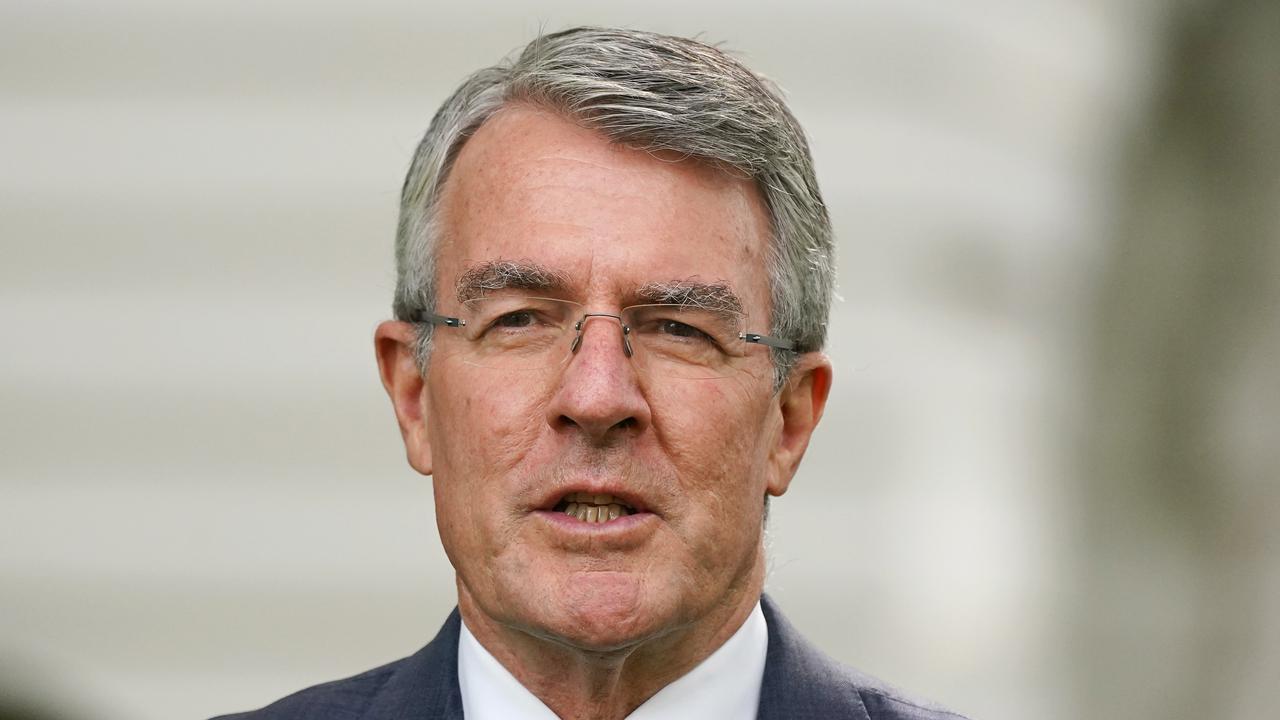
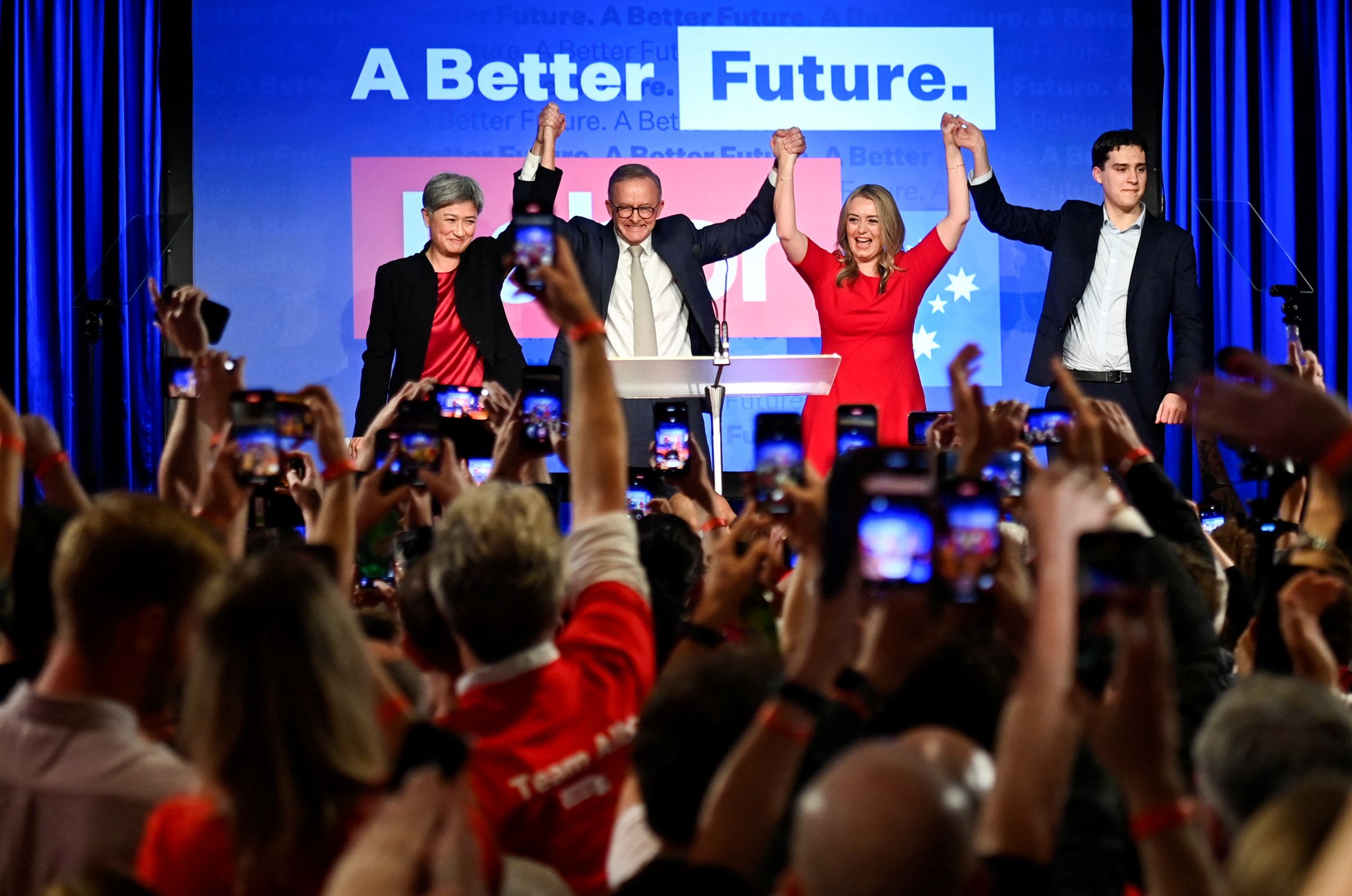


 alastairlawrie