Submission to Inquiry into Right Wing Extremist Movements in Australia

Senate Legal and Constitution Affairs Committee

Submitted via email: legcon.sen@aph.gov.au

Friday 5 April 2024

To the Committee

Inquiry into Right Wing Extremist Movements in Australia

Thank you for the opportunity to provide this short submission in response to the Committee’s inquiry into right wing extremist movements in Australia.

I do so as a long-standing advocate for the rights of the lesbian, gay, bisexual, transgender, intersex and queer (LGBTIQ) community, including in relation to anti-discrimination and vilification laws but also more broadly.

In this context, I express my genuine hope that the Committee, in its inquiry, looks at the role anti-LGBTIQ prejudice, and especially transphobia, has played in the rise of right wing extremism in Australia, in particular over the past 12 months.

The rise of homophobia, biphobia and transphobia since March 2023

There has been a disturbing rise in anti-LGBTIQ prejudice, including hate speech as well as threats of intimidation and violence, since early last year.

This has come from individuals and groups that can largely be described as being far-right in political ideology.

Some of the most notable events include:

  • The rally against trans rights held in Melbourne on 18 March 2023, to which neo-Nazi groups turned up, performing Nazi salutes on the steps of Victorian Parliament, and shouting at trans counter-protestors while holding a banner proclaiming ‘destroy paedo freaks’ (emphasising the explicit anti-trans views of these fascists),
  • The violent attack by so-called ‘Christian Lives Matter’-associated individuals on 21 March 2023 against a small group of LGBTIQ protestors, and NSW Police officers, in Belfield in Sydney, and
  • Disgusting and offensive homophobic comments on social media by then-One Nation MLC Mark Latham to Independent Member for Sydney Alex Greenwich MP (which I will decline to republish here), the following week.

All of the above occurred within a two-week period. Sadly, however, the rise of anti-LGBTIQ hate speech and extremism did not end there, but has continued and in some ways worsened.

The 12 months since March 2023 have seen a large number of LGBTIQ and related community events shut down amid credible threats of intimidation and violence by right wing extremists.

This includes Drag Story Times (which are nothing more than voluntary gatherings where people in costumes read books to parents and their children, promoting imagination and inclusivity) being cancelled at libraries and other community venues around the country, on the advice of police because the safety of attendees could not be guaranteed.

Most recently, this included deaths threats against ABC employees forcing the cancellation of a Drag Story Time that was to be held in the lead up to the 2024 Sydney Gay & Lesbian Mardi Gras, and a rally outside a Cumberland Council meeting in late February which was debating Drag Story Times (and which ultimately passed a motion banning them), with some protestors shouting offensively the word ‘trannies’.

It should obviously be noted that drag is not necessarily the same as LGBTIQ, although there is significant cross-over in the entertainers who perform in drag (with many being same-gender attracted and/or gender diverse) and importantly with the people who are against both conflating the two in any event (as seen clearly at the Cumberland Council protest).

The impact of these cumulative developments on the LGBTIQ community has been profound, with legitimate fears for our safety against this rising tide of extremism.

I write that as a privileged cisgender gay man, who has been out for more than 25 years and who has been advocating on LGBTIQ rights for almost as long – but who has felt less safe in public over the past year than at any point this century.

This feeling of vulnerability has been compounded by the sense the Commonwealth Government has effectively left us on our own in the face of these attacks.

The Commonwealth Government has been missing in action on anti-LGBTIQ extremism

Disappointingly, the Commonwealth Government’s response to the specific element of anti-LGBTIQ prejudice, and especially transphobia, in the overall rise of right wing extremism over the past 12 months has ranged from inadequate and incomplete, to completely absent.

Admittedly, there was widespread condemnation of Mr Latham’s tweets about Mr Greenwich, including the homophobic nature of his communications. Which was welcome, but that’s about as far as it goes.

The Commonwealth Government’s response, including its public comments, to the anti-trans neo-Nazi display on the steps of Victorian Parliament concentrated on the Nazi aspect of this activity (which obviously deserves condemnation) while largely ignoring the transphobia at its core (which is no less worthy of political denunciation).

This can be seen through its legislative response in Parliament, including in the Counter-Terrorism Legislation Amendment (Prohibited Hate Symbols and Other Measures) Bill 2023, which focused on the public display of Nazi symbols, including people engaging in Nazi salutes, while not addressing hate speech against LGBTIQ people more generally.

My understanding of this legislation is that it would not capture a situation of a group of thugs dressed in black assembling on the steps of Victorian Parliament, shouting at trans people and waving a banner which says ‘destroy paedo freaks’, provided they did not also wear Nazi symbols or perform a Nazi salute.

For the trans people targeted, surely both situations are intimidating – but only one is now regulated.

The Commonwealth Government has also been missing in action in terms of addressing the right wing threats of intimidation and violence against LGBTIQ and related community events, including Drag Story Times, shutting down gatherings right around the country.

This is a national problem requiring a national response, and yet I cannot recall a single strong public condemnation from a senior Government Minister, from the Prime Minister down, to this phenomenon.

Nor has there been any kind of legislative response, or funding for LGBTIQ community organisations and/or Local Governments, to increase safety to allow these events to proceed.

Indeed, in the absence of clear Commonwealth Government action (and, it must be said, lack of State and Territory Government action too), it has been left up to the LGBTIQ community itself, through initiatives such as Rainbow Community Angels, to enable events like Drag Story Time go ahead in spite of right wing extremist threats.

The fact the Commonwealth Government has been missing in action on anti-LGBTIQ prejudice is reinforced by comparing its actions over the past 12 months to religious hate speech and threats of intimidation and violence against religious minorities.

There have been repeated strong public condemnation of anti-semitism from the Prime Minister, and multiple other senior Government Ministers including the Attorney-General.

There have been repeated promises to introduce Commonwealth laws to prohibit vilification on the basis of religious belief (with these laws expected to be introduced shortly despite the Government’s simultaneous refusal to implement its broader commitment to a Religious Discrimination Bill and Sex Discrimination Act amendments to protect LGBTQ students and teachers in religious schools in the absence of agreement from the Opposition).

The Commonwealth Government has also announced, and delivered, tens of millions of dollars to faith-based organisations to enhance their and their respective communities’ safety (with the Attorney-General announcing a $40 million grant round on 17 May 2023, coincidentally the International Day Against Homophobia, Biphobia and Transphobia, or IDAHOBIT).

The LGBTIQ community has not received the same commitments, or funding, from the Government despite facing similar challenges in terms of hate speech, threats, intimidation and violence.

What the Commonwealth Government should be doing to address anti-LGBTIQ extremism

There are a range of actions which, in my view, the Commonwealth Government should be undertaking to address increasing right wing anti-LGBTIQ extremism.

This includes measures which not only respond to the visible growth of this hatred over the past 12 months, but would also ideally help to prevent and reduce anti-LGBTIQ prejudice in the community generally, thereby removing what appears to be fertile ground for right wing extremists to recruit on and organise around.

These measures include:

  1. Clear public condemnation of right wing anti-LGBTIQ extremism

    The basic starting point should be clear and consistent public condemnation of the anti-LGBTIQ, and especially anti-trans, extremism which has gathered pace over the past 12 months.

    This should include statements from the Prime Minister, and other senior Government Ministers including the Attorney-General, and must leave no doubt that such extremism will not be tolerated.

    2. Fund a national strategy countering anti-LGBTIQ prejudice

    In the context of other recent domestic and international developments, the Commonwealth Government has sought to expedite a new national anti-racism strategy, in partnership with the Australian Human Rights Commission.

    Anti-LGBTIQ prejudice is no less serious a threat as racism, with substantial impacts on the lives of lesbian, gay, bisexual, transgender, intersex and queer Australians. It too warrants development of a funded national strategy to help combat it, including initiatives to prevent homophobia, biphobia, transphobia and anti-intersex bigotry.

    3. Introduce Commonwealth laws prohibiting anti-LGBTIQ vilification

    There is currently no Commonwealth protection against anti-LGBTIQ vilification under the Sex Discrimination Act 1984. Protections at state and territory level are a patchwork replete with many holes, with anti-LGBTIQ vilification prohibited in Tasmania, the ACT, Queensland and Northern Territory, while civil vilification provisions in NSW cover only gay men, lesbians and some transgender people (although Crimes Act prohibitions on inciting violence apply across the LGBTIQ community). There are no protections in Victoria, South Australia or Western Australia.

    The Albanese Government has an opportunity to address these gaps by introducing nation-wide prohibitions on vilification on the basis of sexual orientation, gender identity and sex characteristics, based on existing vilification provisions in section 18C of the Racial Discrimination Act 1975.

    This should be done at the same time as the Government implements its commitment to prohibit religious vilification, given there is little difference in the potential harm vilification causes these respective groups.

    4. Fund safety initiatives for LGBTIQ community organisations and Local Governments

    Similarly, the Commonwealth Government should be providing funding for initiatives to protect the safety of LGBTIQ Australians on an equivalent basis to the programs it has already delivered to faith groups.

    This should include a grants program for LGBTIQ community organisations to upgrade their safety infrastructure, as well as to provide safety training to members of the LGBTIQ community to help protect us against the growing threat of right wing extremism.

    The Government should also fund Local Governments to upgrade their own security settings, so that community events such as Drag Story Times can be held safely despite any threats of intimidation and violence emanating from far-right extremists.

    5. Create and appoint an LGBTIQ Commissioner at the Australian Human Rights Commission

    The above measures should be supported by institutional infrastructure to ensure they are delivered, and delivered in line with community expectations.

    One part of this infrastructure, currently absent, is a stand-alone, dedicated Commissioner for Sexual Orientation, Gender Identity and Sex Characteristics at the AHRC (with responsibility for these issues presently an ad hoc, part-time responsibility of the Sex Discrimination Commissioner).

    The creation and appointment of an LGBTIQ Commissioner would help to ensure that addressing homophobia, biphobia, transphobia and anti-intersex bigotry is given an appropriate emphasis both within the Commission and beyond.

    6. Create and appoint a Commonwealth Government LGBTIQ Advisory Committee

    Another current gap in federal institutional infrastructure is the absence of any Minister with dedicated responsibility for LGBTIQ issues, and/or specific office within a central agency with the onus for co-ordinating policy and service-delivery on LGBTIQ issues.

    Nor is there a national LGBTIQ Advisory Committee to help present views from the full diversity of LGBTIQ communities across the country.

    While all should, in my view, be created, perhaps the most important is the advisory committee – because perhaps, had the Commonwealth Government an existing consultative mechanism, they may have already taken action to address the rise of right wing anti-LGBTIQ extremism, rather than left us feeling like we’re on our own.

    Thank you in advance you your consideration of this submission. Please do not hesitate to contact me, at the details provided, if you require clarification or additional information.

    Sincerely

    Alastair Lawrie 

    Neo-Nazis turn up to an anti-trans rally on the steps of Victorian Parliament, March 2023.

    Submission re Queensland Anti-Discrimination Bill 2024 (Exposure Draft)

    Strategic Policy and Legislation

    Department of Justice and Attorney-General

    GPO Box 149

    Brisbane QLD 4001

    Submitted via email: adactreview@justice.qld.gov.au

    Friday 22 March 2024

    To whom it may concern

    Submission re the Anti-Discrimination Bill 2024 (Exposure Draft)

    Thank you for the opportunity to provide this short submission in response to the Queensland Anti-Discrimination Bill 2024 (Exposure Draft) as released in February 2024.

    I do so as a long-term advocate for the human rights of lesbian, gay, bisexual, transgender, intersex and queer (LGBTIQ) Australians, with a particular focus on anti-discrimination and vilification law reform.

    I note that this consultation has coincided with a number of other developments in LGBTIQ human rights, both federally (renewed debate about a Religious Discrimination Bill, and Sex Discrimination Act 1984 (Cth) amendments to protect LGBTQ students and teachers in religious schools) and in my home state of NSW (including the Conversion Practices Ban Act 2024 (NSW), which was passed this morning), that have restricted my ability to engage more fully with this important consultation process.

    However, I did wish to make the following four brief points in relation to key aspects of the Exposure Draft as released.

    First, I welcome the fact that the Bill would protect all parts of the LGBTIQ community against discrimination, through the inclusion of the protected attributes of sexual orientation, gender identity and sex characteristics (as proposed in clause 10).

    This would retain the status quo, as created by the Births, Deaths and Marriages Registration Act 2023 (Qld), which ensured that non-binary people were finally included within the scope of gender identity, and that intersex people were finally protected by the addition of sex characteristics as a separate attribute (while noting that these amendments have yet to commence).

    I also welcome the expansive and inclusive definitions of these attributes, as proposed in Schedule 1 of the Exposure Draft, as well as the explicit inclusion of sex work activity as a protected attribute (replacing lawful sexual activity).

    Second, I welcome the fact that the Bill would protect all parts of the LGBTIQ community against vilification, through the inclusion of sexual orientation, gender identity and sex characteristics in clause 84 which regulates ‘hateful, reviling, seriously contemptuous, or seriously ridiculing conduct.’

    Once again, this is consistent with the existing Anti-Discrimination Act 1991 (Qld) as amended by the Births, Deaths and Marriages Registration Act (although once again not yet commenced).

    I also particularly welcome the inclusion of disability as a relevant attribute for the purposes of this clause, which would be a positive development arising out of the Exposure Draft.

    Third, I welcome the narrower approach the Exposure Draft Bill takes in relation to exceptions for employment by religious bodies, and especially for employment by religious educational institutions.

    Proposed clause 29, which only allows discrimination on the basis of religious belief or religious activity if: religious participation is a genuine occupational requirement of the work; the worker cannot meet this requirement because of their religious belief or religious activity; and ‘the discrimination is reasonable and proportionate in the circumstances’ – is a significant improvement on the equivalent provision in the existing Anti-Discrimination Act.

    Section 25, which essentially creates a ‘Don’t Ask, Don’t Tell’ environment for LGBTQ teachers and other staff in Queensland’s religious schools, is one of the worst features of the current law, not only from an LGBTIQ human rights perspective but more broadly.

    Teachers should be employed on the basis of their ability to teach, not their sexual orientation or gender identity.

    Removing ‘Don’t Ask, Don’t Tell’, thereby lifting the requirement for many LGBTQ teachers and other workers in religious schools to remain in the closet and maintain hyper-vigilance to prevent unintended disclosure of their orientation or identity, would also have the consequence of allowing them to focus on doing the best job they can – to teach students.

    Which means that this reform will ultimately benefit everyone.

    Fourth, I welcome the retention of a narrow approach to exceptions for religious educational institutions, as proposed in clause 36.

    The Exposure Draft Bill is similar to section 41(a) the existing Act, in allowing discrimination by religious schools against students, but only on the basis of their religion, and only at the point of enrolment.

    I also specifically welcome proposed sub-clause 36(2):

    ‘To remove any doubt, it is declared that a person can not rely on subsection (1) to discriminate against another person on the basis of a protected attribute other than religious belief or religious activity.’

    As well as the example provided: ‘A person can not rely on subsection (1) to discriminate against another person on the basis of the other person’s gender identity.’

    These provisions are essential to ensure all LGBTQ students are protected, both at enrolment and beyond.

    They also have the added benefit of supporting the religious freedom of children and young people, to learn and to grow as they engage in their education, including to question, challenge and develop their own faith, which may be different to the faith of their school.

    Finally, I am aware of the submission made by the Australian Discrimination Law Experts Group (ADLEG) and endorse their position on the Exposure Draft Bill, including their specific comments and suggestions regarding a range of further improvements to this legislation.

    Thank you in advance for your consideration of this short submission. Please do not hesitate to contact me, at the details provided, should you require any additional information.

    Sincerely

    Alastair Lawrie

    An LGBTIQ Advocate’s Lament on IDAHOBIT 2024

    Today is the International Day Against LGBTIQA+ Discrimination.

    May 17 marks the day in 1990 homosexuality was removed from the World Health Organisation Classification of Diseases, with IDAHOBIT now an annual event drawing attention to the denial of fundamental human rights of lesbian, gay, bisexual, transgender, intersex, queer and asexual people around the world, including Australia.

    Ordinarily, I would use IDAHOBIT to optimistically highlight issues of anti-LGBTIQ discrimination that can and must be addressed by Commonwealth, State and Territory Governments.

    But I must admit I’m running as low on optimism at the moment as I am energy. On IDAHOBIT 2024, I just feel tired.

    I’m tired of leaders who promise to protect LGBTQ students in religious schools against discrimination, but then fail to follow through on their commitments.

    In the past, this statement applied to former Prime Minister Scott Morrison, who promised to remove the exceptions in the Commonwealth Sex Discrimination Act 1984 that allow religious schools to mistreat students because of their sexual orientation or gender identity in October 2018 – before spending the following three-and-a-half years running away from that commitment.

    Now it applies to Prime Minister Anthony Albanese, who promised to protect both LGBTQ students and teachers ahead of the May 2022 federal election but, having received an Australian Law Reform Commission report outlining exactly how to do this, now refuses to introduce legislation to make this a reality without the support of Opposition Leader Peter Dutton.

    Which is both an entirely unnecessary requirement – because the Parliamentary numbers exist to pass these reforms without the Liberal and National Parties – and will almost inevitably lead to an outcome which doesn’t actually end this anti-LGBTQ discrimination, either because the Coalition won’t agree to any changes, or any changes that are agreed simply allow this mistreatment to continue in other ways.

    I’m tired of states that have allowed their own anti-discrimination laws to atrophy, through decades of neglect, such that they do not provide adequate protection against discrimination to the LGBTIQ community.

    I am of course thinking of the successive governments in NSW who failed to update the Anti-Discrimination Act 1977, with the consequence that, in 2024, it still does not protect bisexual, non-binary or intersex people. Or LGBTQ students or teachers. And plenty of others too.

    At least the current Minns Labor Government has referred this legislation to the NSW Law Reform Commission for comprehensive review. Although it would be even better if, in the interim, they supported the Equality Legislation Amendment (LGBTIQA+) Bill 2023, currently being considered by a parliamentary committee, which could address many of these shortcomings right now.

    I’m even more thinking of the WA Labor Government who, despite promising to modernise the Equal Opportunity Act 1984 after their own Law Reform Commission inquiry process, have failed to use their parliamentary majorities in both houses to do anything about it, squandering what might be a once-in-a-lifetime opportunity to finally bring WA anti-discrimination laws into the 21st century.

    I’m tired of the absence of action on birth certificates, particularly in NSW, which remains the only place in Australia that still requires trans and gender diverse people to undergo sterilising genital surgery in order to update their identity documents. And which does not provide legislative options to recognise sex or gender markers beyond male or female either.

    Although, as with anti-discrimination reform, this could be solved quickly and easily through the rapid passage of the Equality Bill’s amendments to the Births, Deaths and Marriages Registration Act 1995.

    I’m tired of the lack of Medicare funding for gender-affirming healthcare, too. While not all trans and gender diverse people seek access to such services, including but not limited to surgery, many do – but the significant out-of-pocket costs involved place them out-of-reach for far-too-many trans Australians.

    These are vital, in many instances literally life-saving, healthcare services. They are the opposite of ‘elective’, and must be properly, publicly, funded, to ensure all trans and gender diverse people who want to can access them.

    I’m tired of the glacial pace of change to protect children born with variations of sex characteristics (aka intersex kids) from non-consenting surgeries and other harmful medical interventions.

    It’s been more than a decade since the Commonwealth Senate first investigated these gross violations of human rights – the worst violations against any part of the Australian LGBTIQ community – and yet only one jurisdiction has passed any kind of law to limit them (the ACT, which legislated reforms in 2023, although I understand Victoria is also moving, slowly, toward its own scheme).

    Intersex people deserve to control what happens to their bodies.

    I’m tired of right-wing, and far right, politicians at all levels using the LGBTIQ community as convenient punching bags for their own self-promotional purposes. The latest notorious example being Cumberland City Councillor Steve Christou, with his thankfully short-lived ban on books depicting same-sex parents from council libraries. 

    But, really, we could be talking about any number of people who use anti-LGBTIQ platforms to seek, or retain, public office, from Mark Latham to Katherine Deves, and Alex Antic to Claire Chandler.

    I’m tired of the far right extremist threat against LGBTIQ people not being taken seriously by Government, and especially by the Commonwealth Government.

    In the wake of the downright disturbing sight of neo-Nazis turning up to an anti-trans rally on the steps of Victorian Parliament in March 2023, the Albanese Government passed urgent legislation banning Nazi symbols, and salutes, but so far have still not introduced amendments to prohibit anti-LGBTIQ vilification under federal law.

    Nor has there been clear Commonwealth condemnation of the wave of threats of violence and intimidation against Drag Story Times at community libraries around the country.

    I’m tired of politicians who turn up to march with us in events like the Sydney Gay & Lesbian Mardi Gras parade, but don’t turn up to vote for us on the floors of our parliaments.

    And who post short statements supporting LGBTIQ people on social media on days like today, but won’t say anything when it really matters, when our community is under attack.

    I’m tired of some people in the LGBTIQ community who fought for the right to marry for themselves, but then turned away from the ongoing battles for the rights of others within our own community, including trans and gender diverse, and intersex, people.

    And especially of fringe groups like the LGB Alliance who actively seek to deny human rights to trans and gender diverse people, employing the same arguments, and sometimes aligned with the same groups, that were used to deny their own.

    And I’m tired of the amount of time, energy and emotional resources that we must consistently spend defending existing rights from baseless attack, simply stopping the situation from getting worse, rather than making progress on the many, many issues where change is still desperately needed.

    I acknowledge that this list is at least partly the product of my own choice to be an advocate for LGBTIQ equality, both professionally and personally.

    A choice that means, to some extent, nearly every day for me is a day standing up against LGBTIQ discrimination.

    And so on this International Day Against LGBTIQA+ Discrimination I’m choosing to do something else.

    I’m logging off, and spending the day with the man who I love, doing many of the simple but beautiful things we enjoy together.

    In other words, we’re making sure on this IDAHOBIT we’re living the gayest, and most fabulous, lives possible.

    The struggle for LGBTIQ equality will continue tomorrow. And many, many tomorrows after that.

    If you have appreciated reading this article, please consider subscribing to receive future posts, via the right-hand scroll bar on the desktop version of this blog or near the bottom of the page on mobile. 

    Commonwealth 2024-25 Pre-Budget Submission on LGBTIQ Priorities

    Pre-Budget Submissions

    Treasury

    Langton Cres

    Parkes ACT 2600

    Submitted via email: PreBudgetSubmissions@treasury.gov.au

    Thursday 25 January 2024

    To whom it may concern

    Supporting the Equality and Human Rights of the LGBTIQ Community

    Thank you for the opportunity to provide this short submission to inform the Commonwealth Government’s development of its 2024-25 Budget.

    I do so as a long-standing advocate on behalf of the lesbian, gay, bisexual, transgender, intersex and queer (LGBTIQ) community.

    In this capacity I submit the following four priorities for increased funding to support the realisation of equality and other fundamental human rights of LGBTIQ Australians.

    1. Commissioner for Sexual Orientation, Gender Identity and Sex Characteristics at the Australian Human Rights Commission (AHRC)

    The Commonwealth Government should fund the creation of a Commissioner for Sexual Orientation, Gender Identity and Sex Characteristics (SOGISC) within the AHRC.

    Currently, there are Commissioners for:

    • Race
    • Sex
    • Disability
    • Age
    • Aboriginal and Torres Strait Islander Social Justice
    • Children, and
    • Human Rights.

    However, when discrimination on the basis of sexual orientation, gender identity and intersex status was prohibited through passage of the Sex Discrimination Amendment (Sexual Orientation, Gender Identity and Intersex Status) Act 2013, no equivalent position was established for our community.

    The consequence of this omission is that responsibility within the AHRC for advocating on discrimination affecting LGBTIQ people has floated variously between the President, Human Rights Commissioner and Sex Discrimination Commissioner – with no permanent home, and therefore no sustained focus on the realisation of LGBTIQ human rights.

    At the moment, responsibility for what is sometimes called the ‘LGBTIQ portfolio’ lies with Sex Discrimination Commissioner Anna Cody, who is somehow supposed to deal with the myriad issues affecting LGBTIQ Australians after they have addressed discrimination affecting women. They are supported in targeting LGBTIQ discrimination by just one dedicated full-time adviser, in contrast to the full team of advisers that support Commissioners on other topic areas.

    This situation is simply not good enough. LGBTIQ equality and human rights deserve the same attention as other cohorts. This should be rectified by:

    • Funding the creation of a stand-alone Commissioner for Sexual Orientation, Gender Identity and Sex Characteristics within the AHRC
    • Supported by a team of advisers of the same size, and with the same resourcing, as existing Commissioners for Race, Disability and Age Discrimination.

    2. National Strategy Against Anti-LGBTIQ Prejudice

    The past 12 months have seen a dramatic escalation in anti-LGBTIQ violence and vilification across Australia, including:

    • The TERF and neo-Nazi rally against trans people in Melbourne in March 2023
    • The religious fundamentalist (‘Christian Lives Matter’) riot against queer protestors in Sydney in March 2023, and
    • Fascist and far-right attempts to intimidate and shut down queer and queer-related community events, including drag story times, around the country.

    As far as I am aware, there has been no formal, co-ordinated Commonwealth Government response to the rise of anti-LGBTIQ extremism during this time.

    This stands in contrast to the Government’s commitment to addressing racism, including through its funding for and support of the development of a National Anti-Racism Framework (with work being undertaken by the AHRC).

    Indeed, Commonwealth Minister for Multicultural Affairs Andrew Giles MP cited neo-Nazi incidents as a justification for the Anti-Racism Framework. As reported by the Guardian:[1]

    “There have been at least two neo-Nazi incidents on the streets of Melbourne in recent times, and that lends a sense of urgency.” It was “more important than ever to have a society that is anchored in a sense that we all deserve to be valued.”

    This overlooks the fact that, as noted above, one of, if not the most, prominent neo-Nazi event in 2023 was the TERF and neo-Nazi rally against trans rights on the steps of Victorian Parliament in March 2023.

    If that incident provides justification for an Anti-Racism Framework, surely it must also provide justification, and motivation, for the Commonwealth Government to fund and develop a National Strategy Against Anti-LGBTIQ Prejudice.

    After all, LGBTIQ Australians, and especially trans and gender diverse Australians, also ‘deserve to be valued’.

    3. Gender affirming healthcare

    Trans and gender diverse Australians should have the ability to live their authentic lives. For many, although not all, this involves accessing gender affirming healthcare, including (but not limited to) hormone treatments and gender affirmation surgical procedures.

    However, for far too many trans and gender diverse people, this health care is financially out of reach, with prohibitive out-of-pocket costs attached to hormones, surgeries and other services.

    This is a denial of the fundamental right to healthcare for people on the basis of who they are. It also carries significant consequences, with this lack of access contributing to higher rates of mental health issues, depression and even self-harm.

    Gender affirming healthcare can be life-saving – while its denial can have the opposite outcome. This healthcare is not elective, but essential, and should be funded as such.

    The Commonwealth Government should therefore use the 2024-25 Budget to remove out-of-pocket costs for gender affirming healthcare, including hormones, surgeries and other medical services which assist trans and gender diverse people live authentically.

    4. A National Intersex Community-Controlled Healthcare Service

    Finally, I am aware of a Pre-Budget Submission from Intersex Human Rights Australia (IHRA), which includes the following recommendation:

    That the government provides $2,100,000 in annual resourcing to develop and sustain an intersex community-controlled healthcare service, to support the provision of biopsychosocial health and medical services for people with innate variations of sex characteristics and families, and support provision of policy advice to government. The service will be developed and run by Intersex Human Rights Australia, which currently provides advocacy and pilot psychosocial support services [emphasis in original].

    I unreservedly endorse this call. The health needs of the intersex community are currently not being met by the Australian healthcare system, with manifestly inadequate resourcing undermining health outcomes for many intersex people.

    IHRA is well-placed to contribute to the process of addressing these shortcomings, with what is a modest sum of money. As noted in their Pre-Budget Submission:

    This proposal ensures that IHRA can support the currently unmet healthcare needs of children, parents and carers, prospective parents, and adults, across the lifespan, and beyond current funding arrangements. It incidentally seeks to ensure the sustainability of IHRA as an intersex community-controlled healthcare service provider…

    It is my sincere hope funding can be found for this initiative in the upcoming Budget.

    Please do not hesitate to content me, at the details provided, should you require additional information in relation to this submission.

    Thank you in advance to taking these priorities into consideration.

    Sincerely

    Alastair Lawrie

    Will Treasurer Jim Chalmers deliver on any of the above four priorities in Tuesday’s Budget?

    [1] ‘Labor to speed up new anti-racism strategy amid voice and Israel-Hamas war tension’, Guardian Australia, 20 October 2023: https://www.theguardian.com/australia-news/2023/oct/20/labor-to-speed-up-new-anti-racism-strategy-amid-voice-and-israel-hamas-war-tensions

    The Year the Commonwealth Government Went MIA on LGBTIQ Issues

    [I wrote this piece about 10 days ago, in the lead-up to the anniversary of the horrific events at Victorian Parliament in March last year. Unfortunately, it wasn’t picked up by media outlets – but the past week has made these comments even more urgent, so I am publishing it here.]

    One year ago last Monday (on Saturday 18 March 2023), Australians witnessed the horrific sight of neo-Nazis turning up to an anti-trans rally on the steps of Victorian Parliament, holding a banner saying ‘destroy paedo freaks’ and performing Nazi salutes.

    It was a chilling reminder of the serious threat posed by right-wing extremism to LGBTIQ communities in general, and trans and gender diverse people in particular.

    Rather than being a one-off, that awful anti-LGBTIQ spectacle was just the first in a long line of rallies and related hate speech threatening our communities over the past 12 months.

    Within days, so-called ‘Christian Lives Matter’ members engaged in what can only be described as a riot against peaceful LGBTIQ protestors (and NSW Police) in the Sydney suburb of Belfield.

    April onwards saw a dramatic rise in threats of violence and intimidation by right-wing extremists across the country, directed to local councils and libraries holding Drag Story Times.

    Most recently, the ABC was forced to cancel a Drag Story Time that was to be held in conjunction with the Sydney Gay & Lesbian Mardi Gras following death threats against their employees.

    The attacks on our communities have been terrifying. They have been relentless. And they are part of a disturbing international trend of intolerance.

    But where has the Commonwealth Government been when we have needed their leadership? 

    They were quick to introduce legislation to ban the display of Nazi hate symbols, later amended to also prohibit the Nazi salute. This was welcome, but addresses only part of the problem.

    A group of thugs intimidating trans people with a banner saying ‘destroy paedo freaks’ is a serious issue irrespective of what clothes they wear, flags they fly or salutes they perform.

    Sadly, though, we have not seen the Albanese Government respond to the rise in anti-LGBTIQ right-wing extremism with the seriousness it deserves. 

    We have not seen or heard clear and consistent condemnation of growing homophobia, biphobia and transphobia, or even of the violent threats against community events.

    There has been no commitment to introduce much-needed Commonwealth laws prohibiting anti-LGBTIQ vilification.

    And no open engagement with LGBTIQ communities about the threats we face, or additional funds committed to help with our safety.

    Instead, it has been left to unfunded groups like Rainbow Community Angels, who attempt to make events like Drag Story Time a safe place for attendees, to stand up against the far-right, unassisted.

    It’s possible the Government would say that primary responsibility for these issues lies with states and territories, but these are problems that call for national leadership.

    By contrast, faith communities have been actively engaged and largely supported when they have raised concerns about intolerance. 

    Government representatives, from Prime Minister Albanese down, have spoken up in recent months against religious hate speech, particularly in the form of anti-semitism. The Government has made repeated promises to introduce religious vilification laws, expected to be tabled within weeks.

    [NB Since this piece was written, the Government has confirmed it is pushing ahead with these amendments, separate to the Religious Discrimination Bill and any Sex Discrimination Act changes, meaning it may be the only part of those overall reforms that actually pass.]

    And $40 million in Commonwealth funding for the safety of religious organisations was announced by Attorney-General Mark Dreyfus last May (on the International Day Against Homophobia, Biphobia and Transphobia no less).

    The LGBTIQ community can’t even convince the Government to create and appoint a stand-alone LGBTIQ+ Discrimination Commissioner at the Australian Human Rights Commission. LGBTIQ issues remain a part-time, ad hoc responsibility of the Sex Discrimination Commissioner.

    Promises to address anti-LGBTIQ vilification, and funding for LGBTIQ community safety, remain nowhere to be seen.

    I’m a 45-year old cis gay man. I grew up in Joh Bjelke-Petersen’s Queensland, and survived five years at a deeply homophobic religious boarding school. Coming out of, and coming out after, that environment was tough.

    But the rise in overt, targeted, public bigotry over the past 12 months has left me feeling less safe than at any time since the 1990s.

    What has made things worse is the silence and inaction of the Albanese Government. This has left me, and many others in our community, feeling forgotten too.

    Source: Herald Sun.

    If you have enjoyed reading this article, please consider subscribing to receive future posts, via the right-hand scroll bar on the desktop version of this blog or near the bottom of the page on mobile. You can also follow me on twitter/X @alawriedejesus

    NSW laws are a horror-scope for LGBTIQ people

    Right now, the NSW Government is consulting the community about whether to introduce new commemorative birth certificates, with proposed themes including ‘AFL, Olympic and Astrology Zodiac’ (yes, seriously).

    At the same time, trans and gender diverse people in NSW continue to endure the most regressive birth certificate laws of any state or territory in Australia, which require people seeking to update their identity documents to first undergo genital surgery – something many do not want, and even more cannot afford.

    It is offensive that I might be able to access an astrology-themed birth certificate (Leo, don’t judge) before many of my trans and gender diverse friends can obtain identity documents that simply reflect who they are.

    The Births, Deaths and Marriages Registration Act is far from the only NSW law that treats LGBTIQ people as second-class citizens. There are many ways in which LGBTIQ people in this state wake up each day confronted by their own ‘horror-scope’ of discrimination and mistreatment.

    For LGBTQ students at religious schools: You could be suspended or expelled today simply because of who you are. [Or, as we saw last week, you could be denied the ability to bring your partner to the school formal because they are the ‘wrong’ gender.] But there’s nothing you or anyone else can do about it.

    For LGBTQ teachers at religious schools: You could lose your job today, and it has nothing to do with your ability to perform your role.

    For bisexual, non-binary and intersex people: You could be discriminated against or vilified as you go about your everyday activities, but don’t bother complaining to Anti-Discrimination NSW – the Anti-Discrimination Act doesn’t protect you.

    For LGBTQ people seeking to access publicly-funded disability, health, homelessness, and other community services operated by religious organisations: Closed doors could be a constant in your day – because the services you need can turn you away just for being you.

    And for vulnerable young LGBTQ people: Watch out for people or groups seeking to change or suppress your sexual orientation or gender identity – even though what they offer is psychological torture, it’s still totally legal here.

    Despite being the home of the Sydney Gay & Lesbian Mardi Gras, and recent host of World Pride, it’s no exaggeration to describe the state of LGBTIQ laws in this state as abysmal. Indeed, none of the above scenarios have changed since before the Sydney Olympics, leaving us with the worst legislation in Australia.

    NSW is the gold medal winner in anti-LGBTIQ bigotry. Although somehow I doubt we’ll be able to get that on any ‘Olympic’ themed commemorative certificate.

    Right now, there are two Bills before NSW Parliament that would remedy this situation: strengthening protections against discrimination, finally providing trans and gender diverse people with access to identity documents that reflect their gender identity, and prohibiting sexual orientation and gender identity conversion practices.

    The Equality Legislation Amendment (LGBTIQA+) Bill 2023 and Conversion Practices Prohibition Bill 2023 were introduced by independent Member for Sydney Alex Greenwich in August.

    They were drafted following consultation with the community, including trans and gender diverse people as well as survivors of conversion practices.

    In many cases, they would simply drag NSW law up to minimum standards that have existed in other jurisdictions for years, or even decades (with LGBTQ students in religious schools protected against discrimination for upwards of twenty years in Tasmania, Queensland and the Northern Territory).

    The NSW Government is currently considering whether to support them. It is imperative they do – and seize the opportunity to bring many of the state’s LGBTIQ laws into the 21st century.

    Even if they do, however, the job of achieving full protection for the LGBTIQ community will not be over. Sadly, the Bills currently before Parliament do not follow the ACT’s precedent in addressing one of the most extreme human rights violations against any part of our community: the ongoing involuntary surgeries and other medical interventions performed on children born with variations of sex characteristics (intersex children).

    Nevertheless, the reforms contained in Greenwich’s Bills are essential, and should be progressed. 

    So, as the Minns Labor Government decides whether to support the fundamental protections these Bills offer, they should read their own horoscope for today:

    You have the chance to make a tangible difference in the lives of LGBTIQ people across NSW. And it’s much more important than introducing star sign-themed birth certificates.

    *****

    You can call on Premier Chris Minns to support the Equality Bill and Conversion Practices Prohibition Bill by contacting him here: https://www.nsw.gov.au/nsw-government/premier-of-nsw/contact-premier

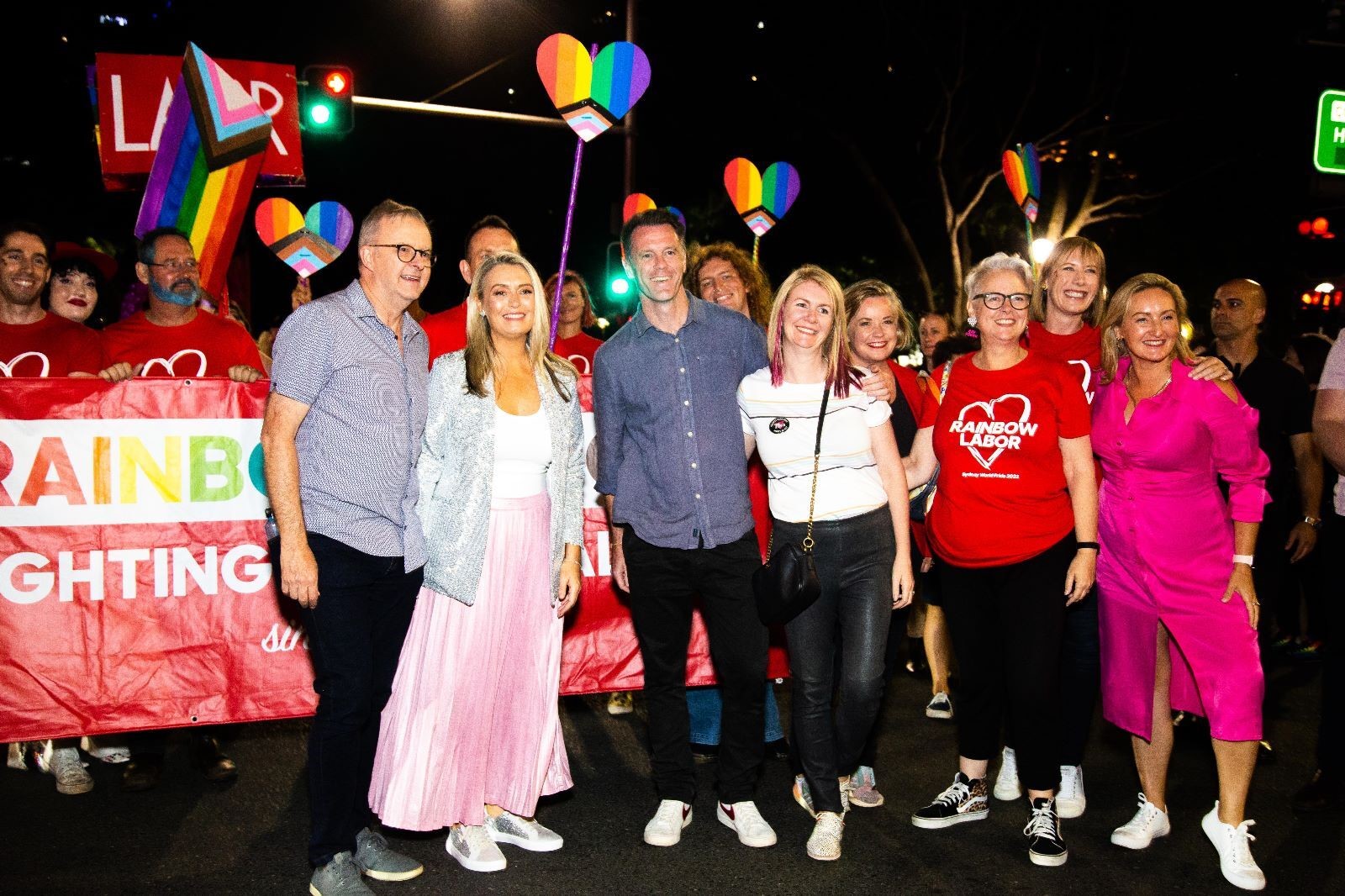
    Chris Minns (centre) marching in this year’s Sydney Gay & Lesbian Mardi Gras Parade.

    If you have enjoyed reading this article, please consider subscribing to receive future posts, via the right-hand scroll bar on the desktop version of this blog or near the bottom of the page on mobile. You can also follow me on twitter/X @alawriedejesus

    Albanese Government Must Do Better, and Do More, on LGBTIQ Rights in Second Year

    Today marks the one-year anniversary of the election of the federal Albanese Labor Government. Looking back on those first 12 months, there have been some small but important wins, and some disappointing losses. But above all, there has been plenty of unfinished – and in many cases, un-started – business.

    First, to the wins. In November last year, as part of the Fair Work Amendment (Secure Jobs, Better Pay) Act 2022 reforms, the Government added gender identity and intersex status as protected attributes in relation to the Fair Work Act’s adverse action and unlawful termination provisions. These amendments ensured trans, gender diverse and intersex workers were explicitly included in this law for the first time (although the Government still needs to update the out-dated terminology of intersex status, replacing it with sex characteristics, something Employment and Workplace Relations Minister Tony Burke has thankfully committed to do).

    The second set of wins were the announcements from the Government which coincided with Sydney World Pride earlier this year, including:

    • Development of a 10 Year National Action Plan for the Health and Wellbeing of LGBTIQA+ Australians,
    • $26 million in grants for research projects seeking to improve the treatment and care of LGBTIQA+ people, through the Medical Research Future Fund, and
    • A new inclusion and equality fund to support LGBTIQ human rights in the Asia-Pacific region, with initial funding of $3.5 million.

    On the other hand, the second half of 2022 saw some disappointing losses. This includes the decision by the Government to reject Greens amendments, supported by the cross-bench, to create an LGBTIQA+ Discrimination Commissioner at the Australian Human Rights Commission. Even if the Government believed the Bill being amended at the time (which related to the method of appointment for Commissioners) was the wrong vehicle for these amendments (which is the excuse they used), they have still not committed to introducing their own legislation to establish this stand-alone independent national voice on LGBTIQA+ rights which, based on recent events, is more needed than ever.

    Another disappointing loss was the complete exclusion of LGBTIQ groups, and issues, from one of the major set-pieces of the first year of the Albanese Government: the Jobs and Skills Summit. Not only were LGBTIQ organisations not invited to attend the Summit itself, the Government also did not hold any specific consultations with LGBTIQ groups in the lead-up to it (out of more than 100 it conducted). It is therefore no surprise that the outcomes document from the Summit did not address any specific LGBTIQ issues – at a time when many cohorts within the LGBTIQ community experience significant workplace discrimination and exclusion (especially trans and gender diverse workers).

    The above wins and losses could, in some respects, be seen as a decidedly mixed scorecard. Instead, I see it as a fundamentally incomplete one – after all, the issues identified are a long way from a comprehensive LGBTIQ agenda. There are many, many more priorities that the Government has not reached an outcome on – including plenty that haven’t even commenced.

    Take, for example, one of the few explicit LGBTIQ commitments the Albanese Government took to the May 2022 election: to protect LGBTQ students and teachers in religious schools against discrimination.

    In November 2022, Attorney-General Mark Dreyfus asked the Australian Law Reform Commission to undertake an inquiry on this topic, with a deadline of 21 April 2023. Except, the day before the final report of that review was due to be handed to the Government, the ALRC was given an 8-month extension to 31 December. There is really no need for such an extension – especially when this law reform itself is actually quite straight-forward (after all, Tasmania, the ACT, Victoria and NT all already protect both LGBTQ students and teachers).

    The outcome of this process is that it is highly unlikely LGBTQ students and teachers will be protected this year, with any amendments not taking effect until well into 2024. As I wrote at the time of this delay in The Canberra Times, it is example of the ways in which the LGBTQ class of 2023 has been comprehensively failed, by Governments of both persuasions.

    On a related note, the Government has not made any commitments to remove broader religious exceptions, found in both the Sex Discrimination Act 1984 and Fair Work Act, which allow religious organisations to discriminate against LGBTQ workers, and people accessing services, across health, housing, disability, aged care and other welfare and community services. The majority of these services are funded by us, the taxpayer, including in aged care – meaning the large increases in aged care funding in the recent federal Budget are going to organisations that can use that money to discriminate against LGBTQ workers.

    There are a range of other important LGBTIQ policy areas where the Government has not yet taken concrete action, including:

    • Inclusion in the 2026 Census. While the Australian Bureau of Statistics has started consultation on the questions which should be included in the next Census, the Government has not given an unequivocal promise that questions on sexual orientation, gender identity and sex characteristics will be included. Such questions are necessary to help deliver essential services to our communities – after all, if we are not counted, we do not count.
    • Medicare funding for gender-affirming health care. Far too many trans and gender diverse Australians still cannot afford what are vital, and in many cases life-saving, health services. Gender-affirming health services should be publicly-funded via Medicare, removing out-of-pocket costs for this community.
    • Ending non-consenting surgeries on intersex kids. With the ACT Government soon to pass historic legislation banning many non-consenting surgeries and other medical interventions on children born with variations of sex characteristics (the first jurisdiction in Australia to do so), I am unaware of any Commonwealth Government actions to help ensure intersex kids are protected around the country.
    • Re-introduction of Safe Schools. The Albanese Government continues to fund the National School Chaplaincy Program to the tune of more than $60 million per year (and even though they have formally removed the requirement that these office-holders must be appointed on the basis of religion, the vast majority still are). In contrast, the Government has had two Budgets to date but is yet to find any money to re-introduce what was an effective, and necessary, program against anti-LGBTIQ bullying in schools.
    • LGBTIQ policy infrastructure. In addition to an LGBTIQA+ Human Rights Commissioner at the AHRC, there is a clear need for a Minister for LGBTIQ Communities, as well as formal consultative bodies in the Department of Prime Minister and Cabinet, as well as portfolios like Health, Education and Attorney-General’s. Currently, none of these exist.

    [For a more comprehensive LGBTIQ Report Card on the Albanese Government’s First Year in Office, check out this helpful graphic from Just.Equal Australia.]

    Even on more symbolic matters, the Government’s record is mixed. While in late February Anthony Albanese became the first Prime Minister to march in the Mardi Gras Parade, and also participated in the World Pride March over Sydney Harbour Bridge in early March, these efforts at visible (some might say performative) inclusivity are undone by his apparent aversion to even saying the word transgender, let alone doing the bare minimum to publicly combat the growing culture war against trans and gender diverse Australians.

    Speaking of which, it certainly feels like the Government is missing in action as the LGBTIQ community comes under increasing attacks, and even threats of violence, including the TERF and neo-Nazi rally on the steps of Victorian Parliament, the Christian Lives Matter riot in Belfield in Sydney, and the wave of intimidation against Drag Story Time events in Victoria and now elsewhere around Australia.

    Local Councils have been left on their own to deal with what is a growing national crisis of far-right extremism, in a way that may not have happened if the targets had been from other communities. This is perhaps illustrated by the Attorney-General’s ill-timed announcement this week of $40 million in ‘Securing Faith-Based Places’ grants, to protect religious schools and places of worship against violence and discrimination.

    Without debating the merits of this scheme – and I obviously agree people should be free to worship in safety – it was a mistake to announce this on IDAHOBIT, certainly without providing equivalent funding for LGBTIQ community security against similar (and in some cases, probably the same) extremists. Nor has the Government made any promises to introduce Commonwealth anti-vilification protections for LGBTIQ Australians, despite committing to prohibit religious vilification.

    The Albanese Government still enjoys a large amount of public goodwill, including from many LGBTIQ people – at least partly due to the fact it is not the Morrison Liberal/National Government, a dreadful period during which our community came under relentless and sustained attack.

    However, simply not being Scott Morrison is not enough as the Albanese Government enters its second year in office. From an LGBTIQ community perspective, they clearly need to do better, and do more, on the issues which affect us.

    Oh, and one final thing. I raise the spectre of Scott Morrison here quite deliberately (despite the risk of PTSD, including my own). Because the coming 12 months is also likely to see the Albanese Government introduce its own Religious Discrimination Bill.

    As a community we will need to be on high-alert to ensure this legislation protects people of faith against discrimination on the same basis as existing anti-discrimination laws, without permitting lawful discrimination against others, including LGBTIQ Australians. If it does include anti-LGBTIQ provisions, the Government should be in no doubt we will fight against its law just as hard as we fought against Morrison’s Bill.

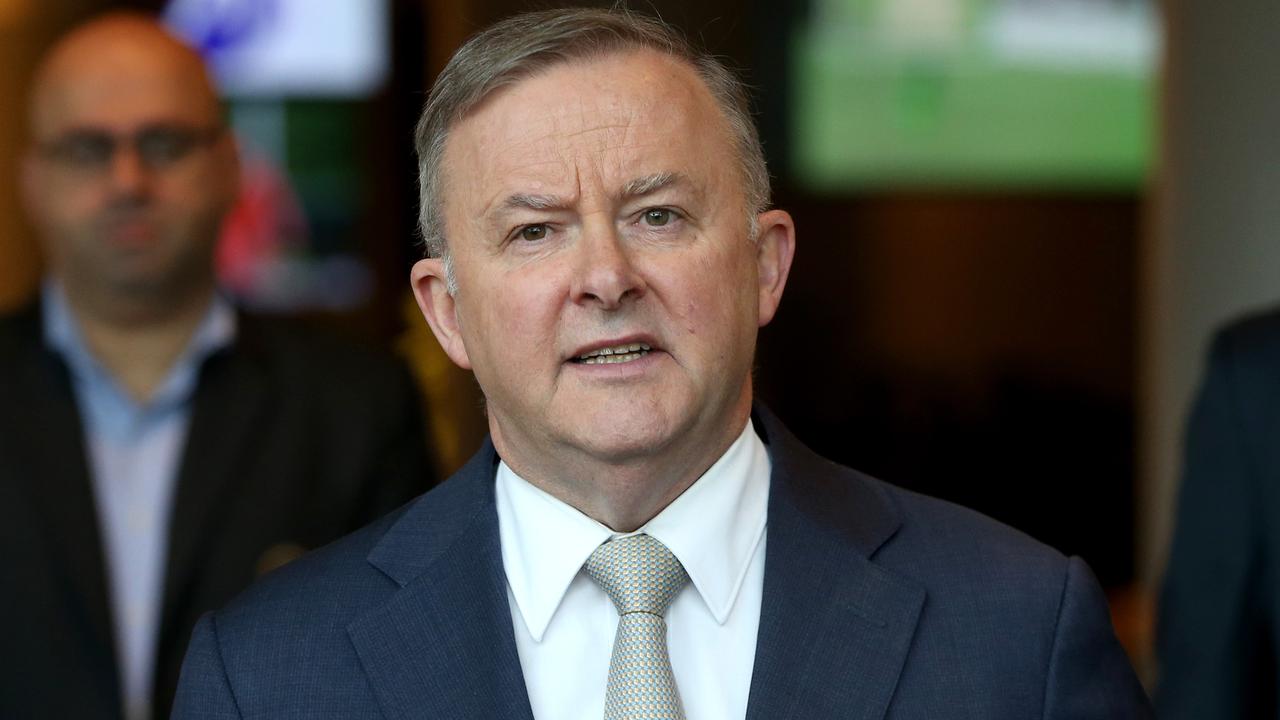
    Anthony Albanese on election night, 21 May 2022.

    If you have enjoyed reading this article, please consider subscribing to receive future posts, via the right-hand scroll bar on the desktop version of this blog or near the bottom of the page on mobile. You can also follow me on twitter @alawriedejesus

    The Jobs and Skills Summit and LGBTIQ Australians Part 2

    Last Sunday, I posted about the upcoming Jobs and Skills Summit, and the inclusion (or, at that stage, exclusion) of issues affecting LGBTIQ workers.

    This included a letter to Prime Minister Albanese, Treasurer Chalmers, and seven of their ministerial colleagues, calling on them to include consideration of two matters in particular that affect LGBTIQ people in the workplace:

    • The absence of explicit protections for trans, gender diverse and intersex employees in the Fair Work Act 2009(Cth), and
    • The breadth of exceptions, in the Sex Discrimination Act 1984 (Cth) and elsewhere, allowing religious organisations to discriminate against employees on the basis of their sexual orientation and/or gender identity, including in the delivery of public services using taxpayers’ money.

    Since then, the issue of potential LGBTIQ exclusion from the Jobs and Skills Summit has been picked up by my friends at Just.Equal Australia, as well as being reported on by:

    I also received the below, generic response from the Treasurer’s office, which, to be honest, did not inspire much confidence that my concerns, and the concerns of my community, were being taken seriously:

    Dear Alastair,

    Thank you for your email and attached correspondence about the Albanese Government’s Jobs and Skills Summit, which is scheduled to held over the 1st and 2nd of September.

    The Jobs and Skills Summit will bring together around 100 representatives including from unions, employers, civil society and governments, to address our shared economic challenges.

    The outcomes of the Summit will inform the Employment White Paper, which will be a shared vision and comprehensive blueprint for the future of Australia’s labour market.

    Although Summit attendance will be limited and invite only, Treasury will be opening a submission process to collect insights and perspectives from the wider community later in 2022.

    You can find out more information about the Summit and the White Paper, including up to date advice on when public submissions will be opened, by visitinghttps://treasury.gov.au/employment-whitepaper/jobs-summit.

    Again, thanks for taking the time to share your thoughts and views on the above which will be brought to the attention of the Treasurer’s ministerial team.

    Best wishes

    [Name withheld], on behalf of the Hon. Jim Chalmers MP

    Office of the Hon. Jim Chalmers MP | Treasurer of Australia and Federal Member for Rankin

    Which made it a pleasant surprise to read, via Out in Perth, the Treasurer Jim Chalmers confirm that LGBTIQA+ issues would indeed be on the agenda at the conference:

    ‘We recognise that many LGBTIQA+ Australians often face a range of unique challenges when it comes to secure employment.

    ‘These are exactly the issues that we hope to address through our Jobs and Skills Summit.

    ‘That’s why removing barriers to employment and workforce participation are central themes of our Jobs and Skills Summit. Our aim is to bring people together around our big economic challenges to ensure more Australians can get a secure, well-paid job.’

    Of course, just because LGBTIQ issues might actually be discussed, does not mean the Summit itself, or the Government afterwards, will recommend or commit to taking action to fix the problems which lead to workplace discrimination against, and exclusion of, LGBTIQ people.

    I should also note I have not had a response from Albanese, Chalmers or any of the other seven Ministers addressing the substantive concerns raised by my letter.

    In which case, the push continues to ensure the Fair Work ActSex Discrimination Act and other relevant laws are amended so that LGBTIQ workers are judged on the basis of their ability, not their sexual orientation, gender identity or sex characteristics.

    In that context, today I have sent the below emails to two of the primary non-Government voices that will be represented at the Jobs and Skills Summit: ACTU Secretary Sally McManus and Business Council of Australia CEO Jennifer Westacott.

    Hopefully their assistance will help give voice to the need to legislate better protections for LGBTIQ workers in Australia.

    *****

    Sunday 28 August 2022

    Sally McManus

    Secretary

    Australian Council of Trade Unions

    Dear Ms McManus

    Please support reforms to protect LGBTIQ workers at the Jobs and Skills Summit

    I am writing to you about the upcoming Jobs and Skills Summit, at which you will be a key voice advocating for the interests of Australian workers.

    In particular, I am writing, both as a union member for two decades, and as a leading advocate for my community, to ask you to support important reforms to protect the rights of lesbian, gay, bisexual, transgender, intersex and queer (LGBTIQ) workers.

    These include:

    • Reforms to the Fair Work Act 2009 (Cth) to explicitly protect trans, gender diverse and intersex workers against adverse action and unlawful termination. This could be achieved, easily, by adding gender identity and sex characteristics as protected attributes in relevant sections where categories such as race, sex, disability, age and even sexual orientation are already covered.
    • Reforms to the Sex Discrimination Act 1984 (Cth) and other Commonwealth and State and Territory anti-discrimination laws to remove the special privileges granted to religious organisations allowing them to discriminate against workers on the basis of their sexual orientation and/or gender identity, including in the delivery of public services using taxpayers’ money. This problem is especially acute in what is described in the Issues Paper as the ‘care economy’ and their removal would, I believe, lead to more LGBTQ people entering professions like education, disability services and aged care.

    I attach with this correspondence a letter which was sent to Prime Minister Albanese, Treasurer Chalmers and seven of their ministerial colleagues, that provides more detail about these issues, and the compelling reasons why changes must be made to both.

    I note both your own strong personal support, and the strong support of many unions and members of the ACTU, to LGBTIQ rights over the past decade, including through the campaign for marriage equality.

    I look forward to your support once again, on Thursday and Friday of this week, and over the following months, for the interests of LGBTIQ workers.

    Because I am confident that you agree trans, gender diverse and intersex workers should have the same Fair Work Act protections as any employee. And that LGBTQ workers should be judged on their ability, rather than their sexual orientation and/or gender identity.

    Sincerely

    Alastair Lawrie

    *****

    Sunday 28 August 2022

    Jennifer Westacott

    Chief Executive Officer

    Business Council of Australia

    Dear Ms Westacott

    Please support reforms to protect LGBTIQ workers at the Jobs and Skills Summit

    I am writing to you about the upcoming Jobs and Skills Summit, at which you will be a key voice in central debates around economic and industrial relations reforms.

    In particular, I am writing as a leading advocate for my community to ask you to support important reforms to protect the rights of lesbian, gay, bisexual, transgender, intersex and queer (LGBTIQ) workers.

    These include:

    • Reforms to the Fair Work Act 2009 (Cth) to explicitly protect trans, gender diverse and intersex workers against adverse action and unlawful termination. This could be achieved, easily, by adding gender identity and sex characteristics as protected attributes in relevant sections where categories such as race, sex, disability, age and even sexual orientation are already covered.
    • Reforms to the Sex Discrimination Act 1984 (Cth) and other Commonwealth and State and Territory anti-discrimination laws to remove the special privileges granted to religious organisations allowing them to discriminate against workers on the basis of their sexual orientation and/or gender identity, including in the delivery of public services using taxpayers’ money. This problem is especially acute in what is described in the Issues Paper as the ‘care economy’ and their removal would, I believe, lead to more LGBTQ people entering professions like education, disability services and aged care.

    I attach with this correspondence a letter which was sent to Prime Minister Albanese, Treasurer Chalmers and seven of their ministerial colleagues, that provides more details about these issues, and the compelling reasons why changes must be made to both.

    Indeed, I note that you made some of the same arguments for better workplace inclusion in your speech on 27 May this year at the 2022 Australian LGBTIQ Inclusion Awards:

    ‘[T]oday we are here to celebrate and applaud the excellence of employers and their teams for their commitment to advancing inclusion and diversity.

    It’s the right thing to do.

    And not just that – it’s also smart business.

    When every person can be their best selves at work:

    • They’re happier
    • They’re more productive
    • They’re more creative
    • They’re more loyal, and
    • They’re more likely to stay with their current employer.

    Doing the right thing is a win-win…

    I do not believe that any person should be made to feel excluded.

    I do not believe that any person should be made to feel less than they are.

    I do not believe that anyone’s personal struggle should be used as a political football.

    So today I want to spend the bulk of my time apologising.

    I want to apologise to our transgender colleagues.

    I want to apologise:

    • For the hurt you have endured
    • For the cruelty you have been subjected to, and
    • For the fundamental misinformation and unfairness that has shrouded the discussion over the last year, but particularly during the election.’

    You went on to acknowledge:

    ‘I understand the fear and worry when you turn up to work and every single new encounter is potentially:

    • A rejection
    • The loss of your employment status, or
    • The loss of your job.

    I understand that there is only one choice you have to make.

    It is not a flippant or superficial lifestyle choice.

    Instead, it’s a difficult and often agonising acceptance to either be yourself or to pretend to be someone else.’

    The upcoming Jobs and Skills Summit is another opportunity to demonstrate your commitment to improving the lives of trans and gender diverse Australians, who are affected by both the lack of explicit protections under the Fair Work Act, and the broad special privileges granted to religious organisations under the Sex Discrimination Act.

    I look forward to you building on your public apology in May by supporting essential reforms to both these laws later this week.

    Because I am confident, based on your speech, that you agree trans, gender diverse and intersex workers should have the same Fair Work Act protections as any employee. And that LGBTQ workers should be judged on their ability, rather than their sexual orientation and/or gender identity.

    Sincerely

    Alastair Lawrie

    *****

    ACTU Secretary Sally McManus and Business Council of Australia CEO Jennifer Westacott will play a key role in whether the upcoming Jobs and Skills Summit supports much-needed law reform to protect the rights of LGBTIQ workers.

    NB This post is written in a personal capacity, and does not reflect the views of employers past or present.

    If you have enjoyed reading this article, please consider subscribing to receive future posts, via the right-hand scroll bar on the desktop version of this blog or near the bottom of the page on mobile. You can also follow me on twitter @alawriedejesus

    The Jobs and Skills Summit and LGBTIQ Australians

    The Albanese Labor Government’s Jobs and Skills Summit will be held on September 1 and 2, 2022, now just eleven days away.

    While there has been significant coverage of a wide range of issues relevant to this conference, there has been little to no reporting of how it will affect lesbian, gay, bisexual, transgender, intersex and queer (LGBTIQ) workers.

    The letter below, to Prime Minister Albanese, Treasurer Chalmers and a number of other Ministers, seeks to place at least two important and urgent LGBTIQ policy matters onto the Jobs and Skills Summit agenda.

    As always, I will publish any responses received.

    *****

    Prime Minister Anthony Albanese

    Treasurer Jim Chalmers

    Attorney-General Mark Dreyfus

    Minister for Employment and Workplace Relations Tony Burke

    Minister for Health and Aged Care Mark Butler

    Minister for Aged Care Anika Wells

    Minister for Education Jason Clare

    Minister for Social Services Amanda Rishworth

    Minister for the NDIS Bill Shorten

    Sunday 21 August 2022

    Dear Prime Minister Albanese and other Ministers

    Please include LGBTIQ workers in the Jobs and Skills Summit

    I am writing to you about the upcoming Jobs and Skills Summit, and the need to include lesbian, gay, bisexual, transgender, intersex and queer (LGBTIQ) workers and the issues which affect them.

    I was initially encouraged to observe the Summit would include a focus on ‘expanding employment opportunities for all Australians including the most disadvantaged.’[i]

    However, I am both concerned and deeply disappointed by the Jobs and Skills Summit Issues Paper, released on 17 August,[ii] which completely omits LGBTIQ Australians as one of the groups which should be considered as part of this focus.

    Specifically, page 2 of that document states:

    ‘While the participation rate is around historically high levels, many Australians still face barriers to secure and well-paid employment. In particular, women, First Nations people, people with disability, older Australians, migrants and refugees, and those living in certain regional and remote areas face specific barriers to entering the workforce. This means there are further opportunities and obligations to ensure the benefits of strong labour market conditions are accessible to all people in Australia.’

    There is no mention of LGBTIQ workers here, nor on any other of the Issues Paper’s 14 pages.

    This is despite the fact employment-related discrimination against LGBTIQ workers, including and perhaps especially transgender and gender diverse workers, is well-documented.

    For example, a 2021 paper[iii] found that for transgender, including gender diverse and nonbinary (trans), people:

    ‘The unemployment rate of 19% was three times that of the Australian general population rate of 5.5% in May 2018 and well above the youth unemployment rate (12.2%). Notably, 33% of respondents perceived discrimination in employment. Unemployment may also occur due to difficulty with name and identity documents, discrimination in basic housing and health care, and the impact of mental health conditions such as depression and anxiety on an individual’s ability to seek or maintain employment. Conversely, levels of depression and anxiety may be higher due to unemployment.’

    The omission of LGBTIQ workers from the Jobs and Skills Summit Issues Paper also comes despite many LGBTIQ workers enjoying lesser workplace rights and protections than other employees, and a large number of employers being legally entitled to fire, to refuse to hire, or to otherwise discriminate against, LGBTQ workers simply because of their sexual orientation and/or gender identity. This often includes the use of taxpayers’ money in said discrimination.

    These issues must be addressed if the Jobs and Skills Summit is to indeed focus on ‘expanding employment opportunities for all Australians including the most disadvantaged.’

    I include below two fundamental, urgent issues which therefore must be included in the Summit’s agenda.

    1. Protect transgender, gender diverse and intersex workers under the Fair Work Act

    Currently, transgender, gender diverse and intersex workers do not enjoy the same legal status under the Fair Work Act 2009 (Cth) as other employees, including women, people with disability, and even lesbian, gay and bisexual people.

    This is because the adverse action protections in section 351, and unlawful termination protections in section 772, contain a long list of protected attributes – such as ‘race, colour, sex, sexual orientation, age, physical or mental disability, marital status, family or carer’s responsibilities, pregnancy, religion, political opinion, national extraction or social origin’ – but omit the protected attributes of gender identity and sex characteristics (intersex status).

    In practice, this means transgender, gender diverse and intersex workers may not have the same guaranteed access to the low-cost, low-barrier Fair Work Commission as other employees who are subjected to mistreatment or unfair dismissal simply because of who they are.

    Despite raising the lack of explicit Fair Work Act protections for these workers with the previous Government for several years,[iv] they refused to take any action to address this discrepancy, even voting against straight-forward Greens amendments to the 2021 Respect@Work Bill which would have remedied the situation, providing much-needed remedies to workers.[v]

    I note the then-Labor Opposition voted for some, although not all, of those Greens amendments.[vi] I also note that, as a result of advocacy from myself and others, the 2021 ALP National Conference passed the following special resolution:[vii]

    ‘Aligning the Fair Work Act and Sex Discrimination Act

    Labor will amend the relevant sections of the Fair Work Act to align with the Sex Discrimination Act to cover workers who are currently not protected.’

    Unfortunately, while implementing this commitment – which would involve adding gender identity and intersex status as protected attributes in the Fair Work Act – would achieve some improvement, it would not bring that legislation up to best practice.

    This is because sex characteristics[viii] is considered a more accurate, and more inclusive, protected attribute, and is the terminology preferred by intersex advocates, including Intersex Human Rights Australia.

    Therefore, at least part of the response to this question on page 5 of the Jobs and Skills Summit Issues Paper:

    ‘How can we ensure workplaces are safe and fair, particularly for those people at higher risk of harassment, discrimination and other breaches of workplace minimum standards?’

    is to add gender identity and sex characteristics as protected attributes in the Fair Work Act 2009 (Cth), including in relation to adverse action (s351) and unlawful termination (s772), so that transgender, gender diverse and intersex workers have the same rights and protections as everyone else.

    Recommendation 1: The Jobs and Skills Summit must ensure transgender, gender diverse and intersex workers have the same rights and protections under the Fair Work Act as other employees, including in relation to adverse action and unlawful termination.

    2. Remove special exceptions allowing religious organisations to discriminate against LGBTQ workers

    That same question – ‘How can we ensure workplaces are safe and fair, particularly for those people at higher risk of harassment, discrimination and other breaches of workplace minimum standards?’ – is also relevant to the second issue which I submit must be on the Jobs and Skills Summit agenda: removing special exceptions which allow religious bodies to discriminate against lesbian, gay, bisexual, transgender and queer (LGBTQ) workers.

    In fact, this issue is pertinent to a range of discussion, and questions, covered in the Issues Paper, including this statement on pages 6 and 7:

    ‘Addressing the barriers to participation and promoting equality of opportunity will contribute to a stronger and more inclusive economy, enable more Australians to realise their full potential, and help address current labour market challenges. This, in turn, will help ensure that the benefits of full employment are shared fairly across our community.’

    And the associated questions on page 7:

    • ‘How can we reduce the barriers to employment for some Australians? How should governments, unions, business and the broader community best coordinate efforts to achieve this?’ and
    • ‘What strategies can be used to reduce discrimination and increase awareness of the value that diversity can bring to business and the broader economy?’

    And on page 11: ‘How do we navigate workforce shortages in the care economy while supporting our frontline workers?’

    Many people are aware of this issue because of public debate over the past five years surrounding ‘religious freedom’, the previous Government’s proposed (but thankfully-defeated) Religious Discrimination Bill, and the discriminatory (mis)treatment of LGBTQ students, teachers and other staff under the Sex Discrimination Act 1984 (Cth).

    Many people may not be aware of how broad these exceptions are in practice, not just under the Sex Discrimination Act, but also under the Age Discrimination Act 2004 (Cth), Fair Work Act itself (undermining both its adverse action and unlawful termination protections), and the majority of state and territory anti-discrimination laws (including in my home state of NSW where the Anti-Discrimination Act 1977 has the broadest religious exceptions in the country).

    The effects of these exceptions are all-too-real for LGBTQ workers.

    Not only can LGBTQ teachers be denied, or fired from, jobs for which they are otherwise eminently qualified, simply because of their sexual orientation and/or gender identity.

    But so too can LGBTQ aged care workers, nurses, doctors, social workers, disability workers and other employees across what is described in the Issues Paper as the care economy.

    There are a range of serious consequences which flow from this discrimination, including:

    • For LGBTQ workers, obviously this includes being denied employment, and losing significant financial benefits, or alternatively being forced to stay closeted while in the workplace, with associated mental health harms.
    • For the LGBTQ community more broadly, this discrimination reinforces poorer health and well-being outcomes, as well as entrenching economic disadvantage.
    • For the services themselves, they are rejecting the best person for the job on the basis of criteria which has nothing whatsoever to do with their ability to do the job. Alternatively, they are forcing some employees to not bring their whole selves to work, thereby diminishing the quality of the work those employees do.
    • This also means that, for people accessing these services, they are effectively denied being served by the most qualified person for the role. A person in an aged care home deserves the best aged care worker possible, not the best cisgender-heterosexual worker. A student deserves to learn from the most qualified teacher, not the most qualified cisgender-heterosexual one. And so on. And so on. Across society.
    • It should be remembered that the vast majority of these roles are delivering what are basically public services, like education, health, aged care, or social and disability services, and in nearly all cases using public – or taxpayers’ – money to do so. That means every Australian is helping to fund this discrimination, and even more egregiously, that LGBTQ workers are being asked to subsidise their own oppression.
    • Finally, in an era of large and growing worker shortages across education, health, aged care, and social and disability services, permitting lawful discrimination on the basis of sexual orientation and gender identity discourages at least some members of the LGBTQ community from considering careers in these areas – which is perhaps a rational response to the knowledge that large employers in your chosen profession may be lawfully able to refuse to hire you, or fire you, just because of who you are.

    For all of these reasons, a Jobs and Skills Summit that is focused on ‘expanding employment opportunities for all Australians including the most disadvantaged’ must seriously consider the harmful impacts of special exceptions which allow religious organisations to discriminate against LGBTQ workers simply because of their sexual orientation and/or gender identity.

    And I submit it should recommend that such exceptions be abolished, not just for the benefit of those LGBTQ workers, but for the benefit of people accessing publicly-funded services in education, health, aged care, and social and disability services, and the benefit of the Australian community generally.

    Recommendation 2: The Jobs and Skills Summit should call for the repeal of special exceptions allowing religious organisations to discriminate against LGBTQ workers simply because of their sexual orientation and/or gender identity.

    Thank you in advance for considering the above issues ahead of the Jobs and Skills Summit. Please do not hesitate to contact me at the details provided should you require additional information.

    Sincerely

    Alastair Lawrie
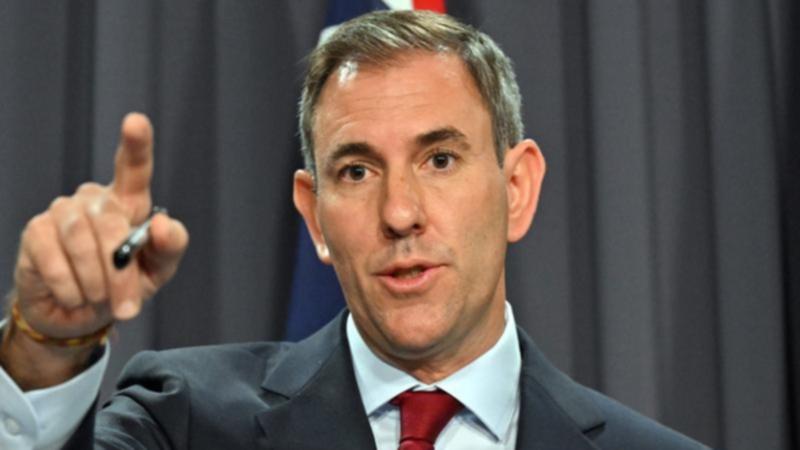
    Will Prime Minister Anthony Albanese ensure that significant issues affecting LGBTIQ workers are considered at the Jobs and Skills Summit?

    NB This post is written in a personal capacity, and does not reflect the views of employers past or present.

    If you have enjoyed reading this article, please consider subscribing to receive future posts, via the right-hand scroll bar on the desktop version of this blog or near the bottom of the page on mobile. You can also follow me on twitter @alawriedejesus

    Footnotes:


    [i] Prime Minister and Treasurer Joint Media Release, ‘Jobs and Skills Summit to be Held in September’, 11 July 2022, available at: https://www.pm.gov.au/media/jobs-and-skills-summit-be-held-september

    [ii] Department of the Treasury, ‘Jobs and Skills Summit Issues Paper’, 17 August 2022, available at: https://treasury.gov.au/publication/2022-302672

    [iii] Ingird Bretherton et al, ‘The Health and Well-Being of Transgender Australians: A National Community Survey’, LGBT Health Vol 8, No 1, 12 January 2021, available at: https://www.liebertpub.com/doi/10.1089/lgbt.2020.0178

    [iv] See for example: Unfairness in the Fair Work Act.

    [v] See: Pathetic and Antipathetic, in Equal Measure.

    [vi] The Labor Party supported the inclusion of gender identity and intersex status as protected attributes in the Fair Work Act – which are the same attributes already covered under the Sex Discrimination Act 1984 (Cth) – but did not support amendments which would have added gender identity and sex characteristics as protected attributes, with the latter terminology now considered best practice, and supported by intersex community organisations including Intersex Human Rights Australia.

    [vii] ALP 2021 National Platform, page 137, available at: https://alp.org.au/media/2594/2021-alp-national-platform-final-endorsed-platform.pdf

    [viii] This is defined in section 4(1) of the Equal Opportunity Act 2010 (Vic) as:

    ‘sex characteristics means a person’s physical features relating to sex, including-

    (a) genitalia and other sexual and reproductive parts of the person’s anatomy; and

    (b) the person’s chromosomes, genes, hormones, and secondary physical features that emerge as a result of puberty.’

    Not Going Backwards is Not the Same Thing as Going Forwards

    Almost two weeks after the Sydney Gay & Lesbian Mardi Gras, the NSW LGBTIQ community has been given a belated reason to celebrate.

    Yesterday (Wednesday 16 March), the NSW Government finally released its response to Mark Latham’s anti-trans kids Bill (formally called the Education Legislation Amendment (Parental Rights) Bill 2020), in which they categorically rejected his proposed legislation.

    This was a law that, if passed, would have erased trans and gender diverse students from classrooms and schoolyards across the State.

    It also would have introduced a Thatcher-esque section 28-style prohibition on positive references to LGBTQ people generally (modelled after a UK law from the 1980s and 90s which harmed a generation of queer kids there).

    As well as enacting a new offensive and stigmatising definition of intersex people in NSW legislation.

    Importantly, the Perrottet Liberal/National Government also rejected key recommendations of the Parliamentary Inquiry into Latham’s Bill (which, in a disturbing conflict of interest, featured Latham himself as Chair). This included ruling out:

    • Banning trans students from using the bathroom reflecting their gender identity
    • Outing trans students to non-supportive parents, even where this puts the student in danger
    • Stopping trans students from seeking confidential help from school counsellors, and
    • Outing trans students to all of the parents of other students in their year group.

    The Government’s decision to reject Latham’s anti-trans kids Bill, and key recommendations of his biased inquiry, is obviously incredibly welcome.

    Above all, it is a huge relief to LGBTIQ students, and especially trans and gender diverse kids and their families, who no longer need fear his legislative attack on their right to a safe and inclusive education.

    However, this does not mean we should be overly-congratulatory towards the NSW Government either.

    For example, in their response the Government notes, as one of their reasons for rejecting the Bill, that it ‘may lead to targeted discrimination against a marginalised community which already experiences poorer mental health and wellbeing outcomes’ (ie trans and nonbinary children and young people).

    Which is true. But it was also true on the day Latham first introduced his legislation way back in August 2020.

    There was no need for a drawn-out Parliamentary Inquiry to tell them that.

    There was definitely no need to refer it to Latham’s Committee for that Inquiry.

    There was no justification for all three Government members of that Inquiry to support the main elements of Latham’s Bill, including backing harmful recommendations about outing trans kids, and preventing them from accessing bathrooms, or seeking help from counsellors.

    And there was clearly no justification for the Parliamentary Secretary for Education, Kevin Conolly, to express his personal support for the Bill (noting that he remains in that portfolio today).

    The NSW Government could, and should, have spared the trans community from being forced to endure yet another debate about their very existence, by rejecting the Bill from the outset rather than taking 19 months and giving One Nation a platform to spread their transphobia in the meantime.

    So, while the response yesterday was the right outcome, the tortuous route it took them to arrive there means they deserve, at best, a polite clap rather than a standing ovation.

    The second reason why we should not be giving thunderous applause to the NSW Government is that all they have done is stop the situation in NSW from getting worse.

    LGBTIQ people in NSW still woke up this morning in the worst jurisdiction for their legal rights in the country. Just as they did yesterday, and as they will tomorrow.

    This includes having the worst anti-discrimination laws, which fail to protect bisexual people (the only place in Australia not to do so), nonbinary people, and intersex people. And which have extraordinary exceptions, allowing all private schools and colleges, religious and non-religious alike, to discriminate against LGBTQ students and teachers.

    NSW will likely also soon be the only state or territory which requires trans and gender diverse people to have genital surgery in order to update their birth certificate (assuming Queensland follows through on its promises to reform their own laws this year).

    NSW has made no progress on, or given any firm commitments to, prohibiting sexual orientation and gender identity conversion practices (which have already been banned in Victoria and the ACT, partially banned in Queensland, with bans under active consideration elsewhere).

    And NSW has also shown no signs it will end what I consider to be the worst human rights abuses against any part of the LGBTIQ community: coercive surgeries and other non-consensual medical interventions on children born with innate variations in sex characteristics (with the ACT and Victorian Governments already committed to reform in this area, and realistic hope for change in at least one other jurisdiction).

    All the NSW Government did yesterday was rule out taking another step backwards.

    But even standing still means that, with each and every passing year, NSW falls further and further behind on LGBTIQ law reform.

    Next week (Friday 25 March) will mark exactly one year to go until the next State election.

    That’s a full 12 months for the Perrottet Liberal/National Government to do more than just publicly reject a terrible law attacking some of the most vulnerable members of our community, and instead to make long-overdue progress on at least some, if not all, of the above-mentioned law reforms to make the lives of LGBTIQ people in NSW better.

    If they do, they will have actually earned some real praise.

    Finally, lest I be accused of being partisan, we cannot let the Minns Labor Opposition off the hook on this subject either.

    Because they too have failed to publicly condemn Mark Latham’s anti-trans kids Bill over the past 19 months.

    They too voted for it to be referred to a Parliamentary Inquiry chaired by Latham himself.

    And, disappointingly, they also had one of their two members on that Inquiry support the main elements of Latham’s Bill, including backing harmful recommendations about outing trans kids, and preventing them from accessing bathrooms, or seeking help from counsellors.

    That’s simply not good enough. Nor is the fact that, one year out from what looks to be a highly competitive election, we currently know next-to-nothing about Labor’s plans on the issues described earlier.

    It’s time for them to demonstrate to the LGBTIQ community exactly what they would do to end NSW’s reign as the jurisdiction with the worst laws in Australia.

    In summary, then, while I am happy and relieved for LGBTIQ students, and trans and gender diverse kids in particular, that Latham’s anti-trans kids Bill has finally been rejected, I am far from satisfied with the current state of law reform in NSW. We can and must demand better, from both the Perrottet Liberal/National Government, and Minns Labor Opposition.

    NSW Premier Dominic Perrottet