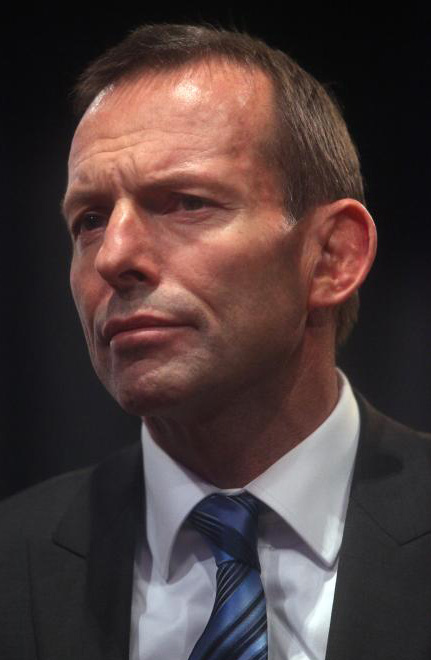
Response from Gillian Triggs re Responsibility for LGBTI Issues at the Australian Human Rights Commission

In July, I wrote about the need for a full-time Commissioner for Sexual Orientation, Gender Identity and Intersex (SOGII) Issues at the Australian Human Rights Commission (AHRC)[i].

This was in part a response to the actions of Human Rights Commissioner, Tim Wilson, who, while serving as the AHRC spokesperson for SOGII issues, was arguing for the introduction of new rights to discriminate, including against LGBTI couples, as part of any reform to marriage laws[ii].

However, more broadly, it was a reflection of the overall need for the Commission to devote more resources to addressing issues of homophobia, biphobia, transphobia and intersexphobia across Australian society.

As part of that post, I wrote to the President of the AHRC, Gillian Triggs, calling on her to reallocate responsibility for LGBTI issues to a Commissioner other than Mr Wilson. In September, I received the following response from Ms Triggs:

“21 September 2015

Dear Mr Lawrie

Thank you for your letter to me regarding the responsibility for Sexual Orientation, Gender Identity and Intersex (SOGII) Human Rights at the Commission.

The Australian Human Rights Commission comprises the President and 5 Commissioners. As President, I am responsible for all functions of the Commission. However, each Commissioner has a specific portfolio for which they are individually responsible.

I asked Tim Wilson to be the spokesperson on SOGII human rights. However, I and the other Commissioners also contribute public comment on the SOGII portfolio.

Under our statutory mandate at the Commission also has several functions that address the SOGII brief.

  1. We accept and try to resolve by conciliation individual complaints of discrimination and human rights under the four major pieces of legislation. No complaint under these acts can go to a court, unless and until the matter has been considered by the Commission.
  1. We intervene in court proceedings that involve human rights issues and we examine laws relating to certain rights and often propose improvements to those laws.
  1. We conduct national inquiries to bring special attention to issues of concern.
  1. We provide education about human rights to improve awareness, understanding and respect for rights in our community – in particular, the Commission is contributes to the inclusion of human rights education in the development of the National Schools Curriculum and works with the Safe Schools Coalition Australia.
  1. We conduct research and propose new policy and standards which promote the enjoyment of human rights.

The latest example of this is the Resilient individuals: sexual orientation, gender identity & Intersex rights national consultation report, a copy of which I have included in this letter.

The aim of the project was to consult stakeholders to identify key issues that can inform the Commission’s future work on SOGII issues. From June 2014 to January 2015 Cr Tim Wilson travelled nationally to consult lesbian, gay, bisexual and transgender stakeholders in face to face meetings. In addition, over 1550 people participated in an online survey, and over 30 written submissions were received.

While each Commissioner is free to adopt an individual approach to the SOGII portfolio, the Australian Human Right Commission maintains a unified policy in ensuring human rights apply equally to LGBTI stakeholders.

I hope that this description of the contribution to SOGII matters is helpful.

Best wishes,

Gillian Triggs

President”

[NB Typographical errors in original]

In my view, this letter is not exactly a ringing endorsement of Mr Wilson, or the job that he is doing on LGBTI issues. While it notes the Resilient individuals process and report, led by Mr Wilson, it also makes clear that “I [Gillian Triggs] and the other Commissioners also contribute public comment on the SOGII portfolio” and that “the Australian Human Rights Commission maintains a unified policy in ensuring human rights apply equally to LGBTI stakeholders.”

Unfortunately, that doesn’t answer the question of whether Ms Triggs and the AHRC are unified in support of the introduction of new rights to discriminate as part of the implementation of marriage equality, something that Mr Wilson advocated for, yet again, last week in the Sydney Morning Herald.[iii]

Nor does it overcome the problem of the AHRC spokesperson on SOGII human rights prioritising the expansion of religious freedoms, including through convening his ‘religious freedom roundtable’ (with the first meeting to be held next Thursday, 5 November 2015), something which usually results in the diminution of rights for lesbian, gay, bisexual, transgender and intersex people.[iv]

However, it appears that these issues aren’t going to be resolved any time soon and, in fact, they may only be conclusively resolved when either the Turnbull Liberal-National Government, or a subsequent Labor Government, finally creates and provides funding for a stand-alone LGBTI Commissioner within the AHRC. Based on the agenda currently being pursued by Mr Wilson, in my opinion that day can’t come soon enough.

President of the Australian Human Rights Commission, Professor Gillian Triggs

President of the Australian Human Rights Commission, Professor Gillian Triggs

[i] “Why we need a full-time LGBTI Commissioner at the Australian Human Rights Commission” July 12, 2015: https://alastairlawrie.net/2015/07/12/why-we-need-a-full-time-lgbti-commissioner-at-the-australian-human-rights-commission/

[ii] “Religious freedom and same-sex marriage need not be incompatible” The Australian, 6 July 2015 http://www.theaustralian.com.au/opinion/religious-freedom-and-same-sex-marriage-need-not-be-incompatible/story-e6frg6zo-1227429558684

[iii] “Religious freedom isn’t a trump card, but it does need to be a part of marriage equality debate” Sydney Morning Herald, 21 October, 2015 http://www.smh.com.au/comment/religious-freedom-isnt-a-trump-card-but-it-does-need-to-be-a-part-of-marriage-equality-debate-20151020-gkecyn.html

[iv] For more on this issue, see my “Submission on AHRC proposal to create a religious freedom roundtable” September 25, 2015: https://alastairlawrie.net/2015/09/25/submission-on-ahrc-proposal-to-create-a-religious-freedom-roundtable/

Submission to Inquiry into Queensland Civil Partnerships Bill

UPDATE 6 January 2016:


The Legal Affairs and Community Safety Committee tabled its report in Queensland Parliament on 17 November 2015[i].


The cross-party Committee failed to support the Bill: “[i]n this instance the committee was not able to reach a majority decision on a motion to recommend that the Bill be passed.”[ii]


Liberal-National MPs on the Committee opposed the reintroduction of civil partnerships, and optional ceremonies, to such an extent that they did not even allow submissions and relevant evidence to be included as part of the main report – this information was only included as part of the Government Members Statement of Reservation.


It was therefore only because of ALP Committee Members Mark Furner, Jim Madden and Mark Ryan that we know 27 of the 29 submissions made were in favour of reintroducing civil partnerships.[iii]


Government Members also reported that, as at 4 November 2015, 6,856 mixed-sex couples had taken advantage of Queensland civil partnership/registered relationship schemes, compared to only 1,227 same-sex couples (thus demonstrating the need to retain alternative relationship recognition options even after marriage equality is finally legislated federally).


I am also thankful that Government MPs saw fit to include two quotes from my personal submission:


  • “The decision to abolish civil partnership ceremonies, and the haste with which it was achieved, was an unjustified, divisive and mean-spirited act – and I commend the current Queensland Government for taking steps to undo the damage that was done three years ago” on page 12, and


  • “In my view, the term ‘civil partnership’ is a much more accurate description of the relationship which exists within couples who wish to have their partnership formally recognised under state law, whereas, to me, ‘registered relationship’ is a more sterile term which merely describes the process of recognition rather than the relationship itself” on page 19 of the report.


The Bill was then debated in Queensland’s Legislative Assembly on Thursday 3 December 2015. It was supported by all Labor MPs as a piece of Government legislation.


Somewhat surprisingly, given the behaviour of their MPs on the Legal Affairs and Community Safety Committee, the LNP offered a conscience vote to its MPs and half chose to exercise their vote to support the Bill, meaning that it passed by a large majority: 64 votes in favour, compared to only 22 votes against.


Once again, I am grateful that Government MPs quoted my submission – both the Member for Brisbane Central, Ms Grace Grace, and the Member for Ipswich West, Mr Jim Madden, used the first quote highlighted above.


The Relationships (Civil Partnerships) and Other Acts Amendment Act 2015 received Royal Assent on 17 December 2015, and its provisions, restoring civil partnerships and once again allowing couples to hold a formal civil partnership ceremony if they so choose, will commence sometime early this year.


Thankfully, one sad, recent chapter of Queensland’s LGBTI history is now closed. Although there remain a variety of areas which still require action by the Palaszczuk Government, including (among others):


  • Equalising the age of consent for anal intercourse
  • Introducing adoption equality
  • Abolishing the homosexual advance or ‘gay panic’ defence and
  • Expunging historical homosexual convictions.


ORIGINAL POST:

Submissions to the Parliamentary Inquiry into Queensland’s Relationships (Civil Partnerships) and Other Acts Amendment Bill 2015 close tomorrow (Monday 19 October 2015). Full details on the inquiry, including how to submit, can be found here: <https://www.parliament.qld.gov.au/work-of-committees/committees/LACSC/inquiries/current-inquiries/07-RelationshipsCPOAAB15 Here’s my own submission:

Research Director

Legal Affairs and Community Safety Committee

Parliament House

George St

Brisbane QLD 4000

lacsc@parliament.qld.gov.au

Sunday 18 October 2015

Dear Committee Members

INQUIRY INTO THE RELATIONSHIPS (CIVIL PARTNERSHIPS) AND OTHER ACTS AMENDMENT BILL 2015

Thank you for the opportunity to provide a submission to this inquiry that is considering the details of the Relationships (Civil Partnerships) and Other Acts Amendment Bill 2015.

I write in support of the Bill, for two main reasons:

  1. The term ‘civil partnerships’ is strongly preferred when compared to the term ‘registered relationships’.
  2. The Act restores the right of couples to enter into a civil partnership by holding a civil partnership ceremony if they so choose.

The first point may seem comparatively minor, considering it relates only to nomenclature, but terminology is important, particularly when it describes something as personal as the relationship between two members of a couple.

In my view, the term ‘civil partnership’ is a much more accurate description of the relationship which exists within couples who wish to have their partnership formally recognised under state law, whereas, to me, ‘registered relationship’ is a more sterile term which merely describes the process of recognition rather than the relationship itself.

It is also my view that the term civil partnership is more likely to be understood, and accepted, by members across the community, whereas the term registered relationship is less likely to attract widespread social acceptance from others.

The second reason why I support the Relationships (Civil Partnerships) and Other Acts Amendment Bill 2015 is more substantive, and that is because it restores the ability of couples to enter into a civil partnership by holding a civil partnership ceremony.

Importantly, it is not compulsory – couples that wish to pursue this option will be able to do so, while other couples will be able to enter into a civil partnership without holding a ceremony.

I wholeheartedly agree with the description of this reform contained in the letter from the Director-General of the Department of Justice and Attorney-General, Mr David Mackie, to the Committee dated 1 October 2015:

“This is being done to support the dignity and equality of each and every Queenslander by giving them the opportunity to formally declare their commitment to their significant.”

In fact, it is difficult to conceive any rational justification to oppose these provisions – after all, who would want to actively deny their fellow citizens the choice to hold a civil partnership ceremony, if that is what the couple desired?

And yet, that is exactly what the majority of Queensland Members of Parliament did in June 2012, voting to strip away the ability of these couples to hold a formal ceremony. Not only that, the removal of these rights was such a high priority for the (then) newly-elected Newman Liberal National Government that is was enacted within three months of its landslide victory.

The decision to abolish civil partnership ceremonies, and the haste with which it was achieved, was an unjustified, divisive and mean-spirited act – and I commend the current Queensland Government for taking steps to undo the damage that was done three years ago.

I also commend the Palaszczuk Labor Government because, in introducing the Relationships (Civil Partnerships) and Other Acts Amendment Bill 2015, it is doing what it can within the powers of a state government to recognise the diversity of relationships that exist in contemporary society.

With the High Court finding in December 2013 that only the Commonwealth Parliament has the power to legislate for marriage equality, but the majority of Members and Senators of that Parliament showing their continued unwillingness to recognise the full equality of lesbian, gay, bisexual, transgender and intersex (LGBTI) Australians, it is pleasing to see a state government providing the opportunity for all couples, including LGBTI couples, to enter into civil partnerships – and offering the choice to hold a civil partnership ceremony, too.

Even after marriage equality is finally enacted by our recalcitrant federal parliamentarians, the ability to enter into a civil partnership under state law will remain an important option for those couples who do not wish to marry for whatever reason (and that includes both cisgender heterosexual couples, and LGBTI couples).

For all of these reasons, I support the Relationships (Civil Partnerships) and Other Acts Amendment Bill 2015, and urge Committee Members, and indeed all Queensland MPs, to ensure it is passed by the Parliament as a matter of priority.

Finally, I note that the renaming of civil partnerships, including restoring the right of couples to enter into a civil partnership by holding a civil partnership ceremony if they so choose, is just one of several important measures which are required to ensure LGBTI people are finally treated equally under Queensland law.

Other necessary reforms include abolition of the gay panic defence, the introduction of adoption equality, the equalisation of the age of consent for anal intercourse and the expungement of historical convictions for gay sex. I look forward to these issues, and more, being addressed by the Queensland Parliament in the near future.

Thank you in advance for considering this submission. Should the Committee require additional information, or wish to clarify any of the information above, I can be contacted at the details below.

Sincerely

Alastair Lawrie

Queensland Attorney-General Yvette D'Ath introduced the Relationships (Civil Partnerships) and Other Acts Amendment Bill 2015 in September.

Queensland Attorney-General Yvette D’Ath introduced the Relationships (Civil Partnerships) and Other Acts Amendment Bill 2015 in September.

[i] Final Report: https://www.parliament.qld.gov.au/documents/committees/LACSC/2015/07-RelationshipsCPOAAB15/07-rpt-014-17Nov2015.pdf

[ii] Ibid, p4.

[iii] Ibid, p12.

Will NSW Reforms Prioritise Racial Vilification at the Expense of LGBTI Vilification?

Post Update #3: 12 January 2017

Contrary to the response received from the Department of Justice in November 2015 (included below), and commitments given by Attorney-General Gabrielle Upton in October 2015, the NSW Government did not release an Exposure Draft Bill to reform vilification laws in early 2016.

In fact, as noted by the Sydney Morning Herald in November 2016: “NSW Parliament has risen for the year without any action on reforms promised by the NSW Attorney-General to ethnic communities a year ago to make it easier to prosecute serious racial vilification cases in the state.”

That means there has been an entire year of inaction on much-needed reforms to vilification laws, that would have not only strengthened racial vilification laws, but also harmonised provisions across the different grounds for vilification (including homosexual, transgender and HIV/AIDS vilification).

This inaction is incredibly disappointing given that same 12-month period has seen a wide range of homophobic and transphobic public debate in NSW, and across Australia (see 2016: Annus Homophobicus). Hopefully 2017 will see this situation change – although, based on the past year, I certainly won’t be holding my breath.


Post Update #2: 23 December 2015

I received the following response to my letter (below) on 19 November 2015, not from the Attorney-General Ms Upton, but instead from the Director of the Community Relations Unit in the Department of Justice [and apologies for the delay in posting before now]:

“I refer to your email to the Attorney General, the Hon Gabrielle Upton MP, about your concerns regarding a review of the NSW racial vilification laws. The Attorney General has asked me to reply on her behalf.

NSW is one of the most culturally, linguistically and religiously diverse
communities in the world. To protect the diversity of our community, the
Government has committed to amending the Anti-Discrimination Act 1977 (the Act), in particular the racial vilification laws.

Currently, the vilification offences make it clear that for vilification to
be an offence it must threaten violence or incite others to threaten
violence.

As you are aware, the New South Wales Legislative Council’s Law and Justice Committee conducted a review of racial vilification laws in New South Wales, in particular section 20D of the Act.

Section 20D of the Act makes it a criminal offence to incite hatred
towards, serious contempt for, or severe ridicule of, a person or group of
persons on the grounds of race by means which include; threatening physical harm towards, or towards any property of, the person or group of persons, or inciting others to threaten physical harm towards, or towards any property of, the person or group of persons.

In its Report, the Committee concluded that improvements were required to the Act. These improvements include allowing the President of the
Anti-Discrimination Board to refer complaints directly to the NSW Police,
extending the time limit for commencing prosecutions from six months to 12 months and clarifying reckless actions are sufficient to establish an
intention to incite under section 20D.

In light of the Committee’s Report, the NSW Government considers the racial vilification offence and other vilification offences relating to
homosexuality, HIV/AIDS status and transgender status in the Act also need revising.

The Government intends to release for public consultation an exposure draft Bill amending the State’s vilification laws, with legislation to be
introduced into Parliament in the first half of 2016. Details regarding the
draft exposure Bill will be released in early 2016.

Thank you for taking the time to write about this issue.

Yours faithfully

Director
Community Relations Unit
NSW Department of Justice”


Post Update #1: 1 November 2015

The NSW Attorney-General, the Hon Gabrielle Upton MP, announced the NSW Government’s position of vilification reforms on Monday 19 October 2015.

According to the Sydney Morning Herald[i]:

“The government will overhaul hate speech laws in NSW following the terror attack at Parramatta police headquarters and calls from the opposition for stronger laws to clamp down on ‘radical preachers’.

Attorney-General Gabrielle Upton said the government will strengthen and streamline racial vilification laws, defying right-wing commentators who have previously said proposed reforms were ‘straight out of the Leninist playbook.’

Ms Upton said recent events had ‘reinforced the necessarily of being vigilant to and guarding against the spread of racial vilification’.”

Importantly, the Guardian[ii] also reported that “LGBTIQ groups have been lobbying for hate speech against members of their communities to be included in any new laws and it is understood the proposed changes would include them” although it did not provide any further information on this issue.

I sought clarification through twitter from the Attorney-General on the inclusion, or exclusion, of LGBTI vilification in the reforms, and received the following reply:

IMG_0640

This response obviously gives hope that vilification provisions contained in the Anti-Discrimination Act 1977 may finally be amended to be genuinely LGBTI inclusive, although it will be important to closely scrutinise the Government’s exposure draft Bill, which is expected to be released for public consultation in January 2016.

One final cause for optimism – on the day before Attorney-General Upton’s announcement, the Leader of the NSW Opposition, Luke Foley, made a similar commitment on vilification reform. As reported by samesame[iii]:

“The Labor opposition in New South Wales wants to ensure people who promote or advocate violence based on race, gender or sexual orientation are punished under the law.”

All we need to do now is hold both the Liberal-National Government, and Labor Opposition, to their public commitments.

[i] “Hate speech overhaul to try to spread of racial vilification”, Sydney Morning Herald, 19 October 2015: http://www.smh.com.au/nsw/hate-speech-overhaul–to-try-to-stop-spread-of-racial-vilification-20151018-gkbukb.html

[ii] “New South Wales hate speech laws to clamp down on ‘violent extremists’”, The Guardian, 19 October 2015: http://www.theguardian.com/australia-news/2015/oct/19/new-south-wales-hate-speech-laws-to-clamp-down-on-violent-extremists

[iii] “NSW Opposition: ‘Hate speech should be a crime’”, samesame, 19 October 2015: http://www.samesame.com.au/news/12884/NSW-opposition-Hate-speech-should-be-a-crime


Original Post: 16 October 2015

The Hon Gabrielle Upton MP

Attorney-General

GPO Box 5341

Sydney NSW 2001

office@upton.minister.nsw.gov.au

Friday 16 October 2015

Dear Attorney-General

REFORMS TO NSW ANTI-VILIFICATION LAWS

I am writing to you on the subject of possible changes to anti-vilification laws in the Anti-Discrimination Act 1977(‘the Act’), as flagged by you in two tweets on 18 September 2015[i], and as confirmed in an article which appeared in The Australian on 23 September 2015, in which your spokesperson “said the NSW government was ‘working towards reform’ in the area”.[ii]

Specifically, I am writing to seek your assurance that any reforms to anti-vilification laws will apply equally across all grounds of vilification, including homosexual, transgender and HIV vilification which are also included in the Act, and will not prioritise racial vilification as more important, or worthy of punishment, than vilification on the basis of other attributes.

Instead, I urge you and the Liberal-National Government to ensure that anti-vilification laws apply fairly both to members of NSW’s ethnic communities, and to the state’s lesbian, gay, bisexual, transgender and intersex (LGBTI) community.

To begin with, I note that currently the provisions of the Anti-Discrimination Act only protect lesbian, gay[iii] and transgender[iv] members of the LGBTI community. There is no legal protection for bisexual and intersex people against vilification on the basis of who they are (or against discrimination more broadly, for that matter).

If reforms are to be made to anti-vilification laws in NSW, then the specific inclusion of bisexual and intersex people in the Act must be a priority.

Even more concerningly, I note that there is a discrepancy in the penalties for vilification which are contained in the Act, depending on the attribute which is involved.

For example, while the maximum penalty for homosexual and transgender vilification by an individual is set at “10 penalty units or imprisonment for 6 months, or both”[v], the penalty for racial or HIV vilification by an individual is set at “50 penalty units or imprisonment for 6 months, or both.”[vi]

Given the vast majority of prosecutions for vilification offences in NSW are unlikely to result in imprisonment, the consequence of this discrepancy is to send the message to the community, whether intentionally or otherwise, that racial and HIV vilification is five times more important, or worthy of punishment, than homosexual or transgender vilification.

I find this message to be inherently offensive – that equivalent acts of vilification should attract differing penalties simply because it involved sexual orientation or gender identity rather than race. I sincerely hope that you agree – and that you will therefore commit to harmonising the penalties for vilification contained in the Act.

However, I am concerned that, rather than ameliorating existing problems, the reforms to NSW’s anti-vilification laws which you have indicated you are considering will instead compound the differential treatment of racial vilification compared to homosexual or transgender vilification.

That is because these reforms appear to be based primarily on the recommendations of the 2013 Legislative Council Standing Committee on Law and Justice Inquiry into Racial Vilification Law in New South Wales.[vii]

This Inquiry made a number of recommendations to amend racial vilification laws, including to:

  • Include “quasi-public places, such as the lobby of a strata or company title apartment block” (Recommendation 1)
  • Clarify that “recklessness is sufficient to establish intention to incite” (Recommendation 3)
  • “[R]eview the adequacy of the maximum penalty units in section 20D of the Anti-Discrimination Act 1977, taking into account the maximum penalty units for comparable offences within the Crimes Act 1900 and other Australian jurisdictions” (Recommendation 6)
  • “[R]epeal the requirement for the Attorney-General’s consent to prosecutions of serious racial vilification” (Recommendation 7)
  • Extend the time limits for commencing prosecutions for racial vilification offences to 12 months, or alternatively to extend the timeframe for the President of the Anti-Discrimination Board to refer complaints to the Attorney-General (Recommendations 9, 10)
  • “[A]llow the President of the Anti-Discrimination Board of NSW to directly refer serious racial vilification complaints to the NSW Police Force” (Recommendation 11) and
  • Provide training to NSW Police Force members about the offence of serious racial vilification (Recommendation 14).[viii]

It is arguable that the inquiry itself was flawed from the beginning given it focused on only one out of the four existing grounds of vilification in the Act.

However, what is beyond doubt is that, were you to adopt the recommendations of this Inquiry as a whole, but only with respect to racial vilification, you and the Liberal-National Government would in effect be creating a discriminatory ‘hierarchy’ of vilification laws and procedures in NSW law.

The offences of racial and homosexual vilification are drafted in exactly the same way – the only difference being substitution of the word homosexuality for race.[ix]

In which case, there cannot be any justification for the introduction and passage of laws which would mean that only racial vilification applies in quasi-public places, or includes recklessness, or attracts higher penalties, or does not need Attorney-General approval to commence proceedings, or has longer timeframes for prosecution, or can be directly referred to Police, or for which NSW Police Force members are specifically trained.

Therefore, the implementation of these reforms, if applied exclusively to racial vilification, would be both discriminatory and unjustifiable.

However, what would make them repugnant is the fact that the Standing Committee on Law and Justice’s own rationale for at least one of its recommendations – to extend the time limits for commencing prosecution of vilification offences to 12 months – is in fact based on a case of alleged homosexual vilification. As discussed in Chapter 6 of the Committee Report:

“6.20 The Board referred to a recent case involving homosexual vilification, Simon Margan v Director of Public Prosecutions & Anor [2013] NSWSC 44, which illustrated the potential issues surrounding the timeframe for lodging vilification complaints. In that case, Mr Margan lodged a complaint with the Anti-Discrimination Board of NSW within the 12 month timeframe required under s89B of the Anti-Discrimination Act. However the Director of Prosecutions (DPP), and later the Supreme Court, dismissed the offence as statute barred as it was a summary offence and proceedings were required to be commenced within six months.

Committee comment

6.21 The Committee understands that there is a significant discrepancy between the timeframes for lodging complaints under s89B of the Anti-Discrimination Act (12 months of an incident occurring) and s179 of the Criminal Procedure Act 1986 (summary offences must commence within six months of an incident occurring). The case of Simon Margan v Director of Public Prosecutions & Anor highlighted the injurious impact that this discrepancy can have on vilification complaints.

6.22 It appears sensible to align the above timeframes. Therefore the Committee recommends that the NSW Government extend the time limit for prosecutions under section 179 of the Criminal Procedure Act to 12 months to be consistent with the time limit for lodging complaints under section 89B of the Anti-Discrimination Act.”[x]

And yet, despite noting the ‘injurious impact’ of the discrepancies in time limits on Mr Margan, whose complaint was based on homosexual vilification, the Committee’s recommendation was explicitly restricted to racial vilification:

Recommendation 9

That, for the purposes of racial vilification proceedings only [emphasis added], the NSW Government extend the time limit for commencing prosecutions under section 79 of the Criminal Procedure Act 1986 to 12 months to be consistent with the time limit for lodging complaints under section 89B of the Anti-Discrimination Act 1977.”[xi]

If you and the Liberal-National Government were to implement Recommendation 9 as it stands then you would only be adding insult to injury.

For all of the reasons outlined above, I urge you to ensure that any reforms which you make to the anti-vilification laws contained in the Anti-Discrimination Act treat vilification equally across all grounds, and do not unjustifiably, and above all unjustly, prioritise racial vilification offences and discriminate against homosexual, transgender and HIV vilification protections.

Finally, if you are serious about modernising the vilification provisions contained in the Act you should also expand the grounds covered to offer vilification protection to bisexual and intersex people for the first time (and indeed to provide them with anti-discrimination coverage too), and to remove the existing discrepancies in penalties between racial and HIV vilification offences on the one hand, and homosexual and transgender vilification offences on the other.

Thank you in advance for taking my correspondence into consideration. Should you require additional information, or wish to clarify any of the above comments, please do not hesitate to contact me at the details provided below.

Sincerely

Alastair Lawrie

NSW Attorney-General the Hon Gabrielle Upton MP

NSW Attorney-General the Hon Gabrielle Upton MP

[i] Gabrielle Upton MP (@gabrielleupton), 8:55am – 18 Sep 2015: “.@shumba60 Racial vilification abhorrent. NSW Govt considering proposed changes to streamline/strengthen race hate laws @mikebairdMP #nswpol”

Gabrielle Upton MP (gabrielleupton), 3:39pm – 18 Sep 2015: “.@VicAlhadeff #NSWGovt wants inclusive, diverse comm. Considering changes to streamline/strengthen race hate laws @NSWJBD @ajnnews #nswpol”

[ii] “Taunts to Trigger Race-Hate Law Overhaul”, The Australian, September 23 2015: http://www.theaustralian.com.au/national-affairs/state-politics/taunts-to-trigger-race-hate-law-overhaul/story-e6frgczx-1227539272920?sv=64dde3a02ebcfb4c634183c907bbeacf

[iii] Sub-section 49ZT(1) Homosexual vilification unlawful “It is unlawful for a person, by a public act, to incite hatred towards, serious contempt for, or severe ridicule of, a person or group of persons on the ground of the homosexuality of the person or members of the group.”

[iv] Sub-section 38S(1) Transgender vilification unlawful “It is unlawful for a person, by a public act, to incite hatred towards, serious contempt for, or severe ridicule of: (a) a person on the ground that the person is a transgender person, or (b) a group of persons on the ground that the members of the group are transgender persons.”

[v] S49ZTA(1)(b), s38T(1)(b)

[vi] S20D(1)(b), s49ZXC(1)(b)

[vii] “Racial Vilification Law in New South Wales – Final Report”, 3 December 2013: https://www.parliament.nsw.gov.au/prod/parlment/committee.nsf/0/E08D4387100A3C56CA257C35007FCC4D?open&refnavid=x

[viii] Ibid, pp xii-xiii.

[ix] S20D Offence of serious racial vilification (1) A person shall not, by a public act, incite hatred towards, serious contempt for, or severe ridicule of, a person or group of persons on the ground of the race of the person or members of the group by means which include: (a) threatening physical harm towards, or towards any property of, the person or group of persons, or (b) inciting others to threaten physical harm towards, or towards any property of, the person or group of persons.”

S49ZTA Offence of serious homosexual vilification (1) A person shall not, by a public act, incite hatred towards, serious contempt for, or severe ridicule of, a person or group of persons on the ground of the homosexuality of the person or members of the group by means which include: (a) threatening physical harm towards, or towards any property of, the person or group of persons, or (b) inciting others to threaten physical harm towards, or towards any property of, the person or group of persons.”

[x] “Racial Vilification Law in New South Wales – Final Report”, 3 December 2013, pp84-85.

[xi] Ibid, p85.

Submission on AHRC Proposal to Create a ‘Religious Freedom Roundtable’

Mr Tim Wilson

Australian Human Rights Commissioner

C/- rights@humanrights.gov.au

Friday 25 September 2015

Dear Mr Wilson

Submission on Religious Freedom Roundtable Proposal

Thank you for the opportunity to provide comments on your proposal to establish a ‘Religious Freedom Roundtable’, including on its draft ‘Statement of purposes and Guiding principles.’

From the outset, I would like to express my scepticism of the need for, and purpose of, this Roundtable.

While your call for submissions[i] at least briefly acknowledges the biggest problem in this area (“how to balance religious freedom with other human rights”), the remainder instead appears to focus on the ‘expansion’ of religious freedom, with the explicit goal of developing a body of policy work “that is designed to enlarge respect for religious freedom and proper consideration of its importance in future policy development and law reform.”[ii]

This is despite the fact that no clear need is articulated for such ‘enlargement’.

Indeed, as suggested by the Australian Law Reform Commission (ALRC) in its recent Interim Report as part of its own Freedoms Inquiry:

“[g]enerally speaking, Australians enjoy significant religious freedom, particularly by comparison to other jurisdictions. Australians enjoy the freedom to worship and practise religion, as well as the freedom not to worship or engage in religious practices.”[iii]

The ALRC went on to comment that:

“[t]here are few Commonwealth laws that can be said to interfere with freedom of religion. The Law Council of Australia advised that ‘it has not identified any laws imposing any specific restriction on the freedom of religion’ and ‘that any specific encroachment is likely to arise in balancing religious freedom with other protected freedoms, such as freedom of speech’.”[iv]

Indeed, it is difficult to think of many areas where religious freedoms are genuinely encroached upon, with the exception of the mistreatment of muslim Australians, by both Governments and other Australians, in the 14 years post September 11 (and it is difficult to see how this Roundtable would help address that issue), or the ongoing abuse of refugees fleeing religious persecution who are detained, processed and resettled on Nauru and Manus Island (although sadly there is nothing unique about this mistreatment, with all refugees who arrive by boat abused by Governments, of both persuasions, in this way).

On the other hand, it is easy to identify ways in which ‘religious freedom’ is currently exercised to discriminate against other Australians, and in this way cause significant harm to them and their rights.

The most obvious, and egregious, example of this is the extremely broad exceptions under most Commonwealth, state and territory anti-discrimination laws that permit religious organisations to discriminate against lesbian, gay, bisexual and transgender (LGBT) Australians.

In the Commonwealth Sex Discrimination Act 1984, these exceptions are contained in sections 23(3)(b), 37 and 38, with sub-section 37(1)(d) revealing exactly how broad this special right to discriminate is in practice:

“[n]othing in Division 1 or 2 affects… any other act or practice of a body established for religious purposes, being an act or practice that conforms to the doctrines, tenets or beliefs of that religion or is necessary to avoid injury to the religious susceptibilities of adherents of that religion.”

In practice, this means that the Commonwealth Government tacitly endorses discrimination by religious organisations against gay teachers, lesbian students, bisexual people accessing health of community services and transgender aged care employees, among many others.

There are also a wide variety of more indirect ways in which ‘religious freedom’ has been used, and continues to be used, to oppress lesbian, gay, bisexual transgender and intersex (LGBTI) Australians.

This obviously includes ongoing advocacy by a number of mainstream christian churches, as well as by homophobic groups like the Australian Christian Lobby, to seek continued discrimination on the basis of sexual orientation, gender identity and intersex status through the secular Marriage Act 1961.

But it also includes things like campaigning to ensure the National Health & Physical Education Curriculum does not include content that is genuinely-inclusive of LGBTI students (thus denying their right to health information), or calling on Governments to abolish the national Safe Schools Coalition, a program with the explicit goal of reducing homophobic, biphobic, transphobic and intersexphobic bullying.

For all of the above reasons, I call on you to reconsider the need to establish a ‘Religious Freedom Roundtable’ and that, if you do, to amend the scope of such a Roundtable to ensure that its primary focus is on addressing the many ways in which ‘religious freedom’ is currently used as a weapon, by some elements within society, to legitimise homophobic, biphobic, transphobic and intersexphobic discrimination that is, and should be considered, unacceptable.

Before I turn to the ‘Statement of purposes and Guiding principles’ I would like to make two additional points about the information contained in the call for submissions.

First, in relation to the dot point “[p]reserving religious freedom when an organisation receives taxpayer’s money to provide a public service”, I would note that nearly all religious organisations receive taxpayer’s money through the generous exemptions from taxation law which they currently enjoy.

I would also note that this dot point appears to relate to the ‘carve-out’ to existing exceptions contained in the Sex Discrimination Act 1984, which has the effect of prohibiting discrimination by religious-operated aged care services against LGBT people accessing their services, where that service receives Commonwealth funding.[v]

In my view, this carve-out is not wide enough – there is no justification for these services to be legally permitted to discriminate against LGBT employees, either.

But, most importantly, from my perspective it is not the involvement of Government funding that means such discrimination should be prohibited – it is the fact that, employment and service provision in the public sphere, which includes the operation of aged care services, should be free from discrimination on the basis of sexual orientation, gender identity and intersex status. Full stop.

Second, in relation to the dot point “[b]alancing the right to religious freedom and equality before the law – what are the areas of shared agreement?” I note that the right not to be discriminated against (or ‘freedom from discrimination’), is in fact much broader than just ‘equality before the law’, which could be narrowly-construed as meaning equality under legislation and/or before the courts, rather than, say, equal access to employment or service provision.

Specific Comments Regarding the Draft Statement of purpose and Guiding principles[vi]

The ‘Statement of purpose’ describes the Religious Freedom Roundtable as a forum “for representatives of religious and spiritual communities to have ongoing engagement and dialogue about freedom of religion, conscience and belief (‘religious freedom’) and its interaction with public policy in 21st century Australia.”

Given the discussion above, and the fact that LGBTI Australians are the people most negatively affected by the exercise of ‘religious freedom’ in Australia, it seems odd to establish a roundtable to look at these issues and yet not have LGBTI organisations at the table.

This omission could be seen as indicating that the Religious Freedom Roundtable is in fact concerned with prioritising or ‘privileging’ the rights of religious organisations over and above the rights of other people, including those of LGBTI Australians.

Under the heading ‘Mutual respect’, in the first paragraph, you note that “[religious freedom] interacts with other fundamental freedoms including freedoms of thought, conscience, speech and association, as well as property rights.”

In response, I reiterate the position from my submission to last year’s Rights and Responsibilities Consultation that highlighting these rights, simply because they are ‘traditional’ or even just older, but omitting other rights such as the right to non-discrimination which in practice is just as important, is unjustified.[vii]

In short, “prioritising certain rights above others potentially neglects and devalues the importance of those other rights which are no less essential to ensuring all Australians are able to fully participate in modern society.”[viii]

Finally, I would like to make the following points in relation to specific ‘Guiding principles’:

Principle 1: Religious freedom is fundamental to the Australian way of life, and should be treated equally to all other human rights and freedoms.

and

Principle 2: Religious freedom is a fundamental human right that should be respected and not limited unless it infringes on the rights of others.

I agree with these statements, and particularly the observations that religious freedom should be ‘treated equally to all other human rights and freedoms’ and respected ‘unless it infringes on the rights of others’.

In practice, this should mean that the right to non-discrimination should be ‘treated equally’ to the right to religious freedom.

More importantly, it means that, given exceptions to anti-discrimination law allowing religious organisations to discriminate against LGBT Australians in health, education, community services and aged care are clearly an infringement on the right to non-discrimination in public life, and that they cause significant harm to these people, such exceptions should be abolished.

Principle 3: Religious freedom has an essential and important role in our public life or civic affairs to contribute to the moral and spiritual guidance of our nation; and faith is as legitimate basis for participation in public life and civic affairs as any other.

I disagree with this statement for two reasons. First, as an atheist, and noting that Australia is a secular state, I reject the notion that ‘our nation’ as a whole necessarily requires ‘moral and spiritual guidance’ from organised religion.

Second, while people should not be prohibited from participation in public life on the basis of their religious beliefs, I do not believe it is appropriate for religious individuals and/or organisations to seek to impose ‘religious laws’ on their fellow citizens.

An example of this is the ongoing campaign by christian fundamentalists to impose a narrow religious interpretation of marriage on their fellow citizens through the secular Marriage Act 1961, in this way denying the human rights of those who do not share the same faith – and even of other christians who do not subscribe to their particular homophobic definition of this institution.

Thus, while participation in public life and civic affairs should be open, such participation should not be abused by using religion as a tool to oppress others.

Principle 6: No Australians should be unnecessarily excluded from participation in public life or civic affairs because of their faith, age, disability, gender, race, sexual orientation, or other irrelevant personal attribute.

While I agree with the underlying sentiment of this principle, I find it disappointing that, as both the ‘Freedom Commissioner’ and also the Commissioner with responsibility for LGBTI issues, you have not explicitly mentioned gender identity or intersex status as part of this principle. These two protected attributes from the Sex Discrimination Act 1984 should be included.

Principle 8: When considering issues that affect the rights of others, it is necessary to provide equal opportunities to enlarge and consider their perspectives with the objective of accommodating and enlarging the human rights of all.

This principle appears to contradict the Statement of purpose, described above – specifically, given most contentious issues surrounding religious freedom in fact concern its intersection with the right to non-discrimination of LGBTI Australians, it is objectionable that LGBTI people and organisations are not included in this roundtable from the beginning.

Principle 10: Individuals and communities of faith will continue to constructively work with government and other public agencies to uphold the law and improve Australia’s moral and spiritual guidance.

As with principle 3, above, as an atheist I reject the implication that Australia, as a secular nation, necessarily requires ‘moral and spiritual guidance’ from organised religion.

Thank you again for the opportunity to provide comments on your proposal to establish a ‘Religious Freedom Roundtable’, including on its draft ‘Statement of purposes and Guiding principles.’

If you would like to clarify any of the above, or require further information, please contact me at the details below.

Sincerely,

Alastair Lawrie

[i] https://www.humanrights.gov.au/our-work/rights-and-freedoms/projects/religious-freedom-roundtable-call-submissions

[ii] Ibid.

[iii] ALRC, “Freedoms Inquiry Interim Report”, August 2015, para 4.1, page 97. See http://www.alrc.gov.au/publications/alrc127

[iv] Ibid, para 4.39, page 104.

[v] Sub-section 37(2): Paragraph (1)(d) does not apply to an act or practice of a body established for religious purposes if: (a) the act or practice is connected with the provision, by the body, of Commonwealth-funded aged care; and (b) the act or practice is not connected with the employment of persons to provide that aged care.

[vi] https://www.humanrights.gov.au/sites/default/files/DRAFT_ReligiousFreedomRoundtable_2015_AHRC_1.pdf

[vii] See my full submission here: https://alastairlawrie.net/2014/10/27/submission-to-rights-responsibilities-2014-consultation/

[viii] Ibid.

Submission re Australian Law Reform Commission Freedoms Inquiry Interim Report

Australian Law Reform Commission

GPO Box 3708

SYDNEY NSW 2000

freedoms@alrc.gov.au

Monday 21 September 2015

To whom it may concern

SUBMISSION RE ALRC FREEDOMS INQUIRY INTERIM REPORT

Thank you for the opportunity to provide a submission in response to the Australian Law Reform Commission (ALRC) Freedoms Inquiry Interim Report.

This submission builds on my submission in response to the Issues Paper released in December 2014[i].

As with my earlier submission, my primary focus is on the rights of lesbian, gay, bisexual, transgender and intersex (LGBTI) Australians, including:

  • The failure by the Commonwealth Government to protect LGBTI people from vilification and
  • The Commonwealth Government’s tacit endorsement of discrimination, by religious organisations, against LGBT people.

However, before I turn to these issues in detail – and specifically how they relate to Chapters 3, 4 and 5 of the Interim Report – I reiterate my concern about the Terms of Reference for this Inquiry.

From my earlier submission:

“The way in which the Terms of Reference have been formulated, and consequently the manner in which the Issues Paper has been drafted, appears to prioritise some rights above others, merely because they are older, or are found in common law, rather than being more modern rights or founded through legislation or international human rights documents.

This is an unjustified distinction, and makes it appear, at the very least, that property rights or ‘the common law protection of personal reputation’ (aka protection against defamation) are more important than other rights, such as freedom from vilification or discrimination.

My criticism of this inquiry is therefore similar to that of the Rights & Responsibilities 2014 Discussion Paper released by the Human Rights Commissioner Mr Tim Wilson. From my submission to that inquiry[ii]:

“Specifically, I would argue that the prioritising of certain rights above others potentially neglects and devalues the importance of those other rights which are no less essential to ensuring that all Australians are able to fully participate in modern society.

From my point of view, chief among these rights is the right to non-discrimination, or to put it another way (which may be more favourably received), to be free from discrimination, including unfair or adverse treatment on the basis of sexual orientation, gender identity and intersex status.

The right to non-discrimination is fundamental in international human rights law adopted immediately post-World War II. Article 2(1) of the International Covenant on Civil and Political Rights (ICCPR) provides that:

“Each State Party to the present Covenant undertakes to respect and to ensure all individuals within its territory and subject to its jurisdiction the rights recognised in the present Covenant, without distinction of any kind such as race, colour, sex, language, religion, political or other opinion, property, birth or other status.”

Similarly, article 21 of the ICCPR establishes that:

“All persons are equal before the law and are entitled without any discrimination to the equal protection of the law. In this respect, the law shall prohibit any discrimination and guarantee to all persons equal and effective protection against discrimination on any ground such as race, colour, sex, language, religion, political or other opinion, national or social origin, property, birth or other status.”

The United Nations Human Rights Committee has, in cases which both involved complaints by Australian citizens against actions by the Tasmanian and Commonwealth Government respectively, found that the wording of these articles includes the right to be free from discrimination on the basis of sexual orientation.[iii]

The Commonwealth Parliament has also recognised that the right to non-discrimination for lesbian, gay, bisexual, transgender and intersex (LGBTI) Australians is worthy of protection, with the passage of the Sex Discrimination Amendment (Sexual Orientation, Gender Identity and Intersex Status) Act 2013.

This historic legislation, providing similar rights to non-discrimination to those already enjoyed on the basis of race, sex, disability and age, was a significant, albeit long overdue, step forward for the LGBTI community. For this reason, I would not wish to see the right to be free from discrimination on these attributes to be diminished in comparison to other, more ‘traditional’ rights.

Unfortunately, that is the almost inevitable conclusion of a consultation process which aims to consider “how effectively we protect people’s human rights and freedoms in Australia”… but which then only focuses on a small number of freedoms, including the right to property, but which neglects others.”

[End extract]

Unfortunately, while the ALRC Freedoms Inquiry Issues Paper acknowledged that “[f]reedom from discrimination is also a fundamental human right”, in my opinion the Interim Report does not reflect this view and in fact further privileges some rights over the right to non-discrimination simply because they are ‘older’ in legal origin.

Nevertheless, in the remainder of this submission I will continue to focus on the important right to non-discrimination, including associated protections against vilification, as it relates to the freedoms of speech, religion and association that are discussed in Chapters 3, 4 and 5 respectively.

Chapter 3: Freedom of Speech

My first comment relates to terminology, namely the protected attributes referred to in paragraph 3.103 on page 80.

It is disappointing that the discussion of protections against breaches of human rights and discrimination under the Sex Discrimination Act 1984 (and the Australian Human Rights Commission Act 1986) would refer to the out-dated term ‘sexual preference’, rather than the more inclusive and better practice term ‘sexual orientation’.

It is also disappointing that the two other grounds added by the Sex Discrimination Amendment (Sexual Orientation, Gender Identity and Intersex Status) Act 2013 – ‘gender identity’, and ‘intersex status’ – are not included in this paragraph.

Turning now to the more substantive issue of anti-vilification laws generally, and the issue of section 18C of the Racial Discrimination Act 1975 specifically (as discussed on pages 80 to 84).

Despite public controversy in recent years (at least in the eyes of some conservative commentators), I do not believe that there has been any real evidence that the racial vilification protections of the RDA have, in practice, operated inappropriately, or that they require significant amendment.

Moreover, rather than repeal Commonwealth racial vilification protections, I continue to believe there is a strong case for the introduction of similar laws against vilification on the basis of sexual orientation, gender identity and intersex status.

As I wrote in my earlier submission [edited]:

“My primary question is why laws should be established to prohibit ‘advocacy of national, racial or religious hatred’ but not to prohibit advocacy of hatred on other grounds, including sexual orientation, gender identity or intersex status.

The impact of vilification on these grounds, and the negative influence of public homophobia, biphobia, transphobia and intersexphobia more generally, is just as harmful as racial or religious vilification, and therefore I can see no good reason why there should not also exist equivalent anti-vilification protections covering LGBTI Australians at Commonwealth level.

In short, if there should be a law to protect against the incitement to discrimination, hostility or violence on the basis of race, then there should also be a law to protect people on the basis of sexual orientation, gender identity and intersex status.

The fact that there is no such Commonwealth law means that the Government is currently failing in its duty to protect LGBTI Australians from vilification.”

[End extract]

Therefore, my response to the ‘[c]onclusions’ in paragraph 3.191 is to reject the suggestion that “[a]nti-discrimination law may also benefit from more thorough review in relation to implications for freedom of speech” but to instead submit that the Commonwealth Government should amend the Sex Discrimination Act 1984 to include vilification protections on the basis of sexual orientation, gender identity and intersex status, as a matter of priority.

Chapter 4: Freedom of Religion

It is difficult to disagree with the opening paragraph of Chapter 4, where it asserts: “[g]enerally speaking, Australians enjoy significant religious freedom, particularly by comparison to other jurisdictions. Australians enjoy the freedom to worship and practise religion, as well as the freedom not to worship or engage in religious practices,” or this description in paragraph 4.39 on page 104:

“There are few Commonwealth laws that can be said to interfere with freedom of religion. The Law Council of Australia advised that “it has not identified any laws imposing any specific restriction on the freedom of religion” and “that any specific encroachment is likely to arise in balancing religious freedom with other protected freedoms, such as freedom of speech.””

In fact, I would go further to suggest that religious freedom is unnecessarily and unjustifiably prioritised, and provided with ‘special treatment’, within Australia.

This is because legal protections surrounding freedom of religion extend far beyond the right to worship freely (or not) to incorporate other ‘rights’, including the ‘right to discriminate’ against people on the basis of their sexual orientation or gender identity.

This so-called ‘right to discriminate’ applies outside places and celebrations of worship, to allow education, health and community services that are operated by religious organisations to discriminate against LGBT Australians both in employment, and in service delivery.

This is reflected in the variety of extremely broad exceptions and exemptions under Commonwealth, state and territory anti-discrimination law, which provide that the requirement not to discriminate on the basis of sexual orientation and gender identity does not apply to these organisations.

In the Sex Discrimination Act 1984, these exceptions are contained in sections 23(3)(b), 37 and 38, with sub-section 37(1)(d) revealing exactly how broad this freedom to discriminate is in practice:

“[n]othing in Division 1 or 2 affects… any other act or practice of a body established for religious purposes, being an act or practice that conforms to the doctrines, tenets or beliefs of that religion or is necessary to avoid injury to the religious susceptibilities of adherents of that religion.”

It should be noted that there is nothing inherent in the freedom of religion that automatically requires religious organisations to be provided with what is essentially a ‘blank cheque’ to discriminate against LGBT employees and LGBT people accessing services in a wide variety of circumstances.

There are two reasons for this:

First, these services, whether they are in the fields of education, health or community services, are located squarely in the public sphere, and their primary nature is related to the delivery of education, health or community services, not to the ‘celebration’ of religion.

This means that, while discrimination against ministers of religion or worshippers within a church, mosque or synagogue on these grounds might conceptually fall within freedom of religion, it is much more difficult to argue that discrimination within a school, hospital or aged care facility is as essential to enjoyment of the same freedom.

Second, we accept that there are limits to religious freedom where it threatens public order, or causes significant harm to other people. It is clear that allowing religious organisations to discriminate freely in these settings causes considerable harm to LGBT Australians, including by:

a) Denying employment to people who are eminently qualified to perform a role, with this discrimination based solely on their sexual orientation or gender identity, attributes which are irrelevant to the job at hand, and

b) Discriminating against people who wish to access services on the same basis, the most egregious example of which is mistreatment of young lesbian, gay, bisexual and transgender students whose parents have chosen to send to schools operated by religious organisations (and where they are often unaware that their child is LGBT).

For both of these reasons, I reiterate the view from my earlier submission that the exceptions offered to religious organisations under Commonwealth, state and territory anti-discrimination law should be significantly curtailed.

As I wrote previously:

“Religious exceptions and exemptions under Commonwealth, state and territory anti-discrimination laws allow serious harm to be caused to LGBT Australians, on a day-to-day basis and across multiple spheres of public life, and, I submit, should be significantly curbed.

To this end, I believe the religious exemptions which are included in sub-sections 37(1)(a),(b) and (c) of the Sex Discrimination Act 1984[iv], if supplemented by exemptions covering how religious ceremonies are conducted, are both more justifiable in being better targeted to protecting freedom of religious worship itself, and less likely to result in harm to LGBT people through the breach of their right to non-discrimination across broad areas of public life. These are the only religious exemptions that, I believe, should be retained.

This, much narrower, form of religious exemptions would, in my view, also be a more appropriate outcome of a system of human rights that seeks to both protect fundamental rights, and promote the responsibility not to infringe upon the fundamental rights of others.”

[End extract]

Perhaps the most concerning part of the Interim Report is the stakeholder feedback from some religious organisations, lobbyists and lobby groups that, contrary to the above view, their rights to discriminate are currently too narrowly defined and they in fact demand a far greater ability to impose discrimination against LGBT Australians.

This includes submissions from the Australian Christian Lobby, Mr Patrick Parkinson, Freedom for Faith, Family Voice, the Wilberforce Foundation, Christian Schools Australia and the Presbyterian Church of Victoria. Their suggestions include replacing the existing, already overly generous exceptions to anti-discrimination law, with a positively-framed ‘right to discriminate’.

These groups are essentially arguing that religious freedom, no matter how broadly defined or how indirectly related to the actual celebration of religion, must always take precedence over the rights of others not to be discriminated against, even where such discrimination obviously causes significant harm.

I urge the ALRC to reject the views of these religious fundamentalists, and their attempts to impose the ‘supremacy’[v] of religious freedom over any or all other rights in Australian society, including through Commonwealth law.

Finally, while on Chapter 4, I note the discussion regarding solemnising marriage ceremonies on pages 111 to 113 of the Interim Report.

While I do not propose to comment on the content which is included in this section, I would note that one issue which is not canvassed is the proposal by some that, when marriage equality is finally introduced in Australian law, it should be accompanied by the establishment of a new right for civil celebrants to refuse to solemnise wedding ceremonies of LGBTI Australians.

Such provisions have been included in the Freedom to Marry Bill 2014, introduced by Liberal Democratic Senator David Leyonhjelm, and similar rights to ‘conscientiously object’ have also been advocated for by the Australian Human Rights Commissioner, Mr Tim Wilson.

For reasons that I have outlined elsewhere[vi], such provisions should be rejected by the Commonwealth Parliament on the basis that this would set a concerning precedent whereby individuals would be able to discriminate in service delivery on the basis of their personal religious beliefs, and because a social reform which is based on love would be fundamentally undermined by provisions which legitimise hate.

Chapter 5: Freedom of Association

The issues which arise in this Chapter are similar to those raised in Chapter 4: Freedom of Religion. In particular, people like Mr Patrick Parkinson and Family Voice submit that freedom of association should allow religious organisations to discriminate against people who do not “fit with the mission and values of the organisation.”

To a certain extent I agree – churches, mosques and synagogues, indeed all formally and explicitly religious organisations, should be free to include or exclude whoever they want, on whatever basis they want, as ministers of religion and as worshippers or members of their respective congregations.

The ‘whoever they want, on whatever basis they want’ formulation is important – if the people making the case for freedom of religion, and freedom of association, to justify exempting religious organisations from anti-discrimination laws are philosophically consistent, they should be pushing for exceptions to be introduced into the Racial Discrimination Act 1975 and other anti-discrimination schemes as much as they argue for the existing exceptions in the Sex Discrimination Act 1984.

If they do not, then it reveals that they are not genuinely motivated by the pursuit of these freedoms, but are in fact engaged in an exercise in prejudice specifically directed against lesbian, gay, bisexual and transgender people.

In a similar way to Chapter 4, I also disagree that the freedom of association should extend to allow education, health and community services operated by religious organisations to be able to discriminate against people on the basis of their sexual orientation or gender identity.

Any argument that might be raised that these schools, hospitals or aged care facility should have the freedom to include or exclude ‘whoever they want, on whatever basis they want’ is outweighed by the public interest in having education, health and community services provided on a non-discriminatory basis, and specifically by the harm caused to LGBT people by allowing such discrimination to occur.

Thank you again for the opportunity to provide a submission in response to the Interim Report. Please do not hesitate to contact me, at the details below, should you wish to clarify any of the above or to seek additional information.

Sincerely

Alastair Lawrie

[i] https://alastairlawrie.net/2015/02/15/submission-to-australian-law-reform-commission-traditional-rights-and-freedoms-inquiry/

[ii] Full submission at: https://alastairlawrie.net/2014/10/27/submission-to-rights-responsibilities-2014-consultation/

[iii] Human Rights Committee, Toonen v Australia, Communication No. 488/1992, UN Doc CCPR/C/50/D/488/92 and Human Rights Committee, Young v Australia, Communication No. 941/2000, UN Doc CCPR/C/78/D/941/2000.

[iv] “Nothing in Division 1 or 2 affects:

  • the ordination or appointment of priests, ministers of religion or members of any religious order;
  • the training or education of persons seeking ordination or appointment as priests, ministers of religion or members of a religious order;
  • the selection or appointment of persons to perform duties or functions for the purposes of or in connection with, or otherwise to participate in, any religious observance or practice…”

[v] Indeed, it is especially concerning that the Australian Christian Lobby uses the language of ‘supremacy’ in its own submission: “Courts and legislatures need to acknowledge the supremacy of the fundamental rights of freedom of religion, conscience, speech and association… [it is] a freedom which must be placed among the top levels of human rights hierarchy” as quoted at paragraph 4.96 on page 116.

[vi] See: https://alastairlawrie.net/2014/12/21/senator-leyonhjelms-marriage-equality-bill-undermines-the-principle-of-lgbti-anti-discrimination-should-we-still-support-it/

Submission on NHMRC Review of Ethical Guidelines for Assisted Reproductive Technology Stage 2

Update:


The updated Ethical guidelines on the use of assisted reproductive technology were released by the NHMRC in April 2017.


Pleasingly, they made some improvements both to the previous guidelines and to the draft revised guidelines that had been released for consultation. However, they did not address all of the points made in my submission (see original post, below).


First, they do not include a stand-alone ethical principle of non-discrimination, retaining it as only one element of principle 7 (“Processes and policies for determining an individual’s or a couple’s eligibility to access ART services must be just, equitable, transparent and respectful of human dignity and the natural human rights of all persons, including the right to not be unlawfully or unreasonably discriminated against”).


Second, on the other hand they did update the discussion of this principle on page 26 to substitute sexual orientation for sexual preference, and to add new grounds of gender identity and intersex status. Which is certainly an improvement from the original guidelines, although it would be better for the latter attribute to be replaced with sex characteristics, as called for in the March 2017 Darlington Statement.


Third, disappointingly but also somewhat expectedly, the NHMRC did not overturn the ethical prohibition on commercial surrogacy, something I continue to see as a necessary harm reduction initiative to limit the possible exploitation of women in overseas countries.


Fourth, the guidelines continue to allow staff members to refuse to provide ART procedures on the basis of their conscientious objection: “A member of staff or a student who expresses a conscientious objection to the treatment of an individual patient or to an ART procedure is not obliged to be involved in that treatment or procedure, so long as the objection does not contravene relevant anti-discrimination laws and does not compromise the clinical care of the patient…” Which means the laws of all state and territories will need to be reviewed to ensure discrimination against LGBTI people accessing ART services is specifically prohibited.


Fifth, and perhaps most concerningly, the NHMRC has left the door slightly ajar to the sex selection of embryos – something that has specific dangers, right now, for intersex embryos, sets a dangerous precedent for possible selection against diverse sexual orientations and gender identities in the future, and reinforces negative gender stereotyping more broadly.


While the NHMRC has retained the existing prohibition on sex selection (“8.14 Sex selection techniques may not be used unless it is to reduce the risk of transmission of a genetic condition, disease or abnormality that would severely limit the quality of life of the person who would be born”), they have also stated this situation could change in the future:


“despite AHEC’s majority view that there may be some circumstances where there is no ethical barrier to the use of sex selection for non-medical purposes, paragraph 8.14 applies until such time that wide public debate occurs and/or state and territory legislation addresses the practice.”


Any such moves will need to be resisted.


Sixth, and finally, the NHMRC address some, but not all, of the points raised by OII Australia (now Intersex Human Rights Australia) and endorsed in my submission, including:


  • The guidelines do recommend the provision of information and counselling to prospective parents where “clinics should promote an environment of positive acceptance and non-discrimination”, but
  • The guidelines do not specifically rule out the use of pre-implantation genetic testing to prevent the births of intersex babies.


Original Post:


Project Officer – ART Public Consultation

Ethics and Governance Section

Evidence, Advice and Governance

National Health and Medical Research Council

GPO Box 1421

CANBERRA ACT 2601

ethics@nhmrc.gov.au

Thursday 17 September 2015

Dear Project Officer

ETHICAL GUIDELINES ON THE USE OF ASSISTED REPRODUCTIVE TECHNOLOGY IN CLINICAL PRACTICE AND RESEARCH

Thank you for the opportunity to provide a further submission to the National Health and Medical Research Council (NHMRC) review of Part B of the Ethical guidelines on the use of assisted reproductive technology in clinical practice and research, 2007 (the ART guidelines).

The following submission builds on my earlier submission, in April 2014, to this review (a copy of which is available here: https://alastairlawrie.net/2014/04/20/submission-on-nhmrc-review-of-ethical-guidelines-for-assisted-reproductive-technology/ ).

Overall, while I note that there have been some positive outcomes from the previous round of consultation – including the recognition in para 5.1.2 that “[c]linics must not accept donations from any donor who wishes to place conditions on the donation that the gametes are for the use only by individuals or couples from particular ethnic or social groups, or not be used by particular ethnic or social groups”, and the revised approach to transmissible infections/infectious disease at para 5.2.5  – there remain a range of areas where the ART guidelines should be improved.

First, I believe that the ‘principles and values’ outlined on pages 12 and 13 of the draft ART guidelines should include a specific principle of Non-Discrimination, and that the explanation for this principle should explicitly acknowledge that there should be no discrimination on the basis of sexual orientation, gender identity or intersex status in the provision of assisted reproductive technology services.

Second, and on a related matter, in the chapter “Application of ethical principles in the clinical practice of ART”, the discussion under point 3.5 on page 15 should be updated to reflect contemporary best practice.

Specifically, the sentence “[t]here must be no unlawful or unreasonable discrimination against an individual or couple on the basis of:

  • race, religion, sex, marital status, sexual preference, social status, disability or age”

reflects out-dated terminology and does not recognise all necessary groups.

The term ‘sexual preference’ should be replaced by ‘sexual orientation’, and the additional terms ‘gender identity’ and ‘intersex status’ should be added, to ensure that all members of the lesbian, gay, bisexual, transgender and intersex (LGBTI) community are protected from discrimination, and also to ensure that the ART guidelines are consistent with the protected attributes covered under the Sex Discrimination Act 1984.

Third, consistent with my previous submission, I disagree with the discussion under point 3.6 on page 16 regarding commercial surrogacy.

In particular, I do not support the blanket statement that “[i]t is unethical for individuals, or couples, to purchase, offer to purchase or sell gametes or embryos or surrogacy services” or the equally unequivocal blanket ban at para 8.7.1 (“[c]linics and clinicians must not practice, promote or recommend commercial surrogacy, nor enter into contractual arrangements with commercial surrogacy providers.”)

As outlined previously, I believe that the Australian Law Reform Commission (ALRC) should be asked to investigate the issue of commercial surrogacy, including consideration of what a best practice scheme would look like, before determining whether all commercial surrogacy services should be deemed unethical and therefore illegal.

From my previous submission:

“While I agree that commercial surrogacy raises a variety of complex ethical issues, I do not necessarily agree with such a broad-sweeping and all-encompassing statement against commercial surrogacy. I do not believe there is sufficient evidence to assert that in every single situation commercial surrogacy is ‘unethical’ or ‘wrong’.

 Of course, I am, like most people, sensitive to the very real potential for commercial surrogacy to result in the exploitation of women for their reproductive capabilities. This has to be a major, if not the major, consideration in determining whether to allow commercial surrogacy and if so what form of regulation might be appropriate.

 However, I am also aware that the current legal situation – where commercial surrogacy in Australia is banned, and as a direct result of these laws an increasing number of Australian individuals and couples are engaging in commercial surrogacy arrangements overseas – may in fact cause a far greater degree of exploitation of women, especially in developing countries and/or countries which do not closely regulate surrogacy arrangements.

 It may be that a domestic ban on commercial surrogacy has, contrary to the intended outcome of those who introduced it, in fact resulted in greater exploitation of women when considered as a whole. It may also be that, creating a domestic commercial surrogacy scheme, which would allow for direct oversight by Commonwealth (or State and Territory) authorities, could lead to a significant reduction in the potential for such exploitation.

 I do not expect the review process considering these Guidelines to come to a conclusion about these difficult matters. Nor am I willing, or in a position, to even attempt to suggest what a domestic commercial surrogacy scheme would look like.

 However, I do believe that this is an issue that requires further investigation, and could be the subject of a comprehensive review by the Australian Law Reform Commission, or their State and Territory equivalents.

 The ALRC could be asked not to review whether such a scheme should be adopted but to determine, if commercial surrogacy was to be allowed in Australia, what the best possible scheme (with the least potential for the exploitation of women) would look like. The Parliament, and the wider community, could then discuss and debate the option that was put forward and make an informed choice about whether such a model was preferable to the ongoing domestic ban on commercial surrogacy (and the corresponding trend to overseas surrogacy arrangements).

 I believe that such a debate, informed not just by a practical proposal but also by the real-world consequences of the current ban, is vital before we can truly come to grips with and possibly resolve whether a permanent ban on commercial surrogacy is ethical or otherwise.”

Fourth, I continue to oppose ‘Conscientious objection’ provisions (under point 3.7 on pages 16 and 17) that would allow a member of staff or student to refuse to treat an individual or couple on the basis of that person’s sexual orientation, gender identity or intersex status, or on their relationship status.

The refusal to provide a medical service on these grounds is, and always should be considered, unethical.

Again, from my previous submission:

“While I note that the provision of ART services may, for some staff members of students, raise ethical concerns, I believe that the drafting of this provision is far too broad, and allows for conscientious objections even when such objections are themselves unethical.

 For example, the provision as drafted would allow an individual member of staff to refuse to provide ART services to a person on the basis of that person’s sexual orientation, gender identity or intersex status (if that person believed that ART services should not be provided to such persons) or on the basis of relationship status (if the person believed that only ‘opposite-sex’ married persons should have access to ART).

 With the increasing acceptance of LGBTI Australians (as evidenced by the long-overdue introduction of federal anti-discrimination protections in 2013) and of different relationship statuses (including the 2008 reforms to federal de facto relationship recognition), none of these objections – while potentially genuinely held by the individual – should be allowed as the basis for refusing to provide ART services. Nor should conscientious objections on the basis of any of sexual orientation, gender identity, intersex status or relationship status be recognized as acceptable or ‘ethical’ in the context of these Guidelines.

 If [point 3.7] is to be retained in the Ethical Guidelines, I recommend that it be amended to specifically note that conscientious objections do not apply, and are not accepted, with respect to the sexual orientation, gender identity, intersex status or relationship status of the intended recipient of the ART procedure or service.”

Fifth, in response to the discussion of “Sex selection for non-medical purposes” on pages 55 to 58 of the consultation draft, I submit that sex selection should not be allowed on these grounds.

There are three reasons for this:

  1. Based on evidence from the submission of OII Australia (Organisation Intersex International Australia, see their submission here: https://oii.org.au/29939/nhmrc-genetic-selection-intersex-traits/ ), it appears that sex selection is already being used to select against embryos on the basis of intersex variations. This practice is entirely unethical, intending to prevent the birth of children on the basis of where they sit along the natural spectrum of sex variation, and should cease.
  2. Allowing sex selection for non-medical purposes also sets a negative precedent, opening the door in future to selecting for (or more likely against) embryos on the basis of gender identity or even sexual orientation if and when genetic testing emerges which can accurately predict the existence of, or even pre-disposition towards, these traits.
  3. As acknowledged by the consultation paper on page 55, there is a strong “possibility that sex selection for non-medical reasons may reinforce gender stereotyping, and create pressure on the person born to conform to parental expectations regarding gender.” This practice will be particularly harmful towards children born as a result of such procedures where those children express a different gender identity to that which the parents ‘choose’, and also may negatively impact children who are homosexual or bisexual.

On this basis, I do not believe that sex selection is appropriate in any of the case studies presented on pages 56, 57 and 58, and submit that it should not be included as an ‘ethical option’ under the ART guidelines.

Sixth, and finally, I would like to express my support for the submission by OII Australia to this consultation. Specifically, I endorse their recommendations that:

  • “Information giving and counselling must include non-pathologising information, aimed at supporting a philosophy of self-acceptance”
  • Pre-implantation genetic testing (PGT) should not be used to prevent the births of intersex babies and that
  • “The practice of sex selection should not be permitted for social, child replacement, or family balancing purposes.”

Thank you again for the opportunity to provide a submission to this consultation process. Please do not hesitate to contact me, at the details below, should you which to clarify any of the above, or to seek additional information.

Sincerely,

Alastair Lawrie

No Referendum. No Plebiscite. Just Pass the Bill.

The following is my submission to the current Senate Inquiry into whether there should be a referendum or plebiscite into marriage equality. As you can tell from the title of this post, I am strongly against both.

For more information, or to make your own submission, go here: http://www.aph.gov.au/Parliamentary_Business/Committees/Senate/Legal_and_Constitutional_Affairs/Marriage_Plebiscite

Committee Secretary

Senate Legal and Constitutional Affairs Committee

PO Box 6100

Parliament House

CANBERRA ACT 2600

legcon.sen@aph.gov.au

Saturday 29 August 2015

Dear Committee Members

SUBMISSION TO INQUIRY INTO “THE MATTER OF A POPULAR VOTE, IN THE FORM OF A PLEBISCITE OR REFERENDUM, ON THE MATTER OF MARRIAGE IN AUSTRALIA”

Thank you for the opportunity to provide this submission on the question of whether Australia should hold a ‘public vote’ on the issue of marriage equality, and if so what form and timing such a vote should take.

My overall response to this question is that a marriage equality plebiscite or referendum would be unnecessary, inappropriate, wasteful and divisive, and therefore should not be held.

My detailed responses to the terms of reference to the inquiry are set out below.

a. An assessment of the content and implications of a question to be put to electors

I believe that a plebiscite or referendum on marriage equality would be unnecessary, inappropriate, wasteful and divisive, and therefore will not address this term of reference.

b. An examination of the resources required to enact such an activity, including the question of the contribution of Commonwealth funding to the ‘yes’ and ‘no’ campaigns

I believe that a plebiscite or referendum on marriage equality would be unnecessary, inappropriate, wasteful and divisive, and therefore will not address this term of reference.

c. An assessment of the impact of the timing of such an activity, including the opportunity for it to coincide with a general election

I believe that a plebiscite or referendum on marriage equality would be unnecessary, inappropriate, wasteful and divisive, and therefore will not address this term of reference.

d. Whether such an activity is an appropriate method to address matters of equality and human rights

It is absolutely inappropriate to use a ‘public vote’ to determine whether all people should be treated equally under the law, irrespective of sexual orientation, gender identity or intersex status.

The recognition of the human rights of lesbian, gay, bisexual, transgender and intersex (LGBTI) Australians should not be subject to a popularity contest, and only granted if enough people express the view, through such a vote, that we are ‘worthy’.

In circumstances where it is not already formally recognised, the right for all couples to be married under secular law should be recognised in the usual place and in the usual way – in our nation’s parliament.

Turning specifically to the question of a referendum, the High Court has already found that the Commonwealth Parliament has the constitutional power to introduce marriage equality.

In the 2013 case overturning the Australian Capital Territory’s same-sex marriage laws, the High Court stated, unequivocally, that: “[w]hen used in s51(xxi), “marriage” is a term which includes a marriage between persons of the same sex.”[i]

This makes those who argue for a ‘constitutional referendum’ on this subject, or who even suggest that one could be held, seem to be one of two things, either:

  1. Completely lacking in understanding of the Constitution, and the Australian system of government generally (and arguably dangerously ill-informed where such people are current parliamentarians)

Or

  1. Motivated by a desire to block the equality of lesbian, gay, bisexual, transgender or intersex Australians by whatever means necessary, even by holding an unnecessary referendum, solely because it imposes a higher threshold for success (the requirement to be passed by both a majority of voters, and a majority of voters in a majority of states).

While there are fewer legal arguments against holding a plebiscite on marriage equality, there remain strong reasons why it would be inappropriate.

First, as described above, whether human rights are recognised or not should not be determined through a popularity contest.

Second, the result of any such plebiscite would not be binding on the Parliament, and there would obviously be no requirement for a successful result to be recognised immediately (as demonstrated by the 1977 plebiscite on the national anthem, which was not legislated until 1984).

Third, and related to the above, the suggestion to hold a plebiscite on marriage equality appears to be nothing more than a delaying tactic, designed to hold off the prospect of full equality for LGBTI Australians for at least another term, or more (especially given Prime Minister Abbott has expressed his desire for it to be held after the next federal election, and even then after the referendum on constitutional recognition for Indigenous Australians).

Fourth, and finally, it should be noted that the same people who are arguing for a plebiscite now (including Prime Minister Tony Abbott, Deputy Liberal Leader and Foreign Minister Julie Bishop and Treasurer Joe Hockey) voted against marriage equality in the Parliament in August 2004 and, joined by Social Services Minister Scott Morrison, did so again in September 2012.

At no point did they express the view that parliamentarians voting on marriage equality was somehow inappropriate – at least while the Parliament was voting ‘No’.

Indeed, in May, responding to the Irish marriage equality referendum and rejecting a similar proposal here, Prime Minister Abbott said that: “questions of marriage are the preserve of the Commonwealth Parliament”.[ii]

The only thing that appears to have changed is that, unlike 2004 and 2012, and were a Liberal Party conscience vote to be granted, marriage equality legislation would have a reasonable chance of success in 2015.

Which only makes the decision to reject the concept of a parliamentary vote, in favour of a plebiscite, appear even worse.

It is not just moving the goalposts, it is changing the fundamental rules of the game, to thwart opponents who simply want the right to be treated equally under the law.

It is beyond unreasonable, it is hypocritical and grossly unfair, and should be rejected.

A referendum or plebiscite on marriage equality would also be extraordinarily wasteful.

Public estimates of the cost of holding such a vote (particularly when it is a standalone ballot, which is the preference of Prime Minister Abbott) have put the figure at in excess of $100 million.[iii]

This is extraordinarily expensive, particularly given introducing marriage equality is something that could be done by our nation’s Parliament in the ordinary course of events, at no additional cost to the taxpayer.

Of course, if the Abbott Liberal-National Government genuinely wants to spend $100-150 million on issues of concern to lesbian, gay, bisexual, transgender and intersex Australians, then might I suggest the following:

  • Implementing the reforms recommended by the 2013 Senate Inquiry into the Involuntary or Coerced Sterilisation of Intersex People in Australia, to end this gross violation of human rights
  • Removing out-of-pocket medical expenses for transgender Australians
  • Increasing funding for the Safe Schools Coalition to ensure it reaches students in every school across the country and
  • Funding housing services for LGBTI young people, who are disproportionately affected by homelessness.

All of these suggestions, and indeed a great many others, would be better uses of public monies than throwing millions of dollars away on an unnecessary, inappropriate and wasteful plebiscite or referendum.

In addition to the above reasons, it should also be acknowledged that a public vote on marriage equality has the potential to be incredibly divisive, and therefore dangerous.

This is because any referendum or plebiscite would necessarily stir up homophobia, biphobia, transphobia and intersexphobia in the community, and especially in the media.

We experienced a small taste of what such a debate would look like this week when the Daily Telegraph newspaper devoted its front page, and several pages thereafter, to attacking the idea that students should be exposed to the reality that rainbow families exist, and are normal (with one columnist even ‘bravely’ telling a 12 year old girl that her family was not normal).

The only positive aspect of this outrageous and horrific ‘beat-up’ is that it has gradually receded in prominence, replaced by other stories as part of the regular news cycle.

Unfortunately, the holding of a plebiscite or referendum on marriage equality would all but ensure that such stories were featured prominently for days, weeks or even months on end.

We should not underestimate the damage that such a vote would cause.

Research consistently finds that young lesbian, gay, bisexual and transgender people are disproportionately affected by mental health issues, and have substantially higher rates of suicide than their cisgender heterosexual counterparts, with one of the main causes being the discrimination and prejudice to which they are exposed every day.

A bitter and protracted public debate, about whether who they are should be treated equally under the law or not, would inevitably have a significant, negative impact on their mental health.

But they would not be the only ones adversely affected. A nasty campaign against the equality of LGBTI families, which would be an inevitable part of any public vote, would also negatively impact on the wellbeing of the children of these families.

Indeed, nearly all LGBTI Australians would probably be affected in some way by the holding of a public vote to determine whether we should continue to be treated as second class citizens by our own country or not. Such a vote should not be held.

A plebiscite or referendum on marriage equality would be unnecessary, inappropriate, wasteful and divisive. It should be comprehensively rejected by this Inquiry, and by the Commonwealth Parliament.

e. The terms of the Marriage Equality Plebiscite Bill 2015 currently before the Senate

I believe that a plebiscite or referendum on marriage equality would be unnecessary, inappropriate, wasteful and divisive.

I therefore call on all Senators to reject the Marriage Equality Plebiscite Bill 2015 currently before the Senate, and to resist any and all attempts to hold a plebiscite or referendum on this subject in the future.

f. Any other related matters

There is absolutely no justification whatsoever to hold a referendum on something which the High Court has already found is within the power of the Commonwealth Parliament.

Nor is there any justification to hold a plebiscite on marriage equality. I am 37 years old, and there has not been a federal plebiscite in my lifetime.

It is bizarre, and offensive, that the first plebiscite since 1977 should be held to determine whether my relationship should be treated equally under the law.

My fiancé Steven and I recently celebrated our 7th anniversary. We have been engaged for more than five and a half years. We, like thousands of other LGBTI couples in Australia, are done waiting.

We have gone to protests, we have written submissions, we have commented in the media, we have patiently (and sometimes less than patiently) campaigned for change.

Finally, when the numbers for reform appear to exist within the Parliament, if not this year then certainly after the 2016 election (irrespective of who wins), Prime Minister Abbott and the Liberal-National Government he leads seek to change the rules.

Despite voting against my equality for more than a decade, without reservation, he and his colleagues now believe that this is not something which can be determined by the Commonwealth Parliament.

Plainly, they are wrong. Marriage equality can and should be passed, in the House of Representatives and the Senate, the same places where it was banned in August 2004.

And, if our current House of Representatives MPs and Senators will not do their job, if they refuse to legislate for the equal right to marry for all Australians irrespective of sexual orientation, gender identity or intersex status, then the Australian people must do their job next year and vote them out. Because LGBTI Australians have waited long enough.

Thank you for taking this submission into consideration.

Sincerely

Alastair Lawrie

If Prime Minister Tony Abbott, and the Government he leads, will not change the law, then the Australian people must change the Government.

If Prime Minister Tony Abbott, and the Government he leads, will not change the law, then the Australian people must change the Government.

[i] The Commonwealth v Australian Capital Territory [2013] HCA 55, para 38.

[ii] “Gay Marriage Referendum in Australia Dismissed by Tony Abbott”, ABC News Online, 25 May 2015: http://www.abc.net.au/news/2015-05-24/leaders-dismiss-same-sex-marriage-referendum-in-australia/6493180

[iii] “Williams said the average cost of a referendum was between $100m and $150m outside an election and half that if it was held in conjunction with an election”: “Tony Abbott says no to referendum on same-sex marriage, despite Irish vote”, Guardian Australia, 24 May 2015: http://www.theguardian.com/world/2015/may/24/tony-abbott-says-no-to-referendum-on-same-sex-marriage-despite-irish-vote

Submission to Alex Greenwich Discussion Paper re Removing Surgical Requirement for Changes to Birth Certificate

Alex Greenwich MP

58 Oxford St

PADDINGTON NSW 2021

sydney@parliament.nsw.gov.au

Friday 21 August 2015

Dear Mr Greenwich

SUBMISSION ON DISCUSSION PAPER RE REMOVING SURGICAL REQUIREMENT FOR CHANGES TO BIRTH CERTIFICATE

Thank you for the opportunity to provide this short submission in response to the above-mentioned Discussion Paper, and for highlighting what is clearly an important issue for transgender people in NSW.

I should begin by noting that I am writing this from the perspective of a cisgender gay man and that, if this submission is contrary to the views expressed by trans* individuals and organisations, then those submissions should obviously be preferred.

Nevertheless, as a long-term advocate and activist within the lesbian, gay, bisexual, transgender and intersex (LGBTI) community, I find it hard to disagree with the premise of the Discussion Paper which is that trans* people should not be required to undergo irreversible sex affirmation surgical procedures before being able to apply to amend their birth certificate.

Similarly, I can see no valid reason why the approach which has been adopted by Ireland – and which is described in the Discussion Paper as ‘world’s best practice’ – should not be adopted here.

This approach – allowing transgender individuals to legally change their birth certificate through a statutory declaration process without any need for medical documentation – has a number of significant advantages.

These include:

  • Recognising the diversity of experience within the transgender community
  • Respecting the personal autonomy of people to identify themselves and
  • Removing the unnecessary ‘medicalisation’ of this process.

Above all, adopting the Irish approach would make it easier for trans* people to obtain documentation which reflects their gender identity, which is a positive outcome in and of itself.

I look forward to seeing the Final Report of this consultation later in 2015, and to the ongoing work of yourself and the NSW Cross-Party LGBTI Working Group on a wide range of other, related issues, including (but not limited to):

  • The abolition of incredibly unjust ‘forced trans* divorce’ laws
  • The removal of exceptions to the NSW Anti-Discrimination Act 1977 which allow private schools to discriminate against trans* students and teachers[i] and
  • The abolition of the unjustifiably broad exceptions granted to religious organisations in sub-section 56(d)[ii] of the same Act.

Thank you in advance for taking this submission into account. Please contact me at the details provided below if you would like clarification or further information about any aspect of this submission.

Sincerely,

Alastair Lawrie

[i] Section 38K of the NSW Anti-Discrimination Act 1977, which covers education, provides that “[n]othing in this section applies to or in respect of private educational authorities”.

[ii] “Nothing in this Act affects: … (d) any other act or practice of a body established to propagate religion that conforms to the doctrines of that religion or is necessary to avoid injury to the religious susceptibilities of the adherents of that religion.”

State Member for Sydney Alex Greenwich (source NSW Parliament website).

State Member for Sydney Alex Greenwich (source: NSW Parliament website).

Responding to Bill Shorten’s Arguments Against a Binding Vote on Marriage Equality

Last night, just 36 hours from the start of ALP National Conference, the Sydney Morning Herald published an opinion piece by Federal Opposition Leader Bill Shorten explaining why he supports a conscience vote on marriage equality[i].

The article itself is short and, based on any objective reading, the arguments he makes for a conscience vote (or rather, against a binding vote), are weak.

So weak, in fact, that it is tempting to assume Mr Shorten is aware there remains a strong chance that National Conference will decide on Sunday afternoon that the ALP should nevertheless bind (whether immediately, or taking effect from the start of the next federal election campaign), and he does not want to appear to be too out of step with the membership on this issue.

Whatever the motivation, in this post I will respond to the three main arguments against a binding vote put forward by Mr Shorten.

1. A binding vote would be difficult for ALP MPs and Senators who oppose marriage equality

Bill says: “I support marriage equality… But I understand that not every Labor MP or party member feels the same way. Some, particularly people of faith, take a different view. I respect this. It’s why I support a free vote on marriage equality.

Solidarity still has a powerful meaning in our party and a binding vote would put a handful of Labor MPs in a very difficult position. Either they vote against their conscience, or they vote against the party they’ve dedicated their working life to serving.”

Response: This may well be true – for a handful of ALP parliamentarians in both chambers the prospect of being compelled to vote for the full equality of lesbian, gay, bisexual, transgender and intersex Australians, including in the Marriage Act, does raise personal ethical issues for them.

But the problem is, and the key fact that Mr Shorten ignores, is that this dilemma – being compelled to vote for a position with which you do not agree – is not unique to the issue of marriage equality.

Indeed, to paraphrase a slogan from another political party, this is the exact same question faced by every ALP MP, on every single issue, and every single vote, whenever they disagree with the Party’s position – as a member of a political party based on collective action, and bound by the principle of solidarity, does my personal opposition outweigh my overall loyalty to the party?

It is the same question that is asked by ALP members from across the factional divide who find our current policies on refugees (which involve the offshore detention, processing and resettlement of refugees, including LGBTI refugees in countries that criminalise them) to be abhorrent.

It is the same question that was asked by ALP members who earlier this year personally opposed the Abbott Government’s metadata legislation – but which was supported by the Federal Opposition. Or who did not support the cuts to single parent payments made by the Labor Government in 2012, or who wanted to shut down the live animal export trade permanently in 2011[ii].

Each of these policy questions raises significant ethical issues for the MPs and Senators who have a different personal view to the overall position of the Party. But, in respect of no other policy was the response of the Party, and Party Leader, to say that this disagreement therefore meant that normal processes, which require parliamentarians to be bound, should not apply.

And Mr Shorten does not make any substantive argument for why the issue of marriage equality should be treated differently to any other issue.

He does make an indirect reference to ‘people of faith’ but, as has been explained previously[iii], that would only be relevant if ALP parliamentarians were being required to vote to change the definition of marriage within their religion – and no marriage equality Bill proposed to date would do any such thing.

Under every proposal, all ministers of religion would be free to continue to reject – or support (remembering that some religious organisations want to be able to marry LGBTI couples) – marriage equality.

All that Labor MPs and Senators are being asked to do is to vote for the equality of all Australians under secular law, irrespective of sexual orientation, gender identity and intersex status – and their personal faith is not a compelling argument to reject that vote being made binding as is standard operating procedure.

And it is even less compelling when we remember that a binding vote on marriage equality was adopted by the ALP from August 2004 to December 2011 – and that, during this time, all Labor parliamentarians who supported LGBTI equality, including those like Senators Penny Wong and Louise Pratt who were from the LGBTI community themselves, were required to vote against it.

Overall, then, Mr Shorten’s first argument does highlight the fact that supporting marriage equality might be difficult for some individual MPs and Senators – but that is not the same thing as saying that the normal rules of the Australian Labor Party, which ordinarily require binding, should not apply.

2. Labor should not adopt a binding vote because of what Tony Abbott might, or might not, do

Bill says: “I believe the best way to ensure our Parliament passes a definition of marriage which includes, values and respects every Australian relationship is for all representatives, from all parties, to have a free vote… I’m hopeful Tony Abbott will allow his MPs a free vote when Parliament returns, to achieve this outcome.

If Labor gets hung up on procedural argy-bargy, we jeopardise this possibility. Not only is it far more difficult for us to call on Tony Abbott to give his party room a free vote if we bind ourselves, there is also the risk that the Coalition re-commits to binding against marriage equality.”

Response: Mr Shorten is right to highlight the very real risk that Tony Abbott, and Warren Truss, and the political parties that they lead, could continue to bind their parliamentarians to vote against marriage equality. But what he omits to mention is that this risk exists irrespective of whatever delegates to this weekend’s ALP National Conference decide to do.

Even if the Labor Party chooses to retain a conscience vote on marriage equality, in the hope that it will somehow entice the Liberals and Nationals to do the same, there is no guarantee this move will have any influence over them whatsoever.

After all, if the ALP’s position was so influential, then it is reasonable to ask why the Coalition hasn’t adopted a conscience vote during the three and a half years in which Labor has already had one[iv].

Mr Shorten’s argument also seems to suggest that a conscience vote on both sides is numerically the most likely to succeed, when in fact the best chance for passage would be for the Labor Party to adopt a binding vote, and for the Liberal and National Parties to adopt a conscience vote.

As Australian Marriage Equality has repeatedly made clear, even with a conscience vote on both sides, if and when a cross-party marriage equality Bill is considered later this term, it could still fall short.

And that phrase, ‘this term’, is actually the key here. Because the decision whether to adopt a binding vote, or retain a conscience vote, is about far more than the remaining 13 months of this parliamentary cycle.

This debate is also about what policies the Australian Labor Party takes to the next Federal Election, and whether it is able to implement them.

If Mr Shorten wants to be able to stand before the Australian people, with hand on heart, and declare that, if elected, a Labor Government he leads would introduce marriage equality, then the only way in which he would be able to ensure it could be delivered is by adopting a binding vote, right here at this Conference.

The decision for National Conference delegates now is about whether the Australian Labor Party fully supports marriage equality, and ensures that all of its MPs and Senators vote accordingly when it next comes before Parliament.

The decision is also about whether, if that vote fails and we are elected to Government next year, a new Labor Government is able to finally deliver marriage equality to lesbian, gay, bisexual, transgender and intersex Australians who have already waited for far too long.

And it is a decision which is far too important to ‘outsource’ to Tony Abbott, and Warren Truss, and the Liberal and National Party rooms, based on hypotheticals about what they may or may not do.

3. A conscience vote is an inherently better way to achieve reform than a binding vote

Bill says: “Frequently now people speak of marriage equality as an “inevitable” social change. In my experience, there is no such thing as inevitable progress, and worthwhile change is always hard-won. The best way to deliver reform is to bring people together. To build support by finding common ground; through consensus not coercion – not through the force of procedure but through the power of an idea whose time has come.”

Response: To many, the sentiments in this paragraph might seem noble. To me – and, I suspect, to most ordinary members of the Australian Labor Party – this paragraph seems almost bizarre.

After all, Mr Shorten is a former trade union official who became state, and later national, secretary of the Australian Workers Union. And he has been a Labor Party MP for almost eight years, including serving as a Cabinet Minister and now, for almost two years, as Party Leader during Opposition.

In all of those positions and roles he has been part of organisations and bodies that are based on solidarity, whether that involves taking collective action in industrial disputes, or voting collectively to change the nation’s laws.

For him to turn around now and say that the best way to deliver major reform is “through consensus not coercion – not through the force of procedure but through the power of an idea whose time has come” is, in effect, arguing that the entire way in which both the union movement and Australian Labor Party operate is inherently wrong.

Is Mr Shorten genuinely saying that all the legacy reforms passed by Labor Governments, from the introduction of Medicare to the expansion of higher education, from the passage of the Racial Discrimination Act and Sex Discrimination Act to the legislative recognition of native title, and more recently from the repeal of WorkChoices to the introduction of the National Disability Insurance Scheme, should have been achieved through conscience votes? Because that is the clear implication of his argument.

To fully realise just how strange, nonsensical even, Mr Shorten’s argument here is, we should consider the major policy which he announced just yesterday morning – a commitment for a 50% renewable energy target by 2030[v].

That would be a major reform – and it is definitely “an idea whose time has come”. By the same logic which he has used to argue against a binding vote on marriage equality, the best way to achieve a 50% RET must be through “consensus not coercion”, meaning Labor parliamentarians should be free to vote against it.

Mr Shorten would probably recoil in horror at that prospect. Well, the rest of us recoil at the double-standard which suggests that the Labor Party can and should bind in order to achieve political, economic, environmental and social change – but that it cannot bind to help achieve change for LGBTI Australians.

So, unless he is going to propose an amendment at this weekend’s Conference to make all policies optional for all Labor Party MPs, he should stop arguing to make just the issue of marriage equality non-binding.

********************

From this discussion, it is clear that none of the three main arguments put forward by Mr Shorten withstand close scrutiny.

After reading, and re-reading, his opinion piece, it is also clear that he fails to grapple with the core of the issue, which is this:

  • Should Labor Party MPs and Senators be free to vote for continued discrimination against LGBTI Australians under secular law?
  • Should our parliamentarians have the so-called ‘right’ to deny human rights to one group in society solely on the basis of who they are?
  • Should ALP caucus members have the option to reject the fundamental equality of their fellow citizens simply because of their sexual orientation, gender identity or intersex status?

The answer to these questions should be, indeed must be, no. And I sincerely hope that the majority of National Conference delegates agree come Sunday afternoon.

Of course, it is incredibly disappointing that the Leader of my political party, Bill Shorten, does not. But he should remember that at the last National Conference the delegates rejected the view of the then Leader, Prime Minister Julia Gillard, that the Party should not change the platform to support marriage equality.

We can, and must, reject his view this time around, and make that platform position binding on ALP MPs and Senators. It’s time to support LGBTI equality 100%. It’s time to bind.

Opposition Leader Bill Shorten's arguments against a binding vote on marriage equality do not withstand close scrutiny.

Opposition Leader Bill Shorten’s arguments against a binding vote on marriage equality do not withstand close scrutiny.

[i] “Bill Shorten: Why I Support a Free Vote on Gay Marriage”, Sydney Morning Herald, 22 July 2015: http://www.smh.com.au/comment/bill-shorten-why-i-support-a-free-vote-on-gay-marriage-20150722-gii96f.html

[ii] For more on this issue, see “One of these things is not (treated) like the others” : https://alastairlawrie.net/2015/04/22/one-of-these-things-is-not-treated-like-the-others/

[iii] See “Why the Australian Labor Party should still adopt a binding vote on marriage equality”: https://alastairlawrie.net/2015/07/14/why-the-australian-labor-party-should-still-adopt-a-binding-vote-on-marriage-equality/

[iv] For more on this issue, see “Why the Australian Labor Party should still adopt a binding vote on marriage equality”: https://alastairlawrie.net/2015/07/14/why-the-australian-labor-party-should-still-adopt-a-binding-vote-on-marriage-equality/

[v] “Bill Shorten to unveil 50% renewable energy target at Labor conference”, Sydney Morning Herald, 22 July 2015: http://www.smh.com.au/federal-politics/political-news/bill-shorten-to-unveil-50-renewable-energy-target-at-labor-conference-20150721-gih4bp.html

Why the Australian Labor Party should still adopt a binding vote on marriage equality

Over the past couple of months, a large number of people have invested a lot of time and energy in the possibility of a conscience vote within the Liberal Party, and that such a vote will, alongside the votes of the majority of ALP (and all Greens) MPs and Senators, help to deliver marriage equality in the second half of 2015.

And many have argued that, given this focus, we should no longer pursue a binding vote in favour of marriage equality within the Australian Labor Party at their National Conference, which will be held in Melbourne in ten days’ time (Friday 24 July to Sunday 26 July 2015, with the binding versus conscience debate likely to be held on the Sunday afternoon).

But we should remember that these two goals – seeking a conscience vote within the Liberal Party, and an ALP binding vote – are not mutually exclusive (as I have explained in previous posts)[1].

Even more importantly, we should acknowledge that, while we may hope for a Liberal Party conscience vote, it would be dangerous to expect it to happen.

Much of the optimism of recent times relates to Prime Minister Tony Abbott’s comments in Parliament in the week after the successful Irish marriage equality referendum, in which said:

“If our Parliament were to make a big decision on a matter such as this, it ought to be owned by the Parliament and not by any particular party.”[2]

A number of people interpreted this statement to mean that he was open to the possibility of a Liberal Party conscience vote, and that he was in fact inviting Coalition backbenchers to start work on a cross-party Marriage Equality Bill, to be introduced in Parliament after the winter recess.

Except that the Prime Minister gave no such invitation, and certainly did not provide an unambiguous commitment – all he did was offer an observation, and one that started with a very big “IF”.

And of course, even if Tony Abbott had given a commitment, we would do well to remember that, based on the long trail of wreckage he has already left in less than two years in the Lodge – and the 40 promises to the Australian people he has already broken[3] – he is arguably the biggest commitment-breaker ever to hold the highest political office in the country, so it would be very difficult to hold him to his ‘word’ in any event.

Events since that statement have also confirmed the substantial obstacles that remain in the way of a Coalition conscience vote. They include:

  • Liberal MPs who oppose a conscience vote within the Liberal Party
  • National MPs who oppose a conscience vote within the National Party
  • Liberal MPs who would like the issue of a conscience vote to be considered by the joint party room, rather than the Liberal Party room alone, because it would stand a better chance of defeat
  • Coalition MPs who have argued that Australia should only recognise LGBTI relationships through civil unions rather than marriage, and
  • Coalition MPs who have advocated the holding of a referendum or plebiscite rather than allowing the matter to be decided by the Parliament.

We have even had the Leader of the Government in the Senate, Liberal Senator Eric Abetz, suggest that frontbenchers that support marriage equality should resign their Cabinet position if they wanted to advocate on this issue. As quoted in the Australian Financial Review:

“There is very strong support in favour of maintaining the definition of marriages as it is in the marriage act… If you can’t support party policy, like I did with emissions trading, you do the honourable thing and I resigned from the front bench.”[4]

Not to forget the ‘stellar’ contribution of Agriculture Minister, Deputy Leader of the National Party (and future Deputy Prime Minister) Barnaby Joyce’s implication that marriage equality should be resisted because it might damage our cattle and beef exports to South East Asia (a suggestion so embarrassing to Australia it has been reported on around the world)[5].

Perhaps most worrying of all was the reaction of the Prime Minister’s office to the news earlier this month that a cross-party working group had in fact drafted a Marriage Equality Bill, with the aim of consideration by the Liberal Party room, and hopefully the Parliament, in August.

Abbott’s office released the following statement:
“Any member can introduce a private member’s bill into the parliament but they do not come before the joint party room for discussion unless they will be voted on in the parliament.

“It is rare for a private member’s bill to be voted on and any bill would be subject to the usual process. The prime minister’s position remains the same as it has always been and he supports the current policy that marriage is between a man and a woman. The government’s priority is strong economic management and keeping Australians safe.”[6]

There are (at least) three issues of particular concern with this statement:

  1. The reference to the joint party room (rather than Liberal Party room), making a conscience vote less likely to succeed
  2. The reference to parliamentary procedure, hinting that debate on any private member’s Marriage Equality Bill could be blocked by the Selection of Bills Committee (which is dominated by Liberal and National Party MPs who are themselves opposed to LGBTI equality), and
  3. The reference to other priorities (including the economy and national security), indicating that the Prime Minister could oppose the Bill progressing because it would somehow detract from these issues.

All in all, it would be heroic to assume there will inevitably be a conscience vote within the Liberal Party on this issue – and there is indisputably a very real risk that they reject a free vote, with that risk existing irrespective of whatever position the Labor Party adopts at its National Conference later this month.

That’s right – despite some people arguing that the Australian Labor Party should not adopt a binding vote because such a move will automatically prevent the Liberals from adopting a conscience vote, it is unlikely that Labor’s position will be the sole, or even decisive, factor.

A number of Liberal MPs have shown, quite comprehensively, over the past two months that they have their own reasons for opposing a conscience vote, and these reasons exist regardless of what delegates to ALP National Conference choose to do.

And that is entirely logical – after all, if the ALP’s position was so persuasive across the political aisle as to be almost irresistible (as some apparently believe it to be), the Liberals would have adopted a conscience vote on marriage equality at some point in the more than three and a half years Labor has already had one.

Of course, that does not mean that, should the Labor Party adopt a binding vote on marriage equality, and the Liberals subsequently choose to reject a conscience vote, the Liberal Party, and its few remaining moderate MPs, will not try to blame the ALP for this outcome[7].

In fact, that would be the most predictable development in this entire debate – the Party blocking reform would point the finger at anyone, and everyone, but itself in an effort to deflect responsibility for its own actions. It is not even a ‘risk’, but a guarantee.

But that is a political debate, and surely one the Australian Labor Party should be willing to take on.

If, come August, the ALP supports marriage equality with a binding vote, something which is both the right thing to do, and a position which is supported by between two thirds and three quarters of the population, and the Liberal and National Parties, who form the majority of the House of Representatives, oppose marriage equality with their own binding vote, then Labor MPs must be able to apportion blame squarely where it belongs – on Tony Abbott and his colleagues.

And, putting it frankly, if they can’t win that particular political argument, with almost everything stacked in their favour, then perhaps we should sack the entire Federal Parliamentary Labor Party and start again.

We should also acknowledge that there are real and serious risks for the Labor Party in the opposite direction – that choosing to continue with a conscience vote at the National Conference in July brings with it its own dangers.

First, even if the ALP maintains a conscience vote in the hope of enticing the Liberal Party into adopting one, for the reasons outlined above, Liberal (or Coalition) MPs could still refuse, thus rendering marriage equality unachievable this term.

Not only will that leave Labor looking somewhat silly, but, given they will be unable to change their rules until the next National Conference (due in 2018), for the remainder of this term Labor will be left in a position where it too is vulnerable on this issue, because it doesn’t support marriage equality 100%.

Second, even if the ALP maintains a conscience vote, and the Liberal Party adopts one, marriage equality could still fall a handful of votes short when it is considered later in 2015 (or early in 2016).

In these circumstances, it is almost inevitable that people will look to where else those ‘missing’ votes could have come from – and at least some fingers will point in the direction of Labor’s failure to adopt a binding vote.

Indeed, this is something that Katherine Murphy of the Guardian Australia has already written about:

“I’m not quite sure what the panic is, because whether or not same-sex marriage becomes law in this country is 95% in the hands of the Abbott government, and the prime minister is not a supporter of marriage equality.

I say 95% because if the vote in the House of Representatives is as close as I suspect it is, Labor binding its MPs to vote yes to marriage equality could be the extra element to get the proposal over the line. If same-sex marriage eventually comes to a vote, and that vote falls just short, do remember that fact. Bill Shorten has plumped his credentials on this topic, but he’s also effectively killed off a binding vote for Labor on gay marriage” (emphasis added)[8].

Third, failing to adopt a binding vote could seriously harm a new Labor Government should it win the 2016 Federal election. Here’s how:

Marriage equality is defeated this year (either because a conscience vote on both sides falls short, or because the Liberal Party continues to bind against). Possible.

Labor is elected at the 2016 Federal election with a narrow majority (or relying on cross bench support). Possible.

The number of ALP MPs who would exercise any conscience vote against the full equality of lesbian, gay, bisexual, transgender and intersex Australians exceeds the size of their overall parliamentary majority. Possible.

The Liberal-National Opposition, now led by Scott Morrison, retreats – even further, if that’s possible – into ‘conservatism’ after losing Government, and binds (or continues to bind) against marriage equality. Possible – and thoroughly terrifying.

And marriage equality is consequently defeated, at least until the 2018 ALP National Conference, which is the next opportunity to change the Party’s rules.

While the above sequence of events is admittedly not the most likely to occur, it is by no means beyond the realms of possibility – and its impact would be devastating.

Because newly-elected Prime Minister Bill Shorten, who personally supported marriage equality so much he moved his own Marriage Equality Bill, and consistently criticised Prime Minister Tony Abbott for refusing to support it, and leading a political party which supports marriage equality in its platform, and being elected to Government with the good will of the population (at least on this issue), would still be unable to deliver this important social reform.

This would make both Prime Minister Shorten, and the Party that he leads, look completely ineffectual – thus frustrating the hell out of the electorate, who would have every right to expect that a new Labor Government would be able to deliver a reform that is, in 2015, already years overdue.

The best way, indeed the only way, to ensure that a newly-elected ALP Government would be able to deliver marriage equality in 2016 is for it to adopt a binding vote at its 2015 National Conference.

Obviously, most of the above discussion is about politics – both small ‘p’, and capital ‘P’ – about internal divisions in the Liberal Party, and what they might do on this issue in coming months, about hypotheticals, and strategy, and about the political risks, on both sides of this debate, for the Australian Labor Party.

This is not to suggest these considerations are what should ultimately guide the delegates in Melbourne on Sunday 26 July when they decide whether to adopt a binding vote – indeed far from it (as I will explain below).

However, it is necessary to discuss these issues in some depth because anyone who asserts that the current ‘politics’ of marriage equality are straightforward – that the ALP must retain its conscience vote so the Liberal Party adopts their own, leading to marriage equality being passed in the second half of 2015 – is wrong.

Even if the Labor Party keeps their conscience vote, there is absolutely no guarantee that the Liberal Party introduces their own. And even if Tony Abbott does grant (or at least accept) a ‘free vote’ inside his Party, it doesn’t necessarily follow that marriage equality will be passed this term.

There is real uncertainty about what happens next – and, as I have detailed above, there are real dangers for the Labor Party in retaining a conscience vote, and hoping (or wishing) that the Liberal Party ‘plays ball’.

In this context, where there is both genuine doubt, and genuine risk, no matter what position the ALP takes, I would argue that delegates should decide the issue on its merits: Is a binding vote in favour of marriage equality the principled position for the Australian Labor Party to adopt?

And the answer to that question must be an unequivocal “YES”.[9]

As a political party based on solidarity and collective action, there are no legitimate arguments to say that the issue of marriage equality is so special, so exceptional, that the ordinary process of ‘binding’ on policy positions should not apply here too.

Indeed, for more than two thirds of the time this issue has been voted on in Federal Parliament, the Australian Labor Party has adopted a binding vote on marriage equality – from August 2004 to December 2011, it bound its MPs and Senators to vote against.

Now that the Labor Party has a platform position in favour of removing discrimination against lesbian, gay, bisexual, transgender and intersex Australians from the Marriage Act, it is inappropriate, almost offensive, to turn around and say that its removal should be deemed ‘optional’.

As Deputy Leader Tanya Plibersek put it so eloquently, when asked about this issue in April, the choice is in fact remarkably clear:

“Do we support legal discrimination against one group in this country? Or do we not?”[10]

And that is the decision that confronts delegates to ALP National Conference in ten days’ time. Not considering the hypothetical: “If we do this, Abbott might do that, and then something else might happen.”

But asking the practical question: “If we support marriage equality, if we genuinely believe that lesbian, gay, bisexual, transgender and intersex Australians should be treated equally under the law, then why should some ALP MPs and Senators be allowed to continue to vote against the rights of their fellow citizens solely on the basis of their sexual orientation, gender identity or intersex status?”

The answer is, obviously, that they should not. And I still hope that is the conclusion that the majority of National Conference delegates reach on Sunday 26 July.

Protesters outside the 2011 ALP National Conference, calling for Labor to support marriage equality, and adopt a binding vote. Only the first half was achieved - in 2015, it's time to finish the job.

Protesters outside the 2011 ALP National Conference in Sydney, calling for Labor to support marriage equality, and to do so through a binding vote. Only the first half was achieved – in 2015, it’s time to finish the job.

PS If you support a binding vote, and are in Melbourne during ALP National Conference, please consider coming along to the rally outside the Melbourne Convention and Exhibition Centre, from 1pm on Saturday July 25. Full details here: <https://www.facebook.com/events/343248609218667/ #ItsTimeToBind

[1] “Hey Australian Labor, It’s Time to Bind on Marriage Equality” https://alastairlawrie.net/2014/07/13/hey-australian-labor-its-time-to-bind-on-marriage-equality/ ; “4 more arguments against an ALP binding vote on marriage equality, and why they’re wrong too” https://alastairlawrie.net/2015/04/16/4-more-arguments-against-an-alp-binding-vote-on-marriage-equality-and-why-theyre-wrong-too/

[2] From Sydney Morning Herald, “Same-sex marriage vote should be owned by the Parliament: Tony Abbott” http://www.smh.com.au/federal-politics/political-news/samesex-marriage-vote-should-be-owned-by-the-parliament-tony-abbott-20150527-ghaohc.html

[3] From the webpage “Abbott’s Wreckage” http://sallymcmanus.net/abbotts-wreckage/

[4] “Gay Marriage Causes Coalition Civil War”, 2 July 2015: http://www.afr.com/news/politics/gay-marriage-causes-coalition-civil-war-20150702-gi33uh

[5] From The Independent (UK): http://www.independent.co.uk/news/people/australian-minister-barnaby-joyce-claims-legalising-samesex-marriage-could-damage-cattle-trading-with-asia-10369540.html and Time: http://time.com/3947537/australia-barnaby-joyce-cattle-gay-same-sex-marriage/

[6] As reported in the Guardian Australia, “Tony Abbott digs in to frustrate any possibility of same-sex marriage vote” 2 July 2015: http://www.theguardian.com/australia-news/2015/jul/02/tony-abbott-digs-in-to-frustrate-any-posibillity-of-same-sex-marriage-vote

[7] Indeed, gay Liberal Senator Dean Smith has already attempted to make this argument, when Tanya Plibersek was publicly advocating a binding vote in April: http://www.smh.com.au/national/gay-liberal-senator-dean-smith-slams-tanya-plibersek-over-gay-marriage-move-20150427-1mu99l.html

[8] “Tony Abbott digs in to frustrate any possibility of same-sex marriage vote” 2 July 2015: http://www.theguardian.com/australia-news/2015/jul/02/tony-abbott-digs-in-to-frustrate-any-posibillity-of-same-sex-marriage-vote

[9] Regular readers of this blog know there are large number of reasons why I believe Labor should bind. This post will only cover a few – if you would like to read more, you should start with “Hey Australian Labor, It’s Time to Bind on Marriage Equality”: https://alastairlawrie.net/2014/07/13/hey-australian-labor-its-time-to-bind-on-marriage-equality/

[10] Sydney Morning Herald, “Plibersek push to make Labor MPs vote for same-sex marriage”, 27 April 2015: http://www.smh.com.au/federal-politics/political-news/plibersek-push-to-make-labor-mps-vote-for-samesex-marriage-20150427-1mteon.html