Letter to Bruce Notley-Smith re Baird Liberal-National Government Commitments on NSW Anti-Discrimination Act 1977

Mr Bruce Notley-Smith MP

80 Bronte Road

Bondi Junction NSW 2022

coogee@parliament.nsw.gov.au

Sunday 1 March 2015

Dear Mr Notley-Smith

REVIEW OF NSW ANTI-DISCRIMINATION ACT 1977

I am writing as an attendee at the recent #rainbowvotes forum, where five Members of Parliament from across the political spectrum, including yourself, outlined their respective approaches to lesbian, gay, bisexual, transgender and intersex (LGBTI) issues ahead of the upcoming NSW State Election.

Specifically, I am seeking clarification of your answers concerning the NSW Anti-Discrimination Act 1977 and what action you, and the Liberal-National Government, will take if you are re-elected.

At the forum, the representative attending on behalf of the NSW Labor Opposition, Ms Penny Sharpe MLC, gave a clear commitment that, if elected, a Foley Labor Government would undertake a formal review of the Anti-Discrimination Act 1977.

Following that clear commitment, you made several comments that appeared to indicate your personal support for such an approach.

However, later during the same forum, you indicated that you were appearing at the forum in your capacity as an individual MP only, and not as a spokesperson for the current Baird Liberal-National Government.

As a result, I sought clarification from you, via twitter, whether it is indeed NSW Liberal policy to support a formal review of the Anti-Discrimination Act 1977.

Given I have not received a response via social media, I am now writing to you more formally, with essentially the same question: is the Baird Liberal-National Government committed to reviewing the Anti-Discrimination Act 1977 if it is re-elected on Saturday 28 March 2015?

As I have written previously (see: https://alastairlawrie.net/2015/02/20/questions-for-mps-and-candidates-during-sydney-gay-lesbian-mardi-gras/ ), I believe the NSW Anti-Discrimination Act 1977 is now the worst LGBTI anti-discrimination legislation in Australia.

This is because:

  • It fails for protect bisexual people from discrimination (the only jurisdiction in the country to do so)
  • It fails to protect intersex people from discrimination
  • The religious exceptions in sub-section 56(d) are the broadest in Australia
  • The exceptions allowing all private schools to discriminate against lesbian, gay and transgender students are abhorrent
  • It fails to protect both bisexuals and intersex people from vilification and
  • The maximum individual fine for lesbian, gay and transgender vilification is only one-fifth of the maximum fine for racial vilification.

For all of these reasons, I believe that the Anti-Discrimination Act 1977 should be amended as a matter of priority.

However, if you are unable to give a clear commitment that a re-elected Baird Liberal-National Government would make changes to these provisions, I submit that, at the bare minimum you, and the Government, should be able to commit to holding a formal review of this narrow and out-dated legislation.

Given there are now less than four weeks left until polling day, I would appreciate a response to this letter, outlining what commitments (if any) the Liberal-National Government is prepared to make in this area, at your earliest convenience.

I have also copied the Premier, the Hon Mike Baird MP, and the Attorney-General, the Hon Brad Hazzard MP, into this correspondence.

Thank you in advance for you consideration of the issues raised in this letter.

Sincerely,

Alastair Lawrie

cc: The Hon Mike Baird MP, NSW Premier

GPO Box 5341

Sydney NSW 2001

The Hon Brad Hazzard MP, NSW Attorney-General

GPO Box 5341

Sydney NSW 2001

office@hazzard.minister.nsw.gov.au

Will Liberal Member for Coogee, Bruce Notley-Smith, be able to provide a clear commitment to review the Anti-Discrimination Act 1977?

Will Liberal Member for Coogee, Bruce Notley-Smith, be able to provide a clear commitment to review the Anti-Discrimination Act 1977?

Questions for MPs and Candidates During Sydney Gay & Lesbian Mardi Gras

Today is the official launch of Sydney Gay & Lesbian Mardi Gras, with a large and diverse festival leading up to the 37th official Mardi Gras Parade on Saturday March 7th 2015.

In recent years, as mainstream acceptance of the lesbian, gay, bisexual, transgender and intersex (LGBTI) community has grown, so too has the tendency of politicians, and would-be politicians, to appear at Mardi Gras events as a way of engaging with, and directly appealing to, LGBTI voters.

This year, Sydney Gay & Lesbian Mardi Gras overlaps with the campaign for the NSW State Election, to be held on Saturday March 28th, meaning there will likely be more Members of Parliament and candidates around than ever, trying ever-so-hard to convince us to vote for them.

Which is our opportunity to make them work (or should that be ‘werk’) for it. If MPs and candidates are going to come to our festival, then they should be made to respond to our questions (and it is our responsibility to tell them if and when their answers just aren’t good enough).

Of course, there are lots of different topics we could raise, but one issue which I would like to hear about is what each candidate – and political party – is going to do to fix the NSW Anti-Discrimination Act 1977, which now holds the dubious ‘honour’ of being the worst LGBTI anti-discrimination law in the country.

To start with, it only offers anti-discrimination protections to three of the five letters of the rainbow alphabet: lesbian, gay and transgender people.

That’s right, despite featuring the first gay anti-discrimination protections enacted in Australia (passed in 1982, so early in fact that it preceded the decriminalisation of male homosexuality in NSW by two years), the Anti-Discrimination Act has never formally protected bisexual people from discrimination[1].

All other Australian states and territories, and the Commonwealth, protect bisexuals, either specifically, or as part of ‘sexual orientation’. This ongoing exclusion from the NSW anti-discrimination scheme is nothing short of appalling.

The exclusion of intersex people, while perhaps more understandable – given the first explicit intersex anti-discrimination protections in the world were introduced in the Commonwealth’s Sex Discrimination Amendment (Sexual Orientation, Gender Identity and Intersex Status) Act 2013 less than two years ago (and only Tasmania has since followed suit) – is no less unacceptable.

The NSW Anti-Discrimination Act 1977 also has the broadest religious exceptions in the nation. Sub-section 56(d) effectively gives religious organisations carte blanche to actively discriminate against lesbian, gay and transgender people across most areas of public life.

Sub-section 56(d) states that “[n]othing in this Act affects… any other act or practice of a body established to propagate religion that conforms to the doctrines of that religion or is necessary to avoid injury to the religious susceptibilities of the adherents of that religion”.

That protects pretty much any action that a religious healthcare provider, community service, or school, might wish to take against LG&T employees, or people accessing those services, in this state.

Not that religious schools even need to rely on sub-section 56(d). In two of the most offensive provisions in Australian law today (not just anti-discrimination law, but any law), under the Anti-Discrimination Act all private schools in NSW (yes, even the non-religious ones) can explicitly refuse to enrol, can enrol under different conditions, and can expel, students solely because they are lesbian, gay or transgender.

These provisions are so utterly awful that they bear quoting in full:

Section 49ZO Education

  • It is unlawful for an educational authority to discriminate against a person on the ground of homosexuality:
    1. By refusing or failing to accept the person’s application for admission as a student, or
    2. In the terms on which it is prepared to admit the person as a student.
  • It is unlawful for an educational authority to discriminate against a student on the ground of homosexuality:
    1. By denying the student access, or limiting the student’s access, to any benefit provided by the educational authority, or
    2. By expelling the student or subjecting the student to any other detriment
  • Nothing in this section applies to or in respect of a private educational authority.” [emphasis added]

AND

Section 38K Education

  • It is unlawful for an educational authority to discriminate against a person on transgender grounds:
    1. By refusing or failing to accept the person’s application for admission as a student, or
    2. In the terms on which it is prepared to admit the person as a student.
  • It is unlawful for an educational authority to discriminate against a student on transgender grounds:
    1. By denying the student access, or limiting the student’s access, to any benefit provided by the educational authority, or
    2. By expelling the student or subjecting the student to any other detriment.
  • Nothing in this section applies to or in respect of a private educational authority.” [emphasis added]

There is absolutely no justification for this type of sexual orientation and gender identity segregation in our schools, in any schools. And we should challenge any MP or candidate who comes along to Mardi Gras and attempts to defend it.

The anti-vilification protections of the NSW Anti-Discrimination Act 1977 are only slightly less bad. On the positive side, NSW is one of only four jurisdictions in the country to have some form of anti-vilification laws covering our community – and that is certainly better than the Commonwealth, which has section 18C of the Racial Discrimination Act 1975 for racial vilification, but no LGBTI equivalent.

On the negative side, as with anti-discrimination, NSW legislation only protects against lesbian, gay and transgender vilification, and does not extend to vilification against bisexuals or intersex people.

Meanwhile, on the you’ve-got-to-be-kidding side (or, less politely, the WTF?-side), did you know that the maximum fine which an individual can receive for the offences of homosexual[2] or transgender[3] vilification is actually only one-fifth of the maximum individual fine for racial[4] vilification?

How on earth did anyone ever think that such a distinction – for offences which otherwise have exactly the same wording – was appropriate? More importantly, isn’t anyone who defends such a distinction in effect saying that vilifying lesbian, gay and transgender people is less offensive (perhaps even only one-fifth as bad) than vilifying people on the basis of race?

As you can see, there are many things distinctly wrong with the Anti-Discrimination Act 1997. As a consequence, there are many questions to ask Members of Parliament and candidates who attend Mardi Gras events over the next fortnight-and-a-bit.

And we should be asking those questions, not just at the LGBTI State Election Forum on Wednesday February 25th (details here: http://www.acon.org.au/about-acon/Newsroom/Media-Releases/2014/130 and free tickets here: http://www.eventbrite.com.au/e/nsw-state-election-forum-2015-tickets-15400759085) but also at Mardi Gras Fair Day on Sunday February 22nd, at the Parade on Saturday March 7th (asking them in the Parade marshalling area is probably your best bet), and at any other event at which they hold out a leaflet or put up a corflute.

To assist, I have attempted to summarise the above criticisms of the NSW Anti-Discrimination Act 1977 in the following six questions. Please feel free to use them whenever an MP or candidate might raise their heads during Mardi Gras (or in the run-up to polling day itself):

  1. Will you amend the Anti-Discrimination Act 1977 to protect bisexual and intersex people from discrimination?


  1. Will you repeal sub-section 56(d) of the Anti-Discrimination 1977 which currently grants the broadest religious exceptions to anti-discrimination laws in the country?


  1. Will you repeal sections 49ZO and 38K of the Anti-Discrimination Act 1977 which allow all private schools and colleges the right to refuse enrolment of, impose special conditions on or expel lesbian, gay and transgender students?


  1. Will you amend the Anti-Discrimination Act 1977 to protect bisexual and intersex people from vilification?


  1. Will you amend the Anti-Discrimination Act 1977 to harmonise the penalties for vilification, rather than having a higher penalty for racial vilification than homosexual or transgender vilification? And


  1. If you are unable to make the above commitments, will you at least agree to conduct a review of the Anti-Discrimination Act 1977, which is now the most out-dated and worst LGBTI anti-discrimination law in Australia?

These are the questions which I would like answered during Sydney Gay & Lesbian Mardi Gras. I wonder which MPs and candidates are going to ‘come to the party’ (so to speak) by supporting better anti-discrimination laws for the entire LGBTI community.

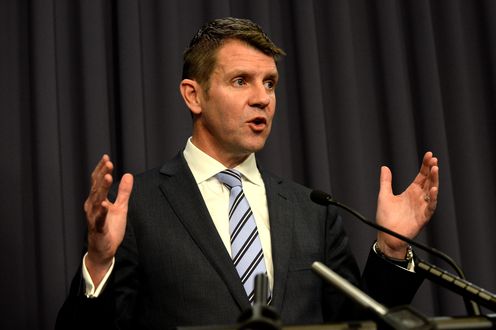
"Religious exceptions are this wide." Actually, Premier Baird, they're a lot wider than that. Time to repeal sub-section 56(d) of the NSW Anti-Discrimination Act 1977.

“Religious exceptions are this wide.” Actually, Premier Baird, they’re a lot wider than that. Time to repeal sub-section 56(d) of the  Anti-Discrimination Act 1977.

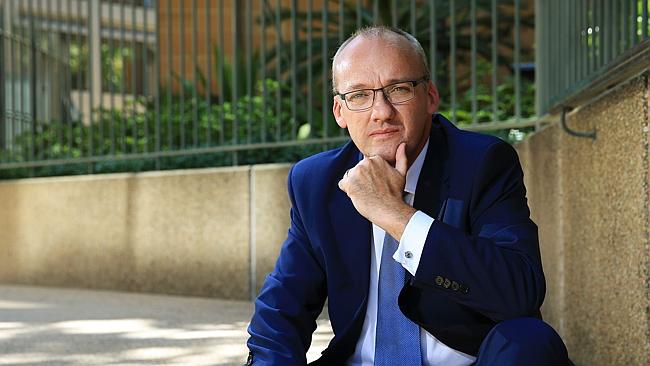
After much contemplation, Opposition Leader Luke Foley this week finally joined the 21st century by supporting marriage equality. Will he also support a 21st century Anti-Discrimination Act?

After much contemplation, Opposition Leader Luke Foley this week finally joined the 21st century by supporting marriage equality. Will he also support a 21st century Anti-Discrimination Act?

Finally, if you manage to secure a response from MPs or candidates on these questions during Sydney Gay & Lesbian Mardi Gras, whether that response is negative or positive, please leave their answers in the comments section below.

And, if you want to raise them directly with some of the relevant decision-makers, here are some people you might wish to contact:

Liberals

Premier Mike Baird

Email https://www.nsw.gov.au/your-government/contact-premier-new-south-wales

Phone 02 8574 5000

Twitter https://twitter.com/mikebairdMP

Attorney-General Brad Hazzard

Email office@hazzard.minister.gov.au

Phone 02 8574 6000

Twitter https://twitter.com/BradHazzard

Labor

Opposition Leader Luke Foley

Email leader.opposition@parliament.nsw.gov.au

Phone 02 9230 2310

Twitter https://twitter.com/Luke_FoleyNSW

Shadow Attorney-General Paul Lynch

Email ElectorateOffice.Liverpool@parliament.nsw.gov.au

Phone 02 9602 0040

Greens

Attorney-General Portfolio Spokesperson David Shoebridge

Email david.shoebridge@parliament.nsw.gov.au

Phone 02 9230 3030

Twitter https://twitter.com/ShoebridgeMLC

[1] Section 49ZG refers to discrimination on the basis of ‘homosexuality’, with ‘homosexual’ defined in section 4 as ‘homosexual means male or female homosexual’.

[2] Section 49ZTA sets the maximum individual punishment for serious homosexual vilification at 10 penalty units, or imprisonment for 6 months, or both.

[3] Section 38T provides that the maximum individual punishment for serious transgender vilification is 10 penalty units, or imprisonment for 6 months, or both.

[4] Section 20D establishes the maximum individual punishment for serious racial vilification: 50 penalty units, or imprisonment for 6 months, or both.

Submission to Australian Human Rights Commission Sexual Orientation, Gender Identity and Intersex (SOGII) Rights Consultation

One of my favourite campaigns of recent times – It Gets Better – performs a valuable role, letting vulnerable LGBTI youth know that, while the homophobia, biphobia, transphobia and intersexphobia they may be experiencing is awful, for most of them, it will get better. I emphasise the word most here because we should always remember that it does not get better for everyone.

Meanwhile, as the LGBTI movement itself ‘ages’, many of us are increasingly celebrating the past, and reflecting on significant community milestones (such as last year’s 30th anniversary of the decriminalisation of male homosexuality in NSW, or the 40th anniversary of Sydney’s Gay & Lesbian Mardi Gras which is now only three years away). But, while absolutely necessary, looking backwards should never obscure the challenges that remain ahead.

This consultation, including an examination of legislation, policies and practices by government(s) that unduly restrict sexual orientation, gender identity and intersex rights, provides an opportunity to highlight some of the major obstacles which continue to prevent LGBTI Australians achieving full equality. In this submission, I will concentrate on six such areas:

  1. Involuntary or coerced sterilisation of intersex children

These unjustified practices – surgeries performed with the aim of ‘normalising’ intersex children according to the expectations of their parents, their doctors, and/or society at large, so that they conform to an exclusionary man/woman binary model of sex – are human rights abuses, plain and simple.

Obviously done without the child’s consent, such practices can involve sterilisation, as well as other ‘cosmetic’ (ie unnecessary), largely irreversible surgery on genitalia to make their bodies fit within the idea of what a man or woman ‘should’ be, ignoring the individual involved and their fundamental rights to bodily integrity, and personal autonomy.

That these practices continue in 2015 is abhorrent – and the fact the Commonwealth Government has yet to formally respond to the Senate’s 2013 Report into this issue (http://www.aph.gov.au/Parliamentary_Business/Committees/Senate/Community_Affairs/Involuntary_Sterilisation/Sec_Report/~/media/Committees/Senate/committee/clac_ctte/involuntary_sterilisation/second_report/report.ashx) is, or at least should be, a scandal.

  1. Restrictions on the rights of transgender people

Another group within the LGBTI community whose rights continue to trail those whose identities are based on sexual orientation (lesbian, gay and bisexual people) are transgender Australians.

This includes the fact there continue to be ‘out-of-pocket’, in many cases quite significant, expenses for medical support for trans* people simply to affirm their gender identity. This is a denial of their human rights – access to trans* surgeries and related medical services should not be restricted by the capacity to pay, but instead should be fully publicly-subsidised through Medicare.

The ongoing requirement that married transgender Australians must divorce their spouses in order for their gender identity to be legally recognised is also a fundamental breach of their rights, and must end.

  1. Processing and resettlement of LGBTI refugees in countries which criminalise homosexuality

Australian Governments, of both persuasions, are guilty of violating the human rights of LGBTI refugees. These are people who are (often) fleeing persecution on the basis of their sexual orientation, gender identity or intersex status, and seeking our protection.

Australia’s response? To detain them, indefinitely, in inhumane prison camps on Nauru and Manus Island. For many, while detained they are at risk of prosecution under the laws of Papua New Guinea and/or Nauru, both of which continue to criminalise male-male intercourse. Even after they are found to be refugees, they are then ‘resettled’ in these countries, in effect exposing people who have fled persecution to potentially more persecution.

While I believe the offshore processing and resettlement of all refugees is unjust, it should be recognised it has a disproportionately negative impact on LGBTI refugees.

  1. Denial of the right of LGBTI students to an inclusive education

It is encouraging that greater numbers of young LGBTI people feel comfortable in disclosing their status at an earlier age – and for some, that they attend genuinely inclusive schools. However, this inclusion is by no means universal.

For example, the recently developed national Health & Physical Education curriculum does not even include the words lesbian, gay or bisexual, and does not guarantee students will be taught comprehensive sexual health education (even omitting the term HIV). This is a massive failure to ensure all students learn vital information that is relevant to their health.

Similarly, while the national Safe Schools Program is a welcome initiative to counter homophobia and bullying, participation in the program is optional, with most schools (and even some entire jurisdictions) opting out. The right to attend school free of discrimination should not depend on a student’s geographic location, or their parent/s’ choice of school.

Finally, religious exceptions to anti-discrimination legislation (in all jurisdictions outside Tasmania), mean many LGBTI students are at risk of discrimination, by their school, simply for being who they are.

  1. Limitations on anti-discrimination protections

Students are not the only LGBTI individuals let down by Australia’s current anti-discrimination framework. These same religious exceptions mean that, in most jurisdictions, LGBTI people can be discriminated against in a wide range of areas of public life, both as employees and people accessing services, in education, health, community services and (as employees) in aged care.

The attributes which are protected under anti-discrimination law also vary widely, with intersex people only truly protected under Commonwealth and Tasmanian law, different definitions of transgender (including extremely narrow protections in Western Australian legislation), and NSW excluding bisexual people altogether.

Finally, only four jurisdictions have vilification protections for (some) members of the LGBTI community – with no Commonwealth LGBTI equivalent of section 18C of the Racial Discrimination Act.

  1. Ongoing lack of marriage equality

I include this not because I consider it as important as the issues listed above, but simply as someone who has been engaged to be married for more than five years – and has no idea how much longer he will have to wait to exercise the same rights as cisgender heterosexual couples, with the only difference being who I love. Marriage discrimination is wrong, it is unjust, and it must go.

This submission is by no means comprehensive – there are a variety of other issues which I have excluded due to arbitrary word length restrictions (including mental health issues, anti-LGBTI violence, and discrimination against rainbow families – with my partner and I able to adopt in Sydney, but not Melbourne or Brisbane).

In conclusion, while it does get better, and over time, it most certainly has got better, there are still many ways in which the rights of LGBTI Australians continue to be denied – and about which we, as LGBTI advocates and activists, should remain angry, and most importantly, take action.

Human Rights Commissioner Tim Wilson, who is leading the consultation on SOGII Rights

Human Rights Commissioner Tim Wilson, who is leading the consultation on SOGII Rights

NB Public submissions to the AHRC SOGII Rights consultation close on Friday 6 February. For more details, head to: <https://www.humanrights.gov.au/sogii-rights

For more information on some of the topics listed above, see my previous posts on:

– Submission to Involuntary and Coerced Sterilisation of Intersex People Senate Inquiry <https://alastairlawrie.net/2013/07/01/submission-to-involuntary-and-coerced-sterilisation-senate-inquiry/

– Letter to Scott Morrison About Treatment of LGBTI Asylum-Seekers and Refugees Sent to Manus Island <https://alastairlawrie.net/2014/02/02/letter-to-scott-morrison-about-treatment-of-lgbti-asylum-seekers-and-refugees-sent-to-manus-island-png/

– Letter to Minister Pyne Calling for COAG to Reject Health & Physical Education Curriculum Due to Ongoing LGBTI Exclusion <https://alastairlawrie.net/2014/12/09/letter-to-minister-pyne-calling-for-coag-to-reject-health-physical-education-curriculum-due-to-ongoing-lgbti-exclusion/

– The Last Major Battle for Gay & Lesbian Legal Equality in Australia Won’t be about Marriage <https://alastairlawrie.net/2014/02/26/the-last-major-battle-for-gay-lesbian-legal-equality-in-australia-wont-be-about-marriage/  and

– Bill Shorten, Will you Lead on Marriage Equality? <https://alastairlawrie.net/2015/01/24/bill-shorten-will-you-lead-on-marriage-equality/

LGBTI Highs & Lows of 2014

A short final post to bring to a close this blog for another year. As always, the past 12 months have been incredibly busy, having seen significant achievements in LGBTI rights in some areas, and a disappointing lack of progress in others. The following are my personal views on a couple of the major highlights of 2014, two ongoing ‘lowlights’, and one item of unfinished business.

  1. NSW Finally Repeals the Homosexual Advance Defence

In May, NSW Parliament passed the Crimes Amendment (Provocation) Act 2014, finally removing the homophobic and biphobic ‘homosexual advance’ or ‘gay panic’ defence from our statute books. This was a long overdue reform, and is testament to the hard work of many, many LGBTI activists, and organisations (including, but not limited to, the NSW Gay & Lesbian Rights Lobby), over the past 15-20 years.

From my own perspective, I was happy to play a small role as part of the overall movement to abolish this discriminatory law. I was one of 52 individuals and organisations to lodge a submission to the Parliamentary inquiry into the Partial Defence of Provocation in 2012 (submission here: https://alastairlawrie.net/2012/08/10/submission-on-homosexual-advance-defence/ ), and also made a submission to the then Attorney-General on the draft Crimes Amendment (Provocation) Bill in late 2013 (submission here: https://alastairlawrie.net/2013/11/14/submission-on-crimes-amendment-provocation-bill-2013-re-homosexual-advance-or-gay-panic-defence/ ).

Now that NSW has finally removed this stain from the Crimes Act, it is time for Queensland and South Australia to also consign the homosexual advance defence to the dustbin of history.

  1. Victoria and NSW Pass Legislation Allowing Historical Convictions for Homosexual Sex to be Expunged

This was another long overdue law reform, and one that is essential to help remedy some of the injustice caused, both by the criminalisation of male-male sexual intercourse (with decriminalisation taking effect in Victoria in March 1981, and in NSW in June 1984), and also by the differential age of consent post-decriminalisation (with the age of consent equalised in Victoria in 1991, and in NSW, shamefully, not until 2003).

This achievement belongs primarily to those campaigners in Victoria who kept the issue alive for many years, if not decades (including Jamie Gardiner, someone whom I am privileged to be able to call a friend and mentor), and who put in the legal policy development work over the past couple of years (including Anna Brown, of the Victorian Gay & Lesbian Rights Lobby and the Human Rights Law Centre), among numerous others. The NSW reforms were able to successfully ‘piggyback’ on this advocacy south of the border.

For my part, I was able to pursue this issue as the Policy Working Group chair of the NSW Gay & Lesbian Rights Lobby 2012-2014, as well as writing to the new Premier, Mike Baird, in May of this year calling for a party vote in favour of Bruce Notley-Smith’s Bill (letter here: https://alastairlawrie.net/2014/05/25/letter-to-nsw-premier-mike-baird-re-lgbti-equality-and-conscience-votes/ ).

But I am perhaps most proud that it was a motion that I drafted which was passed at ALP State Conference in July which ensured the Labor Opposition would vote, as a bloc, in favour of this reform – although it would be remiss of me not to say that it was Penny Sharpe’s advocacy behind the scenes that ensured this motion was successful.

As with the homosexual advance defence, it is now up to other states to similarly pass legislation to allow men affected by these laws to have their convictions expunged. And for Queensland, this must also include amendments to finally introduce an equal age of consent (with a higher age of consent for anal intercourse still in force there).

  1. Australia Still Persecuting LGBTI Refugees

Onto the ‘lowlights’ of 2014 and the first could be taken from 12 months previously – and in fact it is, with Australia’s ongoing policy of sending LGBTI refugees to countries which criminalise homosexuality for processing and resettlement also featuring atop my end of year Highs & Lows from 2013 (see original post here: https://alastairlawrie.net/2013/12/27/no-1-australia-sends-lgbti-refugees-to-countries-which-criminalise-homosexuality/ ).

Sadly, the situation one year later isn’t all that different. The policy is still in breach of our international human rights obligations, is still fundamentally unjust, and is still an insult to humanity itself – both of the refugees, and ours because it is being done in our name. The Immigration Department essentially confirmed in a response to me that the Government will continue to send LGBTI refugees to Manus Island in Papua New Guinea, and to Nauru, for the foreseeable future (see my letter and their response, on behalf of Minister Scott Morrison, here: https://alastairlawrie.net/2014/02/02/letter-to-scott-morrison-about-treatment-of-lgbti-asylum-seekers-and-refugees-sent-to-manus-island-png/ ).

The only glimmers of hope at the end of another depressing year in this area are that a) Minister Morrison is today being replaced in the Immigration portfolio and b) the treatment of LGBTI asylum seekers and refugees has been receiving increased media coverage, both in LGBTI community publications (including the Star Observer and samesame) and importantly in mainstream media (with a special mention of the Guardian Australia for their ongoing work in this area).

  1. Lack of Progress on Involuntary or Coerced Sterilisation of Intersex People

This ‘lowlight’ is also taken from the 2013 list of Highs & Lows, although at that stage it was presented in a much more favourable manner, given the Senate Standing Committee on Community Affairs had only recently handed down its report on the Involuntary or Coerced Sterilisation of Intersex People in Australia (see post here: https://alastairlawrie.net/2013/12/25/no-3-senate-report-on-involuntary-or-coerced-sterilisation-of-intersex-people-in-australia/ ).

Unfortunately, 12 months on and there has apparently been little progress in this area – despite the Report itself being debated in the Senate in March, I am unaware of any formal Government response, let alone significant reforms to implement its recommendations. Let’s hope that, in 2015, the Commonwealth and State and Territory Governments all take action to ensure that the human rights of intersex children are no longer violated in this way.

  1. Campaign for the ALP to Adopt a Binding Vote on Marriage Equality

The final entry in this list of ‘Highs & Lows’ is actually an item of unfinished business, both of the past 12 months, and also stretching back to the 2011 ALP National Conference, which adopted marriage equality in the party’s platform, but then immediately undermined it by enabling members of the parliamentary party to vote against this plank of the platform for any reason whatsoever.

As I have written previously (see my major post on this topic, ‘Hey Australian Labor, It’s Time to Bind on Marriage Equality’ https://alastairlawrie.net/2014/07/13/hey-australian-labor-its-time-to-bind-on-marriage-equality/ ), it is highly unlikely that marriage equality will pass Commonwealth Parliament in this term without a binding vote for ALP MPs. Which means that the votes by the Tasmanian State ALP Conference in July, and Queensland State Conference in August, to support a binding vote were incredibly encouraging, and even the close loss in NSW in July was heartening (because, if those voting patterns were repeated across Australia, it would likely be successful at the national level).

This campaign, which I refer to as #ItsTimeToBind, will be one of the most important of 2015, as we move towards ALP National Conference in Melbourne in July. Let’s see whether Bill Shorten will stand up and be a Leader who supports the fundamental equality of lesbian, gay, bisexual, transgender and intersex Australian, without exception.

So, that brings me to the end of my writing for another year. On a personal note, I would like to say a heartfelt thank you to everyone who has read, commented (even when they have disagreed), shared and liked my posts. As you can probably tell, I enjoy writing, and I enjoy it even more when I know that people are interacting with it (and the almost 16,000 unique visitors, from 141 countries, this year is both humbling and, to be honest, a little bit exciting).

On that point, if you do enjoy reading and visiting this blog, please consider signing up (either on WordPress or via email – the subscription options for both are located at the top of the right-hand side-bar), and to stay up-to-date you can also follow me on twitter https://twitter.com/alawriedejesus . Have a happy and safe end to 2014, and let’s hope that 2015 brings with it even more progress towards full LGBTI equality, both in Australia and overseas. Thanks, Alastair

Submission to Senate Legal and Constitutional Affairs Legislation Committee Inquiry into the Recognition of Foreign Marriages Bill 2014

As I committed to in my previous post on the topic of the Recognition of Foreign Marriages Bill 2014 (see here: <https://alastairlawrie.net/2014/06/26/why-i-dont-support-the-recognition-of-foreign-marriages-bill-2014/ ), unless somebody was able to provide a satisfactory explanation as to why, as a strategy, the recognition of foreign marriages should be pursued separately to, and ahead of, equality for domestic marriages, I would lodge a submission to the Senate Inquiry into the Bill expressing my serious concerns about this proposed law.

In the absence of any such explanation, I lodged my submission at the end of July, making clear my personal opinion that the Recognition of Foreign Marriages Bill 2014 should be withdrawn, and replaced by genuine marriage equality legislation.

I understand that this position may be controversial with some people, and that my words may even be used against me by others (indeed my original post has been quoted, selectively, by the Catholic Archdiocese of Sydney in their own submission to the inquiry), but I absolutely believe that, as a movement, we should be fighting for real marriage equality, and that we should be pushing for it to be passed by the Parliament as quickly as possible – unfortunately, the Recognition of Foreign Marriages Bill 2014 is not such a law.

One final, more positive, point: it appears that, as a result of a range of submissions, and the evidence given to the Senate Inquiry by Tony Briffa, there is now a strong chance that the Bill will at least be amended to ensure that it is not discriminatory on the basis of gender identity and intersex status.

This is obviously a very welcome development, but it would nevertheless leave intact the Bill’s inherent discrimination on the basis of class and nationality. Which, at least from my perspective, remains sufficient justification to argue for the Recognition of Foreign Marriages Bill 2014 to be withdrawn.

The following is the text of my submission to the Senate Inquiry into this Bill, which has been published on the APH website, and is available at the following link: <http://www.aph.gov.au/Parliamentary_Business/Committees/Senate/Legal_and_Constitutional_Affairs/Recognition_of_Foreign_Marriages_Bill_2014/Submissions

For more than ten years, and especially since the lead-up to the passage of the ban on marriage equality by the Howard Liberal-National Government, supported by the Labor Opposition, in 2004, I have been a strong and consistent – and occasionally vocal – supporter of marriage equality.

I firmly believe that all couples deserve the right to marry, and have that marriage recognized under Commonwealth law, irrespective of their sexual orientation, gender identity or intersex status.

I do not accept that there is any valid reason for the Australian Government to continue to discriminate against lesbian, gay, bisexual, transgender and intersex (LGBTI) people, and to devalue their (our) relationships, by denying a fundamental right which is offered without question to cisgender heterosexual couples.

This is particularly true following the High Court decision in December 2013, which overturned the ACT’s same-sex marriage legislation but also established that there is no constitutional impediment to the Commonwealth Parliament passing a Bill which would finally affirm that our love is indeed truly equal.

I deliberately use the word finally because we have been waiting long enough. My fiancé and I have already been engaged for four and a half years – and it may be several more before we have the opportunity to have a legally recognised wedding, something that my sister and her husband, and my brother and his wife, simply took for granted.

I strongly urge the Commonwealth Parliament, including all Senators and Members of the House of Representatives, to pass a marriage equality Bill as a matter of priority, and thus bring to an end the sorry situation whereby LGBTI Australians are treated as second class citizens in their own country.

Unfortunately, the Recognition of Foreign Marriages Bill 2014 is not such a Bill. It will not end the second class treatment of all of our relationships, and I do not believe it should be brought before the Parliament for debate.

My problem with this proposed law is not necessarily about what is included (although there is an issue in its terminology which I will come to later). It almost goes without saying that I completely support the legal recognition of the marriages of same-sex couples that have been wed in other countries.

Instead, my problem concerns what is not included in the Bill – the recognition of domestic marriages – and the consequence of only recognising marriages conducted ‘outside’ Australia, and not those ‘inside’ at the same time.

If passed, such legislation would create a situation whereby there would be three main, distinct categories of same-sex couples who wish to be treated as married in Australia:

    • Couples who have the financial resources to take advantage of the opportunity to marry under the laws of another country;
    • Couples who have been or are able to marry under the laws of another country because of their current or former nationality (including where one partner has UK citizenship, and can therefore marry in a UK consulate in Australia, or where the couple has emigrated from a country with marriage equality); and
    • Couples who do not have the financial resources or nationality to be able to take advantage of marriage equality elsewhere. 
Under this Bill, only couples in the first two categories would be able to be considered legally married.

In effect, if the Recognition of Foreign Marriages Bill 2014 were to succeed, Australia would have a system which, far from implementing genuine ‘marriage equality’, would actually create new types of marriage inequality, only this time based on distinctions around class and nationality rather than sexual orientation. 
Put simply, I cannot advocate for the progression of a Bill which would provide the opportunity for a couple who can afford it to get married overseas and have that marriage legally recognised here, but which would tell an elderly couple barely surviving on the age pension that they cannot be married under Australian law solely because they do not have the money.

If we are genuinely interested in marriage equality, then both couples must have the same right to wed. To put it another way, I am only interested in advocating for the progression of a Bill which redresses the injustice perpetrated against both couples, not just the couple that can afford to marry.

The only argument which I can see for pursuing this legislation is that some people may view it as an incremental step towards full marriage equality. And I whole-heartedly agree that, in some cases, incremental reform may be necessary to achieve larger, longer-term change.

However, I believe that in this case the people proposing this route towards achieving full marriage equality have not understood the fact that incrementalism is only ever a strategy, and not a goal in and of itself.

In this instance, there is absolutely no need for an incrementalist approach. There is no difference in how the Recognition of Foreign Marriages Bill 2014 would be treated by Commonwealth Parliament and how a genuine Marriage Amendment Bill – one that provides for the recognition of both overseas and domestic marriages – would be received.

Both Bills would involve asking the same people, sitting in the same place, exercising the same powers, and almost inevitably using the same arguments, to vote yes (or no).

The only potential justification for proceeding with the Recognition of Foreign Marriages Bill and not a genuine Marriage Amendment Bill would be if there existed Senators and Members of the House of Representatives who would tell LGBTI-inclusive couples in Australia that they can only have their marriages recognised if they travel overseas, away from their family and friends, for the wedding.

I refuse to believe that, when it came time for the second reading debate on such a Bill in the Chamber, there is a single MP who would stand up and deliver that message. I do not accept that there would be MPs willing to tell LGBTI members of their community that yes, they can be married, but only on the proviso they go somewhere else for the ceremony. Instead, I sincerely believe the same people who would be willing to vote for the Recognition of Foreign Marriages Bill 2014 would also vote yes to full marriage equality.

In which case, there is no reason why the Commonwealth Parliament should not proceed directly to a genuine Marriage Amendment Bill, rather than consider something which falls far short of what could be considered fair, and is substantively less than what LGBTI Australians deserve.

I urge Senators who wish to pursue the Recognition of Foreign Marriages Bill 2014 to reconsider their approach. I submit that they should abandon this Bill in favour of legislation that would deliver the right to marry to all couples, not just those who can afford to take advantage of the opportunity to marry under the laws of another country first.

The next Bill to be debated in the Commonwealth Parliament should be, must be, legislation which provides for genuine marriage equality, irrespective of sexual orientation, gender identity or intersex status, and not one which would allow some same-sex couples to marry, but only those from certain classes or nationalities.

As I alluded to earlier, there is another problem with the Recognition of Foreign Marriages Bill 2014. And it is not a minor problem, either – although, as it concerns terminology, (hopefully) it is something which can be more readily resolved.

The Bill would leave intact the current definition of marriage in section 5 of the Marriage Act 1961 (“marriage means the union of a man and a woman to the exclusion of all others, voluntarily entered into for life”). Instead, it replaces section 88EA with the following:

(1) Despite the definition of marriage in subsection 5(1), a union between:

(a) a man and another man; or

(b) a woman and another woman;

solemnised in a foreign country under local law as a marriage is recognised as a marriage in Australia.

(2) The parties to a union mentioned in subsection (1) have the same rights and obligations under this Act, or under any law of the Commonwealth, as the parties to a marriage between a man and a woman.

This is explicitly, and only, a same-sex marriage Bill. It is not genuinely inclusive of any marriages of people who may not be, or who may not identify as, a man or a woman. Some couples which include trans* or intersex individuals may not be able to utilise such laws or may not want to, because the language does not reflect who they are, and therefore denies the nature of their relationships.

The Recognition of Foreign Marriages Bill 2014 does not challenge the unnecessary inclusion of ‘man’ and ‘woman’ in section 5 of the Marriage Act, something which we should be moving away from – instead, it further entrenches these concepts, by replicating this language in additional subsections.

This is an issue which, I hope, is more about drafting than any deliberate intention to exclude people on the basis of gender identity or intersex status. As such, if, after this Senate Inquiry is concluded, the Recognition of Foreign Marriages Bill 2014 does proceed to Parliamentary debate, it should be amended to ensure all couples are included, not just ‘same-sex couples’.

Nevertheless, even if the Bill were amended to ensure that it did not discriminate against some trans* and intersex inclusive couples, my fundamental problem with it would remain – this legislation would not achieve genuine marriage equality, and therefore I believe it should be replaced by something that would.

The primary positive outcome to arise from this legislation, and the Senate Inquiry which it has precipitated, is that it has placed a spotlight on the injustice perpetrated on same-sex couples that have been married overseas (either Australian couples who have travelled elsewhere, or other couples who have emigrated here) and yet are told by the Australian Government that they are not considered legally married here.

Undoubtedly, this is a horrible, and heart-breaking, situation for any couple to be placed in. And it is yet another argument for the recognition of genuine marriage equality within Australia, and additional motivation for such a law to be passed as quickly as possible.

But it is not sufficient justification to proceed with legislation that addresses only this injustice. The discrimination against these couples, and the discrimination against other Australian couples who are waiting for the opportunity to be married here, is, in practice, the same discrimination. After all, we are all told that our relationships are not worthy of the same recognition as those of other Australians, simply because we are LGBTI.

These injustices can and should be remedied through the same Bill, rather than prioritising the needs of some couples over others without any clear or rational explanation why that should be the case.

One final point. I have tried to be clear in this submission that I do not support progress of the Recognition of Foreign Marriages Bill 2014 to second reading debate, and ultimately for vote on the floor of Parliament. Instead, I have consistently argued that this Bill should be replaced with genuine marriage equality legislation before it reaches that stage.

However, if the Recognition of Foreign Marriages Bill 2014 does proceed to a vote, there is no reason for Senators and Members of the House of Representatives to vote against it, and thereby vote against the potential expansion of marriage to include more couples than are currently allowed.

Nevertheless, it is still my preferred outcome that the next Parliamentary vote on marriage be on a genuine, and genuinely inclusive, marriage equality Bill – and therefore not on the Recognition of Foreign Marriages Bill 2014.

In conclusion, while the intentions of those who have drafted this legislation are most likely sound, the outcome that its passage would deliver is not. It is time to go back to the drawing board, and return with a Bill that delivers marriage equality, not just for some couples, but for all.

Alastair Lawrie

Thursday 31 July 2014

10 Things I Hate About Marriage Inequality. #1: Because I can’t marry the man I love

The number one reason why I hate marriage inequality in Australia is because it means that I cannot marry the man who I love.

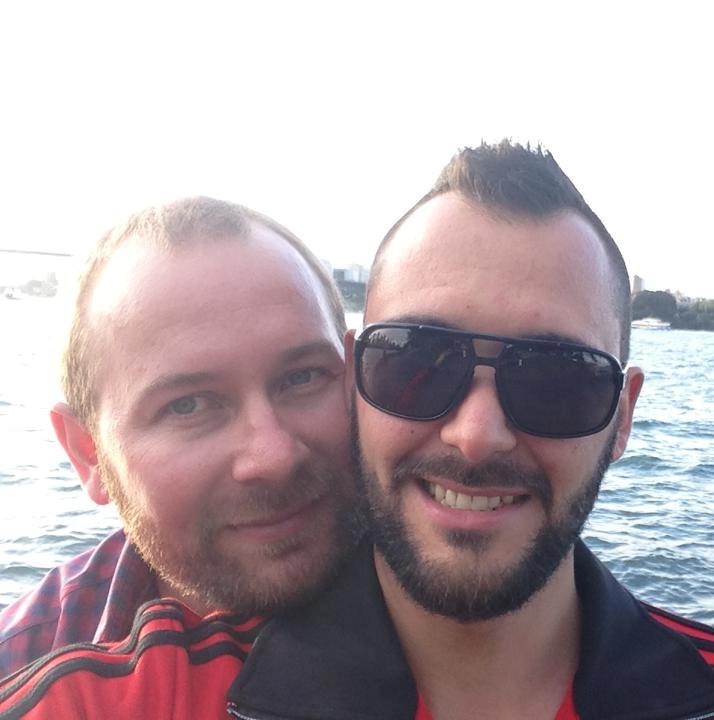
Me (on the left) and Steven (aka the handsome guy with the sunnies).

Me (on the left) and Steven (aka the handsome guy with the sunnies).

I was half-tempted to leave it at that because, really, what more do I need to say?

There can be few things more beautiful than the desire to celebrate the love that you have for your partner, in front of your family and friends. I want to experience that with Steve, the person I care about most in the world, and who brings me more happiness than I ever thought possible.

At the same time, there can be few things uglier than a Government intervening to tell you “No”, you cannot experience that, simply because of your sexual orientation (or, for others, gender identity or intersex status). Especially when there is absolutely no legitimate reason why the Marriage Act 1961 should discriminate against LGBTI-inclusive couples, something that is incredibly frustrating, to Steve and me, and to the thousands of other Australian couples in the same situation.

Obviously, the issue of marriage equality is very personal for all of the people that it directly affects. And, in that, I am no different. It does affect me personally and, as the people closest in my life can attest (and as this countdown has made exceptionally clear) I take its denial very personally.

How could I not? When you celebrate wedding after wedding, of your sister, and your brother, and your cousins, and your partner’s extended family, and your friends and his friends as well, and you just want to do the same, yet you cannot because 139 Senators and Members of the House of Representatives back in September 2012 decided that you are ‘unworthy’ simply because you’re gay, well, how could that not feel like a knife right through your heart?

In fact, there are very few contemporary public policy issues for which the old maxim – that the personal is political – could be more accurate. The recognition of our relationships is obviously immensely personal, and it is impossible to deny that whether they are recognised or not, or recognised but with a lesser value than cisgender heterosexual relationships, is inherently political.

That particular saying works the other way, too. The position that each of our parliamentarians adopts on this political issue reflects something profound about who they are as a person as well.

And I’m not just talking about the Cory Bernardis or Helen Polleys of this world, either – Senators who thought it appropriate to link the prospect of marriage equality with bestiality and the Stolen Generation, respectively – although their parliamentary speeches certainly revealed their utter contempt for LGBTI Australians.

I am talking about the MPs who might not say anything ‘overtly’ homophobic during Parliamentary debates about marriage, but who cast their vote against equality nonetheless. In doing so, they indicate that they choose discrimination and inequality over love and inclusion. They stand up against the idea that all Australians deserve equal treatment under the law, instead supporting the notion that some people are ‘more equal’ than others.

Those who vote against marriage equality devalue our relationships, telling us that they are less worthy of recognition than those of other people. And they devalue us as individuals too, subtly (or in some cases, not so subtly) sending the signal that we are less than full citizens of our own country. Even if they do not say the words, their position reveals, loud and clear, that they believe LGBTI people are – and should be – second class.

At its most personal, an MP who votes against marriage equality is saying that they themselves are more deserving of certain rights, that their own relationships are more worthy of recognition, that they as individuals are simply better than LGBTI Australians.

To them I say, “How dare you”. How dare you suggest that, because I am gay and you are heterosexual, you are more deserving of certain rights than I am. And how dare you deny us the rights that you currently enjoy (whether you choose to exercise them or not) simply because we are in a same-sex relationship and you are not.

The love that Steve and I share is not better or worse, more valuable or less valuable, or more deserving or less deserving, than the love between cisgender heterosexual couples. It’s all just love. The law should not make a distinction between the love that Steve and I have for each other, and that between my sister and her husband, or my brother and his wife.

Sadly, because of the amendments made under the Howard Government in August 2004, and the failure of our MPs since then to remedy this discrimination, the law does make such a distinction.

Today, Wednesday 13 August 2014, those amendments, that legal distinction, this ongoing and unjustified discrimination against LGBTI Australians, ‘celebrates’ its own ten year anniversary.

The traditional gift for a ten-year wedding anniversary is tin. I’m sure you’ll forgive me for not wanting to buy anything special to mark the occasion.

What I will do, what I feel compelled to do on this day, is say to all of those MPs who voted against equality in 2004, and continue to do so now, you truly are the tin men and tin women of Australian politics. You have forgotten that you have hearts, or, at the very least, you have forgotten how to use them. Indeed, it seems you have forgotten what hearts are even there for.

Well, now is the time to rediscover their purpose. And now is also the time to rediscover your purpose as our elected representatives – that it is your responsibility to act for the betterment of Australia, and the welfare of its people, all of its people, not just the cisgender heterosexual ones.

On this, the 10th anniversary of the ban, it’s time to support marriage equality, and in so doing to support the full and equal citizenship of all Australians, irrespective of sexual orientation, gender identity and intersex status. If you do, if you finally agree to pass marriage equality, then you should rest assured that nothing bad will happen. The sky will not fall in. There will be no negative consequences whatsoever.

The only outcome will be overwhelmingly positive. Thousands, indeed tens of thousands, of couples will finally be able to express their love and commitment in front of their family and friends. Couples like Steve and me. We are ready and waiting to say those two small words to each other, “I do”. We just need you to say two other words first, “You can.”

10 Things I Hate About Marriage Inequality. #7: Because Sometimes it Overshadows Other Important LGBTI Issues

In a similar way to reason #9 (“Because sometimes I feel guilty for having #firstworldproblems”), one of the things that frustrates me about marriage equality is that this issue has come to dominate domestic LGBTI politics to such an extent that it can, and has, overshadowed other important issues.

Now, that is not necessarily a criticism of marriage equality campaigners, including Australian Marriage Equality. They have done a fantastic job of promoting marriage equality and ensuring that, over the past 12 years, it has gone from what could be described as a ‘minority concern’, to one of widespread acceptance across the Australian population (even if our parliamentarians are taking far too long to catch up).

It is also not to dismiss the fact marriage equality is an important issue in and of itself – obviously, as someone who is engaged themself, I understand the emotional pull at the heart of this issue which compels so many people to take action (and any regular reader of this blog would note the high volume of posts which relate to the denial of this right, not just in Australia but around the world).

But, and this is a big but, I am not sure that this completely justifies the disproportionate attention, and in some cases, disproportionate energy, which has been given to the issue of marriage equality by our community, especially over the past four or five years.

That statement might be a little bit controversial, so allow me to provide some context before you make up your mind. Let’s compare, for example, the community response (both our own, and the broader Australian community) to marriage equality with that regarding three other important LGBTI issues.

In April 2012, the House of Representatives Standing Committee on Social Policy and Legal Affairs inquiry into two marriage equality bills conducted an online survey – to which 276,437 Australians responded (including more than 177,000 people in favour).

In subsequent months, the related Senate Standing Committee on Legal and Constitutional Affairs Inquiry received a record number of formal submissions – approximately 79,000, with roughly 46,400 people taking the time to write in support of a Marriage Act that does not discriminate on the basis of sexual orientation, gender identity and intersex status.

Around the same time, the Gillard Government was preparing legislation which would, for the first time ever, provide anti-discrimination protections under Commonwealth law on those exact same grounds.

These protections were contained, along with a range of other measures, in the Human Rights and Anti-Discrimination (HRAD) Bill 2012. The Exposure Draft of that legislation was considered by the same Senate Committee, and a still ‘healthy’ 3000 submissions were made (although, it has to be pointed out, many did not address the specific issue of LGBTI anti-discrimination but were in fact about other aspects of the Bill).

The HRAD Bill was eventually replaced by the Sex Discrimination Amendment (Sexual Orientation, Gender Identity and Intersex Status) Bill 2013, which, as the name suggests, focused exclusively on LGBTI protections. When it too was considered by the Senate Standing Committee on Legal and Constitutional Affairs, in June 2013, just 90 standalone submissions were made. Nine. Zero. Or about 0.11% of the total submissions on marriage equality, to the same Committee, just 12 months prior.

To choose another example – during 2012 and 2013 the Australian Curriculum, Assessment and Reporting Authority (ACARA) drafted the national Health & Physical Education curriculum, something which had the potential (or should have anyway) to help young lesbian, gay, bisexual, transgender and intersex students in classrooms around the country.

Except, as I have written previously, the first draft of that curriculum did not even mention the words lesbian, gay or bisexual, erroneously included trans* and intersex in the same definition (and even then only referred to them in the glossary!) and essentially ignored sexual health and HIV.

That draft was open for public consultation from December 2012 to April 2013. In four months, 279 online surveys were completed, as well as 99 formal written submissions. Removing submissions from organisations (mostly from non-LGBTI health and education groups), there were exactly 14 submissions from individuals to that public consultation. One. Four.

In 2014, the HPE curriculum, together with all other subject areas, were referred by the then Commonwealth Education Minister, the Hon Christopher Pyne MP, to homophobe Kevin Donnelly for yet another review. The grand total number of written submissions to that inquiry – of which only a small number would have focused on LGBTI exclusion from Health & Physical Education – was approximately 1,500.

One final example. Again, at the same time as the marriage equality parliamentary debates and the Sex Discrimination Act inquiry were going on, the Senate Standing Committee on Community Affairs was holding its own inquiry on the involuntary or coerced sterilisation of people with disabilities in Australia. One of the key issues examined by that inquiry – perhaps not to begin with, but certainly by the end, primarily as a result of the hard work of groups like OII Australia – was the involuntary or coerced sterilisation of intersex people.

Now, the intersex community might be small in number, even within our own community (see Notes) – but there is no denying this issue looms large in terms of all of the human rights abuses perpetrated against any member of the LGBTI community in Australia, at any point in our history. So, it was perhaps disappointing that the entire Senate inquiry – and not simply for the Report focusing on intersex issues – received just 91 standalone submissions.

But, as we have seen above, that is simply one part of a frustrating overall trend. The entire number of submissions to two LGBTI anti-discrimination inquiries, two reviews of the HPE curriculum, and an inquiry examining the coerced sterilisation of intersex people, is less than the number of submissions to one state-based same-sex marriage inquiry (NSW, in March 2013, received 7,586 submissions), let alone the 79,000 submissions to the 2012 Senate marriage inquiry.

Of course, simply counting submissions in this way doesn’t necessarily reflect other work undertaken, by a range of groups, with respect to anti-discrimination protections, the curriculum or intersex rights – much of which happens behind the scenes.

As indicated above, the high volume of submissions to marriage equality inquiries is also a testament to the hard work of groups like Australian Marriage Equality (and others, including GetUp!), in terms of mobilising the community.

There are also other advantages enjoyed by the issue of marriage equality (it is part of a clear, single-issue global movement, in recent years at least has emerged as part of the cultural zeitgeist, it is a much simpler yes/no policy question), not enjoyed by some of the other issues identified.

And it is much easier to report on – the images of brides and grooms either being denied legal equality, or enjoying newly-won rights, makes marriage equality a very ‘photogenic’ issue. The fact our opponents have given consistently outrageous comments also makes reporting on ‘conflict’ in this area much more straightforward for journalists.

It is even arguable that the disproportionate focus on marriage equality may actually be necessary in order to achieve such a significant and, until recently, almost unimaginable, social change.

And yet, when I reflect on the level of commitment which goes into marriage equality, compared to other important LGBTI issues, I find myself sometimes lamenting that we do not put the same level of energy, and dedicate the same level of time and resources, into the latter.

So, by all means I encourage you to support – or continue to support – the important work that Australian Marriage Equality does (to find out how to get involved, go here).

But, at the same time, it would be great if more people would also support some of the other organisations that, in addition to working on marriage equality, also advocate on a range of other LGBTI issues, which are no less important to the long-term health and well-being of our community. They include:

The NSW Gay & Lesbian Rights Lobby

The Victorian Gay & Lesbian Rights Lobby (<http://www.vglrl.org.au )

Transgender Victoria (<http://www.transgendervictoria.com ) and

OII Australia – Intersex Australia (<http://oii.org.au )

Those are four groups that I am or have been involved in, or have worked with – but there are a range of other LGBTI advocacy groups in states and territories around the country worthy of your support. Because, while marriage equality might be an important thing, it is not and never has been the only thing.

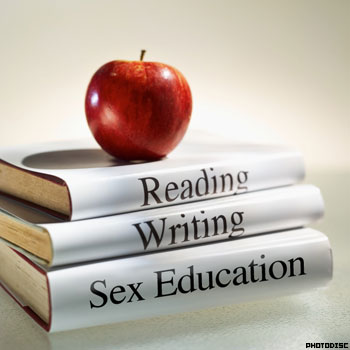
The national Health & Physical Education curriculum will have an impact on young LGBTI people for years, if not decades.

The national Health & Physical Education curriculum will have an impact on young LGBTI people for years, if not decades.

Notes

  • The reference to the comparative size of the intersex population is absolutely not meant to suggest that the issues it confronts does not count (as a member of another, albeit slightly larger, minority group, that is obviously not a rational position to hold), but it has been included here because it could partly explain why less people would have made a submission to this inquiry. Nevertheless, the scale of injustice involved in the sterilisation (and other unnecessary medical interventions) of intersex people without consent, in Australia, TODAY, means it is something we all should be concerned about.
  • It should also be noted that, when people were presented with a simple way of expressing their concern about the national Health & Physical Education curriculum – via a Change.org petition – at least 6000 people added their signature in less than a month. Obviously, people do care about other issues, including those listed above, so different groups also need to learn better how to engage on these issues, and translate that innate or latent support into concrete actions.

Submission to National Curriculum Review re Health & Physical Education Curriculum

The following is my submission to the review of the national curriculum, initiated by the Commonwealth Minister for Education, the Hon Christopher Pyne MP at the end of 2013. Given the appointment of Mr Kevin Donnelly to co-chair this review, I am not confident that all, or indeed, any of the concerns below will be listened to. But the inclusion of LGBTI students and content in our schools system is so important that I believe it is still worth a shot.

National Curriculum Review Submission

Thursday 13 March 2014

Thank you for the opportunity to make a submission on the development of the national school curriculum.

In this submission I will limit my comments to the development of the national Health & Physical Education (HPE) curriculum. In particular, I will be commenting on whether the HPE curriculum as drafted addresses the needs of, and genuinely includes, lesbian, gay, bisexual, transgender and intersex (LGBTI) students.

I have previously made submissions on the initial public consultation draft of the HPE curriculum, released in December 2012 (a copy of my submission is provided at <https://alastairlawrie.net/2013/04/11/submission-on-national-health-physical-education-curriculum/ ), and on the revised draft released for limited public consultation in June and July 2013 (see <https://alastairlawrie.net/2013/07/30/submission-on-redrafted-national-health-physical-education-curriculum/ ).

In both of those submissions I was strongly critical of the fact that the draft HPE curriculums did not genuinely attempt to include LGBTI students (including omission of the words lesbian, gay or bisexual), did not provide adequate sexual health education, and did not provide adequate information regarding HIV and other Blood Borne Viruses (BBVs), including viral hepatitis.

A second revised draft of the curriculum was prepared by the Australian Curriculum, Assessment and Reporting Authority (ACARA) ahead of the meeting of Commonwealth, State and Territory Education Ministers in November 2013. It has been reported that Education Ministers did not agree to the second revised draft, but instead simply noted its development in anticipation of this review.

Nevertheless, the second revised draft HPE curriculum was published in February 2014 on the Australian Curriculum website (www.australiancurriculum.edu.au).

I have analysed the second revised draft, and sincerely hope that my comments below convey the seriousness of my concerns about the ongoing exclusion of LGBTI students and content, and the potential negative health impacts that this exclusion will have over the short, medium and long-term.

The current version of the national Health & Physical Education curriculum does nothing to put all ‘Students First’, which I understand to be the guiding principle of this review. In fact, by continuing to exclude some students, and marginalising content which is relevant to their needs, the draft HPE curriculum places lesbian, gay, bisexual, transgender and intersex students last.

If the HPE curriculum were to be implemented as it currently stands, it would actively contribute to, and reinforce, the disproportionate rates of mental health problems, depression and, most tragically, suicide, which continue to affect young LGBTI people.

By failing to include detailed BBV and sexual health education, the HPE curriculum would also leave young people, and gay and bisexual men and trans* people specifically, exposed to unnecessary risk of transmission of HIV and other infections.

And by not ensuring that all students are provided with information that is relevant to their own needs and personal circumstances, the HPE curriculum will undermine the fundamental human right to health of the next generation of young LGBTI people. This right must be respected, and not denied to people merely on the basis of other peoples’ attitudes towards their sexual orientation, gender identity or intersex status.

This review is an(other) opportunity to address some of the serious shortcomings of the draft HPE curriculum. Please seize this opportunity and recommend that the curriculum be amended to ensure LGBTI students are included, with content that is relevant and targeted to meet their needs, including around sexual health and BBV education.

The remainder of this submission will look at five key areas of the draft HPE curriculum. They are:

  • Terminology
  • Student Diversity
  • Bullying & Discrimination
  • Sexual Health, and
  • HIV and other BBVs.

Terminology

One significant problem that has consistently appeared through the initial draft, revised draft and now second revised draft of the Health & Physical Education curriculum is that of terminology. Specifically, the HPE curriculum has either completely excluded terms that are essential for young people to learn, or included terms or definitions that are not appropriate in the circumstances.

The biggest problem in terminology, featured in all three drafts, has been the failure to even include the words lesbian, gay or bisexual. Despite these being the most common forms of identification for people whose sexual orientation is ‘not heterosexual’, these terms have never appeared in any version of this document.

In fact, the ongoing refusal to name lesbians, gay men and bisexuals – despite the fact that students will have heard these terms regularly amongst their families and friends, in culture and in broader society, and that an increasing number of young people, including students, will be using these terms to describe themselves – is almost bizarre in its stubbornness to deny reality.

Even if there may be a reason for sometimes using the umbrella term same-sex attracted, to ensure that people who may be sexually attracted to people of their own sex but who do not use the terms lesbian, gay or bisexual to identify themselves are included, there is absolutely no justification for not naming lesbian, gay and bisexual identities within the HPE curriculum (for example, by using the description “same-sex attracted, including lesbian, gay and bisexual people”). The failure to do so contributes to the marginalisation of lesbian, gay and bisexual young people.

On a related issue, the HPE curriculum as drafted appears to use the incredibly broad, and arguably poorly-defined, term ‘sexuality’ at multiple points in the document when ‘sexual orientation’ would be more appropriate.

For example, the Glossary defines ‘sexuality’ as “[a] central aspect of being human throughout life. Sexuality encompasses sex, gender identities and roles, sexual orientation, pleasure, intimacy and reproduction and is influenced by the interaction of biological, psychological, social, economic, political, cultural, ethical, legal, historical, religious and spiritual factors”. The breadth of this definition makes some of the references to sexuality in the curriculum either too vague to be practicable, or even unintelligible.

The more widely-accepted term ‘sexual orientation’, which the curriculum does not define, and only appears to use once (in the definition of ‘sexuality’, reproduced above), would be more constructive, especially when references are made to differences or diversity in ‘sexuality’. Using the term sexual orientation would also more clearly include different orientations (including lesbian, gay and bisexual) than using the term sexuality alone.

On a positive note, there have been some improvements in references to, and definitions for, diversity in gender identity, including transgender people (which at least is included as part of the Glossary definition of ‘gender diverse’).

There have also been improvements in terms of the recognition of intersex people, who are now at least referenced in the statement on student diversity, and provided with a separate definition in the Glossary (where previously it had been erroneously included within the definition of gender diverse).

Nevertheless, defining a term in the Glossary and then using it once in the main text of the curriculum itself (and even then only as part of an ‘aspirational statement’ at the beginning of the document) is not sufficient to guarantee that the needs of transgender and intersex students are met.

In summary, the HPE curriculum needs to be significantly amended, such that it actually includes the terms lesbian, gay and bisexual, and that it adequately includes information about these sexual orientations, as well as transgender and intersex people, throughout the document.

Student Diversity

As discussed above, the HPE curriculum includes a statement on ‘Student Diversity’ at the beginning of the document, and this includes two paragraphs on ‘Same-sex attracted and gender-diverse students’.

I welcome some of the changes that have been made to this section between the revised draft and the second revised draft. In particular, these paragraphs now make a variety of positive statements (including that “it is crucial to acknowledge and affirm diversity in relation to sexuality and gender’” – noting my view, expressed earlier, that the use of ‘sexual orientation’ would be preferable here – while talking about “inclusive… programs” and the needs of “all students”).

Indeed, the last sentence of the section is particularly encouraging where it notes that being inclusive and relevant is “particularly important when teaching about reproduction and sexual health, to ensure that the needs of all students are met, including students who may be same-sex attracted, gender diverse or intersex”.

However, these positive developments continue to be undermined by the preceding statements that the HPE curriculum “is designed to allow schools flexibility to meet the learning needs of all young people, particularly in the health focus area of relationships and sexuality” (emphasis added) and that “[a]ll schools communities have a responsibility when implementing the HPE curriculum to ensure that teaching is inclusive and relevant to the lived experiences of all students” (emphasis added).

Both of these statements appear to leave the decision whether, and in what way, schools will include LGBTI students and content up to the schools themselves. In the first instance, whether LGBTI students and content are included at all is too important to be left to the ‘flexibility’ of the school itself.

Second, and far more importantly, the reference to ‘lived experiences’ could be argued to leave a loophole for schools to assert that, unless students first identify themselves or disclose their status as LGBTI, they do not exist in the eyes of the school and therefore the school does not have a responsibility to include them or content relevant to their needs.

This approach – apparently leaving it up to students to ‘come out’ before they are entitled to receive vital health information, despite the fact that doing so can, in many Australian jurisdictions, lead to the potential expulsion of that student, let alone other personal consequences for the student with their family or friends – fundamentally undermines the concept of health, and health education, as a universal human right.

And, while this appears to be a somewhat negative and narrow interpretation of these paragraphs, it is a realistic one given that a statement which appeared in the initial consultation draft, which stated that “same-sex attracted and gender diverse students exist in all Australian schools” was abandoned in the revised draft, and, despite arguments put forward for its re-inclusion was not included in the second revised draft.

In my view, whether to include LGBTI students and content should not be an issue of ‘flexibility’ between different schools. Instead, there should be a minimum level of LGBTI education provided to every student in every school – and, after all, isn’t a national minimum standard what the curriculum should be aiming to achieve?

This would be further supported by the re-inclusion of a statement which notes that “lesbian, gay, bisexual, transgender and intersex students exists across all Australian schools, and all schools must provide LGBTI-specific content to each and every student”.

Bullying & Discrimination

One area where there has been significant improvement from the initial draft and revised draft to the second revised draft has been an increase in content that attempts to redress anti-LGBTI bullying and discrimination.

In particular, I welcome the commitment in the Glossary definition of ‘discrimination’ that “[t]he types of discrimination that students must learn about include racial, sex and gender discrimination, homophobia and transphobia” (emphasis added).

I also welcome the increased content in year band descriptions that explicitly includes learning about homophobia, in years 7/8 and 9/10.

However, there are still a range of improvements that could be made to ensure that the curriculum adequately informs students about the need to stamp out discrimination and bullying of LGBTI students.

First, it is important to note that ‘homophobia’ does not necessarily include all forms of discrimination or prejudice against LGBTI people. The inclusion of transphobia in the Glossary is valuable, however, it should also be included in the year band descriptions to ensure that it is not overlooked. Both the Glossary and year band descriptions should also include biphobia and anti-intersex discrimination, which should not automatically be subsumed within a catch-all category of ‘homophobia’.

Second, discussion of homophobia, biphobia, transphobia and anti-intersex discrimination should not be left until years 7/8 to be introduced into the HPE curriculum, but should be commenced in years 5/6 alongside education about racism.

This is vital not only because anti-LGBTI bullying and discrimination can occur from a young age (including all-too-common insults like “that’s so gay”), but also because some young lesbian, gay and bisexual students are coming out earlier and earlier (and deserve to be protected), while some trans* and intersex youth may have disclosed their status earlier still.

Third, in the year band description for years 9/10, heading “[c]ritique behaviours and contextual factors that influence health and wellbeing of their communities” instead of using the term “such as… homophobia” (emphasis added) the curriculum should say “including homophobia, biphobia, transphobia and anti-intersex prejudice” to ensure that schools cannot opt out of providing this content.

Fourth, I would highlight the inconsistency in providing information about homophobia and transphobia to students, which as I have indicated above is a positive development, with the ongoing exclusion of the words lesbian, gay and bisexual from the document in its entirety, and the exclusion of the words transgender and intersex from the year band descriptions (which provide the main content of the curriculum).

It would seem nigh on impossible to appropriately teach students about the negatives of homophobia and transphobia (together with biphobia and anti-intersex discrimination, which should be added) at the same time that lesbian, gay, bisexual, transgender and intersex students are either not explicitly mentioned in the year band descriptions, or not even mentioned at all in the entire curriculum.

Sexual health

One of the key aspects of any Health & Physical Education curriculum must be the provision of comprehensive, inclusive and up-to-date education around sexual health.

Unfortunately, none of the three drafts of the HPE curriculum released to date have provided even a bare minimum of information about the best practices to support sexual health, not just for LGBTI people, but also for cisgender heterosexual students.

While the Glossary does at least provide a definition of ‘sexual health’ (“[a] state of physical, mental and social wellbeing in relation to sexuality. It requires a positive and respectful approach to sexuality and sexual relationships, as well as the possibility of having pleasurable and safe sexual experiences, free of coercion, discrimination and violence”), there is either limited or no support to implement this in practice in the year band descriptions.

In the year bands 5/6 and 7/8, which represent key ages for sexual health education, there is some discussion of physical changes surrounding puberty, and even changing feelings and attractions, but there does not appear to be any unit or module where students are taught the ‘nitty-gritty’ of sexual health, including discussion of different sexual practices, sexually transmitted infections (STIs) and the best ways to reduce the risks of STI transmission (including but not limited to condom usage).

I continue to find it extraordinary that the national minimum standard for Health & Physical Education to students does not even refer to STIs or condoms.

One of the arguments that has been mounted in defence of this omission is that this level of detail is not necessary in the curriculum, and that it will be covered as different jurisdictions and school systems implement their own syllabus.

I completely disagree. Given how fundamental sexual health is to the health and wellbeing of young people, surely the national HPE curriculum is the perfect place to guarantee that all students, rights across the country and irrespective of whether they attend government or non-government schools, receive the best possible information.

In addition, the reticence to provide any real detail around sexual health in the curriculum, on the basis that ‘specifics’ are not required, looks more like evasion when compared with some of the other sections of the curriculum which are, in fact, quite detailed (for example, in the year 5/6 band description it suggests “experimenting with different music genres such as Indian Bhangra music when performing creative dances”).

If something as specific as Indian Bhangra music can be named in the HPE document, then there must also be space for detailed discussion of the importance of sexual health, different sexual practices, STIs and condoms.

HIV and other BBVs

My fifth and final concern is related to the fourth, and that is the complete exclusion of HIV, and other BBVs like viral hepatitis, from the curriculum.

As I have written previously, I simply cannot understand that a national Health & Physical Education curriculum, developed and written in the years 2012 and 2013, does not even refer to HIV, hepatitis B and hepatitis C, which together directly affect almost half a million Australians.

It is vital that students learn about these BBVs, and most importantly how to reduce the risks of their transmission (for example, condom usage, hepatitis B vaccination, not sharing injecting equipment and safe tattooing and body art practices). If we do not provide this information, at the age that young people need it most, then we are failing in our duty of care towards the next generation.

The ongoing exclusion of HIV in particular looks odd (or, to be less charitable, short-sighted and ill-conceived). More than 30 years into the HIV epidemic in Australia, and with Melbourne hosting the 20th International AIDS Conference in July 2014, the proposed national minimum standard for Health & Physical Education curriculum does not even bother to mention it.

This is far from the ‘best practice’ approach that Australia adopted to the HIV epidemic in the 1980s. A best practice approach to the HPE curriculum now would, as a minimum, ensure that all students learn about HIV, hepatitis B and hepatitis C, and the best ways to reduce the risks of transmission.


Conclusion


As I have outlined above, I have serious concerns about the second revised draft Health & Physical Education curriculum, including its continued exclusion of LGBTI students and content relevant to their needs, as well as minimal or non-existent education regarding sexual health and HIV and other BBVs.

As reviewers of the national curriculum, I believe it is your responsibility to remedy these significant shortcomings, and ensure that the final HPE curriculum adopted is one that provides for the best possible health education and outcomes for all students, including lesbian, gay, bisexual, transgender and intersex students.

That is my definition of Students First.

Sincerely,

Alastair Lawrie

The last major battle for gay & lesbian legal equality in Australia won’t be about marriage

[Updated March 4th 2015]

This Saturday, the 37th annual Sydney Gay & Lesbian Mardi Gras Parade will work its way up Oxford St with its now traditional mix of politics, colour and movement, and above all, pride. Pride in who we are, pride in our community, and pride in what we have managed to achieve.

Because life is unarguably better for the vast majority of Australia’s lesbian, gay, bisexual, transgender and intersex (LGBTI) population in 2015 than it has ever been before. And that indeed is something to be proud about.

Following the first Mardi Gras on 24 June 1978, many of the barriers to legal equality have been removed. NSW passed anti-discrimination laws in 1982, followed by the decriminalisation of gay sex in 1984. Same-sex couples have since achieved de facto relationship recognition, and there is now equal access to assisted reproductive technology and adoption in most Australian jurisdictions.

It is likely that one area where legal rights have yet to be achieved will, once again, be the dominant theme of many of the more politically-oriented floats in this year’s parade – the Australian Parliament’s ongoing refusal to recognise marriage equality between all couples.

As someone who is engaged to be married, and who has been for more than four years but is currently prohibited from doing so, I understand why marriage equality is an issue which arouses such intense passion, and an admirable level of commitment from many activists around Australia.

But marriage equality is also something which most of us know is probably, some might say almost inevitably, going to be achieved at some point in the next five, at most 10, years.

When that day comes, when the first couples legally married under federal law have shared their vows and celebrated their commitments to each other in front of their families and friends, there will still be a major outstanding issue of legal inequality confronting lesbian, gay, bisexual and transgender (LGBT) Australians.

It appears just as inevitable that, long after those couples dance their waltzes and cut their wedding cakes, the anti-discrimination protections which are offered to LGBT Australians under most state and federal laws will continue to be seriously undermined by the wide-ranging exceptions which are offered to religious organisations (NB Intersex is not included here because religious exemptions under the Commonwealth Sex Discrimination Act 1984 do not apply on those grounds).

These exceptions allow religious schools to actively discriminate against LGBT teachers and students. Religious hospitals and community welfare organisations can utilise these loopholes to discriminate against LGBT employees, as well as patients and clients. And, while the historic federal reforms passed via the Sex Discrimination Amendment (Sexual Orientation, Gender Identity and Intersex Status) Act 2013 do not allow religious-operated aged care facilities to discriminate against LGBT people accessing their services, LGBT people can still be denied employment in those facilities simply because of who they are.

All of these services – education and health, community welfare and aged care – are located firmly and squarely in the public sphere, and address some of the most fundamental human needs in life. It is these same characteristics, that they are public services meeting public needs, that are used to justify the substantial amounts of public funding which subsidise the religious organisations running them, money which comes from all taxpayers, religious and non-religious, LGBTI and non-LGBTI alike.

Yet, despite operating in the public sphere, almost always using public money, these organisations are granted exceptions from the same legal obligations that are imposed on any other group, namely the responsibility not to discriminate on the basis of sexual orientation and gender identity.

The justification for these ‘special rights’? Basically, that the ability to discriminate against lesbian, gay, bisexual and transgender people is so fundamental to the exercise of religious freedom that it cannot be limited.

Note that we are not here talking about who is appointed as office-holders, including ministers, within a religion itself, what a particular religion may or may not believe in terms of morality, how religious ceremonies are undertaken, or even who can attend a religious ceremony. These are things that are central to religious freedom, and most people would not advocate the imposition of limits on the ability of religious organisations to discriminate in these areas.

Instead, some religious organisations (and we must say some, because not all groups hold these views) believe that they should have the right to fire a gay teacher, to expel a bisexual school student, to refuse to employ a lesbian aged care worker, or to deny services to someone who is transgender, even when all of the above is clearly done in the public sphere.

This is a much more substantive denial of rights than simply being denied access to marriage rites. Religious exceptions to anti-discrimination laws can affect LGBT people in multiple areas of their lives, including times and places when they are at their most vulnerable. In practical terms, I believe it is religious exceptions and not marriage inequality that is the biggest battle left to be won for full gay and lesbian legal equality.

It is also a battle that looks set to be fought more ferociously than that over marriage equality. Some of the largest religious organisations in the country don’t just support these exceptions, they are prepared to wage cultural war to defend them.

The Wesley Mission recently spent eight years, and went all the way to the NSW Court of Appeal, defending their right to deny allowing a male same-sex couple to become foster carers to children in need. Wesley did so on the basis that: “[t]he biblical teaching on human sexuality makes it clear that monogamous heterosexual partnership within marriage is both the norm and ideal” (OW & OV v Members of the Board of the Wesley Mission Council [2010] NSWADT 293 (10 December 2010).

Further, they submitted that: “Wesley Mission’s tradition views a monogamous heterosexual partnership in marriage as the ideal family role model for the vulnerable and sometimes damaged children we foster. Other understandings fall short of that norm.” And finally that “[t]he proposition that we should provide a framework for children to be cared for and nurtured within the context of a homosexual lifestyle is fundamentally unacceptable to our evangelical teaching and practice.”

The irony, some might say hypocrisy, of these statements is that, in the same case, Wesley Mission admitted that single people could themselves become foster carers through their service. Apparently they believed that two dads or two mums had less to offer foster children than one.

The net effect of the Wesley Mission case was to provide judicial confirmation of the breadth of the religious exceptions offered under section 56(d) of the NSW Anti-Discrimination Act 1977. That section reads: “[n]othing in this Act affects: any other act or practice of a body established to propagate religion that conforms to the doctrines of that religion or is necessary to avoid injury to the religious susceptibilities of the adherents of that religion.”

In short, if you are lesbian, gay, bisexual or transgender, then you have no legal right or expectation to be treated fairly and without discrimination by a religious employer, or religious-operated service, in NSW.

It is no surprise then that, when the Federal Parliament was considering the Exposure Draft Human Rights and Anti-Discrimination (HRAD) Bill 2012, the precursor of the Sex Discrimination Amendment (Sexual Orientation, Gender Identity and Intersex Status) Act 2013, key NSW religious organisations would argue for religious exceptions to be established in Commonwealth law, too.

What is perhaps surprising is that some churches made submissions to the Senate inquiry considering the HRAD Bill that these exceptions do not go far enough.

The Standing Committee of the Synod of the Anglican Church Diocese of Sydney, and the Catholic Archdiocese of Sydney (including the Diocese of Parramatta and the Catholic Education Commission of NSW), both argued that the concept of exceptions was problematic, and that the right to discriminate against LGBT people should instead be re-contextualised as a positive right.

From the Anglican submission: “[w]hile exceptions are necessary, casting the protection of these rights in a wholly negative manner, in the form of ‘exceptions’, does not do justice to their importance. It suggests they are merely to be tolerated rather than positively recognised and upheld as legitimate and important in themselves.”

Meanwhile, in a ‘Diedre Chambers’ style coincidence, the Catholic submission also wrote: “the terminology of “exceptions” is problematic and fails to acknowledge that the right of freedom of religion is a fundamental human right, which the Commonwealth government is obliged to protect under international law. In our view, the terminology of “exceptions” should be replaced with the terminology of “protections”. Using the terminology of “protections” would recognise that conduct which is deemed not to be unlawful because it is covered by an exception related to religion is in fact lawful because it accords with the fundamental human right of freedom of religion” [emphasis in original].

Both submissions also go further than concerns surrounding terminology to argue that the exceptions which are offered to religious organisations should also be available to individuals – that is, that their personal beliefs should allow them to discriminate, even in their professional lives and when not working for a religious organisation.

For example, the Anglican submission recommended that “[a]n employee should not be required by their employer to undertake particular tasks or provide services in a particular context that are contrary to the employee’s genuinely held religious convictions where this is reasonable.”

Thankfully, that style of exception, which is located somewhere on the bottom half of the slippery slope down to the abhorrent type of laws currently attracting controversy in several US states, was not included in the final Commonwealth legislation. But in making that submission, the Anglican Church of Sydney has made clear the direction it wants anti-discrimination, or more accurately, pro-discrimination, laws to head [As an aside, if it had been passed then, when marriage equality does eventually become a reality, such provisions would have allowed individual employees to refuse to sell wedding cakes, or serve as wedding photographers, merely because of the sexual orientation and/or gender identities of the couples involved].

And they will fight equally hard to ensure that the current framework of exceptions applies in as many contexts as possible. The eventual removal of these exceptions in terms of people accessing aged care services was strongly resisted from some religious bodies, even if their arguments for doing so were quite weak (the Anglican submission on the HRAD Bill suggested that “[i]t may be unsettling to these communities to have residents who do not share their beliefs, values and ethos facility on matters of sexual practice”).

They have been more successful in fighting against recent proposed changes to NSW law that were simply attempting to remove the right of religious and other private schools to discriminate against gay, lesbian and transgender students (NB Bisexuality is shamefully still not a protected attribute in the NSW Anti-Discrimination Act 1977). Alex Greenwich’s amendments are currently on hold, at least in part because of the influence of the two major churches in the Parliament.

As we have seen, some religious organisations have demonstrated over the past 10 years that they are prepared to fight, by whatever means necessary (through the courts, in parliamentary inquiries, by lobbying parliamentarians directly and in public debate) to maintain and even extend the reach of these exceptions.

While this may seem to some like a theoretical (or even theological) debate, they are not doing so because they want the law to recognise abstract rights – they are engaged in this battle because they want the retain the ability to actively discriminate against LGBT people in real life.

Sadly, there are too many stories of this happening, of religious exceptions causing real-world harm to LGBT people. In the lead-up to Mr Greenwich’s Bill being introduced, several lesbian and gay students came forward with stories of being sent to the counsellor’s office for being “sick” (that is, for being gay), of being called disgusting and a disgrace – by a teacher no less – and threatened with exclusion from senior school, and of being told not to talk about their sexuality in addition to being excluded from school events (source: “Discrimination has no place in schools” Alex Greenwich, Sydney Morning Herald, 19 September, 2013).

Not forgetting the recent incident where the Sacred Heart Primary School at Broken Hill, which falls within the Wilcannia-Forbes Catholic Diocese, rejected a young girl’s kindergarten application simply because her parents were two women (source: “Same-sex enrolment row prompts call for law change”, ABC News Online, 15 December 2011).

Of course, these are just some of the stories that we are aware about. Most people who are discriminated against by religious organisations, either directly or indirectly, do not speak up, because they are aware that the discriminatory actions of those bodies are entirely lawful, or because they fear retribution from those organisations if they do so.

Which brings me back to the Mardi Gras Parade. While for many of us the decision to participate on Saturday is an easy one, choosing to celebrate pride in who we are and as part of our community, for others the decision whether to be visible or not in this manner can be significantly more complicated.

For people already engaged with religious organisations in different ways, or whose profession may involve applying for jobs with them (for example, more than a third of schools in Australia are religious, an even higher proportion amongst secondary schools), choosing to be ‘out’ through Mardi Gras can have serious repercussions.

Some people can and do have a legitimate fear that being identified as lesbian, gay, bisexual or transgender could result in them being fired, or being refused employment in the first place, in being expelled from school (or seriously mistreated while there), or being denied necessary services. Neither state nor federal anti-discrimination law would currently protect them in these circumstances.

In this respect, despite all of the progress in law reform since the first Mardi Gras parade was held back in 1978, there is still an incredibly long way to go. That is one of the reasons why we must ensure that Mardi Gras, as well as being a celebration of pride, also continues to serve its role as a political protest.

It is also why me must continue to campaign for equality, and to fight for our rights, including the right not to be discriminated against. Given the scale of the challenge involved in removing these unjust religious exceptions, and how hard (some) religious organisations will struggle to retain them (and therefore to maintain their position of privilege in society), we should be aware that it is not a fight that we will win in months. It will take several years, at least – if not decades.

But it is a battle we must wage nonetheless. Because, if LGBT Australians are ever to be truly equal under the law, then the special exceptions granted to religious organisations under Commonwealth, state and territory laws must end.

Explanatory notes: I have attempted to be clear in this post about when I am speaking about gay and lesbian, or LGBT, or LGBTI, because sometimes the law affects these groups in different ways (and please accept my apologies if I have made some errors in this respect). For example, removing religious exceptions cannot be the last major battle for bisexual legal equality – especially if they are not included in the NSW Anti-Discrimination Act in the first place.

Equally, I am not in a position to argue that religious exceptions are the biggest legal issue confronting transgender Australians when uniform positive recognition of gender identity is not yet a reality. And, while intersex people are not subject to religious exceptions under the Sex Discrimination Act, I also wouldn’t describe this issue as more important than banning involuntary medical sterilisation, something I have written about previously (see link: https://alastairlawrie.net/2013/12/25/no-3-senate-report-on-involuntary-or-coerced-sterilisation-of-intersex-people-in-australia/).

Finally, while I wrote in the second paragraph that, for the vast majority of LGBTI Australians, life is unarguably better than it has ever been before, I do not wish to underestimate the ongoing problems of mental illness, depression and suicide which affect many young LGBTI people, or indeed the plight of LGBTI asylum-seekers, who Australia continues to send to Nauru and Manus Island, PNG, for ‘processing and resettlement’.

One (more) final thing: if you liked this post, please consider sharing. Thanks, Alastair

No 2 Australia Finally Adopts Federal Anti-Discrimination Protections for Lesbian, Gay, Bisexual, Transgender and Intersex People

I have already written about the significance of this achievement (link: https://alastairlawrie.net/2013/06/30/federal-lgbti-anti-discrimination-protections-at-last/), so I won’t go into a lot of new detail here.

Still, as far as highlights of 2013 go, it would be pretty difficult to overlook the passage of the Sex Discrimination Amendment (Sexual Orientation, Gender Identity and Intersex Status) Act in June. From 1 August, LGBTI people in Australia finally had anti-discrimination protections under federal law. And we only had to wait 38 years after the Racial Discrimination Act, and 29 years since the original Sex Discrimination Act (and yes, that was sarcastic – the passage of this Bill was long, long overdue).

There were two particular aspects of the Sex Discrimination Amendment Act that warrant particular celebration. First, it is the first anti-discrimination law passed anywhere in the world to explicitly include intersex people. That is a pretty amazing achievement, and another testament to the great work and advocacy by OII Australia and other groups.

Second, the legislation includes an amendment that means aged care service providers operated by religious organisations are not legally allowed to discriminate against LGBTI people accessing their services. Again, this is a significant victory, and will help to ensure the generation of LGBTI people who fought so hard – and successfully – for our civil rights, have the opportunity to grow old with dignity.

Nevertheless, the fact that a special ‘carve-out’ is necessary for aged care service delivery by religious organisations emphasises the major weakness of the anti-discrimination protections that were passed: schools, hospitals and other community service organisations that are run by religious groups are legally allowed to discriminate against lesbian, gay, bisexual and transgender people, both employees and service recipients (NB religious organisations do not have exceptions allowing them to discriminate against intersex people).

These religious exemptions or exceptions are contrary to the fundamental concept of anti-discrimination law – that people should not be discriminated against for things that are irrelevant to their capacity to perform a job, or their right to access a service.

Fighting to remove these religious exceptions will be the biggest test for LGBTI advocates and activists over the next 5, 10 or even15 years (achieving marriage equality will likely turn out to be both easier, and quicker, than removing religious exceptions, and religious organisations will probably fight much harder to retain them than to retain a discriminatory Marriage Act).

Still, fight them we must, because for however long a religious school can sack a teacher for being gay or bisexual, or a service organisation can refuse to provide that service because the intended recipient is transgender, then we are not truly equal.

As an indication of how difficult this fight will be, I am re-posting the exchange between myself, now Attorney-General George Brandis and Tony Jones on #QandA back in June, the night before the legislation, including the aged care carve-out, was passed (and, no this is not just – well, not entirely – because I had so much fun doing this):

ALASTAIR LAWRIE: My question is to Senator Brandis. Last Tuesday you announced that the Coalition would block any LGBTI anti-discrimination bill that did not allow religious aged-care service providers to discriminate on the basis of sexual orientation and gender identity. This is despite the fact that these agencies themselves do not believe they need this exception. You seem to be putting a theoretical religious freedom above practical protections. Why don’t you believe that older lesbians, gay men, bisexuals and transgender Australians, people who have grown up when their love was criminalised, who lost friends and lovers to HIV and AIDS, have the right to grow old in dignity and respect that they deserve?

GEORGE BRANDIS: It is a very important question that you ask and let me explain what the Opposition’s position is. But there was one statement in your question which wasn’t quite right. You said that the religious institutions, the churches, didn’t themselves want the exemption so far as concerned aged care facilities. That’s not right. Some said they didn’t want it. Most said they did. So don’t be misled by a misleading statement by the Attorney-General. On the broader issue, when the bill, the sex discrimination bill, was introduced into the Parliament, I took a submission to the Shadow Cabinet and to our party room which was, I think without a dissenting voice, endorsed that we should support it. And the reason we support it is because it is actually the policy we took to the 2010 election, that the provisions of the Sex Discrimination Act should extend to sexuality as a protected attribute. The Government knew that they had the Opposition on board with this. In fact, the Government’s measure was itself taken from the Opposition’s report on the broader human rights and anti-discrimination bill, the bill that was abandoned by the Government earlier this year because it was acknowledged to have gone way too far. So we had, on this very tricky and important issue of discrimination against gay people, we had bipartisanship and unanimity. And then into the middle of this harmonious bipartisan moment, the Labor Party, out of the blue, threw in an amendment never anticipated, never expected, that would have caused the religious exemption issue to come into play. Now, if you want to build a consensus around this issue, that gay people should be protected from discrimination by the Sex Discrimination Act, then you would not have done that and the Labor Party, on all other grounds, in all other arenas, has said that it will respect the religious exemption. I am cynical about why the Labor Party did that…

TONY JONES: Okay, George.

GEORGE BRANDIS: …knowing that by introducing the religious exemption, it would make it impossible for that bipartisanship to continue.

TONY JONES: George Brandis, the questioner has his hand up so we’ll go back to you.

ALASTAIR LAWRIE: I would just like to pick up a point you seem to be making. In Senator Humphrey’s dissenting report to the sex discrimination senate inquiry, the two organisations that he quoted justifying the call for religious exception in that circumstance were the Australian Christian Lobby and the Catholic Women’s League. Neither of them provide religious aged care services. So in that circumstance, why are we trying to impose a religious exception to the detriment of older LGBT people for those groups that don’t actually run those services?

GEORGE BRANDIS: Well, I’m very familiar with that minority report because I was one of the signatories to it and I had a lot to do with drafting it. There were many more submissions to the inquiry from other churches and religious institutions than those two. So don’t infer that because those two were mentioned as a ‘For example’, those were the only ones, because they weren’t.

TONY JONES: Okay. George, I would like the hear other people on this subject. Anne Summers?

ANN SUMMERS: Well, I’m afraid I don’t know much about the legislation. I mean I just obviously would support the principle that LGBT people should be able to go to retirement homes and nursing homes free from any form of discrimination, which I take to be the central point and I know that, you know, one of the problems with homes that are run by some religions is they have been discriminatory in the past and I imagine what we are trying to avoid is the continuation of that discrimination and I would support that.

TONY JONES: Yeah, very briefly, George, before I go back to the other panelists, shouldn’t anti-discrimination be universal?

GEORGE BRANDIS: No.

TONY JONES: Why shouldn’t it?

GEORGE BRANDIS: Anti-discrimination laws should not be universal because the right to fair treatment is one of several very important but sometimes inconsistent values. The right of people who practice or profess a particular religious faith to live their lives and to conduct their institutions in accordance with the precepts of their religious faith is integral to religious freedom and religious freedom is also a fundamentally important value.

TONY JONES: So religious…

GEORGE BRANDIS: And if I may say…

TONY JONES: But just on principle, you are saying that religious freedom supersedes the freedom of your sexuality?


GEORGE BRANDIS: Yes, I am, as a matter of fact. Yes, I am. But I am also making a political point. There are – we in the Liberal Party have joined with people in the Labor Party to progress this agenda for years and those who wanted to see the Sex Discrimination Act extend to protect people on the grounds of their sexuality were furious that the Labor Party decided to throw in a curve ball into the debate that deprived the country of the opportunity for unanimity on this. [emphasis added].


That exchange, and especially Senator Brandis’ statement that religious freedoms clearly trump our right to not be discriminated against, show just how hard this battle will be.

Underscoring this point is Attorney-General Brandis’ recent appointment of Tim Wilson as a new Human Rights Commissioner, responsible for promoting ‘traditional freedoms’. Recruited from the right-wing Institute of Public Affairs, on 23 January this year Mr Wilson appeared at a Senate hearing into the then draft Human Rights and Anti-Discrimination Bill (transcript here: http://parlinfo.aph.gov.au/parlInfo/download/committees/commsen/8eb3bdec-c603-4d2d-9564-674c7bd7b5c2/toc_pdf/Legal%20and%20Constitutional%20Affairs%20Legislation%20Committee_2013_01_23_1612_Official.pdf;fileType=application%2Fpdf#search=%22committees/commsen/8eb3bdec-c603-4d2d-9564-674c7bd7b5c2/0000%22).

During his testimony, he argued that anti-discrimination protections should only apply to government employees and services – basically, that anti-discrimination law should not protect people from being fired for being gay, or being expelled for being a lesbian, or being denied a service for being bisexual, transgender or intersex. Given the extremity of these views, if this is any indication of how Attorney-General Brandis will approach anti-discrimination reforms then we will need to be prepared to fight any moves to wind back our hard-won protections in 2014.

In the meantime, the passage of the Sex Discrimination Amendment (Sexual Orientation, Gender Identity and Intersex Status) Act 2013 will stand as the most significant LGBTI victory of the past 12 months. Thank you to the former Labor Government, then Attorney-General Mark Dreyfus, Senators Penny Wong and Louise Pratt and everyone else who helped to make this happen.