An LGBTIQ Advocate’s Lament on IDAHOBIT 2024

Today is the International Day Against LGBTIQA+ Discrimination.

May 17 marks the day in 1990 homosexuality was removed from the World Health Organisation Classification of Diseases, with IDAHOBIT now an annual event drawing attention to the denial of fundamental human rights of lesbian, gay, bisexual, transgender, intersex, queer and asexual people around the world, including Australia.

Ordinarily, I would use IDAHOBIT to optimistically highlight issues of anti-LGBTIQ discrimination that can and must be addressed by Commonwealth, State and Territory Governments.

But I must admit I’m running as low on optimism at the moment as I am energy. On IDAHOBIT 2024, I just feel tired.

I’m tired of leaders who promise to protect LGBTQ students in religious schools against discrimination, but then fail to follow through on their commitments.

In the past, this statement applied to former Prime Minister Scott Morrison, who promised to remove the exceptions in the Commonwealth Sex Discrimination Act 1984 that allow religious schools to mistreat students because of their sexual orientation or gender identity in October 2018 – before spending the following three-and-a-half years running away from that commitment.

Now it applies to Prime Minister Anthony Albanese, who promised to protect both LGBTQ students and teachers ahead of the May 2022 federal election but, having received an Australian Law Reform Commission report outlining exactly how to do this, now refuses to introduce legislation to make this a reality without the support of Opposition Leader Peter Dutton.

Which is both an entirely unnecessary requirement – because the Parliamentary numbers exist to pass these reforms without the Liberal and National Parties – and will almost inevitably lead to an outcome which doesn’t actually end this anti-LGBTQ discrimination, either because the Coalition won’t agree to any changes, or any changes that are agreed simply allow this mistreatment to continue in other ways.

I’m tired of states that have allowed their own anti-discrimination laws to atrophy, through decades of neglect, such that they do not provide adequate protection against discrimination to the LGBTIQ community.

I am of course thinking of the successive governments in NSW who failed to update the Anti-Discrimination Act 1977, with the consequence that, in 2024, it still does not protect bisexual, non-binary or intersex people. Or LGBTQ students or teachers. And plenty of others too.

At least the current Minns Labor Government has referred this legislation to the NSW Law Reform Commission for comprehensive review. Although it would be even better if, in the interim, they supported the Equality Legislation Amendment (LGBTIQA+) Bill 2023, currently being considered by a parliamentary committee, which could address many of these shortcomings right now.

I’m even more thinking of the WA Labor Government who, despite promising to modernise the Equal Opportunity Act 1984 after their own Law Reform Commission inquiry process, have failed to use their parliamentary majorities in both houses to do anything about it, squandering what might be a once-in-a-lifetime opportunity to finally bring WA anti-discrimination laws into the 21st century.

I’m tired of the absence of action on birth certificates, particularly in NSW, which remains the only place in Australia that still requires trans and gender diverse people to undergo sterilising genital surgery in order to update their identity documents. And which does not provide legislative options to recognise sex or gender markers beyond male or female either.

Although, as with anti-discrimination reform, this could be solved quickly and easily through the rapid passage of the Equality Bill’s amendments to the Births, Deaths and Marriages Registration Act 1995.

I’m tired of the lack of Medicare funding for gender-affirming healthcare, too. While not all trans and gender diverse people seek access to such services, including but not limited to surgery, many do – but the significant out-of-pocket costs involved place them out-of-reach for far-too-many trans Australians.

These are vital, in many instances literally life-saving, healthcare services. They are the opposite of ‘elective’, and must be properly, publicly, funded, to ensure all trans and gender diverse people who want to can access them.

I’m tired of the glacial pace of change to protect children born with variations of sex characteristics (aka intersex kids) from non-consenting surgeries and other harmful medical interventions.

It’s been more than a decade since the Commonwealth Senate first investigated these gross violations of human rights – the worst violations against any part of the Australian LGBTIQ community – and yet only one jurisdiction has passed any kind of law to limit them (the ACT, which legislated reforms in 2023, although I understand Victoria is also moving, slowly, toward its own scheme).

Intersex people deserve to control what happens to their bodies.

I’m tired of right-wing, and far right, politicians at all levels using the LGBTIQ community as convenient punching bags for their own self-promotional purposes. The latest notorious example being Cumberland City Councillor Steve Christou, with his thankfully short-lived ban on books depicting same-sex parents from council libraries. 

But, really, we could be talking about any number of people who use anti-LGBTIQ platforms to seek, or retain, public office, from Mark Latham to Katherine Deves, and Alex Antic to Claire Chandler.

I’m tired of the far right extremist threat against LGBTIQ people not being taken seriously by Government, and especially by the Commonwealth Government.

In the wake of the downright disturbing sight of neo-Nazis turning up to an anti-trans rally on the steps of Victorian Parliament in March 2023, the Albanese Government passed urgent legislation banning Nazi symbols, and salutes, but so far have still not introduced amendments to prohibit anti-LGBTIQ vilification under federal law.

Nor has there been clear Commonwealth condemnation of the wave of threats of violence and intimidation against Drag Story Times at community libraries around the country.

I’m tired of politicians who turn up to march with us in events like the Sydney Gay & Lesbian Mardi Gras parade, but don’t turn up to vote for us on the floors of our parliaments.

And who post short statements supporting LGBTIQ people on social media on days like today, but won’t say anything when it really matters, when our community is under attack.

I’m tired of some people in the LGBTIQ community who fought for the right to marry for themselves, but then turned away from the ongoing battles for the rights of others within our own community, including trans and gender diverse, and intersex, people.

And especially of fringe groups like the LGB Alliance who actively seek to deny human rights to trans and gender diverse people, employing the same arguments, and sometimes aligned with the same groups, that were used to deny their own.

And I’m tired of the amount of time, energy and emotional resources that we must consistently spend defending existing rights from baseless attack, simply stopping the situation from getting worse, rather than making progress on the many, many issues where change is still desperately needed.

I acknowledge that this list is at least partly the product of my own choice to be an advocate for LGBTIQ equality, both professionally and personally.

A choice that means, to some extent, nearly every day for me is a day standing up against LGBTIQ discrimination.

And so on this International Day Against LGBTIQA+ Discrimination I’m choosing to do something else.

I’m logging off, and spending the day with the man who I love, doing many of the simple but beautiful things we enjoy together.

In other words, we’re making sure on this IDAHOBIT we’re living the gayest, and most fabulous, lives possible.

The struggle for LGBTIQ equality will continue tomorrow. And many, many tomorrows after that.

If you have appreciated reading this article, please consider subscribing to receive future posts, via the right-hand scroll bar on the desktop version of this blog or near the bottom of the page on mobile. 
Commonwealth 2024-25 Pre-Budget Submission on LGBTIQ Priorities

Pre-Budget Submissions

Treasury

Langton Cres

Parkes ACT 2600

Submitted via email: PreBudgetSubmissions@treasury.gov.au

Thursday 25 January 2024

To whom it may concern

Supporting the Equality and Human Rights of the LGBTIQ Community

Thank you for the opportunity to provide this short submission to inform the Commonwealth Government’s development of its 2024-25 Budget.

I do so as a long-standing advocate on behalf of the lesbian, gay, bisexual, transgender, intersex and queer (LGBTIQ) community.

In this capacity I submit the following four priorities for increased funding to support the realisation of equality and other fundamental human rights of LGBTIQ Australians.

  1. Commissioner for Sexual Orientation, Gender Identity and Sex Characteristics at the Australian Human Rights Commission (AHRC)

The Commonwealth Government should fund the creation of a Commissioner for Sexual Orientation, Gender Identity and Sex Characteristics (SOGISC) within the AHRC.

Currently, there are Commissioners for:

  • Race
  • Sex
  • Disability
  • Age
  • Aboriginal and Torres Strait Islander Social Justice
  • Children, and
  • Human Rights.

However, when discrimination on the basis of sexual orientation, gender identity and intersex status was prohibited through passage of the Sex Discrimination Amendment (Sexual Orientation, Gender Identity and Intersex Status) Act 2013, no equivalent position was established for our community.

The consequence of this omission is that responsibility within the AHRC for advocating on discrimination affecting LGBTIQ people has floated variously between the President, Human Rights Commissioner and Sex Discrimination Commissioner – with no permanent home, and therefore no sustained focus on the realisation of LGBTIQ human rights.

At the moment, responsibility for what is sometimes called the ‘LGBTIQ portfolio’ lies with Sex Discrimination Commissioner Anna Cody, who is somehow supposed to deal with the myriad issues affecting LGBTIQ Australians after they have addressed discrimination affecting women. They are supported in targeting LGBTIQ discrimination by just one dedicated full-time adviser, in contrast to the full team of advisers that support Commissioners on other topic areas.

This situation is simply not good enough. LGBTIQ equality and human rights deserve the same attention as other cohorts. This should be rectified by:

  • Funding the creation of a stand-alone Commissioner for Sexual Orientation, Gender Identity and Sex Characteristics within the AHRC
  • Supported by a team of advisers of the same size, and with the same resourcing, as existing Commissioners for Race, Disability and Age Discrimination.

2. National Strategy Against Anti-LGBTIQ Prejudice

The past 12 months have seen a dramatic escalation in anti-LGBTIQ violence and vilification across Australia, including:

  • The TERF and neo-Nazi rally against trans people in Melbourne in March 2023
  • The religious fundamentalist (‘Christian Lives Matter’) riot against queer protestors in Sydney in March 2023, and
  • Fascist and far-right attempts to intimidate and shut down queer and queer-related community events, including drag story times, around the country.

As far as I am aware, there has been no formal, co-ordinated Commonwealth Government response to the rise of anti-LGBTIQ extremism during this time.

This stands in contrast to the Government’s commitment to addressing racism, including through its funding for and support of the development of a National Anti-Racism Framework (with work being undertaken by the AHRC).

Indeed, Commonwealth Minister for Multicultural Affairs Andrew Giles MP cited neo-Nazi incidents as a justification for the Anti-Racism Framework. As reported by the Guardian:[1]

“There have been at least two neo-Nazi incidents on the streets of Melbourne in recent times, and that lends a sense of urgency.” It was “more important than ever to have a society that is anchored in a sense that we all deserve to be valued.”

This overlooks the fact that, as noted above, one of, if not the most, prominent neo-Nazi event in 2023 was the TERF and neo-Nazi rally against trans rights on the steps of Victorian Parliament in March 2023.

If that incident provides justification for an Anti-Racism Framework, surely it must also provide justification, and motivation, for the Commonwealth Government to fund and develop a National Strategy Against Anti-LGBTIQ Prejudice.

After all, LGBTIQ Australians, and especially trans and gender diverse Australians, also ‘deserve to be valued’.

3. Gender affirming healthcare

Trans and gender diverse Australians should have the ability to live their authentic lives. For many, although not all, this involves accessing gender affirming healthcare, including (but not limited to) hormone treatments and gender affirmation surgical procedures.

However, for far too many trans and gender diverse people, this health care is financially out of reach, with prohibitive out-of-pocket costs attached to hormones, surgeries and other services.

This is a denial of the fundamental right to healthcare for people on the basis of who they are. It also carries significant consequences, with this lack of access contributing to higher rates of mental health issues, depression and even self-harm.

Gender affirming healthcare can be life-saving – while its denial can have the opposite outcome. This healthcare is not elective, but essential, and should be funded as such.

The Commonwealth Government should therefore use the 2024-25 Budget to remove out-of-pocket costs for gender affirming healthcare, including hormones, surgeries and other medical services which assist trans and gender diverse people live authentically.

4. A National Intersex Community-Controlled Healthcare Service

Finally, I am aware of a Pre-Budget Submission from Intersex Human Rights Australia (IHRA), which includes the following recommendation:

That the government provides $2,100,000 in annual resourcing to develop and sustain an intersex community-controlled healthcare service, to support the provision of biopsychosocial health and medical services for people with innate variations of sex characteristics and families, and support provision of policy advice to government. The service will be developed and run by Intersex Human Rights Australia, which currently provides advocacy and pilot psychosocial support services [emphasis in original].

I unreservedly endorse this call. The health needs of the intersex community are currently not being met by the Australian healthcare system, with manifestly inadequate resourcing undermining health outcomes for many intersex people.

IHRA is well-placed to contribute to the process of addressing these shortcomings, with what is a modest sum of money. As noted in their Pre-Budget Submission:

This proposal ensures that IHRA can support the currently unmet healthcare needs of children, parents and carers, prospective parents, and adults, across the lifespan, and beyond current funding arrangements. It incidentally seeks to ensure the sustainability of IHRA as an intersex community-controlled healthcare service provider…

It is my sincere hope funding can be found for this initiative in the upcoming Budget.

Please do not hesitate to content me, at the details provided, should you require additional information in relation to this submission.

Thank you in advance to taking these priorities into consideration.

Sincerely

Alastair Lawrie

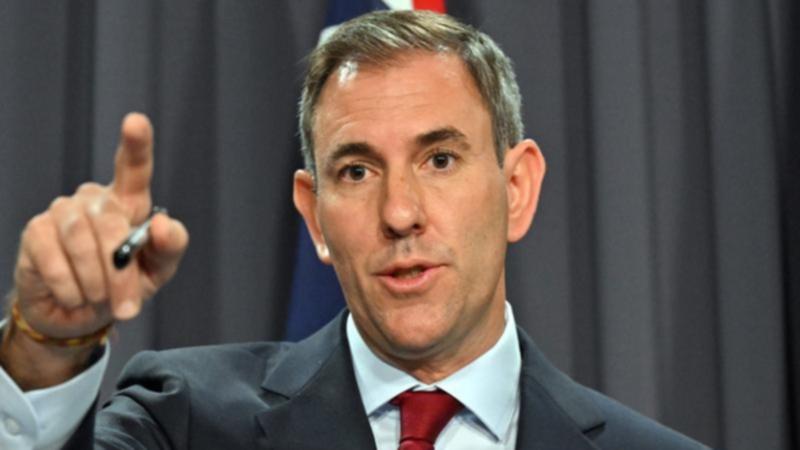
Will Treasurer Jim Chalmers deliver on any of the above four priorities in Tuesday’s Budget?

[1] ‘Labor to speed up new anti-racism strategy amid voice and Israel-Hamas war tension’, Guardian Australia, 20 October 2023: https://www.theguardian.com/australia-news/2023/oct/20/labor-to-speed-up-new-anti-racism-strategy-amid-voice-and-israel-hamas-war-tensions

Albanese Government Must Do Better, and Do More, on LGBTIQ Rights in Second Year

Today marks the one-year anniversary of the election of the federal Albanese Labor Government. Looking back on those first 12 months, there have been some small but important wins, and some disappointing losses. But above all, there has been plenty of unfinished – and in many cases, un-started – business.

First, to the wins. In November last year, as part of the Fair Work Amendment (Secure Jobs, Better Pay) Act 2022 reforms, the Government added gender identity and intersex status as protected attributes in relation to the Fair Work Act’s adverse action and unlawful termination provisions. These amendments ensured trans, gender diverse and intersex workers were explicitly included in this law for the first time (although the Government still needs to update the out-dated terminology of intersex status, replacing it with sex characteristics, something Employment and Workplace Relations Minister Tony Burke has thankfully committed to do).

The second set of wins were the announcements from the Government which coincided with Sydney World Pride earlier this year, including:

  • Development of a 10 Year National Action Plan for the Health and Wellbeing of LGBTIQA+ Australians,
  • $26 million in grants for research projects seeking to improve the treatment and care of LGBTIQA+ people, through the Medical Research Future Fund, and
  • A new inclusion and equality fund to support LGBTIQ human rights in the Asia-Pacific region, with initial funding of $3.5 million.

On the other hand, the second half of 2022 saw some disappointing losses. This includes the decision by the Government to reject Greens amendments, supported by the cross-bench, to create an LGBTIQA+ Discrimination Commissioner at the Australian Human Rights Commission. Even if the Government believed the Bill being amended at the time (which related to the method of appointment for Commissioners) was the wrong vehicle for these amendments (which is the excuse they used), they have still not committed to introducing their own legislation to establish this stand-alone independent national voice on LGBTIQA+ rights which, based on recent events, is more needed than ever.

Another disappointing loss was the complete exclusion of LGBTIQ groups, and issues, from one of the major set-pieces of the first year of the Albanese Government: the Jobs and Skills Summit. Not only were LGBTIQ organisations not invited to attend the Summit itself, the Government also did not hold any specific consultations with LGBTIQ groups in the lead-up to it (out of more than 100 it conducted). It is therefore no surprise that the outcomes document from the Summit did not address any specific LGBTIQ issues – at a time when many cohorts within the LGBTIQ community experience significant workplace discrimination and exclusion (especially trans and gender diverse workers).

The above wins and losses could, in some respects, be seen as a decidedly mixed scorecard. Instead, I see it as a fundamentally incomplete one – after all, the issues identified are a long way from a comprehensive LGBTIQ agenda. There are many, many more priorities that the Government has not reached an outcome on – including plenty that haven’t even commenced.

Take, for example, one of the few explicit LGBTIQ commitments the Albanese Government took to the May 2022 election: to protect LGBTQ students and teachers in religious schools against discrimination.

In November 2022, Attorney-General Mark Dreyfus asked the Australian Law Reform Commission to undertake an inquiry on this topic, with a deadline of 21 April 2023. Except, the day before the final report of that review was due to be handed to the Government, the ALRC was given an 8-month extension to 31 December. There is really no need for such an extension – especially when this law reform itself is actually quite straight-forward (after all, Tasmania, the ACT, Victoria and NT all already protect both LGBTQ students and teachers).

The outcome of this process is that it is highly unlikely LGBTQ students and teachers will be protected this year, with any amendments not taking effect until well into 2024. As I wrote at the time of this delay in The Canberra Times, it is example of the ways in which the LGBTQ class of 2023 has been comprehensively failed, by Governments of both persuasions.

On a related note, the Government has not made any commitments to remove broader religious exceptions, found in both the Sex Discrimination Act 1984 and Fair Work Act, which allow religious organisations to discriminate against LGBTQ workers, and people accessing services, across health, housing, disability, aged care and other welfare and community services. The majority of these services are funded by us, the taxpayer, including in aged care – meaning the large increases in aged care funding in the recent federal Budget are going to organisations that can use that money to discriminate against LGBTQ workers.

There are a range of other important LGBTIQ policy areas where the Government has not yet taken concrete action, including:

  • Inclusion in the 2026 Census. While the Australian Bureau of Statistics has started consultation on the questions which should be included in the next Census, the Government has not given an unequivocal promise that questions on sexual orientation, gender identity and sex characteristics will be included. Such questions are necessary to help deliver essential services to our communities – after all, if we are not counted, we do not count.
  • Medicare funding for gender-affirming health care. Far too many trans and gender diverse Australians still cannot afford what are vital, and in many cases life-saving, health services. Gender-affirming health services should be publicly-funded via Medicare, removing out-of-pocket costs for this community.
  • Ending non-consenting surgeries on intersex kids. With the ACT Government soon to pass historic legislation banning many non-consenting surgeries and other medical interventions on children born with variations of sex characteristics (the first jurisdiction in Australia to do so), I am unaware of any Commonwealth Government actions to help ensure intersex kids are protected around the country.
  • Re-introduction of Safe Schools. The Albanese Government continues to fund the National School Chaplaincy Program to the tune of more than $60 million per year (and even though they have formally removed the requirement that these office-holders must be appointed on the basis of religion, the vast majority still are). In contrast, the Government has had two Budgets to date but is yet to find any money to re-introduce what was an effective, and necessary, program against anti-LGBTIQ bullying in schools.
  • LGBTIQ policy infrastructure. In addition to an LGBTIQA+ Human Rights Commissioner at the AHRC, there is a clear need for a Minister for LGBTIQ Communities, as well as formal consultative bodies in the Department of Prime Minister and Cabinet, as well as portfolios like Health, Education and Attorney-General’s. Currently, none of these exist.

[For a more comprehensive LGBTIQ Report Card on the Albanese Government’s First Year in Office, check out this helpful graphic from Just.Equal Australia.]

Even on more symbolic matters, the Government’s record is mixed. While in late February Anthony Albanese became the first Prime Minister to march in the Mardi Gras Parade, and also participated in the World Pride March over Sydney Harbour Bridge in early March, these efforts at visible (some might say performative) inclusivity are undone by his apparent aversion to even saying the word transgender, let alone doing the bare minimum to publicly combat the growing culture war against trans and gender diverse Australians.

Speaking of which, it certainly feels like the Government is missing in action as the LGBTIQ community comes under increasing attacks, and even threats of violence, including the TERF and neo-Nazi rally on the steps of Victorian Parliament, the Christian Lives Matter riot in Belfield in Sydney, and the wave of intimidation against Drag Story Time events in Victoria and now elsewhere around Australia.

Local Councils have been left on their own to deal with what is a growing national crisis of far-right extremism, in a way that may not have happened if the targets had been from other communities. This is perhaps illustrated by the Attorney-General’s ill-timed announcement this week of $40 million in ‘Securing Faith-Based Places’ grants, to protect religious schools and places of worship against violence and discrimination.

Without debating the merits of this scheme – and I obviously agree people should be free to worship in safety – it was a mistake to announce this on IDAHOBIT, certainly without providing equivalent funding for LGBTIQ community security against similar (and in some cases, probably the same) extremists. Nor has the Government made any promises to introduce Commonwealth anti-vilification protections for LGBTIQ Australians, despite committing to prohibit religious vilification.

The Albanese Government still enjoys a large amount of public goodwill, including from many LGBTIQ people – at least partly due to the fact it is not the Morrison Liberal/National Government, a dreadful period during which our community came under relentless and sustained attack.

However, simply not being Scott Morrison is not enough as the Albanese Government enters its second year in office. From an LGBTIQ community perspective, they clearly need to do better, and do more, on the issues which affect us.

Oh, and one final thing. I raise the spectre of Scott Morrison here quite deliberately (despite the risk of PTSD, including my own). Because the coming 12 months is also likely to see the Albanese Government introduce its own Religious Discrimination Bill.

As a community we will need to be on high-alert to ensure this legislation protects people of faith against discrimination on the same basis as existing anti-discrimination laws, without permitting lawful discrimination against others, including LGBTIQ Australians. If it does include anti-LGBTIQ provisions, the Government should be in no doubt we will fight against its law just as hard as we fought against Morrison’s Bill.

Anthony Albanese on election night, 21 May 2022.

If you have enjoyed reading this article, please consider subscribing to receive future posts, via the right-hand scroll bar on the desktop version of this blog or near the bottom of the page on mobile. You can also follow me on twitter @alawriedejesus

The Internal Contradiction of the Morrison Government’s Religious Discrimination Bill

On Saturday 30 November, Prime Minister Scott Morrison revealed that his Government would not meet its commitment to introduce the Religious Discrimination Bill into Parliament before the end of the year.


Instead, he announced they would be releasing ‘a revised and further exposure draft of the RDA Bill to reflect the Government’s response to the consultation to date and provide further opportunity for engagement.’ [i]


On an optimistic reading, this means there is more opportunity for the Government to listen to all of the criticisms of this legislation, from women, LGBTI people, legal organisations and the Australian Human Rights Commission, that the Religious Discrimination Bill requires substantial amendment because it authorises discrimination against large sections of the Australian community.


Unfortunately, based on all evidence to date, we have more reason to be pessimistic, and instead fear that the Government will only listen to religious fundamentalists demanding even more special privileges to discriminate.


The only change to the Bill which Attorney-General Christian Porter highlighted at the National Press Club on 20 November[ii] was an amendment to ensure that ‘religious hospitals and aged-care providers will be given protections equivalent to those given to other religious bodies, in relation to employment of staff’ (in other words, allowing them to discriminate).


There have been no indications of positive changes to the Bill, to reduce its adverse impact on women, LGBTI people, single parents, divorced people, people in de facto relationships, people with disability and others. Nor was there any reason to be hopeful in the Prime Minister’s media release confirming the delay.


However, what I really want to highlight here is the inconsistency of two of Morrison’s statements in that release.


Specifically, he criticises Labor for ‘a lack of genuine commitment … to the principle that Australians who hold sincere religious beliefs in this country deserve the same legal protections that are rightly provided in other areas such as gender and race.’


But then later the Prime Minister also says ‘Our Government will continue to proceed on the basis of good faith with a view to having a balanced and common sense Bill that protects the important religious freedoms that Australians can sadly no longer take for granted.’


Except these two concepts – a Religious Discrimination Bill, and religious freedom laws – are very, very different things.


Had Morrison actually delivered the former, legislation that simply protects people of faith, and no faith, against discrimination on the same basis as gender, race and other attributes, then not only would Labor have likely welcomed it, but so too would the majority of Australians, including LGBTI people. After all, we know what discrimination is like, and don’t want other people to experience it.


Instead, his Government has produced a ‘Religious Discrimination Bill’ in name, but a religious freedom law in substance. The most problematic elements of the Exposure Draft – re statements of belief, large employer codes of conduct, conscientious objections by health practitioners and the general ‘religious exception’ in clause 10[iii] – all purport to protect ‘religious freedom’ rather than the right to non-discrimination.


Obviously, a lot has been written about the serious flaws of these provisions (including by the author), and particularly about the discrimination they permit against other groups.


Perhaps one consequence that hasn’t received as much attention is that they actually make this legislation not just inconsistent in its objectives, but internally contradictory as well.


That’s because these same provisions also allow discrimination against people on the basis of their religious beliefs, or lack of belief – making it a Religious Discrimination Bill that perversely encourages religious discrimination.


For example, the protections for ‘statements of belief’ in clause 41 – which effectively render them exempt from all Commonwealth, state and territory discrimination laws – don’t just apply to comments that discriminate against women, LGBTI people, single parents, divorced people, people in de facto relationships and people with disability.


Clause 41 also protects statements of belief that discriminate on the basis of religion. This includes, for example, saying the followers of other religions are ‘unclean heathens destined for eternal damnation’. Just like sexist, homophobic, transphobic and ableist statements, these derogatory comments will be protected irrespective of where they occur, including in the workplace, in education, in health, and in the provision of goods and services.


In the same way, clauses 8(3) and (4) won’t just protect a certain footballer telling gay and trans people they are going to hell – it will protect any religious employee who, outside ordinary work hours, tells people from other religions they’re going to hell, too.


The conscientious objection provisions, in clauses 8(5) and (6), are an even bigger threat. As well as allowing health practitioners, from GPs and pharmacists through to optometrists, physiotherapists and even podiatrists, to refuse to serve women, or LGBTI people, they could potentially be (ab)used by a health practitioner to refuse to serve Jewish people, or Muslims, or people from other minority faiths.


But the biggest threat of all – especially to minority religions – is found in clause 10. It allows religious schools and universities, charities and ‘any other body that is conducted in accordance with the doctrines, tenets, beliefs or teachings of a particular religion (other than a body that engages solely or primarily in commercial activities)’,[iv] to discriminate on the basis of religious belief.


This clause therefore permits discrimination against teachers and students, as well as the employees of – and even people accessing – charities and community services. And, as we have already seen, Attorney-General Porter plans to expand this clause even further to allow religious hospitals and aged care services to discriminate in relation to employment (at the very least).


Technically, clause 10 protects all religious organisations equally – they will each be able to discriminate in terms of who they employ (or refuse to employ), and provide services to (and who they exclude).


Practically, this clause will primarily benefit the largest religious organisations – including the Catholic and Sydney Anglican[v] churches and related education, health and community services organisations – at the expense of everyone else.


With the massive outsourcing of public services to these bodies over the past two to three decades, they now receive billions and billions of dollars each and every year, and will be explicitly permitted to use that public funding to discriminate.


Not just in relation to lesbian, gay, bisexual and transgender people (which is sadly already allowed under the Sex Discrimination Act 1984 (Cth), and which the Morrison Government steadfastly refuses to change), but also in relation to religious belief, or lack of belief.


That means a professor being denied a job because they are Jewish.


A doctor refused employment at a hospital because they are Muslim.


A school student expelled because they are atheist.


A homeless person missing out a bed in a shelter because they are Hindu.


A charity worker rejected for promotion because they are Buddhist.


An aged care employee losing shifts because they are agnostic.


All these scenarios could be legal under the Religious Discrimination Bill, as long as it was a religious organisation doing the discriminating. And they would be using taxpayers’ money – your money, my money, our money – to do so.


This outcome – entrenching the power and privilege of the major churches, namely the Catholics and Sydney Anglicans, over and above the rest of us – is the inevitable consequence of the internal contradiction of this legislation.


The Morrison Government has chosen to undermine what could and should have been a standard Religious Discrimination Bill – one that would have prohibited most, if not all, of the scenarios described above – with provisions that instead promote ‘religious freedom’.


With their decision to release a second Exposure Draft for public consultation, the Government now has the opportunity to make a better, and more informed, choice, and to prepare legislation that reduces religious discrimination rather than increasing it.


Unfortunately, I can’t seem to suspend my disbelief that they will choose the right option. Based on everything leading to this point, I have no faith the Government’s ‘revised and further exposure draft’ Bill will be any less of a threat to women, LGBTI people, single parents, divorced people, people in de facto relationships and people with disability.


But we must not forget it is also a threat to minority religions, to Jewish people, Muslims, Hindus, Buddhists, atheists and agnostic people alike. They too will be subjected to discriminatory statements of belief, and potentially denied access to health care, just because of who they are. And they will be refused employment, and discriminated against in education, health, aged care and community services, all by ‘mainstream’ religious organisations using public monies to do so.


Hopefully, they – as well as the many decent Catholic and Anglican people of good faith who oppose new special rights to discriminate – will join us in demanding genuine religious anti-discrimination laws, to replace Morrison’s badly botched Bill.


r0_220_5199_3374_w1200_h678_fmax

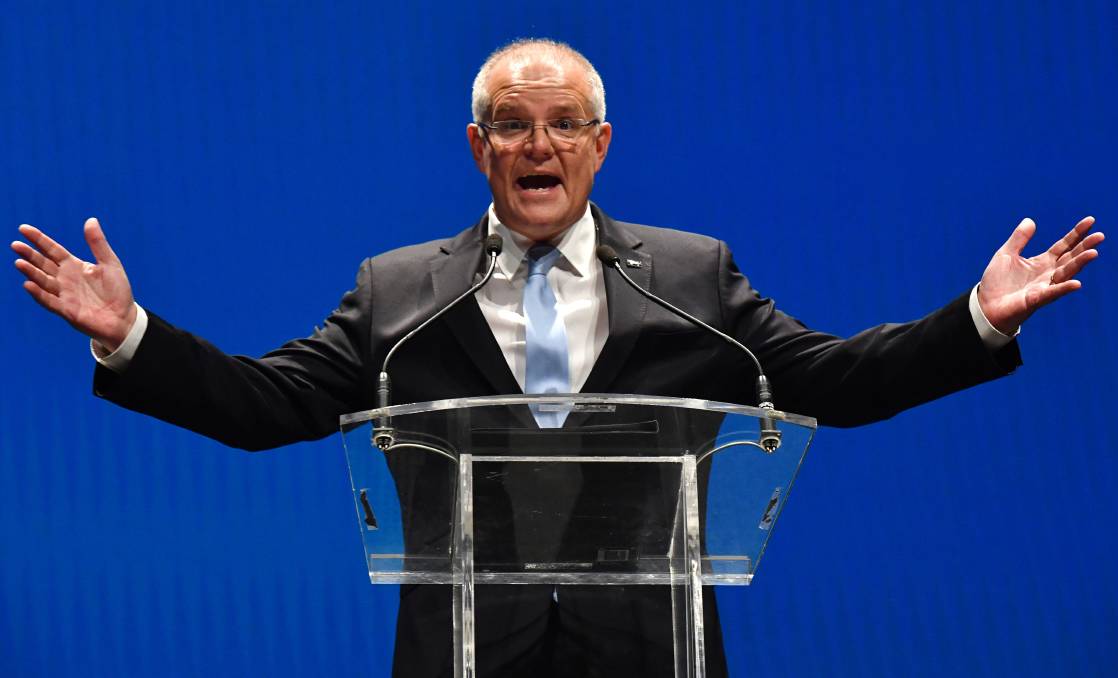
By choosing to include expansive ‘religious freedom’ provisions, Scott Morrison has undermined the ability of the Religious Discrimination Bill to actually prohibit religious discrimination.


Footnotes:

[i] Media Release, Prime Minister Scott Morrison, Government will Protect Religious Freedoms by Getting Law Right, 30 November 2019.

[ii] Transcript, Attorney-General Christian Porter, Address to National Press Club, 20 November 2019.

[iii] The Growing List of Problems with the Religious Discrimination Bill.

[iv] Clause 10(2)(c).

[v] Noting Anglicare Victoria have joined other religious bodies, including Vincent Care Victoria and Uniting Vic.Tas, in criticising the special rights to discriminate contained in the Bill. ‘Religious discrimination bill: Faith-based groups and equality advocates welcome delay’, Guardian Australia, 1 December 2019.