10 Things I Hate About Marriage Inequality. #10: Because it makes me embarrassed to be Australian

[Updated 4 August 2016]

On Friday 13 August 2004, the Senate passed the Howard Government’s shameful amendments to the Commonwealth Marriage Act 1961. These amendments included a new definition of marriage – “marriage means the union of a man and a woman to the exclusion of all others, voluntarily entered into for life” – thus confirming the second-class legal status of same-sex relationships in Australian law.

In mid-2014, in the lead-up to the 10th anniversary of the passage of that homophobic law, I wrote a series of posts on the top ten things which I hate about marriage inequality, to ‘celebrate’ (or, more accurately, to vent). Sadly, as we approach the 12th anniversary on 13 August 2016, the list remains all-too-relevant today.

As you would expect, given how much this ongoing discrimination against LGBTI-inclusive couples pisses me (and, let’s be honest, most of us) off, there are some things which I had to leave out. But I hope you will nevertheless enjoy reading the ten reasons that did end up making the cut. Anyway, on with the list:

#10: Because it makes me embarrassed to be Australian

The 1st marriage equality laws came into effect in the Netherlands on 1 April 2001. In the now 15 years since, it has been joined by 19 other countries, namely:

  • Belgium (2003)
  • Spain (2005)
  • Canada (2005)
  • South Africa (2006)
  • Norway (2009)
  • Sweden (2009)
  • Portugal (2010)
  • Iceland (2010)
  • Argentina (2010)
  • Denmark (2012)
  • Brazil (2013)
  • France (2013)
  • Uruguay (2013)
  • New Zealand (2013)
  • Luxembourg (2015)
  • Ireland (2015)
  • United States (nationwide 2015)
  • Colombia (2016)
  • Finland (from 2017)

Marriage equality is also recognised in some parts of Mexico and the United Kingdom (England, Wales & Scotland, although it remains unlawful in Northern Ireland).

I think most lesbian, gay, bisexual, transgender and intersex (LGBTI) Australians probably accepted lagging behind the Netherlands on this particular reform (well, most social changes actually), and trailing their Southern neighbours Belgium too. Although it was perhaps a little bit of a surprise that highly-Catholic Spain would get there so quickly – but I guess we got used to that.

Canada was less of a surprise. Meanwhile, no-one could begrudge South Africa, especially given it was achieved, in part, as a consequence of the inclusive Constitution adopted in the post-apartheid era. And I suppose we probably couldn’t expect to get there ahead of most of the Scandinavian countries either.

But the longer this list has become – and, sadly, it will likely be longer still by the time we eventually get there – the more embarrassing it has become to be an Australian, and that embarrassment stings whether you are an LGBTI individual, or couple, or simply someone who believes in the equality of all people irrespective of sexual orientation, gender identity or intersex status.

It didn’t need to be this way. I am old enough to remember a time, in my youth, when, at least at the Commonwealth level, Australia was capable of doing some things better than most of the world. When we adopted a world-leading response to the emergence of HIV/AIDS. When we were one of the first countries to recognise same-sex couples for the purposes of immigration. When we allowed ‘gays in the military’ ahead of, or at the same time as, the majority of our peers.

Alas, no more. On what has become one of the signature issues for progressive reform, not just for LGBTI rights but for social justice more generally, we have fallen, and are falling further, behind.

It has to stick in the craw of most decent Australians that the New Zealand Parliament managed to pass marriage equality, even with a Conservative Government, while at the same time our Parliament, with a then-Labor Government, could not. And thinking about the fact that LGBTI couples have been able to get married in the cornfields of the American mid-West (Iowa) for more than seven years (and can now marry everywhere in the US, from Alabama to Alaska), while we cannot, is enough to make one cringe.

My fiancé, Steve, likes to talk about how ‘his’ country (Portugal) has had marriage equality for six years – even though his parents left there in the 1970s. In recent years my response to that argument has been to point out that ‘my’ country (Scotland) has it, too – but then, my ancestors have been in Australia for more than two centuries, so it is even more difficult for me to stake that claim.

We only talk about our respective ancestral countries in that way because the one where we were both born, and where we are (second-class) citizens, refuses to acknowledge that our love can be the same as any other adult couple. In truth, at times we would prefer to identify with another country – even one where our links might be more (mine) or less (his) tenuous – because being a citizen of Australia is, and there isn’t really a nicer way of putting it, downright embarrassing.

There are, of course, many other reasons for Australians to feel embarrassed (including our shameful treatment of Aboriginal and Torres Strait Islander people and also our, frankly, criminal abuse of people seeking asylum). But the ongoing failure of our country to recognise marriage equality must also take its very own place on that ignominious list. Shame, Australia, shame.

Abbott-Turnbull-Gillard-Rudd-750x393

The four Australian Prime Ministers since John Howard was defeated have all failed to overturn his 2004 ban on marriage equality.

No 9 Still No Marriage Equality in Australia

This is an issue where there were a number of different highs – and lows – over the course of the past 12 months. Given my naturally glass half empty personality, we’ll start with the lows.

The most obvious ‘low’ was the High Court’s ruling last Thursday (12 December), overturning the ACT’s same-sex marriage laws as unconstitutional, after just five days of operation, as well as annulling the marriages of all the couples who had taken the opportunity to tie the knot under the law.

One can only imagine how awful the past few days would have been for these couples, experiencing the elation of being married, at long last, to the frustration of having that status ripped from their grasp just days later.

In fact, 2013 was not a good year for the idea of state and territory same-sex marriage laws generally. State-based marriage was defeated, narrowly, in votes the Tasmanian upper house (after passing the lower house, yet again), and by one vote in the NSW upper house (although it was likely headed for defeat in the lower house there). A similar Bill was defeated by a much larger margin in South Australian Parliament.

Now, it seems the High Court has ruled out the option of state-based marriage permanently (at least as far as they are close enough to marriage under the Commonwealth Marriage Act to deserve the title ‘marriage’).

And the Federal Election was also not a good one as far as marriage equality was concerned. A Prime Minister who supported marriage equality, leading a party the majority of whose MPs had voted yes just 12 months earlier, was replaced by a Prime Minister who remains staunchly opposed to equality (even that of his own sister), leading a Liberal-National Coalition of whom exactly ZERO MPs voted yes in September 2012.

Overall, then, there was a lot of bad news to spread around. But 2013 was not universally negative for marriage equality in Australia.

The same High Court decision that overturned the ACT’s same-sex marriage laws also included a key finding – that the Federal Parliament unambiguously has the power to introduce marriage equality.

That might sound, to some, as merely a small win, but it actually takes one of the main arguments against marriage equality in the Commonwealth arena off the table (namely that s51xxi of the constitution – aka the ‘marriage power’ – could only mean marriage of opposite-sex couples).

In what turned out to be a quite progressive judgment (despite the outcome), the Justices wrote:

“”marriage” is to be understood in s 51(xxi) of the Constitution as referring to a consensual union formed between natural persons in accordance with legally prescribed requirements which is not only a union the law recognises as intended to endure and be terminable only in accordance with law but also a union to which the law accords a status affecting and defining mutual rights and obligations.”  Link to full judgment here: http://www.austlii.edu.au/au/cases/cth/high_ct/2013/55.html

In short, marriage can be the union of two people (or more, if the Parliament so chooses) irrespective of their sexual orientation, gender identity or intersex status. That is a statement of what is ‘possible’. It is up to our parliamentarians to make it real.

Another ‘high’ was that those couples in the ACT were able to marry in the first place. The fact that, for five full days, newspapers and TV stations around the country carried pictures of happy couples getting married, where the only difference was that their spouse was the same sex as themselves, can only be of cementing victory in the long war of acceptance.

Same-sex couples were married, the sky didn’t fall, nobody else’s marriage was diminished and, for the benefit of people like Senator Bernardi, no pets were interfered with either.

Another glimmer of hope is that the Liberal Party’s position was slightly better at the 2013 election than it was at the 2010 one. While previously the Liberals and Nationals were universally committed to voting no on marriage equality, prior to September 7 they adopted the line that whether there was a conscience vote would be “a matter for the post-election Coalition party-room”.

Given Tony Abbott’s strong opposition, there is no guarantee of a conscience vote happening, but the door is at least slightly ajar – it is now up to people like Malcolm Turnbull to force it open.

Another door that is slightly ajar is the possibility of the 2014 ALP National Conference adopting a binding vote in favour of marriage equality. Something that should have happened in 2011, when the platform was changed, were it not for the homophobic position adopted by then Prime Minister Julia Gillard, is a live option because of recent remarks by AWU National Secretary Paul Howes, who conceded that he had been wrong to support a conscience vote back then.

With Howes’ crucial support, and another three years of time elapsed, there might, just might, be enough support from conference delegates to impose a binding vote on Parliamentary members of the Labor Party. And that is definitely something worth fighting for. Because, mathematically, we may well need a conscience vote from the Coalition, and a binding vote from Labor, for any marriage equality Bill to pass the Commonwealth Parliament, at least this term anyway.

The formation, last week, of a cross-party group to work towards marriage equality in the Parliament, drawing members from the Coalition (Sue Boyce), ALP (Louise Pratt) and Greens (Sarah Hanson-Young), will also likely be remembered as a key step along the road to equality.

The final ‘high’ from 2013 is something which now probably doesn’t hold a lot of sway, but which was a powerful statement of intent at the time: then Prime Minister Kevin Rudd’s ‘Bartlet’ moment on the ABC’s Q&A. (http://www.youtube.com/watch?v=CdU3ooAZSH8)

When asked by a Christian pastor how, as a Christian, Rudd could support marriage equality when the Bible commands him to believe differently, Rudd rebuked him with a smackdown that was brilliant both in its argument and in its eloquence. It was Rudd at his best – and, watching it three months later, it still brings a smile to my face.

Even if it was only for a few fleeting months, we finally had a Prime Minister join the majority of the Australian population in the 21st century in believing that all couples must be treated equally.

How much longer we have to wait for that community belief to be reflected in the statute books will depend a lot on what happens in 2014, inside the Coalition Party-room and at ALP National Conference. I guess it’s time to prepare to protest once more.

Denying Marriage Equality is Theft

Next week, the High Court will hear the Commonwealth’s application for the ACT’s same-sex marriage laws to be overturned. Arguments will focus primarily on whether the 2004 amendments to the Commonwealth Marriage Act ‘cover the field’ in terms of legislating under sub-section51(xxi) of the Constitution, or whether the amendments have instead left the door open for State and Territory Governments to establish a new category of marriage, namely same-sex marriage.

But perhaps the Court should also consider sub-section 51(xxxi), which gives the Commonwealth Parliament power for “the acquisition of property on just terms from any State or person for any purpose in respect of which the Parliament has the power to make laws.” Maybe our High Court Justices should ask whether laws which take away the right of LGBTI couples to get married are tantamount to theft.

Allow me to explain. The most direct way in which the marriage equality ban takes money from LGBTI couples is that, currently, it forces couples overseas in order for their marriage to have any legal standing at the time of the ceremony. The couple obviously incurs significantly higher costs than for a domestic wedding. Even if the ACT laws are allowed to stand, for Australian couples who wish to have a ceremony with legal standing, however briefly, the vast majority will need to hold their wedding a long distance from home.

With recent estimates of the average cost of weddings being in the vicinity of $35,000, or even $54,000, it is grossly unjust to force some couples to pay even more, merely because of their sexual orientation, gender identity or intersex status.

Compounding this, a system which forces LGBTI couples to travel, either interstate or overseas, to get married reinforces a financial threshold on which couples can tie the knot, with only the well-off able to do so. Someone’s class should never determine whether they can access a legal institution like marriage.

The next theft comes when the couple returns home – at customs, they are summarily, and completely without justification, stripped of their state of being married. Something which means so much to the couple – enough for them to travel to undertake it – is confiscated, without any compensation. Surely an argument could be mounted that this amounts to “the acquisition of property on [un]just terms”?

Something else which is stolen from LGBTI couples is the ability to celebrate their wedding with their desired guests. This happens in two ways. For those who choose to travel to get married, many of their family and friends will be unable to attend the ceremony due to cost, or the need to take extended time off work. For other couples, like my fiancé Steve and myself, who instead choose to wait until they can legally wed in Australia, the passage of time will have the same effect.

In our case, we both have elderly grandmothers who we love dearly and who we would love to have at our nuptials. That would have been possible when we first got engaged, at the start of 2010, although, sadly, my grandmother is probably now too frail to travel to our wedding, even in Australia. By the time marriage equality is eventually passed, I fear the same will be the case for Steve’s grandmother – and he will be devastated by that.

The ability to celebrate our wedding with the people who matter most to us has been ripped from our grasp by the Commonwealth Parliament. We, and other couples like us, feel it acutely. As an aside, perhaps so-called ‘family values’ campaigners should consider how they would react to government intervention on their wedding guest list – because that is what has been imposed on us.

The theft which is a consequence of the ban on marriage equality will not even stop whenever a Bill is finally passed – it will keep on stealing from us into the future. Explaining this ‘future theft’ is what eventually helped my rural, LNP-voting conservative parents understand why I feel so passionately about this issue.

Earlier this year, they had their 40th wedding anniversary. Which is something worthy of celebration – and so they did. Because these things, anniversaries, matter. One day, Steve and I hope to do likewise. Except that, the longer the ban on our marriage lasts, the less likely we will both be alive in order to celebrate a 50th, or even 40th, wedding anniversary. Even after the ban is eventually lifted, it will still be lifting precious things from our pockets.

Of course, what is being stolen from us is likely too intangible to be considered by the High Court under sub-section51(xxxi). But this theft is exactly what should be reflected upon by any Parliamentarian who is considering voting against the right of LGBTI couples to get married.

What makes the current ban ever harder to stomach is that, everyone, from Tony Abbott down, knows that marriage equality is inevitable. Which makes the ongoing refusal of our MPs to pass it seem extremely petty. Especially when what they are stealing from us, both now and in the future, is something grand.

NSW Same-Sex Marriage Inquiry Submission

Given the NSW Legislative Council inquiry is set to release its final report on the issue of state-based marriage laws at 3:30pm today, I thought now might be a good opportunity to publish my submission to the inquiry from back in March (but which was not published by the Committee on their website, given the overwhelming community response to this inquiry).

Anyway, as you can see it is a bit of a personal submission and I obviously stand by what I submitted, but acknowledge that I am going to need to be clearer from here on the difference between marriage equality (where all lesbian, gay, bisexual, transgender and intersex people can marry whoever they choose), and same-sex marriage, which, as the name suggests, is much more limited but which, sadly, might be the only constitutional option available to NSW (we’ll see later today.

Anyway, here is my submission. Let me know whay you think:

Legislative Council Social Issues Committee

Inquiry into Same Sex Marriage Law in NSW

Submission by Alastair Lawrie

Friday 1 March 2013

I am writing in support of the introduction of state-based marriage laws in NSW. While, ultimately, marriage equality can only be fully realised in Australia through the passage of an inclusive federal Marriage Act, in the meantime I encourage the NSW parliament to allow lesbian, gay, bisexual, transgender and intersex-inclusive (LGBTI) couples to have their relationships recognised through state-based marriage, if they so choose.

In this submission I will briefly address the four terms of reference, before discussing the story of my relationship with my fiancé Steve, and the reasons why I think we deserve the same right to be married as anybody else.

1)      Any legal issues surrounding the passing of marriage laws at a State level, including but not limited to:

  1. a.       The impact of interaction of such law with the Commonwealth Marriage Act 1961
  2. b.      The rights of any party married under such law in other States’ and Federal jurisdiction
  3. The rights of the parties married under such a law upon dissolution of the marriage.

I am not a constitutional or family law lawyer and, as such, I do not propose to discuss whether state-based marriage laws would be constitutional in great detail, or how these laws would interact with Commonwealth and other state and territory laws, or indeed, act upon the breakdown of such marriages.

I will simply note that there is legal debate about the constitutional possibilities of state-based marriage. Professor George Williams has canvassed the legal arguments in favour of state-based marriage laws in his article “Can Tasmania Legislate for Same-Sex Marriage?”[1] I think that there is at least a credible argument, as outlined in his article, to say that it is possible that the Courts could find state-based marriage to be constitutional.

It should also be remembered that there is still some doubt that an amendment to the Commonwealth Marriage Act 1961 introducing marriage equality would be constitutional at the federal level. Irrespective of which level of government first introduces marriage equality, this matter will inevitably end up in the courts.

It should also be noted that the federal parliament has abrogated its responsibility in this area. By explicitly introducing a ban on equal marriage in 2004, and then rejecting legislation to overturn that ban in 2012, Australia’s federal parliamentarians have comprehensively failed in their duty to provide basic fairness and equality to its LGBTI citizens, including the LGBTI citizens of NSW. Based on the size of this defeat, and the immediate political outlook, it appears unlikely that this ban will be overturned at any point in the next five or even possibly 10 years.

In this context, with legal uncertainty about which level of Government can introduce marriage equality, and faced with the homophobic, bi-phobic, trans-phobic and anti-intersex intransigence of the federal parliament, I believe it is incumbent upon state parliamentarians to at least attempt to introduce marriage equality at a state level.

In the event that the legislation is overturned by the courts, which is as always their prerogative, nothing will have been lost. LGBTI-inclusive couples will know that there is a risk of this outcome, and will enter into any state-based marriages with open eyes. Nevertheless, if people are married and the legislation is ruled invalid at a later date, at least in the interim these couples will have the belief that they are married under law. And the overturning of these marriages by the courts may provide the spark required for the federal parliament to finally take the necessary action in this area.

In the event that the legislation is found to be valid by the courts, which is also possible, then the NSW parliament will have done a truly wonderful thing by recognising the ability of thousands of LGBTI-inclusive couples to have their relationships recognised as marriages under law, if they so desire. This would be an amazing recognition by state parliamentarians of the equality of LGBTI people, and the value of their relationships. If there is even a small chance of this outcome, then I cannot think of a valid reason for the parliament to shy away from this noble endeavour.

2)      The response of other jurisdictions both in Australia and overseas to demands for marriage equality.

The movement for marriage equality, both within Australia and across the world, is strong and only growing stronger. Despite the setback of defeat in federal parliament last September, and the subsequent defeat of Tasmanian state-based marriage legislation in late 2012, other Australian jurisdictions are still considering their own marriage equality proposals (including the Australian Capital Territory and South Australia). Indeed, it has been reported that the Tasmanian Labor Government and Greens are considering reintroducing their state-based marriage legislation after the upper house elections in the first half of this year (noting that the legislation was only narrowly defeated in their upper house).

Around the world, marriage equality has already been introduced in 11 extremely diverse countries: South Africa, Argentina, Canada, Portugal, Spain, Belgium, the Netherlands, Denmark, Sweden, Norway and Iceland. I am also aware of current marriage equality proposals in our near neighbours New Zealand, as well as Taiwan, Nepal, Andorra, France, Luxembourg, Finland, Scotland, England and Wales, Uruguay and Colombia (in fact, it is difficult keeping track of the long list of countries which are actively considering this issue, which means I am sure to have missed some).

In other countries with federal structures of government, state-based marriage equality has been introduced in some states of Brazil, Mexico and the United States. The United States is the best illustration of the ongoing progress of the movement for marriage equality. It is now legal there in nine states (Connecticut, Iowa, Maine, Massachusetts, Maryland, Maine, New Hampshire, New York, Vermont, and Washington, as well as the District of Columbia). While in early-adopting US jurisdictions marriage equality was introduced through either court decisions or legislative reforms (or through a combination of both), the recent additions of Maryland, Maine and Washington were the result of popular ballots (and a referendum to ban marriage equality was also defeated in Minnesota last November).

The tide of public opinion across the world is turning in favour of marriage equality, and this is one reason why 11 national governments, and some sub-national states, have introduced LGBTI equality. It is my hope that the Australian Government eventually comes to the same conclusion – but in the meantime, I believe that the parliamentarians of NSW have an ethical obligation to, at least partially, fill that void.

3)      Any alternative models of legislation including civil unions.

In some jurisdictions, civil unions have been offered as a supposed compromise proposal between the LGBTI community on the one hand, who are calling for formal relationship recognition, and religious fundamentalists on the other, who believe that the term marriage is reserved only for ‘traditional heterosexual’ couples and that, while substantive rights can be conferred on non-heterosexual couples, these relationships should carry a different name (ie civil unions or civil partnerships).

In truth, this is not a genuine compromise but instead simply a reinforcement or further entrenchment of inequality. Deliberately choosing a separate name inherently makes those relationships ‘different’ or ‘other’. Saying that opposite-sex/heterosexual couples can be ‘married’, while all other couples can only be ‘civil unioned’, does not overcome inequality; it simply perpetuates it, finding a novel way to demonstrate that those relationships are second-class.

The idea that different groups of people can be considered equal while having separate institutions has been tried before, in many different countries and applying to many different groups (including groups based on race, religion and sex). In none of these different contexts has it actually meant genuine equality. In terms of racial segregation, the US Supreme Court, in the famous case of Brown v Board of Education (1954), saw through the conceit of this concept and instead found that ‘separate but equal is never equal’.

That principle applies just as much to LGBTI people, and to their relationship recognition. To set up an entirely new system of relationship recognition for LGBTI-inclusive couples, and to maintain that system separate from the relationship recognition granted to heterosexual/opposite-sex couples, is not genuine equality. It is no wonder that the vast majority of LGBTI people reject this type of distinction and instead demand full equality. We will accept nothing less.

There are two additional points which should be made in relation to civil unions. The first is that civil unions have been adopted in some jurisdictions which are quite similar to Australia – including New Zealand, the United Kingdom and some US states. In none of these places have civil unions been adopted as a long-term solution – as described above, New Zealand, Scotland, England and Wales are all actively considering moving to marriage equality in the near future (and in several US states civil unions were merely a precursor to marriage equality). Civil unions have proved to be only an inconvenient half-way house or road-stop along the toad to equality, merely delaying full equality and ultimately pleasing no-one. There is no reason why NSW should adopt such a flawed approach.

Secondly, in some jurisdictions, particularly US states, civil unions have held some attraction because they did not have de facto recognition laws in place beforehand, meaning that the introduction of civil unions at least had the advantage of conferring additional substantive rights which LGBTI-inclusive couples did not already possess. Given that NSW and Australia have both passed comprehensive de facto relationship recognition for LGBTI-inclusive couples, this reason does not apply here. Once again, there is no justification for a new and separate category of relationships called civil unions.

4)      Changes in social attitudes (if any) to marriage in Australia.

The concept of marriage has undergone many changes over time. Originally an institution which involved male ownership of women (with that ownership passing from the father to the husband), the law now recognises the two parties to a marriage to be equal. In some countries and at some points in time, there were also laws against marriage between races – happily miscegenation laws are a thing of the past. The majority of marriages used to be performed within churches, whereas now the vast majority of weddings are officiated by civil celebrants. And the ideas of divorce, and later no-fault divorce, have been added to our marriage laws, without undermining the institution itself.

These changes show that the institution of marriage has evolved over time, changing for the better to accommodate ongoing enlightenment in societal attitudes on gender, race, religion and relationship breakdown. Through these changes, what we now understand as the fundamental nature of marriage – that it is an institution to recognise the love and commitment between two people – has not altered.

This meaning can evolve again to accommodate the fact that lesbian, gay, bisexual, transgender and intersex people are equal citizens, and should be treated equally in every respect, including relationship recognition. If society, through its laws, conveys certain rights on opposite-sex/heterosexual couples, there is no good argument to deny those same rights to other people on the basis of their sexual orientation, gender identity or intersex status.

This is a proposition which has been accepted by the majority of the Australian population. Opinion poll after opinion poll has shown that a growing majority of people support the extension of marriage rights to all adult couples, whether opposite-sex/heterosexual or LGBTI-inclusive. A Galaxy Poll in August 2012 found that 64% of Australians supported marriage equality, with only 30% opposed. This support existed across men and women, across all age groups, and from voters of all political persuasions.

The figures for NSW were consistent with this level of support – 62% of people in NSW supported marriage equality, including 28% strongly supporting, while only 32% in total were opposed. I am loathe to cite opinion polls as a stand-alone reason for social change (see Appendix A for further discussion of this point). Nevertheless, it is clear that the population have already accepted the solid public policy reasons for marriage equality – our parliamentarians should do the same.

Steve and me

My fiancé Steve and I have been together for more than four and a half years. We met two weeks after my 30th birthday. I had begun to think that I might not ever meet the person who I was supposed to be with, and then suddenly, he was standing right there in front of me.

Steve and I are the epitome of your average, everyday couple. We have our ups and downs, just like everyone else, but we know that we love each other and that is enough to get us through.

We live our lives in the suburbs. We both work, and are trying to save enough money to buy a house (and, like other couples, are finding it hard in the Sydney property market!) We might have children in the future, we might not – we certainly want to own our own house and be settled in one place before we seriously consider doing so.

Steve and I make compromises for each other – he moved to Canberra to be with me when I was working there, and I have subsequently moved to Sydney when he wanted to move back. We do most things together, and wouldn’t have it any other way.

We got engaged more than 3 years ago. I took him on a holiday to Melbourne, and was so incredibly happy when I got down on bended knee and he said yes. I still can’t believe that someone as wonderful as him has agreed to spend the rest of his life with me.

We want to have our wedding in Australia – that is why we decided to wait for last year’s Marriage Act Amendment Bills to be considered by the federal parliament, in the hope that our federal parliamentarians might allow us to get married in the same way that opposite-sex/heterosexual couples can.

Steve and I decided that, after that terribly disappointing defeat, we would nevertheless wait for the NSW state-based marriage proposal to be debated before making the decision about finally setting a date, and most importantly, a venue. Of course, state-based marriage is not quite the same – it involves setting up a new marriage scheme separate from the existing one. But we think that it would be incredibly powerful to have our marriage recognised by the state in which we live.

If the NSW marriage amendment is defeated, then we will not wait any longer. More than three years is long enough – and I certainly don’t think many heterosexual couples would accept their engagement being made that long because their government(s) refused to allow them to tie the knot. They certainly wouldn’t accept potentially being made to wait more than 10 years, which is possible if both the federal and state parliament voted no on this issue.

Obviously, that means Steve and I will have to go overseas to get married. If New Zealand passes their law in the first half of this year, then we would most likely go there. One of the advantages of New Zealand as a location is that at least some of our family members and friends might be able to join us on our special day. If New Zealand doesn’t pass marriage equality, then we are thinking we might go to New York.

That is not as romantic as it might sound. While some of it would obviously be wonderful, and I will be happy wherever I get to marry my husband, it will also be bittersweet because we would be doing so in the absence of most of our family and friends, who would not be able to travel there (whether because they could not get enough time off work, could not afford the expense, have young children, are too old, or have health problems and cannot travel that far).

Imagine that – the decisions of your government(s) effectively determining the guest list at your wedding. No other married couples would tolerate that, and nor do we. In particular, Steve and I both have grandmothers who we love very dearly, and would love to have them with us – Steve in particular would be devastated if his grandmother was unable to attend our wedding.

If we were able to get married in Sydney, then at the very least his grandmother should be able to join us (and if it had been in place federally when we first got engaged my grandmother might have been able to join us too, although she is now probably getting too old to even travel to Sydney). As it stands, if we are forced to go to New Zealand, then neither of our grandmothers would be able to join us due to their age and health.

These are the real world consequences of the decision made by the federal parliament last year, and the potential consequences of your decision later this year. Please consider them before you cast your vote on this issue.

And please do not consider passing civil unions as some kind of supposed ‘compromise’ between the LGBTI community and religious fundamentalists. Steve and I are engaged to be married, not civil union-ed. When I proposed to him, I asked whether he would marry me – and when we do (finally) have our wedding, I will be asking him to be my husband, not my civil partner.

Civil unions, passed in the absence of marriage equality, are inherently second-best. Steve and I do not accept them as a substitute, and nor should we have to.

There are thousands of other LGBTI-inclusive couples in NSW, just like Steve and me, waiting to get married. We are the couples who watched last year while the federal parliament deliberated on our fundamental human rights and who, sadly, decided that we are not first-class citizens in our own country, that our relationships are not deserving of the same recognition as others.

We will be watching again later this year, when it comes time for NSW parliamentarians to cast their votes. Hopefully, the members of the NSW Legislative Assembly and Legislative Council can ‘show up’ their federal counterparts, by demonstrating just how easy it is to make thousands of people profoundly happy.

After all, that is the ultimate consequence of this vote. There is no downside in voting to allow additional couples to celebrate their love by getting married. But the upside is immense – being able to make many thousands of LGBTI-inclusive couples, and their families and friends, happy. I don’t think the choice is that hard – please make the right one.


[1] Williams, George, “Can Tasmania Legislate for Same-Sex Marriage?”, The University of Tasmania Law Review, Vol 31, No 2, 2012, pp117-133.

George Brandis, Tony Abbott, Marriage Equality & CNIs

Marriage Equality Red Background Rings

This week saw the passage of marriage equality in Uruguay, and then New Zealand. Next week will witness France adopt marriage equality legislation. These are the 12th, 13th and 14th countries around the world to have done so.

This spate of activity has provided renewed focus on the issue of marriage equality within Australia. In particular, it has prompted more people to scrutinise the position of Tony Abbott and the Liberal-National Opposition, because they will almost inevitably form Government after the election on September 14th.

Some people have pointed to Tony Abbott’s recent comments to say that he is softening his stance of marriage equality. Specifically, he has said that the matter will be debated inside the Coalition party-room after the election, with the possibility that they may adopt a conscience vote on the matter.

I disagree that this is necessarily a positive development. Instead, I think Abbott’s position is a complete cop-out. It avoids legitimate scrutiny in the lead-up to the poll, leaving voters unclear exactly what he, and his Government, will do once in office.

It also means that people and groups who oppose marriage equality can exert their homophobic influence behind closed doors to ensure that there is no progress. No doubt bigots like the Australian Christian Lobby will be there, actively lobbying in secret, with their decidely un-christian views.

The potential outcomes of this ‘evasive manoeuvre’ by Abbott include that the Coalition’s policy does not change, and that there is therefore no conscience vote next term. We could also end up with civil unions, a so-called compromise which basically nobody wants, but which seems to be favoured by people like Warren Entsch, who has traditionally been one of the more progressive Liberal MPs.

In fact, civil unions seem to me like the most likely outcome of an incoming Liberal-National Government. I genuinely can’t see marriage equality happening under someone as fundamentally conservative as one T Abbott, and that is why I fear we may still be three terms away from Australia-wide reform. Imagine how many countries we will have fallen behind by then?

But, there is one scenario in which we could even go backwards in terms of marriage equality in Australia. I know, that doesn’t seem possible, but there is actually one marriage reform which has been implemented by the current Labor Government which could be wound back under a Coalition Government, in what would be a worst-case scenario.

This would involve the incoming Attorney-General, who will most likely be Senator the Hon George Brandis SC, revoking the January 2012 decision by the then Labor Attorney-General, the Hon Nicola Roxon MP, which allowed Australian LGBTI-inclusive couples to obtain Certificates of No Impediment (CNIs) to marry overseas (in the countries that require them).

In fact, this would simply be the Coalition reverting to the policy which they adopted from 2004 to 2007, when, under then Attorney-General, the Hon Philip Ruddock MP, the Liberal-National Government refused to issue CNIs to same-sex couples, thereby cruelling the chances of most Australian LGBTI-inclusive couples from taking advantage of overseas developments.

To be honest, I don’t know how likely this worst-case scenario is. I would hope that we have come a long way since the end of the Howard era in 2007, and that an incoming Abbott regime would not wind back this particular right.

On the other hand, many Queenslanders probably thought last year that, even if he wasn’t going to be a pro-equality champion, Campbell Newman and the LNP wouldn’t wind back existing LGBTI rights. How wrong they were.

Anyway, that is why I have written the following letter to Shadow Attorney-General Brandis, and copied it to Mr Abbott. Basically, I am asking them to support marriage equality, through party policy or at least a conscience vote. But, if they are unable to do either of those, to at the very least continue to grant CNIs to Australian LGBTI-inclusive couples to marry overseas.

I don’t know what kind of reply to expect. But, as always, whatever I get I will post here.

This is the text of the letter which I sent yesterday:

Dear Senator Brandis

Marriage Equality and Certificates of No Impediment

I am writing to you about the issue of marriage equality, and specifically the policy which the Liberal-National Opposition will take on this issue to the Federal election to be held on 14 September 2013.

I am a 34 year old man who has been together with my wonderful fiancé for almost 5 years – and we have been engaged to be married for more than 3 of those.

All we want is to be able to have a legally-recognised wedding ceremony in front of our family and friends in our own country. All we want is exactly the same rights which other Australians already enjoy.

I strongly encourage the Liberal-National Opposition to support marriage equality as formal policy ahead of the September poll. This would show that the Liberal-National Coalition accept lesbian, gay, bisexual, transgender and intersex (LGBTI) Australians as first-class citizens, deserving of both respect and full legal equality.

Failing that, and as a bare minimum, the Liberal and National Parties should publicly commit to holding a conscience vote on this issue in the next term of Parliament, so that those MPs who wish to support LGBTI equality are free to do so. There have already been several Liberal MPs and candidates who have expressed their desire to take advantage of a non-binding vote to support marriage equality, should one be granted.

Finally, I have a specific question relating to the Attorney-General portfolio. In 2005, your Coalition colleague, the Hon Philip Ruddock MP, as Attorney-General prohibited the granting of Certificates of No Impediment (CNIs) to Australian LGBTI-inclusive couples who wished to marry overseas.

This ban remained in place until overturned by the Hon Nicola Roxon MP on 1 February 2012. This allows Australians couples, and those LGBTI-inclusive couples which include dual or multiple nationalities, to take advantage of the growing number of countries to have implemented marriage equality.

Just this month, Uruguay, New Zealand and France have become the 12th, 13th and 14th countries to accept marriage equality, as part of a growing worldwide movement. Even if the Australian Parliament does not grant marriage equality in the near future, should not mean we are prevented from taking advantage of the equality that already exists overseas.

My question is this: Do you commit a Liberal-National Government to continuing to grant CNIs to LGBTI-inclusive couples who wish to marry overseas?

I would appreciate your reply on all the issues raised in this letter, but in particular, on whether a Liberal-National Government would continue to grant CNIs to all Australian couples, irrespective of sexual orientation, gender identity and intersex status.

Thank you in advance for considering this important issue.

Yours sincerely,

Alastair Lawrie

NSW State Same-Sex Marriage Inquiry Introductory Comments

On Friday (15 March 2013) I had the privilege of appearing with the NSW Gay and Lesbian Rights Lobby at the Legislative Council inquiry hearings into state-based same-sex marriage laws. While the Lobby’s co-convenor Justin Koonin gave some brilliant introductory comments on behalf of the Lobby and gay and lesbian communities more generally, I was able to give an introductory statement outlining how the issue of marriage equality affects me personally (and of course Steve too, who attended in the public gallery).

Below is the text of the statement which I read out at the inquiry hearings (I will provide a link to the published transcript of the full proceedings, including questions and answers, when they are published on the NSW Parliament website):

NSW State Same-Sex Marriage Inquiry Introductory Comments

I have been asked to appear on behalf of the Lobby as both a Committee member, and as someone who is directly affected by whether state-based same-sex marriage is introduced in NSW.

My fiancé Steve and I have been together for more than four and a half years, and we have been engaged for more than 3. Needless to say, he made me the happiest man alive when he said yes when I asked him to marry me in January 2010. And yes, I did get down on bended knee to propose.

However, unlike most engaged couples, we knew that, because of the 2004 federal Marriage Act amendments, our prospective wedding would not be legally recognised in our own country, and that the federal government did not issue Certificates of Non Impediment to get married overseas.

Since then, we have been actively playing the ‘waiting game’’: waiting to see if the ALP National Conference would agree to marriage equality, waiting to see how federal parliament would vote, and now waiting to see whether NSW will introduce same-sex marriage – more than 3 years since Steve said “Of course I will”, we are still waiting to see whether we can both legally say “I do.”

Of course, we cannot and will not wait forever. Fortunately, CNIs can now be issued, so getting married in another country is a possibility. This could even include New Zealand, after this week’s successful 2nd reading debate vote there.

But getting married in another country is significantly more expensive, means that many family members and friends would not be able to attend our special day, and still would not be legally recognised at home.

Please don’t misunderstand me – we are glad to have more choices than we did back in January 2010. But those choices come with costs – legal, financial, social, and emotional. Steve and I, and thousands of other same-sex couples across NSW, are confronted with these negative consequences right now.

Critics of marriage equality often claim that its introduction would be a form of social engineering. To the contrary, I submit it is social engineering to determine that only people of a particular sexual orientation, or indeed gender identity or sex, have certain rights.

Surely it is an arbitrary and intrusive level of state intervention for governments to determine on these grounds whether a couple can get married under law, how long they might have to wait, whether they have to go overseas, and as a result, how much it costs, or even who can attend.

These are the real world consequences of the upcoming decision by NSW parliament on whether its same-sex attracted citizens can get married.

Loaded Dog Piece on Marriage Equality

The passage of a marriage equality bill in the UK House of Commons earlier this week (meaning that marriage equality looks likely in England and Wales later this year), prompted renewed discussion of this issue in Australia.

The Sydney Morning Herald/Sunday Sun-Herald Loaded Dog section sought 150 word comments from readers on the topic “Should gay marriage be an election issue?”

I submitted the following piece, which was published this morning. On the positve side, it was the first ‘reader’s’ comment published, and meant my opinion was presented on the same page as equality advocate, athlete ally and all-round good guy David Pocock.

On the flipside, in the online version at least, my comment was published directly below the incoherent, homophobic ramblings of suspended Katter candidate Bernard Gaynor.

Anyway, here is what I submitted, followed by a link to what was published:

My partner Steve and I have been together for four and a half years, and engaged for three. We are the epitome of your average couple –except we are not allowed to get married in our own country, simply because of who we love.

We could marry overseas, but that would be prohibitively expensive, and mean that many family members and friends would be unable to celebrate with us.

Instead, we wait for the day we are finally treated equally here. In the meantime, we both have elderly grandmothers that we love, but who may no longer be around when we can legally wed in Australia.

If you are heterosexual and oppose marriage equality, please consider this: would you accept the Government deciding that you couldn’t get married, or making you get married in another country, or forcing you to wait 10 years? I didn’t think so. Neither do we.

http://www.smh.com.au/opinion/society-and-culture/should-gay-marriage-be-an-election-issue-20130209-2e4yy.html

Senate Submission on Marriage Equality

Earlier this year, I made a lengthy submission to the Senate Legal and Constitutional Affairs Committee Inquiry into the Marriage Equality Amendment Bill 2010. I – and 79,200 other Australians. The majority of these (approximately 46,400 submissions) were in favour of marriage equality, although we all know that our parliamentarians ultimately ignored them, and many other public policy arguments, as they voted to entrench discrimination against LGBTI Australians.

Unfortunately, given the volume of submissions received, the Committee chose to only publish 360 submissions in total, and mine was not one of the select few. As the year draws to a close I thought I might publish what I submitted to the Committee. On reflection, it does tend toward the ‘ranty’ at times, but I think this simply reflects the passion which I felt (and still feel) on the issue. Which also helps to explain the length. Fortunately, I will be able to reuse much of this submission as the NSW Parliament has its own inquiry into marriage equality in the first half of 2013.

Anyway, here is the full text of my submission:

Submission to the Senate Inquiry into Marriage Equality

Please note that this submission reflects my personal views only and does not reflect the views of any other person or organisation.

Introduction

I am writing to strongly support the urgent introduction of marriage equality, and to call for the federal parliament to remove one of the final major pieces of discrimination against lesbian, gay, bisexual, transgender and intersex Australians.

It is somewhat frustrating to have to go through this process in 2012. To have to, once again, ask for the rights which should be granted as a matter of course, to demand action to remove a form of discrimination which should have been erased from the law books long ago. Of course, this frustration has been shared in the past by campaigners for gender and racial equality, who were forced to continue to protest and take action to gain equality, long after it should have been introduced. But just because this frustration is shared, doesn’t mean it is any less disheartening.

And it is also disheartening to have to engage in the same debate, to have to listen to the same so-called arguments against marriage equality, which are generally based on either prejudice (on a bad day) or ignorance (on a good one). The arguments for equality, which include the recognition of love, the introduction of genuine equality irrespective of sexual orientation or gender identity, and the symbolism of acceptance, are so compelling that the debate on this issue has already been won, amongst the family and friends of LGBTI Australians, in the wider community, and in the public sphere. The majority of Australians have come to recognise that marriage equality is something that should have already happened.

In fact, the only place where support for marriage equality seems to be in the minority is in the federal parliament. Well, later this year, our 226 elected representatives have the opportunity to finally redress this injustice. Our federal parliamentarians have the chance to treat love equally, to show that all Australians should be treated fairly no matter who they are attracted to, in short, to bring Australia into the 21st century.

But it is more than simply a chance to do what is right, it is an obligation. Our 226 elected representatives have an obligation to represent all of their constituents, not just the heterosexual ones. They have a responsibility to respect the rights of a minority, even when other groups demand that the law be used as a weapon to discriminate against that minority. Our elected representatives should be striving to eliminate homophobia, in the same way that our society continues to strive to overcome sexism or racism.

I hope that, later this year, our federal parliamentarians will seize this historic opportunity, and fulfil their obligations, to support the passage of marriage equality.

The major arguments against same-sex marriage

To begin the substantive part of this submission, I would like to rebut the main arguments which our opponents use to deny marriage equality, namely, that marriage is about religion, that marriage is about children, and that marriage is about tradition. Each of these is fundamentally wrong, as I will explain:

i)                    Marriage is a religious institution which cannot accommodate same-sex couples

There are so many things wrong with this statement it is difficult to know where to start. It is completely inaccurate and inappropriate in contemporary Australia. There is no religious test for people who wish to get married – anyone is welcome (christian, muslim, jew, hindu, buddhist, atheist and agnostic alike). And it goes without saying that, despite historical restrictions on religious ‘intermarriage’, people can also marry outside their religious affiliation, so it therefore cannot be considered a sacrament to a particular god. Marriage ceremonies also do not need to be religious – indeed, the vast majority of ceremonies are performed civilly (65% in 2008). Above all, a marriage in modern Australia is more likely to be simply a celebration of the love between two people, shared by their family and friends, than a solemn vow in front of their god or gods.

More fundamentally, the federal Marriage Act, which defines marriage and from which its legal rights and obligations flow, is a secular law, passed by a secular parliament, within an entirely secular system of government. Or to put it another way, because of the separation of church and state, Australia is not legally or formally a christian country, and its laws are not the exclusive plaything of christians. This is the only fair approach in a modern society – surely it is unjust to impose religious laws on those who are not ‘believers’, or deny citizens equal rights on the basis of their religion, or their lack of religion.

The most extreme example of the ‘gay marriage should be banned because of religion argument’ is a convoluted one, which goes something like: for some people, marriage is religious, and they would not accept same-sex marriage, so the granting of same-sex marriages to others would somehow be an infringement of their religious freedom. This has absolutely no weight, confusing as it does the freedom of religion (for religious people to conduct a wedding in the manner of their choosing) with a supposed freedom to impose their religious views on others (and thereby infringing on the equally important freedom from religion).

It also conveniently ignores the fact that several religious organisations would themselves like the right to perform same-sex marriages, so a same-sex marriage ban would infringe on their freedom of religion. Finally, I believe that religious differences can easily be accommodated by the current exemptions within the Marriage Act, which mean that no religious celebrant can be compelled to officiate over any ceremony which they do not support. Nothing in any current proposal for marriage equality would compel a church to allow same-sex ceremonies where they do not wish.

All in all, there is absolutely no religious reason why marriage should remain exclusively between men and women.

ii)                   Marriage is about children and therefore gay men and lesbians need not apply

The regularly-raised Simpsons-esque ‘won’t somebody think of the children’ argument also has no substance whatsoever. Apparently, marriage is about children and only those opposite-sex couples who intend to have children, and indeed who are capable of having children, should get married. I say apparently, because it seems a lot of married couples didn’t get that memo. Think of the people who get married beyond their natural reproductive age. Or who get married and have absolutely no intention of having children. Or who get married and are incapable of having children.

It also seems to have escaped the marriage vows ‘industry’. I can’t recall anyone getting married and promising to have the other person’s children. Instead, marriage vows, quite understandably, seem to focus on the love between two people. In fact, the book of common prayer vows state “to be my lawful wedded wife/husband, to have and to hold from this day forward, for better or for worse, for richer or poorer, in sickness and in health, to love and to cherish, til death us do part, according to God’s holy ordinance; and thereto I plight thee my troth.” There is no mention of children, and after all, wouldn’t it be included here if bearing children were so central to the rite of marriage?

The next variation of ‘won’t somebody think of the children’, claims that the best way to raise children is within heterosexual married families, as only opposite sex couples can reproduce naturally and only marriage provides a stable family environment. Once again, this proposition is full of holes. It ignores the reality that many gay and lesbian couples are having children, whether through surrogacy, artificial insemination or adoption. These rainbow families are real, and they are increasing. They are also good parents – independent studies by reputable psychologists have found that children raised by rainbow families are doing fine. In 2007, the Australian Psychological Society found that “parenting practices and children’s outcomes in families parented by lesbian and gay parents are likely to be at least as favourable as those in families of heterosexual parents, despite the reality that considerable legal discrimination and inequity remain significant challenges for these families.” If people genuinely cared about the children of these families, surely we should be arguing for the right of their parents to get married, if they so desire.

The ‘straight married families are best’ argument is also incredibly disrespectful to the diverse range of families in contemporary Australia. There are many wonderful married opposite sex parents, just as there are awful married opposite sex ones. That split applies equally to unmarried opposite couples too. There are amazing single parents, just as there are terrible ones. There are couples who stay together for the sake of their children, but probably shouldn’t. And there are all kinds of families who do the best they can for their child or children, no matter what the situation. In short, family structure does not guarantee anything, but the love of a good parent or parents counts for so much more.

So, that leaves just one of the most commonly used troika of arguments against equal marriage to rebut.

iii)                 Marriage is about tradition and it should remain ‘just the way it is’

This is the weakest argument of the three. Tradition as an argument only works where it meets one necessary pre-condition: that the tradition involved is an inherently good one. This is because tradition alone is never enough to justify the retention of a fundamentally flawed institution. Australia, and indeed the western world, has done away with many social policies over time that were once deemed traditional: slavery was traditional, terra nullius was a long-held custom, and yet both have been quite rightly swept away because they were abhorrent.

To argue against changing something, solely because of tradition, to unquestioningly state that what is now, is what automatically should be, forever more, is quite plainly a ridiculous position to adopt.

Many of the features of modern Australia would not exist if our predecessors had blindly worshipped at the altar of tradition – women would not have the right to vote, let alone be Prime Minister, and indigenous Australians would still be third class citizens. Many of Australia’s major social reforms were achievements because they removed outdated and inappropriate social traditions, and not in spite of this.

In terms of marriage, it is a well-respected tradition within the community (at least in concept, if not reflected in divorce rates), and one that arguably can perform a valuable social function in terms of organising social relationships. However, one must be careful to distinguish between the feature that gives it value – that marriage is the union of two people in a loving relationship – and other traditions which are associated with it, but not a core element. That is why the essential meaning of marriage has survived, despite the significant changes that have been made to the institution over time. For example, marriage is now seen as the union of two equals, rather than simply a man taking possession of a woman. As we have seen, marriage has gone from most being performed religiously, to most being civil. Marriage between races was once prohibited, now miscegenation laws are (thankfully) a distant memory. The introduction of divorce laws, in the first instance, and then later of no-fault divorce, have both been welcome improvements to the operation of marriage, but have not fundamentally altered its underlying meaning.

That is why, although marriage itself may be traditional, and the exclusion of same-sex couples from marriage has a long history, support for the former does not mean hanging desperately onto the latter. The exclusion of lesbians and gay men from marriage is not an inherently good tradition, worthy of continuation, especially when we have finally reached a point as a society where we understand that all citizens should be treated equally, irrespective of sexual orientation or gender identity. At least a dozen other countries have shown that you can amend marriage laws, removing the homophobic exclusion of same-sex couples, and yet retain its core meaning (of recognising the love between two people). The tradition of marriage does not mean that it cannot or should not ever change. To the contrary, the tradition of social progress within Australia means that we must change the marriage law to be inclusive, to reflect the 21st century. That act will not weaken the institution of marriage, it will instead make it more relevant to a new generation of Australians.

Other arguments against same-sex marriage

There are a range of other arguments which are occasionally raised in ‘defending’ the institution of marriage from the homosexual invaders. They range from the ridiculous, to what are essentially distractions, to the downright homophobic, so I will only touch on them rather than delve into too much detail.

i)                    Same-sex marriage will devalue the marriages of opposite sex couples who are already married.

This argument goes something like: marriage has a particular meaning for some people, which appears to derive value from excluding same-sex couples, and so they will feel their relationship is lessened or cheapened if same-sex couples have access to it. It is hard to engage with people who hold this view. If your marriage relies on other people being discriminated against for it to survive, then you need to focus on your relationship more and what other people do less. After all, what will it matter if Sue and Sandra down the road get married? And where do you have room in your heart for the love of your spouse, when it is already full of intolerance for people who are different to you? Your marriage will not change if my fiancé and I get married. If you want to prefer to think of marriage as being between a man and a woman, then you are free to do so in the comfort of your own relationship. But don’t deny other people their rights because of your insecurity.

The apotheosis of this argument was recently put forward, in its most ridiculous form, by Frank Brennan. He stated that “[t]he Commonwealth Parliament should not legislate to change the paradigm of marriage unless and until the majority of persons living that paradigm seek a change.” This is a novel point of view. I would love to know whether this means women should have waited for the majority of men to eventually figure out that the sexes were equal before they demanded change, or for indigenous people to be satisfied with their second-class status while white folk decided whether they were good enough or not. All citizens have the right to hold an opinion about a law, and not just those people who currently have access to a particular institution. To say otherwise denies the democratic process, and the agency of people who are discriminated against to advocate for reform.

ii)                   There will be unintended, unspecified consequences of allowing equal marriage

This argument is always vague, because its proponents can never spell out what any of these consequences might be. Because they are scared of this particular change, they suspect that the sky might fall in. In practice, the only negative consequence of gay people getting married will be gay people eventually getting divorced – in just the same way as heterosexual couples already do. No one else would be affected.

iii)                 Other issues are more important that equal marriage

It is incredibly difficult to argue against this proposition because it is basically true. There are indeed many other more important issues in the world. But, this argument ignores the fact that as a society and as a parliament we are capable of concentrating on multiple issues at the same time. And it also underestimates how easy it would be to fix this particular problem – all it would take is one bill, amending the Marriage Act and instantly, equality achieved. It is difficult to say that about many other social issues (and, in a best case scenario, could be done by the middle of the year). It is incorrect to say same-sex marriage is a distraction if it is one so readily resolved.

iv)                 The slippery slope argument

This argument starts our descent into the territory of outright homophobia. It was the one raised recently by fundamentalist christians in the Great Hall of Parliament House, when they hysterically asserted that equal marriage for LGBTI citizens will lead to men marrying children or humans marrying animals (or even inanimate objects). Not only does it raise the utterly grotesque and offensive stereotype of ‘gay men as paedophile’ (when we know that most child sexual abuse happens within the heterosexual family unit), it also completely devalues the institution of marriage itself, as the union of two equals, based on love and consent. Those conditions cannot exist in the ridiculous examples listed. The people involved in making such arguments should be laughed at when they spout such nonsense.

v)                  Equal marriage will ‘promote’ homosexuality

This argument is often followed by ‘and will lead to homosexuality being taught in schools’. Again, this argument is fundamentally based on homophobia. Apparently, if we treat lesbians, gay men, bisexuals, transgender and intersex people as equal citizens, then this will result in other, ‘normal’ people catching one of these infectious letters of the alphabet, much like catching the flu. Leaving aside the fact that being any one of these things is a perfectly natural thing (in the same way that being heterosexual is natural), it also does not reflect the reality of my experience, or anyone else I know from the LGBTI community. Saying that being gay is normal, or teaching kids that society is incredibly diverse and includes people with different sexual orientations and genders, will not mean people ‘catch’ gay or transgender. But it might just mean that a kid who is questioning his or her sexuality or gender identity will find acceptance rather than bullying, and might ultimately be spared from becoming one of the sad statistics in our epidemic of sexuality-related youth suicide.

vi)                 Gay people are not equal and do not deserve equal rights

In one sense, the people who make this argument should be respected for at least being honest, and not trying to dress their homophobia up as defending religion, children or tradition. On the other hand, if you are alive in 2012 and genuinely believe that you deserve more rights than me because you are attracted to someone of the opposite sex and I am attracted to someone of the same sex, then I feel sorry for you – the modern world must be a truly scary place to live in when you hold those bigoted views. But guess what, it is only going to get worse for you from here on – society will keep on marching towards equality, and your views will look worse and worse as time goes by.

In summary, we have seen that there are no strong arguments against the recognition of equal marriage – in fact, there are no substantive arguments at all. And even more importantly, the introduction of equality will cause no harm whatsoever. The churches will not be harmed because they will be free to not celebrate same-sex weddings. It will not make any difference to couples who are already married, or opposite-sex couples who plan to get married (well, other than some more competition for wedding venues). It will not harm children to know that there are gay people in the world – indeed, it will help some as they themselves will be same-sex attracted and it may make their coming out much easier.

The only groups who claim they will be ‘harmed’ are bigots and homophobes, as if the granting of legal rights to others compromises their own rights. This is of course not true – they are free to continue to disagree with same-sex marriage, but they should not be free to impose their prejudice on others, nor abuse the legal system in order to do so.

Arguments in favour of same sex marriage

Of course, logically, the absence of a negative does not mean a positive. While there is no reason to oppose same-sex marriage, there needs to be a positive reason for the parliament to adopt a legislative change. From my perspective, there are four main reasons: love, equality, symbolism and health benefits.

i)                    Recognition of love

The main argument for the recognition of same-sex marriage is the same reason why we have marriage at all – to celebrate the love between two people. I have attended the weddings of my sister, of my brother, of other relatives and of friends. Each ceremony has been wonderful (well, with the exception of the mandatory ‘Ruddock clause’, where the current definition of opposite sex marriage is read out, presumably to rub in the noses of gays and lesbians in attendance – this offensive piece of hateful propaganda is unnecessary in a ceremony which is essentially about love). Each ceremony also involves the warm embrace of the couple, both literally and figuratively, by their family and friends.

The love between gay couples is no different to the love between opposite sex couples, and deserves to be recognised in exactly the same way. On a more personal level, I see no reason why the love which I share with my wonderful fiancé Steve, should not be celebrated by my family and friends too. Or why we cannot stand in front of our 100 nearest and dearest and say ‘I do’. In fact, I am conscious of the fact that my parents have already reached their mid-60s. If marriage equality is lost this year, then we may have lost the opportunity for reform for 10 or 15 years.

I would be absolutely devastated if either one of my parents were not able to be here to celebrate my legal marriage simply because some people within the federal parliament now are hard of heart and mean of spirit, and want to perpetuate the ongoing discrimination against same-sex couples within our marriage law. I know that Steve feels exactly the same way – he would be gutted if either of his parents, or his grandma, were not alive when we finally had the legal right to get married in our own country. I do not understand the mentality of any parliamentarian who believes they have the right to deny that to us.

ii)                   Equality

The second argument in favour of same-sex marriage is an even simpler one. That is, people should not be treated differently on the basis of sexual orientation or gender identity; straight, gay, lesbian, bisexual, intersex and transgender people all deserve the same human rights. We have reached the point in public debate when even most of the opponents of same-sex marriage (except the truly homophobic) concede that same-sex relationships deserve all the same ‘legal rights’ as opposite sex couples. They then go into complete logic meltdown when they try and justify why they actually mean ‘all the same legal rights – except marriage’ because there is no justification to restrict the fundamental principle of equality from applying to this right as well. If gay and straight are truly equal, then same-sex marriage is not only inevitable it is also essential.

iii)                 Symbolism

No-one should underestimate the strength of this argument. It is why the gay and lesbian community is arguing so passionately, and it is also why our homophobic opponents are so upset at the possibility. If as a society we say gay people can get married, then we are saying once and for all that ‘gay is okay’. Full stop. No exceptions. Our current level of acceptance of gay people is inherently qualified – you are okay but, you are equal except, you have most of the same rights, just not all. It has led to many LGBTI Australians, myself included, feeling permanently like second-class citizens. It is also one of the reasons why I believe the internet ‘It Gets Better’ project has been so powerful and so popular. Because our parliament refuses to tell young gay and lesbian people that they are full citizens, just as worthy as their straight counterparts, it has been up to private citizens to communicate that message to their younger counterparts. I can imagine a large and incredibly diverse range of the LGBTI community collectively shedding a tear when the federal parliament delivers equal marriage, a legislative equivalent of ‘It Gets Better’, to its citizens.

iv)                 Health benefits

I touched on this earlier, in responding to those who say same-sex marriage will promote homosexuality. I suspect they mean it will ‘convert’ people or make people ‘catch gay’ (which is patently ludicrous). But, if they mean it in the sense it will encourage people who are actually lesbian, gay, bisexual, transgender or intersex to accept themselves and live a happier life, then I say “Damn right!”

As most people would know, LGBTI youth are far more likely to suffer from depression, to attempt suicide or most tragically to take their own life. And as most people would know, many of these mental health problems stem from their lack of acceptance by friends, family and society at large. Being denied full equality is surely a part of this. As eloquently put by psychologist Paul Martin in the GetUp! ad on 19 November, “until we end institutionalised discrimination, same-sex attracted young people in particular will continue to suffer as a result of the message [of inequality] we are sending them”.

From personal experience, I know the pain of living in an environment which does not accept you. Growing up gay on a farm outside a small town in Queensland, with very conservative parents, and then attending a religious boarding school which made no secret of its disdain for homosexuals, I almost became one of the statistics – it is only through a combination of luck and strong will that I did not take my own life, where so many others have and sadly continue to do so. So I know that, while it would not change the world completely, introducing same-sex marriage would make things just that little bit brighter for young gays and lesbians around the country. And that can only be a positive thing.

You will note that I have excluded some of the other arguments which are commonly employed by some people. For example, I do not have a lot of time for the argument that introducing same-sex marriage will lead to an economic bonanza (that a pink wave of weddings will lead to a boom in related industries) because I think that this trivialises what is fundamentally a question of human rights.

I also do not include the growing acceptance of gay marriage, as evidenced through opinion polls, as a stand-alone justification for its introduction. I think the arguments for the introduction of same-sex marriage described above are so powerful, and the arguments against so weak, that it should be introduced irrespective of its level of community support, whether that be 20, 50 or even 80%. Human rights are human rights, and remain rights even if there is popular opposition to them.

So, we have seen that there are no substantive arguments against equal marriage, and strong arguments for its urgent introduction. Which means that the result should be straight-forward, shouldn’t it?

Civil unions are not the answer and would only be a distraction

I am growing concerned that, later this year, some parliamentarians may try and take the focus away from genuine marriage equality, and instead aim for ‘civil unions’. This worry derives from the fact that civil unions are a red herring which can easily distract otherwise sensible people from the goal of full equality. Superficially, the argument that some people have concerns about the term marriage, so why don’t we give same-sex relationships the same legal rights but call it something else (ie civil unions), is attractive. Everyone wins, right?

Wrong. Civil unions are a compromise that would satisfy no-one. Setting up an entirely new system of relationship recognition for LGBTI Australians would not end discrimination, instead it would perpetuate and entrench it. If we are trying to overcome the treatment of people as second-class citizens we would not give them a second-class relationship category. The principle of ‘separate but equal’ has been comprehensively debunked from Brown v Board of Education of Topeka 1954 onwards. Separate but equal can never be equal.

Civil unions would also only ever be a half-way house. Even in countries which have introduced civil unions as an attempted compromise, the movement for full marriage equality continues – and will likely ultimately succeed. Therefore, the introduction of civil unions here should not be countenanced, whether by people who see it is a useful stepping stone or others who see it as a useful tool to suppress or delay equality. I cannot put it any more bluntly than this – in 2012 nothing short of full equality will do. Other groups do not accept separate but equal status, and lesbian, gay, bisexual, transgender and intersex Australians will not accept second-class status either.

Conclusion

So, as has become clear through-out this submission, there are no strong public policy arguments against equal marriage, and several strong arguments in favour. No-one would be harmed by its introduction, and there are no other valid options except for full equality. So now is the time for our 226 elected representatives to live up to their collective responsibility and just get it done already.

One of the best aspects of this issue is just how easy it is to redress. It would take just one Act of parliament to achieve. There would be no cost involved to the government, and none to the citizen – with the exception of those couples who could then chose to enter into a marriage (a choice which should be theirs alone and not the choice of their parliamentarians to make on their behalf). There are very few times when parliament can do such a purely positive thing, to immeasurably increase the human happiness of their constituents, without any negative or cost. I implore you to take advantage of this opportunity now and not let it wait another 10 or 15 years.

I ask you that, because, on a personal level, I am engaged to a wonderful man and would dearly love to be able to get married in my own country, and to have as many of my family and friends to be there as possible. I met my fiancé Steve 2 weeks after my 30th birthday. I had begun to doubt that I might ever meet the one, and then suddenly there he was, right in front of me. He is the most wonderful partner I could ever imagine, and I love him with all my heart. We have been together for almost four amazing years, through thick and thin, and I hope that other couples, same-sex and opposite sex, have relationships as good as ours.

Steve and I got engaged over two years ago. At some point in the next year or two, we will have our wedding. Obviously, we are both looking forward to the celebration that entails. We have delayed naming the date in the hope that we might be able to do so in Australia, depending on what happens in federal parliament later this year. If marriage equality is passed, then we will be able to have around 100 of our nearest and dearest present with us for our special day.

But, in the event the legislation fails, then we do not see any way that it will be passed in the next five years (at least – and more likely 10). We would obviously not wait for the next Bill, and be engaged for potentially close to a decade, if not longer, but would be forced instead to go overseas and get married in a different country. While some people may think that this is romantic or an adventure, I think that it is profoundly disappointing.

It would mean that many of our friends, and at least some of our family members, will not be able to be there with us (whether that be because they have small children, it costs too much, they cannot take time off work, it is too far etc). Because Steve and I are a ‘normal’ engaged couple – in the sense that we both plan on only having one wedding in our lifetimes – this means that parliamentarians who vote no on marriage equality this year are effectively taking those people away from our ceremony, limiting the amount of people who can be there for our wedding day. I am acutely aware that those lost memories will never, ever be given back.

I hope that this is something which parliamentarians who are considering voting no think about before they cast their vote later this year. In fact, I would welcome the opportunity to be able to discuss the issue of marriage equality, face to face, because I am confident in the power of the arguments for, and in the weakness of the arguments against. However, given I will likely not be able to speak directly with those parliamentarians before the Bill, I would like to conclude my submission with a personal message, and a series of questions, just to them.

A message to the parliamentarians considering voting against marriage equality

To those MPs and Senators who are considering voting against legislation which would introduce marriage equality, I would like to make the following points:

  • Of all the bills which you will vote on in your entire parliamentary career, there will always be a group of people in the community who will judge you according to this particular vote, and whether you stood up for equality and love, or for discrimination and prejudice.
  • If you do not appreciate the characterisation of the issue in that way, then I am sorry, but you are going to have to get used to it. This vote is that simple – either you vote for equality or against, either you believe that lesbian, gay, bisexual, transgender and intersex Australians are first-class citizens, or you think they are inherently second-class.
  • Further, if you vote no on marriage equality, then please do not ever again say that you stand up for lesbian, gay, bisexual, transgender and intersex Australians, or believe that they deserve equal rights. If you do so, we will rightly point out your hypocrisy.
  • Down the track, if your views change and you come to regret your vote, then please do not say that you did not understand what you were doing at the time – the arguments have all been made, and you must be aware by now of the consequences of your actions.

And finally, I would like to leave you with the following questions to contemplate before you vote no:

  1. Have you told all of your gay and lesbian colleagues, staff, friends and family members that you think they are second-class citizens and deserve less legal rights than you?
  2. Have you considered how you are likely to reflect upon this vote in 20 years’ time – will you be proud of your actions in parliament, or will you try and disown them?
  3. Are you comfortable being remembered as someone who stood against the tide of progress, in the same way that we now consider someone who supported apartheid, or who supports discrimination against women or indigenous people?
  4. Will party allegiance or political considerations be enough to make you feel better for having voted against the human rights of your fellow citizens?
  5. Given we all know that marriage equality will eventually be achieved, at some point in the next two decades, what will voting against it this year actually achieve, other than simply delaying the inevitable?
  6. What would you say to an elderly lesbian, whose partner dies between now and when equal marriage is ultimately legalised, but who was never able to legally marry the person they love, at least in part because of your actions?
  7. How would you explain your vote to a mother or father, who simply wants to celebrate their gay son’s wedding, in exactly the same way they have celebrated the wedding of their heterosexual son and/or daughter?
  8. What message do you want to send to a same-sex attracted youth , growing up in a country town and having trouble accepting their sexuality in a society which does not value them as much as their straight peers?
  9. How will you feel, waking up the day after the vote, knowing that your actions have helped to break gay and lesbian hearts rights across the country?
  10. Finally, and most importantly, if you had a gay child or grandchild (or your best friend had a gay child or grandchild) could you honestly explain to them why you thought you were better than them, and that you deserved to have a legal right that they did not, just because you were straight and they were not?

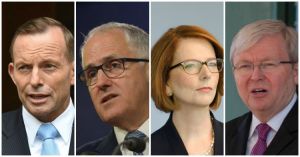
139 People Standing Against the Tide of History

First, a disclaimer: this is hardly an original column. There have been many other bloggers and social media users who have posted the full list of our federal parliamentarians who recently rejected equal marriage. One particular website which is impressive in both its comprehensiveness and usefulness is ‘the98against’ (for those Members of the House of Representatives who voted no) and its corresponding Senate site (‘the41against’), which also helpfully provides the contact details of each MP.

Nevertheless, I think it is important for us to document – in as many places as possible, and as loudly as possible – the names of each and every Australian parliamentarian who decided that only opposite-sex couples should have the legal right to marry in this country. These 139 people decided that there are some rights which should only be granted to heterosexuals, and to entrench this homophobic distinction in our nation’s laws for several more years (at least).

The majority of the list is made up of Coalition MPs. In fact, every Coalition MP who voted cast their vote against equality and for discrimination. This is in part the direct result of Opposition Leader (the not very honourable) Tony Abbott’s decision to deny Liberal and National MPs a conscience vote. However, it is also partly a consequence of the gradual decline and death of the moderate wing of the Liberal Party, and the failure of Coalition MPs to exhibit any evidence of a spine by voting for equality anyway (despite constantly reminding others that they are free to cross the floor on any vote).

Indeed, only one Coalition MP deserves any kind of pass mark – and their name is not Malcolm Turnbull. Liberal Senator for Queensland Sue Boyce gave a principled and dignified speech in favour of equality and then abstained from the final vote (one assumes to preserve any kind of future within the now-quite-illiberal Liberal Party).

Malcolm, on the other hand, cast his vote against equality, just like Tony Abbott and Cory Bernardi. In the one place where it counted – on the floor of parliament – there was nothing to distinguish Malcolm from Cory; and that is something which the electors of Wentworth should keep in mind at the ballot box next year.

In fact, the list below shows a range of people who have voted against equality despite having a high number of LGBTI Australians living in their electorates. This includes Teresa Gambarro in Brisbane, Kevin Rudd in Griffith, Jane Prentice in Ryan, Turnbull, John Murphy in Reid, Kelvin Thomson in Wills, Michael Danby in Melbourne Ports and Kelly O’Dwyer in Higgins. They should all fear repercussions from progressive voters come next year (although how much they suffer remains up to us).

Of course, the list below includes a number of ALP parliamentarians, who chose to exercise their ‘conscience’ vote and reject the ALP’s official platform, which, as of last year’s national conference, actually supports same-sex marriage. It includes a range of people who really should know better – as well as Thomson and Danby, I would add to that list Julie Owens, Daryl Melham and Anna Burke.

And then there is the former Prime Minister, Kevin Rudd. After foxing for months on the subject – and giving the impression to marriage equality supporters that he would vote yes – Kevin disgracefully voted to entrench inequality in federal law. Thus he amply demonstrated that he has not grown during his time on the backbench, and those people who are looking to the future of the ALP should no longer cast their eyes in his oh-so-eager, ‘please pick me’direction.

Rudd’s cowardice, on top of Julia Gillard’s ongoing capitulation to the Christian Right, has cast the spotlight on those ALP MPs who are thinking about the future, and what a ‘no vote’ would have looked like on their record in 2, 5 or even 10 years from now (a hint: it is the equivalent of someone saying today that they continue to support discrimination against Aborigines).

Stephen Smith voted yes, possibly for this reason, as did Jason Clare. Bill Shorten’s vote was the most encouraging – he is a political pragmatist of the highest order and a (well-known) self-promoter. It speaks volumes that he knows which way the wind is blowing. By being clever on this issue, Shorten has confirmed his place near the front of the queue of who should lead the party when we eventually get rid of Gillard (Greg Combet would also have to be on that list simply because of his general awesomeness, while Mark Butler is a longer-term consideration).

In fact, in the medium term this vote will be able to be used by a weapon by an astute future Labor leader against the Liberals. Whenever a matter of social policy or social justice arises in 2017, or 2023, the ALP head will be able to point to Joe Hockey, or Josh Frydenburg, or any MP who is currently in Parliament, and point to this vote to show how regressive they truly are. It is definitely something to store away for a rainy day.

In the meantime, those of us who simply want the right to get married in our own country will have to wait. And the size of the loss – 98 to 42 in the House of Reps – means that wait may be quite long. Contrary to popular opinion, while the tide will continue to move in our direction, the fact that people are now on record for and against (well, overwhelmingly against), means that it necessarily will take a public about-face for those MPs to support equality in the future. Saying that they got something wrong is not intrinsic to the nature of most politicians.

Even if the Liberals will have the excuse that they were denied a conscience vote this time, their recorded vote against will nevertheless be a factor in considering where to cast their ballot next time around. And the disturbingly high number of ALP MPs who voted no, despite being free to vote yes, demonstrates that there is still significant work to be done on the left side of politics as well.

In fact, the scale of this defeat, especially in the House of Representatives, has done nothing more than confirm to me the likelihood that it will take at least a couple of federal elections, and possibly three, for there to be sufficient turnover such that a future federal parliament is in the position to support marriage equality. No wonder the AME and other marriage activists have transferred their attention to securing same-sex marriage at state and territory level. For the foreseeable future, that is likely to be much more fertile ground.


House of Representatives Members who voted no:

Abbott, AJ Adams, DGH
Alexander, JG Andrews, KJ
Andrews, KL Baldwin, RC
Billson, BF Bishop, BK
Bishop, JI Bowen, CE
Bradbury, DJ Briggs, JE
Broadbent, RE Buchholz, S
Burke, AS Byrne, AM
Chester, D Christensen, GR
Ciobo, SM Cobb, JK
Coulton, M Crook, AJ
D’Ath, YM Dutton, PC
Emerson, CA Entsch, WG
Fitzgibbon, JA Fletcher, PW
Forrest, JA Frydenberg, JA
Gambaro, T Gash, J
Gillard, JE Griggs, NL
Hartsuyker, L Hawke, AG
Hayes, CP Hockey, JB
Hunt, GA Husic, EN
Irons, SJ Jensen, DG
Jones, ET Katter, RC
Keenan, M Kelly, C
Laming, A Ley, SP
Lyons, GR Macfarlane, IE
Marino, NB Markus, LE
Matheson, RG McClelland, RB
McCormack, MF Melham, D
Mirabella, S Morrison, SJ
Moylan, JE Murphy, JP
Neumann, SK Neville, PC
O’Dowd, KD O’Dwyer, KM
O’Neill, DM Owens, J
Prentice, J Pyne, CM
Ramsey, RE Randall, DJ
Ripoll, BF Robb, AJ
Robert, SR Rowland, MA
Roy, WB Rudd, KM
Ruddock, PM Schultz, AJ
Scott, BC Secker, PD (teller)
Smith, ADH Somlyay, AM
Southcott, AJ Stone, SN
Swan, WM Symon, MS
Tehan, DT Thomson, KJ
Truss, WE Tudge, AE
Turnbull, MB Vamvakinou, M
Van Manen, AJ Vasta, RX
Washer, MJ Windsor, AHC
Wyatt, KG Zappia, A

Senators who voted no:

Abetz, E Back, CJ
Bilyk, CL Bishop, TM
Boswell, RLD Bushby, DC
Cash, MC Colbeck, R
Collins, JMA Conroy, SM
Cormann, M Edwards, S
Eggleston, A Farrell, D
Fawcett, DJ Fierravanti-Wells, C
Fifield, MP Furner, ML
Gallacher, AM Heffernan, W
Hogg, JJ Humphries, G
Johnston, D Joyce, B
Kroger, H Macdonald, ID
Madigan, JJ Mason, B
McKenzie, B Nash, F
Parry, S Payne, MA
Polley, H Ronaldson, M
Ryan, SM Scullion, NG
Sinodinos, A Smith, D
Stephens, U Sterle, G
Williams, JR

A Tale of Two Speeches Part 2

A Tale of Two Speeches Part 2

I have chosen to reproduce another two speeches from the Senate’s debate on marriage equality over the past week. These two Senators from South Australia encapsulate everything that is right – and sadly, everything that is wrong – in Australian politics. Senator Penny Wong’s speech is yet another example of her amazing capacity for both passion and eloquence on an issue which is obviously personal and yet clearly much bigger than the interests of her and her immediate family.

Senator Bernardi’s speech is already infamous, both within Australia and internationally. He deservedly lost his position as a Parliamentary Secretary to the Opposition Leader for introducing the repugnant comparison of allowing equal marriage with future calls for bestiality to be recognised. It is to his, Tony Abbott and the Liberal Party’s shame that he still retains his position as a Senator – and this is something which the voters of South Australia should remember next year when they are casting their ballot for the upper house.

Of course, there were many other notable speeches both for and against which I could have included. One of my previous bosses – Senator John Faulkner – gave a dignified and appropriately serious call to arms for people who support progressive change (does he ever do anything else?). And Senator Helen Polley disgraced herself yet again, not to mention sullying the reputation of every member of the Australian Labor Party, by reading out a constituent’s letter raising the spectre of a future ‘stolen generation’ should equal marriage be legislated. Shame on you Senator Polley – what a warped view of love and sexuality you must have.

Senator Wong

(South Australia—Minister for Finance and Deregulation) (12:00): This is an important debate for Australia. It is an important debate for this parliament, because the issue at the heart of this debate is fundamental to who we are and what we believe. This is a debate about the principle of equality. The aspiration of and struggle for equality has been a constant in our history. Australia has not always been an equal society, but ultimately we always move in the direction of greater equality, and we should not forget that it is a progression that is greater than any one vote.

The Marriage Amendment Bill (No. 2) 2012 is a step along the path of progress, and that fact is demonstrated by what we have seen while this vote has been on the horizon. Our numbers have grown, as the numbers of those who oppose marriage equality have got smaller. The momentum has been one way. Many of my colleagues who have previously opposed marriage equality now support it. I acknowledge them and I thank them because, like me, they know that the principle of equality is inherent in who we are and it is central to the world we want for our children.

Equality is more enduring than any single generation. It is a principle that will continue to inspire, and it is a fundamental right. If you look at the span of history, of social change, the calls for equality have been persistent and they have been successful. We have seen changes to ensure individuals are not discriminated against because of their gender, their race or their religion—reforms that see all Australians treated equally in the community and in their workplaces: the quintessential idea of a fair go for all.

Much has been said in this debate about relationships, about families, about parenting and even about the so-called threats to the nature of Australian society. But let us be clear what we are debating here: we are being asked to consider whether the state, through law, should continue to discriminate against some Australians solely on the basis of their sexuality. We are being asked to consider whether in today’s Australia we should continue to ban two consenting adults from marrying because and only because they are of the same sex.

If you subscribe to the principle of equality, as I am sure most in this chamber would, then substitute same-sex for race in this debate and see if it changes your view. Just imagine if we told Australians today they could not get married because the person they love is of a different coloured skin. Imagine if we told Australians today they could not get married because the person they love is of a different religion. Such notions are rightly seen as anachronistic. And, in 2012, it is truly sad that some still feel the need to constrain the freedom of others to make a commitment to the person they love through marriage.

I do believe marriage is unique. I believe that marriage is special and that it is a bedrock institution of society. I believe that marriage should be valued. But marriage does not need to be walled off from some Australians in order to preserve its worth. The heart of marriage is the love of and commitment to another. This promise, the vow of marriage, does not discriminate and nor should our laws. But the Marriage Act as it is currently worded is discriminatory. It involves different treatment and lesser rights to certain individuals on the basis of their sexuality. The discrimination could not be more real.

There are many arguments that have been put in this place and in the debate more broadly by those seeking to continue marriage inequality. People have argued that same-sex marriage would undermine the institution of marriage—that marriage as a concept is immutable and therefore unable to accommodate gay and lesbian Australians. Then there is perhaps the most hurtful of arguments: the view that marriage is an institution of procreation and therefore same-sex couples are not welcome. I believe it is worth discussing these arguments each in turn because, when held up to scrutiny, they are clearly without foundation.

As I have said, some have tried to claim that allowing same-sex couples to marry will somehow destabilise the very foundation of marriage, that it will undermine what marriage is. But this not a zero-sum game. My getting married does not preclude a heterosexual couple from getting married. Indeed, the argument that allowing me to marry the person I love will somehow make their love less says more about their relationship than mine. So I say to those who oppose this bill: ‘You do not need to legitimise your relationship by undermining mine. You do not need to tell me and the thousands of other same-sex couples that our relationships are less worthy, less valid or less important. We know the worth of our relationships. We will not allow them to be diminished in this debate and we do not accept them being diminished by this law.’

As I said, I agree marriage is both unique and important. Same-sex couples believe marriage is an important institution. That is why we want the choice to enter it. For those opposite who may think this view is only held by some on the progressive side of politics, look at the statements of British Prime Minister David Cameron, who last year said:

I don’t support gay marriage despite being a Conservative; I support gay marriage because I’m a Conservative.

He is a Conservative Prime Minister who makes a very important point: that institutions are not weakened by inclusion.

Inclusion and tolerance have always been the guiding lights of social progress. They have always shone brightly on discrimination and, time and time again, have shown us that our similarities will always be greater than our differences. Our society is strongest when we are accepting, when we enable equality to overcome exclusion and when, with open eyes, open minds and open hearts, we cherish diversity and value inclusion. Exclusion so often unearths the worst in us, because it reflects the least worthy aspects of society. So often it is driven by ignorance or, worse, by prejudice. That is why the argument that the institution of marriage is strengthened by exclusion is as spurious as it is hurtful. It is discrimination, plain and simple.

There are those who argue that the institution of marriage is immutable; that it has not changed since time immemorial. Such statements ignore how much the understanding of marriage has varied. Marriage has changed from being a concept of ownership to being one of genuine partnership.

Marriage was previously banned for interracial couples and it took a Supreme Court decision in the United States to overturn this. Australian history provides further examples. In 1901, JC Watson, later to become the first Labor Prime Minister, asked during a debate on the Immigration Restriction Bill:

The question is whether we would desire that our sisters or our brothers should be married into any of these races to which we object.

These views were once normal. These views of marriage were once predominant—but no longer. In my own family, I have seen this change. My parents married during the last years of the White Australia policy; what was seen as an interracial marriage, remarked on in its time, would in today’s Australia be unremarkable. Indeed, marriage as an institution has proven to be flexible in reflecting the social norms of the day—far from being set in stone, it has responded to social change. If passed, the bill before the chamber would see marriage again reflect the values of our society.

I want to turn now to the place of religious belief in this debate. I believe in freedom of religion and in the right of Australians of faith to express and practise their faiths and traditions. I support the provisions in the bill which protect the church from having to marry same-sex couples if their faith does not permit it. The real question here is the line between religious teaching and secular laws—whether those who hold a particular belief should impose that view on all. The majority of Australians now marry in civil, not religious, ceremonies. Should the views of some who hold particular beliefs determine the legitimacy and eligibility of those who choose to marry outside of religious services and beyond their church? I think not.

Some also argue that marriage is about children, and that same-sex couples cannot or should not have children. This is an argument that brings with it a fair amount of logical confusion. To suggest that you can or should only have children if you are married is inconsistent with the reality of today’s Australia. To suggest that marriage should only be defined by reference to children would mean that marriages in which someone is infertile would not be allowed, that marriages where the couple did not want to have a family would not be allowed and that marriages where the couple were too old to have children would not be allowed. Clearly, this is not the case.

But underlying this position—and perhaps the most hurtful argument of all—is the view that some Australians are not worthy of being parents simply because of their personal attributes. That is, because of our sexuality, our worth as a mother or father is lessened. The fact is same-sex couples already have children. Denying marriage equality will not change this. Bringing an argument about the worth of our families and about the value of our parenting into this debate is dishonest and it is objectionable. The quality of parenting, whether by a straight person or a gay person, will never be determined by a political argument. The love that a parent—straight or gay—has for their child is seen in the days and nights and years of love and nurture and hope and so much more.

The arguments of those that oppose this bill do not stack up. But perhaps what is worse is the vein of prejudice that runs through some of the contributions in the debate over marriage equality. As this debate has occurred over the past weeks, homophobia has increasingly come to the fore. It is an undeniably ugly vein that runs deep in some of the arguments against marriage equality, and it is regrettable, hateful and hurtful.

There are those who say homosexuality is a greater hazard than smoking. There are those who suggest that gay and lesbian Australians are promiscuous yet in the same breath criticise us for wanting to have our relationships recognised through marriage. There are those who lump homosexuality into the same category as bigamy and those who talk about the normalisation of homosexuality. Well, we are normal and we are here.

Gay and lesbian Australians are no different to all other Australians. We come from all walks of Australian life, from all regions and from all income brackets. We are your daughters and your sons, your brothers and your sisters, your mums and your dads, your coworkers and your friends, and we have the same aspirations, the same ambitions and the same hopes. We are not so different. It is time to recognise this.

I stand here today as a proud member of the Australian Labor Party: a party that in government has done more to progress the interests of gay and lesbian Australians than any other; a party that changed its platform last year to support same-sex marriage and to allow a conscience vote on this issue; a party big enough and brave enough to accept differences of views, and to support three of our senators, and the member for Throsby in the other place, introducing this bill—a braveness not matched in the leadership of those opposite. When the Liberal Party denied its parliamentarians the right to vote with their conscience on marriage equality, they ensured its defeat in the 43rd Parliament. The maths is as simple as it is devastating.

We often talk about the negativity of politics today, but this is different. It is not some tired, three-word slogan; it is worse. The party which preaches individual freedom refuses to allow a free vote on this most personal of issues. I welcome the comments of Senators Birmingham and Boyce, Mr Turnbull and Dr Washer, who have put on the record their desire for a conscience vote on this matter. On another day, at another time, I hope that they, along with members of the Labor Party, the Australian Greens and others, will have the opportunity to sit side by side in support of marriage equality.

There will be some who will see this week’s result as a vindication of their opposition to same-sex marriage—and they will be wrong. There will be many who will look at the members of this chamber and think that the parliament has failed them—and they will be right. We have failed to uphold the principle of equality in the law. The parliament as an institution should reflect the best of Australia. It should inspire tolerance and acceptance. It should encourage respect. On this issue, our parliament is lagging behind our community.

The result of this vote will be disappointing to many thousands of Australians. To all the friends, to the mums and dads, to the sisters and brothers, to the mates and to the colleagues of gay and lesbian Australians: I encourage you to keep the fight for equality going. We are on the right side of this debate and on the right side of history. We are on the side of equality.

This parliament may miss its opportunity to right a wrong, but it will only be through your perseverance that we can guarantee that the next time this comes to a vote there will be no choice but to support equality. Remember, many steps towards equality in this country were not won the first time nor even the second. Many were achieved only after years of action and of activism. But the aspiration for equality is persistent, and it cannot be denied forever.

To the Australian LGPTI community who feel disappointed, I encourage resolve and, particularly, to young gay and lesbian Australians, to those who may not have come out yet or are finding their way, I want you to know that the prejudice you have heard in this debate does not reflect the direction in which this country is going. Those who oppose this bill speak to the past. I and my colleagues are talking to a better future because, whatever happens in the parliament this week, our relationships are not inferior, our relationships are not less equal and our love is no less real. We will get there—perhaps not in this parliament, but one day. One day we will be recognised as equal.

For us, this is the most personal of debates. It is about the people we love most in the world, the people who give meaning and hope to our lives. It is about our families. And, ultimately, it is not only about what we want for ourselves; it is about what we want for our children. We all hope for our children an easier path, that the challenges life presents will be surmountable. I do not regret that our daughter has Sophie and I as her parents. I do regret that she lives in a world where some will tell her that her family is not normal. I regret that, even in this chamber, elected representatives denigrate the worth of her family. These are not challenges she deserves. None of our children deserves such challenges. So I will not rest in the face of such prejudice. I want for her, for all of us, an Australia which is inclusive and respectful. This is why this campaign will not end here: because we who argue for equality are not only standing for principle, we are also standing for the people we love—and there is nothing more powerful than this.

I say to those opposing this bill: you have nothing to fear from equality. Let us judge relationships by the markers which matter—love, respect, commitment. Let our laws reflect these most cherished values and give voice to the equality that is due.

Senator Bernardi

(South Australia) (21:22): I have spoken many times in this place about the importance of traditional marriage. In fact, I spoke about marriage in my maiden speech in this place over six years ago. In that speech I said:

Marriage has been reserved as a sacred bond between a man and a woman across times, across cultures and across very different religious beliefs. Marriage is the very foundation of the family, and the family is the basic unit of society. Thus marriage is a personal relationship with public significance and we are right to recognise this in our laws.

I have been and always will be a strong supporter of traditional marriage and its current definition, being a union between a man and a woman. Marriage is accorded a special place in our society because it is a union that is orientated towards having children, thereby ensuring the continuation of our population and civilisation. Society benefits from marriage, so marriage is accorded benefits by society. At the base level marriage is concerned about what is best for society, rather than being concerned about the so-called rights of the individual. Changing the definition of marriage would indeed change the focus of the institution itself. It would put the focus on the desire of adults, as opposed to having the focus on the production and nurturing of an environment for the raising of children for the benefit of society.

I know that not every marriage has children but marriage is a foundation for the family unit upon which our society is built. It has proven itself as the most sustainable and effective social support and training environment for our future generations. I recall columnist Miranda Devine quoted a UK Family Court judge in 2010 in which he noted that family breakdown is the cause of most social ills and that, despite its faults, marriage should be restored as the gold standard and social stigma should be reapplied to those who destroy family life.

The Australian Institute of Family Studies has found that children of married couples benefit from marriage because they have higher levels of social, emotional and educational development in comparison with children who do not live in that traditional environment. Married mothers are more likely to be employed or hold a university degree and married-couple families are less likely to come up against financial problems. While the authors of the research were keen to stress that this is because of a family’s financial situation and the educational qualifications of the mother, it does give me cause to wonder: doesn’t marriage itself help to provide financial stability and better outcomes? That seems to be a case for opening marriage up to any environment and to any union of two people, as Senator Cameron said, who happen to love each other, but in a family environment it is children who should be the primary concern and children benefit from having both a male and a female role model living in a house—two people that love each other in a permanent union.

We have all seen the sad effects of marriage breakdown and the adverse impacts it can have on children. We have to also acknowledge that today families do not always come as the gold standard where mum and dad do live together under the one roof of a house and love each other and provide that nurturing environment. I have always said that a child is better in any environment where it is loved and that is irrespective of the circumstances, but it will not stop me from advocating that traditional marriage is the absolutely best environment for the rearing of the next generation. So whatever the forms that families take in this modern day and age—and they do come in so many different forms with some people being individual parents and indeed same-sex couples also raising children and they all do an amazing job in the circumstances—as I said, I will not stop focusing on the importance of promoting and encouraging the traditional family. But simply because marriage is important that does not mean that we should redefine it. We should not open it up to all comers, because I think it would actually devalue the institution.

The move for same-sex marriage is just another step in what I consider an attack on our enduring and important institutions, particularly the social ones. It is another tear in the fabric of our social mores. The proponents of same-sex marriage, and I do not mean to generalise but this is about many of the proponents of same-sex marriage, ask for one step and they think that is all they want or they say that is all they want and they will be satisfied when this has been achieved—’Just this one thing; give us that and that will be okay and all inequality will be diminished and everyone will be equal and it will be fair’. But the harsh reality is that there will never be equality in society and there are always going to be people who feel that they have got a raw deal or have been discriminated against or do not have the same access to opportunities or advantages as others do, and to pretend any differently is really to deny reality. But history demonstrates that once those who advocate for radical social change, which I consider this to be, achieve it in any way, shape or form, there is then another demand and another demand and another demand and they slowly chip away at the very foundation of what provides our social support, stability and cultural mores and we are left with a replacement that is somehow vastly inferior to the wisdom of successive generations.

I recall that in this place only a few years ago people pushed for the same entitlements and benefits for all relationships that were then held by married couples. This was achieved. I opposed it at the time because my point was that just because people are in a sexual relationship that does not mean that they should be afforded the same rights and privileges as society affords those in traditional marriage, and I have outlined some of the reasons for that. Indeed, I advocated at the time that if it is about genuine equality and interdependency then we should advance this to interdependent relationships in which there is no sexual engagement. There are any number of those relationships, including people who live together and share bank accounts and expenses and who, for all intents and purposes, share their lives without having a sexual or physical relationship. But that was rejected, I suspect because it was not really about equality. It was not about interdependency and it was not about sharing your life with someone; it was about chipping away at the institution of marriage.

The legislation got through and I lost that debate—you win some and lose some in this business. At that stage I was one of many saying this was another step that would undermine marriage. Today we see the next step. This is another push—it is not the first time and it will not be the last time—for same-sex marriage. Time and time again the techniques of the radicals who seek to overturn the social institutions and social fabric of our society are out of step with the priorities of mainstream Australia. No-one out there that I have come across says this is the most important issue facing Australia. There are enormous social and economic problems in this country, and this debate will not solve any of them. Time and time again the same characters seek to tear down our institutions that have been built and have sustained our civilisation for thousands of years. The time has come to ask: when will it end?

If we are prepared to redefine marriage so that it suits the latest criterion that two people who love each other should be able to get married irrespective of their gender and/or if they are in a sexual relationship, then what is the next step? The next step, quite frankly, is having three people or four people that love each other being able to enter into a permanent union endorsed by society—or any other type of relationship. For those who say that I am being alarmist in this, there is the polyamory community who were very disappointed when the Greens had to distance themselves from their support for numerous people getting together and saying they want to enter into a permanent union. They were disappointed because they were misled that this was about marriage equality and opening up marriage to all people who love each other.

There are even some creepy people out there—and I say ‘creepy’ deliberately—who are unfortunately afforded a great deal more respect than I believe they deserve. These creepy people say it is okay to have consensual sexual relations between humans and animals. Will that be a future step? In the future will we say, ‘These two creatures love each other and maybe they should be able to be joined in a union.’ It is extraordinary that these sorts of suggestions are put forward in the public sphere and are not howled down right at the very start. We can talk about people like Professor Peter Singer who was, I think, a founder of the Greens or who wrote a book about the Greens. Professor Singer has appeared on Q&A on the ABC, the national broadcaster. He has endorsed such ideas as these. I reject them. I think that these things are the next step. As we accede to one request we will then have the next one which will be for unions of more than two people. We will have suggestions for unions of three or four people. I notice the Greens are heckling, but the point is that they misled their constituent base and there was an outcry about this. Where do we go then? Do we go down the Peter Singer path? Those that say this is the end of the social revolution have no history of being honourable about that. They continue to push and challenge our social and cultural mores. We simply cannot allow such an important social institution to be redefined, especially when Australians do not see this as a priority issue.

Senator Cameron was critical of his party denying some of the people in support of same-sex marriage a conscience vote, the ability to speak up in favour of what they thought was important. He neglected to mention that the Left of the Labor Party had never really supported a conscience vote. In fact, they sought to change the party’s position to support same-sex marriage. That meant that those that had a conscientious objection to it would have been bound by the Labor Party’s platform to support same-sex marriage. On the one hand Senator Cameron decried the fact that some people could not vote according to how they felt and yet he was one of the architects of this, along with people like Mark Butler. In a story in the Sydney Morning Herald Mark Butler is said to be one of those who believes that those who support traditional marriage should not be allowed to put their position forward.

I understand that this is a very sensitive debate. I also understand that senators on both sides of this chamber have very strong views. I understand some of these views are borne by personal experiences or those of loved ones and some are borne by their idea that this is a fairer and more equitable way to proceed. We have seen demands and requests for surveys of what is going on in the electorates. That was put forward by Mr Bandt in the other place. He asked for members of parliament to report back on what their constituencies thought about this argument. I have to say that a significant majority—some have suggested as many as two-thirds—reported that their constituents broadly supported marriage being retained as between a man and a woman, as was endorsed by this parliament some eight or 10 years ago.

In standing up for traditional marriage, advocates are not saying that one group is better than another or that one group is superior to another. This is, in my view, about defending what is right and what is important for society. Last year I read an article by a 19-year-old university student Blaise Joseph, who wrote:

Marriage laws are fundamentally a question of what’s best for society rather than a question of individual rights.

That view, in one way, shape or form, was shared by over 32,000 people who wrote in favour of traditional marriage to the recent Senate inquiry.

Add these views to MPs’ electorate surveys and the calls and emails I get from my own constituents and it is very clear to me that many Australians want to protect the notion of traditional marriage, for many valid reasons. These people have, in some instances, put aside their fears of being branded as intolerant, uncaring, heartless or in support of inequality by those people who profess to be tolerant of other points of view and who, in my view, look to degrade the notion of marriage. These people who have stood up against same-sex marriage in the face of a very vocal campaign are to be commended in this current culture of political correctness, where those who apparently disagree with the wisdom of the elites are somehow howled down and demonised publicly.

I am sure there are millions more Australians who share these sentiments irrespective of whether they have spoken publicly about it. I will continue to stand with these Australians and to fight for traditional marriage because I believe it is what the people of Australia want. More importantly, I think it is the right thing to do both for our children and for our society.