10 Things I Hate About Marriage Inequality. #1: Because I can’t marry the man I love

The number one reason why I hate marriage inequality in Australia is because it means that I cannot marry the man who I love.

Me (on the left) and Steven (aka the handsome guy with the sunnies).

Me (on the left) and Steven (aka the handsome guy with the sunnies).

I was half-tempted to leave it at that because, really, what more do I need to say?

There can be few things more beautiful than the desire to celebrate the love that you have for your partner, in front of your family and friends. I want to experience that with Steve, the person I care about most in the world, and who brings me more happiness than I ever thought possible.

At the same time, there can be few things uglier than a Government intervening to tell you “No”, you cannot experience that, simply because of your sexual orientation (or, for others, gender identity or intersex status). Especially when there is absolutely no legitimate reason why the Marriage Act 1961 should discriminate against LGBTI-inclusive couples, something that is incredibly frustrating, to Steve and me, and to the thousands of other Australian couples in the same situation.

Obviously, the issue of marriage equality is very personal for all of the people that it directly affects. And, in that, I am no different. It does affect me personally and, as the people closest in my life can attest (and as this countdown has made exceptionally clear) I take its denial very personally.

How could I not? When you celebrate wedding after wedding, of your sister, and your brother, and your cousins, and your partner’s extended family, and your friends and his friends as well, and you just want to do the same, yet you cannot because 139 Senators and Members of the House of Representatives back in September 2012 decided that you are ‘unworthy’ simply because you’re gay, well, how could that not feel like a knife right through your heart?

In fact, there are very few contemporary public policy issues for which the old maxim – that the personal is political – could be more accurate. The recognition of our relationships is obviously immensely personal, and it is impossible to deny that whether they are recognised or not, or recognised but with a lesser value than cisgender heterosexual relationships, is inherently political.

That particular saying works the other way, too. The position that each of our parliamentarians adopts on this political issue reflects something profound about who they are as a person as well.

And I’m not just talking about the Cory Bernardis or Helen Polleys of this world, either – Senators who thought it appropriate to link the prospect of marriage equality with bestiality and the Stolen Generation, respectively – although their parliamentary speeches certainly revealed their utter contempt for LGBTI Australians.

I am talking about the MPs who might not say anything ‘overtly’ homophobic during Parliamentary debates about marriage, but who cast their vote against equality nonetheless. In doing so, they indicate that they choose discrimination and inequality over love and inclusion. They stand up against the idea that all Australians deserve equal treatment under the law, instead supporting the notion that some people are ‘more equal’ than others.

Those who vote against marriage equality devalue our relationships, telling us that they are less worthy of recognition than those of other people. And they devalue us as individuals too, subtly (or in some cases, not so subtly) sending the signal that we are less than full citizens of our own country. Even if they do not say the words, their position reveals, loud and clear, that they believe LGBTI people are – and should be – second class.

At its most personal, an MP who votes against marriage equality is saying that they themselves are more deserving of certain rights, that their own relationships are more worthy of recognition, that they as individuals are simply better than LGBTI Australians.

To them I say, “How dare you”. How dare you suggest that, because I am gay and you are heterosexual, you are more deserving of certain rights than I am. And how dare you deny us the rights that you currently enjoy (whether you choose to exercise them or not) simply because we are in a same-sex relationship and you are not.

The love that Steve and I share is not better or worse, more valuable or less valuable, or more deserving or less deserving, than the love between cisgender heterosexual couples. It’s all just love. The law should not make a distinction between the love that Steve and I have for each other, and that between my sister and her husband, or my brother and his wife.

Sadly, because of the amendments made under the Howard Government in August 2004, and the failure of our MPs since then to remedy this discrimination, the law does make such a distinction.

Today, Wednesday 13 August 2014, those amendments, that legal distinction, this ongoing and unjustified discrimination against LGBTI Australians, ‘celebrates’ its own ten year anniversary.

The traditional gift for a ten-year wedding anniversary is tin. I’m sure you’ll forgive me for not wanting to buy anything special to mark the occasion.

What I will do, what I feel compelled to do on this day, is say to all of those MPs who voted against equality in 2004, and continue to do so now, you truly are the tin men and tin women of Australian politics. You have forgotten that you have hearts, or, at the very least, you have forgotten how to use them. Indeed, it seems you have forgotten what hearts are even there for.

Well, now is the time to rediscover their purpose. And now is also the time to rediscover your purpose as our elected representatives – that it is your responsibility to act for the betterment of Australia, and the welfare of its people, all of its people, not just the cisgender heterosexual ones.

On this, the 10th anniversary of the ban, it’s time to support marriage equality, and in so doing to support the full and equal citizenship of all Australians, irrespective of sexual orientation, gender identity and intersex status. If you do, if you finally agree to pass marriage equality, then you should rest assured that nothing bad will happen. The sky will not fall in. There will be no negative consequences whatsoever.

The only outcome will be overwhelmingly positive. Thousands, indeed tens of thousands, of couples will finally be able to express their love and commitment in front of their family and friends. Couples like Steve and me. We are ready and waiting to say those two small words to each other, “I do”. We just need you to say two other words first, “You can.”

10 Things I Hate About Marriage Inequality. #2: Because we’ve been waiting so damn long

Updated 12 August 2016:

The twelve year anniversary of Australia’s ban on marriage equality is now only 24 hours away. Unfortunately, the long-awaited repeal of the ban is still some time off.

The best-case scenario: Malcolm Turnbull and his Liberal-National Government abandon their unnecessary, wasteful and harmful plebiscite, hold a free vote and marriage equality becomes law before the 13th anniversary. Alternatively, we could see marriage equality passed later this term, after the plebiscite has wreaked its havoc on young and vulnerable LGBTI people. We could even see marriage equality delayed beyond this term, until sometime in the 2020s (yes, you read that right – 2020s).

No matter when it (eventually) happens, there will be thousands upon thousands of Australian LGBTI-inclusive couples who have been waiting, and waiting, and then waiting some more, simply to exercise the same rights that our cisgender heterosexual counterparts enjoy without question. And, to me at least, the waiting itself has become both seemingly interminable, and insufferable.

Australian Marriage Equality effectively tapped into that sentiment with one of its main campaigns of 2014, with stories and images of couples with the ‘We’re Waiting’ message. That campaign was both an accurate reflection of the feelings of many within the LGBTI community, and a reminder to decision-makers that this policy choice is not abstract, but affects ‘real people’ in all-too-real ways [Alas, two years later that wait continues].

It is the human element of the ongoing ban, the costs of being forced to wait, that I want to concentrate on here. Because the delay of being able to get married, for years or even decades, carries with it very real consequences for the couples involved.

The first consequence is that it directly affects the ability of couples to celebrate their wedding with all of the family members and friends who they would like to be there for their special day. For those couples that do not choose to travel overseas (which itself obviously limits who is able to attend), by forcing LGBTI-inclusive couples to wait to marry within Australia the Parliament is effectively interfering with the ‘guest list’ of many couples.

From Steve and my perspective, as I have written before, we are both very conscious of the fact that, the longer the ban on marriage equality goes on, the less likely it is we will be able to have our remaining grandmothers there for the occasion (either for reasons of ill-health, or worse). They certainly could have been there had we been married four or five years ago (ie after an engagement of 12 or 24 months), but even today it is becoming doubtful [In 2016, it is now clear my grandmother won’t be able to travel to our wedding due to declining health].

I often imagine how ‘traditional marriage’ or ‘family values’ or even ‘small government’ campaigners would react if the Commonwealth Parliament intervened to tell them who they could, or could not, invite to their wedding. I suspect they would probably have a pretty spectacular hissy fit. And yet that is exactly what they are seeking to impose on us – stealing from us our ability to celebrate our weddings with who we choose.

The second consequence is another ‘theft’, but the effects of it won’t become apparent for most of us for many years, long after the ban on marriage equality is lifted. And that is they are stealing from us future ‘significant’ wedding anniversaries. Because, the longer our entry to marriage is delayed, the less likely it is that current LGBTI-inclusive couples will reach our 60th, 50th or even 40th or 30th wedding anniversaries.

Now, to some that might seem like a petty argument. After all, we will still have ‘anniversaries’ for the significant events of our relationships (for example, Tuesday was the 8th anniversary of when Steve and I first met, and we celebrated the occasion).

But it is impossible to deny that significant cultural value is still placed on long-lasting marriages, perhaps even an increasing value when so many marriages do not last that long (for whatever reason). How many of us experience an ‘awww, that’s sweet’ moment when we see the 60th or 50th wedding anniversaries of older couples, either family members or friends, or even reported on the news?

Well, far fewer of our relationships will reach those moments in the decades to come because of the actions of Commonwealth parliamentarians in 2004, 2012 and today. Once again, imagine the outcry from ‘traditional marriage’ (aka anti-LGBTI equality) campaigners if the Government were to intervene to effectively steal those anniversaries from them. They need to be reminded that it is just as unacceptable when it is done to LGBTI Australians.

However, it is the third consequence, yet another theft, which is the most offensive, and most objectionable. And that is that there are countless couples who wanted to marry but where one or both have died since the original ban on equality was introduced in 2004, and many more who will continue to die before being able to wed while this homophobic discrimination remains in place.

These are couples who have had the right to marry stolen from them, now and for all time, merely because of their sexual orientation, gender identity or intersex status. For most, they grew up at a time when homosexuality was criminalised, and when trans and intersex people were ‘invisibilised’ and subject to the worst forms of abuse, but who have then suffered one final indignity at the hands of the Australian Government – the denial of the equal recognition of their relationships during their lifetimes.

The worst thing, the most frustrating part, about this entire situation is that everyone knows marriage equality is inevitable. I know it. You know it. Julia Gillard knew it. Tony Abbott knew it. Malcolm Turnbull does too – even if he won’t grant the free vote to make it happen. In fact, all MPs, certainly since 2011 or 2012, if not before, must have recognised that marriage equality will eventually be passed in Australia, and that the only remaining question is whether that happens now, or in five or even ten years time.

And, while there is absolutely nothing that is ‘gained’ from this delay, as I have shown above there is plenty that is lost, not least of which is the undeniable loss of those couples who were never able, and will never be able, to wed.

Which makes the ongoing failure of Commonwealth Parliamentarians to pass marriage equality one of the most petty and vindictive acts – or omissions – in recent political history.

It is, frankly, unforgiveable that our MPs are not only stubbornly opposing what is right, and standing firm against the overwhelming tide of history and progress, they are rejecting the rights of Australian couples, including members of their own electorates, when they know in their hearts that all they are doing is delaying the inevitable, and making those couples pay the cost in the meantime.

This outcome, the price that is being paid by couples around the country because of this interminable ‘wait’, is definitely one of the things I hate most about marriage inequality.

10 Things I Hate About Marriage Inequality. #3: Because it makes attending weddings a bittersweet experience

Weddings are supposed to be joyous occasions, a celebration of two people coming together to express their love and commitment to each other in front of their family members and friends. If ever an event was meant to provoke happiness – pure, unambiguous happiness – surely a wedding would be it.

But, when I go to weddings I cannot help but find them to be bittersweet. The joy of the ceremony, and my happiness for the couple involved, is tempered by sadness at the knowledge that I, and the man who I love, currently cannot participate in the exact same ritual, solely because of our sexual orientation.

Obviously, the main source of this frustration is the legislative ban on marriage equality, introduced by the Howard Liberal-National Government in 2004 (an event which itself celebrates its ‘tin’ anniversary next week), and perpetuated by his successors including Julia Gillard and Tony Abbott.

However, this hurt and anger is compounded by the section of the wedding ceremony where the celebrant is compelled to read out the following:

“I am duly authorised by law to solemnise marriages according to law. Before you are joined in marriage in my presence and in the presence of these witnesses, I am to remind you of the solemn and binding nature of the relationship into which you are now about to enter.

Marriage, according to law in Australia, is the union of a man and a woman to the exclusion of all others, voluntarily entered into for life” (emphasis added).

Talk about rubbing salt into the wound. Section 46(1) of the Marriage Act 1961 (Cth) makes it clear that these words must be read out by the celebrant (although, bizarrely enough, only by civil celebrants – ministers of religion for a recognised denomination are exempted from this requirement).

The Guidelines on the Marriage Act 1961 for Marriage Celebrants also confirm that, while there is some scope to make minor variations to the first two sentences above, there is no scope to change the third. Specifically:

• “do not replace ‘man’ and ‘woman’ with ‘people’ or ‘persons’. This could signify the marriage of two people of the same sex which is specifically excluded by the definition.

• do not change the first part of the sentence to read: “Marriage as most of us understand it is…” (from page 75 of the Guidelines).

It is appalling that there is this level of government interference into something so personal, on what is supposed to be a special, some might say unique, day for the couple involved (and especially galling that it is supported by Australian conservatives who like to proclaim their support for ‘small government’).

It is even more appalling that LGBTI Australians, and indeed all people who support equality irrespective of sexual orientation, gender identity and intersex status, must sit through this recitation each and every time they simply wish to attend the wedding of their family members or friends.

I must admit that, at the last few weddings I have been to, this recitation, together with the fact that – more than four years into Steve and my engagement – there is still so little sign we will be able to marry in our own country any time soon, really got me down.

At one of these receptions, I recall looking up at my fiancé and, from the expression on his face, seeing that he felt exactly the same way at exactly the same moment. I don’t know if that makes it better or worse – to feel comfort in the fact that someone so close shares that burden with you, or to feel anger that the government makes the person who you care about most in the world experience pain. Actually, that’s not true, it’s definitely the latter.

And I’m sure that we’re not the only LGBTI-inclusive couple, or LGBTI individuals, who experience these emotions at weddings, who are hurt by the continuing rejection of our own love as equal, and who resent, bitterly at times, that the ban on marriage equality has transformed joyous occasions into bittersweet affairs.

This is not to say the ban doesn’t affect cisgender heterosexual people too, it does. It has become increasingly common for couples who are getting married and who value their LGBTI family members and friends, or who simply reject the discrimination against LGBTI relationships contained in the Marriage Act 1961, to either say themselves, or have their celebrant say, that they support the right of all couples to marry.

In fact, this ‘disclaimer’, usually read out before the abhorrent words of section 46(1), has become so commonplace that it has almost become modern wedding etiquette itself.

And it is truly lovely that so many people have chosen to do so. On a day that is marked by symbolism, expressing their disagreement with the prejudice of Australia’s marriage laws is an important symbolic gesture, and one that does make things that little bit easier (for this LGBTI Australian at least).

But, let’s face it, they shouldn’t have to. On their wedding day, cisgender heterosexual couples shouldn’t have to be making capital ‘P’ political statements, simply because successive Australian Governments have been homophobic in determining who can, and cannot, marry. After all, there is enough small ‘p’ politics at weddings – who is in the wedding party, who is invited/not invited, who sits where – already.

Of course, the only way to fix this is for Australia to finally catch up to the progressive world by introducing domestic marriage equality, thereby allowing couples like Steve and me to get married, and cisgender heterosexual couples to go back to arguing about what song should be the wedding waltz (come to think of it, with our music tastes I’m pretty sure Steve and I might ‘disagree’ about that too).

Until then, the fact that the ban on marriage equality makes attending weddings a bittersweet experience is definitely one of the things that I hate most about marriage inequality.

10 Things I Hate About Marriage Inequality. #4: Because Julia Gillard let me – and the LGBTI community – down

I don’t cry much. Well, that’s not entirely true. I cry – a lot – at emotionally manipulative movies (and it doesn’t really matter whether they’re good, bad or Sandra Bullock). But outside a darkened cinema I can count on two hands the number of times I have cried over the past twenty years. And almost never in front of other people.

So why then did I find myself gently sobbing, for about 15 minutes, in the middle of a large crowd in Sydney’s Hyde Park, on the afternoon of Saturday December 3rd, 2011? It wasn’t because it was almost the end of what had been an extremely long year professionally, nor was it because I had only had about two hours sleep (although both factors certainly didn’t help).

No, I found myself crying in public, in a way that I genuinely had very little control over, because that was the moment that I knew that, then already almost two years into my engagement to Steve, it was going to be several more years before we would be able to walk down the aisle, in our own country and surrounded by our family and friends.

December 3rd was the day the 2011 ALP National Conference decided that, as well as making support for marriage equality a part of the Party’s platform, it would fundamentally undermine that position by allowing any Labor Party member of parliament to vote against the equal right of lesbian, gay, bisexual, transgender and intersex (LGBTI) people to get married. And with that decision they destroyed the prospects of marriage equality passing in that term, and made it very difficult in the following term too.

What has happened since – the defeat of Marriage Amendment Bills in September 2012, the defeat of the ALP Government in 2013, and the lack of priority and support for this issue by the iAbbott, and then Turnbull, Liberal-National Government in its first term – were all entirely foreseeable on that early summer’s day.

When I wrote this, more than two and a half years since that National Conference vote and then more than four and a half years into Steve and my engagement – with who knows how many more left – and the hurt and anger which I felt on that day is still with me, often not very far from the surface.

I have learnt to channel that disappointment to provide even more energy and impetus to my advocacy and activism for LGBTI rights, for young LGBTI people who need safe schools and an inclusive curriculum, for LGBTI refugees fleeing persecution but who Australia locks up and resettles in countries which criminalise homosexuality, and of course for marriage equality itself.

But something which we must also do is to hold to account those people who are responsible for the ongoing unjustified and, let’s face it, homophobic, biphobic, transphobic and intersexphobic discrimination against LGBTI people in the Commonwealth Marriage Act 1961.

Almost 12 years into the ban on equal marriage and there is plenty of ‘accountability’, or blame, to go around. From John Howard, whose Coalition Government introduced the ban in 2004, to Mark Latham, who ensured the then Labor Opposition rolled over without anything resembling a fight, to all the conservative cheerleaders and News Ltd columnists (tautology, I know) who have opposed progress since then, to the Australian Christian Lobby whose entire existence appears dedicated to halting LGBTI rights, to Joe de Bruyn who sabotaged change within the ALP, his equivalents who have done the same in the Liberal and National Parties, the 98 members of the House of Representatives and 41 Senators who voted against LGBTI equality in parliament in September 2012, and former Prime Minister Tony Abbott who did all he could to defeat or at least delay marriage equality – all must accept their share of responsibility for the fact that lesbian, gay, bisexual, transgender and intersex Australians continue to be 2nd class citizens under the law.

But there is one person I blame above all else, one person who I believe should assume the largest share of responsibility for the fact that Steve and I can still not get married, one person whose actions had the most potential to change that situation for the better, but who instead chose to do exactly the wrong thing, at exactly the wrong time: former Prime Minister Julia Gillard.

On 15 November 2011, in the lead-up to that critical National Conference, Gillard announced her views in an opinion piece in the Sydney Morning Herald. In that article, she chose to support a continued ban on marriage equality in the ALP platform, while also favouring a conscience vote, to be implemented by a rule change to make whatever policy position was ultimately adopted by Conference non-binding on MPs.

In doing so, Gillard chose what was the worst possible option, the one which would do the most damage to the short- and medium-term prospects of marriage equality in Australia.

That is not an over-statement. In practice, there were five main positions which Gillard could have chosen:

• Support for a platform change and a binding vote (the position of most marriage equality activists at the time)
• Support for platform change and a conscience vote (the position ultimately adopted by Conference)
• No position on either – and instead allowing Conference to decide both
• Opposition to platform change and support for a binding vote (which would at least have been consistent with the previous seven years, when all ALP MPs had been bound to vote against equality) or
• Opposition to platform change and support for a conscience vote (Gillard’s position).

If Gillard had chosen any of the four other options described, it is reasonably likely that both the platform change and a binding vote would have been successful at the National Conference, something which would have made marriage equality entirely achievable in 2012 in the process.

Instead, Gillard used her position as Prime Minister, and Leader of the Labor Party, to lean on people to ensure that, no matter what happened in terms of the policy, marriage equality would never be able to be implemented through a binding vote. She chose to actively exert the influence that she had because of her office to deny the right to marry to her fellow Australians on the basis of sexual orientation, gender identity and intersex status.

She went much, much further than simply advocating for a particular outcome: Gillard even chose to be the main sponsor of the motion in favour of a conscience vote, thus transforming the entire issue into a ‘test of leadership’. By stepping into the fray in this way, Gillard had turned the question of marriage equality into a question of loyalty which, for those of us who haven’t (yet) managed to suppress it, was the dominant theme – well, its absence was anyway – of the last term of ALP Government.

Thus, to stand up for the principles of fundamental equality and human rights was seen to be disloyal to the Party leader, and to simultaneously stand up for a binding vote – something which should be standard operating procedure for a collectivist party – was seen as doubly disloyal. And there were people inside the party who were making that very argument – that to support equality, and more importantly, to support a binding vote, was to be disloyal to Gillard – in the days leading up to the crucial ballot.

In the end, Gillard and her supporters couldn’t hold back progress altogether. There was enough support on Conference floor to achieve a resounding victory in terms of changing the platform to support marriage equality – while the vote wasn’t counted, it was estimated to be around 3 to 1 in favour. But her conscience vote resolution was also successful – by a much narrower margin, of 208 to 184.

Then Prime Minister Julia Gillard celebrates after a conscience vote is approved at ALP National Conference in December 2011, a move that destroyed any chance of marriage equality being passed in the last Parliament, and continues to make passage difficult today.

Then Prime Minister Julia Gillard celebrates after a conscience vote is approved at ALP National Conference in December 2011, a move that destroyed any chance of marriage equality being passed in the last Parliament, and continues to make passage difficult today.

In short, it was (just) a bridge too far for the ALP National Conference to effectively ‘roll’ a sitting Prime Minister on both parts of the marriage equality equation.

If she had adopted any of the other positions outlined above, Conference would have only had to ‘defeat’ her once, or even not at all (if she had either done the right thing and supported platform change and a binding vote, or not taken a position to begin with). I genuinely believe that, had Gillard taken a different view, a binding vote would have been more likely than not – meaning that Steve and I might very well be married today.

And that is why, of all the people who have contributed to the current sorry state of affairs in Australia, where LGBTI relationships are deemed not worthy of the same recognition as cisgender heterosexual relationships, I blame Gillard the most – because her actions, above those of any other, were the most decisive in ensuring this 2nd class status was continued.

With the release of Gillard’s memoirs in late 2014, there was a concerted effort to glorify her Prime Ministership, and discuss only the positive accomplishments of her time in office – her rise as the first female Prime Minister, the introduction of a price on carbon, the establishment of the National Disability Insurance Scheme, and the introduction of LGBTI anti-discrimination protections in federal law for the first time. And I would be the first to admit that they were all great accomplishments.

But biography should never be hagiography. So we must not overlook her central role in the defeat of marriage equality, not just in the last term of parliament, but in the subsequent and also potentially in this one too, because she helped to ensure that ALP MPs would not be bound.

In this important respect, former Prime Minister Julia Gillard profoundly let down not just Steve and myself, but all lesbian, gay, bisexual, transgender and intersex Australians who believe that their relationships should be treated fairly and equally under the law. She was someone who should have been on our side, but instead actively worked against us.

She was wrong, and she wronged our community. Her actions were inexcusable, and I know that I and others won’t be accepting any excuses which she might attempt to proffer. Above all, what Julia Gillard did in late 2011 was unforgivable, and I for one will never forgive her. Nor should we ever forget.

[Postscript August 11th 2016: Of course, Julia Gillard has since been given strong competition for the title of “most disappointing Prime Minister on marriage equality”. And no, I’m not talking Tony Abbott, who, at the very least was widely understood to be opposed to LGBTI equality long before he took up the top job. Instead, I am talking about Malcolm Turnbull, who claims to support marriage equality – and even turned up to the 2016 Mardi Gras parade to ‘celebrate’ with the LGBTI community – but who continues to proceed with Abbott’s unnecessary, wasteful and divisive plebiscite. Just like Gillard, he was someone who many people believed would be on ‘our’ side – and yet he is spending political capital doing the bidding of those who would do us harm. Depending on what happens in the next 12 months, it might even turn out that Mr Turnbull snatches this particular title from Ms Gillard’s grasp. But for now, in mid 2016, it is still Gillard who I believe has caused the greatest delay to the happiness of tens of thousands of LGBTI Australian couples.]

10 Things I Hate About Marriage Inequality. #5: Because there’s no intellectual stimulation in arguing with our opponents

There are some public policy issues which, as well as being important, can give rise to ‘intellectual stimulation’. By that I mean something that provokes informed debate, with multiple views, genuine disagreement about the best solution, sometimes even substantive and substantial arguments about the definition of the ‘problem’ itself.

Sadly, marriage equality is not one of these issues. Instead of being an exchange of ideas, for the most part the pro- and anti-marriage equality ‘debate’ is not really a debate at all. And it can’t be. Because it is impossible to have a debate when one side turns up without any arguments whatsoever on their side.

If the past twelve years have taught us anything, it is that anti-marriage equality campaigners are the intellectual Lilliputians of Australian public life. Sure they might have company out there on their ‘island of ignorance’ (hello anti-vaxers!), but it is difficult to think of many other public discussions in recent memory when so much has been said by people who had so little of substance to say.

It has become common to say that the argument for marriage equality has been run and won. And that’s true – except ‘won’ is an understatement. The defeat of anti-marriage equality campaigners, on the intellectual playing field at least, resembles nothing more than the 7:1 drubbing handed out by Germany to Brazil in the 2014 men’s football World Cup.

It is such a one-sided affair that, at times, you almost feel tempted to invoke the ‘mercy rule’ (which the opponents of marriage equality would probably reject anyway because it has too much in common philosophically with euthanasia).

In practice, the vacuity of anti-marriage equality campaigners, like Jim Wallace, or Lyle Shelton, or Cory Bernardi (and countless others), hasn’t stopped them from spouting the same nonsense time and time again over the past decade. It doesn’t matter that what they say on this subject has no credibility, they’ll keep saying it regardless.

Lyle Shelton of the Australian Christian Lobby.

Lyle Shelton of the Australian Christian Lobby.

And that’s the frustrating thing – approaching twelve years since the original ban on same-sex marriage was introduced, and with the possibility of more before equality is finally legislated, it remains our responsibility to have the same public ‘debate’ with these people. To calmly refute the ridiculous claims that marriage equality will harm children, or impact on religious freedom, or that just because marriage has ‘traditionally’ been man-woman that it automatically must remain so in future.

And when I say ‘our’ responsibility, we should acknowledge that this burden has fallen particularly heavily on the shoulders of people like Australian Marriage Equality’s Alex Greenwich, and later Rodney Croome, and the Penny Wongs and Bob Browns of the political world, who have had to sit on countless panels and engage in countless debates with the Jim Wallaces and Lyle Sheltons of the Australian Christian Lobby, while suppressing the natural urge to react emotionally against the ignorance of what is being said. Hats off to them for doing what many of us might struggle to do.

Of course, this isn’t to say there is no intellectual stimulation in the issue of marriage equality per se. There certainly have been, and continue to be, interesting intellectual debates on this subject. It just happens that they are all held between people who already assume that everyone should be equal, irrespective of sexual orientation, gender identity and intersex status.

The debate about whether people should be aiming to make marriage inclusive or abolish it altogether, about whether there was strategic value in pursuing state-based same-sex marriage laws or not (or whether to support the Recognition of Foreign Marriages Bill 2014 or not), about where marriage equality sits on the overall list of priorities for the LGBTI community – all provide more intellectual succour than discussing the issue of marriage equality with a campaigner who seriously believes that marriage, under secular law, should be restricted to cisgender heterosexual couples.

It’s just a shame that we have been consigned to having to continue having this lop-sided non-debate. I for one can’t wait to discuss something a little bit more stimulating – and I’m sure I’m not alone in that.

One final thing – you will hopefully notice that I have been careful to restrict these comments to anti-marriage equality campaigners, rather than all people who do not (or not yet anyway) support marriage equality. I am certainly not accusing all people who hold that view of being ‘ignorant’.

However, I am most definitely saying that, if you have carefully considered the question of marriage equality, and come to the conclusion that the only acceptable form of marriage is one man and one woman, and that you will campaign for that publicly, despite having no arguments on your side that withstand any kind of scrutiny, and against the equality and human rights of your fellow citizens, well, then there’s not much that you could say that is in any way worth listening to.

Hey Australian Labor, It’s Time to Bind on Marriage Equality

[Updated 31 March 2015] After narrowly falling short at the 2011 National Conference, and with less than 4 months left until the next gathering, now is definitely the time to (re)start the push for the Australian Labor Party to adopt a binding vote in favour of marriage equality.

In this post, I will discuss the issue of binding versus conscience votes by looking at the state of play in the current Parliament, the arguments for and against changing the party’s rules, the internal consequences of adopting a binding vote, external strategic considerations in determining whether to pursue this change and, if you agree with my approach, I will end by suggesting ways in which you can assist the push for reform.

One last thing before we begin, however: I am a Labor Party member, and have been for about 13 years. But I am also an LGBTI advocate and activist and, where the ALP falls short of the standards which we, as a community, have every right to expect of it – as it does with respect to marriage equality – then I will call it out, and agitate for reform, both from within and from without. Because that is the only way to achieve change. It's Time to Bind Graphic It’s Time to Bind: The Numbers
This wouldn’t be a post about a Labor Party rule change if it didn’t start by looking at the numbers – in this case, the current numbers in Commonwealth Parliament.

The prevailing narrative in the push for marriage equality in early 2015 appears to be that all efforts must be directed at achieving a conscience vote within the Liberal-National Coalition, and that once this is achieved, marriage equality stands a reasonable chance of being passed in the remaining 12 to 18 months of this term.

But what if this narrative is wrong? What if a Coalition conscience vote is not enough?

If we look at the numbers closely, with the Abbott-led Government standing on 90 seats out of a possible 150 in the House of Representatives, and adopting increasingly conservative views on a range of social issues (section 18C of the Racial Discrimination Act, asylum seekers etc), do we really think there would be enough Coalition MPs willing to vote for marriage equality for any Bill to be successful, if the Labor Party were to continue to adopt a conscience vote?

Those who would answer that question in the affirmative point to two recent examples, from the past 2 years, where marriage equality was achieved in comparable countries, with conscience votes, and under (although not by) conservative governments: New Zealand, and England & Wales.

However, there are at least four key differences between the experience in those countries, and the current situation in Australia:

i) The conservative Prime Ministers of both, John Key and David Cameron respectively, were personally committed to marriage equality

ii) A significant minority of conservative party MPs in both were willing to vote yes (46% in New Zealand, 49% in England & Wales)

iii) The conservative Governments of both are minority Governments, meaning it did not take a large majority of other party MPs’ support to reach 50% plus one, and

iv) In both countries, roughly 90% of Labour MPs voted in favour, meaning the reform was passed easily in any event.

Of course, the size of the parliamentary victories for marriage equality in each country (395 to 170 in the House of Commons, 77 to 44 in New Zealand), mean that perhaps not all of these conditions need to be replicated in Australia in order for a Bill to pass here. But currently none of these conditions exist.

Prime Minister Tony Abbott is staunchly opposed to marriage equality. He refused to allow a ‘formal’ conscience vote in the last parliament when the Marriage Amendment Bill was debated. He refuses to even consider changing his position despite the fact his own sister is in a same-sex relationship and wishes simply to have the same right to marry that he currently enjoys.

And, while others might place their hope in the possibility that his position in the Lodge might be involuntarily changed for him by his colleagues in the Liberal party room, that is still less likely to happen than not before the 2016 Federal election (at least in part because of the reaction to the Labor Party’s change of leaders in the lead-up to the 2010 poll).

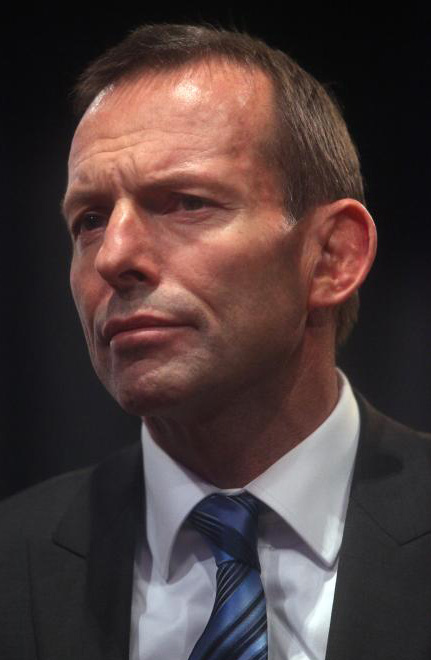
Australian Prime Minister Tony Abbott, who, unlike his conservative counterparts in the UK (David Cameron) and NZ (John Keys), strongly opposes marriage equality.

Australian Prime Minister Tony Abbott, who, unlike his conservative counterparts in the UK (David Cameron) and NZ (John Key), strongly opposes marriage equality.

The imposing 90 to 55 parliamentary majority enjoyed by the Liberal and National Parties over the ALP isn’t going to change (barring unforeseen by-elections, and even then only by one or two) before 2016, either.

The level of support for marriage equality amongst Labor MPs in Australia falls far short of their comrades in New Zealand and England & Wales, too. Instead of 90% support, only a slim majority of all Labor Party House of Representative MPs (and just under 60% of those that voted), did the right thing back in September 2012 – a low figure which undermines the party’s overall progressive credentials.

But the number of Liberal and National MPs who voted in favour of the Marriage Amendment Bill 2012 was even lower: zero. While acknowledging that there wasn’t a ‘formal’ conscience vote – meaning that members of the frontbench were prohibited from voting yes – we should remember that the Liberal Party in particular is fond of saying that all of its (backbench) MPs have a conscience vote on every single issue.

And yet, of the 60 or so Liberal and National MPs who theoretically could have exercised that freedom, just one – Senator Sue Boyce from Queensland – abstained. And, as of 1 July 2014, she is not even there anymore. Not a single one of her colleagues joined her in abstaining, let alone voting to support the legal equality of LGBTI Australians.

Moving forward just two and a half years, it stretches credulity to suggest that, in the event a formal conscience vote were provided today, the level of support for marriage equality from Coalition MPs would even come close to approaching the 45% plus figure reached by conservative party MPs in New Zealand and England & Wales.

Putting the scale of the numerical challenge in front of us even more bluntly, if the level of ALP support for marriage equality were to be the same in 2015 as it was in 2012 (60%, now the equivalent of 33 House of Representatives MPs), and taking into account the support of cross-bench MPs Adam Bandt, Cathy McGowan and Andrew Wilkie, reaching the magical 75 votes needed to secure passage would require the support of 39 Coalition MPs – or 44% of all Liberal and National MPs in the House of Representatives (NB This calculation excludes the Speaker’s vote).

Based on everything we know – and under the leadership of someone like Prime Minister Abbott, whose personal opposition would influence some of the MPs in the Liberal party room in particular to cast their vote against – that bar seems very high, so high that it is arguably unachievable.

Let’s be generous then, and assume that the level of support amongst Labor Party MPs has risen to two thirds, meaning 37 MPs voting in favour (which is possible, given that some intellectual ‘dead wood’ was removed in September 2013). That would still mean 39% of Liberal and National MPs having to vote yes to achieve even the slimmest of victories in the lower house.

Now, that might, just might, be possible. But, if you were a gambling person, would you be willing to put any money on that outcome?

With the future of marriage equality – something of much higher value than mere money – at stake, why aren’t we considering these numerical hurdles, and asking whether there might be other ways to reach 75?

One of these ways is if the Australian Labor Party were to adopt a binding vote on marriage equality for its Federal MPs, through a rule change at its July 2015 National Conference in Melbourne. That move would instantly change the equation – with a guaranteed 58 votes in favour (55 from the ALP, plus three from the cross-bench), only 17 Liberal and National MPs (or 19% of the total) would need to support a Bill to get it across the line.

Less than one in five would still be difficult, although it is eminently more achievable than the two in five required in the other scenarios described above. However, as the outcome of the 2012 legislation clearly demonstrates, even reaching this figure would still require a formal conscience vote for Coalition MPs.

Which brings me to my conclusion on this section. Looking at the numbers alone, it is highly likely that, in order for marriage equality to be passed in the current term of Parliament, we need for there to be both a conscience vote for Liberal and National Party MPs and a binding vote for Labor MPs.

I will readily admit that those dual, and potentially competing, objectives, may or may not be achievable – something I will examine later in this post (see ‘The Strategy’, below) – but before we get there, I want to talk further about the policy arguments for and against an ALP rule change, as well as the potential internal consequences of such a reform.

It’s Time to Bind: The Merits

As many people would be aware, one of the major achievements of the 2011 ALP National Conference in Sydney was the adoption of a commitment in the national platform to support marriage equality. As a result, the current platform includes the following (at paragraphs 126 and 127):

“Labor will amend the Marriage Act to ensure equal access to marriage under statute for all adult couples irrespective of sex who have a mutual commitment to a shared life. These amendments should ensure that nothing in the Marriage Act imposes an obligation on a minister of religion to solemnise any marriage.”

However, during the very same debate, that Conference passed a resolution that fatally undermined any chance of marriage equality passing in the last parliament and which, as we have seen above, continues to jeopardise its passage today. Specifically, “[c]onference resolves that the matter of same sex marriage can be freely debated at any state or federal forum of the Australian Labor Party, but any decision reached is not binding on any member of the Party.”

Putting aside numerical considerations for a moment, let’s examine the merits of such a position. Is there any justification for adopting such a position, for supporting legal equality irrespective of sexual orientation, gender identity and intersex status, but then allowing MPs to vote against such equality?

The short answer: no. And the long answer: no.

In short, there is absolutely no reason why, of all the various policy issues which the Australian Labor Party adopts binding positions on, marriage equality should be considered so ‘special’, so extraordinary, as to justify a disregard to, and breakdown of, solidarity on this issue.

Turning to this question in slightly (okay, a lot) more detail. The Australian Labor Party is founded on the labour movement, and as such has adopted at its core the principles of collective organising, of being stronger together than as individuals.

In its rules, these ideas of solidarity have translated into the practical requirement that all parliamentary representatives are bound to vote together on nearly all issues. The ALP has certainly never argued, as the Liberal Party has done, that its backbenchers enjoy a conscience vote on every single issue.

Any differences on policies are debated, often passionately, at conferences, and inside caucus rooms – but they are resolved there, and the Party adopts a united front on the floors of parliamentary chambers across the country.

Except when it doesn’t. On a small number of issues, the Labor Party does have a history of allowing conscience votes, usually for things that are described as ‘matters of life and death’, although it is hard to see how laws relating to homosexuality, or LGBTI rights more generally, have much to do with that criteria.

The problem for those that would try to use the history of LGBTI-related conscience votes to argue for a free vote on marriage equality today is that, for each of these votes, when we reflect on them critically, it is clear that the granting of a conscience vote was wrong. Wrong on principle, and wrong in practice.

For example, the 1984 law decriminalising homosexuality in NSW was not formal Government legislation – it was a private member’s Bill, put forward by the then Premier, the late Neville Wran, and voted on by all parliamentarians, including Labor MPs, through a conscience vote.

Does anyone who is involved in public life today – anyone outside the religious fundamentalist fringes of society – actually believe that this legislation was wrong? Is there anyone in the modern ALP who is prepared to say that Labor MPs should have been allowed to vote against the decriminalisation of male same-sex sexual intercourse in 1984? Anyone at all?

The counter-argument is probably that the vote on decriminalisation took place thirty-plus years ago, and that times, and attitudes, have changed in the decades since. Fine, let’s look at a more recent example. It took until 2003 for the NSW Parliament to equalise the age of consent between male same-sex sexual intercourse and mixed-sex intercourse.

Again, it was achieved through a conscience vote, and again a small number of ALP MPs (including, it should be pointed out, a current Federal shadow minister, together with Eddie Obeid and Joe Tripodi) voted against this proposal. Just over a decade later, would anyone seriously try to mount the argument that ‘gay sex’ should attract a higher age of consent than ‘straight sex’? Or that the ALP should have abandoned the principle of a binding vote on this issue? I suspect the answer would be a resounding no.

There are other examples, from other jurisdictions, as well as examples relating to other LGBTI topics (such as adoption or parenting), but each has the same outcome – a conscience vote which opponents of equality argue for vociferously at the time, citing all sorts of ‘moral hazards’, but which looks patently ridiculous in hindsight.

Those that say the history of conscience votes on homosexuality inside the ALP justifies a free vote on marriage equality now, should feel free to explain how the use of a conscience vote in each of these cases was justified – because these are the precedents, and this is the intellectual ‘legacy’, with which they are associating.

If they cannot demonstrate that those conscience votes were morally justified – and I would strongly suggest they can’t – then perhaps they should reconsider their arguments for a conscience vote on marriage equality today. Otherwise, they will simply be consigning the Labor Party to making the same mistake again, and again, and again.

Instead, I believe the Labor Party should fast forward through the all-too-frequent embarrassing ‘phase’ when it allows some MPs to vote for legal discrimination against a minority group before it belatedly corrects itself, and reach the right conclusion now – which is that all of its MPs should be bound to vote in favour of marriage equality in this term.

On a related topic, some have argued that the ALP should adopt conscience votes relating to the broad topic of ‘marriage’ per se (not just whether LGBTI couples should be included, but also on other marriage-related matters such as divorce). However, there isn’t a strong historical precedent for their use here, either.

In one of the more bizarre political speeches in recent times, speaking against marriage equality in her address to the ALP National Conference in December 2011, then Prime Minister Julia Gillard argued that a conscience vote should be granted because a conscience vote had been granted to Labor MPs with respect to the ‘no fault’ divorce reforms in 1975 (for the full text of her speech see here: <http://www.theaustralian.com.au/archive/national-affairs/julia-gillards-address-to-the-alp-national-conference-on-a-conscience-vote-for-gay-marriage/story-fnba0rxe-1226213001184 ).

Then Prime Minister celebrates after a conscience vote is approved at ALP National Conference in December 2011, a move that destroyed any chance of marriage equality being passed in the last Parliament, and continues to make passage difficult today.

Then Prime Minister Julia Gillard celebrates after a conscience vote is approved at ALP National Conference in December 2011, a move that destroyed any chance of marriage equality being passed in the last Parliament, and continues to make passage difficult today.

Gillard did not even attempt to acknowledge the fact that, from the time then Prime Minister John Howard introduced his ban on marriage equality in 2004, until her speech that day, all ALP Parliamentary Members had been subject to a binding vote on marriage broadly, and marriage equality specifically – they had been obliged to vote against LGBTI equality.

This glaring omission, ignoring the most recent seven years and instead grasping at an example from 36 years prior, was necessary because there was no intellectual rationale for that binding vote to become a conscience vote in 2011. The substantive arguments for and against marriage equality had not changed, the rights and wrongs of the issue were no different than they had been in 2004, or 2007, or 2009.

The only thing that had changed was the numbers within the ALP (something I will come to in the next section). In practice, there was no new ‘moral hazard’ which had suddenly transformed this issue from something which the Labor Party could bind on, to something so complex or controversial that it required a free vote.

There wasn’t even a legitimate question of religious freedom at stake – because, as made clear in paragraph 127 of the platform (see above), no church or religious group would be obliged to perform an LGBTI-inclusive marriage ceremony. This was a secular party, supporting the position that a secular Parliament should vote in favour of LGBTI relationships being recognised as equal under secular law. Nothing more and nothing less.

The ridiculousness of the ALP’s position – in supporting a platform position in favour of marriage equality, but then allowing its MPs to depart from that platform whenever they wished – is revealed when we compare it with the other main social policy issue currently the source of controversy within the ALP (and across Australia generally): asylum seeker and refugee policy.

Now that is an issue which is genuinely ‘life and death’, with policies that have directly led to the murder of Reza Berati, in Australian custody in an offshore detention centre which the last ALP Government re-established, which continues to drive scores of asylum seekers in numerous camps both here and abroad to, and beyond, breaking point and yes, which has also involved several mass drownings at sea.

If ever there was a subject that raised substantive moral and ethical concerns that would be it. And yet there is no conscience vote on that issue, nor is there a push for one (and, it must be added, nor do I believe there should be one – while obviously I think current ALP policies on refugees are appalling, the only way they can be changed is in Government, with all ALP members bound to vote in favour of a more humane approach).

The moral and ethical concerns of those who would oppose marriage equality, because of their belief that marriage is something which must be reserved solely for heterosexual relationships, pale in comparison, indeed fade into complete insignificance, when assessed against those concerns raised by refugee policies.

In fact, one could assert that in contrast to refugee policy the topic of marriage equality looks like an ‘ordinary’ issue, and definitely something which can be resolved in the ‘ordinary’ way – by a Conference vote, for and against, and then implemented by a binding vote on Labor’s parliamentary representatives.

But there is one last comparison that I wish to make which I think shows that the ALP’s position in favour of a conscience vote on marriage equality is not just ridiculous, but outrageous as well.

Imagine, for a second, that in 2011 the original ‘White Australia Policy’ still existed, and that in response the Labor Party National Conference adopted in its platform a position that it would remove discrimination based on race from all immigration policies and laws. Now imagine that same Conference then turned around and said that ALP MPs could vote against these changes if they believed that some migrants were less deserving of rights simply because of their race.

Outrageous, isn’t it? I believe that not only would the modern ALP not allow a conscience vote in these circumstances, it would expel, without a moment’s hesitation, any MP who even threatened to crossed the floor. And yet the only difference between that example and the issue of marriage equality is that the former is about racial equality, and the latter is about the equality of all people irrespective of sexual orientation, gender identity and intersex status.

As this comparison makes abundantly clear, while overt discrimination on the basis of race is, thankfully, not permitted (at least in the Party’s rules), there remains a special privilege for some MPs within the Labor Party to vote against the fundamental rights and equality of lesbian, gay, bisexual, transgender and intersex Australians.

12 months ago, Commonwealth Attorney-General Senator the Hon George Brandis encountered significant, and entirely justified, criticism, including from the ALP, when he told Parliament that “people have the right to be bigots.” But isn’t this criticism just a little bit hypocritical when, at the same time, Labor’s rules state that Federal Members of Parliament have the right to be homophobes?

I’ll concede that some people don’t believe opposing marriage equality necessarily equates with ‘homophobia’ (I do, but, to some extent, that is a debate for another day). Nevertheless, the point remains: there isn’t really any substantive difference between the Attorney-General saying that people have the right to be bigots, and the Australian Labor Party saying that its parliamentary representatives have the right to discriminate against LGBTI people.

Just as it has done, so effectively, in the racial vilification debate, the Labor Party should be standing up for members of a minority group who are vulnerable to discrimination on the basis of their attributes. Instead, while its platform says the ALP supports finally conferring LGBTI Australians with ‘1st class’ citizenship, its rules allow a significant proportion of its MPs to continue to vote to entrench our 2nd class status.

It’s time to say that this situation is offensive – as I believe many people, both inside and outside the ALP, find it to be.

It’s time to point out that allowing a conscience vote on marriage equality is a gross violation of the principle of collective organising that lies at the heart of the ALP, a violation that has no merit or justification in principle whatsoever.

It’s time to say that allowing conscience votes on LGBTI rights of any kind, and permitting some Labor Party parliamentarians to vote against legal equality on the basis of sexual orientation, gender identity and intersex status, is no longer acceptable in a contemporary political party that likes to refer to itself as progressive.

It’s time for the Australian Labor Party to adopt a binding vote in favour of marriage equality.

It’s Time to Bind: The Split?

When the merits of the arguments for and against a binding vote are all said and done, there are only two things left to debate – the internal consequences of adopting a binding vote for the ALP, and the external strategic considerations, for marriage equality campaigners, concerning when to push for such a vote.

Turning first to the internal consequences. There is an accusation which is made against people calling for a binding vote on issues like marriage equality, that we are somehow trying to ‘split’ the party. It is certainly an accusation which I would expect to hear frequently in the lead-up to July’s National Conference, particularly as the push for a binding vote gathers steam.

In fact, the exact opposite is true – those who staunchly oppose being bound are the ones who threaten to split the party because of their own narrow self-interest.

Supporters of marriage equality inside the Australian Labor Party have spent more than a decade meticulously playing by the rules. From the bleak days of August 2004, when the Latham-led Opposition chose to roll over and vote against marriage equality in response to John Howard’s attempted political ‘wedge’, through the following six years slowly building the case for full equality, while also gradually addressing other areas of discrimination (including securing de facto relationship recognition at the federal level for the first time in 2008).

By 2011 the time had come to make the final push for a change to the national platform. But that delay had come at a cost. For more than seven years, progressive Federal MPs had, in line with the Party’s binding policy position, been voting against LGBTI equality.

This included openly lesbian Senator Penny Wong, who was bound from the first vote in August 2004, until the December 2011 National Conference, to vote against her own equality, and that of her relationship. Her position invited, and attracted, much opprobrium from her own community, with suggestions that she had sold them out – even though she was playing the long game.

The same is true of out (and sadly, now out of Parliament) Senator Louise Pratt, who was bound to vote against the equality of her community from the time she was sworn in, in July 2008, until the end of 2011. But it was not just LGBTI MPs that were affected. Any progressive MP who genuinely believed the stance against marriage equality was discriminatory and wrong (and there were plenty from the very beginning), accepted these restrictions, and the criticisms that went along with them.

There were no public threats to cross the floor and bring forth a split in the Party – just a quiet determination to slowly build support towards an eventual change to the platform. That is exactly how a collectivist party should operate. And, in the lead up to the last National Conference it was clear that these tactics had paid off, with momentum firmly on the side of the angels.

In absolutely no coincidence whatsoever, that was also the moment opponents of marriage equality inside the ALP suddenly discovered that this topic was an ethically fraught one, and therefore required a conscience vote. Note that they did not make these arguments at the National Conferences of 2006 or 2009, both of which had occurred during the period when a binding position was being imposed on progressives.

No, the opponents of marriage equality only truly discovered the ‘benefits’ of a conscience vote when the number of people supporting equality inside the Party had finally outgrown the number of people opposed, and that as a result there was a very real risk that a binding vote might actually be applied on them.

It is plain to see how this Damascene conversion, adopted in quick succession by opponents of equality from the then Prime Minister down, was in fact intellectually bankrupt. In essence, they were saying that, while it was perfectly acceptable to impose a binding vote against progressives from 2004 to 2011, it was totally unacceptable to impose a binding vote on social conservatives from 2011 onwards.

In short, “binding votes are for people like them, not people like me.” That, my friends, is the antithesis of collectivism.

But worse than this blatant hypocrisy are the threats of socially conservative ALP MPs who state, usually in private or off-the-record, but occasionally in public, that even if the ALP were to adopt a binding position in favour of marriage equality, they reserve the right to thumb their noses at the bonds of solidarity and instead cross the floor.

As reported by Phillip Coorey in the Sydney Morning Herald at the start of the 2011 conference: A handful of Right MPs, including Chris Hayes from western Sydney, told the Herald yesterday they would never vote for gay marriage, even if party policy dictated it. “You do believe in certain things. I can’t apologise for my beliefs,” Mr Hayes said. (full article: <http://www.smh.com.au/national/we-wont-vote-for-gay-marriage-even-if-party-changes-its-position-say-labor-right-mps-20111130-1o766.html#ixzz371gEEuUI )

In more recent times, Mr Hayes has been joined by another Federal Parliamentary colleague in saying that, no matter what the supreme decision-making body of the Australian Labor Party decides, his own views against LGBTI equality mean that he feels no requirement to be bound by it.

As reported by Phillip Hudson in The Australian on 4 April 2014, then candidate, now Senator, Joe Bullock, declared that, “[i]f the party decides it [marriage equality] is not a conscience vote and expels me, so be it.” (full article: <http://www.theaustralian.com.au/national-affairs/labor-senate-candidate-joe-bullock-sorry-for-offensive-speech/story-fn59niix-1226874445978 )
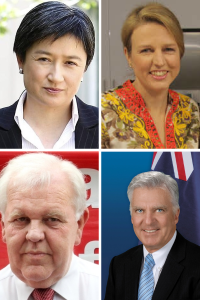
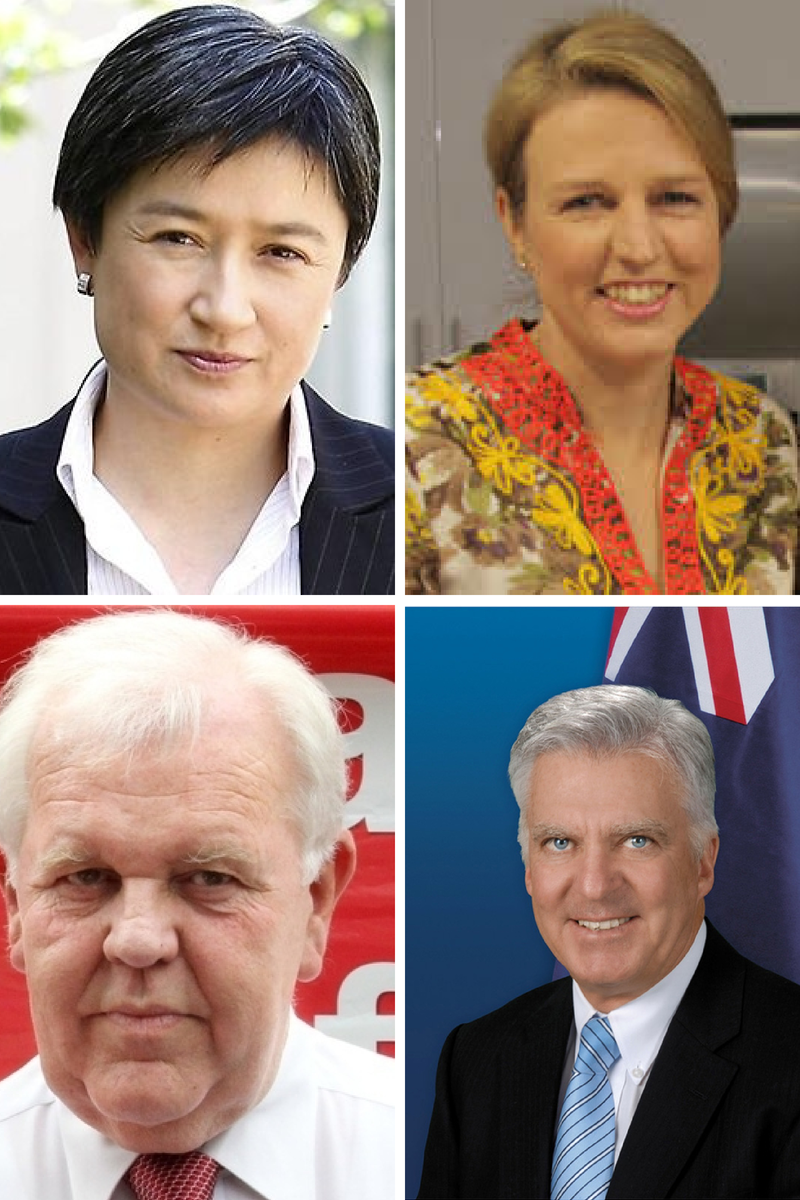
If a binding vote was good enough for Senators Wong & Pratt before the 2011 National Conference, it is good enough for Mr Hayes and Senator Bullock in 2015.

If a binding vote was good enough for Senators Wong & Pratt before the 2011 National Conference, it is good enough for Mr Hayes and Senator Bullock in 2015.

It is hard to work out which part of these comments is most offensive. Whether it is the complete disregard for not just the rules of the party of which they are representatives, but its philosophical underpinnings too. Or the absolute sense of personal entitlement which spouts from their mouths (for the record, this attitude, that an MP considers themselves above the party, is one ‘age of entitlement’ that I would definitely like to see come to an end).

But for me, it is not something either Mr Hayes or Senator Bullock said which is most repugnant. It is what they didn’t say. Neither finished their statement by saying that they would resign from Parliament.

Any member of the Australian Labor Party, from Federal Opposition Leader to local branch member, is free to decide at any time that they can no longer abide by the Party’s rules, and therefore to resign. But, for Members of Parliament, elected as candidates for a collectivist party, standing on and bound by a collectivist platform, the consequence of doing so should be that they resign their seat in Parliament as well.

The fact that neither Mr Hayes nor Senator Bullock committed to doing so speaks volumes about their honour, or (arguable) lack thereof.

Because, as much as (some) News Ltd columnists and the Australian Christian Lobby would try to turn any MP who crossed the floor on this issue and was subsequently expelled into some sort of martyr, abandoning solidarity but retaining the seat in Parliament which they secured as a member of, and with the assistance of, the Australian Labor Party would, in my view, be the height (or indeed depth) of dishonour.

The attitude of Mr Hayes and Senator Bullock also amply demonstrates exactly who would be responsible for any ALP ‘split’ in the event that the Party does adopt a binding vote.

It would not be the fault of those who painstakingly make their case in the Party’s internal forums, who secure the passage of a binding resolution at the next National Conference in July 2015, all in accordance with the Party’s rules and processes.

No, any split would be the responsibility of those who would do their best to burn the place down if they did not get their way.

I used to think that the most appropriate analogy for this situation – of the ALP continually succumbing to demands for ‘conscience votes’ whenever social conservatives refused to abide by a particular decision – was that of parents giving in to the tantrums of a two-year old. That, by continuing to give that toddler what it wants rather than saying “no”, the Labor Party had created a monster that keeps on demanding more and more and more.

On reflection, however, that is grossly unfair on two-year olds. They don’t actually know what they are doing. Well, they might, but they are not yet old enough to be held liable for their behaviour.

Whereas the people who make these threats, time and time again, know exactly what they are doing. They are blackmailing their own political party, a group that they should hold and demonstrate allegiance towards, knowing that the party is more likely to give in to their extortionate demands than stand up to them.

Well, the time has come to say no more to their hypocrisy, and no more to their blackmail. It is no longer acceptable to simply give in to people who have zero respect for the party of which they are a member. Who believe that they alone have the right to deviate from a collectively-determined platform which is binding on everyone else.

It’s time to push for a binding vote in favour of marriage equality on all ALP Members of Parliament. And, if there are some MPs who decide they cannot abide by that decision (and there may well be some, although probably far fewer than many people expect), then by all means, the door is that way, but the seat should stay here.

In practice, any member who does decide to leave, ‘split’ in terms of their commitment to the party a long time ago. Besides, these are people whose one noteworthy ‘achievement’ in life will be having left their political party, while a sitting member of parliament, because they couldn’t live with the idea of all Australians being equal regardless of sexual orientation, gender identity and intersex status. Their loss would not really be any loss at all.

It’s Time to Bind: The Strategy

Questions about parliamentary numbers, internal ALP rules and any potential party ‘split’ are actually the easy part of this discussion. The most complex issue in this entire debate concerns strategy, namely whether now is the appropriate time for marriage equality campaigners to restart the push for a binding vote.

And I will begin this section by acknowledging that different people, well-motivated and on the same side of this campaign (the broader movement for marriage equality), will arrive at a different assessment on this subject. There are people who I respect who will argue that any push for a binding vote inside the ALP jeopardises the overall campaign and therefore should be abandoned.

But, while I understand their opinions, I respectfully disagree.

For me, the framework for approaching this issue comes in the form of the following three questions – presented together with my answers:

i) Is there an inherent philosophical inconsistency in pushing for a binding vote inside the ALP while also pushing for a conscience vote in the Coalition? No.

ii) Would a binding vote in the ALP automatically mean there is no chance of a conscience vote inside the Coalition? No.

iii) Does pushing for a binding vote inside the ALP make it more difficult to achieve a conscience vote within the Coalition? Possibly.

Looking at these issues in more detail. The answer to the first question – concerning philosophical inconsistency – might seem counter-intuitive to some, but here is why I answered “no”.

First, we should always remember that there is nothing inherently ‘good’ about a conscience vote (there is nothing inherently ‘bad’ either, unless you are part of a collectivist organisation). A conscience vote is simply a process, an instrument, a means to an end.

I am sure nearly all marriage equality campaigners would be satisfied if there was both a binding vote inside the ALP and a ‘party vote’ in the Coalition, not only meaning that marriage equality was passed, but also that it would be done with a large majority and in a spirit of true bipartisanship.

Sadly, that is not going to happen. There is no chance of the Liberal and National Parties, in their current forms, adopting a formal position in favour of full LGBTI equality. Hence, it is entirely rational to push for a conscience vote within the Coalition, both to improve the overall numbers in the Parliament, and to ensure that no MP is forced to vote against the fundamental rights of other Australians on the basis of their sexual orientation, gender identity or intersex status.

On the other side of the political aisle, the ALP already has a conscience vote, which means the only procedural change which can increase the share of Labor Party MPs voting in favour of marriage equality is to adopt a binding vote instead. From an advocate’s point of view, again, it is perfectly justifiable as a strategy to be arguing for the Australian Labor Party to maximise the number of its MPs voting in support.

Meanwhile, the same philosophical arguments would still apply – it would remain the case that no MP would be forced to vote against the fundamental rights of their fellow Australians (the same as for the Coalition).

No corresponding argument can be made by those opposed to marriage equality. This is because the right to get married, in secular law, has exactly zero impact on anyone else’s human rights. More couples would be married, and recognised as such by the State. LGBTI Australians would finally be treated equally in the Marriage Act 1961. That is all.

No-one else’s rights to be married, or have their own marriages recognised, would be affected. No religion’s right to recognise marriages (or not recognise, as the case may be) within their own religion would be compromised. And, despite whatever the Australian Christian Lobby and other extremists might try to argue, there is no fundamental right to impose one’s religious beliefs onto others, or to deny other people their human rights for religious reasons.

Which means that, as well as a compelling numerical reason to argue for a binding vote within the ALP, and a conscience vote inside the Coalition, there is also a philosophical approach which can provide it with moral justification.

In response to the second question, while what the ALP decides could have an influence on what position the Liberal and National Parties adopts (see below), it is definitely not automatic. For example, we have already witnessed a parliamentary vote where one side was ‘bound’ and the other had a conscience vote – in September 2012, with the Liberal and National Parties deciding not to follow the ALP’s lead in adopting a conscience vote.

Similarly, even if the ALP was to retain a conscience vote for the remainder of this term, there is no guarantee that Coalition MPs will end up with a free vote. While it appears that some progress is being made inside the Liberal and National Parties, the ultimate decision still rests with the party room – and there remains a real chance that there will be no Coalition conscience vote this side of the 2016 election regardless of what Labor does.

Of course, it makes no sense to deny at least the potential that the push for an ALP binding vote may make it more difficult to achieve a conscience vote within the Coalition, which is why I answered the third question “possibly”.

But, just because that outcome is a possibility (how big that possibility is depends on one’s subjective point of view), does not necessarily mean we shouldn’t try. There are, for example, several reasons why I believe we should continue to pursue a binding vote within the ALP while also acknowledging and assuming this risk.

First, as I noted in ‘The Numbers’ section earlier, it is highly likely that for any Bill to succeed in this term of Parliament, it will need both a binding vote inside the Labor Party and a conscience vote inside the Coalition. So it seems logical to me that, while groups like Australian Marriage Equality make the case for a Liberal and National Party conscience vote, other groups (and I’m looking squarely at you, Rainbow Labor, among others) simultaneously pursue a binding vote inside the ALP.

Second, there is the question of timing. If the ALP is to adopt a binding vote, it can only be done at its National Conference, to be held on July 24-26, 2015 in Melbourne. That will be almost two years into this three-year term of Parliament (and approaching four years since the ALP first adopted a conscience vote).

If the Coalition hasn’t agreed to a conscience vote by then, then it is highly unlikely to agree to one at any point this term (and, if it is willing to say no this term, under sustained pressure from groups like AME and in the face of a growing majority of community support for marriage equality, it could very well say no next term, too).

Third, if we were to make an honest assessment of where things stand at this moment, it is still more likely than not that marriage equality will fail this term. While there is a (very) small chance that a conscience vote on both sides could get the job done, or that a combined ALP binding vote/Coalition conscience vote secures its passage, most possible permutations lead to the Bill’s failure.

Which means we must keep a close eye on the next term of Parliament, to be decided at the 2016 Federal election. And, given that election looks like it will at least be competitive, wouldn’t there arguably be more benefit than cost in having one of the two ‘parties of government’ standing on a platform of a binding vote?

Such a position would mean that marriage equality would have a strong chance of passage if the ALP were to win Government (success would be almost guaranteed) or if there was a close election result either way (with only a small number of Coalition MPs needing to break ranks to secure victory).

On the other hand, if the ALP continues to adopt a conscience vote, the success of marriage equality will remain dependent on whether the Liberal and National Parties also adopt a conscience vote, and even then on the vagaries of the balance between progressives versus social conservatives inside both the ALP caucus and Coalition party room.

Fourth, there is an argument that the ALP adopting a binding vote at the 2015 National Conference would actually increase pressure on the Liberal and National Parties to agree to a conscience vote ahead of the 2016 poll. After all, opinion polls consistently show support for marriage equality standing at a minimum of 55-60%, increasing with each passing year, and strongest amongst young voters (ie new voters entering the ‘electoral market’).

In this context, it would take a truly ‘courageous’ party (in the Sir Humphrey sense of the word) to bind itself to a position shared by at most a third of the electorate – and a diminishing proportion at that. I’m sure we can all think of a few Coalition MPs who would have extra incentive to push for a conscience vote in such a scenario (the name of an Australian TV prison drama springs to mind, for some reason).

As I said before, different people will hold different views about some of these strategic considerations. And, depending on how they see them playing out, I completely respect that they might arrive at the conclusion that we should not be pushing for an ALP binding vote at this point in time.

But I hope that they are also willing to acknowledge that there is no absolute ‘cut and dried’ case that the only way marriage equality can be achieved is through a conscience vote on both sides. That on this rainbow-hued issue, there are at least some strategic shades of grey.

In that case, where at a minimum there is doubt about whether to pursue a binding vote or not, I submit that we should fall back on our values, on what is ‘right’. From my point of view – and this post is simply my own perspective – I think we should be guided by the arguments for and against a binding vote. And, as discussed earlier (see ‘The Merits’), that case is open-and-shut: the ALP should adopt a binding vote in favour of marriage equality.

Putting it another way, if there is a strong case that a binding vote is the correct ideological position to take, then it would take an equally strong strategic counter-argument to tell progressive members of the ALP not to purse that objective at this year’s National Conference. To suggest to them that, even though a binding vote is the right thing to do, you should explicitly not pursue it because members of the Coalition are yet to secure a conscience vote. In my opinion, no such ‘overwhelming’ strategic argument exists.

Instead, I believe we should do exactly the same thing as we did at the 2011 National Conference – campaign for a binding vote. It was the right thing to do then. And it will still be the right thing to do come July. I hope that, after reading these arguments, you agree.

One final point. Some might argue that we should wait for a conscience vote (presumably on Senator Leyonhjelm’s flawed Freedom to Marry Bill) to be held at some point in the next three to four months and, presuming it loses, to only push for a binding vote following that defeat.

But there are two problems with that argument. The first is that it took most of 2011, in the lead-up to December’s conference, to build momentum for the platform change. To have the same chance of success at this year’s conference means starting campaigning now (or, to be frank, yesterday). And that’s even leaving aside the problem that we don’t even know if Senator Leyonhjelm’s Bill will be debated, let alone voted on, before July.

Second, I believe that doing so would expose the marriage equality movement to (probably quite fair) criticisms that it was merely being opportunistic, or disingenuous, because it was only pushing for a binding vote because the conscience vote had lost, and not because a binding vote was also the correct position to take. I would prefer to take this stance from the beginning of the campaign so that we can have credibility when it comes time for the debate on the floor of Conference.

Overall, while ‘strategic considerations’ are definitely the most complicated part of this debate, I think it leaves us exactly where we have been all along: that it’s time for the Australian Labor Party to adopt a binding vote in favour of marriage equality.

It’s Time to Bind: Take Action

As noted throughout this post, the main decision on whether the ALP adopts a binding vote on marriage equality will be made at the next National Conference, to be held in Melbourne on 24, 25 and 26 July 2015 (unless of course marriage equality is passed beforehand, in which case I will have been wrong, but very gladly so).

That means we now have only four months left to make the case for change, to persuade the Opposition Leader, the Hon Bill Shorten, his colleagues in the Parliamentary Labor Party, and all delegates to the National Conference (well, the majority of them anyway), that a binding vote is essential to achieving full marriage equality.

The first two places to contact are the Opposition Leader himself, and the Australian Labor Party Head Office directly. Their contact details are:

Twitter (NB Please use the #ItsTimeToBind hashtag)

Bill Shorten @billshortenmp https://twitter.com/billshortenmp

Australian Labor @AustralianLabor https://twitter.com/AustralianLabor

Suggested tweet: Hey @AustralianLabor & @billshortenmp, I believe #ItsTimeToBind in favour of #marriageequality. Please support a binding vote on all MPs

Call

Bill Shorten (02) 6277 4022

Australian Labor (02) 6120 0800

Write

The Hon Bill Shorten MP

Leader of the Opposition

PO Box 6022

House of Representatives

Parliament House

CANBERRA ACT 2600

Australian Labor

5/9 Sydney Avenue

BARTON ACT 2600

Email

Bill Shorten Online contact form: http://billshorten.com.au/contact

Australian Labor Online contact form: http://www.alp.org.au/contact_us

If you are in need of inspiration for what to write or say, how about something like this:

“I support the equal right of all Australians to marry, irrespective of sexual orientation, gender identity and intersex status.

While I welcome the decision of the 2011 ALP National Conference to adopt a platform position in favour of marriage equality, I strongly oppose the decision to provide a conscience vote, allowing some Labor MPs to vote against the fundamental rights of lesbian, gay, bisexual, transgender and intersex Australians.

I believe it’s time for the Australian Labor Party to adopt a binding vote in favour of marriage equality. I call on you to support a resolution which makes support for marriage equality a binding position on all ALP Federal MPs at this July’s National Conference.”
Will Federal ALP Leader Bill Shorten 'do the right thing' and support a binding vote at the 2015 ALP National Conference?

Will Federal ALP Leader Bill Shorten ‘do the right thing’ and support a binding vote at the 2015 ALP National Conference?

If you liked this post, if you agree with it, or even if you think it is simply worthy of further debate, then please also share it with others.

And if you want to stay up to date with more on this issue, please follow me on twitter (@alawriedejesus https://twitter.com/alawriedejesus ).

You can also find out more about the marriage equality campaign generally, including the #ItsTimeToBind campaign, by liking the Equal Marriage Rights Australia Facebook page: <https://www.facebook.com/GMRA1

Finally, I wanted to say thank you for reading what has turned out to be a pretty lengthy post – I appreciate your interest in something which I feel so passionately about. I do sincerely believe that we can achieve a binding vote at this year’s ALP National Conference, but only if we start campaigning for it right now.

So let’s get to work, to achieve a binding vote in support of marriage equality inside the ALP, and most importantly a legislative victory for marriage equality inside the Australian Parliament. Because, as we know all-too-well by now, we’ve waited long enough.


10 Things I Hate About Marriage Inequality. #6: Because it Lets MPs Off the Hook

This reason is closely related to number 7 (“Because Sometimes it Overshadows Other Important LGBTI Issues”), because it too derives from the fact that marriage equality now dominates the Australian LGBTI policy landscape.

As a result of this dominance, the position that Members of Parliament – indeed, all candidates for elected office – take on marriage equality has come to be the ‘primary’ LGBTI question which they are asked during election campaigns. Of course, in many ways that makes sense, given the high level of interest in this issue, both in our community and across society.

The answer that each MP gives can also be a useful pointer to how they may vote on other issues. An MP who says they support marriage equality is assumed to be more likely to support LGBTI anti-discrimination laws, or inclusive aged care services, or safe schools.

In this way, the simple yes/no, good/bad answer on marriage equality has the potential to serve as ‘shorthand’ for whether they are likely to vote yes or no on other reforms important to our community. In fact, I used this approach (analysing past votes on marriage equality) just this week in helping to estimate whether particular MPs might be more or less sympathetic on an education-related initiative.

But we run into significant difficulties when this question becomes the only question that we ask of our MPs, when the only calculation that we make about whether an MP is ‘good’ or ‘bad’ on LGBTI issues is whether they support marriage equality or not.

First and foremost, if we only ask about marriage equality, then we are letting our MPs ‘off the hook’ in terms of their responsibilities to deal with the full range of issues which are important to and affect the LGBTI community.

If the only LGBTI topic they ever have to talk about is whether or not we can get married, then we are not making them talk about how to achieve equality of outcomes in health, in education and employment, we are not making them discuss how the state should support diversity in sexual orientation, gender identity and intersex status.

Second, we are letting our MPs off the hook because answering yes to marriage equality is, when you think about it, actually fairly easy. As the long and drawn out debate over the past 12 years has demonstrated, there really isn’t much of a debate to be had at all – either you support the equal recognition of our relationships, or you do not (for more on that particular issue, see 10 Things #5).

There are many other LGBTI issues which are either more complex (for example, what are the best or most effective ways to reduce the over-representation of LGBTI young people in terms of mental health issues, depression and suicide), or which many of our MPs have never had to genuinely turn their minds to (such as where limits on religious exceptions to anti-discrimination laws should be drawn). To say yes to marriage equality is simple – we should be making our MPs work a little bit harder than that in order to get our support.

Third, by not asking about a range of issues, we run the risk of letting off the hook those MPs who are supportive of marriage equality but who do not support other LGBTI issues. For example, it is possible to support inclusive marriage laws but also to support the exclusion of same-sex couples from the right to adopt or to access assisted reproductive technology (just ask Portugal, where gay couples can marry but not adopt or use ART).

It is also possible (and in practice it is far too common) for MPs to support marriage equality, but to simultaneously believe that religious organisations should be able to discriminate against lesbian, gay, bisexual and trans* people, in schools, in health care, in employment, in pretty much any context. In this light, the simple yes/no, good/bad ‘shorthand’ fails us – because it is possible to support marriage equality, but not support LGBTI equality more broadly.

Conversely, it is possible to oppose marriage equality but be supportive on other LGBTI reforms. The best example of this was former Prime Minister Julia Gillard. Her position on marriage equality – to oppose it, while also supporting a conscience vote inside the Labor Party, thereby ruining any chance of its passage in the last parliament – was unconscionable, and, from my perspective at least, can never be forgiven (for more on that particular issue, see 10 Things #4).

And yet, Gillard’s period of leadership saw more pro-LGBTI reforms than most, if not all, of her predecessors. The introduction of LGBTI anti-discrimination protections in Commonwealth law for the first time, progressive Guidelines on the Recognition of Sex and Gender, funding for the QLife counselling initiative, PBS listing for Gardasil vaccinations for boys and a national LGBTI Ageing and Aged Care Strategy, among other things, all happened during her (brief) tenure.

All of which goes to show that the position of our MPs on LGBTI issues is much more complicated than a single question, and much more layered than any simple yes/no answer could hope to capture. Marriage equality supporters can be poor on other reforms. Alternatively, MPs who oppose marriage equality can be supporters on other important issues.

Which means we do ourselves a great disservice if the only thing we ever talk about with MPs is whether they support our equal right to get married. We cannot, we must not, let them off the hook by allowing them to ignore the full breadth of LGBTI issues. We need to be better at putting more questions to them, and above all, we need to be better at asking more of them.

10 Things I Hate About Marriage Inequality. #7: Because Sometimes it Overshadows Other Important LGBTI Issues

In a similar way to reason #9 (“Because sometimes I feel guilty for having #firstworldproblems”), one of the things that frustrates me about marriage equality is that this issue has come to dominate domestic LGBTI politics to such an extent that it can, and has, overshadowed other important issues.

Now, that is not necessarily a criticism of marriage equality campaigners, including Australian Marriage Equality. They have done a fantastic job of promoting marriage equality and ensuring that, over the past 12 years, it has gone from what could be described as a ‘minority concern’, to one of widespread acceptance across the Australian population (even if our parliamentarians are taking far too long to catch up).

It is also not to dismiss the fact marriage equality is an important issue in and of itself – obviously, as someone who is engaged themself, I understand the emotional pull at the heart of this issue which compels so many people to take action (and any regular reader of this blog would note the high volume of posts which relate to the denial of this right, not just in Australia but around the world).

But, and this is a big but, I am not sure that this completely justifies the disproportionate attention, and in some cases, disproportionate energy, which has been given to the issue of marriage equality by our community, especially over the past four or five years.

That statement might be a little bit controversial, so allow me to provide some context before you make up your mind. Let’s compare, for example, the community response (both our own, and the broader Australian community) to marriage equality with that regarding three other important LGBTI issues.

In April 2012, the House of Representatives Standing Committee on Social Policy and Legal Affairs inquiry into two marriage equality bills conducted an online survey – to which 276,437 Australians responded (including more than 177,000 people in favour).

In subsequent months, the related Senate Standing Committee on Legal and Constitutional Affairs Inquiry received a record number of formal submissions – approximately 79,000, with roughly 46,400 people taking the time to write in support of a Marriage Act that does not discriminate on the basis of sexual orientation, gender identity and intersex status.

Around the same time, the Gillard Government was preparing legislation which would, for the first time ever, provide anti-discrimination protections under Commonwealth law on those exact same grounds.

These protections were contained, along with a range of other measures, in the Human Rights and Anti-Discrimination (HRAD) Bill 2012. The Exposure Draft of that legislation was considered by the same Senate Committee, and a still ‘healthy’ 3000 submissions were made (although, it has to be pointed out, many did not address the specific issue of LGBTI anti-discrimination but were in fact about other aspects of the Bill).

The HRAD Bill was eventually replaced by the Sex Discrimination Amendment (Sexual Orientation, Gender Identity and Intersex Status) Bill 2013, which, as the name suggests, focused exclusively on LGBTI protections. When it too was considered by the Senate Standing Committee on Legal and Constitutional Affairs, in June 2013, just 90 standalone submissions were made. Nine. Zero. Or about 0.11% of the total submissions on marriage equality, to the same Committee, just 12 months prior.

To choose another example – during 2012 and 2013 the Australian Curriculum, Assessment and Reporting Authority (ACARA) drafted the national Health & Physical Education curriculum, something which had the potential (or should have anyway) to help young lesbian, gay, bisexual, transgender and intersex students in classrooms around the country.

Except, as I have written previously, the first draft of that curriculum did not even mention the words lesbian, gay or bisexual, erroneously included trans* and intersex in the same definition (and even then only referred to them in the glossary!) and essentially ignored sexual health and HIV.

That draft was open for public consultation from December 2012 to April 2013. In four months, 279 online surveys were completed, as well as 99 formal written submissions. Removing submissions from organisations (mostly from non-LGBTI health and education groups), there were exactly 14 submissions from individuals to that public consultation. One. Four.

In 2014, the HPE curriculum, together with all other subject areas, were referred by the then Commonwealth Education Minister, the Hon Christopher Pyne MP, to homophobe Kevin Donnelly for yet another review. The grand total number of written submissions to that inquiry – of which only a small number would have focused on LGBTI exclusion from Health & Physical Education – was approximately 1,500.

One final example. Again, at the same time as the marriage equality parliamentary debates and the Sex Discrimination Act inquiry were going on, the Senate Standing Committee on Community Affairs was holding its own inquiry on the involuntary or coerced sterilisation of people with disabilities in Australia. One of the key issues examined by that inquiry – perhaps not to begin with, but certainly by the end, primarily as a result of the hard work of groups like OII Australia – was the involuntary or coerced sterilisation of intersex people.

Now, the intersex community might be small in number, even within our own community (see Notes) – but there is no denying this issue looms large in terms of all of the human rights abuses perpetrated against any member of the LGBTI community in Australia, at any point in our history. So, it was perhaps disappointing that the entire Senate inquiry – and not simply for the Report focusing on intersex issues – received just 91 standalone submissions.

But, as we have seen above, that is simply one part of a frustrating overall trend. The entire number of submissions to two LGBTI anti-discrimination inquiries, two reviews of the HPE curriculum, and an inquiry examining the coerced sterilisation of intersex people, is less than the number of submissions to one state-based same-sex marriage inquiry (NSW, in March 2013, received 7,586 submissions), let alone the 79,000 submissions to the 2012 Senate marriage inquiry.

Of course, simply counting submissions in this way doesn’t necessarily reflect other work undertaken, by a range of groups, with respect to anti-discrimination protections, the curriculum or intersex rights – much of which happens behind the scenes.

As indicated above, the high volume of submissions to marriage equality inquiries is also a testament to the hard work of groups like Australian Marriage Equality (and others, including GetUp!), in terms of mobilising the community.

There are also other advantages enjoyed by the issue of marriage equality (it is part of a clear, single-issue global movement, in recent years at least has emerged as part of the cultural zeitgeist, it is a much simpler yes/no policy question), not enjoyed by some of the other issues identified.

And it is much easier to report on – the images of brides and grooms either being denied legal equality, or enjoying newly-won rights, makes marriage equality a very ‘photogenic’ issue. The fact our opponents have given consistently outrageous comments also makes reporting on ‘conflict’ in this area much more straightforward for journalists.

It is even arguable that the disproportionate focus on marriage equality may actually be necessary in order to achieve such a significant and, until recently, almost unimaginable, social change.

And yet, when I reflect on the level of commitment which goes into marriage equality, compared to other important LGBTI issues, I find myself sometimes lamenting that we do not put the same level of energy, and dedicate the same level of time and resources, into the latter.

So, by all means I encourage you to support – or continue to support – the important work that Australian Marriage Equality does (to find out how to get involved, go here).

But, at the same time, it would be great if more people would also support some of the other organisations that, in addition to working on marriage equality, also advocate on a range of other LGBTI issues, which are no less important to the long-term health and well-being of our community. They include:

The NSW Gay & Lesbian Rights Lobby

The Victorian Gay & Lesbian Rights Lobby (<http://www.vglrl.org.au )

Transgender Victoria (<http://www.transgendervictoria.com ) and

OII Australia – Intersex Australia (<http://oii.org.au )

Those are four groups that I am or have been involved in, or have worked with – but there are a range of other LGBTI advocacy groups in states and territories around the country worthy of your support. Because, while marriage equality might be an important thing, it is not and never has been the only thing.

The national Health & Physical Education curriculum will have an impact on young LGBTI people for years, if not decades.

The national Health & Physical Education curriculum will have an impact on young LGBTI people for years, if not decades.

Notes

  • The reference to the comparative size of the intersex population is absolutely not meant to suggest that the issues it confronts does not count (as a member of another, albeit slightly larger, minority group, that is obviously not a rational position to hold), but it has been included here because it could partly explain why less people would have made a submission to this inquiry. Nevertheless, the scale of injustice involved in the sterilisation (and other unnecessary medical interventions) of intersex people without consent, in Australia, TODAY, means it is something we all should be concerned about.
  • It should also be noted that, when people were presented with a simple way of expressing their concern about the national Health & Physical Education curriculum – via a Change.org petition – at least 6000 people added their signature in less than a month. Obviously, people do care about other issues, including those listed above, so different groups also need to learn better how to engage on these issues, and translate that innate or latent support into concrete actions.

Why I Don’t Support the Recognition of Foreign Marriages Bill 2014

Tonight is the 1st anniversary of the US Supreme Court’s historic decisions in the Proposition 8 and Defense of Marriage Act cases – reinstating marriage equality in California, ensuring couples legally married under state law could not be denied federal benefits, and giving impetus to a surging tide of marriage equality litigation across the US [As an aside, if you get the chance to watch recently released documentary The Case Against 8, do, it’s amazing].

And from tomorrow, Australian couples where one partner has British citizenship will be able to start marrying in UK consulates in (selected) capital cities around the country.

Both developments mean that the question of how marriages solemnised by countries which already have marriage equality are treated under Australian law is firmly back on the public, and political, agenda.

As you may already be aware, Greens Senator Sarah Hanson-Young earlier this year introduced the Recognition of Foreign Marriages Bill 2014 in Commonwealth Parliament. If passed, it would ensure that same-sex couples validly married under the laws of another country would be treated as married under Australian law.

Which sounds eminently reasonable. Indeed, as someone who is a long-term LGBTI advocate himself, is engaged to be married (and has been for four and a half years already), and has contemplated using the laws of either New York or New Zealand to marry his own partner, what problem could I possibly have with this proposed legislation?

Here goes then – at the risk of making myself unpopular with (at least some) other marriage equality advocates, the following is why I do not support progressing with the Recognition of Foreign Marriages Bill 2014:

My problem is not necessarily about what is included in the Bill (although there is an issue in the drafting which I will come to later). It almost goes without saying that I completely support the legal recognition of the marriages of same-sex couples that have been wed in other countries.

Instead, my problem concerns what is not included in the Bill – the recognition of domestic marriages – and the consequence of only recognising marriages conducted ‘outside’ Australia, and not those ‘inside’ at the same time.

If passed, such legislation would create a situation whereby there would be three main distinct categories of same-sex couples who wish to be treated as married in Australia:

  • Couples who have the financial resources to take advantage of the opportunity to marry under the laws of another country;
  • Couples who have been or are able to marry under the laws of another country because of their current or former nationality (including where one partner has UK citizenship or where the couple has emigrated from a country with marriage equality); and
  • Couples who do not have the financial resources or nationality to be able to take advantage of marriage equality elsewhere.

Only couples in the first two categories would be able to be considered legally married.

In effect, if the Recognition of Foreign Marriages Bill were to succeed, Australia would have a system which, far from recognising genuine ‘marriage equality’, would actually create new types of marriage inequality, only this time based on distinctions around class and nationality rather than sexual orientation.

Put simply, I cannot advocate for a Bill which would provide the opportunity for a couple who can afford it to get married overseas and have that marriage legally recognised here, but which would tell an elderly couple barely surviving on the age pension that they cannot be married under Australian law because they do not have the money.

If we are genuinely interested in marriage equality, then both couples must have the same right to wed. To put it another way, I am only interested in advocating for a Bill which attempts to redress the injustice perpetrated against both couples, not just the one that can afford to.

Now, some advocates might draw parallels between the Recognition of Foreign Marriages Bill 2014 and the various state and territory same-sex marriage bills that were pursued in Tasmania, NSW and the ACT in recent years. They could argue that both reforms are about gradual or incremental change and therefore both should be supported.

I disagree. While the state and territory same-sex marriage bills raised a range of complex ethical issues, including that they were never genuinely ‘equal’ under Commonwealth law, and more substantively that their final versions were deliberately non-trans* and intersex inclusive (see Notes below), they at least had some substantive arguments in their favour.

Those Bills involved asking state and territory MPs to step in where Commonwealth Parliamentarians had clearly abrogated their responsibility to treat all couples equally. In doing so, advocates were asking state and territory parliaments to do all that they legally could to reduce the discrimination experienced by same-sex couples.

State and territory same-sex marriage bills, and most notably the Bill that was passed in the ACT, also had the benefit of clarifying the constitutional position of marriage equality in Australia. The High Court, in its decision on 12 December 2013, found that while state and territory-based same-sex marriage laws were invalid, Commonwealth parliament clearly has the legal authority to introduce marriage equality through amendments to the Marriage Act 1961.

Which means that, while the Court’s decision to invalidate the marriages of 31 same-sex couples who had been wed in Canberra during that five day window of opportunity was obviously heartbreaking for them, the overall outcome was also of immense benefit to the wider marriage equality movement – it put the pressure squarely back on Commonwealth MPs as the only people who can remove marriage discrimination in the law.

Which makes it incredibly odd – and that’s putting it kindly – that the first Bill to be introduced after that decision, and (from an outsider’s perspective anyway) what seems likely the first Bill to be debated, is legislation which asks for something less than what is necessary to achieve full equality.

The Recognition of Foreign Marriages Bill 2014 essentially involves asking the same people, sitting in the same place and exercising the same powers, who could deliver us full equality, to pass a law which falls far short of what we want, and fails to deliver the rights we deserve. In this light, the current Bill is inferior to the – already problematic – state and territory same-sex marriage laws.

It is also difficult to work out what the tactics might be in pursuing such a strategy. After all, it is hard to imagine many, or indeed any, Commonwealth MPs voting to recognise marriages solemnised elsewhere who would not also vote to recognise marriages entered into domestically.

The level of opposition to such a Bill would also probably be the same – while the people who support ongoing discrimination against LGBTI people in the Marriage Act might be a little bit slow to grasp the concept of equality, they would be quick to reject anything which ended up with the recognition of married same-sex couples on Australian shores.

Which makes the decision to pursue the recognition of overseas marriages first, isolated from the question of domestic marriages, seem too clever by half. Perhaps the only benefit is that it has instigated another parliamentary inquiry into marriage equality (although even that might not feel like much of a benefit as we all write another submission, to yet another inquiry, arguing for our equality, when what we really need is for Commonwealth MPs to just get it done already).

For those interested, the Senate Legal and Constitutional Affairs Committee is currently considering Senator Hanson-Young’s Bill, and is accepting public submissions until Thursday 31 July (details here: <http://www.aph.gov.au/Parliamentary_Business/Committees/Senate/Legal_and_Constitutional_Affairs/Recognition_of_Foreign_Marriages_Bill_2014 ).

I do commend Australian Marriage Equality for ensuring that their ‘pro forma’ online submission encourages people to call for both the recognition of foreign marriages and for marriages performed here (details here: <http://www.australianmarriageequality.org ).

Nevertheless, I would go further than that. I would explicitly argue to Senator Hanson-Young, and to anyone who wishes to proceed with the Recognition of Foreign Marriages Bill 2014, that they should reconsider. Once the Senate inquiry is completed, and presents its final report to Parliament by Wednesday 3 September, I believe this legislation should be abandoned.

The next Bill to be debated in the Senate Chamber should be, must be, legislation which provides for genuine marriage equality, irrespective of sexual orientation, gender identity or intersex status, and not one which would allow some same-sex couples to marry, but only those from certain classes or nationalities.

Still unconvinced? There is one more problem with the Recognition of Foreign Marriages Bill 2014 which, as I alluded to earlier, lies in the drafting of the Bill itself. And it is not a minor problem, either.

The Bill would leave in tact the current definition of marriage in section 5 of the Marriage Act 1961 (“marriage means the union of a man and a woman to the exclusion of all others, voluntarily entered into for life”). Instead, it replaces section 88EA with the following:

(1)  Despite the definition of marriage in subsection 5(1), a union between:

(a)  a man and another man; or

(b)  a woman and another woman;

solemnised in a foreign country under local law as a marriage is recognised as a marriage in Australia.

(2)  The parties to a union mentioned in subsection (1) have the same rights and obligations under this Act, or under any law of the Commonwealth, as the parties to a marriage between a man and a woman.

This is explicitly, and only, a same-sex marriage Bill. It is not genuinely inclusive of any marriages of people who may not be, or who may not identify as, a man or a woman. Some couples which include trans* or intersex individuals may not be able to utilise such laws or may not want to, because the language does not reflect who they are, and therefore denies the nature of their relationships.

The Recognition of Foreign Marriages Bill does not challenge the unnecessary inclusion of ‘man’ and ‘woman’ in section 5 of the Marriage Act, something which we should be moving away from – instead, it further entrenches these concepts, by replicating this language in additional subsections. Which, for me, is yet another reason – and a fairly compelling one at that – to not advocate for this Bill as it currently stands.

In conclusion, while the intentions of those who have drafted this legislation are sound, the outcome that its passage would deliver is not. It is time to go back to the drawing board, and return with a Bill that genuinely delivers marriage equality, not just to some couples, but for all.

Senator Sarah Hanson-Young, author of Recognition of Foreign Marriages Bill 2014

Senator Sarah Hanson-Young, author of Recognition of Foreign Marriages Bill 2014

Notes

  • In terms of state and territory same-sex marriage laws, I acknowledge that the question of whether they should have been supported at all was a complex one, with different people coming down on different sides of that debate. My own view was that the drafting of those Bills should have attempted to set out a range of possible relationships which could have been recognised, allowing the High Court to strike out whichever it believed did not have a constitutional basis. As it turns out, all of them would have been– but at least we would have been struck out together.
  • As with all other posts (except where explicitly stated), these are my own views, and not those of any organisation with which I am associated.
  • Finally, there are still five weeks left until submissions close to the Senate inquiry. At this stage, I plan on writing a submission that reflects the above, and calls for the Recognition of Foreign Marriage Bill 2014 to be dropped, and replaced with a genuine marriage equality bill. Of course, I am willing to hear any arguments countering what I have written, and change my position/submission if I am convinced that I have got it wrong.

10 Things I Hate About Marriage Inequality. #8: Because it gives our opponents a platform for their bigotry

One of the more frustrating things about the marriage equality debate, which in Australia has been going for 12 years and, potentially, has several more left to run, is that it has provided the perfect platform for our opponents – religious fundamentalists and right-wing extremists alike – to express all manner of hateful comments about lesbian, gay, bisexual, transgender and intersex (LGBTI) Australians and, in particular, about our relationships.

It does not seem like a month has gone by, since the Howard Government first entrenched marriage discrimination in Commonwealth law in August 2004, that we have not been subjected to the homophobic, biphobic, transphobic and intersexphobic ramblings of bigots who believe that allowing two consenting adults to get married will somehow precipitate the downfall of civilisation.

All the while these vile views have been dutifully reported far and wide, often without challenge, by the media, under an obligation to report ‘two sides’ to any public policy argument, even when one of those sides involves perpetuating hate speech against an already vulnerable minority group.

And the people who oppose marriage equality have certainly given the media plenty of sensationalist material to choose from – no-one more than Australia’s premier anti-gay hate group (and sometime pro-religious organisation) the Australian Christian Lobby.

Two ACL ‘standouts’ (it would be too generous to call them ‘highlights’) of the past 12 years were then managing director Jim Wallace unfavourably comparing homosexuality with smoking in September 2012:

“I think we’re going to owe smokers a big apology when the homosexual community’s own statistics for its health – which it presents when it wants more money for health – are that is has higher rates of drug-taking, of suicide, it has the life of a male reduced by up to 20 years…The life of smokers is reduced by something like seven to 10 years and yet we tell all our kids at school they shouldn’t smoke.”

And the current managing director’s own disgraceful media release, in May 2013, which went even further. Titled “Rudd’s change of marriage sets up a new stolen generation”, it argued that:

“The Prime Minister who rightly gave an apology to the stolen generation has sadly not thought through the fact that his new position on redefining marriage will create another. Australian Christian Lobby Managing Director Lyle Shelton said Kevin Rudd’s overnight change of mind on redefining marriage ignored the consequence of robbing children of their biological identity through same-sex surrogacy and other assisted reproductive technologies.”

Mr Shelton has since repeated this appalling comparison, on multiple occasions, including earlier this year on ABC’s Q&A.

Truly, is there anything more disgusting than denigrating the love between two people, who simply want the same legal recognition as other Australians, by linking it with one of the most shameful episodes of Australian history?

Lyle Shelton, breaking Australia’s equivalent of Godwin’s law: The first person to use the Stolen Generations in an argument about something that has nothing to do with the oppression of Aboriginal and Torres Strait Islander people automatically loses said argument.

Lyle Shelton, breaking Australia’s equivalent of Godwin’s law: The first person to use the Stolen Generations in an argument about something that has nothing to do with the oppression of Aboriginal and Torres Strait Islander people automatically loses said argument.

Nevertheless, some members of our political class have given it their best shot in trying to match the homophobia of the ACL during the marriage equality debate. We all remember Liberal Senator Cory Bernardi’s infamous ‘contribution’ to public life:

“The next step, quite frankly, is having three people or four people that love each other being able to enter into a permanent union endorsed by society – or any other type of relationship… There are even some creepy people out there… [who] say it is OK to have consensual sexual relations between humans and animals… Will that be a future step? In the future will we say, “These two creatures love each other and maybe they should be able to be joined in a union.” I think these things are the next step.”

I would of course not be the first to point out that Senator Bernardi was the only person who seemed ‘creepy’ as a consequence of these comments. But he was certainly not the only Senator to cross the threshold from genuine public debate into outright vilification. His Coalition colleague, National Party Senator Ron Boswell, made a similarly outrageous speech during that debate, which it is not possible to do full ‘justice’ to here, but which did include the following gem:

“Two mothers or two fathers cannot raise a child properly. Who takes a boy to football? Who tells him what is right from wrong? What does he do – go along with the two mums? How does he go camping and fishing? Yes, there might be some attempt by one of the mothers to fill in as a father figure but it will not work. It is defying nature. And what about a young girl changing from a teenager into a young woman? Is it fair to say to her, “You don’t have a mother; your mother can’t take you shopping” or to not be able to help her understand how her body is changing? What are we trying to do here? Why are we trying to defy what has been the right thing for hundreds of thousands of years?”

And, in the spirit of bipartisanship, we should not overlook the Labor Party’s own intellectual vacuum herself, Senator Helen Polley, who during the same debate read the following into Senate Hansard:

“From D and AO: “Most of the world has chosen not to change the definition of marriage. Those who seek to change the definition ignore the impacts on children and the potential to create another stolen generation by putting an adult desire above the needs of children.”

Just like Lyle Shelton, in Helen Polley’s weird but less than wonderful universe it is somehow appropriate to connect the idea of marriage equality with the tragic history of the Stolen Generations (in the process contravening the Australian equivalent of Godwin’s law).

Helen Polley: Bigot.

Helen Polley: Bigot.

These are just the highest profile examples of the many, many outrageous things that have been said about our relationships over the past 12 years. Probably every bit as offensive, and potentially damaging, has been the slow drip of more ‘ordinary’ homophobic comments, the everyday, even mundane, verbal slings and arrows wielded by our opponents against us, attacking who we are.

These comments have come from public figures and politicians not otherwise known for their homophobia, including from one MP who, at least until the 2014 Federal Budget, was generally considered to be at the more ‘mainstream’ end of his particular political party.

In May 2012, on the ABC’s Q&A, then Shadow Treasurer Joe Hockey argued against marriage equality by saying:

“Well, I don’t believe we necessarily make better parents because we’re a male and female. I must confess that my view has changed since I’ve had children and that’s very hard and lot of my friends, whether they be heterosexual or gay, they hold the same view as you. But I think in this life we’ve got to aspire to give our children what I believe to be the very best circumstances, and that’s to have a mother and a father. And I’m not saying that – I’m not saying gay parents are any lesser parents, but I am being asked to legislate in favour of something that I don’t believe to be the best outcome for a child.”

Such arguments – essentially bleating ‘but what about the children?’ while simultaneously ignoring all the evidence that the children of same-sex parents turn out just fine, thank you very much – have become depressingly common.

But just because they are common, does not mean that they do not hurt, and does not mean that they cannot cause profound and long-lasting damage. I would try to explain just how hurtful the bigotry of the marriage equality debate can be, but there was a speech in early 2014  which was far more eloquent on this subject than I could ever hope to be.

Irish drag queen Panti Bliss gave an impassioned talk on the 1st of February that year about just what the consequences of gay rights ‘debates’ can be. I encourage you to watch or read the whole speech but one of the passages which stood out to me was this:

“Have you ever come home in the evening and turned on the television and there is a panel of people – nice people, respectable people, smart people, the kind of people who make good neighbourly neighbours and write for newspapers. And they are having a reasoned debate about you. About what kind of a person you are, about whether you are capable of being a good parent, about whether you want to destroy marriage, about whether you are safe around children, about whether God herself thinks you are an abomination, about whether in fact you are “intrinsically disordered”. And even the nice TV presenter lady who you feel like you know thinks it’s perfectly ok that they are all having this reasonable debate about who you are and what rights you “deserve”.

And that feels oppressive.”

Amen. To me, Panti (real name Rory O’Neill) has summed up perfectly the experience of watching as your worth as a human being is assessed, at length, by others, simply of the basis of your sexual orientation, gender identity or intersex status. It doesn’t just feel oppressive. It is oppressive.

Before anyone goes all Andrew Bolt on me, and suggests I am some kind of ‘closet totalitarian’ who wishes to shut down all public debate on terms that are suitable to me and my side of politics, let me first say this: I recognise that in order to achieve this important social reform it is inevitable there will be a public debate which exposes multiple sides to the issue, including some arguments that most normal people find objectionable. After all, that is part of democracy [And of course it is a debate that has already been had, time and time again, since Howard’s discriminatory law was first passed].

And if we are to secure long-lasting change maybe we do need to flush out (and I use that term deliberately) the prejudice, the homophobic, biphobic, transphobic and intersexphobic views, of people who are opposed to the fundamental equality of their fellow Australians. Perhaps, in doing so, we can help secure not just marriage equality, but also a more tolerant, and even more accepting, country in the decades to come.

But, that is me talking as an adult, as someone who is comfortable in who they are, who understands the context of the debate and that much of the extreme prejudice currently being expressed is simply the lashing out, the childish tantrums, of people whose narrow view of the world is being challenged – and who are on the verge of defeat.

So, while the comments of the ACL or bigoted Commonwealth Parliamentarians might hurt, and might feel oppressive, to me, my fiancé Steven and to other marriage equality activists, we know that they can be endured on the long path to progress.

For others, who are not as comfortable in who they are, the hurt and oppression of such comments is undoubtedly magnified. For young lesbian, gay, bisexual, transgender and intersex Australians, being told that their sexual orientation is worse than smoking, or that recognising their relationships would be akin to recognising bestiality, or even that allowing them to marry the person they love is somehow the equivalent of the Stolen Generations, exacerbates the already high rates of mental health issues, including depression and self-harm, that they experience.

The Jim Wallaces, Lyle Sheltons, Cory Bernardis, Ron Boswells and Helen Polleys of this world need to understand the real-world consequences of their words and actions, that their bigotry can and does lead to depression – and worse – amongst young LGBTI people. Even the more everyday or ‘mundane’ homophobia expressed by people like Joe Hockey can be seen, in this context, as malevolent because it too leads to many young LGBTI people feeling like they are ‘less than’ their heterosexual and cisgender peers.

The fact that they do not accept responsibility for the harm that they cause, that the ACL and others refuse to concede that the bigoted views they express during the marriage equality debate do have consequences, definitely makes this one of the things I hate about marriage inequality – and one more reason why I will be glad when this debate is finally over, and we have taken another step on the path to full equality.