Almost two weeks after the Sydney Gay & Lesbian Mardi Gras, the NSW LGBTIQ community has been given a belated reason to celebrate.
Yesterday (Wednesday 16 March), the NSW Government finally released its response to Mark Latham’s anti-trans kids Bill (formally called the Education Legislation Amendment (Parental Rights) Bill 2020), in which they categorically rejected his proposed legislation.
This was a law that, if passed, would have erased trans and gender diverse students from classrooms and schoolyards across the State.
It also would have introduced a Thatcher-esque section 28-style prohibition on positive references to LGBTQ people generally (modelled after a UK law from the 1980s and 90s which harmed a generation of queer kids there).
As well as enacting a new offensive and stigmatising definition of intersex people in NSW legislation.
Importantly, the Perrottet Liberal/National Government also rejected key recommendations of the Parliamentary Inquiry into Latham’s Bill (which, in a disturbing conflict of interest, featured Latham himself as Chair). This included ruling out:
Banning trans students from using the bathroom reflecting their gender identity
Outing trans students to non-supportive parents, even where this puts the student in danger
Stopping trans students from seeking confidential help from school counsellors, and
Outing trans students to all of the parents of other students in their year group.
The Government’s decision to reject Latham’s anti-trans kids Bill, and key recommendations of his biased inquiry, is obviously incredibly welcome.
Above all, it is a huge relief to LGBTIQ students, and especially trans and gender diverse kids and their families, who no longer need fear his legislative attack on their right to a safe and inclusive education.
However, this does not mean we should be overly-congratulatory towards the NSW Government either.
For example, in their response the Government notes, as one of their reasons for rejecting the Bill, that it ‘may lead to targeted discrimination against a marginalised community which already experiences poorer mental health and wellbeing outcomes’ (ie trans and nonbinary children and young people).
Which is true. But it was also true on the day Latham first introduced his legislation way back in August 2020.
There was no need for a drawn-out Parliamentary Inquiry to tell them that.
There was definitely no need to refer it to Latham’s Committee for that Inquiry.
There was no justification for all three Government members of that Inquiry to support the main elements of Latham’s Bill, including backing harmful recommendations about outing trans kids, and preventing them from accessing bathrooms, or seeking help from counsellors.
And there was clearly no justification for the Parliamentary Secretary for Education, Kevin Conolly, to express his personal support for the Bill (noting that he remains in that portfolio today).
The NSW Government could, and should, have spared the trans community from being forced to endure yet another debate about their very existence, by rejecting the Bill from the outset rather than taking 19 months and giving One Nation a platform to spread their transphobia in the meantime.
So, while the response yesterday was the right outcome, the tortuous route it took them to arrive there means they deserve, at best, a polite clap rather than a standing ovation.
The second reason why we should not be giving thunderous applause to the NSW Government is that all they have done is stop the situation in NSW from getting worse.
LGBTIQ people in NSW still woke up this morning in the worst jurisdiction for their legal rights in the country. Just as they did yesterday, and as they will tomorrow.
This includes having the worst anti-discrimination laws, which fail to protect bisexual people (the only place in Australia not to do so), nonbinary people, and intersex people. And which have extraordinary exceptions, allowing all private schools and colleges, religious and non-religious alike, to discriminate against LGBTQ students and teachers.
NSW will likely also soon be the only state or territory which requires trans and gender diverse people to have genital surgery in order to update their birth certificate (assuming Queensland follows through on its promises to reform their own laws this year).
NSW has made no progress on, or given any firm commitments to, prohibiting sexual orientation and gender identity conversion practices (which have already been banned in Victoria and the ACT, partially banned in Queensland, with bans under active consideration elsewhere).
And NSW has also shown no signs it will end what I consider to be the worst human rights abuses against any part of the LGBTIQ community: coercive surgeries and other non-consensual medical interventions on children born with innate variations in sex characteristics (with the ACT and Victorian Governments already committed to reform in this area, and realistic hope for change in at least one other jurisdiction).
All the NSW Government did yesterday was rule out taking another step backwards.
But even standing still means that, with each and every passing year, NSW falls further and further behind on LGBTIQ law reform.
Next week (Friday 25 March) will mark exactly one year to go until the next State election.
That’s a full 12 months for the Perrottet Liberal/National Government to do more than just publicly reject a terrible law attacking some of the most vulnerable members of our community, and instead to make long-overdue progress on at least some, if not all, of the above-mentioned law reforms to make the lives of LGBTIQ people in NSW better.
If they do, they will have actually earned some real praise.
Finally, lest I be accused of being partisan, we cannot let the Minns Labor Opposition off the hook on this subject either.
Because they too have failed to publicly condemn Mark Latham’s anti-trans kids Bill over the past 19 months.
They too voted for it to be referred to a Parliamentary Inquiry chaired by Latham himself.
And, disappointingly, they also had one of their two members on that Inquiry support the main elements of Latham’s Bill, including backing harmful recommendations about outing trans kids, and preventing them from accessing bathrooms, or seeking help from counsellors.
That’s simply not good enough. Nor is the fact that, one year out from what looks to be a highly competitive election, we currently know next-to-nothing about Labor’s plans on the issues described earlier.
It’s time for them to demonstrate to the LGBTIQ community exactly what they would do to end NSW’s reign as the jurisdiction with the worst laws in Australia.
In summary, then, while I am happy and relieved for LGBTIQ students, and trans and gender diverse kids in particular, that Latham’s anti-trans kids Bill has finally been rejected, I am far from satisfied with the current state of law reform in NSW. We can and must demand better, from both the Perrottet Liberal/National Government, and Minns Labor Opposition.
Please reject the Education Legislation Amendment (Parental Rights) 2020
I am writing to urge you to reject the One Nation Education Legislation Amendment (Parental Rights) Bill 2020 – otherwise known as Mark Latham’s anti-trans kids Bill.
All students in NSW deserve the opportunity learn and grow in a safe and welcoming school environment. That must include lesbian, gay, bisexual, transgender, intersex and queer (LGBTIQ) students.
The Education Legislation Amendment (Parental Rights) Bill 2020 fails this fundamental principle. It fails LGBTIQ students generally, and trans and nonbinary students in particular, by making them feel invisible, and denying them the same support as other students.
This includes erasing trans and nonbinary students in classrooms and schoolyards across the state via the ban on any discussion of ‘gender fluidity’, which would prevent teachers, principals and counsellors from even acknowledging that trans and gender diverse people exist, and leave students who are already vulnerable feeling even more isolated and alone.
It includes a broader ban on positive references to diversity in sexual orientation and gender identity. This provision – modelled on the notorious ‘section 28’ which harmed a generation of LGBTQ students in the UK in the 1980s and 1990s – would have a chilling effect on all school staff, and would even stop school counsellors from being able to reassure a student struggling with their sexual orientation, by telling them who they are is perfectly normal.
And it includes the insertion of a new offensive and stigmatising definition of people born with intersex variations of sex characteristics in NSW law.
Unfortunately, this is legislation that would harm LGBTIQ children and young people rather than help them. It must be rejected.
I also call on you to reject the recommendations of the Parliamentary Inquiry into the Education Legislation Amendment Bill, through your Government’s response which is due by 7 March 2022.
That Inquiry was flawed from the very beginning, with One Nation Leader Mark Latham chairing the examination of his own legislation.
Nor did it hear from the communities who would be most at risk under the Bill: only one witness out of more than 40 who gave evidence was transgender, and none were current trans or nonbinary students.
Unsurprisingly, given this bias, the Committee’s recommendations would make the problems caused by the Bill worse, rather than better, including Recommendation 8 that would (among other things):
Ban trans students from using the bathroom that reflects their gender identity
Out trans students to non-supportive parents, even where this puts them in danger
Stop trans students from seeking confidential help from school counsellors, and
Out trans students to all of the parents of students in their year group.
These recommendations would only compound the harms caused by what was a deeply damaging and divisive Bill to begin with.
The Bill, and Inquiry recommendations, are in direct conflict with the message of unity which you emphasised when you first became Premier on 5 October 2021. You said:
‘Being Premier is a great honour, but I want to be clear that the job I have committed to today is not just to lead NSW, but to serve all the people of our state’ (emphasis added).[i]
Abandoning LGBTIQ children and young people, and especially trans and nonbinary students, would clearly not be serving all the people of NSW.
In those same comments that day, you also said:
‘The true strength of NSW is its people, our working mums and dads, business owners, frontline workers, teachers, workers, doctors, paramedics, firefighters, police, tradies’ (emphasis added).
If you genuinely support teachers, then you will oppose legislation that would place them in the most impossible of circumstances: having to choose between supporting the LGBTIQ students in their classes, or keeping their job.
This is because the Education Legislation Amendment (Parental Rights) Bill 2020 would lead to teachers who acknowledge trans and gender diverse people exist, or make positive references to diversity in sexual orientation and gender identity, having their registration cancelled and therefore being fired.
Any human would choose to support the real-life person in front of them, and to meet their real-life needs, rather than implement discriminatory legislation that is not motivated by the best interests of those students.
As a human, and as Premier, you have the opportunity to reject this legislation, and to remove the threat to teachers for simply doing what teachers do: teach the child in front of them, including making sure they have an inclusive environment in which to learn and grow.
I therefore reiterate my call to you to publicly, and unequivocally, reject the One Nation Education Legislation Amendment (Parental Rights) Bill 2020, and the recommendations of Mark Latham’s Committee which inquired into his own legislation.
In doing so, you would be living up to your words on the day you became Premier, and the message of unity you delivered to the state.
Above all, you would be sending a clear message to LGBTIQ children and young people generally, and to trans and nonbinary students in particular, that who they are is valued, and that they have a place in NSW.
Thank you in advance for considering this correspondence. Please do not hesitate to contact me at the details provided should you require additional information.
Sincerely
Alastair Lawrie
Footnotes:
[i] ‘Dominic Perrottet’s first full speech as leader’, Sydney Morning Herald, 5 October 2021, available here.
If you have enjoyed reading this post, you can sign up to receive updates about this and other issues from this blog, via the right-hand scroll bar on desktop, or near the bottom of the page on mobile. You can also follow me on twitter @alawriedejesus
Last week, we had some rare good news: the Commonwealth Government’s Religious Discrimination Bill stalled in the Senate, and now seems unlikely to pass before the upcoming federal election.
That Bill would have legally protected religiously-motivated anti-LGBT speech in all areas of public life, and potentially overridden state and territory protections for LGBT teachers and other workers in religious schools in Victoria, Queensland, Tasmania and the ACT (among many other problems – for more detail, see: Why the Religious Discrimination Bill must be rejected (In 1,000 words or less)).
The fact it has been stopped (at least for now), is obviously a welcome relief.
Unfortunately, that relief is short-lived, especially for LGBTIQ people in NSW, because the NSW Government’s response to the Parliamentary Inquiry into Mark Latham’s Education Legislation Amendment (Parental Rights) Bill 2020 – otherwise known as his anti-trans kids Bill – is expected at any point in the next three weeks, and must be delivered by March 7 (the Monday after Mardi Gras).
This legislation is actually worse than the Religious Discrimination Bill, in particular because it so specifically targets the most vulnerable members of our community. For those who aren’t familiar with it, allow me to explain its main features.
What’s in Mark Latham’s anti-trans kids Bill?
The primary purpose of Latham’s legislation is to erase trans and gender diverse children from classrooms and schoolyards across NSW. It does this by inserting the following definition into the Education Act 1990 (NSW):
gender fluidity means a belief there is a difference between biological sex (including people who are, by their chromosomes, male or female but are born with disorders of sexual differentiation) and human gender and that human gender is socially constructed rather [than] being equivalent to a person’s biological sex.
It then prohibits not just ‘the teaching of gender fluidity’ (proposed section 17A), but also any ‘instruction, counselling and advice provided by’ teachers, support staff, counsellors, principals, contractors, consultants and even volunteers at any school in the state, public or private (proposed section 17C).
The punishment for teachers who breach this prohibition is immediate de-registration (ie being fired).
In effect, the Bill would impose an official silence on anything to do with transgender people – even the fact that they exist. This includes everything from exclusion from the health and physical education syllabus, through to banning school counsellors from discussing gender identity with struggling students who are at risk of self-harm or suicide.
Trans and gender diverse kids would be made to feel invisible, with nowhere to turn to for help.
The Bill then *also* includes provisions to harm LGBTQ kids more generally. It does this by inserting a definition of matters of parental primacy:
in relation to the education of children, moral and ethical standards, political and social values, and matters of personal wellbeing and identity including gender and sexuality.
Before introducing a range of provisions to limit the teaching of anything to do with these issues. Chief among them is proposed section 17B:
Teaching to be non-ideological
In government schools, the education is to consist of strictly non-ideological instructions in matters of parental primacy. The words non-ideological instruction are to be taken to include general teaching about matters of parental primacy as distinct from advocating or promoting dogmatic or polemical ideology.
The impact of this provision is incredibly far-reaching. After all, if some parents believe homosexuality is sinful, then presumably it would be ideological for a school to teach that simply being lesbian, gay or bisexual is okay. As with the ban on the teaching of gender fluidity, this ban also applies in relation to school counsellors (who could not reassure a child struggling with their sexual orientation that who they are is normal).
The use of the phrase ‘advocating or promoting’ reveals this is simply Margaret Thatcher’s infamous section 28 – which harmed a generation of LGBT kids in the UK in the 1980s and 1990s – recycled on the other side of the world for the 2020s.
The outcome would be the same here – teachers and other workers too afraid to mention anything to do with sexual orientation or gender identity at the risk of de-registration, inflicting silence on LGBTQ kids where there should be support.
Finally, Latham’s Bill attacks the ‘I’ part of the LGBTIQ community by including an offensive and stigmatising reference to intersex in NSW law (as part of the definition of gender fluidity – ‘people who are, by their chromosomes, male or female but are born with disorders of sexual differentiation). The use of disorders here is exactly the type of harmful language which encourages the imposition of coercive surgeries and other unnecessary medical treatments on children born with variations of sex characteristics.
But it’s from Mark Latham. Why can’t we just ignore it?
For those (blissfully) unaware of Mark Latham’s current political status, the failed former federal leader of the Australian Labor Party is now the NSW leader of Pauline Hanson’s One Nation Party. In a normal political environment, fringe extremist legislation from a fringe extremist party could sometimes be ignored.
Sadly, the NSW Legislative Council removed this option when, in its infinite (lack of) wisdom, it decided to refer the Education Legislation Amendment (Parental Rights) Bill 2020 to the Education Portfolio Committee for inquiry – the same Committee chaired by… Mark Latham.
Given this, the inquiry process into Latham’s unbalanced and transphobic Bill was, well, unbalanced and transphobic.
In the two days of hearings last April, 42 witnesses were invited to give evidence. Only one (Teddy Cook, from ACON) was trans or gender diverse. None were trans or gender diverse students, the people whose right to a safe learning environment would be stripped away by passage of this law.
There were multiple instances of disrespectful treatment towards submitters who opposed the Bill (from Latham himself), while he encouraged other witnesses to give evidence about subject matter which was not included in the legislation (such as witnesses who focused on the exclusion of trans girls from bathrooms, and sporting activities).
Unsurprisingly, the entire committee process became a platform for some of the worst examples of transphobia we have seen in any Australian parliament in recent history, perhaps best summed up by this statement from Mark Sneddon of the Institute of Civil Society:
‘What we are trying to do – or what I understand the bill is trying to do – is to reduce the social contagion influence putting more people onto the conveyor belt of gender transition.’
Which, at the very least, is being honest: through this Bill, Latham is attempting to stop trans and nonbinary kids from being trans and nonbinary. Presumably because he thinks being those things is a negative in and of itself.
While the rest of us understand that:
Trans and nonbinary people are part of the natural spectrum of human gender identity
Trans and nonbinary kids are awesome, and
There are really two conveyor belts – one which lets trans and nonbinary kids be themselves and delivers them to health and happiness, and one which tells trans and nonbinary kids that they are wrong and should not exist, and causes them serious harm.
Completely unsurprisingly, given the Committee’s lack of impartiality, the Final Report released in September 2021 endorsed core parts of Latham’s anti-trans kids Bill.
This includes Recommendation 2, which supported the section 28-style approach to denying information to lesbian, gay, bisexual and trans students:
That, in recognition of its obligations under the International Covenant on Civil and Political Rights, the NSW Government supports all parental primacy provisions and protections in the Education Legislation Amendment (Parental Rights Bill) 2020 including:
the statutory recognition of parental primacy in definition, object and principle within the Education Act 1990 and related statutes;
the requirement for teaching to be non-ideological;
the enhanced consultation requirements with parents; and
the right for parents to withdraw their children from teaching that is inconsistent with their core values and convictions.
And while there was a brief glimmer of hope when I first read Recommendation 7 (‘That the Legislative Council amend the Education Legislation Amendment (Parental Rights) Bill 2020 to remove the proposed legislative provisions concerning gender fluidity’), this was immediately undone by Recommendation 8, which starts:
‘That the NSW Government update Bulletin 55: Transgender Students in Schools based on the following principles:
The Safe Schools program and Gayby Baby movie are prohibited in NSW Government schools. Gender fluidity is not part of the NSW school curriculum and therefore, should not be taught or promoted, either in classrooms, teacher professional development, by external consultants, special school activities or through the distribution of material to teachers or students. This prohibition also applies to the teaching of gender as a ‘social construct’.’
In practice, the Committee still endorsed the erasure of trans and gender diverse kids from classrooms and schoolyards, they simply thought it could best be achieved via Bulletin, not Bill.
But there are other parts of Recommendation 8 which are *far* worse, and would not be out of place in regressive and repressive, redneck Republican USA. This includes (but is definitely not limited to):
A ban on trans students using the bathroom that reflects their gender identity (Recommendation 8.9: ‘Other than in circumstances of a full medical gender transition,[i] students born biologically male shall not be allowed in female toilets, change rooms, dormitories and excursion accommodation; and vice versa for students born biologically female. Third options shall be made available for these students, such as administrative block toilets and change rooms’)
Outing trans students to non-supportive parents, even where this puts the student in danger (Recommendation 8.4: ‘No school or school staff can withhold information from parents about the gender or gender transition of a student at the school, other than by court order or acting with the advice of a government child protection agency’ and Recommendation 8.5: ‘No student has the right or capacity to stop the school telling their parents information about their gender, where the school is obliged to do so’)
Stopping trans students from seeking confidential help from school counsellors (Recommendation 8.11: ‘For students aged under 18 years, school counsellors should not involve themselves in questions of gender fluidity and transition without prior reference to parents and any medical professionals advising the student and parents on this matter. Parents have the right to know if gender fluidity and transition are being discussed at a school. School counsellors must liaise with parents and relevant medical professionals as much as possible’), and
Outing trans students to all of the parents of students in their year group (Recommendation 8.12: ‘If a student has changed their gender, their parents shall be consulted about the best way of communicating this to the school community. Parents of other children in the same year group should be notified of the change, allowing them to talk to their children in advance’).
The full Committee report, and other harmful parts of Recommendation 8, can be read here.
In short, the adoption of Recommendation 8 in full would cause significant harm for thousands of trans and nonbinary children and young people in NSW.
Which makes it disturbing to realise that not only was this recommendation (and all of the others, including implementing section 28) made by Committee Chair Mark Latham, they were endorsed by all three Coalition members of the Committee, as well as one of the two Labor Opposition members.
Only Labor MLC Anthony D’Adam and Greens MLC David Shoebridge stood up for trans and gender diverse kids against this harmful and hateful Bill.
So, what happens next?
What happens next comes down to the NSW Government, and in particular to new(ish) Premier Dominic Perrottet.
As I indicated in the introduction, they must respond to the Final Report of Mark Latham’s Committee’s Inquiry into Mark Latham’s anti-trans kids Bill by 7 March 2022 at the latest.
The simplest approach would be for Perrottet to reject both the Committee Report, and the Education Legislation Amendment (Parental Rights) Bill 2020, outright, and to instead stand up for the rights of all students – including all lesbian, gay, bisexual, trans and nonbinary, intersex and queer students – to a safe learning environment.
But that outcome is by no means guaranteed. There are obviously some members within the Government who support Latham’s agenda attacking trans and gender diverse kids (starting with the three MLCs on his Committee).
It is therefore entirely possible that Premier Perrottet, and the NSW Government, endorse some parts, or even all, of Mark Latham’s Education Legislation Amendment (Parental Rights) Bill 2020 before Monday March 7.
We could also see them introduce their own legislation on this subject, similar to and possibly inspired by the Latham Bill, in the following weeks or months.
If that happens, then it will take a collective effort just as strong, and just as broad-based, as the campaign against the Religious Discrimination Bill to ensure it is defeated.
We will need to fight like lives depend on it. Because they will. The lives of some of the most vulnerable members of our community: trans and nonbinary kids.
*****
For LGBTIQ+ people, if this post has raised issues for you, please contact QLife on 1800 184 527, or via webchat: https://qlife.org.au/ (between 3pm and midnight, every day)
Or contact Lifeline Australia on 13 11 14.
All eyes will be on Education Minister Sarah Mitchell (front), and Premier Dominic Perrottet (back), in coming weeks as they announce the NSW Government’s response to Mark Latham’s Committee’s Inquiry into Mark Latham’s anti-trans kids Bill.
If you have enjoyed reading this post, you can sign up to receive updates about this and other issues from this blog, via the right-hand scroll bar on desktop, or near the bottom of the page on mobile. You can also follow me on twitter @alawriedejesus
Footnotes:
[i] Noting that, for the vast majority of trans and gender diverse young people, they do not access what is referred to here as ‘full medical gender transition’ until they are 18.
The next 12 months will be important in the history of LGBTIQ law reform in Australia.
There is the genuine possibility of long-overdue progress finally being made on key LGBTIQ human rights issues, at least in some jurisdictions.
At the same time, there is a real risk rights will be stripped away from our community, under Commonwealth law, in NSW and potentially elsewhere.
This post discusses five LGBTIQ law reform issues which, in my view, must be high priorities in 2022.
Please note before we start that a) they are *not* listed in order of priority and b) this list is by no means exhaustive – there is still a long way to go on the road to genuine legal and substantive equality for lesbian, gay, bisexual, transgender, intersex and queer Australians.
Stopping the Commonwealth Religious Discrimination Bill
The Morrison Government introduced the Religious Discrimination Bill 2021 into Commonwealth Parliament at the end of last year, and will attempt to pass it before the federal election in May.
It must be stopped before it inflicts significant harm on women, LGBT people, people with disability and people of minority faiths, among many other members of the Australian community.
The Bill takes away existing protections under all Commonwealth, state and territory anti-discrimination laws, including the best practice Tasmanian Anti-Discrimination Act 1998, in order to allow offensive, humiliating, insulting and ridiculing comments, as long as they are motivated by religious belief.
This will obviously include legal protection for a wide range of demeaning and derogatory speech that is homophobic, biphobic and transphobic.
The Bill also introduces ‘religious exceptions’ that are far broader than any other Commonwealth, state and territory anti-discrimination law, both in the excessive scope of the organisations covered, and by adopting a test to determine whether these organisations are allowed to discriminate that is much, much more lenient than any other law.
The people at most risk are Muslim, Jewish, Buddhist, Hindu, agnostic and atheist employees of publicly-funded religious schools, hospitals, aged care facilities, housing and disability service providers.
However, these extraordinary exceptions will also be used to discriminate against LGBT students and teachers in religious schools. This discrimination will be done ‘under the guise of religious views’ – on the basis of a student’s or teacher’s religious beliefs about sexual orientation and gender identity, rather than on those attributes directly – but the outcome is still the same: LGBT kids and workers being legally discriminated against.
In my view, the worst human rights violations currently occurring against any part of the Australian LGBTIQ community are coercive surgeries and other non-consensual medical interventions on children born with variations in sex characteristics.
There is no justification for the ongoing contravention of the right to bodily integrity for intersex children.
Nor is there any excuse for the fact that, as at February 2022, no Australian Government has legislated to ban these human rights abuses. Especially when ending these practices was first recommended by a bi-partisan Senate Committee way back in October 2013.
Thankfully, 2022 might be the year progress is finally achieved, with the ACT Government committing to introduce legislation in the first half of the year. The Victorian Government has also promised to end these practices, although it is unclear whether they will take action before the state election in November 2022 (and would be incredibly disappointing if they didn’t).
There have been reports in other jurisdictions, including a 2020 Tasmanian Law Reform Institute Inquiry report, and a 2021 report from the Australian Human Rights Commission. But, really, the time for reports is over. It’s time for all states and territories, as well as the Commonwealth Government, to take concrete steps to end these human rights violations.
To stay up to date, follow Intersex Human Rights Australia on twitter and facebook and check out their website where you can donate if you have the capacity.
3. Removing barriers to identity documents for trans and gender diverse people
In 2022, there are still two Australian jurisdictions that require transgender people to have genital surgery in order to access birth certificates and other identity documents which reflect their gender identity: New South Wales and Queensland.
One other jurisdiction, Western Australia, requires transgender people to have physical medical treatments before updating their identity documents.
This situation is simply not good enough.
Trans and gender diverse people must be allowed to update their birth certificates on the basis of self-identification alone, without the need for surgery or other physical medical treatments, and without the need for doctors or other medical gate-keepers like counsellors or psychologists to ‘approve’ their identity.
And obviously all jurisdictions must provide recognition for gender identities beyond the binaries of male and female.
In good news, the Queensland Government has promised to take action on this issue early this year. While the Western Australian Government is sitting on a 2018 WA Law Reform Commission report which recommended sweeping changes to their laws.
Meanwhile in NSW? Nothing. No signs of progress. At all. Which will be incredibly embarrassing in February and March 2023, as Sydney plays host to World Pride, with what will likely be the worst birth certificate laws in the country.
NSW is also the site of one of the worst attacks on LGBTI rights in Australia this century: Mark Latham’s Education Legislation Amendment (Parental Rights) Bill 2020.
This legislation would effectively erase trans and gender diverse children from classrooms and schoolyards across the state. Teachers and principals would be liable to be dismissed simply for acknowledging the existence of trans and gender diverse people, while the kids themselves would be left completely on their own, exposed to bullying, and without the life-saving support of school counsellors.
Other LGBT students would also suffer, with the Bill including a provision based on the infamous section 28 from Thatcher-era Britain, which harmed a generation of LGBT kids before being abandoned two decades ago. And there’s an offensive and stigmatising definition of intersex in the Bill, too.
A Committee chaired by Mark Latham himself recommended core parts of the Bill be implemented as policy in NSW (with other recommendations going even further, such as banning trans girls from using bathrooms matching their gender identity). Disappointingly, all three Coalition MPs, and one of the two Labor MPs, on that Committee, supported these recommendations.
The NSW Government, and new(ish) Premier Dominic Perrottet, must respond to this Committee report by 7 March (ie the Monday after Mardi Gras). There is a very real risk NSW will introduce changes this year that would not look out of place in Republican-heartland USA. This disgusting transphobic attack on vulnerable kids must be resisted.
Rather than simply defending our existing anti-discrimination laws from attack (see the Religious Discrimination Bill, above), we need to also take urgent action to address many of the serious short-comings of Australia’s current LGBTI anti-discrimination framework.
Indeed, both the Commonwealth Sex Discrimination Act 1984, and the laws of most – although not all* – states and territories should be significantly improved. This includes:
Commonwealth
The Sex Discrimination Act 1984 (Cth), should be amended to:
Replace the protected attribute of ‘intersex status’ with ‘sex characteristics’
Remove religious exceptions which allow religious organisations to discriminate against LGBT workers and people accessing services, including LGBT students, teachers and other staff at religious schools
Prohibit vilification on the basis of sexual orientation, gender identity and sex characteristics, and
Create a Discrimination Commissioner with responsibility for sexual orientation, gender identity and sex characteristics.
The Fair Work Act 2009 (Cth) must also be amended to explicitly cover gender identity and sex characteristics – currently, it only mentions sexual orientation, meaning protections for trans, gender diverse and intersex employees are not guaranteed.
New South Wales
The Anti-Discrimination Act 1977 (NSW) is the worst LGBTI anti-discrimination law in Australia, and needs significant modernisation, including:
Protect bisexual people against discrimination by replacing the protected attribute of ‘homosexuality’ with ‘sexual orientation’ (NSW is the only jurisdiction in Australia that currently does not protect bisexuals)
Protect non-binary people against discrimination by replaced the protected attribute of ‘transgender’ with ‘gender identity’
Protect intersex people against discrimination by introducing a protected attribute of sex characteristics
Remove specific exceptions which allow all private schools, colleges and universities (religious and non-religious alike) to discriminate against LGBT students and staff
Remove specific exceptions which allow discrimination by religious adoption agencies
Remove the general religious exceptions which allow religious organisations to discriminate against LGBT workers and people accessing services, and
Ensure prohibitions on vilification apply to all of sexual orientation, gender identity and sex characteristics.
Victoria
Recent amendments to the Equal Opportunity Act 2010 (Vic), which have yet to take effect, mean many problems there have already been addressed (although the Commonwealth Religious Discrimination Bill could strip away hard-won protections from LGBT teachers and other staff in religious schools, before they even commence).
However, the major outstanding item of business is the introduction of prohibitions on anti-LGBTI vilification (something which has already been considered by a Parliamentary Committee, and the Government has committed to do, but is awaiting implementation).
Queensland
The Anti-Discrimination Act 1991 (Qld) could be improved in several key areas, including:
Introduce a protected attribute of sex characteristics, for both discrimination and anti-vilification
Update the definition of ‘gender identity’ to ensure non-binary people are protected against discrimination
Amend the religious exceptions applying to LGBT teachers and other staff in religious schools, to remove the ‘Don’t Ask, Don’t Tell’ approach and replace it with stronger protection (noting that LGBT students are already protected)
Remove the general religious exceptions which allow other religious organisations to discriminate against LGBT workers), and
Remove the specific exception which allows discrimination against transgender employees where the job involves working with children (s28(1), which is particularly abhorrent).
Fortunately, the Queensland Human Rights Commission is currently undertaking a review of discrimination protections under the Act, while a Parliamentary Committee has recently recommended updating its anti-vilification protections.
Western Australia
The Equal Opportunity Act 1984 (WA) is probably second only to NSW in terms of worst LGBTI anti-discrimination legislation in Australia. It desperately needs amendments, including:
Protect intersex people against discrimination by adding a protected attribute of sex characteristics
Replace the current extremely-limited transgender protections (which only cover people who have had their gender identity recognised by the Government, and which is therefore restricted to people who have had genital surgery) with the much broader protected attribute of ‘gender identity’
Remove religious exceptions which allow religious organisations to discriminate against LGBT workers and people accessing services, including LGBT students, teachers and other staff at religious schools, and
Prohibit vilification on the basis of sexual orientation, gender identity and sex characteristics.
The Western Australian Law Reform Commission is currently undertaking a review of the Equal Opportunity Act.
South Australia
The Equal Opportunity Act 1984 (SA) could be improved in a number of ways, such as:
Replace the protected attribute of ‘intersex status’ with ‘sex characteristics’, while amending its religious exceptions to ensure they do not permit discrimination on this attribute
Clarify that the religious exceptions are not intended to allow discrimination against LGBT students in religious schools
Remove other religious exceptions which allow religious organisations to discriminate against LGBT workers and people accessing services, including LGBT teachers and other staff at religious schools, and
Prohibit vilification on the basis of sexual orientation, gender identity and sex characteristics.
Australian Capital Territory
The Discrimination Act 1991 (ACT) is the second best LGBTI anti-discrimination law in Australia. There is one major reform outstanding – removing the ability of religious organisations, other than schools, to discriminate against LGBT workers and peoples accessing their services (noting that LGBT students, teachers and other staff in religious schools are already protected against discrimination).
Thankfully, the issue of religious exceptions is currently under review by the ACT Government.
Northern Territory
Unlike the ACT, the Anti-Discrimination Act (NT) has fallen well behind best practice, and requires significant updating to:
Replace the current definition of ‘sexuality’ (which erroneously includes ‘transsexuality’) with a protected attribute of ‘sexual orientation’
Protect trans and gender diverse people against discrimination by adding a protected attribute of ‘gender identity’
Protect intersex people against discrimination by adding a protected attribute of ‘sex characteristics’
Remove religious exceptions which allow religious organisations to discriminate against LGBT workers and people accessing services, including LGBT teachers and other staff at religious schools (noting that LGBT students are already protected), and
Prohibit vilification on the basis of sexual orientation, gender identity and sex characteristics.
*Observant readers would note the Tasmanian Anti-Discrimination Act 1998 is not included in this list, because it is already close to best practice on these key points (protected attributes, religious exceptions and anti-vilification prohibition).
In my opinion, these five LGBTIQ law reform issues should be high priorities in 2022. However, as well as being placed in no particular order, I would also reiterate this list is by no means exhaustive either.
Other important LGBTIQ law reform priorities include ensuring that states and territories other than Victoria and the ACT prohibit sexual orientation and gender identity conversion practices (including making sure the partial ban in Queensland is extended beyond health care settings).
Nor is law reform the only necessary pre-condition for substantive equality for LGBTIQ people, which must also be achieved through a variety of other measures, not least of which is funding (such as providing no-cost access via Medicare for gender identity-related health care, including full coverage of transition expenses).
Anyway, as with previous years, our agenda is big but our ambition, and determination, are bigger. Let’s get to work to make a better future for LGBTIQ Australians.
If you have enjoyed reading this article, please consider subscribing to receive future posts, via the right-hand scroll bar on the desktop version of this blog or near the bottom of the page on mobile. You can also follow me on twitter @alawriedejesus
[NB This article is written in a personal capacity and does not represent the views of employers, past or present.]
Sydney World Pride is now just 17 months away. With the official Opening Ceremony scheduled for 24 February 2023, it promises to be one of the largest LGBTI celebrations in a post-pandemic world.
Unfortunately, when it comes to LGBTI law reform, there is very little reason to celebrate.
The NSW Anti-Discrimination Act is the worst LGBTI anti-discrimination law in the country. It’s the only one that fails to protect bisexuals, and the only one allowing all private schools, religious and non-religious alike, to discriminate against LGBT students. The ADA also excludes nonbinary people, and people with innate variations of sex characteristics.
While Queensland, the ACT and Victoria have already prohibited gay and trans conversion practices (to varying extents), and other states consider this vital reform, there’s no clear commitment for NSW to do the same.
Nor has the NSW Government promised to prohibit what are the worst of all human rights abuses against the LGBTI community: coercive surgeries and other involuntary medical treatments on intersex children.
In this context, it’s depressing to realise the next step on LGBTI rights here is likely to be a great leap backwards.
Earlier this month, a NSW Parliamentary Committee recommended adoption of the core elements of Mark Latham’s Education Legislation Amendment (Parental Rights) Bill 2020, more accurately known as his anti-trans kids Bill.
That includes support for a domestic version of the UK’s infamous ‘section 28’, which traumatised a generation of LGBT students there before being abandoned in 2003.
By threatening teachers with having their accreditation revoked for mentioning anything ‘political or ideological’ in relation to gender or sexuality – which could be as simple as telling struggling gay kids that who they are is perfectly okay – it will drive most teachers to say nothing at all, creating the perfect conditions for ignorance and shame to thrive.
Even worse are the proposed changes to Bulletin 55: Transgender Students in Schools, which would (among other things):
Prohibit students from confidentially coming out as transgender to their teachers or school counsellors
Effectively ban transgender students from being able to access toilets or changerooms matching their gender identity, and
Out students who transition while at school to the parents of every other student in their year group.
These anti-trans rules are just the tip of the iceberg. This Bill, and associated Committee Report, are truly a Titanic-size assault on the rights of trans and gender diverse kids in NSW.
In policing children’s names and pronouns, their ability to play sport and even go to the bathroom, these are really Texas Republican Party-level interventions in the daily lives of people whose lives don’t matter to them.
It is, frankly, embarrassing. And no-one should be more embarrassed than Premier Gladys Berejiklian, who for 13 months has steadfastly refused to condemn, or even comment on, these proposed changes – all the while allowing Latham to chair the inquiry into his own Bill.
The Government now has six months to respond (coincidentally, the deadline is the Monday after next year’s Mardi Gras). With more Coalition MPs so far publicly expressing support for the Bill than opposing it, the starting assumption has to be they are more likely to implement these changes than reject them.
And if they do? The biggest victims will be a generation of trans and nonbinary kids whose own Government will be actively seeking to erase their very existence, closely followed by other LGBT students who will be offered silence rather than support from their schools.
As for World Pride, well, it seems highly likely there would be a global boycott – one I would fully endorse. To do otherwise would be to invite the world to come and dance over the bodies of trans kids, killed by the transphobia of NSW Parliamentarians.
Even if it ultimately does not pass, the debate since August 2020 has already caused significant harm to trans kids in NSW, and to the families who love them.
If we cannot keep trans kids safe, if we cannot protect LGBT students in private schools against discrimination, if we cannot stop the psychological torture from gay and trans conversion practices, if we cannot prevent the physical torture of intersex children – if we can’t defend the most vulnerable among us – tell me again what exactly we would be celebrating at Sydney World Pride?
If you have enjoyed reading this article, please consider subscribing to receive future posts, via the right-hand scroll bar on the desktop version of this blog or near the bottom of the page on mobile. You can also follow me on twitter @alawriedejesus
Pathetic: adjective, ‘unsuccessful or showing no ability, effort, or bravery, so that people feel no respect’
Last week, the Senate witnessed one of the most pathetic votes by any Government in recent memory: on Wednesday 1 September, Liberal and National Party Senators voted against amendment sheet 1427 to the Sex Discrimination and Fair Work (Respect at Work) Amendment Bill 2021.
As that description suggests, those amendments, moved by the Australian Greens, were largely technical in nature. All they did (or at least would have done, had they passed), was ensure the terms gender identity and intersex status were included in exactly the same sections of the Fair Work Act 2009 (Cth) which cover other protected attributes, such as race, sex, disability and sexual orientation.
That includes provisions which protect workers against adverse action (section 351(1)) and unlawful termination (section 772(1)(f)) on the basis of who they are, meaning the amendments would have guaranteed trans, gender diverse and intersex employees the exact same ability to access the Fair Work Commission as women, people with disability and even lesbians, gay men and bisexuals. [For more background on this issue, see ‘Unfairness in the Fair Work Act’]
As well as being largely technical, they also should have been entirely uncontroversial. Gender identity and intersex status are already protected attributes in the Sex Discrimination Act 1984 (Cth). The amendments were simply intended to bring these two pieces of legislation into closer alignment.
Indeed, the Greens changes in sheet 1427 directly tied the proposed definitions in the Fair Work Act back to the Sex Discrimination Act:
‘gender identity has the same meaning as in the Sex Discrimination Act 1984.
intersex status has the same meaning as in the Sex Discrimination Act 1984.’[i]
And yet, these largely technical and entirely uncontroversial changes were still rejected by the Coalition Government. Together with One Nation, their votes were enough for the amendments to be voted down, leaving the rights of trans, gender diverse and intersex workers in doubt.
It seems like anything that advances the rights of LGBTI Australians, even if just an inch, will inevitably be rejected by the Morrison Liberal/National Government. Which is, frankly, pathetic.
*****
Antipatheic: adjective, ‘showing or feeling a strong dislike, opposition, or anger’
Perhaps the most depressing aspect of this situation is that the 2021 Coalition were voting against the protection of groups which the Coalition had actually supported eight years earlier.
In 2013, the Liberal/National Opposition, under the leadership of Tony ‘no friend of the gays’ Abbott, voted in favour of the then-Labor Government’s historic Sex Discrimination Amendment (Sexual Orientation, Gender Identity and Intersex Status) Act 2013.
That legislation inserted gender identity and intersex status into the Sex Discrimination Act in the first place. But, eight years later, the Coalition refused to back the inclusion of the exact same terms, with the exact same definitions, in the Fair Work Act.
Think about that for a second. The current Government is more opposed to the rights of trans, gender diverse and intersex Australians than the Abbott Opposition was back then.
The ‘strong dislike, opposition or anger’ towards trans rights from notoriously transphobic Senators like Claire Chandler has overwhelmed any semblance of support from other, more sympathetic sections of the Morrison Government.[ii]
The Coalition’s antipathy to trans rights also seems to have overwhelmed their ability to make political judgements that benefit them.
This amendment was a potential win for them. Almost 28 months into a maximum 36-month parliamentary term, it is increasingly likely the Government will not pass a single pro-LGBTI Bill before the next election (including a failure to introduce legislation to implement Scott Morrison’s since-broken promise to protect LGBT students in religious schools against discrimination).
If they had chosen to vote for these changes – the most straight-forward of amendments, merely introducing consistency in the groups protected under the Sex Discrimination and Fair Work Acts – moderate Liberal Senators, and Liberal candidates for socially-progressive electorates, could have pointed to this outcome as evidence they care about LGBTI rights.
Instead, by voting against these amendments, everybody can see that they don’t care, about anybody whose gender identities or sex characteristics are different to societal expectations.
*****
The Government’s reasons for not supporting these amendments also demonstrate the simultaneously pathetic and antipathetic nature of their opposition. Attorney-General, Senator Michaelia Cash, made the following comments in relation to the Greens’ amendments:
‘The government will also be opposing the amendment moved by the Australian Greens. The government believes that people are entitled to respect, dignity and the opportunity to participate in society and receive the protection of the law, regardless of their sexual orientation, gender identity or intersex status. The Sex Discrimination Act prohibits discrimination on these grounds in a range of areas of public life. The primary purpose of this bill is to implement the government’s commitments in its response to the Respect@Work report and to implement, as a matter of urgency, measures to strengthen national laws to better prevent and respond to sexual harassment in Australian workplaces. Discrimination on the basis of gender identity and intersex status is already prohibited in the Sex Discrimination Act…’
Cash raises a number of different arguments there. Unfortunately, none of them are compelling upon closer inspection.
For example, her attempt to declare that the primary purpose of the legislation is ‘to implement the government’s commitments in its response to the Respect@Work report’, might be an explanation of why they did not include these changes in the original Bill. It is not a justification for voting against these changes when they are moved by others.
Even worse, Cash’s argument is directly undermined by the words of her own Department, exactly one year-to-the-day beforehand. In response to my letter to then-Attorney-General Christian Porter calling for him to address this very issue, I received a reply dated 1 September 2020 from an Assistant Secretary in the Attorney-General’s Department, which included the following paragraph:
‘I note the discrepancies you raise between the language in the Fair Work Act 2009 and the Sex Discrimination Act 1984. At this point in time, the Australian Government has not indicated an intention to amend the Fair Work Act 2009 to explicitly include gender identity or intersex status as grounds for lodging an adverse action or unlawful termination application. In saying this, however, you may be interested to know that the Australian Government is currently considering its response to a number of recommendations made in the Australian Human Rights Commission’s Respect@Work: Sexual Harassment National Inquiry Report. This process provides scope for the issues you have raised here to be considered further in the implementation of any proposed recommendations.’ [emphasis added]
Not only did the Department acknowledge this legislative gap, but they highlighted the Respect@Work response as an opportunity for this issue to be resolved. It was the Government itself, and possibly even Michaelia Cash herself or her predecessor Christian Porter, who actively decided to ignore, rather than address, this discrepancy.
Cash’s other arguments are just as flawed. She mentions not once, but twice, that discrimination on the basis of gender identity and intersex status is already prohibited under the Sex Discrimination Act. Which, well, yes, of course it is. As is discrimination on the basis of sex and sexual orientation.
The point is, while sex and sexual orientation are also explicitly included in the Fair Work Act, gender identity and intersex status are not. Meaning women, lesbians, gay men and bisexuals have clear rights to access the Fair Work Commission, while trans, gender diverse and intersex workers do not. That inequality of access is exactly the issue the Greens’ amendments were intended to address, amendments the Government chose to reject.
Which reveals the lie at the heart of Cash’s introductory comment, that ‘[t]he government believes that people are entitled to respect, dignity and the opportunity to participate in society and receive the protection of the law, regardless of their sexual orientation, gender identity or intersex status.’
No. No, you don’t. If you did, you would have voted for these amendments.
*****
Of course, for most people paying attention to Australian politics these days, the fact the Coalition Government doesn’t really give a shit about LGBTI Australians is no surprise.
Last Wednesday’s vote by Liberal and National Party Senators against amendments to explicitly include trans, gender diverse and intersex workers in the Fair Work Act wouldn’t even make a list of the top five worst things the Abbott/Turnbull/Morrison Government has done in relation to LGBTI rights over the past eight years.
[A list that, from my perspective, would include (in no particular order):
Holding an unnecessary, wasteful and divisive public vote on our fundamental human rights
Defunding an evidence-based program against anti-LGBTI bullying in schools
Detaining LGBTI people seeking asylum in countries that criminalise homosexuality
Failing to implement the recommendations of the 2013 Senate Inquiry into the Involuntary or Coerced Sterilisation of Intersex People (allowing these human rights violations to continue to this day), and
Breaking its promise to protect vulnerable LGBT kids against abuse and mistreatment by publicly-funded religious schools.]
It probably won’t even be the worst thing the Coalition Government does to LGBTI Australians this year, with Cash also committing to introduce the recently-revived Religious Discrimination Bill before the end of 2021.
This is legislation that, based on the Second Exposure Draft, would encourage anti-LGBT comments in all areas of public life, as well as making access to essential healthcare much more difficult, among other serious threats. [For more background on this issue, see ‘The ‘Bad Faith’ Religious Discrimination Bill Must Be Blocked’]
Nevertheless, just because this isn’t the worst thing they’ve ever done, doesn’t mean their vote on Wednesday was any less abhorrent.
And just because I earlier described these amendments as largely technical in nature, doesn’t mean they were any less important.
As well as guaranteeing access to the Fair Work Commission, these amendments were an opportunity for the Government, and Parliament more broadly, to reaffirm that trans, gender diverse and intersex Australians should enjoy the same rights as everyone else.
In rejecting the Greens’ amendments to add gender identity and intersex status to the Fair Work Act, the Government repudiated this fundamental principle.
The Senate vote last Wednesday perfectly encapsulates the Morrison Government’s pettiness, and the meanness of its approach, when it comes to LGBTI rights.
How pathetic in their lack of principle, and basic decency.
How antipathetic to the human rights and dignity of their fellow Australians.
In roughly equal measure.
Morrison, Turnbull and Abbott, divided by political ambition but united in their pathetic, and antipathetic, approach to LGBTI rights.
If you have enjoyed reading this article, please consider subscribing to receive future posts, via the right-hand scroll bar on the desktop version of this blog or near the bottom of the page on mobile. You can also follow me on twitter @alawriedejesus
Footnotes:
[i] Earlier amendments (sheet 1373) that would have introduced the protected attribute of sex characteristics, rather than intersex status, in the Fair Work Act to reflect both best practice and the views of intersex advocates such as Intersex Human Rights Australia, failed with both the Government and Labor expressing their opposition. Sheet 1427, which included intersex status based on the definition in the Sex Discrimination Act was then moved by the Greens because it was seen as being entirely uncontroversial and therefore more chance of succeeding.
[ii] NSW Liberal Senator Andrew Bragg did refer to the issue of trans, gender diverse and intersex inclusion in the Fair Work Act in his second reading debate speech, expressing support for it being addressed at some point, but did not find the courage to cross the floor on the amendment itself.
In August 2020, NSW One Nation MLC Mark Latham introduced the Education Legislation Amendment (Parental Rights) Bill 2020. As I wrote at the time, this Bill is the worst legislative attack on LGBTI rights in Australia this century.
In particular, Latham’s Bill seeks to erase trans and gender diverse students from classrooms and schoolyards across NSW. It would also establish a UK ‘section 28’-style prohibition on positive references to anything at all to do with LGBT people, as well as introducing an offensive and stigmatising definition of intersex variations of sex characteristics.
This Bill should have been immediately rejected by the Berejiklian Liberal/National Government and (at the time McKay) Labor Opposition. Instead, Coalition and Labor Members of the Legislative Council voted to refer the Bill for inquiry by the Portfolio Committee No. 3 – Education, which just so happens to be chaired by Mark Latham himself, thus creating a serious and ongoing conflict of interest.
Even if there might be circumstances in which an MLC should be given authority to lead an inquiry into their own legislation (and, readers, I can’t think of any right now), a chair in this situation should be acutely aware of the responsibilities of their position and their obligation to act impartially and respectfully.
Unfortunately, as demonstrated in the 11 months since then, Mark Latham is not such a chair. Indeed, Mark Latham’s Inquiry into Mark Latham’s anti-trans kids Bill has been as unbalanced and transphobic as his legislation is, as evidenced in the following five areas:
Lack of trans witnesses
Latham’s inquiry conducted hearings on April 20 and 21, 2021. Across those two days, 42 witnesses were scheduled to give evidence. Do you know how many were trans or nonbinary children – that is, the people who stand to lose the most if this legislation passes?
Zero.
In fact, there was only one identified trans witness out of 42 (the amazing Teddy Cook, from ACON), plus one parent of a trans child. As far as I am aware, that means 40 witnesses out of the 42 scheduled to appear (or 95% of witnesses) were neither trans themselves nor the parent of a trans child.
This imbalance alone is enough to dismiss the validity of the entire inquiry.
It’s not like there weren’t other trans individuals and organisations ready and willing to give evidence either. As I understand it, the Gender Centre – described in its submission as ‘NSW’s leading trans led organisation, providing 95% of all trans specific services in the state’ that ‘support over 500 NSW transgender and gender diverse families generally’ – were not invited to appear.
The selection of non-trans witnesses was biased, too. Of the religious organisations invited to give evidence, only faith groups that expressed support for the Bill were given a guernsey.
As noted by Greens MLC David Shoebridge during the hearings: ‘Unfortunately, the Coalition and the Chair determined not to allow any witnesses to appear from the parts of the Christian faith who oppose the bill.’ (Hearing Transcript, 20 April, page 8).
This meant religious organisations that expressed their opposition to the Bill through their submissions – including the Pitt St Uniting Church, and Uniting Church LGBTIQ Network – did not receive an invitation to appear.
In my view, the lack of trans witnesses, and biased selection of others, rendered this inquiry process illegitimate from the outset.
2. Disrespectful treatment of submitters and witnesses
It wasn’t just the selection of witnesses that was unbalanced, but also how organisations that made submissions, or appeared as witnesses, were (mis)treated – especially by the chair.
Take, for example, the Catholic Education Diocese of Parramatta, who made a submission to the inquiry in which they expressed their opposition to Latham’s Bill.
For this ‘sin’, not only were they not invited, but they were attacked in their absence.
When Shoebridge noted that ‘The Chair and the Coalition would not allow them to come. They voted on majority to prevent them coming’, Latham ultimately responded with ‘Well, there has to be a degree of sanity here.’ (Hearing Transcript, 21 April, page 36).
Imagine, as the Chair of an inquiry, thinking it appropriate to imply an organisation that made a submission to that inquiry ‘lacked sanity’.
The attack worsened from there, with Latham asking the witness from Catholic Schools NSW (who did oppose the Bill and were not coincidentally offered an invitation) to provide data about enrolment and academic performance of schools in the Parramatta Diocese specifically:
‘My understanding is that a number of the Parramatta parents are none too happy about this position and that the Parramatta diocese enrolment share and academic results have collapsed in recent times because of the so-called progressive approach to education. Do you have some data on that that you can furnish to the Committee?’ (Hearing Transcript, 21 April, page 36).
In my opinion, there can be no justification for asking questions which suggest a vendetta against religious bodies which have the temerity to take a different policy view to yours.
Nor was this the only example of Latham’s disrespect to submitters or witnesses. Later that day he made a series of what can only be described as unprofessional remarks in response to the evidence of Georgia Burke, representing the LGBTI Subcommittee of Australian Lawyers for Human Rights.
Burke: ‘… The best interests of the children are entirely disregarded with the primacy of parents put to the forefront.’
Latham: ‘Jesus, seriously.’
Burke: ‘It is interesting to reflect on the comments of the special rapporteur to which we refer in our submission.’
Latham: ‘The best interests of the children are disregarded when the parents are put to the forefront?’
Shoebridge: ‘Carry on.’
[Labor MLC Anthony] D’Adam: ‘Carry on, they are just being rude.’
Latham: ‘That is unbelievable.’
Burke: ‘His report of 2010 – and I do have a copy with me if it assists the Committee for me to table that report.’
Latham: ‘Jesus Christ.’ (Hearing Transcript, 21 April, page 63).
[As an aside, it might be interesting to know what the religious fundamentalists who support Latham’s similarly-extreme ‘Religious Freedom’ Bill think about his blasphemy?]
As chair, Latham also accused witnesses of either ‘fabrication’ (saying to Ghassan Kassisieh of Equality Australia: ‘That is not what the Bill says. That is just a fabrication, I am sorry.’ Hearing Transcript, 20 April, page 63), or ‘making something up’ (to Jared Wilk of the NSW Council for Civil Liberties: ‘You see, that is the problem. You are making something up about the bill that is not actually true.’ Hearing Transcript, 21 April, page 65).
This is not the behaviour of somebody who should be in charge of anything, let alone an inquiry into legislation which carries the very real potential to undermine the human rights of some of the most vulnerable members of the community.
3. Allowing irrelevant evidence
The potential impact of Latham’s anti-trans kids Bill is incredibly broad – applying not just to classroom teaching, but also to ‘instruction, counselling and advice’ provided to students by principals, school counsellors, non-teaching staff, contractors, advisors and consultants, non-school based staff, contractors, advisors and consultants, and even volunteers (proposed new section 17C of the Education Act 1990).
However, one thing it doesn’t actually apply to is school sport. Despite this, Latham’s inquiry invited Katherine Deves from ‘Save Women’s Sport Australasia’ to address the Committee, where they were given free rein to make comments like:
‘It requires them [women and girls] to forego their right to compete on a level playing field in sport because fair competition is destroyed, athletic opportunities are lost and players’ safety is completely disregarded. On 1 December last year a senior bureaucrat in the NSW Sports Minister’s office told me that a woman would have to be killed before gender inclusion sports policies would be withdrawn.’ (Hearing Transcript, 21 April, page 24).
And
‘We believe that the female sports category should be for female-born females only. We need to start asking boys and men to be more accommodating of non-gender-conforming boys and accommodate them in their sports instead of expecting the girls and the women, to their own detriment, to accept them into their sports. We are getting stories now of boys competing in girls’ sports and winning and taking sports on the podium and taking sports on the team and girls being harmed.’ (Hearing Transcript, 21 April, page 27).[i]
Leaving to one side the lack of evidence to substantiate these claims, this testimony had nothing whatsoever to do with the Bill – a point which Shoebridge raised: ‘Point of order: There is not a single part of the terms of reference of this inquiry that relates to sport and I cannot see how either the opening submission or this question relates to the terms of reference.’
About which Latham eventually ruled: ‘I do not think censorship here is appropriate. The witness can answer the question.’ (Hearing Transcript, 21 April, page 27).
Except ensuring witnesses at least vaguely stick to the terms of reference of the inquiry is not censorship, but one of the core responsibilities of a Committee Chair, something Latham spectacularly failed to fulfil here.
Perhaps unsurprisingly, women’s sport was not the only unrelated matter that was allowed to be raised – Latham also provided ample space for witnesses to talk about access to bathrooms, something that is also unaffected by his legislation.
For example, Terri Kelleher of the Australian Family Association was given the opportunity to make the following comments:
‘Why would you want to set up – because part of the instructions or guidelines for schools as a result or a flow-on from teaching gender fluidity, you know, that people are the gender they feel and it may not be their natal sex, is to allow natal males into girls’ toilets. Now, that is not saying that all males or all boys who identify as girls are going to be a threat, but it sets up a situation where that can occur. This is very serious in the light of the child-on-child sexual abuse in schools.’ (Hearing Transcript, 20 April, pages 40-41).
And then allowed to elaborate:
‘One of the risks … is the staff is to monitor the length of time in a change room. So staff are to monitor the length of time. It puts teachers in a difficult situation. Are they to be rostered outside toilets? Does there always have to be someone supervising wherever the toilets may be used, which would be throughout the day?’ (page 41).
Which led to the following exchange between MLCs sitting on the Committee:
D’Adam: ‘Point of order: We are taking evidence on a bill that has nothing to do with unisex toilets.’
D’Adam: ‘It has nothing to do with it. It is outside the terms of reference of this inquiry and I would ask the Chair to bring the witness back to-‘
[Nationals MLC Wes] Fang: ‘I have been waiting for this one. ‘Any other matter’ – it has been called on me so many times.’
Latham: ‘Yes. Related matters. I think the use of – I raised earlier on the problem of boys declaring themselves to be girls to get into the girls’ change room. That was in order and I think this is in order as well.’ (page 41)
In effect, the Chair of the inquiry ruled that ‘bathroom panic’-style testimony was in order because he himself had raised the issue of change room access, from the Chair, earlier in the day. This is the opposite of an impartial investigation.
4. Providing a platform for transphobia
As we have already seen, by allowing witnesses to talk about unrelated matters like trans participation in sport and ‘bathroom panic’ (including rhetorically linking trans access to toilets to child sexual abuse), Latham ensured his inquiry provided a platform for transphobia. Nor were these the only examples of extreme prejudice against trans and gender diverse young people over those two days.
This includes multiple witnesses suggesting that the gender identities of the majority of trans and nonbinary kids were not real but instead the product of mental illness:
‘When parents are kept in the dark about gender ideology and about what children are exposed to related to gender fluidity, they face an increased risk of harm. School officials and others do not know of, or may disregard, a child’s personal history – perhaps trauma or abuse or other diagnosed conditions, whether autism or mental health issues. They may play a role in a child’s identity concerns.’ (Mary Hasson, Hearing Transcript, 21 April, page 3).
Dianna Kenny of something called the ‘Society for Evidence-based Gender Medicine’ was permitted to make the following extraordinary – and extraordinarily offensive – claim:
‘There is a very minute number of people who are what we try to call genuinely trans, and suddenly we have seen a 4,000 per cent increase in the number of young people identifying as trans. Only a tiny fraction of that 4,000 per cent increase are going to be what we call genuinely trans. The rest of them are in the thrall of the trans lobby, and they have serious mental health issues and other things that need to be addressed.’ (Hearing Transcript, 21 April, page 33).
When asked by Labor MLC Anthony D’Adam about those people who Kenny claimed were not ‘genuinely transgender’ (‘Those who are not in that category – the others – you are saying that there is something wrong with them, that they are sick.’), Kenny replied:
‘It is a manifestation of serious mental health issues, yes. I work clinically with those people. I see them at close quarters. I work intensively with the families and with the young people themselves. The evidence is increasing exponentially that those young people have serious health issues that need to be addressed…’ (Hearing Transcript, 21 April, pages 33-34).[ii]
From my perspective, this does not read like a reasonable debate of issues related to the Bill but instead seems to be a free kick for witnesses to make derogatory comments about the mental health and wellbeing of trans and nonbinary kids.
Of course, being a parliamentary hearing about trans rights in 2021, a range of other transphobic tropes – from ‘desisters’[iii]/’de-transitioners’[iv] to ‘rapid onset gender dysphoria’[v] and ‘social contagion’[vi] – made predictable appearances (and, just as predictably, none were based on high-quality, independently-verified research, because, well, it doesn’t exist).
Mark Sneddon of the Institute of Civil Society even gravely warned that: ‘What we are trying to do – or what I understand this bill is trying to do – is to reduce the social contagion influence putting more people onto the conveyor belt of gender transition.’ (Hearing Transcript, 20 April, page 42).
A quote which, perhaps unintentionally, goes to the core of the whole debate. Through their evidence, these witnesses all appear to be implying that being trans or nonbinary is itself a negative thing, and should be avoided wherever possible, including through legislation which prevents students from even hearing that gender diversity exists.
Whereas the rest of us understand that a) trans and nonbinary people are a part of the natural spectrum of human gender identity (and indeed always have been), b) trans and nonbinary kids are awesome, and c) there are really two conveyor belts – one which lets trans and nonbinary kids be themselves and delivers them to health and happiness, and one which tells trans and nonbinary kids that they are wrong and should not exist, and abandons them to darkness and depression.
That is really what Latham’s Education Legislation Amendment (Parental Rights) Bill 2020 is all about – keeping trans and nonbinary students in the dark. About who they are. And that who they are is okay. More than okay. Beautiful.
Latham’s legislation is deeply transphobic. Which means it is no surprise that so was the evidence of many of the witnesses appearing at his inquiry. And that includes Latham himself, who even deliberately deadnamed and misgendered a prominent transgender Australian. (Hearing Transcript, 20 April, page 48).
5. Giving evidence from the chair
The fifth and final way Latham’s inquiry was unbalanced is not directly linked to trans and gender diverse children, but nevertheless goes to how ‘un-parliamentary’ his behaviour was – and that was his frequent attempts to give evidence from the chair.
For example, after raising the (unverified) story of a student whose school counsellor supported their social transition against the wishes of their parents, he was asked by Shoebridge ‘Is that in evidence?’ and by D’Adam: ‘Point of order: Is the chair giving evidence?’ To which Latham replied:
‘That is in evidence – and did not tell the family. So, Jack has asked me a question. I have given you a brief summary and will be presenting more of that evidence as the inquiry unfolds…’ (emphasis added, Hearing Transcript, 20 April, pages 24-25).[vii]
Perhaps the most extreme example came when Latham attempted to ask Ghassan Kassisieh of Equality Australia about a range of non-LGBTI issues, before making unsubstantiated claims about climate change, leading not just the Greens’ David Shoebridge but even the Nationals’ Wes Fang to suggest Latham should not be doing so as chair:
Latham: ‘Climate change – that while there is evidence of warming, it is not at some of the alarmist levels that have been projected. Sea levels are not rising and Tim Flannery was wrong about his predictions that our dams in western Sydney would never fill again.’
Shoebridge: ‘Point of order: Simply making these unfounded, biased assertions from the chair on matters unrelated to the terms of reference of this inquiry is not of assistance and, in fact, it does not fit with any of the terms of reference of this inquiry.’
Fang: ‘To the point of order-‘
Latham: ‘It fits in the submission. It is the witness’s submission – wanting to know the other side of the story. I am seeking a response about the other side of the story.’
Shoebridge: ‘Call me old-fashioned but I was looking at the terms of reference of the inquiry.’
Fang: ‘To the point of order: I actually support Mr Shoebridge here. Chair, you should not be doing it and, like Mr Shoebridge, if you are going to make these unsubstantiated comments you should do it just as a participating member, like Mr Shoebridge does often through this Committee.’ (Hearing Transcript, 20 April, page 59).
Fang nails the problem here – Mark Latham should never have been permitted to prosecute the case for his own legislation as chair of the same Committee inquiring into it.
It was an inevitable conflict of interest, and just as inevitably led to serious shortcomings of the inquiry generally, and the hearings on April 20 and 21 in particular.
From a lack of trans witnesses, and only inviting faith bodies that supported the Bill to appear while ignoring those religious organisations that opposed it.
To criticising trans-supportive faith groups in their absence, implying they ‘lacked sanity’, and acting disrespectfully and unprofessionally to other witnesses.
Allowing completely irrelevant testimony, about trans inclusion in girl’s and women’s sports, and ‘bathroom panic’, which had exactly nothing to do with the legislation being considered.
And giving voice to transphobia, including providing a platform to witnesses who dismissed the gender identity of the majority of trans and nonbinary kids as not being real while simultaneously describing them as suffering ‘serious mental health issues’.
Before using the position of chair to give his own evidence, rather than impartially examining the evidence of witnesses.
If you were being charitable, you could describe these hearings, and the overall inquiry they were a part of, as a farce.
But, after reading through all of the testimony given over those two days, including the derogatory comments about some of the most vulnerable members of our community, I am not feeling especially charitable. So I will call it as it is:
This inquiry, and the fact Mark Latham has been allowed to serve as its chair, is a sick joke. And, if you can’t tell by now, I am not amused.
The other thing that is definitely not humorous? The fact the Coalition Government, and Labor Opposition, have allowed this embarrassing debasement of NSW Parliament to drag on for almost a full year.
This legislation seeks to erase trans and nonbinary kids in schools across NSW. It will cause harm to them, and to all LGBTI children and young people.
These things have been known since it was first introduced in August 2020 – and yet neither Gladys Berejiklian, nor Jodi McKay and now Chris Minns, have done the bare minimum: to speak out against it, and declare they will not support legislation that attacks kids.
What the fuck are they waiting for?
It’s beyond time for the major parties to finally reject Mark Latham’s Education Legislation Amendment (Parental Rights) Bill 2020, and Latham’s equally unbalanced and transphobic inquiry into it.
NSW Parliament can be, should be, better than this. Trans and nonbinary kids need it to be.
For LGBTI people, if this post has raised issues for you, please contact QLife on 1800 184 527, or via webchat: https://qlife.org.au/
Or contact Lifeline Australia on 13 11 14.
Footnotes:
[i] Nor was Deves the only witness allowed to raise the irrelevant issue of trans inclusion in girl’s and women’s sports, with Terri Kelleher of the Australian Family Association making the following comments:
‘What right do they [girls in schools] have to fair sporting competitions? There is a worldwide movement at the moment speaking out for women’s and girl’s rights to their own sporting competitions on the ground that natal males have serious advantages over females.’ (Hearing Transcript, April 20, page 40).
[ii] Strangely enough, despite Kenny arguing that ‘genuinely transgender’ people are extremely rare, they are also capable of ‘destroying the fabric of the nuclear family’ (‘But to withdraw parental guidance and authority in the way that the transgender lobby has implemented with children declaring themselves to be transgender is really destroying the fabric of the nuclear family.’ Hearing Transcript, 21 April, page 28), which indicates trans people must have super-powers.
[iii] John Steenhof of the Human Rights Law Alliance (Hearing Transcript, 20 April, page 36) and Mark Sneddon of the Institute for Civil Society (Hearing Transcript, 20 April, page 42).
[iv] Patrick Byrne of the National Civic Council, who suggested that transition – and not transphobia – was the cause of high rates of depression and suicide amongst transgender people: ‘Are you going to teach that there is a growing movement of de-transitioners and the risk if you go all the way down the road to full sex change surgery, a highly intrusive medical surgery, and then the longer-term risks from that. The best study on that was in Sweden, I think it was, the long-term effects of … transitioning, which had a suicide rate of 19 or 20 times the rest of the population.’ (Hearing Transcript, 20 April, page 44), and Kirralie Smith of Binary Australia (Hearing Transcript, 21 April, page 9).
[v] Dianna Kenny of the Society for Evidence-based Gender Medicine (Hearing Transcript, 21 April, page 29 and page 31).
[vi] Mary Hasson (Hearing Transcript, 21 April, page 3), and a favourite phrase of Dianna Kenny, who used it multiple times, including in this truly non-sensical quote revealing she apparently does not understand the difference between gender identity and sexual orientation:
‘Basically, what is happening is that children are being taught erroneous information and based on erroneous information these children are becoming extremely confused and as through a process of social contagion we are seeing very large increases in the number of children declaring themselves either non-binary, transgender, genderqueer, asexual, pansexual, omni-sexual, demi-boys and demi-girls.’ (Hearing Transcript, 21 April, page 25).
[vii] Another example occurred after a witness attempted to cite Latham’s Second Reading Speech for the Bill as ‘evidence’:
D’Adam: ‘Just to further elaborate, obviously we have all heard the second reading speech.’
Shoebridge: ‘It is not evidence.’
D’Adam: ‘That is not necessarily evidence of what is occurring. It is an assertion from a Member of Parliament.’
Latham: ‘Order! There is a professional development course. I will show you the course. We have got it on tape.
Shoebridge: ‘There is no order. It is not evidence.’ (Hearing Transcript, 20 April, page 37).
In 1996, Australians were watching Friends and listening to Alanis Morissette while the NSW Upper House was the site of a toxic debate about trans law reform.
In 2021, Australians are watching the Friends Reunion, can book tickets to Jagged Little Pill: The Musical and the NSW Legislative Council is once again hosting hostile discussion about the rights of its trans citizens.
It is perhaps disappointing to realise how little progress has been made in terms of pop culture and representations of transgender people – with the Friends Reunion refusing to address the recurring transphobic jokes made at the expense of Chandler’s parent, and Jagged Little Pill: The Musical erasing the gender identity of a fictional nonbinary character on its journey to Broadway.
For a start, much of the language in the two debates, a quarter of a century apart, is disturbingly similar, with both deliberate misgendering,[i] and scaremongering about trans women in sports, playing starring roles in each.
With more than a hint of hyperbole, Liberal MLC Marlene Goldsmith declared in 1996 ‘This legislation will mean the end of women’s sports as a concept, an entitlement and a right.’
In 2021, Katherine Deves, speaking on behalf of something called ‘Save Women’s Sport Australasia’, complained that ‘gender identity’ requires women and girls ‘to forego their right to compete on a level playing field in sport because fair competition is destroyed, athletic opportunities are lost and players’ safety is completely disregarded.’
Meanwhile, any small advances – multiple references to ‘tranys’ in the 1996 Hansard[ii] thankfully haven’t been repeated more recently – don’t begin to overcome larger retreats elsewhere.
In the intervening 25 years, opponents of legal equality for trans people have pivoted from expressing pity about their plight, while dismissing trans issues as unimportant,[iii] to portraying trans people as potential predators, and a fundamental threat to ‘Western civilisation’.
This dramatic escalation in rhetoric comes not just from the mover of the latter Bill (One Nation’s Mark Latham, who described trans-inclusive education as ‘part of the post-modernist attack on the nuclear family’ in his Second Reading Speech), but also from multiple witnesses who appeared at April’s hearings into his horrific law.
For example, Mark Sneddon of the Institute for Civil Society said (rather uncivilly, and somewhat ominously) in supporting the Bill: ‘What we are trying to do – or what I understand this Bill is trying to do – is to reduce the social contagion influence of putting more people onto the conveyor belt of gender transition.’
Even fear campaigns about women’s bathrooms have worsened, rather than improved, over the past quarter century.
The only reference to toilets I could find in the 1996 Legislative Council debate came from Fred Nile (yes, the same one still sitting in that chamber), who said: ‘Because I am obviously not a woman, I do not know [how] a woman would feel to have a transsexual who was born a male sitting beside her in a woman’s washroom or powder room in a factory, office or club.’
In 2021, this argument has been weaponised, much more explicitly utilising the language of ‘threat’, with Terri Kelleher of the Australian Family Association giving evidence that ‘Is it not discrimination against natal girls if natal male students who identify as female are allowed to use their toilets, change rooms and showers and share overnight school camp accommodation? What about their right to feel safe and to their privacy in spaces where they may be in a state of undress or asleep?’ and later ‘Now, that is not saying that all males or all boys who identify as girls are going to be a threat, but it sets up a situation where that can occur. That is very serious in the light of the child-on-child sexual abuse in schools.’
And, although most participants in the 1996 debate seemed to at least accept that transgender people are who they say they are, by 2021 a number of extremists appearing before Latham’s Committee were regularly making points about high rates of ‘de-transitioning’ and distinguishing between ‘genuine’ and ‘non-genuine’ trans people, before citing ‘social contagion’ and ‘rapid onset gender dysphoria’ (despite all four arguments being completely unsupported by any evidence whatsoever).
However, the toxic atmosphere surrounding Latham’s anti-trans kids Bill, and the fact contemporary discussion seems to be even worse than it was two and a half decades ago, is merely one small part of much larger frustrations about the situation we find ourselves in today.
At the very least, the 1996 debate was about legislation that would ultimately deliver multiple steps forward for trans rights in this state. Not only did the Transgender (Anti-Discrimination and Other Acts) Act insert transgender as a protected attribute in the NSW Anti-Discrimination Act 1977, it also saw NSW become the first jurisdiction in Australia to legally prohibit transphobic vilification (something that still hasn’t happened under Commonwealth law, nor in Victoria, Western Australia, South Australia and the Northern Territory).
The same Act also amended the Births, Deaths and Marriages Registration Act 1995 to allow transgender people who had undergone gender affirmation surgery to access identity documentation reflecting their gender identity.
These were genuinely historic reforms.
In contrast, the deceptively-named Education Legislation Amendment (Parental Rights) Bill 2020 seeks to completely erase real-life trans and nonbinary students from classrooms and schoolyards across NSW, censoring the curriculum and denying them affirmation and support from teachers, principals and even school counsellors.
Some people might be tempted to dismiss this threat given it is merely the product of fringe extremists in the NSW Upper House (one of the chamber’s perennial features). Except the positions of the major parties on this Bill are, so far, worse than when a generation of young people were mislearning the definition of ironic (myself included).
Back then, the Carr Labor Government relentlessly pursued their reforms to anti-discrimination and birth certificate laws. And, while the Collins Liberal/National Opposition ultimately voted against them (because of baseless concerns about the impact of birth certificate changes to women’s sport, including nonsensical statements about the Sydney Olympics), they at least expressed in-principle support for trans anti-discrimination protections.[iv]
In contrast, in the 10 months since Latham introduced his legislative assault on trans kids, neither the Berejiklian Liberal/National Government nor the McKay, and now Minns, Labor Opposition have publicly condemned it.
Indeed, they both voted in the Legislative Council for the Bill to be considered in more detail by a Committee chaired by Latham himself, while the Liberal Parliamentary Secretary for Education Kevin Conolly has expressed his personal support for it.
In failing to reject Latham’s transphobia, could the major parties be any more pathetic?
But the most frustrating part of all is that we need to expend significant time and energy working to defend existing rights, instead of campaigning for improvements to those same reforms passed in 1996.
Because those changes were far from perfect, even when they were first passed.
For example, the amendments to the Anti-Discrimination Act inserted a definition of ‘recognised transgender person’, applying to people who have undergone gender affirmation surgery and had that recognised under the Births, Deaths and Marriages Registration Act, even though it is irrelevant to determining whether anti-trans discrimination was prohibited under Part 3A (poor drafting which is still causing confusion in 2021, as demonstrated by transphobic discrimination by McIver’s Ladies Baths in Coogee earlier this year).
Unfortunately, neither the definition of ‘recognised transgender person’ nor Part 3A introduced protections against discrimination for trans and gender diverse people whose gender identity was nonbinary (instead only covering people who ‘identify as a member of the opposite sex’).[v]
The 1996 Anti-Discrimination Act reforms also permitted discrimination against trans students and teachers in publicly-funded ‘private educational authorities’, including (but not limited to) religious schools.[vi] Something that was difficult to justify 25 years ago, and is impossible to defend now.[vii]
Finally, in limiting access to updated birth certificates to people who have undergone gender affirmation surgery,[viii] the Births, Deaths and Marriages Registration Act changes excluded the majority of trans and gender diverse people who are either unable to access such procedures (including for financial reasons) or who do not wish to. After all, trans people should be in control of their gender identity, not the(ir) doctor.
This weakness is not brand new information, either. The serious limitations of the birth certificate changes were raised by both Democrat[ix] and Greens MLCs[x] at the time.
Which means it is likely that at some point this term NSW will become the only jurisdiction in Australia which still requires trans people to undergo surgery to access a new birth certificate. Just in time to be subjected to (well-deserved) global scorn as Sydney hosts World Pride in February and March 2023.
Nevertheless, just as the Liberal, National and Labor Parties have refused to publicly reject Latham’s anti-trans kids Bill, none are currently promising to fix the problems in the Anti-Discrimination Act first introduced back in 1996, nor have any committed to finally bring the Births, Deaths and Marriages Registration Act into the 21st century by allowing people to update their birth certificates without surgery or other physically invasive medical treatments.
This ongoing silence, on the fundamental human rights of the trans community, is simply not good enough. We really oughta know where the major parties stand on Latham’s anti-trans kids Bill, anti-discrimination reform and birth certificate requirements by now.
We must use whatever influence we have to demand more on these issues from our elected representatives. And by ‘we’ here I’m not talking about trans and gender diverse people, who are already fighting just for the ability to live their lives without discrimination, and to learn without erasure.
It’s time for cisgender members of the LGBT community, as well as our cis-het allies, to step up, and put pressure on Gladys Berejiklian and her Cabinet, and Chris Minns and his Shadow Ministers, to prioritise the dignity and equality of NSW’s trans and nonbinary citizens.
We must do so urgently, too. Because right now, trans and gender diverse people have very few friends in the NSW Legislative Council, and NSW Parliament more broadly.
While there remains a real chance their legal rights will go backwards, rather than forwards, in the near future. Which would be a very jagged little pill to swallow.
I am writing to urge you to publicly oppose the Education Legislation Amendment (Parental Rights) Bill 2020, legislation which would erase trans and nonbinary students from classrooms and schoolyards across NSW, as well as censor the curriculum and deny them access to affirmation and support from teachers, principals and even school counsellors.
This Bill is the worst legislative attack on LGBTI rights anywhere in Australia this century. It is simply not good enough that, more than 10 months after it was introduced, the people of NSW still don’t know whether you and your Party condemn or condone the harm it will inevitably cause.
Nor is it good enough that trans and gender diverse people in NSW are forced to live with second-rate anti-discrimination and identity documentation laws.
Therefore, I also urge you to publicly commit to amend the Anti-Discrimination Act 1977 to:
Remove the unnecessary and confusing definition of ‘recognised transgender person’,
Replace the protected attribute of ‘transgender’ with an attribute of ‘gender identity’ and a definition which ensures nonbinary people are protected against discrimination, and
Remove the special privileges which allow publicly-funded ‘private educational authorities’, including religious schools, to discriminate against trans and gender diverse students and teachers simply because of who they are.
Finally, I urge you to amend the Births, Deaths and Marriages Registration Act 1995 to allow trans and gender diverse people to self-determine their gender identity without the need for physically invasive medical treatment, such as surgery, as well as to recognise a wider range of gender identities, including nonbinary.
If the NSW Parliament fails to amend these laws, it is highly likely we will soon be the only jurisdiction in Australia which places this unfair and unnecessary barrier in front of its trans and gender diverse citizens. These hurdles must be removed as a matter of priority.
If you have enjoyed reading this article, please consider subscribing to receive future posts, via the right-hand scroll bar on the desktop version of this blog or near the bottom of the page on mobile. You can also follow me on twitter @alawriedejesus
Footnotes:
[i] In the 1996 debate, trans women were erroneously described by opponents as ‘transsexual males’, while in the 2021 hearings trans girls were commonly called ‘biological males’ or ‘natal males’. Mark Latham also deliberately used the deadname of a prominent transgender Australian on 20 April.
[ii] The term ‘tranys’ was used by both supporters and opponents of the 1996 legislation, perhaps indicating that this language did not carry the same pejorative connotations it does today. Either way, it was confronting seeing the frequency with which the term was used back then.
[iii] National Party MLC Duncan Gay opposed the 1996 reforms, stating: ‘I am going to be brief in my opposition to this bill. I am amazed about the amount of time spent by honourable members on what I believe is the most stupid and most unnecessary bill to ever come before this Parliament.’
[iv] With Leader of the Opposition in the Legislative Council, John Hannaford, stating: ‘I accept the need to deal with discrimination against members of the transgender community. I acknowledge that violence is committed against such members of the community and also that those members suffer discrimination. It is necessary to address such elements of violence and discrimination.’
[v] Unfortunately, this problem – only protecting trans people with binary gender identities – is shared by the anti-discrimination laws of Queensland, Western Australian and the Northern Territory. For more, see: A Quick Guide to Australian LGBTI Anti-Discrimination Laws.
[vii] Disturbingly, these represent only the most prominent of the problems with trans protections in the NSW Anti-Discrimination Act. One of the provisions inserted in 1996 provided an exception allowing discrimination by superannuation funds:
‘Section 38Q: A person does not discriminate against a transgender person (whether or not a recognised transgender person) on transgender grounds if, in the administration of a superannuation or provident fund or scheme, the other person treats the transgender person as being of the opposite sex to the sex with which the transgender person identifies.’
Interestingly, the then Attorney General, Jeff Shaw, made the following comment about this provision in his Second Reading Speech:
‘Granting legal recognition also has implications for the superannuation sector in terms of differential contributions and benefits. These implications have not yet been fully determined. The legislation therefore provides for an exemption to legal recognition in this area. Nevertheless, I wish to advise the House that the Government is currently examining this matter with a view to possible further amendments at a later date.’
Except, as you’ve probably guessed by now, those changes never happened – and this exception remains, with the exact same wording, today.
[viii] Interestingly, the Births, Deaths and Marriages Registration Act 1995 provisions were amended in 2008, to replace the original terminology of ‘sexual reassignment surgery’ with ‘sexual affirmation procedure’, but the requirement for surgery was not altered.
[ix] Democrat MLC Elisabeth Kirby stated: ‘Although I support the Government’s amendments to the Registration of Births, Deaths and Marriages Act, I request that the Government give serious future consideration to an expansion of the criteria under which a new birth certificate can be obtained’ before highlighting that only a minority of transgender people undergo surgery.
[x] Greens MLC Ian Cohen also expressed his ‘reservations’ about ‘the certificate provisions not including transgender members of our community who, for whatever reasons, decline surgical intervention’ and later that ‘By using medical interventions as the benchmark for altering documents of identity, the legislation leaves out in the cold 80 per cent of the transgender members of our community who do not avail themselves of medical interventions.’ Perhaps with misplaced confidence he subsequently noted that ‘I am certain that with the passage of time this flaw will be recognised and rectified.’ Well, we’re now at 25 years and counting…
I am writing to express my personal support for the Uluru Statement from the Heart, which was a generous invitation by First Nations people to non-Indigenous Australians to walk together ‘in a movement of the Australian people for a better future.’
This includes whole-heartedly endorsing the three key elements of the Uluru Statement:
Voice
Treaty, and
Truth.
As the Statement itself outlines, the first element – a First Nations Voice – must be ‘enshrined in the Constitution’.
Constitutional enshrinement is essential to ensure the independence of the Voice, and protect it against political intervention by the Government of the day, something which has unfortunately occurred in relation to past Aboriginal and Torres Strait Islander bodies.
Constitutional enshrinement will also provide the Voice with stability, as it would not be able to be abolished through the passage of simple legislation, as happened with the Aboriginal and Torres Strait Islander Commission (ATSIC).
I therefore urge the Commonwealth Government to honour its election commitment to hold a referendum to establish the Voice once the model has been settled.
The referendum process itself has the opportunity to be a unifying moment, as a step along the long journey of genuine Reconciliation.
A successful referendum, with what I would hope would be a large majority of Australians voting in favour, would also provide the Voice with additional authority and legitimacy as it fulfils its Constitutional responsibilities.
Holding a referendum in the near future would also take advantage of what I believe is growing momentum towards embracing the Uluru Statement from the Heart and the opportunity for substantive progress which it presents.
On the other hand, I strongly oppose the creation of a Voice via legislation prior to such a referendum.
This approach – ‘legislation first, referendum later’ – is weak for the same reasons a ‘referendum first’ approach is strong.
‘Legislation first, referendum later’ means the Voice would lack true autonomy in its formative years, at the very time it would need to be establishing its credibility with First Nations people.
It would operate under the constant threat of being abolished, just like its predecessors, while delays to any referendum could squander the community goodwill which has been built in support of the Uluru Statement.
All of that is before considering the real possibility of the current, or a future, Government walking away from their commitment to hold a referendum at a later date.
The order of events to create the Voice must therefore be a constitutional referendum first, followed by the passage of enabling legislation.
The above position reflects the first two ‘key messages’ of the Indigenous Law Centre at the University of NSW, and the Uluru Dialogue.[i]
I also endorse their third ‘key message’:
‘The membership model for the National Voice must ensure previously unheard Aboriginal and Torres Strait Islander people have the same chance of being selected as established leadership figures.’
In relation to this principle, I would like to make a comment about one of the proposed elements of a First Nations Voice as highlighted in the Indigenous Voice Co-design Interim Report, provided to Government in October 2020 and underpinning the current consultation.
Specifically, Chapter Two of that Report proposes two options for the Voice on page 37:
Option 1 – equal representation (preferred option), which features 18 members with ‘two members of different gender for each state, territory and Torres Strait Islands’, and
Option 2 – scaled representation, which features 16 members with ‘two members of different gender for each state and the Northern Territory’ and ‘one member each for the ACT and Torres Strait Islands with a member of a different gender selected following each completed term…’
The discussion on page 38, under the heading ‘Gender representation’, then states:
‘The National Co-design Group agreed unanimously to the importance of gender balance. All options reflect the principle that there must be a requirement for balanced representation of different genders in the National Voice membership.’
In response, I begin by welcoming the use of the term ‘different gender’ rather than the exclusionary phrase ‘opposite sex’ in these options.
I obviously also support efforts to ensure the National Voice is not male-dominated, and certainly not in the same way that Commonwealth Parliament currently is.
Despite this, I question how these options would operate in practice, especially the requirement there ‘must’ be ‘gender balance’ (with some of the materials supporting the current consultation describing this as ‘guaranteed gender balance’).
In particular, how does such a requirement apply with respect to non-binary people or other First Nations people with gender identities that are not male or female?
I suspect most people reading the Interim Report and associated consultation materials would interpret proposals for two members per jurisdiction being of different genders, reinforced by an overall requirement for gender balance, as involving one female and one male member in each state or territory.
However, that outcome would mean non-binary First Nations people may be prohibited from serving on the National Voice (which is contrary to a goal of ‘ensuring previously unheard Aboriginal and Torres Strait Islander people have the same chance of being selected as established leadership figures’).
On the other hand, if non-binary people are allowed to serve as members of the National Voice, this may result in the numbers of male and female members being different or unequal, and not satisfy some people’s notions of ‘gender balance’.
I raise this issue as a long-term advocate for the lesbian, gay, bisexual, transgender, intersex and queer (LGBTIQ) community.
Nevertheless, I am conscious that I am not Indigenous, and believe that the core features of the Voice, including criteria for membership of the National Voice, are matters for First Nations people.
In this context, I am not proposing a solution to this issue (concerning requirements for gender balance and their potential adverse impact on non-binary and other gender diverse First Nations people), merely bringing it to the attention of those responsible for this consultation and suggesting that it be considered further.
Thank you in advance for taking this submission into consideration.
Sincerely
Alastair Lawrie
The Uluru Statement from the Heart.
Footnotes:
[i] 1. The government must honour its election commitment to a referendum once a model for the Voice has been settled.
2. Enabling legislation for the Voice must be passed after a referendum has been held in the next term of Parliament.
Today (26 March 2021) marks exactly ten years since the election of the NSW Liberal/National Government.
In that decade, and especially in their early years, they have passed a few important LGBT law reforms, including the long-overdue abolition of the homosexual advance defence (or ‘gay panic’ defence) in 2014 and establishing a scheme to expunge historical criminal records for same-sex intercourse in the same year.
However, the pace of reform has slowed markedly in recent times. The last new LGBTI laws were both passed in 2018, with the removal of ‘forced trans divorce’ (although this was necessitated by the passage of marriage equality in Commonwealth law, while NSW failed to seize the opportunity to amend identity laws more generally) and the introduction of an offence for publicly threatening or inciting violence against others, including on the basis of sexual orientation, gender identity and intersex status (although it replaced existing criminal vilification offences on the basis of homosexuality and transgender status, and as far as I am aware has not been enforced since it commenced).
Indeed, with this week also marking the halfway point of the Liberal/National Government’s third term, there have been no new laws passed addressing LGBTI issues since then, and none appear to be on the horizon.
This is not because the job of LGBTI law reform in NSW is complete. Far from it. As I have written previously, NSW now has the worst LGBT laws in Australia, and is only saved from that title with respect to intersex issues because some other jurisdictions are similarly appalling.
At least part of the problem is that many people, both inside and especially outside our communities, erroneously believe the struggle is over. Which is where my idea for a pride flag for NSW comes in.
From my perspective, the pride flag is inherently political. A symbol of our strength and resilience in overcoming anti-LGBTI prejudice and abuse, as well as a reminder to continue fighting until all lesbian, gay, bisexual, transgender and intersex people are truly ‘free and equal’.
With that in mind, here is what I think the six colours of the ‘traditional’ pride flag[i] could stand for in NSW today, as a way of bringing attention to at least some of the essential reforms which are still yet to be won here.
Red: Ban conversion practices
Anti-gay and anti-trans conversion practices (sometimes described as ‘ex-gay’ or ‘ex-trans’ therapy) continue in Australia today. Several jurisdictions have already taken steps to ban these practices, with general prohibitions, including in religious environments, now law in Victoria and the ACT, and a more limited ban, only covering health settings, in Queensland. Other states, including Tasmania, are actively considering their own legislation.
To date, the Berejiklian Liberal/National Government has given no firm indication they are considering laws to outlaw these destructive practices. They need to be pressured into taking urgent action to stop them.
Amber/Orange: Protect LGBT students & teachers
By now, we are all familiar with ‘amber alerts’ in the media to draw attention to vulnerable children in danger. Well, every day in NSW there should be an amber alert for LGBT kids – because, in 2021, religious schools are still legally permitted to discriminate against them on the basis of their sexual orientation and/or gender identity.
That is in part because of Scott Morrison’s broken promise from 2018 to amend the Sex Discrimination Act 1984(Cth) to remove the special privileges allowing religious schools to abuse, mistreat, suspend or even expel students just because of who they are.
But it is also because the Berejiklian Liberal/National Government refuses to repeal the special privileges contained in its own law, the Anti-Discrimination Act 1977 (NSW). Indeed, the exceptions in NSW are actually worse, because they permit all private schools, colleges and universities to discriminate, not just those that are religious (making NSW the only jurisdiction in Australia to do so).
Of course, LGBT students are not the only victims of such discrimination. The same provisions also allow private educational authorities to discriminate against LGBT teachers.
If we genuinely want our schools to be safe learning environments where all people are encouraged to reach their full potential, then the NSW Government must protect both LGBT students and teachers from discrimination.
Yellow: End coercive intersex surgeries
As I have written elsewhere, the worst human rights abuses currently affecting any part of the Australian LGBTI community are coercive medical treatments, including surgeries and other interventions, on children born with intersex variations of sex characteristics.
These egregious human rights violations carry lifelong consequences which is why they must be deferred until intersex people can consent, or not consent, to them. Some jurisdictions, including Tasmania and the ACT, appear to be moving in that direction. As yet, there is no sign of similar progress in NSW.
[NB The yellow comes from the intersex pride flag, which is yellow and purple.]
Under the Births, Deaths and Marriages Registration Act 1995 (NSW), trans and gender diverse people must undergo ‘a surgical procedure involving the alteration of a person’s reproductive organs… for the purpose of assisting a person to be considered a member of the opposite sex’ before being allowed to update their birth certificate to reflect their gender identity.
This requirement is both unnecessary and inappropriate, especially when some people may not wish to undergo such surgeries, while others cannot afford to do so given the prohibitive costs involved.
NSW has fallen behind the majority of other Australian jurisdictions which have updated their birth certificate laws to allow access based on self-identification only (which is best practice), or at least without physical medical interventions. It is time the Government gave the green light to trans and gender diverse people here to access birth certificates without any medical gate-keeping.
Trans and gender diverse people in NSW are also let down by confusing and outdated anti-discrimination protections, as amply demonstrated by the controversy surrounding discriminatory efforts to prevent trans women who have not undergone surgery from accessing McIver’s Ladies Baths in Coogee.
On one hand, there is a definition of ‘recognised transgender person’ in section 4 of the Anti-Discrimination Act 1977 (NSW) which some people might, mistakenly, try to use to justify limiting access on the basis of surgery:
‘recognised transgender person means a person the record of whose sex is altered under Part 5A of the Births, Deaths and Marriages Registration Act 1995[iii] or under the corresponding provisions of a law of another Australian jurisdiction.’
Except the substantive protections against transgender discrimination apply irrespective of whether the person has had surgery. According to section 38A:
‘A reference in this Part to a person being transgender or a transgender person is a reference to a person, whether or not the person is a recognised transgender person–
(a) who identifies as a member of the opposite sex by living, or seeking to live, as a member of the opposite sex, or
(b) who has identified as a member of the opposite sex by living as a member of the opposite sex…
and includes a reference to the person being thought of as a transgender person, whether the person is, or was, in fact a transgender person’ [emphasis added].
Which means discriminating against transgender women who have not had surgery would probably be found to be unlawful.
Given this, the misleading definition of ‘recognised transgender person’ should be removed from section 4.
In other words, non-binary people in NSW are not explicitly covered by the Anti-Discrimination Act 1977. The NSW Government must remedy this by replacing ‘transgender’ with ‘gender identity’, potentially based on the definition in the Sex Discrimination Act 1984 (Cth):
‘gender identity means the gender-related identity, appearance or mannerisms or other gender-related characteristics of a person (whether by way of medical intervention or not), with or without regard to the person’s designated sex at birth’.
Lavender/Purple: Bisexual discrimination law reform
The definition of transgender is not the only outdated terminology in the Anti-Discrimination Act 1977 (NSW). The other protected attribute covering (some parts) of the LGBTI community is currently ‘homosexual.’ Section 4 of the Act defines that term to mean ‘male or female homosexual.’
This omission is truly appalling. It is well beyond time for the NSW Government to update the Anti-Discrimination Act to cover sexual orientation generally, in line with other jurisdictions including the Commonwealth Sex Discrimination Act 1984:
‘sexual orientation means a person’s sexual orientation towards:
(a) persons of the same sex; or
(b) persons of a different sex; or
(c) persons of the same sex and persons of a different sex.’
[NB The lavender comes from the bisexual pride flag, which is pink, lavender and blue.]
But, in my opinion, these are some of the most essential reforms in order for people to feel pride that we are making real progress in overcoming homophobia, biphobia, transphobia and intersexphobia.
I started this article by highlighting the fact today is the 10th anniversary of the election of the NSW Liberal/National Government.
Coincidentally, today also marks 100 weeks until the planned opening ceremony of World Pride 2023 in Sydney.
That means Premier Gladys Berejiklian has exactly 100 weeks to deliver on each of the six issues identified here.
If her Liberal/National Government fails to make these long-overdue and much-needed changes in that time, then I suggest we fly this ‘pride flag for NSW’ at half-mast during that opening ceremony to acknowledge the damage inflicted and pain caused by their ongoing inaction.
If you have enjoyed reading this post, you can sign up to receive updates about this and other issues from this blog, via the right-hand scroll bar on desktop, or near the bottom of the page on mobile. You can also follow me on twitter @alawriedejesus [NB Given the events of the past month – with this website being blocked by Facebook for being ‘news’ – it is more important than ever to sign up if you want to receive updates, especially with the possibility of further disruptions].
Footnotes:
[i] I also personally support the newer ‘Progress’ version of the pride flag, incorporating both elements of the trans flag, and black and brown stripes to represent people of colour.
[ii] The blue here could either represent part of the trans pride flag – which is blue, pink and white – or the blue of the Pacific Ocean at McIver’s Ladies Baths.
[iii] Which, as we have seen, only allows the granting of new identity documentation following invasive surgeries.
[iv] Indeed, the Anti-Discrimination Act 1977 (NSW) also needs to be updated to include a new protected attribute of ‘sex characteristics’ covering intersex people, and to remove the general exception in section 56(d) which allows a wide range of religious organisations to discriminate against LGBT employees and people accessing their services.


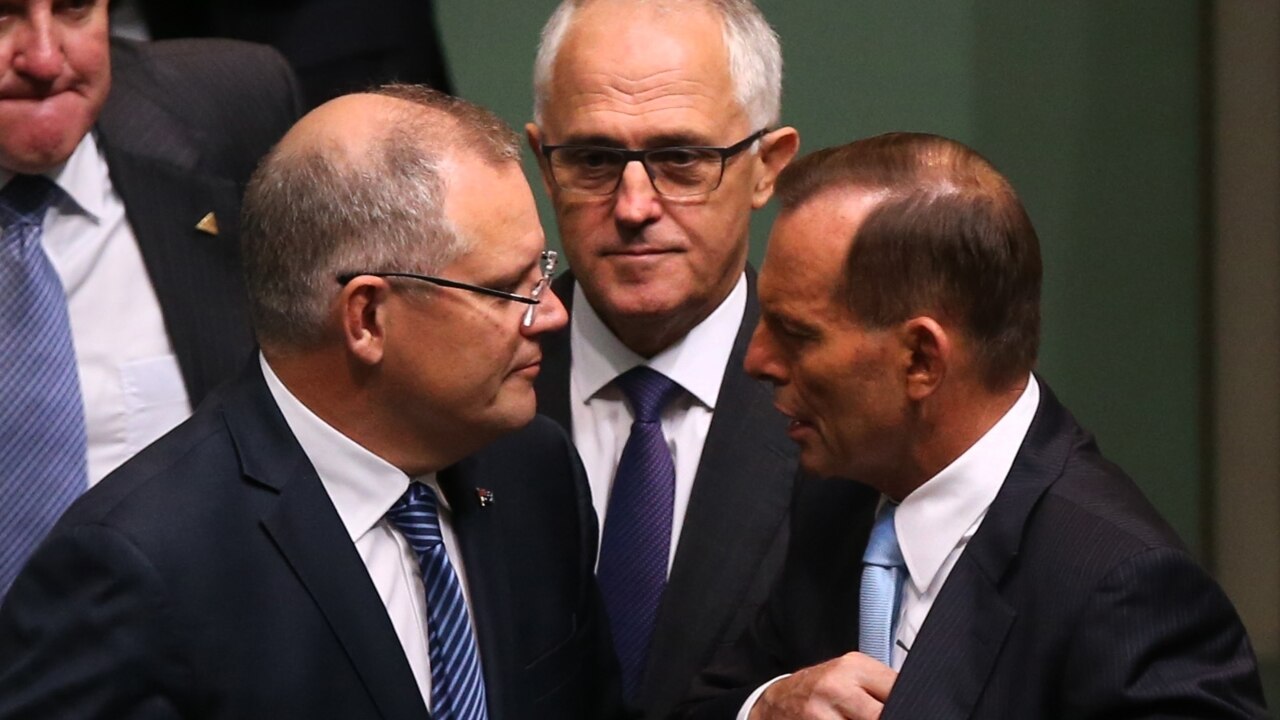
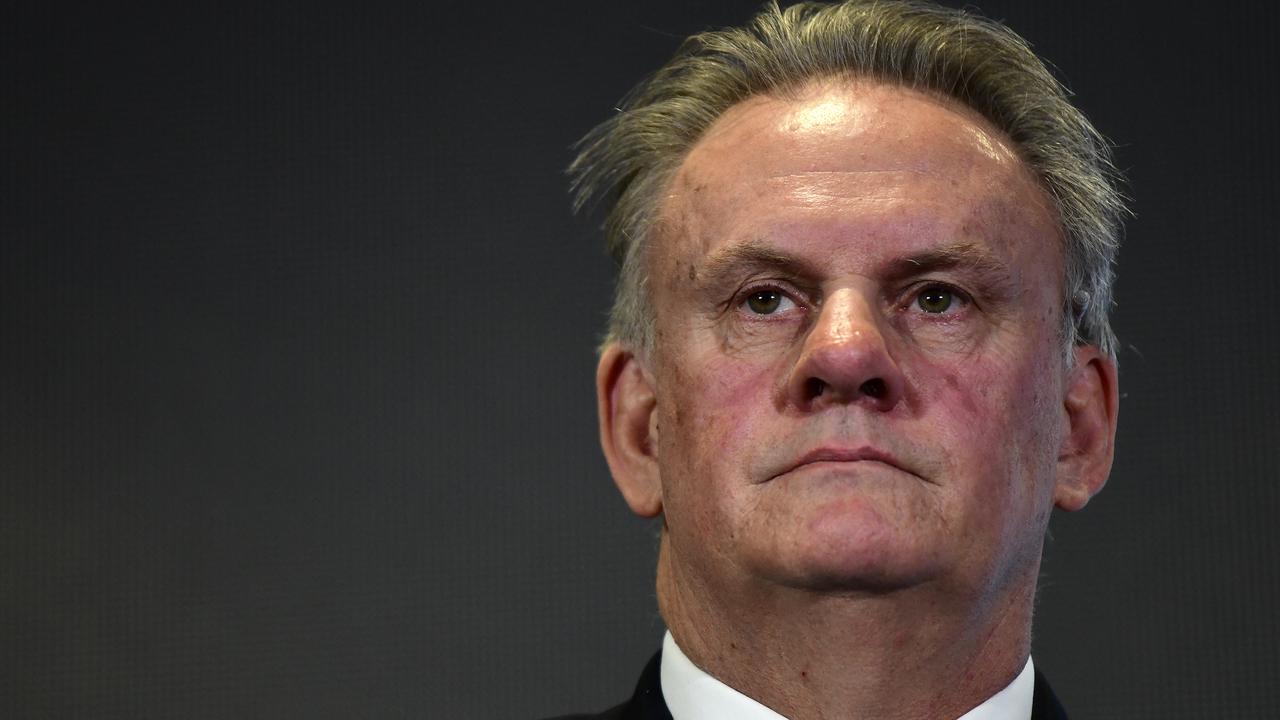
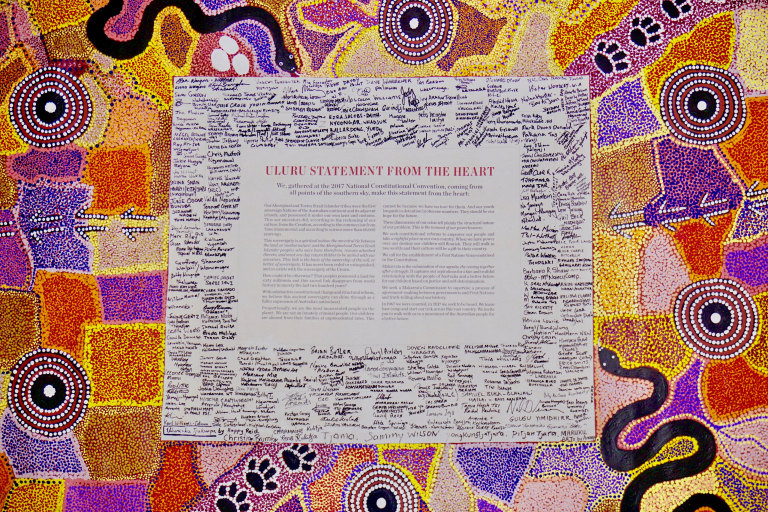
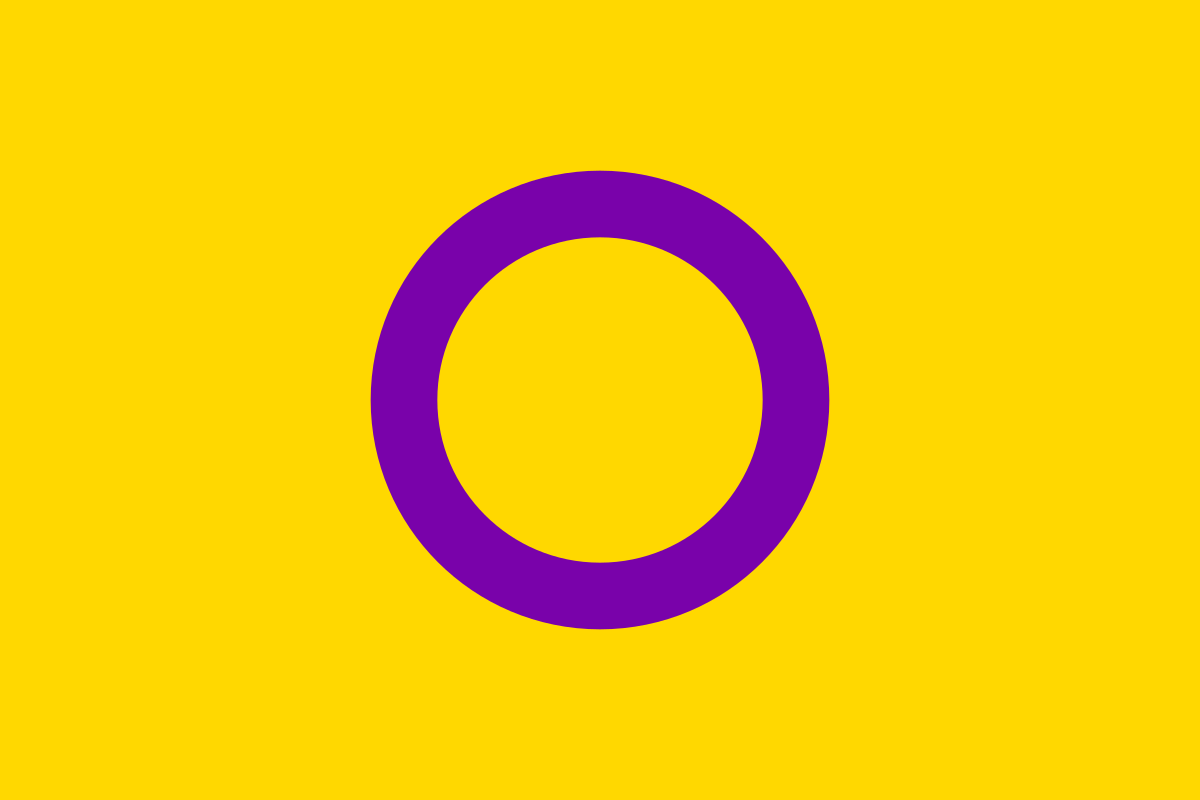


 alastairlawrie