ANU Gender Identity + Sexuality Law Moot Webinar Presentation
In October 2020, I was invited to be a judge for the round robin stage of the inaugural ANU Gender Identity + Sexuality Law Moot. In the lead-up to the moot itself, I participated in a webinar for participants about the state of LGBTIQ law reform in Australia, including being asked to address the following two questions:
What are, in your view, the most significant issues that need legal reform with respect to LGBTIQ rights and inclusion? and
How can we ensure that workplaces are inclusive and safe for people from all backgrounds but in particular for the LGBTIQ community?
While the panel ultimately adopted a more ‘free-wheeling’ approach to its discussion, I prepared the below, more detailed responses to these questions. Now that, at the end of a busy year, I’ve finally had the chance to tidy them up, I thought they might be worth sharing. I’m also keen to hear other people’s views, including on what you think the most significant issues that need legal reform are today – please leave your comments below.
**********
Question 1. What are, in your view, the most significant issues that need legal reform with respect to LGBTIQ rights and inclusion?
Despite what many people might assume – and what far too many members of our political and media classes seem to believe following the recognition of LGBTI marriage in 2017 – there remain a large number of outstanding legal reforms necessary for LGBTIQ rights and inclusion in 2020 [and I guess we can say 2021 now, too]. The following are my top three:
Ending coercive medical interventions on children born with intersex variations of sex characteristics
Intersex people, and especially children born with intersex variations of sex characteristics, currently experience the worst human rights abuses of any group within the Australian LGBTIQ community.
Intersex people are born with physical sex characteristics that do not neatly fit medical norms for female or male bodies. Infants, children, adolescents and adults born with intersex variations risk or suffer forced and coercive medical interventions, designed to make their bodies more typically female or male. These interventions are not medically necessary, but instead rely on social or cultural rationales.[i]
The consequences of early and unnecessary deferrable interventions can include pain, trauma, shame, loss of sexual function and sensation, urinary incontinence and urgency, a need for ongoing medical treatment or repeat surgeries, experiences of violation and sexual assault, reinforcement of incorrect sex assignment and loss of choice.
These coercive medical interventions breach a large number of human rights principles, including the right to bodily integrity. They also adversely impact on rights to liberty, security, non-discrimination, privacy and freedom from torture, experimentation and harmful practices.
Unfortunately, coercive medical interventions on intersex people, and especially children born with intersex variations, have not been legally prohibited in any Australian jurisdiction.
Instead, they are self-governed by clinical guidelines which support coercive interventions despite a lack of supporting medical evidence. And they are enabled by a legal system, including family law, which have permitted coercive interventions on the basis of (often poorly-informed) parental consent. The most infamous decision was the 2016 Family Court decision of Re: Carla, although it was merely one of a long line to contravene the human rights of intersex children.
In terms of law reform, there has been disappointingly little progress in this area. This month (October 2020) marks seven years since a bipartisan Senate Committee recommended new guidelines be developed that ‘should favour deferral of normalising treatment until the person can give fully informed consent, and seek to minimise surgical intervention on infants undertaken for primarily psychosocial reasons’ (among other recommendations).[ii]
Unfortunately, the Abbott, Turnbull and Morrison Governments have effectively done nothing to implement even these modest proposals.
More encouragingly, in June 2020 the Tasmanian Law Reform Institute released the final report of its inquiry into the legal recognition of sex and gender. It made a number of recommendations about intersex law reform, including:
Recommendation 7
The Criminal Code should be reformed to criminalise non-consensual medical interventions in the following terms:
178F Unnecessary medical intervention to change the sex characteristics of children.
(1) Any person who performs a surgical, hormonal or other medical intervention to alter or modify the sex characteristics of a child is guilty of a crime, unless:
(a) it is performed to address a clear danger to the life or health of the child and it cannot be deferred until the child is able to give informed consent; or
(b) it takes place with the informed consent of the child.
(2) Nothing in this Section is intended to apply to interventions involving a consenting transgender child seeking treatment to delay puberty or secondary sexual differentiation.
Charge: Performing unnecessary medical intervention to change the sex characteristics of a non-consenting child.
Recommendation 8 of that report also recommended that:
‘intersex people should be able to pursue claims for compensation for personal trespass and breach of professional duty against doctors where medical interventions to alter intersex variations of sex characteristics have resulted in physical or mental harm, irrespective of any parental consent to the intervention at the time it was performed.’
The Tasmanian Government is now considering these recommendations, meaning it is possible it will become the first Australian jurisdiction to criminalise coercive medical interventions on children born with intersex variations.
Before moving on, I should note the Australian Human Rights Commission has also been undertaking a long-running project on these issues.[iii] I understand it is (finally) nearing completion, and my personal hope is it recommends all Australian jurisdictions criminalise these human rights abuses.
2. Trans and gender diverse birth certificate reform
Trans and gender diverse people should have access to birth certificates, and other identity documentation, based solely on self-identification, and without medical approval (because gender identity is exactly that, identity, and not a ‘medical’ issue). Currently only one Australian jurisdiction has completely achieved this model: Tasmania, following its historic 2019 birth certificate reforms.
Victoria is a close second, also following changes in 2019, which removed the involvement of medical gatekeepers, although unfortunately it does not fully realise self-identification, because applications must be accompanied by a statement from someone who has known the applicant for at least 12 months and ‘supports’ the application.
Three other jurisdictions – South Australia, the ACT and the Northern Territory – have removed requirements for surgery or other physically invasive treatments. However, they still adopt a medical model, because they require engagement with psychologists or counsellors prior to approval. Ultimately, these laws will need to be updated.
However, the largest problems are in the other three states. NSW and Queensland still require surgery in order to access new identity documents, which is completely inappropriate not just because it unnecessarily medicalises gender identity, but also because not all trans and gender diverse people want surgery (or can afford it).[iv]
Western Australia’s legislation also requires surgery, although thanks to a favourable High Court decision, this has been interpreted to ‘only’ require some forms of physical treatment (such as hormone therapy).
One LGBTIQ human rights abuse that is not technically in Australia, but is perpetrated by Australia, is the detention, processing and resettlement of LGBTIQ refugees and people seeking asylum in countries that criminalise them.
In particular, there remain LGBTIQ refugees and people seeking asylum who are trapped in Papua New Guinea – because the Australia Government put them there – a country which retains a maximum penalty of up to 14 years imprisonment for male same-sex activity.
And, even though Nauru decriminalised homosexuality in 2016, that does not necessarily translate into it being a safe environment for the LGBTIQ refugees and people seeking asylum which the Australian Government imprisoned there.
Of course, for anyone interested in international human rights law, all offshore detention, processing and resettlement is abhorrent, and should be ended for all refugees irrespective of their sexual orientation, gender identity or sex characteristics (or other attributes).
However, we must not overlook the fact Australia’s immigration framework has a particularly awful impact on people fleeing persecution on the basis of being lesbian, gay, bisexual, transgender, intersex or queer. They should be brought to Australia immediately.[v]
Anti-Discrimination Reform
While there is no individual LGBTI anti-discrimination law reform issue which is as important as the above three topics, I would argue that addressing our inadequate, incomplete and inconsistent LGBTI anti-discrimination and vilification framework overall must also be a high priority. Specifically, the majority of Commonwealth, state and territory anti-discrimination laws should be updated across three main areas:
Ensuring everyone is protected against discrimination. Most state and territory laws currently exclude at least some parts of our community. The NSW Anti-Discrimination Act 1977 is the worst – it doesn’t even protect bisexuals.[vi] While NSW, Victoria, Queensland, Western Australia and the Northern Territory don’t cover people with non-binary gender identities – and the same jurisdictions exclude intersex people as well.
Repealing the special privileges enjoyed by religious organisations. Loopholes allow faith bodies to discriminate against LGBT people, in employment and against people accessing services, even when they are delivering public services using public funding. Nearly all Australian anti-discrimination laws, including the Sex Discrimination Act 1984 (Cth), need to be reformed – although the Tasmanian Anti-Discrimination Act 1998 provides a template for how this can be done, by permitting religious organisations to preference people from their own faith (in limited circumstances), while not allowing discrimination on the basis of other attributes like sexual orientation or gender identity.[vii]
Obviously, the religious exceptions which have received the most public debate, at least in the past few years, are those allowing religious schools to discriminate against LGBT students, teachers and other staff. Positively, four jurisdictions (Tasmania, Queensland, the ACT and Northern Territory) have already legislated to cover LGBT students, although only two (Tasmania and the ACT) fully protect LGBT teachers and other staff. On the negative side, Scott Morrison’s Broken Promise to Protect LGBT Students is Now Two Years Old, and there’s little chance he will act on it for several years to come either.
Introducing prohibitions on anti-LGBTI vilification. There is currently no prohibition on anti-LGBTI vilification under Commonwealth law. Although they are by no means alone – currently Most Australian Jurisdictions Don’t Prohibit Anti-LGBTI Vilification. Of those that do (NSW, Queensland, Tasmania and the ACT), only Tasmania and the ACT protect all sections of the LGBTI community. Given homophobia, biphobia, transphobia and intersexphobia are just as damaging, and harmful, as racism, I firmly believe anti-LGBTI vilification should be prohibited on the same basis as racial vilification (equivalent to section 18C of the Racial Discrimination Act 1975 (Cth)).
There are a range of other LGBTIQ law reform issues which still need to be addressed, including:
Sexual orientation and gender identity conversion practices (sometimes called ex-gay or ex-trans therapy) should be outlawed across Australia. The Queensland Government recently introduced the first ban on these practices – although disappointingly it only applied in health care settings, and not in the religious environments where most anti-gay and anti-trans conversion practices occur. The ACT Government followed shortly thereafter, and their legislation has been welcomed by survivor groups because it covers both health care and religious settings. I understand that there are also moves to outlaw these practices in Victoria, Tasmania and South Australia – although sadly not in my adopted home state of NSW [NB Since the webinar, Victoria has introduced their own Bill to ban conversion practices, which appears to be stronger than both Queensland and the ACT, while the Tasmanian Law Reform Institute has released an Issues Paper on ‘Sexual Orientation and Gender Identity Conversion Practices’, with submissions due 7 January 2021].
South Australia still needs to abolish the gay panic defence (or homosexual advance defence). Thankfully, after much prompting, the South Australian Government has finally released draft legislation that does just that, for public consultation. Hopefully it is finally removed from the statute books later this year or in early 2021. [NB South Australian Parliament passed legislation finally abolishing the gay panic defence on 1 December 2020].
Expungement regimes – which allow for historical convictions for same-sex sexual activity to be expunged from a person’s criminal record – should also be strengthened. In particular, there is a serious limitation in the Queensland scheme, which does not allow gay, bisexual and other men who have sex with men who were convicted as a result of the unequal age of consent for anal intercourse between 1991 and 2016 to have their records expunged,[viii] and
The Marriage Act 1961 (Cth) needs to be amended to remove the unjustified special privileges that were introduced for existing civil celebrants, and religious organisations, as part of the Marriage Amendment (Definition and Religious Freedoms) Act 2017. Note that I usually do not refer to that legislation as providing ‘marriage equality’ as a result of these exceptions, because they mean LGBTI couples marrying now can be discriminated against in ways that divorced people remarrying before 2017 could not. We can get married, but it is still not equal.[ix]
Protecting Existing Rights
Some people take the quote ‘the arc of the moral universe is long, but it bends towards justice’ a little too literally, and consequently fail to appreciate LGBTIQ rights can go backwards. Something which has happened multiple times in the past decade, including the Newman LNP Government in Queensland winding back civil partnership laws passed by the Bligh Labor Government.
In the area of anti-discrimination, we should also remember the Baillieu Coalition Government in Victoria undid the introduction of a modest ‘inherent requirements’ test for religious exceptions passed by the Brumby Labor Government in 2010 – before they had even commenced. While the Hodgman Liberal Government tried multiple times to undermine vilification protections for LGBTI Tasmanians (and other groups) as long as that vilification was religiously-motivated (although thankfully those efforts failed).
There are currently three major efforts to undermine LGBTIQ rights:
The Commonwealth Government’s proposed Religious Discrimination Bill, of which we have seen two Exposure Drafts and was due to be introduced in March 2020 but has been delayed because of the coronavirus pandemic. This legislation would:
Make it easier to make comments that ‘offend, humiliate, intimidate, insult or ridicule’ LGBTI Australians
Make it easier for health practitioners to refuse to provide services to LGBTI patients
Make it easier for religious organisations to discriminate against others
Make it more difficult for big business to promote diversity and inclusion
Create a Religious Freedom Commissioner at the Australian Human Rights Commission (when we still don’t have a Commissioner for Sexual Orientation, Gender Identity and Sex Characteristics)
Entrench unjustified religious exceptions in the Marriage Act 1961 (Cth), and
Explicitly protect charities advocating against LGBTI relationship recognition in the Charities Act 2013 (Cth), despite it being completely unnecessary.
The Mark Latham/One Nation Anti-Discrimination Amendment (Religious Freedoms and Equality) Bill 2020 in NSW, which, similar to the Commonwealth Religious Discrimination Bill, seeks to privilege the rights of religious individuals and organisations over the rights of others, including the right of LGBTI people in NSW to be protected against discrimination [since the webinar, I had this opinion piece published in the Sydney Morning Herald, outlining just one of the many serious problems created by the NSW ‘Religious Freedoms’ Bill], and
The Mark Latham/One Nation Education Legislation Amendment (Parental Rights) Bill 2020, also in NSW. This legislation does (at least) three awful things:
Prohibiting the teaching of ‘gender fluidity’ – where teaching includes anything to do with a school (including counselling) by anyone connected to a school (including volunteers), and ‘gender fluidity’ means acknowledging that gender identity can be different to biological sex at birth. In effect, it will mean erasing trans and gender diverse students, as well as teachers, in schools across NSW
Introducing a UK section 28-style law against ‘promotion’ of ideological views about sexuality and gender identity – which, just like section 28 did there, will impose a silence on LGBT students struggling with invisibility at the most vulnerable point in their lives, and
Enacting an erroneous and stigmatising definition of intersex in NSW law for the first time (‘disorders of sexual differentiation’).
Of course, ordinarily, we wouldn’t be too concerned about legislation being proposed by fringe extremists in the NSW Legislative Council. However, the NSW Government and Opposition have both supported both One Nation Bills being referred to Committee for inquiry – with the anti-trans kids inquiry chaired by Mark Latham himself. Which means we must resist the laws themselves, as well as fighting against toxic debate surrounding them which has the potential to harm vulnerable younger members of our community, and especially trans and gender diverse kids.
**********
Question 2. How can we ensure that workplaces are inclusive and safe for people from all backgrounds but in particular for the LGBTIQ community?
My answer to this will (thankfully) be significantly shorter than for the previous question, in part because we’ve already discussed some of the reforms that are needed, especially in terms of anti-discrimination law reform, such as repealing the special privileges that allow religious organisations to discriminate against LGBT employees.
This includes amending the Sex Discrimination Act 1984 (Cth) to protect LGBT teachers in religious schools, as well as reforms in the other jurisdictions where LGBT school staff are not fully protected (all states and territories bar Tasmania and the ACT).[x]
It also means ensuring LGBT employees in Government-funded aged care services operated by religious organisations are protected (where people accessing these services are currently covered under the SDA, but staff in those same facilities are not). There are several reasons for this, including because it is unfair on employees:
‘People should be hired, not hired or even fired, on the basis of how well they are able to provide care and support to the people accessing aged care services, not who they are attracted to or how they identify.’[xi]
It is also unfair on people accessing these services, who ‘have the right to expect the highest possible standard of care. That is not provided when an aged care service refuses to employ highly-qualified people simply because they are lesbian, gay, bisexual or transgender.’[xii]
The same reasons also apply in terms of fighting against the Commonwealth Government’s proposed Religious Discrimination Bill, especially in the era of coronavirus. That’s because the 2nd Exposure Draft Religious Discrimination Bill allows hospitals to hire the most religious, not the most qualified:
‘Surely, that must have an impact on the standard of care that patients will receive. Imagine the worry if one of your loved ones is taken to the emergency department of a faith-based hospital and you can’t be certain whether the health practitioner is there because of what they believe, not what they can do.’
Likewise, the proposed Religious Discrimination Bill allows aged care facilities to hire the most religious, not the most qualified. As I wrote earlier this year: ‘As someone with a grandmother who turned 99 last Wednesday, and who is in a nursing home, I would hate to think she is being cared for by someone who is there because of their views and not their vocational skills’.
[Both quotes taken from my March 2020 article ‘Coronavirus and the Religious Discrimination Bill’ which I think holds up pretty well, 9 months later, as a strong argument against the RDB when the Morrison Government inevitably brings it back it in the first half of 2021.]
But repealing religious exceptions is not the only law reform needed to make workplaces inclusive and safe for people from all backgrounds, and in particular for the LGBTIQ community.
One specific reform that should be introduced as a matter of priority are amendments to the Fair Work Act 2009 (Cth) to ensure it treats trans, gender diverse and intersex employees exactly the same as lesbian, gay and bisexual ones.
Currently, the adverse action protections in section 351(1), and unlawful termination protections in section 772(1)(f), of that Act cover sexual orientation, but do not explicitly include gender identity or sex characteristics.[xiii]
Unfortunately, despite this issue being raised repeatedly with the Turnbull and Morrison Governments, they do not appear to be in any hurry to remedy this omission.
A broader structural reform to anti-discrimination law is ensuring it is able to deal with real-life people, who are complex and have multi-faceted characteristics (covering race, sex, age, disability, sexual orientation, gender identity, sex characteristics and more attributes besides).
Often, it is impossible for people to know whether they have been discriminated against because of a particular protected attribute, or a combination of attributes. Any definition of discrimination must be able to deal with this complexity, and uncertainty. In my perspective, one of the best approaches is found in section 8 of the ACT Discrimination Act 1991:
‘Meaning of discrimination
(1) For this Act, discrimination occurs when a person discriminates either directly, or indirectly, or both, against someone else.
(2) For this section, a person directly discriminates against someone else if the person treats, or proposes to treat, another person unfavourably because the other person has 1 or more protected attributes.
(3) For this section, a person indirectly discriminates against someone else if the person imposes, or proposes to impose, a condition or requirement that has, or is likely to have, the effect of disadvantaging the other person because the other person has 1 or more protected attributes.’
One final point that should be mentioned, if we are genuine about making workplaces inclusive and safe for people from all backgrounds, is that there is a gap in terms of anti-discrimination protections around religious belief, and lack of belief.
It is unacceptable that the Commonwealth, NSW and South Australian anti-discrimination regimes do not protect people of faith, and no faith, against discrimination – this is something that should be addressed.
But it must not be addressed in the way proposed by the Commonwealth Religious Discrimination Bill, or the Mark Latham/One Nation Anti-Discrimination Amendment (Religious Freedoms and Equality) Bill 2020 in NSW. Because they are just as unacceptable.
People of faith, and no faith, should be protected against discrimination on exactly the same terms as everyone else, including to the same standard as sexual orientation, gender identity and sex characteristics.
People of faith, and especially faith-run organisations, must not be given new special privileges to discriminate against others, including people of minority faiths or no faith, as well as women, LGBTIQ people, single parents, divorced people and people in de facto relationships, people with disability and plenty more.
Doing this one simple thing – protecting everyone against discrimination, equally – would help create an Australia where all people are accepted for who they are. And it would be a great leap forward for LGBTIQ people of faith too, many of whom experience discrimination on the basis of both sexual orientation/gender identity/sex characteristics and faith.
Footnotes:
[i] The information in this, and following, paragraph(s) is summarised from the website of Intersex Human Rights Australia. Please check them out here.
[ii] I made a submission to this inquiry way back in July 2013.
Building on reports in 2005 and 2011, Private Lives3 is Australia’s largest national survey of the health and wellbeing of lesbian, gay, bisexual, transgender, intersex and queer (LGBTIQ) people.
Covering a diversity of topics, from households and relationships, to housing and homelessness, general health and wellbeing, mental health and wellbeing, alcohol, tobacco and other drug use, and intimate partner and family violence (among others), it makes for both fascinating reading and invaluable research. I strongly encourage you to download and read it.
However, as someone with a particular interest in all things LGBTIQ discrimination, it is their section on ‘Discrimination, harassment and feelings of acceptance’ I will focus on today.
The Private Lives 3 findings in this area are, frankly, disturbing.
Asked, ‘to what extent do you feel accepted in the following situations?’, just 60.7% of LGBTIQ Australians answered ‘a lot’ or ‘always’ in relation to work.
That figure dropped to 55.3% in educational institutions, and 43.4% when accessing a health or support service.
Only 30.5% of LGBTIQ people said they felt accepted a lot or always in public (eg in the street/park), and a perhaps unsurprising but still shockingly low figure of 10.5% at religious or faith-based events or services.
It is also unsurprising that cisgender members of the LGBTIQ community reported higher rates of acceptance than trans and non-binary people.
For example, while 68.5% of cisgender men and 61% of cisgender women felt accepted a lot or always at work, this fell to 50% for trans women, 48.8% for trans men and just 43% for non-binary people.[i]
There was a similar divergence in terms of acceptance by sexual orientation, with gay and, to a lesser extent, lesbian respondents reporting higher rates than bisexual, pansexual, queer and asexual people.
For example, while 69.6% of gay and 63.8% of lesbian people said they felt accepted at work always or a lot, just 53.6% of bisexual, 54.5% of pansexual, 54.5% or queer and 47.4% of asexual people said the same thing.[ii]
The responses to the question ‘In the past 12 months, to what extent do you feel you have been treated unfairly because of your sexual orientation or gender identity?’ are just as disturbing (if not more). As the authors (Hill, Bourne, McNair, Carman and Lyons) observe on page 40:
‘Almost six in ten participants reported that they had been treated unfairly to some degree (either a little, somewhat, a lot or always) because of their sexual orientation in the past 12 months, with 4.5% reporting a lot or always. Over three quarters (77.5%) of trans and gender diverse participants reported that they had been treated unfairly to some degree because of their gender identity in the past 12 months, with 19.8% reporting a lot or always.’
Even more shocking are the high reported rates of experiences of vilification – and worse – based on sexual orientation and/or gender identity. In the previous 12 months:[iii]
34.6% of respondents reported experiencing verbal abuse (including hateful or obscene phone calls) due to their sexual orientation or gender identity
23.6% experienced harassment such as being spat at and offensive gestures
22.1% received written threats of abuse via emails or social media
14.6% experienced threats of physical violence, physical attack or assault without a weapon
11.8% experienced sexual assault
11.4% received written threats of abuse in other ways
10% experienced refusal of service
9.9% experienced refusal of employment or being denied promotion
5.3% received written threats of abuse via graffiti, and
3.9% experienced physical attack or assault with a weapon (knife, bottle, stones).
‘Overall, trans and gender diverse participants reported higher levels of harassment and abuse than cisgender participants. For example, a greater proportion of trans women (51.6%), non-binary participants (49.4%) and trans men (45%) reported verbal abuse in the past 12 months due to their sexual orientation or gender identity compared to 28.7% of cisgender women and 32.7% of cisgender men.’
This is nothing short of an epidemic of discrimination, harassment, vilification and violence against LGBTQ Australians on the basis of their sexual orientation and, especially, gender identity. And it is getting worse, not better.
For example, reported rates of verbal abuse increased from 25.5% in Private Lives 2 (released in 2011) to 34.6% in Private Lives 3; harassment such as being spat at and offensive gestures rose from 15.5% in PL2 to 23.6% in PL3; physical attack or assault with a weapon doubled, from 1.8% to 3.9%; and sexual assault quadrupled, from 2.9% to 11.8%.
Let me think, what happened in the period between Private Lives 2, and the survey period for Private Lives 3 (from 24 July to 1 October 2019), which could have caused greater homophobia, biphobia and transphobia in the Australian community?
It seems undeniable that the Coalition Government’s proposed plebiscite on same-sex marriage, and actual postal survey – and the toxic public debate surrounding both – has directly contributed to increased anti-LGBTQ prejudice.
Nor should we underestimate the negative impact of the ‘religious freedom’ movement which they deliberately unleashed, with the Religious Freedom Review in 2018, and the Morrison Government’s First Exposure Draft Religious Discrimination Bill which was released right in the middle of the Private Lives 3 survey period, in August 2019.
What should happen from here?
The Private Lives 3 survey results show us the scale of the problem: appalling rates of discrimination, harassment, vilification and violence against LGBTQ Australians on the basis of their sexual orientation and, especially, gender identity. And we have a pretty good idea about who is to blame (at least for making the situation much, much worse than it already was). But what is the solution?
I would argue the following three actions would be a good place to start (although I’m sure readers of this blog could offer other useful suggestions, via the comments section below):
Improve LGBTI anti-discrimination laws
The introduction of Commonwealth anti-discrimination protections for the LGBTI community, through the historic Sex Discrimination Amendment (Sexual Orientation, Gender Identity and Intersex Status) Act 2013, was an important step, although by no means the end of the journey.
As I have written previously, these laws need to be strengthened, including by:
Updating ‘intersex status’ to ‘sex characteristics’
Protecting LGBT students, teachers and other staff in religious schools against discrimination
Limiting overly-generous religious exceptions that permit discrimination against LGBT people across many areas of public life, and
Appointing a Commissioner for Sexual Orientation, Gender Identity and Sex Characteristics at the Australian Human Rights Commission.
Discrimination in employment, especially against trans and gender diverse employees as identified in Private Lives 3, also needs to be addressed by explicitly including gender identity and sex characteristics in adverse action and unlawful termination provisions of the Fair Work Act 2009 (Cth).
2. Introduce LGBTI anti-vilification protections
One of the long-standing, missing pieces of LGBTI law reform, at least at Commonwealth level, is protection against anti-LGBTI vilification. The high rates of hate-speech reported through Private Lives 3 has merely confirmed the urgency of addressing this gap.
As I hav consistently advocated over many years,[iv] given homophobia, biphobia, transphobia and intersexphobia can be just as harmful as racism, the Sex Discrimination Act 1984 (Cth) should be amended to prohibit anti-LGBTI vilification on an equivalent basis to the prohibition of racial vilification in section 18C of the Racial Discrimination Act 1975 (Cth).
3. Publicly-fund programs against homophobia, biphobia, transphobia and intersexphobia
Being an advocate for LGBTI law reform, it is easy to forget that changing the law can only ever be one part of the solution – and often only a small part at that.
To address the ongoing, high levels of anti-LGBTQ discrimination in employment, healthcare, education and other areas of public life identified in Private Lives 3, we need well-funded, publicly-funded campaigns explicitly targeting homophobia, biphobia, transphobia and intersexphobia.
We also need our elected representatives to lead by example, by calling out prejudice on the basis of sexual orientation, gender identity and sex characteristics, and making sure anti-LGBTIQ comments are never acceptable in public debate.
What is actually happening?
Unfortunately, when we examine what is being done in relation to the three actions described above, the answer is not much. In fact, worse than just political inaction, the Coalition Government seems intent on exacerbating these problems rather than solving them.
For example, the proposed Religious Discrimination Bill – which Attorney-General Christian Porter recently confirmed remained part of the Government’s legislative agenda – would make it easier for religious individuals and organisations to discriminate against LGBTIQ Australians, including by refusing to provide healthcare services that benefit members of our communities (for more, see ‘The ‘Bad Faith’ Religious Discrimination Bill Must Be Blocked’).
That same legislation also calculatingly, and explicitly, undermines state and territory anti-vilification laws (where they exist), by making it easier for people to make comments that ‘offend, humiliate, intimidate, insult or ridicule’ LGBTI people as long as those comments are motivated by faith. This includes over-riding the ‘best practice’ Anti-Discrimination Act 1998 (Tas).
As for culture change, then-Prime Minister Malcolm Turnbull first ‘gutted’ then abolished entirely the national, evidence-based program targeting bullying against LGBT kids in schools (Safe Schools).
Meanwhile, current Prime Minister Scott Morrison has publicly attacked school counsellors who support trans and gender diverse children, deriding them as ‘gender whisperers’ in a now-infamous tweet. And he has taken more concrete action to remove trans-inclusive toilet door signs in the Department of Prime Minister & Cabinet, than he has to implement his 2018 promise to protect LGBT students in religious schools against discrimination (for more, see ‘Scott Morrison’s Broken Promise to Protect LGBT Students is Now Two Years Old’).
The findings of Private Lives 3 reveal a bushfire of bigotry is burning in the Australian community – but far-too-often our elected representatives are the ones who are fanning the flames.
Of course, it isn’t just the Commonwealth Government who should be taking action to address discrimination, harassment, vilification and violence against LGBTQ Australians. Our state and territory governments, too, need to step up, including by modernising their own anti-discrimination laws.[v] The Anti-Discrimination Act 1977 (NSW), and Equal Opportunity Act 1984 (WA) in particular have fallen far, far below community standards.
Victoria, Western Australia, South Australia and the Northern Territory also need to introduce their own LGBTI anti-vilification laws (in addition to the Commonwealth), while it is probably fair to say all Governments could be doing more to combat homophobia, biphobia, transphobia and intersexphobia in their respective jurisdictions.
Nevertheless, I would argue that the sheer size of the challenge which confronts us, as so disturbingly revealed in the ‘Discrimination, harassment and feelings of acceptance’ pages of Private Lives 3, demonstrates a national approach is desperately needed.
That obviously means stopping those things which would simply make the problem worse – including by abandoning any Religious Discrimination Bill that would undermine the rights of LGBTIQ Australians. But it also requires positive steps to make things better.
We’ll find out in 2021 whether the Commonwealth Government, and Parliament more broadly, is willing to do that which is necessary – or allow anti-LGBTIQ prejudice to rage on.
Footnotes:
[i] The rates of acceptance at health services were even lower, showing a significant drop-off for cisgender women. Specially, while 55.5% of cisgender men felt accepted ‘a lot/always’, this fell to 42.4% for cisgender women, 46.5% for trans women, 30.1% for trans men and just one in five non-binary people (21.5%).
[ii] The rates of acceptance at health services were even lower. Only gay respondents felt accepted ‘a lot/always’ more often than not (54.8%), compared to just 40.1% of lesbian, 43.8% bisexual, 37.3% pansexual, 26.7% queer and 33.3% asexual respondents.
[iii] Check out the full list on page 40 of the Private Lives 3 Report.
Wollongong, a regional city in NSW, is home to around 200,000 people, or less than 1% of the Australian population. However, despite its small size, Wollongong has played a significant role in the history of marriage equality in Australia. That includes political trailblazers in support of, as well as staunch advocates against, change, plus influential grass-roots community campaigners.
This article seeks to give recognition to those involved in the long and arduous struggle for marriage equality who called Wollongong home. And yet, for at least two reasons that will explained in detail later, this history can only ever be an incomplete one – deliberately leaving space for other stories, and voices, to be heard on this subject.
Political trailblazer #1: Michael Organ
The first political trailblazer was an MP who served less than two years in office: the former Greens Member for Cunningham, Michael Organ. Having somewhat unexpectedly won a by-election on 19 October 2002, Mr Organ was responsible for representing constituents in the Wollongong CBD and its Northern suburbs when Prime Minister John Howard first sought to ban same-sex marriage in 2004.
With the Labor Opposition supporting the Liberal/National Government’s amendments to the Marriage Act 1961 (Cth), Organ was the only member of the House of Representatives to speak out against the prohibition on same-sex marriage. In fact, as the only MP to oppose the ban, there was no formal division on the Marriage Amendment Bill 2004 when it was debated on 24 June,[1] given calling for a division requires a minimum of two members. Nevertheless, Organ made his passionate views against the Bill known on the floor of the chamber:[2]
The Marriage Amendment Bill 2004 is a disgrace. It is quite clearly discriminatory. It discriminates against those 20,000 couples in Australia that the ABS has recently told us want to be married, who are living as married couples and who are not heterosexual – they are part of the lesbian, gay and transgender community.
…
This is 2004 we are talking about. The government seems to be living in the fifties and seems to deny everything that has happened in regard to so-called gay liberation and rights for people of other sexuality. The government has its head in the sand on this matter.
…
In this day and age in Australia … there are gay and lesbian couples living in loving relationships as married couples. We cannot deny this. It is not going to change. It is part of our society and we have to embrace it. It is disgraceful for the government to come into this place – and for the opposition to support them – and to blatantly discriminate against those people.
…
It is a sad day for this parliament to be introducing such discriminatory legislation.
…
We have heard the Prime Minister come into this place and say, ‘I’m not going to discriminate against anyone based on their sexuality,’ yet here we have a blatant example of the government and the opposition supporting discrimination against ordinary individual Australians based on their sexuality. This simply cannot be condoned.
Thirteen years before the same-sex marriage postal survey, Organ was foreshadowing the arguments that would ultimately lead to a majority of Australians supporting marriage equality: that as well as being an issue of fundamental equality before the law, it was essentially about recognising the equal love between two people irrespective of sexual orientation and gender identity.
Organ had also been the only House of Representatives MP to speak against the Howard Government’s first attempt to ban same-sex marriage, earlier that month, legislation which did not progress because the Labor Opposition would not support provisions against overseas same-sex adoption. On 17 June 2004, he stated:[3]
The Greens do not believe that allowing members of the LGBTI community to marry fundamentally undermines marriage. Indeed, such a desire can surely only strengthen it. If two people wish to make a public declaration of their love and longterm commitment, then their gender is irrelevant. We should remember that we are dealing here with the emotions, feelings and relationships of ordinary Australians.
Interestingly, one of the examples of legal discrimination against same-sex couples cited by Organ in that speech was the Howard Government’s refusal to subsidise the expenses of the former Member for Throsby, Colin Hollis’, long-term same-sex partner when Hollis represented the Australian Parliament at the United Nations, despite mixed-sex partners receiving this entitlement without question:[4]
Hollis took his case to the Human Rights and Equal Opportunity Commission in 2001 but lost on the strict definition of ‘spouse’ in the legislation. Again, the government fought Hollis all the way. This blatant discrimination is an affront to fair-minded people everywhere.
During both of the Howard Government’s legislative attempts to prohibit same-sex marriage, the Member for Cunningham was the only voice in the lower house calling for full equality for lesbian, gay, bisexual, transgender and intersex (LGBTI) couples. Consequently, the citizens of the Wollongong CBD and Northern suburbs were the only people in the country whose local member supported their right to determine for themselves who they should marry.
This does not mean the local community fully supported his decision to take such a stand. Nationally, a June 2004 survey conducted by Newspoll found only 38% of respondents were in favour of same-sex marriage, while 44% were against.[5]
As Organ himself conceded to Parliament, local views on the issue were also divided:[6]
I have certainly been made aware of the homophobia that has existed in the community in my electorate of Cunningham. Vile letters to the editor on this issue have appeared in the Illawarra Mercury since the Prime Minister raised the issue last year, and recently in response to my same-sex relationships bill – though I should point out to the House that the letters in support of gay marriage and gay rights have far outweighed the homophobic.
The reference to his ‘same-sex relationships bill’ actually represents another first for the Commonwealth Parliament: Organ’s Same Sex Relationships (Enduring Equality) Bill 2004 was the first Bill introduced that sought to permit same-sex marriage in Australia, out of a total of 23 such Bills introduced between 2004 and 2017.[7] Sub-clause 5(2) of his Bill provided:
5 Discrimination on the basis of sexuality to be unlawful
(2) To avoid doubt this Act makes any distinction, exclusion, restriction or preference based on a person’s sexuality as it relates to;
(a) Marriage;
(b) Adoption;
(c) Superannuation;
(d) Employment Entitlements;
(e) Access to reproductive or health services;
(f) The lawful age of consent to sexual activity;
unlawful.
While the Bill was never debated in Parliament, and he went on to lose the seat of Cunningham at the election on 9 October 2004, in his short time in office Michael Organ was undeniably a trailblazer on the issue of marriage equality – a torch that was picked up six years later by a member of a different political party, representing the other electorate covering parts of the Wollongong community.
Political trailblazer #2: Stephen Jones
Stephen Jones was elected in the seat of Throsby at the federal election on 21 August 2010. Throsby – which was re-named Whitlam at the 2016 election – represents the southern suburbs of the Wollongong Local Government Area (LGA), as well as Shellharbour and parts of Wingecarribee Shire in the Southern Highlands. Less than three months later, Jones first used his position to speak out in favour of marriage equality, telling Parliament that:[8]
[M]arriage is an important institution in our society. It is a special relationship where two people say to each other and to the rest of the world that they agree to be bound together in love, exclusive of all others, for life. I believe it would diminish us all as a society if we were to say that we may exclude gay and lesbian couples from this celebration. That marks them as somehow less worthy or even as biological oddities. I respect the right of religious organisations and others in our community to disagree with this view and to continue to practise in accordance with their beliefs. Indeed, no motion or act of this place can of itself change those beliefs. But it is an entirely different thing to ask of the state to enforce it.
Looking back on his history of engagement on the issue, Mr Jones reiterated that the principles of equally and fairness were motivating factors for his stand:[9]
I was always on side, a supporter of marriage equality, even before I entered parliament. Going into my first election campaign, I was clear that, if there was a Bill, I would vote for it. But as is so often the case, issues can become more salient or important over time. As I thought more about the issue, I realised this was not something that could be ignored, or delayed. This was an issue of fairness, and equality, and I thought Labor should take a stand on it.
In 2020, it can be easy to underestimate how courageous this step was. Jones, a first-term MP, was speaking against not only the platform position of his party – the ALP remained officially opposed to marriage equality until its December 2011 national conference – but also of his then-Prime Minister, Julia Gillard.
In this context, it was inevitable that Jones’ stance would attract criticism – and it did, particularly from some right-wing figures within the Labor Party itself. Within days, Bob Harrison, former Labor MP for the state seat of Kiama, had written to the Illawarra Mercury that ‘Marriage must be defended’:[10]
The Government must fearlessly and without diffidence defend the institution of marriage as involving vows between one man and one woman, while rejecting out of hand illogical and ideologically driven demands of social engineers and politicians who conspire with the Greens for unprincipled preference deals.
This opposition continued in the following year, with then-state Labor MP for Wollongong, Noreen Hay, leading what was described as:[11]
a rebellion against Labor federal counterpart Stephen Jones, winning a key motion in his seat of Throsby which undermines his public stance on same-sex marriage. The humiliating defeat reflects widespread anger among ALP members in Mr Jones’ electorate, who feel they were not consulted about his position on the issue.
Mr Harrison again attacked Jones through the media in early 2012, writing that:[12]
Heterosexual marriage involving one man and one woman, in any case, must be preserved and recognised as a unique institution among all human relationships, predicated on the creation of new life and the preservation of family life Australians have always known. Australian children have a right to know, bond with and share the love and protection of both a mother and a father. No other form of human or social relationship can hold out the promise of this benefit to future generations.
Reflecting on this internal backlash almost a decade later, Jones remains convinced his pro-equality approach was the correct one:[13]
I was copping a whole heap of shit from some people for the stand I was taking. People in the Party who were strongly against it were using it to campaign against me. I had an opponent who was knocking on doors telling people I was supporting same-sex marriage and that was a reason people shouldn’t support me. I was initially a little bit worried about the fall-out, but once you take the first step, and the second – especially on an issue of principle – then you just keep walking towards the outcome you think is the right one. Overall, I guess I did lose a little bit of support in some quarters, but I did what I thought was right.
In fact, despite these prominent local opponents, in February 2012 Jones would go on to introduce the first private members bill to legalise same-sex marriage to come from a major party MP (Labor, Liberal or National Party) – which also meant it was the first marriage equality bill that had a realistic chance of succeeding.
His first reading speech on the Marriage Amendment Bill 2012 had echoes of the earlier parliamentary contributions of Michael Organ in 2004:[14]
I believe that God made us all equal but different-not differently equal. The object of the bill is to remove discrimination and advance equality. It will ensure that when same-sex couples make a voluntary commitment to be together for life, to the exclusion of all others, and they choose to have that relationship solemnised, it will be recognised at law in the same way that my marriage is…
I believe there is a stronger force which guides us in matters like this. It is the right to equality-the human right not to be discriminated against on the grounds of sexuality. Human rights are inalienable rights, recognised and protected by governments, not created by them. They should never be qualified by fear or prejudice.
Debate about Jones’ Bill, both inside and especially outside Parliament, dominated national discussion for the following six months. Ultimately, it became the first same-sex marriage bill to be debated by both chambers of Parliament since Howard’s original ban on same-sex marriage in August 2004. Jones continued to push for equality before the law as the Bill was debated in September 2012, in his summing-up speech:[15]
The case for the bill is simple. It is about equality, it is about recognition of relationships-the validation of those relationships-and it is about saying to people who are often excluded, alienated or discriminated against: ‘You know what? You are okay. What’s more, you are better than okay: your relationship is just as valid as mine is in my marriage to my wife. And if you seek to have that relationship described as a marriage and recognised by the state as a marriage then who are we to stand in your way?’
Unfortunately, at least for supporters of marriage equality, his efforts were not successful, primarily because the Liberal/National Opposition, led by Tony Abbott, would not grant a conscience vote to its members, unlike the Gillard Labor Government. The result: it was comprehensively defeated by 98 votes to 42 votes in the House of Representatives[16] (although Labor MPs did vote in favour by a margin of 38 to 26).[17]
Following this defeat, it would have been understandable had Jones decided to appease his internal critics and instead focus his energies on other matters. Perhaps even more following the defeat of the Rudd Labor Government on 7 September 2013, and consequent relegation to the opposition benches. However, Jones remained steadfast in his support of marriage equality, including his criticisms of the recalcitrance of the then-Abbott Liberal/National Government.
For example, in December 2013, Jones spoke out following the High Court’s decision to invalidate the ACT’s same-sex marriage legislation, and therefore invalidate 31 marriages of same-sex couples:[18]
I believe that on this issue members of this place are lagging behind public opinion. I believe we are different but equal and we should not be differently equal before the laws of this place. I call on members opposite and I call on the government to allow its members to have a conscience vote on this issue when a bill is next brought before us.
Jones also reflected the views of the community, and especially of LGBTI Australians in opposing the proposed plebiscite on same-sex marriage, first put forward by Prime Minister Abbott in August 2015, and adopted by his successor, Malcolm Turnbull. In the February 2016 debate on another unsuccessful marriage Bill,[19] Jones stated:[20]
I am not opposed to referendums, but we do have to wonder why this matter is proposed to be put to a referendum, given that it is our job, as parliamentarians, to vote on matters that are put before us, and we have a matter put before us. We are told that the cost of that referendum is going to be $160million-only for it to have a non-binding outcome…
After his re-election at the July 2016 federal election, and now representing the renamed seat of Whitlam, Jones continued his fight against this unnecessary public vote, in-part because of its detrimental impact on the LGBTI community:[21]
I spoke to them about their very real concerns. I think it would have been an abrogation of my responsibility for me-as I have said, as a privileged, white, heterosexual male-to say, ‘C’mon, we can toughen up; we need not be concerned about these issues,’ and not listen to their concerns and their lived experiences. To a person, they were concerned about the impact of the plebiscite on their children or on young LGBTI people.
If this plebiscite bill gets up, if the vote goes ahead, we will spend the next nine months talking about nothing more than the sexuality of people who choose a different partner to me, and that is not what the Australian people are after. That is not why we were sent here to Canberra.
More simply, he told the Illawarra Mercury “It’s not like these issues are complex, this is something the Parliament should just get on with and deal [with].”[22]
Predictably, Jones strongly criticised the Government’s decision to hold a same-sex marriage postal survey, via the Australian Bureau of Statistics, after their plebiscite bill had been defeated:[23]
The third envelope is going to be the one that is the most expensive of all. That is the envelope that is costing Australians $122million, the envelope which shows how out of touch this Prime Minister and this government really are: the unnecessary and expensive envelope which will have a postal vote on same sex marriage.
As we now know, that postal survey recorded a solid Yes vote nationally, and the Commonwealth Parliament subsequently debated Liberal Senator Dean Smith’s Marriage Amendment (Definition and Religious Freedoms) Bill 2017 – as well as a number of amendments from conservative MPs seeking to undermine it through extensive new ‘religious exceptions’. Jones continued to fight for the principle of full equality, and against these special privileges, in the House of Representatives:[24]
[W]hen you act as a civil celebrant, you’re performing a civil ceremony, not a religious ceremony, and you are exercising a function under our law. It should be that the people who are exercising the function under our law are equally bound by it. There should be no basis in relation to civil celebrants which permits discrimination.
The detailed account of Stephen Jones’ actions in support of same-sex marriage, outlined above, reflects the often complex, sometimes tortuous, unacceptably lengthy process it took Commonwealth Parliament to make marriage equality a reality. Throughout, his support for this reform was steadfast – indeed, there were few better friends to the cause of LGBTI rights, from any political party, during the past decade than the ALP member for Throsby/Whitlam.
Asked to nominate personal highlights of the long fight for marriage equality, Jones spoke, in magnanimous terms, about the day it was finally passed by parliament:[25]
[I]n particular seeing close to 150 people on one side of the chamber, and just a small handful of people opposed (plus a few who ran from the chamber…) It was a genuine moment of unanimity. It was a good thing, for the country’s representatives to come together in that way. As a Labor person, I would have obviously preferred for us to have achieved it earlier as the Government. But as an Australian I was delighted to see it finally happen.
He also raised the positive legacy of marriage equality for Australia:[26]
I felt proud for the country on this issue. That we had actually done something, achieved something. So many issues currently are dominated by intractable conflict – social, economic, environmental issues – that we seem incapable of achieving systemic change. Here was an issue which showed that positive change can still happen, that we can still resolve issues that are contentious.
If that assessment is correct, then the Member for Throsby/Whitlam played a key role in making it happen – something he can forever be proud of, and which again reflects the oversized contribution of the city of Wollongong in the history of marriage equality in Australia.
2017: Wollongong Says Yes in the Same-Sex Marriage Postal Survey
The announcement of the results of the same-sex marriage postal survey, by Australian Statistician David Kalisch on Wednesday 15 November 2017, confirmed that the local Wollongong community strongly supported marriage equality.
While Australia ‘voted’ yes by a margin of 61.6% yes to 38.4% no,[27] both electorates which include parts of the Wollongong LGA voted yes at higher rates than the national average:[28]
Cunningham: 65.7% yes versus 34.3% no, and
Whitlam: 62.3% yes versus 37.7% no.
These results were also significantly higher than the NSW average as a whole: 57.8% yes against 42.2% no,[29] an impressive achievement for a regional city. Indeed, Stephen Jones highlighted this aspect of the postal survey vote in his speech on the Smith Bill:[30]
If you applied the common prejudice that says that regional folk are less progressive than are their city cousins, you’d conclude that the city overwhelmingly voted in favour and the regions overwhelmingly voted against. Well, you’d be wrong. Of the 62 regional seats, only three voted against marriage equality. This confounds those views that regional Australia is somehow less progressive on these sorts of issues and less welcoming of diversity than people in the inner city. Regional electorates like mine have shown themselves to be open places that are willing to embrace same-sex couples.
The high yes vote is even more impressive considering the demography of Wollongong, as reflected in the 2016 Census. One of the factors associated with higher levels of support for marriage equality traditionally has been university education – however, Wollongong reported lower-than-average rates of holding a ‘Bachelor Degree level and above’ (19.9%, compared to 23.4% for NSW and 22.0% nationally).[31]
Even more significantly, Wollongong LGA reported higher rates of religiosity in the 2016 Census than elsewhere, including:[32]
25.6% Catholic, compared to 24.7% (NSW) and 22.6% (Australia)
16.6% Anglican, compared to 15.5% (NSW) and 13.3% (Australia), and
4.3% Eastern Orthodox, compared to 2.5% (NSW) and 2.1% (Australia).
It is tempting to say that, despite this religiosity – and the views of major church leaders – the people of Wollongong voted yes. However, in the postal survey the congregations showed they were in fact ahead of their respective church positions. When asked about this discrepancy, Jones made the following observation:[33]
[T]he paradox is that the Wollongong community is also quite a religious, and multicultural, community and there were obviously some people who were strongly opposed [to marriage equality] too. But many people of faith supported marriage equality as well, even though the church leaders were opposed. To some extent, the congregation were no longer listening to the church leadership on questions of sexual morality, after the church scandals of the 1980s and 90s.
The obvious question is why the Wollongong community as a whole, religious and non-religious folk alike, was so willing to embrace full legal equality for LGBTI relationships. And it is possible that having political trailblazers like Michael Organ and Stephen Jones helped to move the debate forward here more rapidly than in other places.
However, it is far more likely that progress was achieved because of the tireless work of community campaigners, over many years, to persuade their family members, friends, neighbours and wider community that LGBTI relationships were just like any other relationship, and should therefore be entitled to the same legal recognition as any other relationship.
Community Campaigners: Evelyn Gray
Lead marriage equality campaigner at GetUp! during the 2010s, Sally Rugg, has written that:[34]
Every inch of LGBTIQ progress has been fought for, and won, on a foundation of [our] community’s personal stories. We tell stories to connect, to resist, and in the hope that those listening might see their own history reflected in ours.
Some of the most powerful of those stories have come from parents of LGBTI Australians, speaking up for the equal treatment of their children under the law. While nationally that role was filled (more-than-capably) by Shelley Argent, the Australian President of PFLAG (Parents and Friends of Lesbians and Gays), in NSW one of the leading ‘proud mums’ was Wollongong local Evelyn Gray.
Asked in 2020 ‘why marriage equality was so important to [her] personally?’, Ms Gray answered:[35]
My husband and I have two daughters, one gay and one straight. Our story was a very common one – wanting our gay child to have exactly the same rights as her straight sibling. I was incensed when John Howard amended the Marriage Act in 2004 to specifically exclude same-sex couples, and so began my marriage equality journey.
That journey was both lengthy, and incredibly active, including being the admin for the Facebook page ‘Wollongong for Marriage Equality’ (now LGBTI Equality Wollongong)[36] for 8 years and counting, a site she used for publicizing marriage equality rallies, sharing petitions and other calls to action, and for co-ordinating local media requests. Coincidentally, Gray was asked to create the page on a 2011 lobbying trip to Canberra with Shelley Argent and other PFLAG mums.[37]
That trip was one of many activities in lobbying politicians to support change, both locally (Gray recalls emailing and visiting the offices of local MPs Stephen Jones and Cunningham MP Sharon Bird multiple times in 2011 and 2012)[38] and nationally. Indeed, on one trip to Parliament House Gray was told by one Senator that “It’s about time homosexuals stopped playing the victim card and trying to bring down the institution of marriage”.[39]
Gray wasn’t afraid of speaking truth to power either, garnering publicity for her response to a 2016 ‘Valentine’s Day’ social media post from then-Prime Minister Malcolm Turnbull to his wife Lucy:[40]
Congratulations on your happy marriage. I’m very lucky also to have been married for over 40 years. However, my husband and I are saddened that our gay daughter is still waiting for the same right as her sister; the right to marry the love of her life. No plebiscite please – a free vote in Parliament is all it will take!
Like many other marriage equality campaigners, Gray regularly exercised her writing skills, including letters to the editor of the Illawarra Mercury,[41] as well as composing ‘many letters, emails [and] submissions to Federal MPs and Senators re amending [the] Marriage Act, allowing [a] conscience vote, against a plebiscite, telling [a] personal story’, while persuading ‘family and many friends to do the same.’[42] Gray even contributed a chapter to the 2011 essay collection Speak Now: Australian Perspectives on Same-Sex Marriage.[43]
In addition to more traditional lobbying tactics, Gray engaged in more direct, grass-roots action, attending and marching in countless rallies. She recalls the final poster she demonstrated with proclaimed ‘How many more bloody posters do I have to make before my gay daughter can marry?’[44] Gray also marched in five marriage equality floats in the Sydney Gay & Lesbian Mardi Gras Parade between 2013 and 2018, including in 2015 with a poster thanking Sharon Bird for her support.[45]
Her activism continued during the 2017 postal survey, including making and distributing posters which said ‘This small business is big enough to support marriage equality – Vote’, using the Wollongong for Marriage Equality page to drive both enrolment and voting (one post featured her ’90-year old mum proudly holding her survey’)[46], door-knocking, letterboxing, ‘placing stickers around town’, literally flying the rainbow flag from her house and attending the ‘Yes to Marriage Equality’ rally at the University of Wollongong[47].[48]
Evelyn Gray was indefatigable in advocating for her daughter’s right to marry. It is no surprise that, when writing their history of the marriage equality campaign, Australian Marriage Equality (AME) convenor Alex Greenwich and LGBTI historian Shirleene Robinson observed the following:[49]
Evelyn Gray, the mother of two daughters, one straight and one gay, who was one of the movement’s strongest and most dedicated allies…
For her part, Gray remembers many highs, and lows, along the path towards equality. Among the former were being in Prince Alfred Park in Sydney for the announcement of the postal survey results and ‘seeing the joy and relief on the faces of the crowd’ while ‘dancing for joy with another parent activist’, the passage of marriage in Commonwealth Parliament a few weeks later, and working with long-time activists like Shelley Argent and Rodney Croome.[50] Personal lowlights included Tony Abbott denying a conscience vote to Coalition MPs on Stephen Jones’ Marriage Amendment Bill in 2012, causing that legislation to be defeated.[51]
Of course, Gray was only one of many voices in the Wollongong community who pushed for marriage equality over many years. When asked now ‘Why do you think the Wollongong community responded so positively to marriage equality?’ she was quick to nominate a range of people who helped make change happen:[52]
‘Stephen Jones was always very public about his views, advocating for the principles in which he believed, spoke up against hate speech in the community, spoke on local radio using common sense arguments, organised a marriage equality workshop in his electorate to teach how to effectively advocate for marriage equality.
‘Sharon Bird, although initially sat on the fence on marriage equality, declared her support after gauging her constituents’ views on same-sex marriage’ and
‘Strong campaigning from: Illawarra Rainbow Labor, Paul Scully, Labor councillors, Young Labor, The Greens, and Simon Zulian.’
Gray also praised the role of the Illawarra Mercury in ‘featur[ing] personal stories of local gay couples and families, publish[ing] letters from supportive readers, survey[ing] Wollongong Council election candidates on their stance on the postal survey.’[53]
Stephen Jones was similarly keen to highlight local voices in favour of marriage equality throughout the campaign. After introducing his Marriage Amendment Bill 2012, he spoke about a Wollongong couple denied the right to marry:[54]
Peter [Bearman] is a diesel mechanic and James [Pollack] is a university student. It is their fervent hope and the hope of their mother, whom I met last weekend, that one day they will be able to get married here in Australia. It is with that story in mind that I moved in the House today a private member’s bill that would amend the Marriage Act 1961 to permit couples like Peter and James to get married here in Australia.[55]
And in his speech on the Smith Bill five years later, Jones acknowledged:[56]
In my own region, there was Illawarra Rainbow Labor. I want to recognise Caitlin Roodenrijs and my dear friend Simon Zulian, who dedicated his tireless campaign work to his deceased partner, Kane-the love of his life who he never had the opportunity to marry. I salute you, Simon, for your tremendous work.
The names cited by Evelyn Gray and Stephen Jones are just some of the locals who contributed to the fight for marriage equality from the time it was banned by the Howard Liberal/National Government until it was finally legalised in December 2017.
This history is and will forever be incomplete. Not just because of space constraints – even if this were a book, rather than a 10,000-word article, it would not be possible to do justice to all of the community campaigners on this issue.
It is also because of the nature of the marriage equality movement itself. In the words of then-AME convenor Rodney Croome:[57]
“Real change takes time. It’s rare that a single conversation will make the difference,” he said.
“It’s an accumulation of conversations and then there will come a point where… the penny will drop.”
But the principles of sharing personal stories and engaging emotionally were still vitally important to the marriage equality campaign, Mr Croome said.
Which means that support for marriage equality in Wollongong was driven by thousands of people, having tens of thousands of conversations, over many years, until 60,906 people in Cunningham, and 57,562 people in Whitlam,[58] answered the question ‘Should the law be changed to allow same-sex couples to marry?’ with an unequivocal yes in September and October 2017.
Wollongong Opponents: Concetta Fierravanti-Wells
While the preceding sections might paint the picture that the entire Wollongong community supported marriage equality, that is obviously not the case – after all, 31,840 people in Cunningham, and 34,879 people in Whitlam,[59] responded no in that same-sex marriage postal survey.
Chief among the opponents to marriage equality, not just in the Illawarra but also nationally, was Liberal Senator Concetta Fierravanti-Wells. A Wollongong local, Fierravanti-Wells was one of the most vocal figures in Parliament against full equality for LGBTI relationships.
During a 2008 debate on the Same Sex Relationships (Equal Treatment in Commonwealth Laws – Superannuation) Bill, Senator Fierravanti-Wells spoke out against marriage equality, even though it was not being proposed:[60]
Marriage is a unique institution in our society and it is one that we… should do everything in our power to protect, and ensure that it is supported, encouraged and backed up in every way, shape and form… Marriage is a very important institution not only for the traditional Anglo-Saxon culture in this country but also for so many others in our culturally diverse community. It is the important umbrella institution which helps to nurture children in an environment where they can grow and prosper. Indeed, the traditional form of marriage in my view provides the best form of security in our society… Often people talk about the silent majority in this country. I think that the silent majority in this country would agree about the sanctity of marriage and the sanctity of what is the traditional family.
It was a position Senator Fierravanti-Wells would not deviate from over the following decade, including using colourful, and at times controversial, language against the Senate version of Stephen Jones’ Bill in September 2012:[61]
I doubt that most people who are pushing these amendments are overly religious or even intend on staying in a monogamous relationship, which begs the question: why do they want to get ‘married’? The chattering classes do not want to concede that, by amending the Marriage Act, they are in fact denying the rights of the silent majority who want to uphold the sanctity and true meaning of marriage and who want to keep some tradition going in a world that seems to be forever throwing out the old and bringing in the new.
…
One must ask: where will this all end? You do not have to look very far to find the answer. There are already legal challenges in Canada and Utah that have been brought forward by polygamists who claim they have a right to polygamous marriage, and polyamorous activists are relentlessly campaigning for legal recognition of their relationships.
It is perhaps unsurprising that the more inflammatory parts of this speech were picked up in local media.[62]Equally predictable is the fact Fierravanti-Wells used the speech to criticise Stephen Jones for introducing his legislation:[63]
Same-sex marriage is a 10th order issue. It galls many in the Illawarra, where I was born and where my electorate office is located, to see their local member for Throsby, Stephen Jones, championing this cause above more pressing issues for his constituents.
As a Minister in the Turnbull Liberal/National Government in 2016 and 2017, Fierravanti-Wells supported holding a plebiscite on same-sex marriage, and when that was defeated, the same-sex marriage postal survey. Indeed, she actively campaigned for a no vote in the ABS’ statistical survey:[64]
“I believe marriage is between a man and a woman; two different genders coming together in one unique union,” Senator Fierravanti-Wells told the Coalition for Marriage launch on Saturday. “This is what it has been for every culture, every ethnicity, every faith, in every corner of the world for thousands and thousands of years. I am so proud to stand with you and millions of my fellow Australians who will be voting ‘no’.”
However, when the nation, NSW and both electorates in the Illawarra voted yes in her own government’s postal survey, Fierravanti-Wells still refused to concede defeat, including this attempt at mathematical sophistry when Senator Smith’s Bill was considered by the Senate:[65]
A conveniently overlooked statistic is that 16 million voters were eligible to participate and of those just 7.8 million returned a ‘yes’ vote on this survey form. This represents 48 per cent of the voting population. This is not the enormous majority that the elites are spinning. Indeed, it is not a majority at all. In fact, 52 per cent of the voting population either voted no or did not vote at all…
As that legislation progressed through detailed consideration by the Senate, Fierravanti-Wells spoke in favour of a wide range of amendments to insert ‘religious freedom’ clauses, including the adoption of separate definitions of marriage in the Marriage Act 1961 (Cth) itself, as well as to allow all civil celebrants to refuse service to LGBTI couples.[66] Each proposal was, thankfully, ultimately defeated.
On the final vote, despite being part of a Government which imposed the postal survey on a community, and especially an LGBTI community, which did not want it, Senator Fierravanti-Wells did not honour the yes vote of the Australian electorate:[67]
For many people of different backgrounds and religions, this will be a very difficult day. This will be a difficult day in Australia. As we talk about respect, I think it’s very important to remember this respect across this divide… I cannot support this bill in its current form for these reasons, because there are many people-like my parents, who came to this country-who just cannot. For them, it’s very difficult, and I think that they deserve our respect as well.
Inevitably, Fierravanti-Wells’ lack of respect for the outcome of the postal survey was the subject of a critical editorial in the Illawarra Mercury:[68]
The 12 senators sitting on the ‘No’ side of the house included Wollongong-based Senator Concetta Fierravanti-Wells. This was despite a resounding Yes vote right across the Illawarra and South Coast. Senator Fierravanti-Wells was sitting alongside Senator Eric Abetz, one of the most passionate and prominent supporters of the ‘No’ campaign… Their votes will be recorded for history and only history and their voters will judge them.
To some extent, Fierravanti-Wells’ actions on this issue are the mirror image of Stephen Jones’ – a passionate, and unrelenting, advocate for her view. The two primary differences being that he was advocating for the equality of all residents of Wollongong, while she campaigned against the rights of a minority, and that her position ended up on the wrong side of history, both nationally and in her community.
Of course, she was not alone in advocating against marriage equality in the Wollongong area. Fierravanti-Wells was joined by key religious leaders, including Bishop Peter Ingham who issued the following statement to be read at all Catholic masses on the weekend of 2 and 3 September 2017 – the start of the postal survey period:[69]
[A]cross the breadth of human cultures and religious faiths, we contend for the truth that our society is best-served by retaining the traditional understanding of marriage as the union of a man and a woman, voluntarily entered into for life, and provides the basis for the creation of a family in which, wherever possible, children can be raised in a loving and stable environment by their own mother and father. In human terms, there is nothing more powerful than the union of a man and a woman, which is the only relationship that can bring about new life. It has no equal.
St Michael’s Anglican Reverend Sandy Grant also made the following ill-informed and frankly prejudiced remarks during the same-sex marriage postal survey:[70]
Mr Grant spoke of a ‘slippery slope’ that could occur when same-sex marriage is legalised. For instance, he believed removing the need for people of the opposite sex to marry could lead to polygamy or under-age marriage.
“Some Muslims are already pushing this… the legalisation of marriage in Australian [sic] to allow polygamy,” he said.
“This shows the sheer inadequacy of the love is love slogan. Do you think a 30-year-old man should be able to marry a 12-year-old girl if they both consent and say they love each other?”
However, as we saw earlier, despite their concerted efforts – and the higher rates of people identifying as Catholic and Anglican in the Wollongong LGA – local congregations clearly did not follow this instruction, voting yes at a higher rate than both the national and NSW figures.
Evelyn Gray thinks this was in part because ‘they were able to see the distinction between religious and civil marriage’:[71]
I remember bringing up the subject of same-sex marriage about 10 years ago with a very good (religious) friend of mine, whose immediate reaction was to strongly oppose the idea, but changed her mind in about 30 seconds when I explained that it was about civil marriage, not holy matrimony.
Finally, there is one more intervention for the no campaign which warrants particular mention: Wollongong provided arguably the highest profile intervention by a same-sex couple arguing against marriage equality during the postal survey.
On 4 September 2017, local couple Ben Rogers and Mark Poidevin appeared on the ABC’s 7:30 Report to advocate for a no vote.[72] As later reported by ABC News:[73]
Ben said while he respects that other couples might want to wed, he is committed to preserving traditional marriage…
“When I first came out I think one of the consequences was giving up marriage and children and things like that.”
Mark, a committed Catholic, has changed his stance on same-sex marriage since he proposed to Ben five years ago.
“If we make one exception for one community, that being the same-sex couples, where does it stop?” Mark said.
“Do we then see other cultures being allowed to have multiple marriages? Do we see the age of consent being lowered for another group of minorities? That is my concern, of where it would lead.”
It was an unusual contribution to the debate, and the local community was not persuaded by their arguments, but given its prominence their perspective nonetheless deserves to be part of the history of marriage equality in Wollongong, alongside other local opponents like Concetta Fierravanti-Wells and church leaders.
The (Limited) Role of Wollongong Council Pre-Marriage Equality
While MPs and Senators representing the Wollongong area played a leading role in arguments both for and against marriage equality, Wollongong Council itself did not. Unlike a number of Local Governments around Australia, including both Kiama and Shoalhaven Councils,[74] Wollongong Council did not formally endorse marriage equality in the years leading up to the postal survey.[75]
Following the announcement of the postal survey in August 2017, there was a concerted push to have Wollongong Council fly the rainbow flag during the voting period, with a public protest outside council chambers on 21 August:[76]
Among those who attended was Figtree mum Evelyn Gray, who held a placard saying she was ‘waiting to be mother-of-the-bride for my gay daughter”. Ms Gray said her two adult daughters had found “the loves of their lives”, but only one of them was able to marry.
However, with the Council elections scheduled to be held on 9 September 2017, there was no opportunity to hold a meeting before then – and it was not on the agenda for the extraordinary council meeting on 9 October 2017.[77] This meant any motion to raise a rainbow flag in support of the local LGBTI community would not be passed in time for the voting period.
Nevertheless, at the Ordinary Council Meeting on 30 October 2017, Greens Councillor Mithra Cox moved, and Labor Councillor Tania Brown seconded, a motion that:[78]
Council fly a rainbow flag on the flagpole outside Council’s Burelli Street Administration Building until 17 November 2017 as-
Recognition of the diversity of the people in our City and that this diversity is shown in many forms; and
Flying the flag can stand as a symbol of Council’s support for this diversity.
Following what was described as ‘a tense and at times tearful debate’,[79] the motion was passed by 8 votes to 4, with Lord Mayor Gordon Bradbery falling into the latter category[80] (although he nevertheless supported marriage equality overall).[81]
The Positive Legacy of Marriage Equality in Wollongong #1: A Cosmopolitan City
While Wollongong Council did not play a leading role during the marriage equality debate, it has subsequently sought to build on its outcome – in particular, by emphasising the inclusive nature of the local community. In July 2019, the Council unanimously moved a resolution proposed by Councillor Tania Brown that:[82]
Wollongong City Council install a permanent Rainbow Crossing, in a prominent Wollongong foreshore location, to show our ongoing support for the LGBTQIA+ community and reflect Wollongong’s status as an inclusive and welcoming city. Staff to report back on suitable locations via an information note within one month.
The rainbow crossing was developed within a matter of months, and unveiled before the end of 2019:[83]
Acting lord mayor Tania Brown – who led the charge to have the crossing painted earlier this year to counteract homophobia and hate speech – said the new pride symbol, which appeared overnight outside the Novotel Northbeach [on Cliff Parade], would become a popular photo spot at Wollongong’s busiest beach.
However, while the rainbow crossing is a tangible sign of inclusivity post-marriage equality, it is arguably not as important as the outcome of the postal survey itself, in which the Wollongong community showed itself to be a cosmopolitan city, willing to warmly embrace their neighbours irrespective of their sexual orientation and/or gender identity.
That outcome remains one of the positives of the marriage equality movement cited by Stephen Jones:[84]
Although I opposed the postal survey, I remember when the result came in and returns from the Illawarra community were on par with, or even a bit better than, the NSW average and the national average, that was really satisfying to see. That our community was not out of step with the rest of the country, but was actually part of the vote for change.
It was a really great outcome in a lot of ways, including economically. There is a lot of research (including by economists like Richard Florida),[85] that the acceptance of sexual diversity is closely linked to economic growth. The result showed that the Illawarra accepted difference.
For Evelyn Gray, the benefits of the high yes vote in the postal survey, and passage of marriage equality, are more personal:[86]
I think it’s resulted in a more caring and accepting community as a whole, with couples more likely to be seen holding hands in public, [with] drag storytime at the library becoming increasingly accepted, [and] more local groups accepting young LGBTI people, [as well as] rainbow family playgroups.
Wollongong’s Rainbow Crossing
The Positive Legacy of Marriage Equality in Wollongong #2: Happy Couples
Obviously, the most tangible – and, in the author’s view, most important – positive legacy of marriage equality in Wollongong is the fact local LGBTI couples are now permitted to marry under Australian law, or for couples who were not prepared to wait for the law to change, to have their overseas marriages legally recognised.
It is not possible to determine the exact number of same-sex couples currently living in the Wollongong LGA. However, with 46,770 same-sex couples recorded nation-wide in the 2016 Census,[87] and Wollongong LGA constituting just under 1% of the Australian population,[88] it is likely that the number is somewhere between 300 and 500. And with 6,538 same-sex marriages registered in the first year after marriage equality took effect,[89] that means dozens of same-sex couples marrying in Wollongong in 2018 alone.
Far more important than these numbers, however, is the fact each of these couples has their own unique story, like the first reported couple in the Illawarra who took advantage to the change in the law at the start of 2018:[90]
On Tuesday morning, two months after the ‘yes’ vote was delivered but just nine hours after their union became legally allowable, Michael [Hobbs] wed his long-time partner Edward [Kwok-Hobbs] at a ceremony at Wollongong’s Lagoon restaurant.
Michael reflected on what being married meant to him: ‘It gives us security, a feeling of acceptability. Our civil rights have been met now. It’s way overdue, but this is a lot to us.’[91] However, in a sad reflection on the considerable delay which LGBTI couples in Australia endured on the walk down the aisle:[92]
The men say their nine-year relationship has long had the support of their families. Michael’s father attended their commitment ceremony, but didn’t live to see the day his son could marry.
“He would have been over the moon,” Michael said.
“My mum can’t come today because she’s housebound but she’ll be waiting for all the gossip when we get home.”
The passage of time – and the delay in Australia achieving marriage equality – was also a theme of another local Tonina Harvey, when describing the challenging path to her wedding to now-wife Kt Harvey:[93]
We were going to go to NYC to get married in 2016 but unfortunately I got breast cancer and all plans were put on hold. Getting sick we were faced with my mortality and the lack of legal standing of our relationship. When the plebiscite was announced – we had a feeling of disbelief that after 38 years of life together, the country had our destiny in their hands. Therefore the outcome was a relief!
We had a large wedding (150) on the 4th [of] August [2018] and it was the first time in our lives that we had all of our family in the same room as our friends – we thought it would either be a disaster or ok. It turned out to be fabulous!! The amount of happiness and acceptance in the room was overwhelming. We had an absolutely wonderful day and feel that we would love to do it all over again!
[O]n the 4th August we will celebrate our 2nd wedding anniversary and on 11th August our 40th year together! As we have aged having the legal security of a marriage certificate is reassuring.
There are already literally dozens of stories like Michael and Edward, and Tonina and Kt, of same-sex couples who have finally had the opportunity to wed following the passage of marriage equality in late 2017. And there will be hundreds more in the years, and decades, to come – which is the second reason why this article is necessarily ‘An Incomplete History of Marriage Equality in Wollongong’ – because that history is being written with each and every wedding of a local LGBTI couple.
Tonina Harvey (left) with wife Kt Harvey on their wedding day, 4 August 2018.
Conclusion: An Oversized Role, but a Story that Continues
In the preceding sections, we have seen how MPs for Cunningham Michael Organ and Throsby/Whitlam Stephen Jones were among leading parliamentary voices for change. And how Senator Concetta Fierravanti-Wells was one of its ardent opponents. In the local community, Evelyn Gray was one of many influential campaigners for marriage equality – although, as discussed, this article could have just as easily highlighted several others.
Based on the passionate advocacy of Organ, Jones, Gray et al, the small, regional city of Wollongong played an oversized role in the history of marriage equality in Australia. A history that is still being written in the stories of LGBTI couples who finally have the opportunity to walk down the aisle and wed the person they love.
Bibliography
Interviews
Stephen Jones MP, via telephone, 22 June 2020
Evelyn Gray, written interview, 9 July-28 July 2020
Tonina Harvey, written interview, 19 July-28 July 2020
[NB Senator Concetta Fierravanti-Wells, Catholic Bishop Peter Ingham and Anglican Bishop Peter Hayward were all provided with interview questions in June 2020, however none responded.]
Books/Articles
Alex Greenwich and Shirleene Robinson, Yes Yes Yes: Australia’s Journey to Marriage Equality, NewSouth Publishing, 2018
Victor Marsh and Michael Kirby, Speak Now: Australian Perspectives on Same-Sex Marriage, Port Campbell Press, 2011 (e-book)
Sally Rugg, How Powerful We Are: Behind the scenes with one of Australia’s leading activists, Hachette, 2019
Hansard
Michael Organ MP, House of Representatives: 17, 24 June 2004
Stephen Jones MP, House of Representatives: 15 November 2010; 13 February 2012; 19 September 2012; 12 December 2013; 29 February 2016; 13 October 2016; 10 August 2017; 5, 7 December 2017.
Senator Concetta Fierravanti-Wells, Senate: 14 October 2008; 19 September 2012; 27, 28, 29 November 2017
[1] Deirdre McKeown, Chronology of same-sex marriage bills introduced into the federal parliament: a quick guide, updated 15 February 2018, Parliament of Australia Library.
[2] Michael Organ MP, House of Representatives Hansard, 24 June 2004.
[3] Michael Organ MP, House of Representatives Hansard, 17 June 2004.
[5] Janet Phillips, Attitudes to same-sex marriage, 17 November 2010, Parliament House Library.
[6] Michael Organ MP, House of Representatives Hansard, 17 June 2004.
[7] Deirdre McKeown, Chronology of same-sex marriage bills introduced into the federal parliament: a quick guide, updated 15 February 2018, Parliament of Australia Library.
[8] Stephen Jones MP, House of Representatives Hansard, 15 November 2010.
[9] Interview with Stephen Jones MP, via phone, 22 June 2020.
[13] Interview with Stephen Jones MP, via phone, 22 June 2020.
[14] Stephen Jones MP, House of Representatives Hansard, 13 February 2012.
[15] Stephen Jones MP, House of Representatives Hansard, 19 September 2012.
[16] Deirdre McKeown, Chronology of same-sex marriage bills introduced into the federal parliament: a quick guide, updated 15 February 2018, Parliament of Australia Library.
[17] An equivalent Bill in the Senate, introduced by Labor Senators Carol Brown, Trish Crossin, Gavin Marshall and Louise Pratt, was also voted down, by 41 votes to 26.
[18] Stephen Jones MP, House of Representatives Hansard, 12 December 2013.
[41] ‘Thanking Stephen Jones MP for his efforts to bring about equality for same-sex couples, replying to his critics, [and] correcting falsehoods about public support for marriage equality’: Written interview with Evelyn Gray, 9 July-28 July 2020.
[42] Written interview with Evelyn Gray, 9 July-28 July 2020.
[43] Victor Marsh and Michael Kirby, Speak Now: Australian Perspectives on Same-Sex Marriage, 2011 (e-book).
[44] Written interview with Evelyn Gray, 9 July-28 July 2020.
[84] Interview with Stephen Jones MP, via phone, 22 June 2020.
[85] Author of influential 2002 book The Rise of the Creative Class.
[86] Written interview with Evelyn Gray, 9 July-28 July 2020.
[87] Australian Bureau of Statistics, 2071.0 – Census of Population and Housing: Same-Sex Couples in Australia, 2016, published 18 January 2018.
[88] Australian Bureau of Statistics, 2016 Census QuickStats: Wollongong, which showed a population of 203,630 out of the total Australian population of 23.4 million.
[89] Australian Bureau of Statistics, 3310.0 – Marriages and Divorces, Australia, 2018, published 27 November 2019.


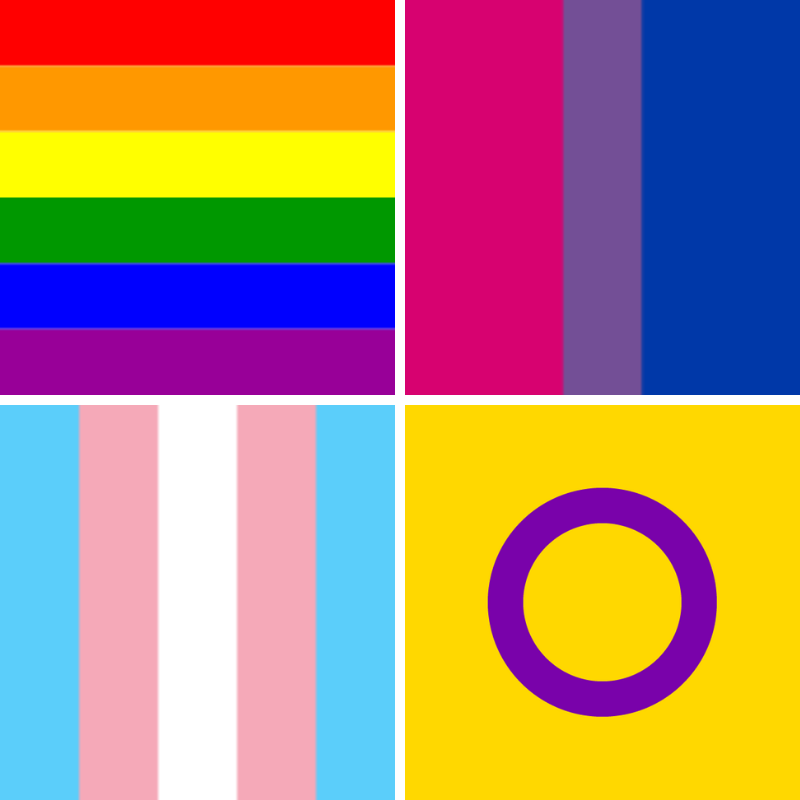


 alastairlawrie