Submission to Draft National Care and Support Strategy 2023

Submitted online 

26 June 2023

To whom it may concern

Thank you for the opportunity to provide this submission in response to the Draft National Care and Support Strategy 2023.

I do so as a long-standing advocate for lesbian, gay, bisexual, transgender, intersex and queer (LGBTIQ) Australians, with a particular focus on ensuring our communities are legally protected and can live our lives free from discrimination on the basis of who we are.

At the outset, I would like to commend the Government for taking on the issue of ensuring the ‘care and support economy’ is working effectively and efficiently for the benefit of all people, including the people accessing these services as well as the workers providing them.

As noted in the draft strategy as circulated, this is especially important given ‘Australian Government spending in these sectors is projected to rise from around $60bn in 2021-22 to more than $110bn by 2026-27.’

In this context, however, it is disappointing that so little consideration is given to how the care and support economy impacts LGBTIQ people.

Indeed, as far as I can tell, there is only one reference to LGBTIQ people in the entire 56 pages of the proposed strategy (which I will address in more detail below).

Almost inevitably, this means that the impact of the care and support economy on LGBTIQ people accessing services, and LGBTIQ workers – as well as the inter-relationship between these two cohorts – is not adequately addressed.

I therefore call for the following issues to be addressed in more detail in the final version of the strategy to be released later this year.

  1. Better protections for LGBTQ people accessing care and support services

While increased Government funding for care and support services overall is obviously welcome, one particular aspect of this funding which causes potential problems for the LGBTIQ community is that a significant share is provided to religious organisations to operate what are essential public services.

Although many religious organisations are now accepting of LGBTQ people and our families, many others remain discriminatory in their approaches towards diversity in sexual orientation and gender identity.

And in at least some of these cases, although thankfully not all, this discrimination is legally permitted under the Commonwealth Sex Discrimination Act 1984.

First, on the positive side, the 2013 amendments to this legislation, which protected LGBTI people against discrimination under federal law for the first time, included a ‘carve-out’ which provides that Commonwealth-funded age care services operated by religious organisations are not permitted to discriminate against LGBTQ people accessing those services (sub-section 37(2)(a): ‘Paragraph (1)(d) does not apply to an act or practice of a body established for religious purposes if… the act or practice is connected with the provision, by the body, of Commonwealth-funded aged care.’)

While welcome, this carve-out is also extremely narrow. It does not protect LGBTQ people accessing non-Commonwealth Government funded aged care services against discrimination because of their sexual orientation and/or gender identity.

Even worse, the fact this carve-out only applies to aged care, means that other parts of the care and support economy – from disability services, through veterans’ care and early childhood education and care – are not covered.

In other words, religious organisations which operate services in these sectors are free to discriminate against LGBTQ people accessing them, even where the service is being provided with Australian Government money. With taxpayers’ money. With our money.

This is completely unacceptable in 2023. People should be able to access these services – disability services, veterans’ care and early childhood education and care – without having to fear such discrimination.

It is also completely contradictory to the otherwise-worthy stated objectives of the Draft Strategy.

This includes 1.4 ‘Services are culturally and psychologically safe for all people.’ Supported by the discussion on page 19 – which is the only place LGBTIQ people are explicitly mentioned in the document: ‘In addition to formal qualifications, the increasingly diverse Australian population also requires a workforce that is culturally competent for First Nations people, people from culturally and linguistically diverse backgrounds and lesbian, gay, bisexual, transgender and intersex people.’

Services cannot be culturally and psychologically safe for all people if some services are granted special privileges to discriminate against LGBTQ people accessing them.

And aiming for a workforce that is culturally competent to engage with LGBTI people is undermined if those services are permitted to refuse to engage with LGBTQ people anyway.

Therefore, if the Draft Strategy is to meet its stated objectives it must also include a recommendation, and commitment, to remove the exceptions in the Sex Discrimination Act that currently allow religious organisations to discriminate against LGBTQ people accessing disability services, veterans’ care and early childhood education and care.

2. Better protections for LGBTQ workers providing services

The need to improve legal protections for LGBTQ people under the Sex Discrimination Act doesn’t just apply to the people accessing those services – but also extends to the workers providing them.

This is especially important when, as noted in the draft Strategy, ‘The health care and social assistance industry now accounts for 15 per cent of Australia’s workforce, making it the largest employing industry in Australia’ and that ‘The care and support workforce is growing 3 times faster than other sectors in the Australian economy.’

Being able to enjoy safe and secure jobs, and ultimately careers, is therefore important for all cohorts within the Australian community – but this is something currently denied to too many LGBTQ workers.

That is because religious organisations receiving Commonwealth, State and Territory funding to deliver these services are legally permitted under federal anti-discrimination law to discriminate against workers simply based on their sexual orientation and/or gender identity.

Unlike LGBTQ people accessing aged care services, this includes LGBTQ workers in those services – sub-section 37(2)(d) makes it clear that the ‘carve-out’ does not apply where ‘the act or practice is… connected with the employment of persons to provide that aged care.’

There is also no Commonwealth protection for LGBTQ workers delivering disability services, veterans’ care or early childhood education and care, where their employers are faith bodies.

This is unacceptable. Workers should be hired, fired, promoted or otherwise engaged or not engaged on the basis of their ability to deliver this vital ‘care and support’ – not on their sexual orientation and/or gender identity.

This obviously has direct negative impacts on the LGBTQ workers involved – and potential workers too, who may be dissuaded from entering the care and support workforce to begin with if they are aware large sections of these industries are legally empowered to mistreat them just because of who they are.

But it also undermines the stated objectives of the draft strategy, including:

2.4 ‘Workplaces are safe and healthy, and psychological and physical risks are eliminated or, if this is not possible, minimised’ and

2.6 ‘Workplaces are inclusive of diverse cultures, genders, ages and abilities and are culturally safe for all workers, including First Nations workers.’

Psychological risks for LGBTQ workers are not being eliminated or minimised however long religious organisations in the care and support economy are legally permitted to discriminate against them.

And workplaces can never be ‘culturally safe for all workers’ while this situation prevails too.

If the Government is serious about achieving both of those objectives, then it must include a recommendation, and commitment, to remove the exceptions in the Sex Discrimination Act that currently allow religious organisations to discriminate against LGBTQ workers providing aged care, disability services, veterans’ care and early childhood education and care.

3. Better protections for LGBTQ workers will lead to better services for all people, including LGBTQ people, accessing these services

It should be noted that, as well as benefitting individual LGBTQ workers, removing the ability of religious organisations in this sector to discriminate against LGBTQ workers will also deliver a higher quality of care – which is something all Australians have an interest in.

I have been writing about this phenomenon for several years, including the following section from my 2019 submission to the Royal Commission into Aged Care

The first and most obvious way in which the ability of religious organisations to discriminate against LGBT employees impacts on the quality of aged care services is the reduction of potential talent in their aged care workforce.

This is an entirely logical, and foreseeable, outcome; by excluding some highly-qualified applicants, for reasons that have nothing whatsoever to do with their ability to perform the relevant role(s), the number of qualified applicants from which to choose is inevitably diminished.

This impact may be exacerbated in remote, rural and regional Australia, where the number of applicants for a position may be much smaller to begin with – any loss of highly-qualified applicants, simply because of their sexual orientation or gender identity, could have a severe impact on service standards.

And this impact will likely exist for as long as the general exception in the Sex Discrimination Act 1984 allows religious aged care services to discriminate in this way.

Because, even if a particular aged care facility doesn’t discriminate at a particular point in time, highly-qualified LGBT employees may nevertheless be discouraged from applying because of the possibility of being legally discriminated against in the future. In remote, rural and regional Australia, where there may be limited employment options, this could even result in qualified employees being lost to the aged care services industry entirely.

There is also a compelling argument that the stress of LGBT employees working in religious aged care services that may lawfully discriminate against them, where they may need to be constantly vigilant in self-censoring their words and actions lest they be ‘found out’, undermines the quality of service provided because it serves as a potential distraction from their day-to-day responsibilities.

People accessing aged care services have the right to expect the highest possible standard of care. That is not provided when an aged care service refuses to employ highly-qualified people simply because they are lesbian, gay, bisexual or transgender.

The second practical reason why allowing religious aged care services to discriminate against LGBT employees impacts on the quality of aged care services is that it can contribute to an organisational culture of homophobia, biphobia and transphobia.

Once an organisation acts in a manner that suggests discriminating against employees on the basis of their sexual orientation or gender identity is acceptable, it is hard not to see this abuse spilling over into the treatment of LGBT people accessing these services.

LGBT individuals and couples in aged care facilities may directly witness the homophobic, biphobic and transphobic mistreatment of staff, and feel less safe in their surroundings as a result. Or they could be subject to direct or indirect anti-LGBT discrimination themselves.

There is already a significant power imbalance between people accessing these services and the service-providers themselves. As a result, even if the LGBT person accessing the service technically has a right not to be discriminated against under the Sex Discrimination Act 1984, they may feel uncomfortable in making a formal complaint because of a legitimate fear that the organisation will not be responsive to it.

LGBT people accessing these services are also denied natural allies because any LGBT employees at the facility may feel unable to advocate on their behalf because they are also afraid of retribution from the organisation itself (in this case, entirely legal).

Homophobic, biphobic and transphobic discrimination against LGBT employees inevitably has a detrimental impact on LGBT individuals and couples accessing aged care services.

The third and final practical reason why allowing religious aged care services to discriminate against LGBT employees impacts on the quality of aged care services, especially for LGBT people, is that it denies them an opportunity for human connection.

Residential aged care facilities, in particular, are the ‘homes’ of the people living in them, usually for the final years or decades of their lives. The provision of services is about much more than simply providing shelter, food and health care.

For LGBT individuals and couples, having one or more LGBT employees offers the opportunity to bond with them over potential interests, and to share stories with each other (including, I might add, the ability for younger LGBT employees to learn from the older LGBT residents).

However, this opportunity is lost if an LGBT employee is unable to discuss this aspect of their lives, for fear of being discriminated against. For the resident, the possibility of conversation is replaced by silence.

Discrimination against LGBT employees in aged care services can exacerbate the social isolation experienced by LGBT individuals and couples accessing those services.

In conclusion, there are principled reasons why religious aged care services should not be able to discriminate against LGBT employees. These employees should be judged on their ability to perform the role, not on the basis of their sexual orientation or gender identity. And taxpayers’ money should not be used to subsidise anti-LGBT discrimination.

There are also practical reasons why such discrimination should be prohibited, including that it impacts on the quality of aged care services provided, contributes to a culture of homophobia, biphobia and transphobia, and denies LGBT residents an opportunity for human connection.

Therefore, to improve the quality of aged care services, including although not only for LGBT residents, the special privilege allowing such discrimination should be repealed.

*****

The same or similar arguments can be made with respect to LGBTQ workers providing other services in the care and support economy.

If we care about the care and support economy, if we care about the people working in it, and above all the people accessing the services within it, then the special privileges which allow religious organisations to discriminate against LGBTQ people must be repealed.

Sadly, not a lot has changed since I wrote that Aged Care Royal Commission submission more than four years ago. Perhaps the only two developments to note are a) even more money seems to be going to these sectors (and therefore to faith-based organisations providing these services), and b) the change to the Commonwealth Government in May 2022.

The previous Morrison Liberal/National Government was clearly uninterested in protecting LGBTQ people accessing services, and LGBTQ workers (indeed, with their thankfully abandoned Religious Discrimination Bill, they potentially sought to increase discrimination against both groups).

The questions now are for the Albanese Labor Government:

How serious are you about ensuring care and support economy services are ‘culturally and psychologically safe for all people’, including LGBTQ people?

What priority do you give to eliminating as far as possible psychological risks to workers, and ensuring workplaces are ‘culturally safe for all workers’, including LGBTQ workers?

Because if you’re serious about this, if it’s a priority to you, then the final version of the National Care and Support Economy Strategy 2023 must include recommendations, and commitments, to remove the special privileges under the Sex Discrimination Act 1984 (Cth) which allow religious organisations to discriminate against people on the basis of their sexual orientation and/or gender identity.

Thank you in advance for taking the issues raised in this submission into consideration as the National Care and Support Strategy is finalised. Please do not hesitate to contact me, at the details provided, should you require more information.

Sincerely

Alastair Lawrie

Albanese Government Must Do Better, and Do More, on LGBTIQ Rights in Second Year

Today marks the one-year anniversary of the election of the federal Albanese Labor Government. Looking back on those first 12 months, there have been some small but important wins, and some disappointing losses. But above all, there has been plenty of unfinished – and in many cases, un-started – business.

First, to the wins. In November last year, as part of the Fair Work Amendment (Secure Jobs, Better Pay) Act 2022 reforms, the Government added gender identity and intersex status as protected attributes in relation to the Fair Work Act’s adverse action and unlawful termination provisions. These amendments ensured trans, gender diverse and intersex workers were explicitly included in this law for the first time (although the Government still needs to update the out-dated terminology of intersex status, replacing it with sex characteristics, something Employment and Workplace Relations Minister Tony Burke has thankfully committed to do).

The second set of wins were the announcements from the Government which coincided with Sydney World Pride earlier this year, including:

  • Development of a 10 Year National Action Plan for the Health and Wellbeing of LGBTIQA+ Australians,
  • $26 million in grants for research projects seeking to improve the treatment and care of LGBTIQA+ people, through the Medical Research Future Fund, and
  • A new inclusion and equality fund to support LGBTIQ human rights in the Asia-Pacific region, with initial funding of $3.5 million.

On the other hand, the second half of 2022 saw some disappointing losses. This includes the decision by the Government to reject Greens amendments, supported by the cross-bench, to create an LGBTIQA+ Discrimination Commissioner at the Australian Human Rights Commission. Even if the Government believed the Bill being amended at the time (which related to the method of appointment for Commissioners) was the wrong vehicle for these amendments (which is the excuse they used), they have still not committed to introducing their own legislation to establish this stand-alone independent national voice on LGBTIQA+ rights which, based on recent events, is more needed than ever.

Another disappointing loss was the complete exclusion of LGBTIQ groups, and issues, from one of the major set-pieces of the first year of the Albanese Government: the Jobs and Skills Summit. Not only were LGBTIQ organisations not invited to attend the Summit itself, the Government also did not hold any specific consultations with LGBTIQ groups in the lead-up to it (out of more than 100 it conducted). It is therefore no surprise that the outcomes document from the Summit did not address any specific LGBTIQ issues – at a time when many cohorts within the LGBTIQ community experience significant workplace discrimination and exclusion (especially trans and gender diverse workers).

The above wins and losses could, in some respects, be seen as a decidedly mixed scorecard. Instead, I see it as a fundamentally incomplete one – after all, the issues identified are a long way from a comprehensive LGBTIQ agenda. There are many, many more priorities that the Government has not reached an outcome on – including plenty that haven’t even commenced.

Take, for example, one of the few explicit LGBTIQ commitments the Albanese Government took to the May 2022 election: to protect LGBTQ students and teachers in religious schools against discrimination.

In November 2022, Attorney-General Mark Dreyfus asked the Australian Law Reform Commission to undertake an inquiry on this topic, with a deadline of 21 April 2023. Except, the day before the final report of that review was due to be handed to the Government, the ALRC was given an 8-month extension to 31 December. There is really no need for such an extension – especially when this law reform itself is actually quite straight-forward (after all, Tasmania, the ACT, Victoria and NT all already protect both LGBTQ students and teachers).

The outcome of this process is that it is highly unlikely LGBTQ students and teachers will be protected this year, with any amendments not taking effect until well into 2024. As I wrote at the time of this delay in The Canberra Times, it is example of the ways in which the LGBTQ class of 2023 has been comprehensively failed, by Governments of both persuasions.

On a related note, the Government has not made any commitments to remove broader religious exceptions, found in both the Sex Discrimination Act 1984 and Fair Work Act, which allow religious organisations to discriminate against LGBTQ workers, and people accessing services, across health, housing, disability, aged care and other welfare and community services. The majority of these services are funded by us, the taxpayer, including in aged care – meaning the large increases in aged care funding in the recent federal Budget are going to organisations that can use that money to discriminate against LGBTQ workers.

There are a range of other important LGBTIQ policy areas where the Government has not yet taken concrete action, including:

  • Inclusion in the 2026 Census. While the Australian Bureau of Statistics has started consultation on the questions which should be included in the next Census, the Government has not given an unequivocal promise that questions on sexual orientation, gender identity and sex characteristics will be included. Such questions are necessary to help deliver essential services to our communities – after all, if we are not counted, we do not count.
  • Medicare funding for gender-affirming health care. Far too many trans and gender diverse Australians still cannot afford what are vital, and in many cases life-saving, health services. Gender-affirming health services should be publicly-funded via Medicare, removing out-of-pocket costs for this community.
  • Ending non-consenting surgeries on intersex kids. With the ACT Government soon to pass historic legislation banning many non-consenting surgeries and other medical interventions on children born with variations of sex characteristics (the first jurisdiction in Australia to do so), I am unaware of any Commonwealth Government actions to help ensure intersex kids are protected around the country.
  • Re-introduction of Safe Schools. The Albanese Government continues to fund the National School Chaplaincy Program to the tune of more than $60 million per year (and even though they have formally removed the requirement that these office-holders must be appointed on the basis of religion, the vast majority still are). In contrast, the Government has had two Budgets to date but is yet to find any money to re-introduce what was an effective, and necessary, program against anti-LGBTIQ bullying in schools.
  • LGBTIQ policy infrastructure. In addition to an LGBTIQA+ Human Rights Commissioner at the AHRC, there is a clear need for a Minister for LGBTIQ Communities, as well as formal consultative bodies in the Department of Prime Minister and Cabinet, as well as portfolios like Health, Education and Attorney-General’s. Currently, none of these exist.

[For a more comprehensive LGBTIQ Report Card on the Albanese Government’s First Year in Office, check out this helpful graphic from Just.Equal Australia.]

Even on more symbolic matters, the Government’s record is mixed. While in late February Anthony Albanese became the first Prime Minister to march in the Mardi Gras Parade, and also participated in the World Pride March over Sydney Harbour Bridge in early March, these efforts at visible (some might say performative) inclusivity are undone by his apparent aversion to even saying the word transgender, let alone doing the bare minimum to publicly combat the growing culture war against trans and gender diverse Australians.

Speaking of which, it certainly feels like the Government is missing in action as the LGBTIQ community comes under increasing attacks, and even threats of violence, including the TERF and neo-Nazi rally on the steps of Victorian Parliament, the Christian Lives Matter riot in Belfield in Sydney, and the wave of intimidation against Drag Story Time events in Victoria and now elsewhere around Australia.

Local Councils have been left on their own to deal with what is a growing national crisis of far-right extremism, in a way that may not have happened if the targets had been from other communities. This is perhaps illustrated by the Attorney-General’s ill-timed announcement this week of $40 million in ‘Securing Faith-Based Places’ grants, to protect religious schools and places of worship against violence and discrimination.

Without debating the merits of this scheme – and I obviously agree people should be free to worship in safety – it was a mistake to announce this on IDAHOBIT, certainly without providing equivalent funding for LGBTIQ community security against similar (and in some cases, probably the same) extremists. Nor has the Government made any promises to introduce Commonwealth anti-vilification protections for LGBTIQ Australians, despite committing to prohibit religious vilification.

The Albanese Government still enjoys a large amount of public goodwill, including from many LGBTIQ people – at least partly due to the fact it is not the Morrison Liberal/National Government, a dreadful period during which our community came under relentless and sustained attack.

However, simply not being Scott Morrison is not enough as the Albanese Government enters its second year in office. From an LGBTIQ community perspective, they clearly need to do better, and do more, on the issues which affect us.

Oh, and one final thing. I raise the spectre of Scott Morrison here quite deliberately (despite the risk of PTSD, including my own). Because the coming 12 months is also likely to see the Albanese Government introduce its own Religious Discrimination Bill.

As a community we will need to be on high-alert to ensure this legislation protects people of faith against discrimination on the same basis as existing anti-discrimination laws, without permitting lawful discrimination against others, including LGBTIQ Australians. If it does include anti-LGBTIQ provisions, the Government should be in no doubt we will fight against its law just as hard as we fought against Morrison’s Bill.

Anthony Albanese on election night, 21 May 2022.

If you have enjoyed reading this article, please consider subscribing to receive future posts, via the right-hand scroll bar on the desktop version of this blog or near the bottom of the page on mobile. You can also follow me on twitter @alawriedejesus

The Jobs and Skills Summit and LGBTIQ Australians

The Albanese Labor Government’s Jobs and Skills Summit will be held on September 1 and 2, 2022, now just eleven days away.

While there has been significant coverage of a wide range of issues relevant to this conference, there has been little to no reporting of how it will affect lesbian, gay, bisexual, transgender, intersex and queer (LGBTIQ) workers.

The letter below, to Prime Minister Albanese, Treasurer Chalmers and a number of other Ministers, seeks to place at least two important and urgent LGBTIQ policy matters onto the Jobs and Skills Summit agenda.

As always, I will publish any responses received.

*****

Prime Minister Anthony Albanese

Treasurer Jim Chalmers

Attorney-General Mark Dreyfus

Minister for Employment and Workplace Relations Tony Burke

Minister for Health and Aged Care Mark Butler

Minister for Aged Care Anika Wells

Minister for Education Jason Clare

Minister for Social Services Amanda Rishworth

Minister for the NDIS Bill Shorten

Sunday 21 August 2022

Dear Prime Minister Albanese and other Ministers

Please include LGBTIQ workers in the Jobs and Skills Summit

I am writing to you about the upcoming Jobs and Skills Summit, and the need to include lesbian, gay, bisexual, transgender, intersex and queer (LGBTIQ) workers and the issues which affect them.

I was initially encouraged to observe the Summit would include a focus on ‘expanding employment opportunities for all Australians including the most disadvantaged.’[i]

However, I am both concerned and deeply disappointed by the Jobs and Skills Summit Issues Paper, released on 17 August,[ii] which completely omits LGBTIQ Australians as one of the groups which should be considered as part of this focus.

Specifically, page 2 of that document states:

‘While the participation rate is around historically high levels, many Australians still face barriers to secure and well-paid employment. In particular, women, First Nations people, people with disability, older Australians, migrants and refugees, and those living in certain regional and remote areas face specific barriers to entering the workforce. This means there are further opportunities and obligations to ensure the benefits of strong labour market conditions are accessible to all people in Australia.’

There is no mention of LGBTIQ workers here, nor on any other of the Issues Paper’s 14 pages.

This is despite the fact employment-related discrimination against LGBTIQ workers, including and perhaps especially transgender and gender diverse workers, is well-documented.

For example, a 2021 paper[iii] found that for transgender, including gender diverse and nonbinary (trans), people:

‘The unemployment rate of 19% was three times that of the Australian general population rate of 5.5% in May 2018 and well above the youth unemployment rate (12.2%). Notably, 33% of respondents perceived discrimination in employment. Unemployment may also occur due to difficulty with name and identity documents, discrimination in basic housing and health care, and the impact of mental health conditions such as depression and anxiety on an individual’s ability to seek or maintain employment. Conversely, levels of depression and anxiety may be higher due to unemployment.’

The omission of LGBTIQ workers from the Jobs and Skills Summit Issues Paper also comes despite many LGBTIQ workers enjoying lesser workplace rights and protections than other employees, and a large number of employers being legally entitled to fire, to refuse to hire, or to otherwise discriminate against, LGBTQ workers simply because of their sexual orientation and/or gender identity. This often includes the use of taxpayers’ money in said discrimination.

These issues must be addressed if the Jobs and Skills Summit is to indeed focus on ‘expanding employment opportunities for all Australians including the most disadvantaged.’

I include below two fundamental, urgent issues which therefore must be included in the Summit’s agenda.

  1. Protect transgender, gender diverse and intersex workers under the Fair Work Act

Currently, transgender, gender diverse and intersex workers do not enjoy the same legal status under the Fair Work Act 2009 (Cth) as other employees, including women, people with disability, and even lesbian, gay and bisexual people.

This is because the adverse action protections in section 351, and unlawful termination protections in section 772, contain a long list of protected attributes – such as ‘race, colour, sex, sexual orientation, age, physical or mental disability, marital status, family or carer’s responsibilities, pregnancy, religion, political opinion, national extraction or social origin’ – but omit the protected attributes of gender identity and sex characteristics (intersex status).

In practice, this means transgender, gender diverse and intersex workers may not have the same guaranteed access to the low-cost, low-barrier Fair Work Commission as other employees who are subjected to mistreatment or unfair dismissal simply because of who they are.

Despite raising the lack of explicit Fair Work Act protections for these workers with the previous Government for several years,[iv] they refused to take any action to address this discrepancy, even voting against straight-forward Greens amendments to the 2021 Respect@Work Bill which would have remedied the situation, providing much-needed remedies to workers.[v]

I note the then-Labor Opposition voted for some, although not all, of those Greens amendments.[vi] I also note that, as a result of advocacy from myself and others, the 2021 ALP National Conference passed the following special resolution:[vii]

‘Aligning the Fair Work Act and Sex Discrimination Act

Labor will amend the relevant sections of the Fair Work Act to align with the Sex Discrimination Act to cover workers who are currently not protected.’

Unfortunately, while implementing this commitment – which would involve adding gender identity and intersex status as protected attributes in the Fair Work Act – would achieve some improvement, it would not bring that legislation up to best practice.

This is because sex characteristics[viii] is considered a more accurate, and more inclusive, protected attribute, and is the terminology preferred by intersex advocates, including Intersex Human Rights Australia.

Therefore, at least part of the response to this question on page 5 of the Jobs and Skills Summit Issues Paper:

‘How can we ensure workplaces are safe and fair, particularly for those people at higher risk of harassment, discrimination and other breaches of workplace minimum standards?’

is to add gender identity and sex characteristics as protected attributes in the Fair Work Act 2009 (Cth), including in relation to adverse action (s351) and unlawful termination (s772), so that transgender, gender diverse and intersex workers have the same rights and protections as everyone else.

Recommendation 1: The Jobs and Skills Summit must ensure transgender, gender diverse and intersex workers have the same rights and protections under the Fair Work Act as other employees, including in relation to adverse action and unlawful termination.

2. Remove special exceptions allowing religious organisations to discriminate against LGBTQ workers

That same question – ‘How can we ensure workplaces are safe and fair, particularly for those people at higher risk of harassment, discrimination and other breaches of workplace minimum standards?’ – is also relevant to the second issue which I submit must be on the Jobs and Skills Summit agenda: removing special exceptions which allow religious bodies to discriminate against lesbian, gay, bisexual, transgender and queer (LGBTQ) workers.

In fact, this issue is pertinent to a range of discussion, and questions, covered in the Issues Paper, including this statement on pages 6 and 7:

‘Addressing the barriers to participation and promoting equality of opportunity will contribute to a stronger and more inclusive economy, enable more Australians to realise their full potential, and help address current labour market challenges. This, in turn, will help ensure that the benefits of full employment are shared fairly across our community.’

And the associated questions on page 7:

  • ‘How can we reduce the barriers to employment for some Australians? How should governments, unions, business and the broader community best coordinate efforts to achieve this?’ and
  • ‘What strategies can be used to reduce discrimination and increase awareness of the value that diversity can bring to business and the broader economy?’

And on page 11: ‘How do we navigate workforce shortages in the care economy while supporting our frontline workers?’

Many people are aware of this issue because of public debate over the past five years surrounding ‘religious freedom’, the previous Government’s proposed (but thankfully-defeated) Religious Discrimination Bill, and the discriminatory (mis)treatment of LGBTQ students, teachers and other staff under the Sex Discrimination Act 1984 (Cth).

Many people may not be aware of how broad these exceptions are in practice, not just under the Sex Discrimination Act, but also under the Age Discrimination Act 2004 (Cth), Fair Work Act itself (undermining both its adverse action and unlawful termination protections), and the majority of state and territory anti-discrimination laws (including in my home state of NSW where the Anti-Discrimination Act 1977 has the broadest religious exceptions in the country).

The effects of these exceptions are all-too-real for LGBTQ workers.

Not only can LGBTQ teachers be denied, or fired from, jobs for which they are otherwise eminently qualified, simply because of their sexual orientation and/or gender identity.

But so too can LGBTQ aged care workers, nurses, doctors, social workers, disability workers and other employees across what is described in the Issues Paper as the care economy.

There are a range of serious consequences which flow from this discrimination, including:

  • For LGBTQ workers, obviously this includes being denied employment, and losing significant financial benefits, or alternatively being forced to stay closeted while in the workplace, with associated mental health harms.
  • For the LGBTQ community more broadly, this discrimination reinforces poorer health and well-being outcomes, as well as entrenching economic disadvantage.
  • For the services themselves, they are rejecting the best person for the job on the basis of criteria which has nothing whatsoever to do with their ability to do the job. Alternatively, they are forcing some employees to not bring their whole selves to work, thereby diminishing the quality of the work those employees do.
  • This also means that, for people accessing these services, they are effectively denied being served by the most qualified person for the role. A person in an aged care home deserves the best aged care worker possible, not the best cisgender-heterosexual worker. A student deserves to learn from the most qualified teacher, not the most qualified cisgender-heterosexual one. And so on. And so on. Across society.
  • It should be remembered that the vast majority of these roles are delivering what are basically public services, like education, health, aged care, or social and disability services, and in nearly all cases using public – or taxpayers’ – money to do so. That means every Australian is helping to fund this discrimination, and even more egregiously, that LGBTQ workers are being asked to subsidise their own oppression.
  • Finally, in an era of large and growing worker shortages across education, health, aged care, and social and disability services, permitting lawful discrimination on the basis of sexual orientation and gender identity discourages at least some members of the LGBTQ community from considering careers in these areas – which is perhaps a rational response to the knowledge that large employers in your chosen profession may be lawfully able to refuse to hire you, or fire you, just because of who you are.

For all of these reasons, a Jobs and Skills Summit that is focused on ‘expanding employment opportunities for all Australians including the most disadvantaged’ must seriously consider the harmful impacts of special exceptions which allow religious organisations to discriminate against LGBTQ workers simply because of their sexual orientation and/or gender identity.

And I submit it should recommend that such exceptions be abolished, not just for the benefit of those LGBTQ workers, but for the benefit of people accessing publicly-funded services in education, health, aged care, and social and disability services, and the benefit of the Australian community generally.

Recommendation 2: The Jobs and Skills Summit should call for the repeal of special exceptions allowing religious organisations to discriminate against LGBTQ workers simply because of their sexual orientation and/or gender identity.

Thank you in advance for considering the above issues ahead of the Jobs and Skills Summit. Please do not hesitate to contact me at the details provided should you require additional information.

Sincerely

Alastair Lawrie
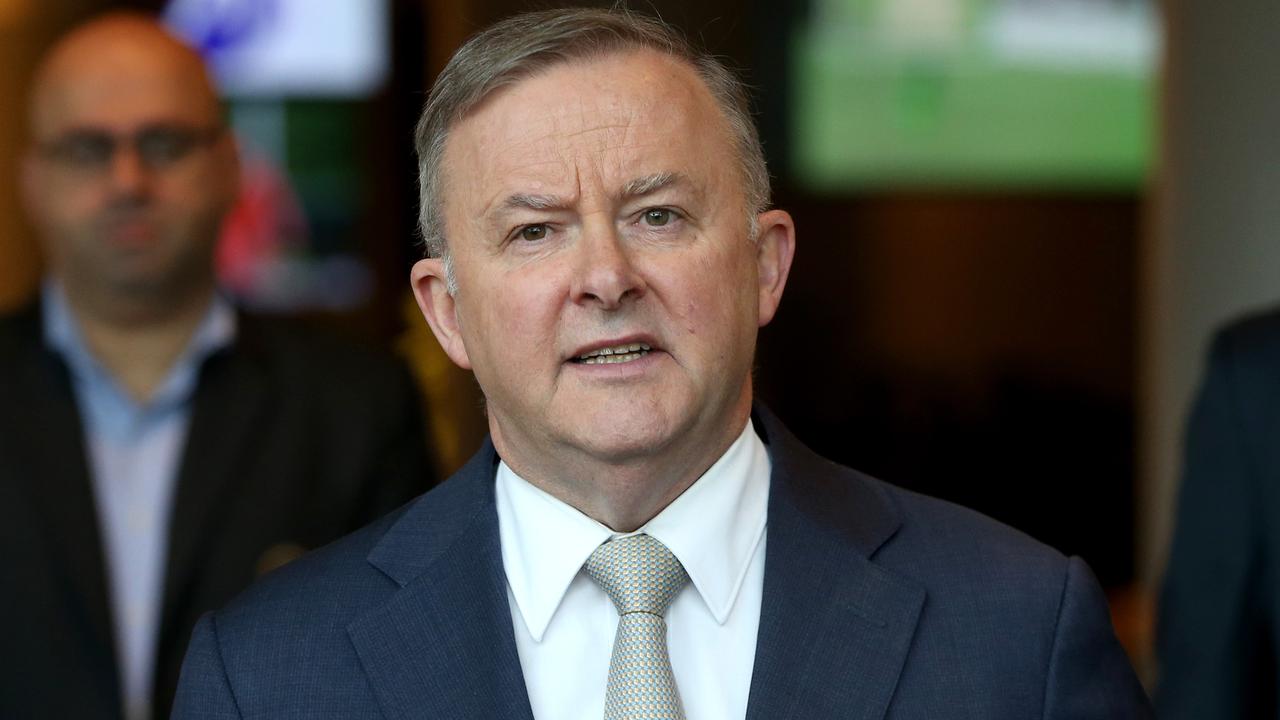
Will Prime Minister Anthony Albanese ensure that significant issues affecting LGBTIQ workers are considered at the Jobs and Skills Summit?

NB This post is written in a personal capacity, and does not reflect the views of employers past or present.

If you have enjoyed reading this article, please consider subscribing to receive future posts, via the right-hand scroll bar on the desktop version of this blog or near the bottom of the page on mobile. You can also follow me on twitter @alawriedejesus

Footnotes:


[i] Prime Minister and Treasurer Joint Media Release, ‘Jobs and Skills Summit to be Held in September’, 11 July 2022, available at: https://www.pm.gov.au/media/jobs-and-skills-summit-be-held-september

[ii] Department of the Treasury, ‘Jobs and Skills Summit Issues Paper’, 17 August 2022, available at: https://treasury.gov.au/publication/2022-302672

[iii] Ingird Bretherton et al, ‘The Health and Well-Being of Transgender Australians: A National Community Survey’, LGBT Health Vol 8, No 1, 12 January 2021, available at: https://www.liebertpub.com/doi/10.1089/lgbt.2020.0178

[iv] See for example: Unfairness in the Fair Work Act.

[v] See: Pathetic and Antipathetic, in Equal Measure.

[vi] The Labor Party supported the inclusion of gender identity and intersex status as protected attributes in the Fair Work Act – which are the same attributes already covered under the Sex Discrimination Act 1984 (Cth) – but did not support amendments which would have added gender identity and sex characteristics as protected attributes, with the latter terminology now considered best practice, and supported by intersex community organisations including Intersex Human Rights Australia.

[vii] ALP 2021 National Platform, page 137, available at: https://alp.org.au/media/2594/2021-alp-national-platform-final-endorsed-platform.pdf

[viii] This is defined in section 4(1) of the Equal Opportunity Act 2010 (Vic) as:

‘sex characteristics means a person’s physical features relating to sex, including-

(a) genitalia and other sexual and reproductive parts of the person’s anatomy; and

(b) the person’s chromosomes, genes, hormones, and secondary physical features that emerge as a result of puberty.’