Today is the International Day Against LGBTIQA+ Discrimination.
May 17 marks the day in 1990 homosexuality was removed from the World Health Organisation Classification of Diseases, with IDAHOBIT now an annual event drawing attention to the denial of fundamental human rights of lesbian, gay, bisexual, transgender, intersex, queer and asexual people around the world, including Australia.
Ordinarily, I would use IDAHOBIT to optimistically highlight issues of anti-LGBTIQ discrimination that can and must be addressed by Commonwealth, State and Territory Governments.
But I must admit I’m running as low on optimism at the moment as I am energy. On IDAHOBIT 2024, I just feel tired.
I’m tired of leaders who promise to protect LGBTQ students in religious schools against discrimination, but then fail to follow through on their commitments.
In the past, this statement applied to former Prime Minister Scott Morrison, who promised to remove the exceptions in the Commonwealth Sex Discrimination Act1984 that allow religious schools to mistreat students because of their sexual orientation or gender identity in October 2018 – before spending the following three-and-a-half years running away from that commitment.
Now it applies to Prime Minister Anthony Albanese, who promised to protect both LGBTQ students and teachers ahead of the May 2022 federal election but, having received an Australian Law Reform Commission report outlining exactly how to do this, now refuses to introduce legislation to make this a reality without the support of Opposition Leader Peter Dutton.
Which is both an entirely unnecessary requirement – because the Parliamentary numbers exist to pass these reforms without the Liberal and National Parties – and will almost inevitably lead to an outcome which doesn’t actually end this anti-LGBTQ discrimination, either because the Coalition won’t agree to any changes, or any changes that are agreed simply allow this mistreatment to continue in other ways.
I’m tired of states that have allowed their own anti-discrimination laws to atrophy, through decades of neglect, such that they do not provide adequate protection against discrimination to the LGBTIQ community.
I am of course thinking of the successive governments in NSW who failed to update the Anti-Discrimination Act 1977, with the consequence that, in 2024, it still does not protect bisexual, non-binary or intersex people. Or LGBTQ students or teachers. And plenty of others too.
At least the current Minns Labor Government has referred this legislation to the NSW Law Reform Commission for comprehensive review. Although it would be even better if, in the interim, they supported the Equality Legislation Amendment (LGBTIQA+) Bill 2023, currently being considered by a parliamentary committee, which could address many of these shortcomings right now.
I’m even more thinking of the WA Labor Government who, despite promising to modernise the Equal Opportunity Act 1984 after their own Law Reform Commission inquiry process, have failed to use their parliamentary majorities in both houses to do anything about it, squandering what might be a once-in-a-lifetime opportunity to finally bring WA anti-discrimination laws into the 21st century.
I’m tired of the absence of action on birth certificates, particularly in NSW, which remains the only place in Australia that still requires trans and gender diverse people to undergo sterilising genital surgery in order to update their identity documents. And which does not provide legislative options to recognise sex or gender markers beyond male or female either.
Although, as with anti-discrimination reform, this could be solved quickly and easily through the rapid passage of the Equality Bill’s amendments to the Births, Deaths and Marriages Registration Act 1995.
I’m tired of the lack of Medicare funding for gender-affirming healthcare, too. While not all trans and gender diverse people seek access to such services, including but not limited to surgery, many do – but the significant out-of-pocket costs involved place them out-of-reach for far-too-many trans Australians.
These are vital, in many instances literally life-saving, healthcare services. They are the opposite of ‘elective’, and must be properly, publicly, funded, to ensure all trans and gender diverse people who want to can access them.
I’m tired of the glacial pace of change to protect children born with variations of sex characteristics (aka intersex kids) from non-consenting surgeries and other harmful medical interventions.
It’s been more than a decade since the Commonwealth Senate first investigated these gross violations of human rights – the worst violations against any part of the Australian LGBTIQ community – and yet only one jurisdiction has passed any kind of law to limit them (the ACT, which legislated reforms in 2023, although I understand Victoria is also moving, slowly, toward its own scheme).
Intersex people deserve to control what happens to their bodies.
I’m tired of right-wing, and far right, politicians at all levels using the LGBTIQ community as convenient punching bags for their own self-promotional purposes. The latest notorious example being Cumberland City Councillor Steve Christou, with his thankfully short-lived ban on books depicting same-sex parents from council libraries.
But, really, we could be talking about any number of people who use anti-LGBTIQ platforms to seek, or retain, public office, from Mark Latham to Katherine Deves, and Alex Antic to Claire Chandler.
I’m tired of the far right extremist threat against LGBTIQ people not being taken seriously by Government, and especially by the Commonwealth Government.
In the wake of the downright disturbing sight of neo-Nazis turning up to an anti-trans rally on the steps of Victorian Parliament in March 2023, the Albanese Government passed urgent legislation banning Nazi symbols, and salutes, but so far have still not introduced amendments to prohibit anti-LGBTIQ vilification under federal law.
Nor has there been clear Commonwealth condemnation of the wave of threats of violence and intimidation against Drag Story Times at community libraries around the country.
I’m tired of politicians who turn up to march with us in events like the Sydney Gay & Lesbian Mardi Gras parade, but don’t turn up to vote for us on the floors of our parliaments.
And who post short statements supporting LGBTIQ people on social media on days like today, but won’t say anything when it really matters, when our community is under attack.
I’m tired of some people in the LGBTIQ community who fought for the right to marry for themselves, but then turned away from the ongoing battles for the rights of others within our own community, including trans and gender diverse, and intersex, people.
And especially of fringe groups like the LGB Alliance who actively seek to deny human rights to trans and gender diverse people, employing the same arguments, and sometimes aligned with the same groups, that were used to deny their own.
And I’m tired of the amount of time, energy and emotional resources that we must consistently spend defending existing rights from baseless attack, simply stopping the situation from getting worse, rather than making progress on the many, many issues where change is still desperately needed.
I acknowledge that this list is at least partly the product of my own choice to be an advocate for LGBTIQ equality, both professionally and personally.
A choice that means, to some extent, nearly every day for me is a day standing up against LGBTIQ discrimination.
And so on this International Day Against LGBTIQA+ Discrimination I’m choosing to do something else.
I’m logging off, and spending the day with the man who I love, doing many of the simple but beautiful things we enjoy together.
In other words, we’re making sure on this IDAHOBIT we’re living the gayest, and most fabulous, lives possible.
The struggle for LGBTIQ equality will continue tomorrow. And many, many tomorrows after that.
If you have appreciated reading this article, please consider subscribing to receive future posts, via the right-hand scroll bar on the desktop version of this blog or near the bottom of the page on mobile.
On April 16 2024, I was invited to give the keynote address to launch Issue 47(1) of the UNSW Law Journal.
I was asked to talk about the Issue’s theme – ‘Decoding Life, Freedoms and Governance’ – with reference to at least some of the Issue’s articles (which are open-source, and can be found here), as well as my background as a long-term LGBTIQ advocate and professional experience in public policy.
The following is what I came up with (the two sections in square brackets were omitted on the night to keep to time, but are included here for completeness). Thanks for reading, I hope you find it interesting.
‘Decoding Life, Freedoms and Governance’
Thank you for that generous introduction. And of course for the invitation to speak here tonight.
Thank you also for the broad theme of Issue 47(1) to address in my remarks – ‘Decoding Life, Freedoms and Governance’ – which took me several days to ‘decode’.
I must confess I don’t feel particularly qualified to talk in detail on the topic of ‘decoding life’ – which is something most people do in consultation with their therapist.
I do, however, have plenty to say on the twin, and intertwining, topics of ‘decoding freedoms’ and ‘decoding governance’, at least partly based on my lived experience.
That’s because, as a 45-year-old gay man, it has been impossible to avoid thinking about the meaning of freedom – of what I have been free to do, or not do, or protected from, or not, at different stages of my life. And what others, including religious organisations, have been legally free to do to me.
Or to deny the role of governance, and governments – state and federal – in determining the extent of those ‘freedoms’, far-too-often without consultation with or even consideration of those most affected by their decisions.
Indeed, some of the key events in my life overlap with milestones in the history of LGBTIQ rights in Australia.
I was born in July 1978, just weeks after NSW Police arrested 53 people for participating in the first Sydney Gay Mardi Gras parade – an indication of how unwelcoming both the law, and its enforcement, were for LGBTIQ people here.
Although I grew up in rural Joh Bjelke-Petersen-era Queensland, which was undoubtedly worse.
Queensland did not decriminalise male homosexuality between adults until January 1991 – but even then it introduced a differing age of consent for anal intercourse (18, compared to 16 for other sexual acts), a discrepancy that was not abolished until 2016, and with charges and convictions arising because of this inequality still not included in their historical homosexual conviction expungement scheme today.
January 1991 was also personally significant for a couple of reasons. Just one week after decriminalisation, I found myself travelling 800 kilometres from the family farm to a religious boarding school in Brisbane. Then, on my first day there, I found I was same-gender attracted too.
Audience members will be unsurprised to learn religious schools were lawfully permitted to discriminate against LGBTQ students (and teachers) in Queensland at that time. Loopholes my school took full advantage of over the following five years.
While I will spare you the details tonight, it would be an understatement to describe growing up gay at a religious boarding school which enjoyed special privileges to be prejudiced, as horrific. [You can read more about my experiences, here].
Fast forward to 2008, and to another coincidence. I was employed as a ministerial adviser to the Rudd Labor Government. At the same time as I met, and began my first de facto relationship with, the man who is still my partner today, I was provided internal on the details of Commonwealth same-gender de facto relationship recognition.
Some younger members of the crowd may not be aware this recognition did not exist before 1 July 2009.
Then, in January 2010, my partner Steve and I got engaged – meaning I would spend the remainder of my time working for a Government which did not support the legal equality of my own relationship.
Despite departing Canberra in mid-2012, I continued to advocate for the introduction of Commonwealth anti-discrimination protections for LGBTIQ people, something that was finally achieved in June 2013 – just 10 years ago, but almost four decades after race discrimination was prohibited federally, and more than three decades after homosexual discrimination protections were introduced in NSW (something we will return to later).
The subsequent four years were predictably dominated by the subject of marriage equality – not only campaigning for it to be passed, but also debating the manner of its passage, from conscience votes through to the push for the ALP to hold a binding vote.
And from successful LGBTIQ community efforts to stop the Turnbull Coalition Government’s plebiscite, to failed attempts to prevent their postal survey – in another coincidence, I started at the Public Interest Advocacy Centre just a couple of months before we helped one of the unsuccessful High Court challenges to block what may have technically been a statistical survey but was also an anti-democratic anomaly.
I note this challenge fell just prior to the relevant time period for the article ‘How does the High Court interpret the Constitution? A Qualitative Analysis between 2019-21’ – it would have been interesting to see how Tan, Paige, Hrambanis and Green characterised that Wilkie decision.
In any event, thank you for indulging me in sharing a little of my back-story. Which I think reinforces that to be a gay man – or any member of the LGBTIQ community – in the final two decades of the 20thcentury, and the first few of the 21st, is to have been engaged in a constant state of contestation of our legal rights.
Our lives have been made inherently political, with participation in the political process rendered essential – even if ‘the State’ has frequently been our oppressor, or at least acted on the oppressor’s side.
That background also helps to explain why I am an LGBTIQ advocate today.
Why I chose ‘sexuality-related anti-discrimination law in practice’ as the topic of my law honours paper at ANU.
Why I’ve spent much of the past two decades volunteering for a range of LGBTIQ community organisations, including both the Victorian, and NSW, Gay & Lesbian Rights Lobbies.
And why I have ended up at PIAC, where over the past seven years I have been fortunate enough to work not just on marriage equality, but also on advocacy against the Morrison Government’s Religious Discrimination Bills, which presented a grave threat to the rights of LGBTQ people (as well as women, people with disability and even people of minority faiths).
Above all, I’ve focused on efforts to secure anti-discrimination protections for LGBTQ students and teachers in religious schools, under both state and federal law. Which is obviously a full-circle moment given where I started!
I intend to use the remainder of this speech to talk about what LGBTIQ rights look like in NSW today, across four key issues: conversion practices; birth certificates; medical interventions on intersex children; and anti-discrimination protections.
Now, had I given this address a month ago, I would have been able to make the pithy observation that we live in the worst jurisdiction in Australia for LGBTIQ laws.
Instead, following passage of the Conversion Practices Ban Act in late March, we’ve moved all the way up to equal worst, with Western Australia (actually, that’s perhaps uncharitable – if we’re being generous, we might even be able to say we are now second-worst… just).
From an LGBTIQ advocate’s perspective, this legislation is both welcome and long overdue.
It will legally prohibit conversion practices, defined in section 3 as:
‘a practice, treatment or sustained effort that is (a) directed to an individual on the basis of the individual’s sexual orientation or gender identity, and (b) directed to changing or suppressing the individual’s sexual orientation or gender identity.’
This is needed because, as described in the opening article in issue 47(1) – Martin Clark and Brendan Gogarty’s excellent ‘Searching the Reins and Hearts: Conversion Practices Reforms in Australia’:
Quote
‘[S]cientific and clinical evidence has consistently shown that there is no evidence that conversion practices are ‘effective’ in their capacity to effect a change or suppression of sexual orientation or gender identity. There is also consistent evidence that conversion practices carry clear risks of harmful effects on those subjected to them, including physical and psychological harms, such as increased suicidality, self-harm, post-traumatic stress disorders, anxiety and depression, feelings of alienation, loneliness and exclusion, sexual dysfunction, substance abuse, internalised homophobia and feelings of failure, and reluctance to seek medical treatment.’
Endquote
Disappointingly to Clark and Gogarty, who argue against a carceral approach, the new Act implements both a criminal offence, and civil complaints scheme, for conversion practices.
Although I must respectfully disagree with them – given the seriousness of the harms they outline, I would suggest criminal penalties for the worst examples are appropriate.
Either way, the passage of this law is a testament to the advocacy of conversion practices survivors like Anthony Venn-Brown, Chris Csabs and Nathan Despott, over many decades.
But I would not be honouring their work without also highlighting their primary criticism of the law as passed – that, unlike the ‘best practice’ scheme in Victoria, the NSW law does not provide a formal mechanism for third-party complaints to Anti-Discrimination NSW.
As it stands, the only complaints that can be made are from survivors directly, or via representative complaints with the consent of each of those survivors.
This framework not only reinforces one of the limitations of anti-discrimination law more broadly – that the onus for seeking redress falls on the people who have been mistreated.
It ignores the particular characteristics of conversion practices, where the people undergoing them appear to do so ‘voluntarily’ (despite what, as Martin and Gogarty note, is the ‘impossibility of genuine consent’ in these circumstances), and are therefore unlikely to bring, or consent to, complaints until after they have extricated themselves from them. If they first survive them.
The lack of third-party complaints is a major gap in this scheme that must be rectified.
The Act also includes a range of ‘carve-outs’, providing that activities like ‘clinically appropriate’ healthcare, ‘stating what relevant religious teachings are or what a religion says about a specific topic’, and ‘parents discussing matters relating to sexual orientation, gender identity, sexual activity or religion with their children’, do not constitute conversion practices.
Despite this, a number of conservative religious organisations campaigned against the law in its totality, alleging it constituted an attack on ‘religious freedom’.
I must, perhaps a little less respectfully this time, disagree with them too. There is no philosophical justification for the right to inflict serious psychological harm, on children and young people, in the (misused) name of religious freedom.
Even in the case of adults – where there is at least a possible argument for the freedom to engage in practices which may result in self-harm – I would submit there is a clear justification for government regulation.
This is because of what Clark and Gogarty describe as the role played by ‘conversion ideology’ as a precursor to ‘conversion practices’:
Quote
‘Survivor-advocates have consistently contended that ‘conversion ideology’ – the worldview that it is possible and necessary for LGBTQA+ people to change their sexual orientation and gender identity, and that being LGBTQA+ is due to trauma, spiritual brokenness, and can be fixed by prayer – is central to defining and understanding conversion practices’,
because
‘the inculcation of these beliefs in congregants is important for smoothing the path for them taking part in actual conversion practices.’
Endquote
In other words, perpetrators of conversion practices first convince healthy people to believe their sexual orientation or gender identity is somehow ‘sick’ (when it is not), before offering a ‘cure’ that actually causes serious psychological harm.
The law should not protect the ‘freedom’ to engage in this abuse.
Before I conclude on this subject, I feel compelled to express my condemnation of the role played by the Liberal/National Coalition during parliamentary consideration of this law.
And especially of their vote in favour of minor-party amendments to remove ‘gender identity’ from any protection under the Conversion Practices Ban Act.
In other words, the NSW Opposition voted for the continued legality of ‘practices, treatments or sustained efforts’ to stop trans people, and especially trans young people, from being trans.
This was a shameful act, and one I would strongly urge them to reconsider in relation to future LGBTIQ law reform – including on the next topic we will turn to.
That is birth certificate legislation, and in particular, the regulation of access by trans and gender diverse people to identity documents reflecting who they are. Sadly, the NSW Births, Deaths and Marriages Registration Act 1995 is unequivocally the worst such law in the nation.
We are the only jurisdiction which still requires people to undergo genital surgery before being able to update their birth certificates – surgery many trans people do not wish to undertake, and of those that do, many cannot afford, because of a lack of Medicare funding.
While we are one of only two jurisdictions, alongside Western Australia, with no legislative options for sex or gender markers beyond male or female: non-binary people cannot access state-issued ID stating they are, in fact, non-binary.
These laws aren’t just an insult to the human dignity of trans and gender diverse people. The requirement for surgery, which causes sterilisation, is a denial of reproductive freedom and therefore the right to found a family.
While the inability of many trans and gender diverse people to access birth certificates reflecting who they are at all, means they are confronted by the possibility of ‘outing’ in the growing range of contemporary scenarios where ID is mandated.
Fortunately, the Equalities Legislation Amendment (LGBTIQA+) Bill 2023, introduced by the Independent Member for Sydney Alex Greenwich and currently being considered by a Parliamentary Inquiry, would address these problems, and at least bring NSW law up to the standard of Victoria and Queensland.
Although even then, and this is my personal rather than professional view, it would fall short of the ‘best practice’ approach of Tasmania, which is the only Australian state or territory to adopt a true ‘self-identification’ model for trans and gender diverse people.
Instead, the NSW law – like Victoria and Queensland – would still require a trans person, in addition to their own statutory declaration, to submit:
‘a support statement by an adult who has known the applicant for at least 12 months stating that (i) the adult believes the person is making the application in good faith, and (ii) the adult supports the person making the application…’
Given identity, including the characteristic of gender identity, is an inherently personal attribute, I do not agree the recognition of someone’s gender should be dependent on whether another person ‘supports’ it.
Looked at from another perspective, I do not concede that my sexual orientation, as a gay man, should only be acknowledged if I am able to produce a statutory declaration from another person saying they ‘support’ it.
I am who I say I am, a fact generally accepted by others. Trans and gender diverse people deserve to enjoy exactly the same respect.
Nevertheless, we (being PIAC), support the Equality Bill as a significant step forward along the long journey to LGBTIQ, and especially trans, equality. We urge both the NSW Government, and Opposition, to support it.
Turning to the third topic I flagged earlier, and in which NSW law is manifestly deficient: medical interventions on intersex children.
For audience members new to this subject, intersex people have innate sex characteristics that do not fit medical norms for female or male bodies. It is estimated somewhere up to 1.7% of children are born with these variations of sex characteristics.
Tragically, the medical system’s response to many intersex children is to perform so-called ‘normalising’ surgeries on them.
These interventions are frequently not clinically necessary for the child’s health, but instead performed for non-therapeutic or ‘psycho-social’ reasons, including to assuage the disappointment of parents who expected their child’s body to conform to societal norms, or to ‘assist’ the child to fulfil gendered stereotypes in the future.
For those curious about what that means in practice, I suggest reading the 2016 Family Court case of Re: Carla, which ruled that a family can consent to the sterilisation of their 5-year-old child without court approval, without clear medical necessity and at least partly motivated by gendered expectations, including attitudes to that young child’s potential future sexuality. It was then, and remains today, a genuinely heart-breaking decision.
These unnecessary surgeries are obviously done without the consent of the person affected by them, who should be free to agree, or not agree, to them when they have at least reached Gillick competency and understand what is involved.
In my view, medical interventions on intersex children, which are a fundamental denial of bodily autonomy, are one of the gravest human rights violations happening in Australia today – not just in relation to the LGBTIQ community, but across society.
There have been multiple public inquiries recommending these practices be ended, including the 2013 Senate ‘Inquiry into the involuntary or coerced sterilisation of intersex people in Australia’, and the Australian Human Rights Commission’s 2021 report ‘Ensuring health and bodily integrity: towards a human rights approach for people born with variations in sex characteristics.’
Sadly, however, only one Australian jurisdiction has so far passed legislation to prohibit these surgeries: the ACT. While I understand Victoria may be close to finalising its own laws.
In contrast, there is no NSW Government commitment to introducing equivalent laws here, nor was it included in Mr Greenwich’s Equality Bill.
This is a gross failure of governments, in NSW and elsewhere, to protect the rights of the most vulnerable.
It is unsurprising I had this issue front-of-mind while reading the article ‘Out-of-Home Care, Contact Orders and Infant Mental Health: Recognising a Unique Developmental Stage in Law, Policy and Practice’ by Rachel Gregory-Wilson, Elizabeth Handsley, Liesel Spencer and Toby Raeburn, including their observation that:
Quote
‘Infancy is, therefore, a special and critically important stage of human development, and infants as a class of persons require special recognition and safeguards, including under child protection law. Infants are not little children, just as children are not little adults; they need different and unique exposures in their environments to facilitate optimum physical growth and emotional development’.
Endquote
While they made this observation in a different context, I think it reasonable to apply these principles to intersex children, who deserve legislative safeguards for their bodily autonomy, and who should be allowed to grow and develop free from unnecessary medical interventions to try to change their bodies into what society expects them to be.
Let intersex kids be free from surgeries performed according to the wants of others, rather than their own needs – and only performed following their own timeframes, if they so consent.
[One final point before moving on – while the circumstances, and associated rights, of trans young people, and intersex children, are quite distinct, it is depressing to observe the intellectual inconsistency of those who oppose the rights of both.
For example, Liberal Senator Alex Antic’s Childhood Gender Transition Prohibition Bill 2023, currently before Commonwealth Parliament, seeks to ban access by trans and gender diverse young people to gender-affirming health care, even puberty blockers and even where they are Gillick competent.
While simultaneously providing a specific carve-out to allow non-consenting medical interventions to continue to be performed on intersex children.
According to Antic, there should be no gender-affirming health care for trans kids who want it and who are able to consent. But no protection for intersex kids from harmful surgeries that are not clinically necessary and where they are in no position to consent.
Trans and intersex kids lose either way].
Turning to the final topic of my speech – anti-discrimination coverage – once again NSW has the worst laws in the country. Nowhere is this more apparent than in the protections the Anti-Discrimination Act 1977 offers, or more accurately fails to offer, LGBTIQ people.
It wasn’t always this way. In fact, NSW was the first Australian jurisdiction to protect lesbians and gay men against discrimination, in late 1982. Incidentally, this was before the decriminalisation of homosexuality in mid-1984, meaning there was an 18-month period during which gay men were criminals but legally could not be denied housing.
But the lack of subsequent reform, especially over the past 28 years, has allowed this law to atrophy.
We are now the only place nation-wide which does not protect bisexual people against discrimination. And one of two, with Western Australia, that does not protect non-binary and intersex people.
The provisions allowing discrimination by religious schools are the broadest in Australia too.
Indeed, they are so broad they apply to all ‘private educational authorities’, not just religious schools. And they offer complete or ‘blanket’ privileges to discriminate – unlike all other jurisdictions, there is no test which NSW schools must satisfy before being permitted to discriminate. The Act simply does not apply to them.
These serious flaws are just some of the reasons PIAC has made comprehensive anti-discrimination law reform a priority, including through our August 2021 report ‘Leader to Laggard: The case for modernising the NSW Anti-Discrimination Act’.
We were obviously pleased NSW Labor listened to that report and made comprehensive review of the ADA an election commitment. And we have welcomed, participated in and will continue to participate in the current NSW Law Reform Commission inquiry into this broken and outdated law.
But, as people discovered at the start of the century – when the Law Reform Commission completed its last review of this legislation, with its report then gathering dust rather than being implemented – an inquiry is meaningless if nothing subsequently changes.
We will continue to advocate to the Minns Labor Government until we finally have an Anti-Discrimination Act fit for the 21st century, one offering genuine protection against discrimination for all communities, including LGBTIQ people.
Speaking of Law Reform Commission reports at risk of gathering dust, I cannot discuss anti-discrimination law reform tonight without also addressing the current situation federally.
[Before we get into those details, however, and on indulgence, I might take this opportunity to vent the frustrations of an advocate for protecting LGBTQ students in religious schools who regularly comes up against the intellectually disingenuous, and sometimes downright dishonest, arguments of those opposed to reform.
I speak of some conservative religious schools, and their representative bodies, who simultaneously claim that religious schools do not discriminate against lesbian, gay, bisexual and trans students – but that under no circumstances can their legal privileges to do so ever be repealed.
They can never satisfactorily answer why that should be the case.
Until you realise it is because these religious schools do in fact discriminate against queer kids – they just call it something else.
Which is how you end up with the anti-LGBTQ, and especially anti-trans, student enrolment contract, proposed by Citipointe Christian College in Brisbane in 2022.
Or the situation in late 2023, when a Sydney Catholic school rejected a female student’s request to bring their same-gender partner to their formal (with it later becoming apparent this was policy across that entire Catholic school network).
Indeed, Catholic schools seem to be experts in this special kind of hypocrisy – claiming not to discriminate, while doing exactly that – as can be seen in the 2023 Sydney Catholic Schools’ ‘Gender Dysphoria Policy’ – a 6-page guide that only ever refers to students with ‘gender dysphoria’, never once acknowledging some students are trans.
I would submit it is fundamentally discriminatory to refuse to acknowledge who a trans child is.
It is almost refreshing to witness the comparative honesty of an organisation like the Presbyterian Church of Australia, who have publicly stated gay students cannot hold leadership positions within their schools because they are unable to ‘model Christian living’.
Almost – until you remember they are unashamedly, and unrepentantly, saying they will actively mistreat young people solely because of an intrinsic attribute.
That is nothing more than bullying, pure and simple. There should be no place for it in places of learning.
Anyway, thanks again for your forbearance.]
As audience members are aware, this issue has been ongoing for several years – since late 2018, when both the then-Morrison Government, and then-Shorten Opposition, promised to protect LGBTQ students. With Labor going further in promising to protect LGBTQ teachers too.
Albanese took these commitments to the May 2022 election, with Attorney-General Mark Dreyfus referring the question of how they should be implemented to the Australian Law Reform Commission in November that year.
The ALRC handed its report to Dreyfus in December. They proposed straight-forward amendments, to the Sex Discrimination Act 1984, and Fair Work Act 2009, to reflect the following two principles:
That LGBTQ young people should enjoy the freedom to learn and to grow, without fear of discrimination on the basis of who they are, and
That LGBTQ teachers should be employed on the basis of their skills and experience, rather than their sexual orientation and gender identity.
We hoped the privileges for prejudice enjoyed by religious schools might finally end.
But, when the Government released the ALRC report in March, those hopes were immediately dashed – because Prime Minister Albanese indicated no legislation would even be introduced to Parliament without bipartisan support from the now-Dutton Opposition. Effectively abdicating responsibility for his own election promises to the parties he had defeated.
Remember, not only did the Coalition do nothing to implement Morrison’s 2018 promise to protect LGBTQ kids, they withdrew their own Religious Discrimination Bills from Senate consideration because of amendments to prohibit discrimination against trans students.
Just today, Shadow Attorney-General Michaelia Cash has written an opinion piece not just opposing reforms to the Sex Discrimination Act, but also backing calls by religious schools for ‘positive rights’ to discriminate under federal law, with the consequence of overriding protections for LGBTQ teachers, and even students, in states and territories that have progressive laws.
It was abundantly clear to observers when Mr Albanese announced his ‘bipartisanship’ push, and is undeniable now, there are only two possible outcomes:
There is no agreement, and therefore no protection for LGBTQ students and teachers
There is agreement – but any Bill supported by the Coalition will not offer genuine protection for LGBTQ students and teachers.
Either way, LGBTQ Australians lose again.
It is hard not to share the sentiments, if not the choice of language, of religious school discrimination survivor James Elliot-Watson, when he described the impasse thus:
Quote
‘MPs are paid in excess of $200,000 so everybody should do their fucking job.
And I think that’s especially true for the leader of the government and my Prime Minister.
The purpose of parliament is to enact laws that ensure the safety, integrity and protection of… Australian citizens and that’s what this is about.
It needs to protect vulnerable children from legal discrimination practices that religious institutions are allowed to engage by chang[ing] the law.
Let’s get it done.’
Endquote
If Albanese doesn’t ‘get it done’ this term, it will be no less a failure of governance, and governments, to realise the basic freedoms of LGBTIQ Australians as the failure to achieve marriage equality over many years.
Indeed, there are many similarities between these two issues.
Both were reforms supported by a large majority of the Australian community.
Both could be delivered with legislative ease, following well-established precedents (in the case of marriage equality, overseas examples; in anti-discrimination law, the successful operation of state and territory laws).
Both issues had politicians who claimed to support change, but were recalcitrant in delivering it.
Significantly, both marriage equality and anti-discrimination reform have seen Prime Ministers impose artificial barriers hindering change – in the former, an unnecessary plebiscite-cum-postal survey; in the latter, the unnecessary need for bipartisan support.
With the result that on both issues LGBTIQ Australians are made to wait far too long for positive change.
Which is the most important point. It is LGBTIQ Australians who suffer real-world harm because of political intransigence.
In marriage equality, we remember Peter ‘Bon’ Bonsall-Boone and Peter De Waal, who were together for 50 years, and, in the face of Bon’s declining health, desperately pleaded for Malcolm Turnbull to introduce marriage equality so they could finally wed.
Bon died 6 months before it was passed.
In relation to LGBTQ students, I think about the person whose story we will never get to hear – because the mistreatment they experience causes them to prematurely end their life.
I say that with confidence – because it was nearly my story.
The horrific discrimination I suffered at the hands of my religious boarding school, which I mentioned earlier, caused me to experience suicide ideation from the second term of year 8, through the final term of Year 12. And beyond.
I am, in many respects, very lucky to still be here.
But I am also full of resolve. Because that is no way for a child to learn, or to grow up.
And so I can state with equal confidence that I, and PIAC, will continue to advocate until no child has to endure the same.
As I come to the end of tonight’s speech, I’m tempted to apologise for the ‘heaviness’ of some of the subjects I’ve spoken about, including the personal impacts of anti-LGBTIQ prejudice.
It is an ‘occupational hazard’ of being an advocate, and especially one who focuses on policy and law reform, to be constantly critical, to highlight where the law is deficient, and the terrible outcomes of those shortcomings.
I do not intend to convey the impression there has been no positive law reform in my lifetime (or since that very first Mardi Gras) – not just on conversion practices, but also decriminalisation, de facto and rainbow family rights, and in many other areas.
Nor is the plight of LGBTQ people in religious schools intractable. I am reliably informed my own boarding school is now welcoming of same-gender attracted and gender diverse students, a product of anti-discrimination protections for students that have existed in Queensland for twenty years.
But I do mean to impart the understanding that the struggle for the full realisation of LGBTIQ human rights and freedoms in Australia is far from over, and that we will never reach that end-point without the concerted efforts of the community, both LGBTIQ and non-LGBTIQ alike.
I welcome those present tonight as fellow travellers on the long journey ahead.
Congratulations on Issue 47(1) of the UNSW Law Journal to Jessie Liu, your editorial team and to all of the authors published. It is truly impressive in its breadth, and depth, of scholarship.
And thank you for listening to my remarks.
[The video of this event has been published here. My speech begins at the 20-minute mark].
Photo credit: UNSW Law Journal
If you have appreciated reading this article, please consider subscribing to receive future posts, via the right-hand scroll bar on the desktop version of this blog or near the bottom of the page on mobile. You can also follow me on twitter @alawriedejesus
Right now, the NSW Government is consulting the community about whether to introduce new commemorative birth certificates, with proposed themes including ‘AFL, Olympic and Astrology Zodiac’ (yes, seriously).
At the same time, trans and gender diverse people in NSW continue to endure the most regressive birth certificate laws of any state or territory in Australia, which require people seeking to update their identity documents to first undergo genital surgery – something many do not want, and even more cannot afford.
It is offensive that I might be able to access an astrology-themed birth certificate (Leo, don’t judge) before many of my trans and gender diverse friends can obtain identity documents that simply reflect who they are.
The Births, Deaths and Marriages Registration Act is far from the only NSW law that treats LGBTIQ people as second-class citizens. There are many ways in which LGBTIQ people in this state wake up each day confronted by their own ‘horror-scope’ of discrimination and mistreatment.
For LGBTQ students at religious schools: You could be suspended or expelled today simply because of who you are. [Or, as we saw last week, you could be denied the ability to bring your partner to the school formal because they are the ‘wrong’ gender.] But there’s nothing you or anyone else can do about it.
For LGBTQ teachers at religious schools: You could lose your job today, and it has nothing to do with your ability to perform your role.
For bisexual, non-binary and intersex people: You could be discriminated against or vilified as you go about your everyday activities, but don’t bother complaining to Anti-Discrimination NSW – the Anti-Discrimination Act doesn’t protect you.
For LGBTQ people seeking to access publicly-funded disability, health, homelessness, and other community services operated by religious organisations: Closed doors could be a constant in your day – because the services you need can turn you away just for being you.
And for vulnerable young LGBTQ people: Watch out for people or groups seeking to change or suppress your sexual orientation or gender identity – even though what they offer is psychological torture, it’s still totally legal here.
Despite being the home of the Sydney Gay & Lesbian Mardi Gras, and recent host of World Pride, it’s no exaggeration to describe the state of LGBTIQ laws in this state as abysmal. Indeed, none of the above scenarios have changed since before the Sydney Olympics, leaving us with the worst legislation in Australia.
NSW is the gold medal winner in anti-LGBTIQ bigotry. Although somehow I doubt we’ll be able to get that on any ‘Olympic’ themed commemorative certificate.
Right now, there are two Bills before NSW Parliament that would remedy this situation: strengthening protections against discrimination, finally providing trans and gender diverse people with access to identity documents that reflect their gender identity, and prohibiting sexual orientation and gender identity conversion practices.
They were drafted following consultation with the community, including trans and gender diverse people as well as survivors of conversion practices.
In many cases, they would simply drag NSW law up to minimum standards that have existed in other jurisdictions for years, or even decades (with LGBTQ students in religious schools protected against discrimination for upwards of twenty years in Tasmania, Queensland and the Northern Territory).
The NSW Government is currently considering whether to support them. It is imperative they do – and seize the opportunity to bring many of the state’s LGBTIQ laws into the 21st century.
Even if they do, however, the job of achieving full protection for the LGBTIQ community will not be over. Sadly, the Bills currently before Parliament do not follow the ACT’s precedent in addressing one of the most extreme human rights violations against any part of our community: the ongoing involuntary surgeries and other medical interventions performed on children born with variations of sex characteristics (intersex children).
Nevertheless, the reforms contained in Greenwich’s Bills are essential, and should be progressed.
So, as the Minns Labor Government decides whether to support the fundamental protections these Bills offer, they should read their own horoscope for today:
You have the chance to make a tangible difference in the lives of LGBTIQ people across NSW. And it’s much more important than introducing star sign-themed birth certificates.
Chris Minns (centre) marching in this year’s Sydney Gay & Lesbian Mardi Gras Parade.
If you have enjoyed reading this article, please consider subscribing to receive future posts, via the right-hand scroll bar on the desktop version of this blog or near the bottom of the page on mobile. You can also follow me on twitter/X @alawriedejesus
Well, it’s official. When Sydney World Pride kicks off in less than a fortnight, it will be held in the jurisdiction with the worst LGBTIQ laws in Australia.
This incontrovertible fact is not surprising to anybody who has been paying attention. But it is still shocking to observe all of the different forms of legal prejudice which still exist in NSW. And, as always, the most vulnerable members of our community are the ones left paying the price.
This includes all those let down by the worst anti-discrimination legislation in the country.
The NSW Anti-Discrimination Act 1977 is already the only anti-discrimination law which fails to protect bisexuals against discrimination.
With legislation currently before Queensland Parliament, and a recent promise by the Western Australian Government to implement WA Law Reform Commission recommendations there, NSW will also soon be the only place which fails to protect non-binary people.
And the only place with no explicit intersex protections either.
The Anti-Discrimination Act’s exceptions which allow ‘private educational authorities’ to lawfully discriminate against LGBTQ students and teachers remain the broadest in Australia too.
Once again, the WA Government’s promised response to their Law Reform Commission, and the current Australian Law Reform Commission inquiry into the Commonwealth Sex Discrimination Act 1984, mean it is highly likely, by the end of this year, NSW will retain the only anti-discrimination law which fails to protect LGBTQ young people.
When it comes to the LGBTIQ community, the NSW Anti-Discrimination Act permits more discrimination than it prohibits.
Trans and gender diverse people in NSW are also subjected to out-dated and overly restrictive birth certificate laws.
It is currently one of only two states that still require transgender people to have genital surgery in order to access identity documents which reflect their gender identity – but the other, Queensland, has a Bill before Parliament to remove this unnecessary barrier.
A third jurisdiction, Western Australia, also requires physical treatment of some kind (such as hormone therapy) although the WA Government recently committed to reform their laws.
Unfortunately, the NSW Government has made no such promise here, effectively abandoning trans people who either cannot afford (because of the prohibitive costs involved) or do not wish to undergo surgery, as well as people with non-binary gender identities.
NSW’s laws fail the LGBTIQ community in two other areas which are no less important.
First, there is no ban on sexual orientation and gender identity conversion practices in NSW.
Victoria and the ACT have already banned these dangerous and harmful psychological practices, while Queensland has partially banned it (in health settings only). Other jurisdictions, including Tasmania and Western Australia, have promised to outlaw it. But ‘ex-gay’ and ‘ex-trans’ torture remains legally permitted in NSW today.
Second, there is no prohibition on non-consenting surgeries and other unnecessary and deferrable medical interventions on children born with variations of sex characteristics in NSW either.
These are horrific and ongoing human rights abuses, denying the fundamental right to bodily integrity of intersex infants. Just as horrific is the fact no Australian jurisdiction has, to date, ended these practices.
Thankfully the ACT Government will shortly become the first, with legislation expected to be introduced in the first half of 2023.
Once again, however, there have been no promises, and no signs of movement, on this issue from the NSW Government.
The current appalling situation in these four areas (LGBTIQ anti-discrimination laws, trans and gender diverse birth certificates, sexual orientation and gender identity conversion practices, and non-consenting surgeries and other medical interventions on children born with variations of sex characteristics) constitutes nothing less than a crisis in LGBTIQ rights in NSW.
To some extent, it is a crisis that has emerged, and worsened, only gradually over time, thanks to the inaction of successive Governments of both persuasions (especially in relation to the broken Anti-Discrimination Act).
However, with the O’Farrell/Baird/Berejiklian/Perrottet Liberal-National Government about to celebrate 12 years in office, they must clearly shoulder a significant share of the blame.
Indeed, the last LGBTIQ-specific law reform which the Coalition implemented was way back in 2018.[i] That means they passed exactly zero LGBTIQ-related laws during the entire parliamentary term which has just ended.
By way of contrast, the Victorian Government reformed their Equal Opportunity Act (to better protect trans, non-binary and intersex people, and protect LGBTQ students and teachers), updated trans birth certificate laws, and banned conversion practices, all in the same period (2019-22).
To be fair, during the past term the Berejiklian/Perrottet Government did initiate a Special Commission of Inquiry into LGBTIQ hate crimes (although they rejected community calls for this to be constituted as a Royal Commission, and it obviously remains to be seen what the practical outcomes of the Inquiry will be, if any).
The NSW Government also ultimately rejected Mark Latham’s legislative attack on trans kids. Although that was only after a parliamentary inquiry in which all three Coalition Committee members supported his Bill, and an 18-month public debate during which trans kids and their families felt abandoned. Plus, as I wrote at the time, not going backwards (by rejecting Latham’s Bill) is not the same thing as going forwards (like pro-actively addressing all of the ways in which NSW law still discriminates against trans and gender diverse people).
Perhaps the only unequivocally positive achievement during the term was the development and launch of the NSW LGBTIQ+ Health Strategy 2022-27, which contains a number of important initiatives.
However, no amount of health programs can remove the legal prejudice which confronts LGBTIQ people in NSW – only Government, and Parliament, can do that.
On that note, I find it incredibly curious, and probably revealing that, despite knowing World Pride was headed to Sydney since October 2019, the NSW Government took exactly zero steps to fix any of the four major deficiencies in LGBTIQ rights in this state. They were apparently content for the spotlight to fall on NSW and proudly show their failures to the world.
With the state election on March 25 (less than a month after World Pride finishes), perhaps they thought we would be satisfied with the ‘bread and circuses’ of the coming weeks. Or, to adapt another Roman saying, maybe they believed we would be happy to just dance while our human rights burn.
Well, they might soon discover they were badly mistaken.
[UPDATE 17 February 2023: Following pressure for Independent Member for Sydney Alex Greenwich MP, who has developed his own legislation to ban conversion practices, and a promise by the Labor Opposition to do the same if elected, Premier Perrottet finally expressed ‘in-principle support’ for a ban. However, there remains no detail to this expression of support, including whether it specifically includes gender identity conversion practices, or whether it will cover all sites where conversion practices occur, including religious settings.
UPDATE 23 February 2023: This week, Premier Perrottet wrote to faith leaders to reassure them any bans on conversion practices would not affect religious freedoms, as well as telling a community forum: ‘We will not ban prayer. We will not ban preaching. That is fundamental to freedom of religion.’ In effect, it seems likely any ban by a re-elected Liberal Government would therefore exclude religious settings, where the vast majority of harm is caused. In which case, a Perrottet conversion practices ban would not be worth the paper it is printed on.]
Again, to be fair, this is not to let the NSW Labor Opposition off the hook either.
They were also missing in action in terms of defending our community from Mark Latham’s legislative attack on trans kids, with neither of their Leaders (Jodi McKay and Chris Minns) prepared to publicly condemn it, and one of the two ALP members of the parliamentary Committee actively supporting it.
After 12 years in Opposition, and less than seven weeks out from the election, they also don’t have a comprehensive LGBTIQ policy agenda. Indeed, based on Chris Minns’ ‘Fresh Start Plan’, and the issues listed on his website (https://www.chrisminns.com.au/issues), they don’t appear to have any specific LGBTIQ election policies at all.
Having said that, they do commit to referring the Anti-Discrimination Act to the Law Reform Commission for ‘holistic review’, although the policy (here: https://www.chrisminns.com.au/reviewantidiscriminationact) doesn’t make any detailed commitments in relation to LGBTIQ inclusion, such as protecting LGBTQ students or teachers, or covering bisexual, non-binary or intersex people (while specifically noting ‘the need to address discrimination on the basis of religion.’)
The Policy Committee Report to last year’s ALP State Conference also suggests ‘an incoming NSW Labor Government will work with relevant government agencies and other stakeholders to ban gay conversion therapy in NSW.’ But this is problematic, not just because it is silent on gender identity conversion practices, but also because it goes on to note ‘any proposed legislation to ban gay conversion therapy must not outlaw individuals voluntarily seeking out medical, health, allied health or other advice and assistance regarding their personal circumstances’.
[UPDATE 11 February 2023: Today, Opposition Leader Chris Minns committed a Labor Government to banning LGBTQ+ conversion practices. Importantly, this includes both formal and informal practices, covers LGBTQ+ (rather than just sexual orientation), and features a commitment to work with survivors in drafting the legislation. More details here.
UPDATE 27 February 2023: Unfortunately, just like Premier Perrottet before him, today Opposition Leader Mines ‘reassured’ faith leaders that the ALP’s ban on conversion practices would not impact ‘religious freedom’. His quote, as reported by the Sydney Morning Herald: ‘Taking offence at the teachings of a religious leader will not be banned, expressing a religious belief through sermon will not be banned, and an individual, with their own consent, seeking guidance through prayer will not be banned either.’ This means the ALP’s ban will also only be partial, and therefore only partially effective.]
While there still appears to be no ALP commitments in relation to trans access to birth certificates, or ending medical interventions on intersex kids.
This situation, in 2023, is simply not good enough. The LGBTIQ community of NSW deserves much better, from the Government and the Opposition.
I should clarify here that this article is by no means a criticism of Sydney World Pride, or of its organisers.
Celebrating pride is a worthy and important activity, in and of itself, especially if it contributes to long-lasting culture change. Sydney World Pride’s focus on First Nations LGBTQIA+SB people, as well as human rights in the Asia-Pacific, are both welcome. And, on a personal level, I’m genuinely looking forward to a fortnight of queer cultural events and parties (the tiredness that will inevitably follow, perhaps less so).
However, when the glitter has been swept up, and the paint from the rainbows which have been painted across Sydney starts to crack and fade, we will still be left living under the worst LGBTIQ laws in Australia.
Laws which mean a gay student who simply holds his boyfriend’s hand at Fair Day could be expelled the very next day.
Laws which allow a school to sack a teacher just for marching with her wife and children in the Rainbow Families float in the Mardi Gras Parade.
During World Pride, trans and gender diverse people will have the opportunity to walk across the Harbour Bridge. But most still won’t be able to walk into the NSW Registry of Births, Deaths and Marriages to update their birth certificate simply to match their gender identity.
It is also likely many LGBTQ people will begin their ‘coming out’ journey over the next month, inspired by the visibility of World Pride. But if they’re in NSW and don’t have a supportive family and/or community, they could still be subjected to sexual orientation or gender identity conversion practices – entirely lawfully.
Finally, Sydney World Pride will bring much celebration of the human body, and the joy it can bring. But – tragically – in 2023, NSW continues to allow violations of the bodily integrity of children born with variations of sex characteristics.
So, by all means celebrate during Sydney World Pride, including the achievements that have already been won, and our resilience in the face of ongoing oppression. I know I will.
But we cannot allow ourselves to be distracted from the challenges which remain, challenges which are especially acute right here in NSW.
What better time then to raise our voices, loudly, passionately, as a community, to tell the Government, and Opposition – and anybody else who is seeking our vote on 25 March – that our community deserves better than the legal prejudice which we currently endure?
NB This post is written in a personal capacity, and does not reflect the views of employers past or present, nor of any community organisations with which I am involved.
If you have enjoyed reading this article, please consider subscribing to receive future posts, via the right-hand scroll bar on the desktop version of this blog or near the bottom of the page on mobile. You can also follow me on twitter @alawriedejesus
Footnotes:
[i] In 2018, the then-Berejiklian Government passed two LGBTIQ-related reforms:
-the first ended forced trans divorce (although they were effectively compelled to do this following the passage of marriage reforms federally), and
-the second replaced homosexual and transgender serious vilification offences in the Anti-Discrimination Act with sexual orientation, gender identity and intersex status ‘threatening or inciting violence’ offences in the Crimes Act (although my understanding is that these offences have yet to be used).
This is the second in a two-part series of articles reflecting on the recent federal election and its impact on LGBTIQ Australians, with this post focusing on what it means for the upcoming Parliamentary term. You can read the first post, looking back on the past three years, ‘The worst of times’, here.
The same thing could just as easily be written now after the federal election on May 21 which saw the Morrison Liberal/National Government defeated.
Yes, this outcome is a massive relief for LGBTIQ Australians, who, as I wrote last weekend, have just endured the worst Commonwealth Parliamentary term for our rights in my lifetime.
And it obviously means the threats of the Coalition’s damaging and divisive Religious Discrimination Bill (or ‘Religious Freedom Bill’ in disguise), and Liberal Senator Claire Chandler’s legislation attacking trans women and girls’ participation in sport, have receded (for now).
But, just like in NSW, not going backwards on LGBTIQ rights is not the same thing as going forwards: the many changes to Commonwealth laws and policies to make our lives better which were needed on May 20 were not somehow magically introduced on May 22.
Progress still needs to be delivered. In many, many areas.
I wrote about some of those LGBTIQ law reform priorities earlier this year, here.
But perhaps a better and more comprehensive outline of what needs to happen is found in the Just.Equal Australia pre-election survey of the LGBTIQ community and its priorities, which included (but was definitely not limited to):
Removing current exemptions in the Sex Discrimination Act that allow discrimination against LGBT people, for example, by faith-based schools, hospitals and charities
Improving LGBTIQA+ safety and inclusion in schools
Improving LGBTIQA+ access to appropriate and inclusive aged care
Establishing LGBTIQA+ policy groups in federal government agencies such as health, education, the federal police, justice and the Prime Minister’s department
Developing mechanisms to consult with all existing LGBTIQA+ organisations and fund them to properly represent their constituents
Developing strategies around suicide and mental health, aged-care, homelessness, Indigenous LGBTIQA+ people and family violence prevention
Recognising LGBTIQA+ people in the Census by asking questions about sexual orientation, gender identity and variations of sex characteristics
Removing the ban on sexually-active gay/bi men, and trans women, giving blood and replacing it with a policy of individual risk assessment for all potential donors
Medicare funding for gender transition and other gender-affirming health care, and
Legislative prohibition of unconsented and deferrable medical interventions on children born with innate variations of sex characteristics.
I can almost hear the reactions of the ACL, and extremist columnists in the Murdoch media, to such a list: that it represents some kind of radical and dangerous left-wing agenda. Or, to transphobic bigots like Katherine Deves, that its implementation would be a ‘Rainbow Reich’.
But is it, really? Or are these priorities actually eminently reasonable, reflecting nothing more than the aspiration to enjoy what many (although not all) Australians already take for granted?
There is nothing radical about wanting all children to learn and to grow in safe and inclusive school environments, free from discrimination on the basis of who they are.
There is nothing dangerous in suggesting that teachers and other workers should be employed on the basis of their skills and qualifications, not their sexual orientation or gender identity.
The desire to grow old with access to high-quality, safe and supportive aged care services must be a universal one.
As is the basic want for essential Medicare-funded health services to allow people to live the lives they were meant to enjoy.
And surely very few people could argue against protecting children born with innate variations of sex characteristics from deferrable medical interventions until they are old enough to consent to them themselves?
While many of the other priorities (establishing policy groups and developing strategies, providing funding for LGBTIQA+ organisations and including LGBTIQA+ people in the Census) are merely the formal mechanisms required to ensure these objectives are achieved, and maintained.
Seen in this way, the above priorities are neither radical, nor dangerous. Instead, they are both reasonable, and the bare minimum of what needs to happen.
The fact this list (and the much longer list in the Just.Equal Australia survey report itself) is so lengthy is instead a reflection of the lack of action on these issues over the past nine years, with the Abbott, Turnbull and (especially) Morrison Governments either ignoring the LGBTIQ community and our needs, or in some cases (like the safe schools debate, plebiscite and postal survey, and proposed Religious Discrimination Bill) going out of its way to make our collective lives much more difficult.
So, we know what the needs are. How likely are they to be met under the new Albanese Labor Government?
The answer to that question is both complicated, and also pretty straight-forward (which we’ll return to later).
To begin, we should acknowledge that many LGBTIQ Australians are viewing the new Government with complex emotions, including an understandable sense of caution, anxiety even.
This is due both to what many perceived to be a failure to adequately call out the toxic transphobia of Katherine Deves during the election campaign itself. As well as the decision in February to vote for the Morrison Government’s Religious Discrimination Bill despite the failure of Labor’s amendment to remove the damaging statement of belief provision, and the failure of Labor to support cross-bench amendments to remove the Bill’s override of state and territory anti-discrimination protections for teachers in religious schools.
As with many other areas, the Albanese Labor Government also went to the election with what could be described as ‘small target strategy’ in relation to LGBTIQ policy.
In The Conversation, Paula Gerber noted this included commitments to:
Count LGBTIQ people in the 2026 Census
Protect LGBT students in religious schools against discrimination, and
Increase funding for LGBTIQ+ health, mental health and family violence prevention services.
Professor Gerber also describes the much vaguer, and far less reassuring, policy to ‘amend anti-discrimination laws so that… all teachers are protected from discrimination at work (while maintaining the right of religious schools to preference people of faith in the selection of staff)’ [emphasis added]. It remains to be seen how much (unjustifiable) discrimination against LGBT teachers such a policy would continue to permit.
On a broader range of LGBTIQ policy issues, such as discrimination against LGBT workers and people accessing services by other religious organisations, Medicare funding for gender transition, and ending coercive surgeries on intersex children, the then-Opposition was largely silent.
Which means the Albanese Government’s LGBTIQ policy agenda is simultaneously far superior to that of the Government it replaced and far less than what is necessary to deliver genuine equality.
Our first challenge therefore is to push the new Government to go much, much further in its policy commitments.
The second challenge is related to the first – and that is, even if we secure additional LGBTIQ policy commitments, we will need to keep up the pressure to ensure they are actually delivered amidst what will be an incredibly packed legislative agenda.
After all, it is not just LGBTIQ issues on which the previous Government held back progress. In this term of Parliament alone, the Albanese Government will need to deliver on real climate change commitments, creating a federal independent commission against corruption, implementing all of the Respect@Work recommendations, and holding a referendum to enshrine a Voice to Parliament in the Constitution as part of the Uluru Statement from the Heart (and plenty more besides, such as dealing with the energy and cost of living crises).
It will take sustained advocacy from the LGBTIQ community to ensure our issues are not forgotten, or put in the ‘second term basket’ (with no guarantee they will ever be dealt with).
The third challenge is a familiar one – the return of a Religious Discrimination Bill, which incoming Attorney-General Mark Dreyfus has confirmed will come before Parliament at some point this term.
Now, I know many people will be triggered simply by hearing that three-word legislative title alone, but we should remember that prohibiting discrimination on the basis of religious belief is not a negative thing in and of itself (with most states and territories already doing so, including jurisdictions with strong LGBTI anti-discrimination protections like Tasmania, the ACT and, following recent reforms, Victoria).
But we will also need to be prepared to push back, firmly, against any provisions which go beyond prohibiting discrimination on the basis of belief to instead entrench the ability of religious individuals and organisations to discriminate against women, LGBT people, people with disability and people of minority faiths (which were the problematic features of the Morrison Bill).
The good news is the make-up of the new Parliament looks to be conducive to meeting these challenges.
That includes the presence of people who I would consider allies to the LGBTIQ community inside the Government itself, including in key portfolios (starting with Mark Dreyfus himself, who was Attorney-General under the last Labor Government when the historic Sex Discrimination Amendment (Sexual Orientation, Gender Identity and Intersex Status) Act 2013 was passed).
And of course it includes the expanded Parliamentary presence of the Australian Greens, now with four seats in the House of Representatives (up from one) and 12 in the Senate (up from nine).
Throughout the last term, not just on the Religious Discrimination Bill but on other issues like amendments to the Fair Work Act 2009 (Cth) to explicitly protect trans, gender diverse and intersex workers against discrimination, the Greens consistently demonstrated their support for LGBTIQ law reform (which is a testament to the great work of their then-spokesperson for LGBTIQA+ issues, Senator Janet Rice – new spokesperson Stephen Bates has big shoes to fill).
The independent cross-bench has also grown significantly too. We already had Helen Haines, Rebekha Sharkie, Zali Steggall, and Andrew Wilkie, all of whom voted to support our community throughout the Religious Discrimination Bill debate.
They have been joined by six new so-called ‘Teal’ MPs. While they are obviously yet to have a voting record against which we can judge them, they all represent electorates which voted strongly in favour of marriage equality:
Kate Chaney in Curtin (72.2% Yes)
Zoe Daniel in Goldstein (76.3%)
Monique Ryan in Kooyong (73.7%)
Sophie Scamps in Mackellar (68%)
Kylea Tink in North Sydney (71.8%), and
Allegra Spender in Wentworth (80.8%).
Given those results, if any of them choose to vote against LGBTIQ equality this term, they could find themselves exiting the Parliament at the next poll.
The Senate also looks promising, with the cross-bench including new Senator for the ACT David Pocock (who was an early and passionate supporter of marriage equality), and now two members of the Jacquie Lambie Network (noting that Lambie herself had been a strong advocate against the Religious Discrimination Bill, including seeking to protect Tasmania’s best practice anti-discrimination laws from Commonwealth override).
Overall, then, while there are challenges ahead in terms of making long-overdue progress on LGBTIQ equality, and navigating how and when to advance particular issues might sometimes be complex, there is also plenty of opportunity, if only we can take advantage of it.
Or, in the more straight-forward words of my National Party-voting parents on the night after the election (yes, we have some interesting discussions about politics): ‘There might never be a better election outcome to achieve the changes you have been campaigning on for so long.’
I agree, and will be doing my best to make sure they happen.
Because LGBT students in religious schools have already waited long enough.
LGBT teachers and other workers, too.
Trans and gender diverse people have waited long enough to have access to Medicare-funded gender-affirming healthcare, including transition.
And children born with innate variations of sex characteristics have waited far, far too long to have their fundamental rights to bodily autonomy protected.
The last term of Commonwealth Parliament truly was the worst of times. There is absolutely no guarantee the current term of Parliament will be the best. But there’s also no reason why it can’t be. So let’s get to work.
NB This post is written in a personal capacity, and does not reflect the views of employers past or present.
Prime Minister Anthony Albanese on election night. There is plenty of work to do to ensure it is ‘A Better Future’ for LGBTIQ Australians.
If you have enjoyed reading this article, please consider subscribing to receive future posts, via the right-hand scroll bar on the desktop version of this blog or near the bottom of the page on mobile. You can also follow me on twitter @alawriedejesus
Almost two weeks after the Sydney Gay & Lesbian Mardi Gras, the NSW LGBTIQ community has been given a belated reason to celebrate.
Yesterday (Wednesday 16 March), the NSW Government finally released its response to Mark Latham’s anti-trans kids Bill (formally called the Education Legislation Amendment (Parental Rights) Bill 2020), in which they categorically rejected his proposed legislation.
This was a law that, if passed, would have erased trans and gender diverse students from classrooms and schoolyards across the State.
It also would have introduced a Thatcher-esque section 28-style prohibition on positive references to LGBTQ people generally (modelled after a UK law from the 1980s and 90s which harmed a generation of queer kids there).
As well as enacting a new offensive and stigmatising definition of intersex people in NSW legislation.
Importantly, the Perrottet Liberal/National Government also rejected key recommendations of the Parliamentary Inquiry into Latham’s Bill (which, in a disturbing conflict of interest, featured Latham himself as Chair). This included ruling out:
Banning trans students from using the bathroom reflecting their gender identity
Outing trans students to non-supportive parents, even where this puts the student in danger
Stopping trans students from seeking confidential help from school counsellors, and
Outing trans students to all of the parents of other students in their year group.
The Government’s decision to reject Latham’s anti-trans kids Bill, and key recommendations of his biased inquiry, is obviously incredibly welcome.
Above all, it is a huge relief to LGBTIQ students, and especially trans and gender diverse kids and their families, who no longer need fear his legislative attack on their right to a safe and inclusive education.
However, this does not mean we should be overly-congratulatory towards the NSW Government either.
For example, in their response the Government notes, as one of their reasons for rejecting the Bill, that it ‘may lead to targeted discrimination against a marginalised community which already experiences poorer mental health and wellbeing outcomes’ (ie trans and nonbinary children and young people).
Which is true. But it was also true on the day Latham first introduced his legislation way back in August 2020.
There was no need for a drawn-out Parliamentary Inquiry to tell them that.
There was definitely no need to refer it to Latham’s Committee for that Inquiry.
There was no justification for all three Government members of that Inquiry to support the main elements of Latham’s Bill, including backing harmful recommendations about outing trans kids, and preventing them from accessing bathrooms, or seeking help from counsellors.
And there was clearly no justification for the Parliamentary Secretary for Education, Kevin Conolly, to express his personal support for the Bill (noting that he remains in that portfolio today).
The NSW Government could, and should, have spared the trans community from being forced to endure yet another debate about their very existence, by rejecting the Bill from the outset rather than taking 19 months and giving One Nation a platform to spread their transphobia in the meantime.
So, while the response yesterday was the right outcome, the tortuous route it took them to arrive there means they deserve, at best, a polite clap rather than a standing ovation.
The second reason why we should not be giving thunderous applause to the NSW Government is that all they have done is stop the situation in NSW from getting worse.
LGBTIQ people in NSW still woke up this morning in the worst jurisdiction for their legal rights in the country. Just as they did yesterday, and as they will tomorrow.
This includes having the worst anti-discrimination laws, which fail to protect bisexual people (the only place in Australia not to do so), nonbinary people, and intersex people. And which have extraordinary exceptions, allowing all private schools and colleges, religious and non-religious alike, to discriminate against LGBTQ students and teachers.
NSW will likely also soon be the only state or territory which requires trans and gender diverse people to have genital surgery in order to update their birth certificate (assuming Queensland follows through on its promises to reform their own laws this year).
NSW has made no progress on, or given any firm commitments to, prohibiting sexual orientation and gender identity conversion practices (which have already been banned in Victoria and the ACT, partially banned in Queensland, with bans under active consideration elsewhere).
And NSW has also shown no signs it will end what I consider to be the worst human rights abuses against any part of the LGBTIQ community: coercive surgeries and other non-consensual medical interventions on children born with innate variations in sex characteristics (with the ACT and Victorian Governments already committed to reform in this area, and realistic hope for change in at least one other jurisdiction).
All the NSW Government did yesterday was rule out taking another step backwards.
But even standing still means that, with each and every passing year, NSW falls further and further behind on LGBTIQ law reform.
Next week (Friday 25 March) will mark exactly one year to go until the next State election.
That’s a full 12 months for the Perrottet Liberal/National Government to do more than just publicly reject a terrible law attacking some of the most vulnerable members of our community, and instead to make long-overdue progress on at least some, if not all, of the above-mentioned law reforms to make the lives of LGBTIQ people in NSW better.
If they do, they will have actually earned some real praise.
Finally, lest I be accused of being partisan, we cannot let the Minns Labor Opposition off the hook on this subject either.
Because they too have failed to publicly condemn Mark Latham’s anti-trans kids Bill over the past 19 months.
They too voted for it to be referred to a Parliamentary Inquiry chaired by Latham himself.
And, disappointingly, they also had one of their two members on that Inquiry support the main elements of Latham’s Bill, including backing harmful recommendations about outing trans kids, and preventing them from accessing bathrooms, or seeking help from counsellors.
That’s simply not good enough. Nor is the fact that, one year out from what looks to be a highly competitive election, we currently know next-to-nothing about Labor’s plans on the issues described earlier.
It’s time for them to demonstrate to the LGBTIQ community exactly what they would do to end NSW’s reign as the jurisdiction with the worst laws in Australia.
In summary, then, while I am happy and relieved for LGBTIQ students, and trans and gender diverse kids in particular, that Latham’s anti-trans kids Bill has finally been rejected, I am far from satisfied with the current state of law reform in NSW. We can and must demand better, from both the Perrottet Liberal/National Government, and Minns Labor Opposition.
Anthony Albanese became Leader of the Australian Labor Party in May 2019. It’s now March 2021, and we still don’t know where he stands on key issues affecting the lesbian, gay, bisexual, transgender, intersex and queer (LGBTIQ) community.
In his 22 months as Opposition Leader, Mr Albanese (commonly referred to as ‘Albo’), has only explicitly referred to LGBTIQ rights once in Parliament. On 2 July 2019, he made the following statement:
‘In an article in the NewDaily and in a number of other articles reporting on that article, it’s been suggested that I supported watering down Labor’s commitment to LGBTIQ rights. As someone who in their first speech in parliament mentioned removing discrimination on the basis of sexuality and is a strong advocate for the rights of gay and lesbian people, that is not true; it did not happen.’
Despite this, and unfortunately for LGBTIQ Australians, that article foretold what appears to have occurred in the period since.
As happens every term, the Labor Party is engaged in updating its National Platform, the document setting out its core principles.
As part of this process, Albo has expressed a clear desire for the Platform to be streamlined. The current draft, which will be considered at an online Special Platform Conference on 30 and 31 March 2021, stands at 111 pages – compared to 268 pages of policy detail in former Leader Bill Shorten’s 2018 version.
Based on that level of reduction, you might expect that LGBTIQ policy commitments would have decreased by a similar ratio (to be two-fifths of the previous document).
However, the axe seems to have fallen disproportionately on issues affecting our communities. From 46 separate mentions of LGBTIQ issues in 2018, there are just nine in the 2021 draft Platform.
Admittedly, that is a somewhat superficial criterion. Nevertheless, looking at the substantive policy commitments in closer detail, and the cuts are just as bad. Worse, in fact, with Labor’s Platform now missing in action on some of the most important challenges we face.
That includes what I consider to be the worst human rights abuses affecting any part of the LGBTIQ community today: coercive medical interventions, including surgeries, on children born with intersex variations of sex characteristics.
The 2015 and 2018 ALP Platforms included clear commitments to address these abuses. From the 2018 version:
‘Parents of intersex children can be pressured to hormonally or surgically intervene on their children if they don’t receive medically correct advice, information or support about how to parent an intersex child. Labor will ensure deferral of non-necessary medical intervention on infants and children with intersex variations until such time as the person concerned can give their informed consent is supported. Labor commits to promote and support a human rights-based patient consent model for accessing lifetime medical treatments and procedures. Labor will prohibit modifications to sex characteristics undertaken for social rationales without informed consent and ensure intersex persons’ right not to undergo sex assignment treatment is respected.’
In contrast, the draft 2021 ALP National Platform is completely silent on this issue. That is simply not good enough.
Another important policy commitment from 2015 and 2018 that has disappeared relates to the out-of-pocket costs which far-too-frequently prevent trans and gender diverse people from being able to access gender-affirming health care. Again, from the 2018 Platform:
‘Labor acknowledges the right of all Australians, including transgender and gender diverse people, to live their gender identity. For many, this includes accessing specialist health services and for some people can involve gender affirming medical technologies. Cost should not be a barrier to accessing these services. Labor commits to removing, wherever possible, barriers to accessing these services and consulting with experts in government. This should materialise in a focus on creating fair, equal and affordable access to medical care and treatments relevant to trans and gender diverse Australians.’
In 2021, Labor has so far found no room in its core principles document to address one of the biggest challenges affecting the everyday lives of trans and non-binary Australians.
A third major omission from the draft Platform is HIV – and that omission is total. If passed in its current state, the 2021 Australian Labor Party Platform would be the first in at least a generation not to even mention the term HIV.
I would argue the middle of a global pandemic is possibly the worst time to abandon commitments relating to another epidemic that, despite popular misconceptions, remains far from over. Instead, I believe the Platform should (at a minimum):
Highlight that lessons learned from HIV have assisted Australia in dealing with COVID-19
Emphasise the fundamental importance of working in partnership with affected communities, including people living with HIV and those at risk, and
Recommitting to ending the HIV epidemic in Australia, and globally.
The fourth and final major problem I would like to focus on is the lack of clarity around much-needed improvements to LGBTIQ anti-discrimination and anti-vilification protections. On this issue at least the draft 2021 Platform includes some detail:
‘Labor will work closely with LGBTIQ Australians to develop policy to:
(a) ensure they enjoy equality before the law and have access to public services without discrimination; [and]
(b) strengthen laws and expand initiatives against discrimination and harassment on the basis of sexual orientation, gender identity, sex characteristics and queer status’.
However, these commitments do not go nearly far enough. It is possible (although by no means certain) that para (a), above, means Labor will remove anti-discrimination exceptions which allow religious schools to discriminate against students on the basis of sexual orientation and gender identity. But there is no equivalent commitment to protect the employees of religious organisations, including teachers and other staff in religious schools.
As with the other three areas identified earlier, these anti-discrimination principles are also a significant step backwards from their 2015 and 2018 equivalents. There is no longer a commitment to introduce a stand-alone Commissioner for LGBTIQ issues within the Australian Human Rights Commission.
Nor is there a policy to introduce long-overdue LGBTIQ anti-vilification protections in Commonwealth law (despite the draft 2021 Platform twice committing to address religious vilification). Or a commitment to finally include gender identity and sex characteristics as protected attributes in the Fair Work Act 2009 (Cth) on the same basis as sexual orientation.
There are plenty of other problems with the draft Platform – perhaps most notably a policy to ensure schools are ‘welcoming and supportive environments for all’ which has removed previous explicit references to gender identity and sexuality, and added a qualifier (‘initiatives… as selected by schools’), thus rendering it close to meaningless.
Nevertheless, if the ALP wishes to demonstrate it is still committed to improving the rights of LGBTIQ Australians then I suggest the four main issues described above (ending coercive surgeries on intersex children; reducing out-of-pocket costs for gender-affirming health care; including policies addressing HIV; and improving commitments to LGBTIQ anti-discrimination and anti-vilification laws) would be a good place to start.
The defence of the Australian Labor Party to these criticisms has been to reiterate that the draft 2021 National Platform is intentionally a high-level, principles-based document, and to explain that more-specific LGBTIQ policies will be released closer to the election.
The problem with that defence, from my perspective, is that the clear message the ALP sent to all stakeholders back in 2019 was that all policies were under review, that in effect ‘everything is up for grabs’. Since then, as far as I can ascertain, there have been exactly zero policy announcements explicitly relating to LGBTIQ issues.
At the same time, the rights of LGBTIQ Australians have come under sustained attack at both Commonwealth level (including through the proposed Religious Discrimination Bill which Labor has not, to date, unequivocally opposed) and in the states and territories (including Mark Latham’s own ‘Religious Freedom’, and anti-trans kids, Bills in NSW).
In this context, it is only natural for the LGBTIQ community to closely examine the words and actions coming from the Leader of the Opposition and the Party he represents. So far, the only substantive document which we can scrutinise is the draft Platform and, particularly when compared to its 2015 and 2018 iterations, it is a disappointment.
The good news is that its deficiencies can still be fixed. The Special Platform Conference is not for another nine days, and the Leader of the Opposition, Shadow Ministers and conference delegates all have the opportunity to reinsert genuine commitments around intersex surgeries, trans health costs, HIV, and anti-discrimination and anti-vilification laws.
The bad news is that, more broadly, time is running out. We are nearly two years into a three-year term. Indeed, Prime Minister Morrison has the option of holding the next election as early as August, just five months away. There is little time left for Albo and the ALP to show us where they stand on key issues affecting the LGBTIQ community.
And I use that phrase deliberately – show us your current policies, don’t tell us about your past public positions.
Which brings me back to Albanese’s statement to Parliament in July 2019. It is interesting that, in defending his approach to LGBTIQ rights as Leader, he directly referred to his first speech which he gave on 6 May 1996.
To be fair, Albo’s comments then (‘The bigots who criticise programs aimed at the special needs of sections of our community ignore the fact that there is not equality of opportunity across class, gender, sexual preference and ethnicity’) were undoubtedly progressive for the time.
But times change. As does terminology (thankfully), as well as the needs of the LGBTIQ community which are much more complex and diverse than a general commitment to ‘equality of opportunity’.
Frankly, I am far less interested in what Anthony Albanese said as a new backbencher 25 years ago than I am in what he has to offer the country as its alternative Prime Minister for the next three years.
From my position as an advocate for LGBTIQ rights, I believe it’s time for Albanese to outline what a Government he leads would do for our community. Clearly, and in detail.
It’s time for him to answer the question ‘What for art thou Albo?’ Because, as of today, I and other LGBTIQ Australians genuinely don’t know.
Caption: It’s great that Albo is a regular participant in the Sydney Gay & Lesbian Mardi Gras Parade, including this year’s event (pictured). It would be even better if he could articulate, clearly and in detail, what he will do for LGBTIQ Australians if he becomes our Prime Minister for the next three years.
If you have enjoyed reading this post, you can sign up to receive updates about this and other issues from this blog, via the right-hand scroll bar on desktop, or near the bottom of the page on mobile. You can also follow me on twitter @alawriedejesus [NB Given the events of the past month – with this website being blocked by Facebook for being ‘news’ – it is more important than ever to sign up if you want to receive updates, especially with the possibility of further disruptions].
ANU Gender Identity + Sexuality Law Moot Webinar Presentation
In October 2020, I was invited to be a judge for the round robin stage of the inaugural ANU Gender Identity + Sexuality Law Moot. In the lead-up to the moot itself, I participated in a webinar for participants about the state of LGBTIQ law reform in Australia, including being asked to address the following two questions:
What are, in your view, the most significant issues that need legal reform with respect to LGBTIQ rights and inclusion? and
How can we ensure that workplaces are inclusive and safe for people from all backgrounds but in particular for the LGBTIQ community?
While the panel ultimately adopted a more ‘free-wheeling’ approach to its discussion, I prepared the below, more detailed responses to these questions. Now that, at the end of a busy year, I’ve finally had the chance to tidy them up, I thought they might be worth sharing. I’m also keen to hear other people’s views, including on what you think the most significant issues that need legal reform are today – please leave your comments below.
**********
Question 1. What are, in your view, the most significant issues that need legal reform with respect to LGBTIQ rights and inclusion?
Despite what many people might assume – and what far too many members of our political and media classes seem to believe following the recognition of LGBTI marriage in 2017 – there remain a large number of outstanding legal reforms necessary for LGBTIQ rights and inclusion in 2020 [and I guess we can say 2021 now, too]. The following are my top three:
Ending coercive medical interventions on children born with intersex variations of sex characteristics
Intersex people, and especially children born with intersex variations of sex characteristics, currently experience the worst human rights abuses of any group within the Australian LGBTIQ community.
Intersex people are born with physical sex characteristics that do not neatly fit medical norms for female or male bodies. Infants, children, adolescents and adults born with intersex variations risk or suffer forced and coercive medical interventions, designed to make their bodies more typically female or male. These interventions are not medically necessary, but instead rely on social or cultural rationales.[i]
The consequences of early and unnecessary deferrable interventions can include pain, trauma, shame, loss of sexual function and sensation, urinary incontinence and urgency, a need for ongoing medical treatment or repeat surgeries, experiences of violation and sexual assault, reinforcement of incorrect sex assignment and loss of choice.
These coercive medical interventions breach a large number of human rights principles, including the right to bodily integrity. They also adversely impact on rights to liberty, security, non-discrimination, privacy and freedom from torture, experimentation and harmful practices.
Unfortunately, coercive medical interventions on intersex people, and especially children born with intersex variations, have not been legally prohibited in any Australian jurisdiction.
Instead, they are self-governed by clinical guidelines which support coercive interventions despite a lack of supporting medical evidence. And they are enabled by a legal system, including family law, which have permitted coercive interventions on the basis of (often poorly-informed) parental consent. The most infamous decision was the 2016 Family Court decision of Re: Carla, although it was merely one of a long line to contravene the human rights of intersex children.
In terms of law reform, there has been disappointingly little progress in this area. This month (October 2020) marks seven years since a bipartisan Senate Committee recommended new guidelines be developed that ‘should favour deferral of normalising treatment until the person can give fully informed consent, and seek to minimise surgical intervention on infants undertaken for primarily psychosocial reasons’ (among other recommendations).[ii]
Unfortunately, the Abbott, Turnbull and Morrison Governments have effectively done nothing to implement even these modest proposals.
More encouragingly, in June 2020 the Tasmanian Law Reform Institute released the final report of its inquiry into the legal recognition of sex and gender. It made a number of recommendations about intersex law reform, including:
Recommendation 7
The Criminal Code should be reformed to criminalise non-consensual medical interventions in the following terms:
178F Unnecessary medical intervention to change the sex characteristics of children.
(1) Any person who performs a surgical, hormonal or other medical intervention to alter or modify the sex characteristics of a child is guilty of a crime, unless:
(a) it is performed to address a clear danger to the life or health of the child and it cannot be deferred until the child is able to give informed consent; or
(b) it takes place with the informed consent of the child.
(2) Nothing in this Section is intended to apply to interventions involving a consenting transgender child seeking treatment to delay puberty or secondary sexual differentiation.
Charge: Performing unnecessary medical intervention to change the sex characteristics of a non-consenting child.
Recommendation 8 of that report also recommended that:
‘intersex people should be able to pursue claims for compensation for personal trespass and breach of professional duty against doctors where medical interventions to alter intersex variations of sex characteristics have resulted in physical or mental harm, irrespective of any parental consent to the intervention at the time it was performed.’
The Tasmanian Government is now considering these recommendations, meaning it is possible it will become the first Australian jurisdiction to criminalise coercive medical interventions on children born with intersex variations.
Before moving on, I should note the Australian Human Rights Commission has also been undertaking a long-running project on these issues.[iii] I understand it is (finally) nearing completion, and my personal hope is it recommends all Australian jurisdictions criminalise these human rights abuses.
2. Trans and gender diverse birth certificate reform
Trans and gender diverse people should have access to birth certificates, and other identity documentation, based solely on self-identification, and without medical approval (because gender identity is exactly that, identity, and not a ‘medical’ issue). Currently only one Australian jurisdiction has completely achieved this model: Tasmania, following its historic 2019 birth certificate reforms.
Victoria is a close second, also following changes in 2019, which removed the involvement of medical gatekeepers, although unfortunately it does not fully realise self-identification, because applications must be accompanied by a statement from someone who has known the applicant for at least 12 months and ‘supports’ the application.
Three other jurisdictions – South Australia, the ACT and the Northern Territory – have removed requirements for surgery or other physically invasive treatments. However, they still adopt a medical model, because they require engagement with psychologists or counsellors prior to approval. Ultimately, these laws will need to be updated.
However, the largest problems are in the other three states. NSW and Queensland still require surgery in order to access new identity documents, which is completely inappropriate not just because it unnecessarily medicalises gender identity, but also because not all trans and gender diverse people want surgery (or can afford it).[iv]
Western Australia’s legislation also requires surgery, although thanks to a favourable High Court decision, this has been interpreted to ‘only’ require some forms of physical treatment (such as hormone therapy).
One LGBTIQ human rights abuse that is not technically in Australia, but is perpetrated by Australia, is the detention, processing and resettlement of LGBTIQ refugees and people seeking asylum in countries that criminalise them.
In particular, there remain LGBTIQ refugees and people seeking asylum who are trapped in Papua New Guinea – because the Australia Government put them there – a country which retains a maximum penalty of up to 14 years imprisonment for male same-sex activity.
And, even though Nauru decriminalised homosexuality in 2016, that does not necessarily translate into it being a safe environment for the LGBTIQ refugees and people seeking asylum which the Australian Government imprisoned there.
Of course, for anyone interested in international human rights law, all offshore detention, processing and resettlement is abhorrent, and should be ended for all refugees irrespective of their sexual orientation, gender identity or sex characteristics (or other attributes).
However, we must not overlook the fact Australia’s immigration framework has a particularly awful impact on people fleeing persecution on the basis of being lesbian, gay, bisexual, transgender, intersex or queer. They should be brought to Australia immediately.[v]
Anti-Discrimination Reform
While there is no individual LGBTI anti-discrimination law reform issue which is as important as the above three topics, I would argue that addressing our inadequate, incomplete and inconsistent LGBTI anti-discrimination and vilification framework overall must also be a high priority. Specifically, the majority of Commonwealth, state and territory anti-discrimination laws should be updated across three main areas:
Ensuring everyone is protected against discrimination. Most state and territory laws currently exclude at least some parts of our community. The NSW Anti-Discrimination Act 1977 is the worst – it doesn’t even protect bisexuals.[vi] While NSW, Victoria, Queensland, Western Australia and the Northern Territory don’t cover people with non-binary gender identities – and the same jurisdictions exclude intersex people as well.
Repealing the special privileges enjoyed by religious organisations. Loopholes allow faith bodies to discriminate against LGBT people, in employment and against people accessing services, even when they are delivering public services using public funding. Nearly all Australian anti-discrimination laws, including the Sex Discrimination Act 1984 (Cth), need to be reformed – although the Tasmanian Anti-Discrimination Act 1998 provides a template for how this can be done, by permitting religious organisations to preference people from their own faith (in limited circumstances), while not allowing discrimination on the basis of other attributes like sexual orientation or gender identity.[vii]
Obviously, the religious exceptions which have received the most public debate, at least in the past few years, are those allowing religious schools to discriminate against LGBT students, teachers and other staff. Positively, four jurisdictions (Tasmania, Queensland, the ACT and Northern Territory) have already legislated to cover LGBT students, although only two (Tasmania and the ACT) fully protect LGBT teachers and other staff. On the negative side, Scott Morrison’s Broken Promise to Protect LGBT Students is Now Two Years Old, and there’s little chance he will act on it for several years to come either.
Introducing prohibitions on anti-LGBTI vilification. There is currently no prohibition on anti-LGBTI vilification under Commonwealth law. Although they are by no means alone – currently Most Australian Jurisdictions Don’t Prohibit Anti-LGBTI Vilification. Of those that do (NSW, Queensland, Tasmania and the ACT), only Tasmania and the ACT protect all sections of the LGBTI community. Given homophobia, biphobia, transphobia and intersexphobia are just as damaging, and harmful, as racism, I firmly believe anti-LGBTI vilification should be prohibited on the same basis as racial vilification (equivalent to section 18C of the Racial Discrimination Act 1975 (Cth)).
There are a range of other LGBTIQ law reform issues which still need to be addressed, including:
Sexual orientation and gender identity conversion practices (sometimes called ex-gay or ex-trans therapy) should be outlawed across Australia. The Queensland Government recently introduced the first ban on these practices – although disappointingly it only applied in health care settings, and not in the religious environments where most anti-gay and anti-trans conversion practices occur. The ACT Government followed shortly thereafter, and their legislation has been welcomed by survivor groups because it covers both health care and religious settings. I understand that there are also moves to outlaw these practices in Victoria, Tasmania and South Australia – although sadly not in my adopted home state of NSW [NB Since the webinar, Victoria has introduced their own Bill to ban conversion practices, which appears to be stronger than both Queensland and the ACT, while the Tasmanian Law Reform Institute has released an Issues Paper on ‘Sexual Orientation and Gender Identity Conversion Practices’, with submissions due 7 January 2021].
South Australia still needs to abolish the gay panic defence (or homosexual advance defence). Thankfully, after much prompting, the South Australian Government has finally released draft legislation that does just that, for public consultation. Hopefully it is finally removed from the statute books later this year or in early 2021. [NB South Australian Parliament passed legislation finally abolishing the gay panic defence on 1 December 2020].
Expungement regimes – which allow for historical convictions for same-sex sexual activity to be expunged from a person’s criminal record – should also be strengthened. In particular, there is a serious limitation in the Queensland scheme, which does not allow gay, bisexual and other men who have sex with men who were convicted as a result of the unequal age of consent for anal intercourse between 1991 and 2016 to have their records expunged,[viii] and
The Marriage Act 1961 (Cth) needs to be amended to remove the unjustified special privileges that were introduced for existing civil celebrants, and religious organisations, as part of the Marriage Amendment (Definition and Religious Freedoms) Act 2017. Note that I usually do not refer to that legislation as providing ‘marriage equality’ as a result of these exceptions, because they mean LGBTI couples marrying now can be discriminated against in ways that divorced people remarrying before 2017 could not. We can get married, but it is still not equal.[ix]
Protecting Existing Rights
Some people take the quote ‘the arc of the moral universe is long, but it bends towards justice’ a little too literally, and consequently fail to appreciate LGBTIQ rights can go backwards. Something which has happened multiple times in the past decade, including the Newman LNP Government in Queensland winding back civil partnership laws passed by the Bligh Labor Government.
In the area of anti-discrimination, we should also remember the Baillieu Coalition Government in Victoria undid the introduction of a modest ‘inherent requirements’ test for religious exceptions passed by the Brumby Labor Government in 2010 – before they had even commenced. While the Hodgman Liberal Government tried multiple times to undermine vilification protections for LGBTI Tasmanians (and other groups) as long as that vilification was religiously-motivated (although thankfully those efforts failed).
There are currently three major efforts to undermine LGBTIQ rights:
The Commonwealth Government’s proposed Religious Discrimination Bill, of which we have seen two Exposure Drafts and was due to be introduced in March 2020 but has been delayed because of the coronavirus pandemic. This legislation would:
Make it easier to make comments that ‘offend, humiliate, intimidate, insult or ridicule’ LGBTI Australians
Make it easier for health practitioners to refuse to provide services to LGBTI patients
Make it easier for religious organisations to discriminate against others
Make it more difficult for big business to promote diversity and inclusion
Create a Religious Freedom Commissioner at the Australian Human Rights Commission (when we still don’t have a Commissioner for Sexual Orientation, Gender Identity and Sex Characteristics)
Entrench unjustified religious exceptions in the Marriage Act 1961 (Cth), and
Explicitly protect charities advocating against LGBTI relationship recognition in the Charities Act 2013 (Cth), despite it being completely unnecessary.
The Mark Latham/One Nation Anti-Discrimination Amendment (Religious Freedoms and Equality) Bill 2020 in NSW, which, similar to the Commonwealth Religious Discrimination Bill, seeks to privilege the rights of religious individuals and organisations over the rights of others, including the right of LGBTI people in NSW to be protected against discrimination [since the webinar, I had this opinion piece published in the Sydney Morning Herald, outlining just one of the many serious problems created by the NSW ‘Religious Freedoms’ Bill], and
The Mark Latham/One Nation Education Legislation Amendment (Parental Rights) Bill 2020, also in NSW. This legislation does (at least) three awful things:
Prohibiting the teaching of ‘gender fluidity’ – where teaching includes anything to do with a school (including counselling) by anyone connected to a school (including volunteers), and ‘gender fluidity’ means acknowledging that gender identity can be different to biological sex at birth. In effect, it will mean erasing trans and gender diverse students, as well as teachers, in schools across NSW
Introducing a UK section 28-style law against ‘promotion’ of ideological views about sexuality and gender identity – which, just like section 28 did there, will impose a silence on LGBT students struggling with invisibility at the most vulnerable point in their lives, and
Enacting an erroneous and stigmatising definition of intersex in NSW law for the first time (‘disorders of sexual differentiation’).
Of course, ordinarily, we wouldn’t be too concerned about legislation being proposed by fringe extremists in the NSW Legislative Council. However, the NSW Government and Opposition have both supported both One Nation Bills being referred to Committee for inquiry – with the anti-trans kids inquiry chaired by Mark Latham himself. Which means we must resist the laws themselves, as well as fighting against toxic debate surrounding them which has the potential to harm vulnerable younger members of our community, and especially trans and gender diverse kids.
**********
Question 2. How can we ensure that workplaces are inclusive and safe for people from all backgrounds but in particular for the LGBTIQ community?
My answer to this will (thankfully) be significantly shorter than for the previous question, in part because we’ve already discussed some of the reforms that are needed, especially in terms of anti-discrimination law reform, such as repealing the special privileges that allow religious organisations to discriminate against LGBT employees.
This includes amending the Sex Discrimination Act 1984 (Cth) to protect LGBT teachers in religious schools, as well as reforms in the other jurisdictions where LGBT school staff are not fully protected (all states and territories bar Tasmania and the ACT).[x]
It also means ensuring LGBT employees in Government-funded aged care services operated by religious organisations are protected (where people accessing these services are currently covered under the SDA, but staff in those same facilities are not). There are several reasons for this, including because it is unfair on employees:
‘People should be hired, not hired or even fired, on the basis of how well they are able to provide care and support to the people accessing aged care services, not who they are attracted to or how they identify.’[xi]
It is also unfair on people accessing these services, who ‘have the right to expect the highest possible standard of care. That is not provided when an aged care service refuses to employ highly-qualified people simply because they are lesbian, gay, bisexual or transgender.’[xii]
The same reasons also apply in terms of fighting against the Commonwealth Government’s proposed Religious Discrimination Bill, especially in the era of coronavirus. That’s because the 2nd Exposure Draft Religious Discrimination Bill allows hospitals to hire the most religious, not the most qualified:
‘Surely, that must have an impact on the standard of care that patients will receive. Imagine the worry if one of your loved ones is taken to the emergency department of a faith-based hospital and you can’t be certain whether the health practitioner is there because of what they believe, not what they can do.’
Likewise, the proposed Religious Discrimination Bill allows aged care facilities to hire the most religious, not the most qualified. As I wrote earlier this year: ‘As someone with a grandmother who turned 99 last Wednesday, and who is in a nursing home, I would hate to think she is being cared for by someone who is there because of their views and not their vocational skills’.
[Both quotes taken from my March 2020 article ‘Coronavirus and the Religious Discrimination Bill’ which I think holds up pretty well, 9 months later, as a strong argument against the RDB when the Morrison Government inevitably brings it back it in the first half of 2021.]
But repealing religious exceptions is not the only law reform needed to make workplaces inclusive and safe for people from all backgrounds, and in particular for the LGBTIQ community.
One specific reform that should be introduced as a matter of priority are amendments to the Fair Work Act 2009 (Cth) to ensure it treats trans, gender diverse and intersex employees exactly the same as lesbian, gay and bisexual ones.
Currently, the adverse action protections in section 351(1), and unlawful termination protections in section 772(1)(f), of that Act cover sexual orientation, but do not explicitly include gender identity or sex characteristics.[xiii]
Unfortunately, despite this issue being raised repeatedly with the Turnbull and Morrison Governments, they do not appear to be in any hurry to remedy this omission.
A broader structural reform to anti-discrimination law is ensuring it is able to deal with real-life people, who are complex and have multi-faceted characteristics (covering race, sex, age, disability, sexual orientation, gender identity, sex characteristics and more attributes besides).
Often, it is impossible for people to know whether they have been discriminated against because of a particular protected attribute, or a combination of attributes. Any definition of discrimination must be able to deal with this complexity, and uncertainty. In my perspective, one of the best approaches is found in section 8 of the ACT Discrimination Act 1991:
‘Meaning of discrimination
(1) For this Act, discrimination occurs when a person discriminates either directly, or indirectly, or both, against someone else.
(2) For this section, a person directly discriminates against someone else if the person treats, or proposes to treat, another person unfavourably because the other person has 1 or more protected attributes.
(3) For this section, a person indirectly discriminates against someone else if the person imposes, or proposes to impose, a condition or requirement that has, or is likely to have, the effect of disadvantaging the other person because the other person has 1 or more protected attributes.’
One final point that should be mentioned, if we are genuine about making workplaces inclusive and safe for people from all backgrounds, is that there is a gap in terms of anti-discrimination protections around religious belief, and lack of belief.
It is unacceptable that the Commonwealth, NSW and South Australian anti-discrimination regimes do not protect people of faith, and no faith, against discrimination – this is something that should be addressed.
But it must not be addressed in the way proposed by the Commonwealth Religious Discrimination Bill, or the Mark Latham/One Nation Anti-Discrimination Amendment (Religious Freedoms and Equality) Bill 2020 in NSW. Because they are just as unacceptable.
People of faith, and no faith, should be protected against discrimination on exactly the same terms as everyone else, including to the same standard as sexual orientation, gender identity and sex characteristics.
People of faith, and especially faith-run organisations, must not be given new special privileges to discriminate against others, including people of minority faiths or no faith, as well as women, LGBTIQ people, single parents, divorced people and people in de facto relationships, people with disability and plenty more.
Doing this one simple thing – protecting everyone against discrimination, equally – would help create an Australia where all people are accepted for who they are. And it would be a great leap forward for LGBTIQ people of faith too, many of whom experience discrimination on the basis of both sexual orientation/gender identity/sex characteristics and faith.
Footnotes:
[i] The information in this, and following, paragraph(s) is summarised from the website of Intersex Human Rights Australia. Please check them out here.
[ii] I made a submission to this inquiry way back in July 2013.
Over the past week, the Australian media has been busy re-living the Sydney 2000 Olympics during its 20thanniversary. While this trip down nostalgia lane has been a welcome distraction from the living nightmare that is 2020, it has also been a reminder of the lost opportunity to build on that brief moment of unity.
To borrow from a certain fracking drag queen reality TV host, in the two decades since the Olympics Sydney[i] has been ‘resting on pretty’.
In terms of the lesbian, gay, bisexual, transgender and intersex (LGBTI) community, the situation could just as easily be described as ‘resting on party’.
Known around the world for the Gay & Lesbian Mardi Gras Parade, Party and Festival, Sydney’s reputation as an LGBT-inclusive city is not reflected in the reality of its laws, politics and media.
Indeed, in terms of legal rights, Sydney and the state of NSW now have the worst LGBTI laws of any jurisdiction in Australia. If that sounds like a hyperbolic claim, consider this:
That is because the exceptions in section 56(d) – allowing religious organisations to lawfully discriminate against us – are the equal-broadest in the country (and a long way behind the best practice laws in Tasmania), while NSW is the only place to allow all private schools, religious and non-religious alike, to discriminate against students, teachers and other staff on the basis of their sexual orientation and gender identity.
For trans and gender diverse people, NSW’s laws – covering multiple areas of life – are also the worst in the country.
The ADA only protects transgender people with binary gender identities (‘male-to-female’ or ‘female-to-male’), while excluding people who identify as non-binary (although, sadly, it is not the only jurisdiction to do so: Victoria, Queensland, Western Australia, South Australia and the Northern Territory also offer limited protection).
As with lesbians and gay men, however, the ADA allows all private schools, even those that are non-religious, to discriminate against transgender students, teachers and other staff.
NSW also has the equal-worst framework for trans and gender diverse people to access birth certificates reflecting their gender identity: alongside Queensland, it still requires surgery in order to obtain new identity documents. Unlike Queensland, however, there has been zero indication the NSW Government is interested in removing this unjust and unnecessary hurdle.[ii]
Intersex people might be the only LGBTI group in respect of which NSW does not have the outright worst laws in Australia. Sadly, that’s more due of the lack of progress in the majority of states and territories, than it is because of any particular progress on intersex law reform here.
Meanwhile, no Australian jurisdiction has prohibited the ongoing human rights abuses that are unnecessary surgeries and other involuntary medical treatments on children born with intersex variations of sex characteristics.
Finally, Queensland recently introduced prohibitions on sexual orientation and gender identity conversion practices (albeit only within healthcare settings), while the ACT passed more comprehensive reforms which targeted conversion practices more broadly, including in religious environments.
Bans on gay and trans conversion practices are also seriously being considered in South Australia, Tasmania and Victoria. However, once again, there have been no signs whatsoever that the NSW Government, or Parliament, are interested in ending this psychological torture.
Overall, then, it is clear that on contemporary LGBTI law reform issues – from expanding anti-discrimination protections, enacting birth certificate reform, ending non-consensual medical interventions on intersex children, to eradicating gay and trans conversion practices – NSW is a laggard.
Sydney might be a beautiful city, but on LGBTI rights NSW is undeniably backward.
Some people might argue that the people of Sydney are more accepting of the LGBTI community than their politicians. And that may be partly true, especially in patches. However, the outcome of the 2017 same-sex marriage law postal survey contradicts that view.
NSW was the only state or territory in Australia where the Yes vote for marriage equality was lower than 60%: just 57.8% of people in NSW supported removing anti-LGBTI discrimination from the Marriage Act 1961(Cth). The next lowest state was Queensland, but its result was nearly 3 points higher (60.7%).
Based on this (admittedly context-specific) example, Sydney has the highest rates of homophobia, biphobia and transphobia in the entire country.
The history of marriage equality in Australia is just as illustrative of the corrosive impact politicians from Sydney have had on the rights of all LGBTI Australians.
The Liberal Prime Ministers who first banned marriage equality (John Howard), first proposed to hold an unnecessary, wasteful, divisive and harmful public vote on our rights (Tony Abbott),[vii] actually held that vote (Malcolm Turnbull) and paid for it (Scott Morrison, as Treasurer), were all from Sydney.
It is likely no coincidence Sydney is the home of News Corp Australia, where it publishes Bernard Lane’s campaign against trans-affirming healthcare (in The Australian) and Miranda Devine’s columns targeting LGBTI-inclusive education (in the Daily Telegraph).
Perhaps the most depressing realisation of all is that, in September 2020, there is more chance things will get worse rather than better.
As we have already seen, there are no public signs the NSW Government is interested in reforming trans and gender diverse access to birth certificates, ending non-consensual medical interventions on intersex children, or banning gay and trans conversion practices.
Nor is there any current indication they will act to modernise the nation’s worst LGBTI anti-discrimination law, to include bisexuals, non-binary people and intersex people, and repeal the exceptions which allow religious organisations, and private schools, to lawfully discriminate against our community.
Even at a procedural level, the NSW Government does not have a formal LGBTI consultative mechanism, unlike the Victorian LGBTIQ Taskforce, Queensland LGBTI Roundtable, ACT LGBTIQ+ Ministerial Advisory Council, and a range of long-standing Tasmanian LGBTIQ+ Government working groups.
On the other hand, while there are no legislative proposals to improve the rights of LGBTI people currently before NSW Parliament, there are several Bills which, if passed, would set our legal rights back even further.
That includes the Mark Latham/One Nation Anti-Discrimination (Religious Freedoms and Equality) Bill 2020, that would undermine our existing, limited protections against discrimination, which the Government and Opposition nevertheless saw fit to refer to a Joint Select Committee for consideration.
And then there’s the truly awful Education Legislation Amendment (Parental Rights) Bill 2020 – also from Latham/One Nation – which not only seeks to erase trans and gender diverse students and teachers entirely from all NSW schools, but also attempts to introduce a UK ‘section 28’-style provision making life difficult for all LGBTI kids, while introducing an erroneous and stigmatising legislative definition of intersex, too.
We are now 18 months into the Berejiklian Liberal/National Government’s term. It is time for them to step up – not just to defend LGBTI people in NSW against Mark Latham’s, and One Nation’s, attacks on our community, by rejecting outright his deeply flawed ‘religious freedom’ and anti-trans kids legislative proposals.
But also to make long-overdue progress on other important issues, including birth certificate changes, protecting intersex kids, ending conversion practices and engaging in broader anti-discrimination reforms.
As of this week, they have 30 months left until the next State election. How they use their time between now and 25 March, 2023, will determine whether NSW will continue to have the worst LGBTI laws in Australia, or at least something closer to the national average.
There is another significant event in Sydney from mid-February to early March in 2023 which is highly relevant to this conversation: World Pride will be hosted by the Sydney Gay & Lesbian Mardi Gras.
Assuming it is not cancelled because of coronavirus, large numbers of LGBTI eyes from around the globe will be focused squarely on us. The world already knows Sydney puts on a good party, Olympics, Mardi Gras or otherwise. But during World Pride they will also be looking at the State of our rights.
If the NSW Government doesn’t undertake essential, and long overdue, reforms in the next two-and-a-half years, we will be greeting our international guests by saying ‘Welcome to Sydney: Australia’s capital of homophobia, biphobia and transphobia’.
**********
Take Action
Of course, it doesn’t have to be this way. There are at least three things you can do to avoid that potential embarrassment (a good outcome) and make the lives of LGBTI people in NSW better on a day-to-day basis (a great one):
Get involved
For too long, the burden of fighting for our rights has been borne by too few. There are a range of different organisations you can join or support to help make a difference, including:
And there are plenty of others too (including Union Pride, as well as LGBTI advocacy groups within political parties).
2. Defend our community against attacks
As the above article (hopefully) makes clear, LGBTI rights in NSW are currently under attack by Mark Latham.
You can help the campaign against One Nation’s Education Legislation Amendment (Parental Rights) Bill, aka the anti-trans kids Bill, in the following ways:
Sign the Gender Centre, just.equal and AllOut petition
Sign Sam Guerra’s individual Change.Org petition (which is already over 80,000 signatures), and
Use Equality Australia’s platform to write to the Premier, Deputy Premier, Education Minister, Opposition Leader and Education Minister here.
You can also find out about, and take action against, the One Nation Anti-Discrimination Amendment (Religious Freedoms and Equality) Bill 2020 on the Equality Australia website here.
3. Support campaigns for positive change
A lot of our time, at both NSW and Commonwealth level, is currently being spent fighting against proposals that would take our rights backward. That is necessary and important work – but we won’t achieve progress without campaigns which seek to make our existing laws better.
Whether it is anti-discrimination law reform, improving birth certificate access, ending non-consensual medical interventions on intersex children, or banning gay and trans conversion practices – or a wide range of other important LGBTI issues – find a campaign and help drive it forward.
Positive change doesn’t happen in a vacuum, it happens when we use our voice.
If you have enjoyed reading this article, please consider subscribing to receive future posts, via the right-hand scroll bar on the desktop version of this blog or near the bottom of the page on mobile. You can also follow me on twitter @alawriedejesus
Footnotes:
[i] I should clarify here that this post is about the small ‘c’ city of Sydney (meaning the large metropolitan area of 5 million people), and not the capital ‘C’ City of Sydney Council, which is largely progressive.
[ii] Disappointingly, the Queensland Government has failed to make progress on birth certificate reform since its 2018 Discussion Paper, and, as far as I am aware, have not promised to take action on this issue even if they are re-elected on 31 October.
[iii] Which is a protected attribute in both the Sex Discrimination Act 1984 (Cth) and Equal Opportunity Act 1984 (SA).
[iv] Which is the preferred protected attribute for intersex advocates, as per the March 2017 Darlington Statement, and was recently included in the Discrimination Act 1991 (ACT), while the Tasmanian Anti-Discrimination Act 1998 covers ‘intersex variations of sex characteristics’.
[v] ‘Intersex status’ was included in the 2018 amendments to the Crimes Act 1900 (NSW), which prohibited ‘public threats of violence on grounds of race, religion, sexual orientation, gender identity or intersex or HIV/AIDS status’, although to date this legislation has still not been used.
[vi] Of the other five, three were in regional Queensland, and two were in suburban Melbourne. Zero electorates in Western Australia, South Australia, Tasmania, the ACT and the Northern Territory voted No.
[vii] Tony Abbott’s decision, as Opposition Leader, to deny Coalition MPs and Senators a conscience vote also cruelled any chance of Stephen Jones’ 2012 marriage equality legislation being passed.
The Queensland state election will be held on Saturday 31 October, 2020.
One of the primary issues affecting the lesbian, gay, bisexual, transgender and intersex (LGBTI) community that, in my opinion, should be on the agenda is modernisation of the Anti-Discrimination Act 1991.
As my previous article examining this legislation explains, there are (at least) five major problems with Queensland’s Anti-Discrimination Act, including:
A narrow definition of gender identity that excludes non-binary people
The lack of any protection for intersex people
The ‘Don’t Ask, Don’t Tell’ approach to LGBT teachers and other staff at religious schools
The working with children exception allowing discrimination against transgender people, and
The assisted reproductive technology exception allowing discrimination against lesbian, gay and bisexual people.
Given the upcoming election, I have sent the below questions to representatives of all parties currently represented in the Queensland Parliament, as well as the Independent Member for Noosa, asking them to outline their commitments to reform the Anti-Discrimination Act 1991.
Any answers received prior to the election will be published at the end of this post.
**********
The Queensland Anti-Discrimination Act 1991 is now almost 30 years old, and in 2020 does not provide adequate protections against discrimination for the lesbian, gay, bisexual, transgender and intersex (LGBTI) community.
With the upcoming state election now only eight weeks away, I would appreciate your/your Party’s responses to the following questions, which focus on five of the major problems with this legislation:
The definition of ‘gender identity’ in the Anti-Discrimination Act’s Dictionary currently excludes non-binary people. Will you update the definition of gender identity to ensure non-binary Queenslanders are protected against discrimination and vilification?
Intersex people are not currently covered by the Anti-Discrimination Act. Will you introduce a new protected attribute of ‘sex characteristics’ and ensure intersex Queenslanders are protected against discrimination and vilification?
LGBT teachers and other staff at religious schools are currently subjected to an inappropriate and ineffective ‘Don’t Ask, Don’t Tell’ framework (section 25). Will you amend the Anti-Discrimination Act to ensure all teachers and staff, in all schools, are protected against discrimination on the basis of their sexuality or gender identity?
Under sub-section 28 of the Anti-Discrimination Act, employers are currently permitted to discriminate against transgender employees where their ‘work involves the care or instruction of minors’. This provision is abhorrent in 2020. Will you repeal the ‘working with children’ exception relating to transgender employees?
Under sub-section 45A(1) of the Anti-Discrimination Act, discrimination on the basis of sexuality is currently permitted in relation to assisted reproductive technology. Such discrimination against rainbow families cannot be justified. Will you repeal the ‘assisted reproductive technology’ exception relating to lesbian, gay and bisexual Queenslanders?
I have received the below response from Greens MP Michael Berkman. As you can see, the answers to my questions are encouraging, particularly if the Greens are in a balance of power position after 31 October.
Disappointingly, with only two days left until the Queensland State election, I am yet to receive a formal response from either the Labor Party or Liberal-National Party. I will post any correspondence I receive before Saturday here.
28 October 2020
Dear Alistair,
Anti-Disrcrimination Act 1991
Thank you for your email of 5 September 2020, seeking the Queensland Greens’ policy positions ahead of the 2020 Queensland election.
The Queensland Greens are committed to an inclusive society free from discrimination. I have addressed your questions with corresponding numbers below. All statements are complementary to statements by the Greens’ spokespeople, including myself, and other policy documents which are on the public record.
The Greens are committed to:
Updating the definition of ‘gender identity’ in the Anti-Discrimination Act 1991 (Qld) (the Act) to ensure non-binary Queenslanders are protected against discrimination and vilification.
Introducing a new protected attribute of ‘sex characteristics’ and ensuring intersex Queenslanders are protected against discrimination and vilification.
Eliminating the exemptions from anti-discrimination law which currently operate to deny protections LGBTIQA+ teachers and other staff at religious schools under anti-discrimination law.
Repealing the ‘working with children’ exception relating to employees under section 28 of the Act.
Repealing the ‘assisted reproductive technology’ exception at section 45A of the Act.
I hope that this information is of assistance. Please do not hesitate to contact my office … if you would like to discuss this matter in more detail.
Kind regards,
Michael Berkman MP
Will Premier Palaszczuk and/or Opposition Leader Frecklington make election commitments to modernise the Anti-Discrimination Act 1991 to better protect LGBTI Queenslanders against discrimination and vilification?


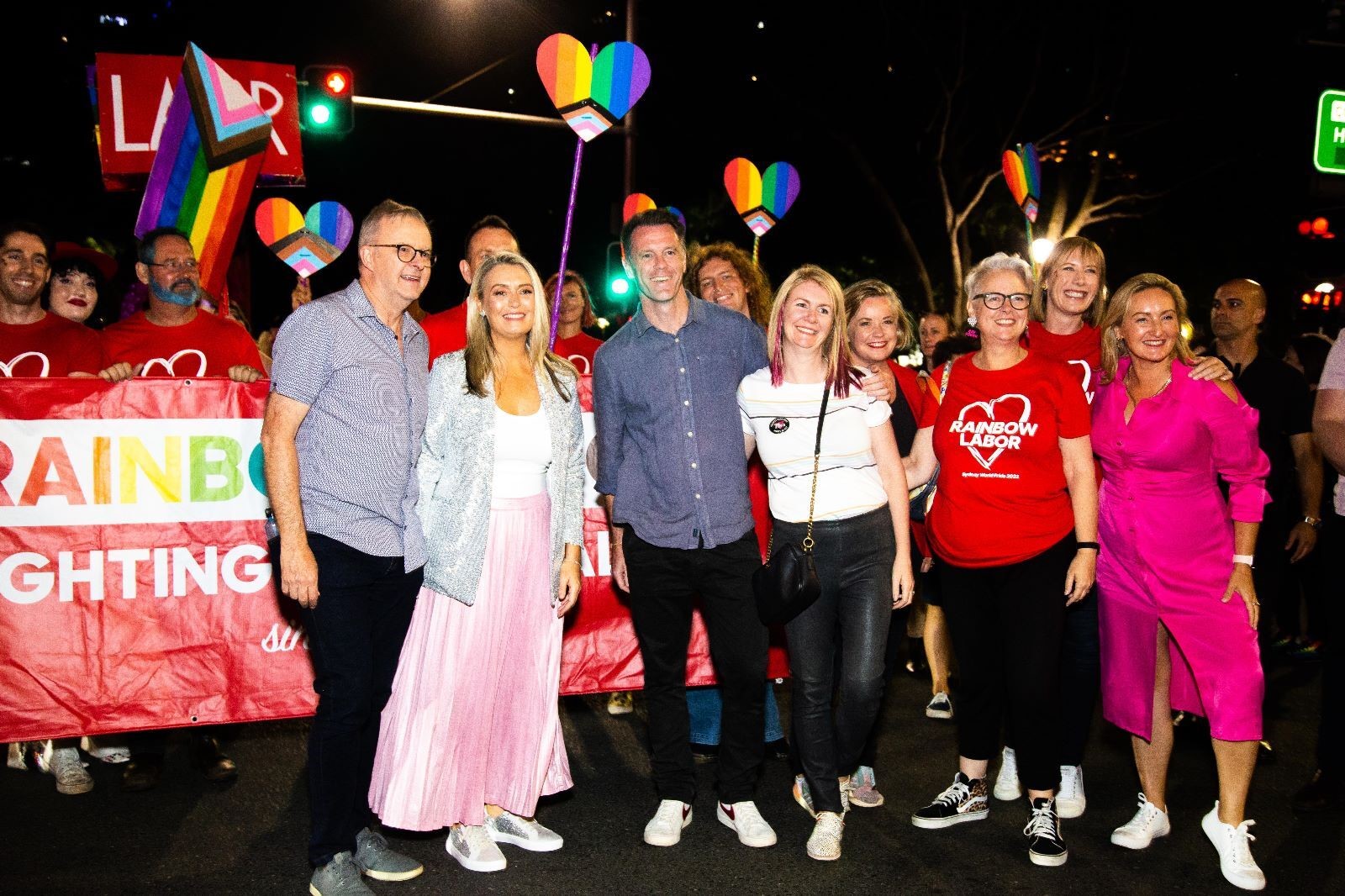

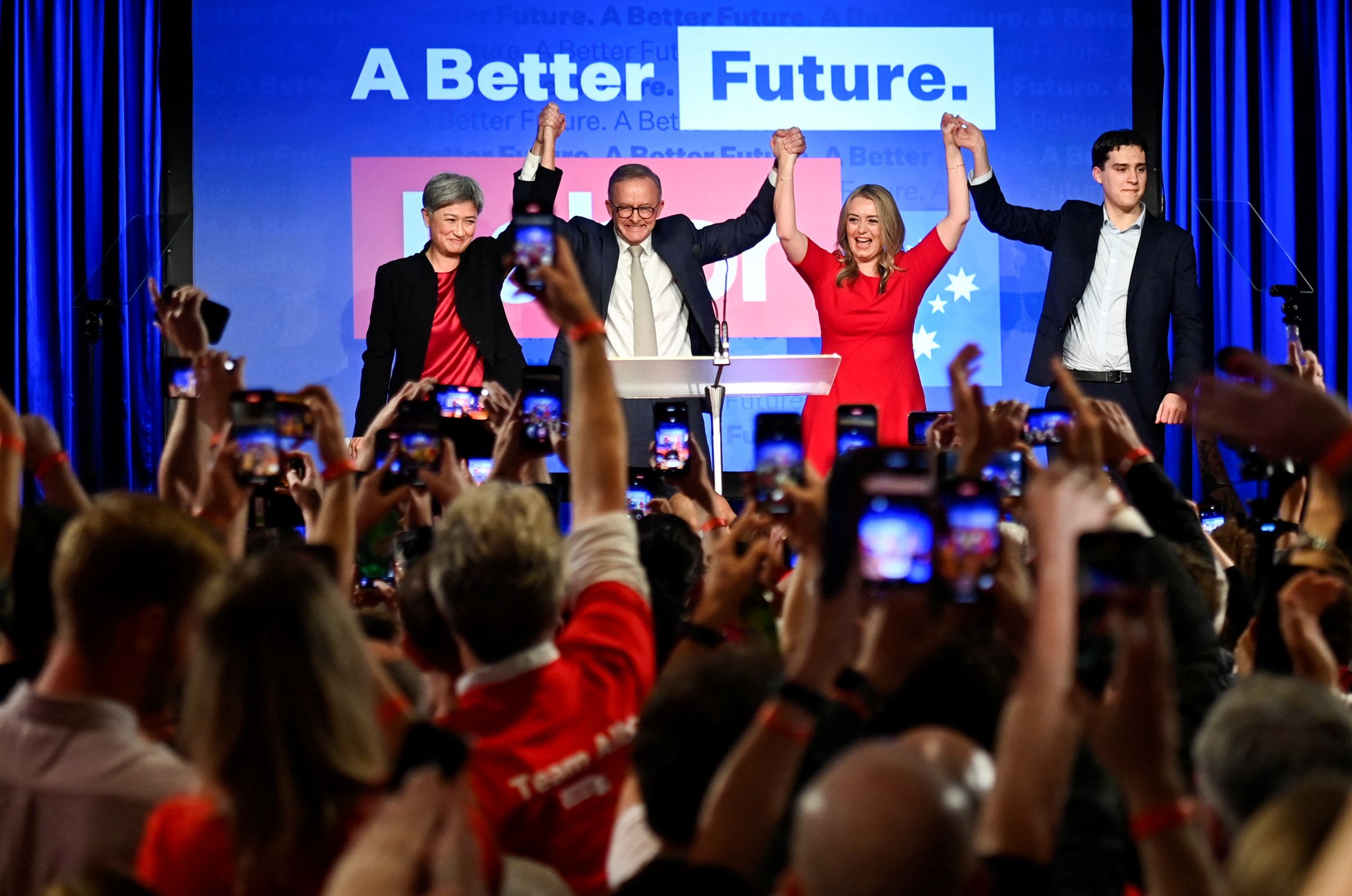


 alastairlawrie