A Pride Flag for NSW

Today (26 March 2021) marks exactly ten years since the election of the NSW Liberal/National Government.

In that decade, and especially in their early years, they have passed a few important LGBT law reforms, including the long-overdue abolition of the homosexual advance defence (or ‘gay panic’ defence) in 2014 and establishing a scheme to expunge historical criminal records for same-sex intercourse in the same year.

However, the pace of reform has slowed markedly in recent times. The last new LGBTI laws were both passed in 2018, with the removal of ‘forced trans divorce’ (although this was necessitated by the passage of marriage equality in Commonwealth law, while NSW failed to seize the opportunity to amend identity laws more generally) and the introduction of an offence for publicly threatening or inciting violence against others, including on the basis of sexual orientation, gender identity and intersex status (although it replaced existing criminal vilification offences on the basis of homosexuality and transgender status, and as far as I am aware has not been enforced since it commenced).

Indeed, with this week also marking the halfway point of the Liberal/National Government’s third term, there have been no new laws passed addressing LGBTI issues since then, and none appear to be on the horizon.

This is not because the job of LGBTI law reform in NSW is complete. Far from it. As I have written previously, NSW now has the worst LGBT laws in Australia, and is only saved from that title with respect to intersex issues because some other jurisdictions are similarly appalling.

At least part of the problem is that many people, both inside and especially outside our communities, erroneously believe the struggle is over. Which is where my idea for a pride flag for NSW comes in.

From my perspective, the pride flag is inherently political. A symbol of our strength and resilience in overcoming anti-LGBTI prejudice and abuse, as well as a reminder to continue fighting until all lesbian, gay, bisexual, transgender and intersex people are truly ‘free and equal’.

With that in mind, here is what I think the six colours of the ‘traditional’ pride flag[i] could stand for in NSW today, as a way of bringing attention to at least some of the essential reforms which are still yet to be won here.

Red: Ban conversion practices

Anti-gay and anti-trans conversion practices (sometimes described as ‘ex-gay’ or ‘ex-trans’ therapy) continue in Australia today. Several jurisdictions have already taken steps to ban these practices, with general prohibitions, including in religious environments, now law in Victoria and the ACT, and a more limited ban, only covering health settings, in Queensland. Other states, including Tasmania, are actively considering their own legislation.

To date, the Berejiklian Liberal/National Government has given no firm indication they are considering laws to outlaw these destructive practices. They need to be pressured into taking urgent action to stop them.

Amber/Orange: Protect LGBT students & teachers

By now, we are all familiar with ‘amber alerts’ in the media to draw attention to vulnerable children in danger. Well, every day in NSW there should be an amber alert for LGBT kids – because, in 2021, religious schools are still legally permitted to discriminate against them on the basis of their sexual orientation and/or gender identity.

That is in part because of Scott Morrison’s broken promise from 2018 to amend the Sex Discrimination Act 1984(Cth) to remove the special privileges allowing religious schools to abuse, mistreat, suspend or even expel students just because of who they are.

But it is also because the Berejiklian Liberal/National Government refuses to repeal the special privileges contained in its own law, the Anti-Discrimination Act 1977 (NSW). Indeed, the exceptions in NSW are actually worse, because they permit all private schools, colleges and universities to discriminate, not just those that are religious (making NSW the only jurisdiction in Australia to do so).

Of course, LGBT students are not the only victims of such discrimination. The same provisions also allow private educational authorities to discriminate against LGBT teachers.

If we genuinely want our schools to be safe learning environments where all people are encouraged to reach their full potential, then the NSW Government must protect both LGBT students and teachers from discrimination.

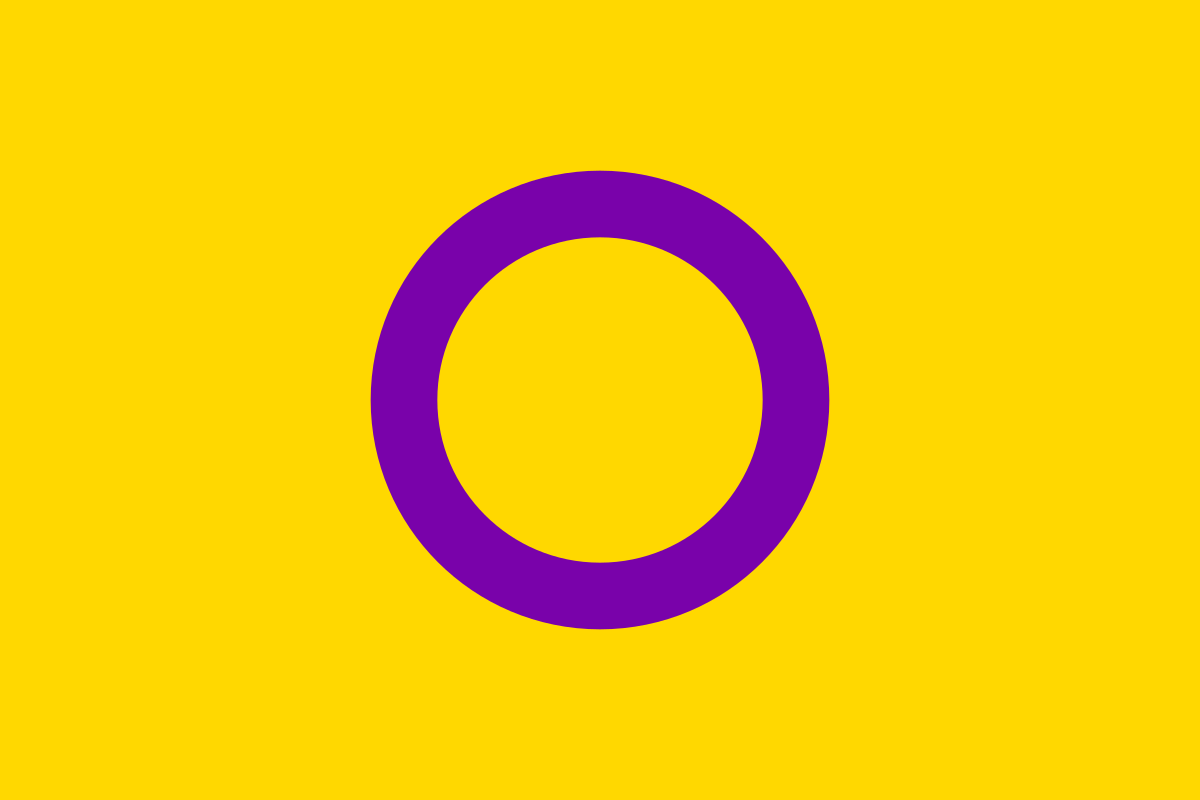
Yellow: End coercive intersex surgeries

As I have written elsewhere, the worst human rights abuses currently affecting any part of the Australian LGBTI community are coercive medical treatments, including surgeries and other interventions, on children born with intersex variations of sex characteristics.

These egregious human rights violations carry lifelong consequences which is why they must be deferred until intersex people can consent, or not consent, to them. Some jurisdictions, including Tasmania and the ACT, appear to be moving in that direction. As yet, there is no sign of similar progress in NSW.

[NB The yellow comes from the intersex pride flag, which is yellow and purple.]
Green: Improve birth certificate access

NSW now has the equal worst birth certificate laws in Australia, alongside Queensland. 

Under the Births, Deaths and Marriages Registration Act 1995 (NSW), trans and gender diverse people must undergo ‘a surgical procedure involving the alteration of a person’s reproductive organs… for the purpose of assisting a person to be considered a member of the opposite sex’ before being allowed to update their birth certificate to reflect their gender identity.

This requirement is both unnecessary and inappropriate, especially when some people may not wish to undergo such surgeries, while others cannot afford to do so given the prohibitive costs involved.

NSW has fallen behind the majority of other Australian jurisdictions which have updated their birth certificate laws to allow access based on self-identification only (which is best practice), or at least without physical medical interventions. It is time the Government gave the green light to trans and gender diverse people here to access birth certificates without any medical gate-keeping.

Blue[ii]: Trans discrimination law reform

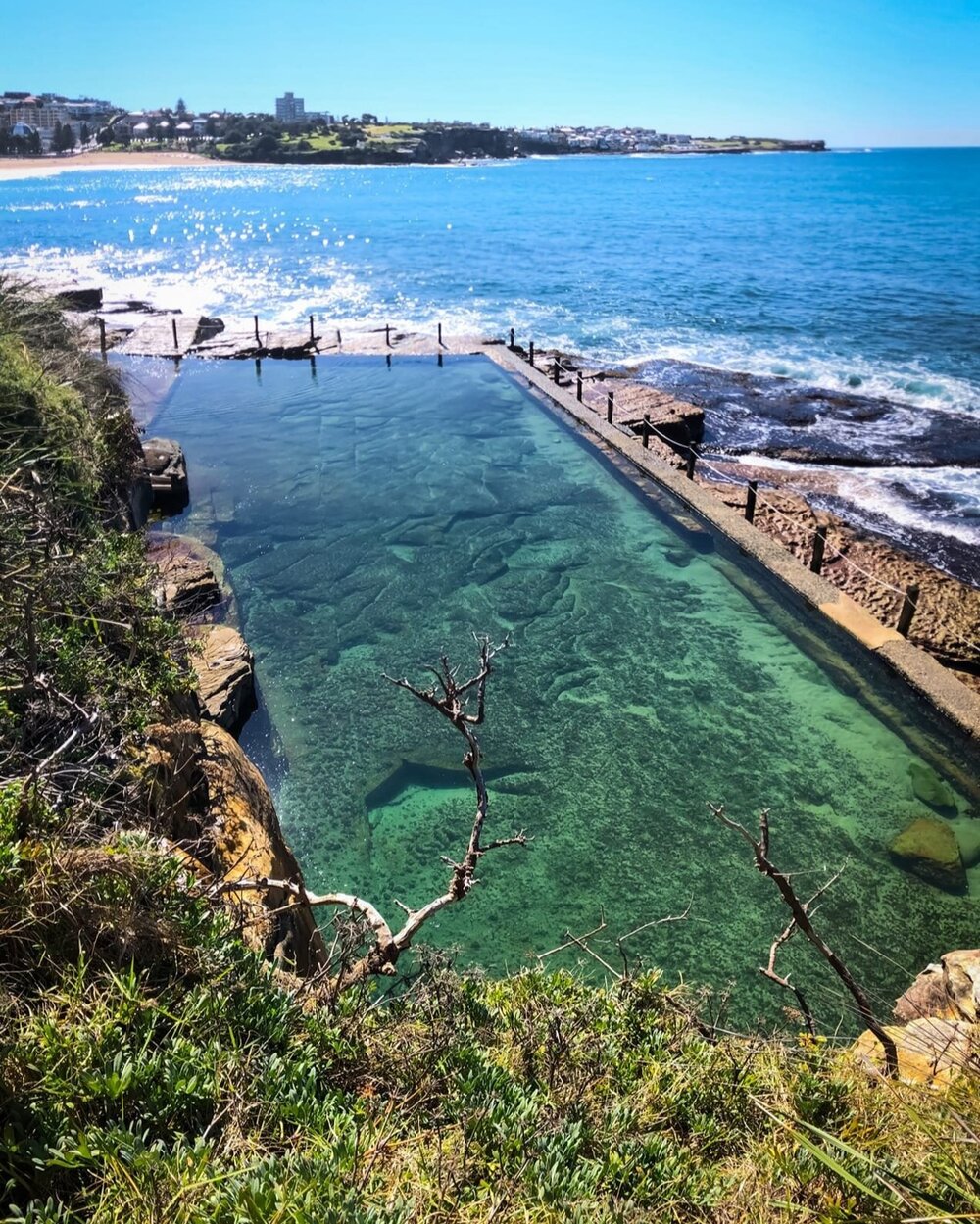
Trans and gender diverse people in NSW are also let down by confusing and outdated anti-discrimination protections, as amply demonstrated by the controversy surrounding discriminatory efforts to prevent trans women who have not undergone surgery from accessing McIver’s Ladies Baths in Coogee.

On one hand, there is a definition of ‘recognised transgender person’ in section 4 of the Anti-Discrimination Act 1977 (NSW) which some people might, mistakenly, try to use to justify limiting access on the basis of surgery:

‘recognised transgender person means a person the record of whose sex is altered under Part 5A of the Births, Deaths and Marriages Registration Act 1995[iii] or under the corresponding provisions of a law of another Australian jurisdiction.’

Except the substantive protections against transgender discrimination apply irrespective of whether the person has had surgery. According to section 38A:

‘A reference in this Part to a person being transgender or a transgender person is a reference to a person, whether or not the person is a recognised transgender person

(a) who identifies as a member of the opposite sex by living, or seeking to live, as a member of the opposite sex, or

(b) who has identified as a member of the opposite sex by living as a member of the opposite sex…

and includes a reference to the person being thought of as a transgender person, whether the person is, or was, in fact a transgender person’ [emphasis added].

Which means discriminating against transgender women who have not had surgery would probably be found to be unlawful.

Given this, the misleading definition of ‘recognised transgender person’ should be removed from section 4.

However, that would still not address a far bigger problem, including with the broader definition in section 38A: it likely only applies to people with ‘binary’ gender identities, because of its use of the outdated concept of ‘opposite sex’.

In other words, non-binary people in NSW are not explicitly covered by the Anti-Discrimination Act 1977. The NSW Government must remedy this by replacing ‘transgender’ with ‘gender identity’, potentially based on the definition in the Sex Discrimination Act 1984 (Cth):

‘gender identity means the gender-related identity, appearance or mannerisms or other gender-related characteristics of a person (whether by way of medical intervention or not), with or without regard to the person’s designated sex at birth’.
Lavender/Purple: Bisexual discrimination law reform

The definition of transgender is not the only outdated terminology in the Anti-Discrimination Act 1977 (NSW). The other protected attribute covering (some parts) of the LGBTI community is currently ‘homosexual.’ Section 4 of the Act defines that term to mean ‘male or female homosexual.’

That narrow definition means NSW’s anti-discrimination laws are the only such laws in Australia that fail to protect bisexuals against discrimination.

This omission is truly appalling. It is well beyond time for the NSW Government to update the Anti-Discrimination Act to cover sexual orientation generally, in line with other jurisdictions including the Commonwealth Sex Discrimination Act 1984:

‘sexual orientation means a person’s sexual orientation towards:

(a) persons of the same sex; or

(b) persons of a different sex; or

(c) persons of the same sex and persons of a different sex.’

[NB The lavender comes from the bisexual pride flag, which is pink, lavender and blue.]

The six issues discussed above are of course not an exhaustive list. There are plenty of other LGBTI laws and policies which also need to be amended by NSW to provide genuine equality to its citizens irrespective of sexual orientation, gender identity and sex characteristics.[iv]

But, in my opinion, these are some of the most essential reforms in order for people to feel pride that we are making real progress in overcoming homophobia, biphobia, transphobia and intersexphobia.

I started this article by highlighting the fact today is the 10th anniversary of the election of the NSW Liberal/National Government.

Coincidentally, today also marks 100 weeks until the planned opening ceremony of World Pride 2023 in Sydney.

That means Premier Gladys Berejiklian has exactly 100 weeks to deliver on each of the six issues identified here.

If her Liberal/National Government fails to make these long-overdue and much-needed changes in that time, then I suggest we fly this ‘pride flag for NSW’ at half-mast during that opening ceremony to acknowledge the damage inflicted and pain caused by their ongoing inaction.

If you have enjoyed reading this post, you can sign up to receive updates about this and other issues from this blog, via the right-hand scroll bar on desktop, or near the bottom of the page on mobile. You can also follow me on twitter @alawriedejesus [NB Given the events of the past month – with this website being blocked by Facebook for being ‘news’ – it is more important than ever to sign up if you want to receive updates, especially with the possibility of further disruptions].

Footnotes:


[i] I also personally support the newer ‘Progress’ version of the pride flag, incorporating both elements of the trans flag, and black and brown stripes to represent people of colour.

[ii] The blue here could either represent part of the trans pride flag – which is blue, pink and white – or the blue of the Pacific Ocean at McIver’s Ladies Baths.

[iii] Which, as we have seen, only allows the granting of new identity documentation following invasive surgeries.

[iv] Indeed, the Anti-Discrimination Act 1977 (NSW) also needs to be updated to include a new protected attribute of ‘sex characteristics’ covering intersex people, and to remove the general exception in section 56(d) which allows a wide range of religious organisations to discriminate against LGBT employees and people accessing their services.

Submission re the Australian Education Legislation Amendment (Prohibiting the Indoctrination of Children) Bill 2020

Senate Standing Committee on Education and Employment

Submitted online via aph.gov.au  

19 March 2021

To the Committee

Thank you for the opportunity to provide this submission regarding the Australian Education Legislation Amendment (Prohibiting the Indoctrination of Children) Bill 2020.

I do so as a long-standing advocate for the lesbian, gay, bisexual, transgender and intersex (LGBTI) community, and as a gay man who (barely) survived five years at a homophobic religious boarding school in Queensland in the early 1990s[i]and who hopes to help protect trans and gender diverse students from experiencing similar discrimination today.

Contrary to its name, this legislation is not about prohibiting the indoctrination of children, but instead appears to be motivated by prejudice against the gender identity and/or gender expression of trans and non-binary young people.

It is not about providing balance, but is instead aimed at banning the information these children need to grow up feeling safe and supported, and reach their full potential.

And it is not about ensuring all students enjoy an inclusive education, but instead seeks to erase trans and gender diverse kids. From the curriculum, and from the classroom.

These disturbing truths are revealed by Senator Hanson’s Second Reading Speech, where she spends almost half of its word count arguing against ‘gender theory indoctrination in schools’, which she claims ‘involves some teachers and schools pushing the idea that a child’s biological sex does not determine where you are male or female.’

Not only does Senator Hanson fail to understand the difference between sex assigned at birth and gender identity – and the existence of hundreds of thousands of trans and gender diverse Australians demonstrate that these two can and frequently do diverge.

But she also seems to believe that banning curriculum materials which mention said reality of gender diversity will somehow prevent children from becoming trans or non-binary in the first place (from the Second Reading Speech: ‘The preoccupation with gender identity by some teachers and schools is correlated with an increase in children identifying as transgender, which is why I say these educators are transgendering our children’).

I know from bitter personal experience that the consequence of a homophobic education, where the curriculum did not even acknowledge the existence of same-sex attraction let alone affirm that it was a valid sexual orientation, did not make me any less gay, but it did nearly cost me my life.

The same will inevitably be true for trans and gender diverse students should this legislation pass. The choice is not between whether a child is trans or non-binary on one hand, or cisgender on the other. The choice is between whether a trans or non-binary child is happy and healthy, or depressed and at significant risk of self-harm.

On this most basic of outcomes, our schools are currently failing. Badly. The recent findings of the Writing Themselves In 4[ii] survey indicate that, far from schools being overwhelmingly supportive environments where being trans and gender diverse is encouraged, in many, indeed most, there is either silence or active hostility.

From that report:

  • One-half (51.2%; n=1,953) of secondary school participants reported that trans and gender diverse people were never mentioned in a supportive or inclusive way;[iii]
  • Almost three-quarters of trans men (74.3%; n=278) and two-thirds of trans women (67.7%; n=46) and non-binary participants (65.8%; n=746) said that in the past 12 months they had felt unsafe or uncomfortable at their educational institution due to their sexuality or gender identity;[iv]
  • Only 41.0% (n=378) of trans and gender diverse participants in secondary schools reported being able to safely use their chosen name or pronouns in the past 12 months, while only 50.9% (n=469) were able to wear clothes that matched their gender identity;[v] and
  • Over seven-tenths (70.2%; n=2,579) of secondary school participants… reported hearing negative language about gender identity or gender expression sometimes or frequently in the past 12 months.[vi]

Many trans and gender diverse students are not thriving in these toxic environments. Nor are they being ‘created’ by overly-supportive schools and teachers. They are merely doing their best to survive despite the transphobia which far too often surrounds them.

There is one point on which I agree with Senator Hanson. In her Second Reading Speech, she declares that ‘Our children deserve an education that will allow them to reach their potential.’ Unlike Senator Hanson, however, I believe that this statement should apply to all students, and not just those who are cisgender.

Trans and non-binary children have the same right to learn, and grow, as any other child. As every other child. Our schools should be doing more to support them, not less. That includes increasing their visibility in the curriculum, rather than having all references to gender diversity erased because of discriminatory legislation proposed by an extremist Senator.

I call on the Senate Standing Committee on Education and Employment, and the Parliament more broadly, to reject this attack on some of Australia’s most vulnerable.

Recommendation: That the Australian Education Legislation Amendment (Prohibiting the Indoctrination of Children) Bill 2020 be rejected in its entirety.

Before I conclude this submission, I would like to raise two additional arguments, both of which militate for rejection of this legislation.

First, the Australian Education Legislation Amendment (Prohibiting the Indoctrination of Children) Bill 2020 needs to be seen in its wider context. In my view, it is merely one small part of a larger, dangerous and divisive culture war being waged right now against trans and gender diverse Australians.

The proponents of this culture war include organisations that were opposed to the right of all couples to marry irrespective of their sexual orientations, gender identities and/or sex characteristics. Having lost that fight, including through the 2017 same-sex marriage postal survey, they appear to have turned their attention to denying the fundamental rights of trans and gender diverse Australians, and especially trans and non-binary young people.

These organisations have found supporters in columnists, and media publications, that seem happy to publish attacks on the ability of trans kids just to be themselves.

Unfortunately, these organisations also appear to have found supporters in the Senate itself, with the passage of Senator Roberts’ motion number 1055, on Wednesday 17 March 2021. As well as seeking to reinforce the use of binary-only gender descriptors, it included the following concerning clauses (among others):

‘That the Senate notes that:

ii. broad scale genuine inclusion cannot be achieved through distortions of biological and relational descriptors,

iii. an individual’s right to choose their descriptors and pronouns for personal use must not dehumanise the human race and undermine gender.’

In response, I would submit that denying the existence of trans and non-binary people is a far greater threat to ‘broad scale genuine inclusion’. More importantly, a trans or non-binary person affirming their gender descriptors and pronouns does not pose any threat to any person who is prepared to accept and respect other people for who they are.

Nor does the use of diverse gender descriptors and/or pronouns ‘dehumanise the human race’ in any way. Indeed, I would encourage Senators who voted in support of that motion to reflect on exactly who was being dehumanised by its contents.

The anti-trans agenda has found even greater support among state and territory parliaments, including in my jurisdiction of NSW. The state leader of Senator Hanson’s Party has introduced his own legislation seeking to make life much more difficult for LGBTI students, and for trans and non-binary students in particular.

As I have written elsewhere,[vii] the Education Legislation Amendment (Parental Rights) Bill 2020 is:

‘A Bill that seeks to prohibit any and all teaching that someone’s gender identity can be different to the gender assigned to them at birth.

That weaponises the so-called morality of transphobes to deny the reality of trans people.

A Bill that actually goes much, much further, by banning any ‘teaching, instruction, counselling and advice’ that acknowledges said lived reality, by anybody remotely connected to a school, from principals to parents volunteering in the school canteen.

That compels a school counsellor to remain silent when a suicidal trans student just needs to hear the most basic words of comfort: that they are not alone, and who they are is okay.

A Bill that recycles failed and flawed policies from Thatcher-era Britain, reviving ‘section 28’-style laws which saw a generation of lesbian, gay and bisexual students marginalised and made invisible, without access to safe sex education even at the height of the HIV epidemic.

Policies that were abandoned in the UK almost two decades ago, now being contemplated for LGBT students right here in 2021.

A Bill that seeks to insert an ignorant, inappropriate and incorrect definition of intersex in NSW law for the first time, further stigmatising individuals that still endure the most significant human rights abuses of any group within the LGBTI community.’

While discussing the Education Legislation Amendment (Parental Rights) Bill 2020, I should note that were both it and Senator Hanson’s own Bill to pass their respective Parliaments, it is highly likely the Australian Education Legislation Amendment (Prohibiting the Indoctrination of Children) Bill 2020 would result in the defunding of NSW public schools.

That is because of the operation of proposed section 22AA of the Australian Education Act 2013 (Cth), and especially sub-section (1)(b):

‘A payment of financial assistance under this Act to a State or Territory is subject to the condition that the State or Territory has in force laws that…

require a staff member (however described) of a school to provide students with a balanced presentation of opposing views on political, historical and scientific issues as such issues arise in the teaching of a subject.’

Given the NSW Bill expressly prohibits the teaching of particular views, including in relation to the scientific diversity of gender identity, it cannot possibly be described as balanced according to that word’s ordinary meaning.

Putting that particular issue to one side, I raise the broader context of the Bill currently before the Committee because it will have consequences outside of its own flawed provisions.

If the Committee, and Parliament, choose to support the Australian Education Legislation Amendment (Prohibiting the Indoctrination of Children) Bill 2020, it will only embolden the proponents of the culture war against trans and non-binary kids.

On the other hand, the Committee, and Parliament, have the opportunity through this inquiry and subsequent legislative debate to send a strong signal that trans and gender diverse Australians have the right to be themselves, and above all that trans and non-binary children will be protected against further attacks.

The second and final additional argument I would like to raise relates to the impracticability of the Bill itself. Specifically, proposed section (7) of the Australian Curriculum, Assessment and Reporting Authority Act 2008 (Act), provides that:

‘The Australian Curriculum, Assessment and Reporting Authority must ensure that:

(a) the national school curriculum is developed and administered to provide a balanced presentation of opposing views on political, historical and scientific issues; and

(b) information, resources, support and guidance that promote a balanced presentation of opposing views on political, historical and scientific issues are provided to the teaching profession.’

However, the Bill does not define what is meant by the term ‘balance’. The Explanatory Memorandum fails to provide further clarification, simply noting this provision requires ACARA ‘to promote a balanced presentation of opposing views where they exist’ (emphasis added).

Which leaves us with Senator Hanson’s Second Reading Speech to assist with legislative interpretation. In the context of her views on, or rather against, climate change science –which dominates the other half of her statement – the notion of ‘balance’ becomes problematic.

It appears Senator Hanson would like to provide an equal platform in the science curriculum to climate change denialism alongside evidence-based climate science which irrefutably shows the earth is heating, and that this heating is caused by human activity. 

To do what Senator Hanson proposes – to provide space in the science curriculum just because some people believe it, rather than because it is based on evidence – would undermine the very nature of science itself.

Nevertheless, it is the application of the Bill’s vague notions of ‘balance’ to the subject of history that reveals just how unworkable this legislation is.

To raise just one example, how would this legislation affect the history curriculum around World War II, and specifically the Holocaust? Abhorrent though their views are, some people continue to espouse Holocaust denialist arguments. To apply the language used in the Explanatory Memorandum, they are ‘opposing views (about history) where they exist’.

It is therefore at least possible that, if passed, the Australian Education Legislation Amendment (Prohibiting the Indoctrination of Children) Bill 2020 would mandate ACARA to include Holocaust denialism as part of the Australian history curriculum.

Such an outcome is obviously unacceptable. It reflects a Bill that is an unworkable mess, and one that would create a mess of Australia’s curriculum, not just in history, but in politics, science and elsewhere too.

In my view, this impracticability is the inevitable outcome of a Senator trying to impose their ideological obsessions – in this case, climate change denialism, and the erasure of trans and non-binary kids – through the national education system.

I would much prefer our school curriculum to be drafted by experts who understand their subject matter, as well as the learning and developmental needs of children – all children – rather than a Senator who does not seem to even understand her own legislation. 

I sincerely hope the majority of the Committee, and the Parliament, share that preference.

Thank you for considering this submission as part of the inquiry into the Australian Education Legislation Amendment (Prohibiting the Indoctrination of Children) Bill 2020. Please do not hesitate to contact me, at the details provided, should the Committee require additional information.

Sincerely

Alastair Lawrie

Pauline Hanson has joined her NSW state leader Mark Latham in introducing legislation attacking trans and non-binary kids.
Just like his Education Legislation Amendment (Parental Rights) Bill 2020, her Australian Education Legislation Amendment (Prohibiting the Indoctrination of Children) Bill 2020 must be rejected.

Footnotes:

[i] For more on my experiences, see ‘The Longest Five Years’, via https://alastairlawrie.net/2019/03/17/the-longest-five-years/ 17 March 2019.

[ii] Adam O. Hill et al, ‘Writing Themselves In 4: The Health and Wellbeing of LGBTQA+ Young People in Australia’, La Trobe University Australian Research Centre in Sex, Health and Society, February 2021, available at https://www.latrobe.edu.au/__data/assets/pdf_file/0010/1198945/Writing-Themselves-In-4-National-report.pdf

[iii] Ibid, p48.

[iv] Ibid, p52.

[v] Ibid, p54.

[vi] Ibid, p57.

[vii] See ‘NSW MPs can be champions for trans and gender diverse kids. Or bullies.’, via https://alastairlawrie.net/2021/02/14/nsw-mps-can-be-champions-for-trans-and-gender-diverse-kids-or-bullies/ 14 February 2021.

What for art thou Albo?

Anthony Albanese became Leader of the Australian Labor Party in May 2019. It’s now March 2021, and we still don’t know where he stands on key issues affecting the lesbian, gay, bisexual, transgender, intersex and queer (LGBTIQ) community.

In his 22 months as Opposition Leader, Mr Albanese (commonly referred to as ‘Albo’), has only explicitly referred to LGBTIQ rights once in Parliament. On 2 July 2019, he made the following statement:

‘In an article in the NewDaily and in a number of other articles reporting on that article, it’s been suggested that I supported watering down Labor’s commitment to LGBTIQ rights. As someone who in their first speech in parliament mentioned removing discrimination on the basis of sexuality and is a strong advocate for the rights of gay and lesbian people, that is not true; it did not happen.’

Despite this, and unfortunately for LGBTIQ Australians, that article foretold what appears to have occurred in the period since.

As happens every term, the Labor Party is engaged in updating its National Platform, the document setting out its core principles.

As part of this process, Albo has expressed a clear desire for the Platform to be streamlined. The current draft, which will be considered at an online Special Platform Conference on 30 and 31 March 2021, stands at 111 pages – compared to 268 pages of policy detail in former Leader Bill Shorten’s 2018 version.

Based on that level of reduction, you might expect that LGBTIQ policy commitments would have decreased by a similar ratio (to be two-fifths of the previous document).

However, the axe seems to have fallen disproportionately on issues affecting our communities. From 46 separate mentions of LGBTIQ issues in 2018, there are just nine in the 2021 draft Platform.

Admittedly, that is a somewhat superficial criterion. Nevertheless, looking at the substantive policy commitments in closer detail, and the cuts are just as bad. Worse, in fact, with Labor’s Platform now missing in action on some of the most important challenges we face.

That includes what I consider to be the worst human rights abuses affecting any part of the LGBTIQ community today: coercive medical interventions, including surgeries, on children born with intersex variations of sex characteristics.

The 2015 and 2018 ALP Platforms included clear commitments to address these abuses. From the 2018 version:

‘Parents of intersex children can be pressured to hormonally or surgically intervene on their children if they don’t receive medically correct advice, information or support about how to parent an intersex child. Labor will ensure deferral of non-necessary medical intervention on infants and children with intersex variations until such time as the person concerned can give their informed consent is supported. Labor commits to promote and support a human rights-based patient consent model for accessing lifetime medical treatments and procedures. Labor will prohibit modifications to sex characteristics undertaken for social rationales without informed consent and ensure intersex persons’ right not to undergo sex assignment treatment is respected.’

In contrast, the draft 2021 ALP National Platform is completely silent on this issue. That is simply not good enough.

Another important policy commitment from 2015 and 2018 that has disappeared relates to the out-of-pocket costs which far-too-frequently prevent trans and gender diverse people from being able to access gender-affirming health care. Again, from the 2018 Platform:

‘Labor acknowledges the right of all Australians, including transgender and gender diverse people, to live their gender identity. For many, this includes accessing specialist health services and for some people can involve gender affirming medical technologies. Cost should not be a barrier to accessing these services. Labor commits to removing, wherever possible, barriers to accessing these services and consulting with experts in government. This should materialise in a focus on creating fair, equal and affordable access to medical care and treatments relevant to trans and gender diverse Australians.’

In 2021, Labor has so far found no room in its core principles document to address one of the biggest challenges affecting the everyday lives of trans and non-binary Australians.

A third major omission from the draft Platform is HIV – and that omission is total. If passed in its current state, the 2021 Australian Labor Party Platform would be the first in at least a generation not to even mention the term HIV.

I would argue the middle of a global pandemic is possibly the worst time to abandon commitments relating to another epidemic that, despite popular misconceptions, remains far from over. Instead, I believe the Platform should (at a minimum):

  • Highlight that lessons learned from HIV have assisted Australia in dealing with COVID-19
  • Emphasise the fundamental importance of working in partnership with affected communities, including people living with HIV and those at risk, and
  • Recommitting to ending the HIV epidemic in Australia, and globally.

The fourth and final major problem I would like to focus on is the lack of clarity around much-needed improvements to LGBTIQ anti-discrimination and anti-vilification protections. On this issue at least the draft 2021 Platform includes some detail:

‘Labor will work closely with LGBTIQ Australians to develop policy to:

(a) ensure they enjoy equality before the law and have access to public services without discrimination; [and]

(b) strengthen laws and expand initiatives against discrimination and harassment on the basis of sexual orientation, gender identity, sex characteristics and queer status’.

However, these commitments do not go nearly far enough. It is possible (although by no means certain) that para (a), above, means Labor will remove anti-discrimination exceptions which allow religious schools to discriminate against students on the basis of sexual orientation and gender identity. But there is no equivalent commitment to protect the employees of religious organisations, including teachers and other staff in religious schools.

As with the other three areas identified earlier, these anti-discrimination principles are also a significant step backwards from their 2015 and 2018 equivalents. There is no longer a commitment to introduce a stand-alone Commissioner for LGBTIQ issues within the Australian Human Rights Commission.

Nor is there a policy to introduce long-overdue LGBTIQ anti-vilification protections in Commonwealth law (despite the draft 2021 Platform twice committing to address religious vilification). Or a commitment to finally include gender identity and sex characteristics as protected attributes in the Fair Work Act 2009 (Cth) on the same basis as sexual orientation.

There are plenty of other problems with the draft Platform – perhaps most notably a policy to ensure schools are ‘welcoming and supportive environments for all’ which has removed previous explicit references to gender identity and sexuality, and added a qualifier (‘initiatives… as selected by schools’), thus rendering it close to meaningless.

Nevertheless, if the ALP wishes to demonstrate it is still committed to improving the rights of LGBTIQ Australians then I suggest the four main issues described above (ending coercive surgeries on intersex children; reducing out-of-pocket costs for gender-affirming health care; including policies addressing HIV; and improving commitments to LGBTIQ anti-discrimination and anti-vilification laws) would be a good place to start.

The defence of the Australian Labor Party to these criticisms has been to reiterate that the draft 2021 National Platform is intentionally a high-level, principles-based document, and to explain that more-specific LGBTIQ policies will be released closer to the election.

The problem with that defence, from my perspective, is that the clear message the ALP sent to all stakeholders back in 2019 was that all policies were under review, that in effect ‘everything is up for grabs’. Since then, as far as I can ascertain, there have been exactly zero policy announcements explicitly relating to LGBTIQ issues.

At the same time, the rights of LGBTIQ Australians have come under sustained attack at both Commonwealth level (including through the proposed Religious Discrimination Bill which Labor has not, to date, unequivocally opposed) and in the states and territories (including Mark Latham’s own ‘Religious Freedom’, and anti-trans kids, Bills in NSW).

In this context, it is only natural for the LGBTIQ community to closely examine the words and actions coming from the Leader of the Opposition and the Party he represents. So far, the only substantive document which we can scrutinise is the draft Platform and, particularly when compared to its 2015 and 2018 iterations, it is a disappointment.

The good news is that its deficiencies can still be fixed. The Special Platform Conference is not for another nine days, and the Leader of the Opposition, Shadow Ministers and conference delegates all have the opportunity to reinsert genuine commitments around intersex surgeries, trans health costs, HIV, and anti-discrimination and anti-vilification laws.

The bad news is that, more broadly, time is running out. We are nearly two years into a three-year term. Indeed, Prime Minister Morrison has the option of holding the next election as early as August, just five months away. There is little time left for Albo and the ALP to show us where they stand on key issues affecting the LGBTIQ community.

And I use that phrase deliberately – show us your current policies, don’t tell us about your past public positions.

Which brings me back to Albanese’s statement to Parliament in July 2019. It is interesting that, in defending his approach to LGBTIQ rights as Leader, he directly referred to his first speech which he gave on 6 May 1996.

To be fair, Albo’s comments then (‘The bigots who criticise programs aimed at the special needs of sections of our community ignore the fact that there is not equality of opportunity across class, gender, sexual preference and ethnicity’) were undoubtedly progressive for the time.

But times change. As does terminology (thankfully), as well as the needs of the LGBTIQ community which are much more complex and diverse than a general commitment to ‘equality of opportunity’.

Frankly, I am far less interested in what Anthony Albanese said as a new backbencher 25 years ago than I am in what he has to offer the country as its alternative Prime Minister for the next three years.

From my position as an advocate for LGBTIQ rights, I believe it’s time for Albanese to outline what a Government he leads would do for our community. Clearly, and in detail.

It’s time for him to answer the question ‘What for art thou Albo?’ Because, as of today, I and other LGBTIQ Australians genuinely don’t know.

Caption: It’s great that Albo is a regular participant in the Sydney Gay & Lesbian Mardi Gras Parade, including this year’s event (pictured). It would be even better if he could articulate, clearly and in detail, what he will do for LGBTIQ Australians if he becomes our Prime Minister for the next three years.

If you have enjoyed reading this post, you can sign up to receive updates about this and other issues from this blog, via the right-hand scroll bar on desktop, or near the bottom of the page on mobile. You can also follow me on twitter @alawriedejesus [NB Given the events of the past month – with this website being blocked by Facebook for being ‘news’ – it is more important than ever to sign up if you want to receive updates, especially with the possibility of further disruptions].

NSW Liberal Parliamentary Secretary for Education Supports Bill to Erase Trans Kids

Last weekend was the first Sydney Gay & Lesbian Mardi Gras Parade and/or Party I have missed since 2003. Although I think I had a pretty good reason not to be there – I was attending my grandma’s 100th birthday party in Rockhampton, Queensland (near where I grew up).

Nevertheless, the day before Mardi Gras I received a letter reminding me of just how far there is left to go before we achieve genuine, substantive equality for LGBTI Australians, and especially for trans and gender diverse children and young people.

But, first, some context. In August last year, NSW One Nation Leader Mark Latham introduced the Education Legislation Amendment (Parental Rights) Bill 2020. As I wrote at the time, this proposed law is the worst attack on LGBTI rights in this country this century.

If passed, the Education Legislation Amendment (Parental Rights) Bill 2020 would:

  • Prohibit any ‘teaching, instruction, counselling and advice’ that gender identity can be different to sex assigned at birth, effectively erasing and invisibilising trans and gender diverse students in schools across NSW
  • Introducing a UK section 28-style clause making it difficult for teachers, principals and counsellors to support lesbian, gay and bisexual students, and
  • Enacting an inaccurate and offensive definition of intersex in NSW law for the first time.

The NSW Legislative Council Education Committee is currently conducting an inquiry into this Bill. Unfortunately, the Chair of that inquiry is… Mark Latham. In which case, I decided to bypass the Committee and instead write directly to the majority of MPs calling on them to be champions for trans and gender diverse kids, rather than their bullies.

I have received a small number of responses to date, but the most significant so far arrived in my inbox last Friday, March 5 2021. It came from the Member for Riverstone, Mr Kevin Conolly – who, incidentally, is also the NSW Government Parliamentary Secretary for Education (and therefore a direct adviser to and influencer of the Minister for Education, the Hon Sarah Mitchell).  Here is what he wrote:

Dear Mr Lawrie,

Thank you for contacting me to express your view about the Education Legislation Amendment (Parental Rights) Bill 2020.

You appear to have misunderstood the intent and effect of the Bill on a number of levels.

The first thing to state about the Bill is that it gives effect to internationally recognised human rights explicitly stated in international agreements to which Australia (like nearly all nations) is a signatory:

Article 18, part 4 of the International Covenant on Civil and Political Rights states:

‘The States Parties to the present Covenant undertake to have respect for the liberty of parents and, when applicable, legal guardians to ensure the religious and moral education of their children in conformity with their own convictions.’

Article 5 of the Convention on the Rights of the Child:

‘Parties shall respect the responsibilities, rights and duties of parents or, where applicable, the members of the extended family or community as provided for by local custom, legal guardians or other persons legally responsible for the child, to provide, in a manner consistent with the evolving capacities of the child, appropriate direction and guidance in the exercise by the child of the rights recognised in the present Convention.’

Article 26(3) of Universal Declaration of Human Rights:

‘Parents have a prior right to choose the kind of education that shall be given to their children.’

I do not agree that the Bill is based on a sick ideology, as you assert. It is based, in my view, on the common sense proposition that it is parents who are best placed and most likely to focus on the best interests of their child, rather than teacher unions, academics or activists with their own political agenda.

In prohibiting the teaching of ‘gender fluidity’ the Bill would preclude the teaching of the false and unscientific proposition that gender is something other than biologically determined.

To state this does not in any way suggest that it is better for young people experiencing gender dysphoria to ‘not exist at all’. I’m sure that Hon. Mark Latham would wholeheartedly agree with you that young people in this situation should be ‘happy and healthy, … safe and supported.’ This is far more likely to be the case if they are in the care of their parents and avoid premature chemical or surgical interventions while they grow and mature.

It is a fact that the great majority of cases of young people with gender dysphoria are resolved in time without any such interventions if children and adolescents are supported by loving families and allowed to make their own decisions when older. Most are resolved with the person coming to terms with their biological gender.

I note that you have mentioned ‘LGBTI’ a number of times in your email. However the Bill has no impact whatsoever on questions of homosexuality, only on the specific issue of so-called ‘gender fluidity’.

In my view, quite contrary to your assertion, the Bill would facilitate a school counsellor or teacher to help a child or young person by allowing counselling to consider all the future options available to the person rather than requiring only one predetermined option (i.e. ‘transition’) to be discussed.

The Bill is a positive step forward because it provides the opportunity for parents to provide genuine selfless care to young people rather than leave them at the mercy of activists whose ‘care’ is far more for their ideological cause than it is for the young person facing difficult challenges. In doing so it upholds universally recognised basic human rights, and responsibilities of parents towards their children.

Yours sincerely

Kevin Conolly MP

Member for Riverstone

*****

There is obviously a lot to unpack here. First of all, it is clear that Mr Conolly is selectively quoting from some international human rights instruments, while ignoring other key principles. This includes Article 26 of the ICCPR, which states:

‘All persons are equal before the law and are entitled without any discrimination to the equal protection of the law. In this respect, the law shall prohibit any discrimination and guarantee to all persons equal and effective protection against discrimination on any ground such as race, colour, sex, language, religion, political or other opinion, national or social origin, property or other status.’

There is no doubt that a Bill which seeks to erase trans and gender diverse students, make life much more difficult for LG&B kids, and stigmatise intersex children, is discriminatory against LGBTI people.

Indeed, as others have written, it is likely that the Education Legislation Amendment (Parental Rights) Bill 2020 will ultimately be found to be unlawful because it contravenes the provisions of the Sex Discrimination Act 1984 (Cth).

But misinterpreting international human rights law is the least of the problems in Mr Conolly’s correspondence.

He also doesn’t seem to understand the Bill itself. The Education Legislation Amendment (Parental Rights) Bill 2020 establishes strict limits on any teaching or counselling of anything to do with what it describes as ‘matters of parental primacy’ – which is defined very broadly to explicitly include ‘matters of personal wellbeing and identity including gender and sexuality’.

Therefore, his protestation that ‘the Bill has no impact whatsoever on questions of homosexuality’ is not only patently false, but makes me question whether he has even read the legislation he is so ardently defending.

On that note, I find it incredibly curious that a member of the NSW Government – and a Parliamentary Secretary at that – is not only publicly supporting One Nation legislation (‘The Bill is a positive step forward…’), but also defending and apparently speaking on behalf of the NSW One Nation Leader (‘I’m sure that Hon. Mark Latham would…’).

But, of course, the worst aspects of Mr Conolly’s letter relate to his views about gender identity.

On this topic, he appears to assert that there is actually no such thing as trans and gender diverse people (‘In prohibiting the teaching of ‘gender fluidity’ the Bill would preclude the teaching of the false and unscientific proposition that gender is something other than biologically determined’). I’m sure that revelation would be surprising to trans and gender diverse people across NSW.

Nevertheless, the most offensive aspect of Mr Conolly’s correspondence arrives near its conclusion, where he argues ‘the Bill would facilitate a school counsellor or teacher to help a child or young person by allowing counselling to consider all the future options available to the person rather than requiring only one predetermined option (i.e. ‘transition’) to be discussed’.

Except that, given those same counsellors and teachers will be explicitly prohibited from even mentioning that gender identity can be different to sex assigned at birth, the only option they will be permitted to present to struggling children is that they simply not be trans or gender diverse.

It is at least arguable that what Mr Conolly is calling for is for counsellors and teachers to provide anti-trans conversion practices in every school across NSW.

It is extraordinary this letter was written by a member of the NSW Liberal/National Government. It is deeply troubling that it was done so by the Parliamentary Secretary for Education, commenting on and explicitly supporting legislation within his portfolio.

This stands in marked contrast to the failure of the NSW Premier, Gladys Berejiklian, Deputy Premier, John Barilaro, and Education Minister, Sarah Mitchell, to take any position on the Bill whatsoever. Indeed, they collectively delegated their reply to my letter to a bureaucrat in the Department of Education, who wrote:

‘The NSW Government will respond to the proposed bill after careful consideration to ensure all relevant legislation and protections are considered.’

Now that the Parliamentary Secretary for Education has declared his personal support for the Education Legislation Amendment (Parental Rights) Bill 2020, I believe this studious refusal to adopt a position is no longer tenable. At a certain point, being non-committal ends up being complicit.

The failure of the NSW Premier to oppose Mark Latham’s awful legislative assault on trans and gender diverse kids is particularly untenable given another development last weekend: Ms Berejiklian’s attendance at the SCG for the Mardi Gras Parade (as tweeted by Commonwealth Liberal MP, Dave Sharma – pictured below).

In my view, if you are prepared to come and celebrate diversity with us – diversity of sexual orientation, gender identity and sex characteristics – then you must be prepared to defend that diversity.

Against attacks by fringe extremist parties in the NSW Legislative Council.

And against support for those attacks by prominent members of your very own Government.

As I wrote previously, ‘It is time for [NSW Parliamentarians] to make your decision about the Education Legislation Amendment (Parental Rights) Bill 2020. Champion. Or bully. The choice is yours.’

Right now, that choice belongs to the NSW Premier, Gladys Berejiklian.

Berejiklian must understand the extremely serious consequences if she makes the wrong decision. Because instead of being able to celebrate their own 100th birthdays early in the 22nd century, some trans and gender diverse students in NSW schools will struggle to reach their 18th.

*****

For LGBTI people, if this post has raised issues for you, please contact QLife on 1800 184 527, or via webchat: https://qlife.org.au/

Or contact Lifeline Australia on 13 11 14.

If you have enjoyed reading this post, you can sign up to receive updates about this and other issues from this blog, via the right-hand scroll bar on desktop, or near the bottom of the page on mobile. You can also follow me on twitter @alawriedejesus [NB Given the events of the past month – with this website being blocked by Facebook for being ‘news’ – it is more important than ever to sign up if you want to receive updates, especially with the possibility of further disruptions].